In August 1914, the world Isabella knew was rapidly changing. The assassination of Archduke Franz Ferdinand weeks earlier had set off a domino effect across Europe, throwing nations into war and leaving thousands of travelers scrambling to return across the Atlantic.
For most Americans, the conflict in Europe seemed a world away. But for Isabella the outbreak of World War I brought a sudden and very personal concern.
Her son, Dr. Raymond Macdonald Alden, was in the middle of it all.
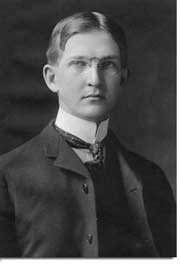
Raymond Alden in an undated photo
Raymond was a brilliant scholar and head of the English department at Stanford University. He was an accomplished author in his own right, best known for his classic short story “Why the Chimes Rang.”
In early 1914 Raymond traveled to England to spend several months conducting research in the historic archives of the British Museum and Oxford University. It was a dream trip for an American professor of English literature. But as summer drew to a close, the gathering clouds of war suddenly broke over Europe.
Duke Humfrey’s Library, the oldest reading room at the Bodleian Library at the University of Oxford. Courtesy http://www.oxfordvisit.com
Germany declared war in early August, and almost overnight, the Atlantic Ocean became a danger for travelers as German U-boats began patrolling major shipping lanes.
Before matters could escalate further, Raymond wisely booked passage home on an ocean liner called the SS Arabic that departed Liverpool on July 28, 1914.
The SS Arabic of The White Star Line, 1904.
Raymond’s journey across the ocean was anything but peaceful. For most of the voyage, a British cruiser sailed alongside the Arabic as an escort to protect the liner from a potential u-boat attack.
While the Arabic made it safely across the Atlantic that summer, the ship would not always be so fortunate. Just one year later, in August 1915, the Arabic would be torpedoed and sunk by a German submarine off the coast of Ireland, an event that made international headlines and brought the United States to the brink of entering the war. But in August 1914, Raymond’s ship docked safely in Boston, delivering him back to America unharmed.
While Raymond was braving the ocean crossing, his parents were eagerly waiting for him in New York. The Aldens had always been a close-knit family, but given the circumstances in Europe, Isabella and her husband decided to travel clear across the country to New York so they could be close by when Raymond’s ship docked. The area where they stayed held a special place in their hearts
Isabella was born in Gloversville, New York, and had attended school at Oneida Seminary. It was there that she met Theodosia Toll Foster (who would write under the pseudonym Faye Huntington), and they became lifelong best friends, sharing a bond of faith and friendship that spanned decades.
Locust Shade, the Toll Family Homestead as it appeared before it was demolished in 1952 (from The Rome Sentinel, August 13, 1952
That August of 1914, while waiting for Raymond’s return, Rev. and Mrs. Alden stayed as guests at the Toll Homestead in Verona, New York. They also spent time in nearby New Hartford, where Rev. Alden had served as a beloved pastor of the First Presbyterian Church nearly forty years earlier.
But lurking beneath the family visits and conversations with friends, Isabella and her husband must have felt a good deal of anxiety over the safety of their son. Their prayers and the bond of faith they shared with family and friends must have been a comfort and support during that time.
After nine stressful days at sea, Raymond’s ship docked at Boston Harbor and he at last joined his parents in New York. He gave the local newspaper a brief (and very understated) account of his Atlantic crossing, describing it as “a somewhat exciting trip.”
from the Daily Sentinel (Rome, New York) on August 14, 1914
Four days later, the Alden family boarded a train together for the long journey back to the home they shared in Palo Alto, California.
To the residents of Verona and New Hartford, the war across the Atlantic might have felt distant. But Raymond’s close call on the Arabic was a reminder of how quickly major world events could reach right into the homes of American families.
For Isabella and her family, facing uncertainty with steady faith and holding fast to deep friendships brought them through another trial, surrounded with love and support until they were, at last, safe at home together.
YOU CAN READ MORE ABOUT ISABELLA’S EARLY LIFE IN GLOVERSVILLE IN THESE POSTS:
Today Marcia Macdonald Livingston is widely known as the mother of beloved Christian novelist Grace Livingston Hill and the older sister of Isabella “Pansy” Alden; but Marcia was actually a talented, well-published author in her own right. She wrote uplifting stories for readers of all ages, and this month’s free read is a wonderful example. Although “A Happy Summer” was written with children in mind, Marcia’s warm, engaging writing style makes this a meaningful and entertaining read for adults, too.
For sisters Jessie and May, life in a hot, cramped city attic makes the country feel like a distant dream. With their widowed mother working day and night to keep a roof over their heads, a summer filled with green fields and fresh air seems impossible. But when an unexpected act of kindness opens the door to a new life in the quiet village of Woodbury, the Wilson family discovers the joy of answered prayers and the simple beauty of nature.
Originally published in an 1883 issue of The Pansy magazine, this special edition of “A Happy Summer” includes the original artwork published with the story, so you can read it in the same way Victorian children first enjoyed it!
In 1918, Isabella’s husband, Reverend G. R. Alden was a healthy, hardy 86-year-old. Though retired from his ministerial duties in the Methodist church, he remained incredibly active. The Aldens were living in Palo Alto, California at the time, and because the Reverend didn’t drive, his bicycle was his primary mode of transportation. Seeing him pedaling his bike around town was a familiar and endearing sight in the neighborhood.
A roadster bicycle from about 1915, described in advertisements as “admirably suitable for the young and middle-aged.”
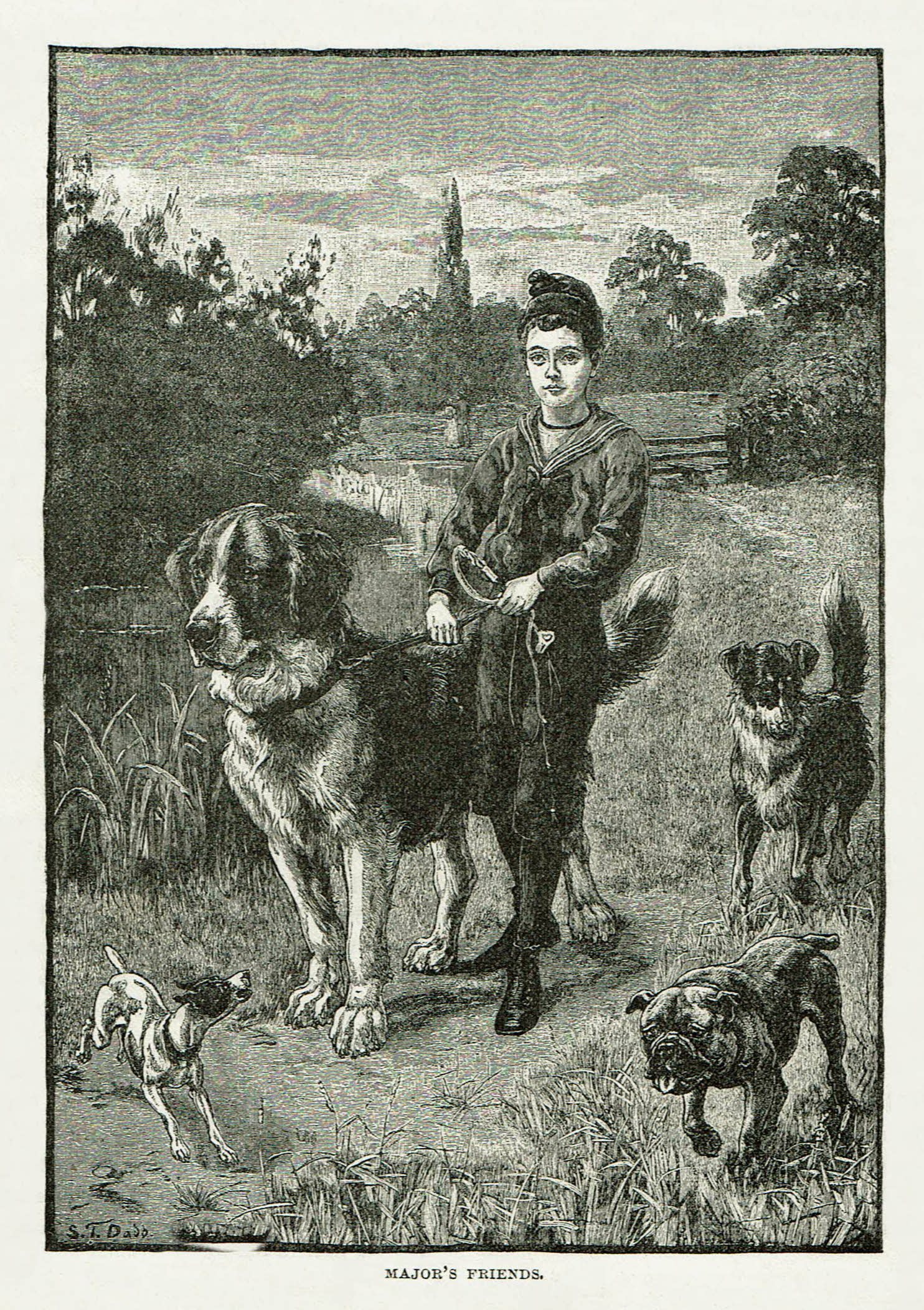
Rev. Alden was also a well-known dog lover. Years earlier, he had written two children’s novels centered around a canine protagonist named Major: Major’s Autobiography and Major’s Friends, were both serialized in the pages of The Pansy magazine in 1892.
An illustration from the 1892 serial story, “Major’s Friends.”
He was very open about his affection for four-legged friends. In the opening lines of Major’s Friends he declared to his young readers:
“By this time you will begin to believe that I am fond of dogs. Well, I am, if they are good, and I am especially fond of large, intelligent dogs.”
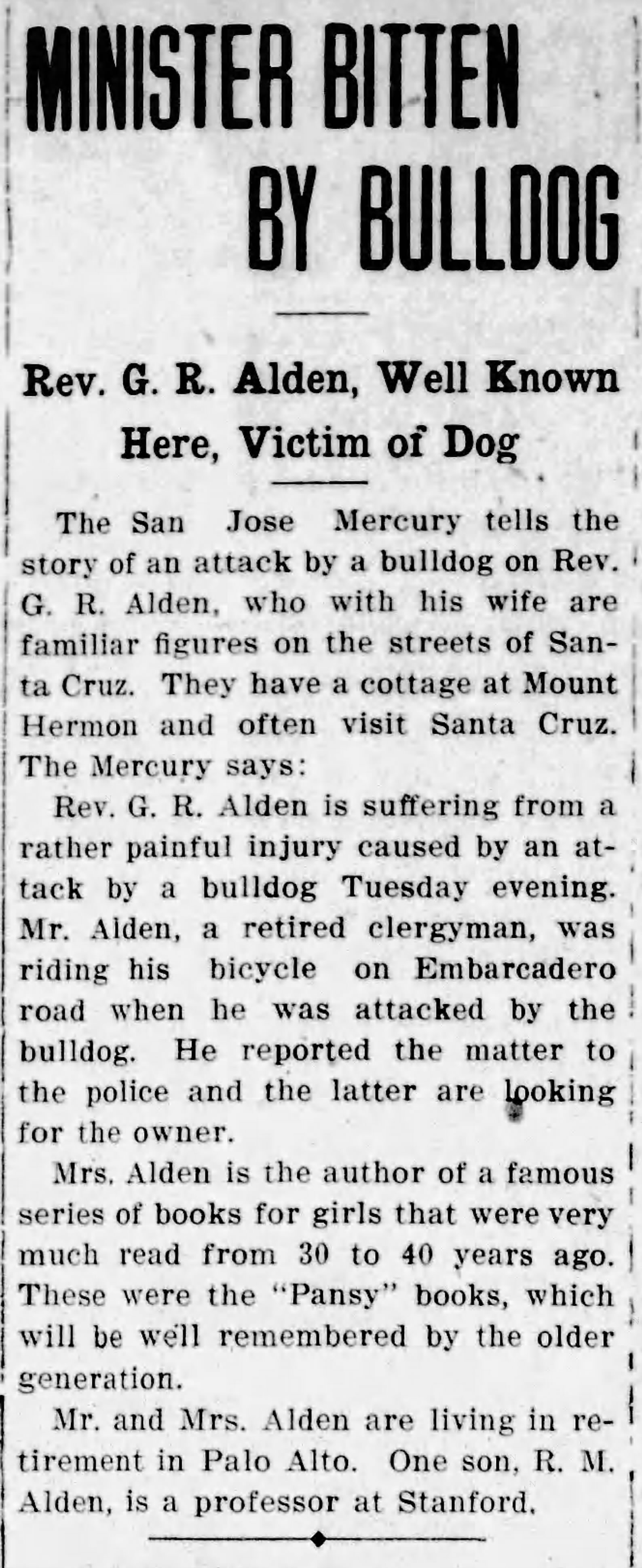
With such a deep affection for man’s-best-friend, it must have come as quite a shock to the Alden family—and the community—when the local papers ran a startling headline in July 1918.
According to the July 17, 1918 issue of the Peninsula Times Tribune, Rev. Alden was riding his bicycle near his home one evening when he was suddenly “assaulted” by a vicious bull terrier. The dog bit him, leaving a painful injury on his left leg just above the ankle. The next morning, Rev. Alden reported the attack to the police, requesting that immediate action be taken to muzzle or properly handle the dangerous dog.
Because Isabella and the Reverend were such prominent figures in the region, the story quickly spread beyond Palo Alto to nearby San Jose. The Aldens were frequent visitors to the Mount Hermon Christian Camp in Santa Cruz, where they owned a cottage, so two days later, the Santa Cruz newspaper also picked up the story and added a few additional details for its readers.
The article made sure to note that Mrs. Alden was the famous author of the beloved “Pansy” books, and proudly mentioned that their son, R. M. Alden, was currently serving as a professor at nearby Stanford University.
Thankfully, an injury above the ankle couldn’t keep a robust 86-year-old retired minister down for long, and Rev. Alden was soon back on his bicycle, pedaling around Palo Alto. It’s fascinating to see how a minor local mishap can reveal so much about the Aldens’ daily lives, their tight-knit family, and their enduring fame in California.
Did you know Reverend Alden wrote children’s stories about dogs? Have you ever read about Major’s adventures? Leave a comment below and share your thoughts!
Isabella Alden was a teacher at heart. She learned at an early age that the best and most lasting lessons are often taught through real-life examples (read more about that here). It was a philosophy she shared frequently with other parents—whether she was speaking to mothers at church, during her summers spent at Chautauqua, or while traveling on her lecture circuit.
Isabella loved discussing the unique challenges of raising children with Biblical truths as their guide. In a 1901 article in American Mother magazine, she shared a bit of advice she had learned from a mother who found a brilliant way to do just that:
Teaching Self-Reverence.
I knew one mother who, before her son could speak the words plainly, taught him the Bible verse, “I will give thanks unto thee, for I am fearfully and wonderfully made.”
Then, every evening, during their half-hour of confidential talk, she gave him, in minute detail, some proof of the truth of this verse. He was interested in “chu-chu cars,” and had been allowed to stop and examine the great engines, and to ask numberless questions about them.
That evening, his mother told him of the engine in his body that worked day and night at its appointed task. He had a chance, one evening, to look through a small telescope and saw wonders; and was led to think of the two perfect telescopes that he carried about with him daily.
For days, for weeks, for months the marvels went on, given in serial chapters; the revelation of one small human being to his human self. Every night he repeated, with increasing reverence, the words, “I will give thanks unto thee, for I am fearfully and wonderfully made.”
Can you imagine Isabella nodding and smiling as she listened to this mother’s clever idea? Long before modern science had mapped out the intricate inner workings of the human body, this mother used a child’s natural curiosity over trains and telescopes to inspire a deep, foundational reverence for how God made him. It’s a reminder for us today that Isabella’s philosophy was right, and that the greatest truths can often be taught in the quietest moments of a daily routine.
Do you have a favorite way you’ve seen scripture or deep Biblical truths made simple for children?
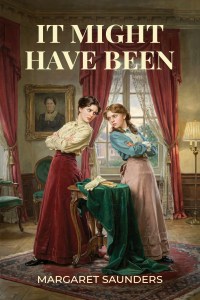
Our July free read is a short story by an author who may be new to you. Margaret Marshall Saunders was a Canadian writer of children’s stories and a passionate advocate for animal welfare. She was thirty-two years old and just starting her writing career in earnest when her novel Beautiful Joe was published in 1893 under her pen name “Marshall Saunders.” The book quickly became a worldwide bestseller and made history as the first book by a Canadian author to sell over a million copies.
Margaret Saunders was a talented writer, and when she submitted her short story “It Might Have Been” to Isabella Alden for publication in The Pansy magazine, the story must have touched Isabella’s heart.
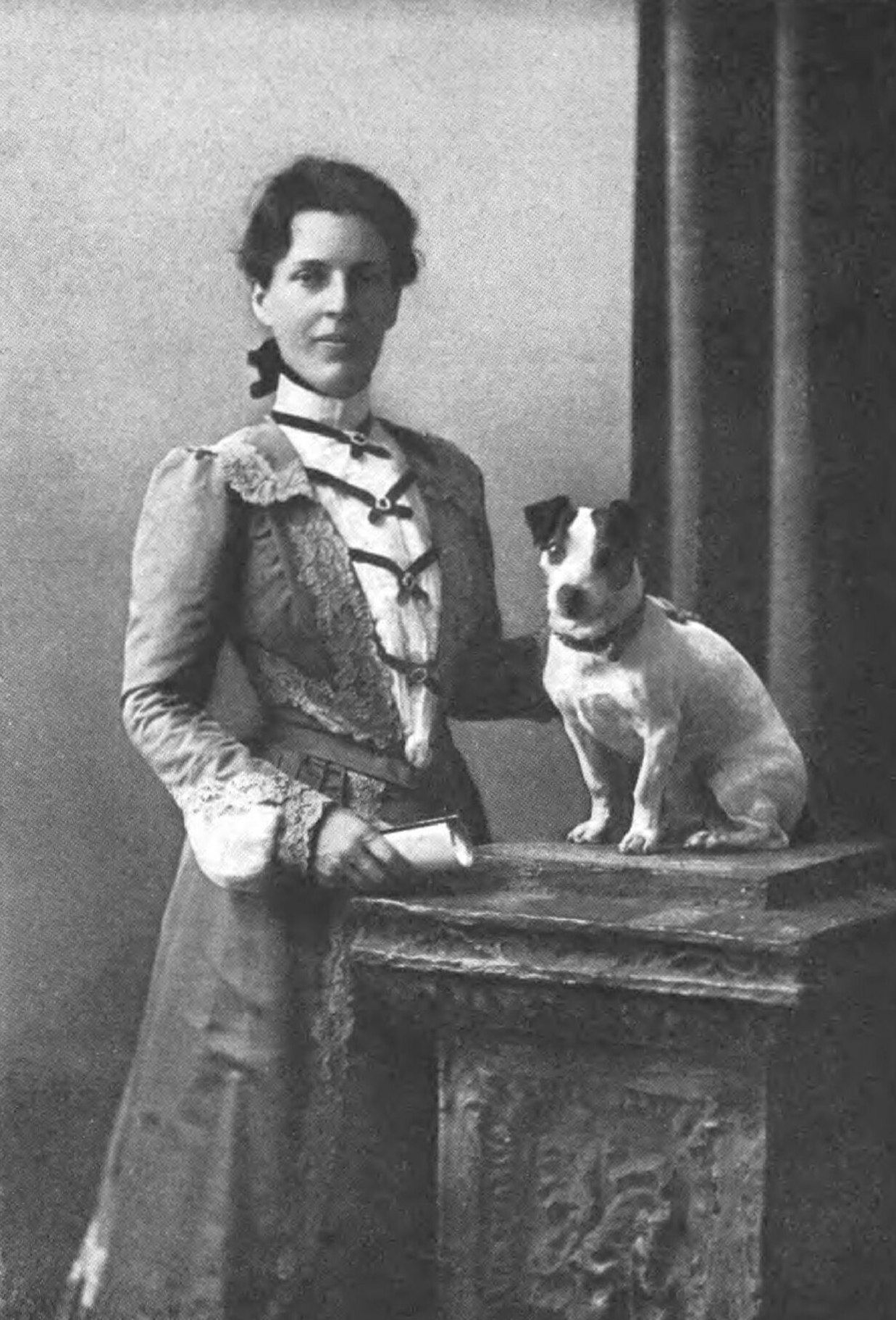
Margaret Marshall Saunders with her dog, Billie Sunday.
Like the character of Ella Crouse in the story, Isabella had a temper! Throughout her life Isabella candidly shared times when her quick flare-ups and uncontrolled anger often got the best of her, leading to situations she later regretted. It’s easy to see how she identified with Margaret Saunders’ beautifully written story. She undoubtedly knew that this tale of regret and sisterly love would resonate deeply with her readers.
Published in the June 1895 issue of The Pansy, “It Might Have Been” by Margaret Marshall Saunders is a lovely short story that reminds us that building character is a slow process—earned through daily patience, forgiveness, and love.
Ella and her sister, Jessie, are opposites in every way. While Jessie is calm and fragile, Ella possesses a fierce, volatile temper that she struggles to master. One chaotic morning, a minor misunderstanding over a pair of gloves escalates into a passionate argument that Ella regrets. But when an unexpected crisis strikes the family later that day, Ella is forced to confront the terrifying reality of what might have been if she never got the chance to say “I’m sorry.”
This month’s free read is a short story Isabella wrote for an 1876 issue of The Pansy magazine about Janie Smith, a miller’s daughter who can’t help comparing her own plain life with another girl’s seemingly charmed one.
Janie Smith has never ridden the stage coach, never seen the city, and never owned anything half so fine as the traveling costume Miss Josephine Jennings wears. Watching the elegant young heiress board the train one morning, Janie can’t help but feel the world has been very unfair. But the express-man’s quiet words — “Poor little thing!” — are about to change everything Janie thinks she knows about fairness and God’s blessings.
Because of her popularity as an author of both Christian novels and Presbyterian Sunday school lessons, Isabella Alden was often invited to speak at churches, women’s groups, and community events. She and her husband, Rev. G. R. Alden, did their best to accept as many invitations as possible. During the years they lived in Ohio, Pennsylvania, and New York, they frequently traveled up and down the mid-Atlantic states, going from one engagement to another.
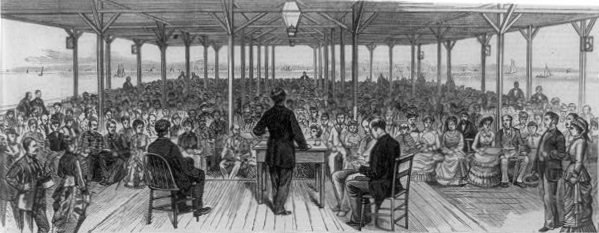
One of their favorite places to visit was Asbury Park, New Jersey. Accompanied by Isabella’s sister and brother-in-law, and niece Grace, the Alden’s enjoyed church services held in the open air of the Asbury Park Auditorium.
The Seaside Sabbath School at Asbury Park, from a sketch in Frank Leslie’s Illustrated Newspaper, August 1881.
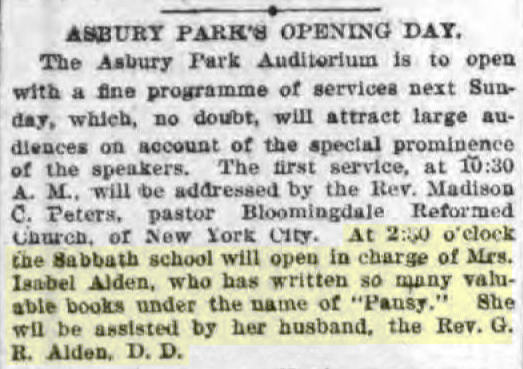
On the first Sunday of the summer every year, Isabella would formally open the Sabbath school program for children, often assisted by her husband.
from the Brooklyn Standard Union, June 22, 1892
One of their trips to Asbury Park was particularly memorable, and Isabella described what happened in an article for her young readers in The Pansy magazine.
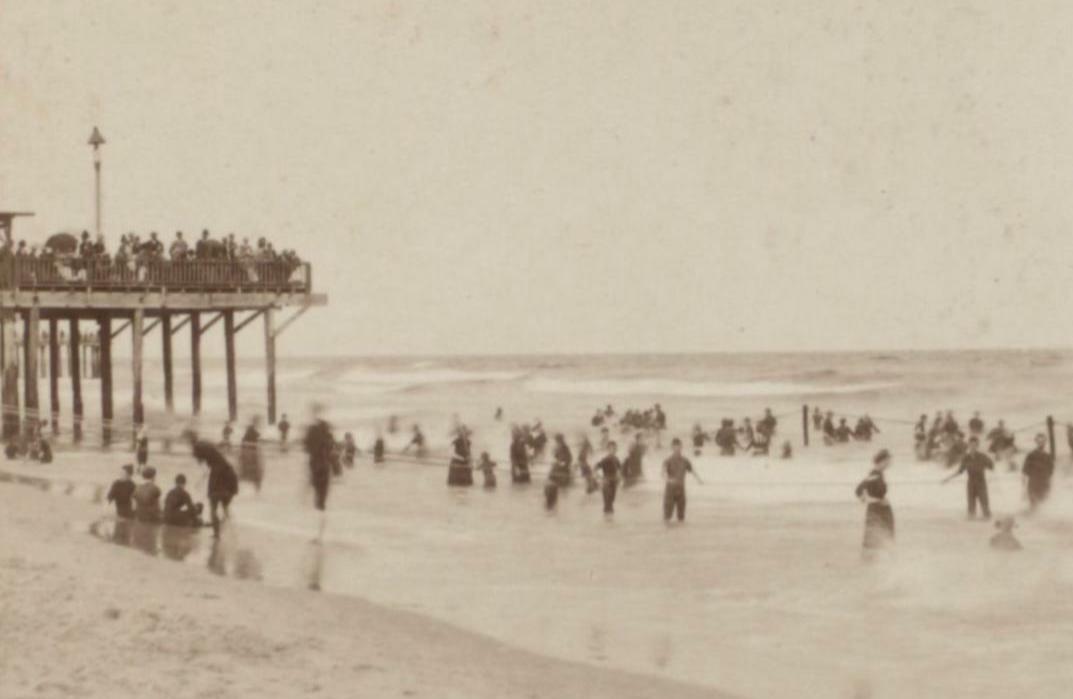
On the beach at Asbury Park in 1875 (New York Public Library).
As you read Isabella’s account below, you’ll notice it takes an unexpected turn at the end. What begins as a fascinating rescue story becomes a temperance lesson—a reminder of how differently some writers approached storytelling in the 1880s and how central the temperance movement was to Christian writers and publishers of that time.
I’m not going to tell you about Asbury Park; at least not much. Some other time I may say a good deal about this pretty city by the sea, but just now I’m anxious to tell of what happened at night. The day had been pleasant enough; not summer, but late spring, bright and sunshiny; we rejoiced over the thought of getting sight of the beautiful beach; reminding each other how lovely the sea looked by moonlight.
Alas, there was no moon for us that night! At least she did not once show her silver face; instead, the sky was black with clouds, and the sea took on its sullen look, and roared as it lashed the shore constantly with great angry waves. We shivered and tugged at our wraps as the wind tried to whirl them away, and said, as we turned to go home, how glad we were that we had no friends at sea.
“The ocean looks cruel,” said Grace; “I don’t like him tonight.”
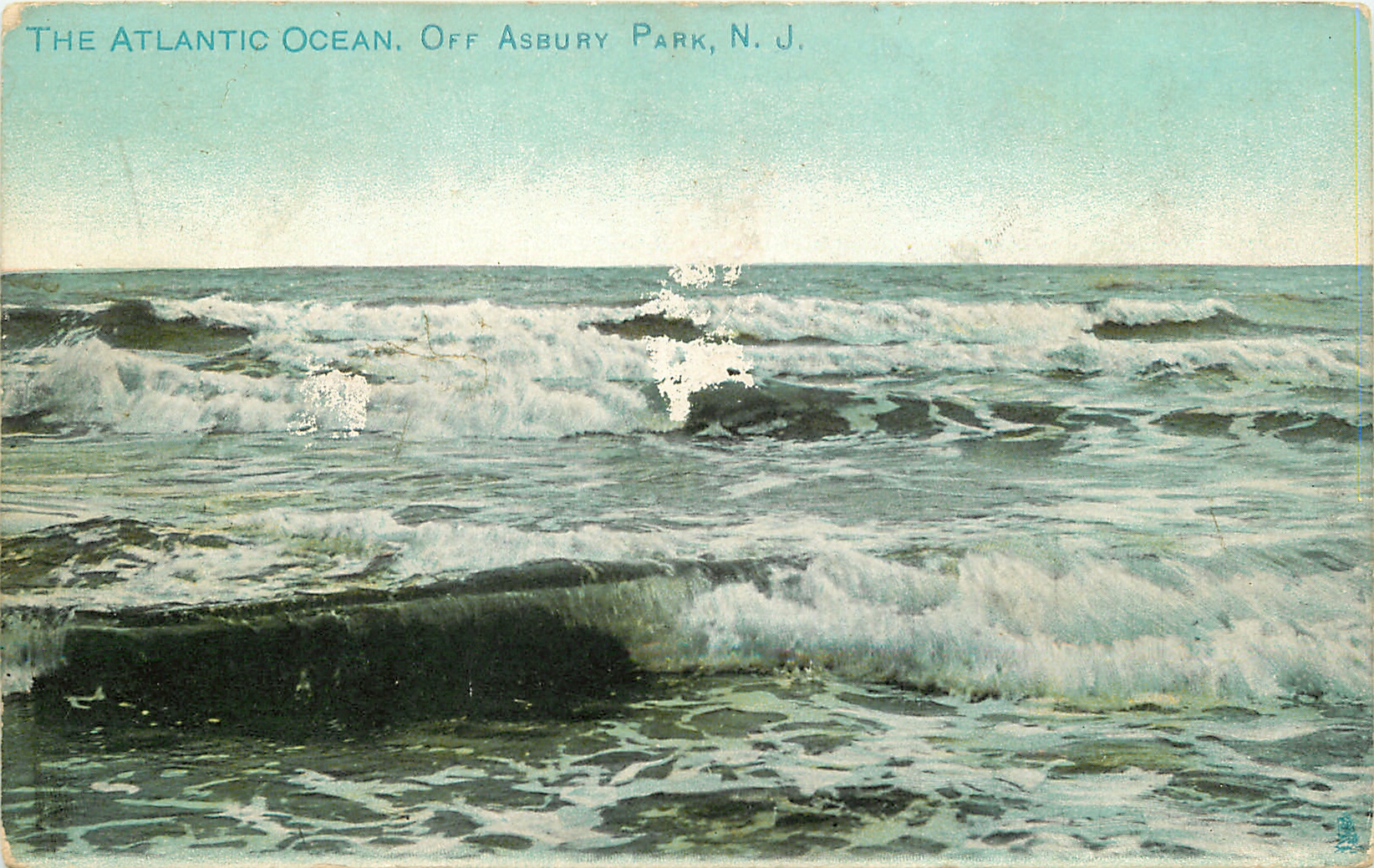
The Atlantic Ocean off Asbury Park in 1907
Then we went home to our bright room; drew the curtains, closed the shutters, stirred the fire to a cheery blaze, and chatted and laughed and were happy, quite shutting out the roar of the angry sea.
But he did not calm; the waves ran high, and the sullen roar kept increasing, until, by midnight, we knew it was what seamen call a gale. Occasionally we heard the fog bell toll out, and once more we were glad that we had no dear ones at sea.
Somebody had, though; and while we slept quietly, knowing nothing of it, brave men were awake and at work. A danger signal was seen just off shore; what excitement there was! How did the men of the life-saving crew know that they were needed? They had been disbanded for the summer, the dangerous season being supposed to be over; and here was blowing one of the worst storms of the winter! I don’t know how they heard the news. Their hearts waked and watched, perhaps; anyway, they came, great stalwart men, and in a twinkling opened their boathouse, and got out their apparatus which had been carefully put away, and before the third signal went up through the stormy water, were ready for action.
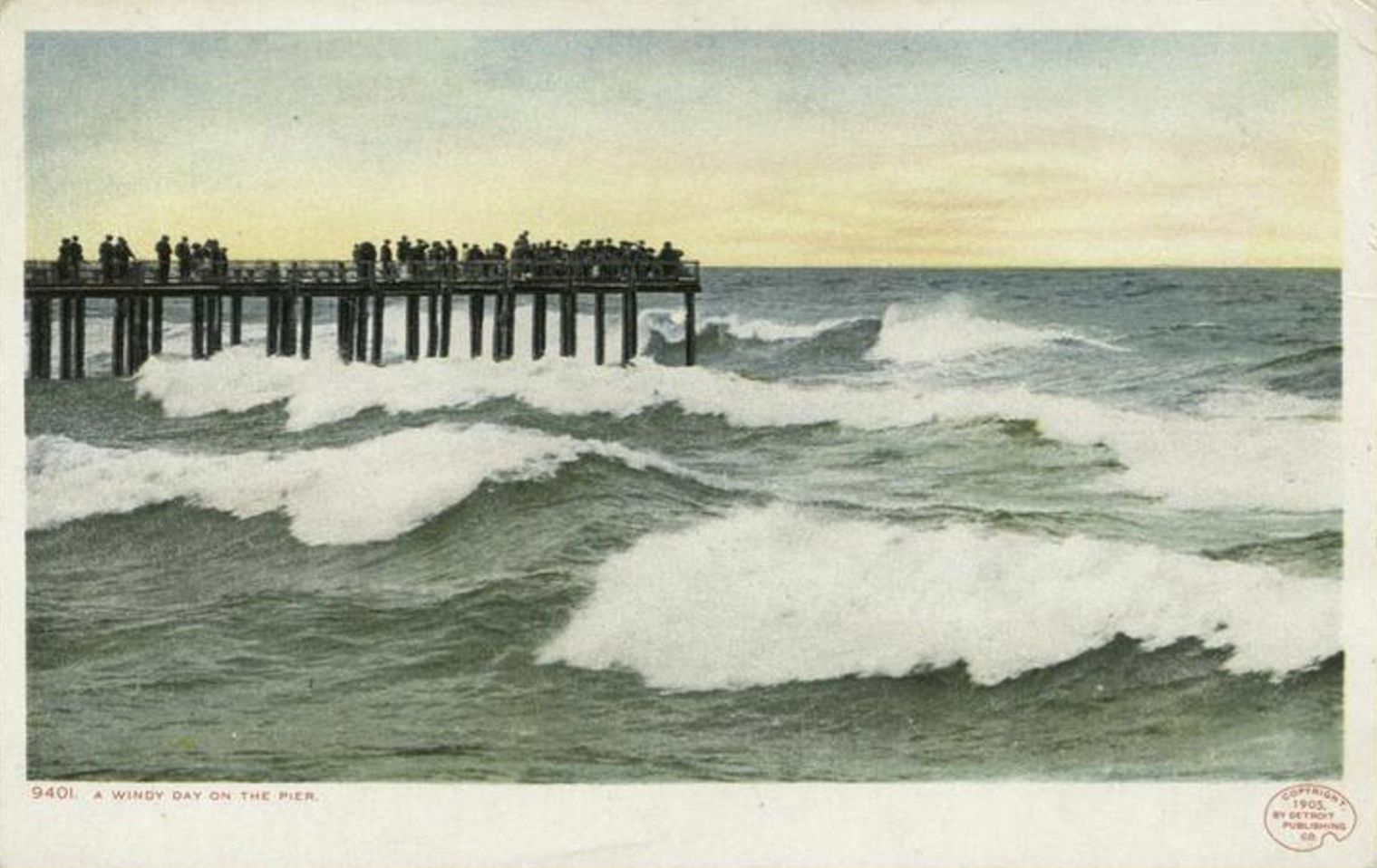
A windy day on the pier in 1905 (New York Public Library)
I don’t know how they did it. At this time of which I write, they had no regular lifeboat such as is now in use; they were not regularly manned for work in any way. Never mind, they did it. One, two, three, four, five, six, seven. Oh, I do not know how many people rode, some way, over the stormy water, on a rope, and reached the shore. Drenched, powerless, almost breathless, yet alive!
Who do you think was one of the first to arrive that night? Why, a little baby less than three months old! What! She did not cling to ropes! Oh, no. All she did was to lie in utmost quiet in the hands of a great strong man; he was lashed to the rope in such a way that the men on shore could pull him in, but the baby he held in his two strong hands, as high above the fury of the waves as the hands would reach. What if he had dropped her? Then the sea would have swallowed her in an instant! An awful journey, but the baby did not know it. She must have gasped a little for breath, and she may have cried, but no one heard her; the roaring ocean took care of that.
You don’t see how she lived through it? They did not think she could; not even the mother, when she took a second to kiss her, before she gave her into the strong arms, thought that she should ever see her darling again. But it was the only possible way of escape; they could but try.
So the baby rode into shore, and I think as many as a hundred mothers stood waiting to receive her, with hot blankets enough to smother her, and warm milk enough to drown her in; for it had gotten abroad in some way that a baby was on board the sinking ship. If you could have heard the shout that went up when the baby was landed in the arms of one mother, who said, after a second of solemn hush: “Yes, she is living!” you would have felt as though you almost knew what a life was worth.
The next morning what a walk we had along the coast! How still the sea lay; the waves crept up softly one after another as if so ashamed of their last night’s work that they would rather not be seen or heard at all. Bits of board, and old tarred rope, and barrel staves and seaweed lined the beach for miles, and coffee sacks by the hundred kept washing in to shore. The vessel had been laden with coffee.
People were very busy putting the beach in order, planning how to reach the wreck, wondering whether she could be gotten off, or would have to lie half-buried in the sand and slowly fall to pieces. Here and there were groups of people, listening, while one man talked excitedly; he was a sailor and had his wonderful story to tell of danger and escape.
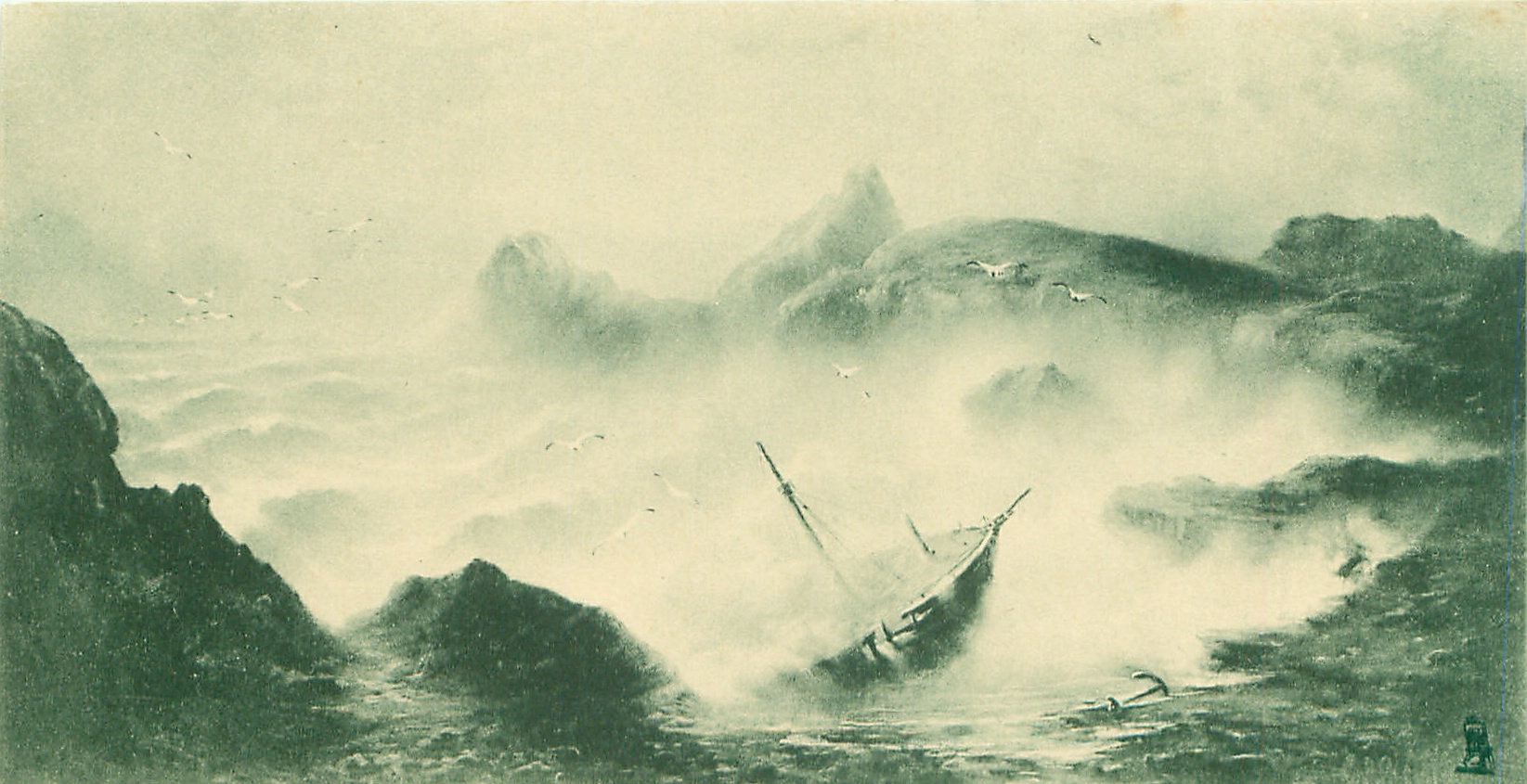
Shipwreck in a Rocky Bay, 1904
But the happiest man on the beach that morning was one who rubbed his hands in actual glee, and smiling broadly on every one who came up to him, would say in a loud, glad voice:
“Yes, I lost everything I had in the world, but my wife and children are all here; yes, baby and all!” and then he would wipe the great tears from his eyes, and laugh so loud and glad a laugh that all the people around would have to join in.
All his children safe! They clustered around him, several sturdy-looking boys, and I watched them with eager interest. Were they all safe? Could the father be sure? The ocean had not swallowed them, but suppose some awful rum saloon caught them in its clutches and drew them in until they went down in a storm of drunkenness to utter ruin! What was an ocean storm to that? Pitiless ocean, rave as it might, could not touch the soul; but the rum saloon has power to destroy both body and soul.
What joy there was over the three-months-old baby! And yet she may live to be a drunkard’s wife, or a drunkard’s mother, and to cry out in bitterness of soul because the ocean did not swallow her flint night. Isn’t it strange and sad to think of? The father thought his children safe, and yet sit many oceans of temptation lay ready to engulf them! none more bitter, more fierce, more wide-spread in its raging, than this ocean of alcohol. Dear boys and girls, what can we do to help save the children for their fathers? Will you all join the life-saving crew, and work with a will, to rescue victims from this ocean?
Pansy
Isabella’s abrupt shift from celebrating the baby’s rescue to warning about “the ocean of alcohol” might feel a little jarring to us today, but it reflects the deep anxiety many families felt about alcohol in the 1880s—when alcohol contained some highly-addictive ingredients.
And she never missed an opportunity to teach. She couldn’t tell a story about saving a baby from the sea without thinking about all the other ways children needed saving—and she used her platform as “Pansy” to rally her young readers to join the temperance fight.
You can read more about alcohol’s secret ingredients in the nineteenth century by following these links:
In honor of Mother’s Day this month’s free read is a story about the debt of love we owe to those who raised us.
After a life of sacrifice, widowed Mrs. Kensett finds her twilight years spent shuffling between the homes of her adult children, where she’s treated more like a burden than a beloved guest. She expects more of the same when she arrives at the doorstep of her youngest son and his new bride—only to find an unexpected sanctuary at long last.
Isabella Alden’s novel Ester Ried, Asleep and Awake opens with a memorable scene: Ester Ried—barely eighteen years old—finds herself with much more responsibility than a girl of her age should have. With an ill mother, four younger siblings, and several boarders to care for and feed, she is often pressed for time, thin on patience, and struggling to keep up with a never-ending list of things to do.
Much of her time is spent in the kitchen cooking, washing dishes, and supervising laundry; and on scorching summer days, the heat from the wood stove makes the entire room even hotter, so her cheeks were always in a state of “glowing.”
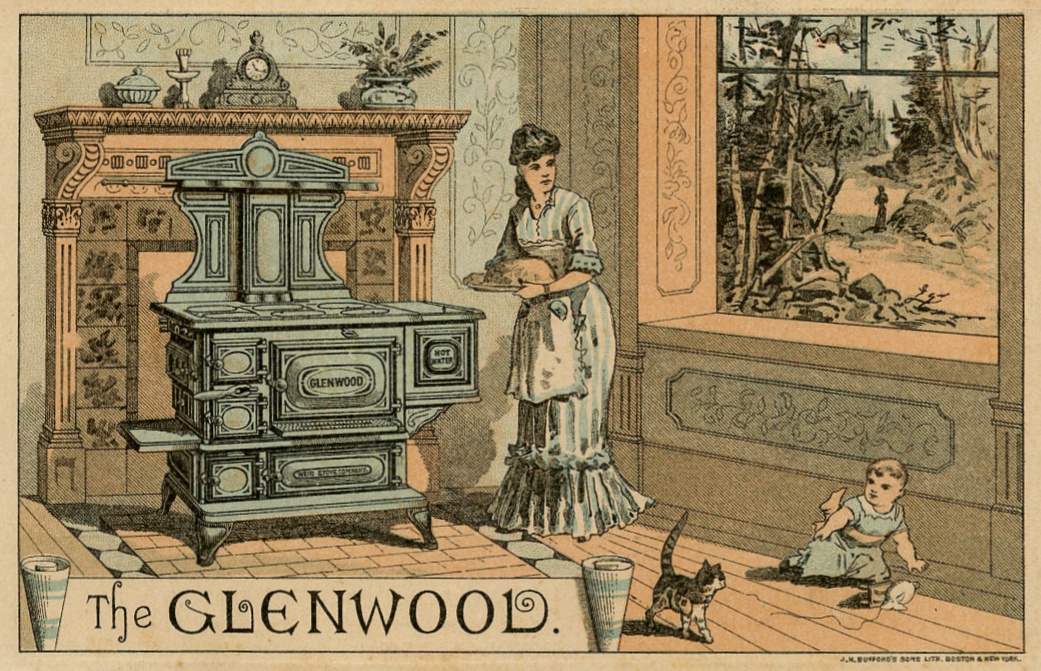
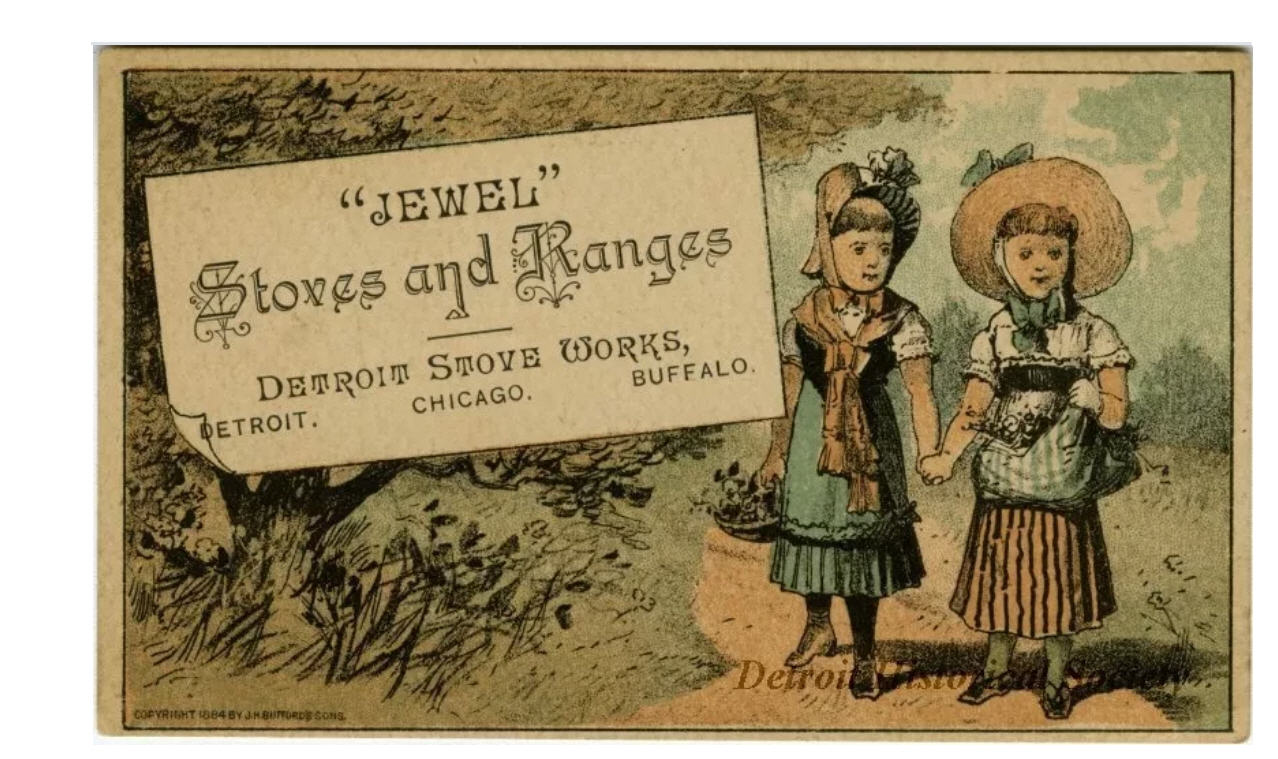
Trade card for a traditional wood-burning kitchen stove, about 1890
When Ester Ried was published in 1870, kitchen stoves were large, cast-iron pieces of furniture; and while their primary function was for cooking, stoves also served as essential elements of a home’s heating system. In winter a wood-burning stove helped keep the house warm and cozy. In summer, the same stove could make a kitchen unbearably hot.
Isabella’s readers could identify with Ester Ried’s plight. Isabella, too, must have had more than her share of summer days spent “glowing” in an overheated kitchen while she cooked her family’s meals, heated water for bathing, and tended to a litany of household tasks.
An 1884 trade card from the Detroit Stove Works, manufacturer of wood-burning, oil, and gasoline stoves.
So in 1880, when a new type of cooking stove—the gasoline stove—appeared on the market, Isabella took notice.
Unlike traditional wood-burning stoves that required constant monitoring of logs, flues, and dampers to manage the temperature, gasoline stoves offered a revolutionary level of control. They worked much like a kerosene lamp: a cloth wick pulled the gasoline up to the burner where it turned into a gas, creating a steady, hot blue flame.
An 1890 ad for the Sun Dial gas stove.
By simply turning a knob to adjust the wick, a woman could make her cooking and baking incredibly precise. Best of all, because they didn’t radiate intense ambient heat like massive cast-iron wood stoves, they spared homemakers from suffering in a sweltering kitchen.
In 1880 Isabella wrote about a young wife and mother who learned about the advantages of a gasoline stove in a short story titled, “Faith and Gasoline.”
Summer heat and money troubles force Faith Vincent to face the heartbreaking prospect of being separated from her husband for the entire summer—until a neighbor’s wisdom, a clever “gasoline stove,” and a good amount of prayer help Faith secretly transform her despair into a promising future for herself and her family.
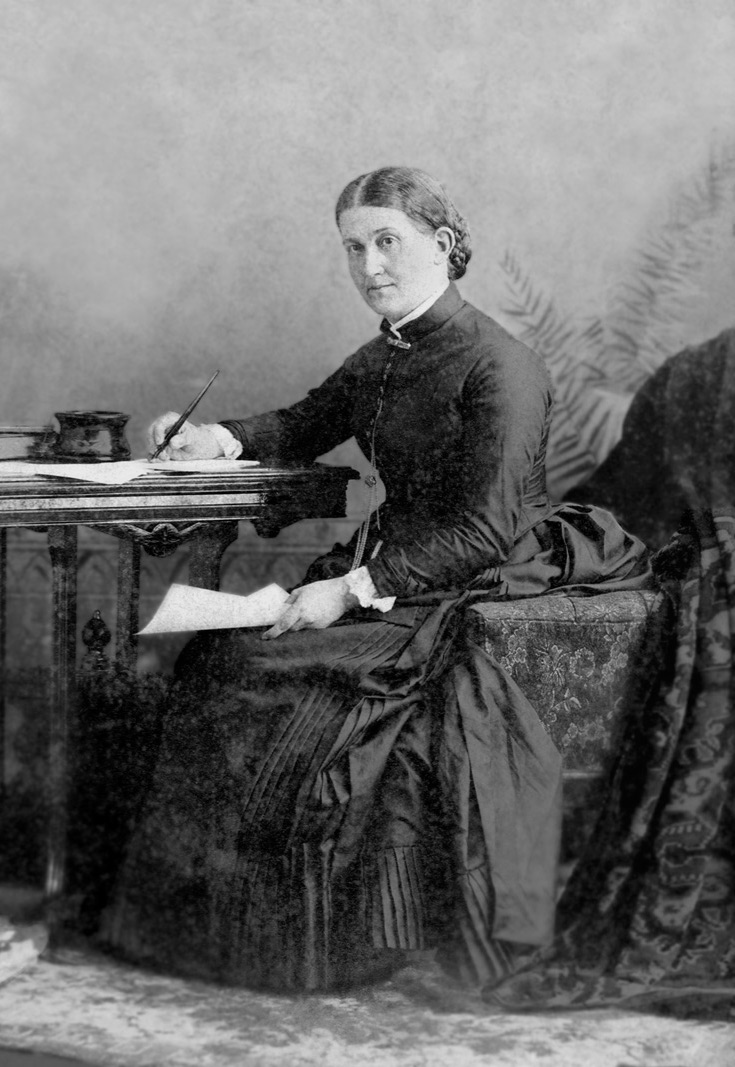
Isabella Macdonald Alden and her sister Marcia Macdonald Livingston were always very close. They were both married to Presbyterian ministers, and both found success as writers of Christ-centered novels, as well as short stories for Christian magazines.
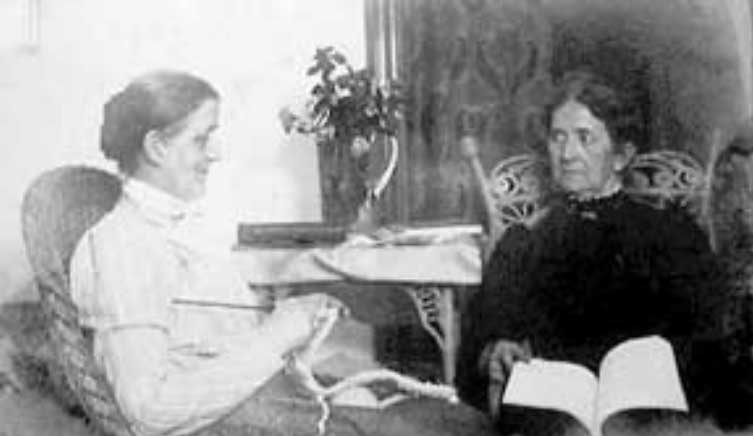
Isabella Alden (left) and her sister Marcia Livingston (right).
In 1898 the sisters learned through their churches about the plight of a retired minister and his wife who were in danger of losing their home. The couple needed just $150—about $5,900 in today’s money.
Isabella and Marcia knew from experience how difficult it was to live on a minister’s inadequate salary, and how that meager income made it nearly impossible to save anything for retirement. The elderly couple’s plight touched the sisters’ hearts and they decided to take action.
The sisters wrote a joint appeal for donations on behalf of the elderly couple. Their letter was published on May 4, 1898, in a weekly Christian magazine and read as follows:
TO THE WIVES OF PRESBYTERIAN MINISTERS.
Dear Friends: Let us beg your pardon in the beginning for addressing you. Our excuse must be that we feel we are not strangers, but friends; the mystic bond which unites the wives of all those who have given themselves to the ministry of the gospel of Jesus Christ unites us, as well as that dearer, stronger one, Jesus Christ being our Elder Brother. It is because it seems that he has put it into our hearts to send you this word that we do it.
It has come to our knowledge that there is in our beloved Church a minister and his wife who sorely need a little help just now to tide them over a hard place. The facts are, briefly, these:
A Presbyterian minister, formerly in active service as pastor, now broken in health and nearly seventy years of age, invested his little all several years ago, in a small place in California, hoping to make a living by raising fruits and vegetables for the market. He and his wife, who is now partially crippled by rheumatism, have worked heroically on their home, but the unprecedentedly hard times of the past few years, as well as increasing ill health, were against them. The little home, so carefully and prayerfully worked for, is in danger. A mortgage of only $150 rests upon it; but, unless even that small sum be raised promptly, it must go.
A minister and his wife belonging to our grand Church, sick and old and with no home! Isn’t it pitiful that such a thing should be, when they have given their best years to the Church?
Why are we telling you? It has come into our hearts that possibly 148 ministers’ wives will each spare $1, to be placed with our $2, to be sent at once to this dear minister’s wife, who can no longer work with her crippled hands, as she has bravely done, to help support her sick husband. This, as a token that we are sisters and recognize the bond.
While we write the words we remember that probably some cannot do even this, and are moved to ask that any who can will make their offering $2 or $3, or even $5, for the sake of those who would respond but cannot, and for the sake of those who will mean to do it, when they read these words, but who will let the cares of this busy world crowd it from their minds.
The sisters closed their appeal by providing their home addresses where donors could send money, and a promise to provide updates in a future issue of the magazine.
Photo of Isabella Alden about 1880 (age 39)
It’s hard to know what their expectations were. Perhaps they thought they’d eventually receive a few donations that they could add to their own and forward to the retired minister and his wife.
But that’s not what happened! You can imagine Isabella and Marcia’s excitement when they wrote the following update, which appeared two weeks later on May 18 in the same magazine:
AN ACKNOWLEDGMENT.
Dear Friends: It gives us pleasure to report at this date the receipt of $41 towards the $150 that we are trying to raise to save the little home, of which we wrote you last week. As the magazine containing the appeal has been issued only four days, including Sunday, the replies thus far have been instantaneous.
The sum of $41 in today’s economy is about $1,600. That’s an astonishing amount to receive in so short a time! The sisters continued:
Our gratitude for these kindly and prompt responses is very great. We are looking to receive many more before the week closes. One friend writes that she hopes we will excuse her for not being a minister’s wife, and yet for sending her offering! We are delighted with her.
We remember that there are ministers’ wives by the score who gladly would, but cannot; it is fitting that some more blessed with this world’s goods should reply for them. Two dear ladies have already done so; one sent $5, the other $10.
One friend hopes that we will receive much more than the sum called for and be able to make an additional gift. We echo the hope.
Later it will be our pleasure to give a somewhat more detailed account of this pleasant work, and of some of the precious letters that have come to us. There have already been received gifts that represent sacrifice and letters that would touch your hearts. Yours sincerely,
What a promising start for the sisters’ fund-raising campaign!
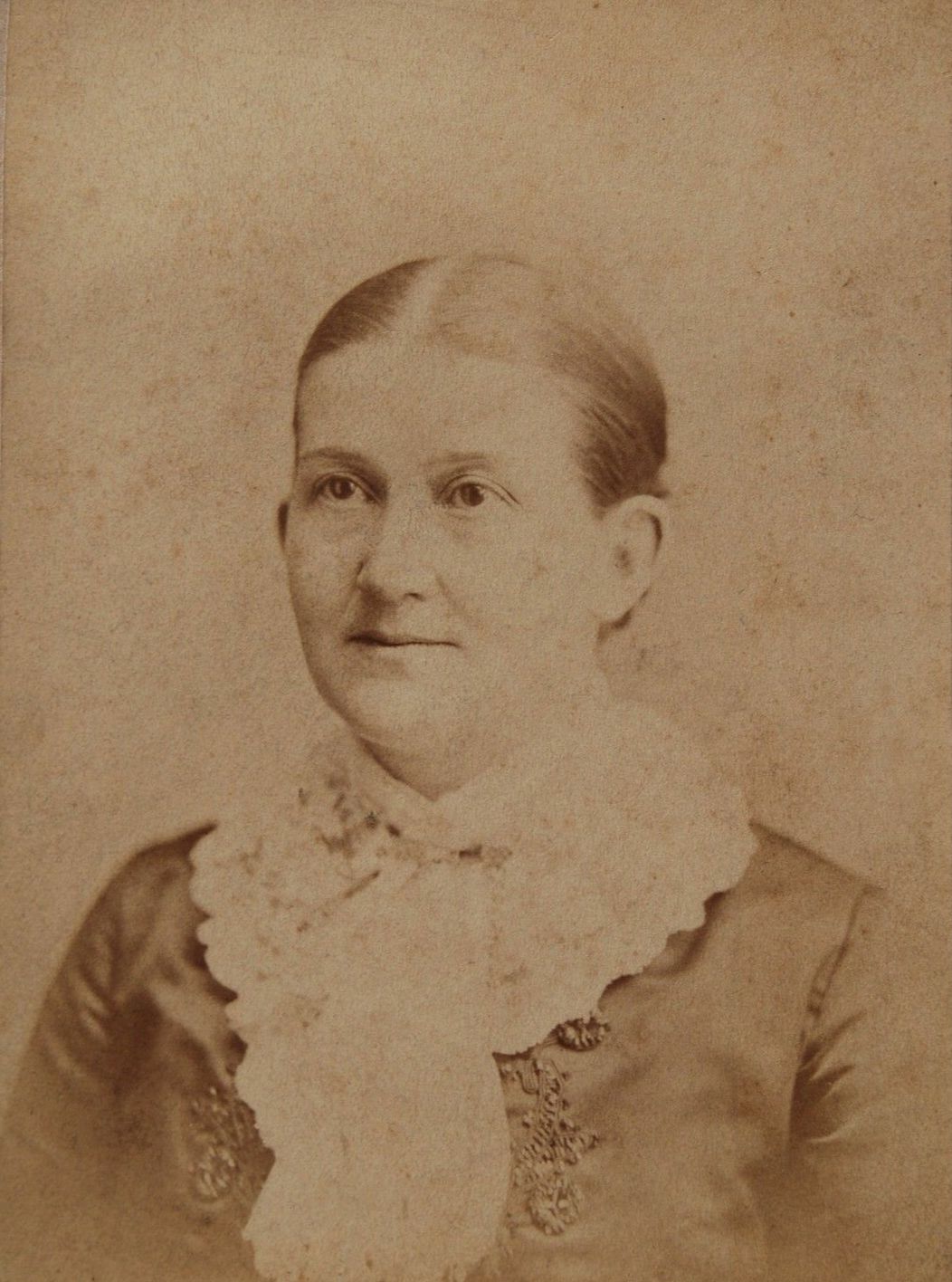
Marcia Livingston around 1905.
Their next update was published three weeks later on June 8 with the following headline:
THE MORTGAGE LIFTED
The sisters’ wrote:
Dear Friends:
It is with pleasure and gratitude that we come to you with the final result of our appeal for those dear servants of God in California, asking you to lend a helping hand in saving their home.
You will remember the amount of the mortgage was $150, and we have the joy of telling you that we have received in all the sum of $210.
That $210 would be equal to about $8,300 in today’s money! The sisters continued:
Undoubtedly it will be a blessing to our dear friends to receive these tokens of fellowship, but the Lord’s own statement, that it is “more blessed to give than to receive,” seems again to have been verified.
Nearly every letter writer has taken time to add a word of tender sympathy and to express the wish that the sum desired might be much more than realized.
As we read the heart-lines accompanying them, we wished that you could all enjoy them with us. It has been interesting to note how many ministers’ daughters responded, “begging the privilege” of being counted in.
One friend wrote that she was not in any way connected with ministers, but she was a member of the Presbyterian Church, and she felt it a precious privilege to lend a helping hand to these servants of the Lord in their hour of need.
Another, who said she “had just begun to be a minister’s wife,” was only too glad to inaugurate her service in this way. Still another begged admission to the circle on the plea that she expected “very soon” to become a minister’s wife.
Many ministers’ widows, out of their small incomes, sent glad offerings. One who was nearing her eightieth year, but who had a good home, the rent from which supported her, joyfully offered her gift. Another token was from an old minister and his wife, who said that they had no home to save, but the Lord had taken care of them for seventy-eight years, and given them a little with which to help others.
One wrote, “Your appeal coming so soon after our Sunday-school lesson on ‘Giving,’ afforded some of us an opportunity to show our faith by our works. How thoughtful of our Lord!”
There were gifts from those who “had to count even the dimes carefully to make the ends meet, but were glad to share with others.”
Times without number we were thanked for affording the opportunity, and the wish was constantly expressed that much more than the sum called for might be received.
Now, in regard to the recipients of these gifts, nothing would afford us greater pleasure than to copy at length the beautiful and touching letter received from the dear wife, in response to the check sent her. The length of the letter and the personal character of some of it deter us. A few sentences, however, we feel that we must quote. The letter commences:
“Dear, dear friends: What can I say? Words will not express my feelings! God only knows the heart, and he knows how thankful, oh, how thankful, we are to you for all your great and noble kindness. God bless you all, and ever keep you in the hollow of his hand, safe from all want. I want to tell you how it was, so far as words will. My husband was out in the yard when your letter came. I called to him and said: ‘Come in; I want to show you something.’ When he came in I said: ‘Put on your glasses;’ then I handed him the check. He is a man who thinks before speaking. As he sat looking at it I said: ‘Cannot we trust the Lord?” Then I could not keep the tears back any longer, and still he had not spoken. He sat with bowed head, and I knew he was thanking God for his loving kindness. When he looked up his eyes were full of tears, and when he heard how it was, he said: ‘The Lord guided you.'”
Was there ever a more beautiful word picture made than that? The entire letter, which is long, is the out-pouring of hearts almost over-burdened with gratitude. As we read we could hardly help feeling that the offerings were small and poor as compared with the wealth of the return; but, after all, that is what was promised: “Good measure, pressed down, shaken together, running over.” May the blessing of him who “maketh rich and addeth no sorrow” be upon every giver.
What is most striking about this story is how Isabella and Marcia immediately moved from sympathy to action. They didn’t just feel bad about the elderly couple’s situation—they did something about it. Using their talents as writers and their influence in the Christian community, they rallied others to join them in making a difference.
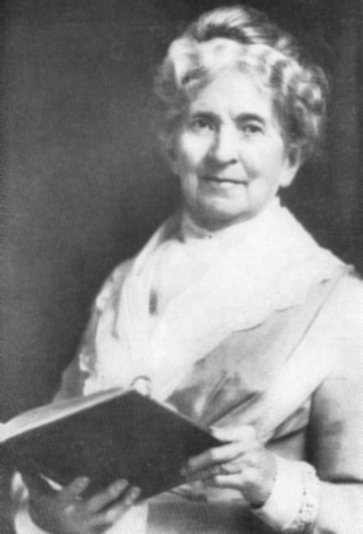
Isabella around 1885.
The sisters are an example of practical Christianity at its finest. They believed wholeheartedly that even the smallest gesture done in Christ’s name mattered, and the overwhelming response they received proved they were right! Within weeks, they hadn’t just raised $150—they’d collected $210 and created a community of givers who experienced the blessing of helping others.
Isabella and Marcia were women of action who used every gift God gave them to serve others. It’s a reminder that we all have something to offer, and that acting on our faith—even in small ways—can create ripples far beyond what we imagine.
Reviews and giveaways for Christian fiction and sweet, clean fiction. Bringing readers information on great stories and connecting authors with their readers.



![Newspaper Article: Verona, Aug. 14. Dr. R.M. Alden of the department of English of Stamford [sic] University, Palo Alto, Cal., has been the guest of Mrs. T. M. Foster and family. Dr. Alden was en route from London to Palo Alto. He reports a somewhat exciting trip by the steamer Arabic. A British cruiser was near at hand the great part of the way, as it was suspected that a hostile cruiser was following the Arabic. Dr. Alden has been in England several months studying in the libraries of the British Museum and Oxford. His parents, Dr. and Mrs. G. R. Alden, have been visiting friends in Verona and New Hartford for the past week, and the party left for their California home on Monday. Dr. G. R. Alden was pastor of the New Hartford Presbyterian Church about 38 years ago.](https://isabellaalden.com/wp-content/uploads/2026/08/article-snagged-ed.jpg)