In August 1914, the world Isabella knew was rapidly changing. The assassination of Archduke Franz Ferdinand weeks earlier had set off a domino effect across Europe, throwing nations into war and leaving thousands of travelers scrambling to return across the Atlantic.
For most Americans, the conflict in Europe seemed a world away. But for Isabella the outbreak of World War I brought a sudden and very personal concern.
Her son, Dr. Raymond Macdonald Alden, was in the middle of it all.
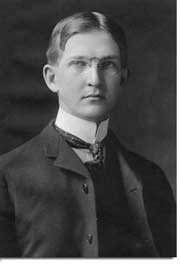
Raymond was a brilliant scholar and head of the English department at Stanford University. He was an accomplished author in his own right, best known for his classic short story “Why the Chimes Rang.”
In early 1914 Raymond traveled to England to spend several months conducting research in the historic archives of the British Museum and Oxford University. It was a dream trip for an American professor of English literature. But as summer drew to a close, the gathering clouds of war suddenly broke over Europe.

Germany declared war in early August, and almost overnight, the Atlantic Ocean became a danger for travelers as German U-boats began patrolling major shipping lanes.
Before matters could escalate further, Raymond wisely booked passage home on an ocean liner called the SS Arabic that departed Liverpool on July 28, 1914.

Raymond’s journey across the ocean was anything but peaceful. For most of the voyage, a British cruiser sailed alongside the Arabic as an escort to protect the liner from a potential u-boat attack.
While the Arabic made it safely across the Atlantic that summer, the ship would not always be so fortunate. Just one year later, in August 1915, the Arabic would be torpedoed and sunk by a German submarine off the coast of Ireland, an event that made international headlines and brought the United States to the brink of entering the war. But in August 1914, Raymond’s ship docked safely in Boston, delivering him back to America unharmed.
While Raymond was braving the ocean crossing, his parents were eagerly waiting for him in New York. The Aldens had always been a close-knit family, but given the circumstances in Europe, Isabella and her husband decided to travel clear across the country to New York so they could be close by when Raymond’s ship docked. The area where they stayed held a special place in their hearts
Isabella was born in Gloversville, New York, and had attended school at Oneida Seminary. It was there that she met Theodosia Toll Foster (who would write under the pseudonym Faye Huntington), and they became lifelong best friends, sharing a bond of faith and friendship that spanned decades.

That August of 1914, while waiting for Raymond’s return, Rev. and Mrs. Alden stayed as guests at the Toll Homestead in Verona, New York. They also spent time in nearby New Hartford, where Rev. Alden had served as a beloved pastor of the First Presbyterian Church nearly forty years earlier.
But lurking beneath the family visits and conversations with friends, Isabella and her husband must have felt a good deal of anxiety over the safety of their son. Their prayers and the bond of faith they shared with family and friends must have been a comfort and support during that time.
After nine stressful days at sea, Raymond’s ship docked at Boston Harbor and he at last joined his parents in New York. He gave the local newspaper a brief (and very understated) account of his Atlantic crossing, describing it as “a somewhat exciting trip.”
![Newspaper Article: Verona, Aug. 14. Dr. R.M. Alden of the department of English of Stamford [sic] University, Palo Alto, Cal., has been the guest of Mrs. T. M. Foster and family. Dr. Alden was en route from London to Palo Alto. He reports a somewhat exciting trip by the steamer Arabic. A British cruiser was near at hand the great part of the way, as it was suspected that a hostile cruiser was following the Arabic. Dr. Alden has been in England several months studying in the libraries of the British Museum and Oxford. His parents, Dr. and Mrs. G. R. Alden, have been visiting friends in Verona and New Hartford for the past week, and the party left for their California home on Monday. Dr. G. R. Alden was pastor of the New Hartford Presbyterian Church about 38 years ago.](https://isabellaalden.com/wp-content/uploads/2026/08/article-snagged-ed.jpg)
Four days later, the Alden family boarded a train together for the long journey back to the home they shared in Palo Alto, California.
To the residents of Verona and New Hartford, the war across the Atlantic might have felt distant. But Raymond’s close call on the Arabic was a reminder of how quickly major world events could reach right into the homes of American families.
For Isabella and her family, facing uncertainty with steady faith and holding fast to deep friendships brought them through another trial, surrounded with love and support until they were, at last, safe at home together.
YOU CAN READ MORE ABOUT ISABELLA’S EARLY LIFE IN GLOVERSVILLE IN THESE POSTS:
LEARN MORE ABOUT ISABELLA’S FRIENDSHIP WITH THEODOSIA TOLL FOSTER IN THESE POSTS:
DISCOVER MORE ABOUT RAYMOND MACDONALD ALDEN IN THESE POSTS:
- Shining a Light on Raymond Alden
- Growls
- What is Love?
- Let’s Decorate!
- Isabella’s Most Difficult Year, Part 1
- Isabella’s Most Difficult Year, Part 2