Today Marcia Macdonald Livingston is widely known as the mother of beloved Christian novelist Grace Livingston Hill and the older sister of Isabella “Pansy” Alden; but Marcia was actually a talented, well-published author in her own right. She wrote uplifting stories for readers of all ages, and this month’s free read is a wonderful example. Although “A Happy Summer” was written with children in mind, Marcia’s warm, engaging writing style makes this a meaningful and entertaining read for adults, too.
For sisters Jessie and May, life in a hot, cramped city attic makes the country feel like a distant dream. With their widowed mother working day and night to keep a roof over their heads, a summer filled with green fields and fresh air seems impossible. But when an unexpected act of kindness opens the door to a new life in the quiet village of Woodbury, the Wilson family discovers the joy of answered prayers and the simple beauty of nature.
Originally published in an 1883 issue of The Pansy magazine, this special edition of “A Happy Summer” includes the original artwork published with the story, so you can read it in the same way Victorian children first enjoyed it!
In 1892 Isabella Alden—writing under her pseudonym, Pansy—was one of the most popular fiction authors in the U.S. Her novels were translated into multiple languages and sold around the world. A “Pansy book” was guaranteed to occupy an honored place on bookstore and library shelves.
She wasn’t alone on the best-seller lists. At that time the literary world was dominated by books like:
The Picture of Dorian Gray by Oscar Wilde The Sign of the Four by Arthur Conan Doyle Tess of the d’Urbervilles by Thomas Hardy
These novels were praised for their new “realistic” writing style that featured characters and plots that were “true to life.” By comparison, some critics complained the characters in Isabella’s books were “too good to be true” and her themes were “sentimental.”
Isabella clapped back.
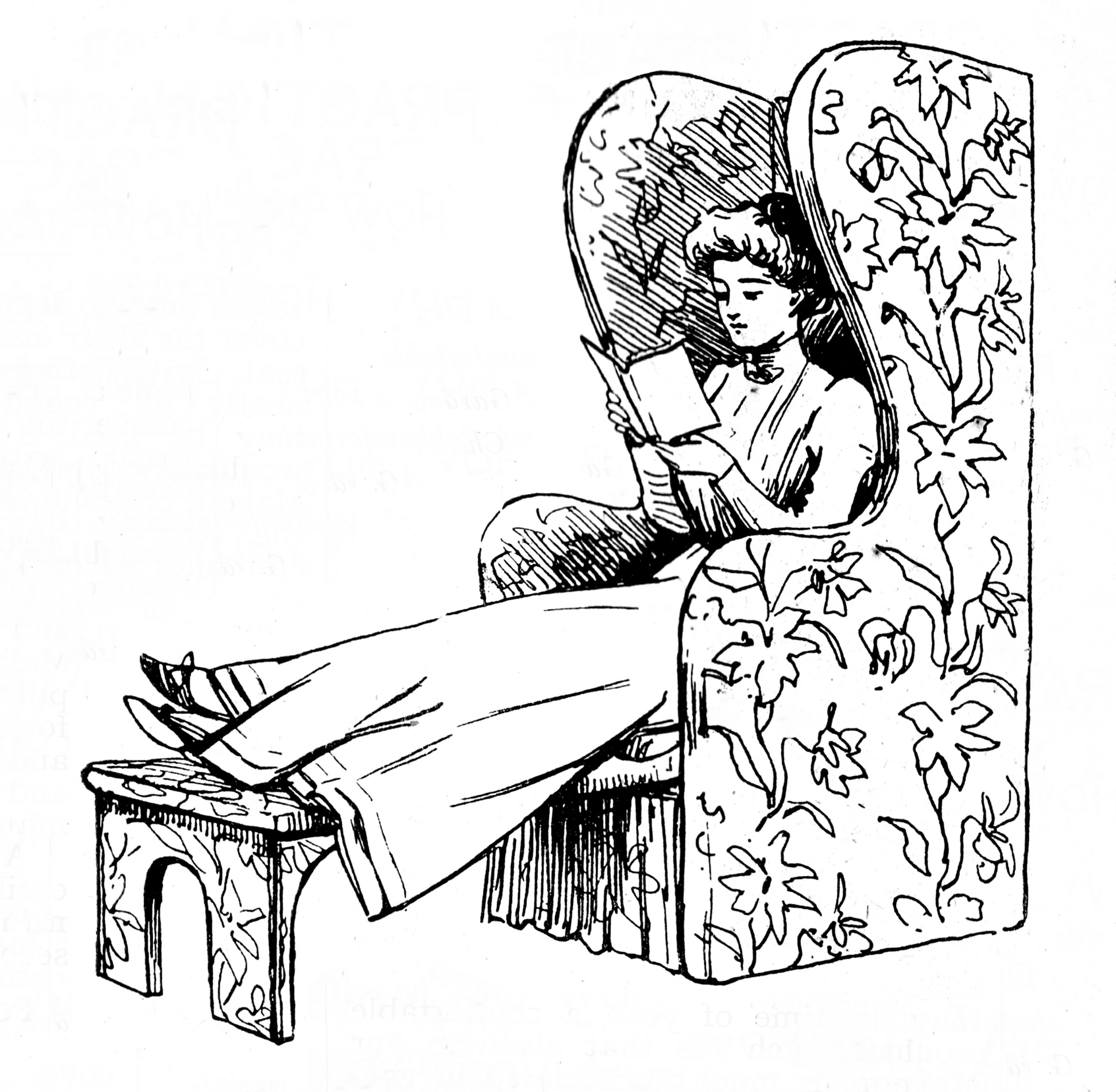
She wrote an essay for a Christian magazine titled “How to Read a Story.” In it, she fiercely defended her work and taught a master class on how a Christian should select and read fiction. Her essay gives us a wonderful insight into Isabella’s philosophy as a writer—and the high expectations she had for her audience.
Read Isabella’s essay below. When you’re finished, continue on to see how her 134-year-old words still hold true today and perfectly describe one of her most famous characters.
HOW TO READ A STORY
BY “PANSY”
My complete subject is: “How to read a story so as to get the most good out of it.” Let me emphasize the thought involved; first choose your story. There are stories which are not and cannot by any process be made helpful. Busy young people, at least, have a right to the best.
Of course there is a difference of opinion as to what is the best, and perhaps the first thing to be done in order to get help from a story is to decide why it should be helpful. We hear a great deal about realistic writers, or those who picture life as it is. At first thought these seem to be the ones whom we should choose for helpfulness, because of what use is it to study a life which is not helpful? But a closer look shows you that there are two sides to this question. The police reports, the murder trials, the accounts of bar-room fights, and the like, are intensely realistic; but why should we grovel in such scenes as these, merely because they are too sadly true to life?
We hear a great deal about sentimental writers, until some of us are in danger of learning to think that sentiment of any sort is a very weak and offensive thing. The fact is, there is a vast difference between sentiment and sentimentalism, and we young people must learn to discriminate between them. For instance, the sentiment of love is ennobling, uplifting, immortal in its power; but the sentimentalism of love which makes a parade of its outward forms—dishes them up for silly readers, giving to the public words and caresses which should be held in sacred privacy—merits our stern disgust. To discriminate between them is what we want to learn.
It has become a fashion of the present day to sneer at what is called the “goody-goody” book; by which too often is meant the book written with an evident purpose to accomplish good in the world. But whatever others may say, of course no Christian reader will be found sneering at the book which was “written for a purpose,” for without a purpose worthy of an immortal, what right has one to write, or one to read, who is pledged to “try to do, every day, just what Jesus would like to have him do?”
Only yesterday a young lady, speaking of a character in a well known book, said, “He is too good—unnaturally good; there never lived a man like him.”
Did there not, dear friend? Have you forgotten the man Christ Jesus, who came to be our example?
I take it, young friends, that if there be a legitimate realm for fiction in a Christian’s life, it is found in an earnest attempt to portray, and an earnest effort to study, a character which represents not what most people are, but what people might become who tried to live each day a life hid with Christ in God. When next you hear the cry of “unnaturalness” raised against a book or character, try to learn whether it should be unnatural, or whether it is not your privilege to live just as round and full and beautiful a life as that.
Well, we have chosen our story; how shall we read it?
“How not to do it, is the first rule to apply,” said a young reader to whom I appealed the other day. And when I further questioned, he explained, “Why, don’t plunge in, and read for twelve consecutive hours, straight through. If you do, you will feel at the close as if you had been to a three days’ circus, and on the whole you will be disgusted with the performance. I have discovered it to be a good plan to lay aside a story as soon as I have found I don’t want to … I do not want a story-book to be my master.” I think so many stories get out of their proper place in our lives.
Do you ever try to study a writer’s power over you? To define what pleases you in the story? Why you want to read it? I think that is one of the ways of making a story helpful.
“I mark books freely,” said one young reader who reads to good purpose, “stories as well as other matter. I mark the passages which thrilled me, and go carefully over them when the story is finished, to discover, if I can, why they thrilled, and whether, on sober second reading, they still have that power. Moreover, it is not much of a book which does not give you one or two thoughts that you want to remember and quote for the benefit or pleasure of others.”
Sometimes we get good out of a story by carefully studying the characters whom we admire, and discovering why we admire them. If we find that in certain situations their conduct has been admirable, and that in like situations we should be tempted to act differently, we can use this story to forewarn and forearm ourselves against a future temptation. The reverse of this proposition is also true. I remember reading, years ago, a story in which I disliked a certain character. A careful analysis of my reason and a little careful thinking developed within me the astounding thought that I was often guilty of the same line of conduct, though I had never realized it before.
I would have you learn to note with exceeding care the effect which a story is having on you as you read. Does life seem to you a better, nobler, grander thing as you read of its dealings with these creatures of fiction? Do you admire true courage and unselfishness more? Do you feel more eager than ever to overcome within you that which mars your usefulness and cripples your influence? Do you rise up from its pages feeling stronger to do that day’s’ duties, however small; to bear that day’s crosses, however irksome? Then indeed such a story may be to you a voice from the King himself urging you to higher and better endeavor in his service.
But if, on the other hand, as you read, the every-day commonplace life that you are called upon to live grows petty to you, grows irksome; if sin in any form looks less appalling to you because your story has awakened some weak interest in the sinner; if, in short, God, and duty, and endeavor in His name and for His sake seem less important and less inviting because of the story you are reading, let me beg you to put the book from you as unworthy of the thought of an immortal soul.
In her essay Isabella wrote, “Sometimes we get good out of a story by carefully studying the characters we admire, and discovering why we admire them.”
Were truer words ever written? Isabella wasn’t just lecturing readers about an impossible standard—she shared her secret for creating enduring fiction. Her books still have the power to make readers examine their own lives, leaving us feeling “stronger to handle our daily duties [and] to bear that day’s crosses.” Perhaps more importantly, her stories showed us “what people might become who tried to live each day a life hid with Christ in God.”
Ester Ried is one of Isabella’s most beloved characters because she fulfills that exact role. Ester’s struggles with a never-ending to-do list, financial worries, and family friction feels incredibly modern because we still wrestle with the very same problems today.
Isabella also wrote that sometimes we can learn from the reverse, by looking at a character we dislike and realizing “we share the exact same flaws.”
This also applies to Ester Ried. Ester wanted a deeper spiritual life, but she was too tired, too cynical, and too overwhelmed by her daily “crosses” to find it. We readers might initially judge Ester’s grumbling attitude, until we realize we often handle our own busy, stressful lives with the same grumbling spirit.
Ester’s eventual transformation isn’t an overnight miracle that makes her rich or takes away her chores. Instead, the grace Ester finds altersher heart toward her daily duties. Because Isabella grounded Ester in real human emotion, Ester’s journey still inspires us to find that same grace in our own hectic lives.
What do you think of Isabella’s essay?
When you first read Ester Ried, did you see your own daily frustrations reflected in her? How did her journey help you look at your own “every-day commonplace life” with fresh eyes?
What other Pansy novels have you read that served as a mirror that made you examine your own life?
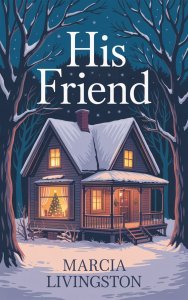
This month’s free read is a sweet story about faith and Christmas blessings by Isabella’s sister, Marcia Livingston.
Wealthy Mr. Thornton finds his greatest pleasure in carrying out the quiet, unseen work of “his Friend.” With Christmas fast approaching, he has renovated a beautiful cottage to bestow upon an as-yet-unknown person who is homeless and friendless. When his path crosses that of Lily Winthrop and her grandfather, Mr. Thornton sees a clear object for his charity. Will his act of giving remain anonymous, or will Lily and her grandfather discover the secret donor of their miraculous Christmas gift?
Like her younger sister Isabella, Marcia Macdonald Livingston was a talented writer. Her stories always contained a message of faith and a happy ending; and she excelled at writing about the trials—small and large—that husbands and wives face together.
This month’s free read is about one of those couples who must learn to cope with an empty nest.
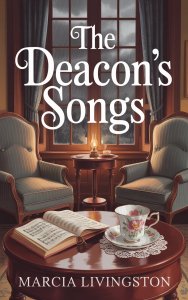
Mrs. Warner is in despair. After her beloved daughter marries a young pastor and moves away, the once-cheerful woman cannot muster a smile for her husband, the Deacon. It will take a lonely November evening and the comforting strains of a few old hymns for this devoted couple to rediscover their faith and their gratitude for one another.
Rebecca’s dress was entirely appropriate and becoming. She had gone out from her father’s house very well supplied with clothes, and her ability to re-make them herself had stood her in good stead, so that now her dress of fine black cloth, made severely plain, but with minute attention to details, became her well. So did the black felt bonnet, with its three stylish plumes, which she had herself dressed over.
from Wanted, by Isabella Alden, published in 1894
In her stories, Isabella often used the latest fashion to define a character’s financial and social status, and Rebecca Meredith’s outfit was an excellent example. Because her dress was plain and black, her bonnet “with its three stylish plumes” was the centerpiece of her outfit and called attention to her pretty face.
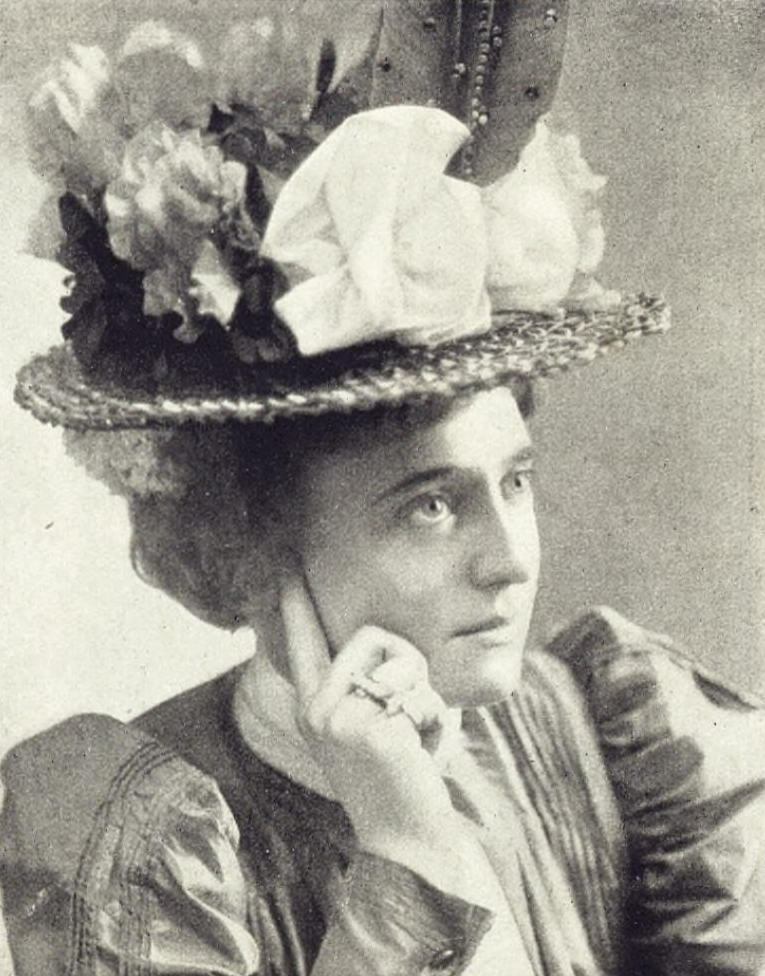
Bonnets with plumes were very much in style when Wanted was published in 1894. Women’s magazines, like Godey’s Lady’s Book and TheLadies Home Journal showed that hats were be made from a variety of materials—straw, for example, or stiffened fabrics like velvet—and that they were quite modest in size.
From Godey’s Lady’s Book, August 1895.
Though small, hats at that time were heavily adorned with ribbons, bows, artificial flowers and, most importantly, bird plumes.
From Godey’s Lady’s Book, October 1897.
Bird feathers were the most desirable decorative elements on a lady’s hat. In 1894 The Ladies Home Journal predicted that actual wings displayed on bonnets would be “all the rage,” while another magazine wrote that “almost every second woman one sees in the streets flaunts an aigrette of heron’s plumes on her bonnet.”
Milliners used feathers from egrets, hummingbirds, herons, and even song birds of all kinds as adornments.
From Godey’s Lady’s Book, 1898.
The more exotic the bird, the more desirable their feathers; and the millinery industry was willing to pay top dollar to anyone who would supply them, no questions asked.
But some people did ask questions and raise alarms, after nature lovers in England and the United States discovered that some birds, like ospreys and egrets, were hunted so mercilessly, ornithologists feared they would soon be extinct.
In London, a Society for the Protection of Birds was formed. Members pledged to never wear feathers of any bird not killed for the purpose of food. Similar organizations were formed in Europe, Canada, and the U.S.
The public outcry began to pay off, as women around the world pledged to stop wearing hats with real bird feathers, and American lawmakers enacted state and federal laws to protect certain species of birds by banning them from use in hats and garments.
One bird that was exempt from protection was the ostrich, because its feathers could be harvested without killing the bird. So it was natural that the millinery industry would turn its attention to ostriches as a source for adornments.
Ostrich farms that had been established in the southern United States in the late 1890s in hopes of selling feathers to the millinery industry suddenly saw an increased demand for their wares.
An ostrich farm in southern California.
And because ostrich feathers could be plucked every eight or nine months, ostrich farmers with large herds enjoyed a regularly replenished inventory they could sell.
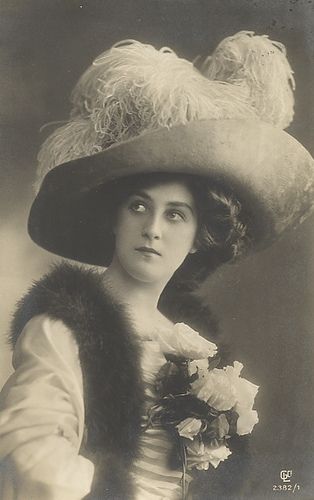
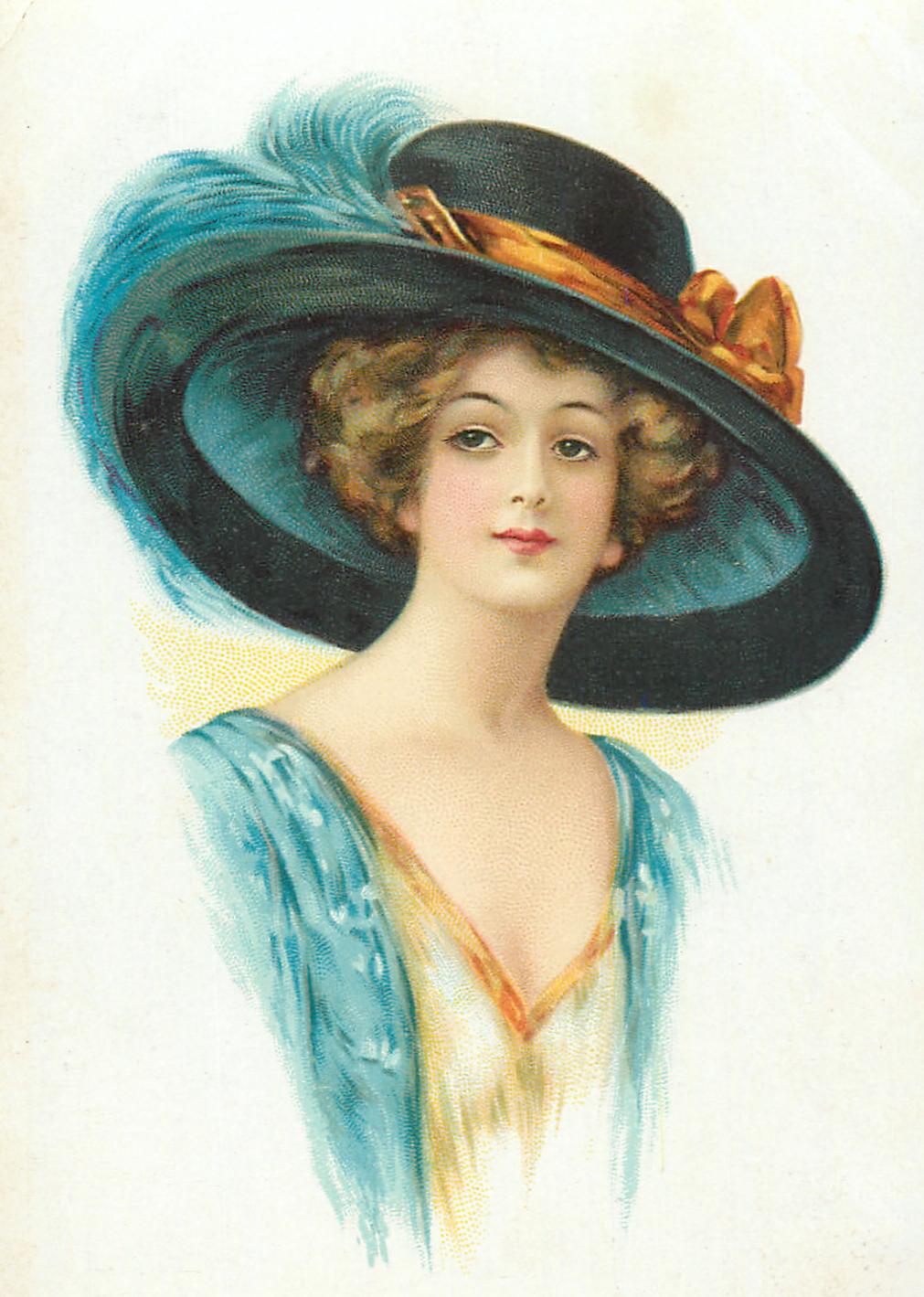
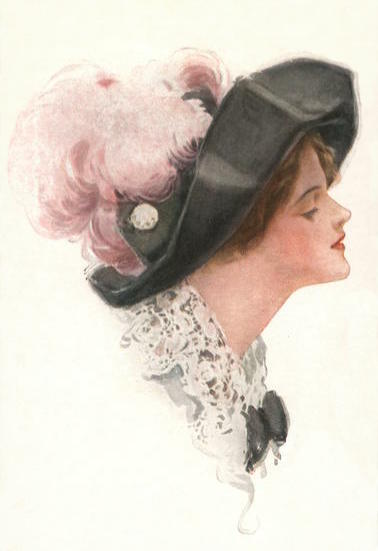
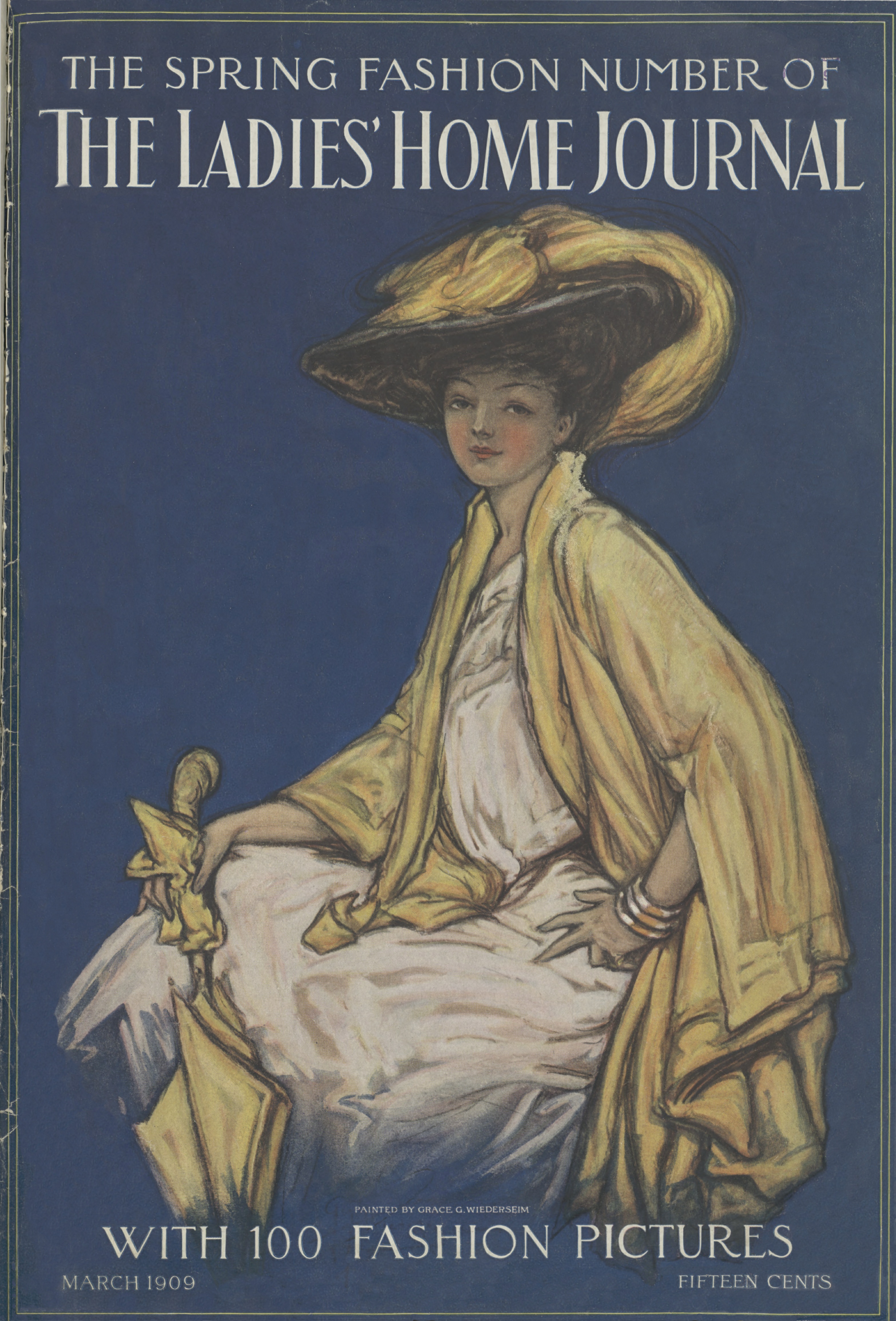
With the turn of the century, hat styles changed, and the small bonnets that were popular when Isabella wrote Wanted fell out of fashion. The new bonnet styles of the 1900s featured wide brims and brilliant colors.
Ostrich plumes suited the new styles beautifully. Because of their size, the plumes could cover a large hat’s crown and brim.
Even more importantly, ostrich feathers could be dyed to match almost any color. Women and conservationists rejoiced, feeling confident that they could use ostrich feathers for fashion without feeling guilty.
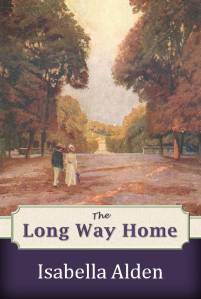
In her 1912 novel The Long Way Home Isabella made sure her fashionable characters wore the latest style in bonnets. Newlywed Ilsa Forbes wore a wide-brimmed hat when she boarded the train with her new husband Andy:
But Andrew had no words, just then; never was the heart of bridegroom more filled to overflowing, and he could not yet think about decorations or supper. “My wife!” he murmured, as his arm encircled her. “Really and truly and forever my wife. Do you realize it, darling?” She nestled as closely to him as her pretty, new traveling hat would permit and laughed softly.
There was, however, a problem with those stylish large hats adorned with ostrich feathers. In 1908 a letter to the editor of the Oregonian newspaper applauded the ban on exotic bird feathers, but raised a new and troubling concern about ostrich feathers:
The letter-writer wasn’t the only one wondering if an ostrich felt pain when its feathers were plucked. Soon the Audubon Society and other conservationists began asking the same question and took their findings to state legislators.
In California, where Isabella was living and where many of the country’s ostrich farms were located, the question was answered by lawmakers. In 1900 the state updated its penal code to make it a crime to intentionally mutilate or torture a living animal, which included plucking live birds like ostriches.
So ostrich farmers stopped plucking and began snipping feathers, instead. A 1911 article in the Dallas Morning News explained the process:
From The Dallas Morning News, November 12, 1911.
Once again, stylish ladies (and Isabella’s equally stylish characters) could wear hats adorned with feathers and maintain a relatively clear conscience.
It’s interesting how Isabella’s attention to details, like hat sizes and adornments, brought her stories to life. While she didn’t preach about fashion in her novels, she paid close attention to these niceties, and used them to bring authenticity to her characters and their world. Contemporary fans of her novels would have noted the subtle changes as keeping up with the times.
For us in 2025, it’s fascinating to learn there’s a whole complicated history behind Rebecca Meredith’s feathers—a history about women who were determined to write wrongs and find ways to be fashionable without compromising their conscience.
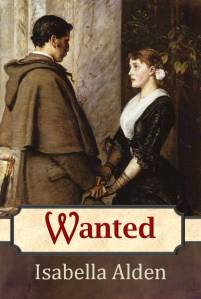
You can learn more about Isabella’s novels mentioned in this post by clicking on the book covers below:
Full disclosure: these are Amazon affiliate links, which means if you decide to purchase through them, this blog will receive a small commission. It doesn’t cost you anything extra, but it helps us keep this site running and researching Isabella’s life and the fascinating world in which she lived.
Reviews and giveaways for Christian fiction and sweet, clean fiction. Bringing readers information on great stories and connecting authors with their readers.