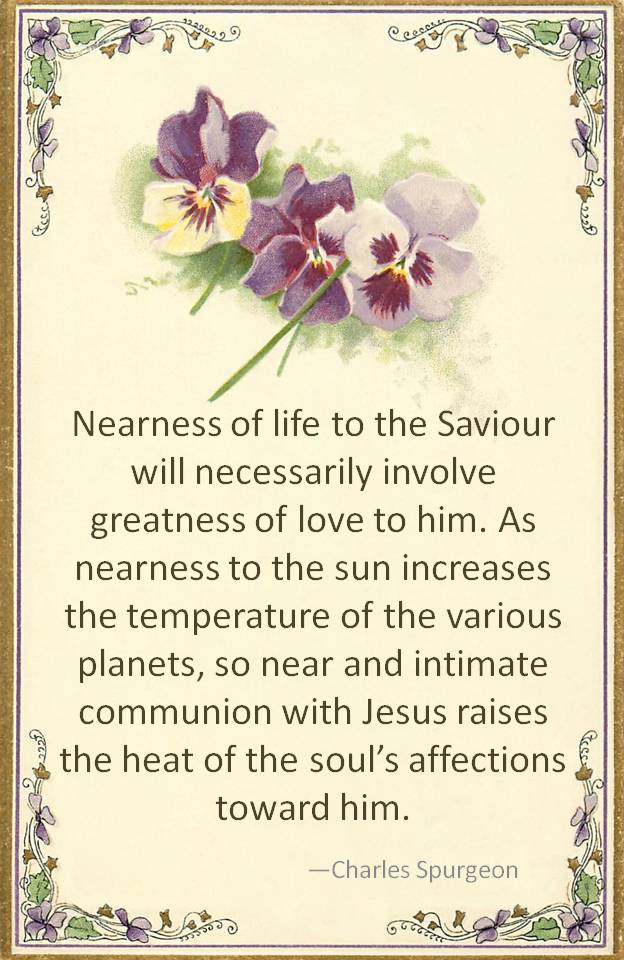
In an 1891 issue of The Pansy magazine, Isabella Alden shared a thoughtful passage by the famous preacher Charles Spurgeon.
Because her magazine was written for young readers and families, Isabella frequently featured quotes and insights from spiritual leaders that illuminated simple truths. Spurgeon’s words draw a beautiful parallel between astronomy and the heart, reminding her readers—and all of us—how personal communion with Christ naturally deepens our devotion.
You can find more words of wisdom like the one above, which you can print and share. Just enter “quotables” in the search box on the right to see more.
Isabella Alden was a teacher at heart. She learned at an early age that the best and most lasting lessons are often taught through real-life examples (read more about that here). It was a philosophy she shared frequently with other parents—whether she was speaking to mothers at church, during her summers spent at Chautauqua, or while traveling on her lecture circuit.
Isabella loved discussing the unique challenges of raising children with Biblical truths as their guide. In a 1901 article in American Mother magazine, she shared a bit of advice she had learned from a mother who found a brilliant way to do just that:
Teaching Self-Reverence.
I knew one mother who, before her son could speak the words plainly, taught him the Bible verse, “I will give thanks unto thee, for I am fearfully and wonderfully made.”
Then, every evening, during their half-hour of confidential talk, she gave him, in minute detail, some proof of the truth of this verse. He was interested in “chu-chu cars,” and had been allowed to stop and examine the great engines, and to ask numberless questions about them.
That evening, his mother told him of the engine in his body that worked day and night at its appointed task. He had a chance, one evening, to look through a small telescope and saw wonders; and was led to think of the two perfect telescopes that he carried about with him daily.
For days, for weeks, for months the marvels went on, given in serial chapters; the revelation of one small human being to his human self. Every night he repeated, with increasing reverence, the words, “I will give thanks unto thee, for I am fearfully and wonderfully made.”
Can you imagine Isabella nodding and smiling as she listened to this mother’s clever idea? Long before modern science had mapped out the intricate inner workings of the human body, this mother used a child’s natural curiosity over trains and telescopes to inspire a deep, foundational reverence for how God made him. It’s a reminder for us today that Isabella’s philosophy was right, and that the greatest truths can often be taught in the quietest moments of a daily routine.
Do you have a favorite way you’ve seen scripture or deep Biblical truths made simple for children?
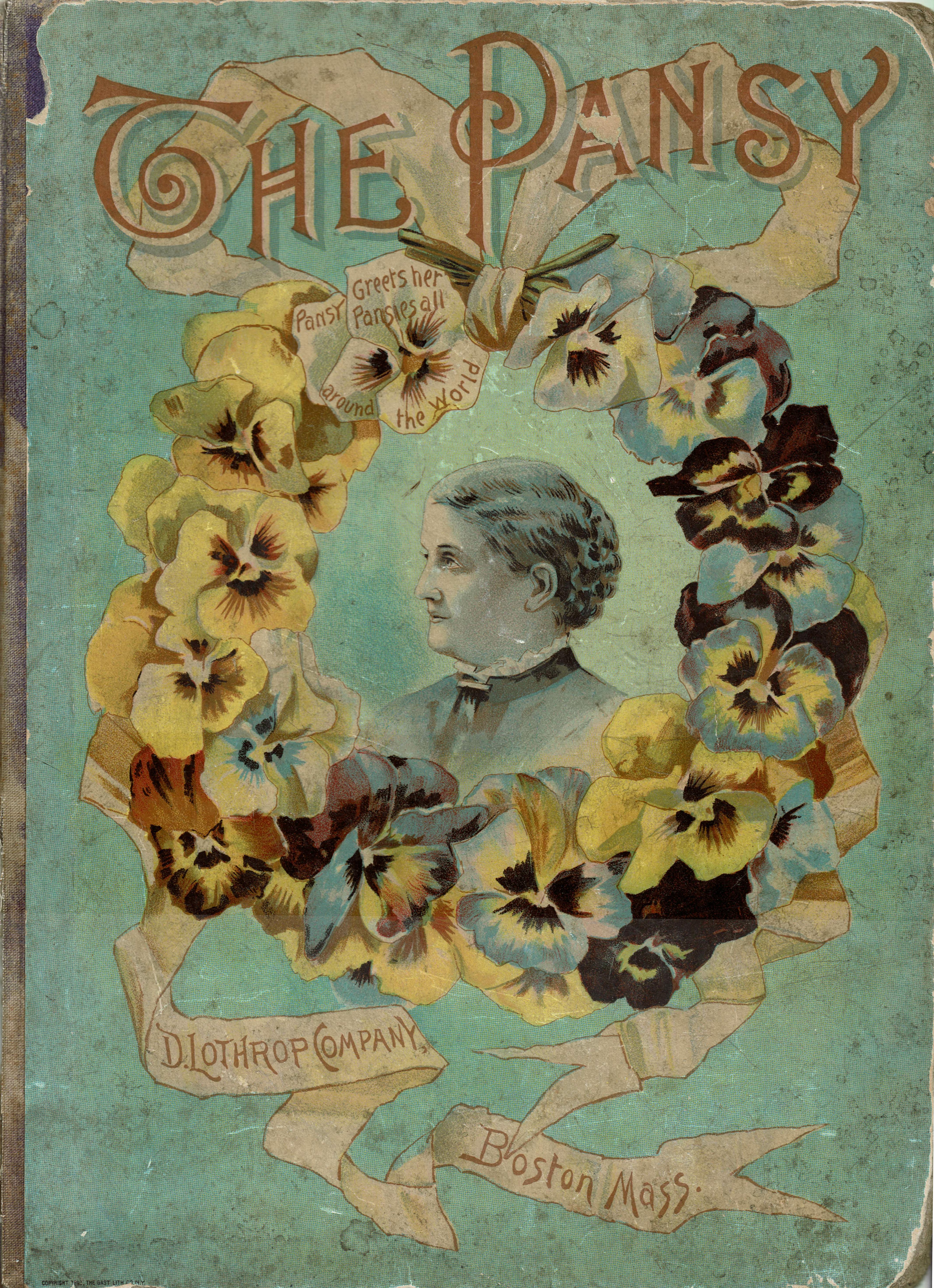
In 1892 Isabella Alden—writing under her pseudonym, Pansy—was one of the most popular fiction authors in the U.S. Her novels were translated into multiple languages and sold around the world. A “Pansy book” was guaranteed to occupy an honored place on bookstore and library shelves.
She wasn’t alone on the best-seller lists. At that time the literary world was dominated by books like:
The Picture of Dorian Gray by Oscar Wilde The Sign of the Four by Arthur Conan Doyle Tess of the d’Urbervilles by Thomas Hardy
These novels were praised for their new “realistic” writing style that featured characters and plots that were “true to life.” By comparison, some critics complained the characters in Isabella’s books were “too good to be true” and her themes were “sentimental.”
Isabella clapped back.
She wrote an essay for a Christian magazine titled “How to Read a Story.” In it, she fiercely defended her work and taught a master class on how a Christian should select and read fiction. Her essay gives us a wonderful insight into Isabella’s philosophy as a writer—and the high expectations she had for her audience.
Read Isabella’s essay below. When you’re finished, continue on to see how her 134-year-old words still hold true today and perfectly describe one of her most famous characters.
HOW TO READ A STORY
BY “PANSY”
My complete subject is: “How to read a story so as to get the most good out of it.” Let me emphasize the thought involved; first choose your story. There are stories which are not and cannot by any process be made helpful. Busy young people, at least, have a right to the best.
Of course there is a difference of opinion as to what is the best, and perhaps the first thing to be done in order to get help from a story is to decide why it should be helpful. We hear a great deal about realistic writers, or those who picture life as it is. At first thought these seem to be the ones whom we should choose for helpfulness, because of what use is it to study a life which is not helpful? But a closer look shows you that there are two sides to this question. The police reports, the murder trials, the accounts of bar-room fights, and the like, are intensely realistic; but why should we grovel in such scenes as these, merely because they are too sadly true to life?
We hear a great deal about sentimental writers, until some of us are in danger of learning to think that sentiment of any sort is a very weak and offensive thing. The fact is, there is a vast difference between sentiment and sentimentalism, and we young people must learn to discriminate between them. For instance, the sentiment of love is ennobling, uplifting, immortal in its power; but the sentimentalism of love which makes a parade of its outward forms—dishes them up for silly readers, giving to the public words and caresses which should be held in sacred privacy—merits our stern disgust. To discriminate between them is what we want to learn.
It has become a fashion of the present day to sneer at what is called the “goody-goody” book; by which too often is meant the book written with an evident purpose to accomplish good in the world. But whatever others may say, of course no Christian reader will be found sneering at the book which was “written for a purpose,” for without a purpose worthy of an immortal, what right has one to write, or one to read, who is pledged to “try to do, every day, just what Jesus would like to have him do?”
Only yesterday a young lady, speaking of a character in a well known book, said, “He is too good—unnaturally good; there never lived a man like him.”
Did there not, dear friend? Have you forgotten the man Christ Jesus, who came to be our example?
I take it, young friends, that if there be a legitimate realm for fiction in a Christian’s life, it is found in an earnest attempt to portray, and an earnest effort to study, a character which represents not what most people are, but what people might become who tried to live each day a life hid with Christ in God. When next you hear the cry of “unnaturalness” raised against a book or character, try to learn whether it should be unnatural, or whether it is not your privilege to live just as round and full and beautiful a life as that.
Well, we have chosen our story; how shall we read it?
“How not to do it, is the first rule to apply,” said a young reader to whom I appealed the other day. And when I further questioned, he explained, “Why, don’t plunge in, and read for twelve consecutive hours, straight through. If you do, you will feel at the close as if you had been to a three days’ circus, and on the whole you will be disgusted with the performance. I have discovered it to be a good plan to lay aside a story as soon as I have found I don’t want to … I do not want a story-book to be my master.” I think so many stories get out of their proper place in our lives.
Do you ever try to study a writer’s power over you? To define what pleases you in the story? Why you want to read it? I think that is one of the ways of making a story helpful.
“I mark books freely,” said one young reader who reads to good purpose, “stories as well as other matter. I mark the passages which thrilled me, and go carefully over them when the story is finished, to discover, if I can, why they thrilled, and whether, on sober second reading, they still have that power. Moreover, it is not much of a book which does not give you one or two thoughts that you want to remember and quote for the benefit or pleasure of others.”
Sometimes we get good out of a story by carefully studying the characters whom we admire, and discovering why we admire them. If we find that in certain situations their conduct has been admirable, and that in like situations we should be tempted to act differently, we can use this story to forewarn and forearm ourselves against a future temptation. The reverse of this proposition is also true. I remember reading, years ago, a story in which I disliked a certain character. A careful analysis of my reason and a little careful thinking developed within me the astounding thought that I was often guilty of the same line of conduct, though I had never realized it before.
I would have you learn to note with exceeding care the effect which a story is having on you as you read. Does life seem to you a better, nobler, grander thing as you read of its dealings with these creatures of fiction? Do you admire true courage and unselfishness more? Do you feel more eager than ever to overcome within you that which mars your usefulness and cripples your influence? Do you rise up from its pages feeling stronger to do that day’s’ duties, however small; to bear that day’s crosses, however irksome? Then indeed such a story may be to you a voice from the King himself urging you to higher and better endeavor in his service.
But if, on the other hand, as you read, the every-day commonplace life that you are called upon to live grows petty to you, grows irksome; if sin in any form looks less appalling to you because your story has awakened some weak interest in the sinner; if, in short, God, and duty, and endeavor in His name and for His sake seem less important and less inviting because of the story you are reading, let me beg you to put the book from you as unworthy of the thought of an immortal soul.
In her essay Isabella wrote, “Sometimes we get good out of a story by carefully studying the characters we admire, and discovering why we admire them.”
Were truer words ever written? Isabella wasn’t just lecturing readers about an impossible standard—she shared her secret for creating enduring fiction. Her books still have the power to make readers examine their own lives, leaving us feeling “stronger to handle our daily duties [and] to bear that day’s crosses.” Perhaps more importantly, her stories showed us “what people might become who tried to live each day a life hid with Christ in God.”
Ester Ried is one of Isabella’s most beloved characters because she fulfills that exact role. Ester’s struggles with a never-ending to-do list, financial worries, and family friction feels incredibly modern because we still wrestle with the very same problems today.
Isabella also wrote that sometimes we can learn from the reverse, by looking at a character we dislike and realizing “we share the exact same flaws.”
This also applies to Ester Ried. Ester wanted a deeper spiritual life, but she was too tired, too cynical, and too overwhelmed by her daily “crosses” to find it. We readers might initially judge Ester’s grumbling attitude, until we realize we often handle our own busy, stressful lives with the same grumbling spirit.
Ester’s eventual transformation isn’t an overnight miracle that makes her rich or takes away her chores. Instead, the grace Ester finds altersher heart toward her daily duties. Because Isabella grounded Ester in real human emotion, Ester’s journey still inspires us to find that same grace in our own hectic lives.
What do you think of Isabella’s essay?
When you first read Ester Ried, did you see your own daily frustrations reflected in her? How did her journey help you look at your own “every-day commonplace life” with fresh eyes?
What other Pansy novels have you read that served as a mirror that made you examine your own life?
Isabella Alden was blessed with two striking talents: she was a gifted storyteller and a skillful teacher. She used those God-given talents to explain sometimes difficult Biblical truths in simple terms her readers could understand. In 1895 she wrote this short but effective letter to readers of The Pansy magazine about what it means to be intimate with Jesus:
DEAR YOUNG PEOPLE:
Why should we pray, do you think?
I have been looking in the Bible for a reason. I find a splendid one; it is because God hears, and helps. Look at the seventeenth verse of the thirty-fourth Psalm and see if it does not say so.
“The righteous cry, and the Lord heareth, and delivereth them out of all their troubles.”
To be sure it begins, “The righteous cry,” but that means the people who try to do right. There isn’t much use in the prayers of other people; because, of course, if we do not mean to try to do right, what use in asking God to help us? But now, what a wonderful thing it is that he is ready to hear us at any time and at all times! You know people, I presume, who are often too busy to hear what you have to say. Suppose God were so. Suppose he had to wait until he had answered twenty-five thousand other prayers before he could listen to yours!
When should we pray?
I know a girl who is troubled over the verse:
“I will bless the Lord at all times; his praise shall continually be in my mouth.”
“I can’t do that; “she said. “I have to think of lots of other things, and talk about them. How can anybody?”
It happens that this girl has a young friend about whom she talks a good deal. When she has any company her friend is sure to be one of them; if she has a gift she is sure to share it with her, if possible; and her brother said to her once, “You are always talking about Fannie Pierce.”
I reminded her of this, and of how much she made people realize that she loved Fannie, and said to her that I supposed the verse meant something like that. There were people who loved Jesus so much that they thought about him whenever any question came up as to where they should go, or what they should do, or be; wondering what would please him, and going to him about it, and thanking him for help. There is a sense in which they might be said to be “always thinking about him;” yet they think of many other things; only they are sure not to plan things which will not be pleasant to their friend.
I think she understood me, for she said, “Oh, I know how I feel about Fannie. Do you really think I could be as intimate with Jesus as that?”
What do you think? Doesn’t he call us to be very intimate with Him?
Isabella’s “Letter about Prayer” reminds us that the best lessons are often the simplest. Although it was written for children, Isabella used a very relatable example of a girl’s friendship with “Fannie Pierce” to explain a spiritual concept. For today’s readers, Isabella’s words still challenge us to consider if we are truly as “intimate with Jesus” as we are with those we love most on earth.
Do you think Isabella’s letter accomplished its purpose?
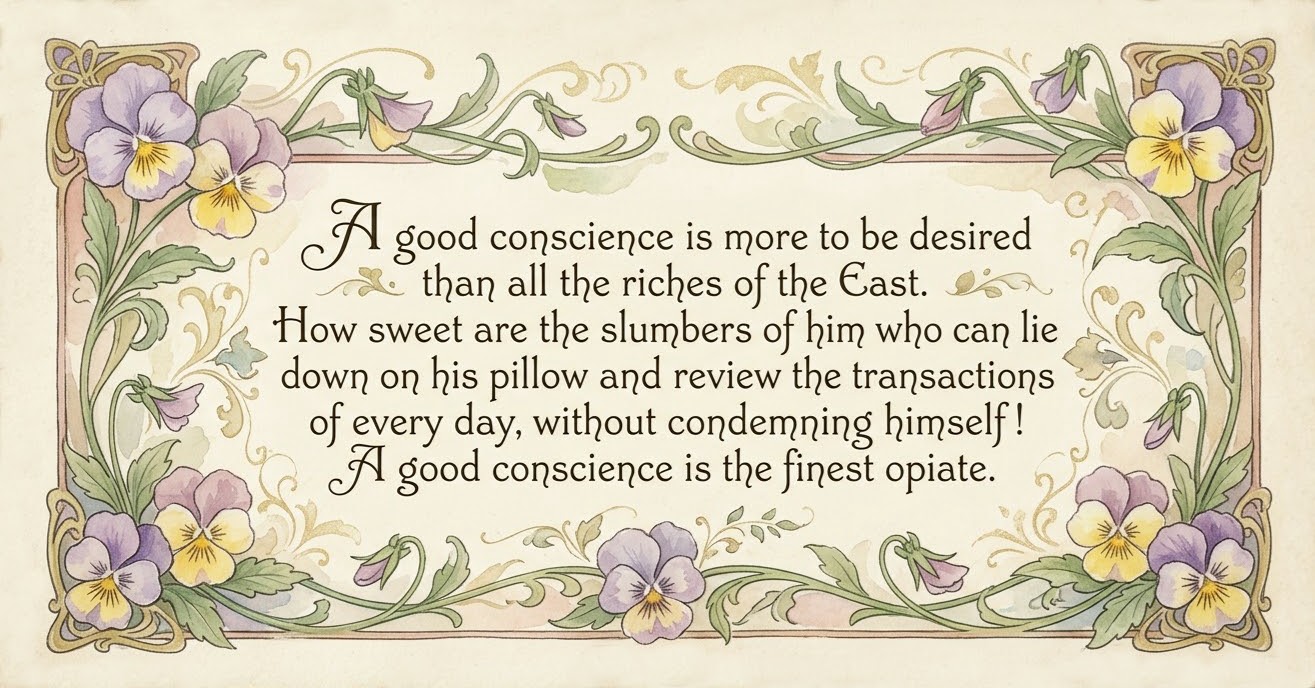
In an 1899 issue of The Pansy magazine, Isabella shared these wise words:
“A good conscience is more to be desired than all the riches of the East. How sweet are the slumbers of him who can lie down on his pillow and review the transactions of every day, without condemning himself! A good conscience is the finest opiate.”
You can find more of Isabella’s words of wisdom to read, print, and share. Just enter “quotables” in the search box to see more.
January brings fresh beginnings and new possibilities, but change can feel unsettling, even when we’ve chosen it ourselves. A new job, a move to a different city, unexpected responsibilities—these kinds of changes can leave us feeling upset and uncertain about what lies ahead.
In 1893 Isabella published a poem in an issue of The Pansy magazine that speaks directly to those feelings and offers a comforting message: we don’t have to face life’s changes alone.
The Promise of God
What if the flowers are facing?
What if the fields are bare?
The winter is all golden
If God be with me there;
I keep the summer sunshine
Within my heart all day,
And when He walks beside me
Flowers cover all the way.
What though I needs must journey
Into a stranger’s place?
I turn from what I know not
And look into His face;
And so it does not matter
How far my feet may roam,
I live within His presence,
And always am at home.
What though I meet new duties
And work too great for me?
God makes my fingers skillful,
And He my strength will be.
I serve a gracious Master
Who gives the help I ask,
And his appointed labor
Is aye an easy task.
O, God! I read the story
Of thy great love for me
In every fresh day’s dawning
And every change I see.
I rest upon thy promise,
I gladly do they will,
Only whatever comes to me
Be near, be with me still.
In previous posts we’ve talked about the great number of letters Isabella received on a regular basis from parents and children. She made a point of answering each of them, and one of the innovative methods Isabella used to keep up with the demand was to print her replies to their letters in The Pansy magazine.
The Pansy was a weekly publication she edited, with stories, poems, Bible verses for children of all ages. In almost every issue of the magazine, Isabella encouraged her young readers to join The Pansy Society, and pledge to overcome their faults, “in Jesus’ name.”
Here’s an example from an 1883 issue of The Pansy where she encouraged Pansy Society members to continue their good deeds, and charmingly replied to children who wrote to tell her of their progress.
DEAR PANSY SOCIETY:
My thoughts toward you this summer day — my good wishes and my hopes. Do you know where the book is that holds them? It is a wide-open book. I did not write it, and yet, the thoughts and pictures it holds just express what I would like to say to you.
Open your eyes and look above, beneath, around, and see if you cannot guess my riddle.
Does not the blue sky bend in blessing over you? the trees rustle out soft, loving words? the little birds sing “cheer up, cheer up?” The clear brook, gurgling over the stones, says “be true.” The buzzing bee says “be busy.” The daisies smile up into your faces, saying “be glad, be glad,” and the white lily bell re-echoes God’s own word, “be pure.” Then the rare fragrance from mountain-top and tree and flower floating all about you this sweet day— could it say anything but, “I love you, I love you, I love you”?
And these are my thoughts toward you; these too are God’s thoughts about you, written clear and plain in the book his own hands have made.
In the springtime just passed I presume many of you have made gardens and now have lovely blossoms as rewards.
Some of our boys and girls have been hard at work sowing pansy seeds; not those royal velvet or creamy white pansies, alone —they may have sown those, too —but I am talking now about our magazine.
Among those who have done faithful work in this way, is Fanny, a little Indiana girl. When those Western girls take hold of a thing they do it with their own souls.
Some new members have come into the Society; let me introduce them. Here are two little city boys, Eddie and Bertie. They both want to be “better boys.” They can, if they go and whisper that wish to Jesus.
Here is Maggie, a little Maryland girl, Maude, too, from Maryland. She writes a plain, clear hand. May her life be as free from faults.
Bessie sends us a pretty letter three inches square, very small, but holding more and better things than we’ve sometimes found in a whole sheet of foolscap. May the dear Lord help Bessie to be a true disciple of his. We are glad to welcome her to the Pansy Society.
Then there are Willie Porter, Claire Colman, Mabel and Lena and Addie; a little Pansy by the name of Lulu in Wisconsin, and Clarence Lathrop.
Minnie is working hard to put her “bonnet and books” in their place. If she keeps on she will someday be an orderly housekeeper, and maybe some of the Pansies will go and take tea with her. Won’t that be nice?
Lillie’s teacher says she is improving. Good news!
“Speaking back” has annoyed a certain little fellow in Philadelphia by the name of Jamie. But he “has made up his mind” to drop it. Stick to that, my dear boy. Remember, too, that if you must speak back, “a soft answer turneth away wrath.”
How many Pansies, I wonder, say to their tired mothers, “wait a minute,” and want their own way every time? Amy thinks them very bad habits and proposes to have no more to do with them; that is good.
But I really must stop, so good-by.
Lovingly, Pansy.
How exciting it must have been for a child to see their name in print in their favorite magazine! Do you think Isabella’s brief words of encouragement helped the children in their daily struggles to conquer their faults, “for Jesus’ sake”?
You can read more about the letters Isabella received in these posts:
In 1891, Isabella wrote this bit of advice for parents, adults and children:
Too many readers are all eyes for what they are reading, but have neither ears to hear the questions of those who notice their absorption, nor lips to tell to others the good things they are absorbing.
There is no better training of the memory than to talk over what you read. Try it in your home. Encourage the children to give, in their own language, the substance of the last story they have read, or the last book that has been given to them. When public lectures were the “fashion,” many a home intellect was encouraged and strengthened by the request to sketch, in brief, the points and conclusions of the last lecture. The same thing can be done with books and with even more lasting and beneficial results.
Isabella’s timeless wisdom encourages us to actively engage with what we read. Her call to action — “Try it in your home” — is as relevant today as it was over a century ago.
She knew that when children are encouraged to retell a story or narrative in their own words, they strengthen their memory of what they read, and their understanding of it.
It’s interesting that Isabella mentioned public lectures. She delivered quite a few lectures herself — at Chautauqua, at church meetings and schools, and in front of small gatherings in private homes. She knew that the practice of having a post-lecture discussion wasn’t just about sharing information; it was about analytical thinking and comprehension. And she knew the same benefits apply to books. When you talk through what you’ve read, you’re not just recounting facts; you’re processing ideas, forming connections, and perhaps even challenging your own understanding.
So when you think about it, many of us have been following Isabella’s advice without even realizing it!
If you’ve ever read a book with a child, then asked them to tell you about their favorite part … If you belong to a book club where you can discuss a book’s theme, characters, or plot with others … If you keep a reading journal to jot down thoughts and questions about a book you’re reading … you have followed Isabella’s advice!
What methods do you use to deepen your understanding of what you read? Share your tips in the comments section below.
What’s one book or article you’ve discussed recently that truly stuck with you, and why?
Have you ever wondered what it would be like to be famous?
Isabella Alden circa 1880
Imagine walking into a room filled with people who burst into applause as soon as you enter. Then imagine that you’ve agreed to speak at an assembly that’s filled to overflowing with people, seated and standing in every available space, who hang on your every word.
That’s a little taste of what life was sometimes like for Isabella Alden. Today it might be hard for us to understand just how famous and beloved she was by people across the country. In a time before social media, television, and radio, Isabella had a nation-wide reputation as both an author and as a respected and knowledgeable public speaker on a variety of topics, including the development of Sunday-school lessons.
In 1886 Isabella and her husband, Rev. G. R. Alden, were living in Cleveland, Ohio, where Rev. Alden was pastor of a Presbyterian church. But when he wasn’t preparing sermons, and she wasn’t writing novels and stories for Christian magazines, the Aldens traveled the country to help churches design and implement well-organized, robust Sunday-school curriculums.
In June of that year they were invited to attend a conference in Wellington, Kansas, where the local churches hoped to find a way to better manage their Sunday-school offerings to children and adults. The Aldens accepted.
From The Conway Springs Star (a Kansas newspaper) on June 11, 1886
As soon as the local newspapers announced that Isabella Alden would be among the featured speakers, the churches were guaranteed to have an excellent turnout for their conference.
from The Monitor-Press (Wellington, Kansas) June 11, 1886
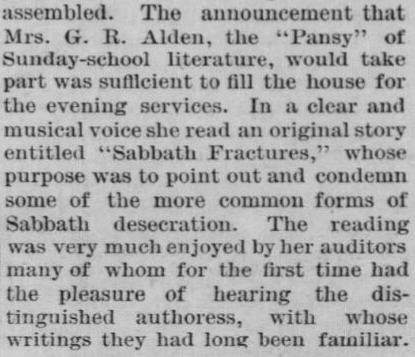
Here’s how the local newspaper described the scene on the first night of the conference when Isabella made her appearance:
from The Wellington Monitor, June 18, 1886.
The meetings began on a Monday afternoon and Isabella took an active role, according to the agenda:
from The Wellington Monitor, June 11, 1886
In one of the sessions she spoke about how to design Sunday-school lessons for children in the Primary Class age range of four to eight years:
from The Wellington Monitor, June 18, 1886
In another session she participated in a discussion on the proper way to prepare teachers for the work of teaching meaningful lessons:
from The Wellington Monitor, June 18, 1886
On Monday evening she read one of her short stories, “People Who Haven’t Time and Can’t Afford It,” which, the newspaper reported, “held the close attentions of the audience in spite of the discomforts of the crowded room.”
The rest of the conference was similarly busy for Isabella. The last night of the conference was “attended by an audience larger than the seating capacity of the church.” Isabella closed the evening session by reading a paper she wrote about “the Penn Avenue Church” and the difficulty the church had raising money for Sunday school purposes and for books to stock a small church library.
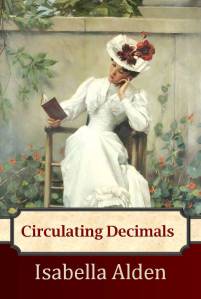
Eventually, Isabella revised that “paper” into a short story called “Circulating Decimals,” which was published two years later.
By every measure, the 1886 Sunday School Institute in Wellington, Kansas was a resounding success.
And with Isabella’s many contributions—from offering practical advice to reading stories with a message—it truly was a “feast of good things.”
One final note:
Isabella may have been a famous celebrity, but when she and Reverend Alden made these trips, they rarely stayed in a hotel. Instead, they were usually invited to stay in the home of one of the local church members. In Wellington, Kansas, they stayed in the home of George and Laura Fultz. Mr. Fultz was a leading businessman in Wellington, and he and his wife were active members of the Presbyterian church.
George Fultz
How lucky were Mr. and Mrs. Fultz! Isabella and her husband stayed with them for five nights. Imagine having your favorite author sit at your dinner table, join you in a morning cup of coffee, or share an evening on your front porch, relaxing and watching the sun set together after a full day of meetings.
If you were fortunate enough to have Isabella as a guest in your home, what kind of questions would you ask her?
All of the short stories mentioned in the post are available for you to read for free. Just click on any of the highlighted titles or cover images to download your copy from Bookfunnel.com.
Reviews and giveaways for Christian fiction and sweet, clean fiction. Bringing readers information on great stories and connecting authors with their readers.










![Newspaper clipping: The committee in charge of the arrangements make this further announcement: “We desire again to call the attention of all parents, Sunday School workers, and especially all young people, to this unlooked for opportunity to meet and greet Mrs. G. R. Allen [sic], “Pansy.” She is known and loved as the author of such helpful and thrillingly interesting books as “Ester Ried,” “Four Girls at Chautauqua,” “The Hall in the Grove,” “One Commonplace Day,” etc. Her engagement with the State Sunday School Assembly at Ottawa, Kansas, brings her west at this time and we trust that a “crowded house” will show our appreciation of the extra effort she is making to come to Wellington. The other speakers from abroad, and those among us who have kindly agreed to assist in these meetings, will give us a feast of good things. Come everybody and enjoy the feast.](https://isabellaalden.com/wp-content/uploads/2025/06/06-11-05.jpg)