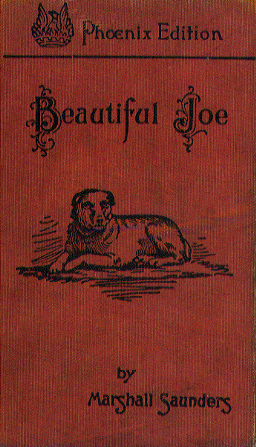
Our July free read is a short story by an author who may be new to you. Margaret Marshall Saunders was a Canadian writer of children’s stories and a passionate advocate for animal welfare. She was thirty-two years old and just starting her writing career in earnest when her novel Beautiful Joe was published in 1893 under her pen name “Marshall Saunders.” The book quickly became a worldwide bestseller and made history as the first book by a Canadian author to sell over a million copies.
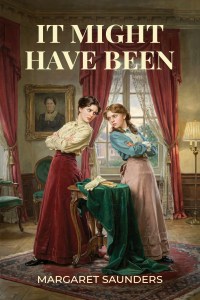
Margaret Saunders was a talented writer, and when she submitted her short story “It Might Have Been” to Isabella Alden for publication in The Pansy magazine, the story must have touched Isabella’s heart.
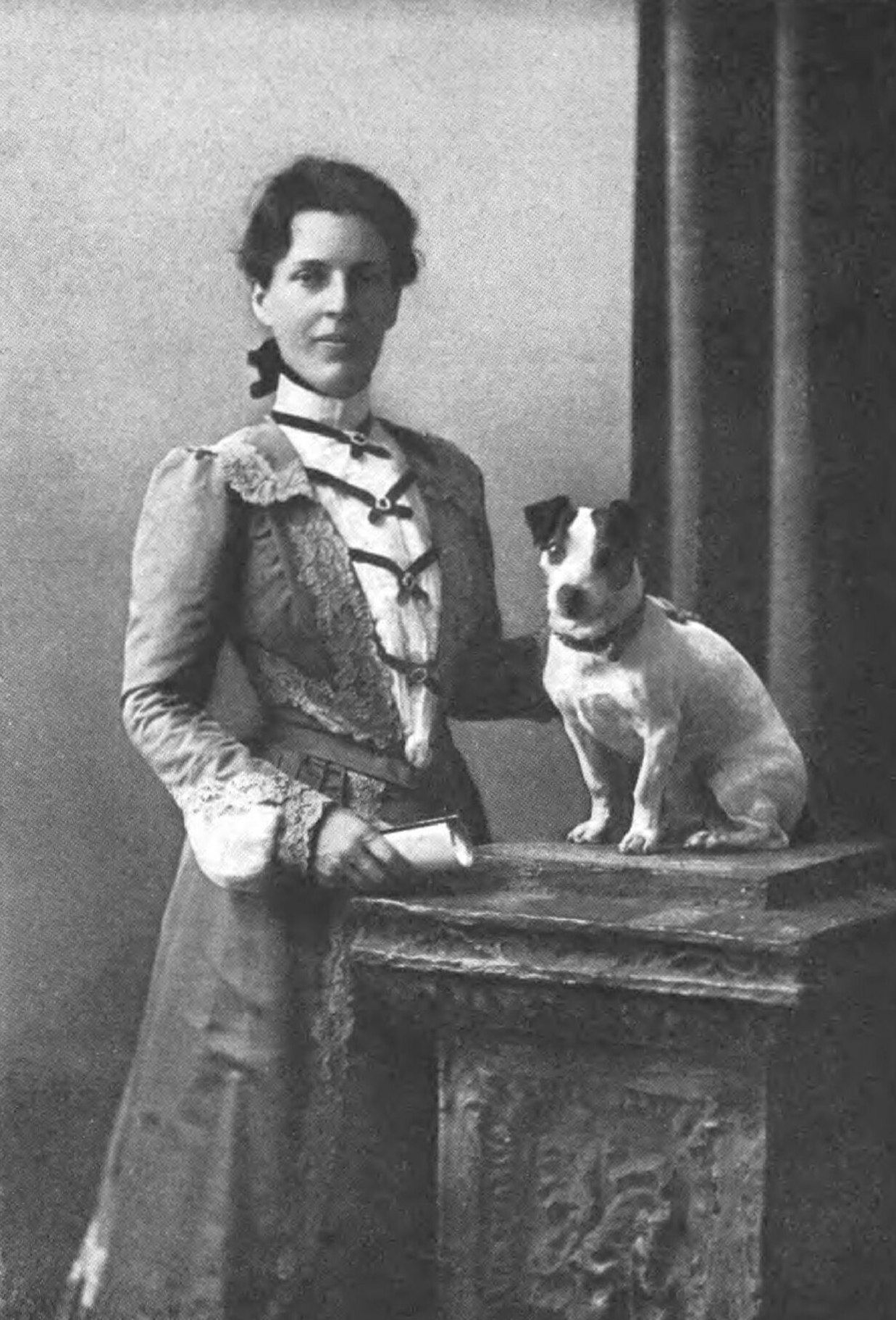
Margaret Marshall Saunders with her dog, Billie Sunday.
Like the character of Ella Crouse in the story, Isabella had a temper! Throughout her life Isabella candidly shared times when her quick flare-ups and uncontrolled anger often got the best of her, leading to situations she later regretted. It’s easy to see how she identified with Margaret Saunders’ beautifully written story. She undoubtedly knew that this tale of regret and sisterly love would resonate deeply with her readers.
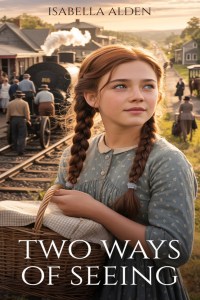
Published in the June 1895 issue of The Pansy, “It Might Have Been” by Margaret Marshall Saunders is a lovely short story that reminds us that building character is a slow process—earned through daily patience, forgiveness, and love.
Ella and her sister, Jessie, are opposites in every way. While Jessie is calm and fragile, Ella possesses a fierce, volatile temper that she struggles to master. One chaotic morning, a minor misunderstanding over a pair of gloves escalates into a passionate argument that Ella regrets. But when an unexpected crisis strikes the family later that day, Ella is forced to confront the terrifying reality of what might have been if she never got the chance to say “I’m sorry.”
In 1892 Isabella Alden—writing under her pseudonym, Pansy—was one of the most popular fiction authors in the U.S. Her novels were translated into multiple languages and sold around the world. A “Pansy book” was guaranteed to occupy an honored place on bookstore and library shelves.
She wasn’t alone on the best-seller lists. At that time the literary world was dominated by books like:
The Picture of Dorian Gray by Oscar Wilde The Sign of the Four by Arthur Conan Doyle Tess of the d’Urbervilles by Thomas Hardy
These novels were praised for their new “realistic” writing style that featured characters and plots that were “true to life.” By comparison, some critics complained the characters in Isabella’s books were “too good to be true” and her themes were “sentimental.”
Isabella clapped back.
She wrote an essay for a Christian magazine titled “How to Read a Story.” In it, she fiercely defended her work and taught a master class on how a Christian should select and read fiction. Her essay gives us a wonderful insight into Isabella’s philosophy as a writer—and the high expectations she had for her audience.
Read Isabella’s essay below. When you’re finished, continue on to see how her 134-year-old words still hold true today and perfectly describe one of her most famous characters.
HOW TO READ A STORY
BY “PANSY”
My complete subject is: “How to read a story so as to get the most good out of it.” Let me emphasize the thought involved; first choose your story. There are stories which are not and cannot by any process be made helpful. Busy young people, at least, have a right to the best.
Of course there is a difference of opinion as to what is the best, and perhaps the first thing to be done in order to get help from a story is to decide why it should be helpful. We hear a great deal about realistic writers, or those who picture life as it is. At first thought these seem to be the ones whom we should choose for helpfulness, because of what use is it to study a life which is not helpful? But a closer look shows you that there are two sides to this question. The police reports, the murder trials, the accounts of bar-room fights, and the like, are intensely realistic; but why should we grovel in such scenes as these, merely because they are too sadly true to life?
We hear a great deal about sentimental writers, until some of us are in danger of learning to think that sentiment of any sort is a very weak and offensive thing. The fact is, there is a vast difference between sentiment and sentimentalism, and we young people must learn to discriminate between them. For instance, the sentiment of love is ennobling, uplifting, immortal in its power; but the sentimentalism of love which makes a parade of its outward forms—dishes them up for silly readers, giving to the public words and caresses which should be held in sacred privacy—merits our stern disgust. To discriminate between them is what we want to learn.
It has become a fashion of the present day to sneer at what is called the “goody-goody” book; by which too often is meant the book written with an evident purpose to accomplish good in the world. But whatever others may say, of course no Christian reader will be found sneering at the book which was “written for a purpose,” for without a purpose worthy of an immortal, what right has one to write, or one to read, who is pledged to “try to do, every day, just what Jesus would like to have him do?”
Only yesterday a young lady, speaking of a character in a well known book, said, “He is too good—unnaturally good; there never lived a man like him.”
Did there not, dear friend? Have you forgotten the man Christ Jesus, who came to be our example?
I take it, young friends, that if there be a legitimate realm for fiction in a Christian’s life, it is found in an earnest attempt to portray, and an earnest effort to study, a character which represents not what most people are, but what people might become who tried to live each day a life hid with Christ in God. When next you hear the cry of “unnaturalness” raised against a book or character, try to learn whether it should be unnatural, or whether it is not your privilege to live just as round and full and beautiful a life as that.
Well, we have chosen our story; how shall we read it?
“How not to do it, is the first rule to apply,” said a young reader to whom I appealed the other day. And when I further questioned, he explained, “Why, don’t plunge in, and read for twelve consecutive hours, straight through. If you do, you will feel at the close as if you had been to a three days’ circus, and on the whole you will be disgusted with the performance. I have discovered it to be a good plan to lay aside a story as soon as I have found I don’t want to … I do not want a story-book to be my master.” I think so many stories get out of their proper place in our lives.
Do you ever try to study a writer’s power over you? To define what pleases you in the story? Why you want to read it? I think that is one of the ways of making a story helpful.
“I mark books freely,” said one young reader who reads to good purpose, “stories as well as other matter. I mark the passages which thrilled me, and go carefully over them when the story is finished, to discover, if I can, why they thrilled, and whether, on sober second reading, they still have that power. Moreover, it is not much of a book which does not give you one or two thoughts that you want to remember and quote for the benefit or pleasure of others.”
Sometimes we get good out of a story by carefully studying the characters whom we admire, and discovering why we admire them. If we find that in certain situations their conduct has been admirable, and that in like situations we should be tempted to act differently, we can use this story to forewarn and forearm ourselves against a future temptation. The reverse of this proposition is also true. I remember reading, years ago, a story in which I disliked a certain character. A careful analysis of my reason and a little careful thinking developed within me the astounding thought that I was often guilty of the same line of conduct, though I had never realized it before.
I would have you learn to note with exceeding care the effect which a story is having on you as you read. Does life seem to you a better, nobler, grander thing as you read of its dealings with these creatures of fiction? Do you admire true courage and unselfishness more? Do you feel more eager than ever to overcome within you that which mars your usefulness and cripples your influence? Do you rise up from its pages feeling stronger to do that day’s’ duties, however small; to bear that day’s crosses, however irksome? Then indeed such a story may be to you a voice from the King himself urging you to higher and better endeavor in his service.
But if, on the other hand, as you read, the every-day commonplace life that you are called upon to live grows petty to you, grows irksome; if sin in any form looks less appalling to you because your story has awakened some weak interest in the sinner; if, in short, God, and duty, and endeavor in His name and for His sake seem less important and less inviting because of the story you are reading, let me beg you to put the book from you as unworthy of the thought of an immortal soul.
In her essay Isabella wrote, “Sometimes we get good out of a story by carefully studying the characters we admire, and discovering why we admire them.”
Were truer words ever written? Isabella wasn’t just lecturing readers about an impossible standard—she shared her secret for creating enduring fiction. Her books still have the power to make readers examine their own lives, leaving us feeling “stronger to handle our daily duties [and] to bear that day’s crosses.” Perhaps more importantly, her stories showed us “what people might become who tried to live each day a life hid with Christ in God.”
Ester Ried is one of Isabella’s most beloved characters because she fulfills that exact role. Ester’s struggles with a never-ending to-do list, financial worries, and family friction feels incredibly modern because we still wrestle with the very same problems today.
Isabella also wrote that sometimes we can learn from the reverse, by looking at a character we dislike and realizing “we share the exact same flaws.”
This also applies to Ester Ried. Ester wanted a deeper spiritual life, but she was too tired, too cynical, and too overwhelmed by her daily “crosses” to find it. We readers might initially judge Ester’s grumbling attitude, until we realize we often handle our own busy, stressful lives with the same grumbling spirit.
Ester’s eventual transformation isn’t an overnight miracle that makes her rich or takes away her chores. Instead, the grace Ester finds altersher heart toward her daily duties. Because Isabella grounded Ester in real human emotion, Ester’s journey still inspires us to find that same grace in our own hectic lives.
What do you think of Isabella’s essay?
When you first read Ester Ried, did you see your own daily frustrations reflected in her? How did her journey help you look at your own “every-day commonplace life” with fresh eyes?
What other Pansy novels have you read that served as a mirror that made you examine your own life?
This month’s free read is a short story Isabella wrote for an 1876 issue of The Pansy magazine about Janie Smith, a miller’s daughter who can’t help comparing her own plain life with another girl’s seemingly charmed one.
Janie Smith has never ridden the stage coach, never seen the city, and never owned anything half so fine as the traveling costume Miss Josephine Jennings wears. Watching the elegant young heiress board the train one morning, Janie can’t help but feel the world has been very unfair. But the express-man’s quiet words — “Poor little thing!” — are about to change everything Janie thinks she knows about fairness and God’s blessings.
If you grew up prior to the 1990s, you may remember what life was like before the Internet brought the world into our homes. If you wanted to research a topic, get help solving a riddle, or find the latest best-seller, you went to your local library.
Librarians were the original “human search engines” of their communities. They were masters of the card catalog, date-stamped every book checked out and returned, and stood ready with recommendations to help neighbors find the perfect “good book” to read.
In Marion, North Carolina, county librarian Alice Bryan shared the joys and quirks of her librarian job in a weekly newspaper column. She quickly noticed that readers had some very unique strategies for choosing their next read!
From the “Marion Progress” newspaper, 1946.
When one lady in the library asked, “How can I tell a good book when I see one?” another patron quickly spoke up: “See how many names are on the card!”
(For our younger readers: back then, every book contained a paper card that patrons physically signed when checking it out. A card packed full of names was the ultimate 1940s version of a five-star review!)
Other readers chose books based on its physical characteristics. “Lightweight books are the best,” one lady told Alice, while pre-schoolers often picked their books by size—the bigger, the better!
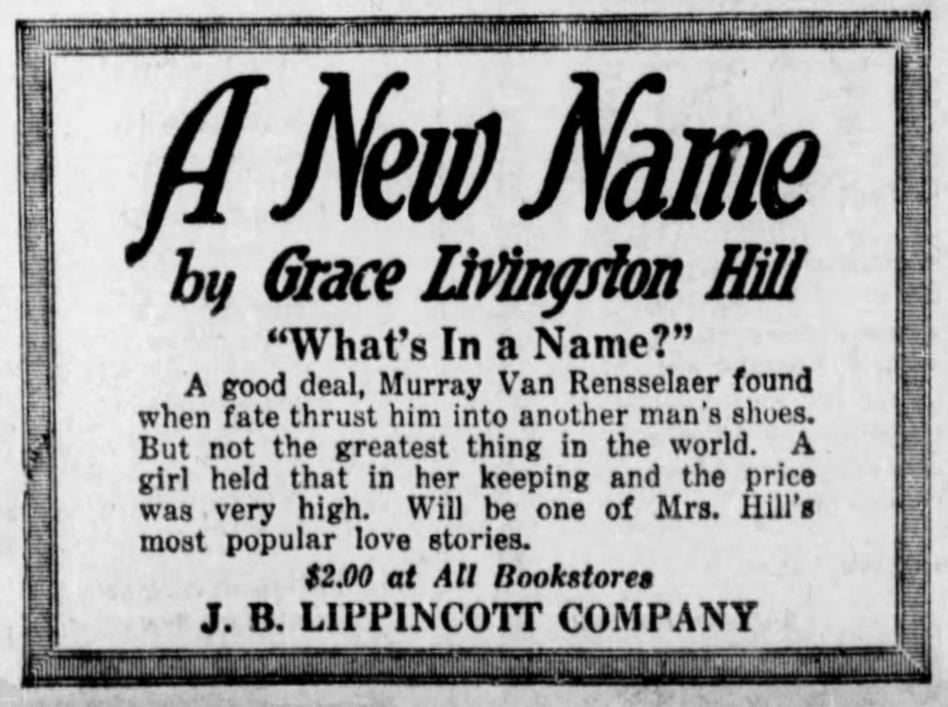
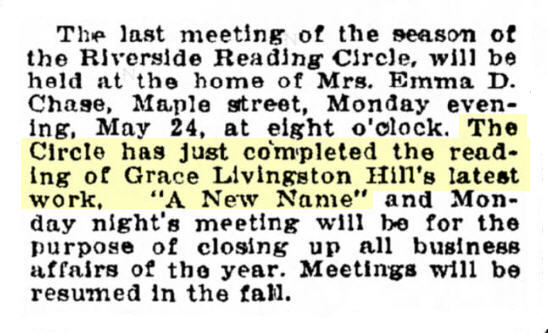
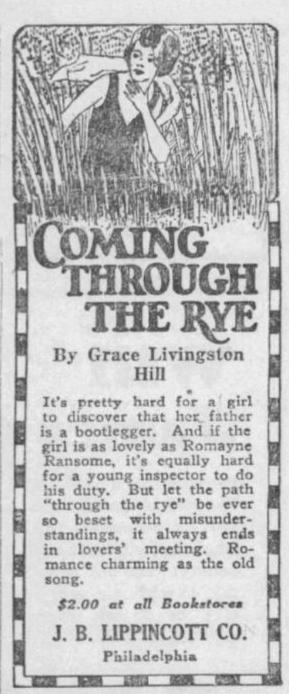
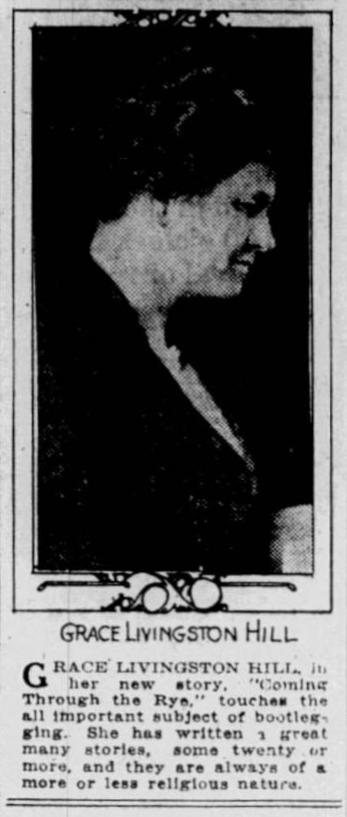
But when patrons weren’t judging books by their weight or size, an equally large number asked for them by author. Popular authors like Zane Grey, Agatha Christie, and Mary Roberts Rinehart were always in demand—but there was one name Alice Bryan saw flying off the shelves more than any other: Grace Livingston Hill.
From the “Marion Progress” newspaper April 3, 1947.
Alice frequently highlighted Grace as a reader favorite for “light fiction.” The appeal of Grace’s books even seemed to cross generations. One day Alice overheard this conversation between a group of sixth-grade girls at the library:
from the “Marion Progress,” April 17, 1947.
By the mid-1940s, Grace Livingston Hill was at the absolute peak of her writing career with almost one-hundred beloved novels to her credit. In an uncertain, complicated post-World War II climate, readers eagerly sought out her stories for their comfort, warmth, and reliable messages of eternal hope.
Of course, long-time readers of this blog know that Grace’s writing talent was practically a family trait—she was Isabella Alden’s cherished niece. Both women shared a remarkable gift for understanding what readers needed most. By seamlessly weaving messages of faith and comfort into their stories, they ensured that current and future generations of readers knew exactly where to turn for a truly “good book.”
In honor of Mother’s Day this month’s free read is a story about the debt of love we owe to those who raised us.
After a life of sacrifice, widowed Mrs. Kensett finds her twilight years spent shuffling between the homes of her adult children, where she’s treated more like a burden than a beloved guest. She expects more of the same when she arrives at the doorstep of her youngest son and his new bride—only to find an unexpected sanctuary at long last.
Isabella Alden’s novel Ester Ried, Asleep and Awake opens with a memorable scene: Ester Ried—barely eighteen years old—finds herself with much more responsibility than a girl of her age should have. With an ill mother, four younger siblings, and several boarders to care for and feed, she is often pressed for time, thin on patience, and struggling to keep up with a never-ending list of things to do.
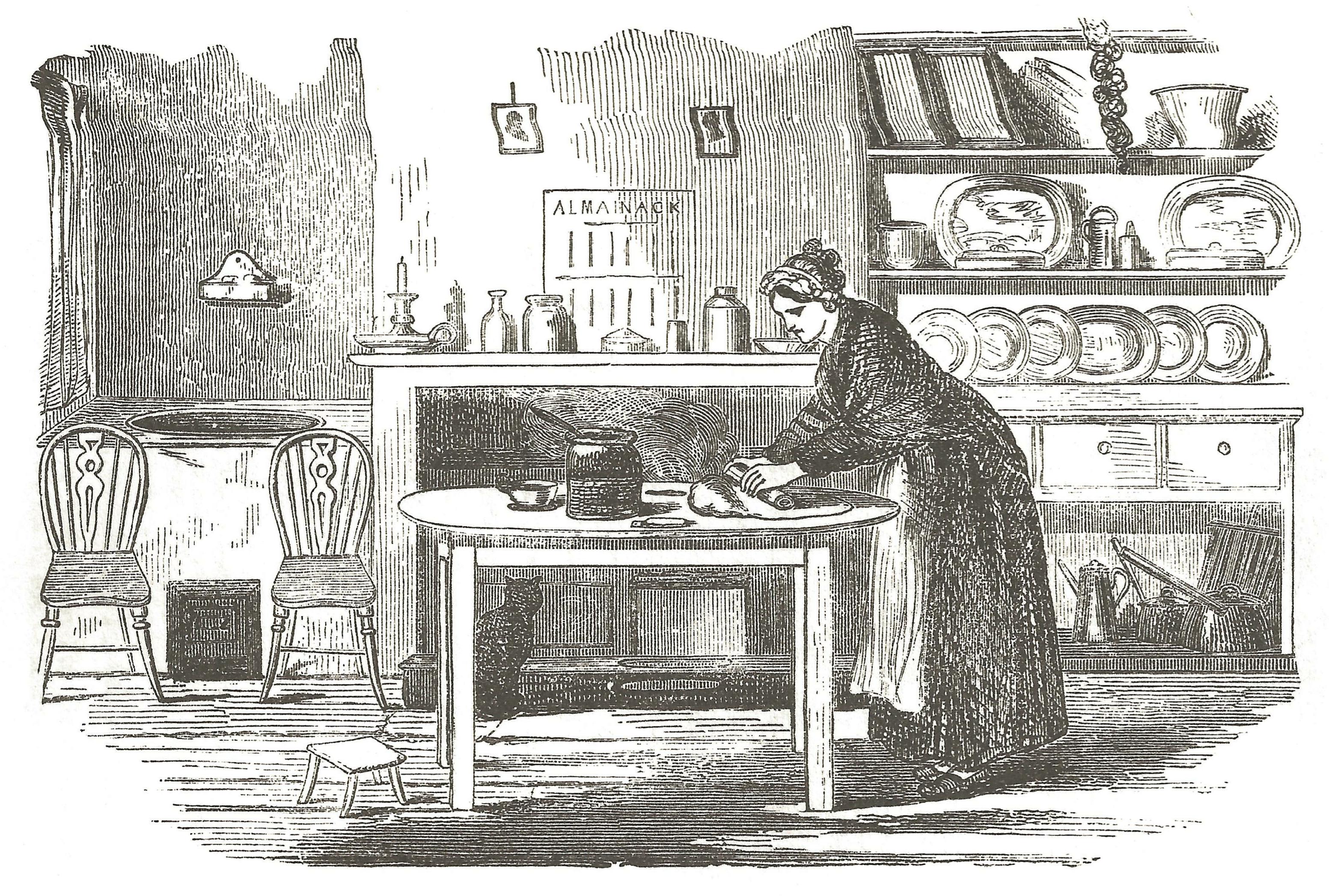
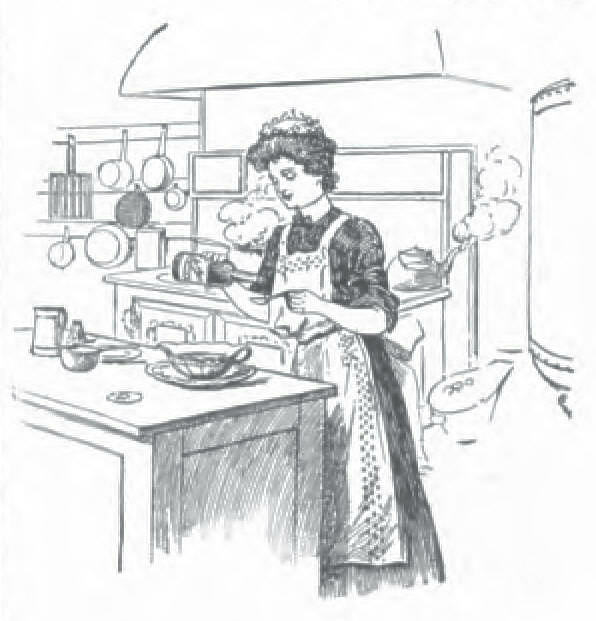
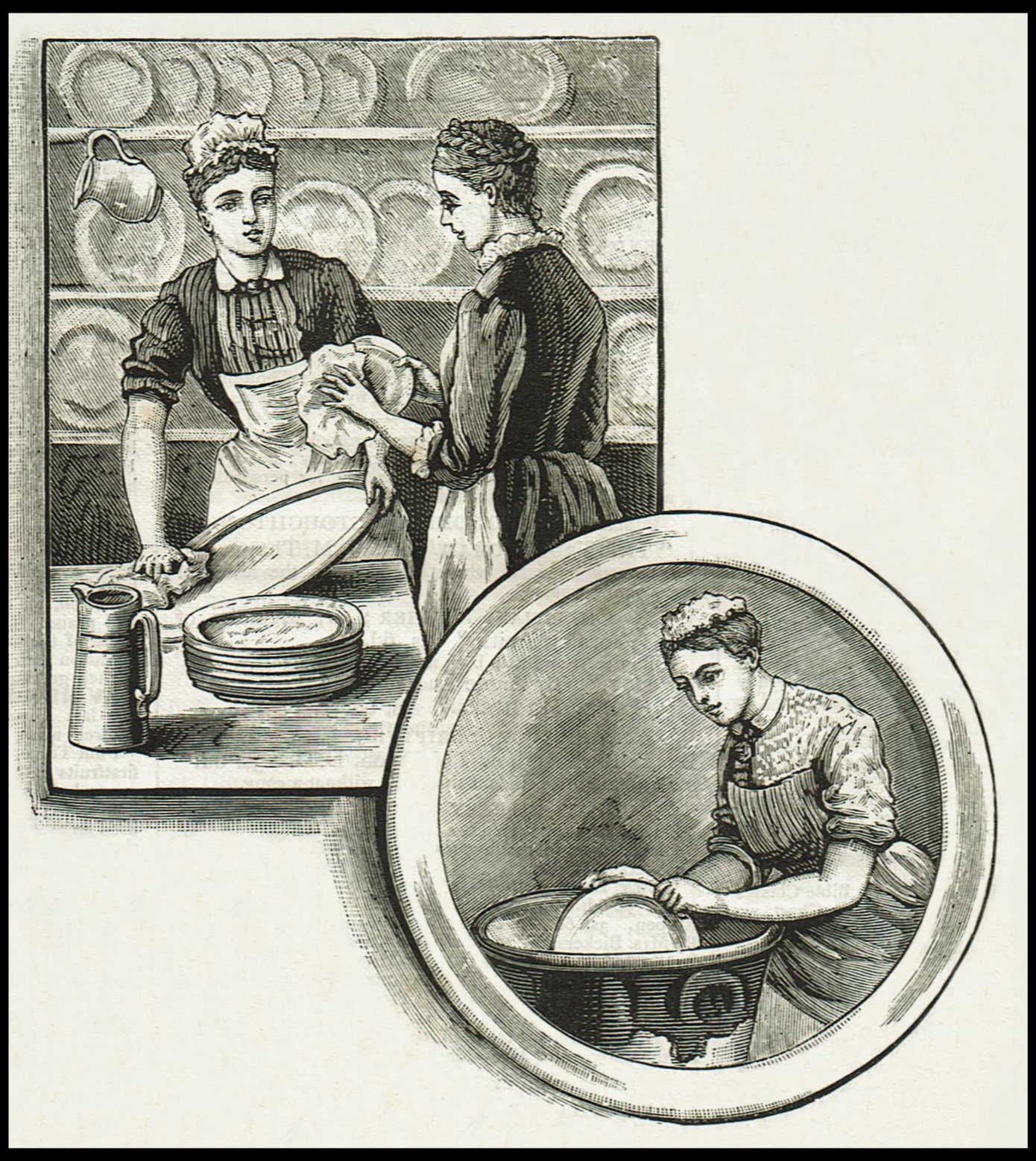
Much of her time is spent in the kitchen cooking, washing dishes, and supervising laundry; and on scorching summer days, the heat from the wood stove makes the entire room even hotter, so her cheeks were always in a state of “glowing.”
Trade card for a traditional wood-burning kitchen stove, about 1890
When Ester Ried was published in 1870, kitchen stoves were large, cast-iron pieces of furniture; and while their primary function was for cooking, stoves also served as essential elements of a home’s heating system. In winter a wood-burning stove helped keep the house warm and cozy. In summer, the same stove could make a kitchen unbearably hot.
Isabella’s readers could identify with Ester Ried’s plight. Isabella, too, must have had more than her share of summer days spent “glowing” in an overheated kitchen while she cooked her family’s meals, heated water for bathing, and tended to a litany of household tasks.
An 1884 trade card from the Detroit Stove Works, manufacturer of wood-burning, oil, and gasoline stoves.
So in 1880, when a new type of cooking stove—the gasoline stove—appeared on the market, Isabella took notice.
Unlike traditional wood-burning stoves that required constant monitoring of logs, flues, and dampers to manage the temperature, gasoline stoves offered a revolutionary level of control. They worked much like a kerosene lamp: a cloth wick pulled the gasoline up to the burner where it turned into a gas, creating a steady, hot blue flame.
An 1890 ad for the Sun Dial gas stove.
By simply turning a knob to adjust the wick, a woman could make her cooking and baking incredibly precise. Best of all, because they didn’t radiate intense ambient heat like massive cast-iron wood stoves, they spared homemakers from suffering in a sweltering kitchen.
In 1880 Isabella wrote about a young wife and mother who learned about the advantages of a gasoline stove in a short story titled, “Faith and Gasoline.”
Summer heat and money troubles force Faith Vincent to face the heartbreaking prospect of being separated from her husband for the entire summer—until a neighbor’s wisdom, a clever “gasoline stove,” and a good amount of prayer help Faith secretly transform her despair into a promising future for herself and her family.
Have you ever listened to someone tell a seemingly ordinary story, only to realize halfway through that they’re actually revealing something profound? That’s what happens in this month’s free read. “Family Portraits (Painted Unawares)” is a short story Isabella Alden published in a Christian magazine in 1900.
The story introduces us to Mrs. Andrews, a chatty neighbor who drops by on a hot summer day to tell about her son Harlan’s brief visit home from Boston. What begins as simple rambling about the weather, dinner plans, and a fishing trip gradually reveals itself as something much deeper—a portrait of a family bound together by selfless love.
Mrs. Andrews doesn’t realize she’s painting this portrait. She’s just telling her story in her own enthusiastic way. But it isn’t long before we begin to see what she can’t: a family where people consistently choose each other’s happiness over their own desires and where love—not biology—creates the deepest bonds.
A Note on Isabella’s Craft
What’s striking about this story is Isabella’s restraint. She doesn’t preach. She doesn’t tell us what to think about Mrs. Andrews or her family. She simply lets Mrs. Andrews talk, and trusts us to see the beauty in what’s being revealed.
Isabella has a gift for finding profound spiritual truth in everyday lives. In her stories, she elevates working-class people who live out their faith in practical, unassuming ways.
Maybe that’s why, more than 120 years after she wrote it, this story still has meaning. Today we still struggle with the tension between our own desires and others’ needs. We still wrestle with complicated family relationships. We still chase after perfect holidays and celebrations, forgetting that love is what makes any day special.
This story reminds us that the best relationships are built on small, daily choices we make, like prioritizing someone else’s happiness above our own, or spending time together, even if it’s brief and imperfect. Even more importantly, it reminds us that we don’t have to be extraordinary people to create extraordinary love.
You can spend time with Mrs. Andrews and her wonderful family for free!
If Isabella Alden were alive today, there’s no doubt she would be a very tech-savvy person. From telephones to indoor plumbing, from typewriters to motor cars, she embraced new devices and technologies and incorporated them into her stories and her daily life.
In 1909 Isabella wrote a short story titled “Midnight Callers,” which was published in a Christian magazine. It’s a wonderful story about a young woman toiling in the Lord’s vineyard and wondering if her efforts make a difference.
Miss Rachel Holland is a weary Christian mission worker who can’t help questioning the impact of her tireless labor. But her world changes one night when a hopeless ruin of a man stumbles into her office, desperate for help. Will she stand by her faith and summon the energy to serve her heavenly Master yet again?
But “Midnight Callers” is also a story that shows us a snapshot of the world in which Isabella lived. Her characters in the story don’t live in a dusty old past we can’t relate to; instead, they live in a very “modern” world (by 1909 standards).
Rachel Holland, the heroine of the story, writes with a fountain pen, which was a newly popular writing instrument in 1909.
A 1910 advertisement for fountain pens.
Another character, the Rev. Dr. McKenzie, uses a telephone closet to call “Blue two double O”—a reference to an era of manual telephone exchanges and party lines.
Although fountain pens have long since been replaced by keyboards and “Blue two double O” is now a touch-key on our smart phone contact list, the core of “Midnight Callers” still has relevance for readers today.
The story reminds us that while technology may change, our human need for hope—and help from the “present Power” that never fails—is eternal.
Rebecca’s dress was entirely appropriate and becoming. She had gone out from her father’s house very well supplied with clothes, and her ability to re-make them herself had stood her in good stead, so that now her dress of fine black cloth, made severely plain, but with minute attention to details, became her well. So did the black felt bonnet, with its three stylish plumes, which she had herself dressed over.
from Wanted, by Isabella Alden, published in 1894
In her stories, Isabella often used the latest fashion to define a character’s financial and social status, and Rebecca Meredith’s outfit was an excellent example. Because her dress was plain and black, her bonnet “with its three stylish plumes” was the centerpiece of her outfit and called attention to her pretty face.
Bonnets with plumes were very much in style when Wanted was published in 1894. Women’s magazines, like Godey’s Lady’s Book and TheLadies Home Journal showed that hats were be made from a variety of materials—straw, for example, or stiffened fabrics like velvet—and that they were quite modest in size.
From Godey’s Lady’s Book, August 1895.
Though small, hats at that time were heavily adorned with ribbons, bows, artificial flowers and, most importantly, bird plumes.
From Godey’s Lady’s Book, October 1897.
Bird feathers were the most desirable decorative elements on a lady’s hat. In 1894 The Ladies Home Journal predicted that actual wings displayed on bonnets would be “all the rage,” while another magazine wrote that “almost every second woman one sees in the streets flaunts an aigrette of heron’s plumes on her bonnet.”
Milliners used feathers from egrets, hummingbirds, herons, and even song birds of all kinds as adornments.
From Godey’s Lady’s Book, 1898.
The more exotic the bird, the more desirable their feathers; and the millinery industry was willing to pay top dollar to anyone who would supply them, no questions asked.
But some people did ask questions and raise alarms, after nature lovers in England and the United States discovered that some birds, like ospreys and egrets, were hunted so mercilessly, ornithologists feared they would soon be extinct.
In London, a Society for the Protection of Birds was formed. Members pledged to never wear feathers of any bird not killed for the purpose of food. Similar organizations were formed in Europe, Canada, and the U.S.
The public outcry began to pay off, as women around the world pledged to stop wearing hats with real bird feathers, and American lawmakers enacted state and federal laws to protect certain species of birds by banning them from use in hats and garments.
One bird that was exempt from protection was the ostrich, because its feathers could be harvested without killing the bird. So it was natural that the millinery industry would turn its attention to ostriches as a source for adornments.
Ostrich farms that had been established in the southern United States in the late 1890s in hopes of selling feathers to the millinery industry suddenly saw an increased demand for their wares.
An ostrich farm in southern California.
And because ostrich feathers could be plucked every eight or nine months, ostrich farmers with large herds enjoyed a regularly replenished inventory they could sell.
With the turn of the century, hat styles changed, and the small bonnets that were popular when Isabella wrote Wanted fell out of fashion. The new bonnet styles of the 1900s featured wide brims and brilliant colors.
Ostrich plumes suited the new styles beautifully. Because of their size, the plumes could cover a large hat’s crown and brim.
Even more importantly, ostrich feathers could be dyed to match almost any color. Women and conservationists rejoiced, feeling confident that they could use ostrich feathers for fashion without feeling guilty.
In her 1912 novel The Long Way Home Isabella made sure her fashionable characters wore the latest style in bonnets. Newlywed Ilsa Forbes wore a wide-brimmed hat when she boarded the train with her new husband Andy:
But Andrew had no words, just then; never was the heart of bridegroom more filled to overflowing, and he could not yet think about decorations or supper. “My wife!” he murmured, as his arm encircled her. “Really and truly and forever my wife. Do you realize it, darling?” She nestled as closely to him as her pretty, new traveling hat would permit and laughed softly.
There was, however, a problem with those stylish large hats adorned with ostrich feathers. In 1908 a letter to the editor of the Oregonian newspaper applauded the ban on exotic bird feathers, but raised a new and troubling concern about ostrich feathers:
The letter-writer wasn’t the only one wondering if an ostrich felt pain when its feathers were plucked. Soon the Audubon Society and other conservationists began asking the same question and took their findings to state legislators.
In California, where Isabella was living and where many of the country’s ostrich farms were located, the question was answered by lawmakers. In 1900 the state updated its penal code to make it a crime to intentionally mutilate or torture a living animal, which included plucking live birds like ostriches.
So ostrich farmers stopped plucking and began snipping feathers, instead. A 1911 article in the Dallas Morning News explained the process:
From The Dallas Morning News, November 12, 1911.
Once again, stylish ladies (and Isabella’s equally stylish characters) could wear hats adorned with feathers and maintain a relatively clear conscience.
It’s interesting how Isabella’s attention to details, like hat sizes and adornments, brought her stories to life. While she didn’t preach about fashion in her novels, she paid close attention to these niceties, and used them to bring authenticity to her characters and their world. Contemporary fans of her novels would have noted the subtle changes as keeping up with the times.
For us in 2025, it’s fascinating to learn there’s a whole complicated history behind Rebecca Meredith’s feathers—a history about women who were determined to write wrongs and find ways to be fashionable without compromising their conscience.
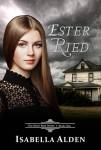
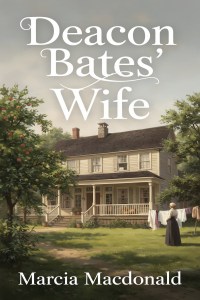
You can learn more about Isabella’s novels mentioned in this post by clicking on the book covers below:
Full disclosure: these are Amazon affiliate links, which means if you decide to purchase through them, this blog will receive a small commission. It doesn’t cost you anything extra, but it helps us keep this site running and researching Isabella’s life and the fascinating world in which she lived.
Isabella Alden and her entire family were actively involved in the Young People’s Society of Christian Endeavor, a movement that promoted Christian service and ideals to its teen and young adult members.
Isabella believed in the Endeavor program so much, she founded the Pansy Society for Christian Endeavor, a similar organization specifically designed for children. The Pansy Society focused on teaching children to use Jesus’ life and words as a guide to live by.
This month’s free read is a story by Marcia Livingston that illustrates some of the values The Pansy Society sought to teach children: forgiveness, patience, and kindness toward others.
It was a simple act of kindness when Lily Haines offered Cindy Barker a rose from her garden; but neither young lady could predict how much of a difference the presence of that single rose could make in the Barker family home.
Reviews and giveaways for Christian fiction and sweet, clean fiction. Bringing readers information on great stories and connecting authors with their readers.