New Free Read: Faith and Gasoline

Isabella Alden’s novel Ester Ried, Asleep and Awake opens with a memorable scene: Ester Ried—barely eighteen years old—finds herself with much more responsibility than a girl of her age should have. With an ill mother, four younger siblings, and several boarders to care for and feed, she is often pressed for time, thin on patience, and struggling to keep up with a never-ending list of things to do.

Much of her time is spent in the kitchen cooking, washing dishes, and supervising laundry; and on scorching summer days, the heat from the wood stove makes the entire room even hotter, so her cheeks were always in a state of “glowing.”
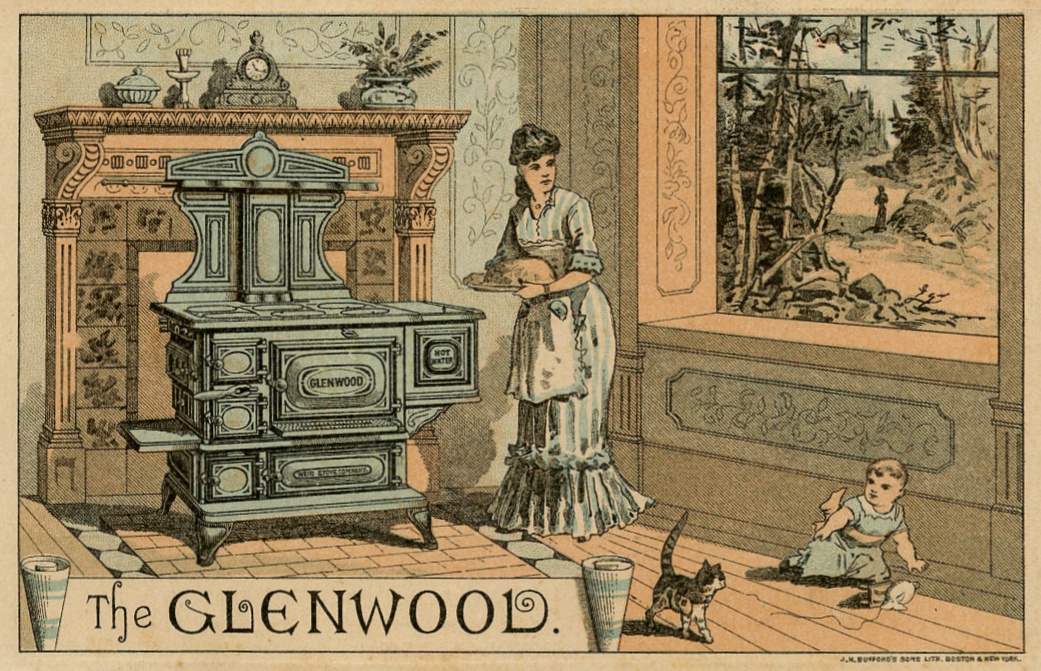
Trade card for a traditional wood-burning kitchen stove, about 1890

When Ester Ried was published in 1870, kitchen stoves were large, cast-iron pieces of furniture; and while their primary function was for cooking, stoves also served as essential elements of a home’s heating system. In winter a wood-burning stove helped keep the house warm and cozy. In summer, the same stove could make a kitchen unbearably hot.

Isabella’s readers could identify with Ester Ried’s plight. Isabella, too, must have had more than her share of summer days spent “glowing” in an overheated kitchen while she cooked her family’s meals, heated water for bathing, and tended to a litany of household tasks.
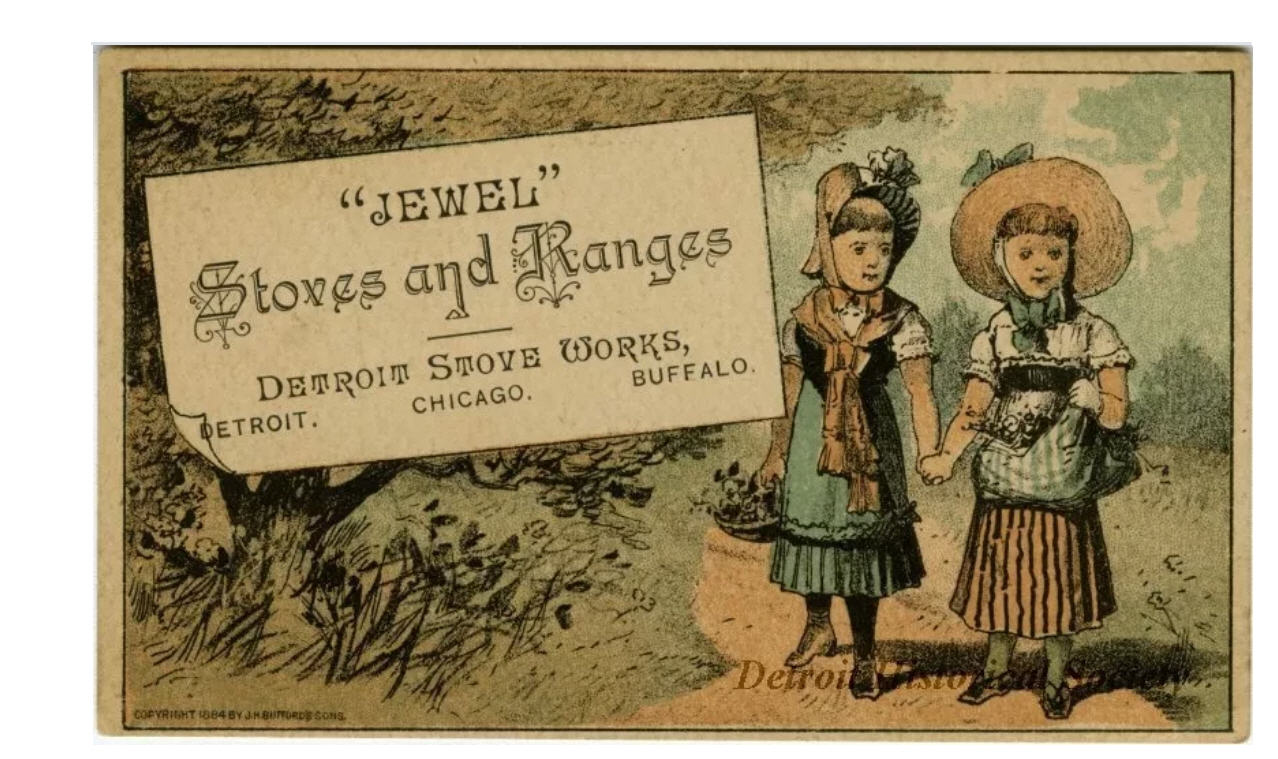
An 1884 trade card from the Detroit Stove Works, manufacturer of wood-burning, oil, and gasoline stoves.

So in 1880, when a new type of cooking stove—the gasoline stove—appeared on the market, Isabella took notice.

Unlike traditional wood-burning stoves that required constant monitoring of logs, flues, and dampers to manage the temperature, gasoline stoves offered a revolutionary level of control. They worked much like a kerosene lamp: a cloth wick pulled the gasoline up to the burner where it turned into a gas, creating a steady, hot blue flame.
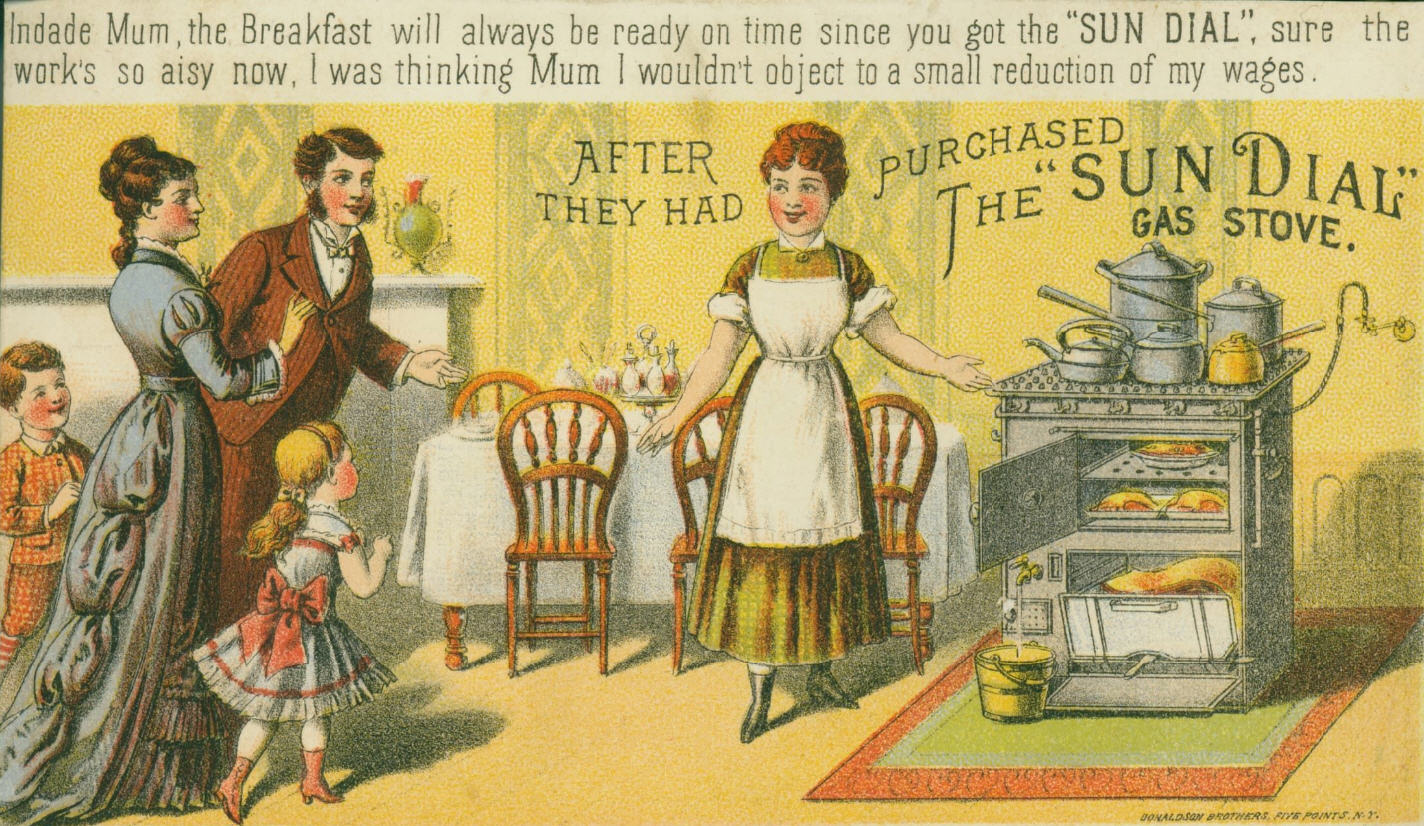
Trade card depicting a maid, wearing an apron, pointing to a gasoline stove with pots cooking on top, and the oven doors open to reveal pies and breads baking. Nearby, an woman, man, and two children look on as the maid says "Work's so aisy now, I was thinking Mum I wouldn't object to a small reduction of my wages."
An 1890 ad for the Sun Dial gas stove.

By simply turning a knob to adjust the wick, a woman could make her cooking and baking incredibly precise. Best of all, because they didn’t radiate intense ambient heat like massive cast-iron wood stoves, they spared homemakers from suffering in a sweltering kitchen.

In 1880 Isabella wrote about a young wife and mother who learned about the advantages of a gasoline stove in a short story titled, “Faith and Gasoline.”
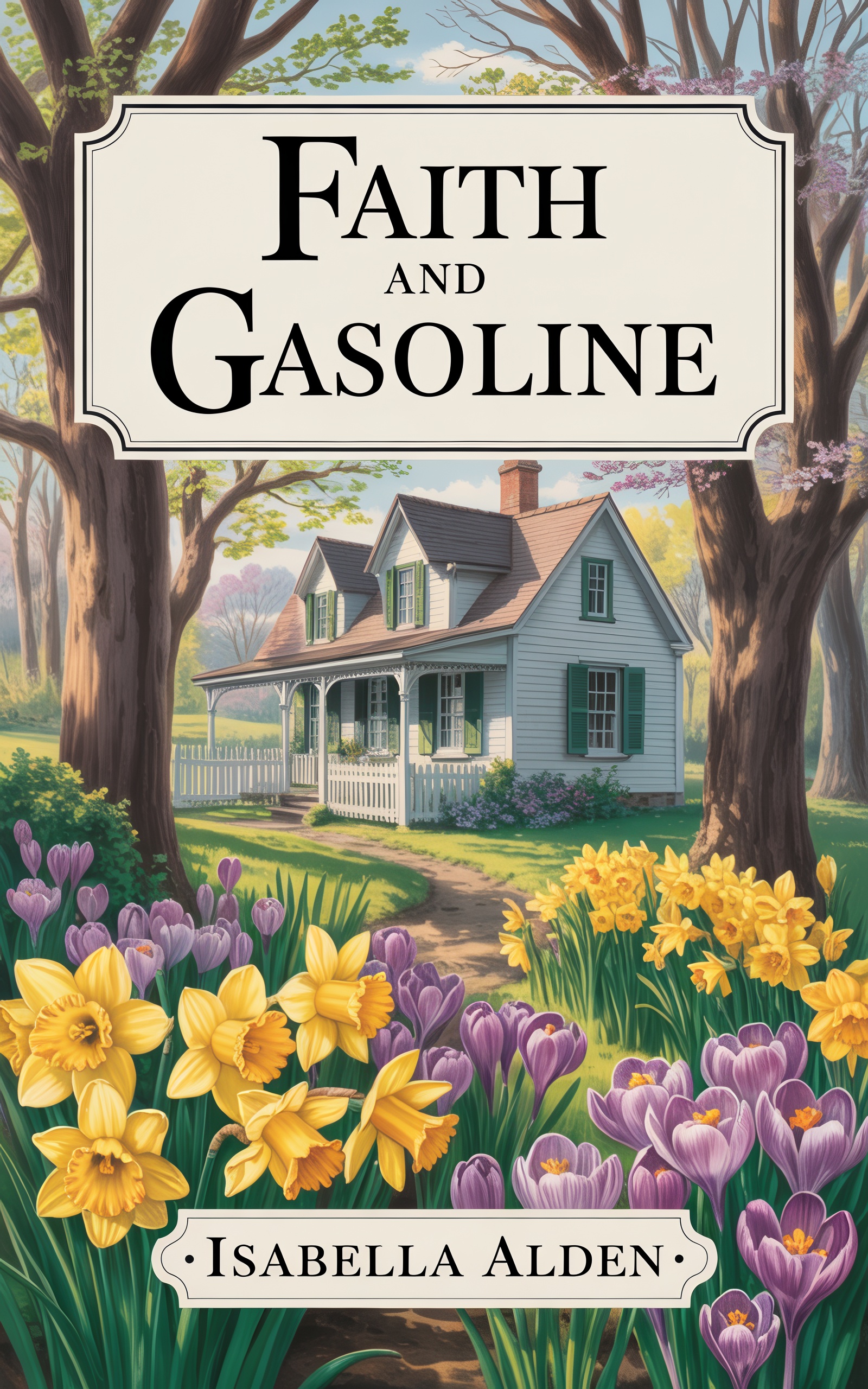
Book cover showing a lovely white cottage with green window shutters and trim. Across the front is a charming porch with a white railing. The cottage is nestled among mature trees and rolling hills. In the foreground is a garden of yellow daffodils and purple crocus. At the top, the title "Faith and Gasoline" is surrounded by a classic border.

Summer heat and money troubles force Faith Vincent to face the heartbreaking prospect of being separated from her husband for the entire summer—until a neighbor’s wisdom, a clever “gasoline stove,” and a good amount of prayer help Faith secretly transform her despair into a promising future for herself and her family.

YOU CAN READ “FAITH AND GASOLINE” FOR FREE!

Click here to download “Faith and Gasoline” from BookFunnel.com, then read it on your computer, phone, tablet, Kindle, or other electronic reading device.

Or you can select BookFunnel’s “email” option to receive an email with a PDF version you can read, print, and share with friends.

A Life-Changing Accident

December 8, 1925—almost exactly 100 years ago—started as any ordinary Tuesday afternoon in Palo Alto, California. Isabella Alden was 83 years old, and was living in the beloved double-home that she and her husband Ross built a decade before on Embarcadero Road.

Ross and her son Raymond had died the year before, so only Isabella and her daughter-in-law Barbara (Raymond’s widow) and her five children were left to share the rambling house.

Barbara Hitt Alden, about 1910.

That afternoon, Isabella, Barbara, and Barbara’s youngest son, Raymond Jr., set out together in the family car. Barbara was behind the wheel. None of them could have known that their simple outing would dramatically change the remainder of Isabella’s life.

Black and white photo of a side-view of an old automobile with four doors and a woman seated in the driver's seat.
A 1925 Lincoln sedan, a popular car style in the 1920s.

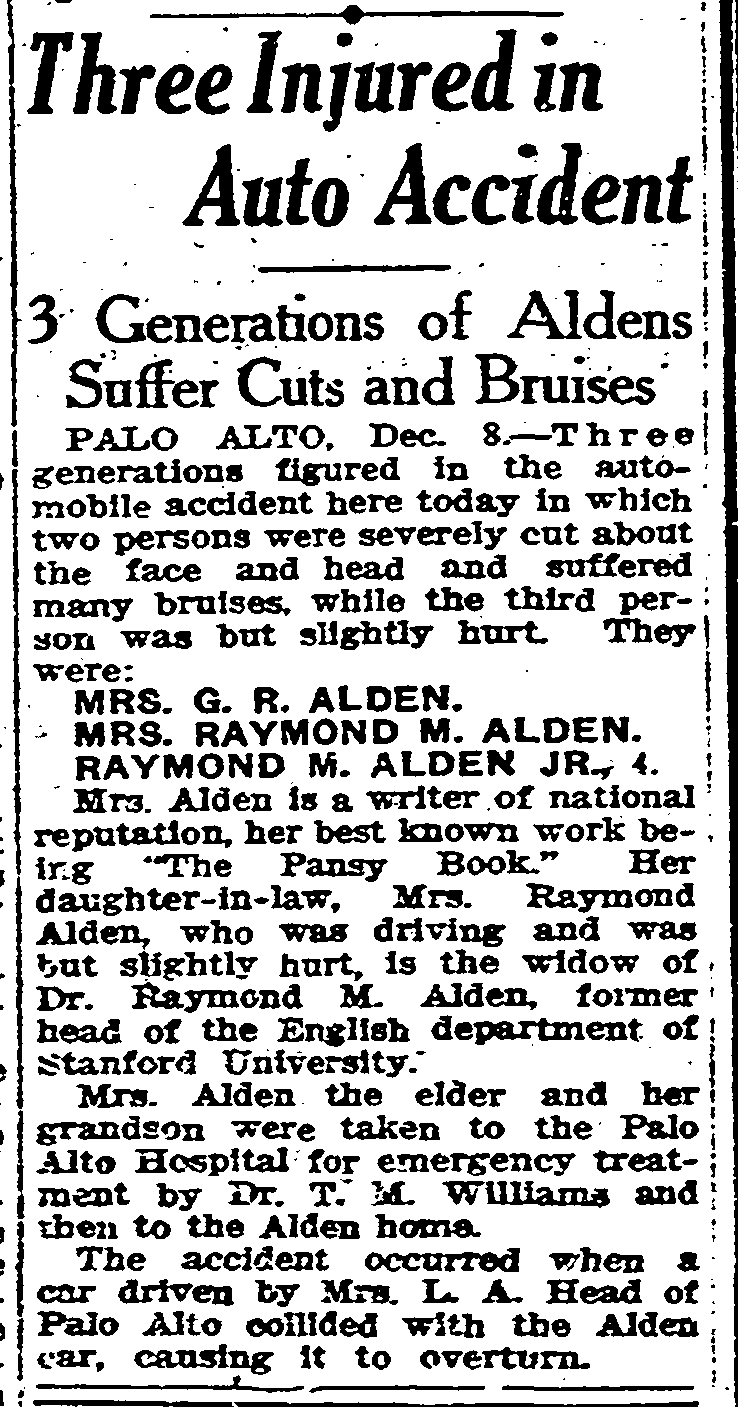
At a street intersection a little less than a mile from their home, another car collided with the Alden vehicle, striking it with enough force to cause it to overturn. The impact shattered the windshield and windows, showering the passengers with broken glass.

Newspaper Clipping: 3 Generations of Aldens Suffer Cuts and Bruises. Three generations figured in the automobile accident here today in which two persons were severely cut about the face and head and suffered many bruises, while the third person was but slightly hurt. They were: Mrs. G. R. Alden, Mrs. Raymond M. Alden, Raymond M. Alden Jr., 4.
The San Francisco Chronicle, December 8, 1925.

Barbara was only slightly hurt. But Isabella and her young grandson suffered “severe cuts about the face and head, and many bruises.” After receiving first aid from a nearby physician, Isabella and Raymond Jr. were taken to Palo Alto Hospital for treatment.

Palo Alto Hospital in the 1920s.

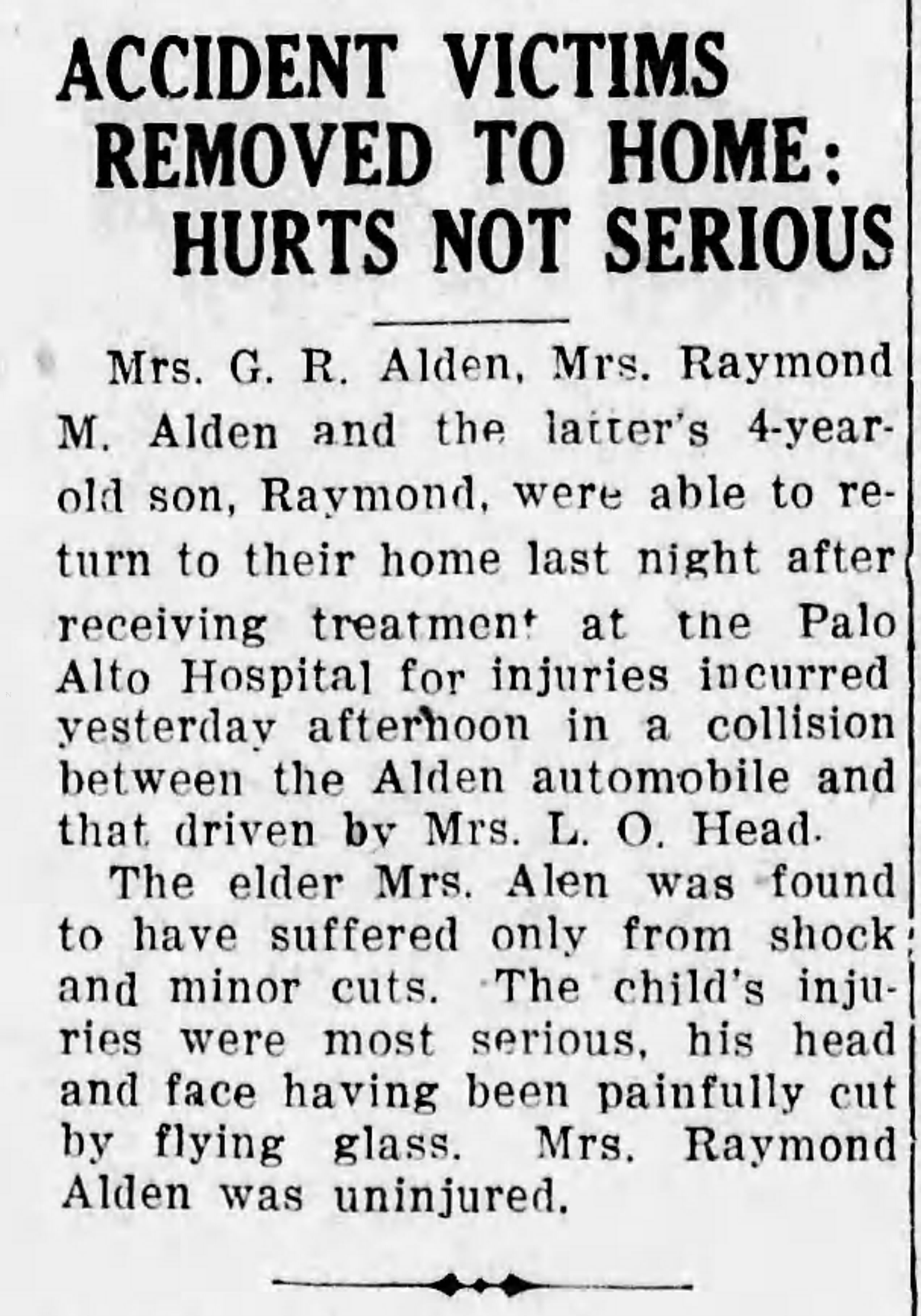
The next day’s newspaper reported reassuring news: the accident victims had returned home, and Isabella “was found to have suffered only from shock and minor cuts.” Her grandson’s injuries were described as the most serious of the three.

Newspaper Clipping: Accident Victims Removed to Home: Hurts Not Serious. Mr. G. R. Alden, Mrs. Raymond M. Alden, and the latter's 4-year-old son, Raymond, were able to return to their home last night after receiving treatment at the Palo Alto Hospital for injuries incurred yesterday afternoon in a collision between the Alden automobile and that driven by Mrs. L. O. Head. The elder Mrs. Alden was found to have suffered only from shock and minor cuts. The child's injuries were most serious, his head and face having been painfully cut by flying glass. Mrs. Raymond Alden was uninjured.
The Peninsula Times Tribune, December 9, 1925.

But that assessment would prove tragically wrong.

What those initial medical evaluations missed was the true extent of Isabella’s injuries. The accident left her in considerable pain and, ultimately, confined to a wheelchair for most of the remaining years of her life.

Until the accident, Isabella was a woman who had been remarkably productive well into her eighties—still writing, still engaged with her work and family. The accident didn’t just slow her down; it fundamentally altered how she could live her remaining years.

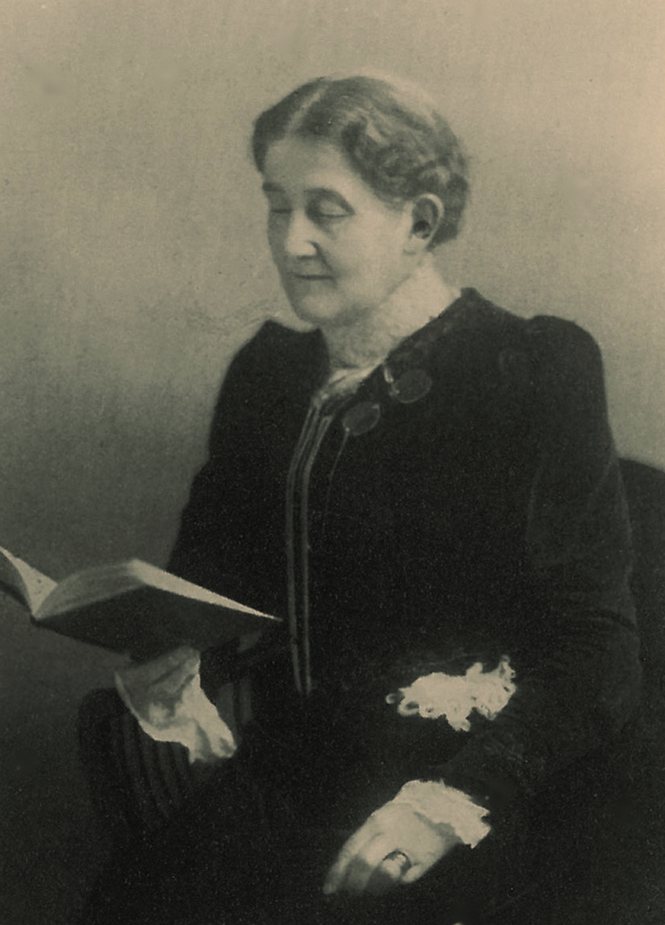
Isabella in later years.

In her memoir “Memories of Yesterday,” which she finished writing after the accident, Isabella documented the physical pain she endured. For a woman who had spent her life in service to others, who had quietly helped so many navigate their own difficulties, those final years must have been particularly difficult for her.

Isabella lived for nearly five more years after the accident, passing away in 1930 at age 88. Those years, spent largely in a wheelchair and dealing with chronic pain, were a far cry from the active, engaged life she had led for more than eight decades.

What is striking about this incident in Isabella’s life isn’t just the tragedy of the accident itself, but what it reveals about her character during her final years. Despite her pain and limitations, she continued to write. She finished her last novel, An Interrupted Night, and entrusted it to her niece, Grace Livingston Hill, to guide it through the publishing process.

She also completed her memoir, Memories of Yesterdays, candidly sharing her memories and reflections on a life well-lived. Even when her body was confined to a wheelchair, her mind and spirit remained active.

That’s the Isabella Alden we’ve come to know through her writings—someone who lived out the principles she wrote about, even when circumstances became difficult. She had spent decades writing about faith, perseverance, and finding purpose in adversity. In her final years, she had to draw on those very principles herself.

A hundred years ago this month, Isabella’s life changed forever on a Palo Alto street corner. While the accident limited her physical abilities, it couldn’t diminish the legacy she’d built through decades of faithful work—or the strength of character that sustained her until the end.

Click on the links below to read more about:
The house on Embarcadero Road
The deaths of Ross and Marcia Livingston
The death of Raymond Alden
Isabella’s final novel, An Interrupted Night