If you’ve spent any time getting to know the characters in Isabella Alden’s novels, you’ve probably met them multiple times: the widow who takes in lodgers to keep her family afloat, the young store clerk boarding far from home for the first time, the landlady presiding over a dinner table crowded with as many opinions as boarders. Boarding houses show up so often in her stories that it’s easy to read right past them — but for Isabella’s original readers, they needed no explanation. For us, more than a century later, a bit of an explanation is in order.
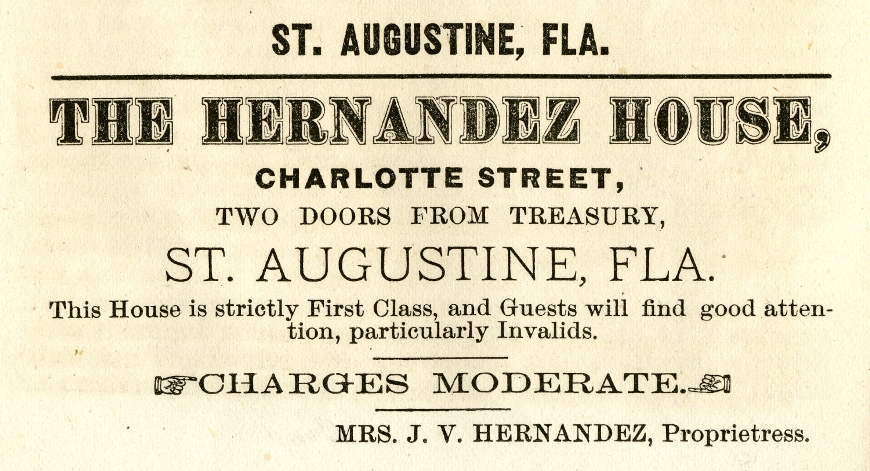
Newsapaper ad for a private boarding house in Florida, 1878.
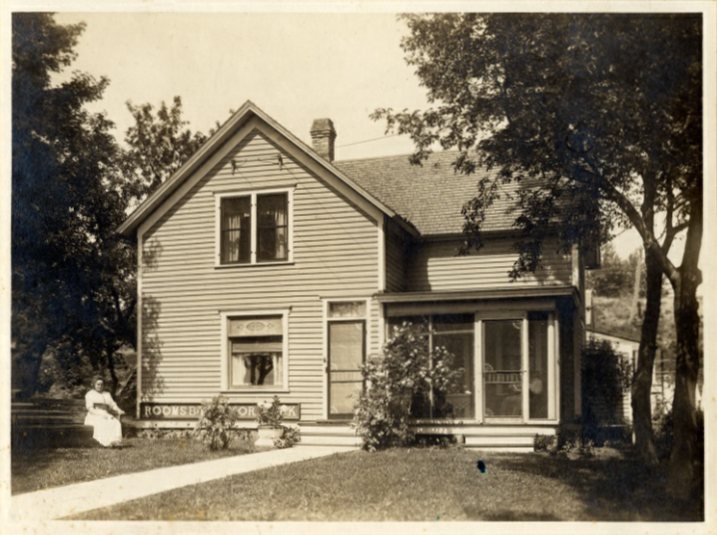
A boarding house was, at its simplest, a private home where the owner rented out rooms and provided meals — typically breakfast and dinner were included in the weekly rate, with lunch offered as a lighter, extra meal since working boarders were away at midday. This is an important distinction: a boarding house was not the same thing as a rooming house, where a lodger rented a room but ate meals elsewhere, usually at a restaurant. Boarders lived and ate under one roof; roomers just slept there. Isabella’s characters moved between both kinds of arrangements, and knowing the difference helps explain a lot about their daily routines (and their complaints).
A small private home open to boarders. The sign near the seated woman reads “Rooms by day or week.”
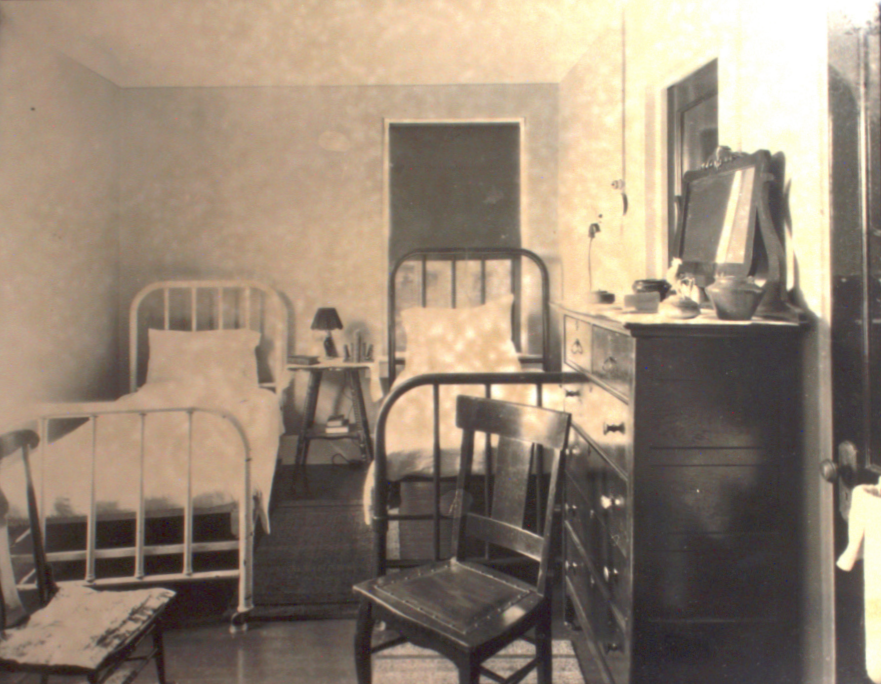
A well-run boarding house was expected to offer more than just a bed. According to the standards of the day, a boarder could expect a clean, whole set of bedding, a washstand with a large pitcher for washing up, fresh drinking water left by the bed at night, and a well-supplied bathroom down the hall. Whether a house actually delivered on these basics — or fell woefully short of them — could make the difference between a boarder’s contentment and outright misery. We meet both kinds of houses in Isabella’s novels.
A boarder’s room at a boarding house in Uniontown, Pennsylvania (courtesy Uniontown Public Library).
In Isabella Alden’s lifetime, a woman who needed to support herself — or her family — had only a handful of respectable options. She could teach school. She could sew. She could clerk in a store. Or she could keep a boarding house.
That last option had a particular appeal for women who already owned a home, especially widows left with a house too large for their remaining family and no other income. It required little starting capital. You didn’t need to buy a building or stock a shop; you just opened the doors of the house you already had. And on paper, it looked deceptively simple: cook a bit more food, make up a few extra beds, and collect the weekly rent.
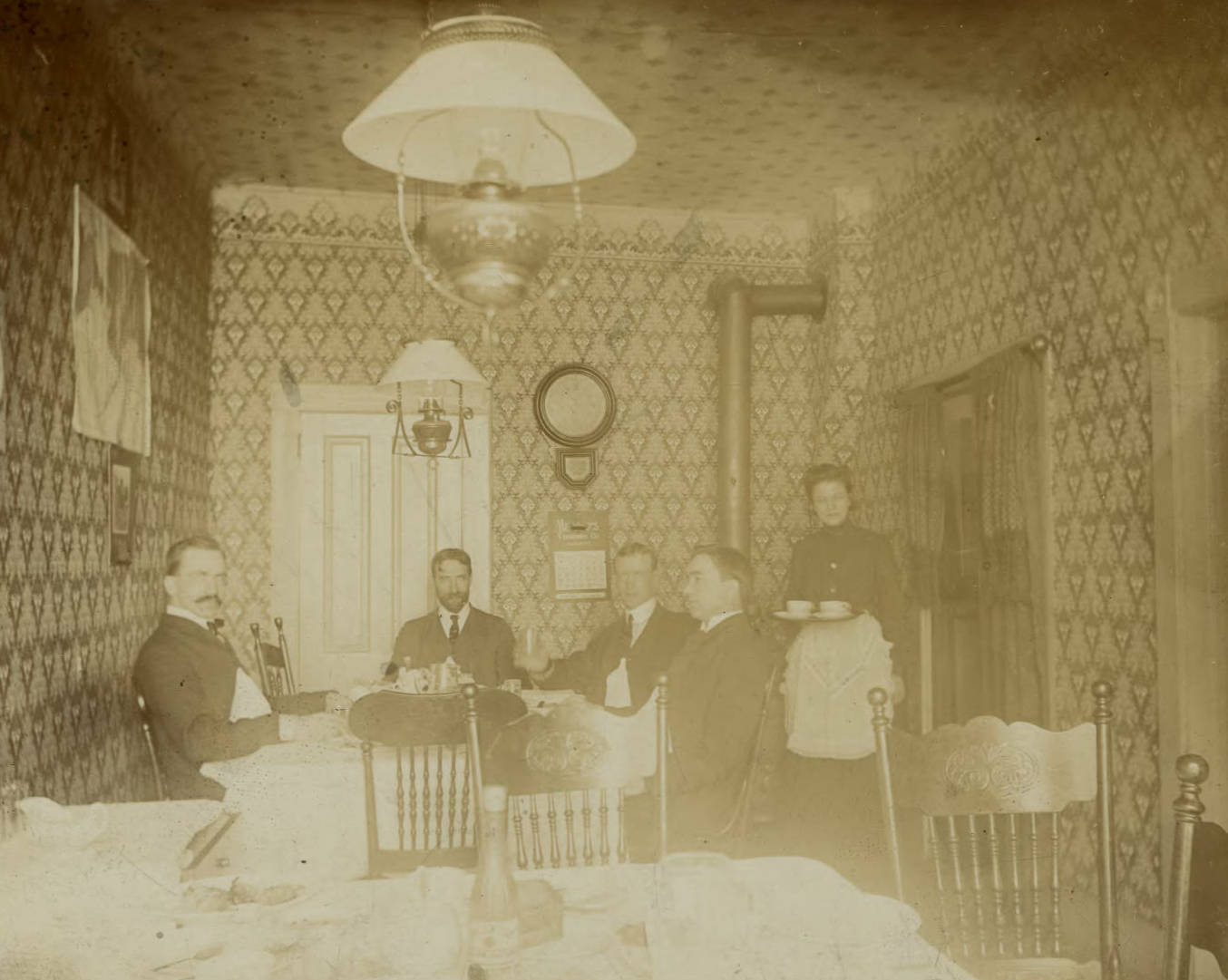
The dining room at Mrs. Heath’s boarding house, Duluth, Minnesota, 1893.
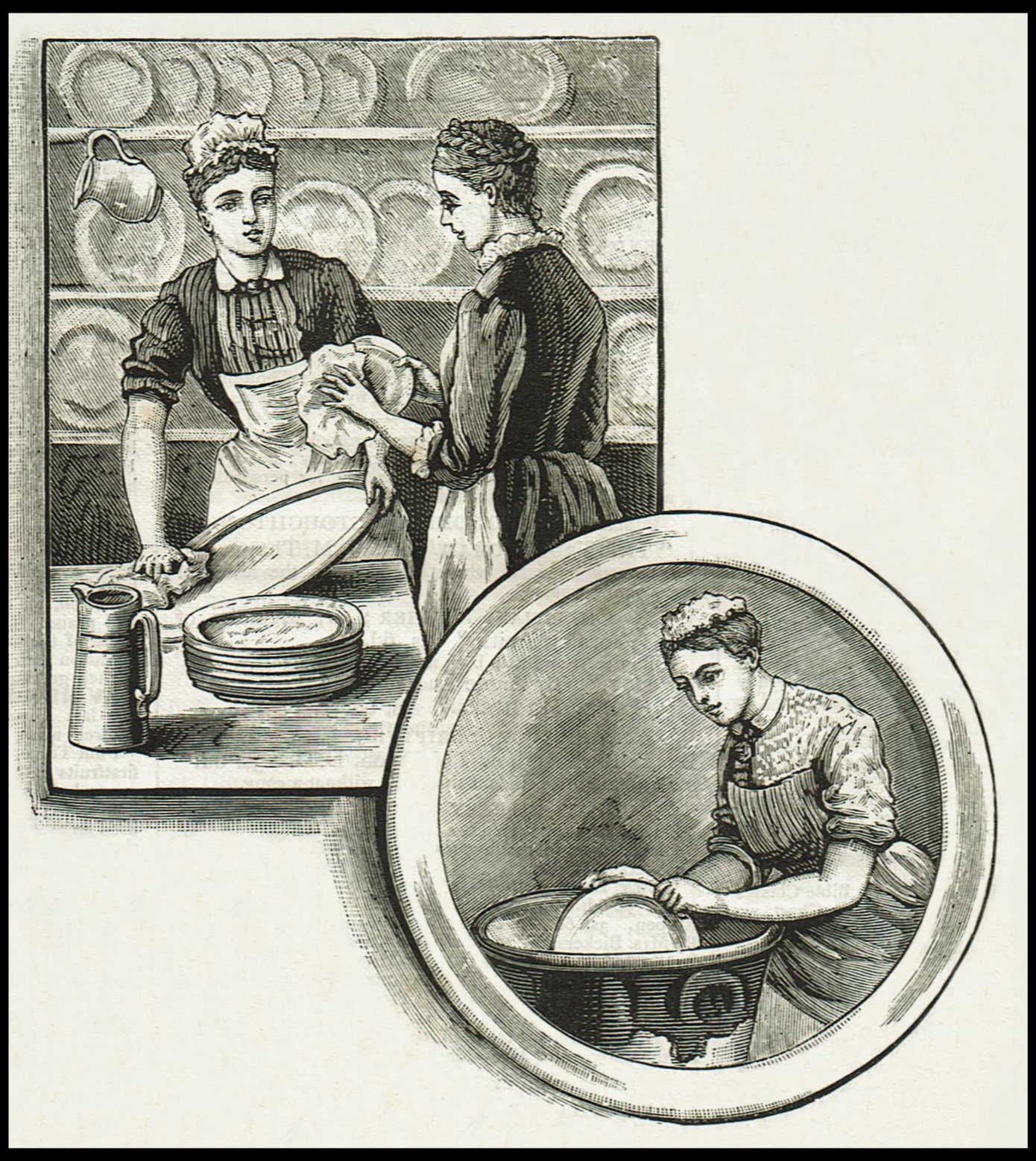
In practice, as Isabella’s own characters discover, it was one of the hardest ways a woman could make a living. Keeping boarders happy, fed, and paying required real business sense — knowing what to charge, what “extras” to allow, how to set rules boarders would actually obey and respect — and it demanded relentless physical labor that often fell hardest on daughters and servants rather than the woman whose name was on the sign. That was certainly the case in the Ried household in Isabella’s novel, Ester Ried.
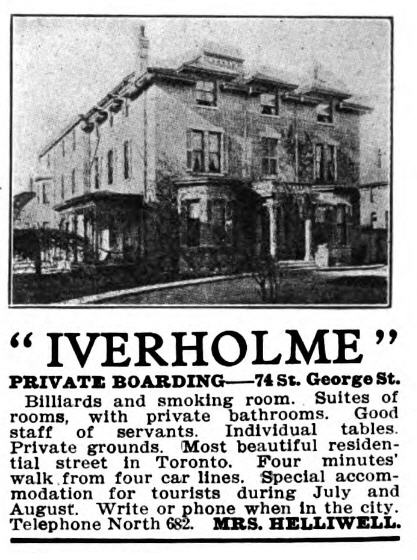
Ad for a large well-staffed boarding house in the Toronto Daily Star, 1904.
Isabella Alden probably had some personal experience as a boarder. As the wife of a minister who moved frequently from one calling to the next, she likely spent time in boarding houses and rented rooms herself, sizing up landladies and dining rooms much the way her characters do. That experience may be exactly why her boarding house scenes feel so specific and true.
Isabella’s fellow boarders had their own reasons for renting rooms. They were people who needed lodging but didn’t have or want a household of their own — young unmarried clerks and salesmen, professionals new to a city, widows and widowers, traveling businessmen with schedules that didn’t match a family’s routine, and increasingly, by the turn of the century, single working women living independently of their families for the first time.
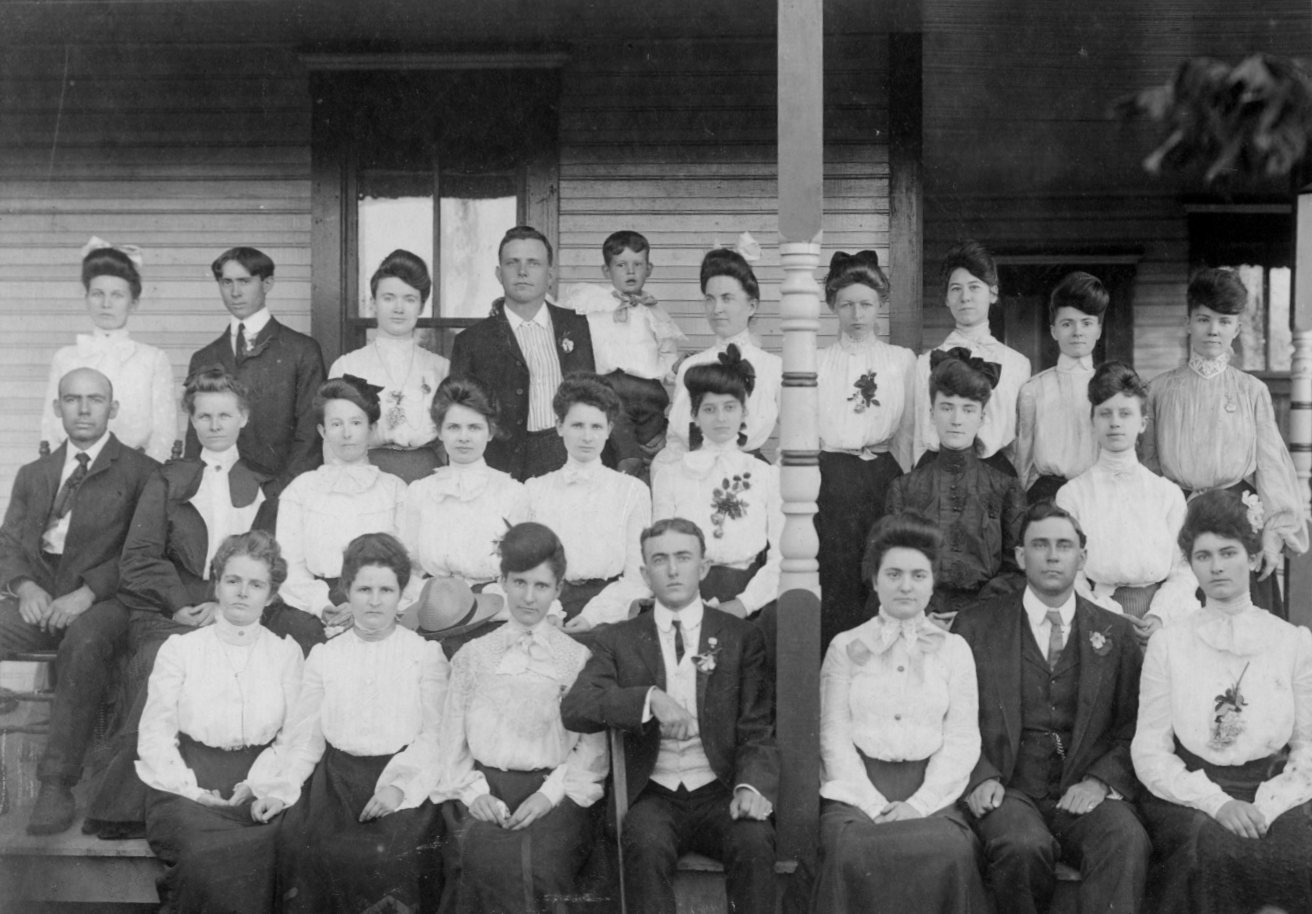
Some residents of the Taylor Boarding House in Denton, Texas, 1904.
That mix of backgrounds, ages, and personalities all sharing one dining table is exactly what made boarding houses such fertile ground for Isabella’s imagination. For her, a boarding house dining room could be the setting for a marriage proposal, a theological argument, a landlady’s quiet influence on a wayward young man, or a boarder-turned-lifelong-friend, all in the course of an ordinary week. Isabella used her boarding houses not just as scenery, but as places where her characters’ true selves came out and sometimes, their spiritual journeys were corrected.
Join us again on October 20 when we’ll begin looking at the boarding houses in Isabella’s novels, starting with a weary young heroine named Ester Ried and the exhausting responsibilities she carries as she tries to keep her family afloat.
Today Marcia Macdonald Livingston is widely known as the mother of beloved Christian novelist Grace Livingston Hill and the older sister of Isabella “Pansy” Alden; but Marcia was actually a talented, well-published author in her own right. She wrote uplifting stories for readers of all ages, and this month’s free read is a wonderful example. Although “A Happy Summer” was written with children in mind, Marcia’s warm, engaging writing style makes this a meaningful and entertaining read for adults, too.
For sisters Jessie and May, life in a hot, cramped city attic makes the country feel like a distant dream. With their widowed mother working day and night to keep a roof over their heads, a summer filled with green fields and fresh air seems impossible. But when an unexpected act of kindness opens the door to a new life in the quiet village of Woodbury, the Wilson family discovers the joy of answered prayers and the simple beauty of nature.
Originally published in an 1883 issue of The Pansy magazine, this special edition of “A Happy Summer” includes the original artwork published with the story, so you can read it in the same way Victorian children first enjoyed it!
In 1892 Isabella Alden—writing under her pseudonym, Pansy—was one of the most popular fiction authors in the U.S. Her novels were translated into multiple languages and sold around the world. A “Pansy book” was guaranteed to occupy an honored place on bookstore and library shelves.
She wasn’t alone on the best-seller lists. At that time the literary world was dominated by books like:
The Picture of Dorian Gray by Oscar Wilde The Sign of the Four by Arthur Conan Doyle Tess of the d’Urbervilles by Thomas Hardy
These novels were praised for their new “realistic” writing style that featured characters and plots that were “true to life.” By comparison, some critics complained the characters in Isabella’s books were “too good to be true” and her themes were “sentimental.”
Isabella clapped back.
She wrote an essay for a Christian magazine titled “How to Read a Story.” In it, she fiercely defended her work and taught a master class on how a Christian should select and read fiction. Her essay gives us a wonderful insight into Isabella’s philosophy as a writer—and the high expectations she had for her audience.
Read Isabella’s essay below. When you’re finished, continue on to see how her 134-year-old words still hold true today and perfectly describe one of her most famous characters.
HOW TO READ A STORY
BY “PANSY”
My complete subject is: “How to read a story so as to get the most good out of it.” Let me emphasize the thought involved; first choose your story. There are stories which are not and cannot by any process be made helpful. Busy young people, at least, have a right to the best.
Of course there is a difference of opinion as to what is the best, and perhaps the first thing to be done in order to get help from a story is to decide why it should be helpful. We hear a great deal about realistic writers, or those who picture life as it is. At first thought these seem to be the ones whom we should choose for helpfulness, because of what use is it to study a life which is not helpful? But a closer look shows you that there are two sides to this question. The police reports, the murder trials, the accounts of bar-room fights, and the like, are intensely realistic; but why should we grovel in such scenes as these, merely because they are too sadly true to life?
We hear a great deal about sentimental writers, until some of us are in danger of learning to think that sentiment of any sort is a very weak and offensive thing. The fact is, there is a vast difference between sentiment and sentimentalism, and we young people must learn to discriminate between them. For instance, the sentiment of love is ennobling, uplifting, immortal in its power; but the sentimentalism of love which makes a parade of its outward forms—dishes them up for silly readers, giving to the public words and caresses which should be held in sacred privacy—merits our stern disgust. To discriminate between them is what we want to learn.
It has become a fashion of the present day to sneer at what is called the “goody-goody” book; by which too often is meant the book written with an evident purpose to accomplish good in the world. But whatever others may say, of course no Christian reader will be found sneering at the book which was “written for a purpose,” for without a purpose worthy of an immortal, what right has one to write, or one to read, who is pledged to “try to do, every day, just what Jesus would like to have him do?”
Only yesterday a young lady, speaking of a character in a well known book, said, “He is too good—unnaturally good; there never lived a man like him.”
Did there not, dear friend? Have you forgotten the man Christ Jesus, who came to be our example?
I take it, young friends, that if there be a legitimate realm for fiction in a Christian’s life, it is found in an earnest attempt to portray, and an earnest effort to study, a character which represents not what most people are, but what people might become who tried to live each day a life hid with Christ in God. When next you hear the cry of “unnaturalness” raised against a book or character, try to learn whether it should be unnatural, or whether it is not your privilege to live just as round and full and beautiful a life as that.
Well, we have chosen our story; how shall we read it?
“How not to do it, is the first rule to apply,” said a young reader to whom I appealed the other day. And when I further questioned, he explained, “Why, don’t plunge in, and read for twelve consecutive hours, straight through. If you do, you will feel at the close as if you had been to a three days’ circus, and on the whole you will be disgusted with the performance. I have discovered it to be a good plan to lay aside a story as soon as I have found I don’t want to … I do not want a story-book to be my master.” I think so many stories get out of their proper place in our lives.
Do you ever try to study a writer’s power over you? To define what pleases you in the story? Why you want to read it? I think that is one of the ways of making a story helpful.
“I mark books freely,” said one young reader who reads to good purpose, “stories as well as other matter. I mark the passages which thrilled me, and go carefully over them when the story is finished, to discover, if I can, why they thrilled, and whether, on sober second reading, they still have that power. Moreover, it is not much of a book which does not give you one or two thoughts that you want to remember and quote for the benefit or pleasure of others.”
Sometimes we get good out of a story by carefully studying the characters whom we admire, and discovering why we admire them. If we find that in certain situations their conduct has been admirable, and that in like situations we should be tempted to act differently, we can use this story to forewarn and forearm ourselves against a future temptation. The reverse of this proposition is also true. I remember reading, years ago, a story in which I disliked a certain character. A careful analysis of my reason and a little careful thinking developed within me the astounding thought that I was often guilty of the same line of conduct, though I had never realized it before.
I would have you learn to note with exceeding care the effect which a story is having on you as you read. Does life seem to you a better, nobler, grander thing as you read of its dealings with these creatures of fiction? Do you admire true courage and unselfishness more? Do you feel more eager than ever to overcome within you that which mars your usefulness and cripples your influence? Do you rise up from its pages feeling stronger to do that day’s’ duties, however small; to bear that day’s crosses, however irksome? Then indeed such a story may be to you a voice from the King himself urging you to higher and better endeavor in his service.
But if, on the other hand, as you read, the every-day commonplace life that you are called upon to live grows petty to you, grows irksome; if sin in any form looks less appalling to you because your story has awakened some weak interest in the sinner; if, in short, God, and duty, and endeavor in His name and for His sake seem less important and less inviting because of the story you are reading, let me beg you to put the book from you as unworthy of the thought of an immortal soul.
In her essay Isabella wrote, “Sometimes we get good out of a story by carefully studying the characters we admire, and discovering why we admire them.”
Were truer words ever written? Isabella wasn’t just lecturing readers about an impossible standard—she shared her secret for creating enduring fiction. Her books still have the power to make readers examine their own lives, leaving us feeling “stronger to handle our daily duties [and] to bear that day’s crosses.” Perhaps more importantly, her stories showed us “what people might become who tried to live each day a life hid with Christ in God.”
Ester Ried is one of Isabella’s most beloved characters because she fulfills that exact role. Ester’s struggles with a never-ending to-do list, financial worries, and family friction feels incredibly modern because we still wrestle with the very same problems today.
Isabella also wrote that sometimes we can learn from the reverse, by looking at a character we dislike and realizing “we share the exact same flaws.”
This also applies to Ester Ried. Ester wanted a deeper spiritual life, but she was too tired, too cynical, and too overwhelmed by her daily “crosses” to find it. We readers might initially judge Ester’s grumbling attitude, until we realize we often handle our own busy, stressful lives with the same grumbling spirit.
Ester’s eventual transformation isn’t an overnight miracle that makes her rich or takes away her chores. Instead, the grace Ester finds altersher heart toward her daily duties. Because Isabella grounded Ester in real human emotion, Ester’s journey still inspires us to find that same grace in our own hectic lives.
What do you think of Isabella’s essay?
When you first read Ester Ried, did you see your own daily frustrations reflected in her? How did her journey help you look at your own “every-day commonplace life” with fresh eyes?
What other Pansy novels have you read that served as a mirror that made you examine your own life?
While Isabella Alden captured the hearts of millions with her stories, her husband, Reverend G. R. Alden, occasionally added his own gentle voice to the pages of The Pansy magazine.
In this charming poem from the June 1891 issue, Rev. Alden shares the sights and sounds of tranquil Victorian summer days that the Alden family very much enjoyed.
The winds are wafted through the woods,
The birds are singing in the trees,
The buttercups with yellow hoods
Are bowing to the passing breeze.
The brook glides lazily along
Beneath the shadows of the birch;
The kine are listening to the song,
Silent and sober, as in church.
Cheering his mate the sparrow sings,
The catbird scolds about his nest;
The bee flies homeward as he brings
His gathered sweetness with the rest.
The crowned thistle shapely stands,
The elders bloom along the lane;
The furrow marks the harvest lands,
The gay colt tosses high his mane.
O, lovely June! With clover clad,
Writing they pledges o'er the field;
Thy smiling makes the farmer glad
With thoughts of what shall be the yield.
But I inhale thy fragrance now
Upon the present gladly look,
And watch the branches as they bow
Their greeting to the laughing brook.
This month’s free read is a short story Isabella wrote for an 1876 issue of The Pansy magazine about Janie Smith, a miller’s daughter who can’t help comparing her own plain life with another girl’s seemingly charmed one.
Janie Smith has never ridden the stage coach, never seen the city, and never owned anything half so fine as the traveling costume Miss Josephine Jennings wears. Watching the elegant young heiress board the train one morning, Janie can’t help but feel the world has been very unfair. But the express-man’s quiet words — “Poor little thing!” — are about to change everything Janie thinks she knows about fairness and God’s blessings.
In honor of Mother’s Day this month’s free read is a story about the debt of love we owe to those who raised us.
After a life of sacrifice, widowed Mrs. Kensett finds her twilight years spent shuffling between the homes of her adult children, where she’s treated more like a burden than a beloved guest. She expects more of the same when she arrives at the doorstep of her youngest son and his new bride—only to find an unexpected sanctuary at long last.
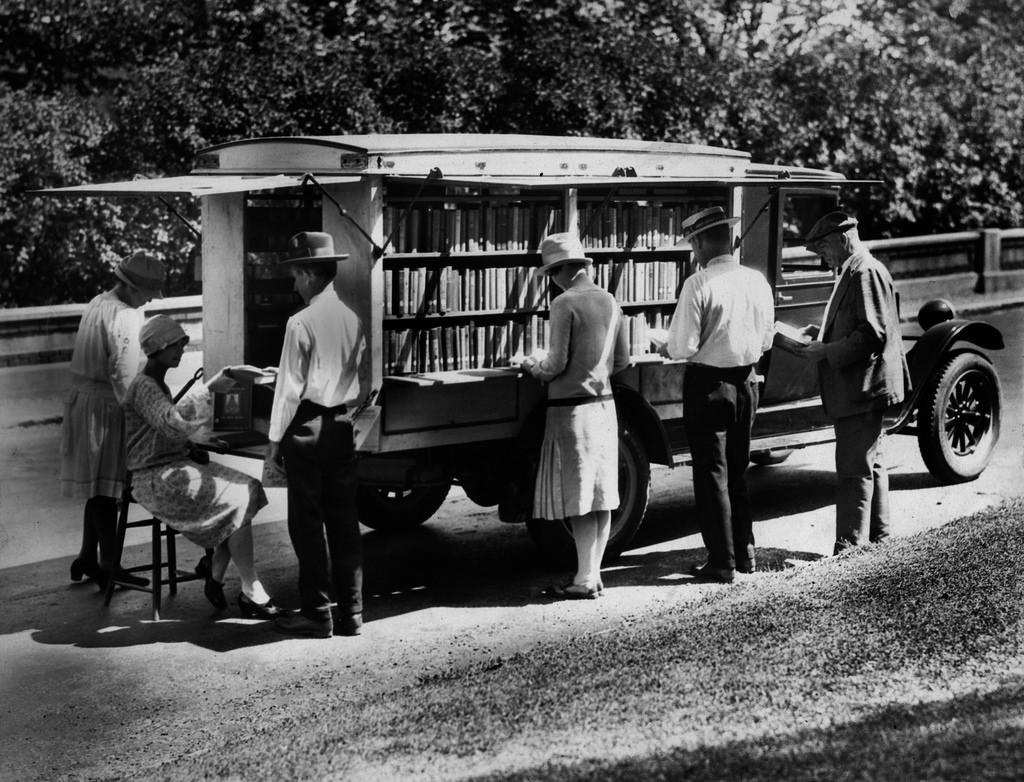
While April 15 marked the celebration of National Library Outreach Day, many long-time book lovers still remember it by its original name: National Bookmobile Day. No matter the name, it’s a day to celebrate traveling libraries and the dedicated people and organizations that deliver great books to people who can’t get to bookstores or libraries on their own.
Bookmobiles were the brain child of Mary Titcomb, a visionary Maryland librarian who devised a plan to reach readers who lived in rural areas so remote, they were unable to visit a library. In 1905 Mary loaded as many books as she could into a horse-drawn wagon, and set off to deliver books to isolated areas of the county.
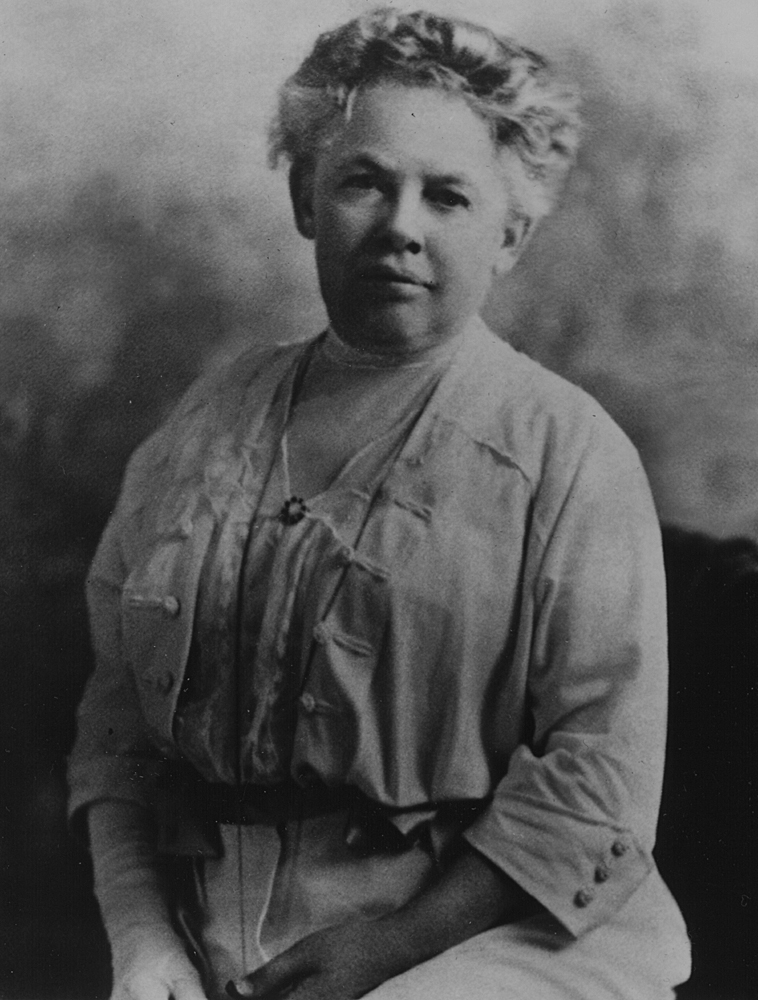
Maryland librarian, Mary Titcomb.
Drawn by two horses, the first book wagon was designed by Mary herself. It had shelves on each side with doors that opened outward for easy browsing, while the interior was packed with additional cases of books to replenish the stock on long journeys.
At first she laid out 16 routes that covered 500 square miles of territory. Sometimes the wagon was out one day, more often two or three. To drive to the most distant outpost of the routes took four days round-trip.
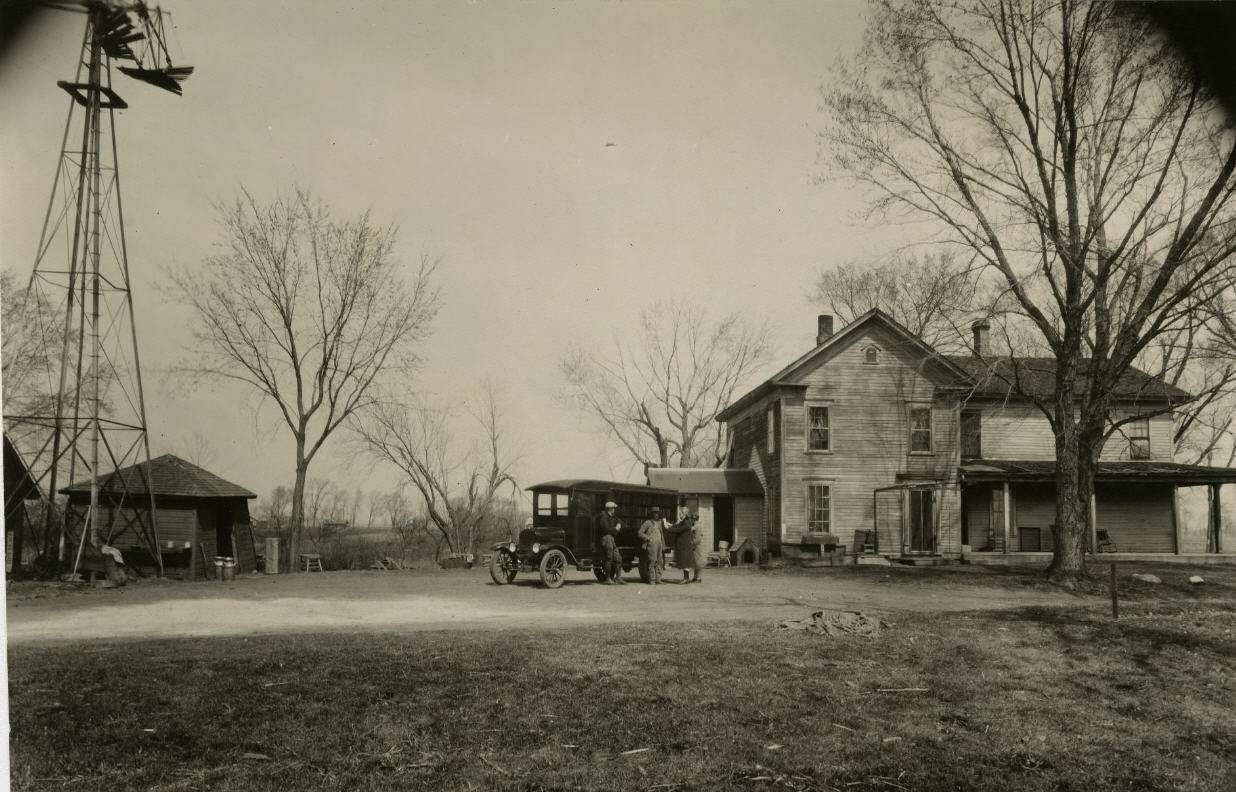
A bookmobile at a rural Minnesota farm about 1920 (courtesy of Minnesota Digital Library)
Her program was an immediate success and its fame quickly grew. In 1912 Mary replaced the horse-drawn wagon with an automobile, which allowed her to not only complete the routes more quickly, but add additional routes as well. Soon she began setting up book “stations” in some areas, where residents could borrow books and return them after reading. Then, on a set schedule, a book wagon would deliver a fresh inventory books to replace those already read—a routine that was the precursor of our current system of library branches.
While on her routes Mary visited farms, remote cabins, and homes of invalids. In some cases, she found that only the children in a home knew how to read, so she helped families select books written at a level so the children could read to their parents. In other districts, men who knew how to read outnumbered the women and children. For these and each area she visited, she made notes and returned with books that suited the residents.
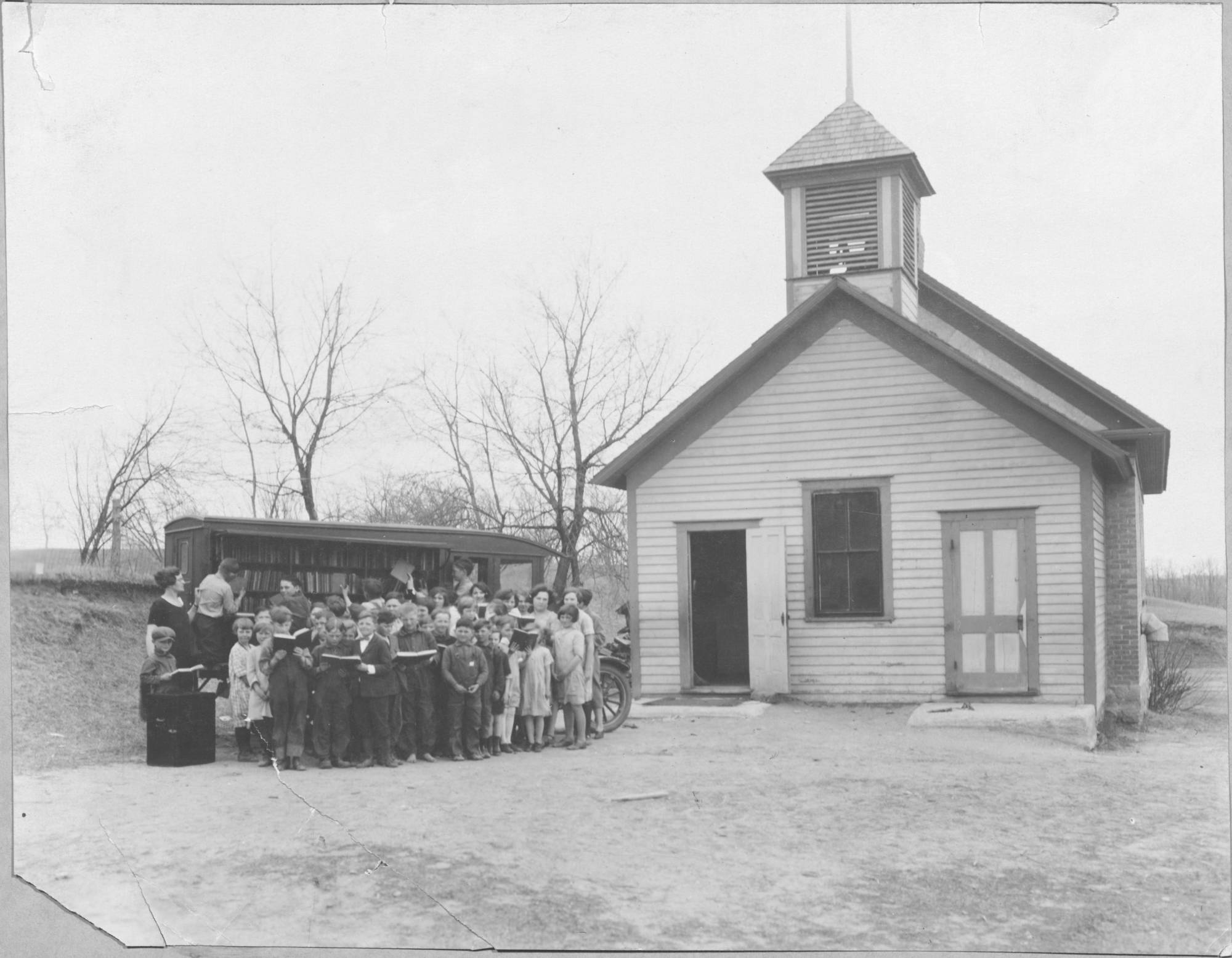
A bookmobile at a rural school in 1920.
In different newspaper accounts, Mary reported that the most requested books were practical and educational on topics like truck gardening, fruit raising, poultry culture, and domestic science.
Books on religion were also popular, “with a preference for those of a devotional nature.”
About 75 percent of fiction she delivered was juvenile, which she said meant “the books are read by both parents and children.” Susan Warner’s novel The Wide, Wide World was a favorite, as were other religious fiction titles. And since Isabella Alden’s novels were staples in public library systems across the country at that time, there’s a strong possibility the library outreach movement brought Isabella’s novels along on those bookmobile deliveries.
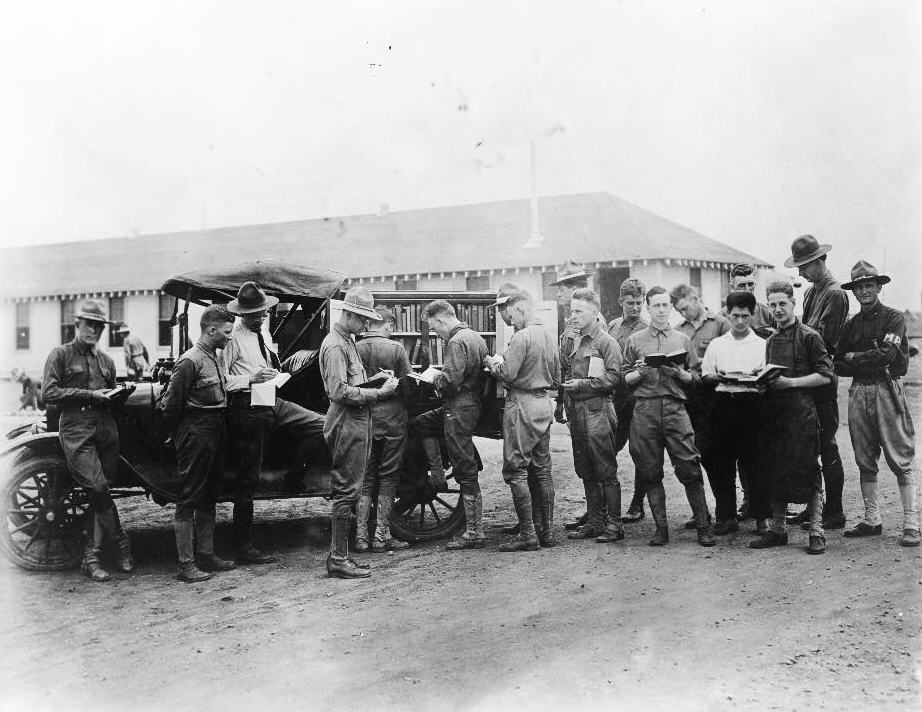
A bookmobile serving soldiers stationed in Kentucky, 1917.
It’s not hard to imagine that rural readers would have identified with the characters in Isabella’s books, like Esther in Ester Ried’s Namesake. Imagine being a young girl living on an isolated farm, opening a book to find Esther Ried Randall—a character whose life mirrored her own. Like the reader, Esther lived far from the bustle of the city, yet she harbored a dream of going off to college as an independent young woman. How much that book would have inspired that young girl to follow her educational and spiritual ambitions!
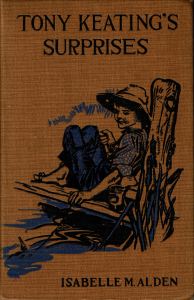
Or imagine a young boy with a penchant for getting into trouble and how much he would have identified with the main character in Isabella’s novel, Tony Keating’s Surprises.
In many ways, Isabella’s books (and others like them) were the only window some readers had on a larger world of instruction, culture, and good taste. Isabella’s skill for using stories to explain God’s love and plan for salvation ensured that traveling libraries delivered more than just entertainment—they delivered spiritual nourishment, as well.
A busy bookmobile in 1927.
Isabella’s books and Mary Titcomb’s outreach program were a perfect pairing. Both women were dedicated to making sure that God-given talents and wholesome reading were not restricted by geography or social standing.
For the girl dreaming of college or the boy seeking a better path, Mary Titcomb’s book wagon was more than just a vehicle; it was a lifeline that brought the world—and The Word—directly to their gate.
This week, as we approach Thanksgiving, we’re sharing a lovely poem Isabella published in The Pansy magazine in 1886. “Miss Marion’s Thanksgiving Day” is about a wealthy but lonely lady who looks across the hills at the local almshouse and finds her purpose.
MISS MARION’S THANKSGIVING DAY
Two big houses broad and high,
Outlined against an autumn sky.
Set on two hills, the houses stand,
One grim and cheerless, one fair and grand;
One teems with life throughout its walls,
One silent in all its stately halls.
One is of wood, and one of stone,
Each set in broad acres all its own.
One is the almshouse, gaunt and gray,
One the beautiful home of Miss Marion Ray.
Miss Marion Ray—her kith and kin
All to their rest have entered in.
Now she dwells with servants in lonely state,
In the mansion behind the iron gate.
A lady tall, and sad, and fair,
With a quiet face and a gentle air—
A sweet, worn face, and hair of gray,
Was the lonely lady, Marion Ray.
Sometimes in the night, when all is still,
She has looked at the lights on the other hill,
And wondered much if it were sadder fate
To live in the house with the wooden gate.
But something happened, the other day,
That has stirred the heart of Miss Marion Ray:
A mother went out of the almshouse door,
Went out of it to go back no more;
Went out to be buried under the leaves,
While the wind of November moans and grieves,
And left a wee blossom with eyes of brown,
To the tender mercies of all the town.
Miss Marion has thought of the baby's fate
Till love and pity have grown so great
She has opened her Bible there to see:
"As ye did it to Mine, ye did it to Me;"
And so, on the morn of Thanksgiving Day,
In the early morn, when the sky is gray,
At the almshouse door a carriage stands,
With shining horses in gleaming bands;
And into the eyes of the little child,
The sad-eyed lady looked and smiled.
On the silken shoulder the glittering head,
Then —"I love 'oo, lady," the baby said.
Gathered close to the hungry heart,
The child and the lady never to part—
Carried home to the mansion grand,
The proudest and richest in all the land.
Never a pauper, the lovely child
Into whose face the lady smiled.
"Done to the least it is done to Me."
What grander honor on earth could be?
Oh, a sweet and joyous Thanksgiving Day
Has come to the home of Miss Marion Ray.
The heart of this story—and of so much of Isabella’s work—is the quiet call to charity, the simple act of extending kindness to those in deepest need.
What do you think? Does this poem illustrate Christ’s instruction from Matthew 25:40: “Inasmuch as ye have done it unto one of the least of these my brethren, ye have done it unto me”?
Reviews and giveaways for Christian fiction and sweet, clean fiction. Bringing readers information on great stories and connecting authors with their readers.