If you grew up prior to the 1990s, you may remember what life was like before the Internet brought the world into our homes. If you wanted to research a topic, get help solving a riddle, or find the latest best-seller, you went to your local library.
Librarians were the original “human search engines” of their communities. They were masters of the card catalog, date-stamped every book checked out and returned, and stood ready with recommendations to help neighbors find the perfect “good book” to read.
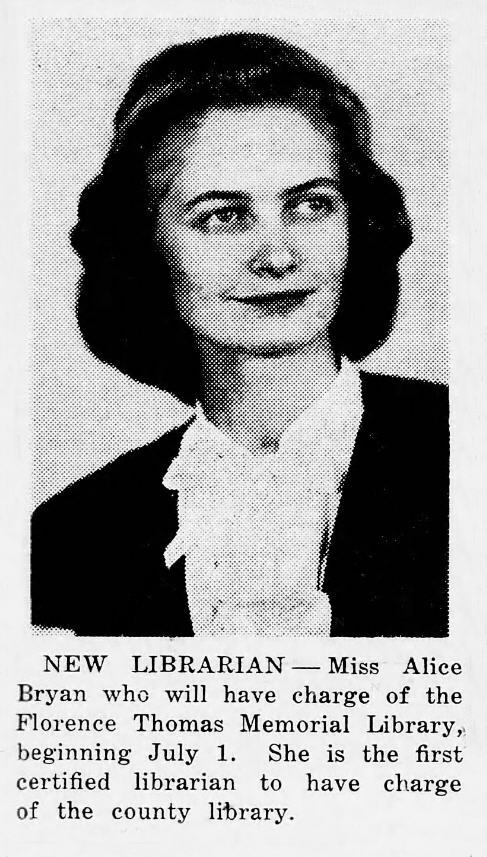
In Marion, North Carolina, county librarian Alice Bryan shared the joys and quirks of her librarian job in a weekly newspaper column. She quickly noticed that readers had some very unique strategies for choosing their next read!
When one lady in the library asked, “How can I tell a good book when I see one?” another patron quickly spoke up: “See how many names are on the card!”
(For our younger readers: back then, every book contained a paper card that patrons physically signed when checking it out. A card packed full of names was the ultimate 1940s version of a five-star review!)
Other readers chose books based on its physical characteristics. “Lightweight books are the best,” one lady told Alice, while pre-schoolers often picked their books by size—the bigger, the better!
But when patrons weren’t judging books by their weight or size, an equally large number asked for them by author. Popular authors like Zane Grey, Agatha Christie, and Mary Roberts Rinehart were always in demand—but there was one name Alice Bryan saw flying off the shelves more than any other: Grace Livingston Hill.
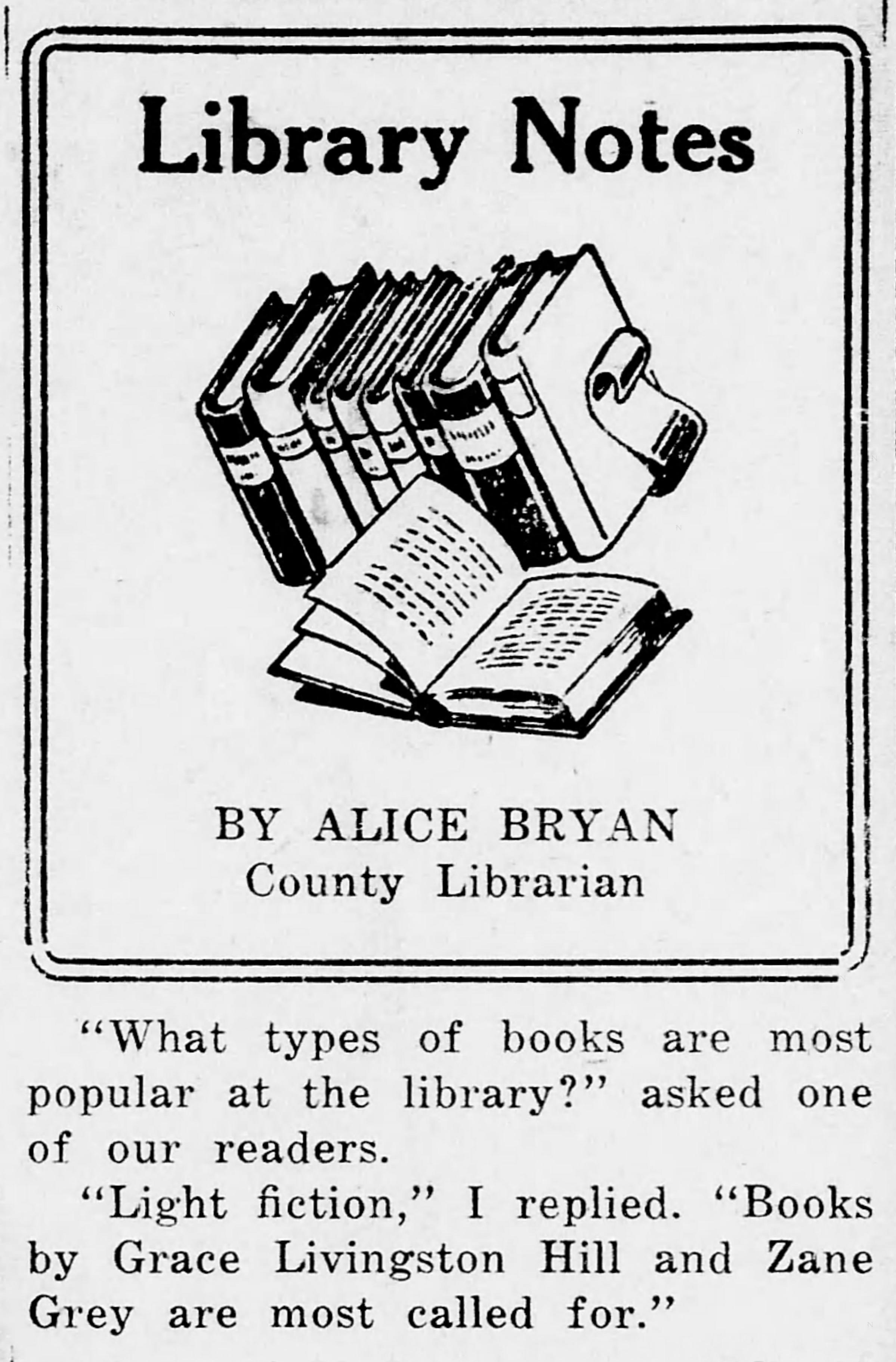
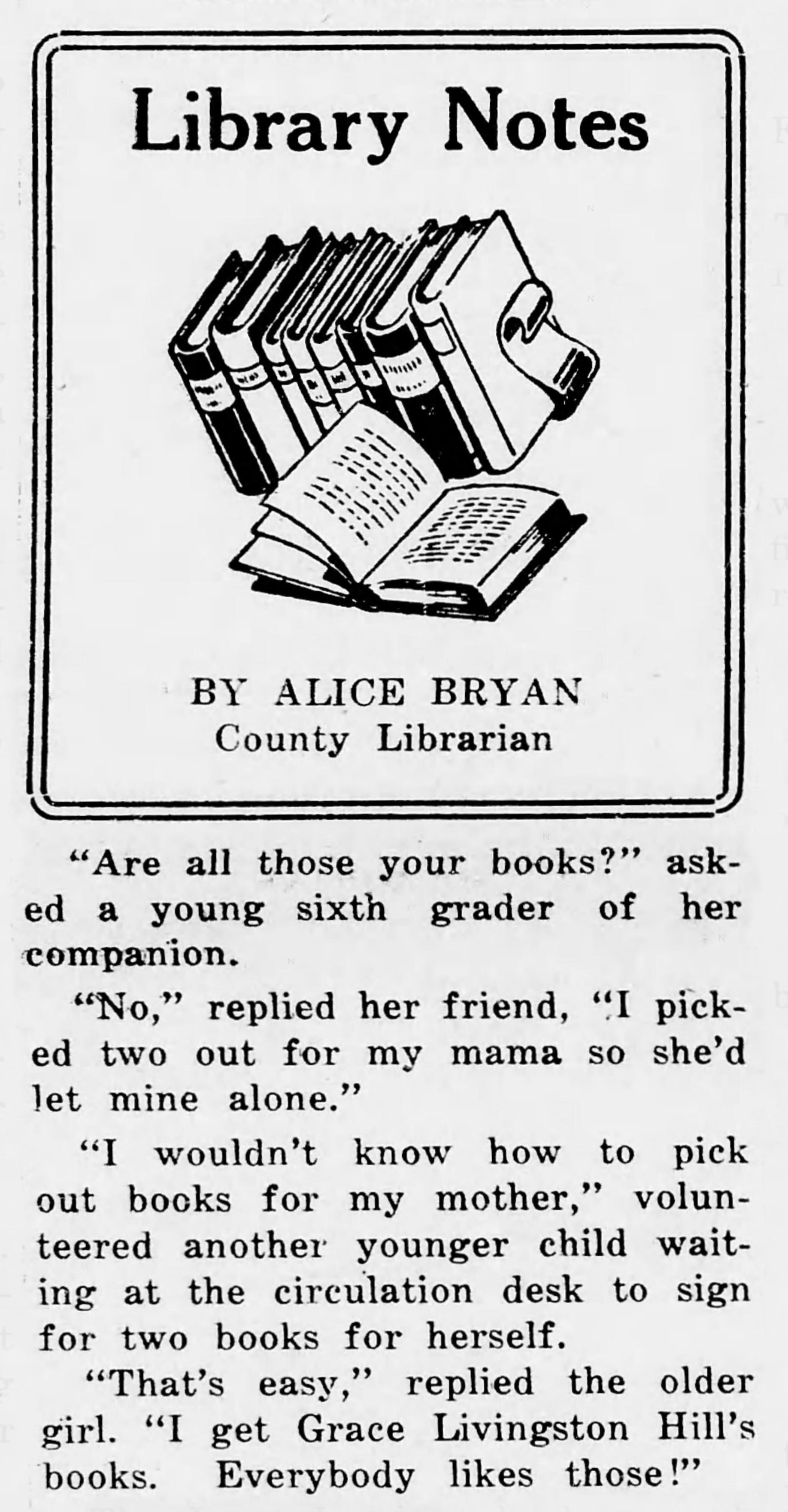
Alice frequently highlighted Grace as a reader favorite for “light fiction.” The appeal of Grace’s books even seemed to cross generations. One day Alice overheard this conversation between a group of sixth-grade girls at the library:
By the mid-1940s, Grace Livingston Hill was at the absolute peak of her writing career with almost one-hundred beloved novels to her credit. In an uncertain, complicated post-World War II climate, readers eagerly sought out her stories for their comfort, warmth, and reliable messages of eternal hope.
Of course, long-time readers of this blog know that Grace’s writing talent was practically a family trait—she was Isabella Alden’s cherished niece. Both women shared a remarkable gift for understanding what readers needed most. By seamlessly weaving messages of faith and comfort into their stories, they ensured that current and future generations of readers knew exactly where to turn for a truly “good book.”


