The Boarding House in Isabella’s World

If you’ve spent any time getting to know the characters in Isabella Alden’s novels, you’ve probably met them multiple times: the widow who takes in lodgers to keep her family afloat, the young store clerk boarding far from home for the first time, the landlady presiding over a dinner table crowded with as many opinions as boarders. Boarding houses show up so often in her stories that it’s easy to read right past them — but for Isabella’s original readers, they needed no explanation. For us, more than a century later, a bit of an explanation is in order.
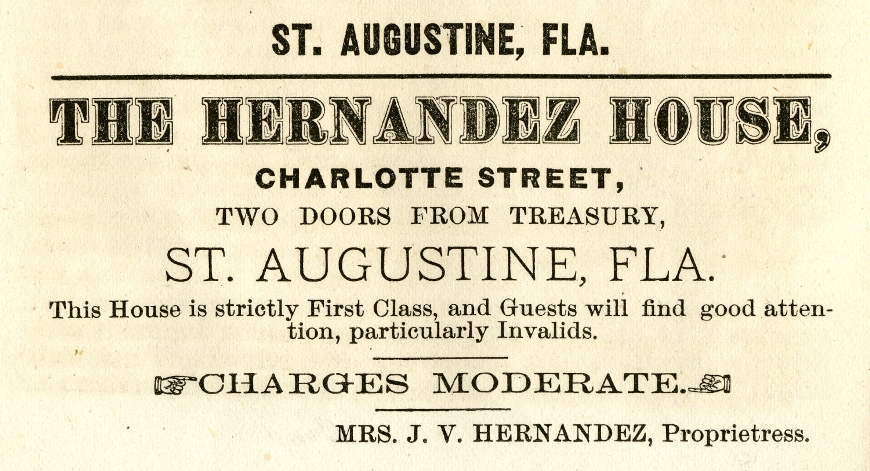
Newspaper ad: St. Augustine, Fla. THE HERNANDEZ HOUSE, Charlotte Street, Two doors from treasury, St. Augustine, Fla. This House is strictly First Class, and Guests will find good attention, particularly Invalids. CHARGES MODERATE. Mrs. J. V. Hernandez, Priprietrees.
Newsapaper ad for a private boarding house in Florida, 1878.

A boarding house was, at its simplest, a private home where the owner rented out rooms and provided meals — typically breakfast and dinner were included in the weekly rate, with lunch offered as a lighter, extra meal since working boarders were away at midday. This is an important distinction: a boarding house was not the same thing as a rooming house, where a lodger rented a room but ate meals elsewhere, usually at a restaurant. Boarders lived and ate under one roof; roomers just slept there. Isabella’s characters moved between both kinds of arrangements, and knowing the difference helps explain a lot about their daily routines (and their complaints).
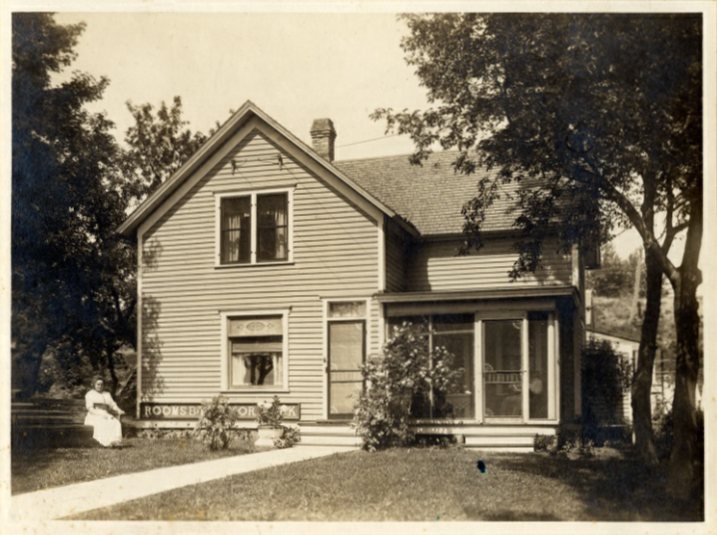
Black and white photo from about 1910 showing a neat two-story house with clapboard siding and a small screened front porch. A woman sits alone in a chair to the left of the house near a shade tree.
A small private home open to boarders. The sign near the seated woman reads “Rooms by day or week.”

A well-run boarding house was expected to offer more than just a bed. According to the standards of the day, a boarder could expect a clean, whole set of bedding, a washstand with a large pitcher for washing up, fresh drinking water left by the bed at night, and a well-supplied bathroom down the hall. Whether a house actually delivered on these basics — or fell woefully short of them — could make the difference between a boarder’s contentment and outright misery. We meet both kinds of houses in Isabella’s novels.
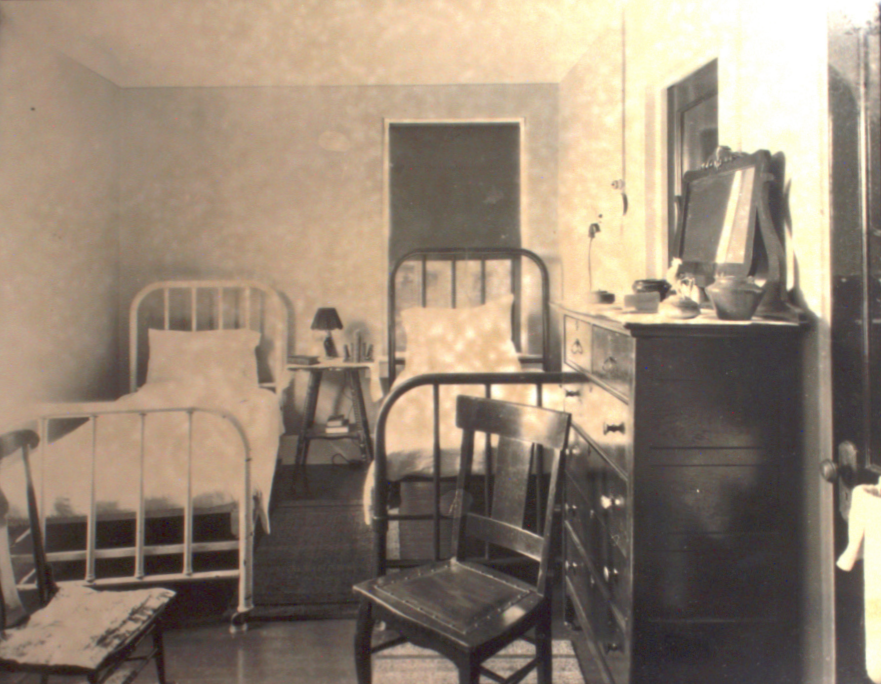
Black and white photo of a small room containing two twin beds with iron frames. At the foot of each bed is a wooden chair. A tall chest of drawers stands against a wall between two doors. On top of the chest are a mirror and small toiletry items and jars. In the foreground you can see what appears to be the edges of towels hanging from a rod. One small window is covered by a dark shade.
A boarder’s room at a boarding house in Uniontown, Pennsylvania (courtesy Uniontown Public Library).

In Isabella Alden’s lifetime, a woman who needed to support herself — or her family — had only a handful of respectable options. She could teach school. She could sew. She could clerk in a store. Or she could keep a boarding house.

That last option had a particular appeal for women who already owned a home, especially widows left with a house too large for their remaining family and no other income. It required little starting capital. You didn’t need to buy a building or stock a shop; you just opened the doors of the house you already had. And on paper, it looked deceptively simple: cook a bit more food, make up a few extra beds, and collect the weekly rent.
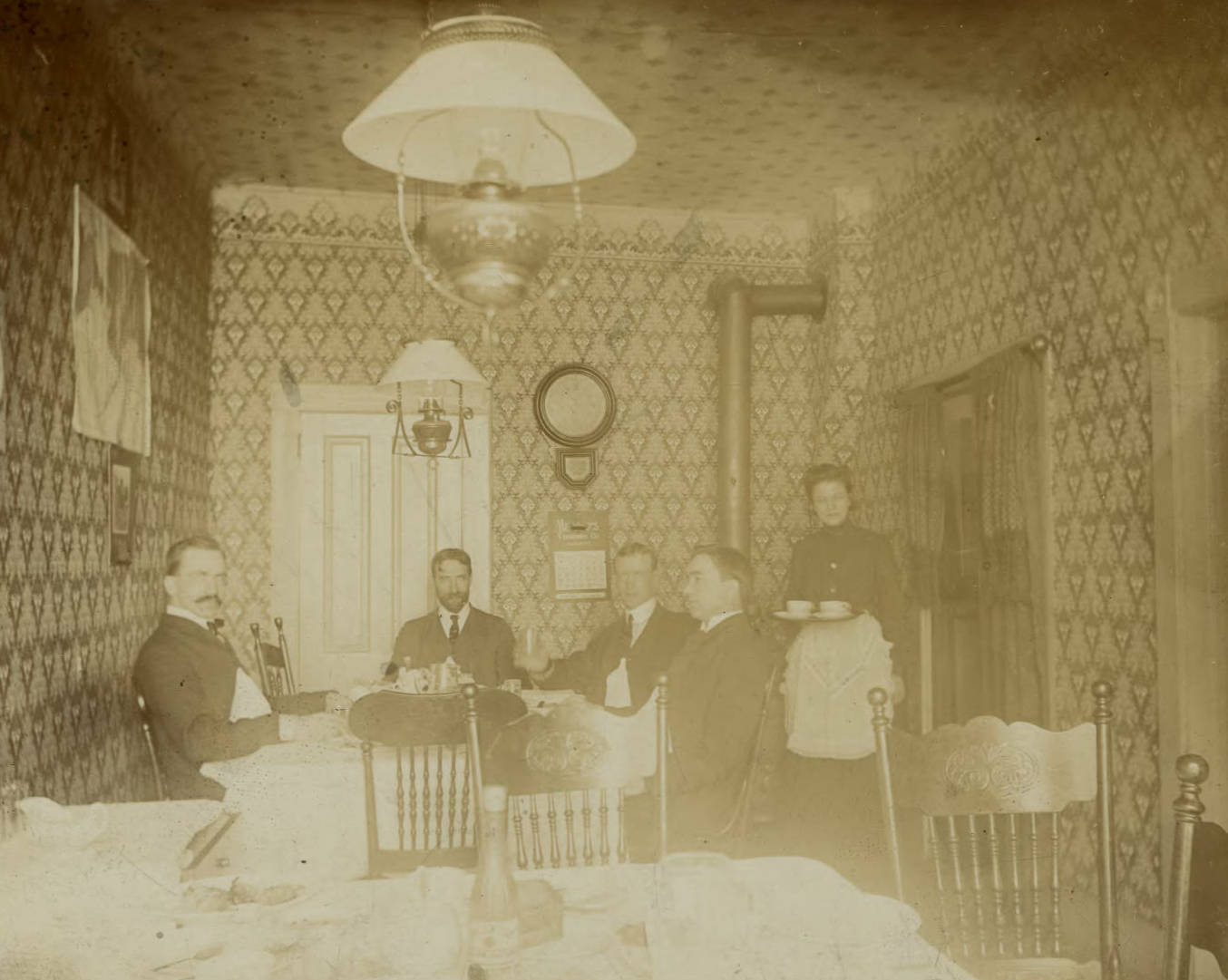
Old black and white photo of a small dining room with 2 gas lamps hanging from the ceiling. Four men sit at a table covered in a white table cloth as a woman wearing an apron carries a tray toward them. In the foreground is an empty table and chairs set with linens, dishes and cutlery. The walls and ceiling  are covered with patterned wallpaper. In the back corner of the room you can see the exhaust pipes for a small wood-burning stove.
The dining room at Mrs. Heath’s boarding house, Duluth, Minnesota, 1893.

In practice, as Isabella’s own characters discover, it was one of the hardest ways a woman could make a living. Keeping boarders happy, fed, and paying required real business sense — knowing what to charge, what “extras” to allow, how to set rules boarders would actually obey and respect — and it demanded relentless physical labor that often fell hardest on daughters and servants rather than the woman whose name was on the sign. That was certainly the case in the Ried household in Isabella’s novel, Ester Ried.
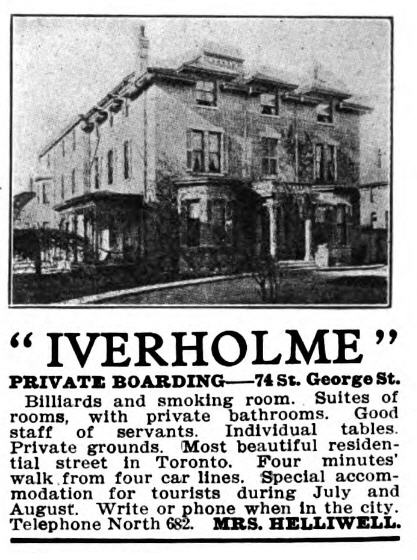
Newspaper ad showing a photo of a large home. "IVERHOLME." Private Boarding. Billiards and smoking room. Suites of rooms, with private bathrooms. Good staff of servants. Individual tables. Private grounds. Most beautiful residential street in Toronto. Four minutes' walk from four car lines. Special accommodation for tourists during July and August. Write or phone when in the city. Telephone North 682. MRS. HELLIWELL.
Ad for a large well-staffed boarding house in the Toronto Daily Star, 1904.

Isabella Alden probably had some personal experience as a boarder. As the wife of a minister who moved frequently from one calling to the next, she likely spent time in boarding houses and rented rooms herself, sizing up landladies and dining rooms much the way her characters do. That experience may be exactly why her boarding house scenes feel so specific and true.

Isabella’s fellow boarders had their own reasons for renting rooms. They were people who needed lodging but didn’t have or want a household of their own — young unmarried clerks and salesmen, professionals new to a city, widows and widowers, traveling businessmen with schedules that didn’t match a family’s routine, and increasingly, by the turn of the century, single working women living independently of their families for the first time.
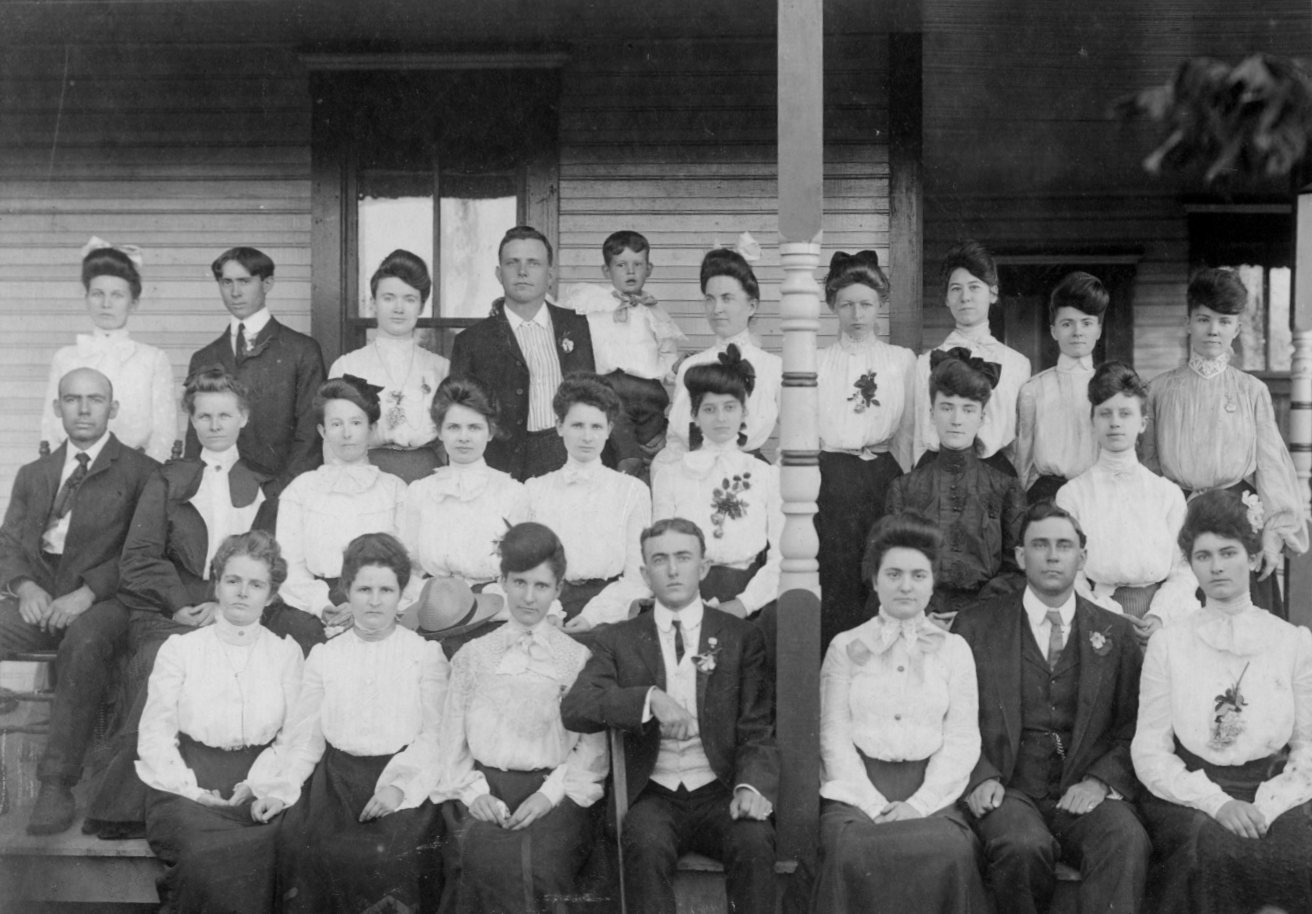
Some residents of the Taylor Boarding House in Denton, Texas, 1904.

That mix of backgrounds, ages, and personalities all sharing one dining table is exactly what made boarding houses such fertile ground for Isabella’s imagination. For her, a boarding house dining room could be the setting for a marriage proposal, a theological argument, a landlady’s quiet influence on a wayward young man, or a boarder-turned-lifelong-friend, all in the course of an ordinary week. Isabella used her boarding houses not just as scenery, but as places where her characters’ true selves came out and sometimes, their spiritual journeys were corrected.

Join us again on October 20 when we’ll begin looking at the boarding houses in Isabella’s novels, starting with a weary young heroine named Ester Ried and the exhausting responsibilities she carries as she tries to keep her family afloat.
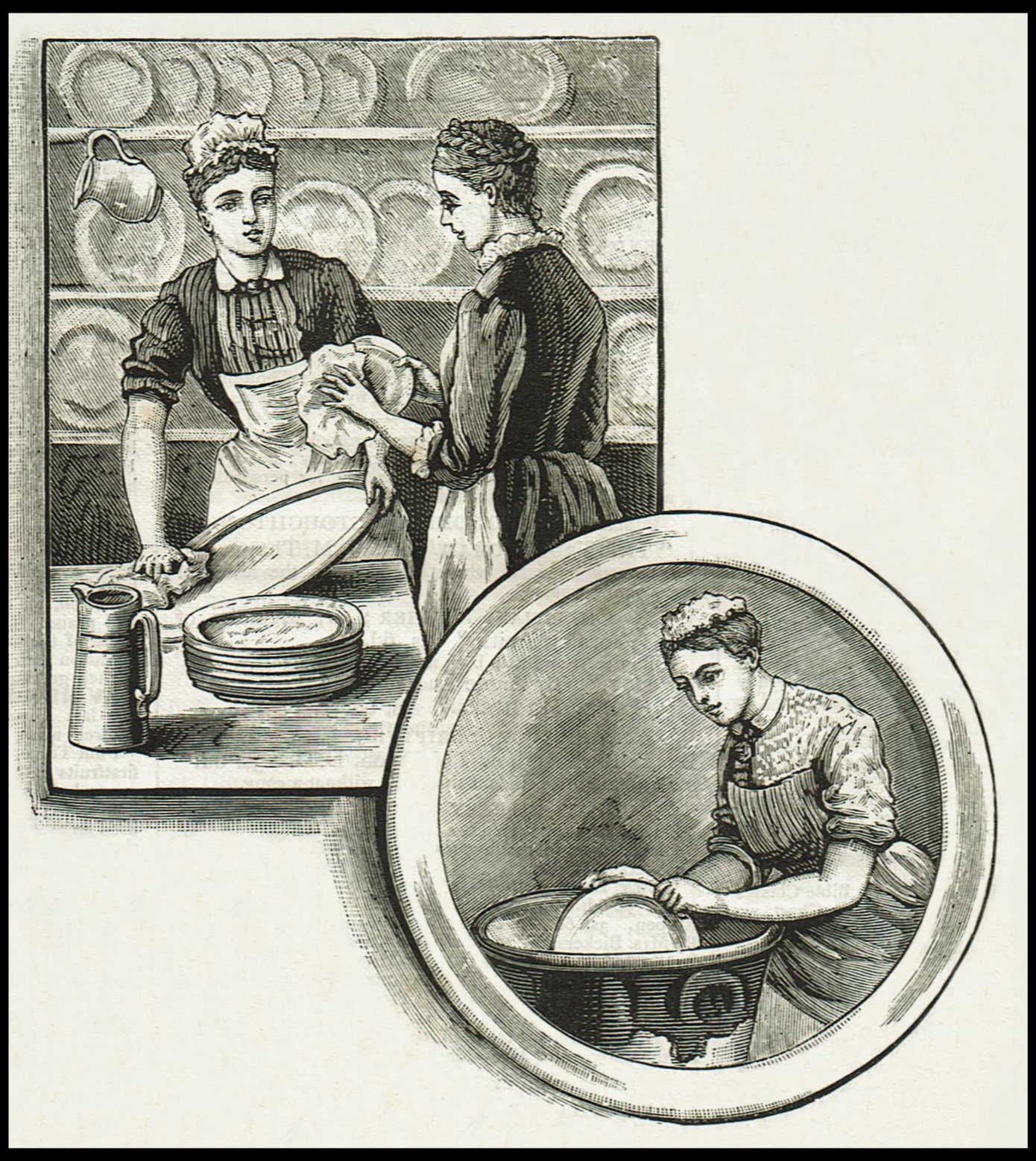
Two pencil and charcoal illustrations showing women at work in a late 1800s kitchen. In one, two young women wearing aprons wipe plates and platters at a wooden table while behind them can be seen shelves with plates and platters arranged by size. In the second, a young woman wears an apron and capt to protect her hair as she washes plates by hand in a large tub.

A Feather in Her Hat

Rebecca’s dress was entirely appropriate and becoming. She had gone out from her father’s house very well supplied with clothes, and her ability to re-make them herself had stood her in good stead, so that now her dress of fine black cloth, made severely plain, but with minute attention to details, became her well. So did the black felt bonnet, with its three stylish plumes, which she had herself dressed over.

from Wanted, by Isabella Alden, published in 1894

In her stories, Isabella often used the latest fashion to define a character’s financial and social status, and Rebecca Meredith’s outfit was an excellent example. Because her dress was plain and black, her bonnet “with its three stylish plumes” was the centerpiece of her outfit and called attention to her pretty face.

Bonnets with plumes were very much in style when Wanted was published in 1894. Women’s magazines, like Godey’s Lady’s Book and The Ladies Home Journal showed that hats were be made from a variety of materials—straw, for example, or stiffened fabrics like velvet—and that they were quite modest in size.

Black and white illustration of a young woman wearing a long gown in the fashion of 1895 with extremely large puffed sleeves, and a high collar with a large bow at the back. On her head is a bonnet with a short brim, decorated on top with flowers, gathered ribbons, and an aigrette of short bird plumes.
From Godey’s Lady’s Book, August 1895.

Though small, hats at that time were heavily adorned with ribbons, bows, artificial flowers and, most importantly, bird plumes.

A black and white drawing of a woman wearing a short belted coat with long sleeves and a collar that stands up to cover her neck. On her head is a small hat with a short brim, adorned with ribbons, flowers and a cluster of curled bird feathers at the top.
From Godey’s Lady’s Book, October 1897.

Bird feathers were the most desirable decorative elements on a lady’s hat. In 1894 The Ladies Home Journal predicted that actual wings displayed on bonnets would be “all the rage,” while another magazine wrote that “almost every second woman one sees in the streets flaunts an aigrette of heron’s plumes on her bonnet.”

Color illustration of a woman dressed in a coat and hat from about 1900. Her hat has a wide brim and is piled on top with arrangements of ribbons and two long bird feathers set at an angle pointing toward the back of the hat. A wide red ribbon tied beneath the woman's chin keeps the bonnet in place.

Milliners used feathers from egrets, hummingbirds, herons, and even song birds of all kinds as adornments.

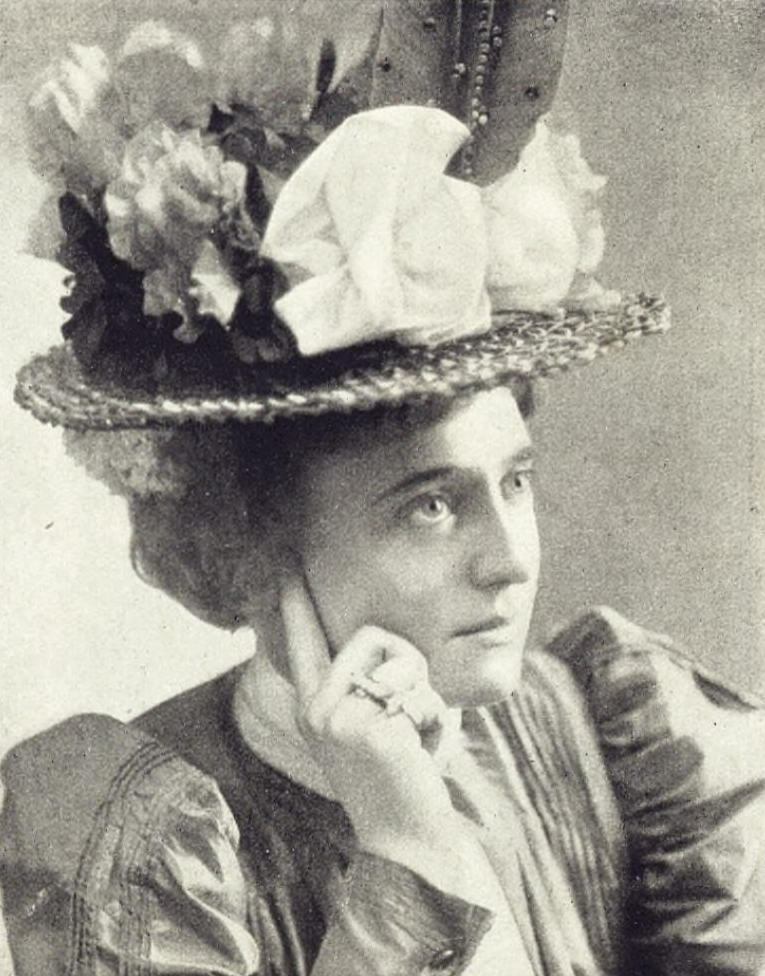
Black and white photo of a woman wearing a dress from the 1890s. On her head is a flat brimmed hat; the crown of the hat is covered with flowers, gathered ribbon, and a single large bird feather in the front. The feather stands straight up on its stem and is adorned with beads.
From Godey’s Lady’s Book, 1898.

The more exotic the bird, the more desirable their feathers; and the millinery industry was willing to pay top dollar to anyone who would supply them, no questions asked.

But some people did ask questions and raise alarms, after nature lovers in England and the United States discovered that some birds, like ospreys and egrets, were hunted so mercilessly, ornithologists feared they would soon be extinct.

Newspaper clipping: BIRDS VICTIMS OF PRIDE. We have received some letters from our readers enforcing the words of Mrs. Aria as the the cruel price that has to be paid for the osprey's feathers, which are in vogue just now in women's headgear. Mrs. Phillips writs to point out that these feathers can only be obtained at breeding time. The plumage is torn from the living parent birds on the nest, which are then flung aside to die, while the young birds are left to starve. Could anything be fore horrible! The bare recital of these facts should be enough to put an instant stop to such a merciless trade.

In London, a Society for the Protection of Birds was formed. Members pledged to never wear feathers of any bird not killed for the purpose of food. Similar organizations were formed in Europe, Canada, and the U.S.

Newspaper clipping: BIRDS IN OUR BONNETS. In response to many inquiries, we would draw attention to the Society for the Protection of Birds, 29 Warwick Road, Maida Hill, London, of which Miss Hannah Poland is the secretary. There is no subscription fee, but any one wishing for a card of Membership can have one by sending two stamps to Miss Poland. Members promise not to wear feathers of any bird not killed for the purpose of food, the ostrich excepted.

The public outcry began to pay off, as women around the world pledged to stop wearing hats with real bird feathers, and American lawmakers enacted state and federal laws to protect certain species of birds by banning them from use in hats and garments.

One bird that was exempt from protection was the ostrich, because its feathers could be harvested without killing the bird. So it was natural that the millinery industry would turn its attention to ostriches as a source for adornments.

Black and white photo of a woman wearing a hat with a wide brim of 12 to 14 inches deep. The crown of the hat is covered in ostrich feathers that are piled about 12 to 14 inches high, giving a waterfall effect.

Ostrich farms that had been established in the southern United States in the late 1890s in hopes of selling feathers to the millinery industry suddenly saw an increased demand for their wares.

Color photo of a herd of about 40 ostriches running across a fenced enclosure.
An ostrich farm in southern California.

And because ostrich feathers could be plucked every eight or nine months, ostrich farmers with large herds enjoyed a regularly replenished inventory they could sell.

Black and white photo of a woman wearing a short-brimmed hat. A wide ribbon circles the crown of the had and is arranged in multiple loops in front. The stems of two long ostrich feathers are tucked into the ribbon arrangement and the feathers drape back cross the crown of the hat.

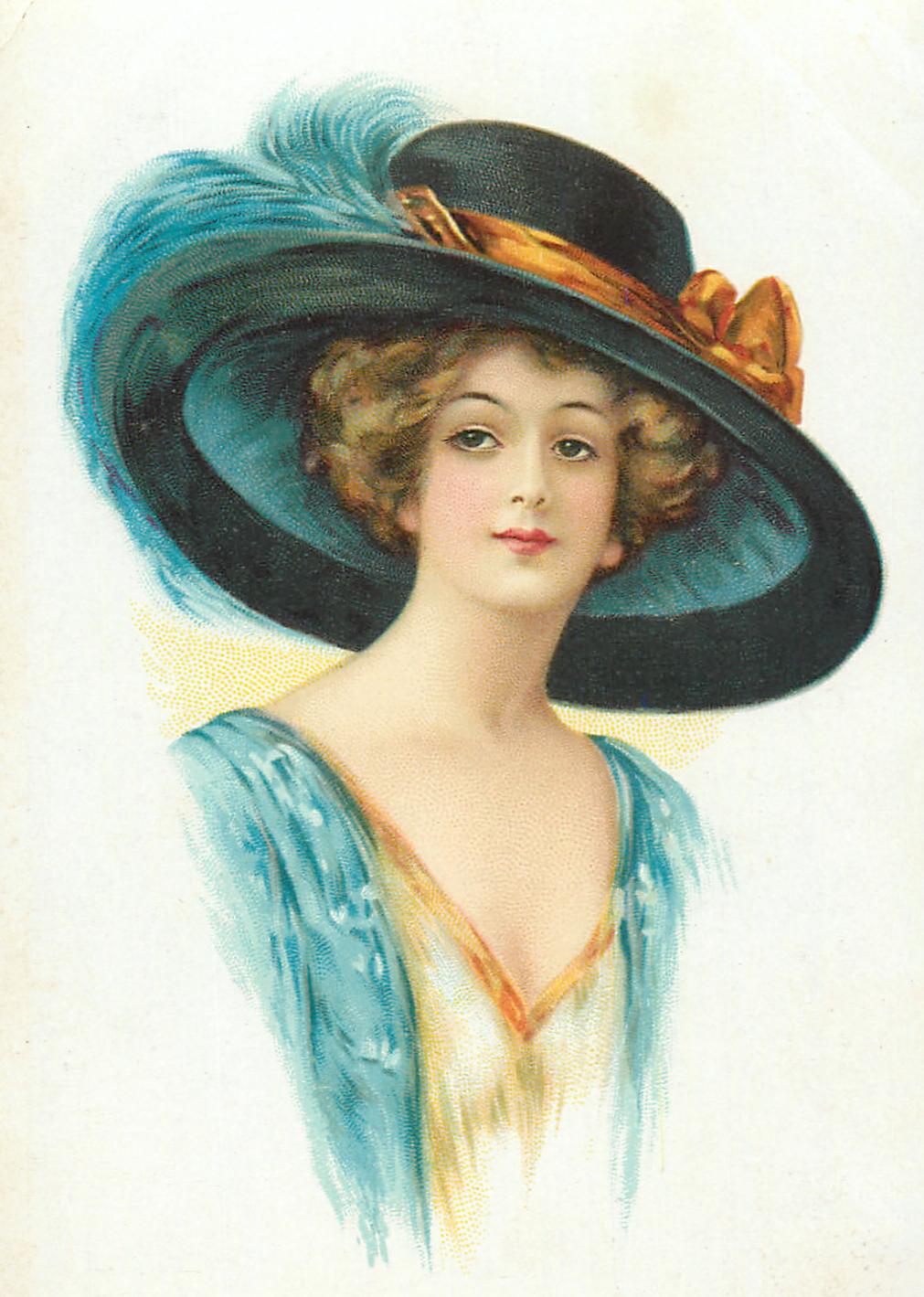
With the turn of the century, hat styles changed, and the small bonnets that were popular when Isabella wrote Wanted fell out of fashion. The new bonnet styles of the 1900s featured wide brims and brilliant colors.

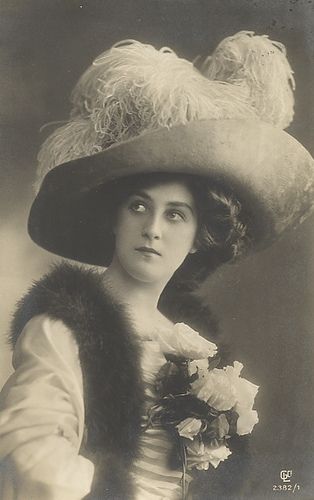
Ostrich plumes suited the new styles beautifully. Because of their size, the plumes could cover a large hat’s crown and brim.

Hand-colored photo of a woman wearing a hat with a wide brim of 12 to 14 inches deep. The crown of the hat is covered in ostrich feathers that are piled high, with some parts of the feathers spilling over the brim of the hat.

Even more importantly, ostrich feathers could be dyed to match almost any color. Women and conservationists rejoiced, feeling confident that they could use ostrich feathers for fashion without feeling guilty.

Color illustration of a woman wearing a wide brim bonnet about 14 to 18 inches deep. The bonnet is black but the lining is a brilliant blue. A wide orange-gold ribbon circles the crown of the hat and is tied with a large bow. On the opposite side of the crown feathers of the same brilliant blue are arranged in a cluster across the brim.

In her 1912 novel The Long Way Home Isabella made sure her fashionable characters wore the latest style in bonnets. Newlywed Ilsa Forbes wore a wide-brimmed hat when she boarded the train with her new husband Andy:

But Andrew had no words, just then; never was the heart of bridegroom more filled to overflowing, and he could not yet think about decorations or supper.
“My wife!” he murmured, as his arm encircled her. “Really and truly and forever my wife. Do you realize it, darling?”
She nestled as closely to him as her pretty, new traveling hat would permit and laughed softly.

There was, however, a problem with those stylish large hats adorned with ostrich feathers. In 1908 a letter to the editor of the Oregonian newspaper applauded the ban on exotic bird feathers, but raised a new and troubling concern about ostrich feathers:

Newspaper clipping: The only plumage I have cared to wear is the ostrich feather, and I may yet become convinced that this practice is incompatible with my convictions. Having witnessed many times the plucking of ostriches in Southern California, I have been unable to see that there was any special cruelty attached, though I have no doubt the sensation experienced by the ostrich might be much like we would feel in having a deep-rooted molar drawn.

The letter-writer wasn’t the only one wondering if an ostrich felt pain when its feathers were plucked. Soon the Audubon Society and other conservationists began asking the same question and took their findings to state legislators.

In California, where Isabella was living and where many of the country’s ostrich farms were located, the question was answered by lawmakers. In 1900 the state updated its penal code to make it a crime to intentionally mutilate or torture a living animal, which included plucking live birds like ostriches.

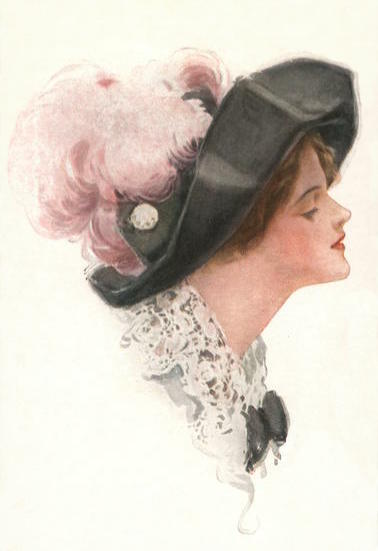
Profile of a young woman wearing a black bonnet with a wide brim turned up in the front. At the back of the crown is a cluster of long, fluffy, pink ostrich feathers.

So ostrich farmers stopped plucking and began snipping feathers, instead. A 1911 article in the Dallas Morning News explained the process:

Newspaper clipping: While the term "plucking' is given to the harvesting of the feathers, the fact is that they are not plucked or pulled out, but are snipped off by means of shears. This process is gone through every eight months, and the quality of the plume depends largely upon how it is cut. There are twenty-five long white plumes on each wing of the male bird. The rest of the feathers are black on the male and a grayish color on the female. Harvesting the plumes is no easy task.
From The Dallas Morning News, November 12, 1911.

Once again, stylish ladies (and Isabella’s equally stylish characters) could wear hats adorned with feathers and maintain a relatively clear conscience.

It’s interesting how Isabella’s attention to details, like hat sizes and adornments, brought her stories to life. While she didn’t preach about fashion in her novels, she paid close attention to these niceties, and used them to bring authenticity to her characters and their world. Contemporary fans of her novels would have noted the subtle changes as keeping up with the times.

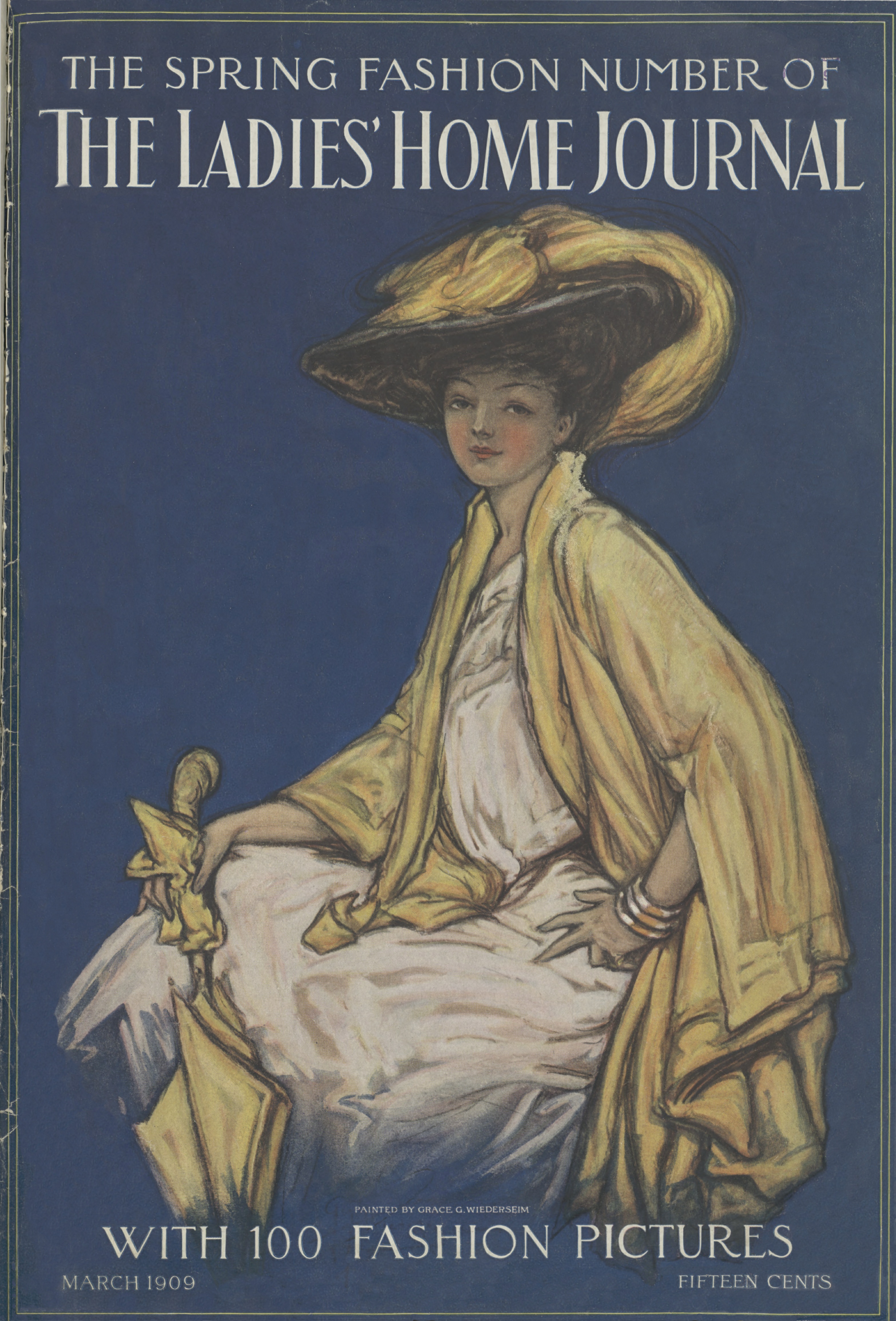
Cover of The Ladies' Home Journal magazine. The color illustration shows a stylish young woman seated, wearing a white dress. A gold colored cape is drawn open with one of her hands. In the other hand she holds a matching pair of gloves and an umbrella. On her head is a wide-brimmed hat fashionable in 1909. Covering the brim of the hat and cascading over the brim at the back is an arrangement of feathers dyed gold to match her outfit.

For us in 2025, it’s fascinating to learn there’s a whole complicated history behind Rebecca Meredith’s feathers—a history about women who were determined to write wrongs and find ways to be fashionable without compromising their conscience.

You can learn more about Isabella’s novels mentioned in this post by clicking on the book covers below:

Full disclosure: these are Amazon affiliate links, which means if you decide to purchase through them, this blog will receive a small commission. It doesn’t cost you anything extra, but it helps us keep this site running and researching Isabella’s life and the fascinating world in which she lived.