Grace Livingston Hill, Isabella’s niece, is often credited with creating the Christian romance novel, but in her early writing days Grace wrote and published many short stories.
She was just 28 years old when her story, “Beginning at Jerusalem” was published in Home Missionary Monthly magazine in 1893.
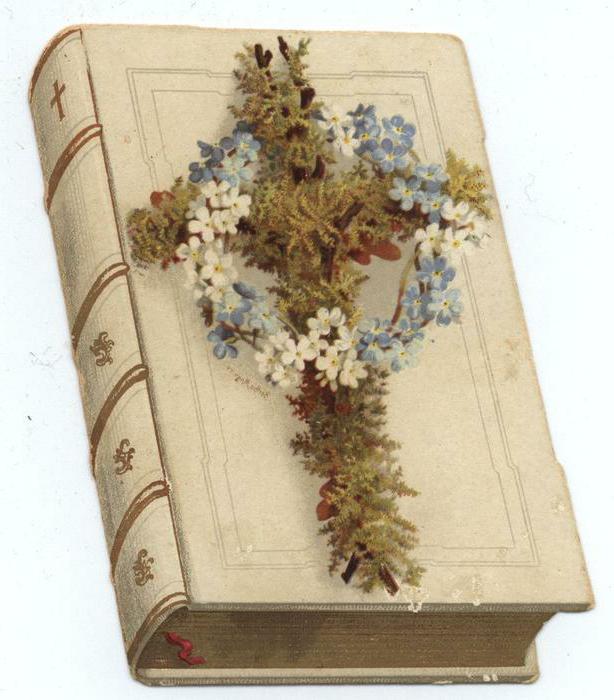
Now you can read Grace’s heartwarming story for free. Just click on the book cover to begin reading.
Isabella was very close to her niece, Grace Livingston. She was 24 years old when Grace was born, and she did her best to spend as much time with little Gracie as she possibly could.
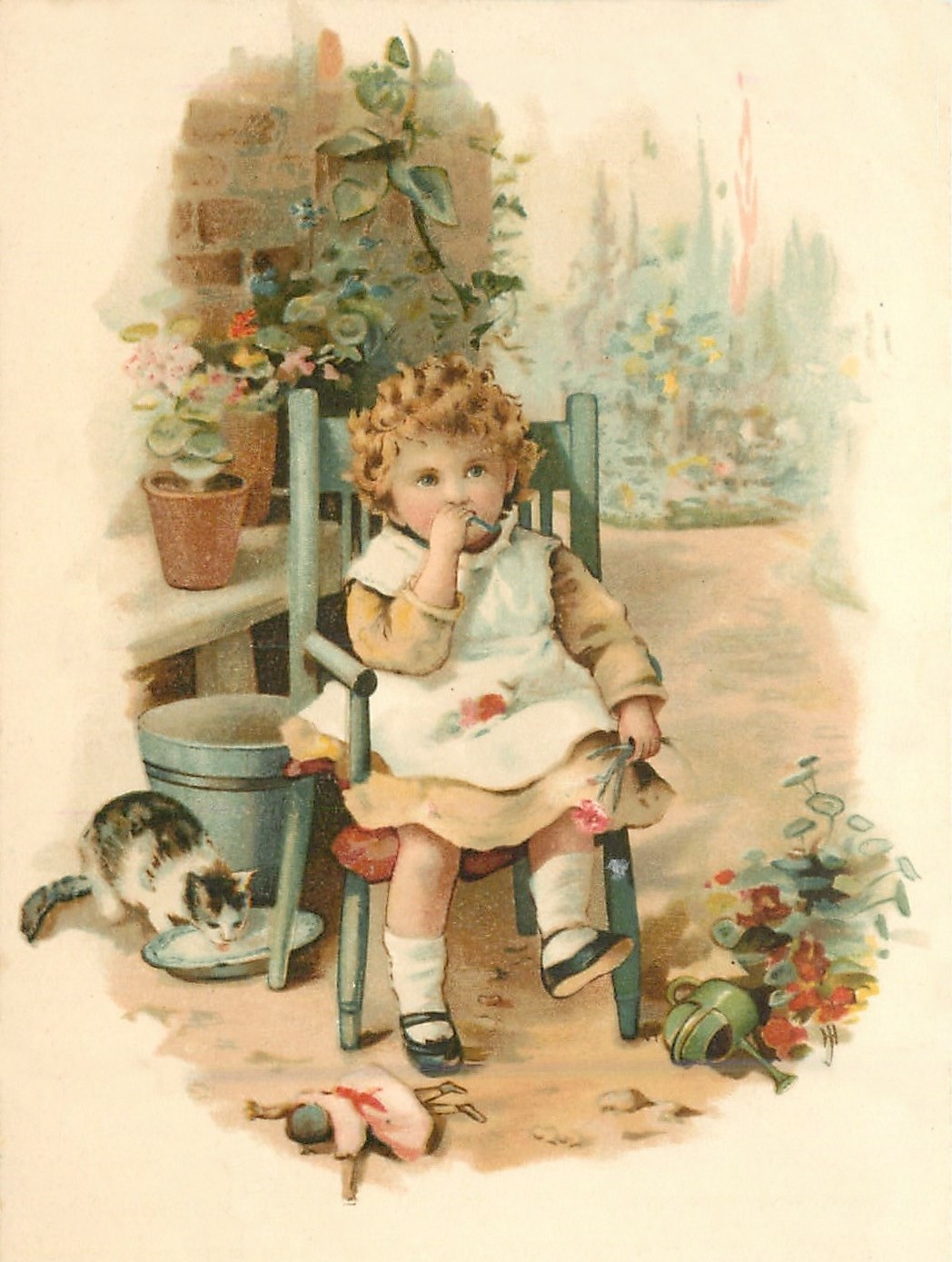
She was especially fascinated with Gracie’s developing personality. When the child was only three years old, Isabella said that Grace was as “full of fun and frolic as a mortal child could be. Oh, the mischief that that morsel could get through in a day! It seemed to me that the little feet and hands and tongue must ache at night; but they were never quite ready to have night come—in fact, as it drew toward bedtime she seemed to have more to do than before, and many a nice plan was spoiled right in the best of it by the call to bed.”
Many times Isabella and her sister Marcia (Grace’s mother) had long talks about Gracie’s willfulness and the odd way she had of looking at the world.
Isabella wrote that when Grace was about three years old, she developed the habit of waking in the morning and announcing her mood. “Gracie is a naughty baby this day.”
She seemed to think that this made everything all right, and nobody had a right to complain as long as she took the pains to explain to them what she meant to do up front.
Isabella wrote, “Sure enough, from morning until night everything went wrong. If she had planned everything that was to happen, with the direct aim of helping her to be a naughty girl, she could not have done it better; so that we grew to dread the days that were begun with that sentence, “Gracie is a naughty baby!” The worst thing about it was her serene unconsciousness of having done anything wrong. Hadn’t she told us that she meant to be naughty?”
The family looked forward to the days when Gracie would announce, “Gracie is a good girl today!” But those days sometimes seemed few and far between.
“Why can’t you always be such a sweet, pleasant little girl?” Isabella asked after one of Gracie’s sunshiny days.
“Why, Auntie Belle, this is my good day. I’m not a naughty baby today at all. But I can’t always be good, you know.”
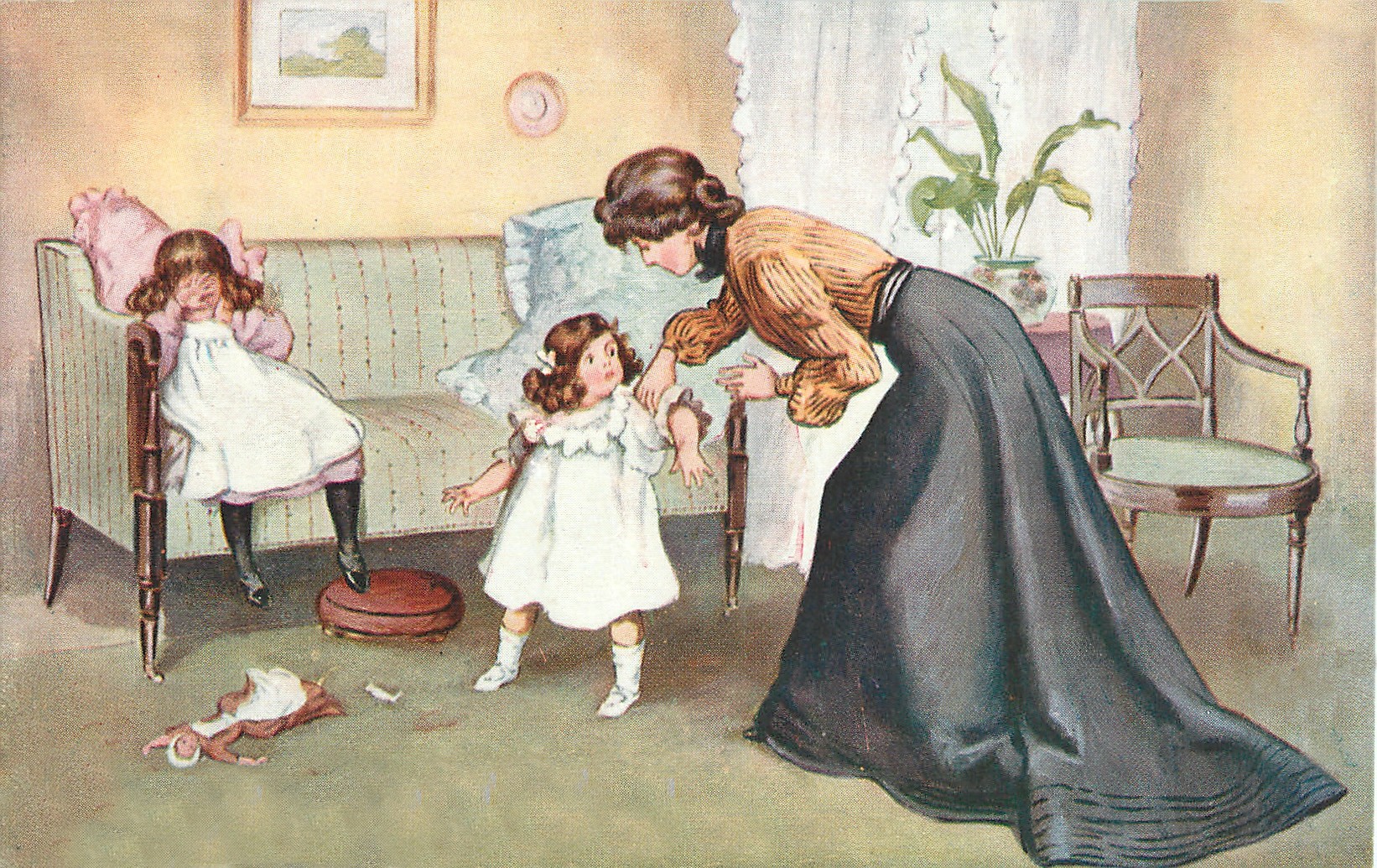
Isabella wrote that on one of Gracie’s naughty days, she had got into a great deal of mischief, even burning her finger after getting hold of a candle she knew she was not supposed to touch. Marcia bandaged the injured finger in cotton, while Gracie wailed and cried; then mother and aunt took Gracie upstairs to get her ready for bed. Here, in Isabella’s own words, is what happened when it was time for Gracie to say her nightly prayers:
“Well,” Gracie said, looking into her mother’s face, and speaking slowly and solemnly, “I’ve got a good deal to say tonight, haven’t I? Mamma, which do you think is the baddest thing that I did today?”
“I don’t think I can tell,” Marcia said, with a sober, troubled face; “and that isn’t the thing that you are to think about, anyway. It makes no difference which is the worst thing; everything that you knew was wrong to do has made Jesus feel badly, and you want to ask him to forgive you for them all; besides, you want to ask for a new heart, so that you will be willing to try not to be so naughty.”
There was never a time in her little life that Gracie wasn’t ready for an argument. She tried to get one up now.
“But, mamma, if I could find out which was the very baddest thing that I did, I could make up my mind that I certainly true would never do that again, and then I would be sure not to be so bad next time. Don’t you see?”
I shall have to confess that I felt very much like laughing. She was such a little bit of a mouse, and she was trying so hard to be wise. But her poor troubled mamma did not smile.
“I see that you don’t know what you are talking about,” she said. “I can only hope that when you are older you will be a great deal wiser.”
This was certainly hard for a little girl who thought she made a very sensible remark. She gave a little bit of a sigh, and then knelt down beside her mamma. Very slowly and reverently she went through the prayer that I think every little girl in the world must know, “Now I lay me down to sleep.” After the “Amen” she always added a little prayer that she said came right out of her own heart; and tonight it was, “Dear Jesus, please bless Gracie; make my heart not feel so bad; make me feel just as though I was a very good girl, and take away my naughty sins and give me some good sins.”
That was really the most that Gracie knew about it. There seemed to be no use in trying to make her understand that everything that wasn’t right was wrong, and that God thought so.
Isabella wrote that Marcia was troubled that her daughter might actually believe there was such a thing as “good sins.” But in her heart, Isabella wasn’t worried. When she looked at Gracie, she saw independence, the ability to reason things out for herself, and a true knowledge of what was right and wrong. She had no fear for Gracie’s future. She knew that Gracie’s parents—and all of the members of their tight-knit family—would raise Grace to be a woman of faith who followed Christ in her everyday life.
You can read more about Isabella and her niece, Grace Livingston Hill, in these posts:
The Sabbath-school library at the Penn Avenue Church is in shocking condition. Book covers torn, pages curled or scribbled on—and some of the books have just gone missing. With the library in disgraceful condition, is it any wonder boys and girls view the church library with contempt?
Soon the ladies of the congregation are busy working up lavish plans to replenish the library with suitable books, but will their plans succeed?
You can read Isabella’s charming story, Circulating Decimals, for free. Just click on the book cover to begin reading.
Isabella Alden was very close to her sister Marcia, who married the Reverend Charles Livingston. For many years Isabella’s and Marcia’s families lived together under the same roof.
Isabella Alden (left) and her sister, Marcia Livingston in an undated photo.
In the summer months the Aldens and the Livingstons traveled to Chautauqua, New York and shared a cottage on the grounds of the Chautauqua Institution.
In the winter they made the pilgrimage to Florida, where the two families lived in a large house in Winter Park.
The Alden house in Winter Park. (From Winter Park Public Library archives.)
Isabella’s son Raymond and Marcia’s daughter Grace attended Rollins College in Winter Park, and Grace went on to teach physical education classes there.
Grace Livingston Hill in her early twenties.
Before Grace took up her pen to write some of America’s most beloved novels under the name Grace Livingston Hill, she was one of the first teachers at Rollins College. She was also a true advocate for the “physical culture” movement that was sweeping the country at the time. She recognized the freedom it gave women to pursue physical health in a way they hadn’t been able to before. At Rollins she taught ladies’ classes in calisthenics, basketball, gymnastics, and fencing.
Grace Livingston (front and center) with her Greek Posture Class, about 1889. (From Rollins College Archives.)
She also taught men’s classes in physical culture, such as fencing and Greek Posture:
Grace teaching a fencing class in 1890. (From the Rollins College Archives.)
Men’s Greek Posture Class, about 1890. (From Rollins College Archives.)
And when she wasn’t teaching at the college, she taught physical culture classes at the Florida Chautauqua.
An 1889 announcement from the Florida Chautauqua.
Like her niece, Isabella appreciated the physical culture movement. She even featured the craze in one of her short stories, “Agatha’s Uknown Way.”
And she wrote “Too Much of a Good Thing,” a story about how one young girl got so caught up in the physical culture craze, that she made life difficult for her entire family. You can read “Too Much of a Good Thing” for free below.
Would you like to learn more about Grace Livingston’s teaching years at Rollins College? Click this link to read a fun story about one of her biggest challenges at the school, and how she convinced the faculty to see things her way.
You can read Isabella’s short story, “Agatha’s Unknown Way” for free. Just click this link.
You can also read a previous post about the birth of gymnastics at Chatuauqua Institution.
Enjoy Isabella’s story, “Too Much of a Good Thing”:
Too Much of a Good Thing
Downstairs everyone was busy. Uncle Morris and his entire family, just from Europe, were coming by an earlier train than it had been expected they could take, and many last preparations for making them comfortable had still to be attended to.
Mrs. Evans had been up since daylight, planning, directing, and helping to the utmost that her small strength would admit.
Indeed, her eldest daughter Laura had constantly to watch, to save her mother from lifting something heavy, or reaching for something high. Often her clear voice could be heard with a “Oh, mother, don’t! Please—I’ll take care of that.” And often the gentle answer was:
“Dear child, you cannot do everything, though your will is strong enough. Where is Millie?”
“Millie has gone to sweep and dust the hall room; you know we didn’t think we should need that, and I used it as a sort of store room; but since Arthur is coming with them, we shall have to get it ready; and he will need to go at once to his room, since he is an invalid, so I sent Millie to put it in order. I told her just what to do, and she will manage it nicely. She must be nearly through now, and I’ll have her finish dusting here, so I can help you with those books; they are too heavy for you to handle.”
No, Millie wasn’t nearly through. In fact, she could hardly have been said to have commenced. The truth is, she had been thrown off the track. It was an old print which fell out of an, unused portfolio that did it. The print showed the picture of a girl in fun Greek costume, and reminded Millie of what was not long out of her mind, that in the coming Physical Culture entertainment she was to chess in a costume which was supposed to be after the Greek order.
“Let me see,” she said, bending over the print, “this girl has short sleeves and low neck. Why, the dress is almost precisely like the one which Laura wears with her lace over-dress; I might wear that. It would be too long, of course, but it could be hemmed up. I am almost sure Laura would let me have it; and with her white sash ribbon tied around my waist it would be just lovely. Then that would save buying anything new, and save mother any trouble. I mean to go this minute and try on the dress, before I say anything about it.”
Away dashed the Greek maiden to one of the guest chambers which Laura had left in perfect order, dragged from a seldom used drawer the elegant white mull dress with its lace belongings, all of which saw the light only on state occasions, and rushed back to the hall room again, where she had left the print she was trying to copy. In her haste, she dragged out with the dress various articles of the toilet. Laura’s white kid gloves which she wore when she graduated, a quantity of laces, and a handkerchief or two, to say nothing of sprays of dried flowers. These she trailed over the carpet, seeing nothing of them. The important thing in life just now was to get herself into that dress.
It was accomplished at last, not without a tiny tear having been made in the delicate stuff, but which Millie’s fingers were too eager to notice. She tied the white sash high up about her waist, after the fashion of the picture, seized the dust brush in one hand as if it were a dumb bell, or an Indian club, and struck a graceful attitude with her arm on the corner of the mantel.
“There!” she said, “I would like to have my picture taken in this dress; I have a very nice position now for it. I wish the girls were here to see me. Laura must let me wear this; it fits exactly. I don’t believe it is much too long for a Greek maiden. I should like to wear my dresses long; it must be great fun. I wonder if we couldn’t have our pictures taken in costume? I think it would be real nice; and our folks would each want to buy one. Perhaps we could make some money.”
There were hurried steps in the hall, and the Greek maiden’s musings were cut short. Laura came forward rapidly, talking as she
came.
“Millie, aren’t you through here? You have had plenty of time, and mother needs your help right away. Hurry down just as quickly as you can; she is over-doing, and it is growing late; the carriage may come any minute now. Why, Millie Evans!”
She stopped in amazement, for the Greek maiden was still posing. She smiled graciously and said: “Don’t I look fine? I borrowed it a minute to see if it will do to wear to the entertainment. It is just the thing, isn’t it? You will lend it to me, won’t you? Just for one evening? I’ll be awfully careful of it.”
“And you have been to that drawer where all the nice things are packed, and dragged them out! There is one of my white gloves under your feet, and my only lace handkerchief keeping it company! I must say, Millie Evans, you deserve to be punished. Here we are trying our best to get ready for company, and keep mother from getting too tired, and you neglect your work to rig up like a circus girl; and go to a drawer which you have no right to open. I shall certainly tell father of this.”
The Greek maiden’s cheeks were in an unbecoming blaze. Laura was hurried and tired, and spoke with more severity than was her custom. It certainly was trying to find the room in disorder, and her best dress in danger.
“Take care,” she said, as Millie’s frantic efforts to get it off put it in greater danger. “Don’t quite ruin that dress. Indeed you shall not wear it. I am astonished at you for thinking of such a thing; when father hears what you have been doing, I doubt if you will need a dress for the entertainment.”
Then Millie lost all self control. “You are a hateful, selfish thing!” she burst forth. “Take your old dress; I don’t want to wear it; and I won’t be ordered about by you as though you were my grandmother. I’m nearly fourteen, and you have no right to manage me. I’ll just tell father myself that I—”
“What is all this?” Mr. Evans’ voice was sternness itself, and he looked at the girl with blazing cheeks, in a way that made her angry eyes droop.
“What does it mean, Millicent? I heard you using very unbecoming language to your sister, and to judge from your appearance you have been about some very inappropriate work.”
“Well, father, Laura burst in here and—”
“Never mind what Laura did, Millicent. Unfortunately for you, I know which daughter tries to care for and spare her sick mother in every possible way. I overheard enough to show me which one is to blame. Laura may tell me what is the trouble, and you may listen.”
But Laura was already sorry that she had spoken so sharply, and tried to soften the story as much as truth would permit.
“Her mind is so full of the Physical Culture entertainment, father, that she does not stop to think. I know she did not mean to hinder and make trouble.”
“I see,” said Mr. Evans, speaking grimly. “I have heard a good deal about this Physical Culture business. If everyone is as much carried out of common sense by it as our Millicent is, I should say it was high time to have some moral culture. Millicent, you may put yourself into a suitable dress for sweeping, and do the work you were sent to do, at once; and you will not need to think any more about a dress for the entertainment, for you are to be excused from attending it. You may tell your teacher that I said so.”
Poor Millie! The hall bedroom floor might almost have been washed, if that were desirable, with the tears she shed. No hope had she of any change of mind on her father’s part. He rarely interfered with his children, but when he did, his word was law.
And poor Laura! She went downstairs heavy-hearted and miserable. Why had Millie been so silly, and why had she allowed her vexation to make matters worse?
The poor frail mother actually cried when she heard of Millie’s disappointment. “Yet I really cannot ask her father not to notice it,” she said sorrowfully. “Millie has been so remiss in her duties for weeks, all on account of the hold which that Physical Culture craze has upon her. It is too much of a good thing. I am afraid her father is doing right.”
“Reading Bible verses doesn’t amount to much, you know, unless you do what they say.”
When Mrs. Selmser inherits her mother’s beloved Bible, she’s overjoyed. All the marked verses—in red and green and blue—are wonderful reminders to her of her mother’s Christian walk; so it seems natural to have her son Ralph read one of those marked verses each day as part of their family worship.
But Ralph knows enough about the Bible to realize it’s sometimes a hard book to live up to. With God’s help, can he learn to apply the teachings of the Bible to his everyday life?
This 1880 story was first published as a serial in The Pansy magazine. Click on the cover to begin reading Her Mother’s Bible now.
The Bible is full of golden texts of inspiration and maxims of sound doctrine, but Zephene Hammond thinks they’re just words on a page. Although she considers herself a Christian, she doesn’t think those Bible verses have any real meaning in her life.
So when her Sunday school teacher challenges Zephene to look at the golden texts with fresh eyes, Zephene reluctantly takes up the challenge. Before long, Zeph sees that the Bible really can fit into her daily life and help her become a girl who always tells the exact truth.
This 1890 classic Christian novel was first published as a serial in The Pansy magazine. Click on the cover to begin reading The Exact Truth now.
In upper- and middle-class homes across America at the turn of the last century, the man of the house had one room that was his exclusive domain: The study.
Old photo of Ralph Waldo Emerson’s study, Concord, Massachusetts
The study was a place where the man of the house took quiet refuge. In his study he took care of business matters, wrote letters, or read his newspaper or favorite book in solitude. In some of Isabella’s books, like Jessie Wells, the local minister locked himself away in his study to work on his sermon or write letters to the members of his church.
Another view of Emerson’s study.
In Isabella’s books, the rooms designated as studies had common characteristics: a bookcase filled with books, a desk or large study table, and sufficient light to read by once the sun went down. In her novel As in a MirrorIsabella Alden described John Stuart King’s study this way:
The walls were lined with many rows of well-filled shelves, and a searcher among them would hardly have failed of finding every choice book of the season, as well as the standard volumes of the past. A bookcase devoted to standard magazines was crowded almost to discomfort, and the large study table was strewn with the very latest in newspaper and magazine.
The president’s study at a small training college
Even little Daisy Bryant understood that the study was a special room in the house. The eight-year-old heroine of Miss Dee Dunmore Bryantlived with her mother and siblings in cramped quarters; but Daisy designated one small section of their main room to be their study:
The floor had a neat strip of rag carpeting over in the part which Daisy called “the study.” There was also a little square table over there, with the Bible on it, and Daisy’s geography, and Ben’s arithmetic, and a tiny basket that held Line’s crochet work. At first, Daisy had objected to the crochet work—that it did not belong to a study—but one evening, in the very middle of Miss Sutherland’s study table, what did she see but a fluffy ruffle with Miss Sutherland’s needle set in its hem, and her thimble lying beside it! Since that time the crochet basket had held peaceable possession.
In the story Miss Sutherland lived in the big house on the hill; and since Daisy’s mother often did sewing for Miss Sutherland, Daisy had seen the Sutherland’s study when she delivered completed work to her. Daisy dreamed of one day living in a home with a real study, just like the Sutherland’s had, with plenty of books, and with framed mottoes on the walls.
Undated photo of Henry Wadsworth Longfellow’s study, Cambridge, Massachusetts
There was a common understanding—sort of an unwritten rule—that no one but the man of the house was allowed in the study except by invitation. After Perry Harrison had an argument with his wife in From Different Standpoints, he retreated to his study, where he knew he would not be interrupted, and he could calm down after their angry exchange:
When Perry came back from the station, after seeing the party off, he shut himself up in the study, not seeing his wife until dinner-time. Then all traces of emotion had disappeared, and he was the affable gentleman exerting himself to be entertaining.
Retailer Jordan Marsh advertisement for a suite of home furniture appropriate for a study or library.
Because the study usually was the bastion of the man of the house, it was only natural that others did not find the place calming and comfortable. If a father had to scold a recalcitrant son or daughter, he called the child into his study. If a minister felt the need to counsel a wayward congregant, he did so in private in his study. Under those circumstances, the study became less like a quiet refuge and more like a place where wrong-doers were brought to account and punishments were doled out.
That thought was uppermost in the minds of Eurie, Marion, Ruth, and Flossie in The Chautauqua Girls at Home when they had to summon their courage to visit their minister, Dr. Dennis, in his study.
“Doesn’t it make your heart beat to think of going to him in his study, and having a private talk?”
“Dear me!” said Flossy. “I never shall think of such a thing. I couldn’t do it any more than I could fly.”
Early photo of the study at the Adams mansion in Quincy, Massachusetts.
Later, when Ruth went to speak with Dr. Dennis about finding work she could do for the church, she found herself alone with him in that dreaded room:
It was a place in which she felt as nearly embarrassed as she ever approached to that feeling. She had a specific purpose in calling, and words arranged wherewith to commence her topic; but they fled from her as if she had been a school girl instead of a finished young lady in society; and she answered the Doctor’s kind enquiries as to the health of her father and herself in an absent and constrained manner.
Charles Dickens’ study, about 1922.
But in one of Isabella’s books, the tables were turned on the man of house. In The Hall in the Grove, Dr. Monteith—the driving force behind the town’s Chautauqua Literary and Scientific Circle—was in his study when Paul Adams complained to him that the Circle put more emphasis on studying books about ancient Rome than on studying the Bible. Dr. Monteith was shocked.
Seated in the beautiful little study, by the green-covered table, under the shaded light, the Doctor looked full into the earnest troubled face of his visitor. “Now, my friend, do I understand you to mean that the experiences which you have had with the Circle led you to think that we gave the most important place to other books, and shoved the Bible out?”
You would have been sorry for Dr. Monteith, could you have seen his distressed face. He arose and began to walk back and forth in the little study, pondering how he could best undo what his heart told him had been grave mischief.
Dr. Monteith knew that the Bible was “first, best, purest, highest; incomparably above any and all other books.” He had to do some quick soul searching to figure out how he had misled Paul Adams—as well as an entire Chautauqua Literary and Scientific Circle—so far away from the foundation of all knowledge, the Bible.
Once Dr. Monteith realized his error, the atmosphere in his study changed dramatically. He apologized to Paul Adams and assured him that reading and knowing about the Bible was not the same as reading and knowing the Bible. And before Paul left his study, Dr. Monteith led the young man to make a momentous decision concerning his future and his soul.
So the study was sometimes an important setting in Isabella’s books, as well as in her short stories. In 1888 Isabella published “Papa’s Study”, and you can read it here for free:
PAPA’S STUDY
It was a very beautiful room, so crowded with books, and papers, and conveniences of all sorts, that you would have supposed its owner could have nothing to wish for, and must be a happy man. Yet on the morning about which I am telling you, he did not look in the least happy; on the contrary, if you had counted the wrinkles between his hair and his eyes, and could have seen the puckers around his lips, which were hidden by a heavy moustache, you would perhaps have called him cross; and you would not have been very far from the truth. Something had happened that morning which made him feel like being cross with everybody.
“To think that I should have forgotten it!” he was saying to his wife, speaking in an injured tone, as though somebody was certainly to blame. “I would not have had it happen for ten, no, not for fifty dollars; and there he was, I suppose, at the depot, looking in all directions for me, and the train waited here fully twenty minutes for the down express. We might have had time enough to settle the whole business. It is too provoking to endure.”
Nevertheless, he knew it would have to be endured, for the train had been gone at least an hour.
“Why didn’t you make a memorandum of it?” his wife asked, taking fine stitches in the ruffle she was making, and speaking in that calm , even tone which is sometimes really irritating to excited people.
“Why, I did, of course; and this morning I looked for my diary to see if there was anything which needed attention before mail time, but I had changed my coat and left it in the the other pocket. A diary is simply a nuisance, anyway; it is always in some other pocket when one wants it the most. I’d like to know how a busy man like myself, who has three ways to go at once, can be expected to remember everything.”
Nobody had told him that he was expected to do any such thing, but he spoke as sharply as though someone had, and walked the floor, and looked wrathful.
Poor man! He had been sadly disappointed. Besides missing a very important bit of business by his forgetfulness, he had missed the sight of a friend whom he very much wanted to see.
Now, his little daughter Almina was in the library annex, hidden from view by heavy curtains, but within distinct hearing; and if you could have seen her I am afraid you would have thought she acted very strangely. Instead of looking thoughtful and sympathetic over her father’s troubles she clasped her two pretty hands together and indulged in a series of happy little giggles. You see, she knew something which her father did not.
In order to have you understand, I shall have to go back a few days. The father’s birthday was coming, and Almina knew it; I am not at all sure that the father did, for he was so busy a man that he forgot even that. And Almina had, with her own hand, written, and, what was much harder, addressed a letter all herself, to a certain “Mr. Frank Smith, Toledo, Iowa.” Truth compels me to state that she spoiled three envelopes before accomplishing it to her satisfaction. In the first one she made the letter F look so much like a T that it read like Mr. Trunk Smith, and she felt sure that would not do; and then, because she had visited once in Toledo, Ohio, and heard about it all her life, and had never heard of Toledo, Iowa, what did she do but write it out nicely on the second envelope—Toledo, Ohio. Of course that wouldn’t do. By this time she was nervous, and blotted the third one badly, but at last it was well done, and the letter was sent.
On the very morning of which I write, there had come an answer to her letter, in the shape of a lovely business-like looking package, done up in heavy paper, and packed in burlap and excelsior, and when her eager fingers reached the treasure thus carefully guarded, it was the prettiest walnut affair, with a lock and key, and inside, a row of compartments bearing the names of the months and the dates; and so arranged that memoranda of what ought to be done, even weeks ahead, could be slipped in, and would remain out of sight until the morning of the day when they were needed, when they would drop into view, and beg to be looked at.
“If papa had only had his lovely little Office Tickler,” she said to herself, as she giggled musically, “he wouldn’t have missed seeing Mr. Felt this morning, I mean to tell him that if he had been forty-three last week, instead of tomorrow, it would have been all right. Oh! I do wonder if there is something he ought to remember tomorrow, and might forget. I mean to ask mamma.”
So the moment she could get a private audience with mamma, they two put their heads together over the fat old diary, whose sides were bursting with important papers too heavy for it to carry. They looked carefully down the page for April 11th, papa’s birthday, but it seemed to be an unusually quiet one. However; the next day made up for it; item after item of business crowded itself in to receive attention; foremost was this:
“MEM. Be sure to remember to send Seward’s note to the bank before three o’clock. It is in the left-hand drawer of the lower secretary.”
“Oh! look,” said Almina, “that is very important, isn’t it? Because papa has underlined it; and yet it is hidden in between so many other things to do, he will be quite likely to forget it. Oh, mamma! Couldn’t you get it for me to put in the Office Tickler?”
Mamma promised to try, and she tried, and accomplished it. There was great fun in the pretty library the next morning. Papa admired the beautiful walnut box to even Almina’s satisfaction, and assured her that it was the most ingenious little creature he had seen in many a day, and he was sure it would save him much time and patience. And then he heard all about how she earned the money to buy it, and “wrote the letter her own self,” and “had it come by express to her own address;” and he called her a dear little woman of business, and kissed her as many times as he was years old.
And all the time the important paper which was to be remembered the next morning without fail, was hiding behind its partition, biding its time.
The next morning Almina had forgotten all about it, but at eleven o’clock her father came hurriedly into the music-room where she was practising, and stooped down and kissed her.
“Papa ought to be tickled now in good earnest,” he said with a curious mixture of fun and earnestness in his voice. “What will my little girl think when I tell her that her Office Tickler has saved me at least five hundred dollars? I did forget all about the note, important as it was. This is a very busy, anxious day with me; but just as I was hurrying to go to the bank, I caught sight of my new possession, and saw I had not changed the date; I had not begun to use it yet, but I determined to gratify you by leaving it in order; and the moment I touched the card, out dropped that very forgotten note. I’m in great haste, little daughter, but I felt as though I must stop and tell you what a valuable selection you had made for my birthday present.”
A very happy little girl was Almina, then.
An actual 1887 newspaper advertisement for F. E. Smith’s Office Tickler.
Isabella often wrote stories that featured children trying to earn money to help support themselves or their families.
“The Pinch of Poverty” by Thomas Benjamin Kennington, 1891.
Long before today’s labor laws and social service programs existed, children worked long hours in factories or in the homes of wealthy people, usually for pitiful wages.
“Homeless” by Thomas Benjamin Kennington, 1890.
Eleanor H. Porter, the famous creator of the Pollyanna books, wrote about the plight of one such child in her novel Cross Currents.
And famed artist Thomas Benjamin Kennington painted a series of portraits of homeless and destitute children in an effort to raise awareness of the problem.
“Orphans” by Thomas Benjamin Kennington, 1885.
Isabella’s novels The Man of the House, Miss Dee Dunmore Bryant and Twenty Minutes Late all dealt with the issue of children’s working conditions in cities across America; but Isabella always made certain her books had a happy ending. She imbued her young characters with high ideals and strong work ethics that often brought them to the notice of a wealthy benefactor who changed their lives.
“Daily Bread” by Thomas Benjamin Kennington, 1883.
That was the case in Isabella’s short story, “Which Way?” about a twelve-year-old boy trying to make enough money to pay the rent on his family’s home. It first appeared in The Pansy magazine in 1889 and you can read it here:
Which Way?
He was a curly-headed, pleasant-faced boy, of about twelve; his clothes were growing short at the ankles and wrists, and were a good deal patched, yet there was a neat trim look about them that one liked to see.
He stood at the corner where two roads met, balancing in his mind the important question which way to go. Both roads led homeward, by an almost equally direct route; one was a trifle sandy part of the way, the other was up hill.
“Hill or sand?” he said to himself, with a smile. “It makes a lot of difference in a fellow’s lifetime which! What if it did, though? What if it should make a difference all the rest of my life? He told about smaller things than that bringing great things out of them. If I had a penny I might toss it up, only I don’t believe he thinks that’s the way to decide things.
“He” meant a stranger whose satchel the boy had carried that afternoon, and who, as they walked along, had spoken a half-dozen cheery words to him about the importance of little things; helping the boy to think more gravely, perhaps, than he ever had before. Then the stranger had gone his way on the three o’clock train, and Jamie never expected to see him again; but he could not help thinking a little about the words. To tell the truth, but for these words to think about he would have been very downhearted.
It was toward the close of a long summer day, in which he had been tramping from one end of the town to the other in search of work, and had failed. It was the old story, father dead, mother hard-worked and poor, with two children younger than Jamie to care for. There was great need that he should find work to do. The dreadful rent, which seemed to eat up every penny, was nearly due again, and little Eddie had been sick for a week, hindering his mother from going out to her regular day’s work, so that times were harder than ever before.
On Monday morning Jamie had started out with a brave heart, sure that for a strong and willing boy of twelve, there must be plenty of work to do; but now it was Thursday evening, and though he had tramped faithfully from morning till night, no steady work could be found, only a few odd jobs; which, though his mother told him would help a great I deal, seemed very small compared with what he had meant to do. It seemed hard to have to go home and say that he had failed again. This was why he loitered by the way, and tried to fill his mind with other things.
“I’ll go this way,” he said at last, dashing down the less familiar street. “Who knows what may happen?”
What “happened” was that the hostler at the great stone house on the corner, who had been kind to Jamie, called to him as he passed to ask if he would take a note to his cousin Mary Ann who lived at Mr. Stewart’s on the next corner.
Of course Jamie was glad to accommodate him and made all speed to the great house of whose gardens he had often wished he could get a closer view. A game of tennis was in progress here. Jamie stood a moment watching the graceful movements of the players; wondering, meantime, which way to turn to find Mary Ann. Presently the lady who seemed to be the chief one of the group noticed him, and he made known his errand.
“Mary Ann? Oh, yes, she is in the laundry, I think; or no, she is probably upstairs by this time. Wait a moment, my boy, and I will see if I can find her,” and she took her turn in the game.
“Are you in haste?” she asked presently, turning to him with the pleasantest smile Jamie thought he had ever seen in his life.
“Oh, no, ma’am,” he said, returning the smile, “I’m never in a hurry.” His face sobered instantly as the fact that he had no work to make him feel in haste, came back to him unpleasantly. It appeared that the game was very near its close; a few more turns, and with much laughter and many pleasant words the players said good-night, leaving the young lady and Jamie alone. He was glad that her side had beaten.
Original illustration by Childe Hassam for the story “Which Way?”
She turned toward him, smiling. “So you are never in a hurry; that must be a rather pleasant state of things.”
“I don’t know, ma’am,” said Jamie again. “I guess I’d like to have a chance to be in a hurry.”
“Would!” with lifted eyebrows and an amused, questioning look. “That is strange! I’m in a hurry a great deal of the time, and I don’t enjoy it always. There is Mary Ann at this moment.” She signaled the red-faced Irish girl to approach, and Jamie delivered his note, then turned to go, having made a respectful bow to the lady. But apparently she was not through with him.
“Why do you go away so soon, if you are never in a hurry?” she said pleasantly.
“Why, I’ve done my errand,” said Jamie, “and I supposed the next thing was to go.”
“Why shouldn’t the ‘next thing’ be to come and look at my roses? Bright red and yellow ones. You like them, don’t you? In the meantime you can tell me how you manage it so as not to be in a hurry.”
Jamie followed her with great satisfaction, but finding she waited for his answer, said:
“Why, you see, ma’am, the way of it is, I’ve got nothing to hurry about, and I wish I had. I’ve been hunting for work for three days as steadily as I could, and haven’t found any yet, and am not likely to. That was what I meant.”
“Oh! I understand in part, but I should think your lessons would give you almost enough to do without a great deal of work.”
“I’m not in school, ma’am,” said Jamie, speaking low. “There are reasons why I can’t go very well; mother needs me to help earn the living, so I’m looking for a chance.”
“I begin to understand quite well. What sort of work do you want?”
“Any sort under the sun that I could do; and I could learn to do anything that other boys do if I had a chance,” he said eagerly.
“Such as weeding in a garden, for instance, and picking strawberries and peas? How long do you think it would take you to learn such work?”
“I was born on a farm, ma’am; mother only moved here this spring. It’s just the kind of work I’ve been looking for, but I can’t find any.”
“That is simply because you didn’t come to the right place. My mother has been looking for you all day. I dare say at this moment she is wishing you would come and pick some strawberries for tea, and I’m sure I do, for if you don’t I’m much afraid I shall have to do it myself. I think we would do well to go at once and talk to her about it.”
Jamie, as he followed her up the steps of the broad piazza, his heart beating fast with hope, told himself that he had never seen a sweeter lady in all his life.
Afterwards, while they were picking the strawberries—for she went with him to “show him how,” she said with a merry smile—he told her how he came to take the road home which led past her door; and then, in answer to her questions, how he was led into that train of thought by the earnest words which the strange young man said to him that morning.
“So you carried my brother Harvey’s satchel, did you?” she said, with a bright look on her face. “Very well; one of the ‘little things’ he told about has happened to you. Now you are sure of plenty of work about this house as long as you want it, provided you are a faithful, honest boy, as I seem to know you will be. I think I must have been looking for you; but I’ll tell you what I think, my boy; I don’t believe it is a happen at all. I believe your Father sent you.”
You can click on the cover images to find out more about the books mentioned in this post.
Isabella Alden’s 1899 novel, A Modern Sacrifice, is about Kissie Gordon, the daughter of a minister, who had been raised to live according to the Bible’s teachings. But when Kissie’s father dies, she and her mother move to the city, where Kissie is quickly sucked into a whirl of social pleasures she’s never known before. Soon her world revolves around dancing and parties and playing cards.
Isabella wrote the story at a time when most Christian denominations denounced or forbad dancing of any kind. Ministers preached against dancing and wrote tracts about the hidden evils of dance.
Isabella referred to those tracts in A Modern Sacrifice. In the story, Kissie tries to convince her friends to give up dancing by loaning them a book that warns against the promiscuous influence dance can have on young people.
The idea that dancing was a gateway to promiscuity was not new. In his 1893 book Modern Dancing; in The Light of Scripture and Facts, the Reverend William W. Gardner warned that dancing “nourished passion and sensual desires” and “leads to the seduction and ruin of the innocent.”
That was pretty strong language for Victorian times; and in A Modern Sacrifice, the mothers of Kissie’s friends were offended that Kissie—a well-brought up young woman—would own a book that contained such vulgar terms.
Ministers who preached against dancing found an ally in the New York City Chief of Police, who reported that three fourths of the “abandoned girls of that city were ruined by dancing.” His simple statement was held up by clergymen as proof of a link between dancing and prostitution.
The waltz earned the most condemnation from churches. “It excites great physical intimacy among young men and young women, which should only exist between those whom wedlock has united,” declared Rev. A. B. Riker of the Fourth Street Methodist Church in his series of discourses condemning popular social pastimes.
Even the humble square dance was prohibited:
“The square dances create a taste for the round dances and, usually, if not invariably, lead to them. The step is so easily taken from apparently innocent dancing to that which is free, indecent, amorous and licentious, that a tender conscience will find it safest to reject all.”
Dr. Archibald Alexander
Professor, Princeton Theological Seminary
In A Modern Sacrifice Kissie Gordon finally comes to realize how far she has strayed from her upbringing; and once Kissie saves herself from society’s extravagances, she vows to try to save her friends, too, by organizing her own social event that soon has all of society talking.
You can read A Modern Sacrifice; the Story of Kissie Gordon’s Experiment for free. Click on the book cover to begin reading.
Would you like to read a popular 1893 tract on the perils of dance? Click here to read Modern Dancing; in the Light of Scripture and Facts by Rev. W. W. Gardner, D.D.
As the wife of a minister, Isabella Alden was very familiar with her husband’s congregation. She wasn’t the type of minister’s wife who simply went to teas and receptions and other social events, and never got involved in anything related to the church. Not Isabella.
She was an “old-fashioned minister’s wife,” said her niece, Grace Livingston Hill:
She made calls on the parishioners, knew every member intimately, cared for the sick, gathered the young people into her home, making both a social and religious center for them with herself as leader and adviser; grew intimate with each personally and led them to Christ; became their confidante; and loved them all as if they had been her brothers and sisters.
Isabella’s experiences as a minister’s wife inspired many characters and events in her books. She wove her stories around real incidents and real people, their foibles and inconsistencies, and lessons learned.
Like the country congregation that couldn’t raise the funds needed to keep their church clean in Interrupted.
Or the woman in Aunt Hannah and Martha and John who placed a large donation in the offering plate to impress the congregation, only to slip into the church office later when no one was looking to demand her change because she didn’t really want to give the full amount.
And the Ladies’ Aid Society members who only donated pennies because they believed missionaries and others who did God’s work didn’t need nice things (this happened in a few of Isabella’s novels).
When it came to the subject of money, Isabella had heard all the arguments before. She knew why people preferred to spend their dollars on anything but God’s work. But she also knew her Bible, and believed its instructions about money were just as important as any other commandment.
Isabella was a strong believer in the Biblical concept of tithing, and she knew how important it was to teach children to tithe beginning at a young age. She believed that when we follow God’s instructions about money, we grow to trust God in other areas of our lives, as well.
She illustrated the point in her short story, “Pictures from Mrs. Pierson’s Life.” The story centers around a couple who ignore God’s instructions about money, and what their children learn by the parents’ actions.
“Pictures from Mrs. Pierson’s Life” first appeared in Mrs. Harper’s Awakening, published in 1881. You can read it here for free. Just click on the book cover to get started.
.
.
Isabella wrote about money and the importance of tithing in many of her books, including:
Reviews and giveaways for Christian fiction and sweet, clean fiction. Bringing readers information on great stories and connecting authors with their readers.