In an 1899 issue of The Pansy magazine, Isabella shared these wise words:
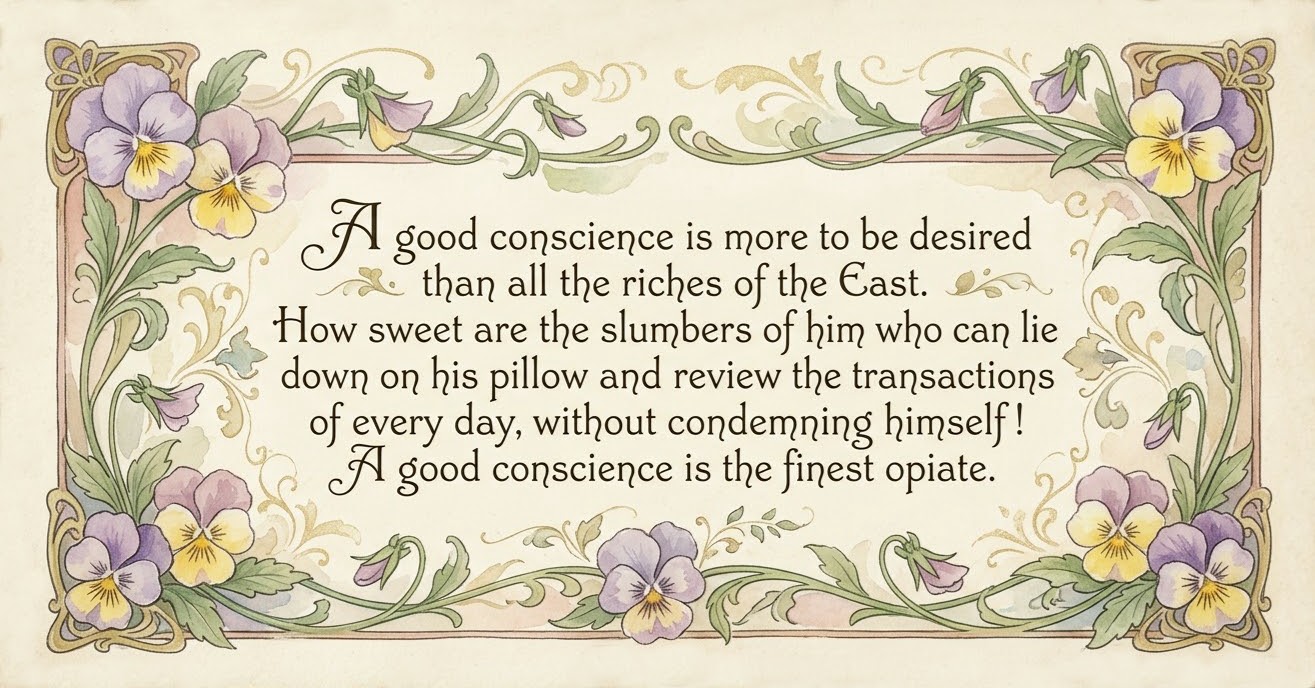
“A good conscience is more to be desired than all the riches of the East. How sweet are the slumbers of him who can lie down on his pillow and review the transactions of every day, without condemning himself! A good conscience is the finest opiate.”
You can find more of Isabella’s words of wisdom to read, print, and share. Just enter “quotables” in the search box to see more.
In February 1881 Isabella was thirty-nine years old and an extremely busy woman. She was editor of The Pansy magazine, and was also the magazine’s primary contributor of fiction and non-fiction articles.
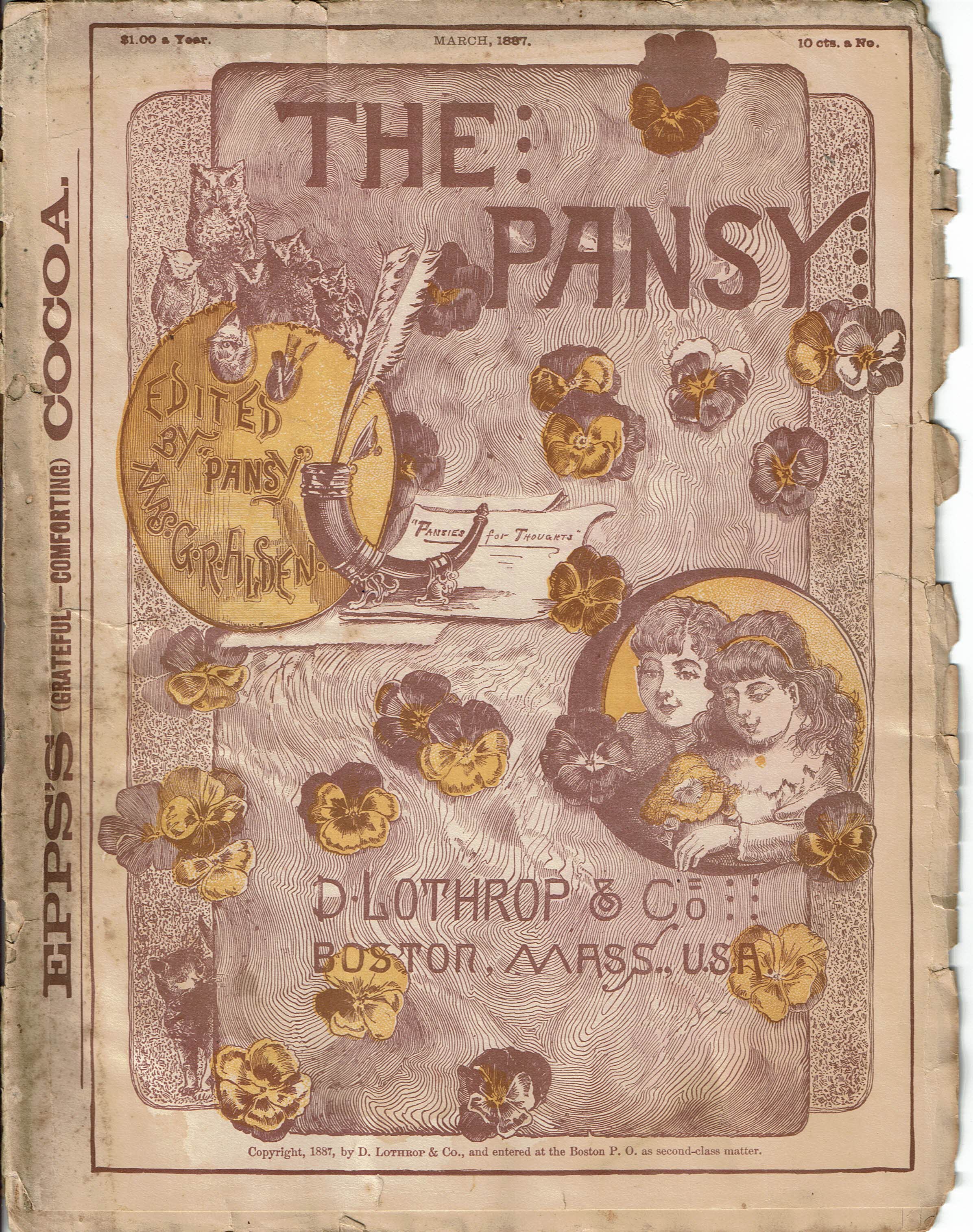
The March 1887 issue of The Pansy magazine.
She was the primary creator of the Presbyterian church’s Sunday school lessons for young children, which were published in The Sabbath School Monthly and distributed to Presbyterian churches across the country. She also wrote stories for other Christian magazines that were published in America and Europe.
Almost every week she had a speaking engagement somewhere in Ohio—where she and her family were living at the time—or in a neighboring state. Sometimes her appearances included a public reading of her newest story or novel; sometimes she lectured on the proper content and delivery of Sunday school lessons for young children, a topic on which she was an acknowledged expert.
At home in Cincinnati, she was a busy minister’s wife in a demanding household that also included:
Her seven-year-old son Raymond
Her fourteen-year-old step-daughter Anna
Her forty-four-year-old sister Julia
And her precious seventy-seven-year-old widowed mother, Myra Spafford Macdonald, whose health was slowly declining.
How Isabella managed to juggle so many responsibilities all at once is a mystery, but there must have been times when the mounting pressures threatened to overwhelm her.
One of those pressure points may have occurred in January 1881, when her husband became pastor of a congregation in Cumminsville, Ohio. The new church was only about five miles away, but it meant the family had to once again pack up their lives and begin again in an entirely new place.
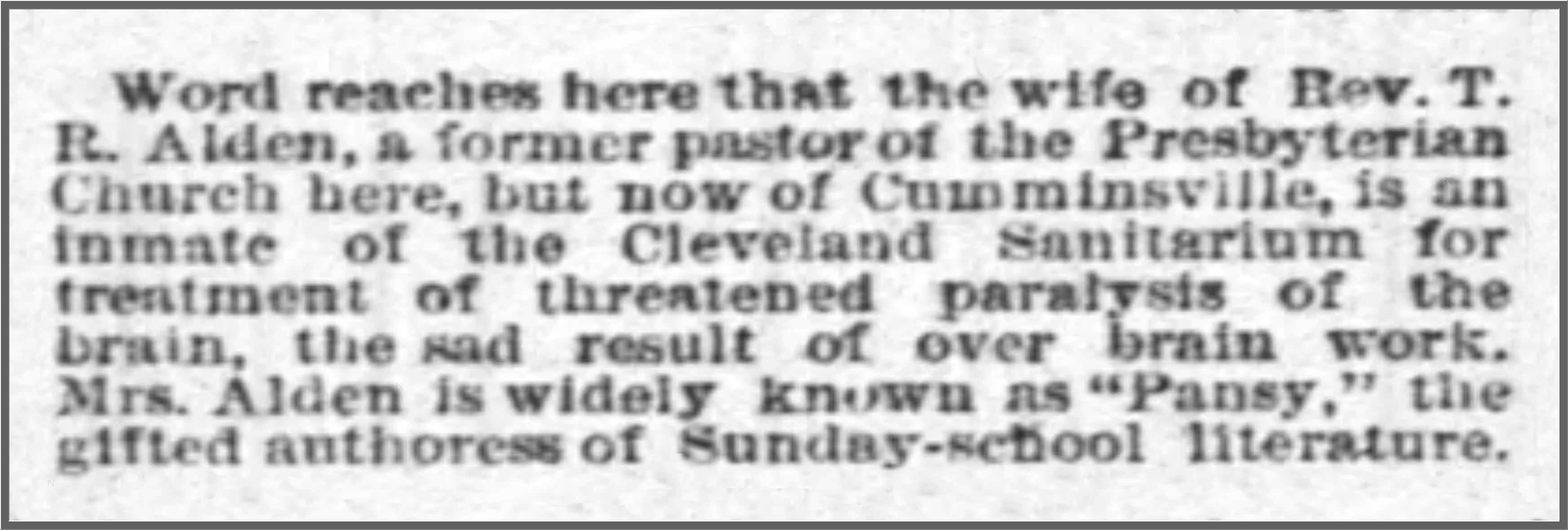
Is it any wonder, then, that this curious little paragraph appeared in a Cincinnati newspaper just one month later:
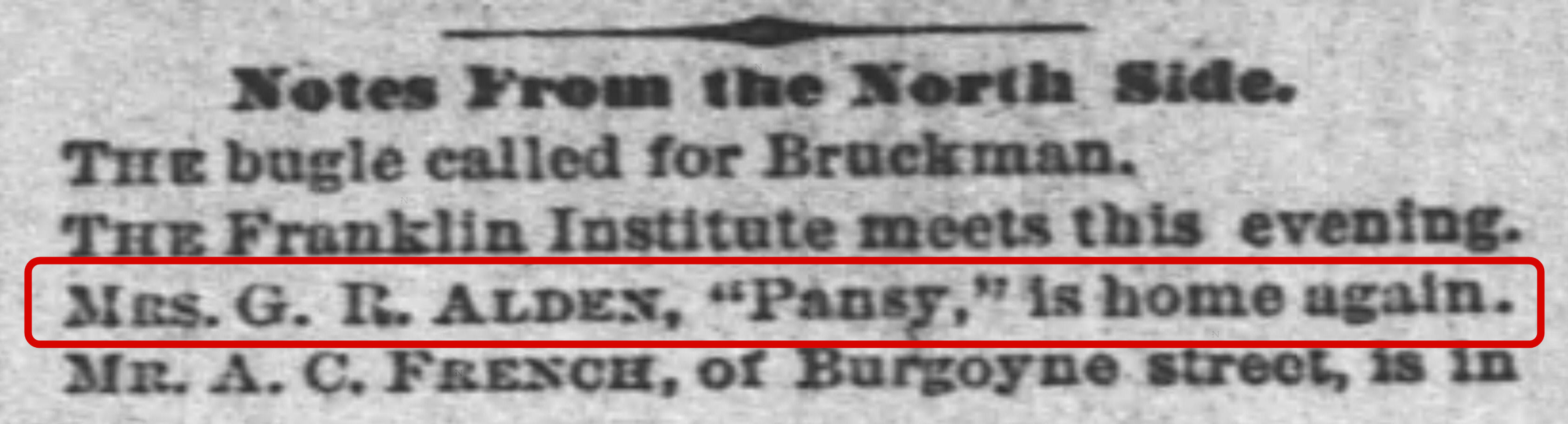
From The Cincinnati Enquirer, February 10, 1881.
The “Cleveland Sanitarium” was a polite name for an inpatient psychiatric hospital near Cleveland (some 250 miles from Isabella’s new home in Cumminsville).
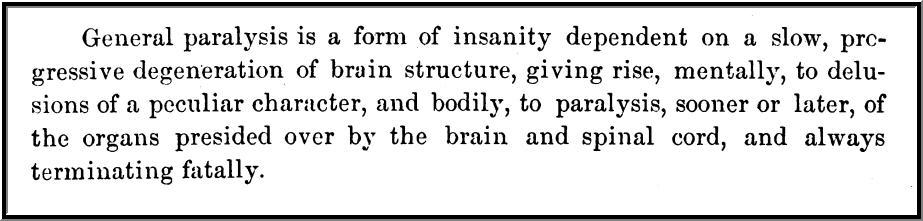
At that time the hospital was formally named “The Northern Ohio Hospital for the Insane,” and “paralysis of the brain” was among the many conditions they treated. In the hospital’s 1880 annual report to the governor, they gave this definition of the condition:
It wasn’t the first time Isabella had sought help for her physical and emotional needs. Twenty years earlier, as a new bride, Isabella checked into the Castile Sanitarium in New York and stayed five months. During her stay there she gardened and played croquet, walked and spent as much time out of doors as possible in between her scheduled therapy treatments.
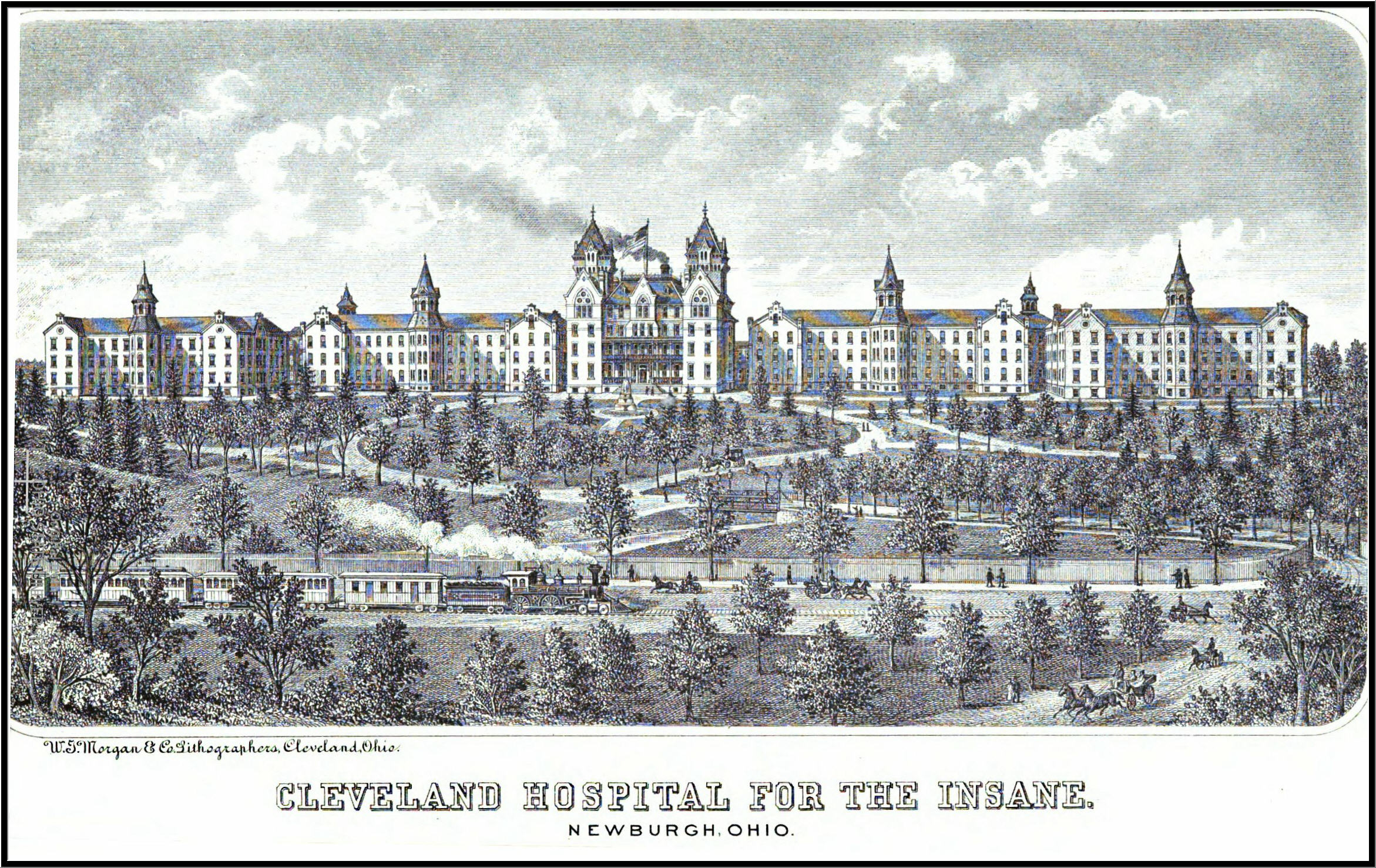
She may have had the same experience during her stay in Cleveland. The Cleveland Illustrated Guidebook, published by William Payne in 1880, describes the hospital’s grounds where “nature and art have united to make [them] attractive.”
Immediately in front is a stream, separating the grounds from the … railroad track. A grove skirts the entire grounds, affording an abundance of shade and strolling room for the patients, and adding to the general beauty of the location.
Perhaps the beautiful grounds reminded Isabella of the New York sanitarium and the benefit she’d found in similar treatment twenty years earlier.
Illustration included in the “Twenty-Sixth Annual Report of the Cleveland Asylum for the Insane to the Governor of the State of Ohio for the Year 1880.”
Here’s what is most striking about this episode: Isabella didn’t hesitate to get help when she needed it. She checked into a hospital that literally had “Insane” in its official name, and she didn’t seem worried about the stigma. Maybe that’s because mental and emotional health were viewed differently in the 1880s. Conditions like “paralysis of the brain,” melancholy, and nervous exhaustion were treated as medical conditions—ailments that could be cured with rest, therapy, and proper care. Or maybe Isabella was just remarkably practical about her own wellbeing. When life became overwhelming, she took action.
Unlike Isabella’s previous stay at a sanitarium (which you can read about here), we can’t know what treatments she received this time. But just a little more than a month later, on March 14, 1881, the Cincinnati Enquirer published a single line update about Isabella:
And just like that, Isabella was home. A little over a month of treatment, and she was back to her family, her work, and her impossibly busy schedule. We don’t know exactly what happened during those weeks in Cleveland, but we know the outcome: she recovered and went on to maintain her extraordinary productivity for decades to come. Sometimes the bravest thing we can do is admit we need help—and then actually get it.
What strikes you most about Isabella’s decision to seek help? Do you think it would have been harder or easier in the 1880s compared to today?
Have you ever had a moment when life’s responsibilities threatened to overwhelm you? What helped you get through it?
YOU CAN READ MORE ABOUT ISABELLA’S HEALTH AND HOW ILLNESSES WERE TREATED DURING HER LIFETIME BY READING THESE PREVIOUS POSTS:
Isabella Alden was a teacher at heart. Before she became a bestselling author, she earned her living as a schoolteacher and devoted countless hours to preparing meaningful Sunday school lessons for her students. So when the Chautauqua movement began in the early 1870s, it was a natural fit—she was involved from its earliest days.
The Chautauqua idea started simply enough as a summer gathering where Sunday school teachers could learn best practices for their work and enjoy a bit of recreation when classes weren’t in session.
What began as a “Sunday School Assembly” in 1872 gradually evolved into something much bigger—a “summer university” that welcomed people of all incomes, backgrounds and education levels. It was, wrote Harper’s Monthly Magazine in 1879, “a school for those who, conscious of their need, earnestly desire the highest culture possible for them.”
One of Chautauqua’s founders was Rev. Dr. John H. Vincent, who served as Sunday school secretary of the Methodist Episcopal Church and was a close friend of Isabella’s. Like her, he prized knowledge, learning, and mental discipline.
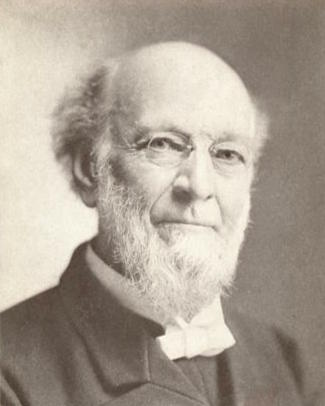
Rev. Dr. John Heyl Vincent
But what really united them was their shared conviction: that it was possible—even essential—to study art, science, literature, and history through the lens of religious truth.
In 1909 Rev. Vincent addressed the Chautauqua Women’s Club on a topic close to both his and Isabella’s hearts: the importance of education in religious experience. Fortunately, his speech was preserved in an issue of Chautauqua Herald, the assembly’s monthly newspaper.
In many ways, his thoughts on balancing education with Christian faith feel remarkably relevant today—more than a century later. Below are some key points that illustrate the heart of his message. See if you agree with his ideas.
“The Educational Factor in Religious Experience.”
Education and religion used to be too separated. But that is not the case in our time.
In our time education and religion are drawing closer together every day, and one sign of our progress is the growing recognition of religious teaching. I believe that people will increasingly see the value in religious teaching as it becomes purer and freer from the bigotry that once characterized it.
We all remember when fanaticism, bigotry, and opposition to science (as if science were opposed to religion!), found theirplace in the church and prejudiced the minds of scholarly people. As we broaden our perspective and gain a wider view of the world of Nature, this fanaticism is dying out and the scholars and the religious teachers are no longer enemies.
Religion opens the whole field of education, in which theology is fundamental. Religion in its truest sense is education.
Educated people ought to be religious. Religious people ought to be educated. When we surrender our intellect to God through religion, He returns it to us as a precious gift to use. Let us, then, as a form of religious expression, learn how to think—and delight in it.
There are seven points in the consideration of religious life as related to personal culture.
First, religious experience and personal growth work together by developing power of thought.
Second, we should cultivate our ability to reason. Let us ask, why is this? and, why is that?—applying our reasoning not only to intellectual pursuits, but to the realities of daily life.
Third, religion is a great thing to cultivate imagination, and we must develop imagination if we want to broaden our lives. But we must also keen imagination in check.
Thought, reason, imagination—these are all effects of religious experience.
Fourth, we should identify a noble, guiding purpose in life. What am I living for? That is the question we should ask ourselves. How can I beautify my little corner, and how can I do good to my neighbor? Why, every line I read or word I speak leaves its mark on some other human being. Men and women can sink to a lower level very easily. It is a great thing when one woman influences to higher thought one man or ten men.
Fifth, religion should help us see ourselves accurately—not too high, not too low.
Sixth, let us remember that a genuine religious spirit combined with the pursuit of learning will develop philanthropy—a pure philanthropy rooted in Christian values.
And seventh, let us remember that religion develops character. Practice builds virtue—the hallmarks of character that Peter describes when he says “add to your faith courage—add to your faith integrity—add to your faith strength.” Peter understood the secret of inner spiritual life.
“Add to your faith virtue, and to virtue knowledge, and to knowledge moderation, and to moderation”—patience, strength—“godliness, and to godliness, brotherly kindness, and to brotherly kindness charity. For if these things be in you and abound, they make you that you shall neither be barren nor unfruitful in the knowledge of our Lord and Savior, Jesus Christ.” (2 Peter 1:5-8)
Religion thus becomes a process of self-mastery in which we take time to focus our abilities and develop them.
Rev. Vincent’s speech captured so much of what Isabella believed and practiced throughout her life. She never saw a conflict between being educated and being faithful. Her novels explored complex themes and moral questions. The articles she published in The Pansy magazine taught children about science, geography, and literature—all while maintaining a foundation of Christian values. Like Rev. Vincent, she understood that true education develops the whole person: mind, character, and spirit. It’s a vision of learning that, at the time, was both revolutionary and deeply needed.
What do you think?
Is it possible to pursue knowledge while maintaining spiritual grounding?
Can we cultivate our minds without losing our moral compass?
Dr. Vincent and Isabella would say yes. And given the lives they both lived—dedicated to learning, service, and faith—their example suggests they might be right.
Isabella Macdonald Alden and her sister Marcia Macdonald Livingston were always very close. They were both married to Presbyterian ministers, and both found success as writers of Christ-centered novels, as well as short stories for Christian magazines.
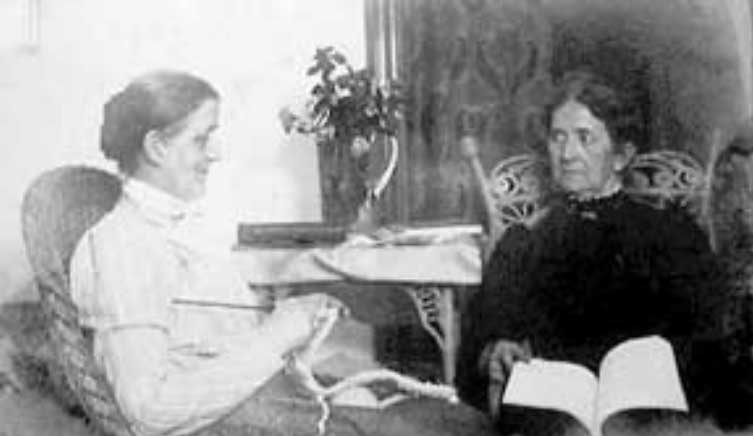
Isabella Alden (left) and her sister Marcia Livingston (right).
In 1898 the sisters learned through their churches about the plight of a retired minister and his wife who were in danger of losing their home. The couple needed just $150—about $5,900 in today’s money.
Isabella and Marcia knew from experience how difficult it was to live on a minister’s inadequate salary, and how that meager income made it nearly impossible to save anything for retirement. The elderly couple’s plight touched the sisters’ hearts and they decided to take action.
The sisters wrote a joint appeal for donations on behalf of the elderly couple. Their letter was published on May 4, 1898, in a weekly Christian magazine and read as follows:
TO THE WIVES OF PRESBYTERIAN MINISTERS.
Dear Friends: Let us beg your pardon in the beginning for addressing you. Our excuse must be that we feel we are not strangers, but friends; the mystic bond which unites the wives of all those who have given themselves to the ministry of the gospel of Jesus Christ unites us, as well as that dearer, stronger one, Jesus Christ being our Elder Brother. It is because it seems that he has put it into our hearts to send you this word that we do it.
It has come to our knowledge that there is in our beloved Church a minister and his wife who sorely need a little help just now to tide them over a hard place. The facts are, briefly, these:
A Presbyterian minister, formerly in active service as pastor, now broken in health and nearly seventy years of age, invested his little all several years ago, in a small place in California, hoping to make a living by raising fruits and vegetables for the market. He and his wife, who is now partially crippled by rheumatism, have worked heroically on their home, but the unprecedentedly hard times of the past few years, as well as increasing ill health, were against them. The little home, so carefully and prayerfully worked for, is in danger. A mortgage of only $150 rests upon it; but, unless even that small sum be raised promptly, it must go.
A minister and his wife belonging to our grand Church, sick and old and with no home! Isn’t it pitiful that such a thing should be, when they have given their best years to the Church?
Why are we telling you? It has come into our hearts that possibly 148 ministers’ wives will each spare $1, to be placed with our $2, to be sent at once to this dear minister’s wife, who can no longer work with her crippled hands, as she has bravely done, to help support her sick husband. This, as a token that we are sisters and recognize the bond.
While we write the words we remember that probably some cannot do even this, and are moved to ask that any who can will make their offering $2 or $3, or even $5, for the sake of those who would respond but cannot, and for the sake of those who will mean to do it, when they read these words, but who will let the cares of this busy world crowd it from their minds.
The sisters closed their appeal by providing their home addresses where donors could send money, and a promise to provide updates in a future issue of the magazine.
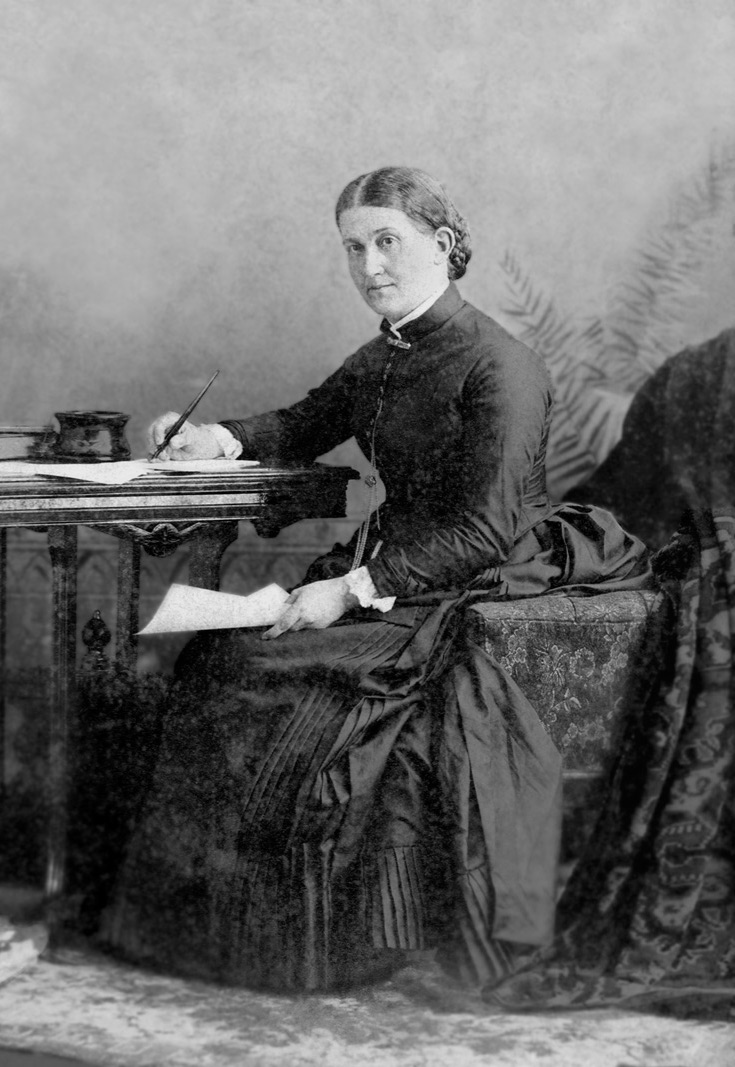
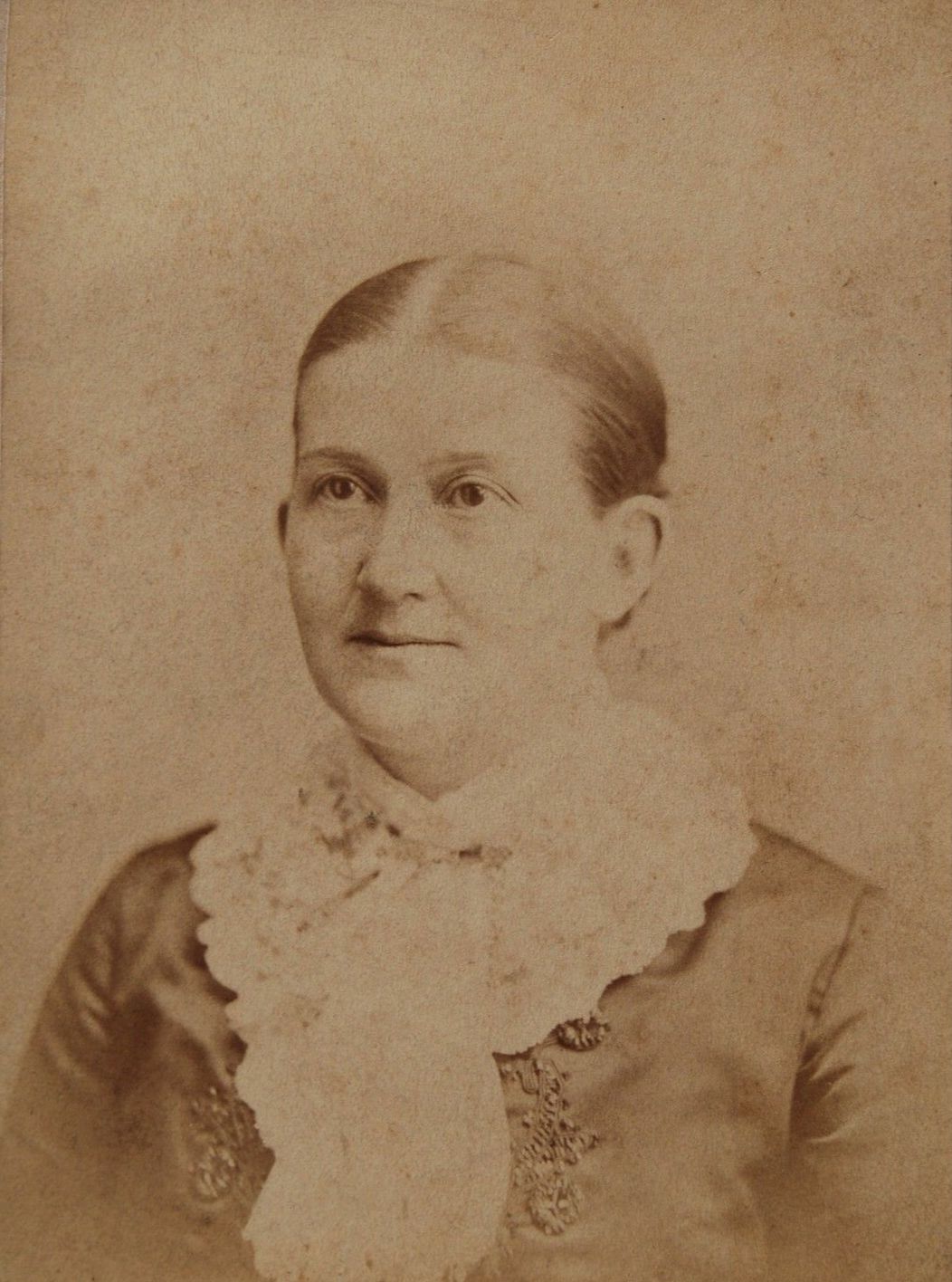
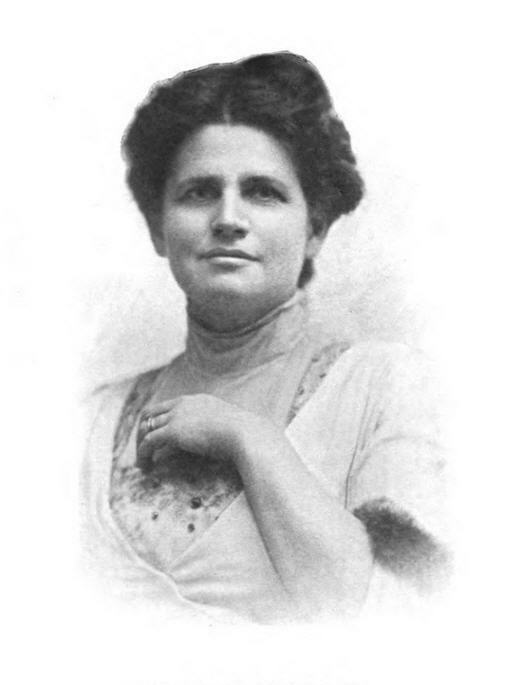
Photo of Isabella Alden about 1880 (age 39)
It’s hard to know what their expectations were. Perhaps they thought they’d eventually receive a few donations that they could add to their own and forward to the retired minister and his wife.
But that’s not what happened! You can imagine Isabella and Marcia’s excitement when they wrote the following update, which appeared two weeks later on May 18 in the same magazine:
AN ACKNOWLEDGMENT.
Dear Friends: It gives us pleasure to report at this date the receipt of $41 towards the $150 that we are trying to raise to save the little home, of which we wrote you last week. As the magazine containing the appeal has been issued only four days, including Sunday, the replies thus far have been instantaneous.
The sum of $41 in today’s economy is about $1,600. That’s an astonishing amount to receive in so short a time! The sisters continued:
Our gratitude for these kindly and prompt responses is very great. We are looking to receive many more before the week closes. One friend writes that she hopes we will excuse her for not being a minister’s wife, and yet for sending her offering! We are delighted with her.
We remember that there are ministers’ wives by the score who gladly would, but cannot; it is fitting that some more blessed with this world’s goods should reply for them. Two dear ladies have already done so; one sent $5, the other $10.
One friend hopes that we will receive much more than the sum called for and be able to make an additional gift. We echo the hope.
Later it will be our pleasure to give a somewhat more detailed account of this pleasant work, and of some of the precious letters that have come to us. There have already been received gifts that represent sacrifice and letters that would touch your hearts. Yours sincerely,
What a promising start for the sisters’ fund-raising campaign!
Marcia Livingston around 1905.
Their next update was published three weeks later on June 8 with the following headline:
THE MORTGAGE LIFTED
The sisters’ wrote:
Dear Friends:
It is with pleasure and gratitude that we come to you with the final result of our appeal for those dear servants of God in California, asking you to lend a helping hand in saving their home.
You will remember the amount of the mortgage was $150, and we have the joy of telling you that we have received in all the sum of $210.
That $210 would be equal to about $8,300 in today’s money! The sisters continued:
Undoubtedly it will be a blessing to our dear friends to receive these tokens of fellowship, but the Lord’s own statement, that it is “more blessed to give than to receive,” seems again to have been verified.
Nearly every letter writer has taken time to add a word of tender sympathy and to express the wish that the sum desired might be much more than realized.
As we read the heart-lines accompanying them, we wished that you could all enjoy them with us. It has been interesting to note how many ministers’ daughters responded, “begging the privilege” of being counted in.
One friend wrote that she was not in any way connected with ministers, but she was a member of the Presbyterian Church, and she felt it a precious privilege to lend a helping hand to these servants of the Lord in their hour of need.
Another, who said she “had just begun to be a minister’s wife,” was only too glad to inaugurate her service in this way. Still another begged admission to the circle on the plea that she expected “very soon” to become a minister’s wife.
Many ministers’ widows, out of their small incomes, sent glad offerings. One who was nearing her eightieth year, but who had a good home, the rent from which supported her, joyfully offered her gift. Another token was from an old minister and his wife, who said that they had no home to save, but the Lord had taken care of them for seventy-eight years, and given them a little with which to help others.
One wrote, “Your appeal coming so soon after our Sunday-school lesson on ‘Giving,’ afforded some of us an opportunity to show our faith by our works. How thoughtful of our Lord!”
There were gifts from those who “had to count even the dimes carefully to make the ends meet, but were glad to share with others.”
Times without number we were thanked for affording the opportunity, and the wish was constantly expressed that much more than the sum called for might be received.
Now, in regard to the recipients of these gifts, nothing would afford us greater pleasure than to copy at length the beautiful and touching letter received from the dear wife, in response to the check sent her. The length of the letter and the personal character of some of it deter us. A few sentences, however, we feel that we must quote. The letter commences:
“Dear, dear friends: What can I say? Words will not express my feelings! God only knows the heart, and he knows how thankful, oh, how thankful, we are to you for all your great and noble kindness. God bless you all, and ever keep you in the hollow of his hand, safe from all want. I want to tell you how it was, so far as words will. My husband was out in the yard when your letter came. I called to him and said: ‘Come in; I want to show you something.’ When he came in I said: ‘Put on your glasses;’ then I handed him the check. He is a man who thinks before speaking. As he sat looking at it I said: ‘Cannot we trust the Lord?” Then I could not keep the tears back any longer, and still he had not spoken. He sat with bowed head, and I knew he was thanking God for his loving kindness. When he looked up his eyes were full of tears, and when he heard how it was, he said: ‘The Lord guided you.'”
Was there ever a more beautiful word picture made than that? The entire letter, which is long, is the out-pouring of hearts almost over-burdened with gratitude. As we read we could hardly help feeling that the offerings were small and poor as compared with the wealth of the return; but, after all, that is what was promised: “Good measure, pressed down, shaken together, running over.” May the blessing of him who “maketh rich and addeth no sorrow” be upon every giver.
What is most striking about this story is how Isabella and Marcia immediately moved from sympathy to action. They didn’t just feel bad about the elderly couple’s situation—they did something about it. Using their talents as writers and their influence in the Christian community, they rallied others to join them in making a difference.
Isabella around 1885.
The sisters are an example of practical Christianity at its finest. They believed wholeheartedly that even the smallest gesture done in Christ’s name mattered, and the overwhelming response they received proved they were right! Within weeks, they hadn’t just raised $150—they’d collected $210 and created a community of givers who experienced the blessing of helping others.
Isabella and Marcia were women of action who used every gift God gave them to serve others. It’s a reminder that we all have something to offer, and that acting on our faith—even in small ways—can create ripples far beyond what we imagine.
December 8, 1925—almost exactly 100 years ago—started as any ordinary Tuesday afternoon in Palo Alto, California. Isabella Alden was 83 years old, and was living in the beloved double-home that she and her husband Ross built a decade before on Embarcadero Road.
Ross and her son Raymond had died the year before, so only Isabella and her daughter-in-law Barbara (Raymond’s widow) and her five children were left to share the rambling house.
Barbara Hitt Alden, about 1910.
That afternoon, Isabella, Barbara, and Barbara’s youngest son, Raymond Jr., set out together in the family car. Barbara was behind the wheel. None of them could have known that their simple outing would dramatically change the remainder of Isabella’s life.
A 1925 Lincoln sedan, a popular car style in the 1920s.
At a street intersection a little less than a mile from their home, another car collided with the Alden vehicle, striking it with enough force to cause it to overturn. The impact shattered the windshield and windows, showering the passengers with broken glass.
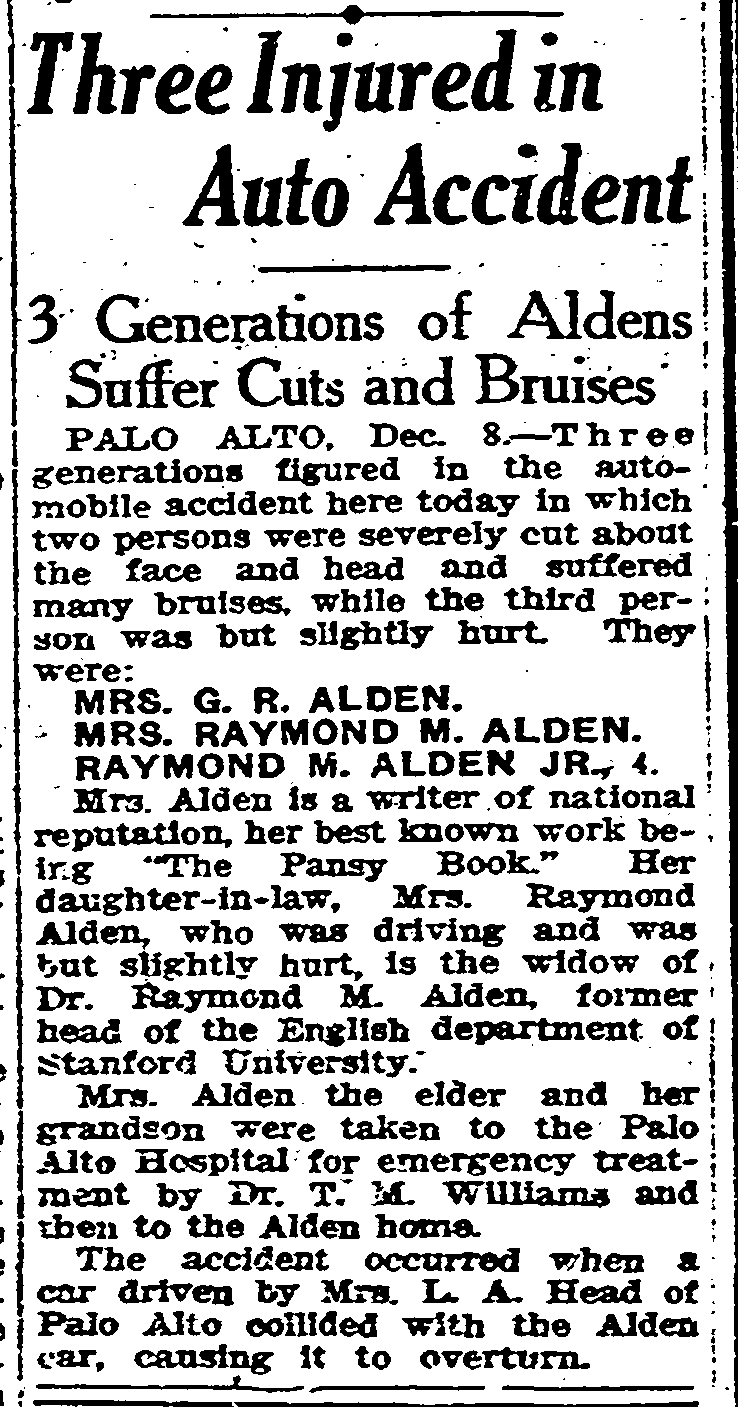
The San Francisco Chronicle, December 8, 1925.
Barbara was only slightly hurt. But Isabella and her young grandson suffered “severe cuts about the face and head, and many bruises.” After receiving first aid from a nearby physician, Isabella and Raymond Jr. were taken to Palo Alto Hospital for treatment.
Palo Alto Hospital in the 1920s.
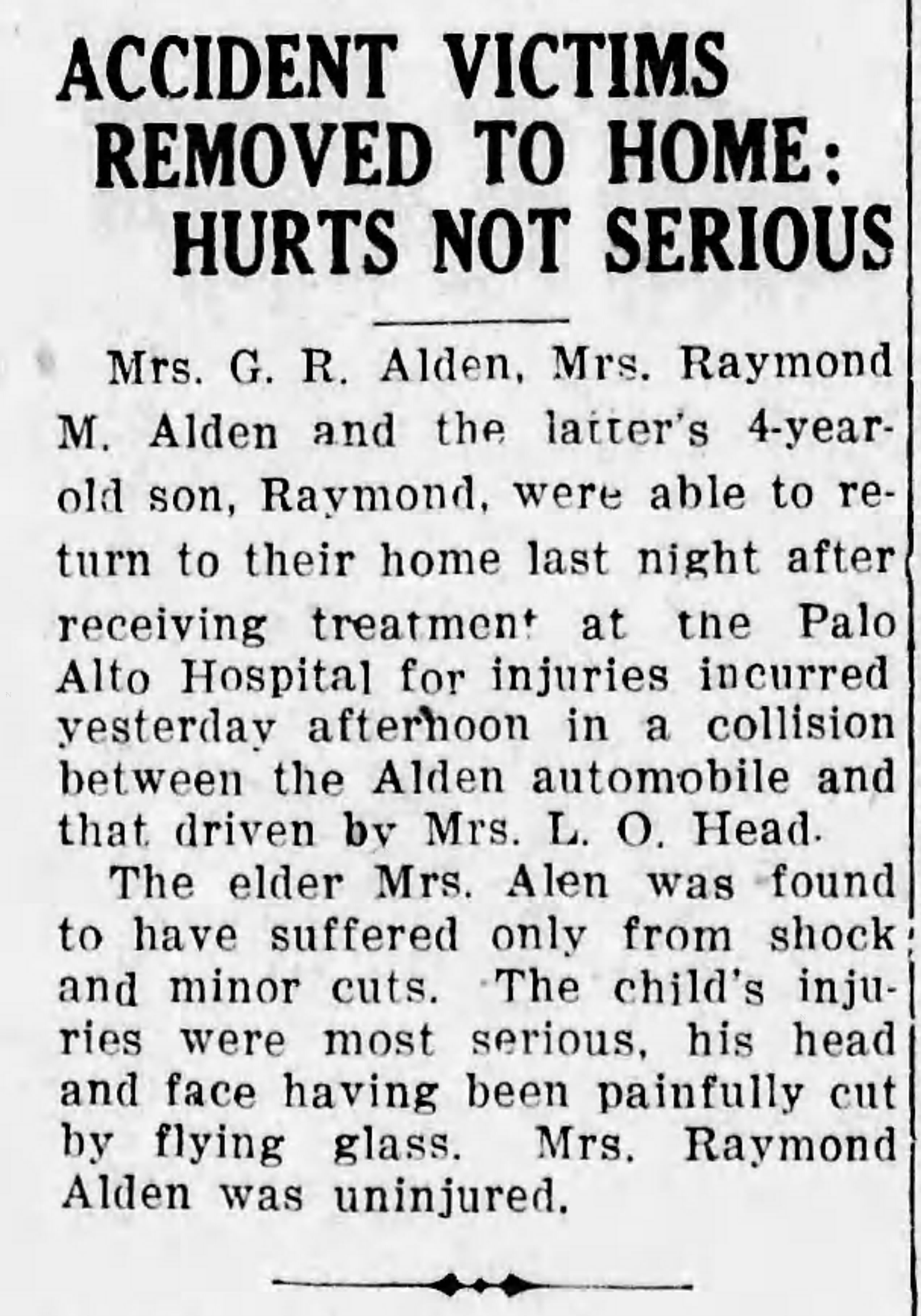
The next day’s newspaper reported reassuring news: the accident victims had returned home, and Isabella “was found to have suffered only from shock and minor cuts.” Her grandson’s injuries were described as the most serious of the three.
The Peninsula Times Tribune, December 9, 1925.
But that assessment would prove tragically wrong.
What those initial medical evaluations missed was the true extent of Isabella’s injuries. The accident left her in considerable pain and, ultimately, confined to a wheelchair for most of the remaining years of her life.
Until the accident, Isabella was a woman who had been remarkably productive well into her eighties—still writing, still engaged with her work and family. The accident didn’t just slow her down; it fundamentally altered how she could live her remaining years.
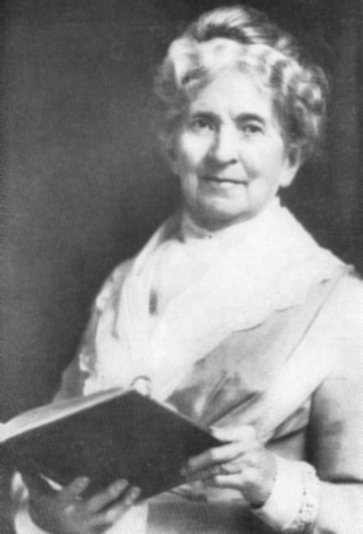
Isabella in later years.
In her memoir “Memories of Yesterday,” which she finished writing after the accident, Isabella documented the physical pain she endured. For a woman who had spent her life in service to others, who had quietly helped so many navigate their own difficulties, those final years must have been particularly difficult for her.
Isabella lived for nearly five more years after the accident, passing away in 1930 at age 88. Those years, spent largely in a wheelchair and dealing with chronic pain, were a far cry from the active, engaged life she had led for more than eight decades.
What is striking about this incident in Isabella’s life isn’t just the tragedy of the accident itself, but what it reveals about her character during her final years. Despite her pain and limitations, she continued to write. She finished her last novel, An Interrupted Night, and entrusted it to her niece, Grace Livingston Hill, to guide it through the publishing process.
She also completed her memoir, Memories of Yesterdays, candidly sharing her memories and reflections on a life well-lived. Even when her body was confined to a wheelchair, her mind and spirit remained active.
That’s the Isabella Alden we’ve come to know through her writings—someone who lived out the principles she wrote about, even when circumstances became difficult. She had spent decades writing about faith, perseverance, and finding purpose in adversity. In her final years, she had to draw on those very principles herself.
A hundred years ago this month, Isabella’s life changed forever on a Palo Alto street corner. While the accident limited her physical abilities, it couldn’t diminish the legacy she’d built through decades of faithful work—or the strength of character that sustained her until the end.
Under Isabella Alden’s tenure as editor, The Pansy magazine went from a monthly children’s magazine to a weekly publication. The content also changed; from the early days of short stories, poems, and Bible lessons, the variety of articles expanded to include lessons in science, nature, and geography.
The cover of September 17, 1892 issue of The Pansy magazine
In a regular column devoted to geography, Isabella cleverly turned what could have been a run-of-the-mill travelogue into a fun experience for her readers. Each month she chose a U.S. city as a topic; but instead of writing about the city herself, she invited children who had visited that city to write to her and tell about their trip and the sites they saw. Sometimes the children’s assessments and side-comments were more interesting than their descriptions of the city itself.
For example, when Isabella asked children to write about Minneapolis, Minnesota, she received this response from a boy named Harry Denning:
My uncle is a lawyer and lives in Minneapolis. He says the City Hall is just splendid. It cost three million dollars. Its great tower is three hundred and forty-five feet high, and there are only two others in the United States which can get above that. There isn’t any danger that this building will ever burn up, for it is made fire proof. I wonder why they don’t make all buildings fire proof? Then we would not have to buy engines, and pay firemen, and keep great splendid horses doing nothing all day long but wait for fires. This City Hall which I began to tell you about is three hundred feet square and fills up a great block on four streets. I am going to be a lawyer, and I shall have an office in Minneapolis.
Didn’t Harry have a good idea for building fire-proof buildings? The magazine included this illustration of the Minneapolis City Hall and Court Square:
City Hall and Court Square
Another letter was written by Minnie Andrews:
I have an aunt who is very fond of visiting churches. When she goes to a new place, if it is only a village, she wants to see all the churches and know about them. When she was in Minneapolis first, years ago, it was a little bit of a place, and my aunt is an old lady, and does not read the newspapers much, and did not realize that Minneapolis had grown a great deal. She went there last spring to visit a nephew. She reached there in the night, and was taken in a carriage to her nephew’s house, and did not realize the changes at all. The next morning at breakfast, when her nephew asked her what she would like to see in the city, she said she would like to visit the different churches if she could, and that perhaps as the day was pleasant they could go that morning.
“Very well,” said her nephew; “to which ones shall we go?”
“Oh, to all of them,” answered my aunt; “we can take a few minutes for each and see them all this forenoon, can we not?”
“Certainly,” said her nephew; “just as well as not. There are only about a hundred and sixty, I believe.”
And that was the first time my aunt knew that she was in a big city instead of the little town she had left thirty years or so before. But I don’t think her nephew was very polite to an old lady. She saw a good many of the churches, among them Dr. Wayland Hoyt’s, which she said she liked the best of all. It is the First Baptist Church of Minneapolis, and cost two hundred thousand dollars. It will seat about fifteen hundred people. I thought the Pansies would like to hear about it.
Perhaps the best part of Minnie’s letter is how caring she was in regard to her aunt’s feelings and how quickly she came to her aunt’s defense.
Another boy named Thomas Bailey Atwood wrote that when he and his sister visited their uncle in Minneapolis, they went to the Public Library:
It is a very handsome building. They say it cost a good deal—over three hundred thousand dollars. We sat in one of the elegant reading-rooms and read books while our uncle was looking up something in books of reference. There are thousands and thousands of volumes there. The street cars in Minneapolis are all electric. My sister did not like to ride on them when there was a thunderstorm, but I was not afraid. I think I like Minneapolis better than any place I was ever in.
The magazine included this illustration of the city’s impressive public library:
Public Library.
These letters give us a delightful peek into the minds of children from the 1890s. Harry’s practical question about fire-proof buildings, Minnie’s fierce defense of her aunt, Thomas’s brave stance on riding electric streetcars during thunderstorms—each letter reveals not just facts about Minneapolis, but the personalities of the children writing them.
Every child who wrote to her about a city shared real experiences. Isabella understood that children learn best when they’re engaged and when their own voices are valued. By inviting her young readers to become contributors, she turned geography lessons into something personal and memorable. It’s just one more example of why The Pansy magazine resonated with so many children during Isabella’s years as editor. And it’s no wonder children loved writing to her.
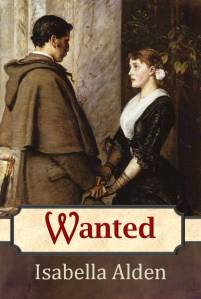
Rebecca’s dress was entirely appropriate and becoming. She had gone out from her father’s house very well supplied with clothes, and her ability to re-make them herself had stood her in good stead, so that now her dress of fine black cloth, made severely plain, but with minute attention to details, became her well. So did the black felt bonnet, with its three stylish plumes, which she had herself dressed over.
from Wanted, by Isabella Alden, published in 1894
In her stories, Isabella often used the latest fashion to define a character’s financial and social status, and Rebecca Meredith’s outfit was an excellent example. Because her dress was plain and black, her bonnet “with its three stylish plumes” was the centerpiece of her outfit and called attention to her pretty face.
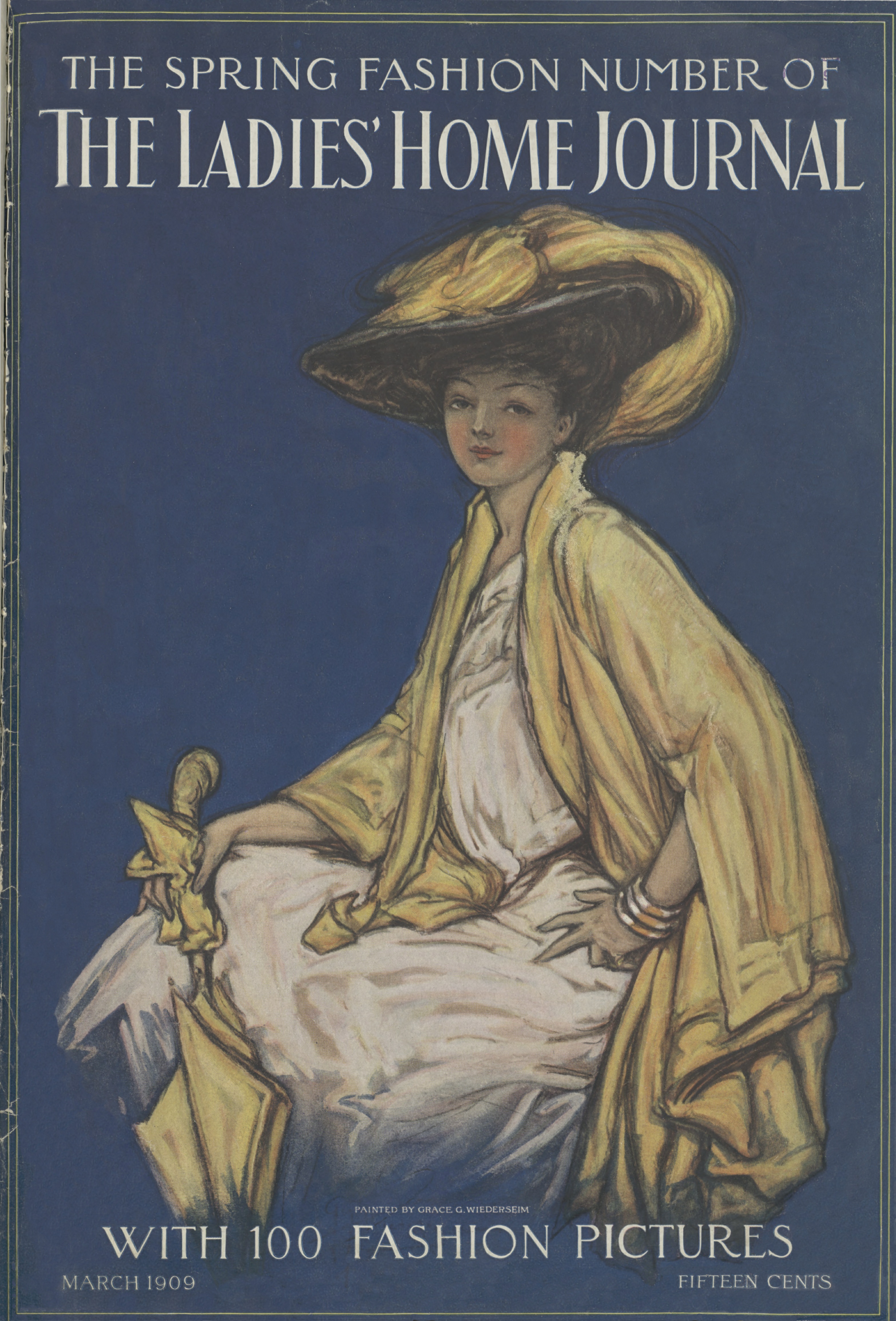
Bonnets with plumes were very much in style when Wanted was published in 1894. Women’s magazines, like Godey’s Lady’s Book and TheLadies Home Journal showed that hats were be made from a variety of materials—straw, for example, or stiffened fabrics like velvet—and that they were quite modest in size.
From Godey’s Lady’s Book, August 1895.
Though small, hats at that time were heavily adorned with ribbons, bows, artificial flowers and, most importantly, bird plumes.
From Godey’s Lady’s Book, October 1897.
Bird feathers were the most desirable decorative elements on a lady’s hat. In 1894 The Ladies Home Journal predicted that actual wings displayed on bonnets would be “all the rage,” while another magazine wrote that “almost every second woman one sees in the streets flaunts an aigrette of heron’s plumes on her bonnet.”
Milliners used feathers from egrets, hummingbirds, herons, and even song birds of all kinds as adornments.
From Godey’s Lady’s Book, 1898.
The more exotic the bird, the more desirable their feathers; and the millinery industry was willing to pay top dollar to anyone who would supply them, no questions asked.
But some people did ask questions and raise alarms, after nature lovers in England and the United States discovered that some birds, like ospreys and egrets, were hunted so mercilessly, ornithologists feared they would soon be extinct.
In London, a Society for the Protection of Birds was formed. Members pledged to never wear feathers of any bird not killed for the purpose of food. Similar organizations were formed in Europe, Canada, and the U.S.
The public outcry began to pay off, as women around the world pledged to stop wearing hats with real bird feathers, and American lawmakers enacted state and federal laws to protect certain species of birds by banning them from use in hats and garments.
One bird that was exempt from protection was the ostrich, because its feathers could be harvested without killing the bird. So it was natural that the millinery industry would turn its attention to ostriches as a source for adornments.
Ostrich farms that had been established in the southern United States in the late 1890s in hopes of selling feathers to the millinery industry suddenly saw an increased demand for their wares.
An ostrich farm in southern California.
And because ostrich feathers could be plucked every eight or nine months, ostrich farmers with large herds enjoyed a regularly replenished inventory they could sell.
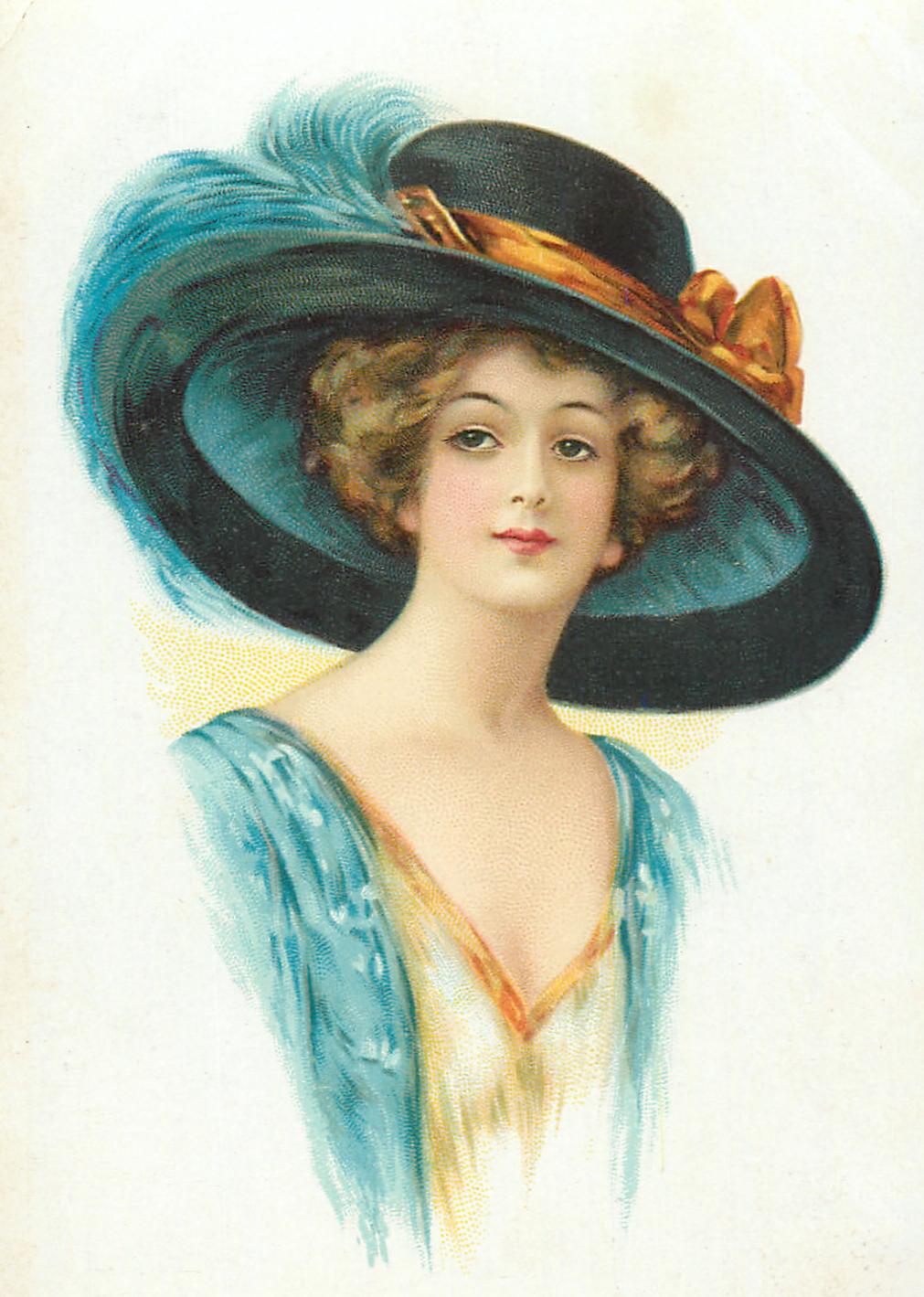
With the turn of the century, hat styles changed, and the small bonnets that were popular when Isabella wrote Wanted fell out of fashion. The new bonnet styles of the 1900s featured wide brims and brilliant colors.
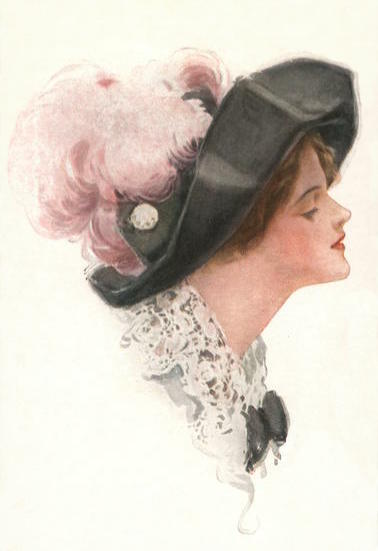
Ostrich plumes suited the new styles beautifully. Because of their size, the plumes could cover a large hat’s crown and brim.
Even more importantly, ostrich feathers could be dyed to match almost any color. Women and conservationists rejoiced, feeling confident that they could use ostrich feathers for fashion without feeling guilty.
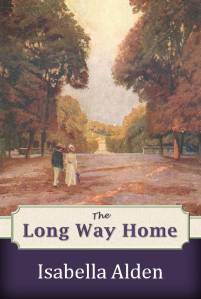
In her 1912 novel The Long Way Home Isabella made sure her fashionable characters wore the latest style in bonnets. Newlywed Ilsa Forbes wore a wide-brimmed hat when she boarded the train with her new husband Andy:
But Andrew had no words, just then; never was the heart of bridegroom more filled to overflowing, and he could not yet think about decorations or supper. “My wife!” he murmured, as his arm encircled her. “Really and truly and forever my wife. Do you realize it, darling?” She nestled as closely to him as her pretty, new traveling hat would permit and laughed softly.
There was, however, a problem with those stylish large hats adorned with ostrich feathers. In 1908 a letter to the editor of the Oregonian newspaper applauded the ban on exotic bird feathers, but raised a new and troubling concern about ostrich feathers:
The letter-writer wasn’t the only one wondering if an ostrich felt pain when its feathers were plucked. Soon the Audubon Society and other conservationists began asking the same question and took their findings to state legislators.
In California, where Isabella was living and where many of the country’s ostrich farms were located, the question was answered by lawmakers. In 1900 the state updated its penal code to make it a crime to intentionally mutilate or torture a living animal, which included plucking live birds like ostriches.
So ostrich farmers stopped plucking and began snipping feathers, instead. A 1911 article in the Dallas Morning News explained the process:
From The Dallas Morning News, November 12, 1911.
Once again, stylish ladies (and Isabella’s equally stylish characters) could wear hats adorned with feathers and maintain a relatively clear conscience.
It’s interesting how Isabella’s attention to details, like hat sizes and adornments, brought her stories to life. While she didn’t preach about fashion in her novels, she paid close attention to these niceties, and used them to bring authenticity to her characters and their world. Contemporary fans of her novels would have noted the subtle changes as keeping up with the times.
For us in 2025, it’s fascinating to learn there’s a whole complicated history behind Rebecca Meredith’s feathers—a history about women who were determined to write wrongs and find ways to be fashionable without compromising their conscience.
You can learn more about Isabella’s novels mentioned in this post by clicking on the book covers below:
Full disclosure: these are Amazon affiliate links, which means if you decide to purchase through them, this blog will receive a small commission. It doesn’t cost you anything extra, but it helps us keep this site running and researching Isabella’s life and the fascinating world in which she lived.
As a popular author, Isabella received plenty of publicity and media coverage, and she was probably used to seeing her name in print.
In 1893 her niece, Grace Livingston Hill was just beginning to garner some publicity of her own. A few of Grace’s stories had been published in magazines, including The Pansy, so she was already building a following of loyal readers.
Then, in April 1893, the following article about Grace appeared in a Christian magazine:
THE REVEREND AND MRS. FRANKLIN HILL
Pansy’s niece, Grace Livingston (now Mrs. Franklin Hill) has perhaps almost as warm a corner in the hearts of our readers as their older friend “Pansy,” and therefore we are glad to give the photographs of herself and her husband. Mr. Hill. [He] is pastor of a flourishing church in one of the suburbs of Pittsburgh, Pennsylvania—a young man of noble character and fine intellectual gifts.
To quote from a paper giving an account of their recent marriage:
“When two souls such as these, energetic, consecrated, and peculiarly gifted, unite their lives and aims, there is promise of much good work for the Master.”
Doubtless thousands who never saw Grace Livingston’s face, feel acquainted with her, and really are acquainted with her through her writings, for a true author’s true self goes into her works. She has a bright and charming style, which reminds one of that of her aunt, Mrs. Alden (“Pansy”), and of her mother, Mrs. C. L. Livingston, who is often a collaborator with Mrs. Alden.
Mrs. Hill is not an imitator, however, or an echo of anyone else, but has a genuine style and literary character of her own. She is, moreover, much more than a mere writer. The daughter of a Presbyterian Minister, trained from her earliest days to work for the Master, she has thrown herself enthusiastically into His service.
“She has,” writes a friend, “a passion for soul-saving, and will not give up a bad boy when all others do, but pleads with him, and prays, and has patience, and often has the joy of reward, in the changed character of boys who will remember her gratefully through life. She sometimes gathers about her on Sabbath afternoons a group of older boys, and leads them on to discuss Christian evidences and the moral questions of the day, amusements, etc. On these subjects she takes high ground, setting them to search for the opinions of master minds in religious thought, and to learn what Scripture teaches on the themes under discussion. This will go on for months, each of the informal meetings delightful to the boys.”
The work of the Christian Endeavor Society is very near her heart, and she has given much time and strength to it, as her writings prove. Of late she has been especially identified with the Chautauqua Christian Endeavor reading course, whose success in the future will be largely due to her energy. While in Chautauqua during the summer, she spends much of her time in promoting the interests of the Chautauqua Christian Endeavor Society.
How can we end this brief sketch better than by quoting the words of a friend, who says:
“She loves dearly to have her own way, and yet she is one of those rare characters who knows how to yield her will sweetly for peace sake, and so for Christ’s sake.”
What a lovely article! It gives readers hints of the great work (in addition to her writing) that Grace would accomplish in the years to come.
The article appeared only four months after Grace and Thomas Franklin “Frank” Hill were married. After their marriage they both stayed involved in the Christian Endeavor Society. Together they wrote The Christian Endeavor Hour with Light for the Leader, a guide book that contained lessons and Bible verses CE societies could use in conducting their meetings. The book was published in 1896.
Grace’s “passion for soul-saving” flourished, as well. In later years she established a mission Sunday School for immigrant families in her community. It was just one of the many endeavors Grace undertook that resulted in “good work for the Master.”
Isabella had a special bond with her father, Isaac Macdonald. She might even have been what we would call in today’s world a “daddy’s girl.” But the truth was that her father was undoubtedly the single most influential person in her life when she was growing up.
In his younger years Isaac Macdonald earned his living as a farmer, but with a wife and six children to support, he left farming and established a box-making business in Gloversville, New York.
Many years later, after Isabella became a best-selling author, a Gloversville newspaper wrote a brief article about her early years in that town. The writer of the article briefly mentioned her father:
Isaac was a box maker, and if his boxes are any index to his character, he was staunch and worthy. He lies in our pleasant cemetery, but there are boxes still in use made by his faithful hands.
It’s a brief paragraph, but with its use of the words character, worthy, and faithful, we get a glimpse of Isaac Macdonald’s reputation among his neighbors and friends.
In the many stories and anecdotes Isabella shared about her father, she paints a picture of a loving man of immense faith.
In his home circle, he ably fulfilled his role as provider, protector, leader and teacher. He was eternally patient with his children and grandchildren; and he instilled in them an unbreakable faith in God and His Word.
Most of all, Isaac valued honesty, a fact Isabella illustrated in a story that took place when she was an adult and her young niece Minie was staying at the family home.
Isabella’s sister Julia teasingly told little Minie that she was going to serve butterflies and caterpillars for tea, which greatly shocked and upset the little girl. Julia, however, thought Minie’s reaction was funny; she told the story to the family later that day “with many descriptions of Minie’s shocked tones and looks, and much laughter.”
Only Isaac looked grave. When the laughter was over he said to Julia:
“How many years do you suppose it will be before Minie will discover that you haven’t told her the truth?”
“The truth!” said Julia, in surprise. “Why, of course it wasn’t truth. It was only in fun, you know. Whoever supposed that the absurd little monkey would believe it?” and she laughed again at the thought.
“But, you see, she did believe it,” Isaac said. “She believed it because you told it to her. She has great faith in your word, you see. I would be very careful not to give that faith a shock if I were you.”
“Why, dear me!” Julia said, with puzzled face; “I never thought about its being anything serious. Don’t you think it is right to say anything in fun to a child?”
“I don’t think it is right to say anything but the truth to anyone,” Isaac said, emphatically; “least of all to a child.”
Isabella never forgot the lesson.
Isaac’s teachings with Isabella extended beyond those that would shape her character. In an interview with The Ladies Home Journal, Isabella said that it was her father who taught her to write at an early age.
He was the first to encourage her to keep a diary; and he also taught her to take notes during their minister’s sermons on Sunday morning. Together they would review her notes, and he encouraged her to use her own imagination to expand on them and weave stories from the lessons and bits of wisdom she had recorded.
That early discipline soon bore fruit. When she was about seven or eight years old Isabella wrote a story about the family clock (read more about her story here).
Her story was published in the local newspaper (coincidentally, the newspaper was owned by her sister Mary’s husband and little Minie’s father). Isaac insisted that the story be published under a pseudonym, saying:
“We don’t wish anyone to know that you wrote it, and so we will sign it, Pansy, for pansy means tender and pleasant thoughts, and you have given me some thoughts that are tender and pleasant.”
This incident, too, offers a glimpse into Isaac Macdonald’s character, and his desire to protect his daughter from public scrutiny and the hazards of fame.
Thereafter, Isabella was often writing or telling a story. Her books Four Girls at Chautauqua and Ester Ried made “Pansy” a household name around the world. It was while she was writing EsterRied that her father became ill.
Isabella mentioned that when she was young, she always hoped she would never have to tend to anyone who was sick; she thought it would be “so dreadful to look at anybody knowing that he was soon to die.”
But she found it made a difference who the sick person was, and how he felt about death himself. Her father, she knew, wasn’t afraid of dying. He used to say to her:
“It is nice to have my children all about me, and it seems sad sometimes that I must go and leave them—sad for them, I mean. But what a blessed thing it will be when we all get up there where none of us will have to go away any more. It will be vacation there all the time, won’t it?”
When her father fell ill in the summer of 1870, Isabella spent as much time with him as she could, and often read to him from his Bible. She described it as a large-print Bible, all full of leaves turned down and verses marked.
She said there was no need to ask which verse was his favorite; he had left “marks of his love” all through the book.
One afternoon when Isabella was with him, she read verses here and there as her eye caught his different markings:
“And they shall see his face, and his name shall be in their foreheads.
“And there shall be no night there.”
“And the ransomed of the Lord shall return and come to Zion with Songs, and everlasting joy shall be upon their heads.”
And there was this verse:
“Fear not, for I have redeemed thee. I have called thee by thy name, thou art mine.”
During that summer of Isaac Macdonald’s illness, Isabella was writing Ester Ried.
An early cover for Ester Ried
Her father, as always, was interested in her writing progress; but he showed particular interest in the story of Ester Ried. He told Isabella that “he prayed that it might be a blessing to some young life.” Sadly, he passed away on July 26, 1870, before Isabella finished writing the novel.
Isabella later wrote:
“It was while the tears were gathering thick in my eyes as I looked out upon his grave that I wrote the last chapter of the book, feeling that my closest, strongest friend and critic, and wisest helper had gone from me.”
Isaac Macdonald’s grave marker.
Isaac Macdonald’s prayer for Ester Ried was answered over and over again. Ester Ried was a great success and proved to be a blessing to generations of girls and young women who read it.
Isabella’s love for her father was evidenced in the books she wrote. She used him as the model for many of her male characters who were wise in judgment and strong in faith.
You’ll catch glimpses of him in Dr. Deane in Wanted and in Dr. Everett in Workers Together; an Endless Chain.
You can read more about the special bond between Isabella and her father Isaac Macdonald in these posts:
Isabella Alden was very close to her sister Marcia Livingston. Like Isabella, Marcia was a writer and they often co-wrote stories together.
Isabella Alden (left) and her sister, Marcia Livingston (right) in an undated photo
After the sisters married, the Alden and the Livingston families remained close. They spent much of their time together, and Marcia’s daughter Grace grew up in the creative atmosphere of writers and books.
Grace learned her ABCs on her “Aunt Belle’s” typewriter. At the age of ten she wrote a story of her own called, “The Esselsltynes; or, Marguerite and Alphonse,” which the family published for her as a surprise. That gift, along with the encouragement and work example set by her family, inspired Grace to continue writing.
She followed the adage of “write what you know.” When Grace became involved in the Young People’s Society of Christian Endeavor, she wrote stories about that experience; many of those stories were published in Christian Endeavor World magazine.
Grace Livingston Hill-Lutz, about 1912
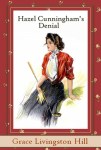
The Epworth Herald also published Grace’s stories that illustrated simple truths about the Christian life. One such story was “Hazel Cunningham’s Denial,” which described a young woman’s dilemma while vacationing at a summer resort
“Hazel Cunningham’s Denial” first appeared in The Epworth Herald on August 9, 1902, and it’s available for you to read for free.
Click on the cover below to begin reading “Hazel Cunningham’s Denial” by Grace Livingston Hill.
Reviews and giveaways for Christian fiction and sweet, clean fiction. Bringing readers information on great stories and connecting authors with their readers.





















 Isabella Alden