A Feather in Her Hat

Rebecca’s dress was entirely appropriate and becoming. She had gone out from her father’s house very well supplied with clothes, and her ability to re-make them herself had stood her in good stead, so that now her dress of fine black cloth, made severely plain, but with minute attention to details, became her well. So did the black felt bonnet, with its three stylish plumes, which she had herself dressed over.

from Wanted, by Isabella Alden, published in 1894

In her stories, Isabella often used the latest fashion to define a character’s financial and social status, and Rebecca Meredith’s outfit was an excellent example. Because her dress was plain and black, her bonnet “with its three stylish plumes” was the centerpiece of her outfit and called attention to her pretty face.

Bonnets with plumes were very much in style when Wanted was published in 1894. Women’s magazines, like Godey’s Lady’s Book and The Ladies Home Journal showed that hats were be made from a variety of materials—straw, for example, or stiffened fabrics like velvet—and that they were quite modest in size.

Black and white illustration of a young woman wearing a long gown in the fashion of 1895 with extremely large puffed sleeves, and a high collar with a large bow at the back. On her head is a bonnet with a short brim, decorated on top with flowers, gathered ribbons, and an aigrette of short bird plumes.
From Godey’s Lady’s Book, August 1895.

Though small, hats at that time were heavily adorned with ribbons, bows, artificial flowers and, most importantly, bird plumes.

A black and white drawing of a woman wearing a short belted coat with long sleeves and a collar that stands up to cover her neck. On her head is a small hat with a short brim, adorned with ribbons, flowers and a cluster of curled bird feathers at the top.
From Godey’s Lady’s Book, October 1897.

Bird feathers were the most desirable decorative elements on a lady’s hat. In 1894 The Ladies Home Journal predicted that actual wings displayed on bonnets would be “all the rage,” while another magazine wrote that “almost every second woman one sees in the streets flaunts an aigrette of heron’s plumes on her bonnet.”

Color illustration of a woman dressed in a coat and hat from about 1900. Her hat has a wide brim and is piled on top with arrangements of ribbons and two long bird feathers set at an angle pointing toward the back of the hat. A wide red ribbon tied beneath the woman's chin keeps the bonnet in place.

Milliners used feathers from egrets, hummingbirds, herons, and even song birds of all kinds as adornments.

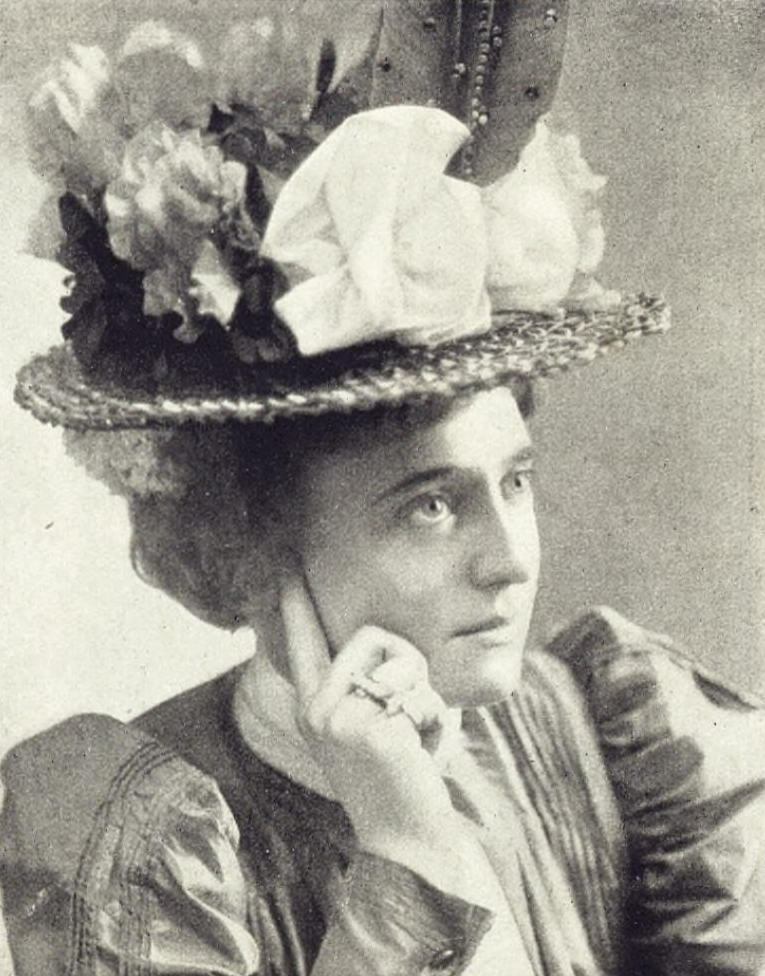
Black and white photo of a woman wearing a dress from the 1890s. On her head is a flat brimmed hat; the crown of the hat is covered with flowers, gathered ribbon, and a single large bird feather in the front. The feather stands straight up on its stem and is adorned with beads.
From Godey’s Lady’s Book, 1898.

The more exotic the bird, the more desirable their feathers; and the millinery industry was willing to pay top dollar to anyone who would supply them, no questions asked.

But some people did ask questions and raise alarms, after nature lovers in England and the United States discovered that some birds, like ospreys and egrets, were hunted so mercilessly, ornithologists feared they would soon be extinct.

Newspaper clipping: BIRDS VICTIMS OF PRIDE. We have received some letters from our readers enforcing the words of Mrs. Aria as the the cruel price that has to be paid for the osprey's feathers, which are in vogue just now in women's headgear. Mrs. Phillips writs to point out that these feathers can only be obtained at breeding time. The plumage is torn from the living parent birds on the nest, which are then flung aside to die, while the young birds are left to starve. Could anything be fore horrible! The bare recital of these facts should be enough to put an instant stop to such a merciless trade.

In London, a Society for the Protection of Birds was formed. Members pledged to never wear feathers of any bird not killed for the purpose of food. Similar organizations were formed in Europe, Canada, and the U.S.

Newspaper clipping: BIRDS IN OUR BONNETS. In response to many inquiries, we would draw attention to the Society for the Protection of Birds, 29 Warwick Road, Maida Hill, London, of which Miss Hannah Poland is the secretary. There is no subscription fee, but any one wishing for a card of Membership can have one by sending two stamps to Miss Poland. Members promise not to wear feathers of any bird not killed for the purpose of food, the ostrich excepted.

The public outcry began to pay off, as women around the world pledged to stop wearing hats with real bird feathers, and American lawmakers enacted state and federal laws to protect certain species of birds by banning them from use in hats and garments.

One bird that was exempt from protection was the ostrich, because its feathers could be harvested without killing the bird. So it was natural that the millinery industry would turn its attention to ostriches as a source for adornments.

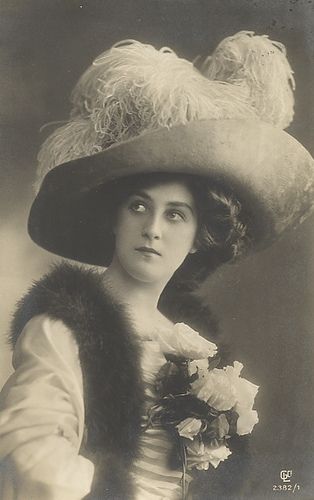
Black and white photo of a woman wearing a hat with a wide brim of 12 to 14 inches deep. The crown of the hat is covered in ostrich feathers that are piled about 12 to 14 inches high, giving a waterfall effect.

Ostrich farms that had been established in the southern United States in the late 1890s in hopes of selling feathers to the millinery industry suddenly saw an increased demand for their wares.

Color photo of a herd of about 40 ostriches running across a fenced enclosure.
An ostrich farm in southern California.

And because ostrich feathers could be plucked every eight or nine months, ostrich farmers with large herds enjoyed a regularly replenished inventory they could sell.

Black and white photo of a woman wearing a short-brimmed hat. A wide ribbon circles the crown of the had and is arranged in multiple loops in front. The stems of two long ostrich feathers are tucked into the ribbon arrangement and the feathers drape back cross the crown of the hat.

With the turn of the century, hat styles changed, and the small bonnets that were popular when Isabella wrote Wanted fell out of fashion. The new bonnet styles of the 1900s featured wide brims and brilliant colors.

Ostrich plumes suited the new styles beautifully. Because of their size, the plumes could cover a large hat’s crown and brim.

Hand-colored photo of a woman wearing a hat with a wide brim of 12 to 14 inches deep. The crown of the hat is covered in ostrich feathers that are piled high, with some parts of the feathers spilling over the brim of the hat.

Even more importantly, ostrich feathers could be dyed to match almost any color. Women and conservationists rejoiced, feeling confident that they could use ostrich feathers for fashion without feeling guilty.

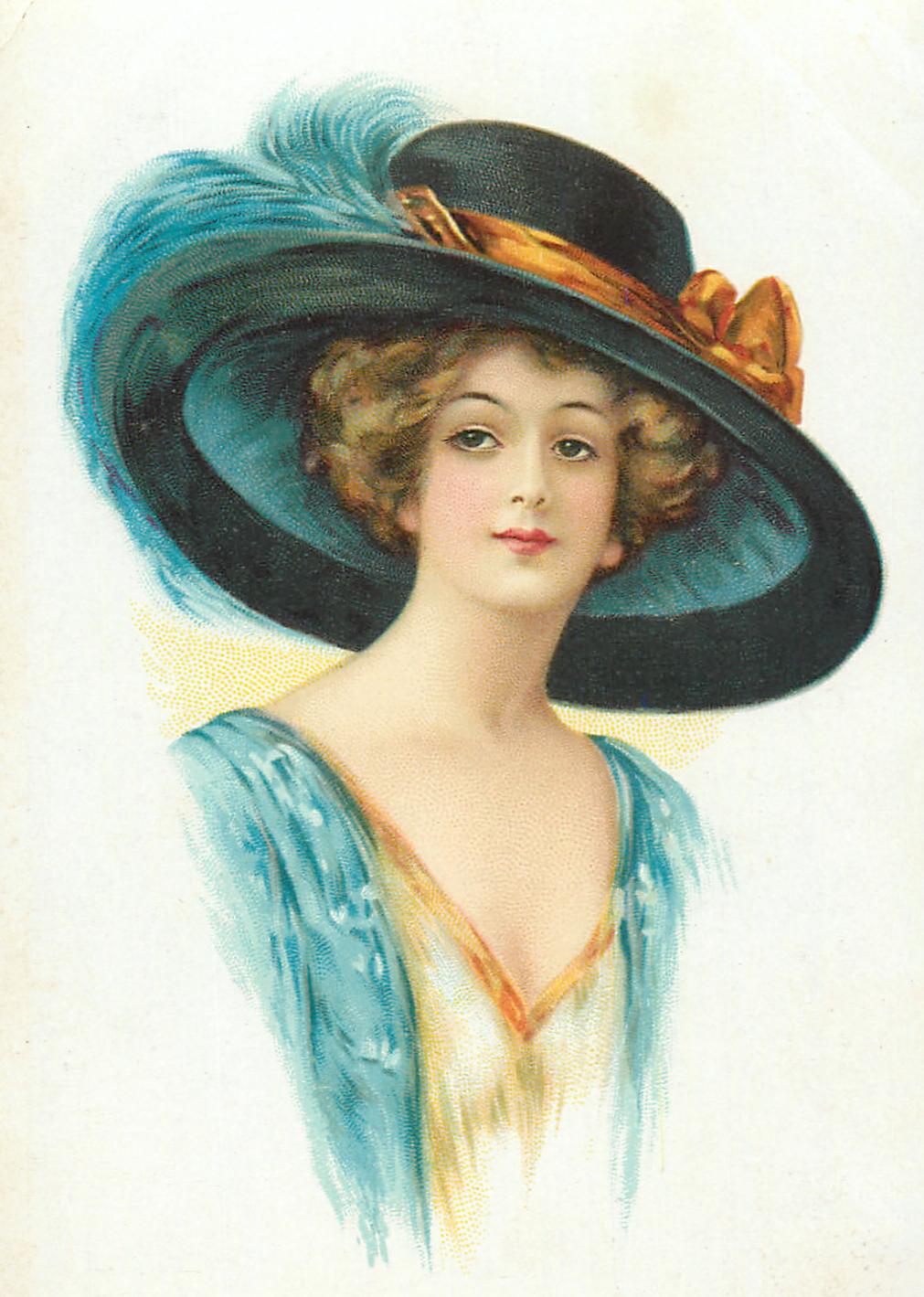
Color illustration of a woman wearing a wide brim bonnet about 14 to 18 inches deep. The bonnet is black but the lining is a brilliant blue. A wide orange-gold ribbon circles the crown of the hat and is tied with a large bow. On the opposite side of the crown feathers of the same brilliant blue are arranged in a cluster across the brim.

In her 1912 novel The Long Way Home Isabella made sure her fashionable characters wore the latest style in bonnets. Newlywed Ilsa Forbes wore a wide-brimmed hat when she boarded the train with her new husband Andy:

But Andrew had no words, just then; never was the heart of bridegroom more filled to overflowing, and he could not yet think about decorations or supper.
“My wife!” he murmured, as his arm encircled her. “Really and truly and forever my wife. Do you realize it, darling?”
She nestled as closely to him as her pretty, new traveling hat would permit and laughed softly.

There was, however, a problem with those stylish large hats adorned with ostrich feathers. In 1908 a letter to the editor of the Oregonian newspaper applauded the ban on exotic bird feathers, but raised a new and troubling concern about ostrich feathers:

Newspaper clipping: The only plumage I have cared to wear is the ostrich feather, and I may yet become convinced that this practice is incompatible with my convictions. Having witnessed many times the plucking of ostriches in Southern California, I have been unable to see that there was any special cruelty attached, though I have no doubt the sensation experienced by the ostrich might be much like we would feel in having a deep-rooted molar drawn.

The letter-writer wasn’t the only one wondering if an ostrich felt pain when its feathers were plucked. Soon the Audubon Society and other conservationists began asking the same question and took their findings to state legislators.

In California, where Isabella was living and where many of the country’s ostrich farms were located, the question was answered by lawmakers. In 1900 the state updated its penal code to make it a crime to intentionally mutilate or torture a living animal, which included plucking live birds like ostriches.

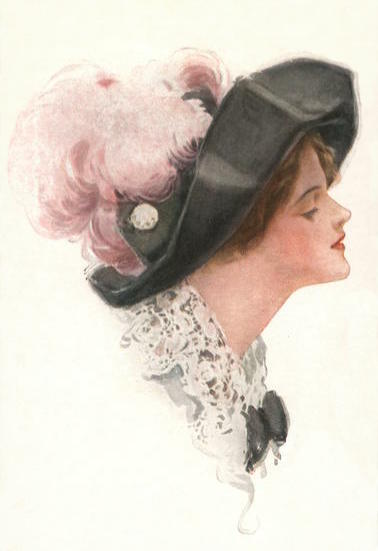
Profile of a young woman wearing a black bonnet with a wide brim turned up in the front. At the back of the crown is a cluster of long, fluffy, pink ostrich feathers.

So ostrich farmers stopped plucking and began snipping feathers, instead. A 1911 article in the Dallas Morning News explained the process:

Newspaper clipping: While the term "plucking' is given to the harvesting of the feathers, the fact is that they are not plucked or pulled out, but are snipped off by means of shears. This process is gone through every eight months, and the quality of the plume depends largely upon how it is cut. There are twenty-five long white plumes on each wing of the male bird. The rest of the feathers are black on the male and a grayish color on the female. Harvesting the plumes is no easy task.
From The Dallas Morning News, November 12, 1911.

Once again, stylish ladies (and Isabella’s equally stylish characters) could wear hats adorned with feathers and maintain a relatively clear conscience.

It’s interesting how Isabella’s attention to details, like hat sizes and adornments, brought her stories to life. While she didn’t preach about fashion in her novels, she paid close attention to these niceties, and used them to bring authenticity to her characters and their world. Contemporary fans of her novels would have noted the subtle changes as keeping up with the times.

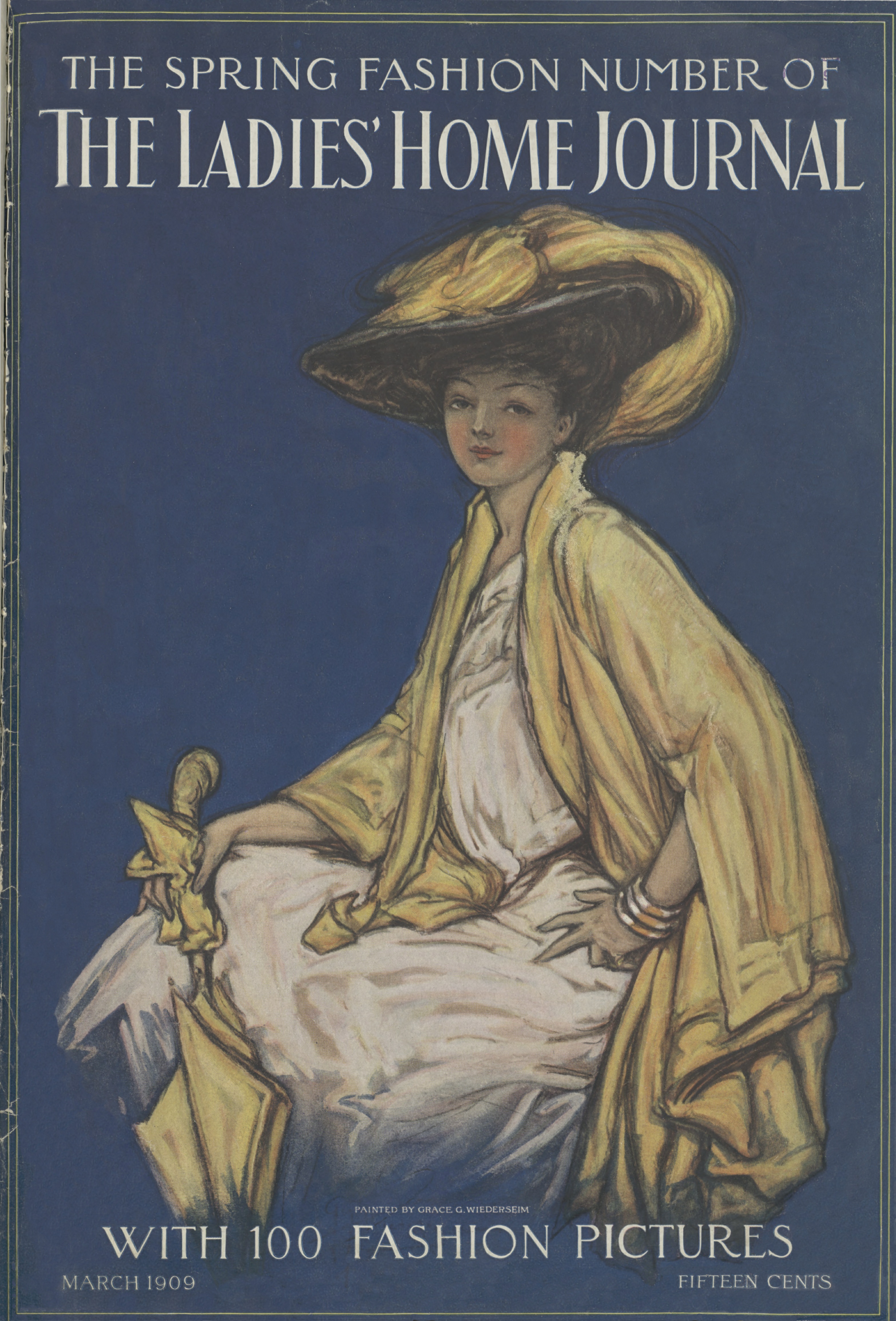
Cover of The Ladies' Home Journal magazine. The color illustration shows a stylish young woman seated, wearing a white dress. A gold colored cape is drawn open with one of her hands. In the other hand she holds a matching pair of gloves and an umbrella. On her head is a wide-brimmed hat fashionable in 1909. Covering the brim of the hat and cascading over the brim at the back is an arrangement of feathers dyed gold to match her outfit.

For us in 2025, it’s fascinating to learn there’s a whole complicated history behind Rebecca Meredith’s feathers—a history about women who were determined to write wrongs and find ways to be fashionable without compromising their conscience.

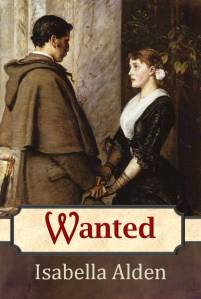
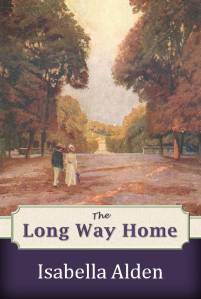
You can learn more about Isabella’s novels mentioned in this post by clicking on the book covers below:

Full disclosure: these are Amazon affiliate links, which means if you decide to purchase through them, this blog will receive a small commission. It doesn’t cost you anything extra, but it helps us keep this site running and researching Isabella’s life and the fascinating world in which she lived.

Character Sketches of Grace Livingston Hill and Her Husband

As a popular author, Isabella received plenty of publicity and media coverage, and she was probably used to seeing her name in print.

In 1893 her niece, Grace Livingston Hill was just beginning to garner some publicity of her own. A few of Grace’s stories had been published in magazines, including The Pansy, so she was already building a following of loyal readers.

Then, in April 1893, the following article about Grace appeared in a Christian magazine:


THE REVEREND AND MRS. FRANKLIN HILL

Pansy’s niece, Grace Livingston (now Mrs. Franklin Hill) has perhaps almost as warm a corner in the hearts of our readers as their older friend “Pansy,” and therefore we are glad to give the photographs of herself and her husband. Mr. Hill. [He] is pastor of a flourishing church in one of the suburbs of Pittsburgh, Pennsylvania—a young man of noble character and fine intellectual gifts.

To quote from a paper giving an account of their recent marriage:

“When two souls such as these, energetic, consecrated, and peculiarly gifted, unite their lives and aims, there is promise of much good work for the Master.”

Doubtless thousands who never saw Grace Livingston’s face, feel acquainted with her, and really are acquainted with her through her writings, for a true author’s true self goes into her works. She has a bright and charming style, which reminds one of that of her aunt, Mrs. Alden (“Pansy”), and of her mother, Mrs. C. L. Livingston, who is often a collaborator with Mrs. Alden.

Mrs. Hill is not an imitator, however, or an echo of anyone else, but has a genuine style and literary character of her own. She is, moreover, much more than a mere writer. The daughter of a Presbyterian Minister, trained from her earliest days to work for the Master, she has thrown herself enthusiastically into His service.

“She has,” writes a friend, “a passion for soul-saving, and will not give up a bad boy when all others do, but pleads with him, and prays, and has patience, and often has the joy of reward, in the changed character of boys who will remember her gratefully through life. She sometimes gathers about her on Sabbath afternoons a group of older boys, and leads them on to discuss Christian evidences and the moral questions of the day, amusements, etc. On these subjects she takes high ground, setting them to search for the opinions of master minds in religious thought, and to learn what Scripture teaches on the themes under discussion. This will go on for months, each of the informal meetings delightful to the boys.”

The work of the Christian Endeavor Society is very near her heart, and she has given much time and strength to it, as her writings prove. Of late she has been especially identified with the Chautauqua Christian Endeavor reading course, whose success in the future will be largely due to her energy. While in Chautauqua during the summer, she spends much of her time in promoting the interests of the Chautauqua Christian Endeavor Society.

How can we end this brief sketch better than by quoting the words of a friend, who says:

“She loves dearly to have her own way, and yet she is one of those rare characters who knows how to yield her will sweetly for peace sake, and so for Christ’s sake.”


What a lovely article! It gives readers hints of the great work (in addition to her writing) that Grace would accomplish in the years to come.

The article appeared only four months after Grace and Thomas Franklin “Frank” Hill were married. After their marriage they both stayed involved in the Christian Endeavor Society. Together they wrote The Christian Endeavor Hour with Light for the Leader, a guide book that contained lessons and Bible verses CE societies could use in conducting their meetings. The book was published in 1896.

Grace’s “passion for soul-saving” flourished, as well. In later years she established a mission Sunday School for immigrant families in her community. It was just one of the many endeavors Grace undertook that resulted in “good work for the Master.”

Isabella’s Critic, Friend, and Helper

Isabella had a special bond with her father, Isaac Macdonald. She might even have been what we would call in today’s world a “daddy’s girl.” But the truth was that her father was undoubtedly the single most influential person in her life when she was growing up.

In his younger years Isaac Macdonald earned his living as a farmer, but with a wife and six children to support, he left farming and established a box-making business in Gloversville, New York.

Many years later, after Isabella became a best-selling author, a Gloversville newspaper wrote a brief article about her early years in that town. The writer of the article briefly mentioned her father:

Isaac was a box maker, and if his boxes are any index to his character, he was staunch and worthy. He lies in our pleasant cemetery, but there are boxes still in use made by his faithful hands.

It’s a brief paragraph, but with its use of the words character, worthy, and faithful, we get a glimpse of Isaac Macdonald’s reputation among his neighbors and friends.

In the many stories and anecdotes Isabella shared about her father, she paints a picture of a loving man of immense faith.

In his home circle, he ably fulfilled his role as provider, protector, leader and teacher. He was eternally patient with his children and grandchildren; and he instilled in them an unbreakable faith in God and His Word.

Most of all, Isaac valued honesty, a fact Isabella illustrated in a story that took place when she was an adult and her young niece Minie was staying at the family home.

Isabella’s sister Julia teasingly told little Minie that she was going to serve butterflies and caterpillars for tea, which greatly shocked and upset the little girl. Julia, however, thought Minie’s reaction was funny; she told the story to the family later that day “with many descriptions of Minie’s shocked tones and looks, and much laughter.”

Only Isaac looked grave. When the laughter was over he said to Julia:

“How many years do you suppose it will be before Minie will discover that you haven’t told her the truth?”

“The truth!” said Julia, in surprise. “Why, of course it wasn’t truth. It was only in fun, you know. Whoever supposed that the absurd little monkey would believe it?” and she laughed again at the thought.

“But, you see, she did believe it,” Isaac said. “She believed it because you told it to her. She has great faith in your word, you see. I would be very careful not to give that faith a shock if I were you.”
“Why, dear me!” Julia said, with puzzled face; “I never thought about its being anything serious. Don’t you think it is right to say anything in fun to a child?”

“I don’t think it is right to say anything but the truth to anyone,” Isaac said, emphatically; “least of all to a child.”

Isabella never forgot the lesson.

Isaac’s teachings with Isabella extended beyond those that would shape her character. In an interview with The Ladies Home Journal, Isabella said that it was her father who taught her to write at an early age.

He was the first to encourage her to keep a diary; and he also taught her to take notes during their minister’s sermons on Sunday morning. Together they would review her notes, and he encouraged her to use her own imagination to expand on them and weave stories from the lessons and bits of wisdom she had recorded.

That early discipline soon bore fruit. When she was about seven or eight years old Isabella wrote a story about the family clock (read more about her story here).

Her story was published in the local newspaper (coincidentally, the newspaper was owned by her sister Mary’s husband and little Minie’s father). Isaac insisted that the story be published under a pseudonym, saying:

“We don’t wish anyone to know that you wrote it, and so we will sign it, Pansy, for pansy means tender and pleasant thoughts, and you have given me some thoughts that are tender and pleasant.”

This incident, too, offers a glimpse into Isaac Macdonald’s character, and his desire to protect his daughter from public scrutiny and the hazards of fame.

Thereafter, Isabella was often writing or telling a story. Her books Four Girls at Chautauqua and Ester Ried made “Pansy” a household name around the world. It was while she was writing Ester Ried that her father became ill.

Isabella mentioned that when she was young, she always hoped she would never have to tend to anyone who was sick; she thought it would be “so dreadful to look at anybody knowing that he was soon to die.”

But she found it made a difference who the sick person was, and how he felt about death himself. Her father, she knew, wasn’t afraid of dying. He used to say to her:

“It is nice to have my children all about me, and it seems sad sometimes that I must go and leave them—sad for them, I mean. But what a blessed thing it will be when we all get up there where none of us will have to go away any more. It will be vacation there all the time, won’t it?”

When her father fell ill in the summer of 1870, Isabella spent as much time with him as she could, and often read to him from his Bible. She described it as a large-print Bible, all full of leaves turned down and verses marked.

She said there was no need to ask which verse was his favorite; he had left “marks of his love” all through the book.

One afternoon when Isabella was with him, she read verses here and there as her eye caught his different markings:

“And they shall see his face, and his name shall be in their foreheads.

“And there shall be no night there.”

“And the ransomed of the Lord shall return and come to Zion with Songs, and everlasting joy shall be upon their heads.”

And there was this verse:

“Fear not, for I have redeemed thee. I have called thee by thy name, thou art mine.”

She knew that verse was among the dearest to her father in the entire Bible. (Read the story behind the verse here.)

During that summer of Isaac Macdonald’s illness, Isabella was writing Ester Ried.

An early cover for Ester Ried

Her father, as always, was interested in her writing progress; but he showed particular interest in the story of Ester Ried. He told Isabella that “he prayed that it might be a blessing to some young life.” Sadly, he passed away on July 26, 1870, before Isabella finished writing the novel.

Isabella later wrote:

“It was while the tears were gathering thick in my eyes as I looked out upon his grave that I wrote the last chapter of the book, feeling that my closest, strongest friend and critic, and wisest helper had gone from me.”

Isaac Macdonald’s grave marker.

Isaac Macdonald’s prayer for Ester Ried was answered over and over again. Ester Ried was a great success and proved to be a blessing to generations of girls and young women who read it.

Isabella’s love for her father was evidenced in the books she wrote. She used him as the model for many of her male characters who were wise in judgment and strong in faith.

You’ll catch glimpses of him in Dr. Deane in Wanted and in Dr. Everett in Workers Together; an Endless Chain.

You can read more about the special bond between Isabella and her father Isaac Macdonald in these posts:

Isabella’s Early Writings

A Teachable Moment

Julia’s Occupation

A Woman’s Voice

A New Brother

New Free Read by Grace Livingston Hill

Isabella Alden was very close to her sister Marcia Livingston. Like Isabella, Marcia was a writer and they often co-wrote stories together.

Isabella Alden and her sister, Marcia Livingston in an undated photo
Isabella Alden (left) and her sister, Marcia Livingston (right) in an undated photo

After the sisters married, the Alden and the Livingston families remained close. They spent much of their time together, and Marcia’s daughter Grace grew up in the creative atmosphere of writers and books.

Grace learned her ABCs on her “Aunt Belle’s” typewriter. At the age of ten she wrote a story of her own called, “The Esselsltynes; or, Marguerite and Alphonse,” which the family published for her as a surprise. That gift, along with the encouragement and work example set by her family, inspired Grace to continue writing.

She followed the adage of “write what you know.” When Grace became involved in the Young People’s Society of Christian Endeavor, she wrote stories about that experience; many of those stories were published in Christian Endeavor World magazine.

Grace Livingston Hill-Lutz, about 1912

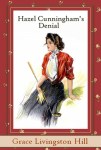
The Epworth Herald also published Grace’s stories that illustrated simple truths about the Christian life. One such story was “Hazel Cunningham’s Denial,” which described a young woman’s dilemma while vacationing at a summer resort

“Hazel Cunningham’s Denial” first appeared in The Epworth Herald on August 9, 1902, and it’s available for you to read for free.

Click on the cover below to begin reading “Hazel Cunningham’s Denial” by Grace Livingston Hill.

Cover_Hazel Cunninghams Denial by GLH scaled

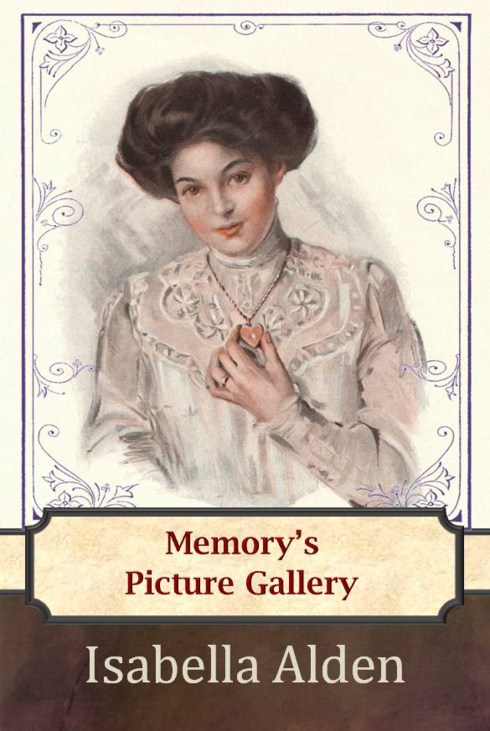
New Free Read: Memory’s Picture Gallery

Cover_Memory's Picture Gallery resized

Just in time for Valentine’s Day, this charming short story chronicles a young couple’s journey of true love and abiding faith.

Click on the book cover to begin reading Isabella Alden’s 1885 short story, “Memory’s Picture Gallery.”

You can find more Isabella Alden free reads by clicking on the Free Reads tab above.

A Winter Sleigh Ride

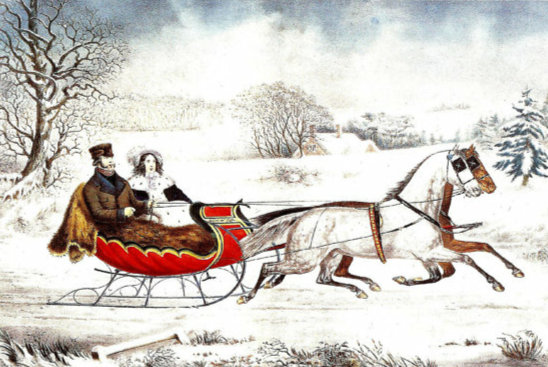
Interrupted_Louis takes Claire home in sleigh editedWhen Claire Benedict sprains her ankle while walking in the snow in Interrupted, she is immediately rescued by handsome, wealthy Louis Ansted. He scoops her up in his arms and carries her to the nearby Ansted mansion, where the family takes her in and befriends her while her injury heals. Claire takes advantage of her sojourn in the Ansted home to encourage the family to attend the village church and get involved in the community.

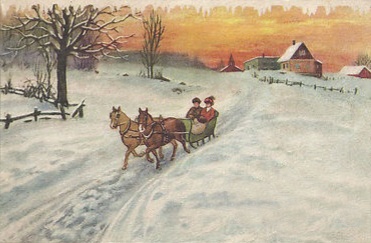
While most of the Ansted family politely tolerates Claire’s penchant for charitable works, Louis is intrigued; and when her ankle has healed, he personally assists her into the sleigh to be taken home … and asks permission to call on her in a few days’ time.

Interrupted_Sleigh Currier and Ives edited

Later in the book, after Claire and the Ansteds finish a day of work at the village church, they prepare to leave amid a snow storm. Louis asks Claire if he can drive her home in his sleigh … an invitation she declines because she has already arranged for another young man to walk her home:

“Bud,” she said, “are you going to see me home through this snow-storm? Or must you make haste up the hill?”

It gave her a feeling of pain to see the sudden blaze of light on his dark, swarthy face. What a neglected, friendless life he must have led, that a kind word or two could have such power over him!

“Me!” he said. “Do you mean it? I’d like to carry your books and things, and I could take the broom and sweep along before you. Might I go? Oh, I haven’t got to hurry. My work is all done.”

She laughed lightly. What a picture it would be for Dora, could she see her plunging through the freshly-fallen snow, Bud at her side, or a step ahead, with a broom!

“I don’t need the broom,” she said. “It has not snowed enough for that; and I am prepared, if it has. See my boots? I like the snow. You may carry my books, please, and we will have a nice walk and talk. The girls are all ready now, I think. You put out the lamps, and I will wait for you at the door.”

Out in the beautiful, snowy world, just as Bud’s key clicked in the lock, Louis Ansted came up to Claire.

“Miss Benedict, let me take you home in the sleigh. I am sorry to have kept you waiting a moment; but my blundering driver had something wrong about the harness, and the horses were fractious. They are composed enough now, and Alice is in the sleigh. Let me assist you out to it, please.”

If it had been moonlight, he might have seen the mischievous sparkle in Claire’s eyes. It was so amusing to be engaged to Bud, while his master held out his hands for her books, as a matter of course, and poor Bud stood aside, desolate and miserable. Evidently he expected nothing else but to be left.

Claire’s voice rang out clear, purposely to reach Bud’s ear:

“Oh, no, thank you, Mr. Ansted! I am fond of walking. I don’t mind the snow in the least, and I have promised myself the pleasure of a walk through it with Bud. Thank you!” as he still urged. “My ankle is quite well again, and I have had no exercise today; I really want the walk. We thank you very much for your help this evening, Mr. Ansted. Good-night! Are you ready, Bud?”
And they trudged away, leaving the discomfited gentleman standing beside his pawing horses.

Interrupted_Sleigh Ride 5 edited

The next day, Claire stands at the window of her room at the Academy and “watched the sleighs fly past,” wondering if she had missed an opportunity to witness to Louis the night before.

Interrupted_Sleigh Currier and IVes 1850 edited

Throughout the story, Claire looks for opportunities to make a difference in her community and in the lives of the people she meets. Interrupted_Sleigh Ride 4 edited

For Claire, even a simple sleigh ride is a chance to encourage a soul for Christ or engage a new worker in the Master’s service.

Interrupted_Sleigh Ride 7 edited

The Molasses Cure

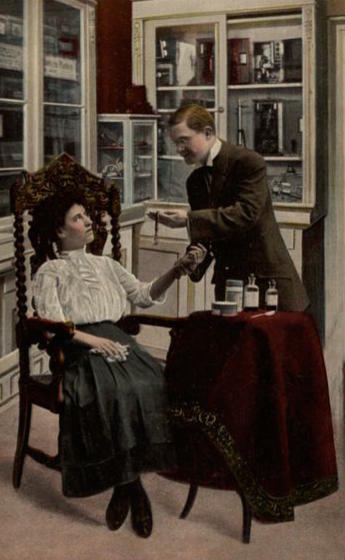
In the late 19th and early 20th Centuries, there were very few trusted commercial medicines to alleviate cold symptoms. People often relied on folk remedies and home-made treatments to cure a variety of illnesses and injuries.

A scene in Jessie Wells illustrates the point. Jessie and her best friend, Mate are sitting outside on the porch one evening when Jessie’s father comes home from work.

Dr. Wells came up the walk at this moment, and the two girls arose to give him passage.

“You are two very sensible young ladies, staying out in all this dew, with your thin dresses,” he said, as he passed them. “Tomorrow you’ll be taking molasses and ginger by the quart.”

“No, indeed, Doctor,” laughed Mate,” I never take any horrid doses like that.”

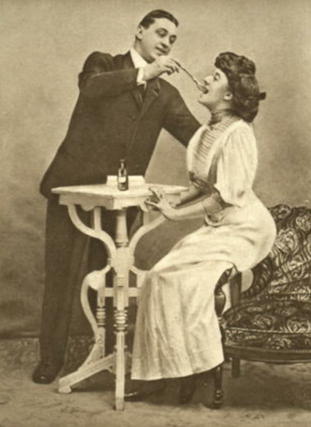
Horrid doses indeed! The molasses and ginger cure for a sore throat was fairly common, and it sounds like Dr. Wells believed in its curative powers. In actual fact, the ginger tended to suppress coughing and the molasses soothed the throat.

Molasses Cure v3

Another home remedy for colds was a mixture of molasses and a few drops of kerosene in a glass of water. As questionable this home cure may sound, it was one of the few cold remedies that didn’t contain alcohol.

Medicine 2

Mrs. Beeton’s Book of Household Management (the 1861 authority on running the home) suggested an “infallible” cure for a cold, which included rum in its ingredients:

Put a large teacupful of linseed, with 1/4 lb. of sun raisins and 2 oz. of stick liquorice, into 2 quarts of soft water, and let it simmer over a slow fire till reduced to one quart. Add to it 1/4 lb of pounded sugar-candy, a tablespoonful of old rum, and a tablespoonful of the best white-wine vinegar or lemon-juice.

.Commercial medicines also included alcohol. Bitgood’s Original Compound Vegetable Syrup boasted it could cure the common cold, as well as a host of other ailments. The manufacturer was one of the few who revealed that their product contained alcohol, although the ad doesn’t state how much alcohol was actually in the mixture.

The majority of commercial medicines did not disclose the alcohol content in their products.

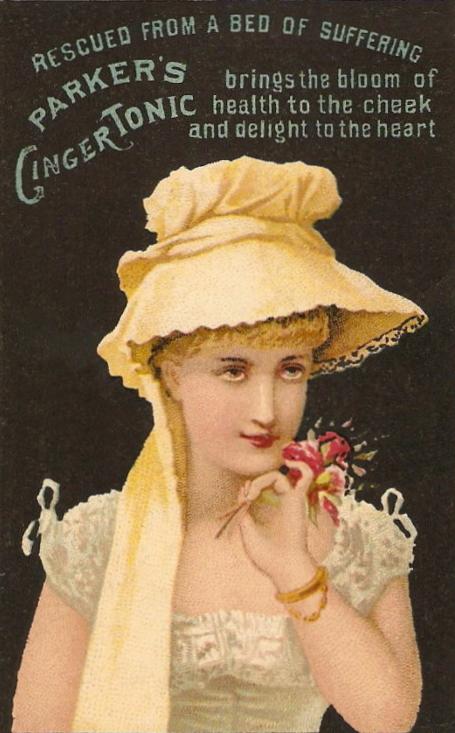
This lovely trade card advertises a ginger cure that sounds just like the kind mothers everywhere mixed up with molasses in their kitchens. The product description on the back of the card touts the benefits of the medicine, but doesn’t list the actual ingredients.

Molasses cure 4b front

Too bad; because, in actual fact, Parker’s Ginger Tonic was 41.6% alcohol—more potent than 80 proof whiskey! Compare that to the average alcoholic content of today’s beer (5% alcohol) and wine (approximately 12% alcohol).

It was the rule, rather than the exception, that consumers had no idea that they were dosing family members with alcoholic products; and since many alcohol-laden medicines of the time were specifically marketed to children, mothers often unwittingly gave their little ones rum and whiskey.

Little wonder, then, that Isabella Alden often wrote about the dangers of alcohol consumption. At the time her books were written, people usually didn’t know they were consuming alcohol and often didn’t recognize their growing dependence until it was potentially too late.