The Livingstons’ New York Legacy, Part 2

In a previous post we shared the charming 1898 book of quotes compiled by the ladies of the First Presbyterian Church of Gilbertsville, New York, and how they reached out to current and previous residents for contributions, including Charles and Marcia Livingston.

For his favorite quote, Charles chose a few lines from an 18th-century hymn by Moravian Bishop John Gambold:

"And when I am to die, 'Receive me'—I'll cry, 
For Jesus has loved me, I cannot tell why; 
But this I do find, we two are so joined, 
He'll not be in glory and leave me behind."

To those who knew Charles, these words were more than just a comforting stanza. They knew that Charles probably selected those lines because he was a man—a minister—whose physical body was continuously failing him; yet he found true comfort in the fact that his identity was anchored in Christ, not in his ability to hold a pulpit.
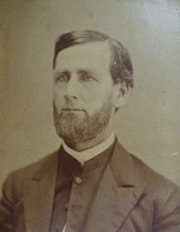
Charles suffered from a chronic, severe throat ailment (possibly chronic laryngitis or a tubercular throat condition) that progressively stole his physical ability to project his voice to a congregation. For a dedicated Presbyterian minister whose entire life and career were built around the spoken word, it was a devastating ailment. His time in the Gilbertsville pulpit was cut short after just two years because the harsh New York winters and the strain of preaching became physically impossible for him.

Because of his health, Charles, Marcia and their young daughter Grace found themselves constantly moving from one city to another. It must have seemed to them that as soon as they had hung curtains in a new manse and developed deep bonds with a congregation (as they did in Gilbertsville), Charles’ voice would begin to fail, and the trunks would have to be brought down from the attic once more.
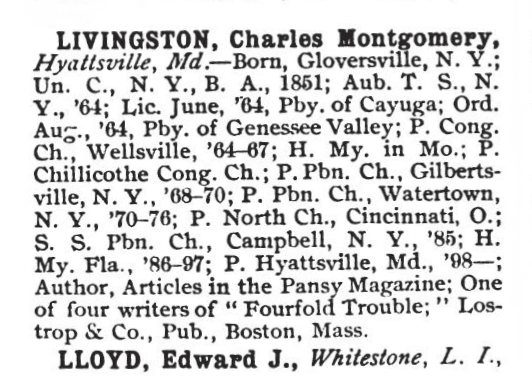
The Presbyterian Ministerial Directory, 1898, hints at how frequently the family had to move.

From Gilbertsville, the family moved through a succession of churches in multiple states, searching for an environment where Charles could breathe and preach safely. Each move had to have taken a physical and emotional toll on the family, as well as a financial one. In the 19th century church, if a pastor couldn’t speak, he couldn’t maintain a pulpit—and without a pulpit, there was no manse in which to live or steady stipend to support a family. During those stressful times, the Livingstons frequently leaned on a familiar and welcoming safety net: the literary world of Isabella Alden.

An 1886 issue of The Pansy magazine

Marcia’s sister Isabella had built a massive Christian publishing empire, centered around her children’s magazine, The Pansy. Her young subscribers and their parents begged Isabella to change the monthly magazine to a weekly publication. With the help of Charles and Marcia, Isabella was able to do just that.

Marcia became a mainstay of The Pansy magazine. She wrote short stories and penned a regular monthly column called “Baby’s Corner” for the publication’s youngest readers. And Charles found a new way to preach through his pen. Writing under the initials “C.M.L.” or the persona “Uncle Charles,” he contributed Bible studies and brief articles that covered a variety of contemporary topics.

The collaboration between the Aldens and the Livingstons went beyond The Pansy. They frequently teamed up to write full-length novels that helped supplement the family income. They frequently combined households and turned their shared living spaces into a family writing workshop. Together, they not only kept the Livingstons’ bills paid during Charles’ enforced periods of vocal rest, they provided a front-row literary education for young Grace Livingston, who contributed her own very first stories to the family magazine during those years.
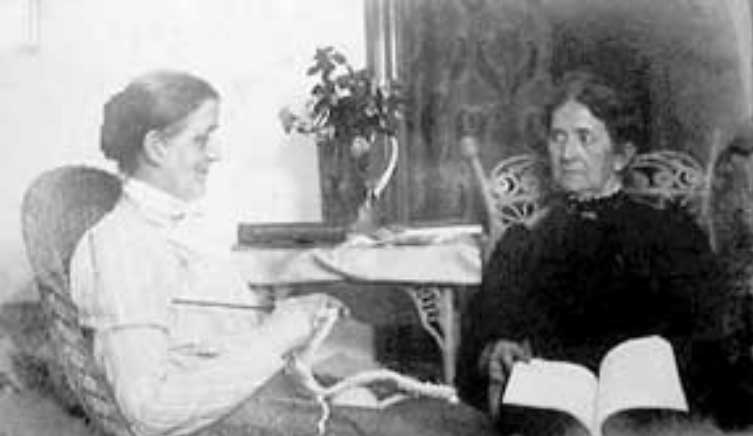
Isabella Alden (left) and her sister, Marcia Livingston, in an undated photo.

By 1885 it became clear that traditional medical treatments and forced periods of rest were no longer enough to save Charles’ voice. The only recommended cure they had not yet tried was the southern “climate cure,” which involved relocating to a southern state with year-round warm temperatures. In February of that year Isabella and her husband visited Florida and helped establish a new Chautauqua assembly. By September the Livingstons joined the Aldens in Florida and together they settled in Winter Park, not far from Orlando. There, the Aldens built a large home they dubbed The Pansy Cottage, with plenty of room for the Livingstons and any other relatives who cared to join them.
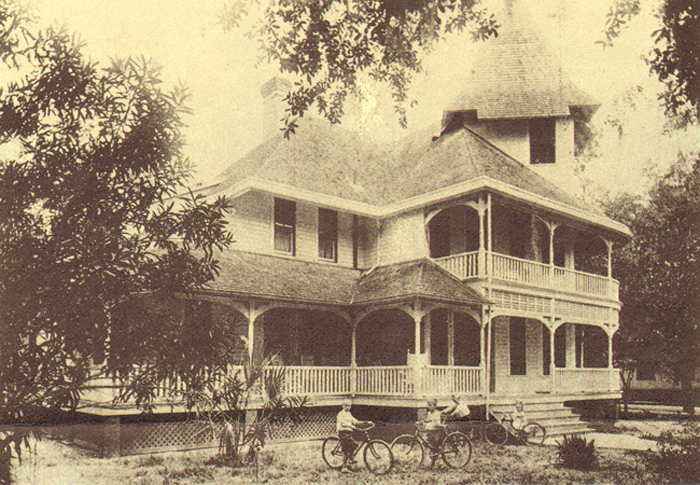
A side view of The Pansy Cottage in Winter Park, Florida.

The move was a turning point for the Livingstons. The gentler climate successfully soothed Charles’ throat, which allowed him to renew his ministry in new ways. While in Florida he spent years engaged in home missionary work, planting new congregations and even taking on a pastoral role at the Winter Park Presbyterian Church from 1891 to 1892.

Perhaps even more importantly, the new environment and shared living quarters provided rich inspiration for the family’s pens. The area’s unique flora, fauna, and pioneering spirit filled the pages of The Pansy magazine and inspired some of their full-length novels. Most importantly for the Livingstons, their new Florida home offered a place where Charles could use his voice again.

So, when the ladies of the First Presbyterian Church of Gilbertsville reached out to the Livingstons in 1898, they wrote to a couple whose lives had been completely reshaped by faith, creativity, and resilience in the face of difficult physical trials. Though decades had passed and miles separated them, Charles and Marcia gladly sent their favorite verses back to the little church that had once welcomed them as young parents.

Knowing the physical limitations and hardships Charles endured throughout his career, his choice for a quote carries an even deeper meaning:

“But this I do find, we two are so joined, 
He'll not be in glory and leave me behind."

And for Marcia, who stood by his side through every packed trunk, every illness, and every shared writing desk, her choice of Robert Browning’s cheerful poem makes perfect sense:

“God’s in his Heaven—All’s right with the world.”

You can read more about the Aldens and the Livingstons in Florida in these previous posts:

Isabella, a Winter Snowbird
Welcome to Pansy’s House
Too Much of a Good Thing, and a New Free Read!

Isabella, a Winter Snowbird

When Isabella wrote her short story “Their Day at the Beach” in 1909, she based her story on personal experience.

Cover for short story, Their Day at the Beach, by Isabella Alden.

It was common practice at the time for physicians to prescribe a change of climate for certain medical conditions, particularly ailments of the skin and respiratory system.

Isabella’s son Raymond suffered his entire life from a chronic condition that caused Isabella and her husband to consult numerous doctors in search of a cure. Ultimately their search took them to Florida, where they hoped the sunshine and moderate climate would benefit their son.

An 1897 map of Florida.

There’s a special reason they chose Florida over any other southern state: in 1885 a new Chautauqua Assembly opened on Florida’s gulf coast. Located in what is now Defuniak Springs, the Assembly was built around Lake De Funiak (as it was then called), a naturally circular-shaped lake about a mile in circumference.

A travel brochure advertising the new Florida Chautauqua.

The Aldens found the location very much to their liking. The climate was delightful; the temperature rarely rose above ninety degrees, fruit trees and forests grew in abundance, and a gentle gulf breeze meant the dry air always felt fresh and pure.

The Florida Chautauqua officially opened on February 18, 1885, and the Aldens were there!

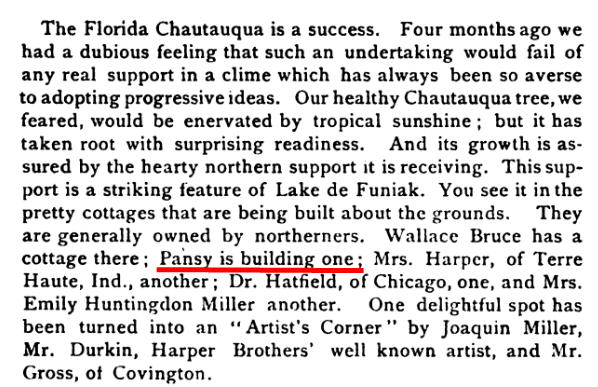
The Florida Chautauqua is a success. Four months ago we had a dubious feeling that such an undertaking would fail of any real support in a clime which has always been so averse to adopting progressive ideas. Our health Chautauqua tree, we feared, would be enervated by tropical sunshine; but it has taken root with surprising readiness. And its growth is assured by the hearty northern support it is receiving. This support is a striking feature of Lake de Funiak. You see it in the pretty cottages that are being built about the grounds. They are generally owned by northerners. Wallace Bruce has a cottage there; Pansy is building one; Mrs. Harper, of Terre Haute, Ind., another; Dr. Hatfield, of Chicago, one, and Mrs. Emily Huntingdon Miller another. One delightful spot has been turned into an "Artist's Corner" by Joaquin Miller, Mr. Durkin, Harper Brothers' well known artist, and Mr. Gross, of Covington.
An announcement in The Chautauquan, May 1885.

As they did in New York, the Aldens built a small house on the Florida Chautauqua grounds and promptly named it Pansy Cottage.

A rendering of Pansy Cottage at Lake Defuniak in 1885.

Their cottage faced the lake and gave the Aldens a lovely view of the lake shore and the promenade.

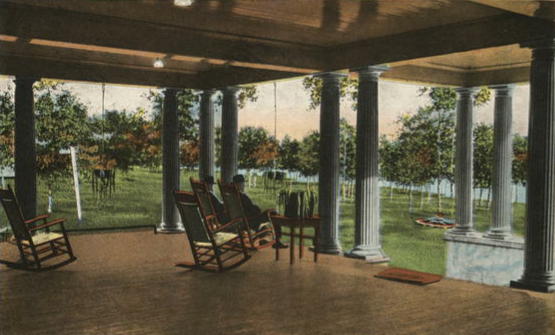
This view of the lake from the porch of Hotel Walton is similar to the view Isabella would have had from her cottage.

With her usual energy, Isabella dove into the Florida Chautauqua experience. Many of the Chautauqua New York programs were duplicated here: A school of Greek, a kindergarten, a school of cookery, an art school, and  the C. L.S.C. all took root in the new Florida location. There was even an amphitheater and a Hall of Philosophy.

Hotel Chautauqua on Lake de Funiak, 1907.

The most marked difference between the two Chautauquas was duration. While the New York assembly remained open for three months every summer, the Florida Chautauqua packed as many speeches, studies and classes as possible into a thirty-day assembly.

When the first Florida assembly came to an end in March 1885, The Aldens began to entertain the idea of staying in Florida for the remainder of the winter months. Eventually, they decided to settle in Winter Park, not far from Orlando, where they built a large home they also named Pansy Cottage. (You can read more about her Winter Park home by clicking the link at the end of this post.)

Isabella’s charming cottage in Defuniak Springs still stands today!

Pansy Cottage as it appears today (Courtesy http://www.DefuniakSprings.net)

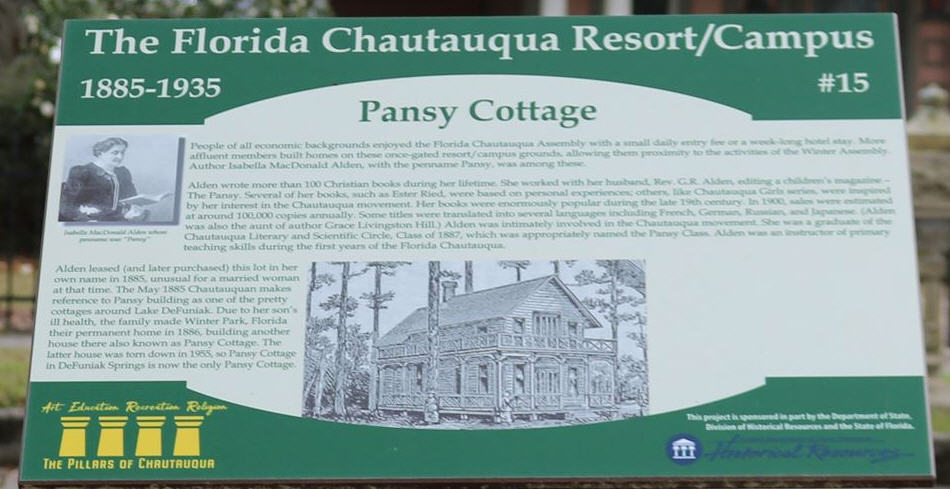
The city of Defuniak Springs has erected a plaque to commemorate its history. The plaque reads:

Pansy Cottage

People of all economic backgrounds enjoyed the Florida Chautauqua Assembly with a small daily entry fee or a week-long hotel stay. More affluent members built homes o n these once-gated resort/campus grounds, allowing them proximity to the activities of the Winter Assembly. Author Isabella MacDonald [sic] Alden, with the penname [sic] Pansy, was among these.

Alden wrote more than 100 Christian books during her lifetime. She worked with her husband, Rev. G.R. Alden, editing a children’s magazine—The Pansy. Several of her books, such as Ester Ried, were based on personal experiences; others, like Chautauqua Girls series were inspired by her interest in the Chautauqua movement. Her books were enormously popular during the late 19th century. In 1900, sales were estimated at around 100,000 copies annually. Some titles were translated into several languages, including French, German, Russian, and Japanese. (Alden was also the aunt of author Grace Livingston Hill.) Alden was intimately involved in the Chautauqua movement. She was a graduate of the Chautauqua Literary and Scientific Circle, Class of 1887, which was appropriately named the Pansy Class. Alden was an instructor of primary teaching skills during the first years of the Florida Chautauqua.

Alden leased (and later purchased) this lot in her own name in 1885, unusual for a married woman at that time. The May 1885 Chautauquan makes reference to Pansy building as one of the pretty cottages around Lake DeFuniak. Due to her son’s ill health, the family made Winter Park, Florida their permanent home in 1886, building another house there also known as Pansy Cottage. The latter house was torn down in 1955, so Pansy Cottage in DeFuniak Springs is now the only Pansy Cottage.

The plaque that marks Isabella’s cottage at the Florida Chautauqua.

You can read Isabella’s Story “Their Day at the Beach” for free! Click here for details.

Welcome to Pansy’s House

Too Much of a Good Thing, and a New Free Read!