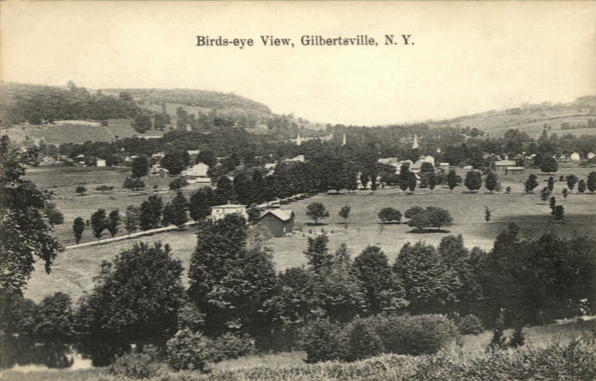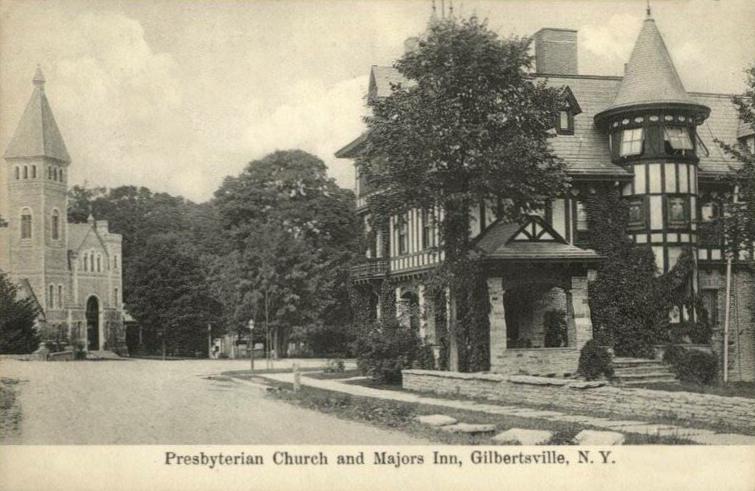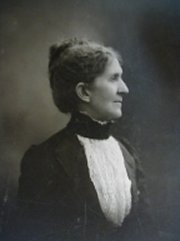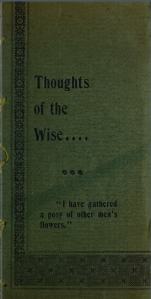
In a previous post we shared the charming 1898 book of quotes compiled by the ladies of the First Presbyterian Church of Gilbertsville, New York, and how they reached out to current and previous residents for contributions, including Charles and Marcia Livingston.
For his favorite quote, Charles chose a few lines from an 18th-century hymn by Moravian Bishop John Gambold:
"And when I am to die, 'Receive me'—I'll cry,
For Jesus has loved me, I cannot tell why;
But this I do find, we two are so joined,
He'll not be in glory and leave me behind."
To those who knew Charles, these words were more than just a comforting stanza. They knew that Charles probably selected those lines because he was a man—a minister—whose physical body was continuously failing him; yet he found true comfort in the fact that his identity was anchored in Christ, not in his ability to hold a pulpit.
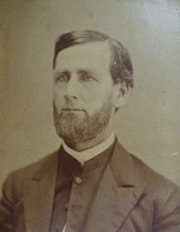
Charles suffered from a chronic, severe throat ailment (possibly chronic laryngitis or a tubercular throat condition) that progressively stole his physical ability to project his voice to a congregation. For a dedicated Presbyterian minister whose entire life and career were built around the spoken word, it was a devastating ailment. His time in the Gilbertsville pulpit was cut short after just two years because the harsh New York winters and the strain of preaching became physically impossible for him.
Because of his health, Charles, Marcia and their young daughter Grace found themselves constantly moving from one city to another. It must have seemed to them that as soon as they had hung curtains in a new manse and developed deep bonds with a congregation (as they did in Gilbertsville), Charles’ voice would begin to fail, and the trunks would have to be brought down from the attic once more.
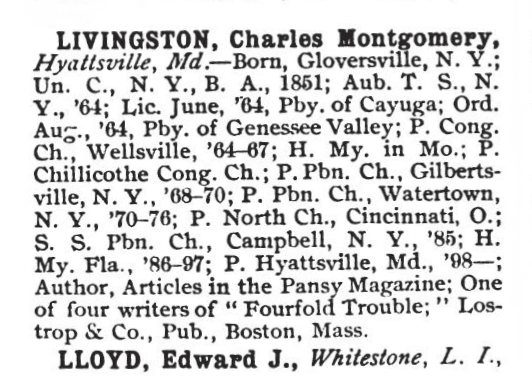
From Gilbertsville, the family moved through a succession of churches in multiple states, searching for an environment where Charles could breathe and preach safely. Each move had to have taken a physical and emotional toll on the family, as well as a financial one. In the 19th century church, if a pastor couldn’t speak, he couldn’t maintain a pulpit—and without a pulpit, there was no manse in which to live or steady stipend to support a family. During those stressful times, the Livingstons frequently leaned on a familiar and welcoming safety net: the literary world of Isabella Alden.

Marcia’s sister Isabella had built a massive Christian publishing empire, centered around her children’s magazine, The Pansy. Her young subscribers and their parents begged Isabella to change the monthly magazine to a weekly publication. With the help of Charles and Marcia, Isabella was able to do just that.
Marcia became a mainstay of The Pansy magazine. She wrote short stories and penned a regular monthly column called “Baby’s Corner” for the publication’s youngest readers. And Charles found a new way to preach through his pen. Writing under the initials “C.M.L.” or the persona “Uncle Charles,” he contributed Bible studies and brief articles that covered a variety of contemporary topics.
The collaboration between the Aldens and the Livingstons went beyond The Pansy. They frequently teamed up to write full-length novels that helped supplement the family income. They frequently combined households and turned their shared living spaces into a family writing workshop. Together, they not only kept the Livingstons’ bills paid during Charles’ enforced periods of vocal rest, they provided a front-row literary education for young Grace Livingston, who contributed her own very first stories to the family magazine during those years.
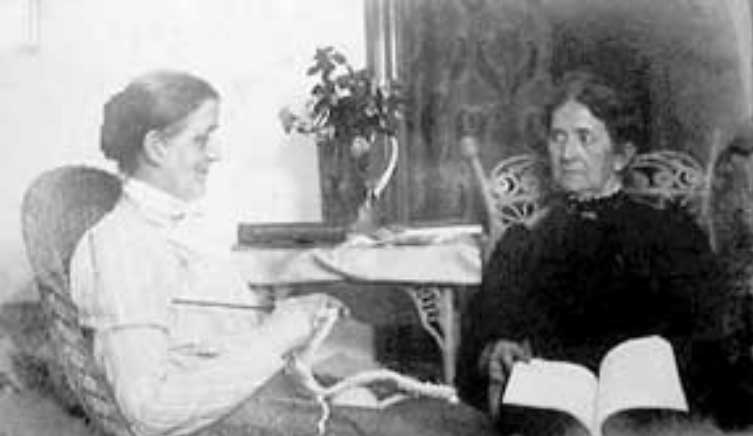
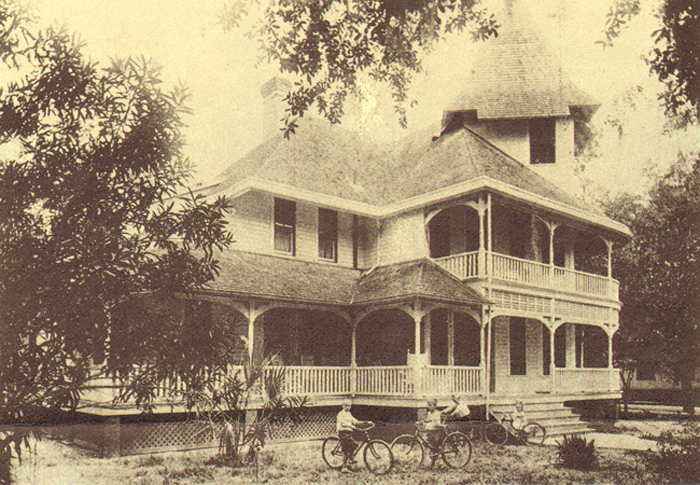
By 1885 it became clear that traditional medical treatments and forced periods of rest were no longer enough to save Charles’ voice. The only recommended cure they had not yet tried was the southern “climate cure,” which involved relocating to a southern state with year-round warm temperatures. In February of that year Isabella and her husband visited Florida and helped establish a new Chautauqua assembly. By September the Livingstons joined the Aldens in Florida and together they settled in Winter Park, not far from Orlando. There, the Aldens built a large home they dubbed The Pansy Cottage, with plenty of room for the Livingstons and any other relatives who cared to join them.
The move was a turning point for the Livingstons. The gentler climate successfully soothed Charles’ throat, which allowed him to renew his ministry in new ways. While in Florida he spent years engaged in home missionary work, planting new congregations and even taking on a pastoral role at the Winter Park Presbyterian Church from 1891 to 1892.
Perhaps even more importantly, the new environment and shared living quarters provided rich inspiration for the family’s pens. The area’s unique flora, fauna, and pioneering spirit filled the pages of The Pansy magazine and inspired some of their full-length novels. Most importantly for the Livingstons, their new Florida home offered a place where Charles could use his voice again.
So, when the ladies of the First Presbyterian Church of Gilbertsville reached out to the Livingstons in 1898, they wrote to a couple whose lives had been completely reshaped by faith, creativity, and resilience in the face of difficult physical trials. Though decades had passed and miles separated them, Charles and Marcia gladly sent their favorite verses back to the little church that had once welcomed them as young parents.
Knowing the physical limitations and hardships Charles endured throughout his career, his choice for a quote carries an even deeper meaning:
“But this I do find, we two are so joined,
He'll not be in glory and leave me behind."
And for Marcia, who stood by his side through every packed trunk, every illness, and every shared writing desk, her choice of Robert Browning’s cheerful poem makes perfect sense:
“God’s in his Heaven—All’s right with the world.”
You can read more about the Aldens and the Livingstons in Florida in these previous posts:
Isabella, a Winter Snowbird
Welcome to Pansy’s House
Too Much of a Good Thing, and a New Free Read!