Blog

Earle’s Afterwards Tree; A Christmas Story

One little boy makes Christmas a special day for the entire town in this Isabella Alden story first published in 1895.

titlem-in-jpg


Part 1

Christmas was quite over at last, although it had lasted a longer time than usual. In the Crawford family there had been two Christmases, as the children expressed it; at least, there had been two Christmas trees. One at Grandma’s house on Christmas eve, as usual; and then, because Uncle Richard lived twelve miles away and two of his young people had been ill and could not come to the frolic at Grandma’s, all the family went there on Christmas day, and in the evening had frolic number two, with a second tree as much like the first as possible. Even Earle, who was the youngest of the group which gathered at Grandma’s, admitted that perhaps he had had presents enough for once. He could not think of a single “’nother” thing that he truly wanted. Morever, he was quite tired out; so much so, that in the midst of talk in Grandma’s room, after dinner, he curled up in Grandpa’s chair with the down pillow at his head and fell asleep.

And perhaps because they had been talking about the Hunter family just before that, he dreamed of the Hunter family. Never perhaps was there a more vivid dream. Earle’s head bobbed forward quite away from the pillow, although Grandma tried twice to make him more comfortable. His neck was rather stiff when he awoke, much astonished to find that he had been sleeping a long time, and all the family had scattered to their various duties or pleasures; except only Grandma, who sat knitting.

Earle rubbed his stiff neck thoughtfully, busy with his dream. At last his thoughts took shape in a question.

Dreaming of Christmas“I have had such a funny dream! Grandma, why do they hang  Christmas presents on trees? How came they to?”

Said Grandma, after a thoughtful pause, “I don’t really know, dearie; I have heard all about it, but I can’t remember the reason. It has been a custom for a long time, and I think it comes from the Germans; but Grandma has forgotten a good many things.”

While she knitted and mused over the unfortunateness of not being able to answer all the questions of all her grandchildren, Earle continued thinking. Then another question:

“Grandma, do they never have afterwards trees?”

“Afterwards trees! What kind would they be, dearie?”

“Why, you know—Christmas is quite gone for a whole year; and so is New Year’s, but couldn’t there be a tree made like a Christmas one, and all trimmed up and everything, if there was a reason for it, any time along through the month?”

Grandma admitted that if there were sufficient reason this might be done; but hinted that the reason ought to be very large, as people were generally tired of Christmas trees after they were all over, and quite willing to wait a year before they got another one ready.

“I’m not tired of them,” said Earle, meditatively; “and, Grandma, I had such a funny dream. I dreamed about Clara and Minnie Hunter, and all the Hunters.”

Grandma remarked that that was not at all strange, as they had been talking about all the Hunters, she remembered, just before he  dropped to sleep.

“I know it,” said Earle, “and the last thing I heard was Aunt Kate saying it was a shame the children were not remembered in some way. She said she should never vote again to give up the Christmas tree of the Sunday-school, just on account of people like the Hunters. And then, Grandma, I went to sleep and dreamed that we had a tree at the Hunters’, or for the Hunters; I don’t see where it could have been, because it was in a large room—larger than any they have in their house, but all the things on the tree were for them. Oh, such lots and lots of things, Grandma! Some were queer; I couldn’t tell what they were—I guess they were just dream things—but some of them I knew. I saw Laura’s dollie, Augusta Jane, there, just as plain as day; and my last year’s building blocks, and Jack’s great ball, and Susie Perkins’ transparent slate, and ever so many things! Now, Grandma, why wouldn’t that be a good plan? We might have an afterwards tree just for the Hunters; and we might each put something on it of our own that we did not need any more. We’ve got such lots and lots of new ones.”

2011_02_19_17_47_58

That was the way it began. Surely never was a plan made, awake or dreaming, which took hold of the hearts of the people better than this one did.

The Hunters belonged to that class of whom our elders say when they talk about them, that they “have seen better days.” They were not wretchedly poor; that is, they lived in a fairly comfortable house, and managed by great care to have enough very plain food to eat each day. But the winter had been, thus far, one of the hardest of their lives. Mr. Hunter had begun it by being ill, and losing his place in the Iron Works. When he was ready to work again, after three months’ time, he had to take a different place in the Works, and receive less pay. Then Robbie had broken his leg and suffered no end of pain, and caused much expense. Last of all, the baby had the scarlet fever and lay for days so near death that the school children hushed their voices as they passed near the corner, and wondered if that baby was alive yet. Baby was alive and doing well; but her long illness made heavy bills; not only to the doctor and druggist, but at the grocer’s as well; for Mrs. Hunter and her oldest daughter, Mary, who were used to sewing steadily all day and every day to help support the family, had not been able to do a thing since Robbie broke his leg.

There were other troubles, too. Mr. Hunter’s brother who owed him fifty dollars, could not pay one cent; and the man of whom he bought feed for his cow was determined to have his pay. All things considered, the Hunters had never come to such a dreary, discouraged place before in their lives. Mr. Hunter, who was a good man, tried to be brave; but he could not help being quieter than usual, and saying occasionally, even before the children, that he did not know what was to become of them if the Iron Works shut down, as there were rumors that they would, for a few weeks. They would have to beg, or starve, he was afraid.

Mrs. Hunter sewed steadily, trying to make up for lost time; but she often wiped away tears, and Mary’s eyes, when she came downstairs after doing the morning work, sometimes looked red. Of course there had been no Christmas tree nor Christmas dinner nor Christmas gifts of any sort, except for Baby. Robbie went out on his crutches for the first time since the accident, and bought a rubber doll for her; and she eagerly sucked the red paint from its cheeks in less than five minutes thereafter. This was the only attempt at gifts. The children, even the younger ones, Clara and Minnie, had been very good; they had not once wished before their father, that they could have a Christmas like other girls; but they had looked sober over that and other things, more than once. Perhaps they would have looked more sober still, had they been able to realize just how hard a struggle their father and mother were having.

So now you are made acquainted with the family about which Earle Crawford dreamed. His “afterwards tree” was hailed by father and mother and aunts, uncles and cousins, as “just the thing.”

The members of the Sabbath-school class to which Clara and Minnie Hunter belonged, all took hold of it with a will; the A-Division of the graded school where Clara went, said they should be delighted to help; and the grammar school to which Robbie Hunter belonged, heard of it and offered to join.

Dr. Holland heard his boy describing what was to be done, and asked a few questions, and said that was a bright thought, he would help it along; the Hunters were worthy people who meant to do their best.

Old Mr. Ames, who owned the house in which the Hunters lived, heard of it, and laughed and said it was the best “afterwards” he had ever known of, and he would write them a letter to put on the tree. To be sure, Earle Crawford looked grave and a bit troubled over this, and said he did not believe the Hunters would care for a letter from old Mr. Ames, and he wanted only real nice things on the tree; but his father advised him not to worry. At last the “afterwards” was ready.

20130222132712-ed

It was delightful to think how things “happened” just right for their plans. Only the day before the tree was to be dressed, and while they were still planning where they should stand it, Mr. Hunter came to Mr. Crawford with a request. Mrs. Hunter’s mother was an old woman, and a lame one. She lived five miles away in the country; and had been used for thirty years to have her children come to spend her birthday with her. Tomorrow she would be eighty-three years old, and her son-in-law had sent for them all to come, as usual; he had only half-time now at the Works, and his wife had no sewing for tomorrow; so they could go if they could get a wagon. Old Billy, the horse at the Works, could be had for the day, but the wagon was in use elsewhere. Would Mr. Crawford be so kind as to lend his old farm wagon? They could all pile into it, and they were rather anxious to go, because the children had gotten along without Christmas this year. They usually went up on the train, but it cost ten cents apiece, and there were eight of them, and—well, they couldn’t this year.

Never was a man more pleased to lend his wagon. He could hardly wait until evening to tell Earle the delightful news. When they heard it a shout went up at the Crawford tea-table. The Hunters were to take themselves off early in the morning. What was to hinder planting the tree in their own little front room, then closing the house and leaving them to discover it as best they might when they reached home?

bells-in-png

How did their plan work? Join us for Part 2 on Thursday!
Good-bye, Prohibition!

On this day in 1933 Prohibition ended in the United States. It had begun thirteen years earlier with passage of the 18th Amendment to the United States Constitution; that Amendment prohibited the manufacture, sale and transportation of intoxicating liquors.

Sheet music for a popular temperance song in 1900.

Isabella Alden was a staunch supporter of Prohibition, and her best friend, Theodosia Foster, dedicated her writings to the temperance movement by ensuring there was a strong anti-alcohol message in every story and novel she published.

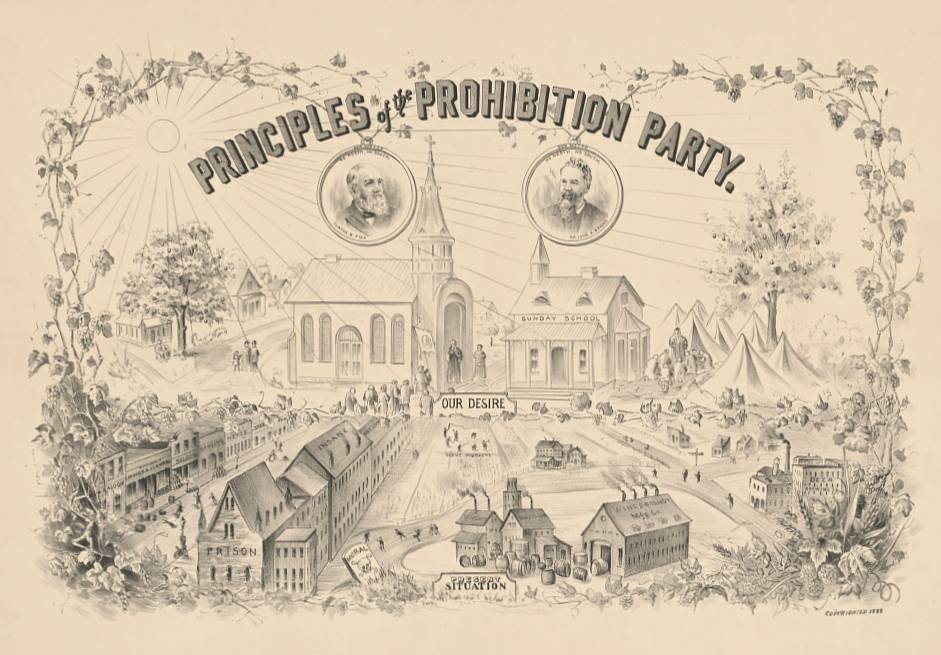
An 1888 illustration of the principles of the prohibition party, showing Americans abandoning saloons, prisons, wineries, and insane asylums for a moral life centered around Sunday school and church.

Like Isabella and Theodosia, supporters of Prohibition believed that Prohibition was a “Noble Experiment” that would improve the nation’s moral and physical health, and curb the growing incidents of violence against women and children.

farewell-prohibition

In many ways, the 18th Amendment achieved those goals, but there were some unintended consequences, too.

It overwhelmed police with enforcement duties and gave rise to organized crime.

Two men and a still.

The number of deaths from poisoning skyrocketed, as Americans resorted to improperly brewing their own alcohol or resorted to drinking industrial alcohol, with deadly consequences.

Perhaps most significant were the financial consequences. In cities like Milwaukee, Seattle, and St. Louis, thousands of people found themselves out of work when the breweries shut down. And many states, as well as the Federal government, became cash strapped when they could no longer collect liquor taxes. New York was especially hit hard; almost 75% of that state’s revenue was derived from liquor sales.

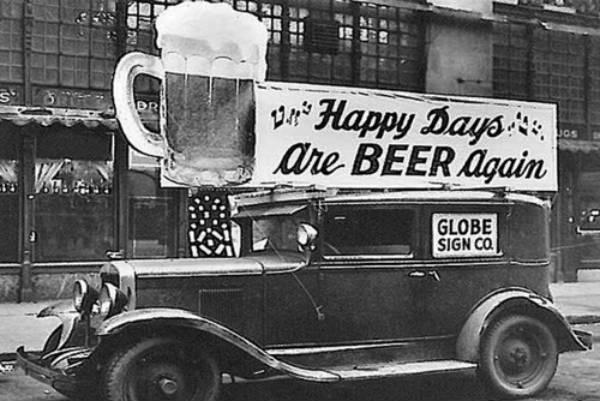
beer-car-after-repeal

In the end, the “Noble Experiment” failed. The few benefits achieved by prohibition weren’t enough to offset the proliferation of organized crime and the hard financial consequences for average Americans. The 18th Amendment was repealed by passage of the 21st Amendment on December 5, 1933.

There’s a great website you can visit to learn more about life in America during Prohibition. Click here.


A Free Read by Grace Livingston Hill

beginning-at-jerusalem-coverGrace Livingston Hill, Isabella’s niece, is often credited with creating the Christian romance novel, but in her early writing days Grace wrote and published many short stories.

She was just 28 years old when her story, “Beginning at Jerusalem” was published in Home Missionary Monthly magazine in 1893.

Now you can read Grace’s heartwarming story for free. Just click on the book cover to begin reading.

Isabella’s Mystery Illness and the Water Cure

Not long after Isabella married Ross Alden she became ill. She never specifically named her ailment, but in her memoirs and in her auto-biographically-based stories, she often mentioned trouble with her eyes and that she suffered greatly from what we would today know as migraine headaches.

headache-2e

She wrote:

“It must be understood that although I was at times a great sufferer, I was by no means a helpless invalid. But the intervals between days of terrible pain might have been described as times of dull and wearisome inanity. I could read only a few minutes at a time, with long intervals between the minutes.”

A Victorian-era wheelchair (from Pinterest)

She saw a number of physicians all over the New York area, all of whom agreed that, if she was ever to get well, Isabella should take a “water cure” from Dr. Greene at the Castile Sanitarium in New York. Ross encouraged her to follow the doctors’ instructions.

Illustration of a "water cure," circa 1860.
Illustration of a “water cure,” circa 1860.

But Isabella rebeled. She told Ross, “You needn’t think I’m going to stop and see Dr. Anybody! I’m going home!”

So Ross helped her from the doctor’s office and took her to the next departing train. He tucked her into heavy robes so she would be warm while they traveled, and urged her to nap on the train.

When Isabella awoke she found they had reached their destination: The sanitarium and the famous doctor!

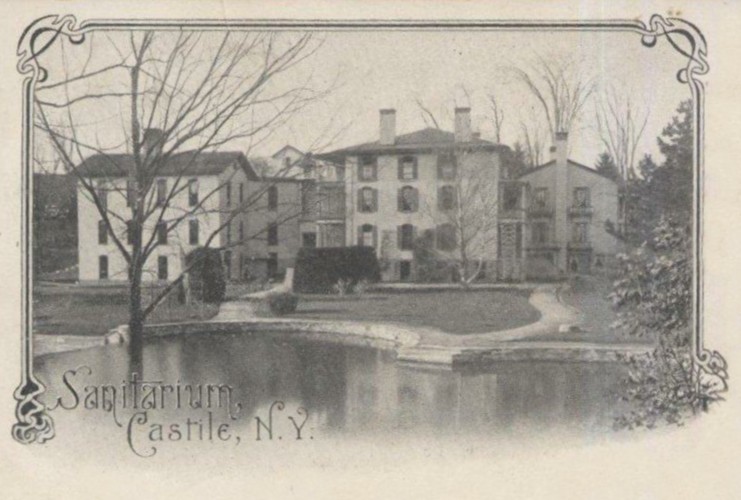
The Castile Sanitarium in 1905.

Isabella demanded an explanation.

Kindly and quietly Ross answered, “We are going to spend the night here and seek this doctor’s advice. Could conscientious people do otherwise?”

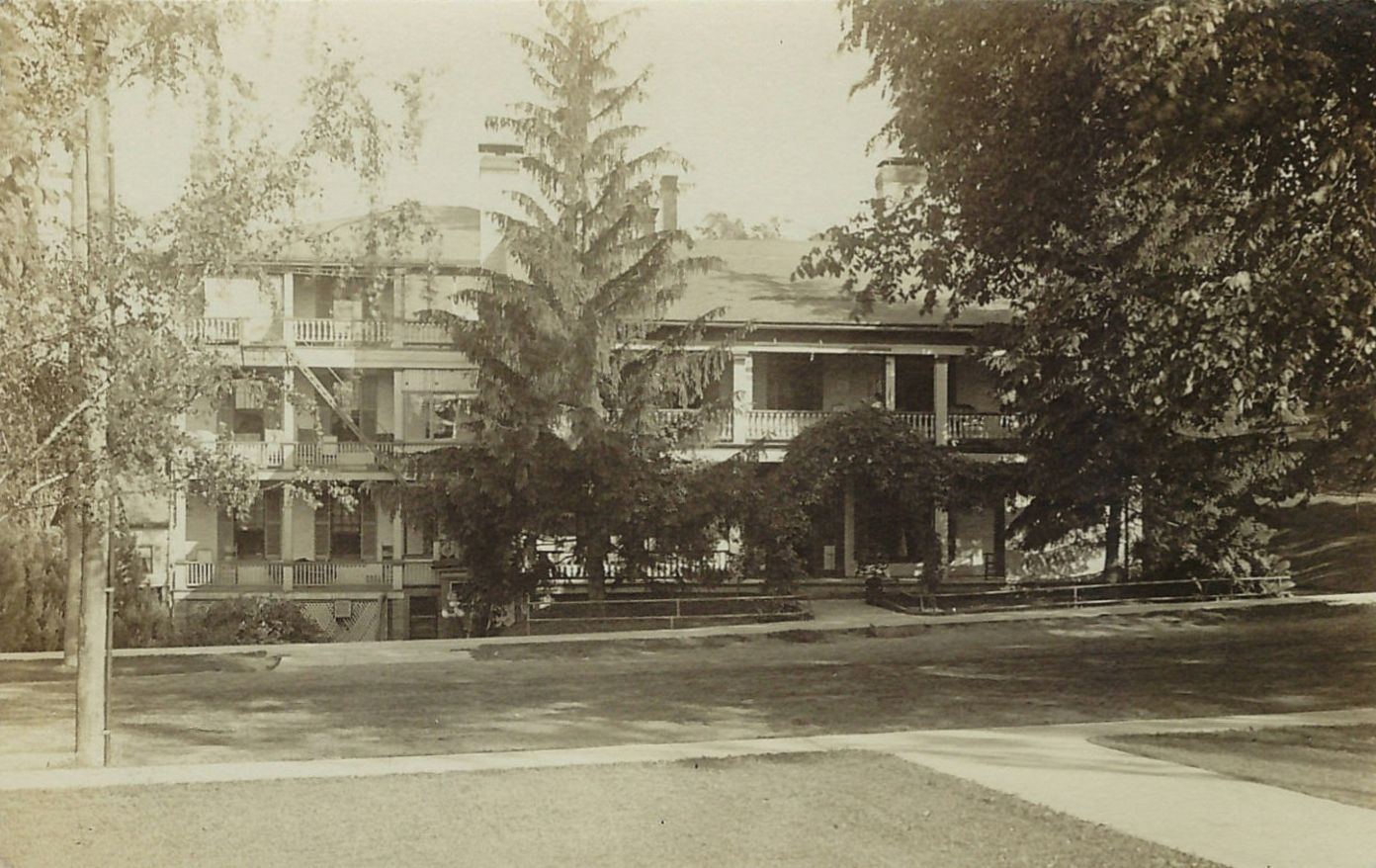
Another view of the Castile Sanitarium, as it appeared in 1910.

When Isabella finally met the famous Dr. Greene she was probably very surprised—first, because the esteemed Dr. Greene was very young (only about thirty-five years of age), and second—Dr. Green was a female!

Dr. Cordelia Agnes Greene, in an undated photo.

Female doctors were very uncommon in the late 1860s when Isabella first visited Castile Sanitarium. But Dr. Cordelia Greene was a very impressive young woman. At the age of sixteen she began supporting herself as a teacher in order to earn the money to put herself through medical school. She worked long hours in large sanitariums to gain experience; and she helped her father, also a physician, open a small “water cure” facility on property he purchased in Castile, New York.

When her father died, Dr. Cordelia Greene took over his enterprise, and used the sulphur springs on the property to expand the practice’s offerings. Under her management, the sanitarium became one of the premier facilities in the country.

The Sanitarium in an undated photo.

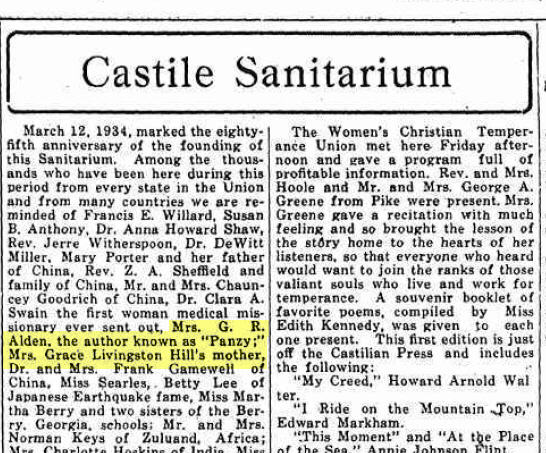
Famous patients flocked to her doors, including Frances Willard, the founder of the Women’s Christian Temperance Union; Susan B. Anthony, the noted leader of the suffrage movement; and Dr. Clara Swain, who opened the first hospital for women on the continent of Asia.

From a 1938 edition of The Castilian, the local newspaper (before the days of patient privacy laws).

Dr. Cordelia believed in the importance of deep breathing, vigorous exercise, and proper hydration of the body. She started every day by visiting patients’ rooms and personally delivering a pitcher of water to ensure each patient drank a full glass of water before breakfast.

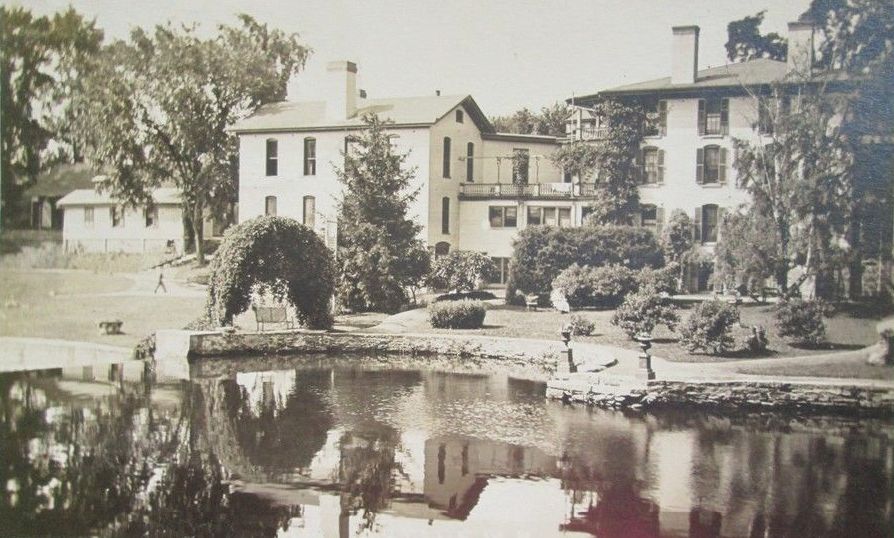
A view of the Sanitarium showing the pond and walking paths, about 1913.

Dr. Cordelia made certain patients who were strong enough spent plenty of time out of doors. They gardened and played croquet, walked and swam, in between their scheduled hydrotherapy treatments.

The Maples, where the nursing staff lived on the Sanitarium grounds.

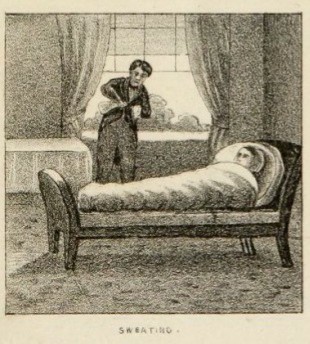
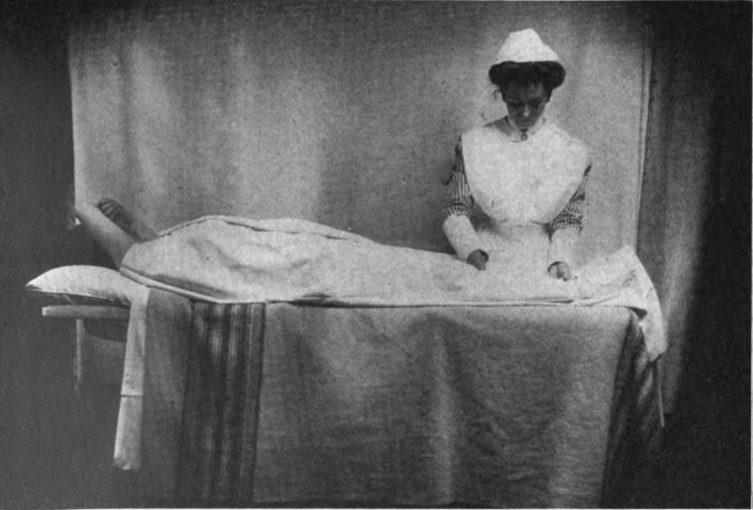
One of the hydrotherapy treatments Dr. Cordelia prescribed for Isabella was a wet sheet pack. The purpose of the wet sheet pack was to draw toxins from the body and increase blood circulation.

A wet sheet pack is accomplished by wrapping the patient from head to toe in a wet (usually with cold water) sheet. The patient’s arms are straight at their sides, and the sheet is tightly wrapped around the patient like a cocoon.

wet-sheet-pack-step-4

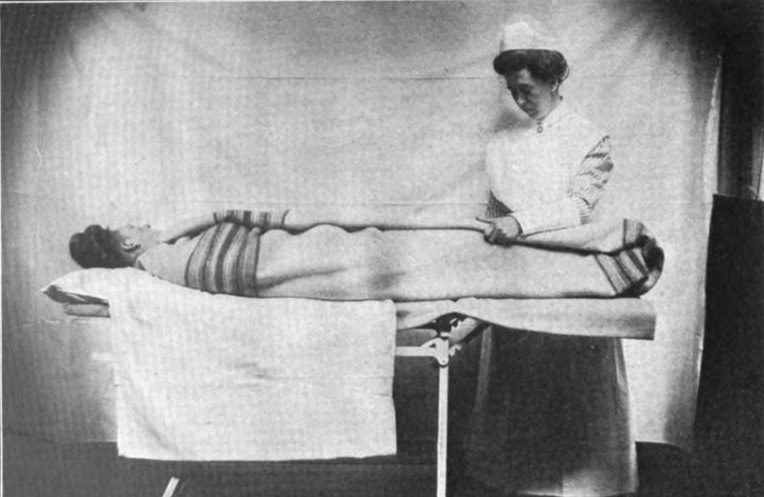
Over this are wrapped several layers of woolen blankets, again from head to toe.

wet-sheet-pack-step-5

As the patient sweats, the secretions from her pores are trapped in the sheet, as the wool blankets prevent moisture from evaporating into the air.

wet-sheet-pack-step-6-complete

Isabella wrote that she was glad to have gone to the sanitarium; and said that “the thing that seemed so hateful soon became pleasant.” She grew to love and greatly admire Dr. Greene, saying:

“She was the life and power and heart and soul of that great water cure—a doctor of wonderful skill, a woman whom everybody respected and loved and obeyed.”

Isabella stayed on at Castile Sanitarium for five months; and when she left, she rejoiced. She was cured!

“Never since that time have I had to bear for even a single hour that peculiar form of pain which had been my almost constant attendant for more than five years!”

You can learn more about Dr. Cordelia Greene and her accomplishments by following these links:

Grace Livingston Hill and the Very Bad Day

Isabella was very close to her niece, Grace Livingston. She was 24 years old when Grace was born, and she did her best to spend as much time with little Gracie as she possibly could.

Baby in Swing

She was especially fascinated with Gracie’s developing personality. When the child was only three years old, Isabella said that Grace was as “full of fun and frolic as a mortal child could be. Oh, the mischief that that morsel could get through in a day! It seemed to me that the little feet and hands and tongue must ache at night; but they were never quite ready to have night come—in fact, as it drew toward bedtime she seemed to have more to do than before, and many a nice plan was spoiled right in the best of it by the call to bed.”

Frances Brundage_Birthday Wishes

Many times Isabella and her sister Marcia (Grace’s mother) had long talks about Gracie’s willfulness and the odd way she had of looking at the world.

Isabella wrote that when Grace was about three years old, she developed the habit of waking in the morning and announcing her mood. “Gracie is a naughty baby this day.”

baby-on-bed

She seemed to think that this made everything all right, and nobody had a right to complain as long as she took the pains to explain to them what she meant to do up front.

Isabella wrote, “Sure enough, from morning until night everything went wrong. If she had planned everything that was to happen, with the direct aim of helping her to be a naughty girl, she could not have done it better; so that we grew to dread the days that were begun with that sentence, “Gracie is a naughty baby!” The worst thing about it was her serene unconsciousness of having done anything wrong. Hadn’t she told us that she meant to be naughty?”

mischief-1905

The family looked forward to the days when Gracie would announce, “Gracie is a good girl today!” But those days sometimes seemed few and far between.

“Why can’t you always be such a sweet, pleasant little girl?” Isabella asked after one of Gracie’s sunshiny days.

“Why, Auntie Belle, this is my good day. I’m not a naughty baby today at all. But I can’t always be good, you know.”

Naughty

Isabella wrote that on one of Gracie’s naughty days, she had got into a great deal of mischief, even burning her finger after getting hold of a candle she knew she was not supposed to touch. Marcia bandaged the injured finger in cotton, while Gracie wailed and cried; then mother and aunt took Gracie upstairs to get her ready for bed. Here, in Isabella’s own words, is what happened when it was time for Gracie to say her nightly prayers:

Frances-Brundage_Mother-holding-baby-1901

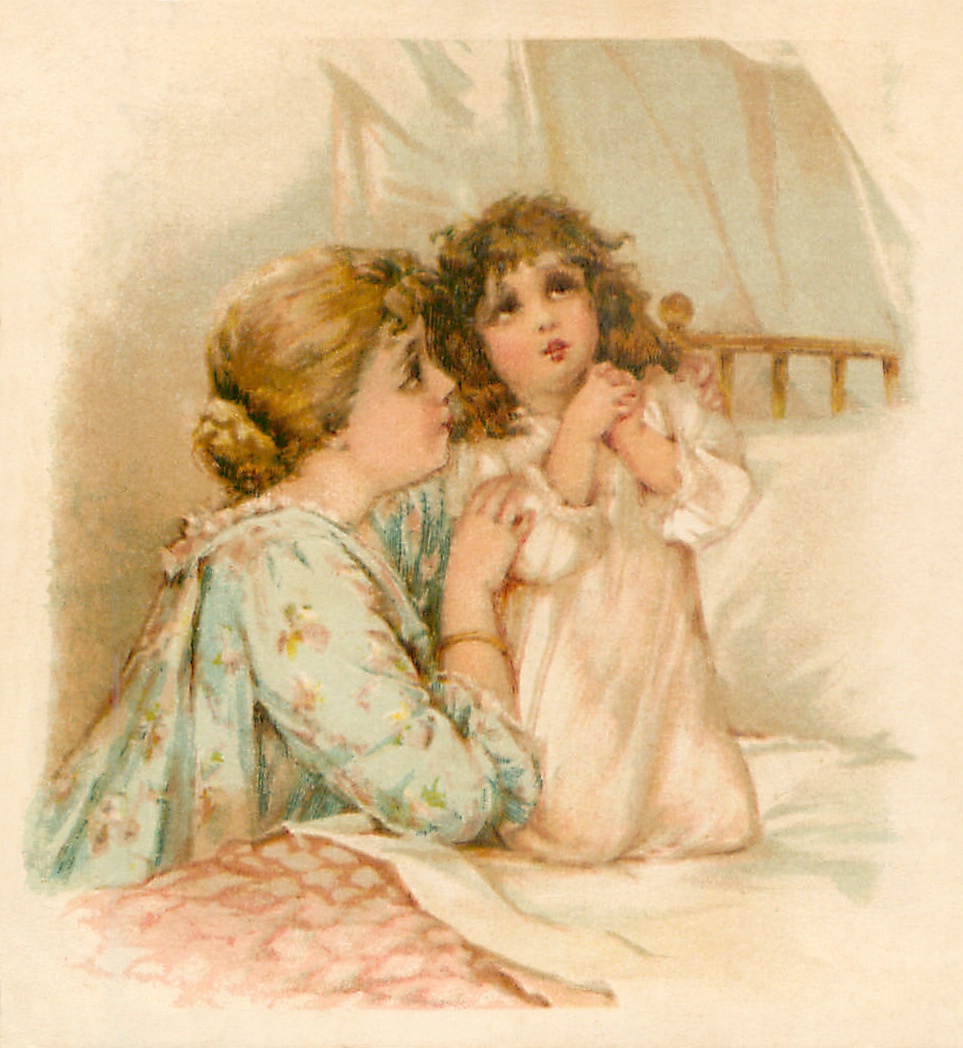
“Well,” Gracie said, looking into her mother’s face, and speaking slowly and solemnly, “I’ve got a good deal to say tonight, haven’t I? Mamma, which do you think is the baddest thing that I did today?”

Frances-Brundage_Mother-and-child-1904

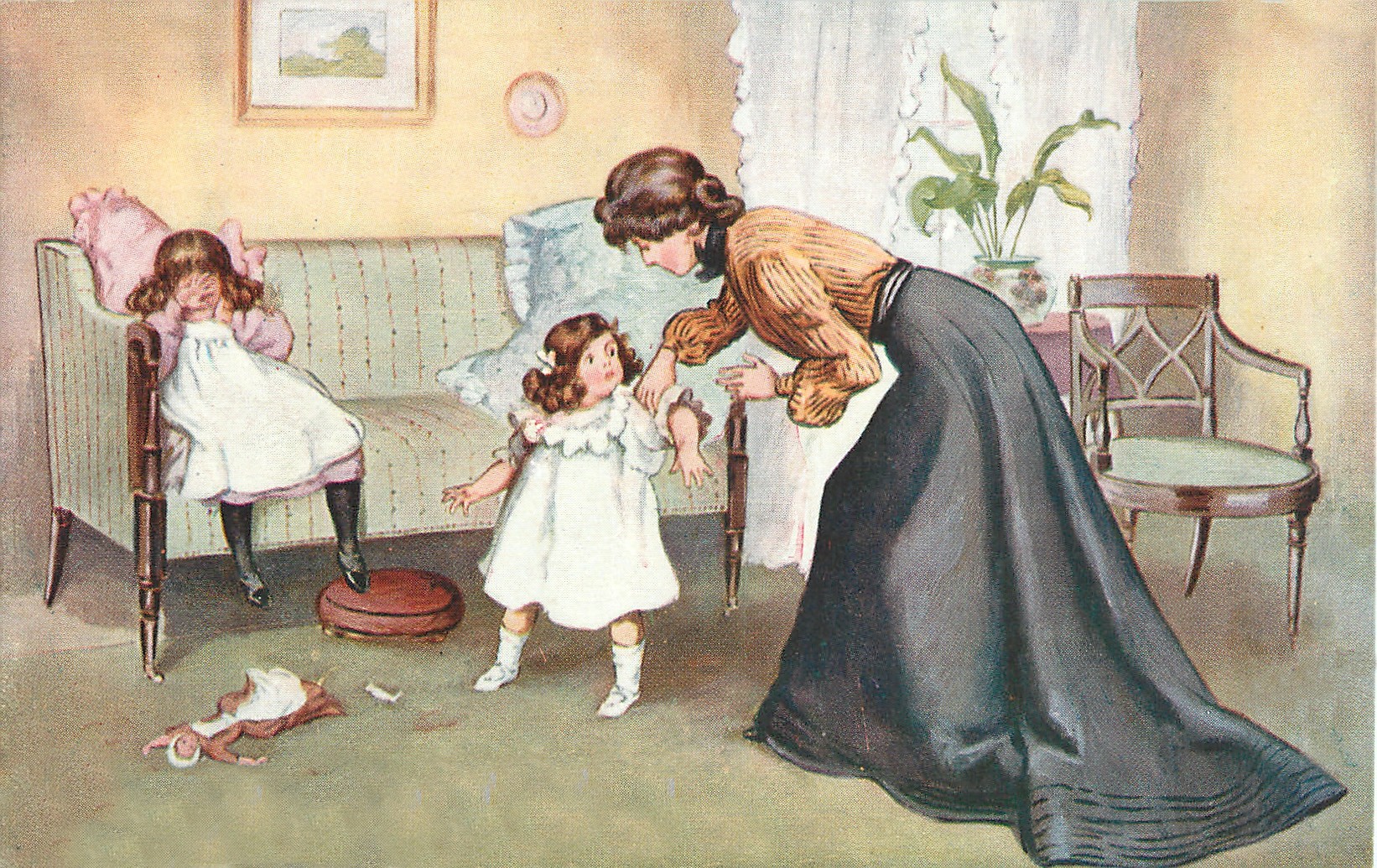
“I don’t think I can tell,” Marcia said, with a sober, troubled face; “and that isn’t the thing that you are to think about, anyway. It makes no difference which is the worst thing; everything that you knew was wrong to do has made Jesus feel badly, and you want to ask him to forgive you for them all; besides, you want to ask for a new heart, so that you will be willing to try not to be so naughty.”

Making a wreath for baby's hat

There was never a time in her little life that Gracie wasn’t ready for an argument. She tried to get one up now.

“But, mamma, if I could find out which was the very baddest thing that I did, I could make up my mind that I certainly true would never do that again, and then I would be sure not to be so bad next time. Don’t you see?”

The-knitting-lesson

I shall have to confess that I felt very much like laughing. She was such a little bit of a mouse, and she was trying so hard to be wise. But her poor troubled mamma did not smile.

“I see that you don’t know what you are talking about,” she said. “I can only hope that when you are older you will be a great deal wiser.”

Evening-prayer

This was certainly hard for a little girl who thought she made a very sensible remark. She gave a little bit of a sigh, and then knelt down beside her mamma. Very slowly and reverently she went through the prayer that I think every little girl in the world must know, “Now I lay me down to sleep.” After the “Amen” she always added a little prayer that she said came right out of her own heart; and tonight it was, “Dear Jesus, please bless Gracie; make my heart not feel so bad; make me feel just as though I was a very good girl, and take away my naughty sins and give me some good sins.”

Frances-Brundage-prayers-1902

That was really the most that Gracie knew about it. There seemed to be no use in trying to make her understand that everything that wasn’t right was wrong, and that God thought so.

Isabella wrote that Marcia was troubled that her daughter might actually believe there was such a thing as “good sins.” But in her heart, Isabella wasn’t worried. When she looked at Gracie, she saw independence, the ability to reason things out for herself, and a true knowledge of what was right and wrong. She had no fear for Gracie’s future. She knew that Gracie’s parents—and all of the members of their tight-knit family—would raise Grace to be a woman of faith who followed Christ in her everyday life.

dreamland

You can read more about Isabella and her niece, Grace Livingston Hill, in these posts:

Isabella’s Christmas Tradition

The Pansy Magazine

Too Much of a Good Thing

New Grace Livingston Hill Book

New Free Read by Grace Livingston Hill

.

.

.


The Day New York Turned French

The year 1886 was a banner year for Isabella. In that year she had six books published, including Spun from Fact and One Commonplace Day.

1886 was a banner year for America, too. A wave of patriotism was surging through the country, thanks to the long-awaited unveiling of the Statue of Liberty on a small island in New York’s harbor.

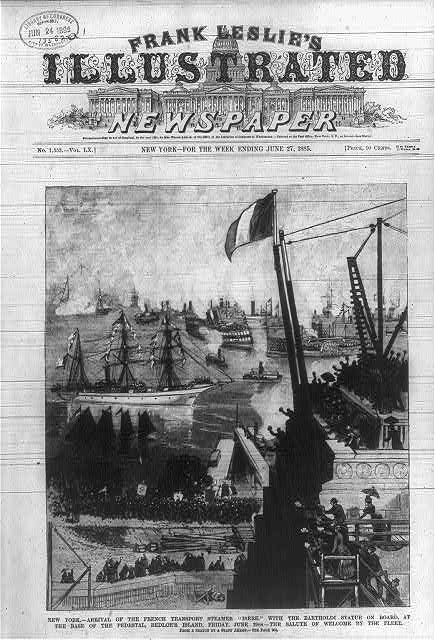
Frank Leslie's Illustrated Newspaper for June 27, 1885, chronicling the New York arrival of the French transport steamer, Isere, with the Statue of Liberty on board.
Frank Leslie’s Illustrated Newspaper for June 27, 1885, chronicling the New York arrival of the French transport steamer, Isere, with the Statue of Liberty on board.

Newspapers and magazines were full of descriptions of the statue and of the pedestal that was being constructed for it on Bedloe Island in New York harbor. Americans were intrigued by the sheer size of the statue. They marveled over its engineering and wondered how the torch would remain lit.

An 1884 print illustrating the proposed location of the Statue of Liberty in New York harbor.

The statue was the brainchild of French sculptor Frederic Auguste Bartholdi. He originally envisioned presenting the statue to the United States on the one-hundred year anniversary of the signing of America’s Declaration of Independence, but he did not have enough of the statue completed by that deadline.

An 1882 photo of workmen constructing the Statue of Liberty in Bartholdi's Paris warehouse.
An 1882 photo of workmen constructing the Statue of Liberty in Bartholdi’s Paris warehouse.

Instead, he sent America pieces of the statue. For example, in 1876 he sent to America the hand holding the torch and one of the feet of the Statue of Liberty. Those pieces toured American cities as part of the centennial celebration, and helped raise the funds needed to erect the pedestal on which the Statue of Liberty would ultimately stand.

The torch and part of the arm of the Statue of Liberty on display at the 1876 Centennial Exhibition in Philadelphia.

Ten years later, the pedestal was in place. Bertholdi was finally able to assemble the statue on top, and America set the date for the unveiling for October 28, 1886.

That day dawned cold and misty. A light fog hung over the city; it had rained the day before, so areas that were not paved were muddy. But wet pavement and mud and chilly temperatures couldn’t dampen America’s enthusiasm.

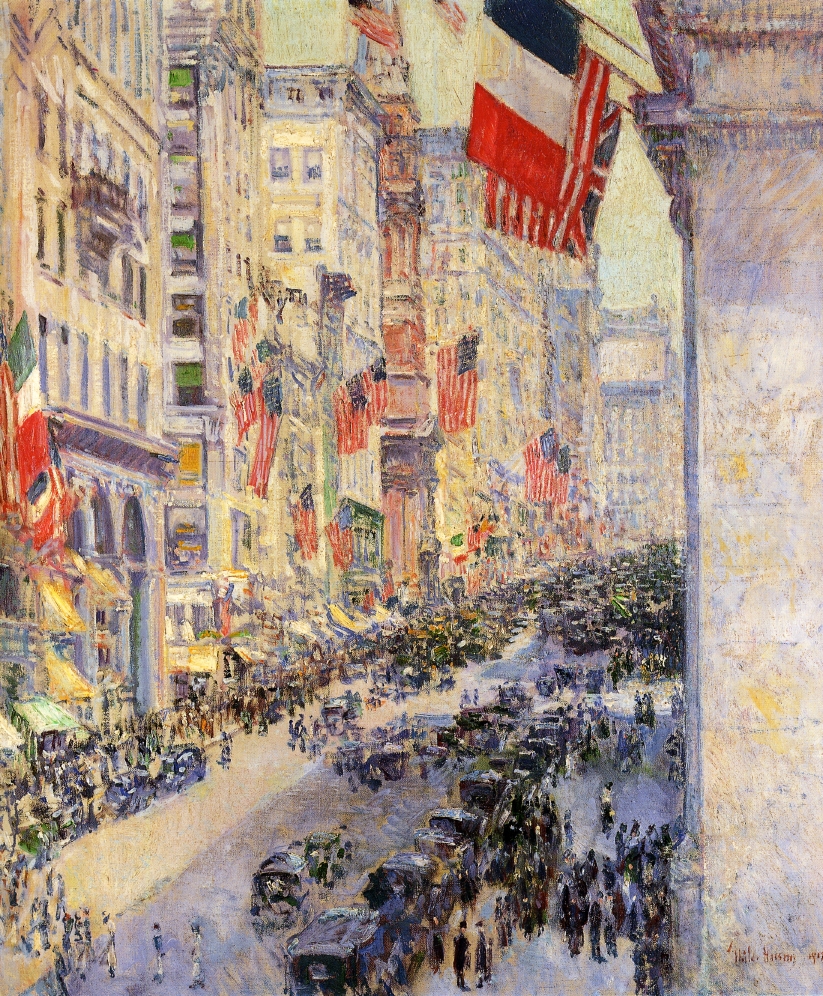
"Up the Avenue from 34th Street" by Frederick Childe Hassam (1917)
“Up the Avenue from 34th Street” by Frederick Childe Hassam (1917)

Everywhere the city was decorated with buntings and flags. French flags flew from the tops of American households, and American flags fluttered from almost every window.

People came from all over the country to fill the New York streets. Businesses shut down and public schools closed as all New York joined in the celebration.

A New York parade, circa 1899

One visitor in the crowd later related that “every place that a person could get to see was occupied; the tops of lamp posts, telegraph poles, trees, and the housetops were all filled.”

The festivities began with a parade. Newspaper accounts estimated between 25,000 and 30,000 men paraded through the city. It took over two hours for the head of the parade to reach the Battery.

A New York Parade, about 1910.

The parade featured canon and carriages filled with dignitaries, like President Cleveland and members of his cabinet. Civic organizations, military companies, police battalions and the Army Engineering Corps marched through the streets. Band after band paraded playing the “Marseillaise.”

Volunteer firemen’s associations, Knights of Pythias, federal judges, local mayors, and veterans of 1812 joined the ranks of marchers. They paraded down Fifth Avenue, past Central Park to Madison Square, then on to the review stands on Twenty-Fourth Street.

Undated photo of the Masons of Pyramid Temple on parade.

When President Cleveland stepped up on the stand, the crowd cheered; but then the people close enough to the stage caught sight of the sculptor, Monsieur Bartholdi, who was waiting to be introduced. The crowd instantly recognized him because his likeness appeared on the programmes and in illustrated newspapers.

A promotional image of French sculptor Frederic Auguste Bartholdi, with the Statue of Liberty and a sculpture of a lion.

Those nearest the stand began to chant his name, “Bartholdi, Bartholdi.” Crowds on the avenue up and down heard the name and passed it to the people in the park, and they passed it to the people on the side streets, until the air was “shaken with the roar of cheering” the sculptor’s name.

Monsieur Bartholdi accompanied President Cleveland aboard the steamship Dispatch, to make the short journey across the bay to Bedloe Island. As soon as the Dispatch got under way, over 100 vessels, decorated with flags and bunting, blasted their whistles and followed behind.

Undated photo of the Statue of Liberty in New York Harbor, viewed from the north.

When they reached Bedloe Island the official unveiling ceremony took place. A large French flag had been placed over the head of the statue, but at the signal, the flag was pulled away, to the sound of a salute of gun fire by all the batteries in the harbor, afloat and ashore.

"Unveiling the Statue of Liberty," by Edward Percy Moran, 1886.
“Unveiling the Statue of Liberty,” by Edward Percy Moran, 1886.

President Cleveland formally accepted the statue on behalf of the United States, after which there followed an address by a representative of France, then music, and a benediction.

When the ceremony concluded there was a one-hundred-gun salute, and the steamers in the bay blew their whistles. The guns on Governor’s Island and other forts fired for a full half an hour.

By this time the rain had begun to fall, but the crowds did not disperse. Over a million people filled every available space from Wall Street to Pearl Street and to the Battery. They stood in the drenching rain and driving winds and cheered themselves hoarse.

A view of the "Statue of Liberty from Castle Garden," New York, by Andrew Melrose, 1887.
A view of the “Statue of Liberty from Castle Garden,” New York, by Andrew Melrose, 1887.

That rainy October day in 1886 was a great day for the city of New York and for the American people, who received a gift that would go on to epitomize the spirit of liberty and refuge for people all over the world.

This video provides more detail about the Statue of Liberty and how it came to reside on Bedloe Island.

Click here to read Isabella’s book Spun from Fact, published in 1886.

And click here for more information about Isabella’s 1886 novel, One Commonplace Day.

New Free Read: Circulating Decimals

cover_circulating-decimals-01

Circulating Decimals

The Sabbath-school library at the Penn Avenue Church is in shocking condition. Book covers torn, pages curled or scribbled on—and some of the books have just gone missing. With the library in disgraceful condition, is it any wonder boys and girls view the church library with contempt?

Soon the ladies of the congregation are busy working up lavish plans to replenish the library with suitable books, but will their plans succeed?

You can read Isabella’s charming story, Circulating Decimals, for free. Just click on the book cover to begin reading.