This week, as we approach Thanksgiving, we’re sharing a lovely poem Isabella published in The Pansy magazine in 1886. “Miss Marion’s Thanksgiving Day” is about a wealthy but lonely lady who looks across the hills at the local almshouse and finds her purpose.
MISS MARION’S THANKSGIVING DAY
Two big houses broad and high,
Outlined against an autumn sky.
Set on two hills, the houses stand,
One grim and cheerless, one fair and grand;
One teems with life throughout its walls,
One silent in all its stately halls.
One is of wood, and one of stone,
Each set in broad acres all its own.
One is the almshouse, gaunt and gray,
One the beautiful home of Miss Marion Ray.
Miss Marion Ray—her kith and kin
All to their rest have entered in.
Now she dwells with servants in lonely state,
In the mansion behind the iron gate.
A lady tall, and sad, and fair,
With a quiet face and a gentle air—
A sweet, worn face, and hair of gray,
Was the lonely lady, Marion Ray.
Sometimes in the night, when all is still,
She has looked at the lights on the other hill,
And wondered much if it were sadder fate
To live in the house with the wooden gate.
But something happened, the other day,
That has stirred the heart of Miss Marion Ray:
A mother went out of the almshouse door,
Went out of it to go back no more;
Went out to be buried under the leaves,
While the wind of November moans and grieves,
And left a wee blossom with eyes of brown,
To the tender mercies of all the town.
Miss Marion has thought of the baby's fate
Till love and pity have grown so great
She has opened her Bible there to see:
"As ye did it to Mine, ye did it to Me;"
And so, on the morn of Thanksgiving Day,
In the early morn, when the sky is gray,
At the almshouse door a carriage stands,
With shining horses in gleaming bands;
And into the eyes of the little child,
The sad-eyed lady looked and smiled.
On the silken shoulder the glittering head,
Then —"I love 'oo, lady," the baby said.
Gathered close to the hungry heart,
The child and the lady never to part—
Carried home to the mansion grand,
The proudest and richest in all the land.
Never a pauper, the lovely child
Into whose face the lady smiled.
"Done to the least it is done to Me."
What grander honor on earth could be?
Oh, a sweet and joyous Thanksgiving Day
Has come to the home of Miss Marion Ray.
The heart of this story—and of so much of Isabella’s work—is the quiet call to charity, the simple act of extending kindness to those in deepest need.
What do you think? Does this poem illustrate Christ’s instruction from Matthew 25:40: “Inasmuch as ye have done it unto one of the least of these my brethren, ye have done it unto me”?
Under Isabella Alden’s tenure as editor, The Pansy magazine went from a monthly children’s magazine to a weekly publication. The content also changed; from the early days of short stories, poems, and Bible lessons, the variety of articles expanded to include lessons in science, nature, and geography.
The cover of September 17, 1892 issue of The Pansy magazine
In a regular column devoted to geography, Isabella cleverly turned what could have been a run-of-the-mill travelogue into a fun experience for her readers. Each month she chose a U.S. city as a topic; but instead of writing about the city herself, she invited children who had visited that city to write to her and tell about their trip and the sites they saw. Sometimes the children’s assessments and side-comments were more interesting than their descriptions of the city itself.
For example, when Isabella asked children to write about Minneapolis, Minnesota, she received this response from a boy named Harry Denning:
My uncle is a lawyer and lives in Minneapolis. He says the City Hall is just splendid. It cost three million dollars. Its great tower is three hundred and forty-five feet high, and there are only two others in the United States which can get above that. There isn’t any danger that this building will ever burn up, for it is made fire proof. I wonder why they don’t make all buildings fire proof? Then we would not have to buy engines, and pay firemen, and keep great splendid horses doing nothing all day long but wait for fires. This City Hall which I began to tell you about is three hundred feet square and fills up a great block on four streets. I am going to be a lawyer, and I shall have an office in Minneapolis.
Didn’t Harry have a good idea for building fire-proof buildings? The magazine included this illustration of the Minneapolis City Hall and Court Square:
City Hall and Court Square
Another letter was written by Minnie Andrews:
I have an aunt who is very fond of visiting churches. When she goes to a new place, if it is only a village, she wants to see all the churches and know about them. When she was in Minneapolis first, years ago, it was a little bit of a place, and my aunt is an old lady, and does not read the newspapers much, and did not realize that Minneapolis had grown a great deal. She went there last spring to visit a nephew. She reached there in the night, and was taken in a carriage to her nephew’s house, and did not realize the changes at all. The next morning at breakfast, when her nephew asked her what she would like to see in the city, she said she would like to visit the different churches if she could, and that perhaps as the day was pleasant they could go that morning.
“Very well,” said her nephew; “to which ones shall we go?”
“Oh, to all of them,” answered my aunt; “we can take a few minutes for each and see them all this forenoon, can we not?”
“Certainly,” said her nephew; “just as well as not. There are only about a hundred and sixty, I believe.”
And that was the first time my aunt knew that she was in a big city instead of the little town she had left thirty years or so before. But I don’t think her nephew was very polite to an old lady. She saw a good many of the churches, among them Dr. Wayland Hoyt’s, which she said she liked the best of all. It is the First Baptist Church of Minneapolis, and cost two hundred thousand dollars. It will seat about fifteen hundred people. I thought the Pansies would like to hear about it.
Perhaps the best part of Minnie’s letter is how caring she was in regard to her aunt’s feelings and how quickly she came to her aunt’s defense.
Another boy named Thomas Bailey Atwood wrote that when he and his sister visited their uncle in Minneapolis, they went to the Public Library:
It is a very handsome building. They say it cost a good deal—over three hundred thousand dollars. We sat in one of the elegant reading-rooms and read books while our uncle was looking up something in books of reference. There are thousands and thousands of volumes there. The street cars in Minneapolis are all electric. My sister did not like to ride on them when there was a thunderstorm, but I was not afraid. I think I like Minneapolis better than any place I was ever in.
The magazine included this illustration of the city’s impressive public library:
Public Library.
These letters give us a delightful peek into the minds of children from the 1890s. Harry’s practical question about fire-proof buildings, Minnie’s fierce defense of her aunt, Thomas’s brave stance on riding electric streetcars during thunderstorms—each letter reveals not just facts about Minneapolis, but the personalities of the children writing them.
Every child who wrote to her about a city shared real experiences. Isabella understood that children learn best when they’re engaged and when their own voices are valued. By inviting her young readers to become contributors, she turned geography lessons into something personal and memorable. It’s just one more example of why The Pansy magazine resonated with so many children during Isabella’s years as editor. And it’s no wonder children loved writing to her.
Isabella had a special bond with evangelist Rev. D.L. Moody. They were contemporaries who shared a common mission: bringing biblical truths to everyday Americans through accessible, compelling writing.
While Isabella wove Christian principles into her novels and short stories, Mr. Moody taught them directly through his preaching and writing.
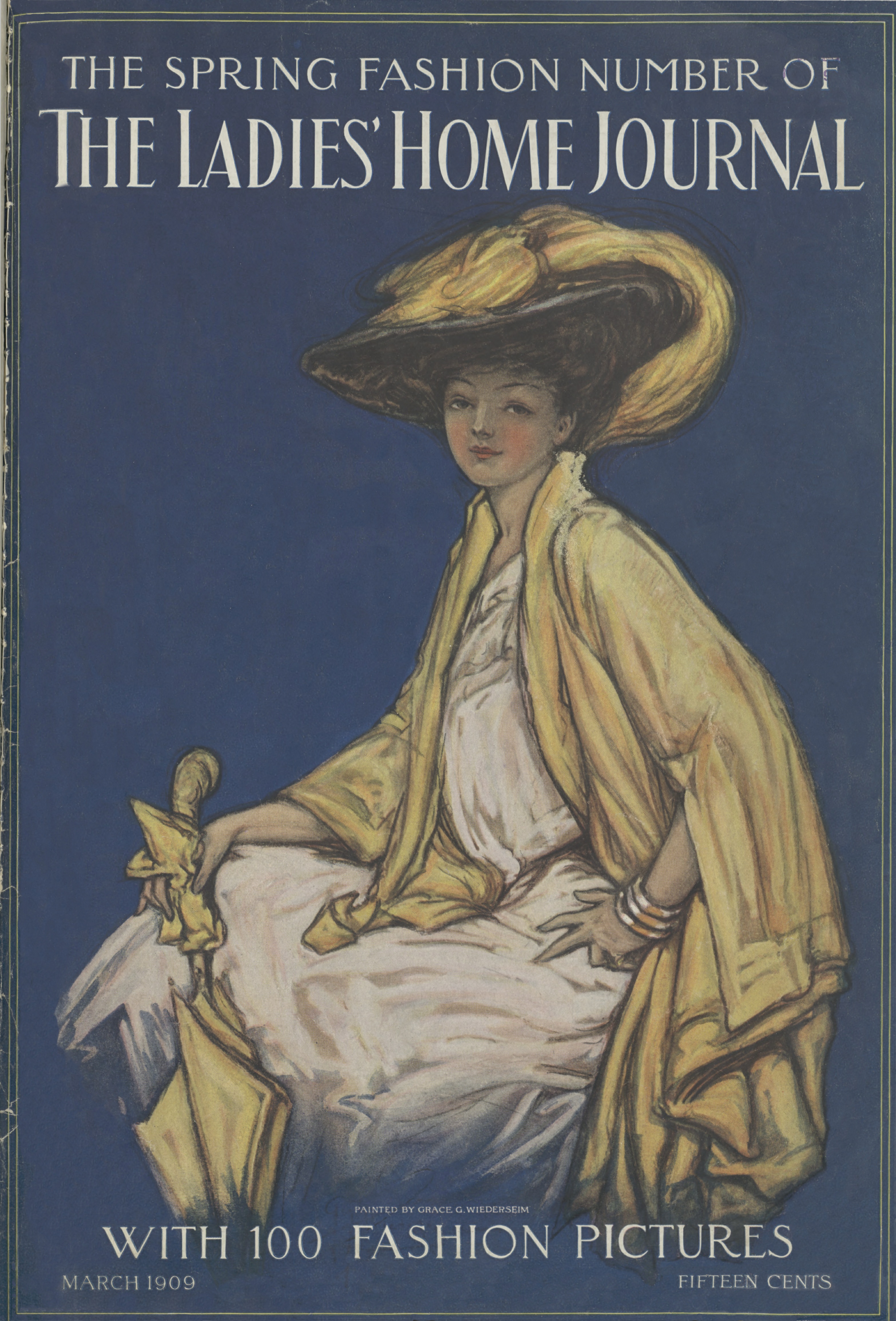
In 1896, Mr. Moody published a twelve-part Bible study series in The Ladies’ Home Journal, a magazine that regularly published sermons, essays on religion and faith, and stories with Christian themes. He called his series, “Mr. Moody’s Bible Class.”
Each month for twelve months, Mr. Moody filled the pages of the magazine with lessons on the fundamental doctrines of Christianity, from sin and redemption to prayer and Heaven. His accessible writing style and practical approach made theological truths understandable to every-day readers, while he challenged them to examine their own faith.
From The Ladies’ Home Journal, October 1896.
“Mr. Moody’s Bible Class” is now available for a new generation. Each of his lessons has been carefully formatted for modern readers, with added reflection questions and organized Scripture references.
Whether you’re studying alone, with a small group, or teaching a Sunday school class, Mr. Moody’s lessons offer rich yet practical insights into the foundations of Christian doctrine. Click on the link below to view or download the first lesson:
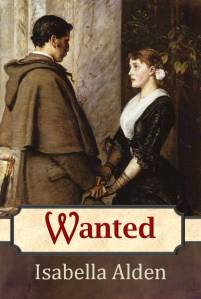
Rebecca’s dress was entirely appropriate and becoming. She had gone out from her father’s house very well supplied with clothes, and her ability to re-make them herself had stood her in good stead, so that now her dress of fine black cloth, made severely plain, but with minute attention to details, became her well. So did the black felt bonnet, with its three stylish plumes, which she had herself dressed over.
from Wanted, by Isabella Alden, published in 1894
In her stories, Isabella often used the latest fashion to define a character’s financial and social status, and Rebecca Meredith’s outfit was an excellent example. Because her dress was plain and black, her bonnet “with its three stylish plumes” was the centerpiece of her outfit and called attention to her pretty face.
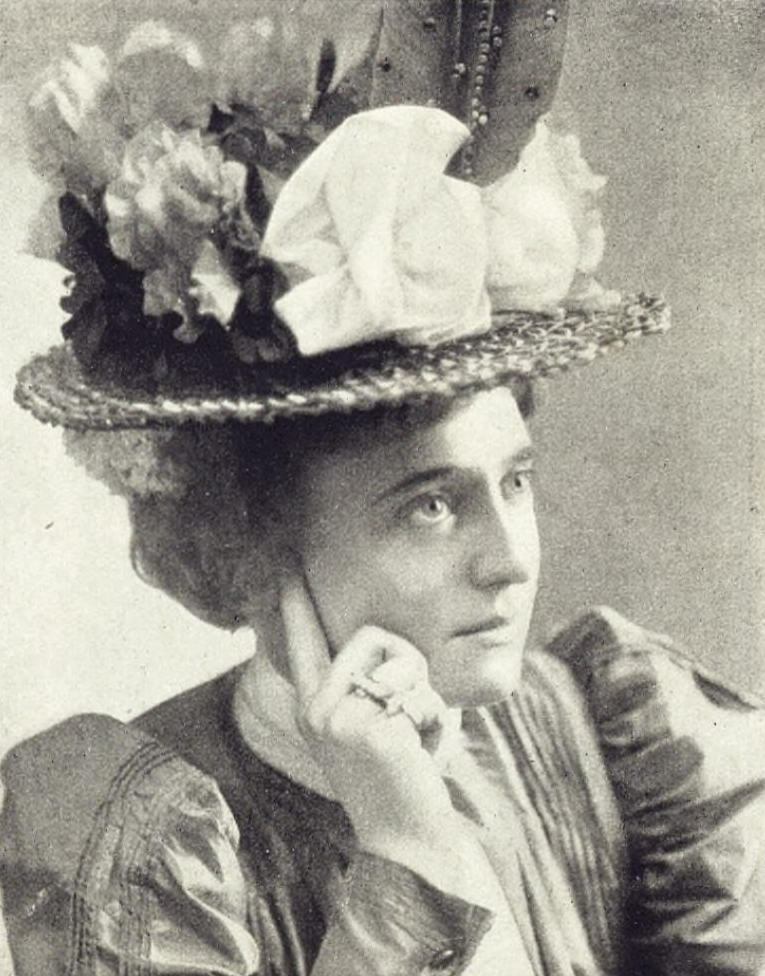
Bonnets with plumes were very much in style when Wanted was published in 1894. Women’s magazines, like Godey’s Lady’s Book and TheLadies Home Journal showed that hats were be made from a variety of materials—straw, for example, or stiffened fabrics like velvet—and that they were quite modest in size.
From Godey’s Lady’s Book, August 1895.
Though small, hats at that time were heavily adorned with ribbons, bows, artificial flowers and, most importantly, bird plumes.
From Godey’s Lady’s Book, October 1897.
Bird feathers were the most desirable decorative elements on a lady’s hat. In 1894 The Ladies Home Journal predicted that actual wings displayed on bonnets would be “all the rage,” while another magazine wrote that “almost every second woman one sees in the streets flaunts an aigrette of heron’s plumes on her bonnet.”
Milliners used feathers from egrets, hummingbirds, herons, and even song birds of all kinds as adornments.
From Godey’s Lady’s Book, 1898.
The more exotic the bird, the more desirable their feathers; and the millinery industry was willing to pay top dollar to anyone who would supply them, no questions asked.
But some people did ask questions and raise alarms, after nature lovers in England and the United States discovered that some birds, like ospreys and egrets, were hunted so mercilessly, ornithologists feared they would soon be extinct.
In London, a Society for the Protection of Birds was formed. Members pledged to never wear feathers of any bird not killed for the purpose of food. Similar organizations were formed in Europe, Canada, and the U.S.
The public outcry began to pay off, as women around the world pledged to stop wearing hats with real bird feathers, and American lawmakers enacted state and federal laws to protect certain species of birds by banning them from use in hats and garments.
One bird that was exempt from protection was the ostrich, because its feathers could be harvested without killing the bird. So it was natural that the millinery industry would turn its attention to ostriches as a source for adornments.
Ostrich farms that had been established in the southern United States in the late 1890s in hopes of selling feathers to the millinery industry suddenly saw an increased demand for their wares.
An ostrich farm in southern California.
And because ostrich feathers could be plucked every eight or nine months, ostrich farmers with large herds enjoyed a regularly replenished inventory they could sell.
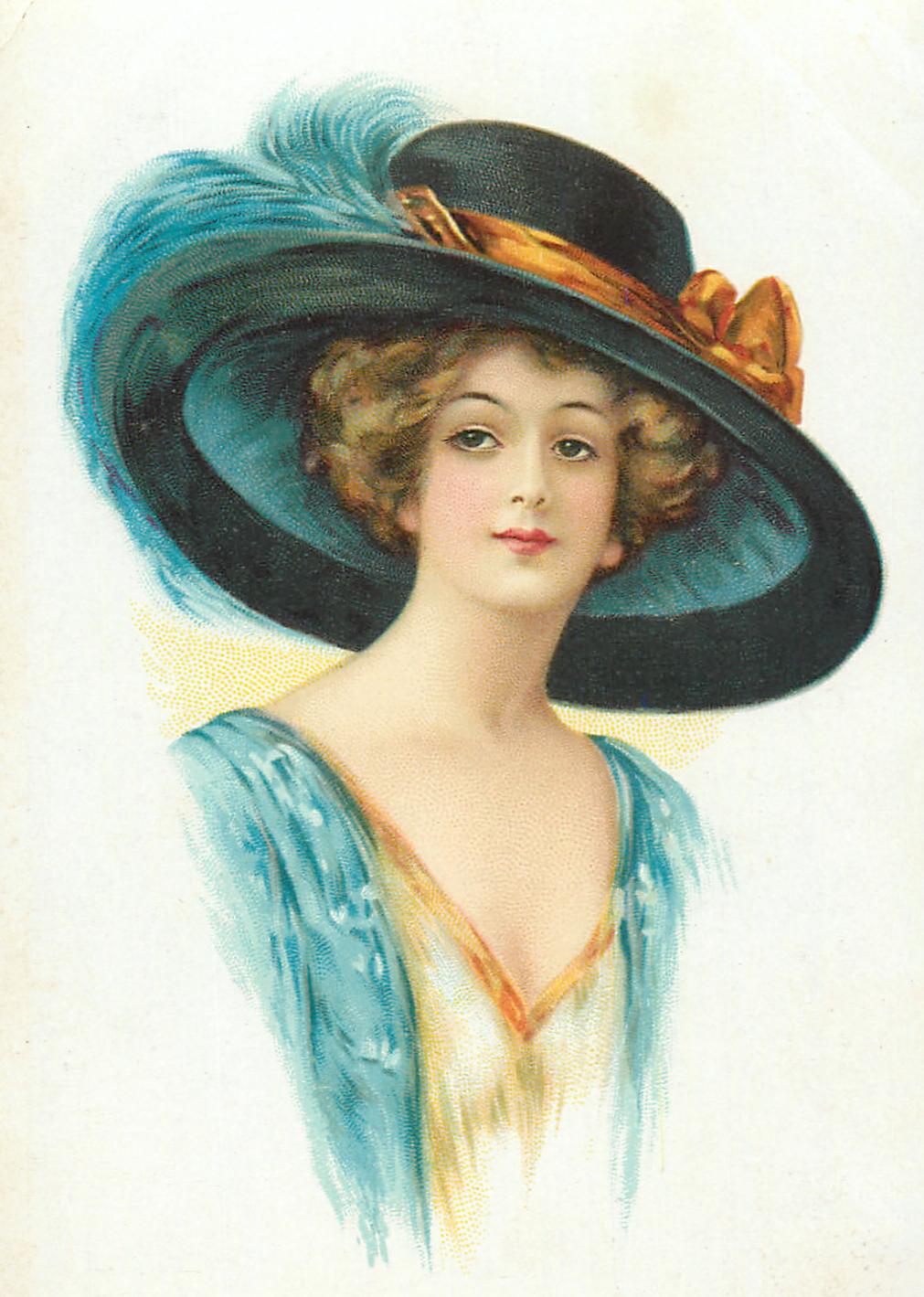
With the turn of the century, hat styles changed, and the small bonnets that were popular when Isabella wrote Wanted fell out of fashion. The new bonnet styles of the 1900s featured wide brims and brilliant colors.
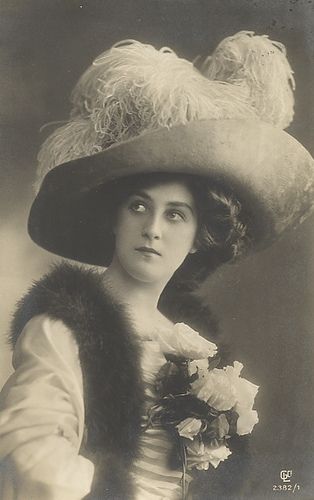
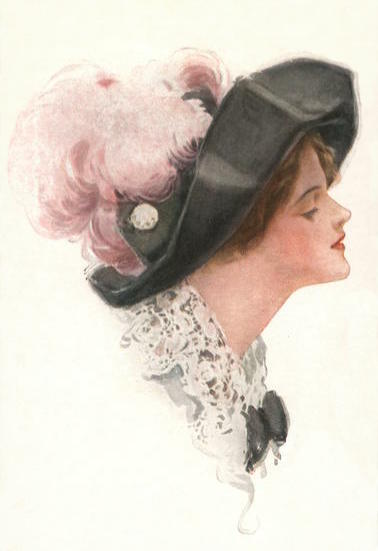
Ostrich plumes suited the new styles beautifully. Because of their size, the plumes could cover a large hat’s crown and brim.
Even more importantly, ostrich feathers could be dyed to match almost any color. Women and conservationists rejoiced, feeling confident that they could use ostrich feathers for fashion without feeling guilty.
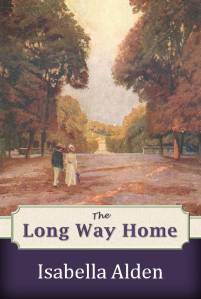
In her 1912 novel The Long Way Home Isabella made sure her fashionable characters wore the latest style in bonnets. Newlywed Ilsa Forbes wore a wide-brimmed hat when she boarded the train with her new husband Andy:
But Andrew had no words, just then; never was the heart of bridegroom more filled to overflowing, and he could not yet think about decorations or supper. “My wife!” he murmured, as his arm encircled her. “Really and truly and forever my wife. Do you realize it, darling?” She nestled as closely to him as her pretty, new traveling hat would permit and laughed softly.
There was, however, a problem with those stylish large hats adorned with ostrich feathers. In 1908 a letter to the editor of the Oregonian newspaper applauded the ban on exotic bird feathers, but raised a new and troubling concern about ostrich feathers:
The letter-writer wasn’t the only one wondering if an ostrich felt pain when its feathers were plucked. Soon the Audubon Society and other conservationists began asking the same question and took their findings to state legislators.
In California, where Isabella was living and where many of the country’s ostrich farms were located, the question was answered by lawmakers. In 1900 the state updated its penal code to make it a crime to intentionally mutilate or torture a living animal, which included plucking live birds like ostriches.
So ostrich farmers stopped plucking and began snipping feathers, instead. A 1911 article in the Dallas Morning News explained the process:
From The Dallas Morning News, November 12, 1911.
Once again, stylish ladies (and Isabella’s equally stylish characters) could wear hats adorned with feathers and maintain a relatively clear conscience.
It’s interesting how Isabella’s attention to details, like hat sizes and adornments, brought her stories to life. While she didn’t preach about fashion in her novels, she paid close attention to these niceties, and used them to bring authenticity to her characters and their world. Contemporary fans of her novels would have noted the subtle changes as keeping up with the times.
For us in 2025, it’s fascinating to learn there’s a whole complicated history behind Rebecca Meredith’s feathers—a history about women who were determined to write wrongs and find ways to be fashionable without compromising their conscience.
You can learn more about Isabella’s novels mentioned in this post by clicking on the book covers below:
Full disclosure: these are Amazon affiliate links, which means if you decide to purchase through them, this blog will receive a small commission. It doesn’t cost you anything extra, but it helps us keep this site running and researching Isabella’s life and the fascinating world in which she lived.
Isabella was the youngest of six siblings. She had one brother, James, and four sisters. With her sisters she enjoyed a close bond, even though there was a wide range of ages between them. Her eldest sister Elizabeth was a married woman with a home of her own by the time Isabella was fourteen months old.
Her sister Mary married George Heaton when Isabella was a girl of 17. Mary and George moved into a house of their own—one that was so close to Isabella’s family home, that the two properties shared a garden gate.
Mary’s husband George was editor of the town’s newspaper; and it was he who was so impressed by the first story Isabella wrote, that he begged Isabella’s parents to allow him to publish the story in the newspaper. Reluctant at first, they eventually gave their permission, but only if Isabella’s name was not used. Instead, the story was published with the author’s name listed as “Pansy,” thus beginning Isabella’s writing career that would span the next eighty years. (You can read more about Isabella’s first published story here.)
Isabella was in her early thirties when she began editing and writing for The Pansy magazine. The enterprise quickly became a family affair when her sisters, brothers-in-law and friends also began to write articles and stories for the magazine.
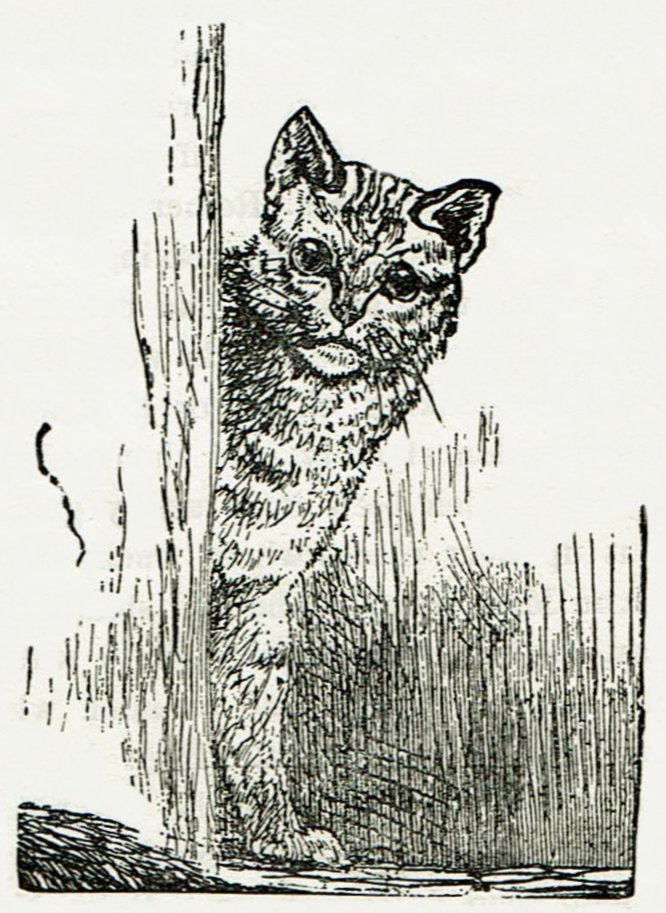
Sisters Marcia, Julia and Mary were among those writers, and Mary often chose pets as the focus of her stories. In one story Mary explained to her young readers how she came to adopt a sweet little kitten:
“I live in a part of the country that is blessed with cats. I never saw so many gathered in one place before in my life — gray cats and yellow cats, cats with tails and cats without tails, and kittens without number. One day I took pity on a poor little hungry kitty, and set her out a basin of milk. In less than five minutes there were nine kittens, all with their heads in that basin. One late comer could not get into the ring, so she climbed on the backs of the others, and reaching down got her little red tongue into the dish. I said last week that I would adopt one of the orphans, so I kept her in the house all day, and fed and played with her; but at night I let her out. When we came downstairs in the morning there she was waiting at the door for admittance, but she had brought four others with her! She has seemed, however, to settle down, and decide that she belongs; she stays in the house with me all the time, and the others scamper in when they can get a chance, and out again.”
Illustration from Mary’s story in an 1893 issue of The Pansy magazine.
In another issue of the magazine, she wrote about her new parrots:
“I have named the large one Billy, and the small one Polly. They are very happy together. Every afternoon Billy will spend an hour in petting and dressing Polly. He will oil her feathers, and scratch her head; then he will hold his head down, and try to make her fix him, but she can’t take time. She will just give him two or three little pecks, and then be intent on eating her supper, or playing with a stick, or bit of paper. Whenever she screams, Billy will say, ‘Shut up, Polly; shut up!'”
Illustration from Mary’s story in an 1888 issue of The Pansy magazine.
Mary gauged her reading audience to a nicety—don’t all children love to read about friendly kittens and talking birds?
Over the years Mary occasionally wrote more stories for The Pansy under the pen name “Auntie May.”
When Isabella retired from editing the magazine, and her husband retired from the ministry, they moved to Palo Alto, California to be close to their son Raymond and his family. Isabella’s sister Julia, who had never married, also lived with them; so when Mary’s second husband died unexpectedly, Isabella invited her to join them in their spacious California home.
So at the age of 76, Mary packed her belongings and set off across the country to live with Julia, Isabella, and the rest of the Aldens in sunny California. (You can click here to read about the house they all lived in together). She soon found herself happily sharing a home with Isabella’s young grandchildren.
Mary, age 88 in 1914, with two of Isabella’s grandchildren.
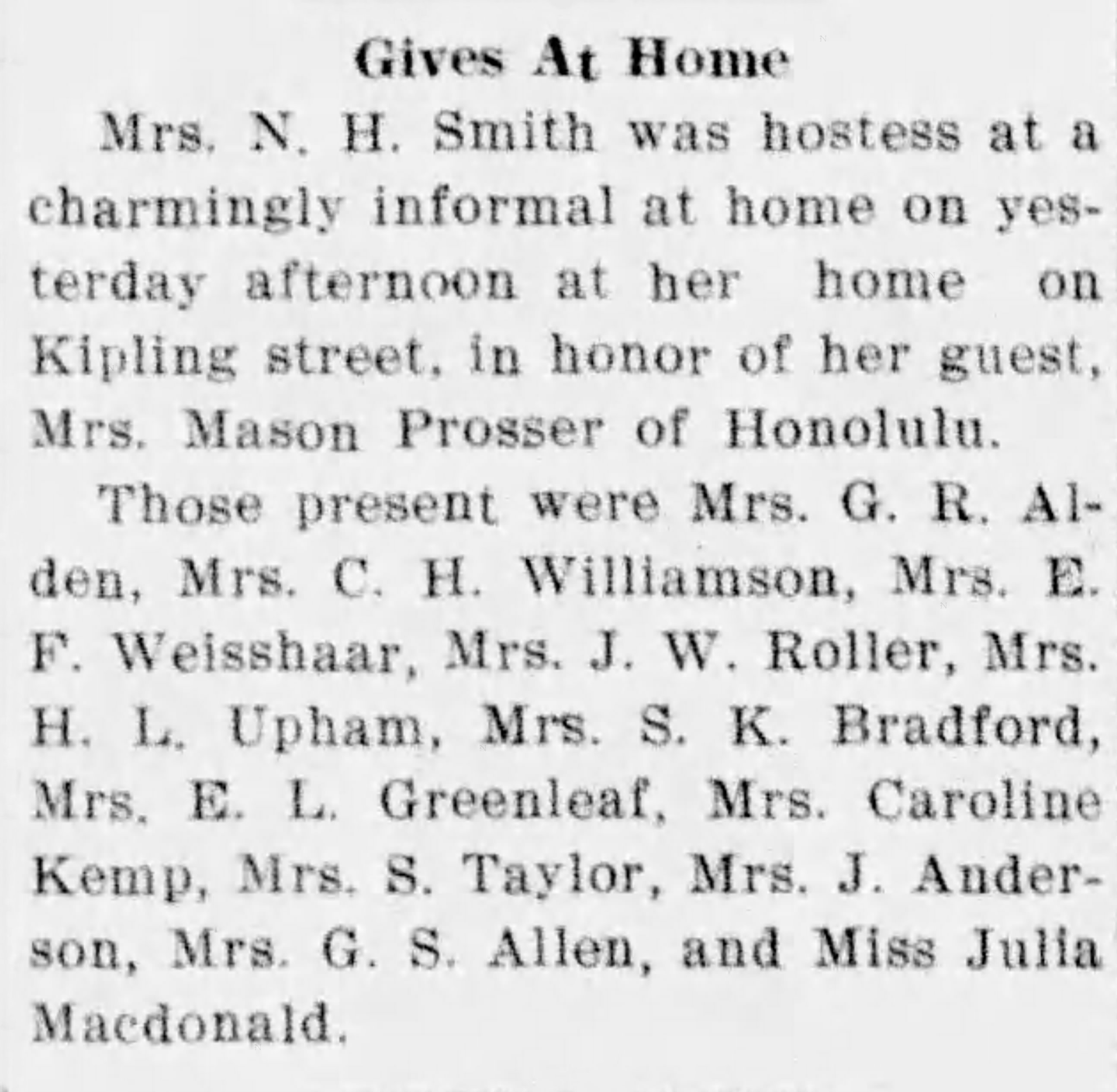
And she quickly joined the Alden’s church and began attending social events with Isabella and Julia. The local newspaper gave this brief account of their attendance at a ladies’ “at home.” (Isabella is listed as Mrs. Alden, Mary as Mrs. Williamson, and Julia as Miss Macdonald.)
No matter their age difference, there seemed to be a close camaraderie and tightly-knit bond between the Macdonald sisters, and Isabella was grateful for the time she had with her sisters in their later years. She wrote:
“I took the very best care I could of my sister Mary for eleven years, and was close beside her when she ceased to breathe. I had the comfort and companionship of my sister Julia for fifty years and knelt beside her bedside when she was called Home.”
It was probably difficult at times for Isabella when she recalled that she was the last member of the family—that her husband and son, brother and sisters, mother and father had all gone on before her to their heavenly home. But as she neared the end of her own life, Isabella wrote to her niece Grace:
“But isn’t it blessed to realize that one by one we shall all gather Home at last to go no more out forever! The hours between me and my call to come Home grow daily less.”
The bond between the Macdonald sisters—Elizabeth, Mary, Julia, Marcia, and Isabella—helped shape Isabella’s entire life. From childhood through old age, through marriages and widowhood, through writing careers and quiet domesticity, the sisters were loving constants in each other’s lives. Their shared faith and genuine affection for one another provided Isabella with both comfort and inspiration. Perhaps the sister relationships that fill Isabella’s novels—tender, loyal, challenging, but always enduring—reflected the very real treasure she found in her own family bonds.
Isabella Alden and her entire family were actively involved in the Young People’s Society of Christian Endeavor, a movement that promoted Christian service and ideals to its teen and young adult members.
Isabella believed in the Endeavor program so much, she founded the Pansy Society for Christian Endeavor, a similar organization specifically designed for children. The Pansy Society focused on teaching children to use Jesus’ life and words as a guide to live by.
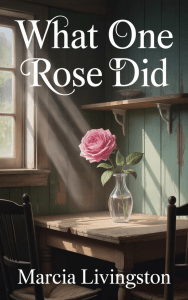
This month’s free read is a story by Marcia Livingston that illustrates some of the values The Pansy Society sought to teach children: forgiveness, patience, and kindness toward others.
It was a simple act of kindness when Lily Haines offered Cindy Barker a rose from her garden; but neither young lady could predict how much of a difference the presence of that single rose could make in the Barker family home.
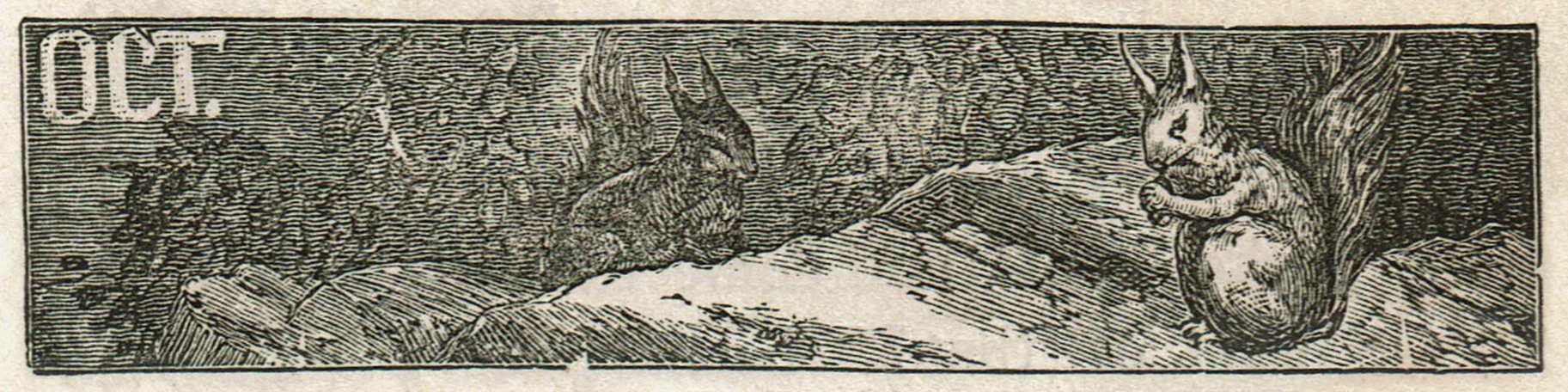
It’s hard to believe tomorrow is the first day of October! The seasons are changing and in many people’s opinion, autumn is the loveliest season of the year. (Do you agree?)
In 1892 Isabella published this whimsical little poem that captures the magical quality of autumn, when falling leaves seem to come alive with purposeful movements.
October’s Party
October gave a party— The leaves by hundreds came— The Chestnuts, Oaks, and Maples, And leaves of every name;
The sunshine spread a carpet, And everything was grand; Miss Weather led the dancing, Professor Wind the band.
The Chestnuts came in yellow, The Oaks in crimson dressed; The lovely Misses Maple In scarlet looked their best.
All balanced to their partners, And gaily fluttered by; The sight was like a rainbow New-fallen from the sky.
Then in the rustic hollows At hide-and-seek they played. The party closed at sundown, And everybody stayed.
Professor Wind played louder, They flew along the ground, And then the party ended In “hands across, all round.”
Catch the falling leaves!
In the last line of the poem, “hands across, all round” was a common phrase that would have been immediately recognizable to Isabella’s readers. It refers to a formation in traditional country dancing and square dancing that was very familiar in 1892.
“Hands across, all round!”
In this dance move, all the dancers form a large circle and join hands, often as the grand finale of a dance.
For those of us who love autumn, this charming poem reminds us the changing seasons have always felt magical, even 130 years ago! Perhaps the next time you watch leaves swirling in the autumn wind, you’ll think of this October poem and it’s gentle reminder that wonder is always there for those who know how to look for it.
When Isabella Alden began writing her beloved “Pansy” books in the 1870s, the literary landscape looked very different than it does today. There were few public libraries like the ones we have now; instead, churches filled that role by establishing their own library systems.
The Sunday-school library was a powerful force in 19th-century America. They didn’t just lend books—they curated collections of books that shaped readers’ moral and spiritual development.
Not all Sunday-school libraries were created equal; some churches seemed to have unlimited resources to maintain a well-stocked library of five-hundred books or more, displayed in neat rows on well-built shelves; while others had only a few titles in their collection.
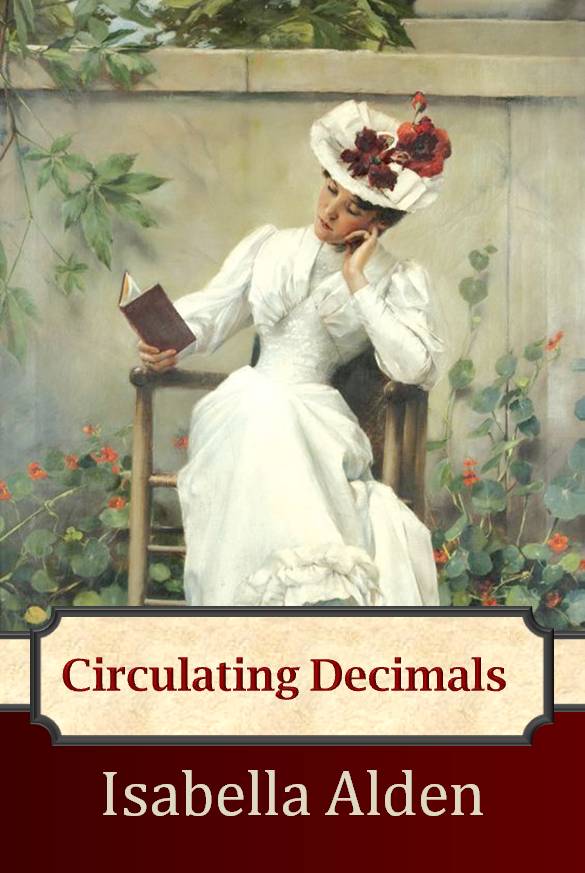
Isabella’s short story, “Circulating Decimals” is about the efforts of a community to raise money for just such a church library that has fallen into a “disgraceful condition” due to neglect and lack of funds. (You can click here to read the story for free.)
But regardless of size or budget, church libraries had one mission in common: to offer readers books that supported religious instruction, moral development, and the spiritual growth of the congregation.
Churches established committees to evaluate each potential library addition against a set of religious standards. The minister often played a role in recommending or vetoing books, which were also chosen based on their theological soundness and ability to promote standards of Christian living.
The Grace Methodist Episcopal Church of Taunton, Massachusetts had a rather large library of over five-hundred books, and included some of Isabella’s novels, as well as books by Margaret Sangster, E.P. Roe, and other Christian fiction authors.
The church divided their book collection into categories and published a catalog for members of their congregation. The fact that Isabella had ten of her books included in the catalog shows how well the moral messages of her stories aligned with the church’s values and appealed to readers of all ages.
(You can click on the image above to see the entire Grace M.E. Sabbath-school Library catalog of 1904.)
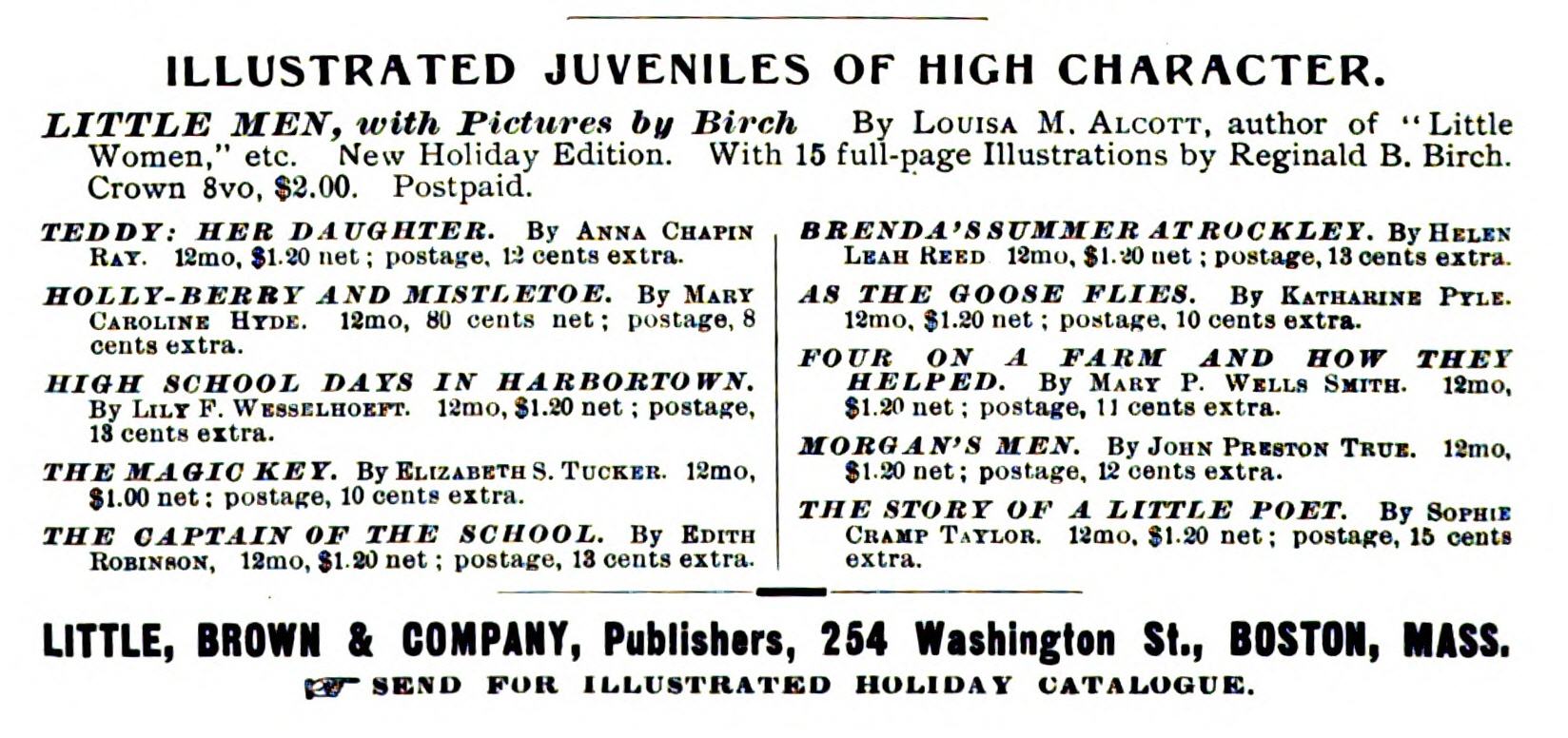
Mainstream publishers like Little, Brown and Company actively marketed their wholesome books to churches. This advertisement in “The Sunday School Library Bulletin” magazine shows their newest offering to churches included a new edition of “Little Men” by Louisa May Alcott:
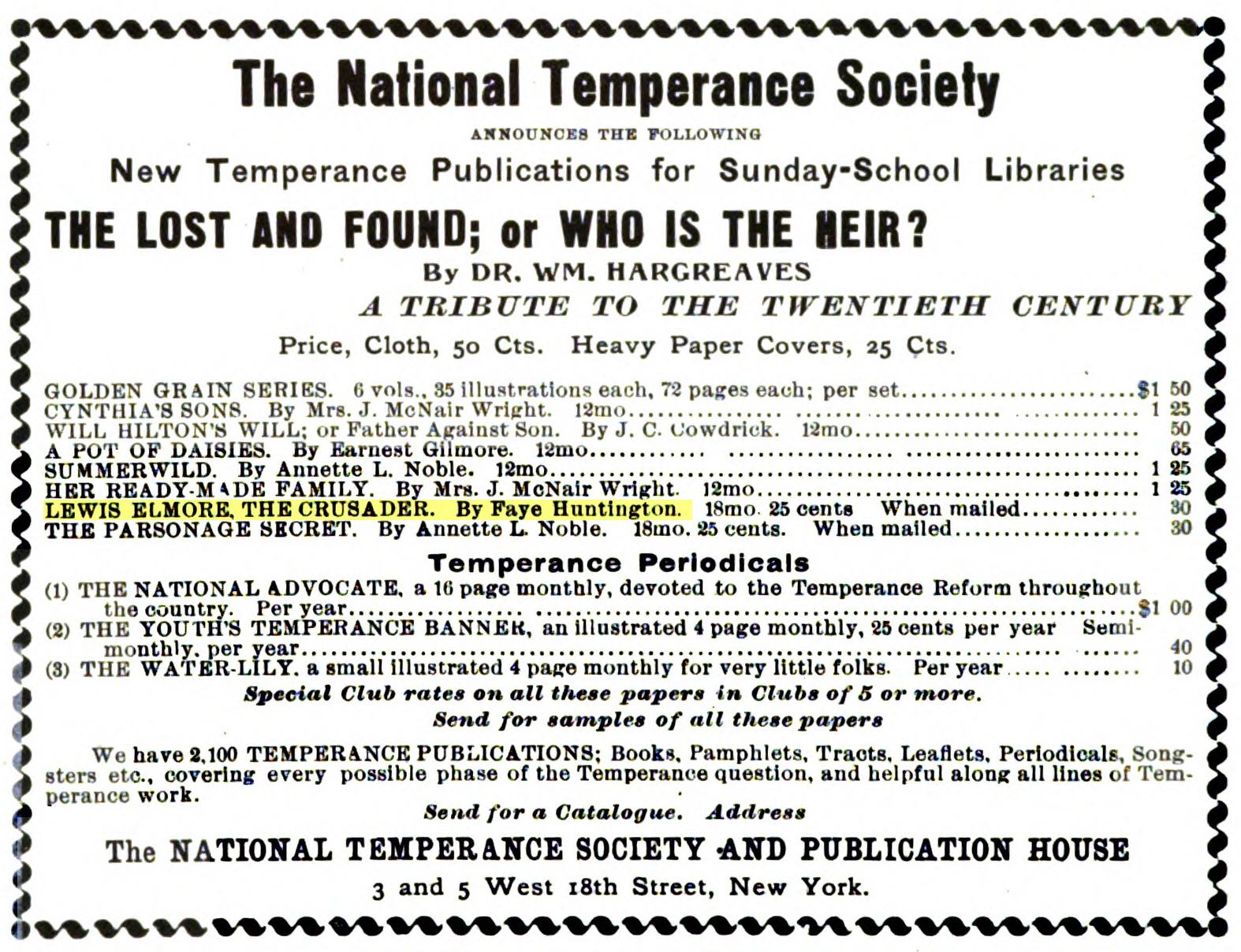
And organizations like The National Temperance Society also marketed their books directly to churches. Their ad below features a temperance novel by Isabella’s friend Theodosia Foster (who used the pen name of Faye Huntington):
Church libraries established systems for inventorying and lending books. They assigned an inventory number to each book, and issued library cards to readers.
The numbered book plate from a book in the Sunday school library of the Evangelical Lutheran Church of Springfield, Illinois.
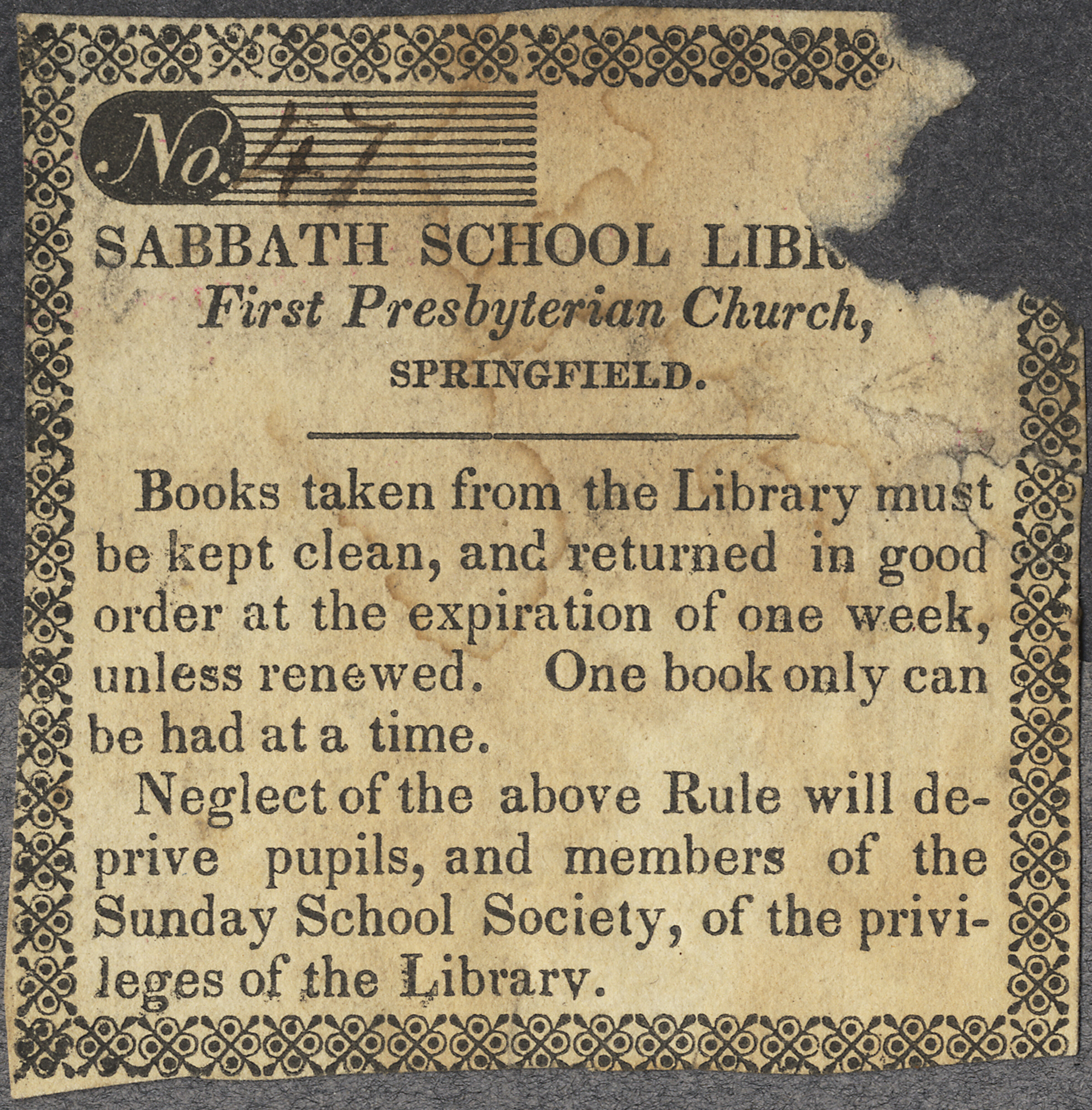
They also created rules for borrowing:
Church libraries were a lifeline for readers, especially in smaller and frontier communities where there were no free public libraries. But that began to change in 1886 when wealthy steel magnate Andrew Carnegie began funding the building of public libraries across the country. By 1923 he had financed the building of over 1,600 public libraries where borrowers could choose from thousands of book titles, including the most popular books of the day.
The New York City Public Library, opened to the public in 1911.
The “safe” books Isabella wrote went out of print, while modern novels by Ernest Hemingway, Edith Wharton, and F. Scott Fitzgerald filled the shelves at public libraries.
Sunday-school libraries still existed, but their influence waned to such an extent that in 1930 a newspaper in Greensboro, North Carolina published an editorial just after Isabella’s death. The editorial fondly recalled the church libraries of years gone by:
There were no sex novels; no crime novels; no filthy “realism,” which portrays the perversions of human nature as if it were life itself. Romance there was, in glorious gobs. Many of the books seeped sentimentality. And always there were happy endings.
He went on to write that Isabella’s books “made for clean lives and happy homes and good society.” In her stories, “the problems were the problems of everyday people trying to be good. If they were somewhat morbid and over-introspective, so was the era for which they were meant.”
Isabella truly did write for the era in which she lived; but it’s important to remember that her books succeeded in Sunday school libraries not just because they met church requirements, but because Isabella had a particular understanding of literature’s purpose—that stories should help readers have a closer walk with God and become better versions of themselves.
Maybe that’s why her “Pansy” novels, despite going out of print, are still read and loved by new readers today, and remembered fondly by those who discovered them on long-ago Sunday afternoons in church libraries.
Does your church have a library? What are the kinds of books it offers?
When it came to writing stories, Isabella sometimes relied on “real” life for inspiration. She’d take an actual occurrence—an overheard conversation, an event she attended, or something as simple as a family gathering—and use it as the basis for her story.
Other times, a story she wrote was inspired by a lesson she wanted to convey, or a kernel of truth around which she fashioned a story. That was the case in 1887 when she published a little story called “Monuments,” about a young girl who visits a cemetery in New York with her Aunt Joanna.
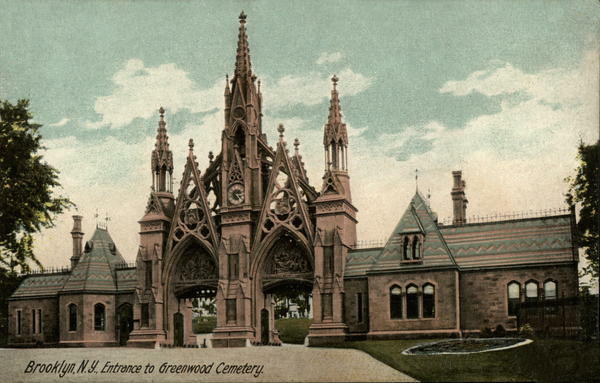
The entrance to Green-Wood Cemetery in Brooklyn, New York.
The story draws on fact: Green-Wood in Brooklyn, New York is a real place that Isabella very likely visited because of its famed monuments.
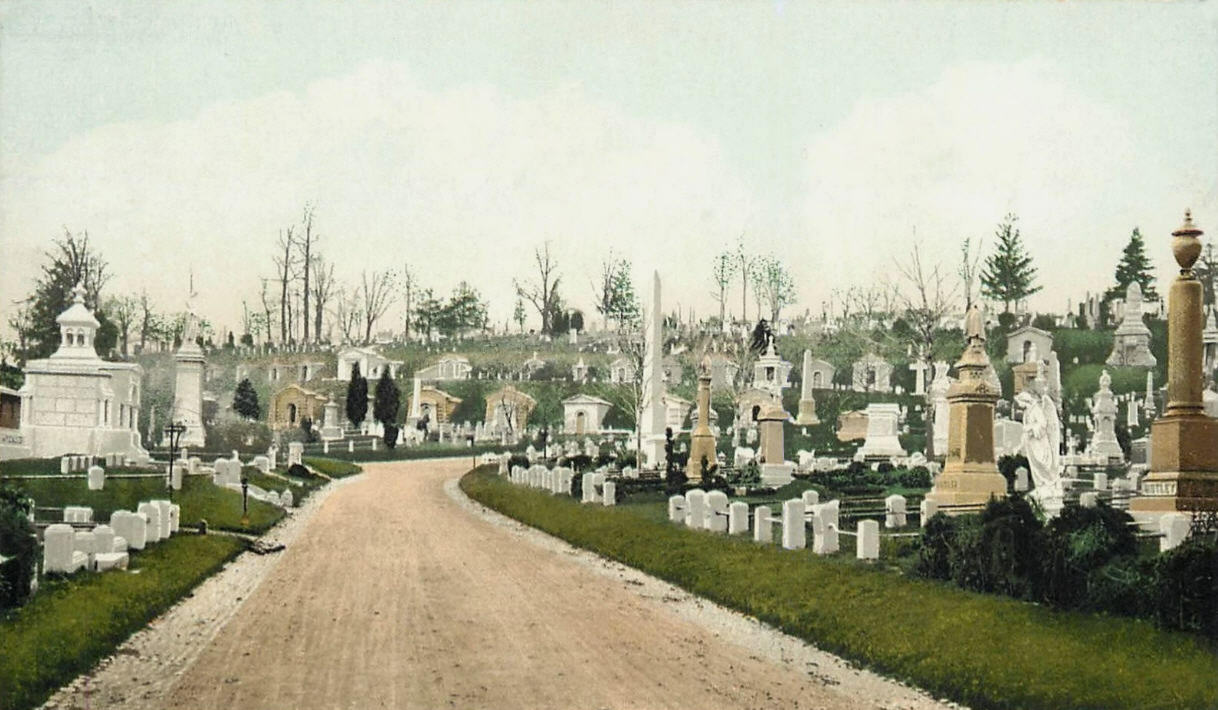
Monuments and headstones at Green-Wood Cemetery, about 1900.
In the 1800s Green-Wood Cemetery, with its extraordinary grave markers and lush, rolling hills, was a popular tourist destination. People came to spend the day with their picnic baskets and marvel over the sculpted monuments.
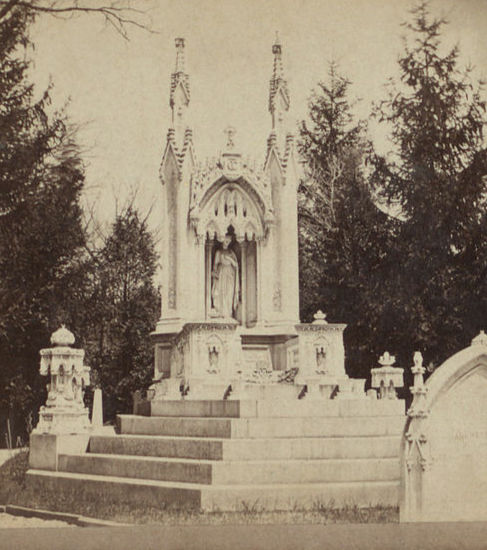
In her story, Isabella mentions one of the most magnificent monuments that marks the grave of Miss Charlotte Canda, a seventeen-year-old bride-to-be who was tragically killed after falling from a run-away carriage.
Charlotte Canda’s tomb, photographed about 1910.
She also mentions a monument dedicated to the brave firefighters of New York City and, in particular, Andrew Schenck, who perished in 1854 while trying to save people and his fellow firefighters from a burning department store.
The Firemen’s Monument mentioned in the story, topped by fireman’s boots and hat.
As a creative storyteller, Isabella took these tales of tragedy and heroism and crafted them into a story about a completely different kind of ‘monument’—one built not of marble and stone, but of transformed lives and acts of service.
Here’s the short story Isabella wrote:
It was my first visit to New York. A few days after my arrival uncle took me to Green-Wood, the most beautiful cemetery I ever saw. We visited the many points of interest. As we stood gazing at the fireman’s monument, uncle told me the story of his heroism; how in one of the fierce fires this brave man lost his life while rescuing a woman from the flames. Then we spent a long time looking at the monument to Miss Canda, the beautiful young heiress who was thrown from a carriage and killed; and her fortune was built up in this wonderful marble.
The next morning aunt said, “You will go with me today to another Green-Wood and see grander monuments than any you saw yesterday.”
I wondered how that could be, but we were soon on our way. At length we turned into narrow, dirty streets, growing worse and worse. I shuddered at such sights and sounds of human beings, never before dreaming that in grand New York there could he so much wretchedness. I drew closer and closer to aunt, fearing one of the human demons that leered at us would seize me and carry me off.
Such people! Such places to live in! Such language! Why, it almost makes my hair stand on end to think of it. Aunt did not seem to mind them. Maybe they knew her, for everyone stood aside for us to pass.
“Here it is,” she said at length. “Here is the other Green-Wood.”
“This?” I answered, looking around for gravestones and monuments, and seeing nothing but dreadful houses and miserable objects. “This is Green-Wood?”
She simply answered, “Yes; come right in and you shall see the monuments.”
I could only follow, wondering all the while if aunt was not losing her mind.
A sweet-faced girl met us with a warm welcome to aunt and an earnest look at me. As she led the way within, aunt whispered:
“One of the monuments, Clara.”
“What? I don’t know what you mean.”
“Her name is Maggie,” she quickly whispered back; “used to be called ‘wild Maggie;’ was one of the worst girls in this region. Never mind now, I will tell you more hereafter. Take a good look at her, you’ll see her again.”
Then I heard singing like the songs of many angels. A door swung open. We entered. It was a great company of children, black and white, some with sweet sad faces; others with evil looks, but all singing. Soon Maggie came in from another door and sat among them and I could hear her voice ring out in joyful strains, leading the rest.
There was prayer and Bible reading, and such a good talk by a gentleman. It seemed like heaven, while many of the children, some partly blind, some lame, some pale and sad-faced, gathered around after meeting was out and seized Aunt Joanna’s hand, and seemed so happy. Another lady was there to whom they all pressed for a smile and a word.
“That lady,” said aunt, “is Sir Christopher Wren.”
“What can you mean?” I asked. “Sir Christopher Wren was a man who died in England more than a hundred years ago.”
Aunt Joanna only laughed and said, “And came to life again, my child. This is he, only greater.”
“What?” said I, more and more bewildered.
But she went on: “Look around here at the monuments. You knew Sir Christopher was the architect of the great Westminster Abbey of London, and that kings and statesmen and poets are buried there, and their names and deeds are written there; but if anyone inquires for Sir Christopher Wren’s monument, he is told to look at the wonderful building of which he was the architect.”
“I see,” said I, “that lady has ‘built up’ Maggie.”
“Exactly,” said Aunt Joanna, “and more than one hundred other miserable, sick and wicked children. See that frail girl over there coming toward her? It would take a book to tell how this lady used to come daily here and bend over her crib, sometimes holding her in her arms for hours fearing each moment would be her last. But come and I will introduce you, and you shall see a monument greater than Christopher Wren.”
After we were on our way home, aunt told me the story of this lady; how one day curiosity led her to go through this worst part of New York. Her heart was so touched at the wretchedness of the people that she resolved to do something for them. Her friends tried to dissuade her. Some said the people would kill her; some said it was no use to try to help them. But she went right forward, and now after years of labor and sorrow there is her monument: saved children.
Before my return home in the country, Aunt Joanna gave a treat to the children of the Home all at her own expense.
Maggie, once “Wild Maggie,” and I served. How many sandwiches I passed around, how many cups of milk Maggie filled, how some of the urchins were dressed, how they laughed, or chattered, or stared, what they all said to aunt Joanna about the “treat,” would fill a book.
You can read more about Green-Wood Cemetery by clicking here.
Click on these links to read the stories behind the monuments for:
Despite her popularity as a best-selling author, Isabella gave very few interviews. She made an exception in 1892 when a magazine called The Ladies Home Journal (which was quickly becoming the most widely-read magazine in the world) came calling.
The interviewer, Denny Johnson, asked Isabella the usual interview questions about her home life, her childhood, and what inspired her to write. But in the process of sharing Isabella’s answers to those very standard questions, Johnson’s article reveals the quiet power of Isabella’s Christian principles.
Reading the article, you get the sense that what made Isabella extraordinary wasn’t just her prolific writing career; it was the way in which her personal character was very much reflected in the stories she published.
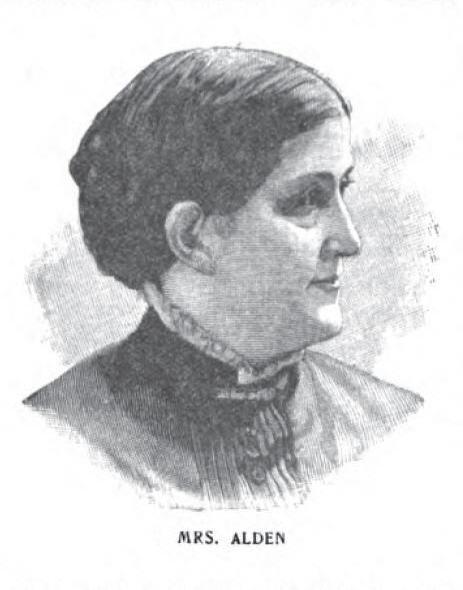
The image of Isabella that was published with the 1892 article in The Ladies Home Journal.
So, here are four things The Ladies Home Journal interview revealed about Isabella’s personal character:
1. Isabella Lived Her Message
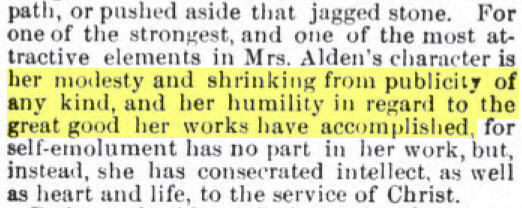
Johnson wrote that Isabella’s Christian principles weren’t “mere theories, existing only on paper.” Instead, they were “the rules that govern her own daily life.”
In those few words, Johnson revealed what is essentially the foundation of Isabella’s stories. Readers don’t just admire her characters’ moral courage—they can sense it comes from the reality of Isabella’s life.
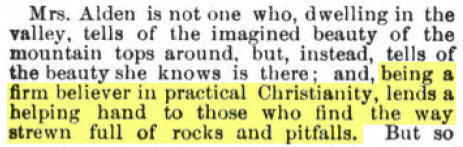
Isabella believed in what Johnson called “practical “Christianity”—faith that rolled up its sleeves and got to work.
She quietly helped others navigate life’s difficulties, often so unobtrusively that people didn’t realize she was the one who had “smoothed this bit of path, or pushed aside that jagged stone.” To Isabella, that was genuine Christian service.
2. Isabella had Humility in Success
By 1892 Isabella had already authored over one hundred books that were beloved by readers around the world, yet the article describes her “as unspoiled as when she signed her name for the first time ‘Pansy.'” She shrank from publicity and seemed genuinely surprised by the impact of her work.
Her modesty wasn’t false humility; it reflected Isabella’s belief that her talents were gifts meant for service rather than self-promotion. As Johnson wrote, “self-emolument has no part in her work,” but instead she had “consecrated intellect, as well as heart and life, to the service of Christ.” In other words, she didn’t write stories for personal gain.
3. Isabella was Consistent
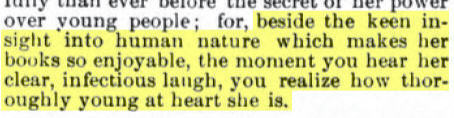
What gave Isabella her unique influence over young people wasn’t just her writing skill, but her consistent character. The same “high standard of right and wrong,” the same genuine care for others, the same joy in her faith that readers found in her books—all of this could be witnessed in her daily life.
The article said she had an infectious laugh and youthful spirit that weren’t manufactured for her audience.
She would pause her important work to meet with any child who came to visit, demonstrating that her love for young people was authentic, not merely professional.
4. Isabella’s Example is Timeless
In our present world of personal brands and influence marketing, Isabella’s story feels refreshingly honest. Her success didn’t come from clever marketing; it came from being the same person in private that she was in public. She wrote from who she actually was, not who she thought her audience wanted her to be.
Maybe that’s a big part of why her books are still being read today, long after other, flashier authors have been forgotten. There’s still something powerful about the simple consistency of Isabella’s authentic faith and the honest life she lived that still shine through when we read her stories.
Reviews and giveaways for Christian fiction and sweet, clean fiction. Bringing readers information on great stories and connecting authors with their readers.























![A square label affixed to the inside cover of a book. On the first line of the word "NO" with room to write a number; the number 61 was written and crossed out, and the number 77 written beside it. Below are printed "SUNDAY SCHOOL LIBRARY of the Evengelical [sic] Lutheran Church, Springfield, Ill." The text is surrounded by a fancy Victorian-era design of swirls and dots.](https://isabellaalden.com/wp-content/uploads/2025/09/evangelical-lutheran-church-book-plate.jpg)







 Isabella Alden