Between 1900 and 1910 American consumers were introduced to some revolutionary new inventions and products that would significantly change their lives. In 1903 the Wright Brothers powered their first sustained airplane flight at Kitty Hawk, North Carolina.
In 1908 the first Model T Ford automobile rolled off the production line in Detroit, Michigan.
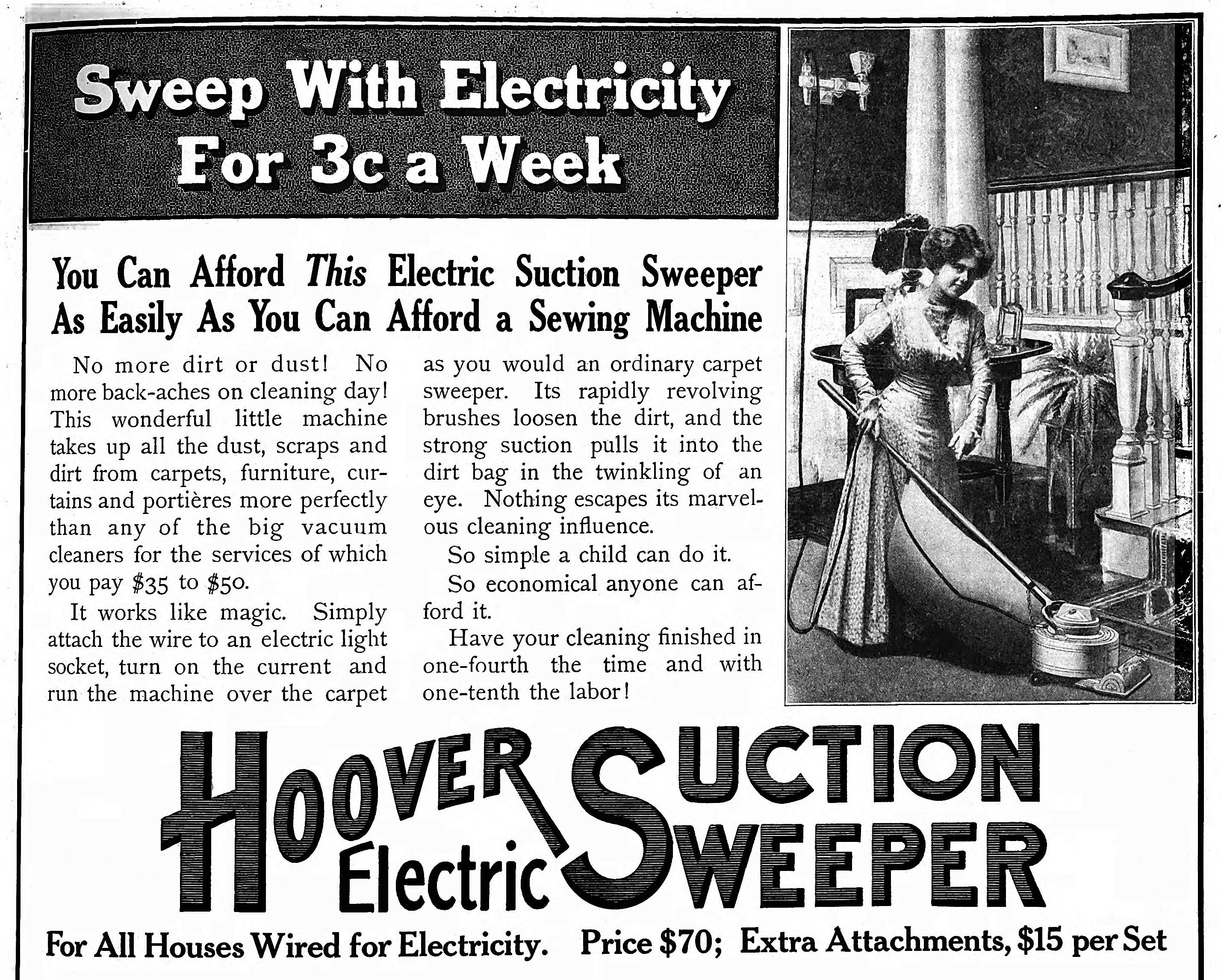
Other inventions during the decade included the safety razor (1901), Cornflakes (1907), teabags (1904), washing machines (1908), and vacuum cleaners (1901).
From a 1909 issue of The Saturday Evening Post.
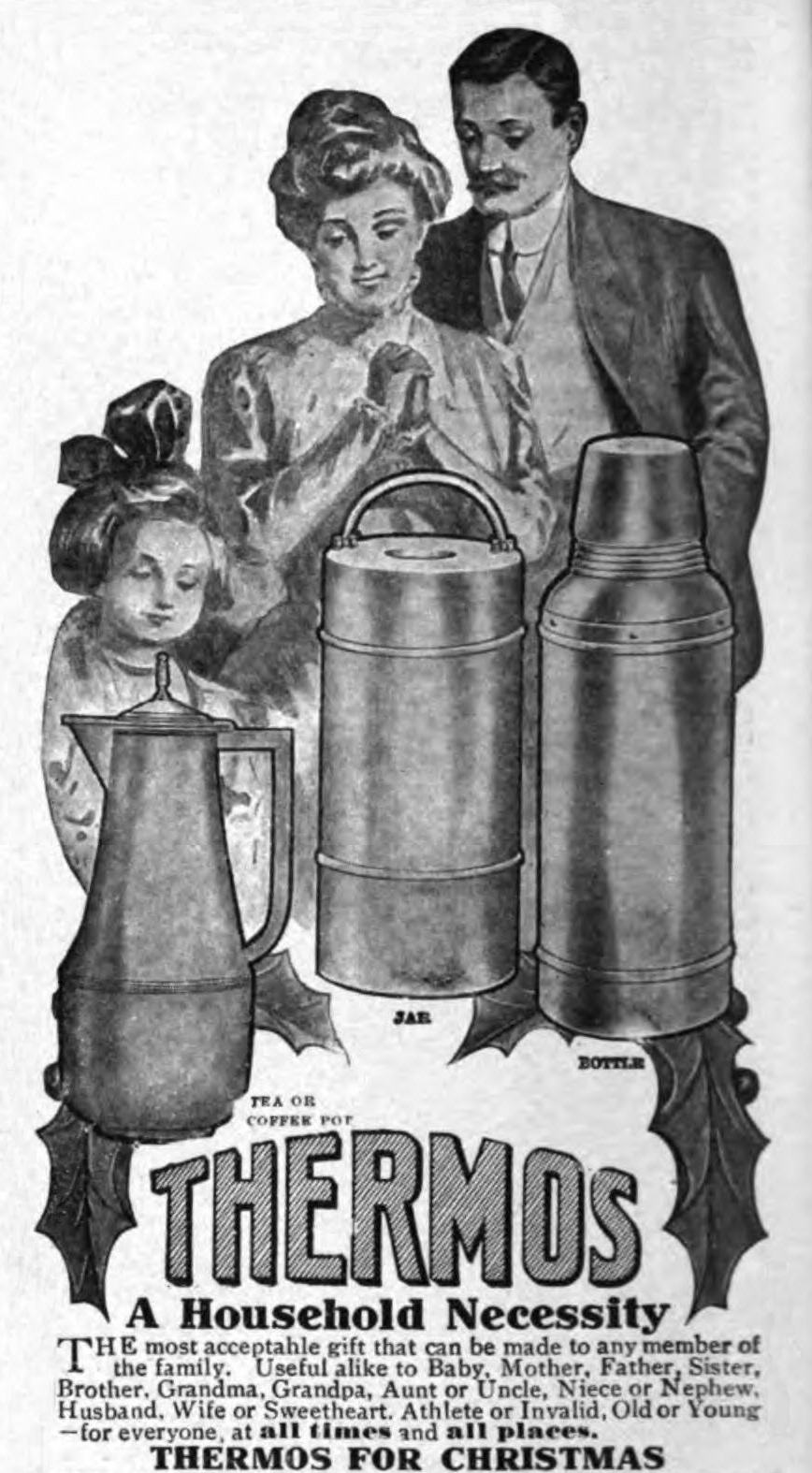
But in 1907, an entirely new product took the country by storm: the Thermos bottle. This cleverly designed vacuum bottle could keep drinks hot or cold for hours—something no other portable container could do.
Ad in a 1909 issue of Life magazine.
It’s easy to imagine Isabella Alden embracing this new invention, especially given the lifestyle she adopted after she and her family moved to California around 1901.
The Aldens settled in Palo Alto, where son Raymond was teaching at Stanford University. A few years later, Isabella and her husband became involved with the newly-founded Mount Hermon Christian camp near Santa Cruz. Mount Hermon reminded her of her beloved Chautauqua Institution, and it quickly became her summertime place of peace where she could rest, read, and worship among the giant redwood trees. Isabella recalled:
“Tent life seemed to belong to it as much as houses belong in most other places. We ate out of doors, and worked out of doors, and practically slept out of doors, with all the curtains of the tent looped high.”
When Thermos bottles first appeared in stores, they were luxury items. Depending on size, prices ranged from $3.50 to just over $5.00—the equivalent of about $125 to $150 in today’s money.
From a 1908 booklet, “Everything for the Autoist but the Auto.”
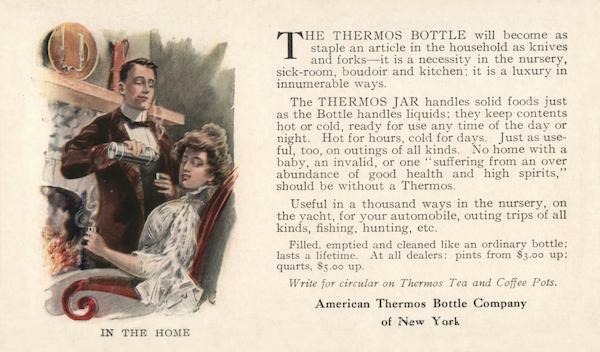
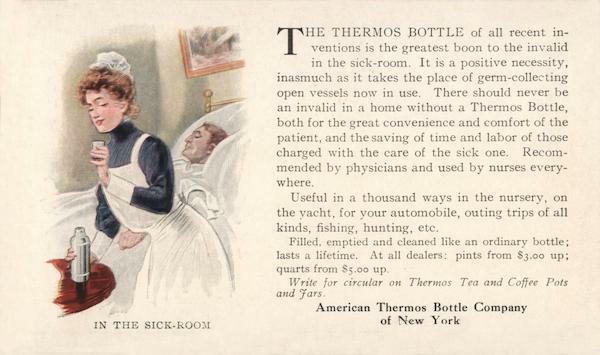
Travelers quickly embraced the Thermos bottle as a necessity worth the investment. Upper-middle class households purchased them, too, using Thermos bottles to keep food and drinks at stable temperatures without relying on wood-fire stoves, electricity, or refrigeration—all expensive options.
One in a series of trade cards distributed by The American Thermos Company.
The American Thermos Bottle Company of Norwich, Connecticut, launched a full ad campaign in magazines, trade journals, and newspapers. As sales increased, they launched additional products—pitchers and carafes, food storage bowls, and even completely furnished picnic baskets. With growing demand came increased production, and by the 1920s Thermos bottles were much more affordably priced.
Isabella never specifically mentioned a Thermos in her memoirs or her stories, but throughout her life she eagerly embraced new inventions and technologies. It seems probable that during those early rustic summer days at Mount Hermon, she might have had a Thermos bottle at her side for a cool drink of water.
Isabella’s niece, author Grace Livingston Hill, was also quick to embrace new inventions, and mentioned Thermos bottles in her novels, including The Prodigal Girl (1929) and The Street of the City (1942). In her novel Ladybird (1930), Grace wrote about the main character Fraley MacPherson marveling over a picnic lunch:
“There were other little packages with other sandwiches, some with fragrant slices of pink ham between them. There were hard-boiled eggs rolled in paper. There were olives and pickles, and chocolate cake and cookies, and white grapes and oranges—a feast for a king! There was coffee amazingly hot in a Thermos bottle. And in the wilderness!”
Thermos magazine ad from 1909
Whether or not Isabella actually owned a Thermos, she certainly lived during one of the most innovative decades in American history—and she took advantage of it. Her writing shows someone who was genuinely curious about new inventions and quick to see how they might improve her daily life. That openness to change and progress is just one more reason her work still feels surprisingly modern today.
You can read more about how Isabella embraced new inventions and technology in these posts:
Have you ever listened to someone tell a seemingly ordinary story, only to realize halfway through that they’re actually revealing something profound? That’s what happens in this month’s free read. “Family Portraits (Painted Unawares)” is a short story Isabella Alden published in a Christian magazine in 1900.
The story introduces us to Mrs. Andrews, a chatty neighbor who drops by on a hot summer day to tell about her son Harlan’s brief visit home from Boston. What begins as simple rambling about the weather, dinner plans, and a fishing trip gradually reveals itself as something much deeper—a portrait of a family bound together by selfless love.
Mrs. Andrews doesn’t realize she’s painting this portrait. She’s just telling her story in her own enthusiastic way. But it isn’t long before we begin to see what she can’t: a family where people consistently choose each other’s happiness over their own desires and where love—not biology—creates the deepest bonds.
A Note on Isabella’s Craft
What’s striking about this story is Isabella’s restraint. She doesn’t preach. She doesn’t tell us what to think about Mrs. Andrews or her family. She simply lets Mrs. Andrews talk, and trusts us to see the beauty in what’s being revealed.
Isabella has a gift for finding profound spiritual truth in everyday lives. In her stories, she elevates working-class people who live out their faith in practical, unassuming ways.
Maybe that’s why, more than 120 years after she wrote it, this story still has meaning. Today we still struggle with the tension between our own desires and others’ needs. We still wrestle with complicated family relationships. We still chase after perfect holidays and celebrations, forgetting that love is what makes any day special.
This story reminds us that the best relationships are built on small, daily choices we make, like prioritizing someone else’s happiness above our own, or spending time together, even if it’s brief and imperfect. Even more importantly, it reminds us that we don’t have to be extraordinary people to create extraordinary love.
You can spend time with Mrs. Andrews and her wonderful family for free!
Isabella Alden was a teacher at heart. Before she became a bestselling author, she earned her living as a schoolteacher and devoted countless hours to preparing meaningful Sunday school lessons for her students. So when the Chautauqua movement began in the early 1870s, it was a natural fit—she was involved from its earliest days.
The Chautauqua idea started simply enough as a summer gathering where Sunday school teachers could learn best practices for their work and enjoy a bit of recreation when classes weren’t in session.
What began as a “Sunday School Assembly” in 1872 gradually evolved into something much bigger—a “summer university” that welcomed people of all incomes, backgrounds and education levels. It was, wrote Harper’s Monthly Magazine in 1879, “a school for those who, conscious of their need, earnestly desire the highest culture possible for them.”
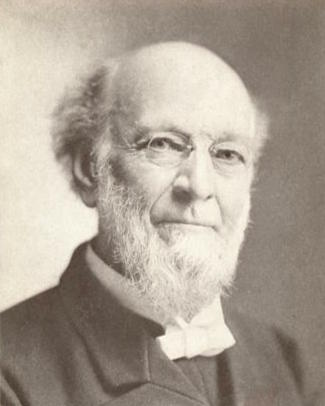
One of Chautauqua’s founders was Rev. Dr. John H. Vincent, who served as Sunday school secretary of the Methodist Episcopal Church and was a close friend of Isabella’s. Like her, he prized knowledge, learning, and mental discipline.
Rev. Dr. John Heyl Vincent
But what really united them was their shared conviction: that it was possible—even essential—to study art, science, literature, and history through the lens of religious truth.
In 1909 Rev. Vincent addressed the Chautauqua Women’s Club on a topic close to both his and Isabella’s hearts: the importance of education in religious experience. Fortunately, his speech was preserved in an issue of Chautauqua Herald, the assembly’s monthly newspaper.
In many ways, his thoughts on balancing education with Christian faith feel remarkably relevant today—more than a century later. Below are some key points that illustrate the heart of his message. See if you agree with his ideas.
“The Educational Factor in Religious Experience.”
Education and religion used to be too separated. But that is not the case in our time.
In our time education and religion are drawing closer together every day, and one sign of our progress is the growing recognition of religious teaching. I believe that people will increasingly see the value in religious teaching as it becomes purer and freer from the bigotry that once characterized it.
We all remember when fanaticism, bigotry, and opposition to science (as if science were opposed to religion!), found theirplace in the church and prejudiced the minds of scholarly people. As we broaden our perspective and gain a wider view of the world of Nature, this fanaticism is dying out and the scholars and the religious teachers are no longer enemies.
Religion opens the whole field of education, in which theology is fundamental. Religion in its truest sense is education.
Educated people ought to be religious. Religious people ought to be educated. When we surrender our intellect to God through religion, He returns it to us as a precious gift to use. Let us, then, as a form of religious expression, learn how to think—and delight in it.
There are seven points in the consideration of religious life as related to personal culture.
First, religious experience and personal growth work together by developing power of thought.
Second, we should cultivate our ability to reason. Let us ask, why is this? and, why is that?—applying our reasoning not only to intellectual pursuits, but to the realities of daily life.
Third, religion is a great thing to cultivate imagination, and we must develop imagination if we want to broaden our lives. But we must also keen imagination in check.
Thought, reason, imagination—these are all effects of religious experience.
Fourth, we should identify a noble, guiding purpose in life. What am I living for? That is the question we should ask ourselves. How can I beautify my little corner, and how can I do good to my neighbor? Why, every line I read or word I speak leaves its mark on some other human being. Men and women can sink to a lower level very easily. It is a great thing when one woman influences to higher thought one man or ten men.
Fifth, religion should help us see ourselves accurately—not too high, not too low.
Sixth, let us remember that a genuine religious spirit combined with the pursuit of learning will develop philanthropy—a pure philanthropy rooted in Christian values.
And seventh, let us remember that religion develops character. Practice builds virtue—the hallmarks of character that Peter describes when he says “add to your faith courage—add to your faith integrity—add to your faith strength.” Peter understood the secret of inner spiritual life.
“Add to your faith virtue, and to virtue knowledge, and to knowledge moderation, and to moderation”—patience, strength—“godliness, and to godliness, brotherly kindness, and to brotherly kindness charity. For if these things be in you and abound, they make you that you shall neither be barren nor unfruitful in the knowledge of our Lord and Savior, Jesus Christ.” (2 Peter 1:5-8)
Religion thus becomes a process of self-mastery in which we take time to focus our abilities and develop them.
Rev. Vincent’s speech captured so much of what Isabella believed and practiced throughout her life. She never saw a conflict between being educated and being faithful. Her novels explored complex themes and moral questions. The articles she published in The Pansy magazine taught children about science, geography, and literature—all while maintaining a foundation of Christian values. Like Rev. Vincent, she understood that true education develops the whole person: mind, character, and spirit. It’s a vision of learning that, at the time, was both revolutionary and deeply needed.
What do you think?
Is it possible to pursue knowledge while maintaining spiritual grounding?
Can we cultivate our minds without losing our moral compass?
Dr. Vincent and Isabella would say yes. And given the lives they both lived—dedicated to learning, service, and faith—their example suggests they might be right.
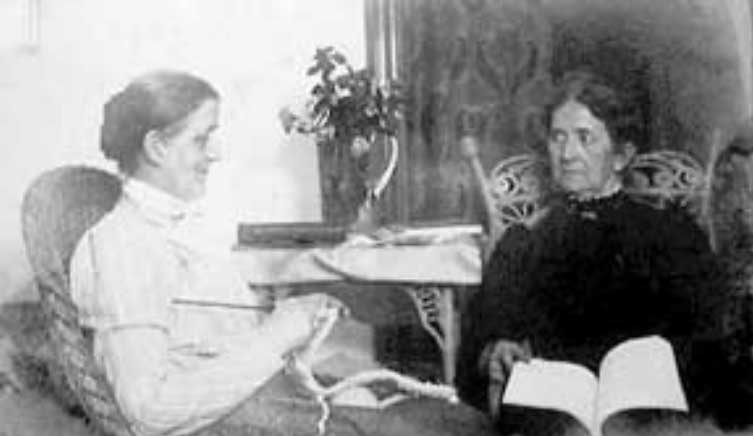
Isabella Macdonald Alden and her sister Marcia Macdonald Livingston were always very close. They were both married to Presbyterian ministers, and both found success as writers of Christ-centered novels, as well as short stories for Christian magazines.
Isabella Alden (left) and her sister Marcia Livingston (right).
In 1898 the sisters learned through their churches about the plight of a retired minister and his wife who were in danger of losing their home. The couple needed just $150—about $5,900 in today’s money.
Isabella and Marcia knew from experience how difficult it was to live on a minister’s inadequate salary, and how that meager income made it nearly impossible to save anything for retirement. The elderly couple’s plight touched the sisters’ hearts and they decided to take action.
The sisters wrote a joint appeal for donations on behalf of the elderly couple. Their letter was published on May 4, 1898, in a weekly Christian magazine and read as follows:
TO THE WIVES OF PRESBYTERIAN MINISTERS.
Dear Friends: Let us beg your pardon in the beginning for addressing you. Our excuse must be that we feel we are not strangers, but friends; the mystic bond which unites the wives of all those who have given themselves to the ministry of the gospel of Jesus Christ unites us, as well as that dearer, stronger one, Jesus Christ being our Elder Brother. It is because it seems that he has put it into our hearts to send you this word that we do it.
It has come to our knowledge that there is in our beloved Church a minister and his wife who sorely need a little help just now to tide them over a hard place. The facts are, briefly, these:
A Presbyterian minister, formerly in active service as pastor, now broken in health and nearly seventy years of age, invested his little all several years ago, in a small place in California, hoping to make a living by raising fruits and vegetables for the market. He and his wife, who is now partially crippled by rheumatism, have worked heroically on their home, but the unprecedentedly hard times of the past few years, as well as increasing ill health, were against them. The little home, so carefully and prayerfully worked for, is in danger. A mortgage of only $150 rests upon it; but, unless even that small sum be raised promptly, it must go.
A minister and his wife belonging to our grand Church, sick and old and with no home! Isn’t it pitiful that such a thing should be, when they have given their best years to the Church?
Why are we telling you? It has come into our hearts that possibly 148 ministers’ wives will each spare $1, to be placed with our $2, to be sent at once to this dear minister’s wife, who can no longer work with her crippled hands, as she has bravely done, to help support her sick husband. This, as a token that we are sisters and recognize the bond.
While we write the words we remember that probably some cannot do even this, and are moved to ask that any who can will make their offering $2 or $3, or even $5, for the sake of those who would respond but cannot, and for the sake of those who will mean to do it, when they read these words, but who will let the cares of this busy world crowd it from their minds.
The sisters closed their appeal by providing their home addresses where donors could send money, and a promise to provide updates in a future issue of the magazine.
Photo of Isabella Alden about 1880 (age 39)
It’s hard to know what their expectations were. Perhaps they thought they’d eventually receive a few donations that they could add to their own and forward to the retired minister and his wife.
But that’s not what happened! You can imagine Isabella and Marcia’s excitement when they wrote the following update, which appeared two weeks later on May 18 in the same magazine:
AN ACKNOWLEDGMENT.
Dear Friends: It gives us pleasure to report at this date the receipt of $41 towards the $150 that we are trying to raise to save the little home, of which we wrote you last week. As the magazine containing the appeal has been issued only four days, including Sunday, the replies thus far have been instantaneous.
The sum of $41 in today’s economy is about $1,600. That’s an astonishing amount to receive in so short a time! The sisters continued:
Our gratitude for these kindly and prompt responses is very great. We are looking to receive many more before the week closes. One friend writes that she hopes we will excuse her for not being a minister’s wife, and yet for sending her offering! We are delighted with her.
We remember that there are ministers’ wives by the score who gladly would, but cannot; it is fitting that some more blessed with this world’s goods should reply for them. Two dear ladies have already done so; one sent $5, the other $10.
One friend hopes that we will receive much more than the sum called for and be able to make an additional gift. We echo the hope.
Later it will be our pleasure to give a somewhat more detailed account of this pleasant work, and of some of the precious letters that have come to us. There have already been received gifts that represent sacrifice and letters that would touch your hearts. Yours sincerely,
What a promising start for the sisters’ fund-raising campaign!
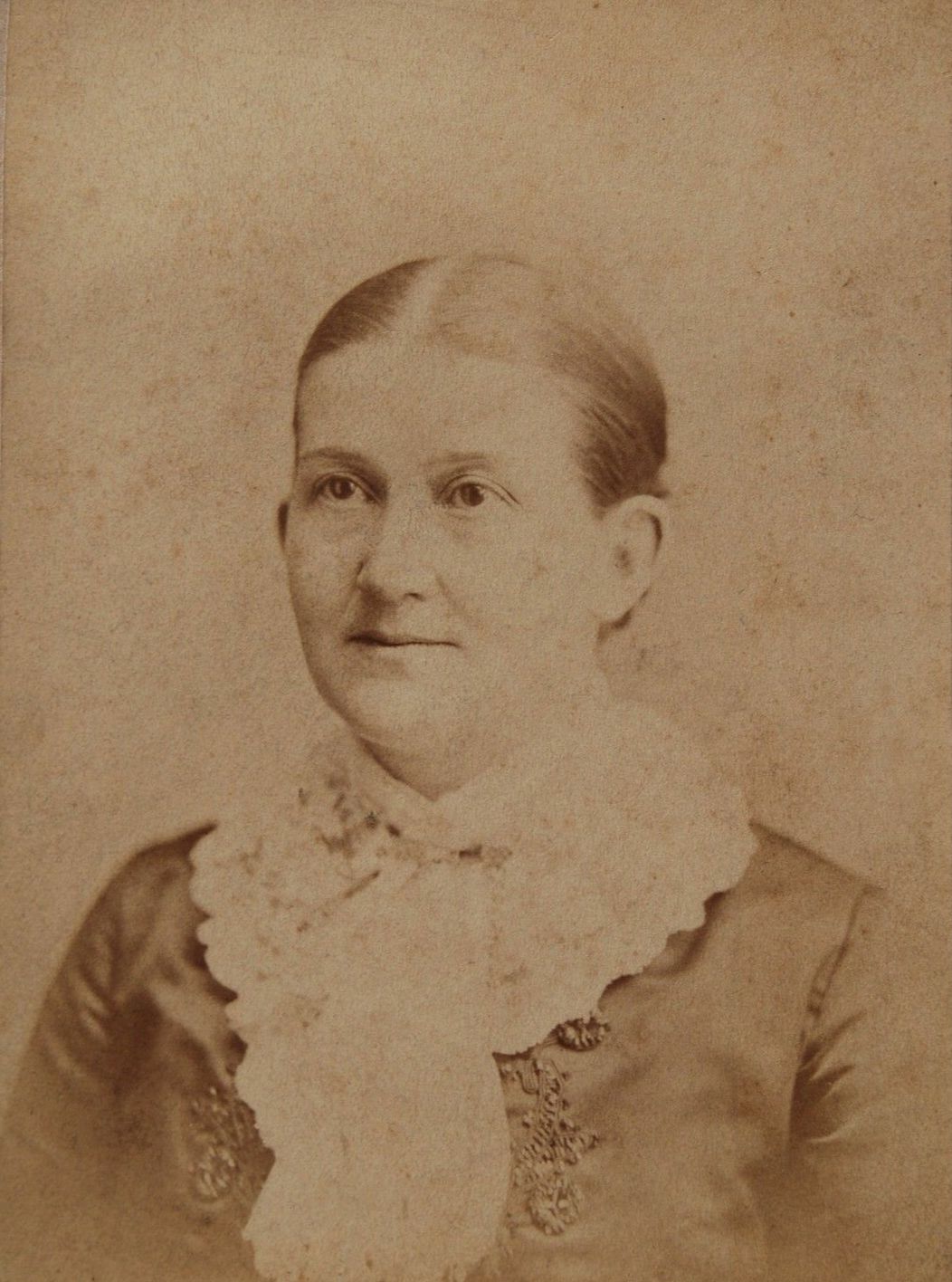
Marcia Livingston around 1905.
Their next update was published three weeks later on June 8 with the following headline:
THE MORTGAGE LIFTED
The sisters’ wrote:
Dear Friends:
It is with pleasure and gratitude that we come to you with the final result of our appeal for those dear servants of God in California, asking you to lend a helping hand in saving their home.
You will remember the amount of the mortgage was $150, and we have the joy of telling you that we have received in all the sum of $210.
That $210 would be equal to about $8,300 in today’s money! The sisters continued:
Undoubtedly it will be a blessing to our dear friends to receive these tokens of fellowship, but the Lord’s own statement, that it is “more blessed to give than to receive,” seems again to have been verified.
Nearly every letter writer has taken time to add a word of tender sympathy and to express the wish that the sum desired might be much more than realized.
As we read the heart-lines accompanying them, we wished that you could all enjoy them with us. It has been interesting to note how many ministers’ daughters responded, “begging the privilege” of being counted in.
One friend wrote that she was not in any way connected with ministers, but she was a member of the Presbyterian Church, and she felt it a precious privilege to lend a helping hand to these servants of the Lord in their hour of need.
Another, who said she “had just begun to be a minister’s wife,” was only too glad to inaugurate her service in this way. Still another begged admission to the circle on the plea that she expected “very soon” to become a minister’s wife.
Many ministers’ widows, out of their small incomes, sent glad offerings. One who was nearing her eightieth year, but who had a good home, the rent from which supported her, joyfully offered her gift. Another token was from an old minister and his wife, who said that they had no home to save, but the Lord had taken care of them for seventy-eight years, and given them a little with which to help others.
One wrote, “Your appeal coming so soon after our Sunday-school lesson on ‘Giving,’ afforded some of us an opportunity to show our faith by our works. How thoughtful of our Lord!”
There were gifts from those who “had to count even the dimes carefully to make the ends meet, but were glad to share with others.”
Times without number we were thanked for affording the opportunity, and the wish was constantly expressed that much more than the sum called for might be received.
Now, in regard to the recipients of these gifts, nothing would afford us greater pleasure than to copy at length the beautiful and touching letter received from the dear wife, in response to the check sent her. The length of the letter and the personal character of some of it deter us. A few sentences, however, we feel that we must quote. The letter commences:
“Dear, dear friends: What can I say? Words will not express my feelings! God only knows the heart, and he knows how thankful, oh, how thankful, we are to you for all your great and noble kindness. God bless you all, and ever keep you in the hollow of his hand, safe from all want. I want to tell you how it was, so far as words will. My husband was out in the yard when your letter came. I called to him and said: ‘Come in; I want to show you something.’ When he came in I said: ‘Put on your glasses;’ then I handed him the check. He is a man who thinks before speaking. As he sat looking at it I said: ‘Cannot we trust the Lord?” Then I could not keep the tears back any longer, and still he had not spoken. He sat with bowed head, and I knew he was thanking God for his loving kindness. When he looked up his eyes were full of tears, and when he heard how it was, he said: ‘The Lord guided you.'”
Was there ever a more beautiful word picture made than that? The entire letter, which is long, is the out-pouring of hearts almost over-burdened with gratitude. As we read we could hardly help feeling that the offerings were small and poor as compared with the wealth of the return; but, after all, that is what was promised: “Good measure, pressed down, shaken together, running over.” May the blessing of him who “maketh rich and addeth no sorrow” be upon every giver.
What is most striking about this story is how Isabella and Marcia immediately moved from sympathy to action. They didn’t just feel bad about the elderly couple’s situation—they did something about it. Using their talents as writers and their influence in the Christian community, they rallied others to join them in making a difference.
Isabella around 1885.
The sisters are an example of practical Christianity at its finest. They believed wholeheartedly that even the smallest gesture done in Christ’s name mattered, and the overwhelming response they received proved they were right! Within weeks, they hadn’t just raised $150—they’d collected $210 and created a community of givers who experienced the blessing of helping others.
Isabella and Marcia were women of action who used every gift God gave them to serve others. It’s a reminder that we all have something to offer, and that acting on our faith—even in small ways—can create ripples far beyond what we imagine.
For many people, January is a time of new beginnings, a chance to throw off old habits and create new routines that we hope will make us happier, healthier, and more successful.
One resolution that never goes out of style: getting our finances in order. We promise ourselves we’ll spend less, save more, or stick to a budget. It’s advice we hear everywhere, from financial gurus to social media influencers.
But more than a century ago, Isabella Alden was already writing about these same challenges, and offered practical wisdom about money management that remains true today.
Isabella was well acquainted with the concept of living within your means. Growing up, she watched her parents practice small, daily economies. They instilled in Isabella a belief that buying anything on credit—from running a tab at the green grocer’s to carrying a mortgage on a home—could lead to financial ruin.
When she was twenty-five, Isabella married a newly-ordained minister and kept house with very little income. It wasn’t until she began writing her books and stories that she started to earn money to augment her husband’s meager salary.
Money (and the lack of it) was a frequent theme in Isabella’s books. In Aunt Hannah and Martha and John Isabella wrote about the trials of a young minister’s wife who has to learn to cook and clean in order to economize (often with comical and disastrous results). Some of the scenes in the novel are based on Isabella’s own experiences.
So it isn’t surprising that she would be wise about money, and would believe wholeheartedly in the concept of living within one’s means.
Here’s an essay she wrote on the topic for an issue of The Pansy magazine in 1878:
GRAIN BY GRAIN
Did you ever know a young man, when he began in earnest to work for a living, who ever had wages enough? Somehow, salaries and “wants” never do keep with each other. There are not many, who, like an old philosopher, can walk along the streets of a gay city and note the tempting wares set out on every side, and yet say, “How many things there are here that I do not want!” Yet if you can get a little into his way of looking at the luxuries of life, it will be a great help to your peace of mind.
And it is a very singular fact that most fortunes have been laid on very small foundations. A great merchant was accustomed to tell his many clerks that he laid the foundation of his property when he used to chop wood at twenty-five cents a cord. Whenever he was tempted to squander a quarter he would say, “There goes a cord of wood!” He learned in very early years a good lesson in practical economy.
An old woman had been seen for years hanging about the wharves, where vessels were loaded and unloaded in New York harbor, intent on picking up the grains of coffee, corn, rice, etc., that were by chance scattered on the piers. The other day she was badly hurt by some heavy bags of grain falling on her. The kind merchants took up a purse for old Rosa and sent her to her home in Hoboken, in charge of an officer. What was his surprise to find that the neat and handsomely furnished cottage was the property of the old grain picker? She had literally built and furnished it, as the coral workers do their homes, grain by grain.
Do not be discouraged though your profits are small. If you cannot increase the income, the only way out of the difficulty is to cut down the wants. Turn every claim to the best account, and as prices go, you will be able to get a vast amount of real comfort out of even a small income. The habits you are forming are also of the greatest importance, and may be made the foundation stones of a high prosperity.
Have you ever had a “grain by grain” moment—where small consistent choices added up to something significant over time?
If you had to choose just one principle from Isabella’s essay to focus on this year—cutting unnecessary wants, maximizing what you have, or building better financial habits—which would make the biggest difference in your life?
December 8, 1925—almost exactly 100 years ago—started as any ordinary Tuesday afternoon in Palo Alto, California. Isabella Alden was 83 years old, and was living in the beloved double-home that she and her husband Ross built a decade before on Embarcadero Road.
Ross and her son Raymond had died the year before, so only Isabella and her daughter-in-law Barbara (Raymond’s widow) and her five children were left to share the rambling house.
Barbara Hitt Alden, about 1910.
That afternoon, Isabella, Barbara, and Barbara’s youngest son, Raymond Jr., set out together in the family car. Barbara was behind the wheel. None of them could have known that their simple outing would dramatically change the remainder of Isabella’s life.
A 1925 Lincoln sedan, a popular car style in the 1920s.
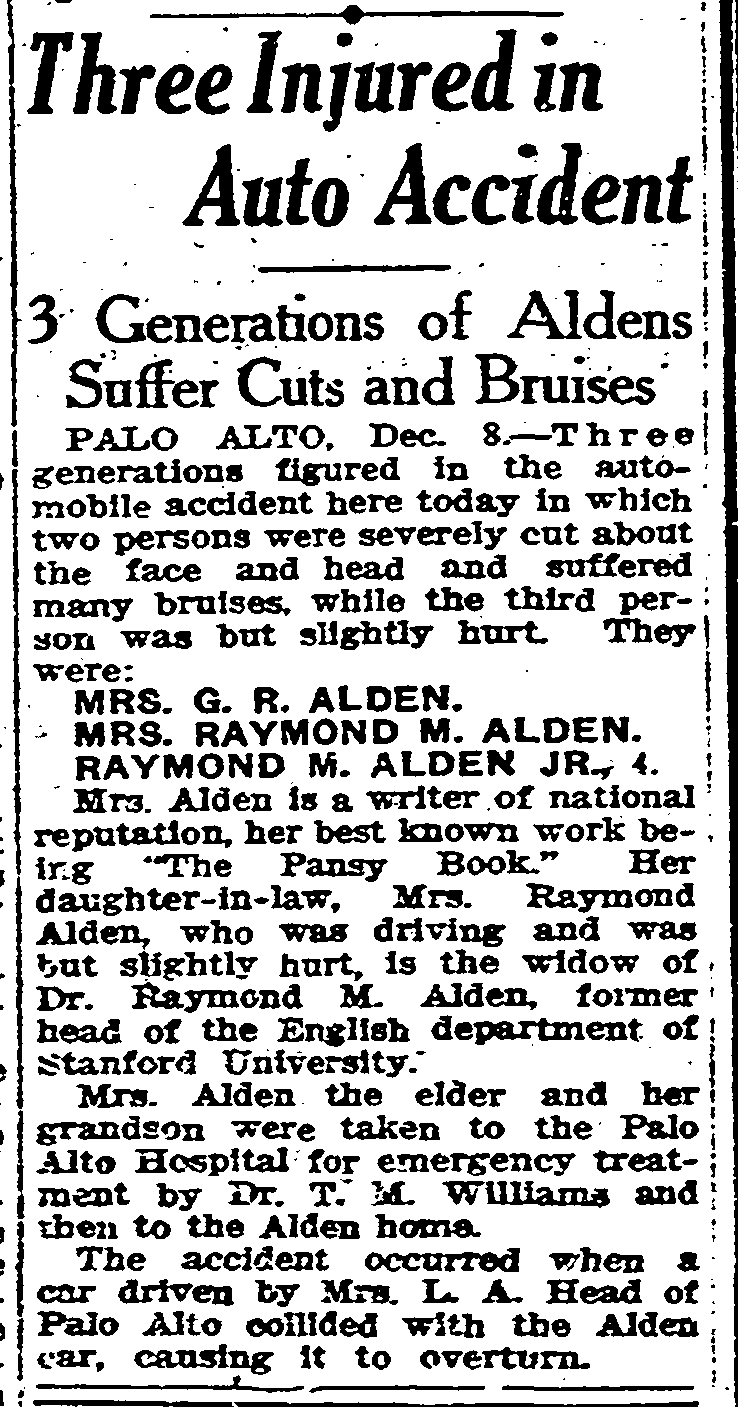
At a street intersection a little less than a mile from their home, another car collided with the Alden vehicle, striking it with enough force to cause it to overturn. The impact shattered the windshield and windows, showering the passengers with broken glass.
The San Francisco Chronicle, December 8, 1925.
Barbara was only slightly hurt. But Isabella and her young grandson suffered “severe cuts about the face and head, and many bruises.” After receiving first aid from a nearby physician, Isabella and Raymond Jr. were taken to Palo Alto Hospital for treatment.
Palo Alto Hospital in the 1920s.
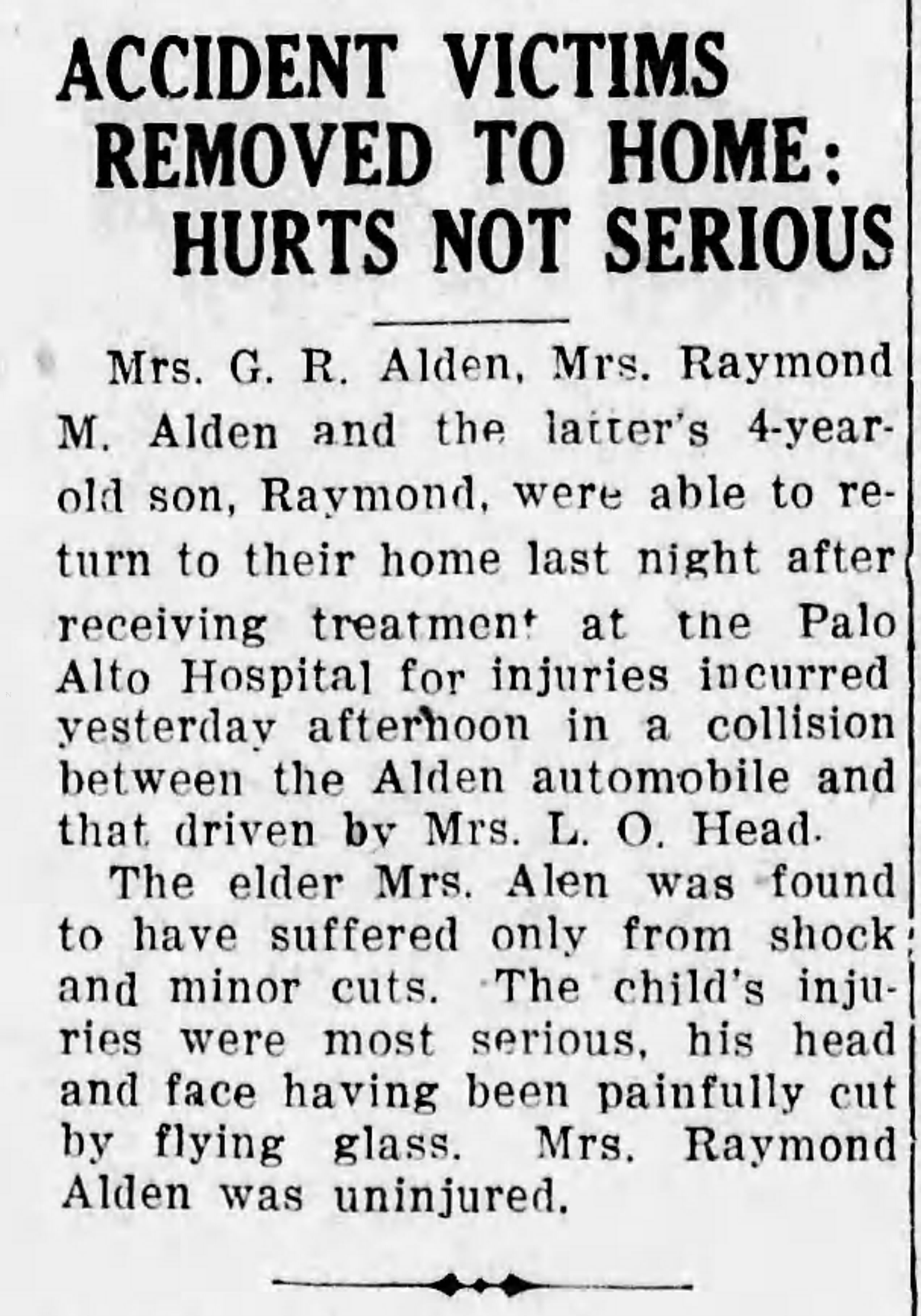
The next day’s newspaper reported reassuring news: the accident victims had returned home, and Isabella “was found to have suffered only from shock and minor cuts.” Her grandson’s injuries were described as the most serious of the three.
The Peninsula Times Tribune, December 9, 1925.
But that assessment would prove tragically wrong.
What those initial medical evaluations missed was the true extent of Isabella’s injuries. The accident left her in considerable pain and, ultimately, confined to a wheelchair for most of the remaining years of her life.
Until the accident, Isabella was a woman who had been remarkably productive well into her eighties—still writing, still engaged with her work and family. The accident didn’t just slow her down; it fundamentally altered how she could live her remaining years.
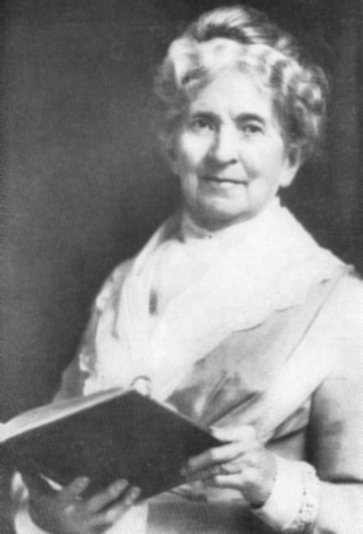
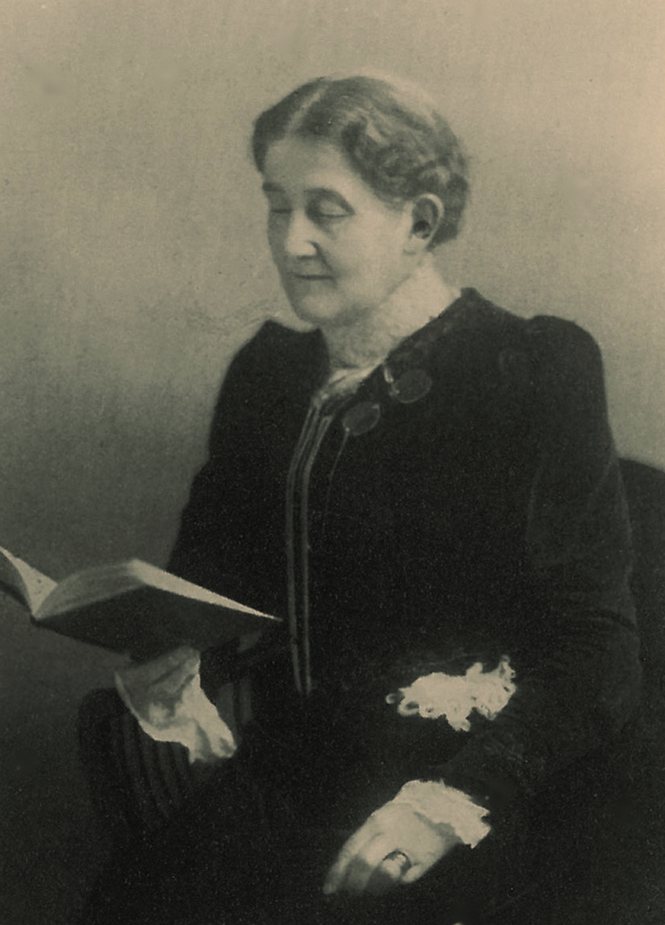
Isabella in later years.
In her memoir “Memories of Yesterday,” which she finished writing after the accident, Isabella documented the physical pain she endured. For a woman who had spent her life in service to others, who had quietly helped so many navigate their own difficulties, those final years must have been particularly difficult for her.
Isabella lived for nearly five more years after the accident, passing away in 1930 at age 88. Those years, spent largely in a wheelchair and dealing with chronic pain, were a far cry from the active, engaged life she had led for more than eight decades.
What is striking about this incident in Isabella’s life isn’t just the tragedy of the accident itself, but what it reveals about her character during her final years. Despite her pain and limitations, she continued to write. She finished her last novel, An Interrupted Night, and entrusted it to her niece, Grace Livingston Hill, to guide it through the publishing process.
She also completed her memoir, Memories of Yesterdays, candidly sharing her memories and reflections on a life well-lived. Even when her body was confined to a wheelchair, her mind and spirit remained active.
That’s the Isabella Alden we’ve come to know through her writings—someone who lived out the principles she wrote about, even when circumstances became difficult. She had spent decades writing about faith, perseverance, and finding purpose in adversity. In her final years, she had to draw on those very principles herself.
A hundred years ago this month, Isabella’s life changed forever on a Palo Alto street corner. While the accident limited her physical abilities, it couldn’t diminish the legacy she’d built through decades of faithful work—or the strength of character that sustained her until the end.
It’s Christmas time, and shopping for the holiday is now in full swing. During Isabella’s lifetime, Christmas ads filled the issues of newspapers and magazines, tempting shoppers with bargains and gift ideas.
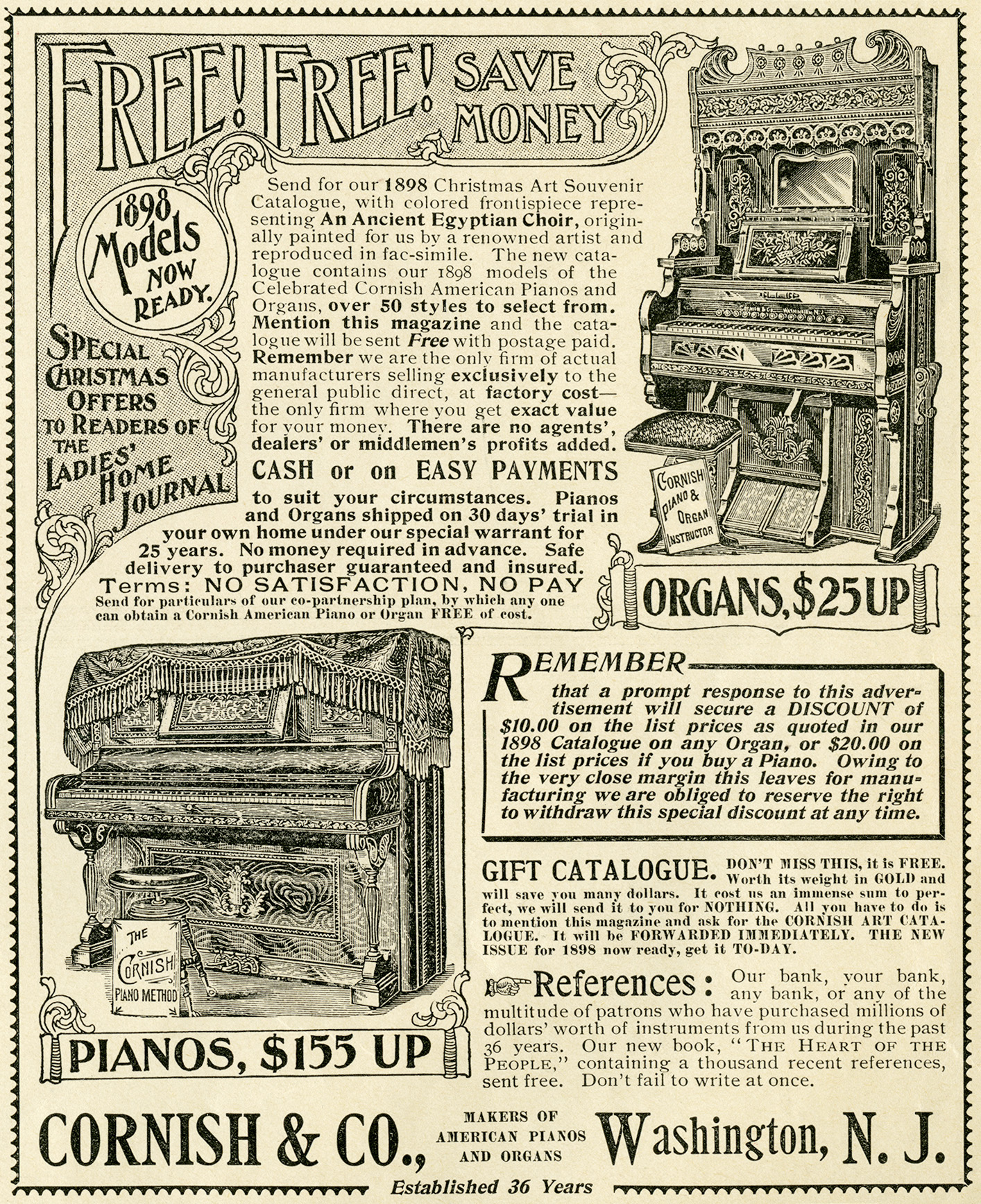
Among the many advertisements for books, handkerchiefs, slippers, and gloves were ads for a gift the whole family could enjoy: a piano.
The idea wasn’t as extravagant as it might sound; by the late 1890s pianos were quite affordable. Dealers and manufacturers offered consumers credit or payment plans that made purchasing a piano within the reach of families with more modest incomes.
Families weren’t the only ones who took advantage of these arrangements. In Pansy’s Advice to Readers, Isabella wrote about a group of school girls who bought a piano for their gymnasium by raising the money themselves and making regular payments to the dealer.
Such arrangements meant pianos were no longer an article of luxury available only to the wealthy. As more families were able to purchase pianos, American social life began to change. Previously, people gathered at churches, concert halls, and other public places to enjoy music; but affordable pianos allowed people to enjoy music at home and within their own family circle.
But even affordable pianos presented a challenge: someone had to learn how to play them.
Once a piano was installed in a home, there were lessons to be had and endless hours of practice in order for a player to become proficient. But in the 1890s self-playing devices came on the market that again changed how families brought music into their homes.
There were two kinds of self-playing devices: those that attached to pianos, and those that were placed inside them.
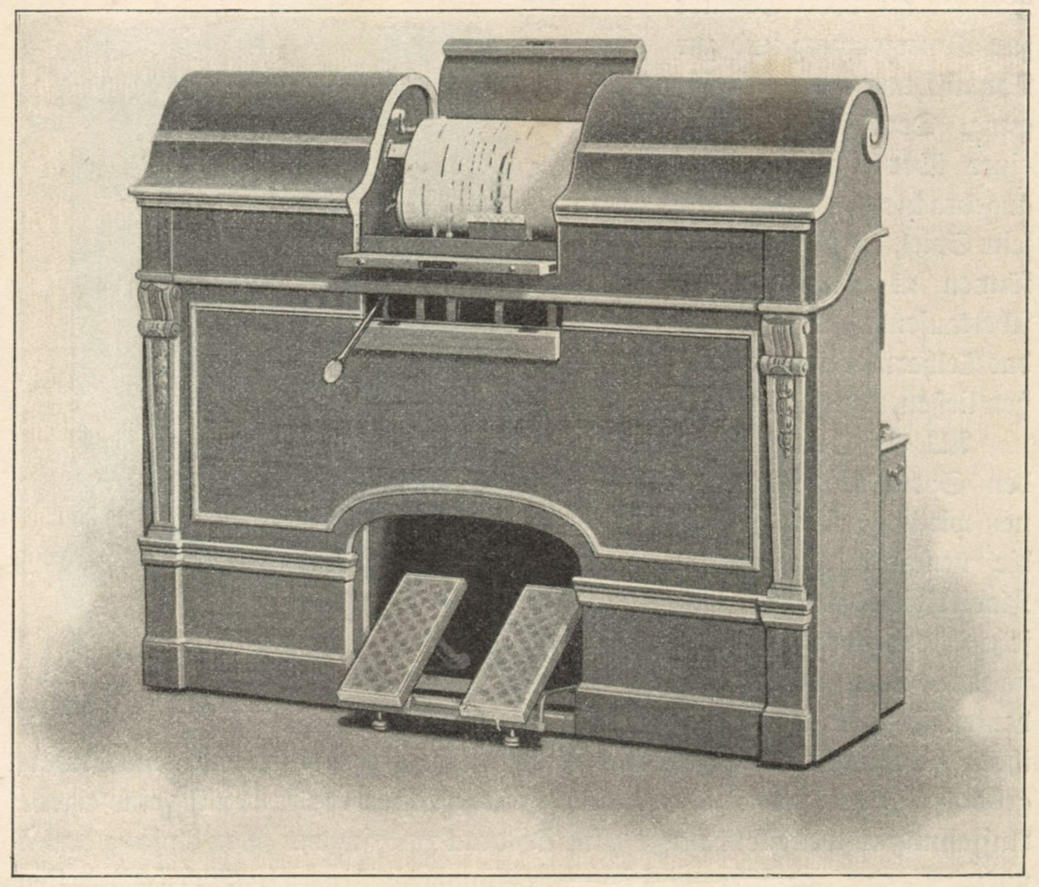
Invented in America, the pianola was a cabinet-type device that was pushed up against a piano keyboard. It depressed the piano keys with protruding felt-covered levers controlled by a perforated paper roll. A person had to be seated at the device to work the pumping pedals so air pressure created suction to rotate the roll.
Pianola cabinet style in 1890.
The other type—the player-piano—operated in the same manner with a rotating perforated roll, but the device was installed within the piano itself.
According to the editor of The Piano and Organ Purchaser’s Guide for 1908, these devices “made tens of thousands of pianos eloquent with good and popular music”—pianos that formerly were silent, except when there was a dance at home, or on a Sunday, when a few hymns were played.
“The present of a pianola is a present to every member of the family.” So declared a magazine advertisement in 1904 that urged consumers to consider buying a mechanical piano player for Christmas.
It wasn’t just families that could now listen to beautiful music in their homes. This ad in a 1904 issue of Booklover’s Magazine suggested a pianola cabinet player was the ideal gift for a bachelor’s home.
Those self-playing piano devices opened up whole new musical worlds for people. Many who never visited the opera or a concert before became thoroughly acquainted with world-class musical and orchestral compositions.
Sales of pianolas and player pianos peaked in the mid-1920s when gramophone recordings and the arrival of radio caused their popularity to wane.
But while in their heyday, pianos, pianolas, and player pianos made an important mark on American culture, bringing music and joy to thousands of families. Isn’t that a wonderful gift to receive?
You can learn more about pianolas and player pianos by clicking here.
In his first lesson, evangelist D.L. Moody diagnosed humanity’s deepest problem: the universal reality of sin and its separating power. Now, in this second lesson, Mr. Moody presents the remedy: the Gospel of Jesus Christ.
Through scripture and stories, including a powerful account from a Civil War hospital, Mr. Moody shows how Christ came to heal the broken-hearted, deliver captives, restore sight to the blind, and liberate the bruised. As he reminds us, “The Gospel of Jesus Christ is all that we choose to make it.”
This week, as we approach Thanksgiving, we’re sharing a lovely poem Isabella published in The Pansy magazine in 1886. “Miss Marion’s Thanksgiving Day” is about a wealthy but lonely lady who looks across the hills at the local almshouse and finds her purpose.
MISS MARION’S THANKSGIVING DAY
Two big houses broad and high,
Outlined against an autumn sky.
Set on two hills, the houses stand,
One grim and cheerless, one fair and grand;
One teems with life throughout its walls,
One silent in all its stately halls.
One is of wood, and one of stone,
Each set in broad acres all its own.
One is the almshouse, gaunt and gray,
One the beautiful home of Miss Marion Ray.
Miss Marion Ray—her kith and kin
All to their rest have entered in.
Now she dwells with servants in lonely state,
In the mansion behind the iron gate.
A lady tall, and sad, and fair,
With a quiet face and a gentle air—
A sweet, worn face, and hair of gray,
Was the lonely lady, Marion Ray.
Sometimes in the night, when all is still,
She has looked at the lights on the other hill,
And wondered much if it were sadder fate
To live in the house with the wooden gate.
But something happened, the other day,
That has stirred the heart of Miss Marion Ray:
A mother went out of the almshouse door,
Went out of it to go back no more;
Went out to be buried under the leaves,
While the wind of November moans and grieves,
And left a wee blossom with eyes of brown,
To the tender mercies of all the town.
Miss Marion has thought of the baby's fate
Till love and pity have grown so great
She has opened her Bible there to see:
"As ye did it to Mine, ye did it to Me;"
And so, on the morn of Thanksgiving Day,
In the early morn, when the sky is gray,
At the almshouse door a carriage stands,
With shining horses in gleaming bands;
And into the eyes of the little child,
The sad-eyed lady looked and smiled.
On the silken shoulder the glittering head,
Then —"I love 'oo, lady," the baby said.
Gathered close to the hungry heart,
The child and the lady never to part—
Carried home to the mansion grand,
The proudest and richest in all the land.
Never a pauper, the lovely child
Into whose face the lady smiled.
"Done to the least it is done to Me."
What grander honor on earth could be?
Oh, a sweet and joyous Thanksgiving Day
Has come to the home of Miss Marion Ray.
The heart of this story—and of so much of Isabella’s work—is the quiet call to charity, the simple act of extending kindness to those in deepest need.
What do you think? Does this poem illustrate Christ’s instruction from Matthew 25:40: “Inasmuch as ye have done it unto one of the least of these my brethren, ye have done it unto me”?
Under Isabella Alden’s tenure as editor, The Pansy magazine went from a monthly children’s magazine to a weekly publication. The content also changed; from the early days of short stories, poems, and Bible lessons, the variety of articles expanded to include lessons in science, nature, and geography.
The cover of September 17, 1892 issue of The Pansy magazine
In a regular column devoted to geography, Isabella cleverly turned what could have been a run-of-the-mill travelogue into a fun experience for her readers. Each month she chose a U.S. city as a topic; but instead of writing about the city herself, she invited children who had visited that city to write to her and tell about their trip and the sites they saw. Sometimes the children’s assessments and side-comments were more interesting than their descriptions of the city itself.
For example, when Isabella asked children to write about Minneapolis, Minnesota, she received this response from a boy named Harry Denning:
My uncle is a lawyer and lives in Minneapolis. He says the City Hall is just splendid. It cost three million dollars. Its great tower is three hundred and forty-five feet high, and there are only two others in the United States which can get above that. There isn’t any danger that this building will ever burn up, for it is made fire proof. I wonder why they don’t make all buildings fire proof? Then we would not have to buy engines, and pay firemen, and keep great splendid horses doing nothing all day long but wait for fires. This City Hall which I began to tell you about is three hundred feet square and fills up a great block on four streets. I am going to be a lawyer, and I shall have an office in Minneapolis.
Didn’t Harry have a good idea for building fire-proof buildings? The magazine included this illustration of the Minneapolis City Hall and Court Square:
City Hall and Court Square
Another letter was written by Minnie Andrews:
I have an aunt who is very fond of visiting churches. When she goes to a new place, if it is only a village, she wants to see all the churches and know about them. When she was in Minneapolis first, years ago, it was a little bit of a place, and my aunt is an old lady, and does not read the newspapers much, and did not realize that Minneapolis had grown a great deal. She went there last spring to visit a nephew. She reached there in the night, and was taken in a carriage to her nephew’s house, and did not realize the changes at all. The next morning at breakfast, when her nephew asked her what she would like to see in the city, she said she would like to visit the different churches if she could, and that perhaps as the day was pleasant they could go that morning.
“Very well,” said her nephew; “to which ones shall we go?”
“Oh, to all of them,” answered my aunt; “we can take a few minutes for each and see them all this forenoon, can we not?”
“Certainly,” said her nephew; “just as well as not. There are only about a hundred and sixty, I believe.”
And that was the first time my aunt knew that she was in a big city instead of the little town she had left thirty years or so before. But I don’t think her nephew was very polite to an old lady. She saw a good many of the churches, among them Dr. Wayland Hoyt’s, which she said she liked the best of all. It is the First Baptist Church of Minneapolis, and cost two hundred thousand dollars. It will seat about fifteen hundred people. I thought the Pansies would like to hear about it.
Perhaps the best part of Minnie’s letter is how caring she was in regard to her aunt’s feelings and how quickly she came to her aunt’s defense.
Another boy named Thomas Bailey Atwood wrote that when he and his sister visited their uncle in Minneapolis, they went to the Public Library:
It is a very handsome building. They say it cost a good deal—over three hundred thousand dollars. We sat in one of the elegant reading-rooms and read books while our uncle was looking up something in books of reference. There are thousands and thousands of volumes there. The street cars in Minneapolis are all electric. My sister did not like to ride on them when there was a thunderstorm, but I was not afraid. I think I like Minneapolis better than any place I was ever in.
The magazine included this illustration of the city’s impressive public library:
Public Library.
These letters give us a delightful peek into the minds of children from the 1890s. Harry’s practical question about fire-proof buildings, Minnie’s fierce defense of her aunt, Thomas’s brave stance on riding electric streetcars during thunderstorms—each letter reveals not just facts about Minneapolis, but the personalities of the children writing them.
Every child who wrote to her about a city shared real experiences. Isabella understood that children learn best when they’re engaged and when their own voices are valued. By inviting her young readers to become contributors, she turned geography lessons into something personal and memorable. It’s just one more example of why The Pansy magazine resonated with so many children during Isabella’s years as editor. And it’s no wonder children loved writing to her.
Reviews and giveaways for Christian fiction and sweet, clean fiction. Bringing readers information on great stories and connecting authors with their readers.