Yesterday you read a lovely letter Isabella wrote to the students of an elementary school, thanking them for planting a tree in her honor.
Isabella’s writings—her books, stories, letters, and lessons—are filled with quote-worthy lines. Here’s an example from her novel, Tip Lewis and His Lamp:
In the story, The Reverend Mr. Holbrook asked that question of young Tip Lewis to help him realize that his resentment toward another boy was jeopardizing his own standing with God.
It was Isabella’s way of illustrating the Bible verse: “If ye forgive not men their trespasses, neither will your Father forgive your trespasses.”
That was Isabella’s genius: she had a talent for explaining the Bible in terms anyone—young or old—could understand.
One of the greatest admirers of Isabella’s talent was her niece, Grace Livingston Hill. When Grace was twenty-three years old, she was the newly published author of her first book, A Chautauqua Idyll. And she was ready for her next project.
Grace turned her attention to her Aunt Isabella’s books. She combed through them, selected inspiring quotes, and organized them into a daily devotional, with each quote accompanied by an applicable verse from the Bible.
The result of Grace’s efforts was called Pansies for Thoughts, and it became her second published book.
The original cover for Grace’s 1888 devotional, Pansies for Thoughts.
Isabella wrote a brief Preface for the book, with a prayer that . . .
The Holy Spirit would use these pages in a way to lead some souls daily higher, and higher, even into the “shining light” of the “perfect day.”
Pansies for Thoughts is a wonderful daily devotional, and you can read the book for free! Click here to download the e-book version for your Kindle, Nook, or tablet. Or you can download a PDF version to print or read on your computer.
This post is part of our Blogiversary Celebration! Leave a comment below or on Isabella’s Facebook page to be entered in a drawing for a $25 Amazon gift card! We’ll announce the winner on Friday morning, September 21!
This short story by Isabella’s niece, Grace Livingston Hill, first appeared in a Christian magazine in 1917.
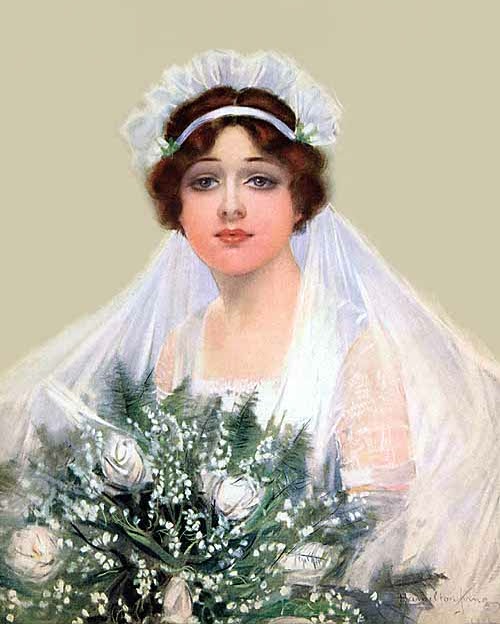
In “A Journey of Discovery” Louise Hasbrouck knows what everyone expects of her. She just received an offer of marriage from Halsey Carstairs, one of the city’s most eligible bachelors. Louise should feel honored and happy; instead she feels restless and anxious to talk to her old friend, Cecilia, who became a bride herself just two years before.
But when Louise arrives at Cecilia’s sweet little cottage in the country, and sees the life she leads away from the city’s whirling social scene, Louise begins to question the path society has plotted for her. Should Louise accept Halsey’s proposal, or will she find the strength to follow her heart?
You can read this story on your phone, ipad, Kindle, or other electronic device.
Or you can read it as a PDF document on your computer screen. You can also print the story to share with friends.
Click on the book cover to choose your preferred format from BookFunnel.com.
This post is part of our Blogiversary Celebration! Leave a comment below or on Isabella’s Facebook page to be entered in a drawing for a $25 Amazon gift card! We’ll announce the winner tomorrow!
It’s back to school time across the country, when millions of children return to the classroom.
As a teacher herself, Isabella Alden understood the tremendous influence a teacher had over the minds and hearts of young students.
In 1893 she wrote a short story about a young teacher, her sacrifice, and the rewards she reaped, simply because she did “what she could” for her students.
Now you can read the story for free! Just click on the book cover below to begin reading.
Though we often think of her as a writer of Christian fiction, Isabella Alden had another demanding career: she was an acknowledged expert in developing Sunday-school lessons for children. In her years growing up in a Christian home and, later, as a minister’s wife, she had plenty of opportunities to judge the effectiveness of Sunday-school programs.
She knew that many Sunday-school teachers had no training at all.
She had seen teachers who didn’t know what the Sunday-school lesson was until Sunday morning when they sat down in front of their class to teach.
She had also seen teachers who didn’t even know the Bible verse on which the Sunday lesson was based.
Isabella knew there was a better way to teach young children the lessons of the Bible in a way they could understand; so she developed a program of education for Sunday-school teachers of young children, in which she gave teachers step-by-step instructions, telling them everything they needed to know … from what to write on the chalkboard, to when to have the children stand and sit.
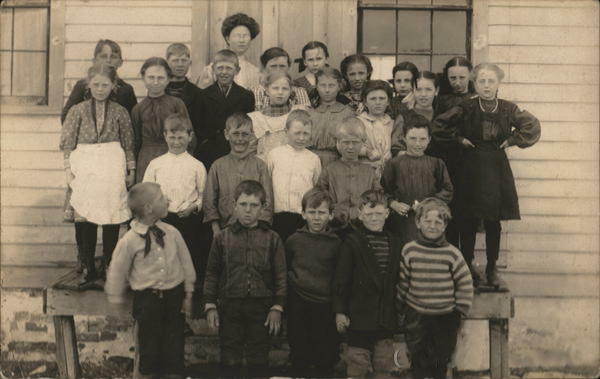
Undated photo of a teacher and her class.
She shared her program at the Chautauqua summer assemblies, and she spoke at churches about the method. Her Sunday-school lessons were published in regular weekly columns in Christian magazines, such as The Sabbath School Monthly and The National Sunday-School Teacher.
Click on this link to see an excerpt from an 1877 issue of Sabbath School Monthly with one of Pansy’s lessons.
Isabella was convinced that children should be shown that the Bible had meaning for them. She believed children were not too young to learn that the Bible could be a help to them in their day-to-day lives.
It was that premise that inspired her to write three of her most popular children’s books. In Frank Hudson’s Hedge Fence, Frank (a boy of about ten or twelve years old) is constantly getting into trouble. One day an acquaintance convinces him that learning a Bible verse a month will help guide him through the temptations he faces and help him make wise decisions. The story tracks Frank’s progress for several months as he learns the Bible really can help him make good choices in his life.
We Twelve Girls is similar to Frank Hudson’s Hedge Fence. In this story, twelve young teenaged girls, all close friends at boarding school, are separated over the summer months; but they each pledge to learn a new verse every week and find a way to apply the verse to their lives. Over the course of the book, each young lady learns what it means to live a God-centered life according to the Bible.
Another example is A Dozen of Them. In this book, twelve-year-old Joseph has many challenges in his life; but he made a promise to his older sister he would read at least one Bible verse each month and make it a rule to live by. To Joseph it’s a silly promise—how can reading one Bible verse a month make any difference? But to his astonishment, Joseph begins to see changes in his own life and in the lives of those around him, all because of the verses he reads and memorizes.
Frank Hudson’s Hedge Fence and We Twelve Girls are both available as e-books on Amazon. A Dozen of Them was originally published in 1886 as a serial in The Pansy magazine, and we thought it would be nice to reproduce it on this blog, in the same serial format as the original.
Each week you can read a new chapter of A Dozen of Them here and here’s Chapter One:
A Dozen of Them
Chapter 1
And Thomas answered and said unto him, My Lord and my God.
He saith unto him, Feed my lambs.
If we walk in the light, as he is in the light, we have fellowship one with another, and the blood of Jesus Christ his Son, cleanseth us from all sin.
I am he that liveth, and was dead; and behold, I am alive forevermore.
Young Joseph sat on the side of his bed, one boot on, the other still held by the strap, while he stared somewhat crossly at a small green paper-covered book which lay open beside him.
“A dozen of them!” he said at last. “Just to think of a fellow making such a silly promise as that! A verse a month, straight through a whole year. Got to pick ’em out, too. I’d rather have ’em picked out for me; less trouble.
“How did I happen to promise her I’d do it? I don’t know which verse to take. None of ’em fit me, nor have a single thing to do with a boy! Well, that’ll make it all the easier for me, I s’pose. I’ve got to hurry, anyhow, so here goes; I’ll take the shortest there is here.”
And while he drew on the other boot, and made haste to finish his toilet, he rattled off, many times over, the second verse at the head of this story.
The easiest way to make you understand about Joseph, is to give you a very brief account of his life.
He was twelve years old, and an orphan. The only near relative he had in the world was his sister Jean aged sixteen, who was learning millinery in an establishment in the city. The little family though very poor, had kept together until mother died in the early spring. Now it was November, and during the summer, Joseph had lived where he could; working a few days for his bread, first at one house, then at another; never because he was really needed, but just out of pity for his homelessness. Jean could earn her board where she was learning her trade, but not his; though she tried hard to bring this about.
At last, a home for the winter opened to Joseph. The Fowlers who lived on a farm and had in the large old farmhouse a private school for a dozen girls, spent a few weeks in the town where Joseph lived, and carried him away with them, to be errand boy in general, and study between times.
Poor, anxious Jean drew a few breaths of relief over the thought of her boy. That, at least, meant pure air, wholesome food, and a chance to learn something.
Now for his promise. Jean had studied over it a good deal before she claimed it. Should it be to read a few verses in mother’s Bible every day? No; because a boy always forgot to do so, for a week at a time, and then on Sunday afternoon rushed through three or four chapters as a salve to his conscience, not noticing a sentence in them. At last she determined on this: the little green book of golden texts, small enough to carry in his jacket pocket! Would he promise her to take—should she say each week’s text as a sort of rule to live by?
No; that wouldn’t do. Joseph would never make so close a promise as that. Well, how would a verse a month do, chosen by himself from the Golden Texts?
On this last she decided; and this, with some hesitancy, Joseph promised. So here he was, on Thanksgiving morning, picking out his first text. He had chosen the shortest, as you see; there was another reason for the choice. It pleased him to remember that he had no lambs to feed, and there was hardly a possibility that the verse could fit him in any way during the month. He was only bound by his promise to be guided by the verse if he happened to think of it, and if it suggested any line of action to him.
“It’s the jolliest kind of a verse,” he said, giving his hair a rapid brushing. “When there are no lambs around, and nothing to feed ’em, I’d as soon live by it for a month as not.”
Voices in the hall just outside his room: “I don’t know what to do with poor little Rettie today,” said Mrs. Calland, the married daughter who lived at home with her fatherless Rettie.
“The poor child will want everything on the table, and it won’t do for her to eat anything but her milk and toast. I am so sorry for her. You know she is weak from her long illness; and it is so hard for a child to exercise self control about eating. If I had anyone to leave her with I would keep her away from the table; but everyone is so busy.”
Then Miss Addie, one of the sisters: “How would it do to have our new Joseph stay with her?”
“Indeed!” said the new Joseph, puckering his lips into an indignant sniff and brushing his hair the wrong way, in his excitement; “I guess I won’t, though. Wait for the second table on Thanksgiving Day, when every scholar in the school is going to sit down to the first! That would be treating me exactly like one of the family with a caution! Just you try it, Miss Addie, and see how quick I’ll cut and run.”
But Mrs. Calland’s soft voice was replying: “Oh! I wouldn’t like to do that. Joseph is sensitive, and a stranger, and sitting down to the Thanksgiving feast in its glory, is a great event for him; it would hurt me to deprive him of it.”
“Better not,” muttered Joseph, but there was a curious lump in his throat, and a very tender feeling in his heart toward Mrs. Calland.
It was very strange, in fact it was absurd, but all the time Joseph was pumping water, and filling pitchers, and bringing wood and doing the hundred other things needing to be done this busy morning, that chosen verse sounded itself in his brain: “He saith unto him, feed my lambs.” More than that, it connected itself with frail little Rettie and the Thanksgiving feast.
In vain did Joseph say “Pho!” “Pshaw!” “Botheration!” or any of the other words with which boys express disgust. In vain did he tell himself that the verse didn’t mean any such thing; he guessed he wasn’t a born idiot. He even tried to make a joke out of it, and assure himself that this was exactly contrary to the verse; it was a plan by means of which the “lamb” should not get fed. It was all of no use. The verse and his promise, kept by him the whole morning, actually sent him at last to Mrs. Calland with the proposal that he should take little Rettie to the schoolroom and amuse her, while the grand dinner was being eaten.
I will not say that he had not a lingering hope in his heart that Mrs. Calland would refuse his sacrifice. But his hope was vain. Instant relief and gratitude showed in the mother’s eyes and voice. And Joseph carried out his part so well that Rettie, gleeful and happy every minute of the long two hours, did not so much as think of the dinner.
“You are a good, kind boy,” said Mrs. Calland, heartily. “Now run right down to dinner; we saved some nice and warm for you.”
Yes, it was warm: but the great fruit pudding was spoiled of its beauty, and the fruit pyramid had fallen, and the workers were scraping dishes and hurrying away the remains of the feast, while he ate, and the girls were out on the lawn playing tennis and croquet, double sets at both, and no room for him, and the glory of everything had departed. The description of it all, which he had meant to write to Jean, would have to be so changed that there would be no pleasure in writing it. What had been the use of spoiling his own day? No one would ever know it, he couldn’t even tell Jean, because of course the verse didn’t mean any such thing.
“But I don’t see why it pitched into a fellow so, if it didn’t belong,” he said, rising from the table just as Ann, the dishwasher, snatched his plate, for which she had been waiting. “And, anyhow, I feel kind of glad I did it, whether it belonged or not.”
“He is a kind-hearted, unselfish boy,” said Mrs. Calland to her little daughter, that evening, “and you and mamma must see in how many ways we can be good to him.”
“Child-wife” or “child-bride” was a term used in the late 1800s to describe a young bride in her late teens or early twenties who had little experience in the ways of the world. A child-wife was an innocent, unsure of her footing, and sometimes easily influenced.
Isabella used the term a couple of times in describing some of her characters, but Mrs. Harry Harper is probably her most winning example of a child-wife.
“Mrs. Harry Harper’s Awakening” was a short story Isabella published in 1881. It’s a quick read and on the surface, it’s a simple story of a young woman who blossoms after she unintentionally becomes involved with a ladies’ Christian mission society.
But what makes the story unique is the heroine’s progression from a “child-bride” with no life purpose to a woman who is strong in her faith and determined to live her convictions.
She is introduced to us simply as “Mrs. Harry Harper.” She has no identity of her own outside of her husband’s. In fact, we never learn her Christian name; and even her husband calls her “wife” or “wifey.” Although he says those words with affection, he—like everyone else—doesn’t see her as anything more than an extension of himself.
He leaves her alone every day while he works, and expects her to simply fend for herself in some ladylike way while he takes care of the important business of earning a living. How Mrs. Harry elects to spend her days and how her involvement with a ladies’ mission society impacts all areas of her life illustrates Mrs. Harry’s progression from child-wife to confident worker for Christ.
As with all of Isabella’s stories, “Mrs. Harry Harper’s Awakening” is an allegory that illustrates Christian duty. Mrs. Harry Harper considered herself a Christian and she attended church, but it wasn’t until she began actually working for the Lord that she received the blessings and fulfillment of living the Christian life.
You can read “Mrs. Harry Harper’s Awakening” for free. Just click on the book cover to begin reading now.
In her books Isabella Alden often mentioned the works of other authors she read and admired.
One such example was in Isabella’s book, Links in Rebecca’s Life. In that story, newly-married Rebecca Edwards was settling into her new life in the home of her very critical mother-in-law.
At breakfast one morning, Mrs. Edwards criticized Rebecca for drinking coffee that was too hot, in Mrs. Edwards’ opinion.
“I wonder at you, Rebecca, for drinking your coffee so hot; it is very bad for the teeth.”
Rebecca laughed in her old gleeful way, and replied:
“I am like ‘Fred and Maria and Me,’ I like my coffee ‘bilin’. Frank, did you ever read that delightful book?”
“Never heard of it. What an extraordinary title! Is it good?”
“It is capital,” Rebecca had said, ignoring, as Frank did, his mother’s question.
“Do you mean the book, or the title, my son?” Then she had turned to Rebecca. “Did you say that was the title? How very singular! One would suppose the editor would have corrected so remarkable a grammatical error as that!”
And Rebecca’s eyes danced as she answered, “It is by Mrs. Dr. Prentice, you remember. She is one of our most popular authors. I suspect she wanted the grammatical part of it to appear just as it did.”
Mrs. Prentiss did, indeed. Fred and Maria and Me was written by Elizabeth Prentiss in the perspective of an elderly woman from Goshen, Maine. The heroine, Aunt Avery, made generous use of the local Maine dialect.
Elizabeth Prentiss
Throughout the story, Mrs. Prentiss’s characters used words like “t’wasn’t,” “your’n,” “p’inted” (instead of “pointed”), and other grammatically incorrect terms that would have made prim Mrs. Edwards swoon.
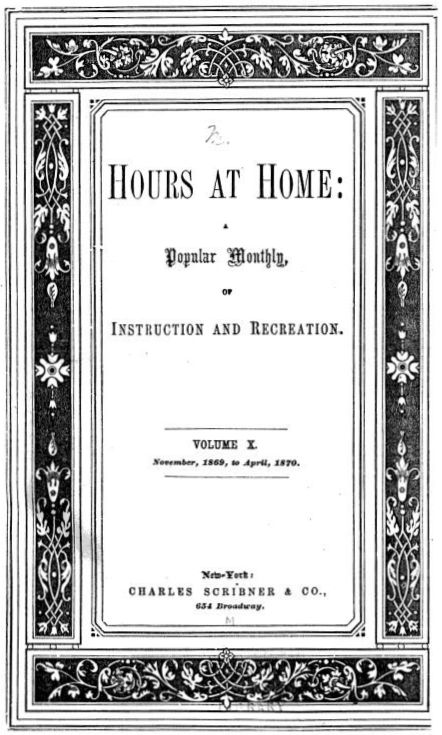
Originally, Fred and Maria and Me was published as a serial in Hours at Home: A Popular Monthly of Instruction and Recreation in 1865. When Elizabeth Prentiss first saw her story in the magazine, she wasn’t happy:
“I have just got hold of the Hours at Home. I read my article and was disgusted with it. My pride fell below zero, and I wish it would stay there.”
But the reading public disagreed. Reviewers praised the story and declared Aunt Avery was “a very quaint and interesting type of New England religious character.”
Elizabeth Prentiss soon changed her mind about the story.
“Poor old Aunt Avery! She doesn’t know what to make of it that folks make so much of her and has to keep wiping her spectacles.”
The popularity of Fred and Maria and Me may have surprised Elizabeth Prentiss, but not the publishing industry. The story’s “quaintness, simplicity, and truthfulness” created such a demand that it was published as a book in 1867 to great acclaim. A second printing appeared in 1872, six years before Isabella wrote Links in Rebecca’s Life.
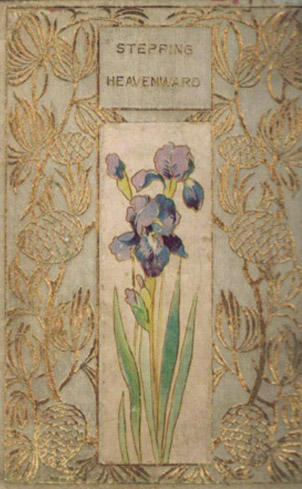
1907 cover of Stepping Heavenward by Elizabeth Prentiss
Elizabeth Prentiss went on to write several books, including Stepping Heavenward, the classic story of a teenage girl’s Christian journey into womanhood. Stepping Heavenward is still widely read today. Click here to find out more about Stepping Heavenward.
She was also a talented poetess and penned lyrics for beloved hymns, including “More Love to Thee, O Christ.”
You can read Elizabeth Prentiss’s delightful book, Fred and Maria and Me and discover why Isabella Alden called it a “capital” story. Click on the book cover to begin reading now.
Isabella Alden’s first published book Helen Lester was written as an entry to a contest . . . which she won! Isabella’s prize was a check for $50 and publication of her book Helen Lester in 1865.
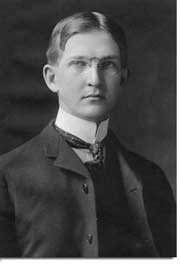
Raymond Alden in an undated photo
Her son, Raymond, was also a writer. Like his mother, he began writing at a young age. As an associate professor at Stanford University in California he authored several text books. He also contributed stories to The Pansy magazine, which his mother edited; and in 1909 his Christmas book for children, Why the Chimes Rang, was published.
The 1909 cover of Why the Chimes Rang by Raymond Alden
Forty years after his mother took her first writing prize, Raymond entered a writing contest. In 1905 he submitted a short story titled “In the Promised Land” to a writing contest sponsored by Collier’s Weekly magazine. His short story took third prize in the national contest and Raymond was awarded $1,000. That was a substantial prize—the equivalent of $26,000 in today’s economy.
Article in The Los Angeles Herald, February 13, 1905
Isabella Alden often drew on her own life experiences when she crafted her short-stories and novels. The incidents she wrote about weren’t necessarily historic or even life-changing, but she had a talent for sharing her own memories in a way her readers could identify with.
One of Isabella’s school experiences ended up as a short story titled “When I Was a Girl.” It happened when Isabella was a young student at Oneida Seminary in New York.
Gathered in the school assembly hall one day were all the teachers and pupils, as well as friends and parents of many of the students. Isabella was one of six young students chosen to read their own compositions at the assembly, and the audience was to vote by ballot for the best essay.
Being a talented writer from a young age, Isabella won the prize; but soon after she received her award, a rumor began to spread through school that the composition she read was not her own—that she had copied the words from a printed book!
Soon Isabella was in the office of Dr. Branner, the school principal. He confronted Isabella with the allegation, which she hotly denied.
Moments later, another student named Ophelia entered the office. Ophelia had been one of the five other students who read before the assembly, and she had been bitterly disappointed at not winning the prize awarded to Isabella—and it was Ophelia who was the source of that horrible rumor.
In her memoirs, Isabella described what happened next:
Dr. Branner’s manner was coldly dignified as he asked Ophelia:
“Am I to understand that you still insist that there is a book in your father’s library which has in it every word of the essay that took the prize in our school last week?”
Ophelia’s face as she answered the question was almost smiling, and she answered briskly:
“Of course, word for word. I didn’t suppose you were accusing me of telling lies!”
“Very well,” said the principal quietly. “Then you may go home at once and bring that book to me. We will wait here till you come.”
A high school in Hoosick Falls, New York, 1907
Isabella spent many anxious minutes waiting for Ophelia to come back with the book. In her story, “When I Was a Girl,” she described the moment when Ophelia returned. She made a few minor changes to some of the details in the story. For example, she changed the names of the school principal and the other student involved; she also added additional description she didn’t mention in her memoirs; but the finale—the truth of what happened when Ophelia returned to the principal’s office that day—is straight from Isabella’s childhood memory.
Click on the cover to the read Isabella’s short story, “When I Was a Girl” and find out how the story ended.
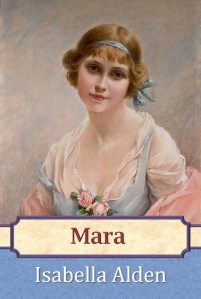
In 1902 Isabella Alden published her most controversial book, Mara.
Mara is the story of a young woman who unknowingly marries a Mormon man with multiple wives. What made Mara controversial wasn’t the plot. Novels with similar themes of an innocent young woman duped into marrying a polygamous Mormon husband had been published for over 50 years.
An 1875 photo of Ann Eliza Young, the 19th wife of Brigham Young, at the age of 31.
Author Metta Victor created the sub-genre with her book Mormon Wives, published in 1856. In the book two women, life-long friends, find themselves married to and betrayed by the same Mormon man.
Cover of the 1890 edition of A Study in Scarlet by Arthur Conan Doyle
After that book’s success, an estimated fifty novels were published by 1900, vilifying the Mormon religion. Sir Arthur Conan Doyle’s book, A Study in Scarlet depicted Mormon President Brigham Young as a villain and the Mormon Church steeped in kidnapping, murder and enslavement of its women.
An 1899 photograph of seven of Brigham Young’s Wives
So what made Isabella’s novel Mara different from all the others?
In 1902 when Mara was published, the topic of polygamy was at the forefront of American consciousness. Only a few years before, Americans believed, polygamy had been abolished; they believed plural marriages did not exist because the Mormon Church had assured the Federal Government the practice had been abolished. That assurance had been required of Utah as part of its transition from territory to state.
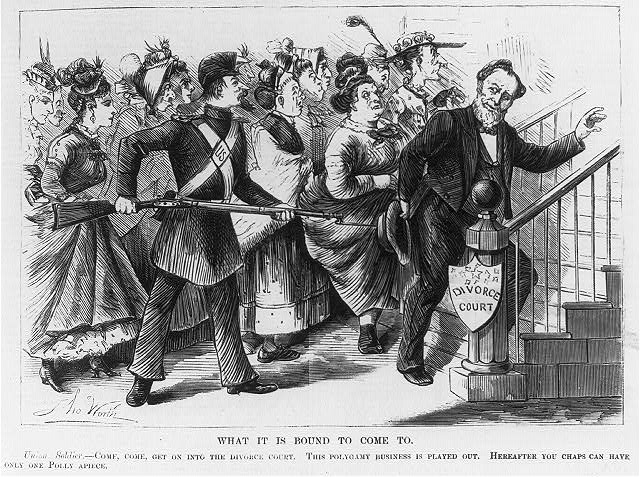
An 1873 cartoon shows a Union soldier prodding a Mormon man and his wives into the divorce court: “Come, come, get on into the divorce court. This polygamy business is played out. Hereafter you chaps can have only one Polly apiece.”
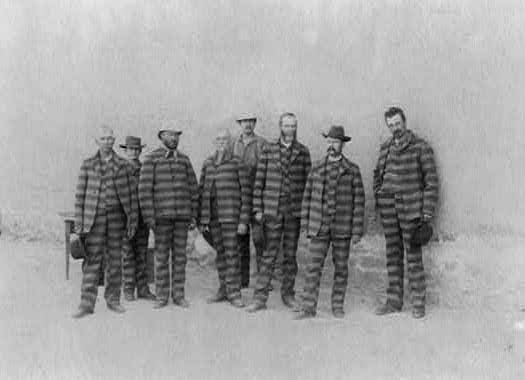
Utah’s transition had been a long and contentious process. The Federal Government had tried numerous ways of outlawing polygamy in the past through the 1862 Morrill Anti-Bigamy Act, and again in the 1882 Edmunds Anti-Polygamy Act. But the LDS Church defied the laws and continued to sanction plural marriage. Under President Grover Cleveland the Federal Government tried to enforce the laws by arresting and imprisoning men who could be proven to be polygamists.
Polygamists in the Utah Penitentiary 1885
But the Federal Government’s only effective weapon was blocking statehood, and residents of Utah keenly felt the effects. They couldn’t vote in Federal elections and their territory was ruled by a governor, secretary and judges appointed by the President of the United States.
In 1890 the LDS Church appealed to the U.S. Supreme Court, arguing the Edmunds Anti-Polygamy Act was unconstitutional because it prohibited Mormons from practicing their religion, of which plural marriage was an essential part. The U. S. Supreme Court ruled in favor of the Edmunds Act.
Mormon Church President Joseph F. Smith with his wives and children, circa 1900
In 1890 Mormon Church president Wilford Woodruff published his “Manifesto,” which declared an end to the practice of polygamy in the Church. Doing so paved the way for Utah to become a state; and six years later Utah joined the Union. Protestants in America breathed a sigh of relief.
But almost immediately after the Manifesto was issued, certain members of the Mormon Church resumed the practice of polygamy clandestinely. Ranking members of the Church’s Quorum of the Twelve Apostles and other members of the Church entered into plural marriages—and sanctified plural marriages of others—in direct defiance of the Manifesto.
Senator Reed Smoot
The rest of the country felt it had been duped and a wave of outrage swept across America. Some believed there was a great Mormon conspiracy to take over the U.S. government. Concern deepened when the Utah Legislature chose Reed Smoot—a member of the Church’s Quorum of the Twelve Apostles—to be the State’s new Senator.
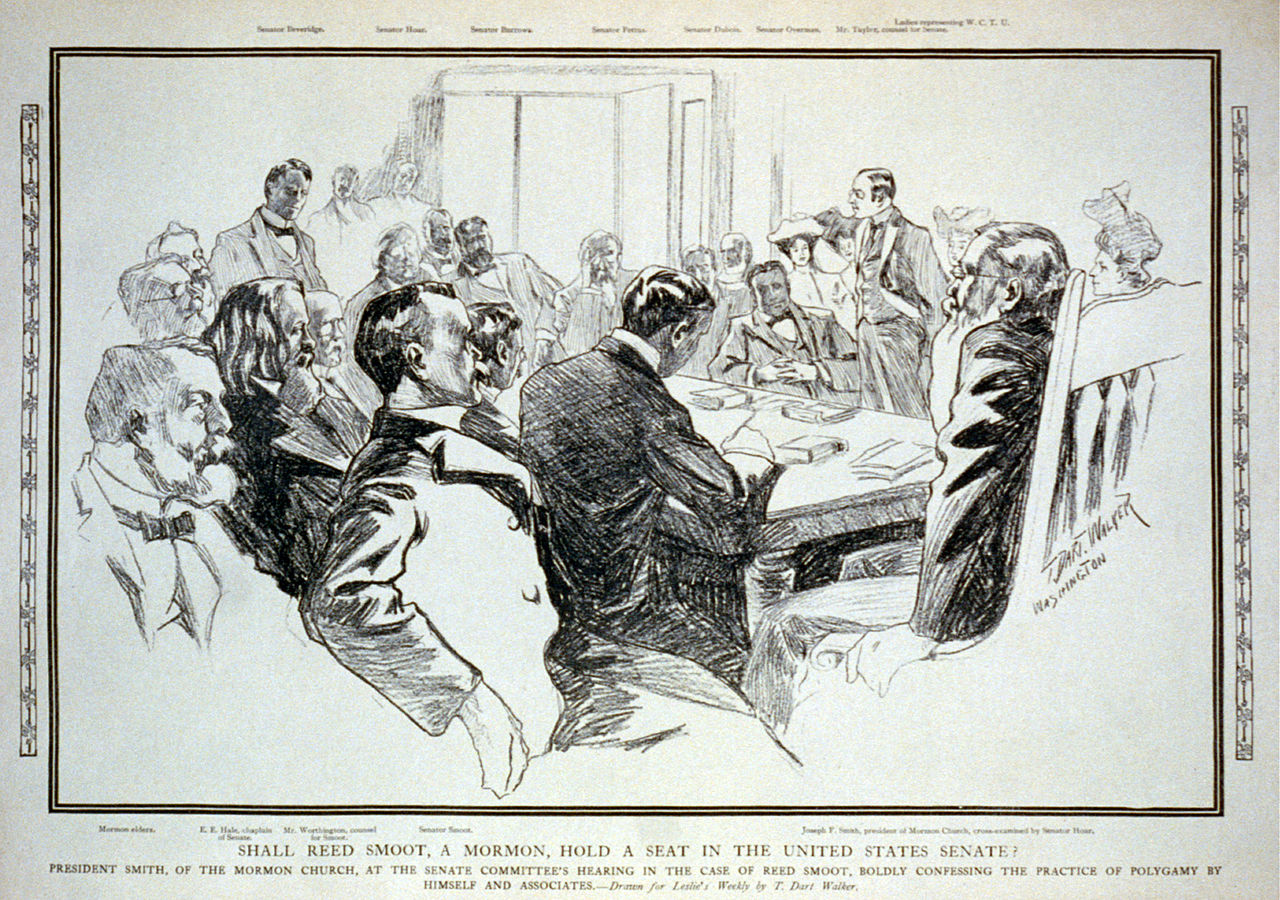
Protestant churches organized massive petitions against allowing Mr. Smoot a seat in the Senate; and the U.S. Senate responded by conducting a multi-year investigation into the Mormon Church and its influence in the state of Utah.
Mara was written in the climate of that time. Like other anti-polygamy novels before, Mara’s plot centered around a young woman who married a successful and gentlemanly man from Utah, only to later discover she was his latest in a string of wives. Mara was also a reminder to readers that America had to remain vigilant in ensuring polygamy as a practice was removed from American society.
Newspaper illustration of Mormon President Joseph F. Smith (seated in the white chair on the right) giving testimony to Senator George Frisbie Hoar during the Reed Smoot Senate Hearing.
Today some might think Mara’s plot is simply sensational fiction; but Isabella Alden’s novels were always rooted in a common truth: her characters lose their way only when their relationship with God wanes. She used the story to show how easy it was for a young woman to fall under a wrong influence in a time of weakness in her life.
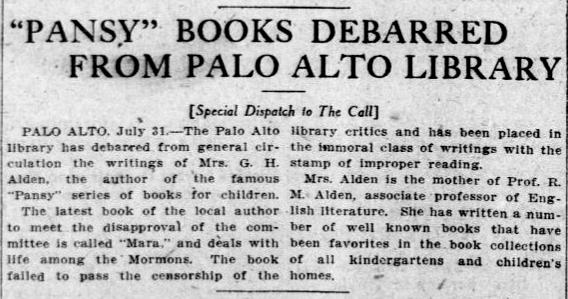
In Mara Isabella also displayed some sympathy for the wives and children of the plural unions, which may have been one reason the book came under scrutiny. Some public libraries, including the library in Isabella’s town of Palo Alto, California, banned the book because it dealt with the topic of polygamy, which library trustees considered an immoral practice.
Article in the San Francisco Call on August 1, 1910
America, for the most part, did not share Isabella’s pity. Their abhorrence for polygamy (and all who engaged in the practice, including the wives) reached new heights during the four years it took the U.S. Senate to conduct their investigation into practices of the Mormon Church. In the end, the Mormon Church submitted to pressure and outlawed polygamy once and for all, and established a new practice of excommunicating Church members who entered into plural marriages.
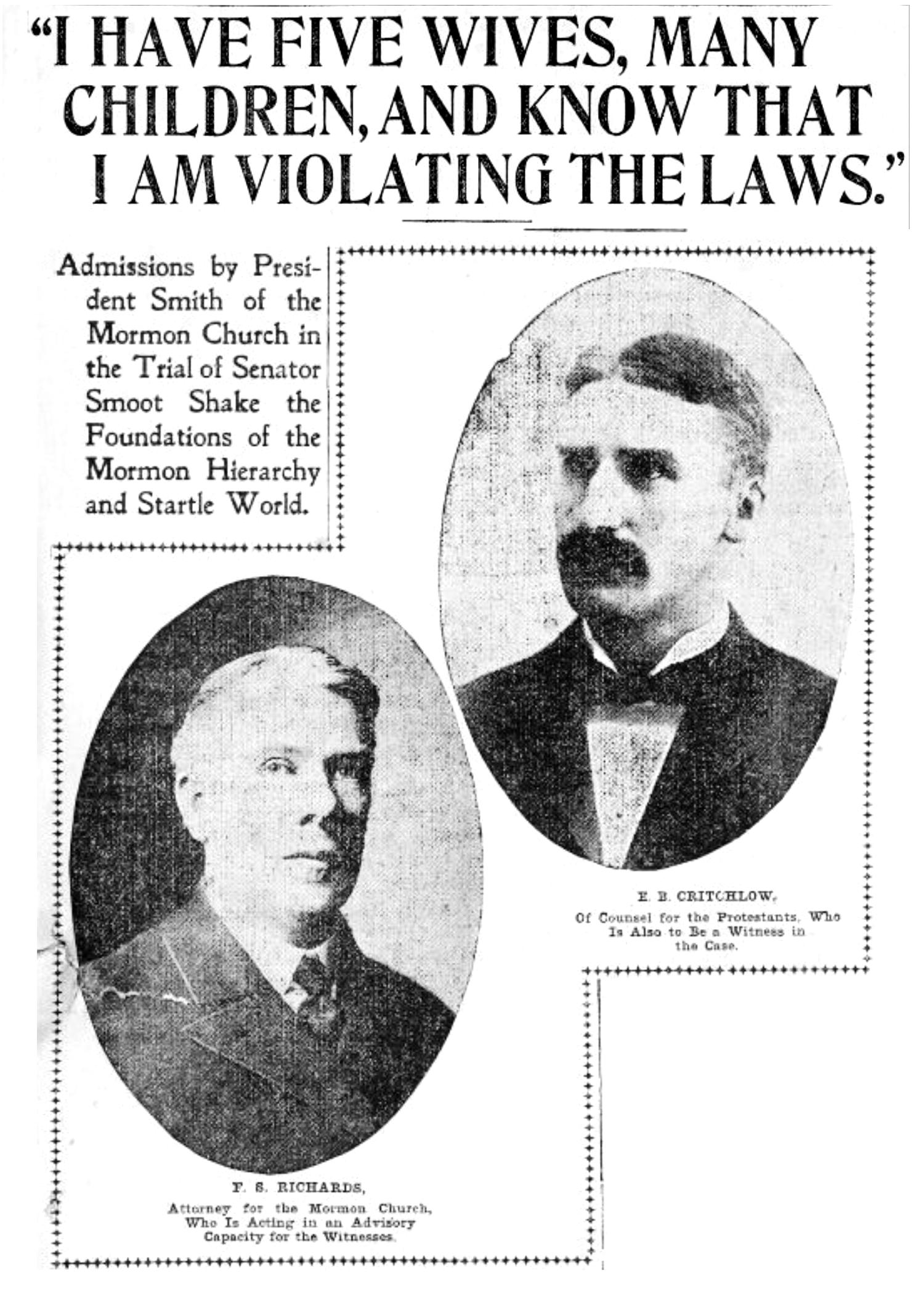
Headline about Mormon President Joseph F. Smith’s Senate testimony from The Salt Lake Tribune, March 4, 1904. His honest, straight-forward testimony shocked America.
Reed Smoot was eventually seated as a United States Senator from the State of Utah. He served his state and his country honorably for almost thirty years, and, by his conduct, helped force a profound shift in America’s perception of Mormonism.
Eventually, Mara was returned to the shelves of the Palo Alto Public Library, but many libraries and stores considered the book too controversial to stock.
Reviews and giveaways for Christian fiction and sweet, clean fiction. Bringing readers information on great stories and connecting authors with their readers.



 This post is part of our Blogiversary Celebration! Leave a comment below or on Isabella’s Facebook page to be entered in a drawing for a $25 Amazon gift card! We’ll announce the winner on Friday morning, September 21!





















 Isabella Alden