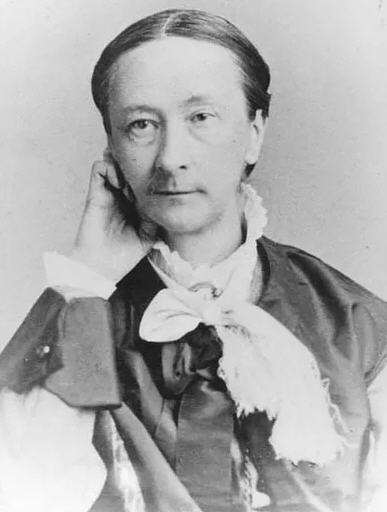
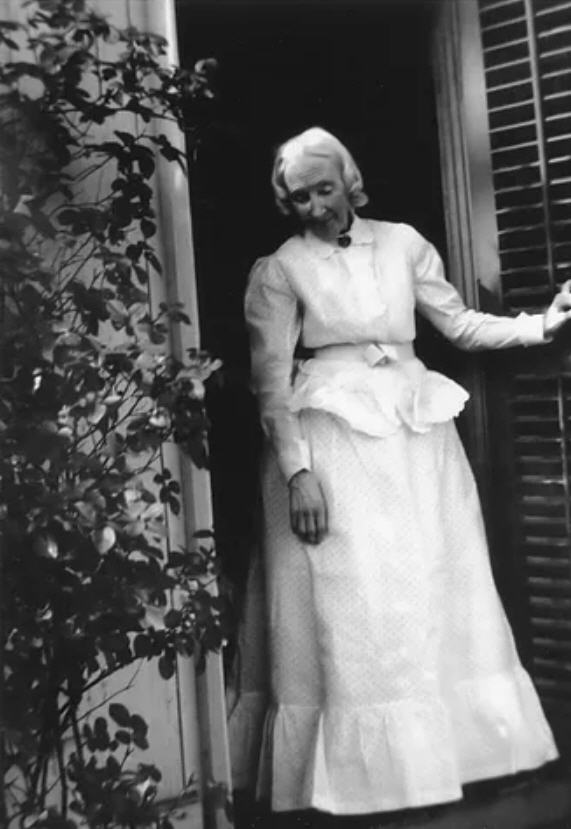
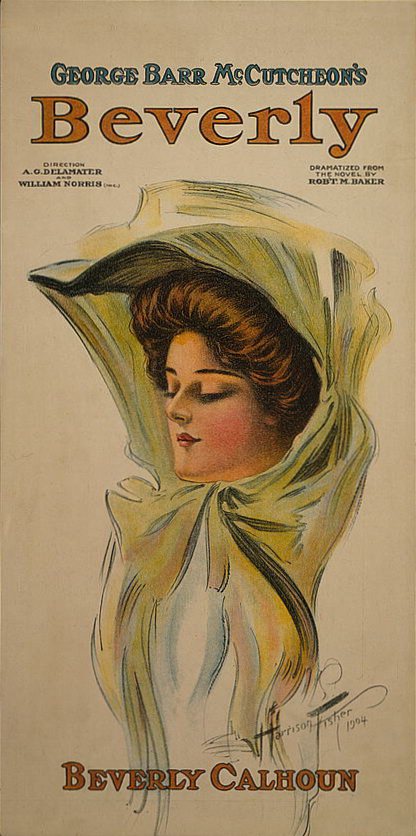
This month’s free read is Isabella’s short story, “The Harrisville Young Ladies’ Band.”
In this 1881 story, Miss Fannie Archer is president of a young ladies’ missionary band that is rapidly failing. At their last meeting, only three ladies showed up, and they were only there because they were officers of the club! No one, it seems, in her entire town is interested in supporting missionaries who do God’s work in far-off corners of the world. But Fannie is; and she’s desperate to bring some life—and some new members—into the ladies’ band. But how?
 It isn’t until she confides in her cousin that Fannie realizes her approach to organizing a missionary support group has been wrong from the start. But with a few suggestions from her cousin, some hard work, and a good amount of devoted prayer, Fannie just may be able to make the club a success, after all.
You can read the entire story below, or click on the cover to read, download, or print the story as a pdf.
CHAPTER 1
SOMETHING MUST BE DONE

IT was having a weary struggle for existence. A spasm of missionary zeal had swept over the place, and while the influence lasted, certain young ladies, with the aid and under the spell of an eloquent lady who came to them from the parent society, had organized a “branch” which now, in only the third month of its existence was in serious danger of withering.
They had struggled bravely, those few; had heroically given up a Saturday afternoon once a month to the effort; had gathered themselves into a corner of the church which was pleasant enough on a Sabbath morning, with the great congregation gathering in, but which had an indescribably dreary appearance to the five or six who hovered over the register on a Saturday afternoon, and wished that the sexton would make more fire, or that they had a pleasanter place to meet, or that something could be done to make missionary efforts less dreary.
The President, with the best intentions in the world, did not understand how to conduct a Young Ladies’ Band. She selected and carefully read a chapter in the Bible; she was a fair reader; but, not being used to mission work, and not having been trained, it did not seem to occur to her that certain portions of the Bible might be better suited to these meetings than certain others; so her choice had been governed only by the length of the chapter. She always chose a long one, because she knew that she could read, and she always believed that she could not talk. Then oh! it is a pity, and “pity ’tis, ’tis true;” I can hardly find words in which to explain to you the tremendous force of will and the outlay of moral courage which it required for this young President to kneel down before her half-dozen companions and offer prayer! There were times when she felt that to have bravely donned a soldier’s uniform and march boldly into the thick of battle, could surely be nothing to compare with this. Yet she did it, with trembling lips and throbbing heart, and low murmured words that even the one kneeling beside her could not, sometimes, catch; yet, be it recorded, she did it.
As for singing, they could not compass that. Five voices in the choir made their music on Sabbath day something to be enjoyed, but though those five voices belonged, three of them to ladies, two of them to church-members, they had not hitherto been persuaded to give their presence to this Young Ladies’ Band.
One of them hadn’t time; she had time, it is true, for calls, and rides, and sociables, and festivals, and shopping, but then these were necessary occupations; they consumed all the time, leaving none for minor matters. One of them was not a Christian, and produced it as an unanswerable excuse for not being interested in any scheme pertaining to the cause of Christ, and one of them “didn’t believe in foreign missions, anyway.” So, as I said, the singing in the Harrisville Young Ladies’ Band was of necessity omitted. Several of the members could sing, it is true, when a strong reliable voice led the way, but the process of starting a tune was too formidable even to be thought of.
They had undertaken to have papers prepared on China and Japan and other missionary countries; and those appointed had faithfully accomplished their task and compiled a formidable list of statistics; the difficulty being that those who listened or appeared to listen, cared little or nothing about the population and productions of the country, nor thought it mattered how many years it was since certain missionaries went there nor how long they were in acquiring the language. A vital interest in the cause was, of course, the mainspring lacking. So the members dwindled; the seven or eight became five or six; always including the heroic President.
One sunny Saturday afternoon, which was yet cold and chill in the great church, by reason of the fact that the sexton concluded to use sun heat instead of furnace heat, and yet avoided the opening of a single blind until long after the sun had moved away from that quarter, the discouragement of these good-intentioned few reached its culminating point. It transpired that at the proper hour for meeting, there were three shivering damsels who looked drearily at each other. These were the President, the Secretary and the Treasurer of the Harrisville Young Ladies’ Band, or Branch, as they more often called themselves.
“What a branch!” ejaculated the Secretary, as her eye rested on the name, written with careful flourishes in the great blank book before her; then she laughed; then the President and the Secretary laughed. They would all much rather have cried, if that would not have made the matter still more embarrassing. They were all honestly disappointed.
“What are we going to do?” queried the Secretary, in a discouraged tone. “Just think of making a minute of three people at the last meeting!”
“And thirty cents set down in the Treasurer’s report!” chimed in the Treasurer. “Thirty cents given in the month of February by the Harrisville Young Ladies’ Band for the cause of missions!”
Then the President. with tremendous energy of tone and manner: “Something must be done!”
“What?” said both of her companions, in a breath, and, by way of answer, that President let her copies of Woman’s Work and Foreign Missionary slip unheeded, to the floor, and said: “Let us pray!”
This astonished the girls. They had not supposed that it was worthwhile to pray, when only three persons were present, and they all officers. But the young president prayed as though she felt that they had reached the extremity of their wisdom, and now, indeed, must depend on the Lord. Somehow, her intensity of feeling made her less afraid than usual. I do not know that, in the strict sense of the word, she could have been said to pray for missions. Rather, she prayed for the Harrisville Young Ladies’ Band. Not by name; she even forgot that she belonged to that imposing body; was indeed the presiding officer of it; and almost before she realized where she was, or what she represented, she found herself praying as she did in her little room at home, for “the girls.”
The effect of this prayer was echoed by each voice as they arose from their knees.
“Now, girls, we certainly must do something.”
CHAPTER 2
SOME NEW IDEAS
THEN they went home to think about it. Later in the day, the same influence, intensifying with every passing moment, pervaded the heart of the President, Miss Fannie Archer, as she sat in her father’s parlor, elbows resting on the small table before her, and hands thrust into the frizzes of her brown hair. She echoed her thoughts aloud and vehemently:
“Something must be done. Charlie, see here!”
Charlie was a cousin, a young student of theology, and a guest in the house. He came from the library near at hand.
“Well, what is needing my immediate supervision?”
“I want to talk to you about our young society. You are interested in missions, or ought to be. What can we do about our Young Ladies’ Branch? It is just a hopeless drag.”
“Withered, eh? I expected as much.”
“Now, why did you expect it?” a little impatient frown on the fair face. “You think we girls are not in earnest at all; and I tell you we were. We meant to do the best we could, and did; and it don’t work, and it won’t work; I don’t see how it is our fault.”
“I don’t say it is. It is natural sequence, though, from the result of that sort of management.”
“What sort of management? We conducted the meetings just as others do. Just what do you mean by that?”
“Oh, all that I mean is a very old statement, for the truth of which a greater than I is responsible: ‘The children of this world are, in their generation, wiser than the children of light.’”
“I don’t see the application.”
“Well, now,” he said, drawing a chair in front of her, and looking straight into the eyes of his fair cousin, “let us look at the matter. If I were suddenly called upon to make an addition to the statement just quoted, which would fit the present day, I think I should say: The children of light are wiser about everything else that can be thought of, than they are about matters that pertain to religion. How, for instance, did you manage that festival in which you were interested last fall?”
“Well,” said Miss Fannie, “we—Why, we worked it up.”
“Exactly so. You had schemes and plans and committees enough to manage a World’s Fair; and rehearsals and committee meetings, and all sorts of contrivances, didn’t you?”
“Yes,” said Fannie, letting her mind wander dreamily back among the doings of the past, “there was no end of work connected with that festival.”
“So I suspect. The trouble with this branch of yours, I suspect, is that it is not tended and weeded and watered enough.”
“Charlie, do drop metaphor, and talk plain common sense. If you know anything that we can do to awaken an interest in our band, I wish you would tell me; though I am sure I don’t see what you should know about missions.”
“I know less about missions than I do about any other one thing that at present interests the sensible portion of the world, I do believe; and, according to the present rates of management, I am really afraid it will be a long while before I know any more, but I do profess to have a few grains of common sense, and it is about that very article, or the want of it, that I am talking at this moment.”
“Will you enlighten me?”
“Why, Fannie, I think I have. I say, how do you manage everything else? Look at that church sociable which was in your house. How many times did I escort you to places so that you could plan for it? How many times did I hear the sentence, “Say, girls, how shall we entertain people when we get them there?” And, “What shall we do about music? We must have some fine music.” And, “Don’t you think it would be nice to have a museum of paintings or carvings, or some curious or interesting things for people to look at, to start conversation, you know; some people don’t know how to talk, unless they have something to talk about.”
Whereupon Fannie laughed, “I remember that sentence, Charlie; you said it yourself.”
“Very well; then I contributed one important item to the general fund; but I hope you see the application. What have you done to entertain people when you got them to your band meetings?”
“They don’t come to be entertained,” interrupted Fannie.
“Suppose they had, how much entertainment would they have received? How much pains do you take with your music? How extensive a literary programme have you? How much thought do you give to the matter beforehand? How much wiser are those who attend than they were before? How much more deeply impressed are they with the importance of missions than they were before they shivered through that hour in the northwest corner of the church?
“Then another point: Just suppose for a minute, if you can suppose anything so ridiculous, that when you got up that fair, over which you were busy day and night for three months, the public had heard no more about it than the simple announcement to those who happened to be in the church, that the young ladies’ fair would be held next Saturday afternoon as usual in the church at 3 o’clock, and not another syllable lisped concerning it until Saturday afternoon came? How large a number would you have had?”
“Bless me! Haven’t I a vivid recollection of being stopped by young ladies on every street corner, and six times between each corner, to receive a cordial, in fact, a very pressing invitation to the fair! We all knew about that, I assure you, and were not in danger of forgetting it. Moreover, it isn’t six weeks since I heard a party of young ladies voting vigorously for a simple tea at the sewing circle because it relieved the stiffness and made everyone feel more social and cheery.”
“The simple question is, why don’t you as a Branch, try some of these devices to set your leaves and buds to growing?”
“But Charlie, think what a humiliating admission to have to make, that our Christian young ladies have to be coaxed and beguiled in that way into having an interest in missionary work! They ought to be glad of a chance to help the cause.”
“My dear, logical young cousin, is there any rule which makes such a proceeding humiliating for mission bands, and perfectly wise and desirable for church fairs and sociables and festivals? People ought to be glad of the chance of paying church debts, and upholstering pews, and getting new organs, and hymn-books, and Sabbath-school library-books, and supporting the interests of the Church generally; but the sad fact remains that they have to be invited and entertained, and fed, and sought after, and coaxed, or they will not come.”
“Well, we might do something of the sort I suppose; only there is very little time in these short afternoons, and as for having tea, it seems as though it would be rather dull, just us girls.”
“Why should it be limited to just ‘us girls?’ Isn’t there any place in the enterprise for ‘us boys?’ It strikes me that it would not injure us in the least to get some sort of an idea of what the church is doing in this line, and I don’t know how we are ever to get it, unless those who are posted in these matters take us in hand. What special harm would there be in your occasionally inviting us to join you, and thrive together?”
Then was Miss Fannie amazed at the audacity of the idea. “How could we?” she said indignantly. “We belong to the Young Ladies’ Branch, and are called the Young Ladies’ Band! But, then, I don’t see that that need make any difference; we needn’t ask the young gentlemen for money; they might just meet to enjoy the exercises and the music and see us home, and, well …” said Miss Fannie, after a moment’s hesitation, “have a good time together. There is no use in talking, now; it is a good deal pleasanter for the girls and boys to meet together and entertain each other than it is to be by ourselves.”
“Of course it is,” rejoined Cousin Charlie, with the relish of one who fully accepted the proposition. “Why, in the name of common sense, shouldn’t it be? We are brothers and cousins and friends, and we enjoy each other’s society elsewhere; why need we be left out in the cold in this matter of missions? I appreciate the business part of it, a separate organization and all that, and your business matters might be conducted before we arrived, and as to the money, of course we wouldn’t force any of ours upon you.” This with a twinkle of eyes that indicated his evident relish of this position. “There is no telling how soon we might be roused to forming a money organization of our own; but until then, why couldn’t we be admitted to the social part, at least?”
Then silence took possession of that little parlor for a few minutes. Miss Fannie disarranged her frizzes worse than before, and the two furrows in her forehead told that she was thinking hard.
“There is one trouble in the way,” she said, at last, speaking hesitatingly. “I don’t believe we girls could possibly manage the religious exercises before outsiders.”
“Well,” Charlie said, after a thoughtful pause, “I’ll admit that it is a humiliating thing that we who are as intimate in regard to every other subject as friends well can be, are afraid to talk about Christ and heaven together, or to speak to our best friend in the presence of our other friends. I hope the time will come for a reform in that matter. I hope to live to see the day when it will be as natural for girls and boys to pray before each other as it is now to talk.
“But we must take the world, in part, as we find it, and until we can move wisely in an advance, how would it do to let us come in late, in time to pass the cake and coffee and see you safely home? I know it is hard on a fellow to make him provide a niche for himself, but I seem driven to it.”
“Charlie,” said Miss Fannie, under a sudden impulse of frankness, and after another pause, “you are a provoking fellow, sometimes, and you have hinted some real hateful things during this very talk. At the same time, I’ll own that you have given me some new ideas, and I may work them up.”
“Thank you,” was the said Charlie’s courteous reply, accompanied by an unnecessarily low bow. “The hope of seeing a new idea developed once more repays me for all the sacrifice of personal ease and enjoyment that I have made.”
CHAPTER 3
A NEW ORDER OF THINGS
THUS began the new order of things in the Harrisville Young Ladies’ Band. The very next Monday there was a self-constituted committee of three, being the aforesaid officers of the band, who met to discuss ways and means. Thereafter the younger portion of Harrisville pertaining to the First Church was in a flutter. Invitations were out on the daintiest of note paper, inviting every young gentleman and every young lady to the next meeting of the Young Ladies’ Band, to be held at the house of Mr. Samuel Marvyn; tea at seven.
“What is this Young Ladies’ Band?” said the young ladies to each other, who had heard the regular announcement of the band meeting, or at least sat under its announcement from the pulpit for every third Saturday in the month during many months. Now this cream-tinted note aroused their interest.
“This is something new under the sun, isn’t it?” said the gentlemen, one to another; and straightway some of them reflected that they ought to know more about missions, they supposed. At least, they would go; that much encouragement to the cause they would certainly give. Neither did the matter stop with this single invitation. Cousin Charlie had occasion to discover before the week was past that something at least equally as important as a church fair was in progress. At every corner, in every street-car, at the church-door, in short, wherever he met a young lady, he was liable to be greeted with the interrogation: “We shall see you at the band meeting, I hope?” or, “We are expecting you to help us on Thursday!” or, “Shall you go to the band meeting, Mr. Archer?” according to the degree of intimacy between the parties.
Of course, being courteously invited to a young peoples’ gathering, the young people courteously responded, and on Thursday by five o’clock the young ladies who gathered in Mr. Marvyn’s parlors would have astonished the northwest corner of the church. Neither had energy exhausted itself in invitations. A careful programme had been arranged and was presented. It was wonderful how many young ladies had been found to do, so soon as something definite and tangible had been given them to do.
The Misses Heber would sing, of course they would. Why not? They had voices like birds, and loved to sing as well as ever birds can, and they sang that evening. Miss Lillie Brooks could, and would, and did, recite as sweet a missionary poem as ever thrilled an audience. Neither was the devotional portion of the hour forgotten. The President’s heart beat fast, it is true, and her cheeks were red, yet she had earnestly counted the cost, and determined not only to give her voice to the cause but to make all the young ladies help her, so she distributed the slips of paper, containing each a Bible verse, over whose selection and careful writing she and Cousin Charlie had spent several evenings, and there followed a well-chosen and impressive Bible reading, helped by some grand voices which were unused to reading Bible verses, not so much because they were unwilling to read them as because no one had ever asked them.
Then the President prayed; then there followed her in prayer, little Susie Scoville, much younger than any of the others, but an earnest, consecrated little Christian, who had months before determined to do, always, what she could, and who, when the President asked her privately, answered, with glowing cheeks and doubtful voice: “Oh, Miss Fannie! I’ll try.”
Then there followed her, sweet, fair, timid, Emma Nelson, whom nobody ever thought would be willing to pray in public, but something in the earnest voice and simple words of the girl kneeling beside her, so much younger than herself, nerved her voice to try. And so, this became a pleasant part of the afternoon, despite all their fears and tremblings.
Then the gentlemen began to honor their invitations and came, in cheery groups, fresh from the outside world, banishing all formality and stiffness by the very bustle of their coming. Then cups of coffee and sandwiches, simple, easily prepared, and easily served, seemed to bring with them a full tide of talk, and destroy the last vestige of formality.
Nor was this the entire programme. No sooner was the debris of the supper cleared away, when an exercise, so carefully planned and prepared that it had all the grace of an impromptu about it, was presented for the entertainment of the guests. It was nothing more formidable than a series of questions and answers, the questions appearing to come from any person who happened to think of one that she desired to ask, and the answers appearing to emanate from those who happened to be informed. Simple, natural questions, as for instance:
Miss Laura Proctor said suddenly, and apparently without a shadow of premeditation, “This is quite a large band meeting, isn’t it? When were young ladies’ bands first formed? Does anyone know?” And one who knew gave most informally the answer.
“I wonder if they have succeeded in raising much money?” questioned another.
“Oh, yes,” said another: “why, I read only yesterday, that—” and then followed some delightful figures.
“What are they doing with the money? Is it used for any special work?” queried another, and the answer was prompt from a voice across the room.
“What is the use of missions, anyway?” said a skeptically inclined young lady; “hardly any of the heathen are converted after all.” The answer to that was simple and conclusive, and the talk went on.
One young lady told of what she had read that Mrs. Mateer said last month.
“Who is Mrs. Mateer anyway?” asked a girl who would not have dared to ask it, had the question not been on her carefully studied paper, lest she might thereby have exposed her ignorance.
“Why, she is a missionary in China,” was replied, and then there followed little touches of her peculiarly interesting work, called out by question and answer.
You see the point; I wish you could have been there to have heard how well it was managed, ands how thoroughly the young ladies themselves became interested in the talk. Several of the gentlemen fell so readily into the trap that they produced questions from the impulse of the moment, which taxed Fannie Archer’s wits to the utmost, and would once have embarrassed her utterly had not there flashed over her the idea of appealing to Cousin Charlie for information, and in the wicked satisfaction which she felt in seeing him obliged to say, “I really do not know,” she regained her composure. But the first general meeting of the Harrisville Young Ladies’ Band was a success. Neither was there danger of that portion of the branch withering soon. A taste of success made the leaders thereof long for success.
Also there came, as if by accident, a special interposition of Providence to them soon after. Behold, it was announced in the Harrisville Church that Mrs. Mateer was in this country and would address the ladies of the First Church on next Thursday afternoon. Straightway the ladies of the Band gave each other little appreciative smiles. They knew who Mrs. Mateer was. Some of them who a month before would hardly have known of her existence, felt posted, felt able to post others.
“Oh, yes,” they said, “she is a returned missionary from China. She has had a very interesting experience; you must go and hear her.” And they began to feel that they knew something about what was going on in the world; and they went to the Thursday afternoon meeting. So did others; and to those who heard, and to those who heard of her, through those who did, there came an inspiration in Harrisville for missions that will tell for eternity.
Today there is no fear of blight for the buds in the Harrisville Branch. They are continually talking up that band. Of this fact the said Cousin Charlie has become so convinced that does there occur a moment’s lull in a conversation where two or more young ladies are present, he is sure to turn with animated face, and a voice exactly simulating one of the energetic of their number, and say:
“Oh, girls, what shall we do for our next Band meeting?”
What did they do? Oh, dear, you don’t expect me to tell you?
What can a band of wide-awake, energetic, earnest-hearted, thoroughly roused young ladies do for missions? Rather what can they not do?
I think the Harrisville Band boasts the banner membership today. They are eager as ever. They are more earnest; the work has gone beyond the regions of entertainment; it has taken on strength and power; yet they are always struggling after entertainment; for there are always young men and women, new ones coming within the circle of their influence, who must be caught before they can be made to serve. Yet should you ask the Harrisville Young Ladies’ Band today what they did to make their band so large and so effective, I am not sure that they would not look from one to another, slightly puzzled how to answer. There are so many little things to do that cannot be grouped into one brief answer. Perhaps they would fall back with a laugh on that one sentence which they never forgot: “Oh, we talked it up.”
Yet I may tell you, that there is a secret behind that secret. It was discovered when those three girls looked at each other with determined faces that Saturday afternoon in the old church, and said “Something must be done.”
Where there is a will, there is a way. Is that it? Ah, there is yet a secret behind that secret, for the force of strong wills was brought to bear upon this subject only, when, laying aside her timidity, and her shrinking, and her poor attempts at guiding, Fanny Archer let book and pride slip from her that afternoon and said with full heart, “Let us pray.”
In my distress I cried unto the Lord, and he heard me, and brought me out into a large place.
There is strong will power in the Harrisville Band; there is an eager looking out for the little things that will help; there is a wisdom like unto that which the children of this world use when they mean to succeed, and there is a consecration of time and strength and pride, all on the altar; and the buds and blossoms of that branch, nurtured as they are under the shadow of the true vine, shall bear fruit.
They shall be like a tree planted by the rivers of water, that bringeth forth his fruit in his season; his leaf also shall not wither; and whatsoever he doeth shall prosper.
The End