

Blog

New Free Read: Jennie’s Witness
Here is a short story by Isabella Alden that first appeared in The Pansy magazine on July 1, 1893. In this story, Isabella’s theme underscores the importance of reputation and doing the right thing.
.
Jennie’s Witness
Jennie fingered the flowers as though she loved them. She was a country girl, and used to flowers, but it seemed to her that she had never loved them so much as since she came to the city to live, and found that people had to buy them.
“And pay lots of money for them,” she wrote to the little girl friend with whom she had often gathered field daisies. “You just ought to see what lots of money folks will pay just for daisies! If we had the old south meadow lot out here on Karnick Street, we could get rich.”
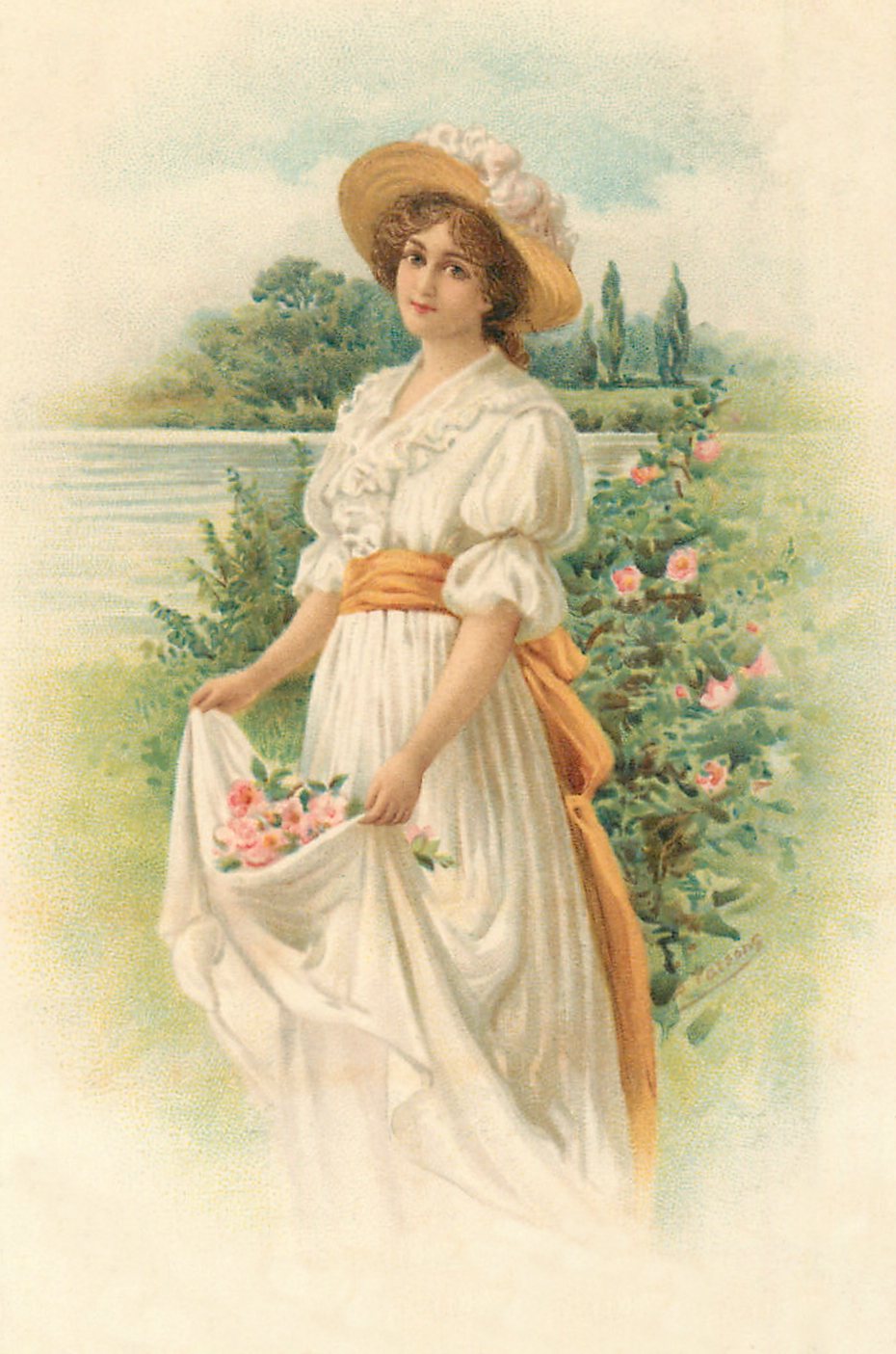
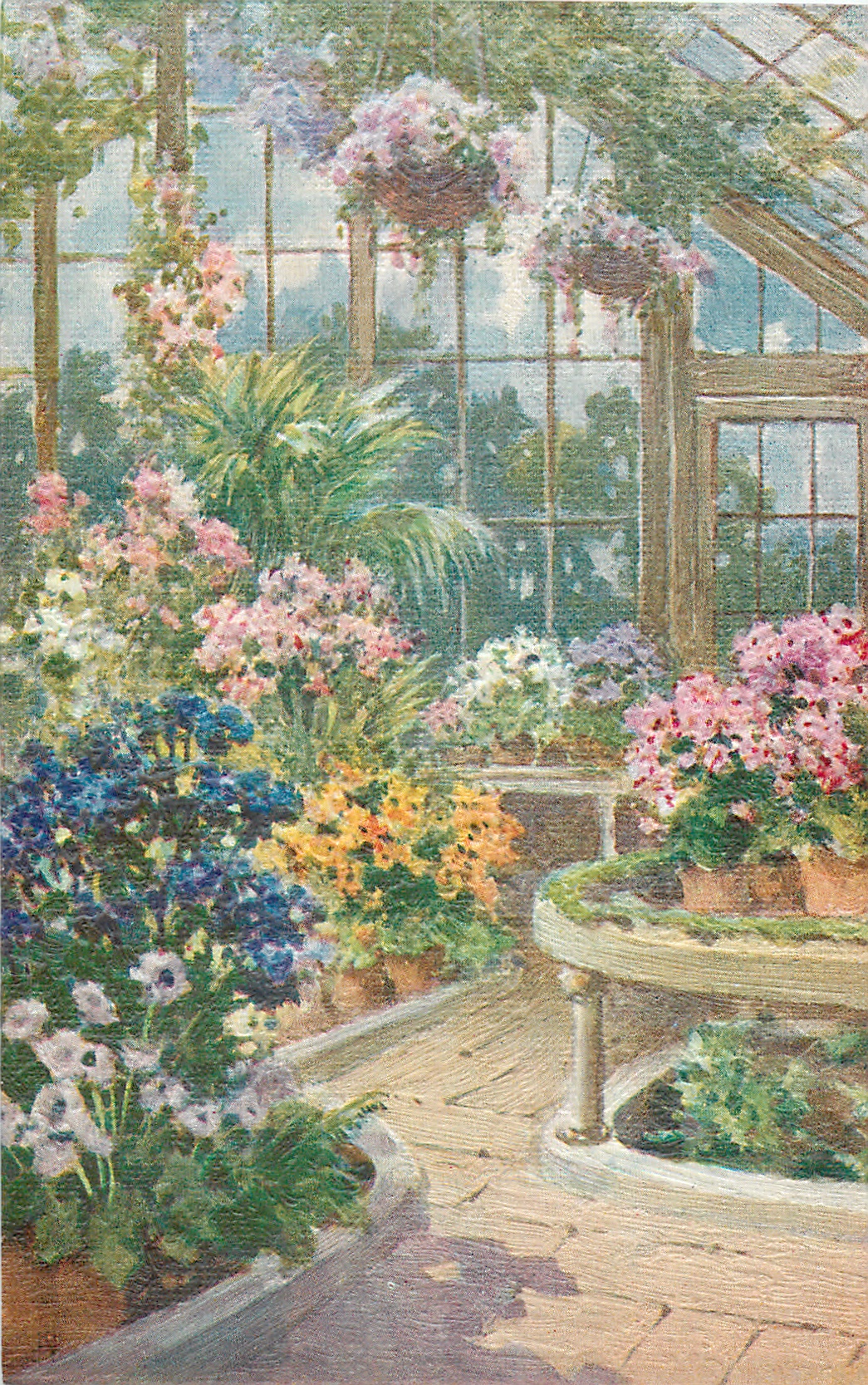
There was a great deal of work to be done this morning in the greenhouse. There was to be a Fourth of July celebration the next day, and a festival, and a wedding, and Jennie did not know what else; but she knew that flowers were to be arranged for all these, and that, new girl though she was, she had been called upon to help make up bouquets. This was an honor.
Heretofore her work had been to water certain plants, and run errands, and keep the shelves and tables tidy. She felt very happy, for Mr. Greenough, when he came through the greenhouse workroom, had stopped to admire her bouquets, and told her she had shown good taste, and would be called upon again.
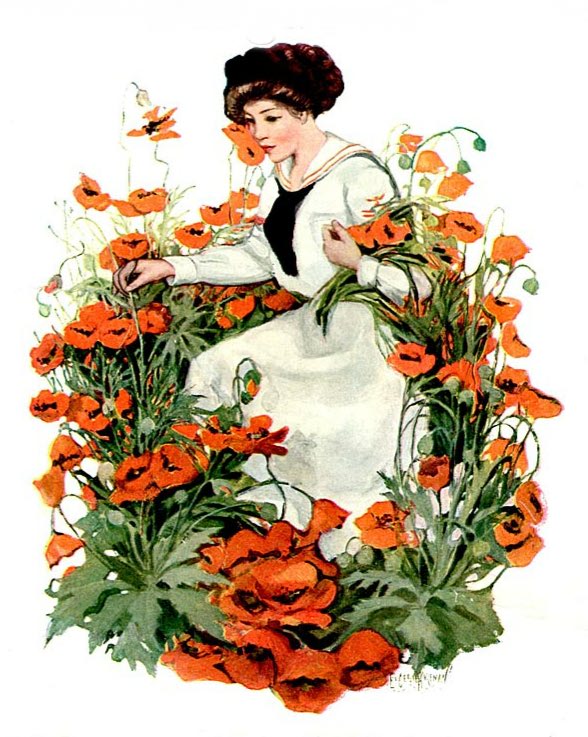
Mr. Greenough was the young Master of all the flowers, and Jennie knew she had been greatly honored. She was at work now on the last basket of what she called “left overs,” though they were as pretty as any of the gardens. These were for Grandmamma Greenough, who had a fresh basket sent to her every morning. Jennie was ahead of time, and could afford to loiter a little and pet the blossoms. Karl was there, leaning over her shoulder and laughing at the loving way in which she talked to them.
“Anybody would think they were a lot of live babies whom you were loving,” he said.
Karl Shubert was Mr. Greenough’s nephew; he was spending the summer with Grandmama Greenough while his father went West on business. Karl liked nothing better than to take off his coat, and roll up his sleeves, and push his queer little cap on the back of his head, and call himself a workman. Karl was also from the country, and thought it very strange that people were willing to pay money for “just weeds.”
“There are flowers almost like those which grow wild in the woods back of our house,” he said. “I’ve gathered ’em lots of times, just for fun. Nobody ever thought of buying them; I guess I should have thought they were crazy if they had.”
“Folks would think here that you were crazy if you gave them away,” answered Jennie. “These are not quite like the wild ones; but I guess they are cousins.”

“I believe they are just like them. Give me a bunch of these, and I’ll send them to Mattie Bennett and ask her if they aren’t. She gathers them all the time. Give me that great big one, and the little bits of ones next to it.”
Jennie opened her blue eyes very wide, and looked gravely at him. “You are just joking?” she said, inquiringly.
“No, I’m not joking. I think it would be great fun to send Mattie a bunch of these by mail, and tell her what the dunces here in the city pay for them. She will think I am joking, for sure. I wonder I never thought of it before. Give us a bunch.’
But Jennie’s face was graver than ever. “Of course you know I can’t,” she said, quietly.
“Well I should like to know why not? Are you suddenly taken with rheumatism in your arms, or anything of that kind? What is to hinder your handing over that bunch of posies to me?”
“Why, Karl, you don’t need me to tell you that the flowers aren’t mine? I couldn’t give you the least little blossom, of course; and I know you are just trying to tease me.”
“Stuff and nonsense!” said Karl, getting into a fume. “I never heard of such a dunce. Do you pretend to say that you never take one of the silly little things for yourself?”
Jennie’s cheeks flamed a brilliant red, and her blue eyes flashed. “I don’t think that question is worth answering,” she said, with dignity. “Do you suppose I would steal a flower any sooner than I would steal anything else?”
“Oh, steal! Who is talking about stealing? What is just a few flowers? Anyhow you might give them to me. Don’t you know my grandmother will give me the whole basketful if I ask her? And every one of them belongs to my own uncle.”
“That doesn’t make a bit of difference,” said Jennie firmly. “Your grandmother has a right to give you the basketful, of course, if she wants to, and your uncle could give you the whole greenhouse; but that would have nothing to do with me. Not one little flower is mine, and if you think I will take what belongs to other people and give it away, you are mistaken. I wouldn’t do it any more than I would take one for myself.”
“Poh!” said Karl, who thought this was utter nonsense. “What a fuss you can make about nothing. Suppose I reach over and take the whole bunch and leave? How will you help yourself?”
“You won’t do that,” said Jennie confidently, and a pleasant look came into her blue eyes. “I’m not the least bit afraid of it, because that would be mean, and I know you will never be mean.”
“Poh!” said Karl again; but he couldn’t help feeling that she had the best of the argument. On the whole he was vexed with her, and went away in a huff. “Such a ridiculous idea!” he said, kicking the dust with his bare toes as he walked. “Who would have supposed she could be so stupid as to suppose my uncle would care about her giving me some flowers?”
In half an hour he had forgotten all about it. He never thought of it again until a week afterward.
His uncle opened his room door one morning and spoke hurriedly, “Karl, my boy, did you see anything of a silver dollar that I left lying on the shelf of the lower greenhouse yesterday?”
“No, sir,” said Karl, turning over in bed and looking wonderingly at his uncle’s grave face. “I wasn’t in the greenhouse yesterday. Don’t you remember I had a cold, and Grandma would not let me go there, or anywhere?”
“Is that so?” and the face of the uncle grew graver. “Then I am afraid she has taken it, and I would not have lost my faith in the girl for ten times that amount.”
“Who, uncle?”
“I’m afraid, Karl, that Jennie has slipped the dollar into her pocket. There are little circumstances connected with it which make me quite sure I left it there; and Jennie is the only new help we have, you know. I would as soon suspect myself or dishonesty as any of the others. I have turned everything upside down in the greenhouse, and made more fuss than forty dollars are worth, just to get rid of the suspicion; but I’m afraid I can’t. David suggested that you might have seen it; but if you were not out of the house yesterday, of course that won’t do. I questioned Jennie, and she says she saw nothing of it. If there were any cracks for it to slip into I should be glad; but there are not. I’m afraid I shall have to tell her she cannot be trusted.”
“Oh, my!” said Karl, and he buried his head in the pillow and laughed. “Uncle Robert, that is too funny,” he said, when he had had his laugh out. “Jennie wouldn’t take a dollar that didn’t belong to her, not if she was starving, and could eat it. Why, she wouldn’t even take a poor little flower which looks just like the wild ones that I used to gather by the bushel up home. Uncle Robert, she is just awfully honest.”
“Is that so?” asked Uncle Robert, his eyes looking less troubled. “How do you know, my boy?” and he sat down on the side of the bed and heard the story of the Fourth of July flowers, and the bunch that Karl wanted, and did not get.
“Well,” said Mr. Greenough, after he had questioned until he understood all about it, “that is pretty good proof: she is an excellent witness for herself. It was quite natural for you to think as you did, Karl, and it was splendid in her to refuse you. I don’t believe she knows anything about the dollar. What can have become of it is more than I can imagine; but I shall say nothing more to her, for the present, at least. Don’t mention it, Karl; I would not like to have her think I suspected her.”
“I guess not!” said Karl, with emphasis. “I wouldn’t tell her for a farm.”
It was nearly two weeks afterward that Jennie came across the lawn toward Mr. Greenwich with a flower pot in her hand and a puzzled look on her face.
“What is it, Jennie?” he asked, turning back to answer her look.
“If you please, Mr. Greenough, I did not know they ever planted money; but isn’t that a piece of money peeping up through the earth?”
Mr. Greenough looked, and dived in his hand, and drew out a silver dollar.
“It is money, without doubt,” he said, smiling. “Has that plant had fresh earth put around it lately?”
“Yes, sir; more than a week ago Dennis turned a whole tubful on the table, and filled up the plants in that long row at the left; but I didn’t think—” and then Jennie stopped.
“You didn’t think they ever mixed silver dollars with the earth, eh?” Mr. Greenough said, laughing. “It seems Dennis does sometimes; and I must say I am very glad to know it. It explains a mystery.”
Karl’s eyes twinkled, but he kept his own counsel. Jennie was right; he wouldn’t be mean.
If you enjoyed this story, feel free to share it with others by downloading a pdf copy here.
Share this:

It’s National Sewing Machine Day
It’s National Sewing Machine Day in the USA—a day to celebrate the invention of one of the greatest time-saving devices in America.

If you’ve read any of Isabella’s books, you get a sense of how many women slaved over their sewing to keep their families in decent clothes; or how many women plied their needles 10 to 12 hours a day to earn a living. The sewing machine changed all that.
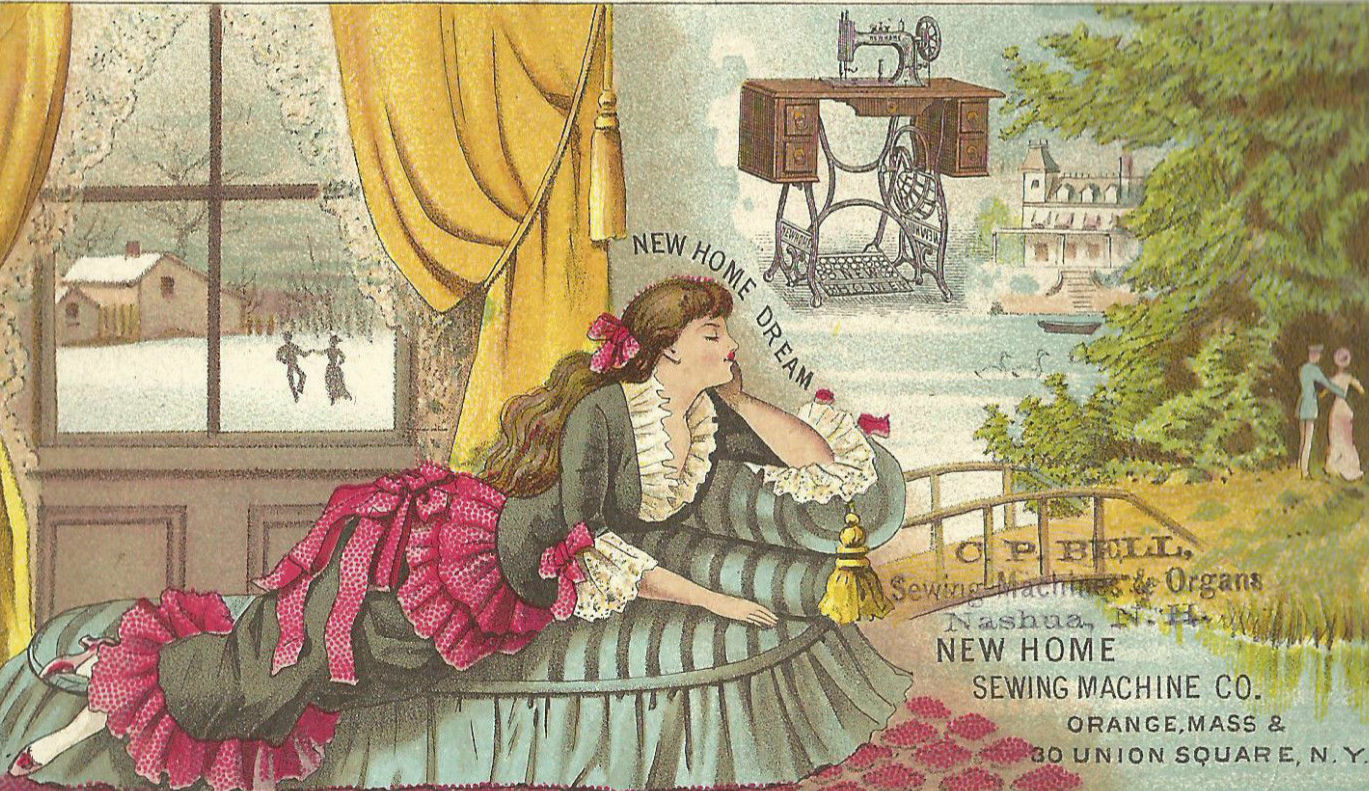
One hour of machine sewing produced the amount of work once accomplished by about 15 hours of hand sewing. That kind of statistic placed sewing machines in high demand.

And there were plenty of machines to choose from. Competing manufacturers helped keep prices down, so new machines they were affordable for most middle-class households.

For those families who could not afford to purchase a machine out=right, some companies (like The Free Sewing Machine Company) allowed customers to purchase a machine on time. This was an innovative marketing ploy, since the concept of individuals purchasing on credit was largely unheard of in the late 1800s and early 1900s.
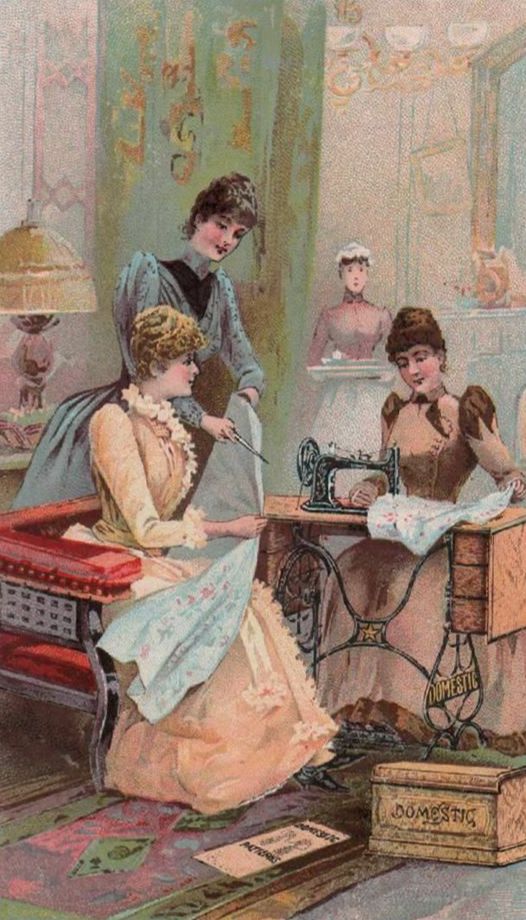
The introduction of the sewing machine made a huge impact on how America produced clothing, bedding, linens, curtains and draperies . . . essentially, any fabric-based item that we wear or use in our homes and businesses.
You can see more images of sewing machines, including trade cards and magazine ads, on Isabella’s Pinterest board. Click here to visit Pinterest.
Share this:

Meet Priscilla Hunter
In her books Isabella Alden created many endearing and memorable characters; but perhaps one of the most beloved people who appeared in her stories was Miss Priscilla Hunter.

In fact, Isabella liked Priscilla Hunter so much, she included Priscilla in four of her books:
The Man of the House
Miss Priscilla Hunter
One Commonplace Day
People Who Haven’t Time and Can’t Afford It
If you haven’t heard of Priscilla Hunter before, here’s how Mr. Durant described her in One Commonplace Day:
Miss Priscilla Hunter [is] a maiden lady who has just come here to live. If you have not heard of her before, you will do well to make her acquaintance. I think you will find her a woman after your own heart on the temperance question, as well as on some others.
And in The Man of the House, little Beth Stone said Priscilla was:
A woman; kind of old, and not so very old, either. She’s got grey hair, and she is tall and straight, and her face looks sort of nice; not pretty, and not exactly pleasant as I know of, but the kind of face one likes.
But don’t let Priscilla’s grey hair fool you. She was a woman of high energy and focused activity. It was Priscilla Hunter who almost single-handedly raised the money needed for the church in Miss Priscilla Hunter.

And when (in People Who Haven’t Time and Can’t Afford It) pretty Mrs. Leymon asked Priscilla to help bring some hope to a poverty-stricken family, Priscilla energetically replied:
Help! Of course I will. I’ll bring my scissors and snip out things for you in odd hours. Oceans of things can be done in odd hours; and I’ve got a little bundle laid away that will do to make over for somebody; and Mrs. Jackson has an attic full of trumpery that she will never use. I’ll see that a good load of it gets sent around to the room. You’ve got a good room? It’s Mr. Hoardwell’s, isn’t it! Of course he’ll let you have it; I’ll see him if you want me to; he’s a friend of mine. I’ll slip up there between daylight and dark and see about it.
Priscilla’s scissors and snips were always at work. She was a seamstress by trade; and in People Who Haven’t Time Priscilla . . .
. . . sewed all day in her attic room on clothes for boys too young or too poor to go to the regular clothing establishments. Poor was Miss Hunter; that is, people looking on called her so. But, after all, I hardly knew of a richer person than Miss Priscilla Hunter.

But if Priscilla Hunter was poor, why would characters in Isabella’s stories describe Priscilla as rich?
First, she was extremely wise. She was adept at sizing up a situation, asking the right questions, and dispensing the truest and most needed morsel of advice at just the right time.
She gave advice to children and adults, women and men, friends and strangers; and her advice was always the right advice!

She was intuitive, too. Sometimes she could figure out what someone’s worries were just by looking at them. She noticed everything; no detail was too small to escape her notice. In “Miss Priscilla Hunter” Priscilla observed:
It is the trifling sacrifices that pinch. [A man] can do a great thing now and then that he knows people will admire, even though he has no such selfish motive in doing it; still it helps and cheers, to know that an appreciative world looks on and says: “That was well done!”
But to go without a new dress all winter—to go to church, and to society, and occasionally to a tea-party, wearing the cashmere or alpaca that has done duty as best for two years, and do it for the sake of the church, and say nothing about it, and know that people are ignorant of the reason, and feel that they are wondering whether you are aware that your dress begins to look “rusty”—that is sacrifice.
Priscilla was also generous. What little she had she shared with others, always trusting that as long as she did the Lord’s work, God would provide whatever she needed.
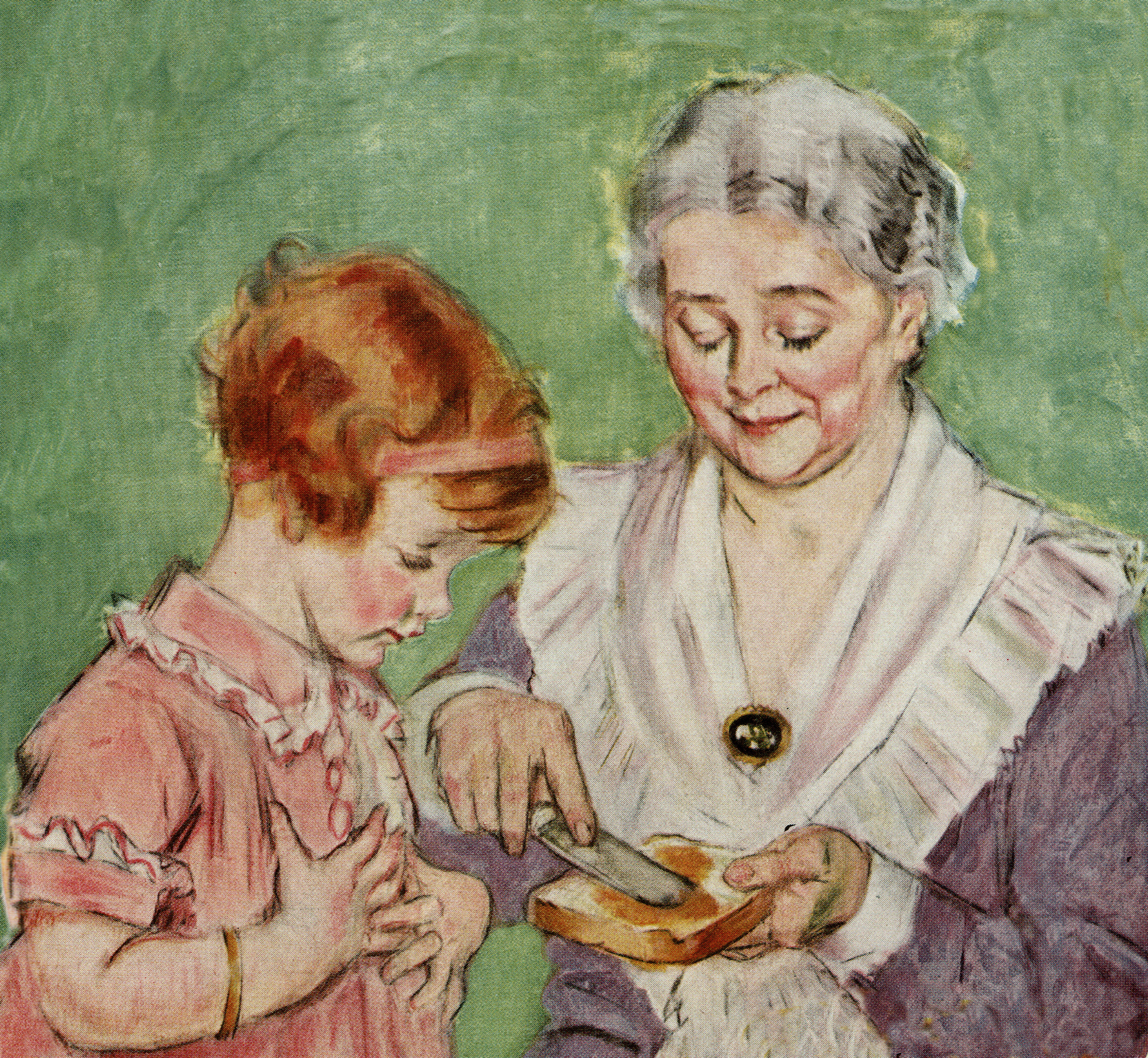
But the most important reason Priscilla was rich was her unshakable faith in God. She had a way of talking about God that made clear to everyone He was her best friend and constant companion:
You will find that if this life is a warfare, we have more than a Captain—we’ve a Commander-in-chief, and we have nothing to do with the fight, other than to obey orders and keep behind the shield.
Priscilla Hunter’s unwavering faith is on full display in the book The Man of the House. And though the hero of the story, Reuben Stone, is honest and trustworthy and always tries to do right, Miss Hunter shows Reuben how much better his life can be if he will make the decision to follow Jesus.
It’s no wonder Isabella Alden liked Miss Priscilla Hunter so much. And since she created Priscilla as a “maiden lady” without family or possessions to tie her down, Isabella could move Miss Hunter from place to place, and into the lives of the very people who needed someone to remind them of God’s love and friendship.
If you’d like to read about Miss Priscilla Hunter, you can read these stories for free on this website:
People Who Haven’t Time and Can’t Afford It
Or you can click on the book covers below to read The Man of the House and One Commonplace Day:

.

Share this:

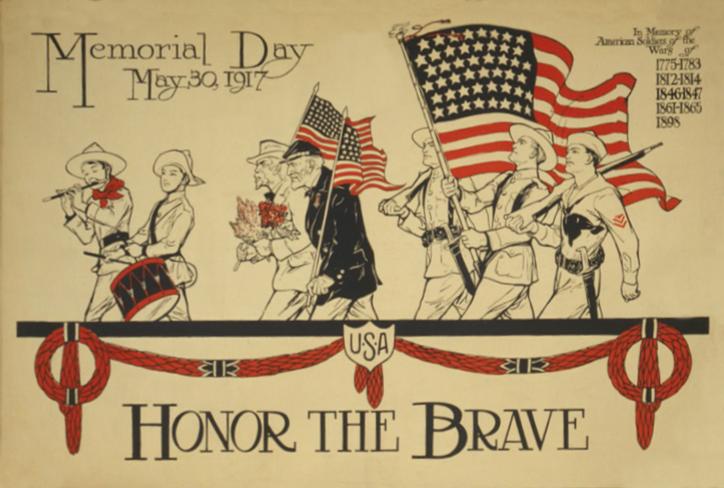
Memorial Day 1917
Share this:

The Prettiest Thing I Ever Saw …
In honor of Mother’s Day this Sunday, here’s a poem that appeared in The Pansy magazine in 1866:

…Mother’s Face
Three little boys talked together
….One sunny summer day,
And I leaned out of the window
….To hear what they had to say.
“The prettiest thing I ever saw,”
….One of the little boys said,
“Was a bird in grandpa’s garden,
….All black and white and red.”
“The prettiest thing I ever saw,”
….Said the second little lad,
“Was a pony at the circus;
….I wanted him awful bad.”
“I think,” said the third little fellow,
….With a grave and gentle grace,
“That the prettiest thing in all the world
….Is just my mother’s face.”
—Eben E. Rexford, in Good Cheer magazine, 1886
.
.
Share this:

An Interview with Grace Livingston Hill
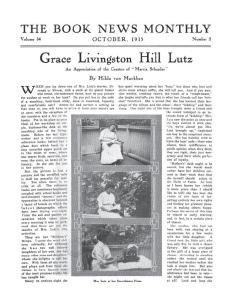
In 1915 Isabella’s niece, writer Grace Livingston Hill, was profiled in The Book News Monthly magazine.

.
The magazine printed two articles, the first of which was written by Grace’s long-time friend Hilda von Markhen. Hilda described Grace’s “workshop” for writing: an ample, business-like desk at the sunshiny side of an upstairs room. On the desk was her typewriter and a few necessary reference books; behind her was a glass door which led to a small un-roofed upper porch set in the midst of trees in which played birds and squirrels.

.
In addition to describing Grace’s workspace, Hilda told the story of how Grace’s first books were published. Sprinkled throughout the article are hints of Grace’s strong Christian beliefs and the work Grace did for those in need, the Sunday school classes she taught, the children Grace “adopted,” and her commitment to The Christian Christian Endeavor society.

.
The second article was written by Norma Bright Carson and provides some insight into Grace’s personality and the impression she made on the article’s author.
You can read both articles right now by clicking on the image below.
Share this:

Quotable

Share this:

Let’s Decorate!
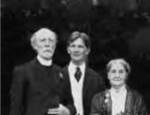
When Isabella’s husband Gustavus “Ross” Alden retired from the Presbyterian ministry in 1901, they moved to California.
Isabella and Ross settled in Palo Alto, about three miles from Stanford University where their son Raymond was a professor of English.
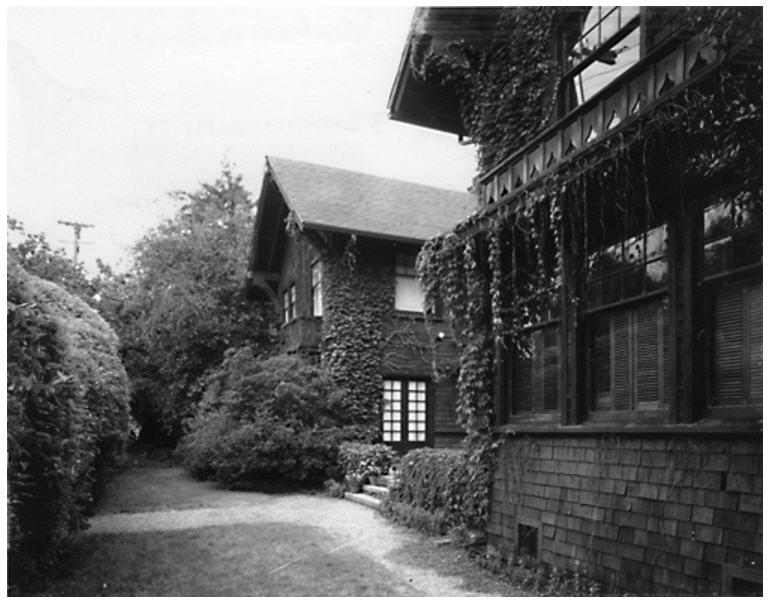
They purchased two adjoining residential lots and began construction on a new home. They worked with renown Bay Area architect A. W. Smith, who helped them design the home of their dreams.
.
When it was complete, the house measured over 5,000 square feet. It was a duplex, built in the shape of a U around a central entrance court. Flanking the courtyard were two almost identical homes. Isabella and Ross moved into one side of the duplex; Raymond and his wife Barbara and their children moved into the other.
.
At the bottom of the U-shaped structure was a large living room which served as the connection between the two sides of the house.

.
The side of the house occupied by Isabella and Ross had four bedrooms and two baths. Isabella’s sister Julia had a two-room suite to call her own. In later years, Isabella’s sister Mary also came to live in the house on Embarcadero after her husband passed away.
The house was designed in the Craftsman style, with a few Swiss Chalet touches under the eaves and on the balconies.

.
An ivy-covered wall surrounded the property, creating a private, tranquil garden-like setting for the family.

.
After many years of moving from one minister’s manse to another, Isabella must have relished the idea of decorating her very own, brand new home. She would have been able to furnish her kitchen with the newest appliances available on the market.
And she would have been able to incorporate the latest design techniques in every room. One of the most popular decorating trends during the early 1900s was …
Linoleum
Linoleum was not a new product. In fact, it had been around for forty years; but in residential construction it was used almost exclusively in kitchens and bathrooms. Its attraction was that it was waterproof. It was also monochromatic, and its plain, utilitarian appearance (usually in a shade of deep brown) didn’t recommend it for use in any other room in the house.
.
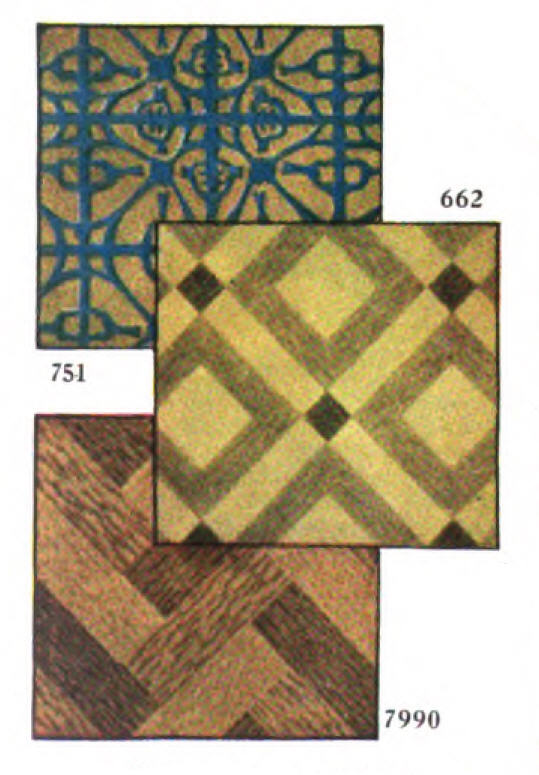
Then, in 1906 linoleum manufacturers had a breakthrough; they invented a machine that allowed them to cut straight lines into linoleum, which made it possible to inlay other colors into linoleum sheets in simple designs.

.
Soon after, manufacturers developed methods to produce complex patterns in linoleum, and Americans took notice.

.
Linoleum cost only a fraction of the price of hardwood floors; and with its durability, beautiful patterns, and low prices, Linoleum soon became America’s favorite flooring.

.
By 1919 linoleum manufacturers were enjoying brisk sales, and Americans were installing linoleum at record rates.

.
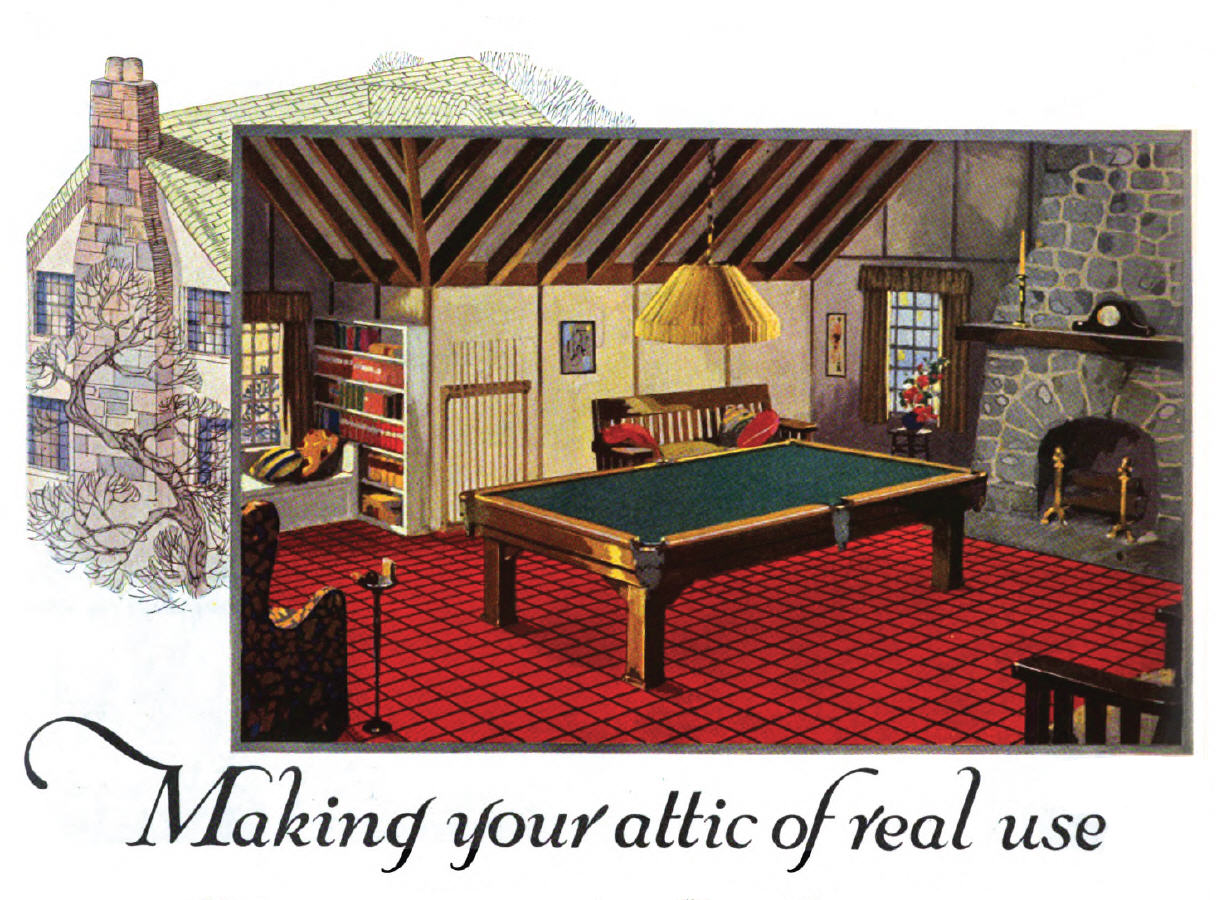
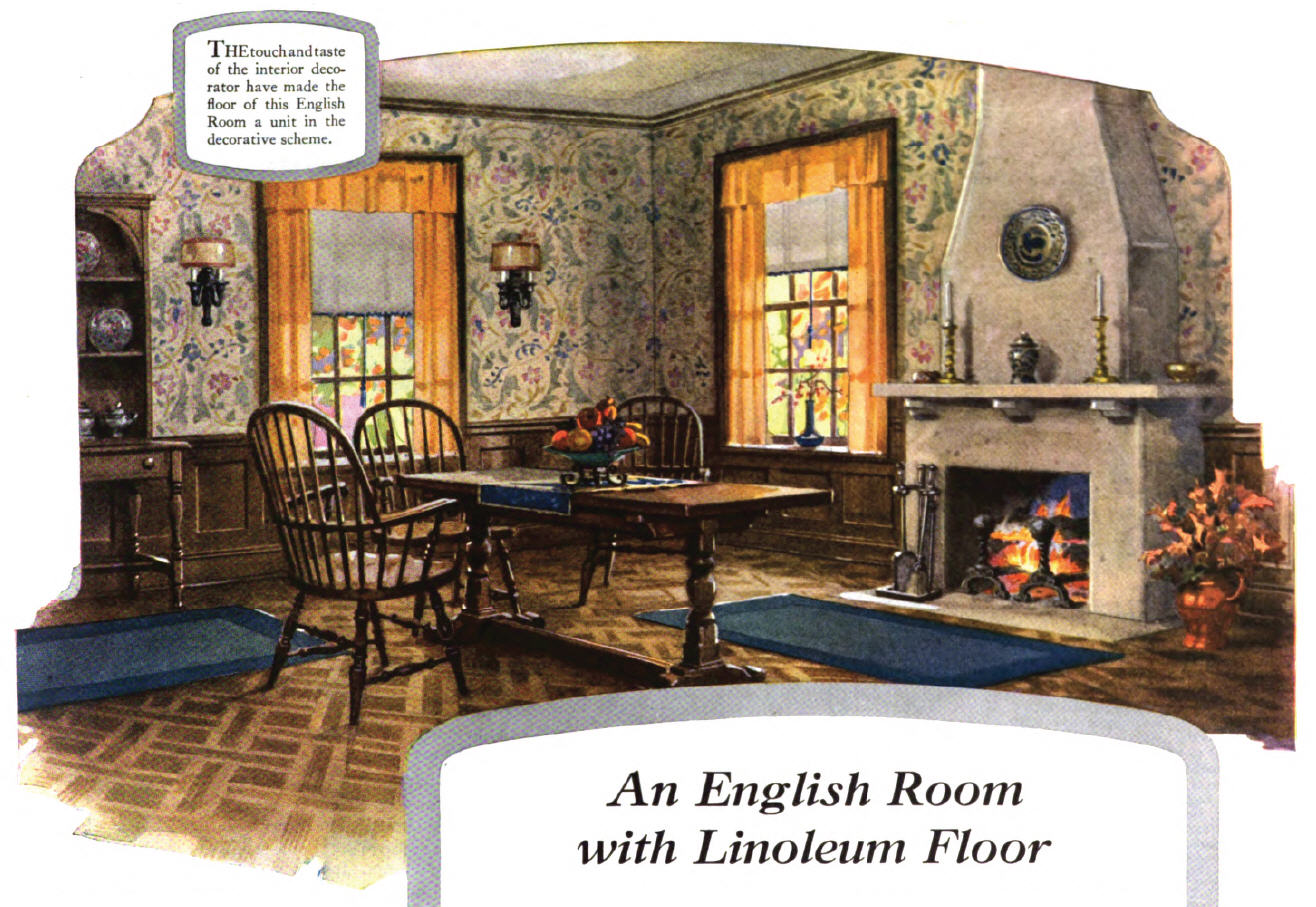
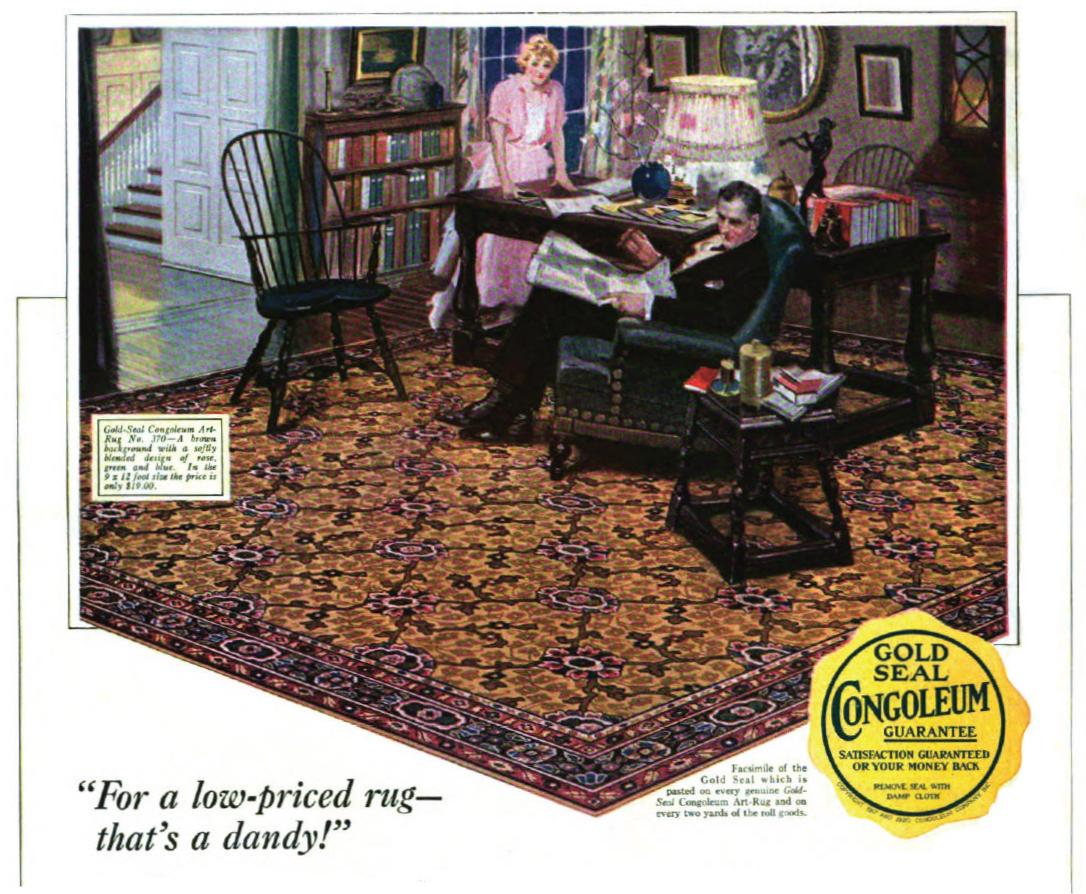
Linoleum came in every color of the rainbow, and in patterns ranging from florals to geometrics and everything in between.

.
It even mimicked throw rugs, wall-to-wall carpeting and hardwood floors.

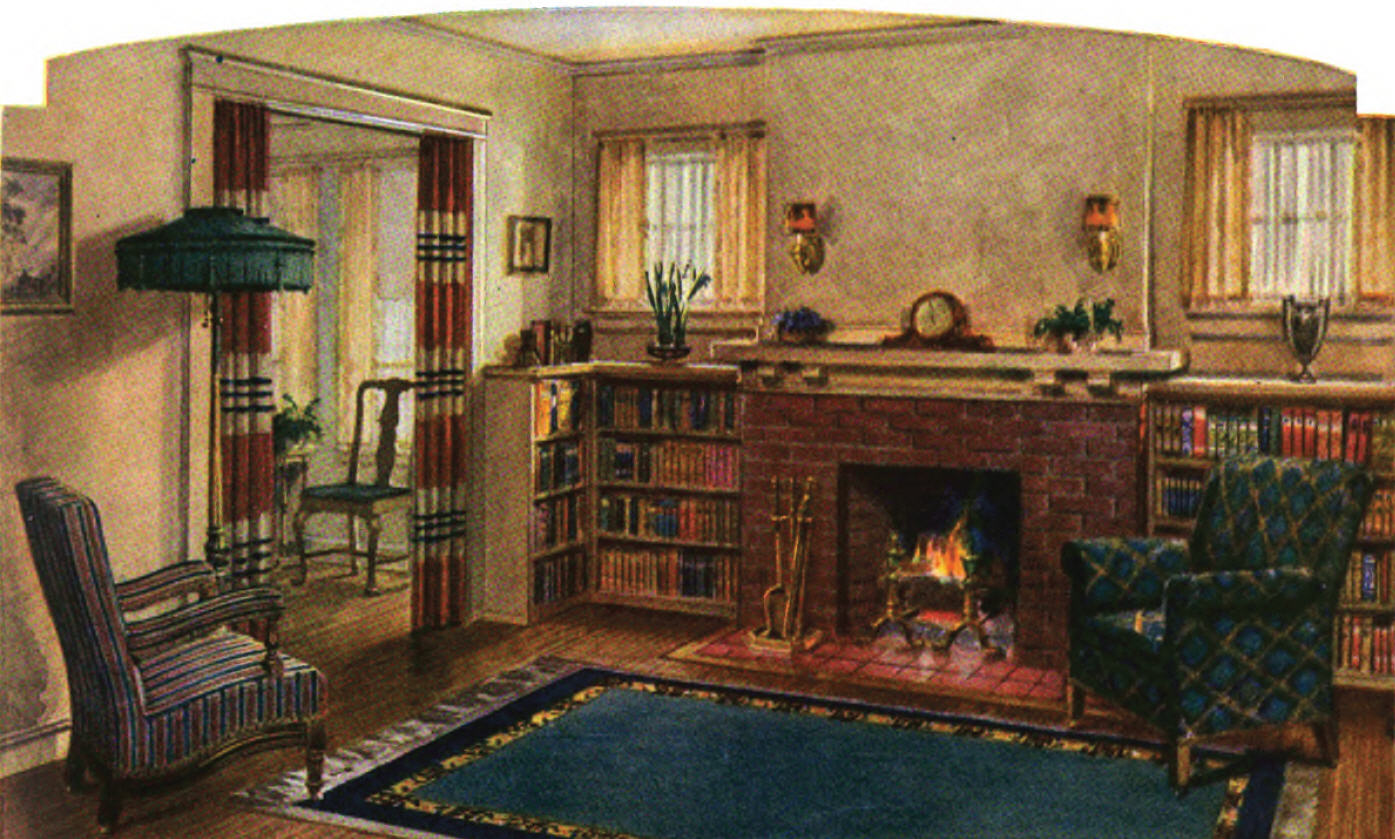
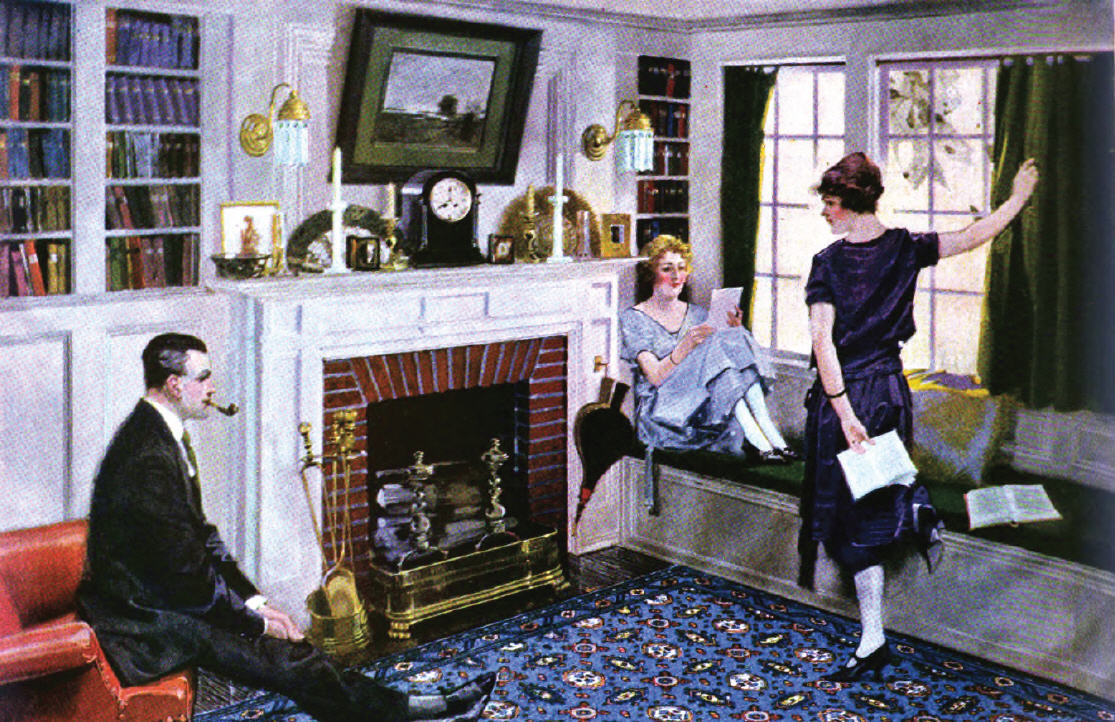
With so many patterns and colors to choose from, Americans could lay linoleum in their parlors and dining rooms, bedrooms and entry halls.
.
Professional decorators loved it, too. Here’s a bit of decorating advice on how to use linoleum in a sun room; it first appeared as part of an article in a 1922 issue of The Ladies’ Home Journal magazine:

And here’s the illustration that accompanied it.

.
Housewives also appreciated linoleum because it was virtually maintenance free. It was easy to clean and required none of the regular waxing and polishing regimens needed for hardwood floors.

.
And unlike traditional wool rugs, linoleum rugs didn’t have to be taken outside and beaten in order to keep them clean.
.
Isabella loved the house on Embarcadero. She had a dedicated room for writing, where she had her desk and typewriter. In that room she continued to produce stories and books until the late 1920s. She died in the house on August 5, 1930.
.
The house remained in the Alden family after her death; Isabella’s daughter-in-law Barbara lived there until the 1950s. The property was sold in 1966.
.
What kind of decorating style do you think Isabella used in her new house? Do you think she would have furnished her dream home with linoleum, the new wonder flooring product?
Or do you think she was more conservative when it came to decorating, and would have utilized traditional hardwood floors and wool carpets and rugs?
Here are some more ads for linoleum flooring products from the early 1920s (you can click on any of the images in this post to see a larger version):

.

.

.
.

.
Share this:

Preparing for Easter, 1909


