
That was the question that was being debated across late-Victorian America. It was a timely subject; while higher education for women was still a relatively young movement, women were rapidly proving their intellectual competence in colleges across the country.
In 1896 a Christian magazine put the question to three prominent Christian women writers and leaders of the era. You may recognize their names:
Elizabeth Stuart Phelps-Ward (1844-1911) was one of the most famous and best-selling American authors of the late 19th century. She was also a passionate advocate for women’s rights and financial independence, making her one of the most visible feminist voices in Christian literature.
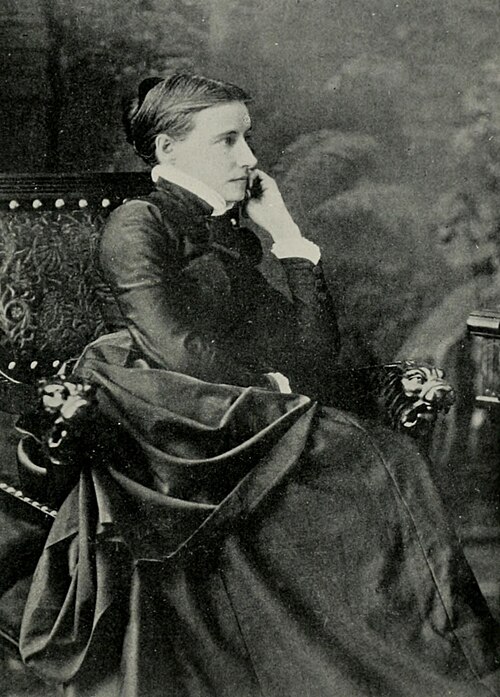
Mrs. James L. Hill (Lucy B. Dunham Hill) was an author, speaker, and Christian leader. Married to a prominent Congregational minister and leader of the Christian Endeavor movement, Lucy was a strong advocate for women’s involvement in Sunday school work, missionary societies, and national Christian assemblies.
Grace Livingston Hill (1865-1947) was Isabella Alden’s niece and a giant in Christian fiction. In 1896 Grace was just beginning her prolific career and was deeply involved in the Christian Endeavor movement. With her husband she wrote a popular guide for leaders of Christian Endeavor meetings. Over the course of her life, Grace would write over 100 beloved novels that seamlessly blended themes of romance, faith, and practical Christian living.
When it came time to answer the question “Are college-educated women good homemakers?” each woman took a difference approach.
Elizabeth Stuart-Phelps-Ward felt it was “too early to judge” because female-only and co-educational universities had only recently sprung up. However, she felt no one could doubt that a woman’s intellect could “bear the strain” of obtaining a college degree.
Mrs. James L. Hill answered the question with a balanced “No and Yes.” If higher education caused a student to lose her femininity or feel she was above domestic duties, then her answer was “No.” But if a woman used her education to embrace full “comradeship in marriage,” recognized good housekeeping as a virtue, and retained a true love for the home, then her answer was a resounding “Yes!”
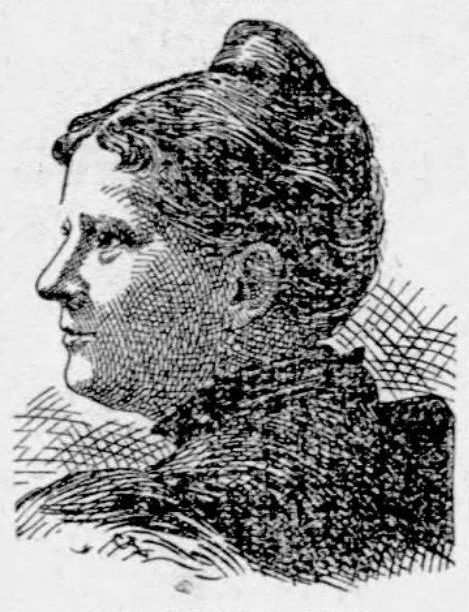
As always, Grace Livingston Hill brought a refreshing, practical, and spirited perspective to the discussion. Instead of defending college on its own merits, Grace cleverly turned the argument back on her critics by contrasting a college education with a “society life.”
She wrote:
“It is sometimes said that a college life gives a girl tastes that unfit her to be a home-maker, yet you do not hear it often urged that a society life does the same thing. Surely in society she will acquire tastes for being out late at night dancing, flirting with other women’s husbands, spending her energies over bits of paste-board while the household accounts run riot, dropping her tears for the dressed-up children on the stage while her own little ones are crying at home for their mother.”
Grace argued that the “earnest purpose, patience, and perseverance” required to earn a college degree meant she could apply those same qualities to managing the care and strain of running a home. She added that a mother whose mind had been broadened by science, literature, and history would ultimately be far better equipped to train her children “for all higher and better things.”
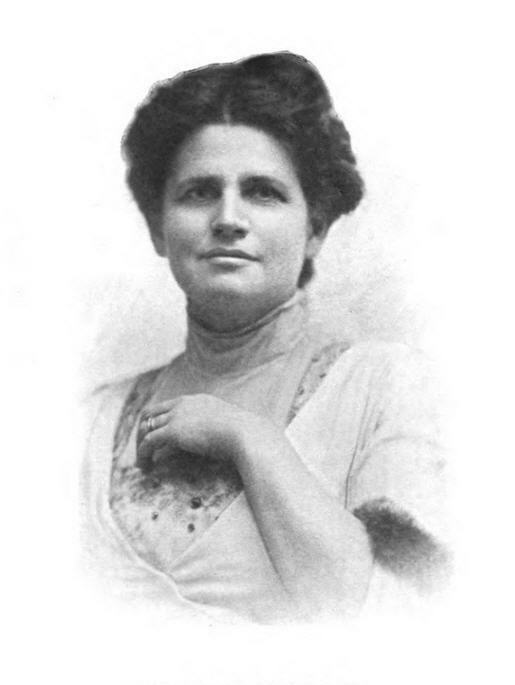
Much like her Aunt Isabella, Grace believed that higher learning was not an obstacle to faith and domestic life, but a valuable tool to enrich it.
What makes this 1896 article so interesting is how clearly it shows the changing roles of women in the late 19th century. Just like Isabella herself, the three women quoted in the article actively demonstrated that a woman could be intellectual, articulate, and deeply devoted to Christ and home.
And Grace’s defense of the disciplined college graduate over the frivolous society girl feels just as insightful today as it did when she wrote it 130 years ago!
Originally published in The Golden Rule magazine, the article was syndicated and published by different newspapers, including The American Israelite. You can read the entire article here in its original form, followed by a transcript.


