Isabella Alden was a prolific writer of Christian stories and novels for children and adults. We’ve compiled a list of 213 of her titles (which you can see here) and she may have written even more!
To celebrate Isabella’s beloved stories, here’s a word search puzzle for you, created from the titles of her books.
Choose how you want to play:
To play online, click here. Then, click and drag to reveal each listed book title. You can play the online puzzle until September 30.
Once you’ve completed the puzzle, be sure to leave a comment to tell us how you liked it, and to be entered in this week’s drawing for a $25 Amazon Gift Card.
Have fun !
This post is part of our Blogiversary Celebration! Leave a comment below or on Isabella’s Facebook page to be entered in a drawing for a $25 Amazon gift card!
We’ll announce the winner on Friday, September 14.
Isabella often modeled the characters in her books after family members and friends. That was the case with “Little Minie” who appeared in more than a dozen of Isabella’s novels under the names “Minie” or sometimes “Minnie.”
In real life, “Little Minie” was Myra Heaton, but her family—including her adoring “Auntie Belle”—called her Minie.
Minie was born on May 30, 1861, and was named for her grandmother, Myra Spafford Macdonald (Isabella’s mother).
Minie’s mother was Isabella’s older sister Mary; her father was George Heaton, a newspaper publisher.
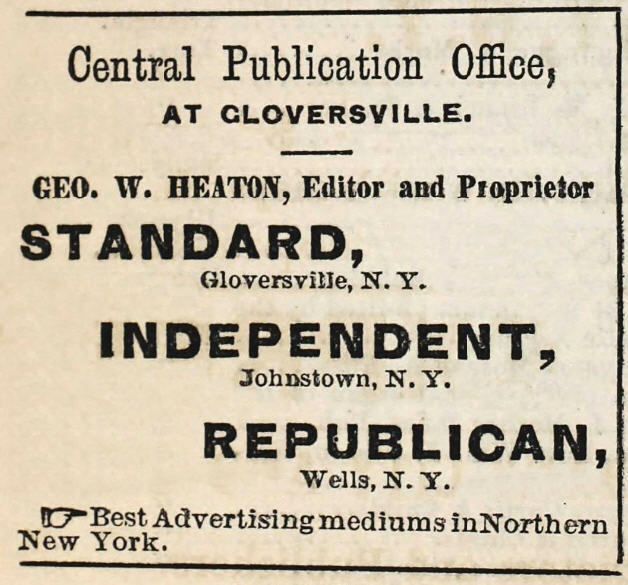
George Heaton’s advertisement for his newspapers in the 1870 Gloversville directory.
You may remember that it was George who published the first story Isabella wrote. Titled “Our Old Clock,” it appeared in his newspaper when Isabella was just a child. (You can read more about that here.)
George was a devout Christian, a temperance worker, and active in his church. This record from the First Presbyterian Church in Gloversville, New York shows George was elected as a Church Elder in 1864 and served in that capacity until his death in 1870.
Isabella was 23 years old and still living at home when Minie was born. Isabella called her “the special darling of our home.”
She forged a special bond with Minie, which was helped because Minie lived so close by. Isabella, her sister Julia and their parents lived in a large home in Gloversville. On adjoining lots were the homes of Isabella’s oldest sister, Elizabeth, who was married to Hiram Titus, and Mary, who was married to George Heaton.
Family members named in this post are highlighted in red boxes.
Family members passed between the three houses often and with ease, which was especially fortunate. As Isabella later wrote of her mother, “no one in our family ever could get ready to do anything without grandma’s help.” If there was a large meal to prepare, travel trunks to be packed, or big cleaning jobs to be done, Isabella’s mother—as well as members of all three extended families—had only to go “next door” to ask for or offer help.
Isabella wrote that the Heaton home was “at the upper end of the garden” behind her house, so it was only a few easy steps to visit Minie, or gather her up to take her back to Isabella’s own home for a visit and some pampering.
Minie grew up loving Jesus and trusting God. When Minie’s parents had to take a week-long trip, Minie stayed with Isabella and “Auntie Belle’s” mother and father. As Isabella walked Minie through the garden to the Macdonald home to spend her first night there, wise little Minie gave Isabella this advice:
“Auntie Belle, you must say your prayers every night and morning, always, no matter if your mamma is away; because God isn’t away, you know—he never packs his trunk and goes on a journey.”
Isabella adored her Minie, and spent precious time with her every day.
When Isabella married the Reverend Gustavus “Ross” Alden in 1866, she chose Minie’s fourth birthday as her wedding day, and Minie enjoyed special privileges throughout the day. She even joined the bride and groom on their ride in a beautiful barouche to the train station after the ceremony and reception. Thereafter, Minie often visited Isabella and Ross, who lived not far away.
In 1870, when Minie was eight years old, Isabella’s father became ill, and it was clear to everyone in the family that he was dying.
Minie and Isabella spent most of their summer in Isaac Macdonald’s room, keeping him company and soothing him when needed. Isabella wrote:
It was her delight to fan him, to arrange the pillows for him, to read to him in her soft, gentle voice; to sing to him when he was restless and feverish.
Minie would recite many little pieces to him, but his favorite was:
Many kinds of darkness In the world are found; There’s sin, there’s want, there’s sorrow, So we must shine. You, in your little corner, And I, in mine.
Isabella’s father died on July 26, 1870, not long after Minie finished singing one of his favorite hymns to him. The entire family grieved, but Minie cheered Isabella with this perspective:
“Oh, Auntie Belle, if he could only have taken us all right up to heaven with him, how sweet it would have been.”
By 1875, Minie was a vibrant, active fourteen-year-old; but in December of that year, she, too, fell ill. She was sick only a week, Isabella later wrote. Minie died on December 30.
A week later, Isabella wrote of the loss of her “special darling” in a letter to her Pansy Society, which she published in The Pansy magazine.
“Last Thursday at midnight the Lord Jesus called our darling Minie. He wanted her to come up to His beautiful home to live. She was not one bit afraid to go, for she knew and loved Jesus, and remembered His promise that she should come up there some day.
“Minie is resting today and forever with Him. But, oh—we miss her so!
“Still, we cannot help being glad that she will never be sick, or afraid, or unhappy anymore; and that we are all invited to come and live if we choose in that beautiful world, by and by. I choose. Do not you? I have promised to follow His directions. Have you? I am surely going, are you?”
As always, Isabella turned her heartbreak into an opportunity to talk to her young readers about God’s promise of salvation through Christ.
She received many replies from young members of her Pansy Society, and later said, “I like to think that dear Minie has already welcomed precious friends to that eternal home. It is a joy to me to linger over the memory of the earthly life of this young disciple who was not quite fifteen when God called her home.”
Now you know what inspired Isabella to create a “Minie” character in her Ester Ried books, in her novels Chrissy’s Endeavor, Only Ten Cents, and so many others. In each story, Isabella paid a small tribute to her “special darling,” little Minie Heaton.
This post is part of our Blogiversary Celebration! Leave a comment below or on Isabella’s Facebook page to be entered in a drawing for a $25 Amazon gift card! We’ll announce the winner tomorrow!
This post is part of our Blogiversary Celebration! Leave a comment below or on Isabella’s Facebook page to be entered in Friday’s drawing for a $25 Amazon gift card!
.
.
Chances are, you’re reading this post because you love Isabella Alden’s books.
From the time her first book, Helen Lester, was published in 1865, Isabella enjoyed success as an author.
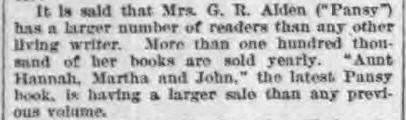
By the late 1880s readers were buying over one-hundred-thousand copies of her books every year:
From The Brooklyn (New York) Standard Union, October 22, 1890.
When Isabella wrote her novels, there were no Internet sites like Goodreads or online retailers like Amazon for readers to post their reviews of Isabella’s books.
Instead, Isabella’s books were reviewed by literary editors in newspapers across the country.
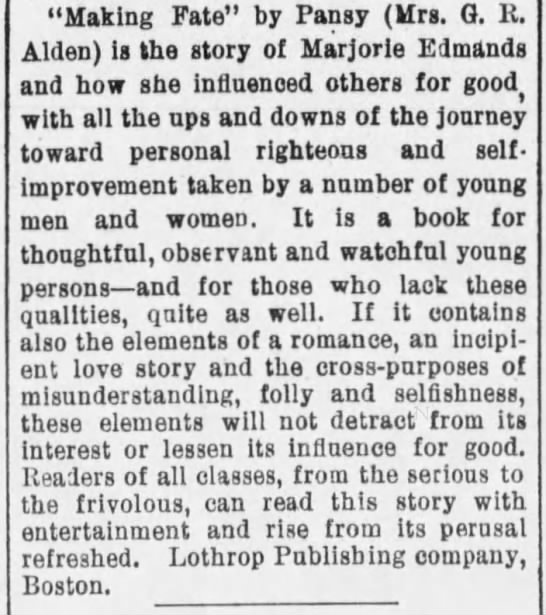
When her novel Making Fate came out in 1896, a Boston newspaper declared:
Readers of all classes, from the serious to the frivolous, can read this story with entertainment and rise from its perusal refreshed.
The New England Farmer (Boston), August 1, 1896.
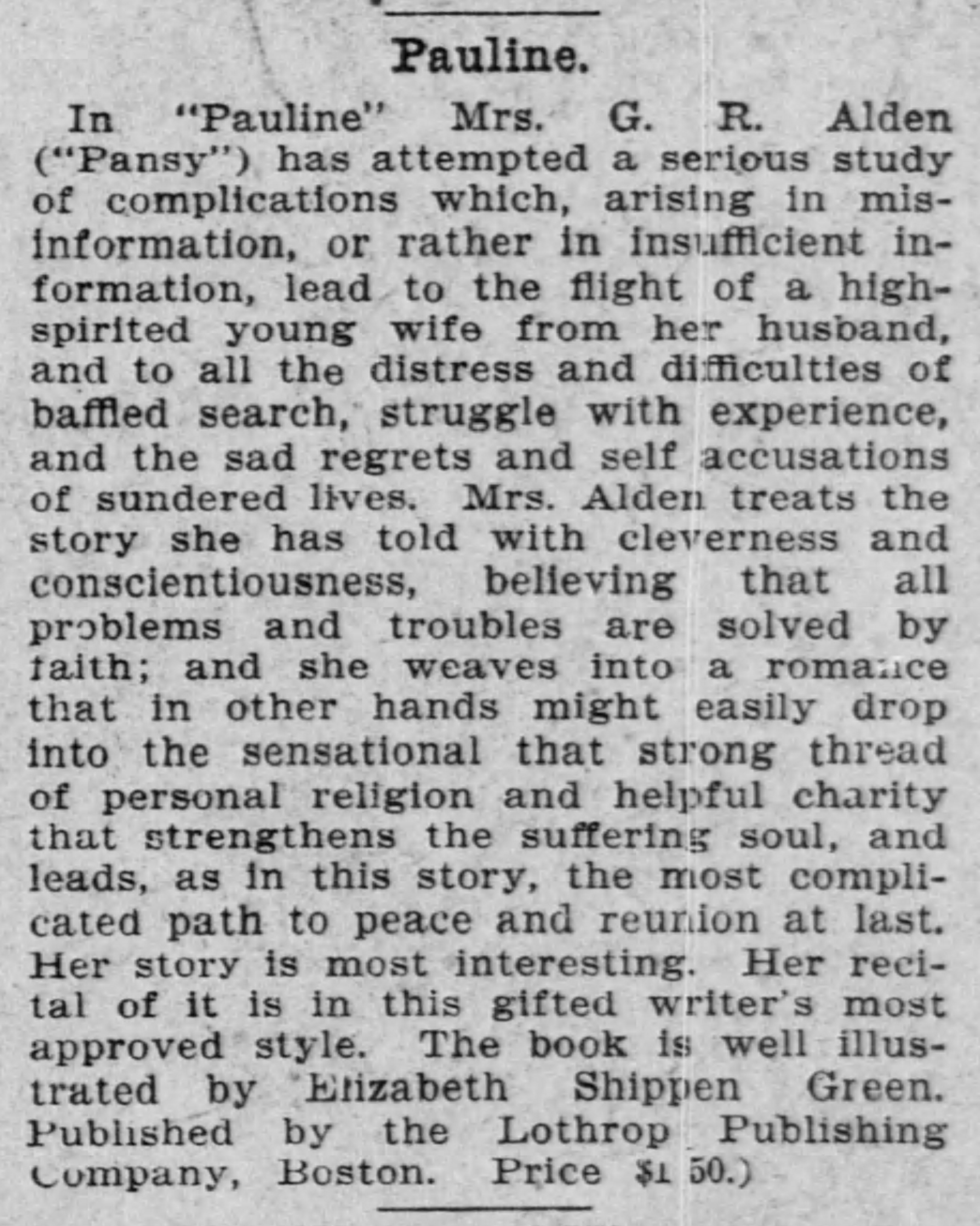
In 1901, a San Francisco newspaper reviewed Isabella’s novel, Pauline, and declared Isabella to be “a gifted writer.”
From The San Francisco Call, September 22, 1901. Click on the image to read the entire review.
Unfortunately, not all reviewers were so generous with their praise. One literary critic in a Pittsburgh newspaper wrote that Isabella’s 1902 novel Unto the End “is really not half a bad story in its way.” The critic goes on to classify Isabella’s readers among “those who ask from their literature nothing but that it shall not require them to think.” (You can read the entire review by clicking here.)
But reviews like “Pittsburgh’s” were few and far between. On the whole, Isabella’s novels were well received, and millions of Isabella’s faithful fans relied on those reviews to notify them when her new books were available for purchase.
Several times, in her stories and memoirs, Isabella mentioned keeping a scrapbook; it’s possible that’s where she kept clippings of her book reviews.
And if that’s true, she probably also kept reviews of the books written by her niece, Grace Livingston Hill.
Grace’s writing career took off in the 1900s. When her novel The Best Man was published in 1914, The Boston Globe’s literary critic praised the novel, saying it was “full of thrilling moments.”
It gave Joseph a curious sensation to hear his verse sung over and over again by the choir, the great organ rolling out the melody and seeming to him to speak the words almost as distinctly as the voices did. (A Dozen of Them, by Isabella Alden)
Church organs were often mentioned in Isabella Alden’s books, but they looked nothing like the organs we frequently see in churches today.
So here’s a jigsaw puzzle for you to solve that will reveal the type of church organ Isabella probably had in mind when she wrote her novels.
This post is part of our blogiversary celebration! Leave a comment below or on Isabella’s Facebook page to be entered into Friday’s drawing for a $25 Amazon gift card!
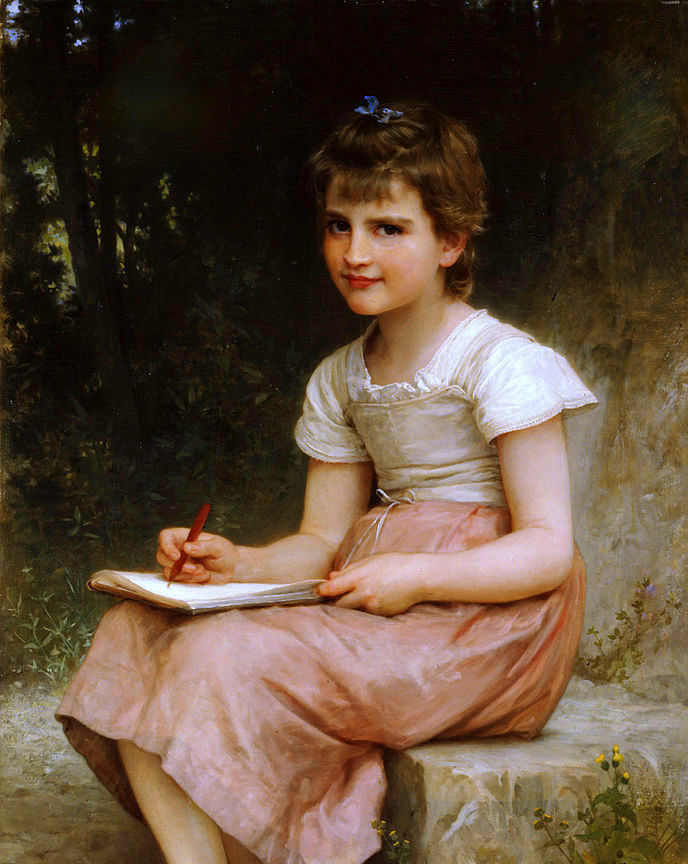
Isabella Alden’s father Isaac Macdonald is often credited with instilling in her a love of writing. He gave her a journal when she was very young and—to teach her to pay attention in church—he encouraged her to take notes during Sunday sermons so they could discuss the minister’s message later in the day.
“A Writer” by William Adolphe Bouruereau, 1890.
But it was probably Isabella’s mother, Myra, who taught Isabella to be a great story-teller.
At a young age—even before she could write—Isabella’s mother encouraged her to make up little stories about things.
“Make a story out of it for mother,” she would say; and out of those beginnings, Isabella began to develop the writing skills that would serve her as an adult.
Myra was herself a story-teller, and often entertained her six children with stories of her own younger years.
Myra’s father was Horatio Gates Spafford, a well-respected author and New York newspaper editor, so she developed her own writing skills at a very early age.
Isabella credited her mother Myra with teaching her how to weave a story centered on a well-loved Bible verse. It was Myra’s habit to gather her children—and later, her grandchildren—around her in the evening to tell them stories that were entertaining and and helped make sense of a Bible verse or Sunday-school lesson.
Her stories always contained a practical lesson in walking daily with Christ—a theme Isabella adopted and perfected in her own stories.
When Isabella’s father Isaac Macdonald died in 1870 Isabella and her husband Ross made certain Myra came to live with them. Although Ross’s career as a Presbyterian minister caused them to move regularly from one town to another, Myra made her home with the Aldens for the next fifteen years.
Myra’s entry in the 1880 Cincinnati directory shows she resided with the “Rev. G. R. Alden’s.”
They were living in Carbondale, Pennsylvania when Myra died at home in 1885. Isabella was 43 years old when her mother passed away, and she missed her terribly.
At that time Isabella was editing The Pansy magazine; and since she and her family members—including Ross, her son Raymond, her sister Marcia, and Marcia’s husband Charles—were all contributing articles and stories to the magazine, Isabella and Marcia found a way to pay tribute to their mother in the pages of The Pansy.
The cover of an 1891 issue of The Pansy.
They began publishing short stories for children in The Pansy under the pseudonym “Myra Spafford.” The stories were reminiscent of the kind of stories Myra told her children and grandchildren.
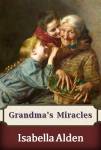
In 1887 Isabella published Grandma’s Miracles; Stories Told at Six O’clock in the Evening. The book is a fictionalized account of those tender and loving evening story-times Myra had with her children and grandchildren.
You can read Grandma’s Miracles for free!
Click on the book cover to read this story on your phone, ipad, Kindle, or other electronic device.
Or you can read, print and share it as a PDF document on your computer. Just click on the book cover to start reading now.
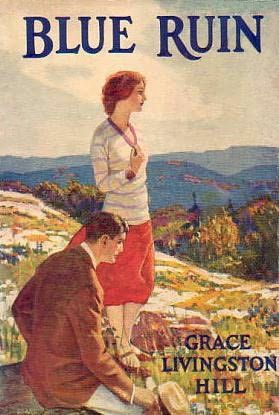
Many people who love to read Isabella Alden’s books also enjoy the novels written by her niece, Grace Livingston Hill.
If you’ve ever searched for some of Grace’s titles, you’re not alone. Used copies of her novels are hard to find. If they are listed for sale on Internet sites, such as Ebay, fans immediately snap them up.
In the days before the Internet, fans had to search through used book stores to find her books. In some cases, they turned to newspapers to try to find copies. Here’s one example:
In the 1990s an Illinois newspaper had a regular column called “Good Neighbors.”
The column shared readers’ advice on a variety of topics, and gave readers a chance to ask or answer questions.
In March 1996 they ran a brief paragraph in the Good Neighbors column:
The newspaper received quite a few responses! Here are some of them:
You can tell there was a little bit of a bidding war going on, with some readers offering to pick the books up and pay for telephone calls (at a time when there were “toll” charges for calling a number in a different area code).
It happened again in 2001, when “M.B. of Lexington” offered to give away dozens of Grace Livingston Hill books:
It sounds like the newspaper was quite surprised to learn so many people were interested in novels that were written (at that time) almost 100 years before. And yet, Grace Livingston Hill’s books are still popular!
How about you? Do you read and collect Grace Livingston Hill novels? Do you have a complete collection? What are the methods you use to hunt down copies of her books?
Today, a soda fountain—when you can find one—is a quaint relic of a by-gone era. Think of soda fountains and you may think of ladies wearing corsets and long skirts, or gentlemen who never leave home without a hat, tie, and pocket watch.
Soda fountains are such benign objects to us, it’s hard to imagine that they ever had the potential to cause harm. But in Isabella’s day, there were hidden dangers in every soda fountain, in every town in America.
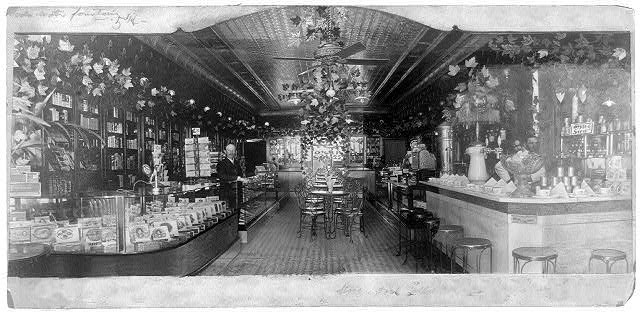
An average American drugstore in 1900. A soda fountain is on the right side of the photo.]
Isabella Alden recognized those hidden dangers and wrote about them, because she knew the dangers were not inconsequential. There were pitifully few laws at the time that regulated the sale or distribution of products that could be bought at the time; and many products included alcohol and addictive ingredients.
Children could obtain alcoholic drinks in saloons. Doctors prescribed alcohol to patients young and old.
A pair of 1894 trade cards depicting “a big spender and his girl” at the soda fountain.
And commonly used tonics and medications often contained alcohol and opiates—sometimes at alarmingly high levels—and most did not disclose their contents on their labels.
In 1888 this cough syrup proudly listed its addictive ingredients—cannabis, morphine, alcohol, and chloroform—on its label. Since no laws required such disclosures, few manufacturers revealed their product contents.
Here’s an example: In 1885 a man named John Pemberton began marketing a beverage he invented. He called it “French Wine Cola—Ideal Nerve and Tonic Stimulant.”
In an 1880 drugstore in Washington DC, this soda fountain sold a beverage called Wine Coca for five cents a glass.
Why such a name? Because every 7 ounce glass contained 9 milligrams of cocaine and a walloping dose of caffeine extracted from the kola bean. Initially, sales were sluggish.
But the following year, when Pemberton renamed the drink “Coca-Cola,” sales picked up. By the 1890s, Coca-Cola was being sold in stores and soda fountains all over the country . . . and it still contained cocaine and caffeine. (Coca-Cola’s formula didn’t change until after 1903.)
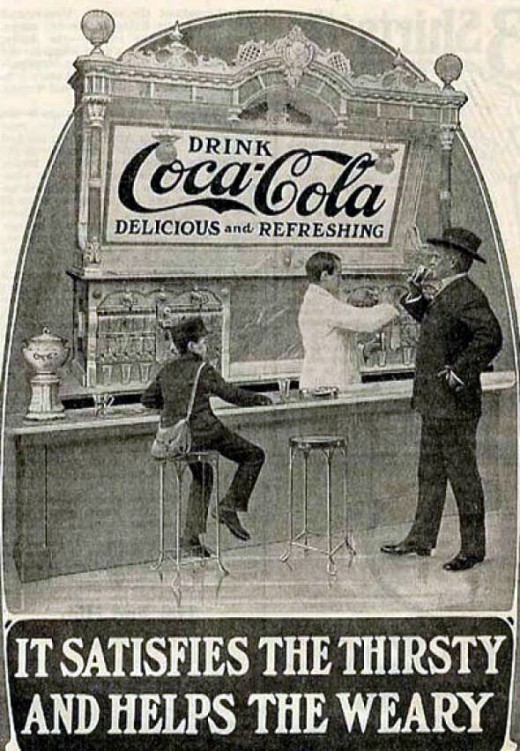
An 1890s trade card for Coca-Cola, touting it as the “ideal brain food” for relieving mental and physical exhaustion.
That’s one example of the “hidden dangers” Isabella wrote about.
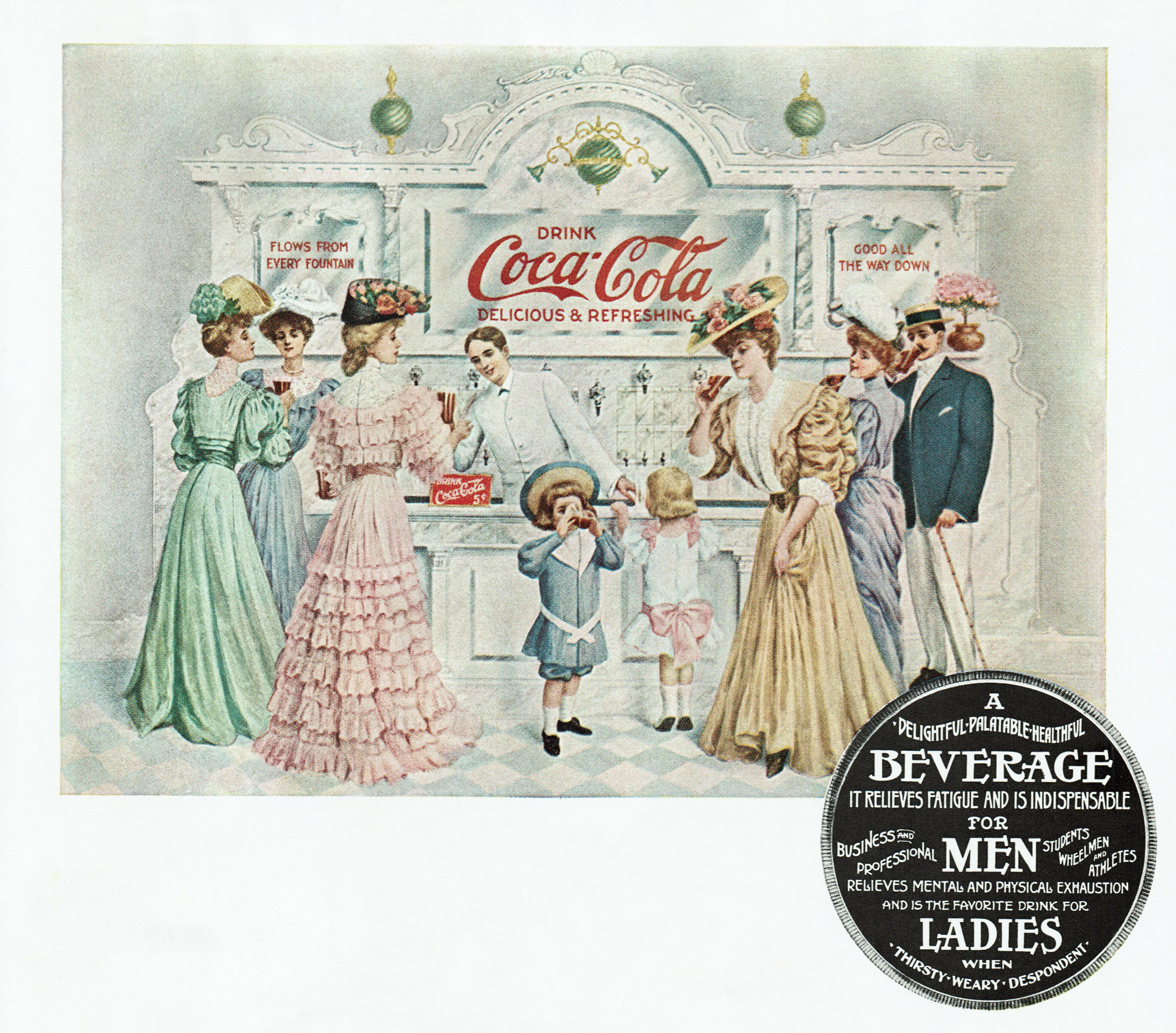
A 1905 magazine ad for Coca-Cola.
In her novel One Commonplace Day, several scenes take place in the town drug store, which Isabella describes this way:
[It was ] glittering with its show of colored glass and brilliant liquids, and arranged with that regard to lovely combinations of color which is common in first-class drug stores. There is at one end a handsome soda fountain, with all the various cooling syrups and elegant appliances of first-class establishments.
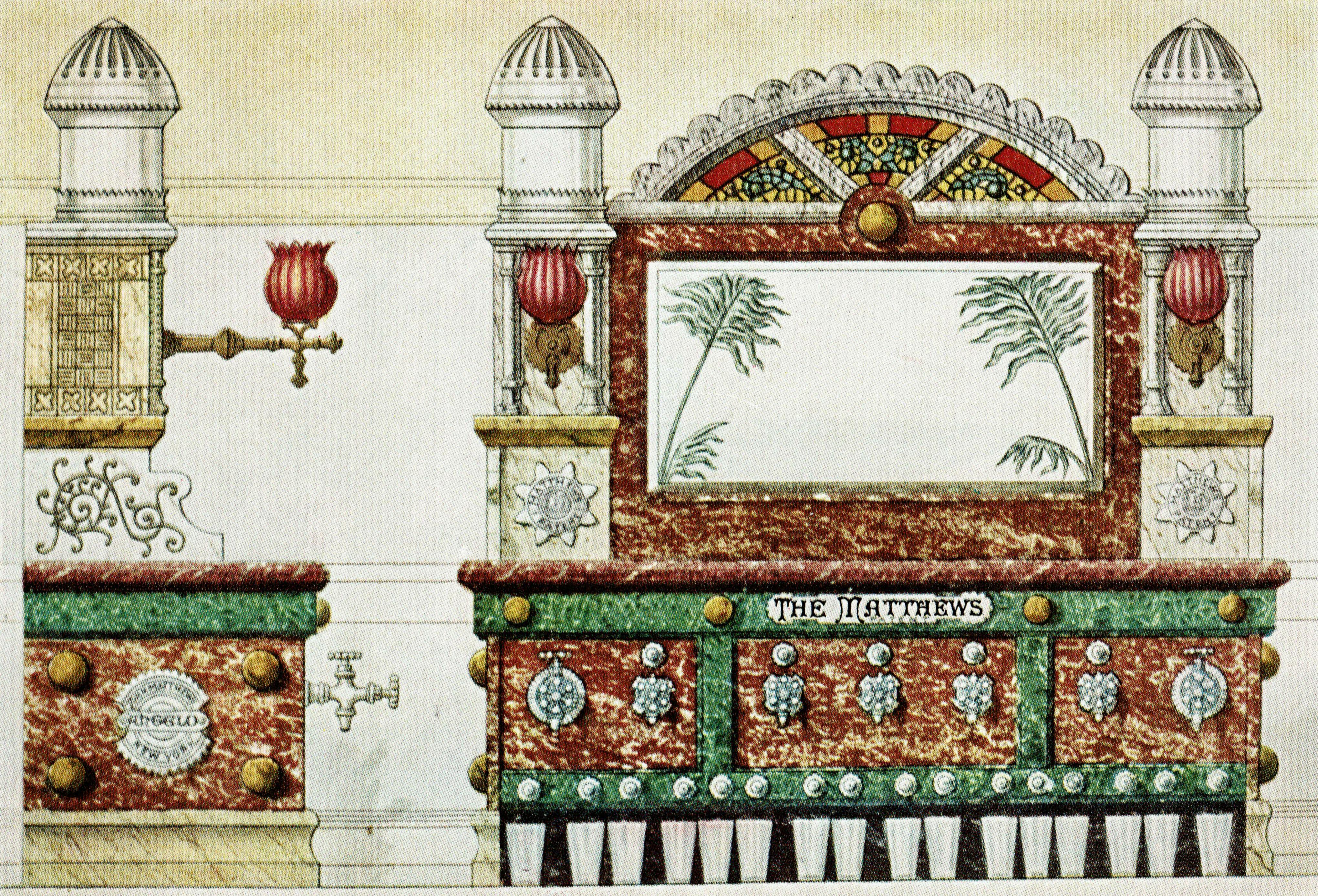
The design for a new soda dispensing unit, showing front and side views, with marble counters and inlays (circa 1900).
Charlie Lambert, one of the characters in the story, was a temperance man who took pride in the fact that he drank no liquor and had no temptation to drink any. But he often took his lunch at the soda fountain, where he drank a soda almost every day during the summer.
An 1890 newspaper ad for Coca-Cola aimed at temperance advocates, despite the drink’s ingredients.
Chances are, Charlie’s soda was laced with wine, cocaine, caffeine, or one of any number of additives that were not disclosed to unsuspecting consumers.
The soda fountain in a Peoples Drug Store, Washington D.C., 1909.
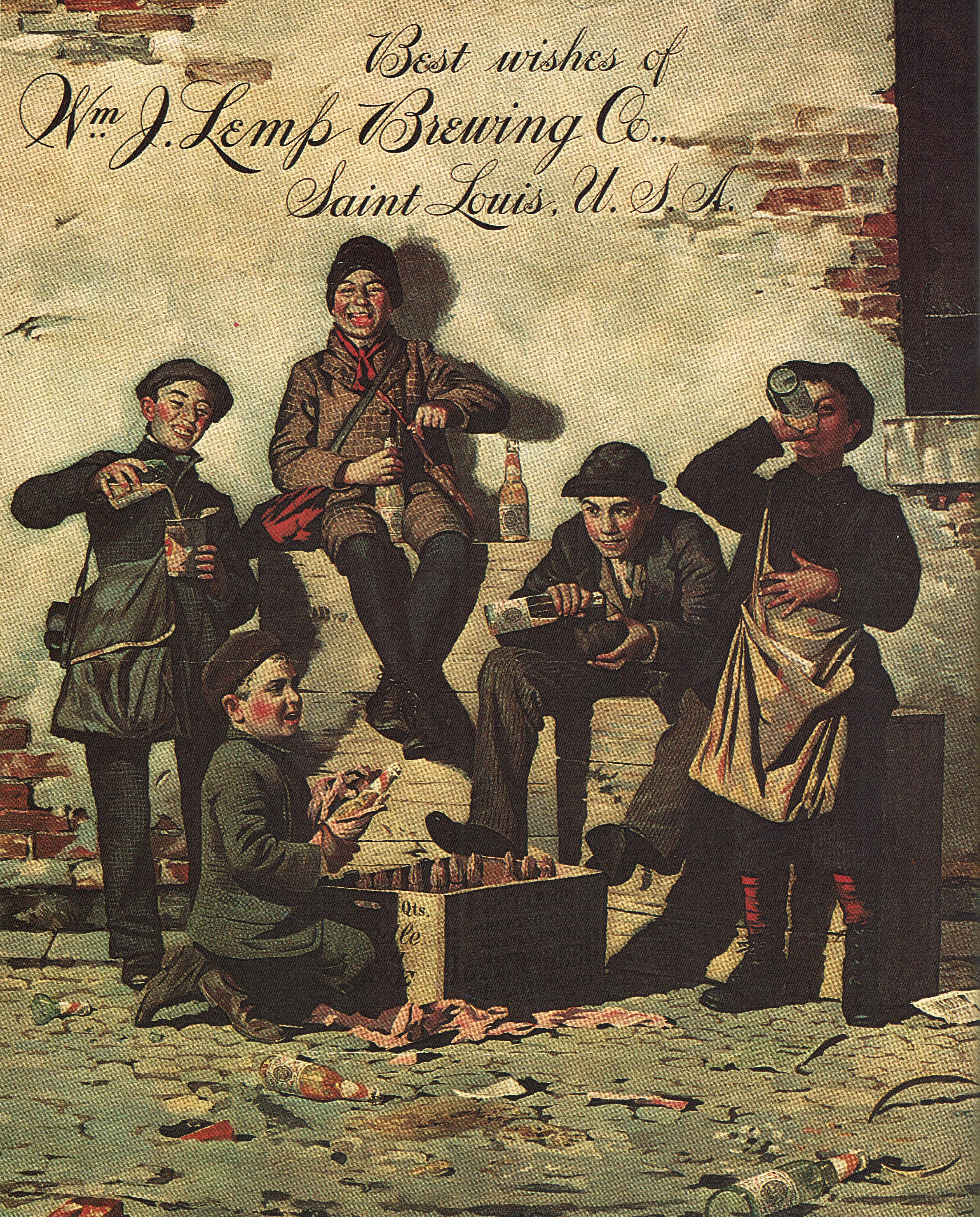
In the book Isabella advances the theory that people often become addicted to alcohol or drugs because they develop a taste for them as children.
A 1916 advertising broadside showing boys drinking a case of beer or liquor.
When you think of the number of children who sat on soda fountain stools, unconsciously swinging their dangling feet as they enjoyed a glass of Coca-Cola—all the while pumping nine milligrams of cocaine through their veins—Isabella’s theory begins to make sense.
A 1905 ad in Harpers’ magazine.
Advertising for Coca-Cola and similar beverages was everywhere. Ads showed happy, peppy, beautiful people sipping cocaine-laced drinks.
Coca-Cola calendar art, 1915.
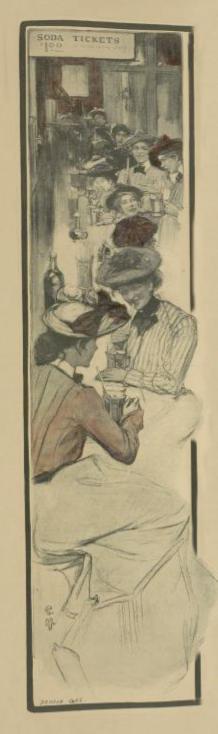
And some soda fountains and saloons distributed tickets to people on the sidewalks, with a buy-one-drink, get-one-free offer.
By today’s standards, Isabella’s novels about temperance and the evils of alcohol may come across as strident and unreasonable. In reality, Isabella was fighting a very real problem in the best way she knew how; by writing stories people could relate to.
An iconic 1890s Coca-Cola advertisement.
And while One Commonplace Day is, on the surface, a story about the American temperance movement in the late 1880s, it carries a deeper message.
In the book, a group of prayerful Christians band together to help one of their neighbors overcome his addiction to alcohol. They formulate a plan to intercede in his life and help put him on the path to sobriety.
A crowded Coca-Cola soda fountain in 1910.
They pray for him, invite him to church, intercept him before he can enter a saloon or drug store, and do everything they can to help him kick his addiction.
Much has changed since Isabella wrote One Commonplace Day in 1886, but Americans still struggle with issues of alcoholism and addiction.
What do you think? In today’s world, is it possible for a group of prayerful Christians—like the people Isabella wrote about in One Commonplace Day—to band together to change the life of one person who struggles with addiction?
Coca-Cola wasn’t the only tonic that promised health benefits from questionable ingredients. You can read more about quack cures and patent medicines on these sites:
It’s the time of year when millions of Americans enjoy the out-of-doors. In Isabella’s novels, her characters spent summer days walking, hiking, and playing sports of all kinds.
A favorite pastime for Isabella’s characters was the game of croquet, and she may very well have played the game herself.
A romantic scene captured on the 1866 cover of a pamphlet on the rules of croquet.
Beginning in her early twenties, Isabella made several trips over the years to the Castille Sanitarium in New York, where she was treated for health concerns. The owner of the sanitarium encouraged all her patients to play croquet, and it’s possible Isabella followed the doctor’s orders.
Whether she played the game herself or not, she certainly appreciated the game. In her books, characters young and old played croquet, as did the rich and poor. No matter what their circumstances, croquet brought her characters together.
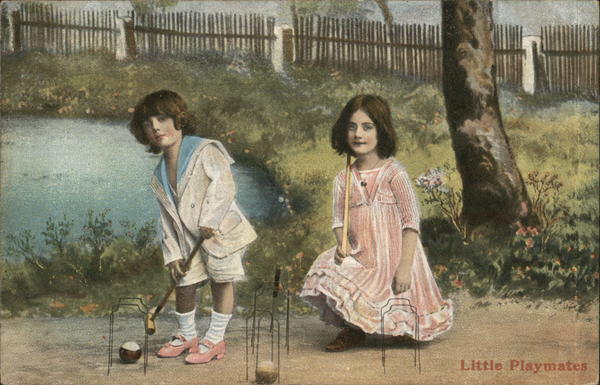
Children Playing Croquet – Little Playmates
In Cunning Workmen, Sunday-school teacher Mr. Hammond attends a young people’s party where he notices that Peter, one of his young charges, isn’t participating in any of the games.
“What about croquet?” he presently asked. “Miss Blake seems to be enjoying the game, and the boys are very patient in their teaching. Why haven’t you joined them?”
Peter’s honest face grew red and troubled.
“I don’t quite know about them,” he said, earnestly. “I was waiting for you to come so I could speak to you about it. Them red and yellow balls look nice, and I’m most sure I could strike them through those little wires, if that’s what they’re after; but …”
“Well?” his teacher said, in kindly inquiry.
“Why, they look so exactly like them billiard things that they play with down at the saloon. Tom Randolph took me in one day. He plays there a good deal, and if them things are wrong, why ain’t these?”
“But it isn’t the red and yellow balls that are at fault, you know. It is the associations. Billiard playing is generally done for money, and croquet is simply for pleasure and exercise. Isn’t there a difference?”
“Yes,” said Peter, slowly and thoughtfully, “there’s a difference. I see that.”
Leave it to Isabella to find a way to teach a lesson through a simple game of croquet!
Playing croquet in Cape May, New Jersey, 1875.
She also used the game to show readers the motivations and mindset of her characters. That was the case with the Reverend Mr. Tresevant in The King’s Daughter, when he decided to play croquet rather than attend a temperance meeting.
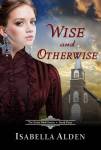
Later, in Wise and Otherwise, the next book in the series, Mr. Tresevant makes a fateful decision. When a little neighborhood boy is extremely ill and lay dying in his bed, the entire town, including Dr. Douglass, went in search of the Reverend Mr. Tresevant.
Dr. Douglass’ wife later asked if he ever found the minister:
“Did you tell him about Freddy, and how much they wanted to see him?”
“I did,” relaxing into gloom and laconic answers.
“What did he say?” Mrs. Douglass was entirely accustomed to cross-questioning her husband, and understood the process thoroughly.
“That he would go down there as soon as the game of croquet was concluded.”
The lady opposite him set down her cup that had nearly reached her lips and looked at her husband, while an expression of mingled doubt and dismay spread over her face.
“Dr. Douglass! Did you tell him the child was dying, and that they had been in search of him?” she asked in shocked tones.
“I explained the latter fact to him elaborately, and told him the boy was very sick, and that I feared he might not live until morning.”
For once the ever ready tongue opposite seemed to have not a word to utter. When she found voice again, it was to ask, in a very subdued way, “Do they know it at the house—know that you have found him, I mean? What do they think of it?”
“They know that I found him—and where—for they asked me both questions. I did not enlighten them as to his occupation, and said what I hoped and believed was true, that I thought he would be along very soon; but he had not arrived when I came away, a quarter of an hour ago. The game must have proved a complicated one.”
Now, the question is, was Mr. Tresevant’s heart so bound up in the game of croquet that he could not even leave it to answer a summons from the dying?
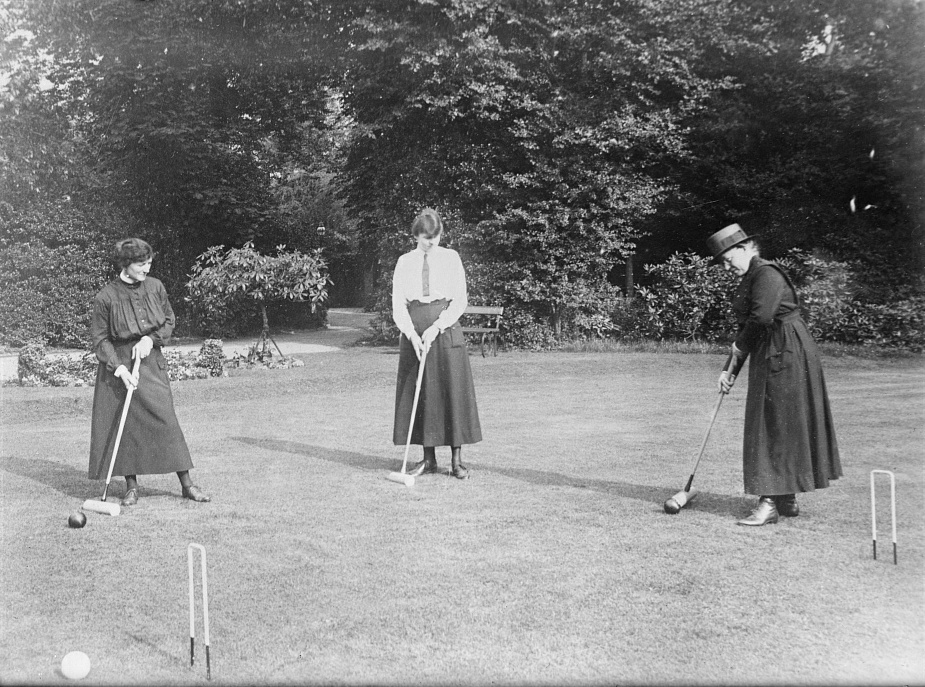
A tense moment in a game of croquet, 1918.
In the novel, Isabella does go on to explain the reasons Mr. Tresevant would not leave his croquet game to pray with the family of a dying child; and in doing so, she tells us much about the state of Mr. Tresevant’s heart and soul.
Students play croquet at girls school in Pennsylvania, 1901.
In all, Isabella mentioned the game of croquet in at least nine novels. Sometimes she used the game to introduce topics of right and wrong Christian behavior, as in the discussion above from Cunning Workmen.
Other times she simply used it as a way for her characters to enjoy each other’s company on a bright summer afternoon.
How about you? Have you ever played croquet? What do you like most about the game?
You can find out more about Isabella Alden’s stay at the Castille Sanitarium in New York. Click here to read the post.
And you can find out more about Isabella’s books mentioned in this post by clicking on any of these book covers:
Isabella had a special bond with her father, Isaac Macdonald. She might even have been what we would call in today’s world a “daddy’s girl.” But the truth was that her father was undoubtedly the single most influential person in her life when she was growing up.
In his younger years Isaac Macdonald earned his living as a farmer, but with a wife and six children to support, he left farming and established a box-making business in Gloversville, New York.
Many years later, after Isabella became a best-selling author, a Gloversville newspaper wrote a brief article about her early years in that town. The writer of the article briefly mentioned her father:
Isaac was a box maker, and if his boxes are any index to his character, he was staunch and worthy. He lies in our pleasant cemetery, but there are boxes still in use made by his faithful hands.
It’s a brief paragraph, but with its use of the words character, worthy, and faithful, we get a glimpse of Isaac Macdonald’s reputation among his neighbors and friends.
In the many stories and anecdotes Isabella shared about her father, she paints a picture of a loving man of immense faith.
In his home circle, he ably fulfilled his role as provider, protector, leader and teacher. He was eternally patient with his children and grandchildren; and he instilled in them an unbreakable faith in God and His Word.
Most of all, Isaac valued honesty, a fact Isabella illustrated in a story that took place when she was an adult and her young niece Minie was staying at the family home.
Isabella’s sister Julia teasingly told little Minie that she was going to serve butterflies and caterpillars for tea, which greatly shocked and upset the little girl. Julia, however, thought Minie’s reaction was funny; she told the story to the family later that day “with many descriptions of Minie’s shocked tones and looks, and much laughter.”
Only Isaac looked grave. When the laughter was over he said to Julia:
“How many years do you suppose it will be before Minie will discover that you haven’t told her the truth?”
“The truth!” said Julia, in surprise. “Why, of course it wasn’t truth. It was only in fun, you know. Whoever supposed that the absurd little monkey would believe it?” and she laughed again at the thought.
“But, you see, she did believe it,” Isaac said. “She believed it because you told it to her. She has great faith in your word, you see. I would be very careful not to give that faith a shock if I were you.”
“Why, dear me!” Julia said, with puzzled face; “I never thought about its being anything serious. Don’t you think it is right to say anything in fun to a child?”
“I don’t think it is right to say anything but the truth to anyone,” Isaac said, emphatically; “least of all to a child.”
Isabella never forgot the lesson.
Isaac’s teachings with Isabella extended beyond those that would shape her character. In an interview with The Ladies Home Journal, Isabella said that it was her father who taught her to write at an early age.
He was the first to encourage her to keep a diary; and he also taught her to take notes during their minister’s sermons on Sunday morning. Together they would review her notes, and he encouraged her to use her own imagination to expand on them and weave stories from the lessons and bits of wisdom she had recorded.
That early discipline soon bore fruit. When she was about seven or eight years old Isabella wrote a story about the family clock (read more about her story here).
Her story was published in the local newspaper (coincidentally, the newspaper was owned by her sister Mary’s husband and little Minie’s father). Isaac insisted that the story be published under a pseudonym, saying:
“We don’t wish anyone to know that you wrote it, and so we will sign it, Pansy, for pansy means tender and pleasant thoughts, and you have given me some thoughts that are tender and pleasant.”
This incident, too, offers a glimpse into Isaac Macdonald’s character, and his desire to protect his daughter from public scrutiny and the hazards of fame.
Thereafter, Isabella was often writing or telling a story. Her books Four Girls at Chautauqua and Ester Ried made “Pansy” a household name around the world. It was while she was writing EsterRied that her father became ill.
Isabella mentioned that when she was young, she always hoped she would never have to tend to anyone who was sick; she thought it would be “so dreadful to look at anybody knowing that he was soon to die.”
But she found it made a difference who the sick person was, and how he felt about death himself. Her father, she knew, wasn’t afraid of dying. He used to say to her:
“It is nice to have my children all about me, and it seems sad sometimes that I must go and leave them—sad for them, I mean. But what a blessed thing it will be when we all get up there where none of us will have to go away any more. It will be vacation there all the time, won’t it?”
When her father fell ill in the summer of 1870, Isabella spent as much time with him as she could, and often read to him from his Bible. She described it as a large-print Bible, all full of leaves turned down and verses marked.
She said there was no need to ask which verse was his favorite; he had left “marks of his love” all through the book.
One afternoon when Isabella was with him, she read verses here and there as her eye caught his different markings:
“And they shall see his face, and his name shall be in their foreheads.
“And there shall be no night there.”
“And the ransomed of the Lord shall return and come to Zion with Songs, and everlasting joy shall be upon their heads.”
And there was this verse:
“Fear not, for I have redeemed thee. I have called thee by thy name, thou art mine.”
During that summer of Isaac Macdonald’s illness, Isabella was writing Ester Ried.
An early cover for Ester Ried
Her father, as always, was interested in her writing progress; but he showed particular interest in the story of Ester Ried. He told Isabella that “he prayed that it might be a blessing to some young life.” Sadly, he passed away on July 26, 1870, before Isabella finished writing the novel.
Isabella later wrote:
“It was while the tears were gathering thick in my eyes as I looked out upon his grave that I wrote the last chapter of the book, feeling that my closest, strongest friend and critic, and wisest helper had gone from me.”
Isaac Macdonald’s grave marker.
Isaac Macdonald’s prayer for Ester Ried was answered over and over again. Ester Ried was a great success and proved to be a blessing to generations of girls and young women who read it.
Isabella’s love for her father was evidenced in the books she wrote. She used him as the model for many of her male characters who were wise in judgment and strong in faith.
You’ll catch glimpses of him in Dr. Deane in Wanted and in Dr. Everett in Workers Together; an Endless Chain.
You can read more about the special bond between Isabella and her father Isaac Macdonald in these posts:
Isabella’s novel The Randolphs is set in New York City. The book follows the fortunes of the Randolph siblings, all young adults who are each trying to find happiness and their places in the world.
In the story, Tom Randolph—after facing some early trouble in his own life because of alcohol—is a devoted “temperance man.”
In a conversation with his brother-in-law, Mr. Harper, Tom mentions how hard it is for young men to stay away from alcohol because of “how many places in this city it can be found.”
“Only think of the fact that, however much you might desire it, you could not find a hotel to stop at, throughout the length and breadth of this whole city, where liquor is not sold.”
“Is that actually so?” Mr. Harper said, in astonishment.
“It is really so; and not only that, but the large boarding-houses, where most of the working men who are without homes of their own have to gather, have side tables where they retail beer and whiskey. Temptation is spread on every hand, not only for those who want it fearfully by reason of an already formed taste, but for those who, because of no better place in which to spend their leisure time, are compelled to look on until they too follow the general example.”
“And your remedy is?” Mr. Harper asked, inquiringly; and there was a respectful tone in his voice. He was learning something from his young brother-in-law.
“Why, if I had the purse, I would have a temperance hotel.”
Tom’s idea of opening a hotel that didn’t serve alcohol wasn’t a new one. Temperance hotels were very popular in Great Britain and Europe, but they were almost unheard of in America.
In 1867 the Young Men’s Christian Association (YMCA) began operating an alcohol-free hotel for young men in Chicago. Besides lodgings, the Chicago YMCA offered a parlor and a library for members’ use.
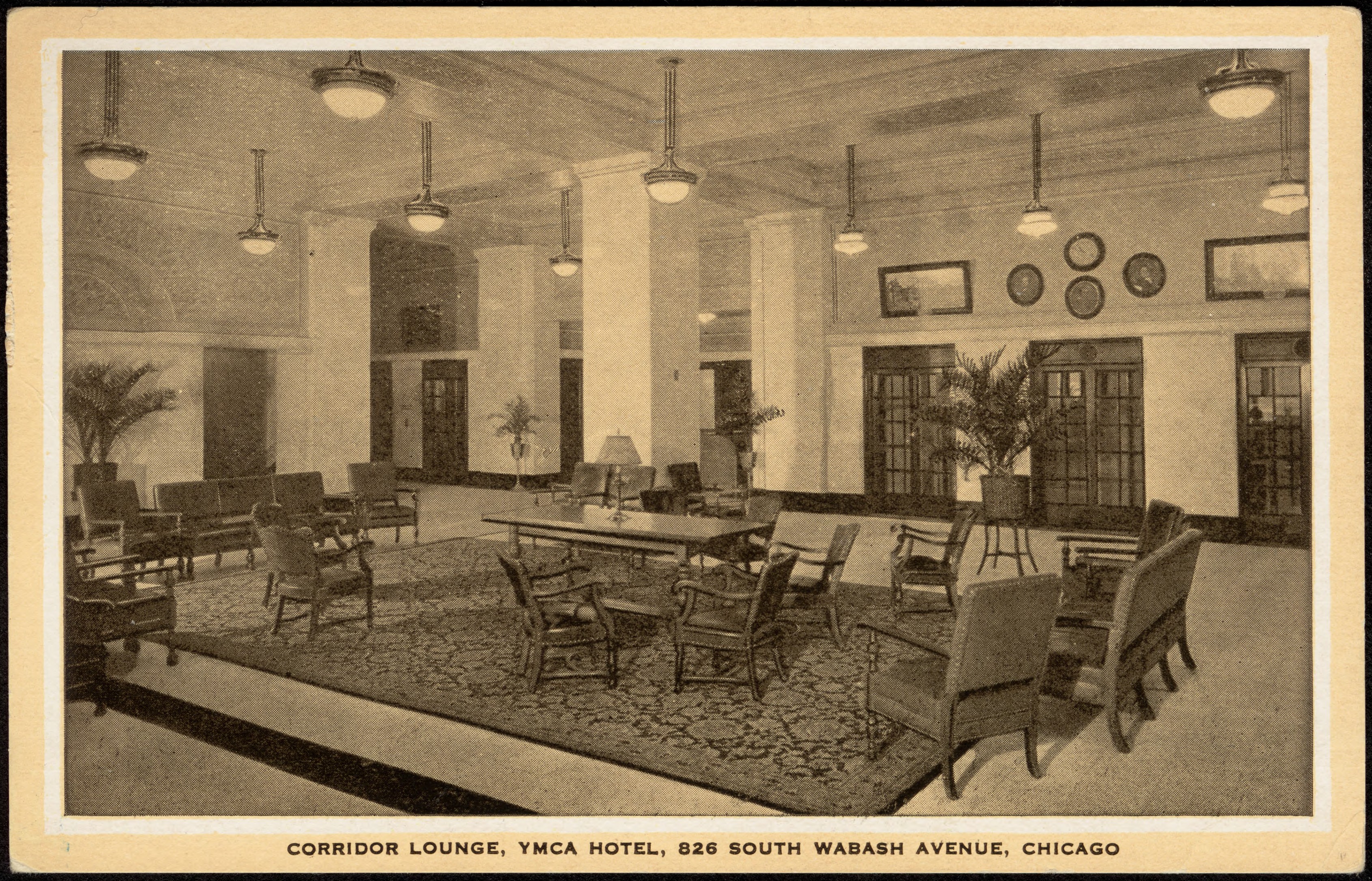
The lounge in a YMCA Chicago branch location, about 1923.
Unfortunately, the Chicago YMCA burned down only a year after it opened. Though a new building was constructed in its place, it was built without any sleeping rooms.
In 1869—the same year Isabella wrote The Randolphs—a new YMCA opened in New York City with great fanfare. It housed art studios, a large library, and a lecture hall that could seat 1,500 people.
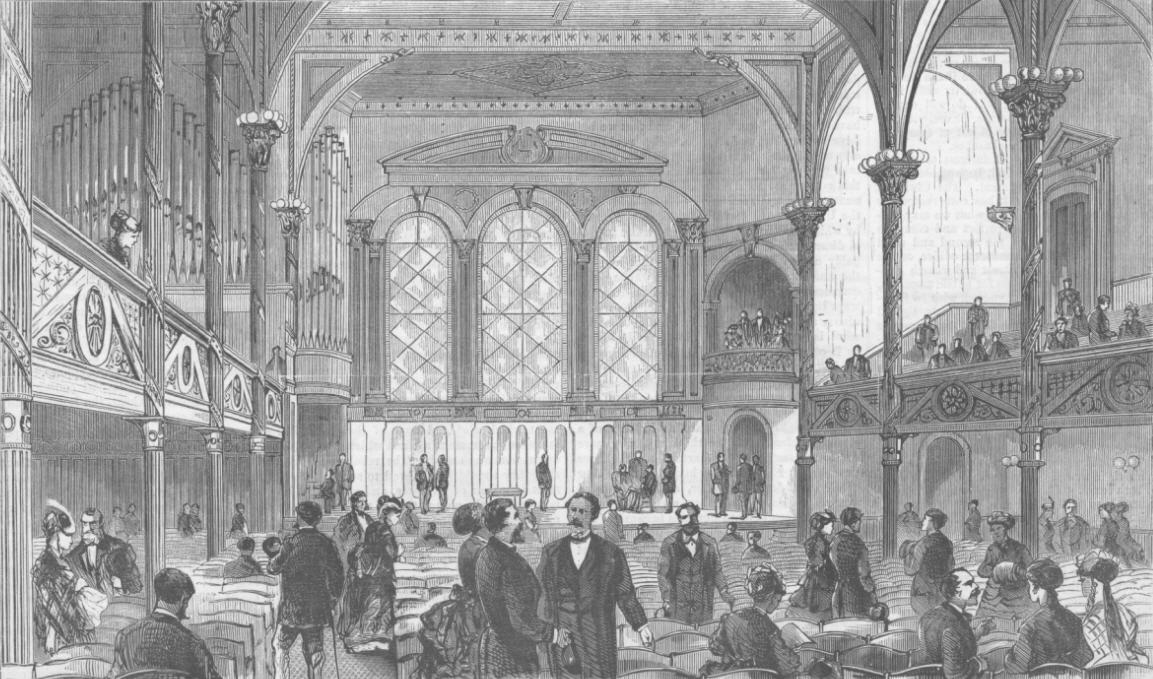
Artist’s rendering of the lecture room in the New York YMCA. From Harper’s Weekly magazine, 1869.
Members of the New York Y could use the services of a nearby gymnasium; and they could take advantage of a steady schedule of activities designed to offer young men wholesome entertainment. But, again, the New York YMCA was built without sleeping rooms.
The library at the New York YMCA. From Harper’s Weekly magazine, 1869.
Isabella would have been aware of the YMCA and the great growth the organization had enjoyed in the U.S.A. Newspapers across the country regularly printed articles about the Y, and the programs it offer young men that promoted a healthy spirit, mind, and body.
The billiard room in the Hoboken, New Jersey YMCA in 1918.
Most YMCAs had extensive libraries, billiard rooms, and well-appointed cafeterias.
Cafeteria in the Omaha, Nebraska YMCA, 1916.
They were places where young men could socialize and have fun, make friends and learn new skills, all in a “vice-free” environment.
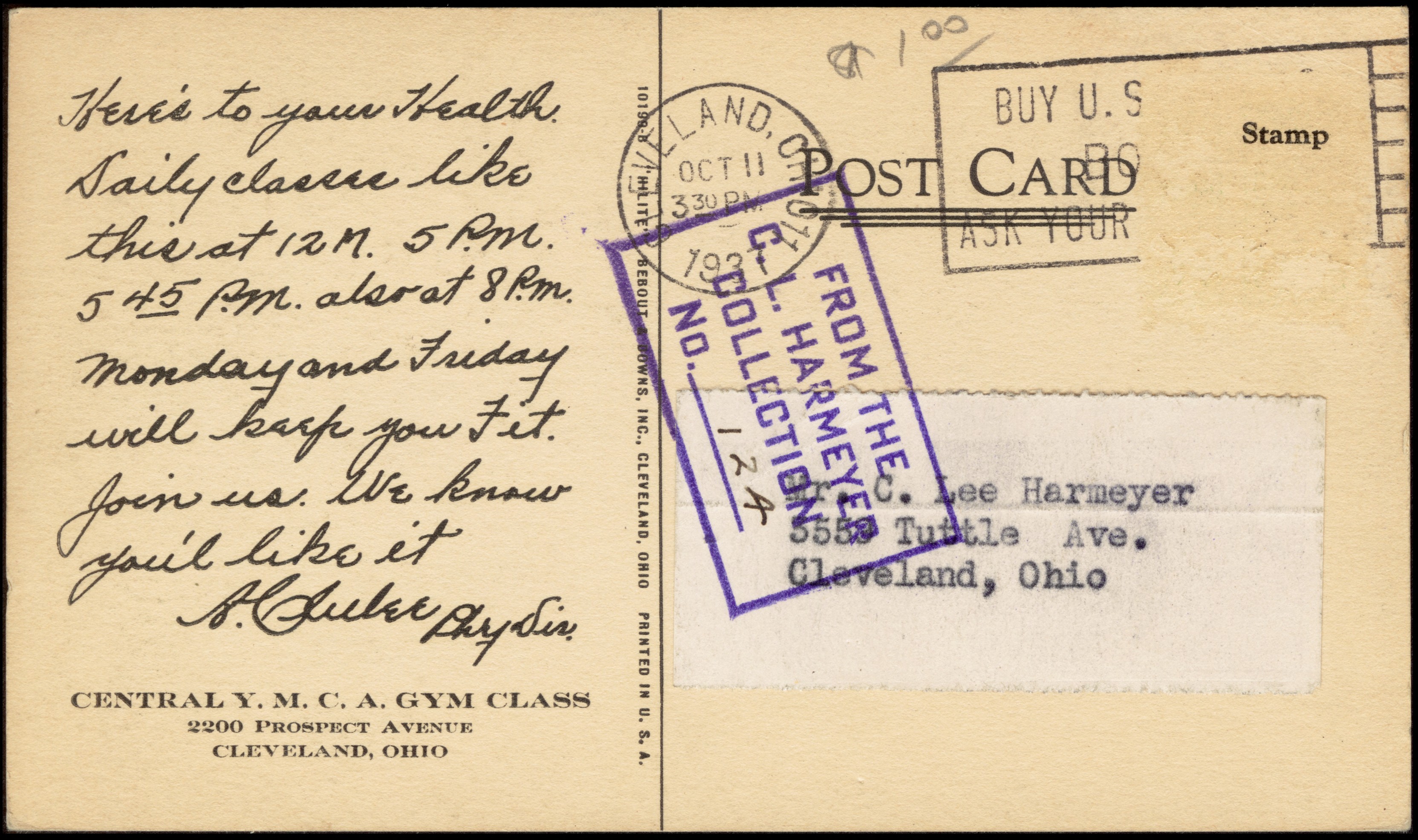
YMCAs often reached out to young men, encouraging them to join and take advantage of the Y’s programs. This is a postcard the YMCA in Cleveland Ohio used in 1910:
On the reverse side is a message of invitation to a young man to join one of the Y’s health classes:
Isabella knew, however, that despite all the wonderful activities and programs the YMCA offered, the Y’s influence over young men ceased the moment they left left the premises. Some young men went home to good families; but far too many went to hotels or boarding houses where liquor was served. That’s one reason she liked the idea of temperance hotels.
A fitness class at the Cleveland, Ohio YMCA in 1910.
In the late 1880s—the same time period when Isabella wrote The Randolphs—the YMCA began putting up a few new buildings that included residence arrangements.
Some of the accommodations were similar to small hotel-like rooms with bathrooms down the hall. Others had dormitories with rows of beds in a single, large room.
A corner of a dormitory style room in the Troy, New York YMCA, 1907.
The YMCA advertised their lodgings as safe and affordable. They were serviceable places to sleep, but they were far from first-class accommodations.
In The Randolphs, Tom Randolph thought it was possible to create a better Christian-based hotel.
Tom envisioned a temperance hotel that had . . .
“. . . carpets, and mirrors, and sofas, and brilliant gaslights, and the glitter of silver, and everything else that is used to entice and entrap. I would have such a place as would offer not a shadow of excuse to any living man for not stopping at the Temperance House, except the one honest reason that he wanted to go where there was rum.”
As Tom said in the story, the best way to fight Satan was with “his own weapons—if they do really belong to him.” If Satan used bright gaslights and glittering glassware to tempt men to drink in saloons, Tom would use the same to entice men into his temperance hotel.
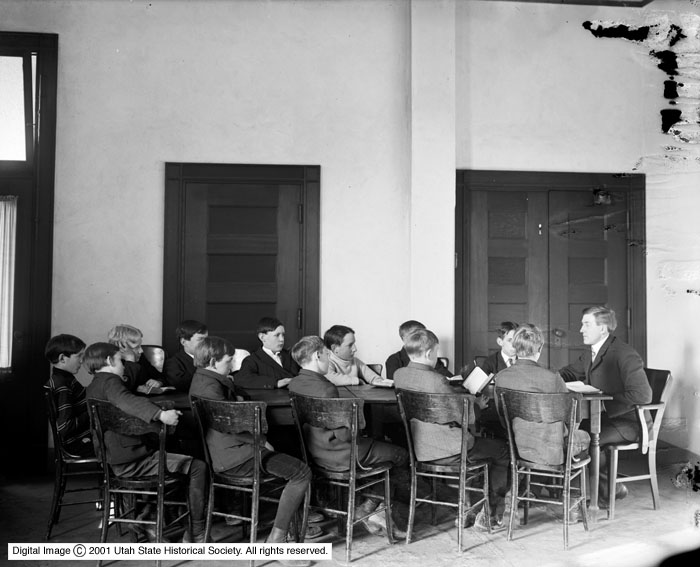
Bible study at a Utah YMCA in 1906.
He thought a nice hotel that offered first-class rooms and excellent service was the very thing needed to interest young men; and if the sleeping rooms were affordably priced, there would be no excuse for men to stay at any other hotel unless they specifically wanted to be able to drink alcohol on the premises.
The lobby of the YMCA in Amsterdam, New York, 1910.
Tom was to have his wish. In the novel, Tom was able to secure the financial backing he needed to buy an old New York City hotel and remodel it. Tom’s adventures in opening and operating the hotel soon include other members of his family, and their involvement helps drive the rest of the story.
An invitation to attend the opening of new rooms at the Carbondale, Pennsylvania YMCA.
Isabella was something of a visionary when she wrote The Randolphs. She foresaw the need for temperance hotels, just as she foresaw the welcome such establishments would receive from communities.
From The Asbury Park Press (New Jersey), April 9, 1906.
By the turn of the century the idea of first-class temperance hotels began to catch on in America. Some communities, like the seaside resort town of Asbury Park, New Jersey, openly invited temperance hotels to open in their town.
From The Daily Notes, Canonsburg, Pennsylvania, December 22, 1906.
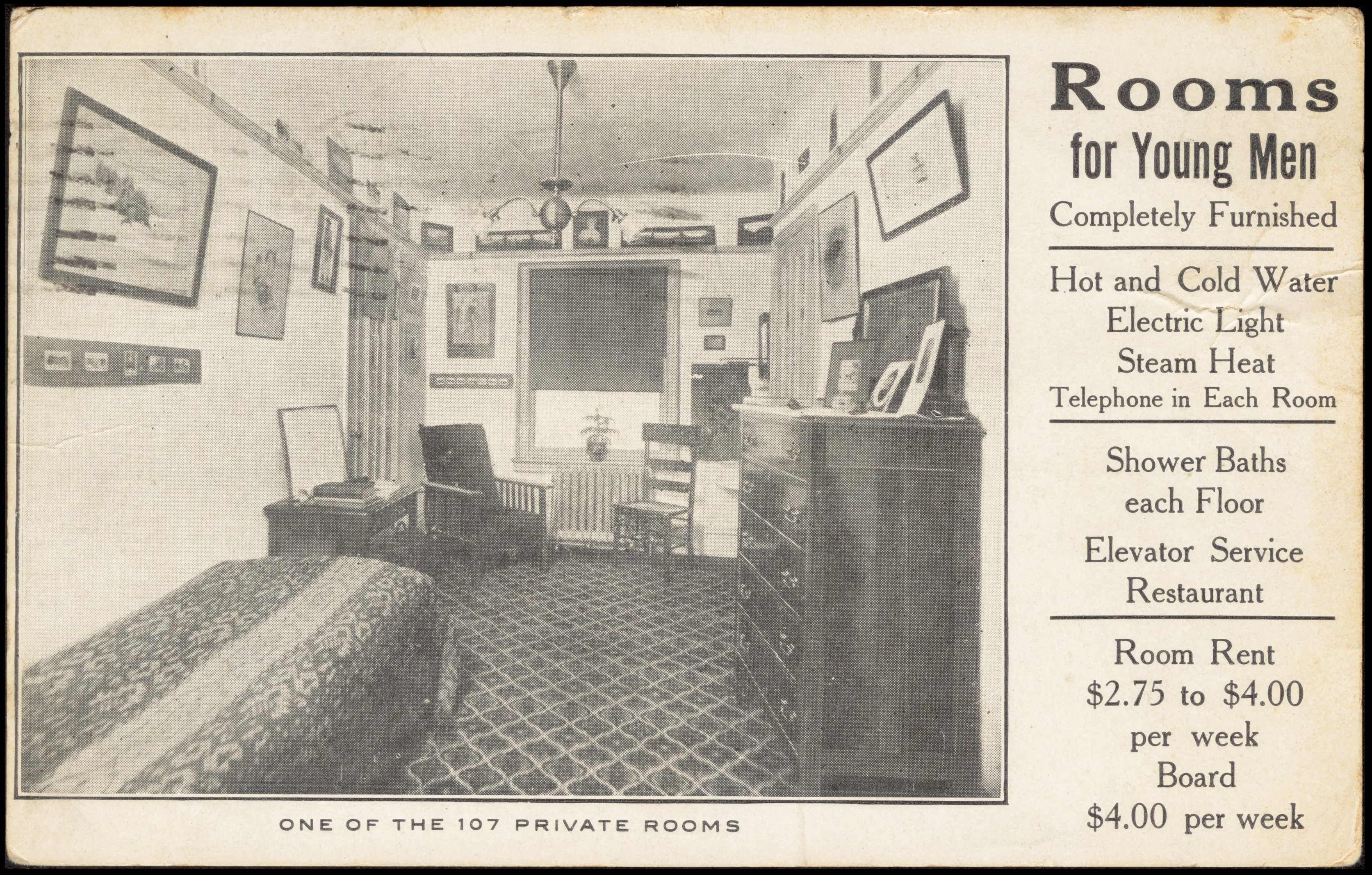
The YMCA recognized the need, too. The organization had always offered first-class entertainment for its members, but in the 1900s they began upgrading their residence accommodations. Newer YMCAs had residential rooms that were more spacious and home-like (although they still couldn’t be described as “luxurious”).
This 1908 trade card from the Brooklyn New York YMCA pictured a home-like single room.
In 1912 the Boston YMCA began construction on their flagship location in Boston.
The Boston YMCA, 1915.
The building was so large, it covered almost an entire city block on Huntington Avenue. It offered men extensive classes on a range of subjects, including engineering and science. Its health education and body-building programs were the first in the nation. And its residential floors provided plenty of dormitory style sleeping accommodations for young men.
When Tom Randolph opened his temperance hotel in The Randolphs, he named the place Randolph House. Before he opened the doors for business, he ensured Randolph House was consecrated with prayer.
And he did one other thing: he remodeled the old ballroom that was part of the previous hotel. He did the work himself and kept the work secret, until he showed his sister Helen what he had done.
“What is all this for?” she asked, gazing up and down the room with satisfied eyes. The beauty and the refinement displayed here actually rested her, she was such a lover of beautiful things, especially of things that meant wealth and cultured taste and leisure to enjoy.
Then Tom unveiled the sign he intended to hang at the entrance to the remodeled ballroom:
Young Men’s Christian Association Rooms.
Only then did he reveal his plan to start a branch of the YMCA at Randolph House, where young Christian men could pray, and socialize, and study their Bibles together.
In The Randolphs Isabella gave us a glimpse into her own dreams and ideals of what a first-class Christian temperance hotel might look like . . . and what it could accomplish in the lives of young men.
You can find out more about Isabella’s novel The Randolphs by click on the book cover.
Reviews and giveaways for Christian fiction and sweet, clean fiction. Bringing readers information on great stories and connecting authors with their readers.


 This post is part of our Blogiversary Celebration! Leave a comment below or on Isabella’s Facebook page to be entered in a drawing for a $25 Amazon gift card!




































 Isabella Alden