Have you any unkind thoughts?
Do not write them down;
Write no word that giveth pain—
Written words may long remain.
Have you heard some idle tale?
Do not write it down.
Gossips may repeat it o’er,
Adding to its bitter store.
Have you any careless jest?
Bury it, and let it rest—
It may wound some loving breast.
Words of love and tenderness,
Words of truth and kindliness,
Words of comfort for the sad,
Words of gladness for the glad,
Words of counsel for the bad—
Wisely write them down.
Words, though small, are mighty things,
Pause before you write them.
Little words may grow and bloom
With bitter breath or sweet perfume—
Pray, before you write them.
These words of advice were published in the December 11, 1886 edition of The Pansy magazine. They’re just as wise and relevant today as they were in 1886!
Isabella often received invitations to speak to Christian organizations and she accepted as many as she could. Sometimes she would speak to the group on a topic that was dear to her heart, but often she would read one of her not yet published short stories.
One day she received an invitation to go to a small town and read one of her stories to the “Y.P.S.C.E.”
“It was the first time I had seen those five letters of the alphabet so grouped,” she said, “and I could not decide what they meant.”
She puzzled over those letters for some time and finally decided that the first three initials stood for “Young People’s Society.” But what about the C and E? Why hadn’t the writer explained what the letters meant? How was she supposed to select the right story for her audience when she had no idea of the purpose of the organization?
At last she went to her husband for help and found him reading a newspaper.
“I was just coming to consult you,” Reverend Alden said. He pointed to an article in the newspaper. “I found a splendid name for our young people! This name suggests the very thought we have been struggling for. ‘Young People’s Society of Christian Endeavor.’”
Suddenly Isabella realized the meaning of the initials on that invitation.
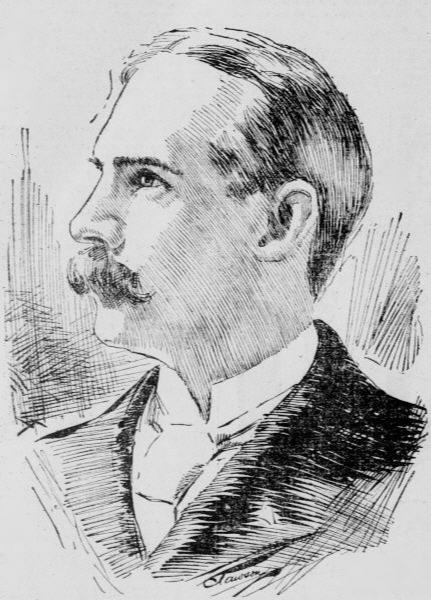
An 1897 artist’s illustration of Reverend Francis E. Clark, founder and president of Christian Endeavor.
The very next day she set out to learn everything she possibly could about the Young People’s Society of Christian Endeavor. She wrote to the Society’s founder, Dr. Francis Clark, or “Father Endeavor Clark,” as he was affectionately called by the young people in the organization. He immediately wrote back with information about the Society, and he invited Isabella attended a Christian Endeavor Convention in Cleveland, Ohio. There she met Dr. Clark in person.
Her first thought as he cordially shook her hand was, “Why, he is just a young man!”
A Christian Endeavor Convention, 1921
But she soon realized, after watching Dr. Clark interact with the young people at the convention, that he was an earnest and deeply spiritual leader who had a special gift for inspiring young people in Christian work.
A 1914 postcard depicting Williston Church, where the first Y.P.S.C.E. meeting was organized on February 2, 1881.
Isabella used her own experiences with the Y.P.S.C.E as the inspiration for her book, Chrissy’s Endeavor. She even incorporated into the story her first encounter with those baffling initials, “Y.P.S.C.E.”
After the book was published, Isabella received an astonishing number of letters praising her book. One such letter read:
“We want to say that we think here that the book ‘Chrissy’s Endeavor’ is doing a work in the world which will be to its author one of the surprises of heaven.”
Isabella remained actively involved in the Y.P.S.C.E, as did her husband and other members of her family. Over the course of many years, she saw the results of the Society’s good works, and she was thankful for having had the chance to know Dr. Clark in person.
In 1897 The San Francisco Call published a full-page article about the Society of Christian Endeavor, with details about how it came to be organized, and it’s growth world wide to over two million members. Click on this link to read the article.
You can find out more about Isabella’s book, Chrissy’s Endeavor. Click on the cover to read reviews and sample chapters.
Today begins Banned Book Week, an annual event coordinated by the American Library Association intended to celebrate Americans’ freedom to read.
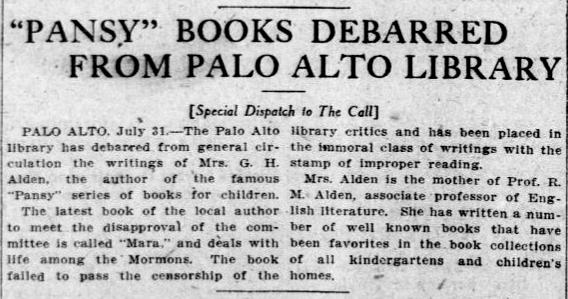
There are all sorts of reasons books are banned by different organizations in different parts of the country. Even Isabella Alden’s books were once banned from a public library for being “immoral” (you can read more about that in a previous post here).
Article in the San Francisco Call on August 1, 1910
.
Here are some other books that suffered the same fate:
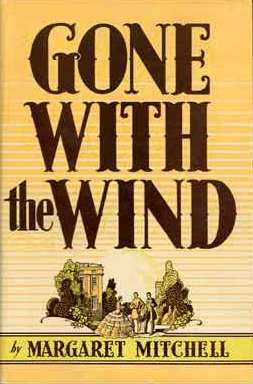
To Kill a Mockingbird, by Harper Lee The Great Gatsby, by F. Scott Fitzgerald Animal Farm, by George Orwell Gone with the Wind, By Margaret Mitchell
The American Library Association has Banned Books Week events planned in many states (click here to find events in your area). Their website contains a lot of interesting information about books that have been banned over the last two decades, who makes the most demands to ban books, as well as the most common reasons given for banning books.
All this talk of banned books begs the question: What would have happened if Isabella Alden hadn’t stood up to the individuals who tried to remove or limit access to her books? What would have happened if she had taken no action and allowed a library to label her novels as “immoral” and “improper”?
Answer: Most people wouldn’t have an opportunity to read her wonderful, inspiring books today.
Thankfully, Isabella Alden knew an injustice when she saw one, and she took action to have her books put back on library shelves for readers to discover and enjoy.
“Child-wife” or “child-bride” was a term used in the late 1800s to describe a young bride in her late teens or early twenties who had little experience in the ways of the world. A child-wife was an innocent, unsure of her footing, and sometimes easily influenced.
Isabella used the term a couple of times in describing some of her characters, but Mrs. Harry Harper is probably her most winning example of a child-wife.
“Mrs. Harry Harper’s Awakening” was a short story Isabella published in 1881. It’s a quick read and on the surface, it’s a simple story of a young woman who blossoms after she unintentionally becomes involved with a ladies’ Christian mission society.
But what makes the story unique is the heroine’s progression from a “child-bride” with no life purpose to a woman who is strong in her faith and determined to live her convictions.
She is introduced to us simply as “Mrs. Harry Harper.” She has no identity of her own outside of her husband’s. In fact, we never learn her Christian name; and even her husband calls her “wife” or “wifey.” Although he says those words with affection, he—like everyone else—doesn’t see her as anything more than an extension of himself.
He leaves her alone every day while he works, and expects her to simply fend for herself in some ladylike way while he takes care of the important business of earning a living. How Mrs. Harry elects to spend her days and how her involvement with a ladies’ mission society impacts all areas of her life illustrates Mrs. Harry’s progression from child-wife to confident worker for Christ.
As with all of Isabella’s stories, “Mrs. Harry Harper’s Awakening” is an allegory that illustrates Christian duty. Mrs. Harry Harper considered herself a Christian and she attended church, but it wasn’t until she began actually working for the Lord that she received the blessings and fulfillment of living the Christian life.
You can read “Mrs. Harry Harper’s Awakening” for free. Just click on the book cover to begin reading now.
Faith and Love is now available in print! This exclusive collection of short stories by Grace Livingston Hill and her mother Marcia Livingston is available from Amazon, Barnes and Noble, and wherever print books are sold.
In Miss Dee Dunmore Bryant, little Daisy Bryant loved beauty. Even at the tender age of eight she recognized that the home she lived in with her mother, brother and sister was far from beautiful.
The walls of the little cottage were not lathed and plastered; were not even painted; their weather-stained unsightliness had been among Daisy’s trials.
Little Daisy dreamed of covering those unattractive walls with pictures.
From Godey’s Lady’s Book, April 1895
Mrs. Bryant laughed. “You dear little dreamer,” she said, “where do you suppose the pictures are to come from, and how much paste and time do you suppose it would take?”
“Oh, but I don’t mean all at once. Be a long, long time, you know; and take just a tiny teaspoonful of flour at a time; we could afford that, couldn’t we? When we found a real pretty picture anywhere, paste it up in a nice place, and in a g-r-e-a-t many months the walls would be covered.”
It was impossible not to laugh at the bright face and dancing eyes, and there was something so funny about it to Line and Ben, that they laughed loud and long.
Mrs. Bryant was the first to recover voice. “It is a pretty thought,” she said, “and I will certainly try to furnish the spoonful of flour for my share; but we have almost no chances for pictures, darling, and I’m afraid you will be old and gray before the walls are covered.”
“Well,” said Daisy cheerily, “then I will put on my spectacles and sit down and enjoy them.”
From Godey’s Lady’s Book, April 1895
The first picture to be pasted to the wall was one Daisy’s brother found in a magazine a friend had given him. Magazines in 1890—the year Miss Dee Dunmore Bryant was published—often printed pictures and photographs that were suitable for framing.
From Munsey’s Magazine, 1905
In fact, many magazines encouraged readers to clip out pictures and frame them even though the images were in black and white.
From Ladies Home Journal, April 1916
Sometimes the images were simply of the latest fashions.
From Harper’s New Monthly Magazine, 1896
Sometimes the images were of famous people or events.
From Harper’s New Monthly Magazine, 1896
And other illustrations gave readers a window onto faraway places and the works of popular artists.
From Woman’s Home Companion, September 1922
From Woman’s Home Companion, 1922
By 1910 some magazines began printing two-color pictures. And by 1920 many magazines featured pictures and advertisements in full color. Copies of the Old Masters or religious paintings were very collectable.
From Ladies Home Journal, February 1916
From Ladies Home Journal, December 1916
While other pictures illustrated places and lifestyles most people could only dream about.
From Woman’s Home Companion, October 1922
Since magazine issues ranged in price from five to fifteen cents, they were an affordable source for pictures. Unfortunately for Daisy, even five cents was an unattainable sum. So she sacrificed her dream of having a beautiful wall of pictures; but by the end of the book, Daisy and the Bryants would find themselves surrounded by beauty and blessings of a very different kind.
You can read more about Daisy and her dreams in Miss Dee Dunmore Bryant. Click on the book cover to find out more.
As the wife of a minister, Isabella Alden was very familiar with her husband’s congregation. She wasn’t the type of minister’s wife who simply went to teas and receptions and other social events, and never got involved in anything related to the church. Not Isabella.
She was an “old-fashioned minister’s wife,” said her niece, Grace Livingston Hill:
She made calls on the parishioners, knew every member intimately, cared for the sick, gathered the young people into her home, making both a social and religious center for them with herself as leader and adviser; grew intimate with each personally and led them to Christ; became their confidante; and loved them all as if they had been her brothers and sisters.
Isabella’s experiences as a minister’s wife inspired many characters and events in her books. She wove her stories around real incidents and real people, their foibles and inconsistencies, and lessons learned.
Like the country congregation that couldn’t raise the funds needed to keep their church clean in Interrupted.
Or the woman in Aunt Hannah and Martha and John who placed a large donation in the offering plate to impress the congregation, only to slip into the church office later when no one was looking to demand her change because she didn’t really want to give the full amount.
And the Ladies’ Aid Society members who only donated pennies because they believed missionaries and others who did God’s work didn’t need nice things (this happened in a few of Isabella’s novels).
When it came to the subject of money, Isabella had heard all the arguments before. She knew why people preferred to spend their dollars on anything but God’s work. But she also knew her Bible, and believed its instructions about money were just as important as any other commandment.
Isabella was a strong believer in the Biblical concept of tithing, and she knew how important it was to teach children to tithe beginning at a young age. She believed that when we follow God’s instructions about money, we grow to trust God in other areas of our lives, as well.
She illustrated the point in her short story, “Pictures from Mrs. Pierson’s Life.” The story centers around a couple who ignore God’s instructions about money, and what their children learn by the parents’ actions.
“Pictures from Mrs. Pierson’s Life” first appeared in Mrs. Harper’s Awakening, published in 1881. You can read it here for free. Just click on the book cover to get started.
.
.
Isabella wrote about money and the importance of tithing in many of her books, including:
Isabella and Marcia wrote some books while they lived together in the same house in Winter Park, Florida; and when miles and circumstances separated the sisters, they wrote some of their books “by mail.” What’s extraordinary is the way the sisters’ writing styles blended seamlessly so that it’s impossible to tell which sister wrote which sections of their books.
Marcia Livingston
They were both tireless writers. In addition to novel writing, Marcia contributed stories and articles to The Pansy, which was Isabella’s magazine for children. And Marcia’s short stories for adults were regularly published in The Interior, a Christian magazine.
Marcia’s husband Charles was a minister who wrote his own weekly sermons, as well as theological papers. Like Marcia, he, too, wrote stories and articles for The Pansy.
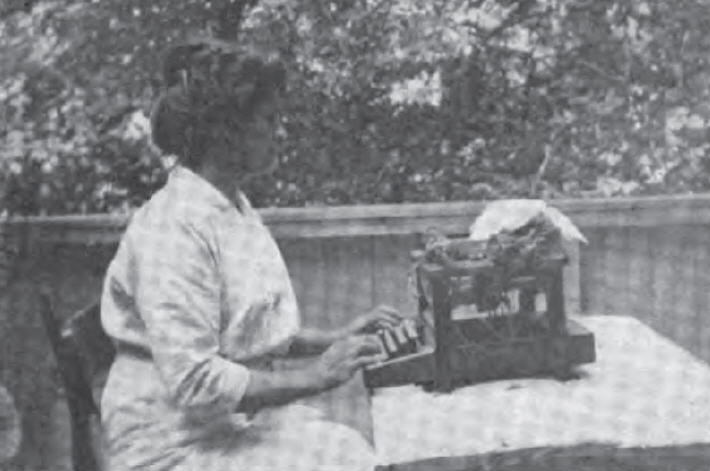
Their daughter Grace Livingston Hill grew up in a home filled with creativity, a love of reading, and a strong work ethic. She learned the letters of the alphabet by clicking on the keys of her Aunt Isabella’s typewriter. She learned the art of writing a short story from her mother Marcia.
At an early age Grace discovered she could earn a living by her writing, just as her mother and aunt did. Her first book, A Chautauqua Idyl was published in 1887. Soon Grace joined her mother and her Aunt Isabella in creating inspiring, uplifting and memorable Christian fiction for women. Marcia encouraged Grace and often edited her manuscripts before Grace sent them off to her publisher.
From The Buffalo Courier, March 1, 1908
Grace wrote over one-hundred novels, all of which remain popular today. Less popular are her short stories—not because they are any less well-written, but because they are more difficult to find. Her short stories appeared in magazines and newspapers in the early years of the 1900s and copies of those publications are rare finds today.
Grace working in the out of doors at her home in Swarthmore, PA. 1915.
The same is true for stories written by Marcia Livingston. They were published in the 1890s in magazines that went out of business long ago, their records scattered or destroyed; only a few issues can be found in libraries and museum collections. Their scarcity makes them all the more precious.
A new, exclusive collection of those hard-to-find short stories by Grace Livingston Hill and Marcia Livingston is now available …
… And we’re giving away free copies!
We’re giving away four copies of Faith and Love in e-book format to subscribers to this blog. The winners will claim their e-book through Amazon.
We’ll announce the winners on Friday, August 28. Good luck!
.
Faith and Love is available at these e-book retailers:
When Isabella Alden wrote Aunt Hannah and Martha and John, she created the character of Martha Remington, a young bride who—through no fault of her own—had never been taught to cook and keep house.
Isabella herself was an excellent homemaker. Her niece, Grace Livingston Hill, wrote that her Aunt Isabella was “a marvelous housekeeper, knowing every dainty detail of her home to perfection; able to cook anything in the world just a little better than anyone else.”
Poor, Martha, however, couldn’t cook at all and her bridegroom, John, suffered through many meals that were overcooked, undercooked, sour, or salty.
Cooking in the late 1800s and early 1900s was truly a skill that was acquired after years of practice. A young woman stood a much better chance of learning to cook from an experienced housekeeper than she did if she tried to learn to cook on her own.
This was especially true because of the stoves and ovens that were available then. They lacked one essential feature we take for granted today: A thermostat.
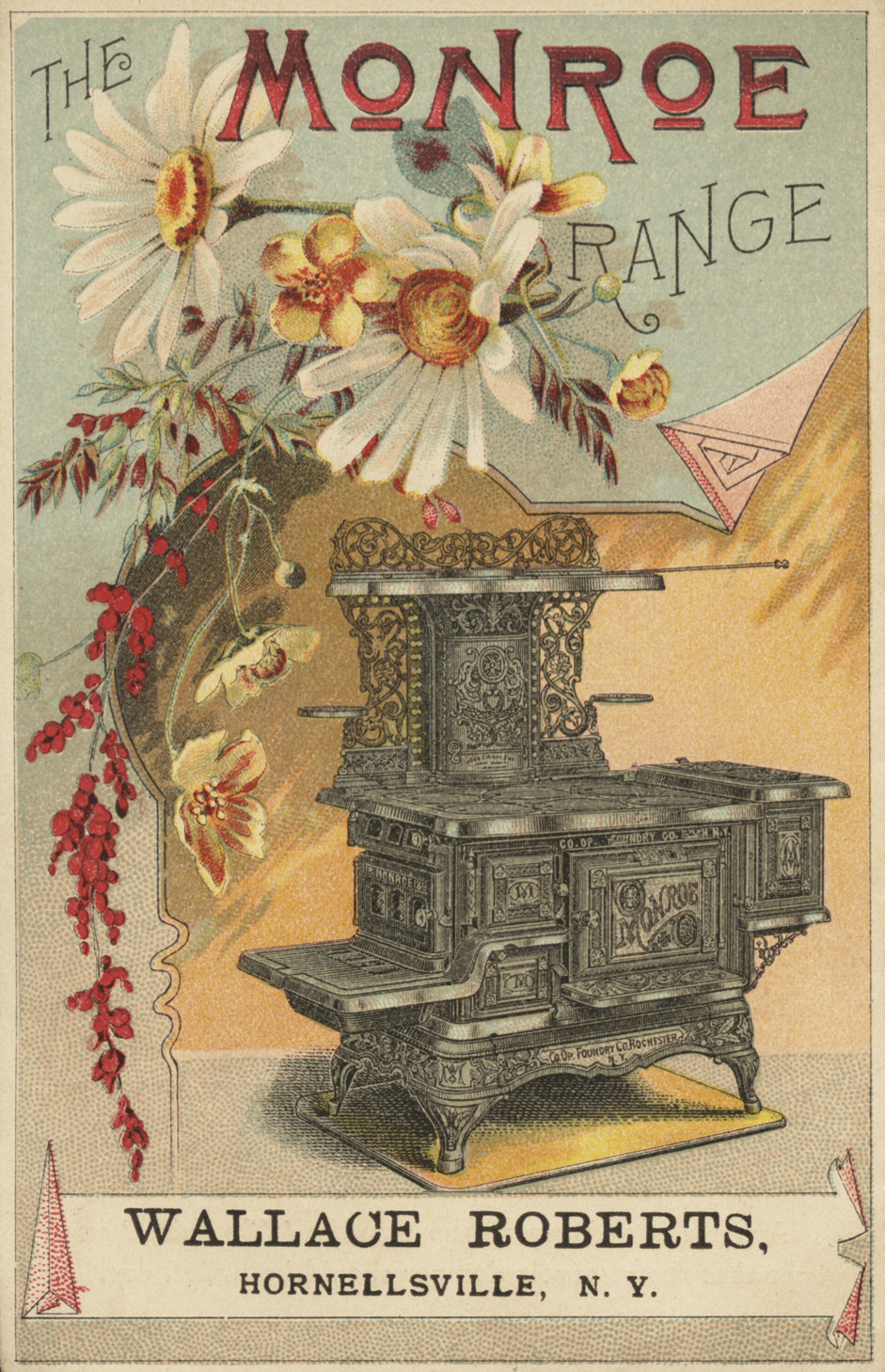
Ranges at the turn of the 20th Century didn’t have any means for accurately detecting the temperature of their ovens or burners, and they had no dials or knobs to turn heat up or down. Cooks controlled the temperature of the oven and burners by the amount and type of fuel they fed the range. They had to rely on their experience and years of trial and error to determine whether an oven was the right temperature for baking a loaf of bread or roasting a shank of beef.
Cookbooks from the time included recipes with very general terms:
“Heat your oven to a satisfactory degree of heat.”
“Bake in a hot oven.”
“Bake in a quick oven for ten minutes.”
With such imprecise instructions, it’s no wonder an inexperienced cook like Martha was so bewildered in the kitchen, and served her husband so many meals that were almost inedible.
Luckily, Aunt Hannah detected the trouble and came to Martha’s rescue, not only as a teacher of the kitchen arts, but as a friend.
Under Aunt Hannah’s gentle tutelage, Martha Remington learned to be a good cook and housekeeper.
And as her confidence in the kitchen grew, so did Martha’s confidence in all areas of her life, as she matured into a caring and capable pastor’s wife.
You can find out more about Isabella’s book, Aunt Hannah and Martha and John by clicking on the book cover.
It’s that time of year when students get ready to head back to school. Just as families today shop for back-to-school clothes, so did families in Isabella Alden’s books.
The opening scene of Doris Farrand’s Vocation describes Doris’s meager college wardrobe and her sister’s efforts to make Doris appear as fashionable as possible—even if it meant buying clothes on credit.
Doris’s sister thought going into a little bit of debt was preferable to allowing Doris to attend classes looking shabby. Credit was plentiful in 1905 when the book was published. Individual merchants often extended credit to customers and allowed people to buy “on account.”
Merchants enticed shoppers into their stores with window displays of back-to-school wardrobes. Newspaper columns and women’s magazines gave advice on how to stretch a family’s wardrobe budget and listed the essential wardrobe pieces every student must have.
At a minimum, Doris’s college wardrobe would have included three required pieces:
– a tailored suit
– an evening dress
– an everyday dress.
The style of Doris’s clothes would have been rather restrictive. Her skirts were made from yards of fabric and the hemlines hit just at her ankles. Her shirtwaists and dress bodices usually covered most of her arms and fitted high at the neckline.
Of course, no outfit was finished until it was properly accessorized with gloves, shoes and stockings.
The most important accessory was an appropriately-styled hat. Doris’s sister “was the milliner of the family.” She considered it her job to make Doris’s only hat over the best she could with bits of ribbons, since a new hat for Doris was simply not something the Farrand family could afford.
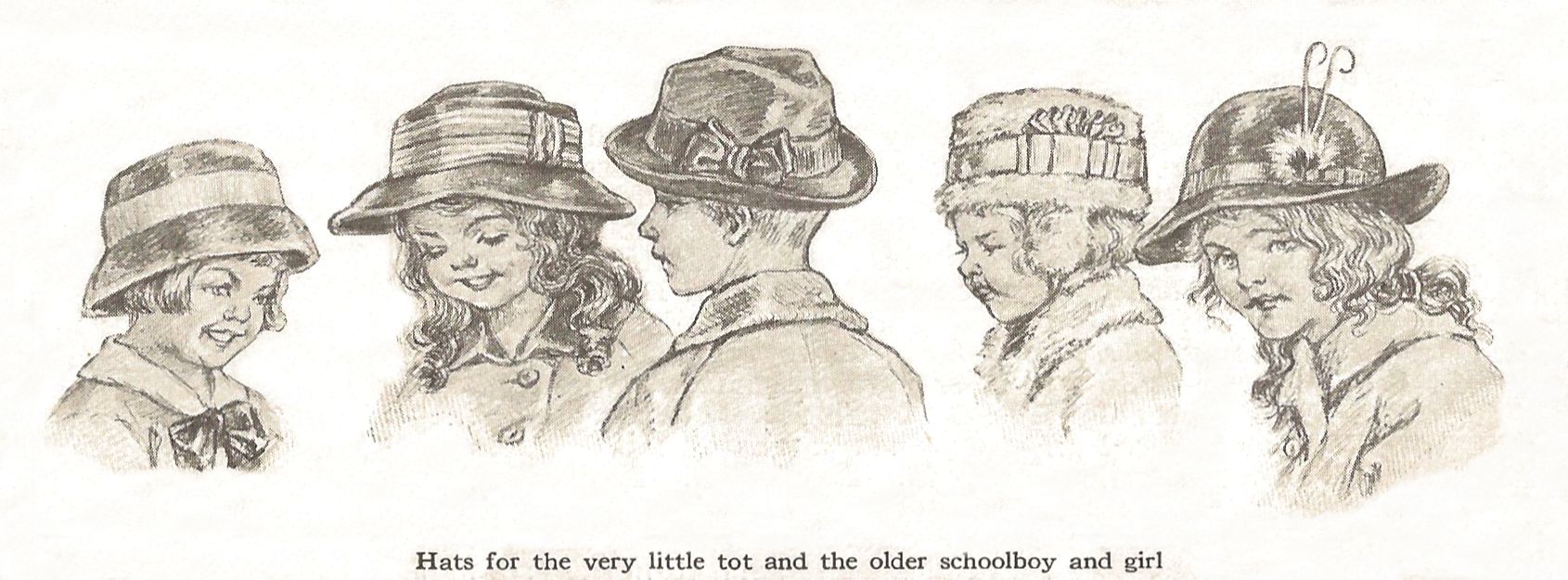
Even young students wore hats to school, as this 1915 ad for children’s hats illustrates:
The illustration shows how much hats had evolved; gone were the wide brims and large plumes that adorned hats when Doris was in school. By 1915 hats—as well as fashions in general—had changed considerably.
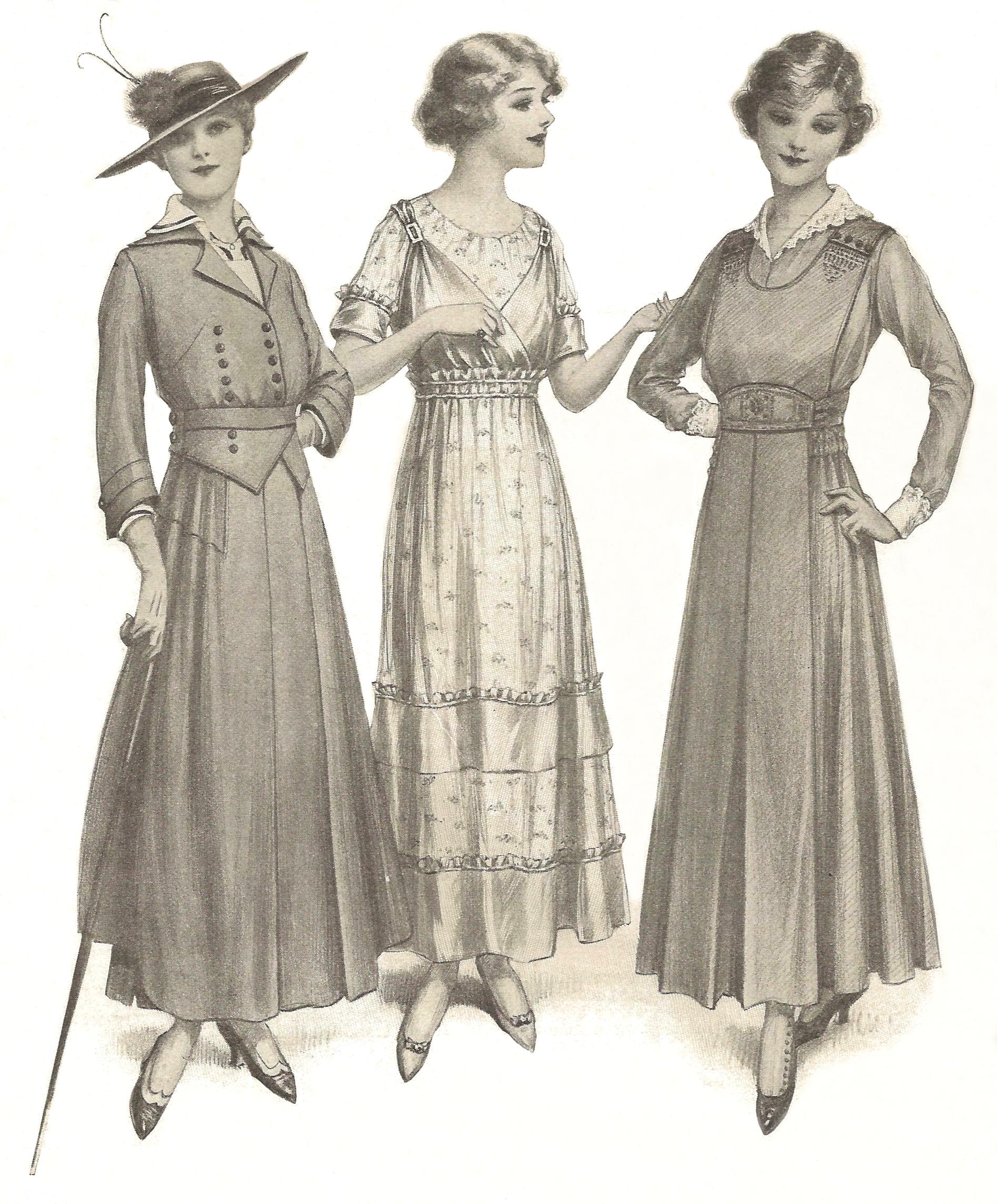
Many women’s magazines furnished patterns (indicated by the unique numbers shown beside each garment) that homemakers could order by mail at a cost of about ten cents. Sewing the outfits at home was often a less expensive option than buying outfits ready-made.
The illustration on the left shows a “serviceable play suit with plenty of pockets” for a little boy’s treasures. The outfit is completed with long hose and a hat.
Fashions for girls had evolved, too. Young girls’ skirts were shorter, although they retained the traditional high waists of previous years; and they wore simple shoes and socks instead of long hose and ankle boots.
Older girls and pre-teens abandoned their corsets for dropped waists and jumpers. Their skirts were significantly shorter, too, with hemlines hitting just below the knee.
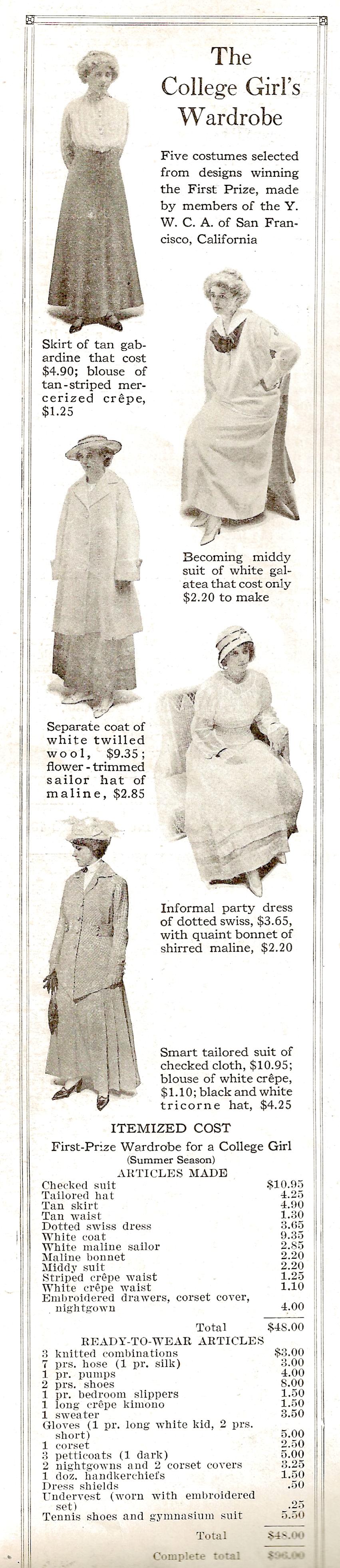
When a girl reached her later teens, she transitioned to more mature “costumes.” As in Doris Farrand’s day, a tailored suit was essential for every young woman’s wardrobe as was an evening dress. This excerpt from a 1915 fashion article showed just how much a young woman could expect to pay for her wardrobe essentials.
Young women of college age had to keep up with the 1915 fashions, too. Dresses and suits were slimmer than those Doris Farrand wore; skirts were less voluminous and necklines were less confining.
And, of course, a fashionable hat was still an essential element of any college student’s ensemble:
A 1920 magazine spread showing stylish hats for college women.
This newspaper article showed how a college student in 1915 could build a complete wardrobe for less than $100.
Unfortunately for Doris, the family budget couldn’t be stretched to give Doris even the few pieces mentioned in the article above. She didn’t even own evening dress.
When Doris’s sister asked what she planned to wear to an important reception at the college, Doris replied, “My dress, of course!” She owned only one!
Reviews and giveaways for Christian fiction and sweet, clean fiction. Bringing readers information on great stories and connecting authors with their readers.




























 Isabella Alden