
Author: Isabella Alden

A Free Read by Grace Livingston Hill
 Grace Livingston Hill, Isabella’s niece, is often credited with creating the Christian romance novel, but in her early writing days Grace wrote and published many short stories.
She was just 28 years old when her story, “Beginning at Jerusalem” was published in Home Missionary Monthly magazine in 1893.
Now you can read Grace’s heartwarming story for free. Just click on the book cover to begin reading.
Share this:

Isabella’s Mystery Illness and the Water Cure
Not long after Isabella married Ross Alden she became ill. She never specifically named her ailment, but in her memoirs and in her auto-biographically-based stories, she often mentioned trouble with her eyes and that she suffered greatly from what we would today know as migraine headaches.

She wrote:
“It must be understood that although I was at times a great sufferer, I was by no means a helpless invalid. But the intervals between days of terrible pain might have been described as times of dull and wearisome inanity. I could read only a few minutes at a time, with long intervals between the minutes.”

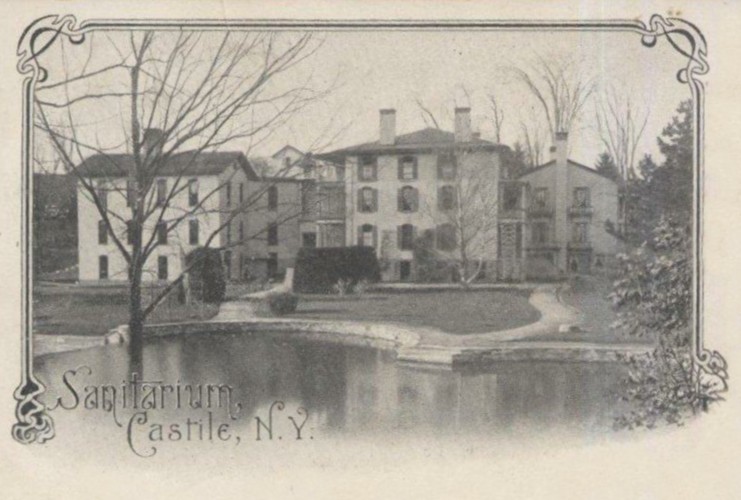
She saw a number of physicians all over the New York area, all of whom agreed that, if she was ever to get well, Isabella should take a “water cure” from Dr. Greene at the Castile Sanitarium in New York. Ross encouraged her to follow the doctors’ instructions.
But Isabella rebeled. She told Ross, “You needn’t think I’m going to stop and see Dr. Anybody! I’m going home!”
So Ross helped her from the doctor’s office and took her to the next departing train. He tucked her into heavy robes so she would be warm while they traveled, and urged her to nap on the train.
When Isabella awoke she found they had reached their destination: The sanitarium and the famous doctor!
Isabella demanded an explanation.
Kindly and quietly Ross answered, “We are going to spend the night here and seek this doctor’s advice. Could conscientious people do otherwise?”
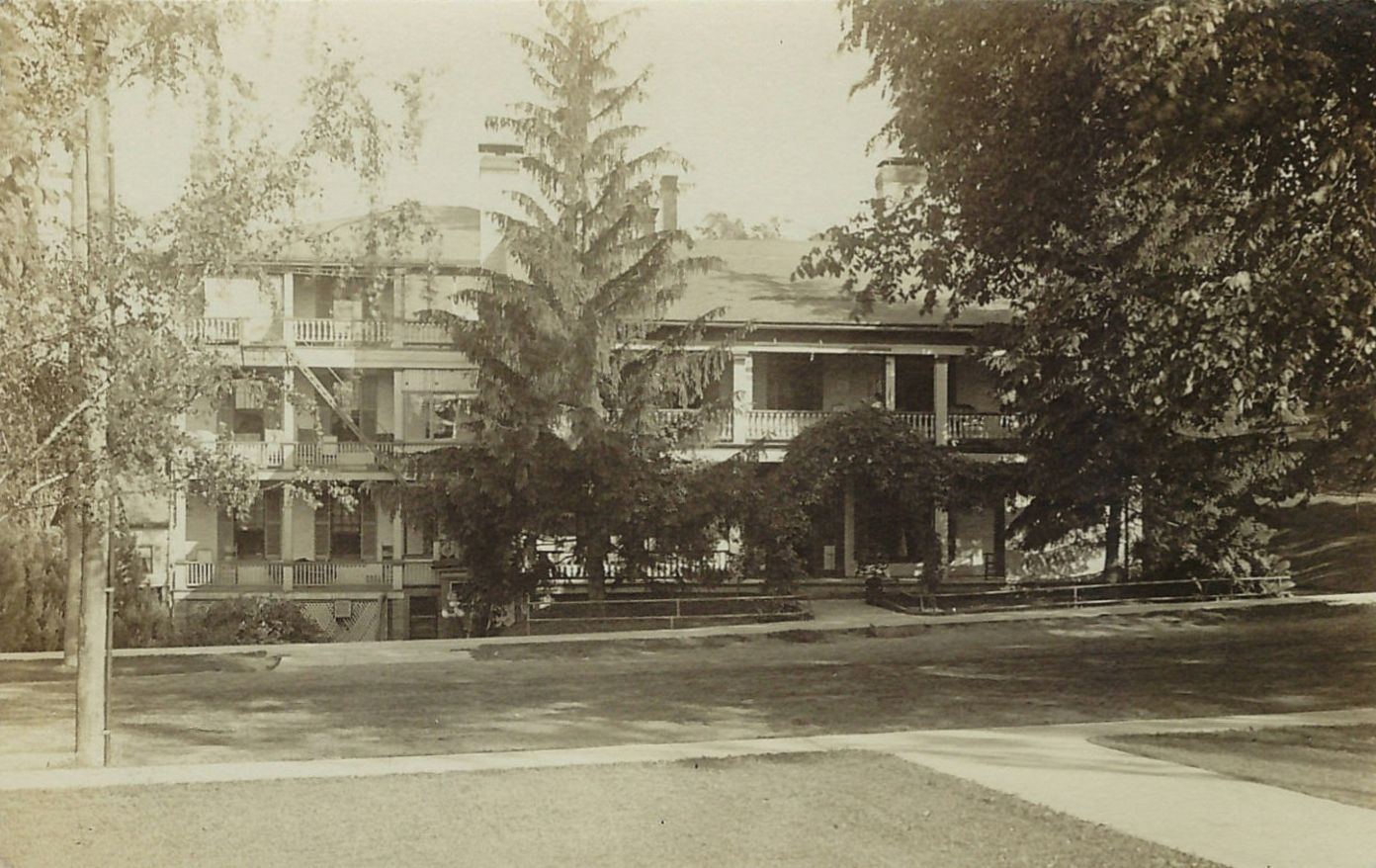
When Isabella finally met the famous Dr. Greene she was probably very surprised—first, because the esteemed Dr. Greene was very young (only about thirty-five years of age), and second—Dr. Green was a female!

Female doctors were very uncommon in the late 1860s when Isabella first visited Castile Sanitarium. But Dr. Cordelia Greene was a very impressive young woman. At the age of sixteen she began supporting herself as a teacher in order to earn the money to put herself through medical school. She worked long hours in large sanitariums to gain experience; and she helped her father, also a physician, open a small “water cure” facility on property he purchased in Castile, New York.
When her father died, Dr. Cordelia Greene took over his enterprise, and used the sulphur springs on the property to expand the practice’s offerings. Under her management, the sanitarium became one of the premier facilities in the country.

Famous patients flocked to her doors, including Frances Willard, the founder of the Women’s Christian Temperance Union; Susan B. Anthony, the noted leader of the suffrage movement; and Dr. Clara Swain, who opened the first hospital for women on the continent of Asia.
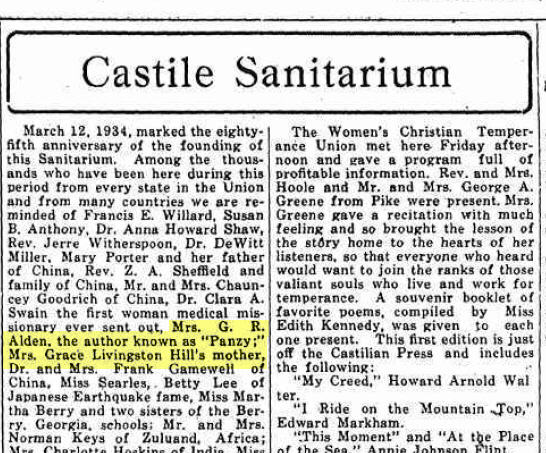
Dr. Cordelia believed in the importance of deep breathing, vigorous exercise, and proper hydration of the body. She started every day by visiting patients’ rooms and personally delivering a pitcher of water to ensure each patient drank a full glass of water before breakfast.
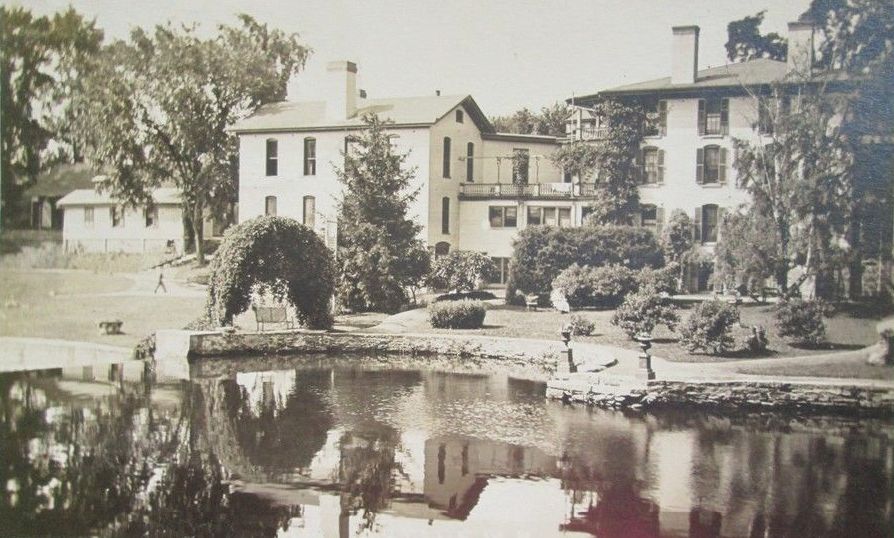
Dr. Cordelia made certain patients who were strong enough spent plenty of time out of doors. They gardened and played croquet, walked and swam, in between their scheduled hydrotherapy treatments.

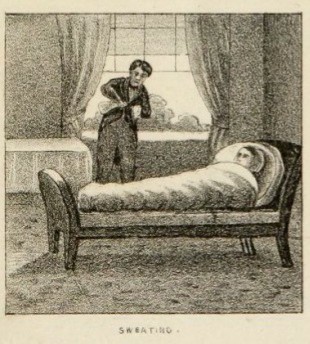
One of the hydrotherapy treatments Dr. Cordelia prescribed for Isabella was a wet sheet pack. The purpose of the wet sheet pack was to draw toxins from the body and increase blood circulation.
A wet sheet pack is accomplished by wrapping the patient from head to toe in a wet (usually with cold water) sheet. The patient’s arms are straight at their sides, and the sheet is tightly wrapped around the patient like a cocoon.
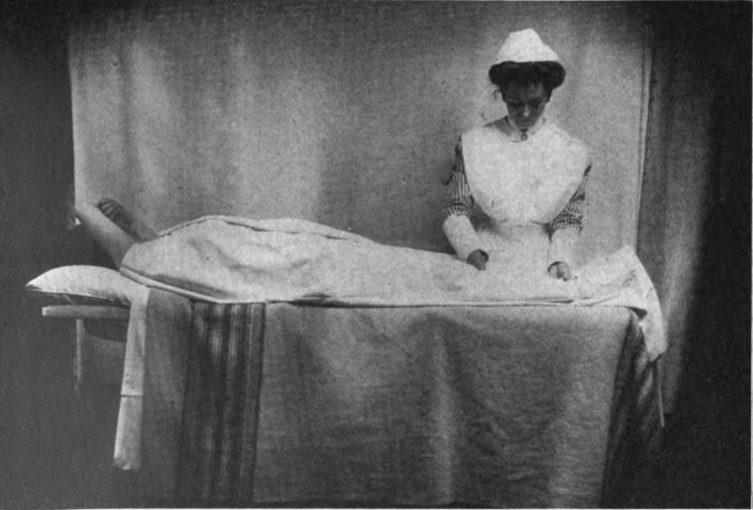
Over this are wrapped several layers of woolen blankets, again from head to toe.

As the patient sweats, the secretions from her pores are trapped in the sheet, as the wool blankets prevent moisture from evaporating into the air.

Isabella wrote that she was glad to have gone to the sanitarium; and said that “the thing that seemed so hateful soon became pleasant.” She grew to love and greatly admire Dr. Greene, saying:
“She was the life and power and heart and soul of that great water cure—a doctor of wonderful skill, a woman whom everybody respected and loved and obeyed.”
Isabella stayed on at Castile Sanitarium for five months; and when she left, she rejoiced. She was cured!
“Never since that time have I had to bear for even a single hour that peculiar form of pain which had been my almost constant attendant for more than five years!”
You can learn more about Dr. Cordelia Greene and her accomplishments by following these links:
- Winning the Vote at the Rochester Regional Library Council website
- Obituary of Dr. Cordelia Greene in the Women’s Medical Journal, April 1905
Share this:

Quotable

Share this:

Grace Livingston Hill and the Very Bad Day
Isabella was very close to her niece, Grace Livingston. She was 24 years old when Grace was born, and she did her best to spend as much time with little Gracie as she possibly could.
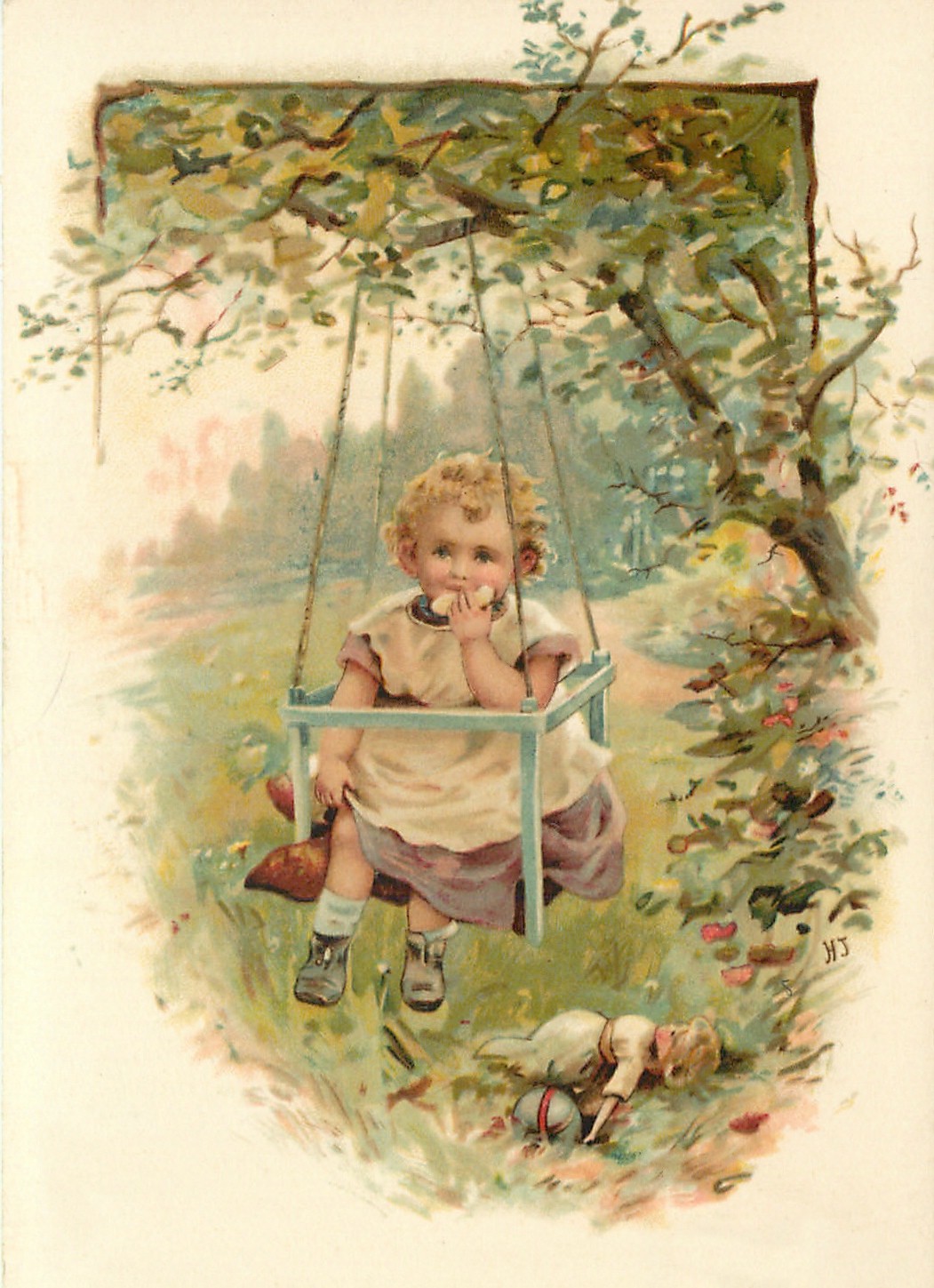
She was especially fascinated with Gracie’s developing personality. When the child was only three years old, Isabella said that Grace was as “full of fun and frolic as a mortal child could be. Oh, the mischief that that morsel could get through in a day! It seemed to me that the little feet and hands and tongue must ache at night; but they were never quite ready to have night come—in fact, as it drew toward bedtime she seemed to have more to do than before, and many a nice plan was spoiled right in the best of it by the call to bed.”

Many times Isabella and her sister Marcia (Grace’s mother) had long talks about Gracie’s willfulness and the odd way she had of looking at the world.
Isabella wrote that when Grace was about three years old, she developed the habit of waking in the morning and announcing her mood. “Gracie is a naughty baby this day.”

She seemed to think that this made everything all right, and nobody had a right to complain as long as she took the pains to explain to them what she meant to do up front.
Isabella wrote, “Sure enough, from morning until night everything went wrong. If she had planned everything that was to happen, with the direct aim of helping her to be a naughty girl, she could not have done it better; so that we grew to dread the days that were begun with that sentence, “Gracie is a naughty baby!” The worst thing about it was her serene unconsciousness of having done anything wrong. Hadn’t she told us that she meant to be naughty?”
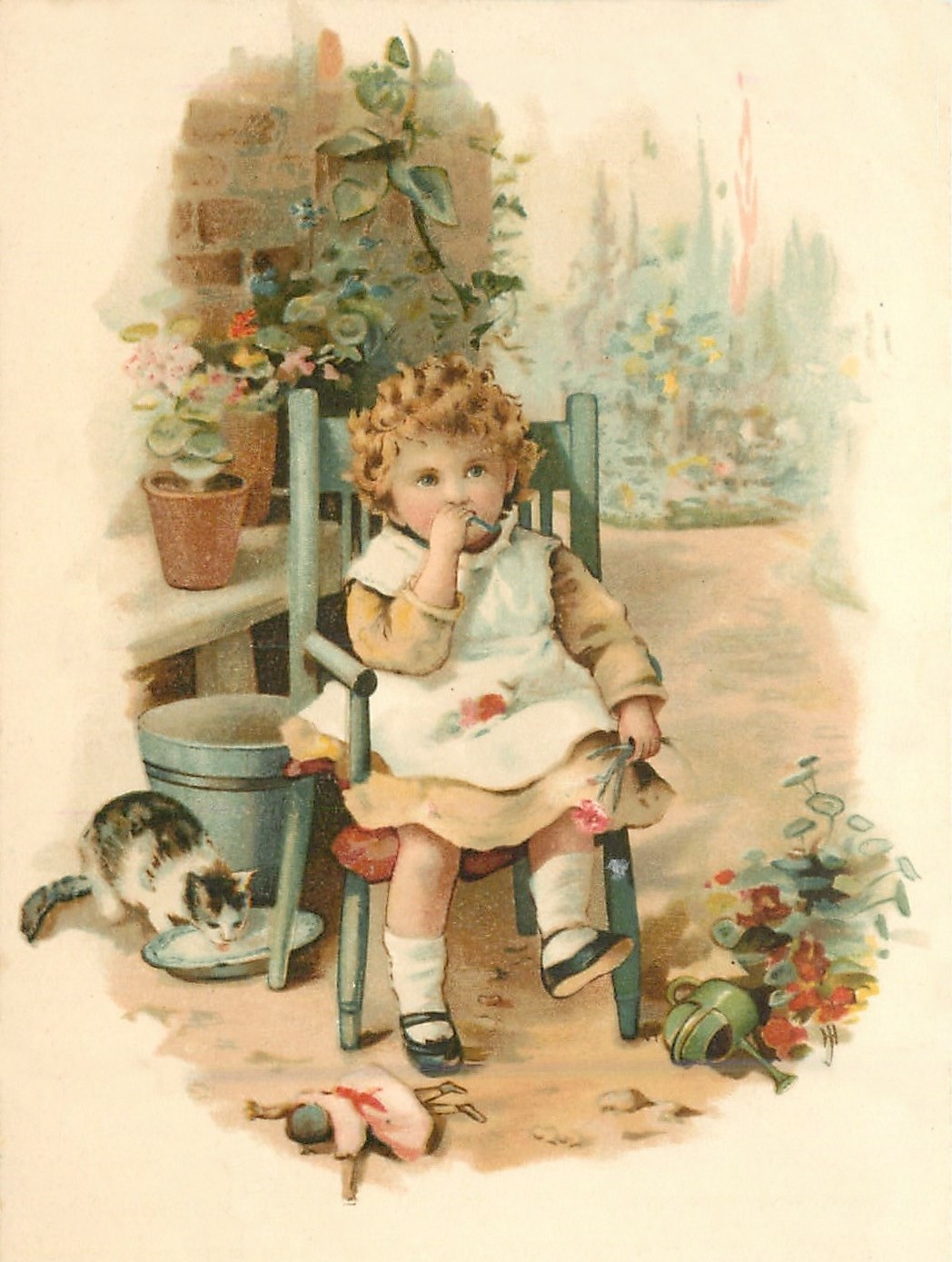
The family looked forward to the days when Gracie would announce, “Gracie is a good girl today!” But those days sometimes seemed few and far between.
“Why can’t you always be such a sweet, pleasant little girl?” Isabella asked after one of Gracie’s sunshiny days.
“Why, Auntie Belle, this is my good day. I’m not a naughty baby today at all. But I can’t always be good, you know.”
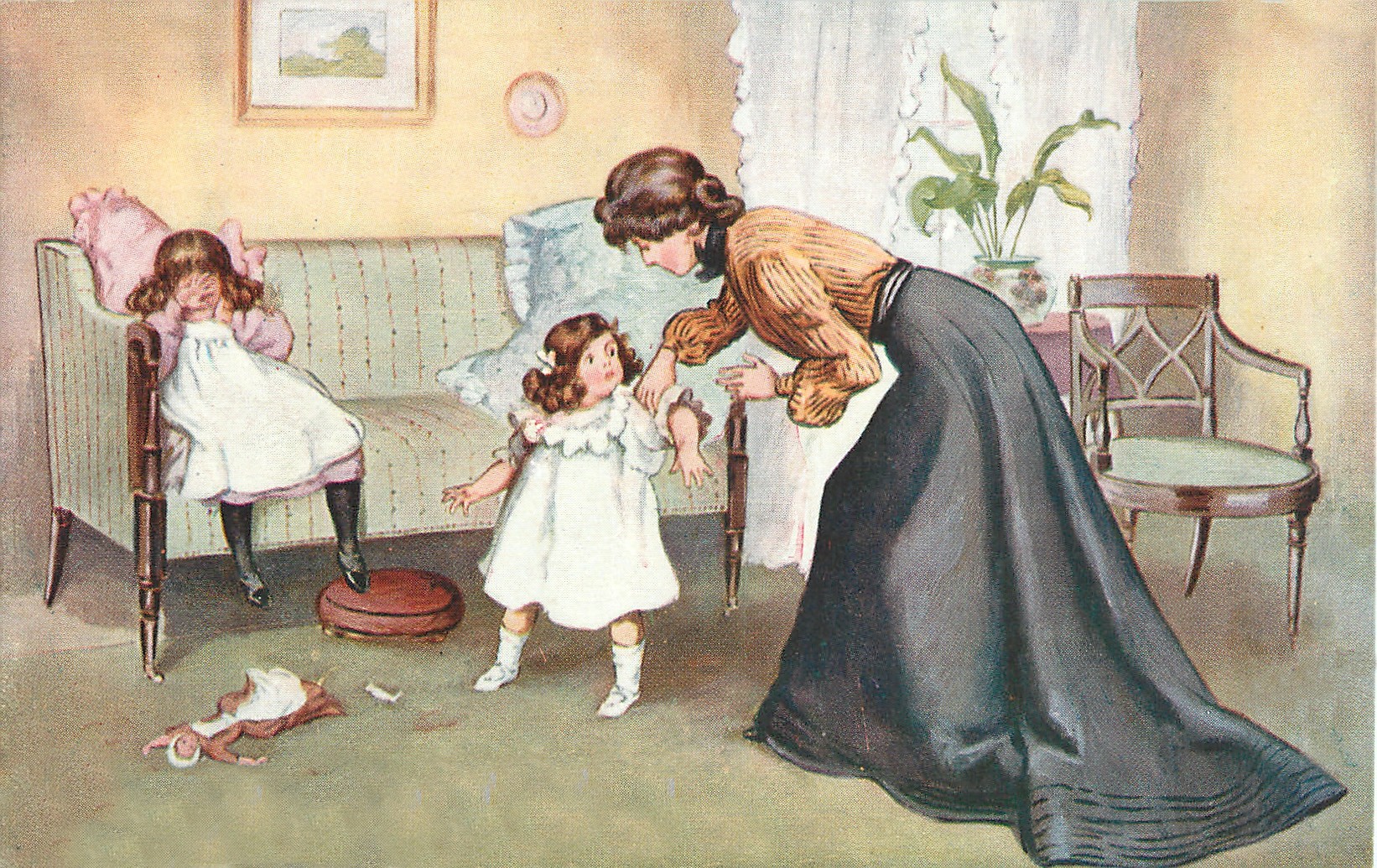
Isabella wrote that on one of Gracie’s naughty days, she had got into a great deal of mischief, even burning her finger after getting hold of a candle she knew she was not supposed to touch. Marcia bandaged the injured finger in cotton, while Gracie wailed and cried; then mother and aunt took Gracie upstairs to get her ready for bed. Here, in Isabella’s own words, is what happened when it was time for Gracie to say her nightly prayers:

“Well,” Gracie said, looking into her mother’s face, and speaking slowly and solemnly, “I’ve got a good deal to say tonight, haven’t I? Mamma, which do you think is the baddest thing that I did today?”
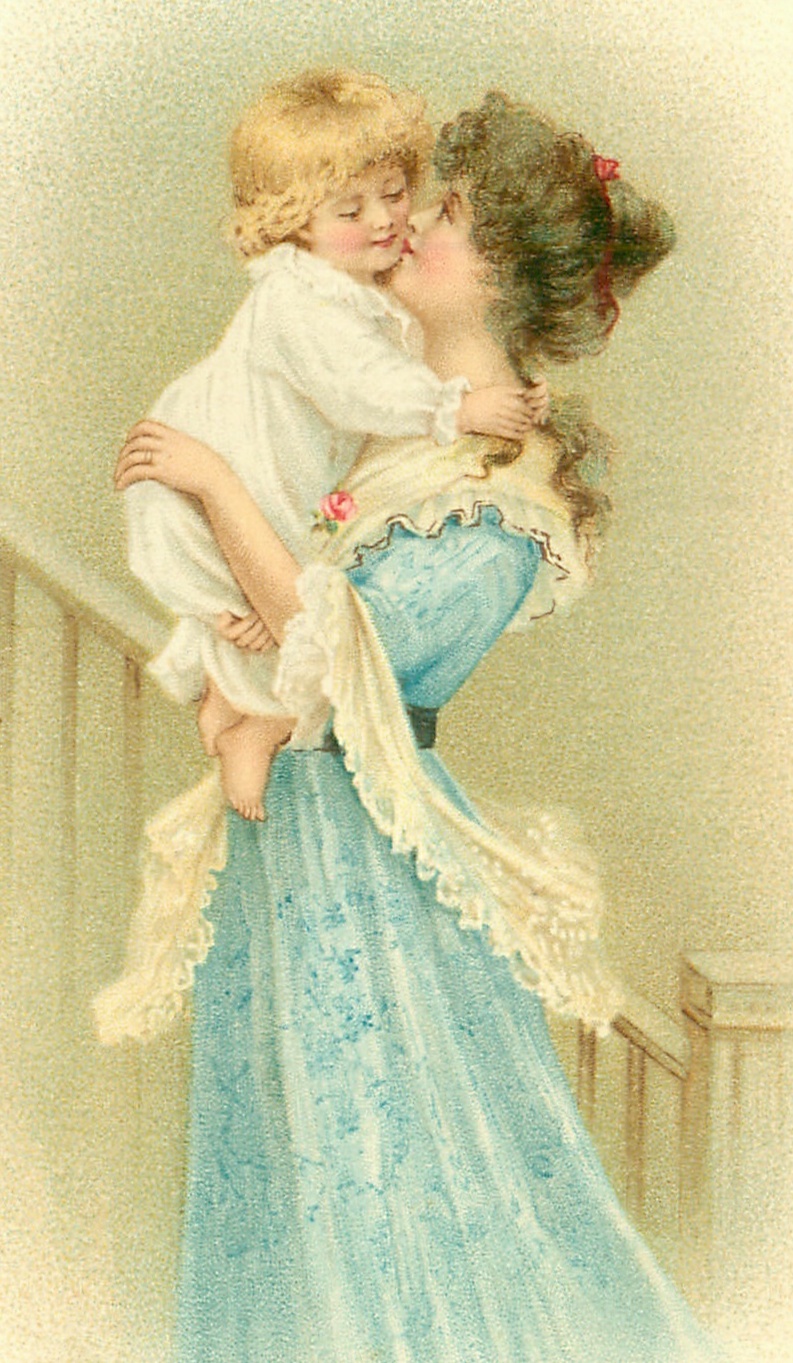
“I don’t think I can tell,” Marcia said, with a sober, troubled face; “and that isn’t the thing that you are to think about, anyway. It makes no difference which is the worst thing; everything that you knew was wrong to do has made Jesus feel badly, and you want to ask him to forgive you for them all; besides, you want to ask for a new heart, so that you will be willing to try not to be so naughty.”

There was never a time in her little life that Gracie wasn’t ready for an argument. She tried to get one up now.
“But, mamma, if I could find out which was the very baddest thing that I did, I could make up my mind that I certainly true would never do that again, and then I would be sure not to be so bad next time. Don’t you see?”
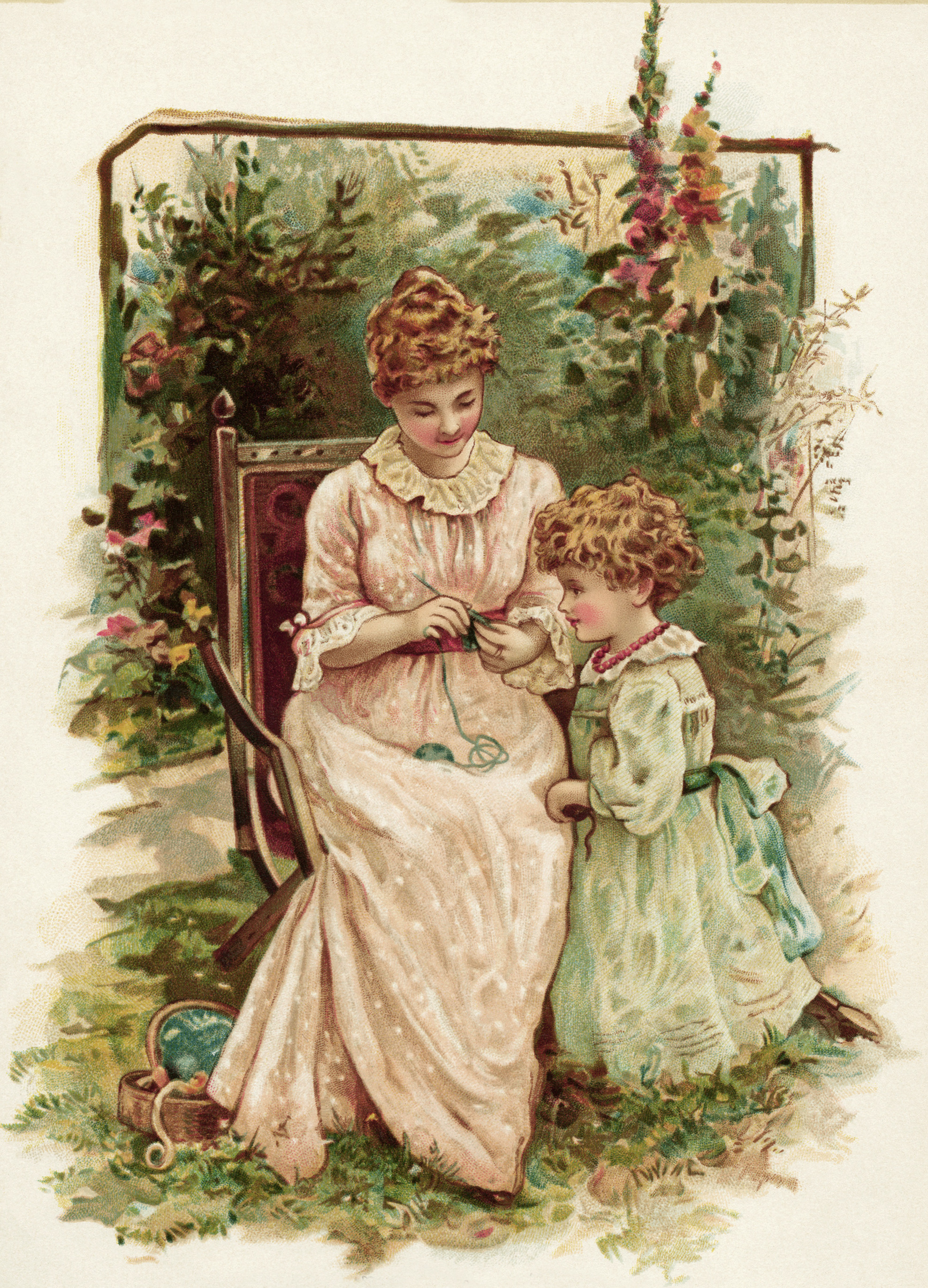
I shall have to confess that I felt very much like laughing. She was such a little bit of a mouse, and she was trying so hard to be wise. But her poor troubled mamma did not smile.
“I see that you don’t know what you are talking about,” she said. “I can only hope that when you are older you will be a great deal wiser.”

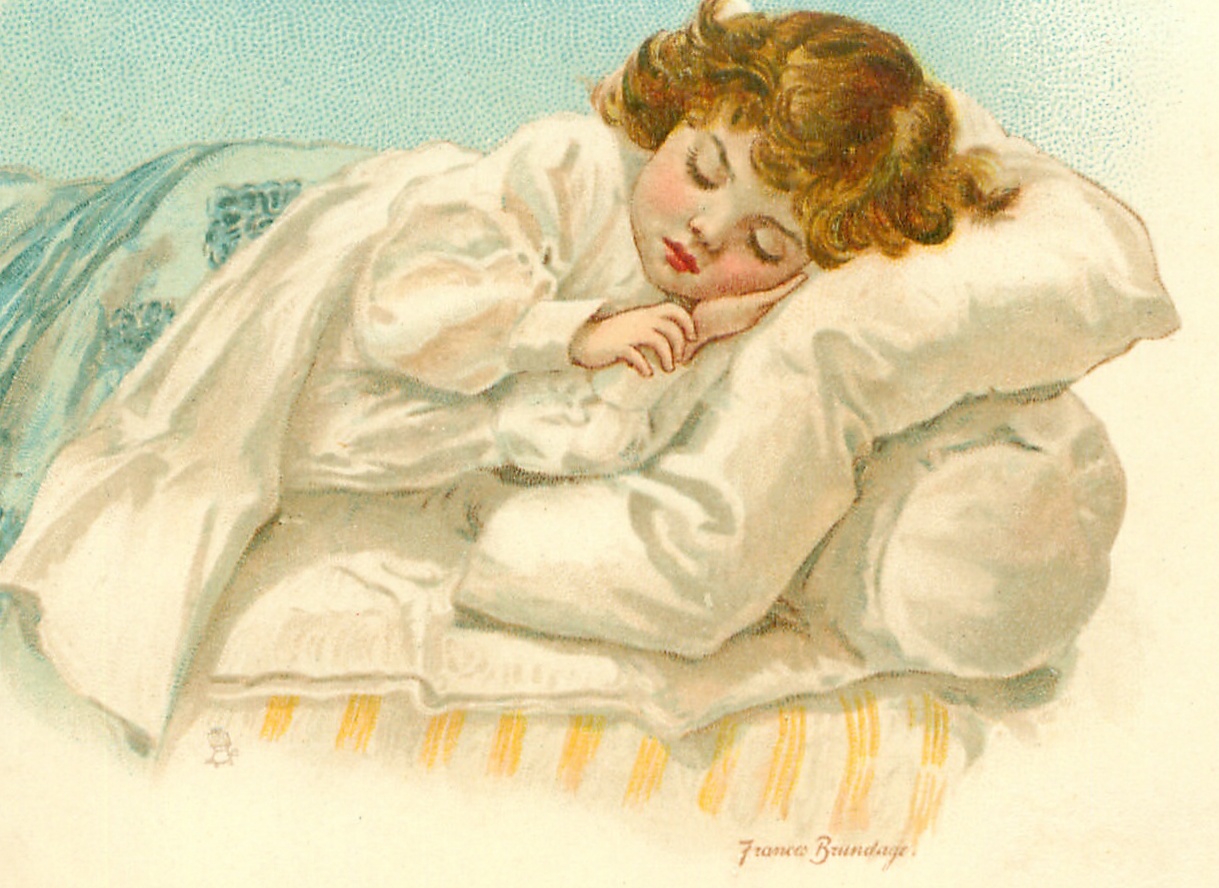
This was certainly hard for a little girl who thought she made a very sensible remark. She gave a little bit of a sigh, and then knelt down beside her mamma. Very slowly and reverently she went through the prayer that I think every little girl in the world must know, “Now I lay me down to sleep.” After the “Amen” she always added a little prayer that she said came right out of her own heart; and tonight it was, “Dear Jesus, please bless Gracie; make my heart not feel so bad; make me feel just as though I was a very good girl, and take away my naughty sins and give me some good sins.”
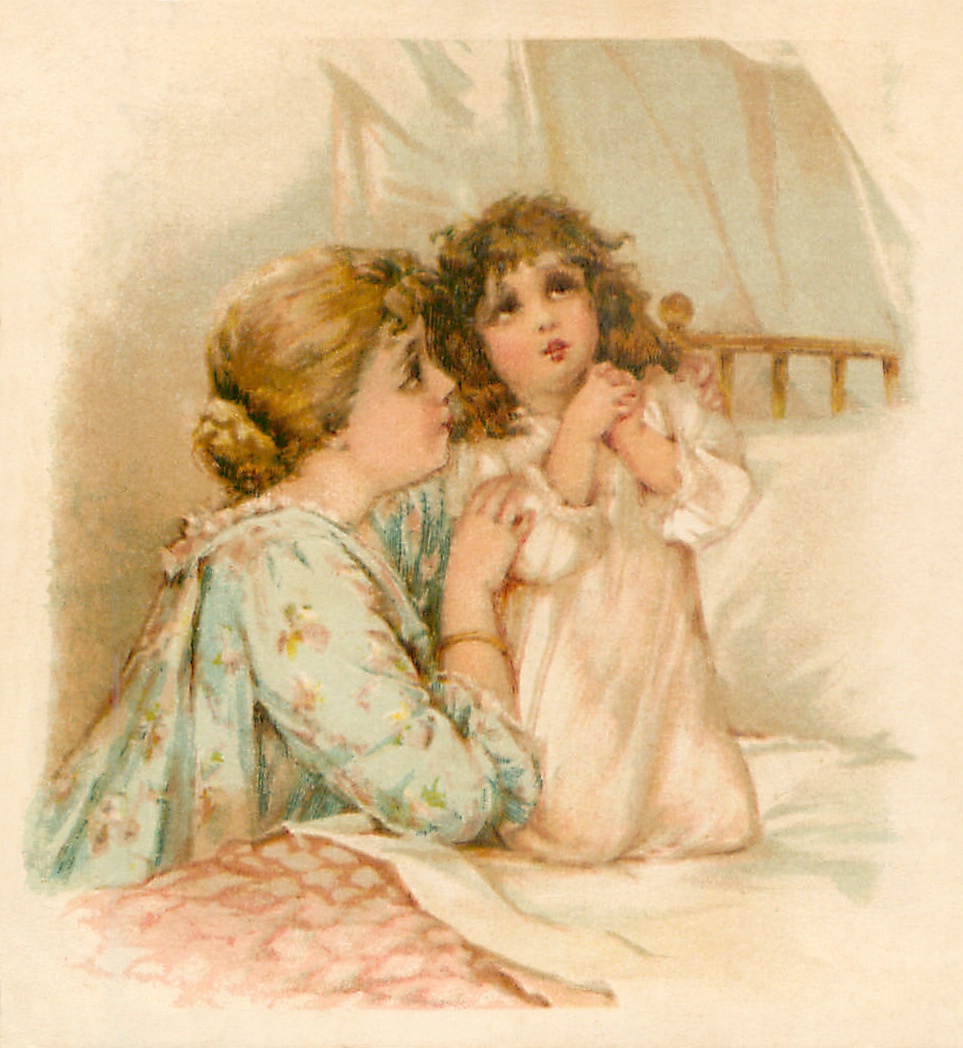
That was really the most that Gracie knew about it. There seemed to be no use in trying to make her understand that everything that wasn’t right was wrong, and that God thought so.
Isabella wrote that Marcia was troubled that her daughter might actually believe there was such a thing as “good sins.” But in her heart, Isabella wasn’t worried. When she looked at Gracie, she saw independence, the ability to reason things out for herself, and a true knowledge of what was right and wrong. She had no fear for Gracie’s future. She knew that Gracie’s parents—and all of the members of their tight-knit family—would raise Grace to be a woman of faith who followed Christ in her everyday life.
You can read more about Isabella and her niece, Grace Livingston Hill, in these posts:
Isabella’s Christmas Tradition
New Grace Livingston Hill Book
New Free Read by Grace Livingston Hill
.
.
.
Share this:

The Day New York Turned French
The year 1886 was a banner year for Isabella. In that year she had six books published, including Spun from Fact and One Commonplace Day.
1886 was a banner year for America, too. A wave of patriotism was surging through the country, thanks to the long-awaited unveiling of the Statue of Liberty on a small island in New York’s harbor.
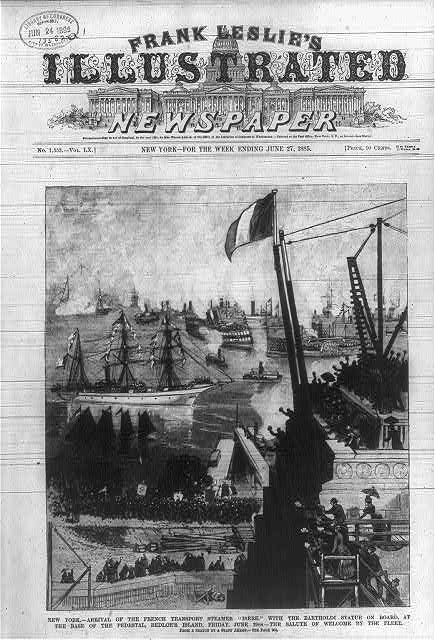
Newspapers and magazines were full of descriptions of the statue and of the pedestal that was being constructed for it on Bedloe Island in New York harbor. Americans were intrigued by the sheer size of the statue. They marveled over its engineering and wondered how the torch would remain lit.

The statue was the brainchild of French sculptor Frederic Auguste Bartholdi. He originally envisioned presenting the statue to the United States on the one-hundred year anniversary of the signing of America’s Declaration of Independence, but he did not have enough of the statue completed by that deadline.

Instead, he sent America pieces of the statue. For example, in 1876 he sent to America the hand holding the torch and one of the feet of the Statue of Liberty. Those pieces toured American cities as part of the centennial celebration, and helped raise the funds needed to erect the pedestal on which the Statue of Liberty would ultimately stand.

Ten years later, the pedestal was in place. Bertholdi was finally able to assemble the statue on top, and America set the date for the unveiling for October 28, 1886.
That day dawned cold and misty. A light fog hung over the city; it had rained the day before, so areas that were not paved were muddy. But wet pavement and mud and chilly temperatures couldn’t dampen America’s enthusiasm.
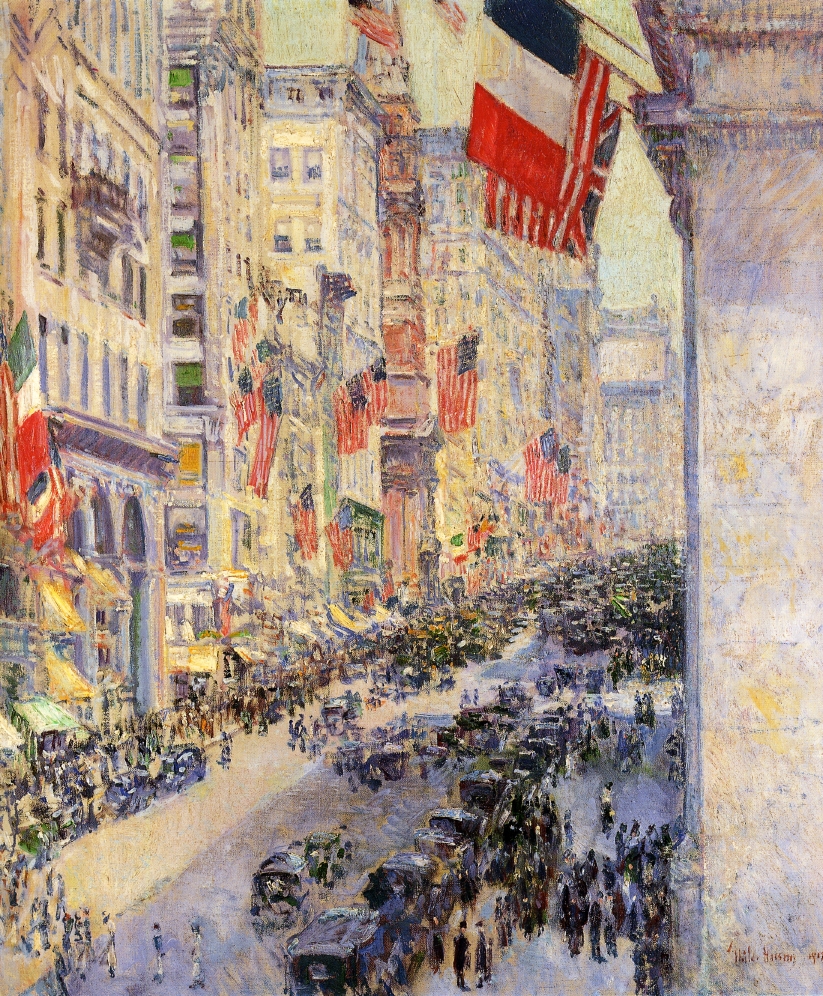
Everywhere the city was decorated with buntings and flags. French flags flew from the tops of American households, and American flags fluttered from almost every window.
People came from all over the country to fill the New York streets. Businesses shut down and public schools closed as all New York joined in the celebration.

One visitor in the crowd later related that “every place that a person could get to see was occupied; the tops of lamp posts, telegraph poles, trees, and the housetops were all filled.”
The festivities began with a parade. Newspaper accounts estimated between 25,000 and 30,000 men paraded through the city. It took over two hours for the head of the parade to reach the Battery.

The parade featured canon and carriages filled with dignitaries, like President Cleveland and members of his cabinet. Civic organizations, military companies, police battalions and the Army Engineering Corps marched through the streets. Band after band paraded playing the “Marseillaise.”
Volunteer firemen’s associations, Knights of Pythias, federal judges, local mayors, and veterans of 1812 joined the ranks of marchers. They paraded down Fifth Avenue, past Central Park to Madison Square, then on to the review stands on Twenty-Fourth Street.

When President Cleveland stepped up on the stand, the crowd cheered; but then the people close enough to the stage caught sight of the sculptor, Monsieur Bartholdi, who was waiting to be introduced. The crowd instantly recognized him because his likeness appeared on the programmes and in illustrated newspapers.

Those nearest the stand began to chant his name, “Bartholdi, Bartholdi.” Crowds on the avenue up and down heard the name and passed it to the people in the park, and they passed it to the people on the side streets, until the air was “shaken with the roar of cheering” the sculptor’s name.
Monsieur Bartholdi accompanied President Cleveland aboard the steamship Dispatch, to make the short journey across the bay to Bedloe Island. As soon as the Dispatch got under way, over 100 vessels, decorated with flags and bunting, blasted their whistles and followed behind.

When they reached Bedloe Island the official unveiling ceremony took place. A large French flag had been placed over the head of the statue, but at the signal, the flag was pulled away, to the sound of a salute of gun fire by all the batteries in the harbor, afloat and ashore.

President Cleveland formally accepted the statue on behalf of the United States, after which there followed an address by a representative of France, then music, and a benediction.
When the ceremony concluded there was a one-hundred-gun salute, and the steamers in the bay blew their whistles. The guns on Governor’s Island and other forts fired for a full half an hour.
By this time the rain had begun to fall, but the crowds did not disperse. Over a million people filled every available space from Wall Street to Pearl Street and to the Battery. They stood in the drenching rain and driving winds and cheered themselves hoarse.

That rainy October day in 1886 was a great day for the city of New York and for the American people, who received a gift that would go on to epitomize the spirit of liberty and refuge for people all over the world.
This video provides more detail about the Statue of Liberty and how it came to reside on Bedloe Island.
Click here to read Isabella’s book Spun from Fact, published in 1886.
And click here for more information about Isabella’s 1886 novel, One Commonplace Day.
Share this:

Quotable

Share this:

New Free Read: Circulating Decimals

Circulating Decimals
The Sabbath-school library at the Penn Avenue Church is in shocking condition. Book covers torn, pages curled or scribbled on—and some of the books have just gone missing. With the library in disgraceful condition, is it any wonder boys and girls view the church library with contempt?
Soon the ladies of the congregation are busy working up lavish plans to replenish the library with suitable books, but will their plans succeed?
You can read Isabella’s charming story, Circulating Decimals, for free. Just click on the book cover to begin reading.
Share this:

Isabella and the “It” Girls
Toward the end of Isabella’s life, her niece, Grace Livingston Hill, encouraged her to write “just one more book.” Grace suggested that it be about Ester Ried’s grand-daughter or great-grand-daughter, in order to bring the great message of the original Ester Ried novel to a whole new generation of readers.

Isabella’s fertile imagination still had plenty of stories waiting to be told. She recognized that there were some loose ends from the Ester Ried series that needed to be tied up, as Grace suggested.
She also knew, based on the letters she received, that fans of her books wanted to know more about some of the other characters she had created.
But Isabella chose not to write those sequels. In 1927 she told Grace:
I am not capable of writing a story suited to the tastes of present day young people. They would smoke a cigarette over the first chapter, and toss it aside as a back number. I haven’t faith in them, nor in my ability to help them.

It’s unfortunate that Isabella was so disillusioned with the “present day young people” of the 1920s. She didn’t understand the new generation of young people, and she strongly believed she had nothing in common with them.
While Isabella still dressed modestly in long gowns with high collars and full sleeves, young women of the 1920s wore short, sleeveless dresses.

They rouged their knees and polished their shoulders.

They plucked their eyebrows, painted their lips, and lacquered their fingernails.

Hollywood star Clara Bow set the trends. She was nicknamed the “It Girl” for playing the role of a plucky shop girl who made good. She was the first Hollywood sex symbol, and Americans couldn’t get enough of her.
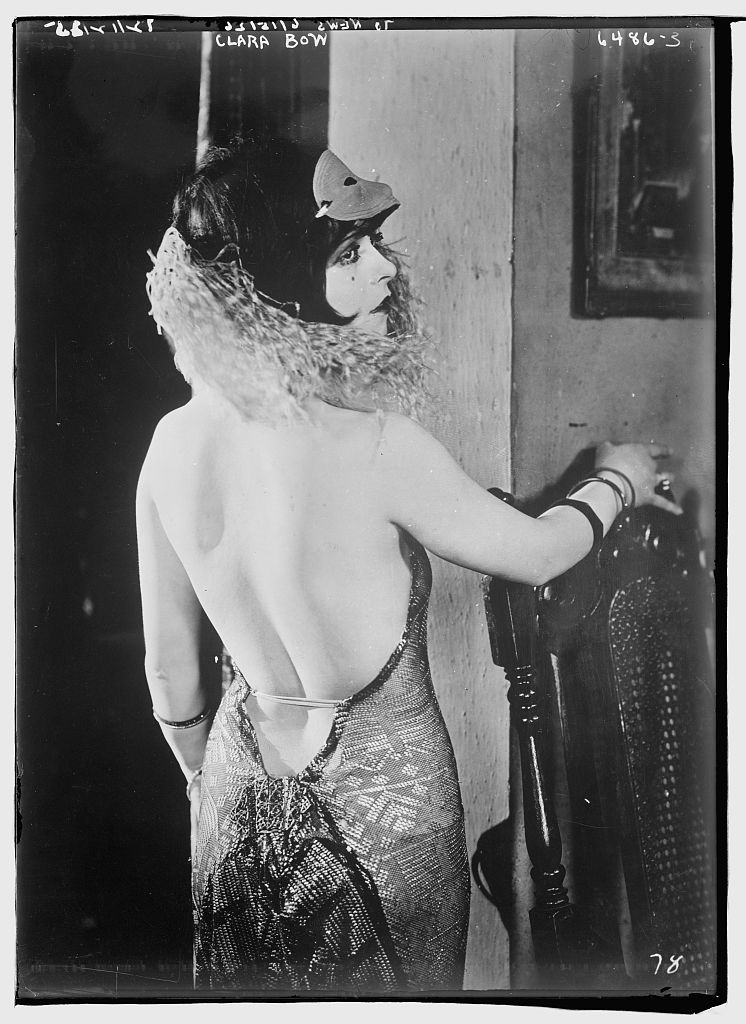
Teenaged girls and grown women copied her make-up and clothes. If Clara Bow smoked cigarettes in a movie, they smoked, too.

Like Clara, they challenged social mores by drinking alcohol and driving fast cars, just like men did.

And like many of the characters Clara Bow played on screen, they were headstrong and modern and fond of nightlife.

Isabella couldn’t understand it. She wrote:
I saw the trend away from Christ long ago. I recognized the downward trend not only in girls and boys, but in their mothers and teachers and pastors. I came by degrees to understand that the class of young people to whom I had dedicated my life had made a distinct descent, and that for me to do the same in my writing would be to dishonor Jesus Christ.
So Isabella watched with sadness as a new generation of readers turned to the novels of F. Scott Fitzgerald, Warner Fabian, and Virginia Woolf, while her own novels gradually fell out of favor.

Grace and others urged her not to give up her life work, but Isabella was adamant: she would not write except to try to win souls for Christ.
I think we all realize in these days that even Jesus Christ is not popular. Therefore we who want to follow Him closely must not try to be.
In 1929 Isabella published An Interrupted Night. Like her novel, Unto the End, An Interrupted Night was written for adults and dealt with issues of love, marriage, infidelity, and sacred vows. The book received good reviews, but it would be Isabella’s final novel.

Unfortunately, Isabella Alden passed away the following year, in 1930, never knowing that—almost one hundred years later—an entirely new generation of “present day young people” would love and cherish her books.
Share this:

Pansy’s Gentlemen
In The Ester Ried Series, Isabella chronicled the transformation of a young man named Jim Forbes. Jim first appeared in The King’s Daughter as a member of a wild bunch of boys who showed up at church for the sole purpose of terrorizing the Sunday-school teachers.
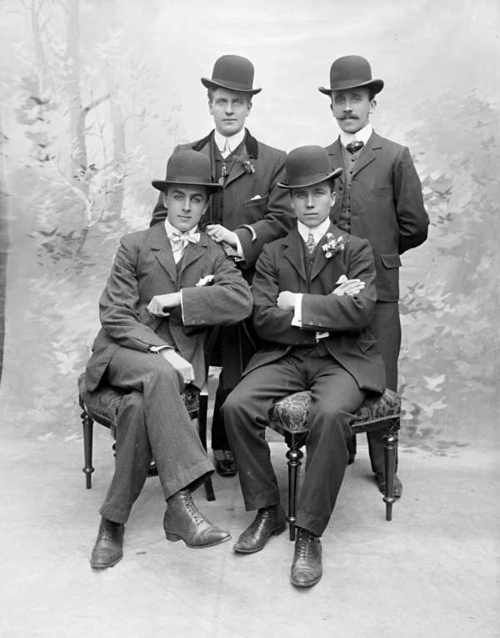
Homer Nelson, who was in charge of the Sunday-school classes, described Jim and his friends:
“Oh, they swear outrageously, and smoke profusely, and gamble whenever they get a chance, not often for money, for they have very little of that article about them; but for raisins, or pins, or straws, or anything that is convenient, and they use liquor freely, every one of them.”
But by the end of The Ester Ried books, Jim was a different person. In fact, he came to be so well regarded, his friends at church gave him a gift: “a dainty and elegant, and altogether perfect gold watch and chain.”

Jim was astonished to receive the watch, not only because of its beauty and cost, but because of what it represented. In the times in which Isabella lived, a man who carried such a watch and chain was considered a gentleman of the first order.
During the late 1800s and early 1900s, true gentlemen followed a very strict code of dress that was based, in large part, on the model promoted by Britain’s Lord Chesterfield, who famously said:
“I cannot help forming some opinion of a man’s sense and character from his dress.”

Isabella agreed whole-heartedly. In her books, Isabella dressed her gentlemen in neat, conservative, well-fitting suits. Even the wealthy men who populated her stories (like Edward Stockwell in The Ester Ried Series, Judge Burnham in The Chautauqua Books, and Mr. Burton in Christie’s Christmas) dressed in a way that did not call attention to themselves or their wealth.
Dressing in the “height of the fashion,” Isabella believed, was better left to dandies and pretenders.

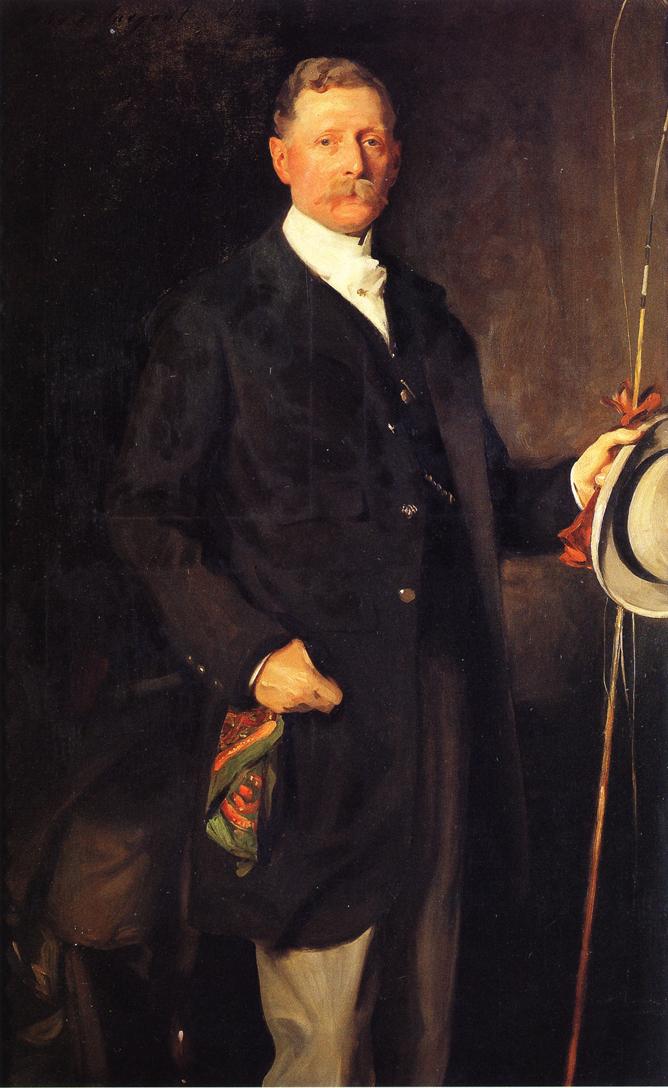
There were essential elements of a gentleman’s attire. In addition to a well-fitting coat and trousers, a gentleman always appeared in a waistcoat and tie.

Even when they were relaxing around the house or engaging in leisure activities, men wore coats, ties, and waistcoats.
.

Another essential element of a gentleman’s appearance was an appropriate amount of facial hair. Beards and moustaches were considered to be a symbol of masculinity.
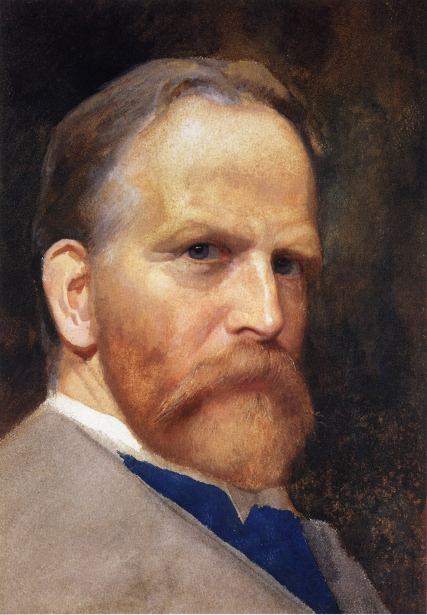
Isabella’s men wore beards and moustaches, as well. In Helen Lester, Helen’s dashing older brother Cleveland returned home from Europe looking very handsome and “heavily bearded.”

And charming Ralph Ried wore a full beard in The Ester Ried Series of books.

Coats, ties, waistcoats, and beards—they were all essential to a man’s attire in Isabella’s world, but a popular 1866 book on “etiquette and true politeness” carried this reminder:
Gentility is neither in birth, manner, nor fashion—but in the MIND. A high sense of honor—a determination never to take a mean advantage of another—an adherence to truth, delicacy, and politeness toward those with whom you may have dealings—are the essential and distinguishing characteristics of A GENTLEMAN.

You can click on the links below to find out more about Isabella’s books mentioned in this post.


