This week, Joseph deals with peer pressure and finds himself accused of another boy’s crime. If you missed any of the previous chapters, you can read them here.
A Dozen of Them
.
THOU SHALT CALL HIS NAME JESUS, FOR HE SHALL SAVE HIS PEOPLE FROM THEIR SINS.
HE DELIVERED ME BECAUSE HE DELIGHTED IN ME.
BRING FORTH THEREFORE FRUITS MEET FOR REPENTANCE.
THIS IS MY BELOVED SON IN WHOM I AM WELL PLEASED.
HE IS ABLE TO SUCCOR THEM THAT ARE TEMPTED.
It was Jean who helped him choose his verse. She had a private notion that the Fourth of July was a rather dangerous time for a boy, so she hinted that of all the July verses the one which she thought the most helpful was the very last. It made some talk; Jean was sewing a button on his shirt and he was waiting for it, so there was time for a few pleasant words. Joseph said he remembered the lesson for next Sunday; he looked it over last Sunday afternoon, and that if a fellow knew as much about the Bible as Jesus did, of course it would help him, but that he, Joseph, would never expect to think of the right verse.
“But that,” said Jean, “is Jesus’ part; if you learn the verses, he has promised that the Holy Spirit shall remind you of them at the right time, if you depend on his help.”
This thought seemed new to Joseph, and held him dumb with wonder that the great God could actually take time to remind a boy of his Bible verses!
He chose the last verse, with a dim notion of putting the thought to the test of experience. There was never a day more full of temptation than that same Fourth of July. Turn which way he would, it seemed to Joseph that the tempter was waiting for him.

It began the day before; the boys coaxed him to join them in a midnight frolic, when the bells of the village should be made to ring, and a wheezy cannon should bang, and various other noises should help to make night hideous.
It was really very tempting. Joseph had not much patience with people who wanted to sleep the night before the “glorious Fourth;” and it seemed to him that boys ought to have free license once a year to make all the noise they could.
But then, Mrs. Calland did not approve of such doings, and had expressly hoped that none of their family would be guilty of helping along the village uproar. Still, the boys argued that she need never know anything about their share in it; she would be in bed and asleep when they slipped away; and they would slip back, long before she was up in the morning; and there would be a noise, anyhow, whether they helped make it or not, and they might as well have the fun.

“Not with eye service as men pleasers.”
Where did that verse come from? Joseph did not know it was stored away in his memory, until someone brought it suddenly before him at that moment. He could not help speaking the words aloud, they fitted so perfectly, and he added, “No, you don’t! if you fellows want to do behind her back what you would be ashamed to do when her eyes were on you, why, I suppose you will, for all me, but I don’t propose to train in any such company.”
The boys “poohed” and “pshawed” a little, but the conclusion of it was that they gave up the plan. He had no trouble the next morning in convincing the boys that it would be mean to put a torpedo under Rettie’s crib and scare her awake. Because she was such a little thing, and was very much afraid, and the old verse “Thou shalt love thy neighbor as thyself,” came in to do good service. It is true that Will Jenkins said Rettie wasn’t his “neighbor; “ that she roomed two flights of stairs below him; but he laughed, while he said it, and looked a little ashamed of himself, and no torpedoes were placed under Rettie’s crib.

But the next scheme held out strong temptations for a fun-loving boy. It was all very well for little Rettie to be afraid; but it did seem ridiculous for Sarah, the tall, pretty-faced, good-natured chambermaid to have such a horror of firecrackers that she would run and scream whenever she heard one snap. Joseph did not understand this in the least, and felt disposed to ridicule it. So when the boys hurriedly planned their next bit of mischief, he was on the very verge of joining them. It was such an excellent opportunity: Sarah was out under the gnarled old tree, with Rettie on one side of her, and the little daughter from the next neighbor’s, on the other, and they were having a grand frolic. What unutterable fun it would be to fasten the strings of her long apron to the tree, and then set fire to a bunch of crackers at her feet; and when she squealed and tried to run, she would find herself tied fast, and would have to stay and see what innocent things firecrackers really were. The boys rolled on the grass and laughed over the thought of how her eyes would look, and how she would squeal! Yes, Joseph was almost ready to help in this; because no one could possibly be harmed, and what sense was there in a grown woman being scared with firecrackers?
“Yes, sir, we’ll do it,” said Will Jenkins. “We’ll have one bit of fun this morning, anyhow. Luckily for us there isn’t a Bible verse that will fit it. There’s the Golden Rule, even, encourages us: ‘Do to others whatever they do to you.’ Didn’t Sarah sprinkle us with a dipper of water, this very morning? Tell me it was an accident! I saw by the twinkle in her eyes that she meant it.”
If he hadn’t misquoted that verse I am not sure that Joseph would have stopped to do any thinking; but the thought which struck him was that Satan had done that very thing at the temptation of Jesus! Was this a temptation? Ought he to want help to get out of it?

“Consider them that are bound as bound with them.” Was that Bible? Yes, he was sure of it; though when learned, or where found, he did not know. It was absurd for Sarah to be “bound” by such silly fears; but then she was; and if the words meant anything, they meant that we must try to put ourselves in other people’s places and see if we should like done to us what we were about to do to them, provided we felt about things just as they did.
“S’posin’ I was most dreadful scared at firecrackers,” said Joseph to himself, and that “s’posin’” cleared the air wonderfully. He told the boys decidedly that he couldn’t join them, and there was a rather heated argument, in which the Bible verse took a prominent part; and before it was concluded, Sarah’s frolic was over, and the opportunity for mischief had passed.
I have not time to follow my boy through the day, but he was really amazed at night over its history; almost it seemed to him that the Fourth of July ought to be named “slave” day, instead of “independence,” so many of the boys were slaves to fun.

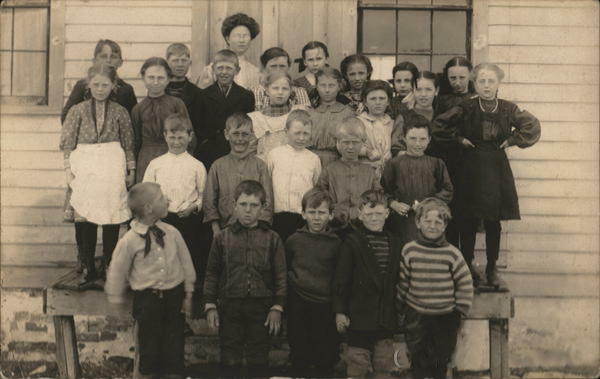
About their latest scheme he knew nothing. It was no more nor less than to take a pitch-pine stick, dress it in white garments saturated in benzine, set it up in a pine-knot seat on the stone floor of the dairy, and fire it at just the moment that Hannah the cook would visit the dairy for butter for tea. How royally scared she would be to see a woman in white all ablaze! This precious piece of mischief was planned most carefully, and finally abandoned, for the simple reason that Joseph was the only one of the scholars who could gain access to the dairy.
“And there’s no kind of use in applying to him,” said Will Jenkins. “He’s so chock full of Bible that all he will do will be to pitch a verse at a fellow. We’ve just got to give it up.” Which, fortunately for them, they did.
THE PEOPLE WHICH SAT IN DARKNESS SAW GREAT LIGHT.
GRACE AND TRUTH CAME BY JESUS CHRIST.
THINK NOT THAT I AM COME TO DESTROY THE LAW OR THE PROPHETS, I AM NOT COME TO DESTROY, BUT TO FULFIL.
MAN LOOKETH ON THE OUTWARD APPEARANCE, BUT THE LORD LOOKETH ON THE HEART.
.
It was little Dick who helped our Joseph into trouble. The fact is, little Dick was skillful in getting up trouble for other people. He liked apples; most boys do; but little Dick liked them so much that he could not help taking them from the tree by the garden wall, before they were ready to pick; and before the injunction had been taken off that not one of the scholars must so much as touch them. It is quite a long story, how little Dick reached the point where he felt as though he must have just one apple, whatever happened; and how he stationed his friend and constant companion in mischief, Rufus Miller, to watch that nothing special did happen, while he climbed the wall for just a taste.

Something happened. Hannah came to the back door and called John, the coachman. That was all; but it was enough to frighten little Dick so much that he lost his balance and pitched over the wall with a loud cry, carrying a branch from the apple-tree with him.
Rufus, much alarmed, ran away, leaving the sobbing little boy with scratched face and torn trousers to get along the best way he could. You will understand that he was not very badly hurt when I tell you that after he had gotten a little over his fright, he waited to pick every apple from that broken limb and stuff them into his pockets, as many as would go in, and tug the rest home in his hands. He meant to get to his own little corner closet before anybody saw him; and if he didn’t, it wouldn’t matter; folks were always giving him apples.
So reasoned little Dick; but the scratched face smarted, and he could not help crying, which made it smart worse. In this plight Joseph found him, pitied him, comforted him, offered to carry some of his burdens, stuffed his own pockets with the, fruit, saying as he did so, “What pretty apples! Did Farmer Brooks give you these?” and did not think it at all strange that Dick cried on, without answering.
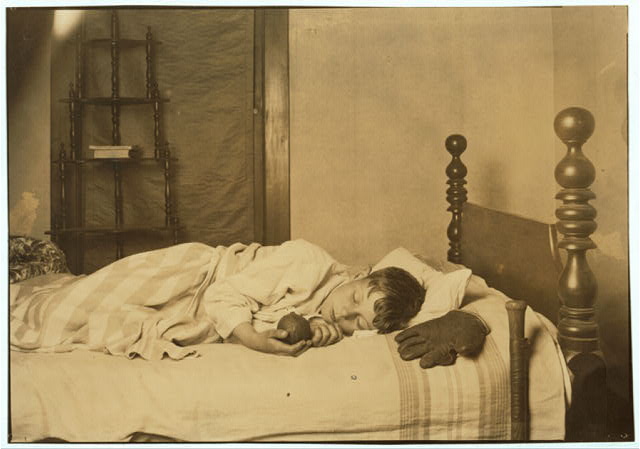
The scratches were soothed at last, the torn trousers, together with little Dick’s bump, reported to Mrs. Calland and properly cared for, and peace was restored; that is, to all outward appearances. Greedy little Dick ate every apple from the broken limb during the day, except a little red-cheeked one which lay in the bottom of Joseph’s pocket, unknown to anybody.

By six o’clock in the evening, trouble came. Farmer Fowler found the broken limb, guessed that some of the boys knew more about it than he did, told Mrs. Calland, and a search was the result. No trace of that peculiar kind of apple anywhere, except—Oh, dear me!—in the pocket of our Joseph’s school trousers, which he had changed when he went to drive Mrs. Fowler to town.
Can you imagine what anxiety there was in the home after that? Mrs. Calland declared that it could not be possible Joseph broke the limb, and Farmer Fowler admitted that he would almost as soon have thought of the minister doing it, but, after all, there was the broken limb, and there was the tell-tale apple. When Joseph-returned from town, and Mrs. Calland sent for him and told him the whole story, his face was redder than the little red apple.
“Mrs. Calland, you don’t think—” he burst forth excitedly, but she quietly interrupted him.
“I don’t think anything about it, Joseph; I am going to think just what you tell me. I know it will be the truth, even if you did, by accident, break a limb of the choice tree.”
“I didn’t,” he said, speaking more quietly. “I didn’t, Mrs. Calland, and I did not know one was broken, and I did not know that apple was in my pocket; but I can guess now, how it got there, and I’ll tell you, if you say so; but it isn’t about me; and Mrs. Calland, don’t you think folks would be a great deal better off if they would tell about their own scrapes?”
Mrs. Calland admitted that she thought they would; told him he need say no more at present, and the next morning took the apple with her into the schoolroom, told part of its story, then called on any boy or girl who could tell any more, to rise and do so. This did not mean Joseph, as she had explained to him, that when she called for information, he was not to speak.
No one rose; Joseph tried not to look at little Dick, but stole a glance at him, and saw that although his cheeks were redder than usual, he was busy with his spelling-book and did not mean to speak.
“Joseph,” said Mrs. Calland, that afternoon, “I will not ask you yet, to tell me what you can guess about this sad business; but you may answer my questions: were the persons who, you guess, know about it, in the school-room this morning?”
“Yes’m,” said Joseph.
“That will do,” said Mrs. Calland. The days passed, and no word was heard about the apple.
Joseph’s heart was very sore. Mrs. Calland treated him just as usual, but Farmer Fowler occasionally cross-questioned him—as much as his promise to Mrs. Calland not to make Joseph tell what he suspected would admit—and Joseph felt that when he shook his head, and said: “It is very strange,” Farmer Fowler thought he was in some way to blame. It was hard.
Jean sympathized with him, but said very little; the fact is, she longed to have him tell the whole story and bring the right person to justice.
There was one evil result of all this, which none but Joseph knew. He could not feel right toward little Dick. As the days passed and the little boy seemed much as usual, but kept his lips tightly closed, Joseph glowered at him often when no one was looking, and could not help feeling that something dreadful ought to happen to him; and that he certainly could never forgive him. There were times when he wished that Mrs. Calland would command him to tell the whole story, so that he might see Dick brought to shame. But Mrs. Calland seemed to have forgotten about it. She asked no questions, and Farmer Fowler continued to say occasionally that it was very strange.
Matters were in this state when, one evening at the quiet hour when all the home scholars were gathered in the school-room and Mrs. Calland read to them from the Bible, she read slowly and carefully the verse which Joseph had, some time before, chosen for his own.
“Man looketh upon the outward appearance, but the Lord looketh on the heart.”
She closed her reading with that verse and began to talk—a few earnest simple words, to help the scholars to think of that solemn truth; then she asked them to bow their heads, and in utter silence look for a moment at their hearts, and try to think what God saw there at that moment.
Now, the verse had for some time been Joseph’s greatest comfort; he had repeated it perhaps oftener than any other verse of his during the year; as often as Farmer Fowler had sighed and spoken of his injured apple-tree with its choice graft, Joseph had thrilled with satisfaction over this thought:
“Oh, yes! You sigh, and look at me; and I know you think I am to blame; and God can see right into my heart; and he knows I have nothing to be ashamed of.”
And as often as he thought of something which would displease God’s all-seeing eye, it was found in little Dick’s heart, not his own. But on this evening as he bowed his head with the rest, under pledge to look into his own heart, he started as though a thorn had pierced him. What did he see? Why, an ugly weed named “Hate.” Yes, actually, he almost hated little Dick! What a dreadful thing this was; almost as bad, perhaps to God’s sight just as bad as poor little silly Dick’s unspoken falsehood! Yet how could he help it? He could not feel right toward little Dick!
The silent minute was passed, and heads were upraised. I do not know but Joseph in his distress would have begged to be excused and have gotten to his room, if little Dick had not at that moment taken all the attention. He came with a sudden rush to Mrs. Calland’s side, bowed his head in her lap and sobbed:
“I don’t want Him to see it in my heart; I did eat the apples! The branch broke; I didn’t mean to break it; and Joseph didn’t take one, and he didn’t know where the apples came from; and I don’t want to be a naughty boy.”
You can imagine what a time there was after that.
It was late when Joseph went to bed; he stayed a good while with Jean, talking things over, after all the other scholars were quiet for the night.
“I oughtn’t to have any trouble in forgiving him,” he said, in answer to a question of Jean’s. “I don’t suppose weeds of hate look much better than weeds made out of lies. When it comes to hearts, I guess maybe little Dick’s looked most as well as mine.”
We’re nearing the end of A Dozen of Them. Join us next Tuesday for the final installment!