New Free Read: What One Rose Did

Isabella Alden and her entire family were actively involved in the Young People’s Society of Christian Endeavor, a movement that promoted Christian service and ideals to its teen and young adult members.

Isabella believed in the Endeavor program so much, she founded the Pansy Society for Christian Endeavor, a similar organization specifically designed for children. The Pansy Society focused on teaching children to use Jesus’ life and words as a guide to live by.

This month’s free read is a story by Marcia Livingston that illustrates some of the values The Pansy Society sought to teach children: forgiveness, patience, and kindness toward others.  

Book Cover showing interior corner of an old cottage with a rough wooden table and two chairs. On the table is small glass vase with a single pink rose in  it.

It was a simple act of kindness when Lily Haines offered Cindy Barker a rose from her garden; but neither young lady could predict how much of a difference the presence of that single rose could make in the Barker family home.

You can read “What One Rose Did” for free!

Choose the reading option you like best:

You can read the story on your computer, phone, tablet, Kindle, or other electronic reading device. Just click here to download your preferred format from BookFunnel.com.

Or you can select BookFunnel’s “email” option to receive an email with a PDF version you can read, print, and share with friends.

October’s Party

It’s hard to believe tomorrow is the first day of October! The seasons are changing and in many people’s opinion, autumn is the loveliest season of the year. (Do you agree?)

Black and white illustration of a two squirrels feasting on nuts on a mound of earth surrounded by trees. In the top left corner of the illustration is the word "Oct.".

In 1892 Isabella published this whimsical little poem that captures the magical quality of autumn, when falling leaves seem to come alive with purposeful movements.

October’s Party

October gave a party—
The leaves by hundreds came—
The Chestnuts, Oaks, and Maples,
And leaves of every name;

The sunshine spread a carpet,
And everything was grand;
Miss Weather led the dancing,
Professor Wind the band.

The Chestnuts came in yellow,
The Oaks in crimson dressed;
The lovely Misses Maple
In scarlet looked their best.

All balanced to their partners,
And gaily fluttered by;
The sight was like a rainbow
New-fallen from the sky.

Then in the rustic hollows
At hide-and-seek they played.
The party closed at sundown,
And everybody stayed.

Professor Wind played louder,
They flew along the ground,
And then the party ended
In “hands across, all round.”

Black and white pen and ink illustration of a little girl in a dress and bonnet from about 1890. She is outside standing in front of a tree. She holds her skirts out in front of her to try to catch the leaves falling from the tree.
Catch the falling leaves!

In the last line of the poem, “hands across, all round” was a common phrase that would have been immediately recognizable to Isabella’s readers. It refers to a formation in traditional country dancing and square dancing that was very familiar in 1892.

Pen drawing of a group of 10 men and women dressed in clothing from about 1900 and dancing in a circle. behind them is a white two-story house and a red barn set against the red, orange and gold colors of trees. Around the dancers some falling leaves are carried on the wind that also lifts the women's skirts slightly..
“Hands across, all round!”

In this dance move, all the dancers form a large circle and join hands, often as the grand finale of a dance.

For those of us who love autumn, this charming poem reminds us the changing seasons have always felt magical, even 130 years ago! Perhaps the next time you watch leaves swirling in the autumn wind, you’ll think of this October poem and it’s gentle reminder that wonder is always there for those who know how to look for it.

What One Good Library Can Do

When Isabella Alden began writing her beloved “Pansy” books in the 1870s, the literary landscape looked very different than it does today. There were few public libraries like the ones we have now; instead, churches filled that role by establishing their own library systems.

The Sunday-school library was a powerful force in 19th-century America. They didn’t just lend books—they curated collections of books that shaped readers’ moral and spiritual development.

Not all Sunday-school libraries were created equal; some churches seemed to have unlimited resources to maintain a well-stocked library of five-hundred books or more, displayed in neat rows on well-built shelves; while others had only a few titles in their collection.

Cover of the story "Circulating Decimals" by Isabella Alden, showing a young woman dressed in the style of about 19095 wearing a white dress with white sleeves and a high color and floor-length skirt. On her head is a white hat with large red poppy flowers. She sits on a rustic wooden chair in a garden, holding a book in one hand, which she is reading, while her head rests on the other hand as her elbow rests on the arm of the chair. Behind her is a stone garden wall with vines and red flowers creeping up the wall.

Isabella’s short story, “Circulating Decimals” is about the efforts of a community to raise money for just such a church library that has fallen into a “disgraceful condition” due to neglect and lack of funds. (You can click here to read the story for free.)

But regardless of size or budget, church libraries had one mission in common: to offer readers books that supported religious instruction, moral development, and the spiritual growth of the congregation.

Churches established committees to evaluate each potential library addition against a set of religious standards. The minister often played a role in recommending or vetoing books, which were also chosen based on their theological soundness and ability to promote standards of Christian living.

The Grace Methodist Episcopal Church of Taunton, Massachusetts had a rather large library of over five-hundred books, and included some of Isabella’s novels, as well as books by Margaret Sangster, E.P. Roe, and other Christian fiction authors.

The church divided their book collection into categories and published a catalog for members of their congregation. The fact that Isabella had ten of her books included in the catalog shows how well the moral messages of her stories aligned with the church’s values and appealed to readers of all ages.

(You can click on the image above to see the entire Grace M.E. Sabbath-school Library catalog of 1904.)

Mainstream publishers like Little, Brown and Company actively marketed their wholesome books to churches. This advertisement in “The Sunday School Library Bulletin” magazine shows their newest offering to churches included a new edition of “Little Men” by Louisa May Alcott:

Magazine ad for "ILLUSTRATED JUVENILES OF HIGH CHARACTER," listing "Little Men" by Louisa M. Alcott in large letters, as well as 10 other books. At the bottom is the name of the publisher, Little, Brown & Company of Boston Mass. with an address to write for an "illustrated holiday catalogue."

And organizations like The National Temperance Society also marketed their books directly to churches. Their ad below features a temperance novel by Isabella’s friend Theodosia Foster (who used the pen name of Faye Huntington):

Magazine advertisement for The National Temperance Society new publications for Sunday-School Libraries, listing "The Lost and Found; or Who is the Heir?" by Dr. Wm. Hargreaves. It also lists 8 other books, including Lewis Elmore, The Crusader by Faye Huntington, as well as 3 temperance periodicals. It offers "special club rates" and gives an address to send for a catalog and samples of the periodicals.

Church libraries established systems for inventorying and lending books. They assigned an inventory number to each book, and issued library cards to readers.

A square label affixed to the inside cover of a book. On the first line of the word "NO" with room to write a number; the number 61 was written and crossed out, and the number 77 written beside it. Below are printed "SUNDAY SCHOOL LIBRARY of the Evengelical [sic] Lutheran Church, Springfield, Ill." The text is surrounded by a fancy Victorian-era design of swirls and dots.
The numbered book plate from a book in the Sunday school library of the Evangelical Lutheran Church of Springfield, Illinois.

They also created rules for borrowing:

A square label affixed to the inside cover of a book. The top line has the book No. 47, then, "SABBATH SCHOOL LIBRARY, First Presbyterian Church, Springfield." Below is typed: "Books taken from the Library must be kept clean, and returned in good order at the expiration of one week, unless renewed. One book only can be had at a time. Neglect of the above Rule will deprive pupils, and members of the Sunday School Society, of the privileges of the Library."

Church libraries were a lifeline for readers, especially in smaller and frontier communities where there were no free public libraries. But that began to change in 1886 when wealthy steel magnate Andrew Carnegie began funding the building of public libraries across the country. By 1923 he had financed the building of over 1,600 public libraries where borrowers could choose from thousands of book titles, including the most popular books of the day.

Old colorized postcard of the public library in New York City showing a sprawling, multi-story building in classical Georgian style with stone steps leading to the entrance flanked by stone columns. The library is located on the corner of two intersecting streets with the tall buildings of the New York skyline in the background.
The New York City Public Library, opened to the public in 1911.

The “safe” books Isabella wrote went out of print, while modern novels by Ernest Hemingway, Edith Wharton, and F. Scott Fitzgerald filled the shelves at public libraries.

Sunday-school libraries still existed, but their influence waned to such an extent that in 1930 a newspaper in Greensboro, North Carolina published an editorial just after Isabella’s death. The editorial fondly recalled the church libraries of years gone by:

There were no sex novels; no crime novels; no filthy “realism,” which portrays the perversions of human nature as if it were life itself. Romance there was, in glorious gobs. Many of the books seeped sentimentality. And always there were happy endings.

He went on to write that Isabella’s books “made for clean lives and happy homes and good society.” In her stories, “the problems were the problems of everyday people trying to be good. If they were somewhat morbid and over-introspective, so was the era for which they were meant.”

Isabella truly did write for the era in which she lived; but it’s important to remember that her books succeeded in Sunday school libraries not just because they met church requirements, but because Isabella had a particular understanding of literature’s purpose—that stories should help readers have a closer walk with God and become better versions of themselves.

Maybe that’s why her “Pansy” novels, despite going out of print, are still read and loved by new readers today, and remembered fondly by those who discovered them on long-ago Sunday afternoons in church libraries.

Does your church have a library? What are the kinds of books it offers?

Monuments

When it came to writing stories, Isabella sometimes relied on “real” life for inspiration. She’d take an actual occurrence—an overheard conversation, an event she attended, or something as simple as a family gathering—and use it as the basis for her story.

Other times, a story she wrote was inspired by a lesson she wanted to convey, or a kernel of truth around which she fashioned a story. That was the case in 1887 when she published a little story called “Monuments,” about a young girl who visits a cemetery in New York with her Aunt Joanna.

Photo of an elaborate Gothic architecture with pointed arches, intricate stonework, and multiple spires topped with decorative finials. The central structure has large arched openings that serve as gateways, flanked by smaller architectural elements. The building extends to both sides of the entrance with additional Gothic-style structures featuring steep roof lines, dormer windows, and tall chimneys.
The entrance to Green-Wood Cemetery in Brooklyn, New York.

The story draws on fact: Green-Wood in Brooklyn, New York is a real place that Isabella very likely visited because of its famed monuments.

Old photo showing a narrow dirt road. ON either side are small headstones and large statuary monuments marking graves.
Monuments and headstones at Green-Wood Cemetery, about 1900.

In the 1800s Green-Wood Cemetery, with its extraordinary grave markers and lush, rolling hills, was a popular tourist destination. People came to spend the day with their picnic baskets and marvel over the sculpted monuments.

In her story, Isabella mentions one of the most magnificent monuments that marks the grave of Miss Charlotte Canda, a seventeen-year-old bride-to-be who was tragically killed after falling from a run-away carriage.

Old black and white photo of a large mausoleum set atop five stone steps. The monument is carved in a Gothic style. Under a stone canopy is a statue of the young woman wearing a garland of 17 roses representing the years of her life. Above her head are a star and a butterly.
Charlotte Canda’s tomb, photographed about 1910.

She also mentions a monument dedicated to the brave firefighters of New York City and, in particular, Andrew Schenck, who perished in 1854 while trying to save people and his fellow firefighters from a burning department store.

Photo of a classical-style cemetery monument made of light-colored stone (likely marble or limestone). It has a pedestal with a square base that tapers upward to support a cylindrical or urn-like top section. It has carved decorative elements and ornamental molding or carved details around the edges and corners. The monument is surrounded by grass in what looks like a well-maintained cemetery setting with trees visible in the background.
The Firemen’s Monument mentioned in the story, topped by fireman’s boots and hat.

As a creative storyteller, Isabella took these tales of tragedy and heroism and crafted them into a story about a completely different kind of ‘monument’—one built not of marble and stone, but of transformed lives and acts of service.

Here’s the short story Isabella wrote:

Title graphic with the word "Monuments" in a fancy old-fashioned font in the middle of the graphic. In the background is an illustration of trees and green rolling hills of a cemetery with monuments and raised grave markers.

It was my first visit to New York. A few days after my arrival uncle took me to Green-Wood, the most beautiful cemetery I ever saw. We visited the many points of interest. As we stood gazing at the fireman’s monument, uncle told me the story of his heroism; how in one of the fierce fires this brave man lost his life while rescuing a woman from the flames. Then we spent a long time looking at the monument to Miss Canda, the beautiful young heiress who was thrown from a carriage and killed; and her fortune was built up in this wonderful marble.

The next morning aunt said, “You will go with me today to another Green-Wood and see grander monuments than any you saw yesterday.”

I wondered how that could be, but we were soon on our way. At length we turned into narrow, dirty streets, growing worse and worse. I shuddered at such sights and sounds of human beings, never before dreaming that in grand New York there could he so much wretchedness. I drew closer and closer to aunt, fearing one of the human demons that leered at us would seize me and carry me off.

Such people! Such places to live in! Such language! Why, it almost makes my hair stand on end to think of it. Aunt did not seem to mind them. Maybe they knew her, for everyone stood aside for us to pass.

“Here it is,” she said at length. “Here is the other Green-Wood.”

“This?” I answered, looking around for gravestones and monuments, and seeing nothing but dreadful houses and miserable objects. “This is Green-Wood?”

She simply answered, “Yes; come right in and you shall see the monuments.”
I could only follow, wondering all the while if aunt was not losing her mind.

A sweet-faced girl met us with a warm welcome to aunt and an earnest look at me. As she led the way within, aunt whispered:

“One of the monuments, Clara.”

“What? I don’t know what you mean.”

“Her name is Maggie,” she quickly whispered back; “used to be called ‘wild Maggie;’ was one of the worst girls in this region. Never mind now, I will tell you more hereafter. Take a good look at her, you’ll see her again.”

Then I heard singing like the songs of many angels. A door swung open. We entered. It was a great company of children, black and white, some with sweet sad faces; others with evil looks, but all singing. Soon Maggie came in from another door and sat among them and I could hear her voice ring out in joyful strains, leading the rest.

There was prayer and Bible reading, and such a good talk by a gentleman. It seemed like heaven, while many of the children, some partly blind, some lame, some pale and sad-faced, gathered around after meeting was out and seized Aunt Joanna’s hand, and seemed so happy. Another lady was there to whom they all pressed for a smile and a word.

“That lady,” said aunt, “is Sir Christopher Wren.”

“What can you mean?” I asked. “Sir Christopher Wren was a man who died in England more than a hundred years ago.”

Aunt Joanna only laughed and said, “And came to life again, my child. This is he, only greater.”

“What?” said I, more and more bewildered.

But she went on: “Look around here at the monuments. You knew Sir Christopher was the architect of the great Westminster Abbey of London, and that kings and statesmen and poets are buried there, and their names and deeds are written there; but if anyone inquires for Sir Christopher Wren’s monument, he is told to look at the wonderful building of which he was the architect.”

“I see,” said I, “that lady has ‘built up’ Maggie.”

“Exactly,” said Aunt Joanna, “and more than one hundred other miserable, sick and wicked children. See that frail girl over there coming toward her? It would take a book to tell how this lady used to come daily here and bend over her crib, sometimes holding her in her arms for hours fearing each moment would be her last. But come and I will introduce you, and you shall see a monument greater than Christopher Wren.”

After we were on our way home, aunt told me the story of this lady; how one day curiosity led her to go through this worst part of New York. Her heart was so touched at the wretchedness of the people that she resolved to do something for them. Her friends tried to dissuade her. Some said the people would kill her; some said it was no use to try to help them. But she went right forward, and now after years of labor and sorrow there is her monument: saved children.

Before my return home in the country, Aunt Joanna gave a treat to the children of the Home all at her own expense.

Maggie, once “Wild Maggie,” and I served. How many sandwiches I passed around, how many cups of milk Maggie filled, how some of the urchins were dressed, how they laughed, or chattered, or stared, what they all said to aunt Joanna about the “treat,” would fill a book.

You can read more about Green-Wood Cemetery by clicking here.

Click on these links to read the stories behind the monuments for:

Miss Charlotte Canda

The Firefighters Monument honoring Andrew Schenck

Isabella’s Authentic Faith

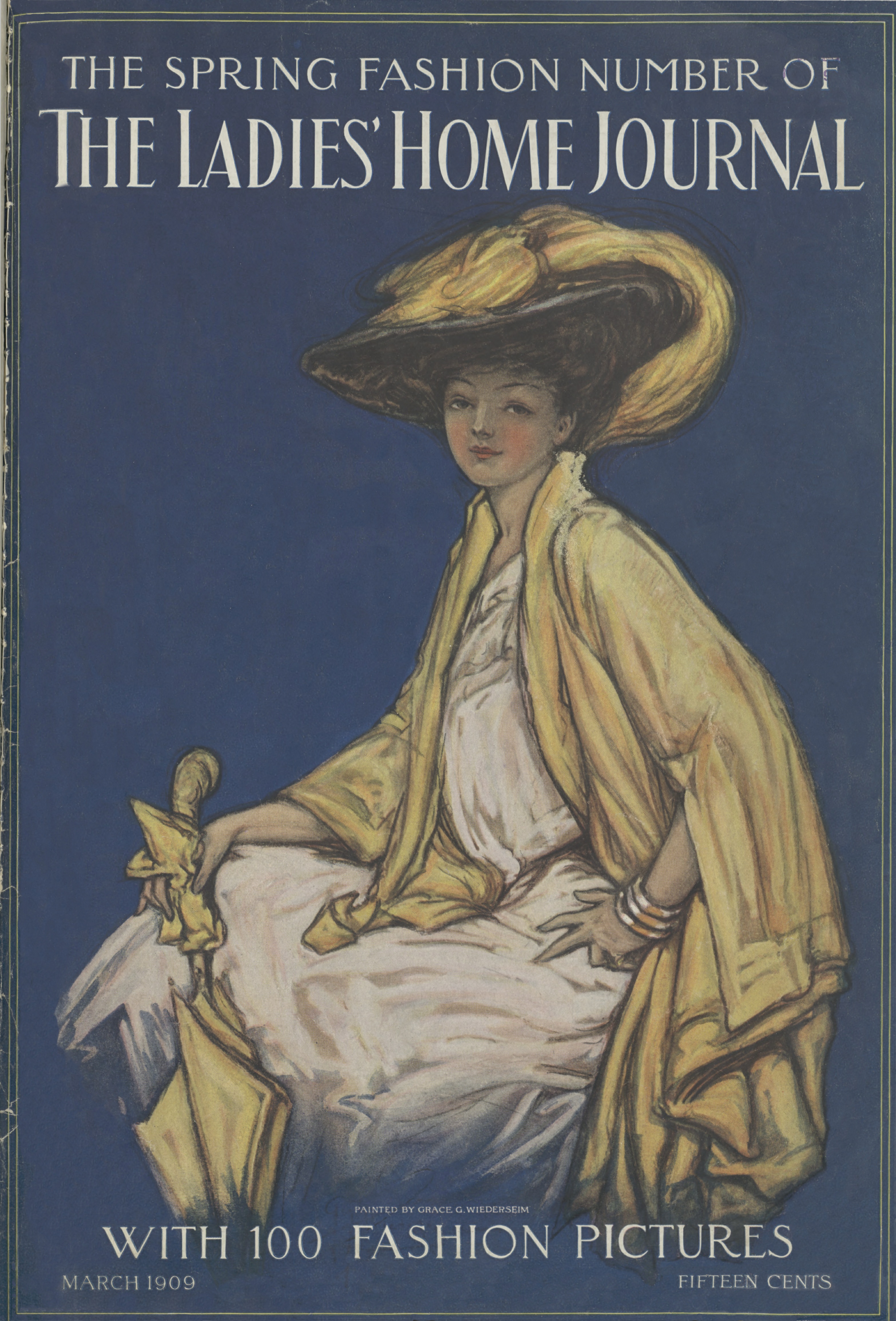
Despite her popularity as a best-selling author, Isabella gave very few interviews. She made an exception in 1892 when a magazine called The Ladies Home Journal (which was quickly becoming the most widely-read magazine in the world) came calling.

The interviewer, Denny Johnson, asked Isabella the usual interview questions about her home life, her childhood, and what inspired her to write. But in the process of sharing Isabella’s answers to those very standard questions, Johnson’s article reveals the quiet power of Isabella’s Christian principles.

Reading the article, you get the sense that what made Isabella extraordinary wasn’t just her prolific writing career; it was the way in which her personal character was very much reflected in the stories she published.

A black and white pencil and charcoal drawing of Isabella Alden in profile. Her hair is parted in the middle and shaped in a braided bun at the back of her head. She wears a high-collared dress or blouse with lace trim. She wears no jewelry.
The image of Isabella that was published with the 1892 article in The Ladies Home Journal.

So, here are four things The Ladies Home Journal interview revealed about Isabella’s personal character:

1. Isabella Lived Her Message

Johnson wrote that Isabella’s Christian principles weren’t “mere theories, existing only on paper.” Instead, they were “the rules that govern her own daily life.”

In those few words, Johnson revealed what is essentially the foundation of Isabella’s stories. Readers don’t just admire her characters’ moral courage—they can sense it comes from the reality of Isabella’s life.

Isabella believed in what Johnson called “practical “Christianity”—faith that rolled up its sleeves and got to work.

She quietly helped others navigate life’s difficulties, often so unobtrusively that people didn’t realize she was the one who had “smoothed this bit of path, or pushed aside that jagged stone.” To Isabella, that was genuine Christian service.

Article excerpt: "In manner she is unassuming, genial, refreshingly natural, and possessed of a gentle dignity that, while repelling undue familiarity from effusive strangers, yet invites confidence from any who  may need her help or sympathy.

2. Isabella had Humility in Success

By 1892 Isabella had already authored over one hundred books that were beloved by readers around the world, yet the article describes her “as unspoiled as when she signed her name for the first time ‘Pansy.'” She shrank from publicity and seemed genuinely surprised by the impact of her work.

Article excerpt: "One of the most attractive elements in Mrs. Alden's character is her modesty and shrinking form publicity of any kind, and her humility in regard to the great good her works have accomplished."

Her modesty wasn’t false humility; it reflected Isabella’s belief that her talents were gifts meant for service rather than self-promotion. As Johnson wrote, “self-emolument has no part in her work,” but instead she had “consecrated intellect, as well as heart and life, to the service of Christ.” In other words, she didn’t write stories for personal gain.

3. Isabella was Consistent

What gave Isabella her unique influence over young people wasn’t just her writing skill, but her consistent character. The same “high standard of right and wrong,” the same genuine care for others, the same joy in her faith that readers found in her books—all of this could be witnessed in her daily life.

The article said she had an infectious laugh and youthful spirit that weren’t manufactured for her audience.

Excerpt from magazine article, "beside the keen insight into human nature which makes her books so enjoyable, the moment you hear her clear, infectious laugh, you realize how thoroughly young at heart she is."

She would pause her important work to meet with any child who came to visit, demonstrating that her love for young people was authentic, not merely professional.

article excerpt: "her great lover for children is evinced by the cheerfulness with which she will pause in the midst of her work, to meet a child who has come to visit her."

4. Isabella’s Example is Timeless

In our present world of personal brands and influence marketing, Isabella’s story feels refreshingly honest. Her success didn’t come from clever marketing; it came from being the same person in private that she was in public. She wrote from who she actually was, not who she thought her audience wanted her to be.

Maybe that’s a big part of why her books are still being read today, long after other, flashier authors have been forgotten. There’s still something powerful about the simple consistency of Isabella’s authentic faith and the honest life she lived that still shine through when we read her stories.

You can click here to read the entire article about Isabella that appeared in The Ladies Home Journal.

What do you think? Did Denny Johnson capture the essence of Isabella’s personal character?

New Free Read: Links in an Endless Chain

Our September free read is a short story Isabella wrote in 1910.

Book cover showing a close-up of a determined middle-aged woman in 1910-era dress. Her hair is in a period-appropriate bun, and she looks upward with an expression of cautious hope. Behind her is a small white church with a steeple.

Mrs. Luther Smith-Mosher believes more in hard work than miracles, so when her beloved church faces foreclosure, she’s willing to do just about anything to save it. But as the foreclosure date draws near, Mrs. Mosher finds herself caught between feuding factions and impossible financial realities—until Pastor Powers challenges her to trust God completely, even when human solutions have failed.

YOU CAN READ “LINKS IN AN ENDLESS CHAIN” FOR FREE!

Choose the reading option you like best:

You can read the story on your computer, phone, tablet, Kindle, or other electronic reading device. Just click here to download your preferred format from BookFunnel.com

Or you can select BookFunnel’s “email” option to receive an email with a PDF version you can read, print, and share with friends.

Flossy and the Street Children

Isabella Alden never actually said so, but there’s an argument to be made Flossy Shipley Roberts may very well have been her favorite character. Of all the characters Isabella created, Flossy made the most appearances in her novels.

Flossy first appeared in Four Girls at Chautauqua. She was also a key character in The Chautauqua Girls at Home, Ruth Erskine’s Crosses, Four Mothers at Chautauqua, and Echoing and Re-echoing.

Cover of Ester Ried Yet Speaking showing a close-up of a young woman with blonde hair dressed in a high-neck red gown. In the background is a large three-story home set amid trees and gardens.

And while she was only mentioned in Judge Burnham’s Daughters and Ruth Erskine’s Son, Flossy made her final appearance—and played a major role—in Ester Ried Yet Speaking.

Perhaps one reason Flossie was so well-loved—by Isabella and by her readers—was that she was honest and truthful, yet deceptively strong. People constantly underestimated Flossy because she was soft spoken and was willing to please others.

But Flossy also had a strong moral sense of right and wrong. She relied on her Christian faith to give her the strength she needed to always do right rather than what others wanted her to do.

She was also kind hearted, especially when it came to children. Flossy was just as willing to teach a Sunday school class full of ragged orphaned street boys as she was to serve tea on her best china to a wealthy church deacon and his wife.

That was the case in Esther Ried Yet Speaking, when Flossy took on the task of teaching a Sunday-school class of rough street boys. During the first class, Flossy took an interest in one of those boys, Dirk Colson and his sister Mart. In the story, Flossy’s concern for them and the rest of the boys—and the actions she took to help them—reflected Isabella’s own principles.

Black and white photo of a narrow alley between two multi-story brick buildings. In the foreground are trash cans and debris, a water pump and buckets. A group of six boys stand in the center of the photo. Behind them are two women wearing long dresses and aprons  from the time period, as well as more children. On the left side of the photo are two young girls, wearing short dresses that appear to be patched.
Boys in Mullens Alley, New York, 1888, by Jacob A. Riis

Isabella was keenly interested in the problem of street children living in large urban areas like New York City. In 1889 she wrote:

There is, in New York City, a meeting known as the “Woman’s Conference.” On the second Friday of every month they meet together to discuss matters of importance and see what they can do to help along the good work which is being done in this world. A few weeks ago they took for their subject the “Street Children’s Sunday,” their object being to see what they can do to help these miserable, neglected, almost forgotten, children to something better than their sorrowful lives have yet known.

The Sun (a New York newspaper) covered that women’s conference and published an account of the meeting, including this paragraph:

At the meeting, which was presided over by Mrs. Lowell of the State Board of Charities, Mrs. Houghton, literary editor of the Evangelist, introduced a subject of the Sunday Life of tenement-house children, a large class of whom do not attend the Sunday schools, and whose Sundays, owing to the drunkenness of their parents, which is more general on that day than any other, and also to the overcrowding of the small rooms in which they live by the presence of the entire family on that day, are full of wretchedness and discomfort. “The children do not laugh enough,” Mrs. Lowell said. “They did not know how to play or to be happy.” This subject has been long of great interest to Mrs. Houghton, and out of this discussion germinated a plan to do something for those little wretched waifs of humanity to brighten their lives, and ultimately to make of them better men and women and more intelligent and worthy citizens.

Isabella strongly believed in the last line of the article: that making the lives of poor boys and girls better will ultimately help them grow to be better men and women.

Black and white photo of three young children sleeping close together in an outdoor alcove of a stone-facade building. The children are barefoot and two are wearing short pants with patches on the knees, as they sleep with their arms around each other.
Children sleeping on Mulberry Street, 1890, by Jacob A. Riis

She also had the example of Jacob Riis, a newspaper reporter who documented living conditions in New York slums. Through his written articles and photographs, he almost single-handedly educated Americans about the necessity of better living conditions for the poor. He advocated for clean drinking water, public parks, and child labor laws, and he was instrumental in implementing these and many other reforms in New York City. Riis and Isabella both attended Chautauqua Institution at the same time, and Riis was close friends with Bishop John Vincent, one of Chautauqua’s co-founders.

Black and white photo of a middle-aged man seated in a chair. He has short, light-colored hair and a mustache, an wears wire-rimmed glasses. He wears a tie and three-piece suit. The chain of a pocket watch is visible on his vest.
Jacob A. Riis in 1904 (from Library of Congress)

Isabella may very well have been thinking of Riis when she wrote about Flossy’s efforts to reach and influence the street boys in her Sunday-school class.

Black and white photo of a row of three two-story attached houses in dilapidated condition, with broken windows and clothes-lines strung from one building to another. The roof of the center home sags dangerously. In the background, a multi-story building hows broken windows and objects cluttering the metal fire escape.
Dwellings of Death by Jacob A. Riis

In one scene, Flossy gets lost in the slums while trying to visit Dirk, and a street boy named Nimble Dick helps her find Dirk’s house.

Mrs. Roberts uttered an exclamation. The house was one of the most forlorn in the row, seeming, if the miserable state of the buildings would admit of comparison, to be more out of repair than the others. It came home to her just then, with a sudden, desolating force, that human beings such as she was trying to reach, and such as she hoped would live in heaven forever, called such earthly habitations as these homes. What possible idea could they ever get of heaven by calling it “home”?

“Do they have the whole of the house?”

She asked the question timidly, for the building looked very large, but she was utterly unused to city tenement life.

“The whole of that house?” Dick fairly shouted the sentence, and bent himself double with laughter. “Well, I should say not, mum! As near as I can calculate, about thirty-five different families have that pleasure. The whole of the house! Oh, my! What a greeny!” And he laughed again.

Mrs. Roberts exerted herself to laugh with him, albeit she was horror-stricken. Thirty-five families in one house! How could they be other than awful in their ways of living?

“I know almost nothing about great cities,” she said. “My home was in a much smaller one.”

This was the truth, but not the whole truth. Instinct kept this veritable lady, in the truest sense of the word, from explaining that she knew nothing about the abject poor, when she was speaking to one of their number.

But Flossy quickly set about learning all she could about Dirk, his sister, and their neighbors because she felt a distinct calling to help them. When she returned a second time to Dirk’s tenement building—this time accompanied by her husband—other residents of the tenement warned her to stay away from Dirk.

It was strange, she could not herself account for it; but with every added word of misery that set poor Dirk Colson lower and lower in the scale of humanity, there seemed to come into this woman’s heart, and shine in her face, an assurance that he was to be a “chosen vessel unto God.”

Black and white photo showing a small open area surrounded by four brick buildings. A shaft of light from above illuminates several clothes lines where clothing and blankets have been hung out to dry. On an upper balcony a man stands with children behind him. A woman wearing an apron stands on the stairs leading from the balcony to the count. On the ground an apron-clad woman stands in the doorway with four children of different ages nearby. In another doorway stands a woman with three little girls seated beside her. In the foreground is a two-wheeled pushcart, buckets, a water pump, a and debris.
A Tenement Yard by Jacob A. Riis

To Flossy, helping Dirk and the rest of “her boys” was essential. And when someone tried to change her mind by asking what good Flossy could possibly do for such creatures, she replied:

“Don’t you think that Jesus Christ died to save them? And don’t you think he wants them saved? And will he not be pleased with even my little bits of efforts if he knows that my sincere desire is to save these souls for his glory?”

Her “little bits of efforts” may seem small at first, but Flossy soon begins to see results with “her boys.”

You can read all about the plan Flossy came up with, and how the boys responded, in Isabella’s novel, Ester Ried Yet Speaking.

You can read Isabella’s novel Ester Ried Yet Speaking for only 99 cents! Choose your favorite e-book retailer. (Your purchase from The Pansy Shop helps support this blog.)

God is Greater Than

In Isabella’s early days of teaching Sunday school, the blackboard was an innovation. In her books, Isabella often wrote about how intimidating the blackboard was for many teachers, and some refused to use it.

That’s what happened in her 1878 novel Links in Rebecca’s Life. In the story, a young woman named Almina had the charge of teaching young children their Sunday-school lesson, but she refused to use a blackboard:

“It is quite the fashion to rave over them … but I won’t have one. What could I do with it? I don’t know how to draw, and as for making lines and marks and dots … I am not going to make an idiot of myself. What’s the use?”

Isabella saw things differently. With inspiration from her old Chautauqua friend Frank Beard (creator of “Chalk Talks”), Isabella embraced the blackboard as a teaching tool, especially for her youngest students who were just learning to read.

Of course, not all Sunday-school teachers had Frank Beard for a friend and guide. And not all teachers had a talent for drawing and diagramming.

Publications like The Sunday School Times recognized that, and published “Blackboard Hints” in many issues of their magazine, showing teachers that simple lettered blackboard illustrations could be just as effective:

It was Isabella’s opinion that any lesson could be better taught by the use of a blackboard or a slate.

“Children are invariably more impressed with what grows into being before their eyes then with what is brought in a completed form before them,” she said.

In her Sunday school lessons, Isabella used pictures and objects whenever she could to illustrate her lessons, but she liked the blackboard better.

“I never attempt elaborate drawings. In the first place, I cannot draw anything. In the second place, but I would not if I could, in a Sunday school room. There is not time. The barest outline is all you can spare time for in all that you need. A blackboard used constantly throughout the lesson — a mark for this one, a dot for that, a crooked line for a river, and oval for a lake — that is better for an [children’s] class than a careful summing up of the lesson at the close.”

So Isabella often began her lessons by putting a dot or a simple symbol on the blackboard, just to get the attention of everyone in her class—at least until they found out what that mark was for.

“If I need such a dot or mark or line as the most mischievous and troublesome [child] there can make for me, I have won him as a rule for that day.”

You can learn more about Frank Beard and his “Chalk Talks” by clicking here.

You can read Isabella’s novel Links in Rebecca’s Life for only 99 cents! Choose your favorite e-book retailer. (Your purchase from The Pansy Shop helps support this blog.)

New Free Read: A Break in Schedule Time

Our August free read by Faye Huntington is a delightful story about two topics very close to the author’s heart: the Christian Endeavor movement, and how sowing seeds of good can result in a bountiful harvest of blessings.

Like everyone in impoverished Castle City, twelve-year-old Tom Gates has given up hope of making a better life, until he has a chance encounter with a group of stranded Christian Endeavorers. Their kindness and faith inspire Tom; for the first time in his life he wants something the town has never had before: A Sunday school.

With his sister Lucy and their friends, Tom uses his wits to raise money and secure a building; and along the way, he ignites a fire of change that will shape the town for generations to come.

You can read “A Break in Schedule Time” for free!

Choose the reading option you like best:

You can read the story on your computer, phone, tablet, Kindle, or other electronic reading device. Just click here to download your preferred format from BookFunnel.com.

Or you can select BookFunnel’s “email” option to receive an email with a PDF version you can read, print, and share with friends.

A Letter to the Pansy Society

In previous posts we’ve talked about the great number of letters Isabella received on a regular basis from parents and children. She made a point of answering each of them, and one of the innovative methods Isabella used to keep up with the demand was to print her replies to their letters in The Pansy magazine.

The Pansy was a weekly publication she edited, with stories, poems, Bible verses for children of all ages. In almost every issue of the magazine, Isabella encouraged her young readers to join The Pansy Society, and pledge to overcome their faults, “in Jesus’ name.”

Here’s an example from an 1883 issue of The Pansy where she encouraged Pansy Society members to continue their good deeds, and charmingly replied to children who wrote to tell her of their progress.

DEAR PANSY SOCIETY:

My thoughts toward you this summer day — my good wishes and my hopes. Do you know where the book is that holds them? It is a wide-open book. I did not write it, and yet, the thoughts and pictures it holds just express what I would like to say to you.

Open your eyes and look above, beneath, around, and see if you cannot guess my riddle.

Does not the blue sky bend in blessing over you? the trees rustle out soft, loving words? the little birds sing “cheer up, cheer up?” The clear brook, gurgling over the stones, says “be true.” The buzzing bee says “be busy.” The daisies smile up into your faces, saying “be glad, be glad,” and the white lily bell re-echoes God’s own word, “be pure.” Then the rare fragrance from mountain-top and tree and flower floating all about you this sweet day— could it say anything but, “I love you, I love you, I love you”?

And these are my thoughts toward you; these too are God’s thoughts about you, written clear and plain in the book his own hands have made.

In the springtime just passed I presume many of you have made gardens and now have lovely blossoms as rewards.

Some of our boys and girls have been hard at work sowing pansy seeds; not those royal velvet or creamy white pansies, alone —they may have sown those, too —but I am talking now about our magazine.

Among those who have done faithful work in this way, is Fanny, a little Indiana girl. When those Western girls take hold of a thing they do it with their own souls.

Some new members have come into the Society; let me introduce them. Here are two little city boys, Eddie and Bertie. They both want to be “better boys.” They can, if they go and whisper that wish to Jesus.

Here is Maggie, a little Maryland girl, Maude, too, from Maryland. She writes a plain, clear hand. May her life be as free from faults.

Bessie sends us a pretty letter three inches square, very small, but holding more and better things than we’ve sometimes found in a whole sheet of foolscap. May the dear Lord help Bessie to be a true disciple of his. We are glad to welcome her to the Pansy Society.

Then there are Willie Porter, Claire Colman, Mabel and Lena and Addie; a little Pansy by the name of Lulu in Wisconsin, and Clarence Lathrop.

Minnie is working hard to put her “bonnet and books” in their place. If she keeps on she will someday be an orderly housekeeper, and maybe some of the Pansies will go and take tea with her. Won’t that be nice?

Lillie’s teacher says she is improving. Good news!

“Speaking back” has annoyed a certain little fellow in Philadelphia by the name of Jamie. But he “has made up his mind” to drop it. Stick to that, my dear boy. Remember, too, that if you must speak back, “a soft answer turneth away wrath.”

How many Pansies, I wonder, say to their tired mothers, “wait a minute,” and want their own way every time? Amy thinks them very bad habits and proposes to have no more to do with them; that is good.

But I really must stop, so good-by.

Lovingly,
Pansy.

How exciting it must have been for a child to see their name in print in their favorite magazine! Do you think Isabella’s brief words of encouragement helped the children in their daily struggles to conquer their faults, “for Jesus’ sake”?

You can read more about the letters Isabella received in these posts:

Fan Mail and Ester Ried
Pansy’s Typical Day
A Summer Poem
A Letter from Ida White
Pansy’s Letter-Box
The Pansy Society