

Of course you cannot help these bitter feelings; do you suppose He expects you to do so? If you could make your heart right yourself, where would be the need of His help?
—Eighty-Seven
Of course you cannot help these bitter feelings; do you suppose He expects you to do so? If you could make your heart right yourself, where would be the need of His help?
—Eighty-Seven

 I know I love the Lord, and I know that He will not destroy me, for I have in my heart the assurance of His promise.

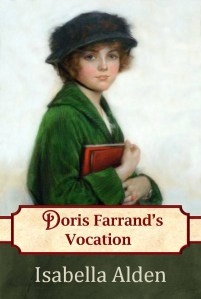 Doris Farrand’s Vocation is now available on Amazon!
How can two walk together except they be agreed?
College student Doris Farrand has her life all planned: She’ll earn her living as a schoolteacher until her boyfriend Richard graduates from seminary school as an ordained minister; then they’ll be married. Their future is so well planned, nothing can go wrong … until Doris receives news that turns her life upside down. Suddenly, she and Richard can’t agree on anything, including the future she once thought was set in stone. The only person who understands Doris’s predicament is fellow student Garrett Randall. As Garrett’s acquaintance with Doris turns to friendship, and she relies more and more on his wise Christian counsel, Doris realizes she has an important choice to make about her future and about the man she will marry.
This edition includes discussion questions, a biography of the author, and an introduction to Isabella Alden’s books by Christian author Jenny Berlin.
Click on the cover to read the first two chapters of Doris Farrand’s Vocation.


Isabella’s books contain some words and terms that are no longer in use. One word she regularly used in her books is chirk. For example:
“I’m as chirk as can be,” says Garrett Randall in Doris Farrand’s Vocation.
In Lost on the Trail, Dr. Evarts visits a sick student to “chirk Templeton up a little.”
And in Overruled, Mrs. Bramlett has a long talk with Marjorie and declares, “I feel quite chirked up; it does beat all how you manage to comfort a body!”
In the late 19th and early 20th Centuries, chirk was an informal word for cheer and was mostly commonly followed by the word, up.

I have often looked forward to an evening gathering with eager interest and thankfulness, because of the opportunity for meeting some there whom I could not catch elsewhere and saying a word for my Master.
—from The Chautauqua Girls at Home


 Isabella kept a daily diary from the time she was seven years old. In it she faithfully recorded the day’s events, so she developed her writing skills at an early age.
Her first published story appeared in the newspaper when she was still a child. Her tale concerned the family’s “grand old clock.” Isabella had grown up hearing the steady tick-tock of the clock; but it suddenly stopped one morning without warning. Since the clock was a family heirloom and one hundred years old at the time, her parents took the problem in stride.
But Isabella’s imagination wove a tale around the powers of the old clock. The day was cloudy and she attributed it to the fact that the sun didn’t know when to rise, simply because the old clock had stopped keeping time. She continued the story with dire predictions that the earth would be plunged into darkness and other terrible things would happen.
She ended the tale with her father pulling out his faithful pocket watch—still ticking—thus saving the world!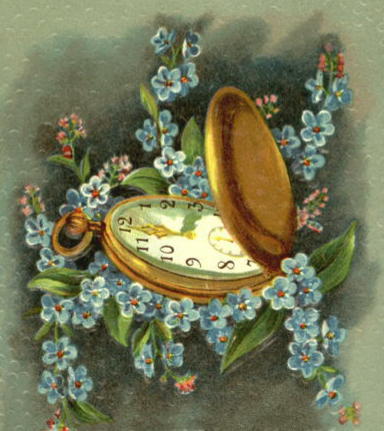
Isabella’s older sister, Mary, was married to the editor of the local newspaper. He suggested that the story appear in the next issue of the paper. Isabella’s father agreed, provided the story was published anonymously to protect Isabella’s privacy.
Thus, Isabella Alden’s first published story appeared in the newspaper with the title and byline:
Many years later, Isabella proudly recounted the story as her very first appearance in public.

Young man, God is speaking to you; He wants you; wants you today; wants your brains, and your strength, and your influence for Himself. Why do you wait? You know you need Him.
—Judge Burnham’s Daughters


 Clearly if she wanted the sun, it was her part to open blinds and draw back curtains; clearly if she wanted mental light, it was her part to use the means that God had placed at her disposal.
—from The Chautauqua Girls at Home

 How many people have such marked and abiding faith in Christ Jesus, that when we talk of them we say, “I heard that Miss So and So had the most implicit faith in the power of Christ to keep her?” Now wouldn’t that be a strange thing to say?
—from Ruth Erskine’s Crosses

Isabella Alden told a story about her childhood that shows not only the love within her home, but the skill of her father in capturing everyday moments to teach Isabella character-forming lessons.
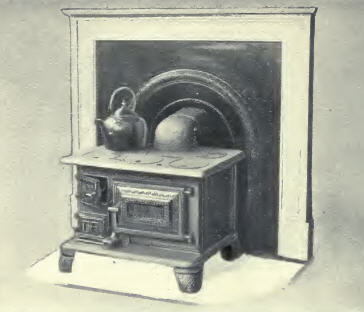
“I recall a certain rainy day, when I hovered aimlessly from sitting-room to kitchen, alternately watching my father at his writing, and my mother at her cake-making. She was baking, I remember, a certain sort known among us as ‘patty-cakes,’ with scalloped e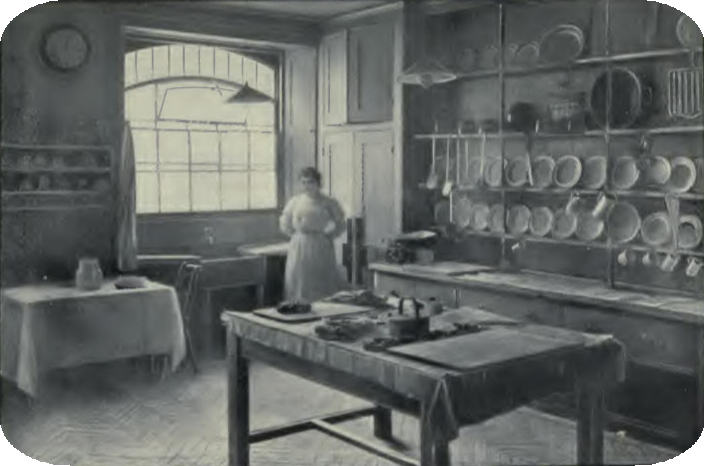 dges, and raisins peeping out all over their puffy sides. I put in an earnest plea for one of the ‘patties’ as it came from the oven, and was refused. Disconsolately I wandered back to father’s side. He was busy with his annual accounts.
“Our home was in a manufacturing town, where the system of exchange, known as ‘due-bills,’ was in vogue. Something caught my eye which suggested the term to me, and I asked an explanation.
“Father gave it briefly. Then I wanted to know whether people always earned the amount mentioned in the due-bill, and my father replied that of course one had the right to issue a due-bill to a man who had earned nothing, if for any reason he desire to favor him, and that then the sum would become that man’s due, because of the name signed.
“I remember the doleful tone in which I said, ‘I wish I had a due-bill.’ My father laughed, tore a bit of paper from his note-book, and printed on it in letters which his six-year-old daughter could read, the words:
Dear Mother:
Please give our little girl a patty-cake for my sake.
Father.
“I carried my due-bill in some doubt to my mother, for she was not given to changing her mind, but I can seem to see the smile on her face as she read the note, and feel again the pressure of the plump warm cake which was promptly placed in my hand.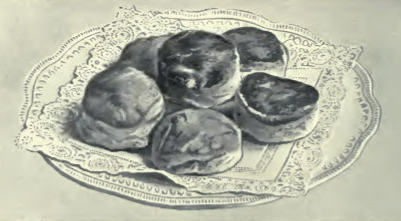
“The incident took on special significance from the fact that I gave it another application, as children are so apt to do. As I knelt that evening, repeating my usual prayer: ‘Now I lay me down to sleep,’ and closed it with the familiar words: ‘And this I ask for Jesus’ sake,’ there flashed over my mind the conviction that this petition was like the ‘due-bill’ which my father had made me—to be claimed because of the mighty name signed. I do not know that any teaching of my life gave me a stronger sense of assurance in prayer than this apparently trivial incident.”
—Excerpt from Successful Women by Sarah K. Bolton
Follow this link to a 19th Century recipe for raisin cakes.

Affordable Christian Fiction
Faith, romance, and a place to belong
Author of Classic Christian Fiction
Author of Classic Christian Fiction
Reviews and giveaways for Christian fiction and sweet, clean fiction. Bringing readers information on great stories and connecting authors with their readers.

