In Household Puzzles, practical Maria Randolph took on the responsibility of cooking the family’s meals.
.
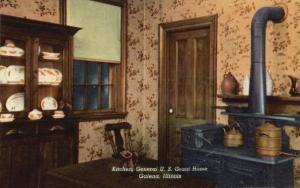
Her kitchen in 1874 might very well have looked like the kitchen in the photograph below of the Ulysses S. Grant home in Galena, IL.
The iron cook stove in the picture was typical for 1865 (nine years before Household Puzzles was published) but its fittings, including the warming oven and iron kettles, were built to last and would have remained in operation for decades.
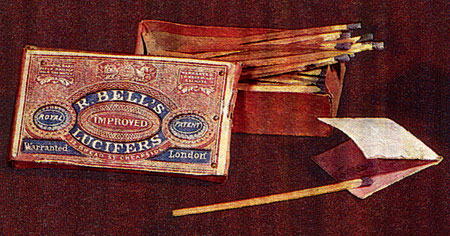
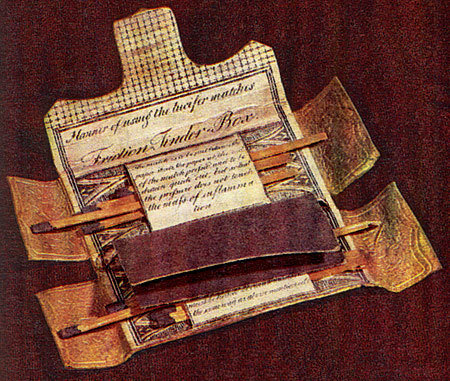
Stoves of the period were fueled by wood or coal. To light the fuel, cooks like Maria used friction matches, commonly called lucifers. Originally, Lucifer matches were developed by a man named Samuel Jones in 1830. Like many other match manufacturers, Mr. Jones made his Lucifers with sulphur tips which were then dipped in phosphorus; but Mr. Jones’s real claim to fame was his packaging. He was the first to sell his matches in small, rectangular cardboard boxes along with sandpaper on which to strike the match. The box even included instructions (in case there was any doubt) on how to light a match.
The packaging proved so popular, “lucifer” soon became a generic name for matches.
In addition to instructions, the lucifer box also included a warning:
“If possible, avoid inhaling gas that escapes from the combustion of the black composition. Persons whose lungs are delicate should by no means use the lucifers.”
In fact, the phosphorus tips not only gave off fumes, they were deadly if swallowed. Ingesting match heads was a common method of committing suicide and small children were often accidentally poisoned by swallowing match heads.
Household Puzzles describes how Maria fumbled for the match-safe on the kitchen table and muttered “as the vile fumes of the lucifer curled into her nose.”
Maria was a smart housekeeper to hold her matches in a match safe. Because lucifers were highly combustible, they were kept in match safes made of metal. These examples of match-safes hung on the wall and kept lucifers dry, safe, and out of reach of children’s fingers.
In 1886 Isabella Alden published Spun from Fact. The book is a fictional tribute to a young woman Isabella admired for her unwavering faith and courage during times of trial.
Spun from Fact is an inspiring story, unlike any other Isabella Alden novel.
Click on the book cover to begin reading Spun from Fact. Enjoy!
Claire Benedict, the main character in Interrupted, is a woman who is dedicated to making a difference in people’s lives. She regularly prays for friends and acquaintances; and when she meets someone new, she immediately begins looking for opportunities to help that person.
That’s certainly the case with Harry Matthews. As soon as Claire meets him, she realizes Harry may have a problem with alcohol.
Later in the book, Harry finds himself indebted to Claire and tells her that if he can ever do anything for her, she has only to ask and it will be done.
.
There was a flush on Claire’s cheeks as she replied, holding forward a little book at the same time.
She could think of scarcely anything else, so easily done, that would give her greater pleasure than to have him write his name on her pledge book; she had an ambition to fill every blank. There was room for five hundred signers, and she and her sister at home were trying to see which could get their pledge-book filled first. Would he give her his name?
And so, to his amazement and dismay, was Harry Matthews brought face to face with a total abstinence pledge. What an apparently simple request to make! How almost impossible it seemed to him to comply with it!
He made no attempt to take the little book, but stood in embarrassment before it.
Click on the image to enlarge
“Isn’t there anything else?” he said, at last, trying to laugh. “I hadn’t an idea that you would ask anything of this sort. I can’t sign it, Miss Benedict; I can’t really, though I would like to please you.”
“What is in the way, Mr. Matthews? Have you promised your mother not to sign it?”
The flush on his cheek mounted to his forehead, but still he tried to laugh and speak gaily.
“Hardly! My mother’s petitions do not lie in that direction. But I really am principled against signing pledges. I don’t believe in a fellow making a coward of himself and hanging his manhood on a piece of paper.”
This was foolish. Would it do to let the young fellow know that she knew it was?
“Then you do not believe in bonds, or mortgages, or receipts, or promises to pay, of any sort—not even bank-notes!”
He laughed again.
“That is business,” he said.
“Well,” briskly, “this is business. I will be very business-like. What do you want me to do, give you a receipt? Come, I want your name to help fill my book, and I am making as earnest a business as I know how, of securing names.”
“Miss Benedict, I am not in the least afraid of becoming a drunkard.”
“Mr. Matthews, that has nothing whatever to do with the business in hand. What I want is your name on my total abstinence pledge. If you do not intend to be a drinker, you can certainly have no objection to gratifying me in this way.”
“Ah, but I have! The promise trammels me unnecessarily and foolishly. I am often thrown among people with whom it is pleasant to take a sip of wine, and it does no harm to anybody.”
“How can you be sure of that? There are drunkards in the world, Mr. Matthews; is it your belief that they started out with the deliberate intention of becoming such, or even with the fear that they might? Or were they led along step by step?”
“Oh, I know all that; but I assure you I am very careful with whom I drink liquor. There are people who seem unable to take a very little habitually; they must either let it alone, or drink to excess. Such people ought to let it alone, and to sign a pledge to do so. I never drink with any such; and I never drink, anyway, save with men much older than I, who ought to set me the example instead of looking to me, and who are either masters of themselves, or too far gone to be influenced by anything that I might do.”
Was there ever such idiotic reasoning!
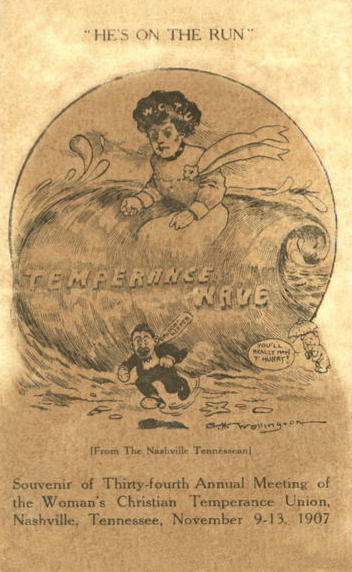
When Isabella Alden wrote Interrupted in 1885, there was a strong temperance movement sweeping across America. Driving that wave was the Women’s Christian Temperance Union (WCTU), which worked tirelessly toward the elimination of alcohol “with a mother’s love.”
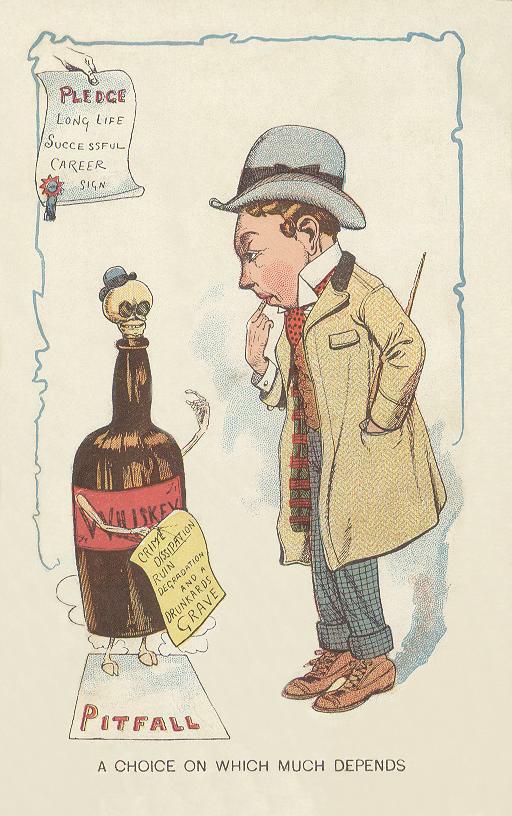
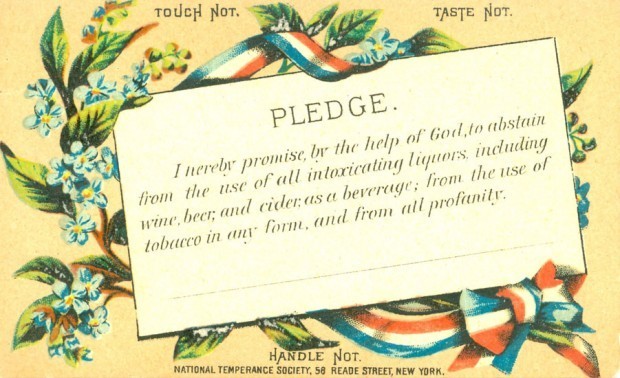
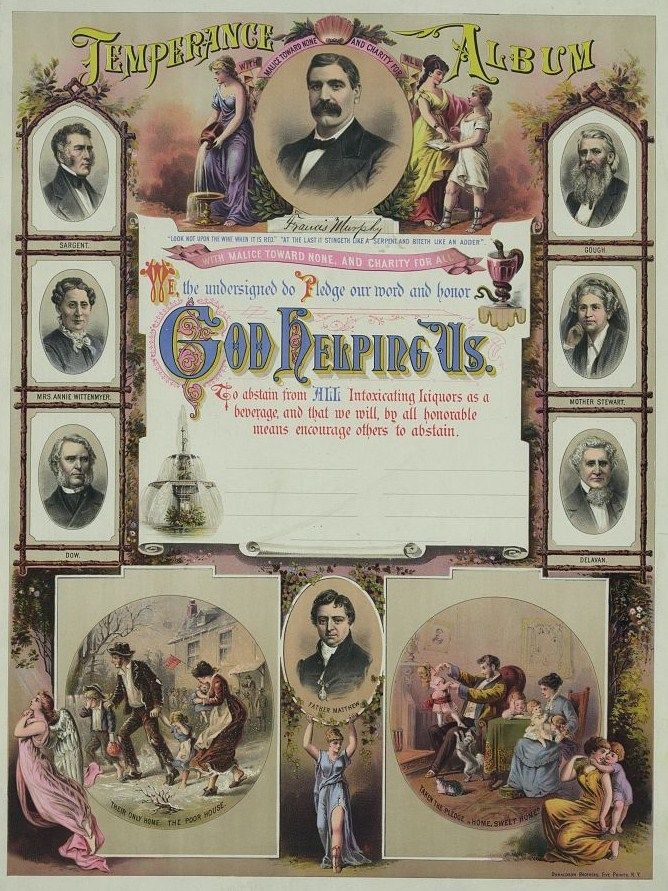
The WCTU and other Christian temperance organizations used temperance pledges as a device to secure individuals’ promises to abstain from the consumption of alcohol.
.
.
Click on the card to enlarge
The WCTU and organizations like them distributed pledge books and pledge cards liberally. Click on each of the pledge cards to see a larger image.
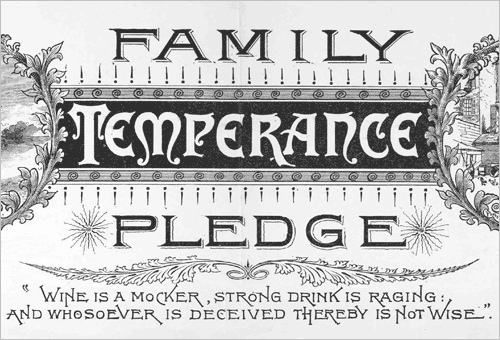
Family pledge documents were also distributed so entire families could take the pledge together, with family members often serving as witnesses to each others’ signatures.
Once signed, the pledges were often kept in family Bibles at a time in America when the family Bible was the most important possession in the home.
Click on the image to enlarge
The temperance pledge was an effective tool for the WCTU because it tied abstinence to virtue, morality, and, most importantly, a pledge before God.
The Browns at Mount Hermon is now available for Kindle and Nook!
Mary Brown may have fortune and beauty, but she’s the loneliest heiress in town. She longs for a family and close friends, but she has only her bank account to keep her company. Then she receives an unexpected invitation to spend the summer at Mount Hermon, a Christian camp in California. It doesn’t take long for Mary Brown, the heiress, to realize the misdirected invitation is actually meant for a different Mary Brown—but that doesn’t stop Mary’s imagination from running wild.
Before she can change her mind, Mary is on her way to California, determined to spend her summer living in a tent at Mount Hermon … even if it means she must pretend to be the “other” Mary Brown. It’s a radical change for Mary, and she enjoys every minute of her new life. But is a summer at Mount Hermon the only change Mary needs, or will her soul be made new, as well?
Click on the cover to read sample chapters and find out more about The Browns at Mount Hermon.
When Claire Benedict sprains her ankle while walking in the snow in Interrupted, she is immediately rescued by handsome, wealthy Louis Ansted. He scoops her up in his arms and carries her to the nearby Ansted mansion, where the family takes her in and befriends her while her injury heals. Claire takes advantage of her sojourn in the Ansted home to encourage the family to attend the village church and get involved in the community.
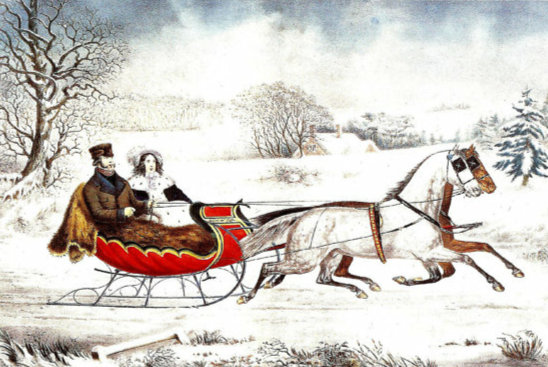
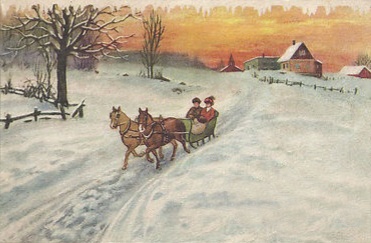
While most of the Ansted family politely tolerates Claire’s penchant for charitable works, Louis is intrigued; and when her ankle has healed, he personally assists her into the sleigh to be taken home … and asks permission to call on her in a few days’ time.
Later in the book, after Claire and the Ansteds finish a day of work at the village church, they prepare to leave amid a snow storm. Louis asks Claire if he can drive her home in his sleigh … an invitation she declines because she has already arranged for another young man to walk her home:
“Bud,” she said, “are you going to see me home through this snow-storm? Or must you make haste up the hill?”
It gave her a feeling of pain to see the sudden blaze of light on his dark, swarthy face. What a neglected, friendless life he must have led, that a kind word or two could have such power over him!
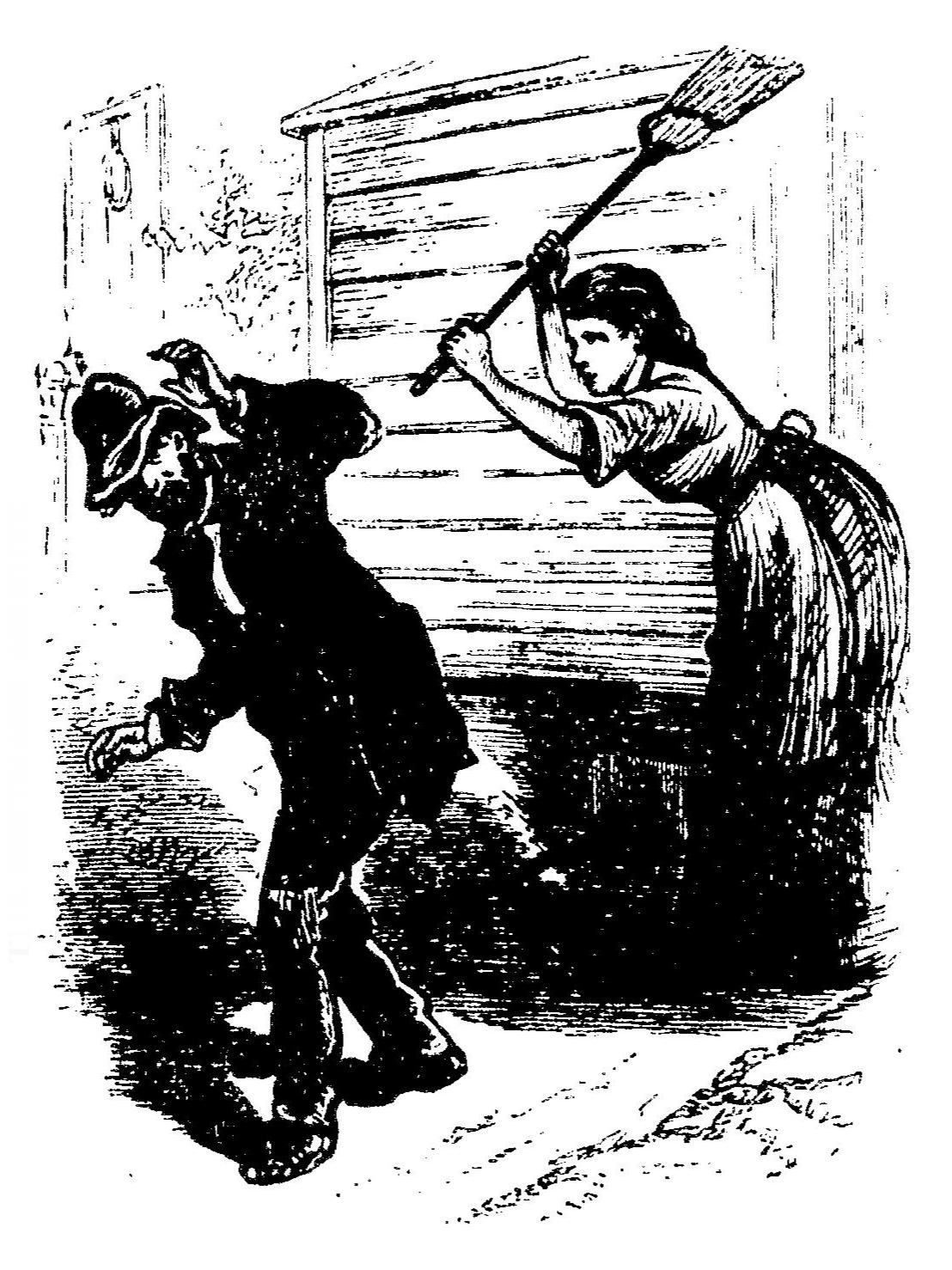
“Me!” he said. “Do you mean it? I’d like to carry your books and things, and I could take the broom and sweep along before you. Might I go? Oh, I haven’t got to hurry. My work is all done.”
She laughed lightly. What a picture it would be for Dora, could she see her plunging through the freshly-fallen snow, Bud at her side, or a step ahead, with a broom!
“I don’t need the broom,” she said. “It has not snowed enough for that; and I am prepared, if it has. See my boots? I like the snow. You may carry my books, please, and we will have a nice walk and talk. The girls are all ready now, I think. You put out the lamps, and I will wait for you at the door.”
Out in the beautiful, snowy world, just as Bud’s key clicked in the lock, Louis Ansted came up to Claire.
“Miss Benedict, let me take you home in the sleigh. I am sorry to have kept you waiting a moment; but my blundering driver had something wrong about the harness, and the horses were fractious. They are composed enough now, and Alice is in the sleigh. Let me assist you out to it, please.”
If it had been moonlight, he might have seen the mischievous sparkle in Claire’s eyes. It was so amusing to be engaged to Bud, while his master held out his hands for her books, as a matter of course, and poor Bud stood aside, desolate and miserable. Evidently he expected nothing else but to be left.
Claire’s voice rang out clear, purposely to reach Bud’s ear:
“Oh, no, thank you, Mr. Ansted! I am fond of walking. I don’t mind the snow in the least, and I have promised myself the pleasure of a walk through it with Bud. Thank you!” as he still urged. “My ankle is quite well again, and I have had no exercise today; I really want the walk. We thank you very much for your help this evening, Mr. Ansted. Good-night! Are you ready, Bud?”
And they trudged away, leaving the discomfited gentleman standing beside his pawing horses.
The next day, Claire stands at the window of her room at the Academy and “watched the sleighs fly past,” wondering if she had missed an opportunity to witness to Louis the night before.
Throughout the story, Claire looks for opportunities to make a difference in her community and in the lives of the people she meets.
For Claire, even a simple sleigh ride is a chance to encourage a soul for Christ or engage a new worker in the Master’s service.
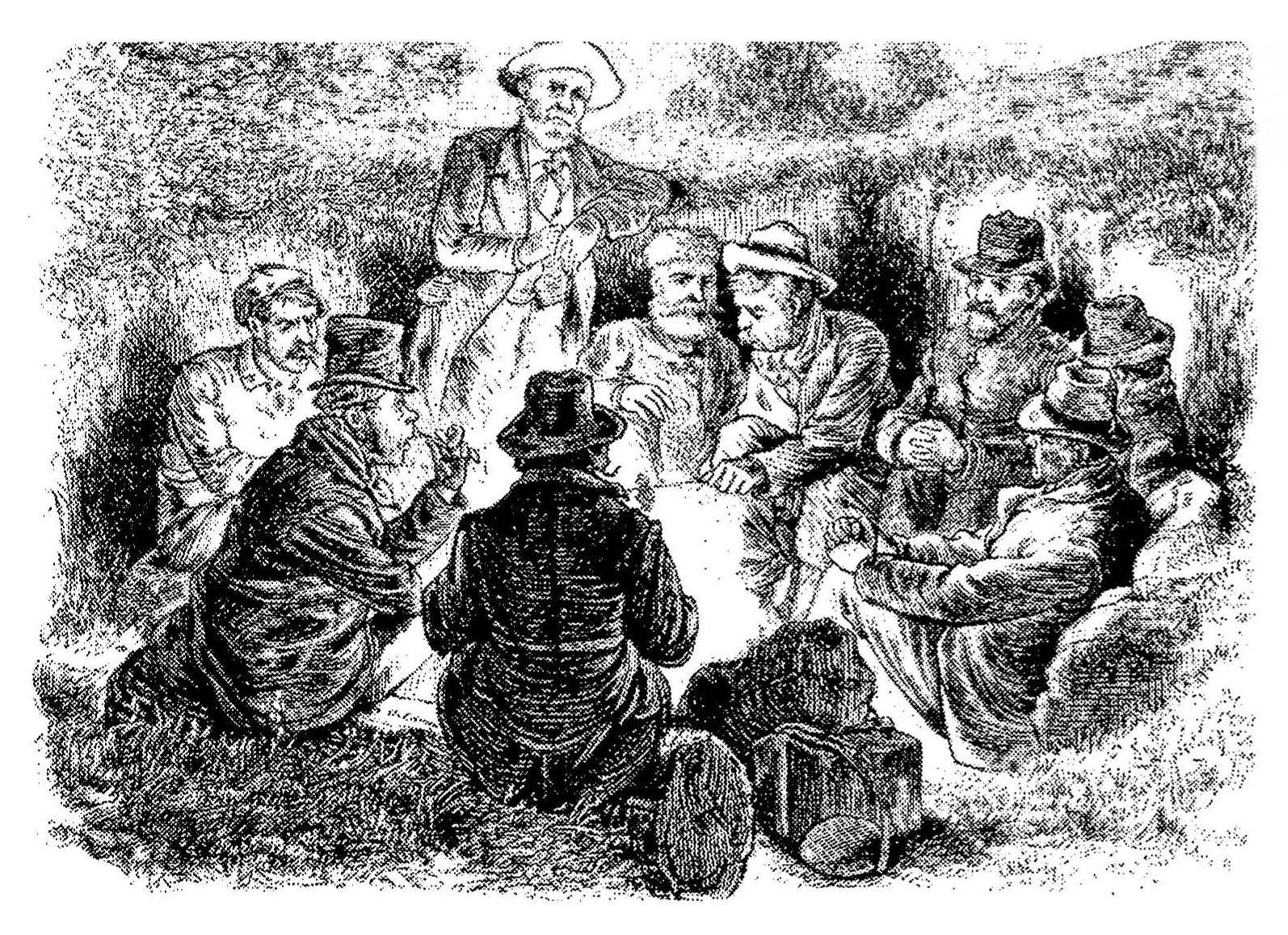
In 1897 Isabella Alden wrote about the life of a tramp in her book, As In A Mirror. In doing so, she described a true cultural phenomenon. After the American Civil War, tramp life ranged across the nation, especially in the western states where winters were mild and the living was easy. In particular, California was a tramp’s paradise where a man could sleep free under the stars at night and pluck his breakfast from an orange tree in the morning. In some ways, tramps enjoyed a unique popularity similar to the cowboy; both emerged in the public mind as stereotypes of carefree, rough-and-tumble adventurers who embodied the American spirit.
But by the 1880s the tramp’s image began to fade and society began to see tramps more as lazy thieves. Tramps who dared to beg for a meal or a place to sleep often received an answer in the form of a double-barreled shotgun pointed their direction. Some towns passed laws prohibiting tramps from entering their borders, and there are stories of police officers standing by while townspeople stoned tramps gauntlet-style as they ran them out of town.
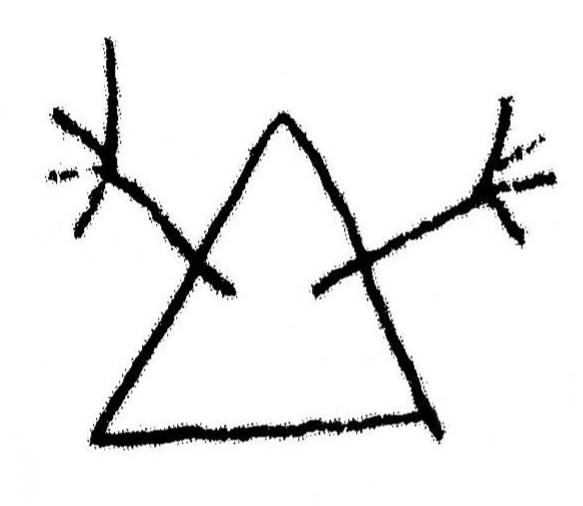
As a result, tramps developed a method of communicating to each other whether a particular town or home was friendly to tramps. They chalked crude symbols on barns, fence posts and water tanks so the tramps who came after them knew what to expect.
Here’s how Isabella Alden described the practice in her novel, As In A Mirror. The book’s hero, John Stuart King, disguised as a tramp, encountered a woman who was openly fearful of him. As he tried to understand the woman’s reaction, he met a real tramp for the first time.
For a full hour his sympathies were entirely on the side of the tramp. Then he met one so repulsive in appearance that he instantly justified the woman who had been afraid of him. It was a new experience to be accosted as he was:
“Any luck that way, pal?” nodding in the direction from which he had come.
“I haven’t found any work yet, if that is what you mean,” spoken in the tone that in his former grade of life would have been called cold.
The man gave a disagreeable sneer. “Oh, that’s your dodge, is it?” he said. “I can tell you I’ve had worse trials in life than not finding work. Did you spot any of the houses?”
“Did I what?”
“Mark the houses where they treated you decent, and gave you coffee, or lemonade, or something? You must be a green one! Don’t you carry no chalk nor nothin’ with you to mark the places? Then you’re a hard-hearted wretch. If you can’t do so much for your fellow tramps as that, you ought to go to the lockup.”
The healthy, clean young man found himself shrinking from this specimen with a kind of loathing. Would it be possible for him to fraternize with such as he, even to study human nature?
Here are a few samples of the symbols tramps used to indicate whether fellow-tramps could expect to receive a sandwich or a spray of bird shot at a particular home or town:
In the late 19th and early 20th Centuries, there were very few trusted commercial medicines to alleviate cold symptoms. People often relied on folk remedies and home-made treatments to cure a variety of illnesses and injuries.
A scene in Jessie Wells illustrates the point. Jessie and her best friend, Mate are sitting outside on the porch one evening when Jessie’s father comes home from work.
Dr. Wells came up the walk at this moment, and the two girls arose to give him passage.
“You are two very sensible young ladies, staying out in all this dew, with your thin dresses,” he said, as he passed them. “Tomorrow you’ll be taking molasses and ginger by the quart.”
“No, indeed, Doctor,” laughed Mate,” I never take any horrid doses like that.”
Horrid doses indeed! The molasses and ginger cure for a sore throat was fairly common, and it sounds like Dr. Wells believed in its curative powers. In actual fact, the ginger tended to suppress coughing and the molasses soothed the throat.
Another home remedy for colds was a mixture of molasses and a few drops of kerosene in a glass of water. As questionable this home cure may sound, it was one of the few cold remedies that didn’t contain alcohol.
Mrs. Beeton’s Book of Household Management (the 1861 authority on running the home) suggested an “infallible” cure for a cold, which included rum in its ingredients:
Put a large teacupful of linseed, with 1/4 lb. of sun raisins and 2 oz. of stick liquorice, into 2 quarts of soft water, and let it simmer over a slow fire till reduced to one quart. Add to it 1/4 lb of pounded sugar-candy, a tablespoonful of old rum, and a tablespoonful of the best white-wine vinegar or lemon-juice.
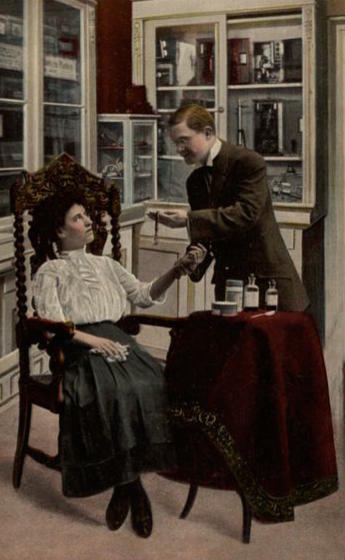
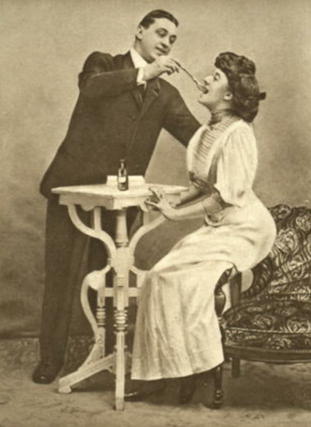
.Commercial medicines also included alcohol. Bitgood’s Original Compound Vegetable Syrup boasted it could cure the common cold, as well as a host of other ailments. The manufacturer was one of the few who revealed that their product contained alcohol, although the ad doesn’t state how much alcohol was actually in the mixture.
The majority of commercial medicines did not disclose the alcohol content in their products.
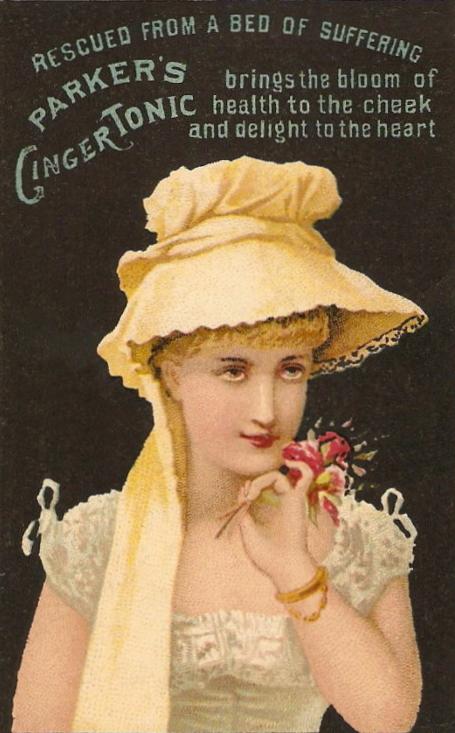
This lovely trade card advertises a ginger cure that sounds just like the kind mothers everywhere mixed up with molasses in their kitchens. The product description on the back of the card touts the benefits of the medicine, but doesn’t list the actual ingredients.
Too bad; because, in actual fact, Parker’s Ginger Tonic was 41.6% alcohol—more potent than 80 proof whiskey! Compare that to the average alcoholic content of today’s beer (5% alcohol) and wine (approximately 12% alcohol).
It was the rule, rather than the exception, that consumers had no idea that they were dosing family members with alcoholic products; and since many alcohol-laden medicines of the time were specifically marketed to children, mothers often unwittingly gave their little ones rum and whiskey.
Little wonder, then, that Isabella Alden often wrote about the dangers of alcohol consumption. At the time her books were written, people usually didn’t know they were consuming alcohol and often didn’t recognize their growing dependence until it was potentially too late.
In Twenty Minutes Late, Caroline Bryant’s mother supported the family by working in a canning factory during the growing season. In the winter she earned her money by sewing and taught Caroline to sew fine stitches by hand.
During Caroline’s stay with Dr. Forsythe’s family, she makes friends with Mrs. Packard, the housekeeper. One day Caroline watches Mrs. Packard use a sewing machine and wishes (with a heart-felt sigh) that she could buy a sewing machine for her mother so she can ease her mother’s burden.
Watchful Mrs. Packard, who had become a good friend to Caroline, heard the sigh. “Does your mother sew on a machine?” she asked.
“No, ma’am,” said Caroline, with a slight laugh, “not very often. When she goes to Mrs. Hammond’s to sew, and to one or two other places where they have machines, she does; and this is the kind they have, and she likes it ever so much; but at home she sews by hand.”
“My land!” said Mrs. Packard, “I should think that would be hard work. She can’t accomplish very much sewing, it appears to me.”
“She does,” said Caroline firmly, “accomplish ever so much sewing. She sews hard all winter long; makes dresses and shirts and underclothing, and all sorts of things for people, taking every stitch by hand.”
“For the land’s sake!” said Mrs. Packard, “what in the world does she do it for? Nobody does that any more.”
Caroline laughed a little sorrowfully. “She does it just as we do a good many things, Mrs. Packard, because she has to; she hasn’t any machine of her own, and we children haven’t got old enough yet to buy her one; but we are going to some day. That is the first thing Ben and I are going to do.”
Mrs. Packard kept her own counsel, and Caroline went away unaware that she had said anything of special interest to anybody.
In 1893, when Twenty Minutes Late was first published, sewing machine sales were booming; and their affordability made it easy for most families to own one. No wonder, then, that Mrs. Packard was astonished that Caroline’s mother supported the family with hand-sewing.
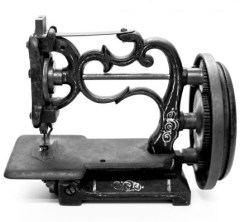
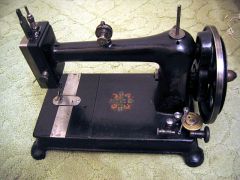
A hand-crank sewing machine manufactured circa 1875.A hand-crank sewing machine sold in the 1890s when Twenty Minutes Late was originally published
.
At the time Twenty Minutes Late was written, sewing machines weren’t new. They’d been on the market for many years, particularly in commercial settings; but it wasn’t until the mid-1800s when they began to be mass-marketed to consumers.
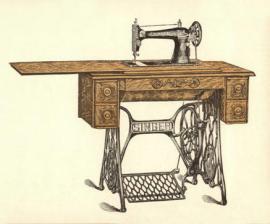
In 1885 The Singer Manufacturing Company began selling sewing machines directly to the public for home use. Early Singer machines featured a foot-operated treadle; and in 1889 Singer introduced an electric sewing machine to consumers.
By the late 19th century, other companies were producing sewing machines for home use, as well; and most companies allowed purchases on credit, making it easier for families to obtain a machine.
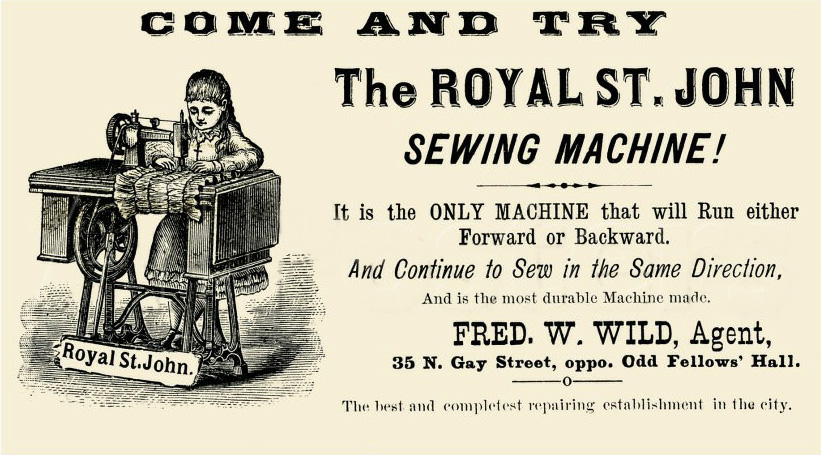
This trade card touts the Royal St. John machine as the only sewing machine that can sew forward or backward:
.
An 1890 painting by Fritz von Uhde shows a dressmaker using an older “turtle back” sewing machine (so named because of the machine’s shape).
.
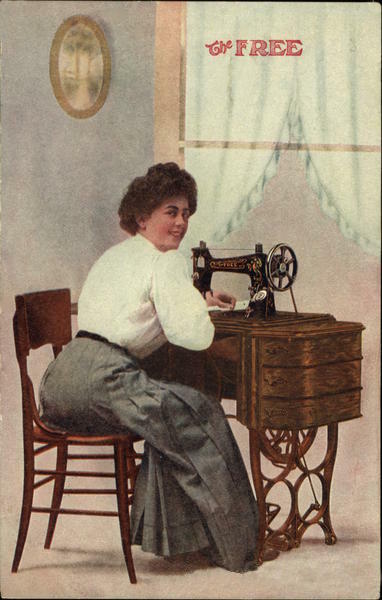
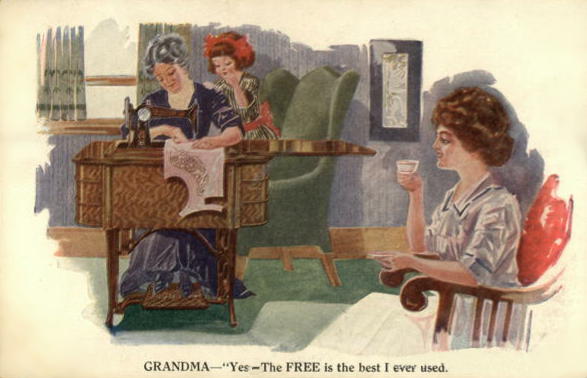
The 1908 advertisements below feature a sewing machine ingeniously marketed under the name “The Free.” The Free sewing machine was distinguished from other machines as “the only insured sewing machine warranted for life.” The company pledged to replace any machine “destroyed or injured” with a brand new machine, without cost.
.
As sewing machines became more readily available, they also became more affordable. This turn-of-the-century advertisement depicts how enjoyable—and leisurely—life can be with a sewing machine in the home.
.
And this 1913 painting by Hans Heysen depicts a sewing machine set up beside a charming, sunny window for use by the lady of the house.
.
Would you like to learn more about sewing machines and the art of sewing during the 1890s and 1900s? Follow these links for more information:
Elias Howe’s Sewing Machine – This article features a comparison of the time it took in the 19th Century to sew various articles of clothing by hand verses machine. Some of the comparisons are astonishing.
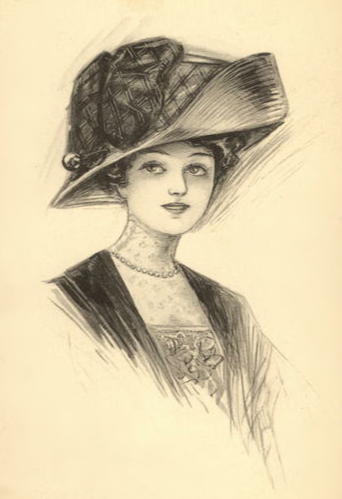
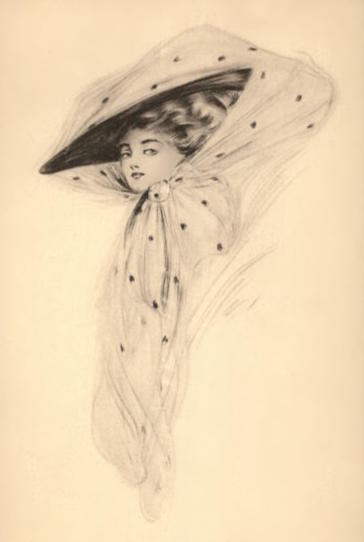
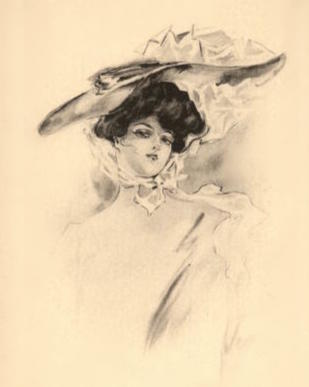
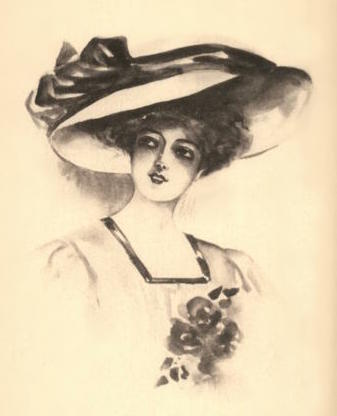
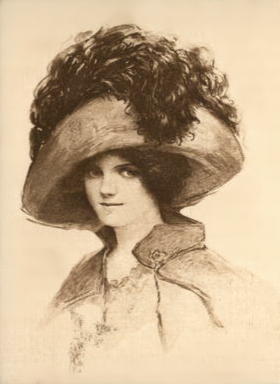
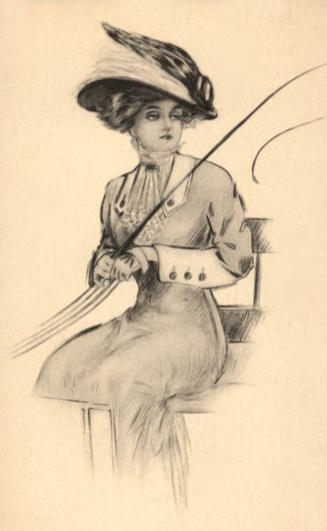
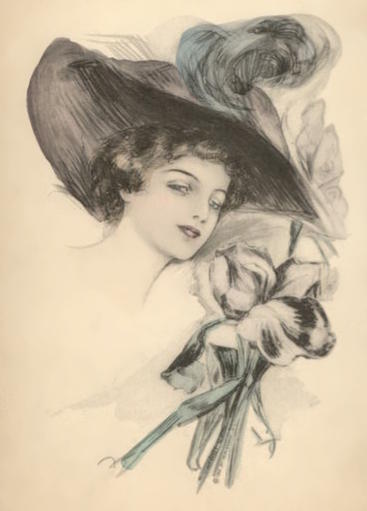
January 17 is National Wear A Hat Day. In honor of the occasion, here are sketches of lovely ladies wearing hats that were popular at the turn of the 20th Century. Now yellowed with age, these black and white drawings were often used in advertisements and on trade cards.
Isabella Alden’s first book was published in 1865 and she continued to publish fiction through the 1920s. Her stories spanned many decades and she saw fashion styles come and go throughout her long life. These stylish hats might have been worn by Isabella’s heroines in her books, Making Fate, Overruled, As In A Mirror, Four Mothers at Chautauqua and Ruth Erskine’s Son, which were all published between 1895 and 1905.
In Miss Dee Dunmore Bryant, little Daisy Bryant knows she won’t receive any Christmas gifts because her family is too poor. As much as Daisy would love to have a new doll of her own, she knows she won’t get one. But certainly, there are more fortunate little girls in the world who will get a new doll for Christmas and, perhaps, if one of those little girls names her new doll after Daisy, it just might take the sting out of a Christmas with no presents.
So Daisy writes a letter to the newspaper, and humbly asks that little girls who receive new dolls on Christmas morning consider naming their new doll Daisy Isabelle Bryant. When the newspaper prints Daisy’s letter, wonderful things begin to happen and soon Daisy has more beautiful new dolls than she knows what to do with.
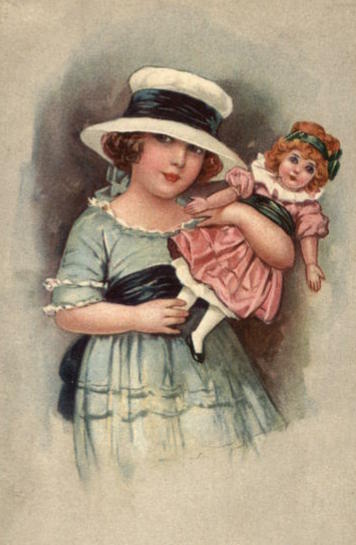
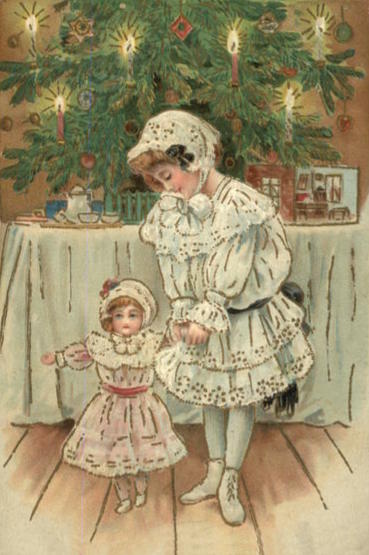
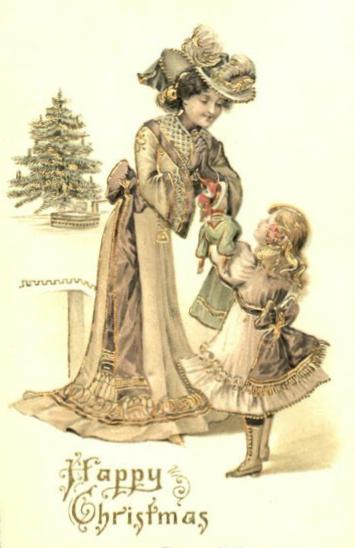
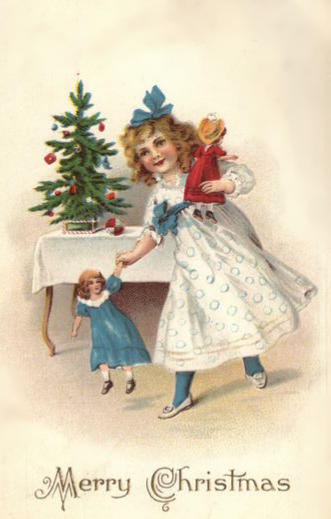
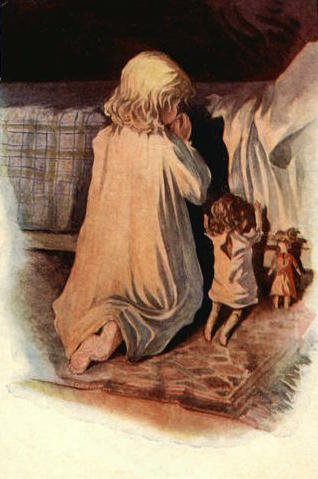
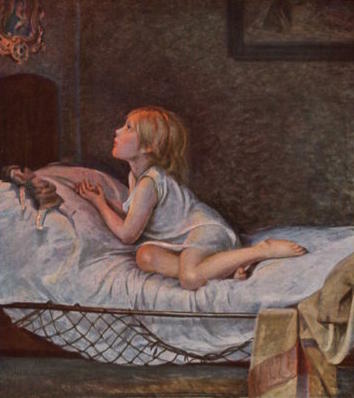
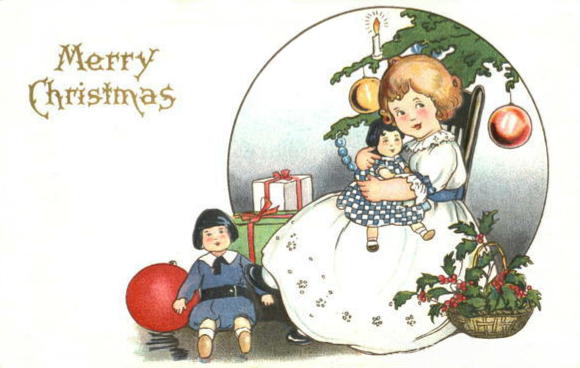
Here is a collection of Victorian-era Christmas cards featuring little girls and their dolls. Perhaps one of these little girls could have been Daisy Bryant.
Reviews and giveaways for Christian fiction and sweet, clean fiction. Bringing readers information on great stories and connecting authors with their readers.