
 “Diligent in business, serving the Lord.” There is no period dividing these. I long ago discovered that I could make a bed and sweep a room for His sake, as surely as I could speak a word for Him.
—A New Graft on the Family Tree
Author: Isabella Alden

New Free Read: Agatha’s Unknown Way
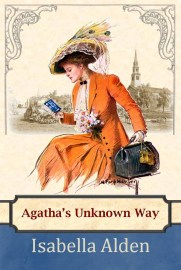 Agatha Hunter is a determined young lady. She’s willing to brave the dangers of the big city in order to realize her dream of attending a church missionary meeting. Imagine meeting other women with the same blessed zeal, the same divine calling to further Christ’s work in foreign lands! Why, a big, splendid church in town must have hundreds of women working together for the Lord’s cause, and Agatha is certain she will find kindred sprits there.
But Agatha’s resolve is soon put to the test as the missionary meeting falls far short of her expectations; and instead of being kindred spirits, the ladies of the missionary society would rather talk about housekeeping than evangelism. Can Agatha plant a seed for Christ in the hearts of these city people?
Click on the book cover to begin reading Isabella Alden’s 1898 short story, Agatha’s Unknown Way right now!
You can find more free reads by Isabella Alden by clicking on the Free Reads tab above.
Share this:

A Tour of Chautauqua: A Healthy Body
In the middle of the 19th Century a new craze began to take hold on American college campuses. The new fad was a revolutionary form of physical exercise called gymnastics.

German in origin, gymnastics spread in popularity and were ultimately integrated into college sports programs. By the end of the century, gymnastics training—as well as the concept of regular exercise for overall health and well-being—made the leap into public consciousness and became a popular concept in the lives of everyday Americans.
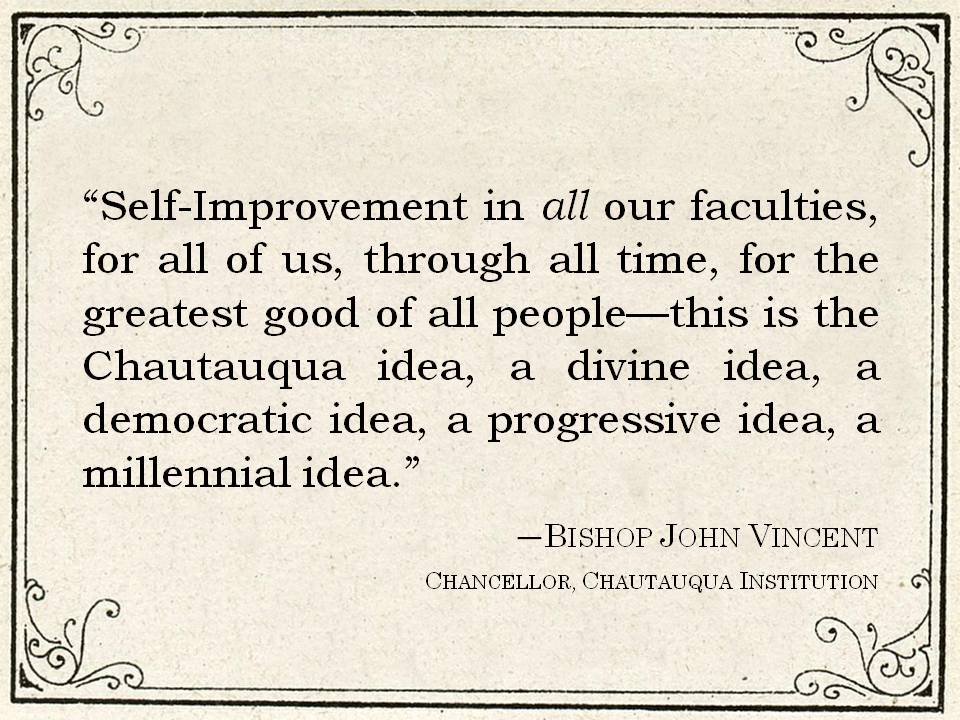
The founders of Chautauqua Institution saw the rise of public interest in physical education and knew the concept had a place at Chautauqua. Bishop John Vincent strongly believed that a healthy body was essential to a healthy mind and soul.
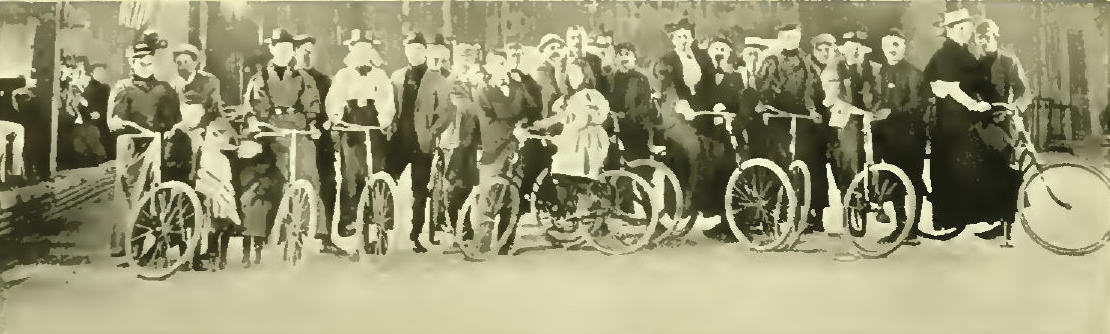
Chautauqua had always offered plenty of exercise for visitors who wanted to be active. There were athletic clubs for men, women and children. Classes were offered in hiking and riding bikes; wrestling and fencing; swimming, diving, hurdle-jumping and golf.

Even their courses on gardening and horticulture emphasized the mental and physical benefits of growing orchard and garden crops.
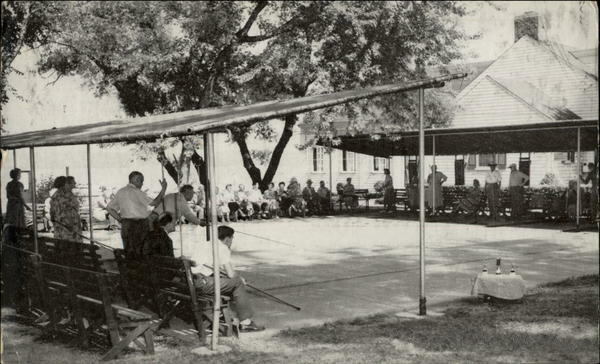
With the nation’s growing interest in fitness and outdoor sports came an increased demand for trained teachers of athletics. Chautauqua Institution answered the call by establishing the Chautauqua School of Physical Education. The school focused on preparing teachers for placement at schools, universities, Young Men’s Christian Associations, and athletic clubs; and they were the first to give certificates to teachers in physical education.

As usual, Chautauqua Institution offered the best instruction that could be furnished in several lines of athletics.
And, as always, Chautauqua assembled the country’s premier instructors for each area of specialty. Here, for instance, is a roster of the faculty during the summer of 1903:
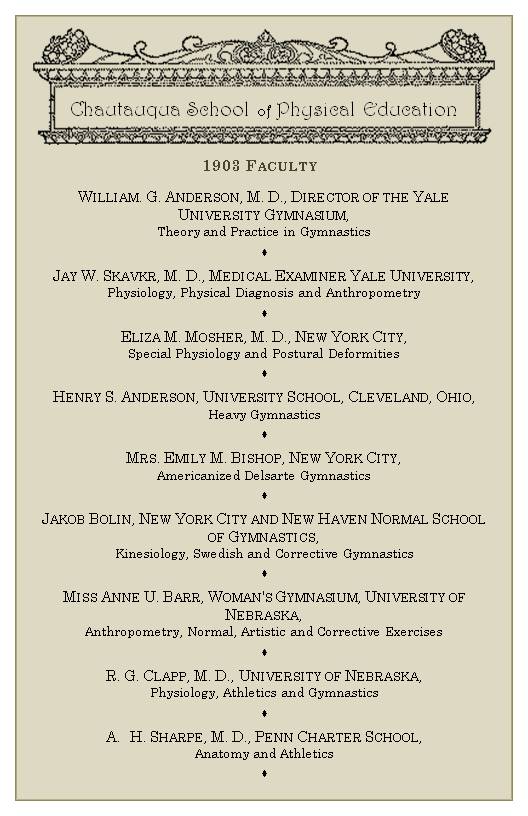
Between 1886 (when the school was founded) and 1904 the school trained an estimated 1,200 to 1,500 physical education teachers from across the United States. In addition to the Normal Course, the school offered classes “suited to the needs of men, women, misses, boys and children.”

In other words, summer visitors to Chautauqua had ample opportunity to learn track and field, gymnastics, and virtually every other athletic technique from the country’s best instructors, assembled in one place.
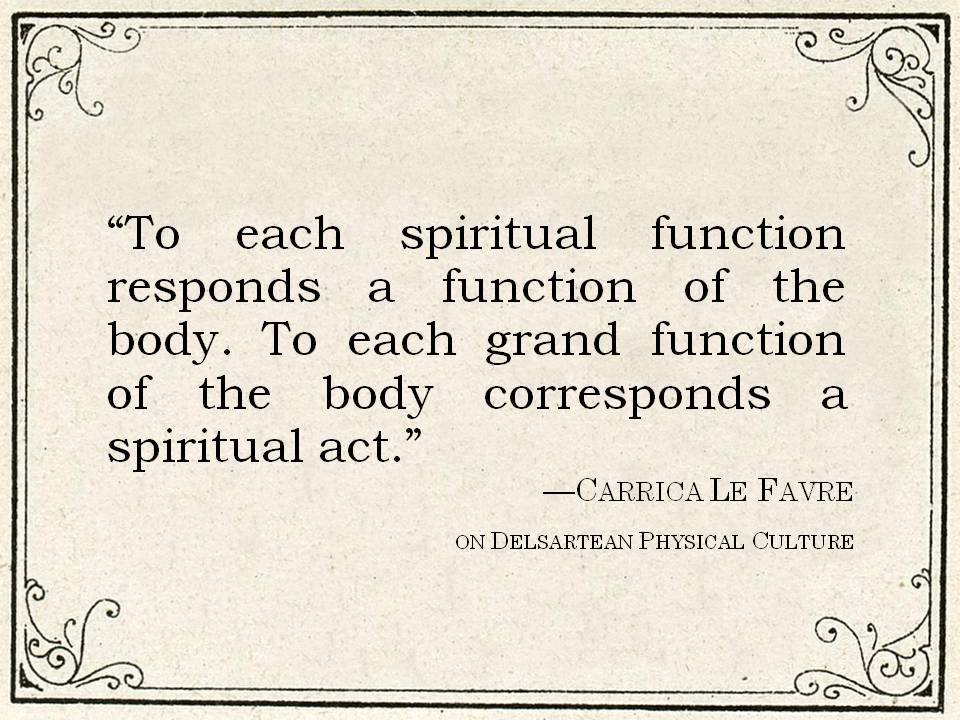
A unique aspect of the physical education training offered at Chautauqua was the melding of three different physical education systems.
- The German gymnastics system was based on strenuous exercise performed on equipment such as pommel horses, parallel bars, climbing walls and rope mechanisms.
- The Swedish gymnastics system focused on calisthenics, stretching and breathing.
- And the Delsartean system integrated lighted physical exercise with artistic movement and relaxation techniques. The system was named for Francois Delsarte, who devoted his life to studying the laws of human motion, gesture and expression.
Together these three systems formed the school of physical culture. As students learned to master the different techniques, they often exhibited their skills in the Chautauqua Amphitheater.


The Physical Culture exhibitions were extremely popular as a form of entertainment for summer Chautauquans. At the time, most people had never before seen athletes displaying skills with light devices such as dumb-bells, rings, poles, and Indian Clubs. As a source of entertainment, these displays were something of a phenomenon.

But athletes didn’t demonstrate strength and skill alone. The Delsartean system stressed beauty of movement. Under Delsartean teaching it wasn’t enough for students to simply lift a dumb-bell in front of an audience; they learned to lift dumb-bells in prescribed forms that created pleasing compositions, all accompanied to appropriate music.
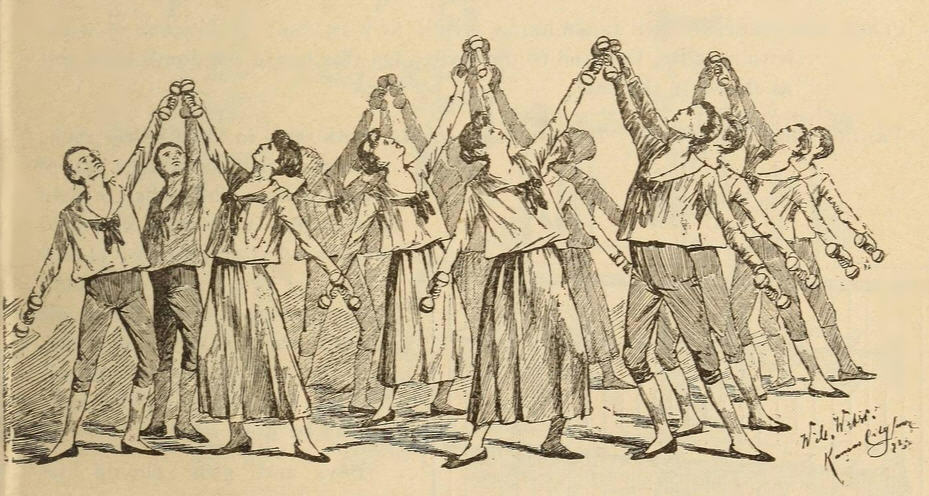

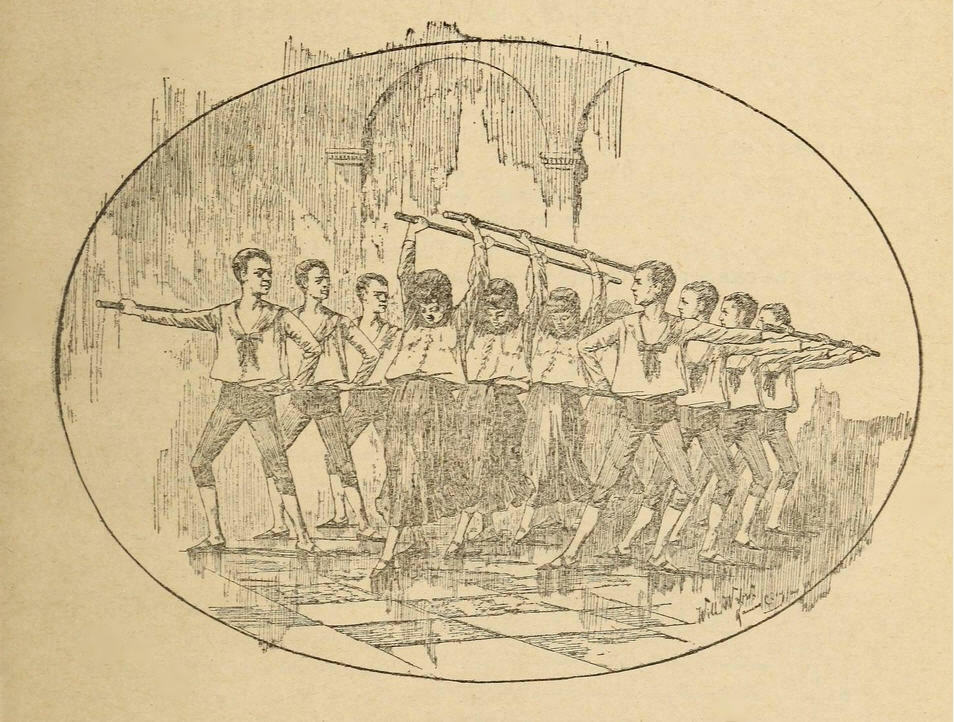
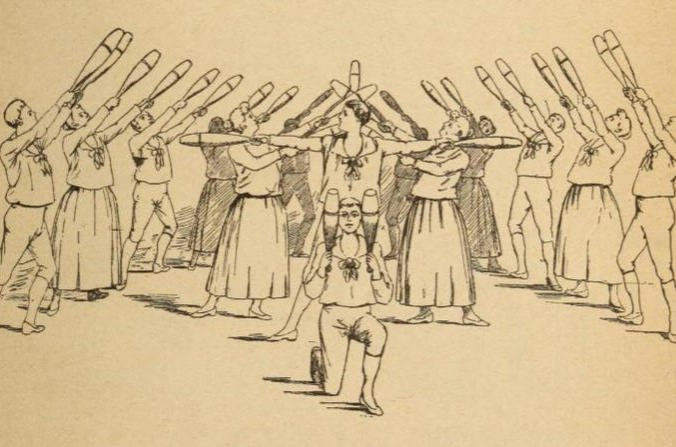
Perhaps the most popular portion of the program was the display of mastery of Indian Clubs. Indian Clubs looked something like modern-day bowling pins. They were often hollow with removable tops so sand or other substances could be inserted to give them weight. By swinging the clubs according to Delsartean rhythms and movements, men, women and children got an effective upper body workout.
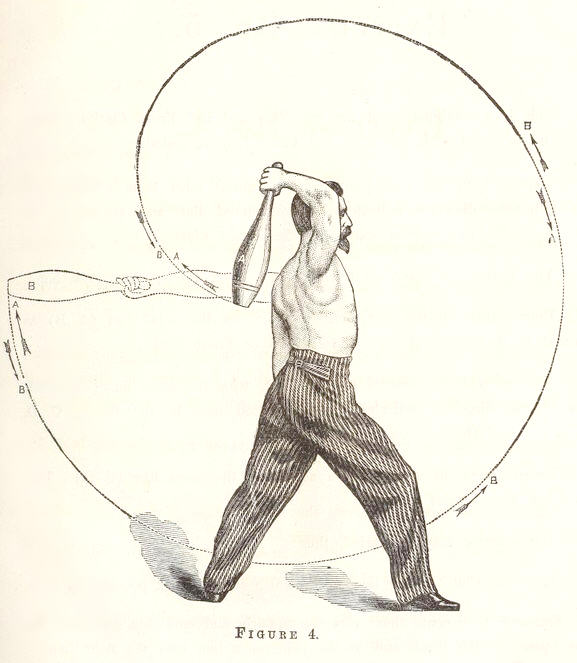

Isabella Alden wrote about a public performance of Indian Clubs in her short story “Agatha’s Unknown Way.” She described the exhibition as “fancy club-swinging.”
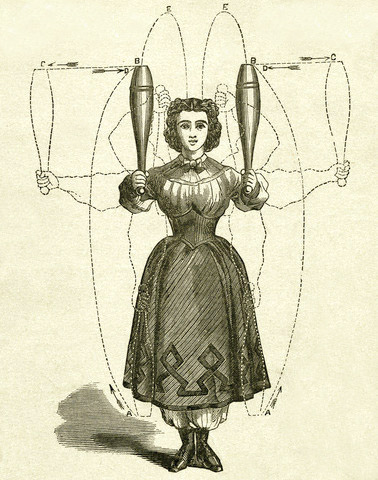
Demonstrations like the one Isabella described were extremely popular and drew large audiences, which is exactly what happened in “Agatha’s Unknown Way.”

In the story, the solo performer was a woman, which would have been very unusual at the time, and she certainly would have drawn a crowd. She also probably stimulated audience members to try exercising with Indian Clubs themselves.

It would have been easy enough to learn how. By the turn of the century over 20 different best-selling books had been published on Delsartean techniques. People bought the instruction books and used them to practice the system of movement and exercise in the privacy of their own homes.
Other exercise-at-home books sold well, too, such as this Ladies’ Home Calisthenics book published in 1890.

In this book, push-ups, weight lifting, and club swinging exercises were modified for women in consideration of the restrictions on their movements caused by their corsets.


Women were expected to wear their corsets at all times, even while exercising; but at least one corset manufacturer, spotting the new exercise trend, advertised that women wearing their corset could “perform in comfort any exercise of physical culture.”
. . . . . . . . . .

The physical culture movement wasn’t just about lifting weights and swinging clubs. The Delsartean system had at its core a principle of movement based on art, relaxation, balance and the natural flow of breath. Over time, the Delsartean system expanded to address areas of “self-expression.” For example, some public speaking classes at Chautauqua adopted the breathing and relaxation techniques designed by Delsarte, as did courses on deportment and “self-expression.”

In Four Mothers at Chautauqua Isabella Alden wrote about a Chautauqua class on relaxation that was founded on Delsarte’s principles. Grumpy Mrs. Bradford learned about the relaxation techniques after her daughter Isabel showed her a brochure about the class.
“‘Exercise that rests.’ I wonder what kind it can be? I’m sure I have exercise enough, but I must say I don’t feel especially rested. Why in the world do you want me to go and look on at those idiots twisting their bodies into all sorts of shapes? Look at this one trying to reach her toes without tipping over! I must say I have no patience with women who make fools of themselves taking such exercises. It is bad enough for silly girls to waste their time and money in that way.”
However, she had turned from her doorway and was allowing the eager Isabel to pilot her down the avenue toward the “School of Expression.” She continued to read, as she walked, and to make comments. “‘It is not the work we do, but the energy we waste when not working that exhausts us.’ Humph, much she knows about it! I never waste any energy.”
Yet perhaps there was never a woman who wasted more than did Mrs. Bradford. The trouble with her, as with many another, was that she did not know herself.
She read on: “‘Learn to relax, to let go—physically and mentally—to untie the fuss and worry knots.’ Yes, I wonder how? It’s easy enough to talk!” But the tone was less scornful; there was even a touch of wistfulness in it.
Isabel caught at the wistful tone and answered it.
“You wait, Mother, she will tell you how. She says she has been doing it a good many years, and has rested more tired women than she can count.”
And it was a fact that as soon as the teacher began to talk, to explain, to answer with ready comprehension and sympathy the volley of questions poured at her, to move that supple body of hers that seemed to have no more weight in it than a cork, and did her instant bidding with an unfailing ease and grace, Mrs. Bradford discovered what every member of the large class had done: that here was one body that was a willing servant, instead of a tyrant demanding from the jaded spirit impossibilities.
“You want to learn how to get a good healthy ‘tired,’ that will make rest a joy, and work that follows it a pleasure;” she said brightly, as if that was a very ordinary lesson easily mastered.
Mrs. Bradford, from listening with an air of endurance as one who had been smuggled in against her will, grew interested, grew absorbed in the genial flow of talk that was not a lecture nor a lesson, and yet was distinctly both. When she came to herself, and found herself standing with the others trying to reach her toes without tipping over—the precise effort that she had so sharply criticized—she did not know whether to be ashamed, and indignant at somebody, or to laugh. But fun got the upper hand, and she joined in the hearty laugh that was going the rounds at the expense of them all. After that, she forgot that it was a class, and a lesson, and that she was a middle-aged woman with dignity to sustain. For a full half hour she did that excellent thing for such women as she: forgot Mrs. Bradford entirely.
Mrs. Bradford laughed outright, a merry laugh such as she had not in years relaxed sufficiently to give. The comic side of this strange morning was getting possession of her.
Next stop of our tour of Chautauqua: The Teacher’s Retreat
* * * * *
Click here to read more about Four Mothers at Chautauqua.
.
 You can read “Agatha’s Unknown Way” for free! Click on the book cover to read Isabella Alden’s short story now.
.
You can learn more about the Delsartean system of Physical Culture by following these links:
Read about “the Philosophy of Rest” in an article that appeared in the August 1895 edition of The Chautauquan
Delsartean Physical Culture, by Carrica Le Favre (1892), available on Google Books.
.
Other sources from the period:
Physical Culture, by E. B. Houghton (1891)
Physical Culture, by Benjamin Franklin Johns (1900)
A Delsartean Scrapbook, by Frederic Sanburn (1890)
Gestures and Attitudes; an Exposition of the Delsarte Philosophy of Expression, by Edward Barrett Warman (1892)
Share this:

Helen’s Alexandre Gloves
 Helen Randolph loved the finer things in life. She measured almost every important life event—from her mother’s funeral, to the eligibility of the suitors who courted her—by the cost of the clothes she wore at the time. Throughout the book Household Puzzles, Helen’s material-girl-grade spending habits played a major part in her family’s descent into poverty.
For example, at her mother’s funeral, Helen’s eye for fashion detail required that she and her sisters dress in a way that was “very neat and plain and appropriate.” Isabella Alden believed that to be very neat and plain and appropriate at funerals means to pay somebody a good deal of money. She wrote that Helen and her three sisters “were shrouded in long crape veils, and about the details of their dress everything was appropriate also, from the perfect-fitting Alexandre kids to the wide black bordered cambric handkerchiefs.”
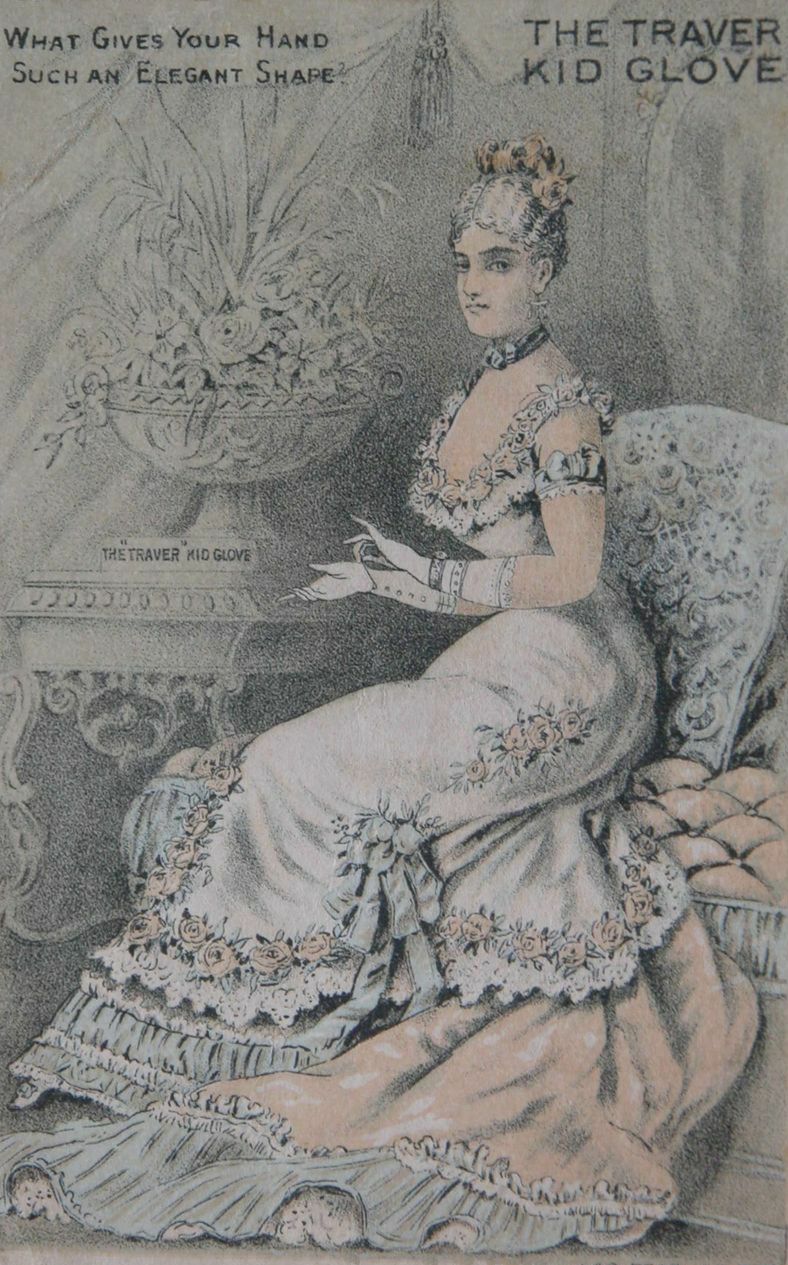
The only problem was the family couldn’t afford the veils or the gloves. Helen’s insistence that they buy the items on credit anyway—knowing they could never repay the debt—reveals a lot about her character. And the fact that Helen got her way also shows the weakness of her family in standing up to her, because, in the end, Helen and her sisters wore the Alexandre Kid Gloves.

Alexandre Kid Gloves were no ordinary gloves. They were manufactured in the Grenoble region of France, an area that was home to the world’s finest glove-makers. Yet above all its competition, Alexandre Kid Gloves enjoyed a reputation for exceptional quality and fit.

Alexandre kids were celebrated as the finest French-made gloves available, and they were hard to come by. In the late eighteenth century, only one American importing firm had exclusive rights to sell Alexandre gloves in America, which added to the merchandise’s cache.

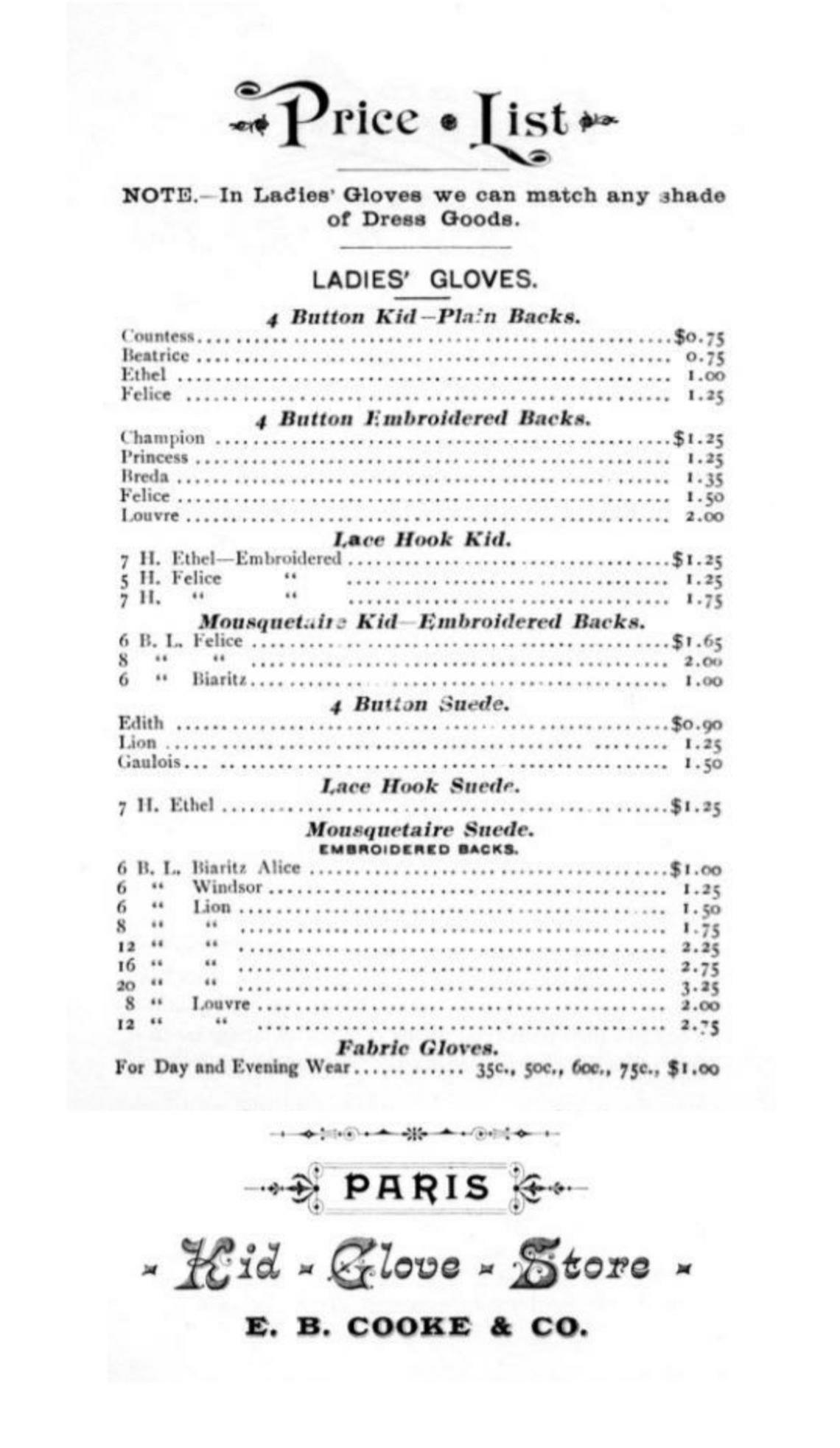
By nineteenth century standards, Alexandre gloves were quite expensive. While the average pair of American-made ladies’ kid gloves cost about $1.00 (as illustrated by this retailer’s price list), Alexandre gloves cost three or four times that amount.
At the time Household Puzzles was published in 1875, the average urban family income was about $700 a year (or $58 a month); of that amount, two-thirds was spent on food and heating, leaving just $19 a month for housing, clothing, medical care, entertainment, and saving for old age.

The Randolph family’s income was far below that of the average family. Yet Helen schemed and planned in order to buy the gloves. She even reasoned that if three pairs of American-made gloves cost $6.75, it was still a better deal to buy one pair of Alexandre gloves for $3.75. It just made sense to her.
She may have learned about the cost of Alexandre gloves from her suitor, Horace Munroe, who was a merchant of “highly cultivated taste” who stocked gloves and ribbons and merinos and muslins in endless variety.

Horace himself wore Alexandre kids, “of a pale stone color” on the day he proposed marriage to Helen. Colored gloves were quite fashionable (except for evening wear). Fashion magazines like The Delineator, Metropolitan, The Muncy, and Holland’s kept ladies and gentlemen abreast of the newest colors and styles of gloves to be worn in the coming months.




Gloves weren’t just an accessory for men and women; they were essential articles of clothing. Ladies never left their homes during the day without their gloves. They wore them constantly while in public and didn’t remove them until they returned to the privacy of their own homes. Even while drinking tea or eating a meal, ladies kept their gloves on; they simply unfastened some buttons at their wrists in order to slip the fingers of their gloves off.

Gloves were also essential for evening and at the end of the nineteenth century, white kids were absolutely required for evening occasions for both men and women.
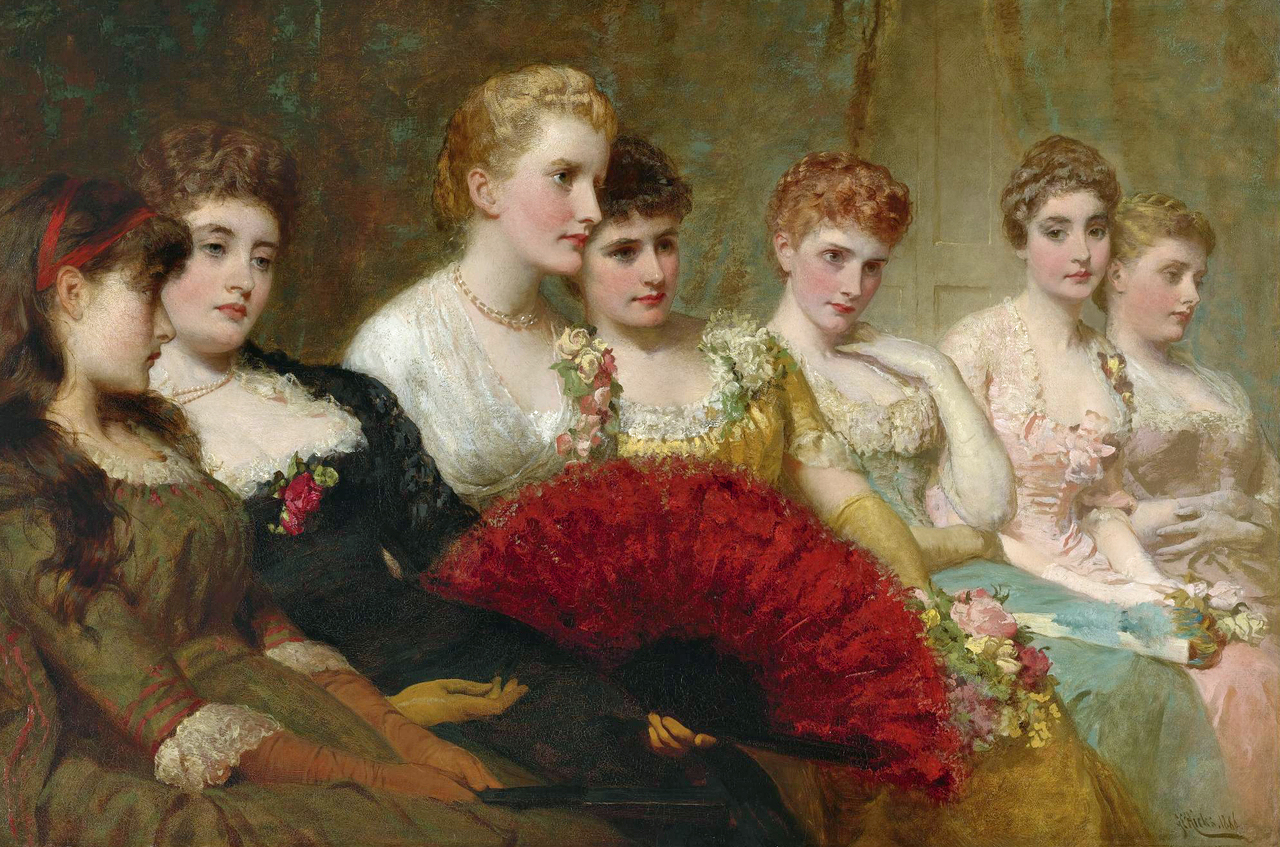
It’s not surprising, then, that white kid-skin gloves were often bought by the dozens, rather than by the individual pair, in order to ensure a supply of clean and pristine gloves for all occasions. With those quantities in mind, only wealthy individuals could afford to wear exceptional glove brands on a daily basis.
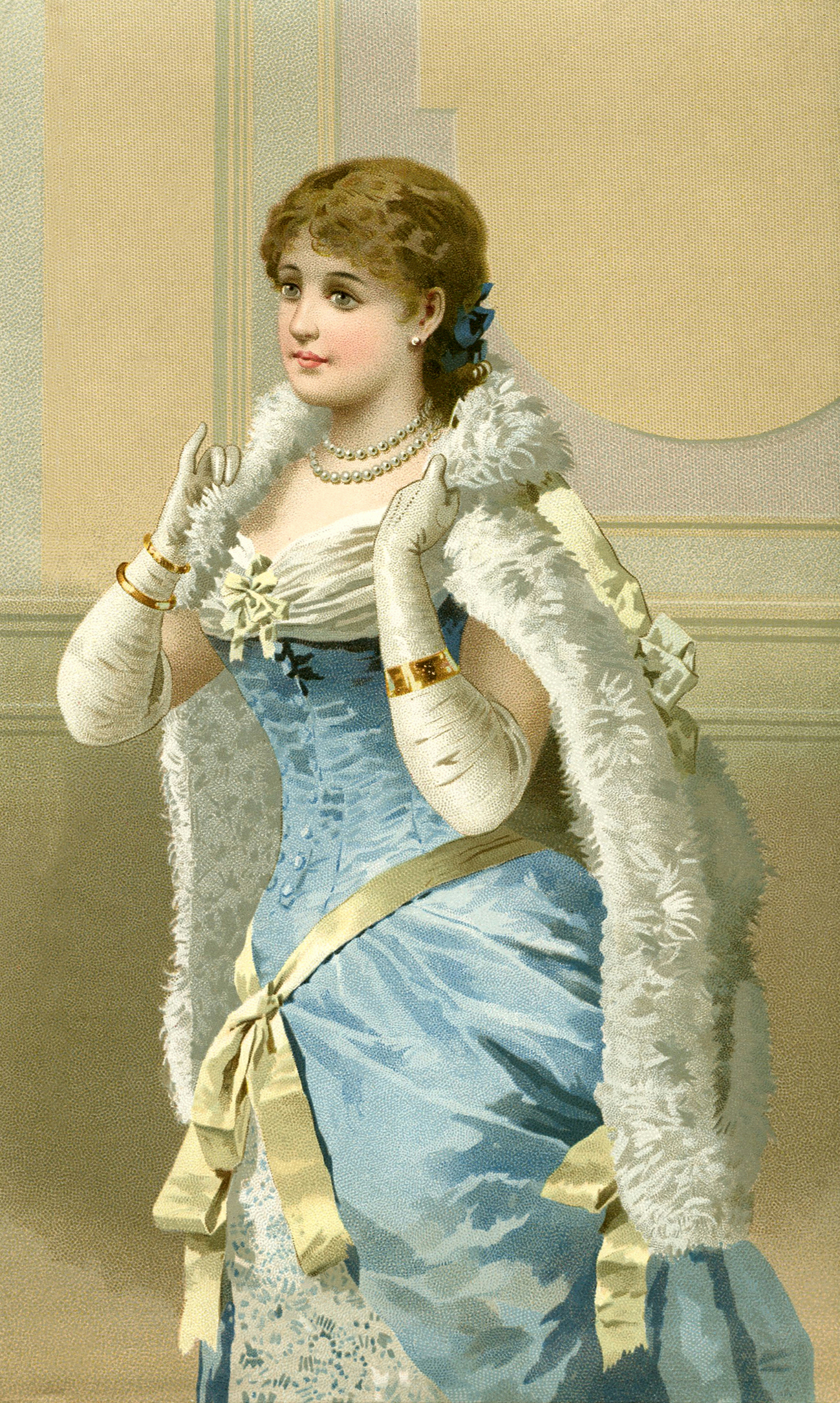
Many style-conscious women tried to pass their American-made kid gloves off as French-made Alexandres. And some unscrupulous retailers marketed lesser-quality kid gloves using the name “Alexandre.”
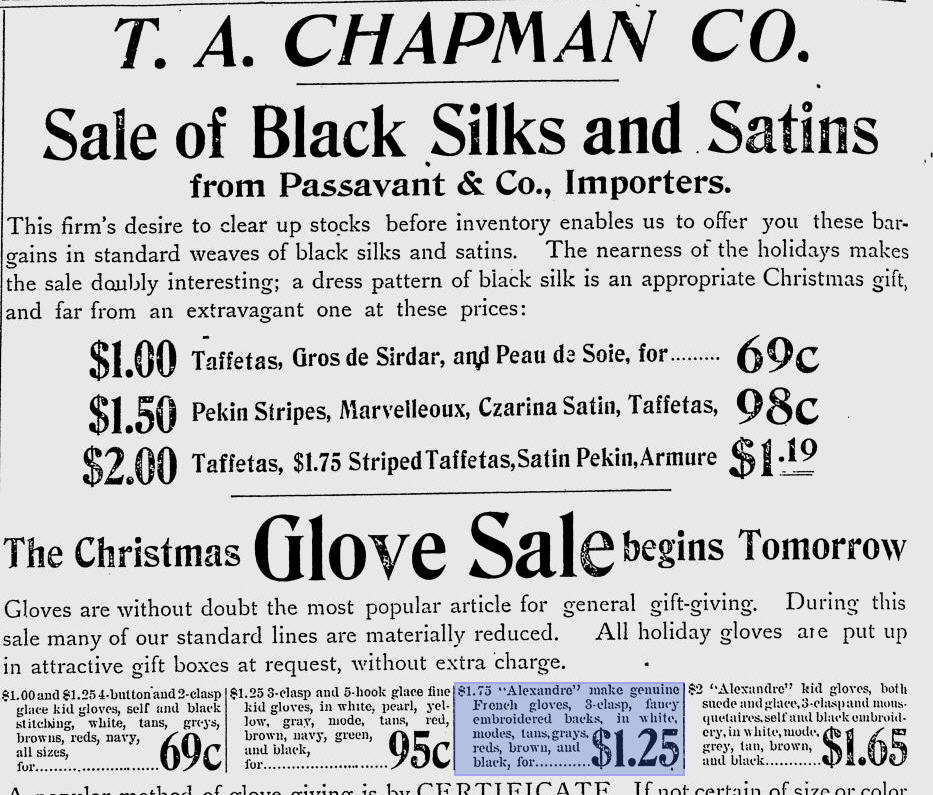
In fact, the exclusive importer for Alexandre gloves (A. T. Stewart) was constantly battling look-alike and knock-off merchandisers; and on several occasions, took out ads warning the public about imposters:

All Alexandre merchandise was marked with the company’s distinctive logo. On gloves, the mark was stamped on the inside of the glove near the wrist:

Gentlemen and ladies who owned Alexandre gloves took care to ensure the label was visible when they unfastened their gloves at the wrist. And if the weather allowed, some women were known to carry one of their Alexandre gloves (in a way that the brand logo was visible, of course) while hiding their gloveless hand in a muff.

In the end, Helen got her pair of Alexandre Kid Gloves and she accepted Horace’s marriage proposal; but whether she found happiness with either remained to be seen.

Share this:

Quotable
 Someone wise in soul lore has said, “What Christ is to us depends upon what we are willing to be to Him.”
—By Way of the Wilderness
Share this:

Tidies in Every Home
An essential accessory in every well-managed home in the late 19th Century was the tidy. A tidy was a piece of cloth used to protect furniture. Tidies were draped over the backs of chairs or placed on the flat tops of tables, dressers, or chests of drawers.

Today we’d call them doilies or antimacassars. Depending on the household and a family’s means, tidies could be very simple and plain or elaborately decorated creations of silk, velvet, or other costly materials.
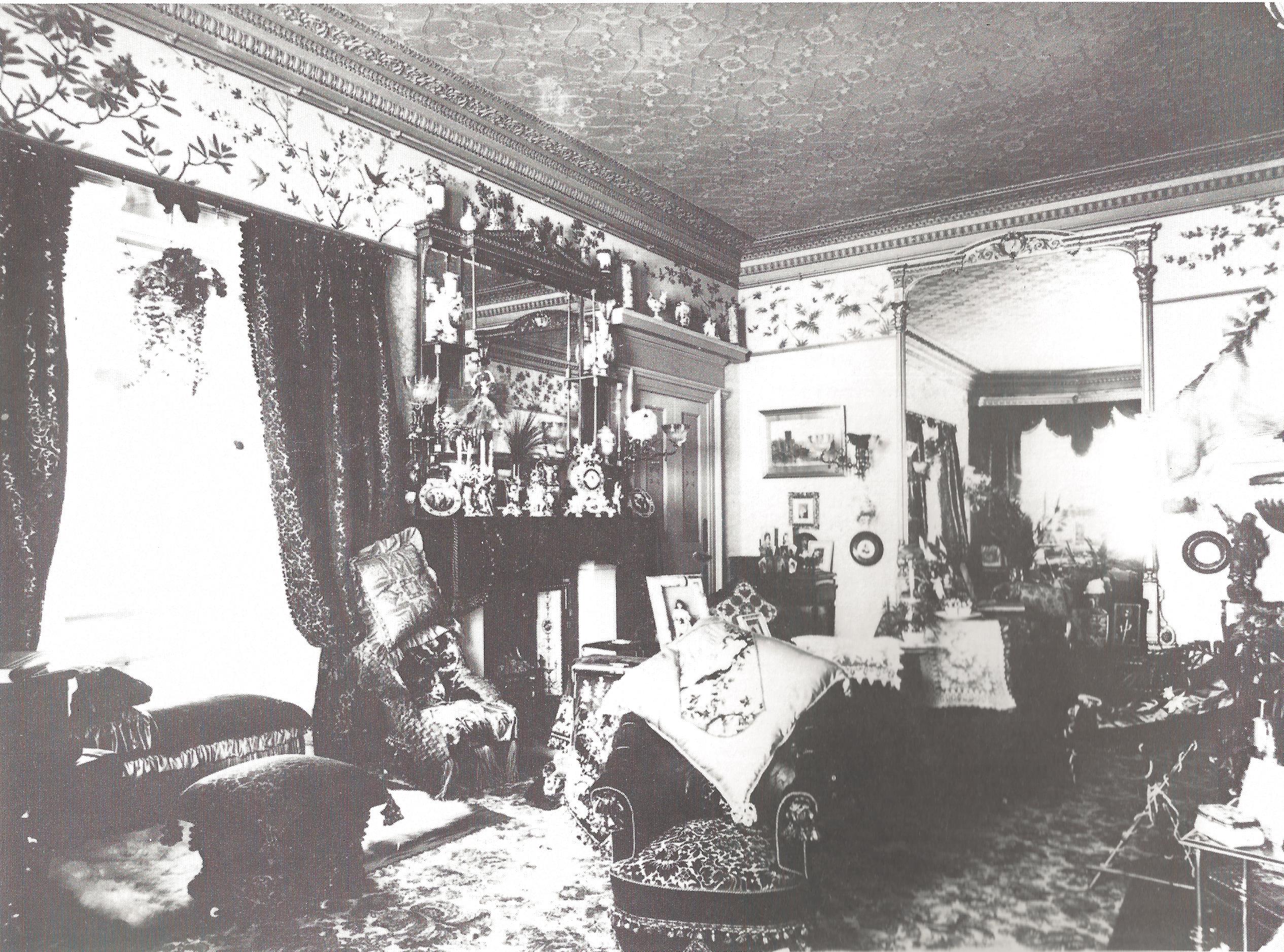
Tidies weren’t just decorative; they served a very useful purpose. Without tidies, upholstered furniture would have been ruined at an alarming rate by the grooming products people used.

At the time, men, women and children used hair dressings of various kinds on a daily basis. Unfortunately, hygiene habits were different then and people didn’t wash the dressings from their hair with the same frequency. Housekeepers draped tidies over the backs of chairs and sofas to keep all that hair oil and cream from rubbing off on the furniture.
Like today, there were hair products for every need. For ladies, Ayers Hair Vigor offered delicately perfumed hair dressings.


Rowlands’ Macassar Oil (from which we get the word, antimacassar) advertised its product as a pure oil that prevented grey hair.

There was Mellier’s Hair Dressing, made with quinine, which the manufacturer claimed relieved dandruff, itching or irritated scalp.

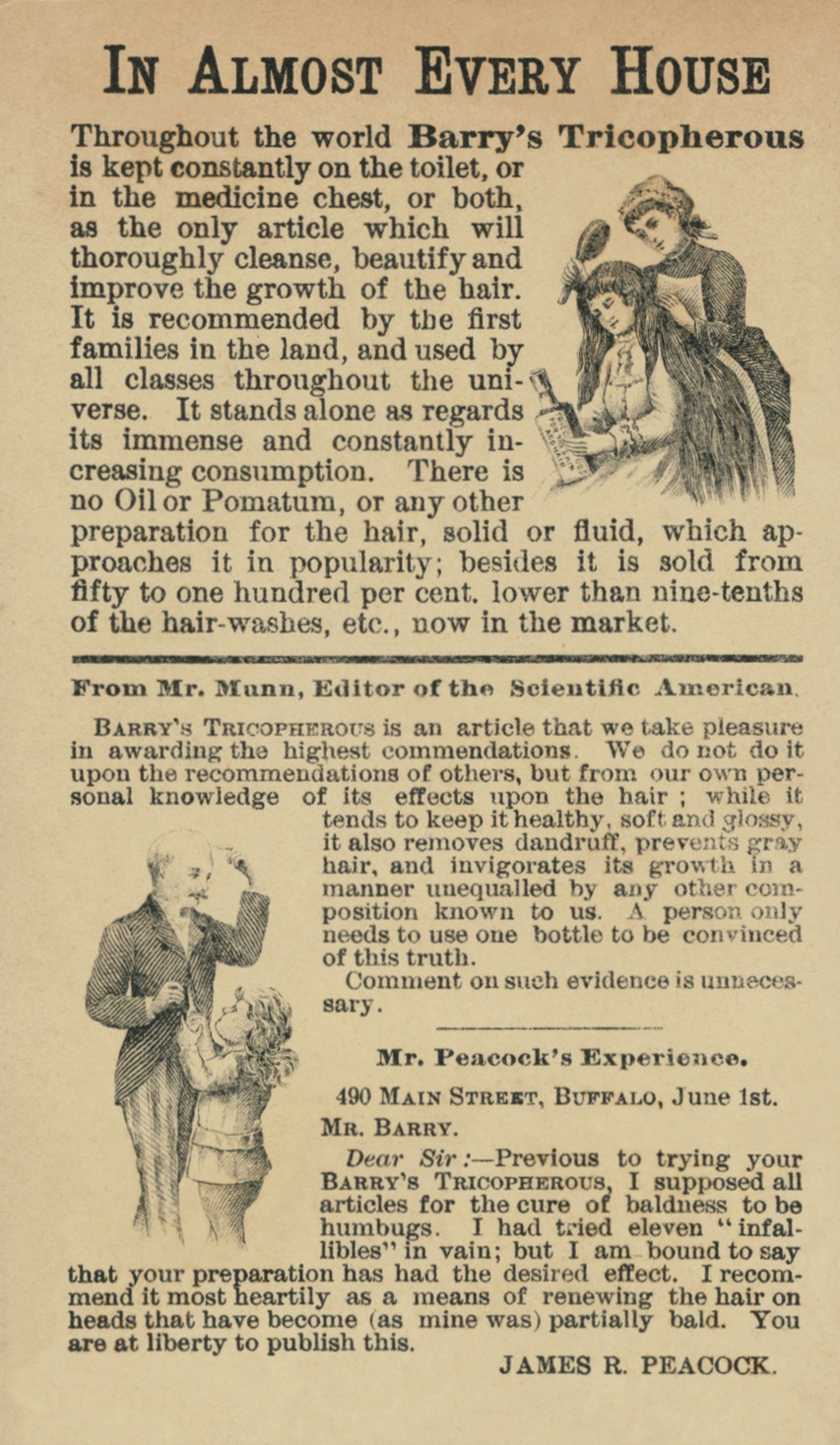
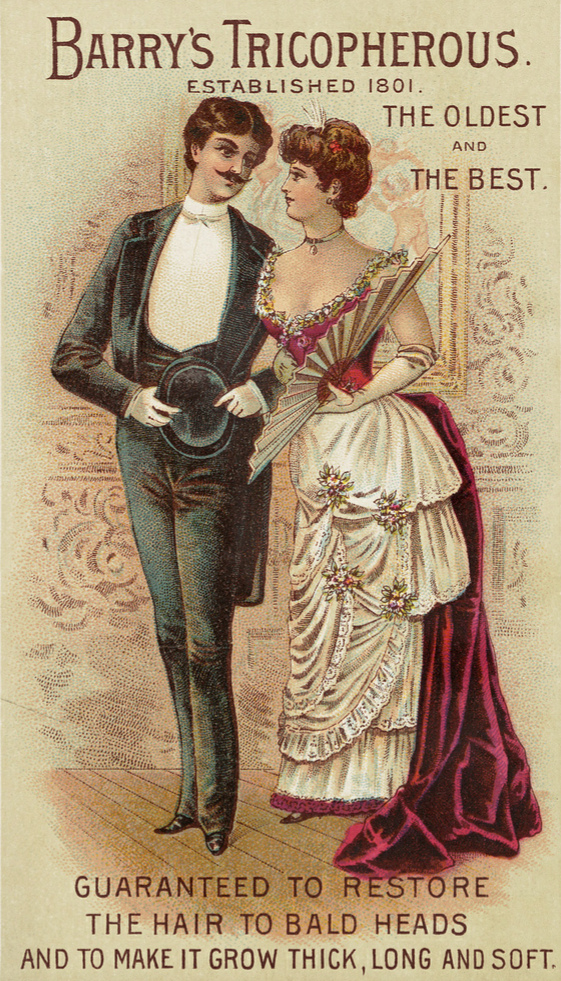
There were even hair products that claimed to cure baldness, such as Barry’s Tricopherous preparation, which guaranteed that it would restore hair to bald heads.

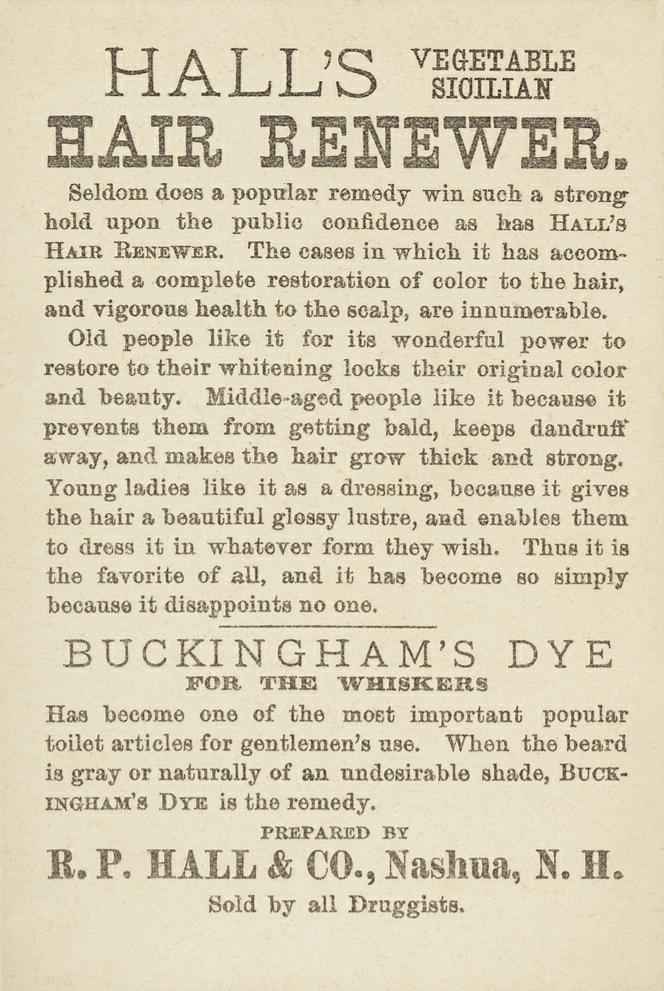
And Halls Hair Renewer also promised to “stimulate hair growth,” as well as cleanse and beautify hair.

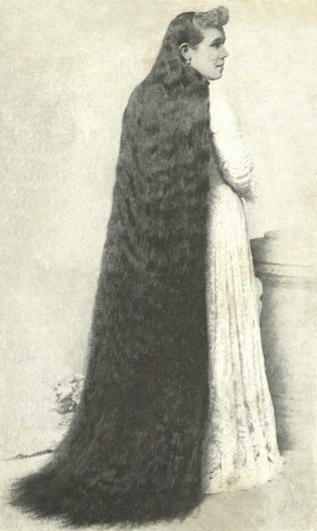
Perhaps one of the most popular products was Seven Sutherland Sisters’ Hair Grower, which hit the market in 1883. The product was named for the seven daughters of the Sutherland family, who bottled a foul-smelling concoction developed by their mother, which they claimed gave them healthy hair that reached almost to the floor.
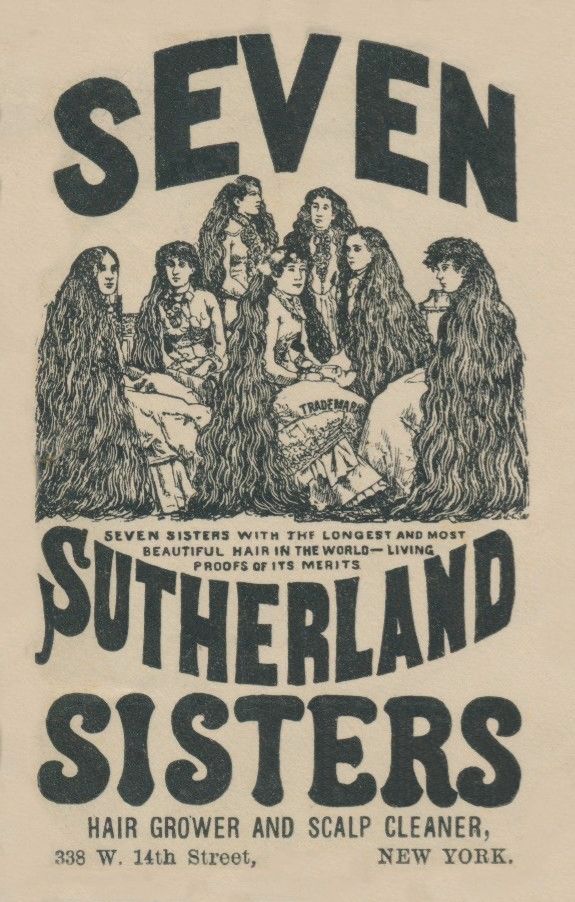
The Sutherland sisters used their own images to advertise their hair grower and toured the country promoting their product.
With so much hair dressing in use, efficient housekeepers relied on tidies to protect their furniture from staining and damage. Tidies had to be laundered and changed frequently, and women kept a good stock of them in the house at all times.

Instructions for making tidies filled the pages of women’s magazines and manuals. Whether crocheted, embroidered, or adorned with ribbons and lace, new designs were as varied as they were plentiful.
In many of Isabella Alden’s books, the heroines engaged in sewing tidies for their homes. They also made tidies to give as gifts or sell in order to raise funds for the church or to support missions.

In Household Puzzles, Carrie Hartley crocheted a tidy, “a pretty thing of wreaths and leaves.”
“Isn’t it lovely?” she said, holding it up to view. “I am perfectly wild over fancy work.”
And in A New Graft on the Family Tree, Louise received so many new tidies as wedding gifts, her sister Estelle didn’t think she could ever use them all. By Christmas, however, Louise had made use of a good number of the tidies:
Perhaps no one little thing contributed to the holiday air which the room had taken on more than did the tidies of bright wools and clear white, over which Estelle had wondered when they were being packed.
Louise thought of her and smiled, and wished she could have had a glimpse of them as they adorned the two rounding pillow-like ends of the sofa, hung in graceful folds from the small table that held the blossoming pinks, adorned the back and cushioned seat and arms of the wooden rocking-chair in the fireplace corner, and even lay smooth and white over the back of Father Morgan’s old chair, which Louise had begged for the other chimney-corner, and which Mrs. Morgan, with a mixture of indifference and dimly-veiled pride, had allowed to be taken thither. Little things were these, everyone, yet what a transformation they made!
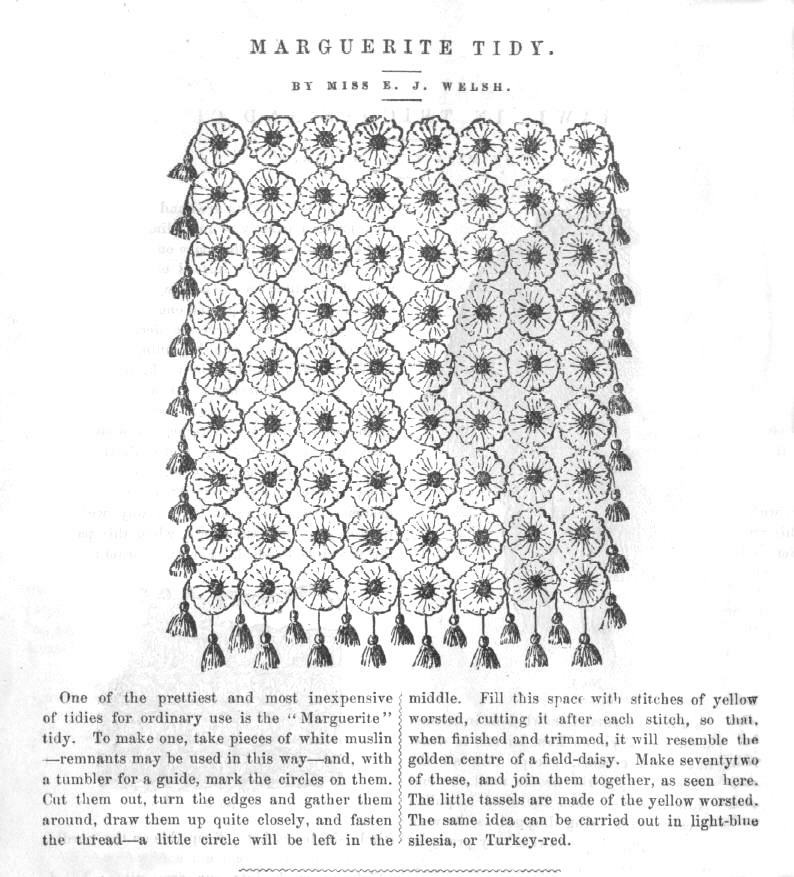

Some tidies required extraordinary skill and patience to accomplish. Creating them often involved long hours of painstaking effort; but sewing tidies (and other needlework projects that fell into the category of “fancywork”) was a way for ladies to express their creativity and imaginative vision, while beautifying their homes.

Would you like to read more about the seven Sutherland Sisters and their remarkable hair that made them a fortune? Click on the following links to read articles in Yankee Magazine and Collectors’ Weekly:
Yankee Magazine: http://www.yankeemagazine.com/article/history/seven-sutherland-sisters
You can click on any of the images in this post to view a larger version.
Share this:

A Tour of Chautauqua: Palestine Park
At Chautauqua, opportunities for learning weren’t confined to classrooms and lecture halls. Dr. John Vincent, a Methodist minister and co-founder of the Chautauqua Institute, was a great proponent of learning in the out-of-doors. He embraced the forest setting and set out to make Chautauqua the standard for open air summer schools throughout the country and the world.
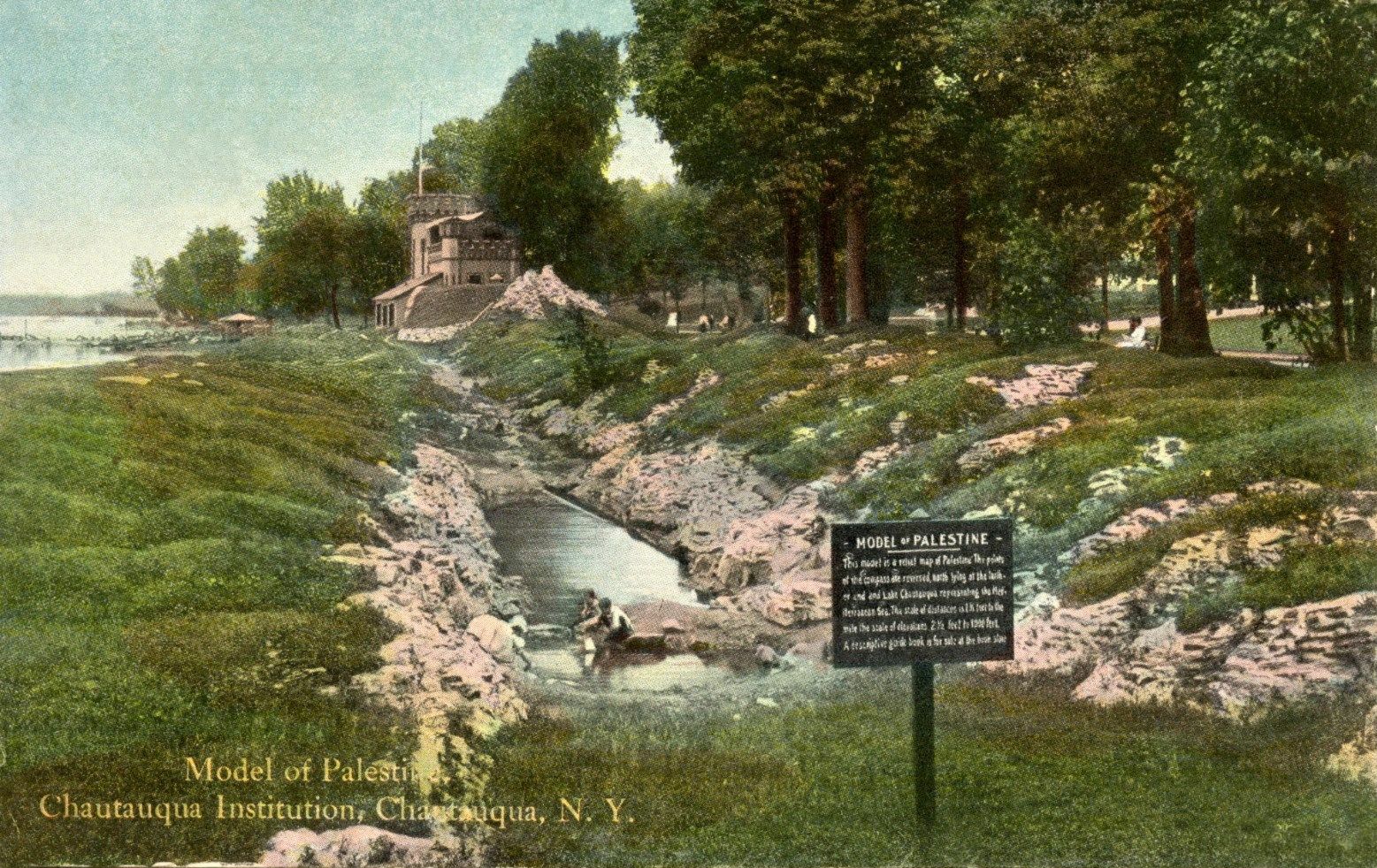 One notable example of Dr. Vincent’s vision of a fresh-air classroom was Palestine Park. He came up with the concept of making a miniature model of the Holy Land so students could get a visual sense of the settings they learned about in their Bible classes.

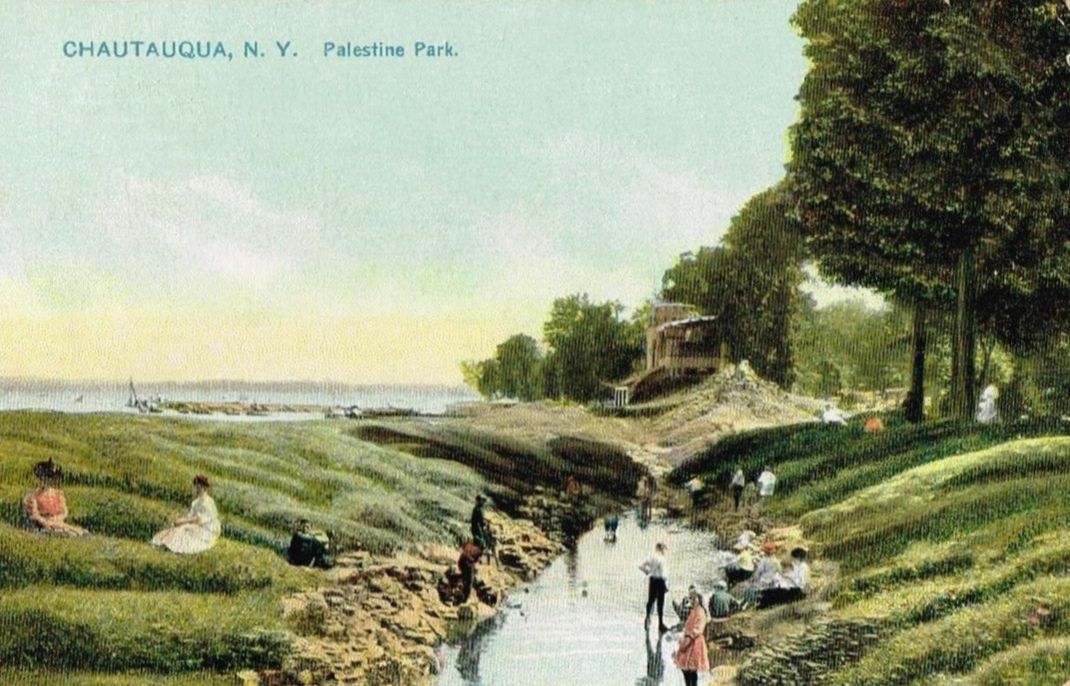
Palestine Park was constructed near the pier on the shore of Lake Chautauqua. The lake itself represented the Mediterranean Sea. Nearby were representations of the cities of the Philistines, Joppa and Caesarea, Tyre and Sidon.
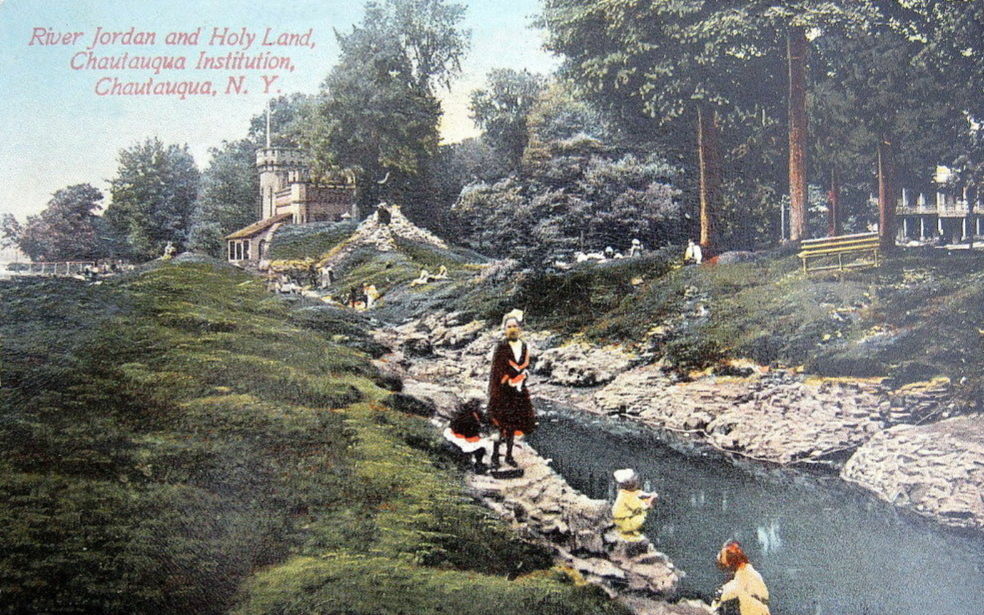
The Mountain Region showed the famous places of Israelite history from Beersheba to Dan. The sacred mountains Olivet and Zion, Ebal and Gerizem were built. And there were also the River Jordan, the Sea of Galilee, and the Dead Sea.
 Small plaques identified each place of interest and included Bible verses that mentioned the site. In 1920 Dr. Jesse Lyman Hurlbut published a guide to Chautauqua’s Palestine Park. Click on this cover image to read Dr. Hurlbut’s guide.

The model of Palestine was one of the most popular sites at Chautauqua. Theology students regularly walked the area of Palestine Park, notebooks in hands. And Sunday school teachers held classes there, sometimes on the hills around Nazareth to illustrate a lesson on the boyhood of Jesus.

Isabella Alden was very familiar with Palestine Park, and described it in Four Girls at Chautauqua. In the book, Eurie Mitchell and Flossy Shipley decide to walk to Palestine together one evening:
“Come,” Eurie said, “you have been to meetings enough, and you haven’t taken a single walk with me since we have been here, and think of the promises we made to entertain each other.”
Flossy laughed cheerfully.
“We have been entertained, without any effort on our part,” she said. Nevertheless she suffered herself to be persuaded to go for a walk, provided Eurie would go to Palestine.
“What nonsense!” Eurie said, disdainfully, when Flossy had explained to her that she had a consuming desire to wander along the banks of the Jordan, and view those ancient cities, historic now. “However, I would just as soon walk in that direction as any other.”
There was one other person who, it transpired, would as soon take a walk as do anything else just then. He joined the girls as they turned toward the Palestine road. That was Mr. Evan Roberts.
“Are you going to visit the Holy Land this morning, and may I be of your party?” he asked.
“Yes,” Flossy answered, whether to the first question, or to both in one, she did not say. Then she introduced Eurie, and the three walked on together, discussing the morning and the meetings with zest.
“Here we are, on ‘Jordan’s stormy banks,’” Mr. Roberts said, at last, halting beside the grassy bank. “I suppose there was never a more perfect geographical representation than this.”
“Do you really think it has any practical value?” Eurie asked, skeptically. Mr. Roberts looked at her curiously.
“Hasn’t it to you?” he said. “Now, to me, it is just brimful of interest and value; that is, as much value as geographical knowledge ever is. I take two views of it. If I never have an actual sight of the sacred land, by studying this miniature of it, I have as full a knowledge as it is possible to get without the actual view, and if I at some future day am permitted to travel there, why—well, you know, of course, how pleasant it is to be thoroughly posted in regard to the places of interest that you are about to visit; every European traveler understands that.”
“But do you suppose it is really an accurate outline?” Eurie said, again, quoting opinions that she had read until she fancied they were her own.
Again Mr. Roberts favored her with that peculiar look from under heavy eyebrows—a look half satirical, half amused.
“Some of the most skilled surveyors and traveled scholars have so reported,” he said, carelessly. “And when you add to that the fact that they are Christian men, who have no special reason for getting up a wholesale deception for us, and are supposed to be tolerably reliable on all other subjects, I see no reason to doubt the statement.”
On the whole, Eurie had the satisfaction of realizing that she had appeared like a simpleton.
Flossy, meantime, was wandering delightedly along the banks, stopping here and there to read the words on the little white tablets that marked the places of special interest.
“Do you see,” she said, turning eagerly, “that these are Bible references on each tablet? Wouldn’t it be interesting to know what they selected as the scene to especially mark this place?”
Mr. Roberta swung a camp-chair from his arm, planted it firmly in the ground, and drew a Bible from his pocket.
“Miss Mitchell,” he said, “suppose you sit down here in this road, leading from Jerusalem to Bethany, and tell us what is going on just now in Bethany, while Miss Shipley and I supply you with chapter and verse.”
“I am not very familiar with the text-book,” Eurie said. “If you are really in the village yourselves you might possibly inquire of the inhabitants before I could find the account.” But she took the chair and the Bible.
“Look at Matthew xxi. 17, Eurie,” Flossy said, stooping over the tablet, and Eurie read:
“‘And he left them, and went out of the city into Bethany; and he lodged there.’”
“That was Jesus, wasn’t it? Then he went this way, this very road, Eurie, where you are sitting!” It was certainly very fascinating.
“And stopped at the house on which you have your hand, perhaps,” Mr. Roberts said, smiling at her eager face.
“That might have been Simon’s house, for instance.”
“Did he live in Bethany? I don’t know anything about these things.”
“Eurie, look if you can find anything about him. The next reference is Matthew xxvi.”
And again Eurie read:
“‘Now when Jesus was in Bethany, in the house of Simon the leper.’”
“The very place!” Flossy said, again. “Oh, I want so much to know what happened then!”
Eurie, Flossy, and Mr. Roberts spent the better part of the day at Palestine Park, following the plaques from one location to the next and reading verses out of Mr. Roberts’s Bible.
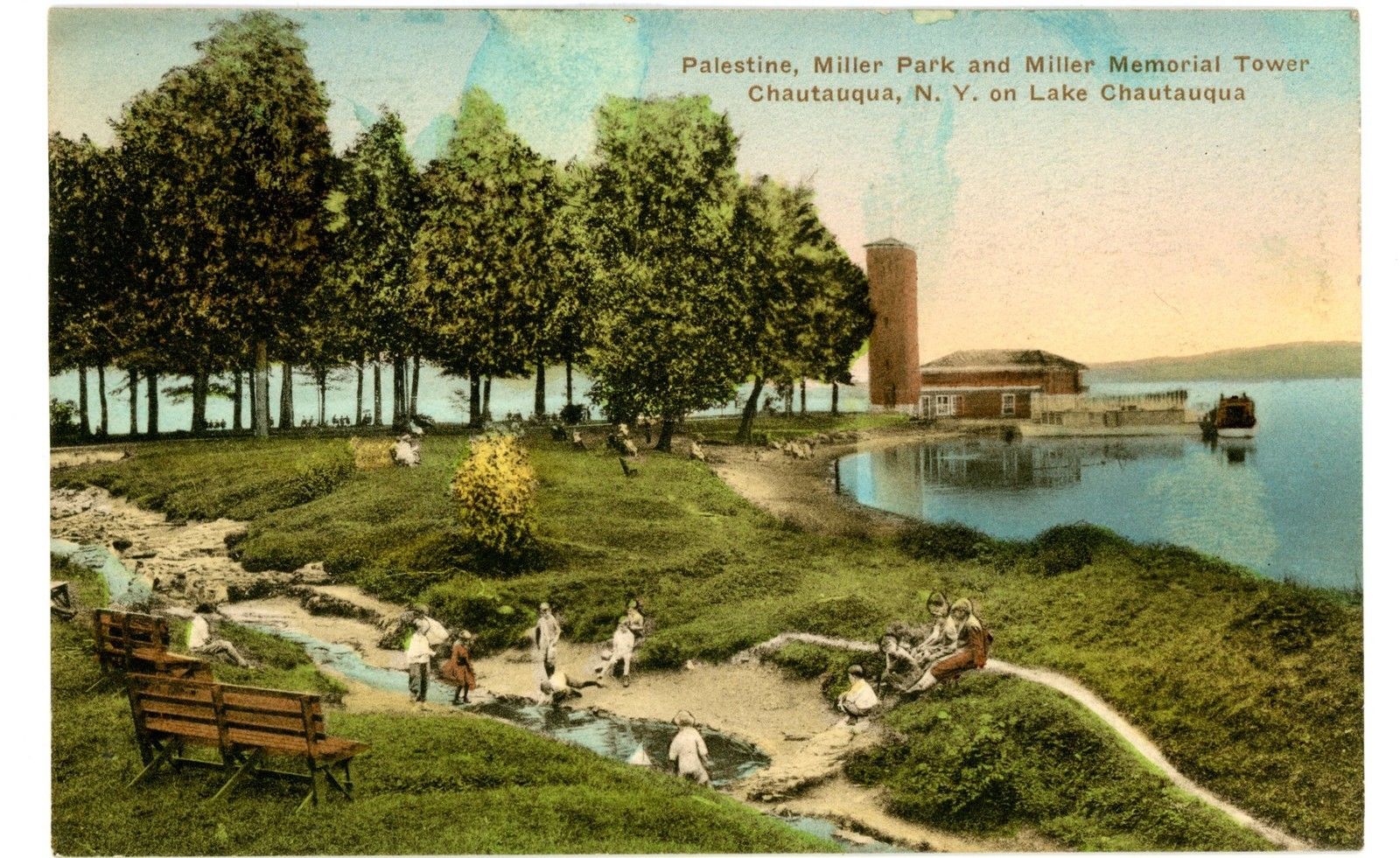
Palestine Park was among the great attractions at Chautauqua and, as Isabella mentioned in her book, it received accolades from Biblical scholars of the time because of its accuracy and geographical precision.
But Palestine Park did have one major flaw, which was alluded to in the sign that marked the entrance to the model. In order to use Chautauqua Lake to represent the Mediterranean Sea, the geography of the Holy Land had to be flipped; north had to be south, and east was made the west.

Jesse Lyman Hurlbut, who regularly used the park as part of his theology lectures and children’s Sunday school classes, explained:
“Chautauqua has always been under a despotic though paternal government and its visitors easily accommodate themselves to its decrees. But the sun persists in its independence, rises over Chautauqua’s Mediterranean Sea where it should set, and continues its sunset over the mountains of Gilean, where it should rise. Dr. Vincent and Lewis Miller [the founders of the Chautauqua Institute] could bring to pass some remarkable, even seemingly impossible achievements, but they were not able to outdo Joshua and not only make the sun stand still, but set it moving in a direction opposite to its natural course.”
Over the years, Palestine Park was repaired, rebuilt and expanded to add a model of Jerusalem and its surrounding hills, as well as Bethlehem, Jericho, and other places of interest until, ultimately, it almost doubled in size.
Click on the map below to see where Palestine Park was located on the Chautauqua Institution grounds. You’ll find it on the shore of Lake Chautauqua near the steamboat landing at The Point.

Next on our Tour of Chautauqua: A Healthy Body
Share this:

Now Available: The Pocket Measure
 The Pocket Measure is now available!
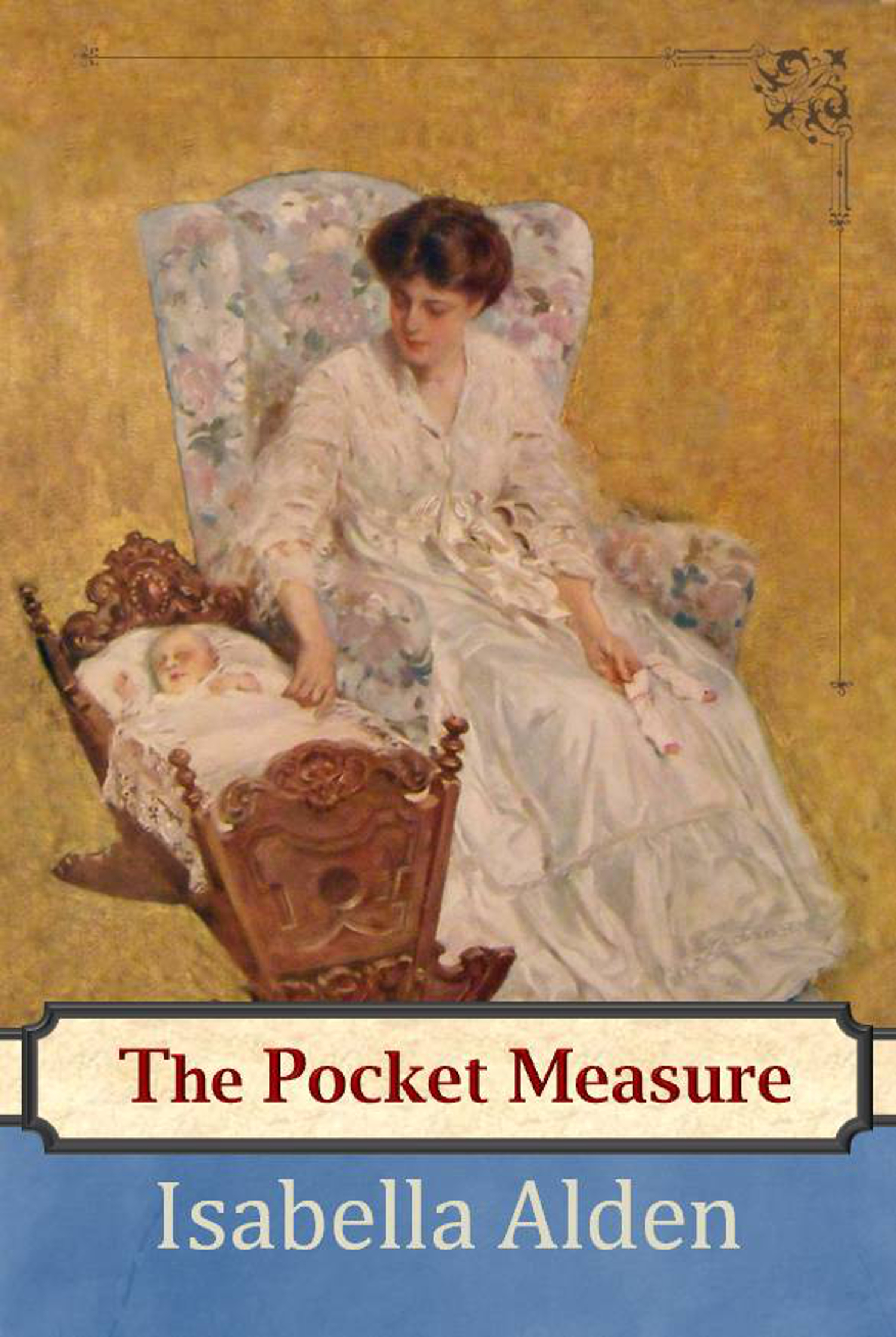
There are three new brides in town, each embarking upon married life in a different way. While Callie and her husband are quite poor, they faithfully tithe a portion of their income for God and make the best of living within their limited means.
Happy-go-lucky Jenny envisions her married life as a round of parties and trips to the theater. After all, what good is money if you don’t spend it?
And Eva has more money than both her friends—so why are she and her husband slowly sinking beneath the weight of their debt? Even worse, her home is far from the restful haven she wants it to be, and Eva can already feel her new husband slipping away from her.
This edition of the 1881 classic Christian novel includes a biography of the author and additional bonus content.
Click here to read sample chapters on your Kindle, tablet or PC.
Share this:

Off to See the Circus
At the time Isabella Alden wrote her books, there were no movie theaters, telephones, radios or televisions. Few had the means to attend the theater and the concept of “entertainment” was usually confined to people finding ways to amuse themselves within the drawing-rooms and parlors of individual homes.
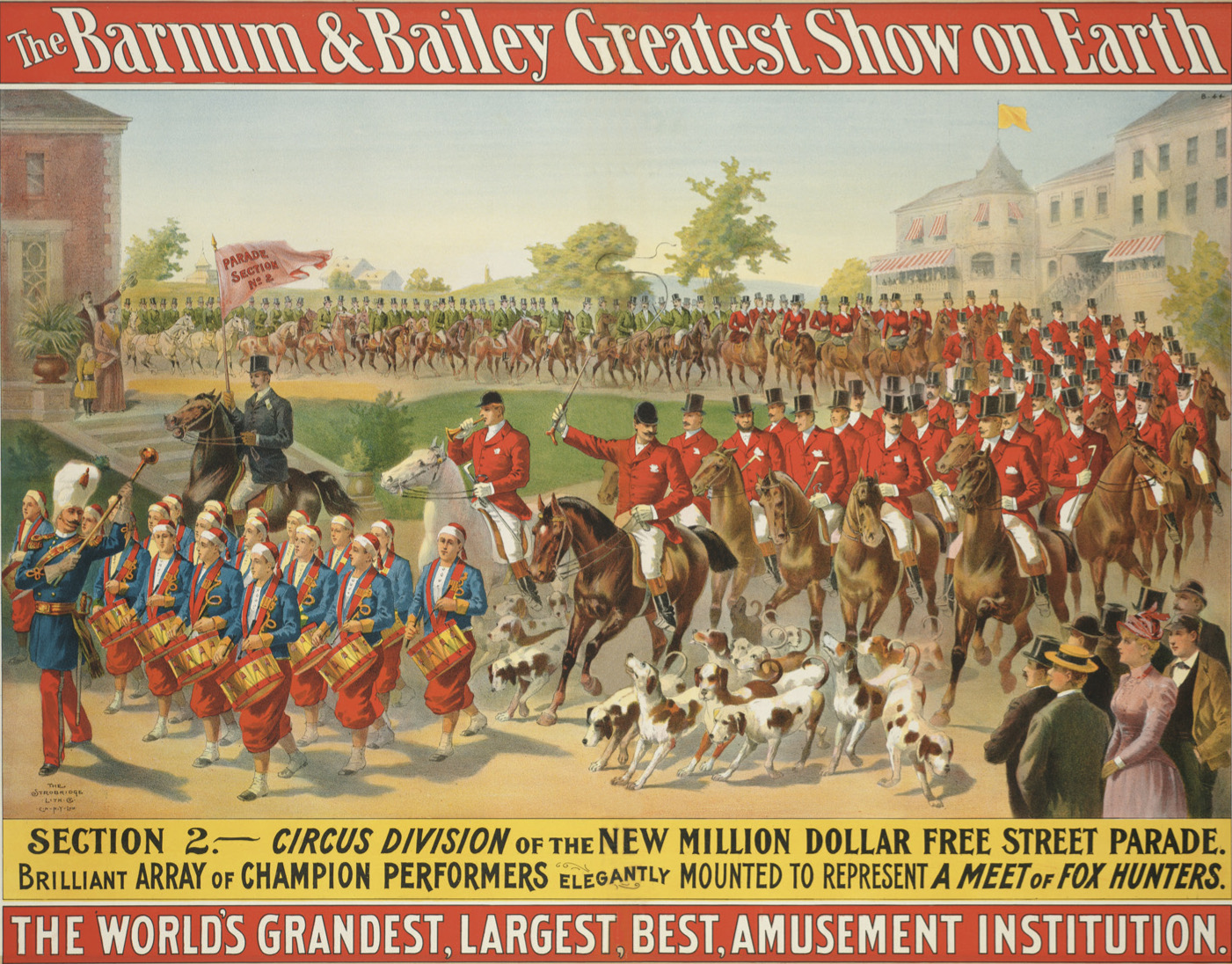
But quiet American life changed the moment the traveling circus came into town (click on any of the images in this post to see a larger version). When a circus company arrived in a new place, the acts and animals paraded through the town, firing people’s imaginations and enticing them to follow the parade back to the performance tent.
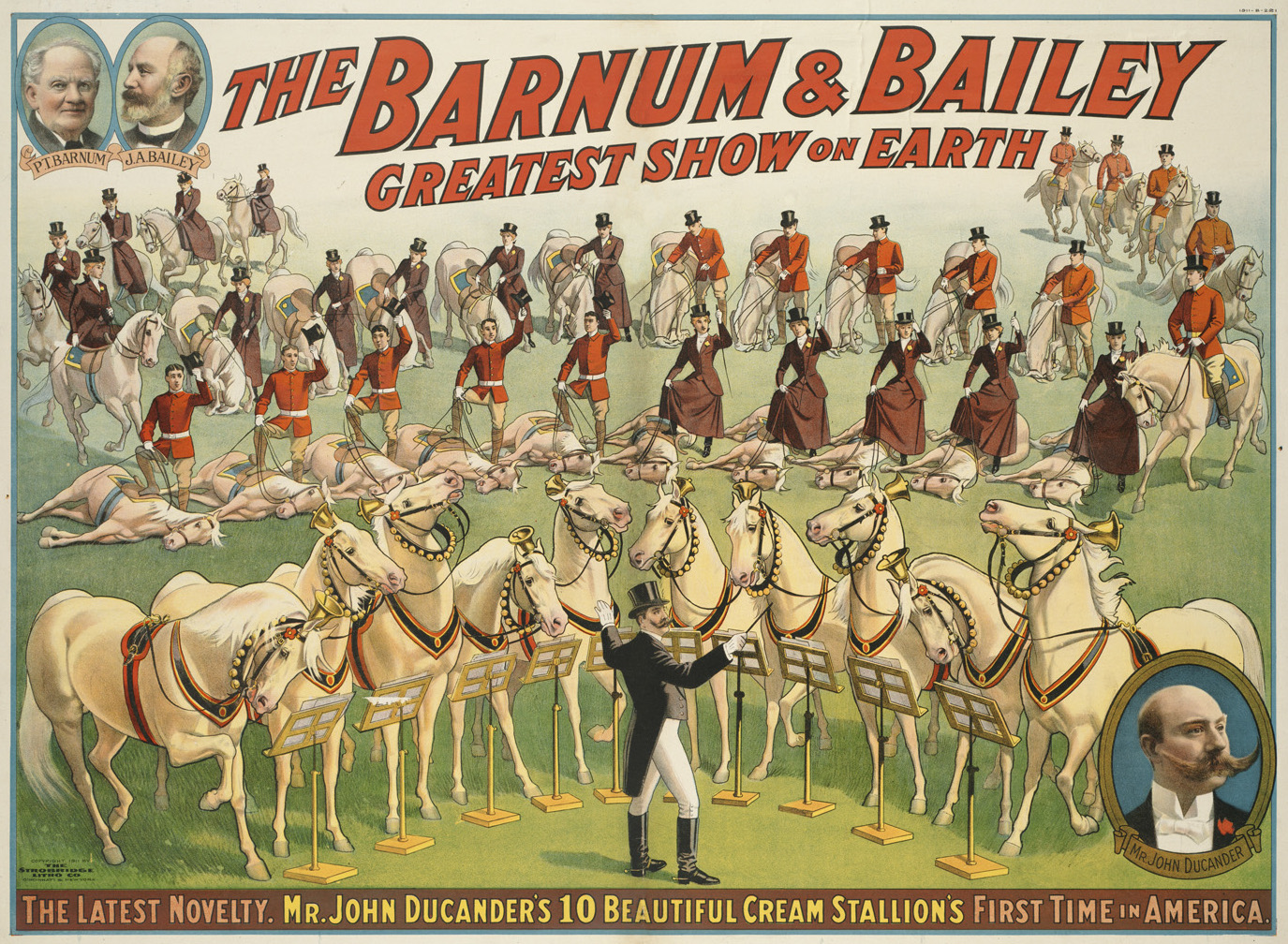
The mainstay of the circus was the equestrian acts. Trick riders atop well-trained horses performed remarkable feats and thrilled audiences with their precision. Clowns, jungle animals, and rare, exotic people rounded out the bill. The circus was the only entertainment of its kind, thrilling audiences with new experiences and feats they’d never seen before. The atmosphere under the tent was electric, with real performers and real animals executing larger-than-life tricks right in front of the audience.

It was heady stuff at the time, and circuses owned an exclusive corner of the entertainment market. It was natural, then that Isabella Alden would have mentioned circuses in her novels.
In Stephen Mitchell’s Journey, Stephen’s sister Sara Jane sighed over the family’s poverty and her dream of being able to do things other people could afford to do:
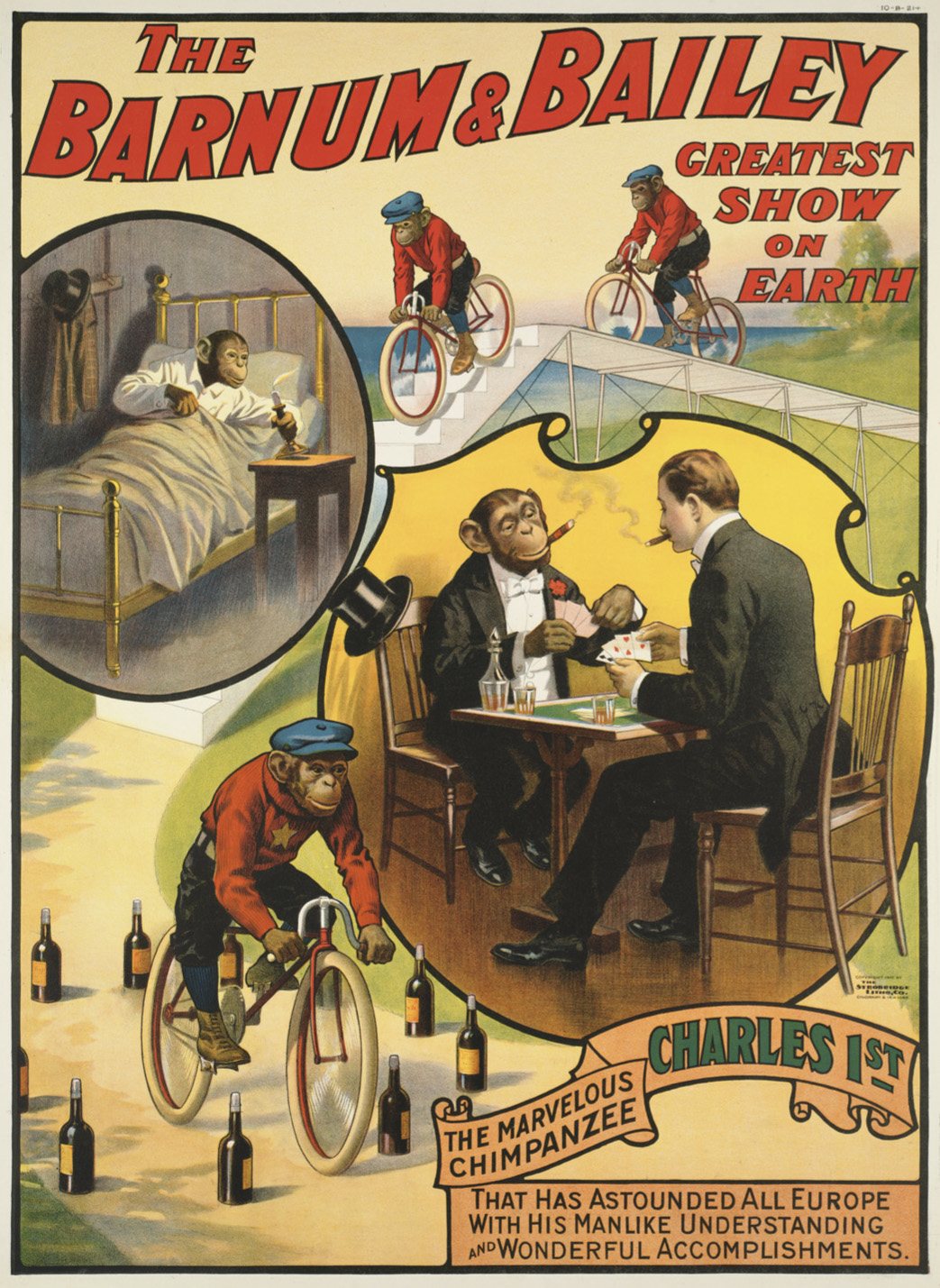
“I wish we knew about things. I am dreadful sick of sticking here on this stony old farm and not knowing what is going on. I wish I could go to the circus. There is going to be one next week, and I would give most anything to go to it; but there! I don’t suppose it is of any use.”
.
Sarah Jane may have longed to go to the circus, but Isabella Alden didn’t believe the circus was an appropriate venue for Christians.
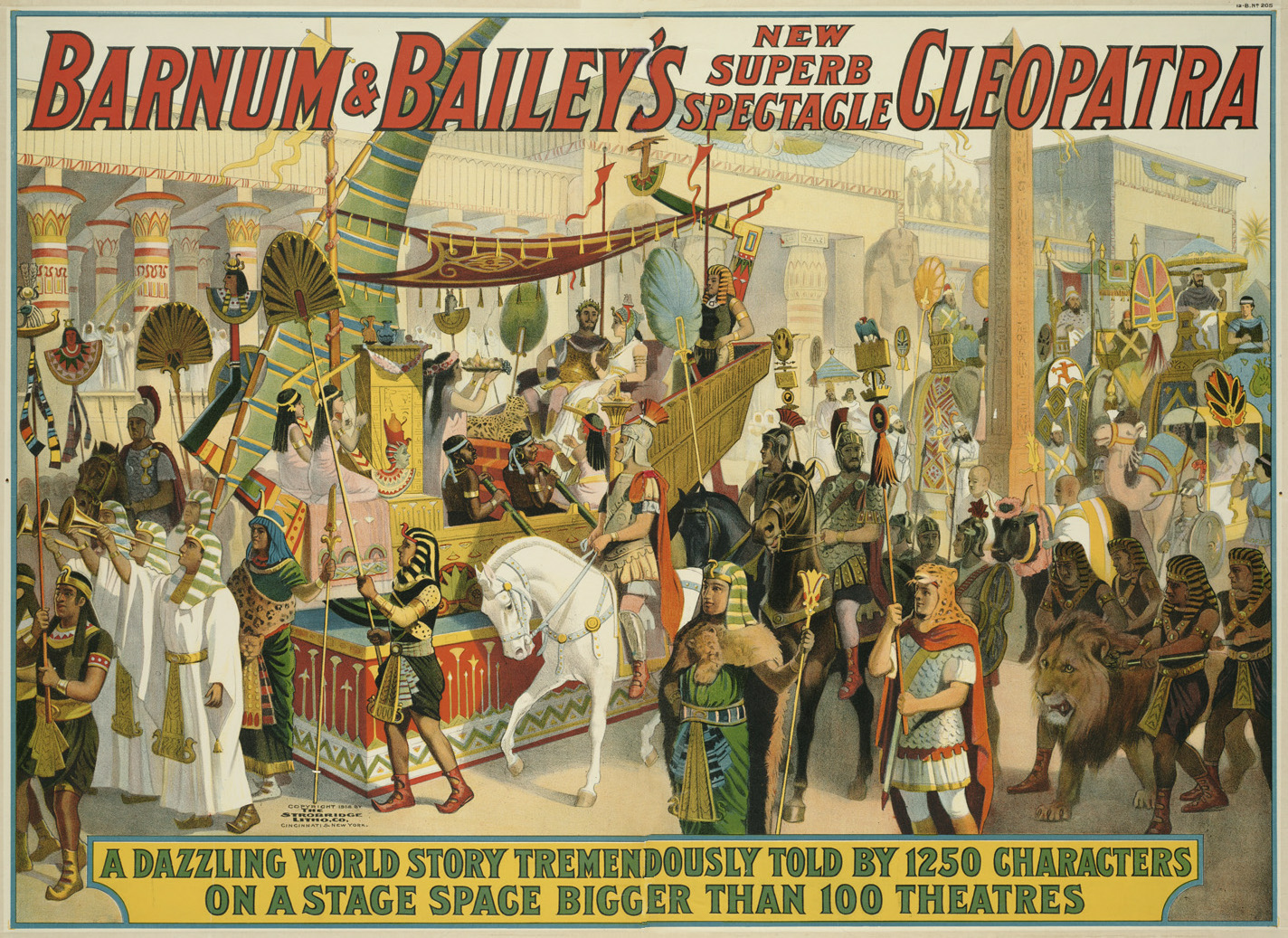
In Chrissy’s Endeavor, Chess Gardner explained to Joe the stable boy why Christians should not attend the circus:
 “It is said that there are at these places, exhibitions more or less offensive to good taste and good manners; women who dress in a manner not agreeable to refined people, and who ride in a way that would not be pleasant to us if they were our sisters, for instance. This being the case, the latter part of the other statement applies, that to attend, and to pay money for doing so, helps to sustain such entertainments.”
After more discussion, new Christian Joe decided to skip going to the circus, saying:
“Well, I don’t believe Jesus Christ would go to a circus if he were here; I don’t, honest.”
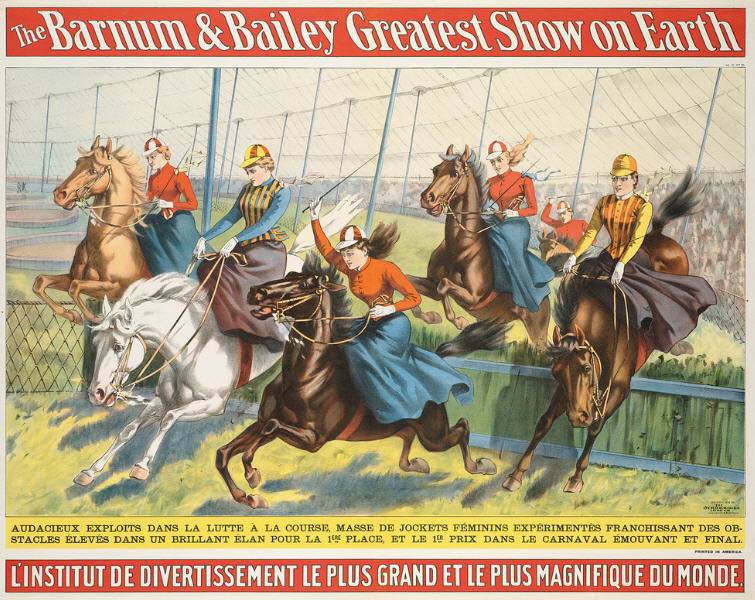
The explanation Chess Gardner gave reflected a popular view of the time about people who performed in circus shows, especially women. While some, like the equestrians in the above poster, were conventionally attired, others wore costumes that were more daring and much more provocative, like these scandalously-clad acrobats.

But costumes and lady-like riding aside, Isabella had a more important reason for believing the circus was the wrong place for Christians to be. Her belief was founded in a verse from Corinthians that she used as her guide for daily living:
Whether, therefore, ye eat or drink, or whatsoever ye do, do all to the glory of God.
1 Corinthians 10:31
The verse was the yardstick against which she measured her behavior. When she was faced with a dilemma—such as whether to attend a circus or theater production—she asked herself whether doing so would glorify God.
And it wasn’t just in big decisions that she applied the verse. She took it literally, believing that even in small things, such as eating and drinking, Christians should strive to do all things in ways that glorified God.
She wove the verse into many of her books as a touchstone for her characters whenever they were faced with a decision about what to do. In the case of going to the circus, Isabella’s characters asked themselves whether going to see a performance would add to the glory of God.
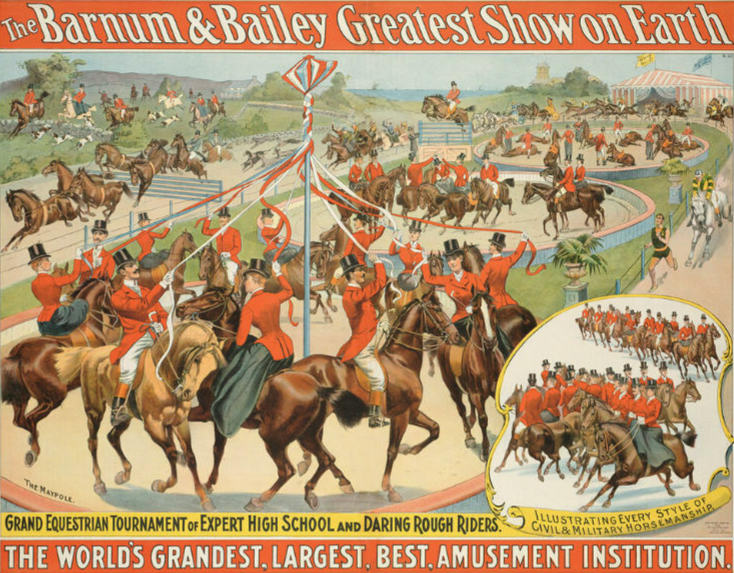
While some of her characters made conscious decisions to stay away, Sarah Jane Mitchell continued to dream of someday going to the circus and the marvelous things she would see there.

You can click on these links to read more about Stephen Mitchell’s Journey and Chrissy’s Endeavor.
Share this:

Quotable
 “Get thee behind me, Satan.”
The only perfect Life gave that sentence once, not alone for Himself. Thank God, He has many a time since enabled His weak children of the flesh to repeat it in triumph.


