
 If people only would influence each other just as much as they could, and just as high as they could, what a wonderful thing this living would be!
—from A New Graft on the Family Tree
If people only would influence each other just as much as they could, and just as high as they could, what a wonderful thing this living would be!
—from A New Graft on the Family Tree



For many reasons, 1914 was a banner year at Chautauqua Institution. Here are a few of the highlights:
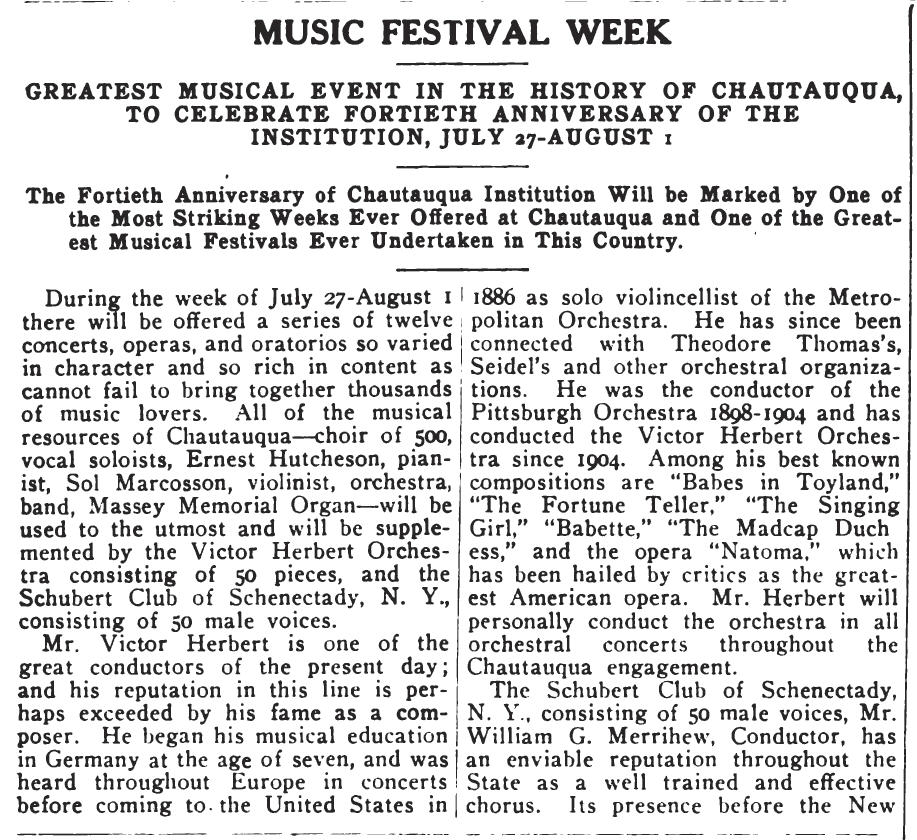
The anniversary was celebrated with a week-long music festival of exceptional entertainment, described in this announcement as the “greatest musical event in the history of Chautauqua.” You can click on the announcement to view a larger image.
.
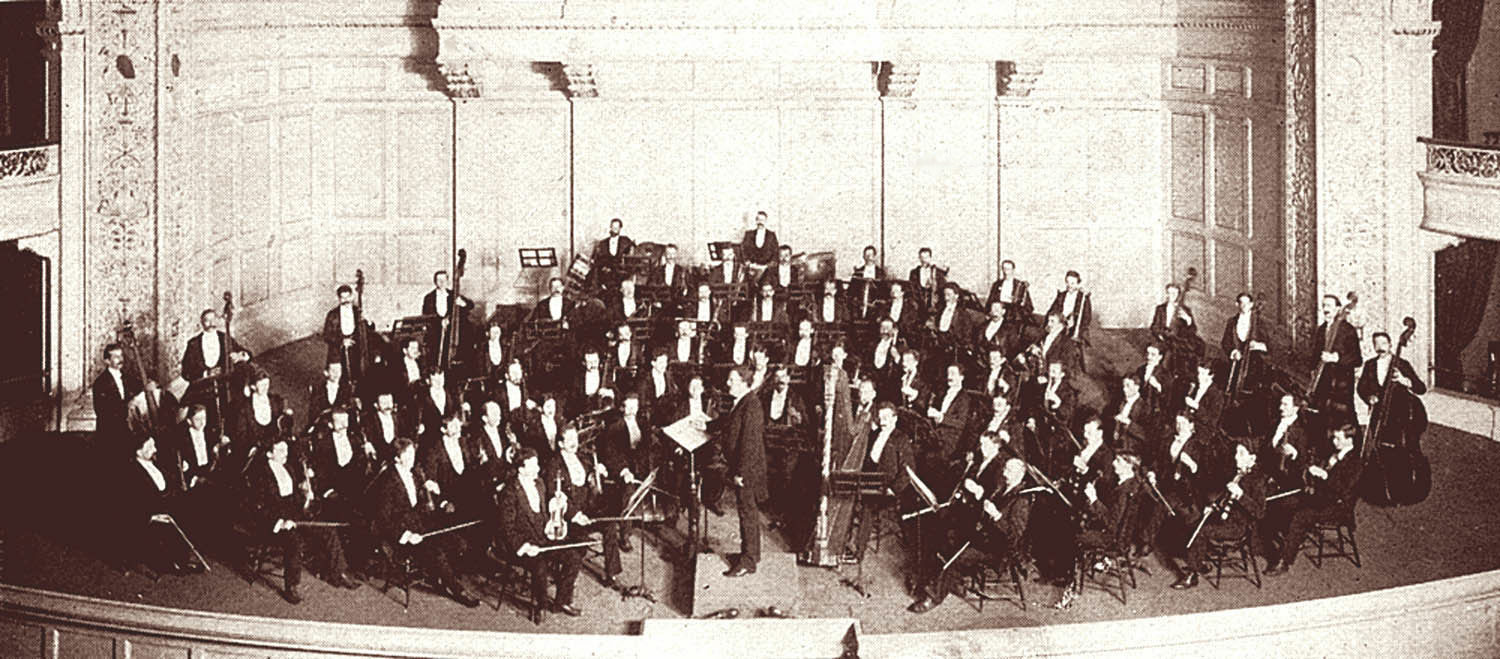
 Celebrated composer/conductor Victor Herbert performed during the music festival. Famous for his operettas Babes in Toyland and Naughty Marietta, he was also the founder of the Pittsburgh Symphony Orchestra. When he came to Chautauqua, he came big, with a 50-member orchestra and a choir of 50 male voices. You can read more about it in the above announcement.
.
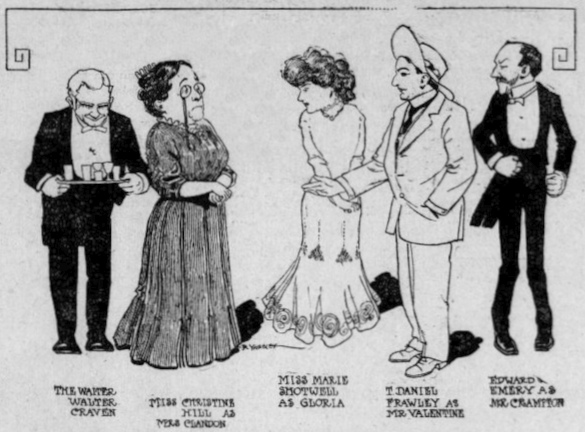
Theater productions came late to Chautauqua, due, in large part, to the Methodist Church’s ban on theater attendance that lasted into the 1920s. Chautauquans were content with illustrative lectures and pageants; but those entertainments gradually gave way to dramatic readings, then to pantomime performers. By the early 1900s, stage plays found a place at Chautauqua. To commemorate the anniversary, Chautauqua Institution’s very own Chautauqua Players presented two performances each of three different plays:
The Passing of the Third Floor Back
Ulysses by Stephen Phillips
You Never Can Tell by George Bernard Shaw
.
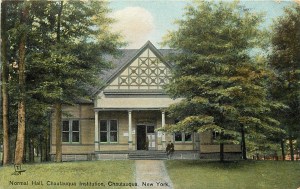
Built in 1885, Normal Hall is one of the oldest buildings on the Chautauqua grounds. It was originally designed as a recitation hall but in the anniversary year of 1914, it was remodeled for class rooms. Today, Normal Hall is known as the Bratton Theater, home to the Chautauqua Theater Company.
Click on the image to see how Normal Hall looks today.
.
 here was no golf at Chautauqua in 1874 but forty years later, Chautauquans were hitting the links in addition to the traditional croquet balls. Click here to see period photos of the golf course and to read about the famous people who have played the course.
.
.
 Educated at Amherst and Harvard universities, Percy Boynton became a Professor of English at the University of Chicago in 1903, the same year he became Secretary of Instruction at the Chautauqua Institution. He served as Chautauqua’s Principal of Summer Schools from 1914 to 1916.
He was also a noted writer and lecturer. After his retirement from teaching, he joined the Chautauqua circuit and toured the country presenting lectures on a variety of topics.
.
In 1914 over 50,000 people attended the summer session at Chautauqua. With so many guests arriving—many over land from nearby Jamestown and Maywood—Chautauqua had to ensure those guests entered the grounds quickly and efficiently. The entire west border of the grounds—where guests entered from the road—was renovated. The highway was widened and paved with brick. Over time, that brick highway was extended to span the length of the grounds.
In addition, a “handsome new station for the Chautauqua Traction Company” was erected to accommodate a trolley line, along with a “suitable Chautauqua gateway.”
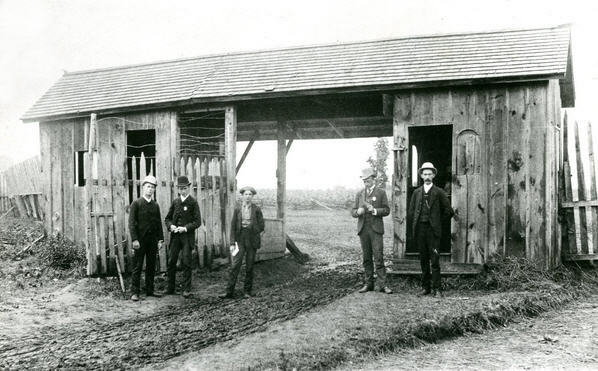 You can determine for yourself whether the new entrance gate was “suitable.” Here’s an undated photo of the original entrance gate:
.
.
 And this photo shows the new entrance gate shortly after it opened. The new gate is still in use today.
.
In 1914 Chautauqua Institution grew, adapted and expanded; and changed the entire physical front it presented to the world.

 Here’s a charming Christmas short story for boys and girls of all ages.
For the first time in his young life, Sidney Martin must spend Christmas alone in the big city. How he wishes he could see his family and share in their spirit of Christmas! Instead, he must spend the long day alone, doing nothing in particular and mattering to no one.
But an odd circumstance may help Sidney realize that the spirit of Christmas is alive in his heart, after all.
Click on the book cover to begin reading Isabella Alden’s 1879 short story, Sidney Martin’s Christmas.
You can find more Isabella Alden free reads by clicking on the Free Reads tab above.

 Isabella Alden sometimes used terms or phrases that were common at the time, but have since gone out of use . . . and today’s readers may not have a clue what she means.
On this blog you can now easily find posts that explain some of those words and phrases. Under the Categories list on the right you’ll see a new category for Pansy’s Dictionary. Follow the link to read blog posts that define peculiar words in Isabella’s books. Here are some of the terms we’ve already defined:
Have you come across a word or phrase in Isabella’s books that stumped you? Share it using the comment section below and we’ll define the term in future posts. You’ll be speaking fluent Pansy in no time!

I will give you a general rule, which I have found a great benefit in my Christian life. If you find there is the least doubt in your mind as to the right or wrong of a certain path, give Christ the benefit of the doubt and you will surely be right.
—from Cunning Workmen


In the book Four Mothers at Chautauqua a certain pongee coat played an important role in the story. It was because of the pongee coat that Miss Hazel Harris met handsome Burnham Roberts. It was the pongee coat that made Burnham’s mother, Flossy Roberts, realize how much Hazel’s family neglected her. And it was gossip about Hazel wearing the pongee coat that set off a fearful argument between Hazel and her aunt.
 So what, exactly, is a pongee coat? And what was so special about that coat that everyone in the story seemed to notice it?
When the book was published in 1913, pongee coats were very popular, although not everyone could afford to own one. In those days women’s coats were made out of many different fabrics: serge and wool tweed were staples in cool weather; taffeta and linen in warmer months.
But in summer, when days were warm and nights were only slightly cooler, ladies needed their coats to not only ward off potential chills, but to protect their gowns, skirts and blouses from soiling.
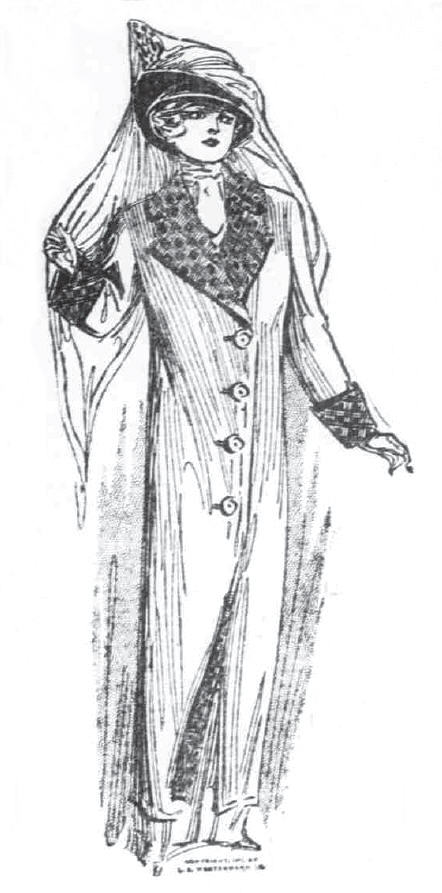 So in summer, women’s coats had to be serviceable but light-weight and cool. Linen and taffeta were, for a long time, the fabrics of choice for summer coats; but about 1903 the fashionable world rediscovered pongee, a type of silk that originated in Shantung China over 3500 years ago.
Pongee silk was a favorite for summer wear because it was cool, soft to the touch, long-wearing, and could be bought in varying weights.
Pongee had one other advantage as a summer fabric . . . it was washable. Unlike taffeta and linen, pongee silk could go right into the laundry tub.

An expensive silk that could also be laundered was a fashion game-changer in the early 1900s. By 1905 dressmakers and garment manufacturers had integrated the fabric into their summer designs.

Pongee’s natural color was a soft ecru, which was very much in vogue; but once a reliable method for dying pongee silk was developed, the fabric could be bought in every imaginable color.
 It was also available in varying weights, which meant it could be used in making everything from light-weight blouses and dresses, to parasols, belts and gloves.
It was flexible enough to lend itself to tiny “pinch-tuck” details, and sturdy enough (in medium and heavier weights) to pleat nicely in skirts and tailored jackets.
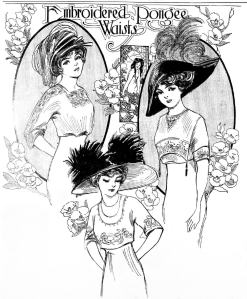
The fabric was even used to make hats. Pongee silk held shapes well; in lighter weights it was perfect for the layered scarf look so popular in driving hats.

Budget-minded consumers may have made do with shirtwaists and dresses made of gingham (which cost about 6 cents a yard) or cotton muslin (8 cents a yard). But if you wanted your summer clothes to be made of finer fabrics, you had to pay for it.
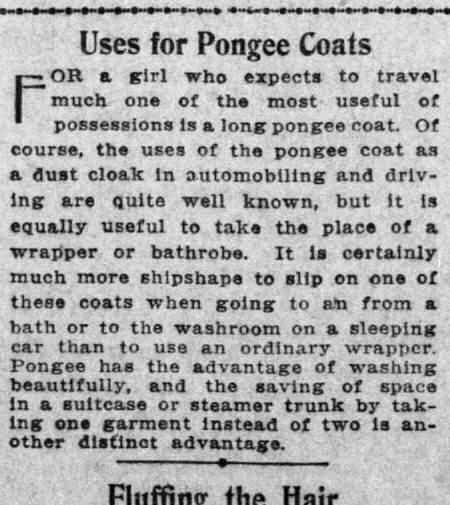
Prices for pongee silk varied widely. American-made pongee in natural ecru ran about 70 to 80 cents a yard.
By comparison, genuine heavy Chinese pongee suitable for making coats cost $2.00 or more per yard.
Pongee was available in colors, but dyed pongee cost much more than the natural ecru color. Lighter weights of pongee silk also cost more, and they were highly desired because they were used to tailor gowns and shirtwaists.
.

That may explain why Flossy’s pongee coat was so eye-catching. Flossy lent her coat to Hazel Harris because Hazel had nothing to wear for a drive out in Flossy’s carriage. Flossy convinced Hazel to wear her long pongee coat so it would cover Hazel’s cheap and ragged clothes.
A gossip remembered seeing Hazel riding in Flossy’s carriage because Hazel’s coat caught her eye:
“I confess that I stared, especially at her lovely coat; it attracted me almost as much as her face.”
“Her ‘lovely coat’!” repeated Josephine, dazed.
“Yes, she had on a perfectly beautiful coat, heavily embroidered. I don’t think I ever saw a handsomer one. I am very fond of pongee.”
Hazel herself described the coat as a “beautiful coat that fitted her to perfection.”
But generous Flossy believed that it was Hazel who made the coat beautiful:
“She looked lovely in it,” Mrs. Roberts said, thoughtfully. “I didn’t know it was so pretty until I saw it on her.”
A heavily embroidered, colored pongee coat, tailored so it fit close to the body, would have been extravagantly expensive in 1913, and Marion Dennis mentioned that Flossy’s coat cost $30. Compare that with the prices of pongee coats in this ad from a 1910 edition of the Omaha Daily Bee newspaper (click on the image to see a larger version):

Flossy described the moment when the carriage ride came to an end and Hazel had to take the pongee coat off:
“She slipped the coat off in the quietest way as we turned the corner into Terrace Avenue and patted it lovingly as she laid it on the seat and said to it—not to me, mind you, but to it—’Thank you, darling; you are beautiful and I have worn you for two whole hours. I shall never forget you.’ Wasn’t that original and pathetic? She is certainly a very interesting girl. I am quite determined to know more of her.”
And Flossy did get to know Hazel quite well; and since Four Mothers at Chautauqua had a very happy ending, it’s entirely possible that Hazel was one day able to own a pongee coat of her very own.

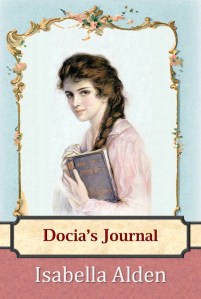 Docia’s Journal is now available!
Docia Myers just received the best birthday gift a girl could get: a new journal of her very own. Now, if only something exciting would happen in her life to write about!
In due course, wonderful things happen for Docia as she grows to womanhood in the care of her loving Christian family. But Docia is not a Christian, and her resistance to accept Christ as her Savior and Friend perplexes everyone around her—until God uses a series of events to reveal to Docia just how much more blessed her life can be when she chooses to walk with Him.
This edition of the 1874 classic Christian novel includes a biography of the author and additional bonus content.
Follow this link to download Docia’s Journal for your Kindle, PC, Mac or mobile device.
Click here to read Docia’s Journal on your Nook.

“He was fed on brandy for days and weeks when a child. It was a physician’s prescription, you know.”
That was Mildred Powell’s explanation for Leonard Airedale’s alcohol dependence in the book, One Commonplace Day. In other words, Mildred believed the man she loved wasn’t to blame for his alcoholism—his doctor was.
 Then, as now, the medical community and society at large struggled to discover the cause of adult alcoholism. How could some people have a glass of wine or beer on a strictly social basis, while others couldn’t take a sip of the stuff without forming an instant addiction?
In Leonard Airedale’s case, Mildred’s assessment would have made perfect sense. In the late 1800s and early 1900s, doctors often prescribed brandy, beer and other alcoholic drinks to patients, including children.
 Dr. Abraham Jacobi, known today as the father of American pediatrics, held alcohol in great esteem as a therapeutic agent for children. He authored several books in the 19th century on pediatric diseases, and influenced the way generations of physicians treated young patients. He believed that alcohol should be given to children to fight infection, and wrote that “There is no better antiseptic than alcohol beverages.”

In cases of typhoid, he wrote, “a child of three or four years may be saved by 100 or 200 ccm. of whiskey given daily, if by nothing else and escape the undertaker.”
And since 100 cubic centimeters of whiskey is equal to about 3-1/3 U.S. fluid ounces, the amount of whiskey he recommended for a three year old child was more than many adults could handle.
But that’s not all. If that daily dose of whiskey wasn’t effective, Dr. Jacobi recommended increasing the amount:
“Septic cases, with high fevers that will not improve after 100 or 200 centimetres of whiskey daily, are apt to do well with two or three times the dose, which, however, will cease to be tolerated as soon as the septic fever has passed by. Indeed I have seen such septic children of three or four years take 500.0 [ccm.] of whiskey a day.” That equates to a full pint of whiskey for a child under the age of five!
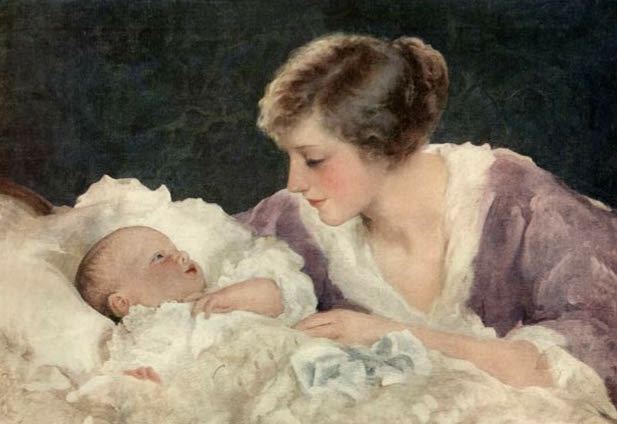
Whiskey and brandy were frequently advertised in medical and nursing journals; those same journals then published articles extolling their merits.

Doctors primarily used brandy as a cardiac stimulant because it appeared to increase cardiac output and blood pressure. But it was also a depressant, so doctors also prescribed it as a sedative for adults, children, and even infants.
Brandy and whiskey weren’t the only alcoholic beverages doctors recommended for health reasons.

In 1895 Anheuser-Busch began advertising a beer product called Malt-Nutrine. The beverage contained 2% alcohol and its target market was women, especially young mothers.
 The beverage was advertised in women’s magazines like Cosmopolitan, Munsey’s and Good Housekeeping. The majority of the ads featured images of nursing mothers and their babies. And although Malt-Nutrine had a 2% alcohol content, Anheuser-Busch advertised their product as alcohol free and claimed it gave special nourishment, restful sleep, strength and joyousness to mother and baby.
In other words, nursing mothers who drank Malt-Nutrine passed along its alcoholic effects to their infants.
Anheuser-Busch also advertised their product to physicians. They ran full-page advertisements in medical journals, such as this one in the January 3, 1918 Boston Medical and Surgical Journal:

They had an ingenious marketing plan that included sending artwork to doctors. The artwork incorporated images of their product and was framed or finished in a way that made it suitable for hanging in physician offices where it could be seen by patients and remind physicians to recommend it.
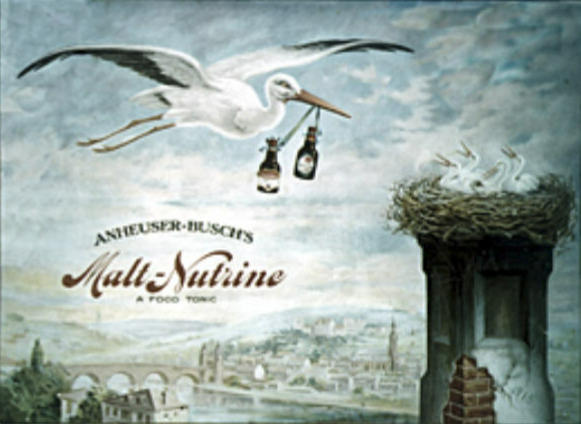
They also ran contests for physicians. One contest encouraged doctors to write in with suggested titles for one of their art promotions; the winning title received a cash award of $250 in gold.

Other brewers jumped into the beer-for-health market. Pabst unabashedly marketed their Pabst Extract product as “The Best Tonic” to promote sleep, strengthen nerves and invigorate the exhausted. In their ads to physicians Pabst also gave away free promotional items such as calendars and wall art.

Like Anheuser-Busch, Pabst targeted a good portion of their advertising at mothers. And like Anheuser-Busch, Pabst downplayed the alcoholic content of their product and claimed instead that their product was “food” essential to nursing mothers’ health.

Seattle Brewing Company introduced their own malt product, Malt Rainier, which they, too, marketed to new and nursing mothers.
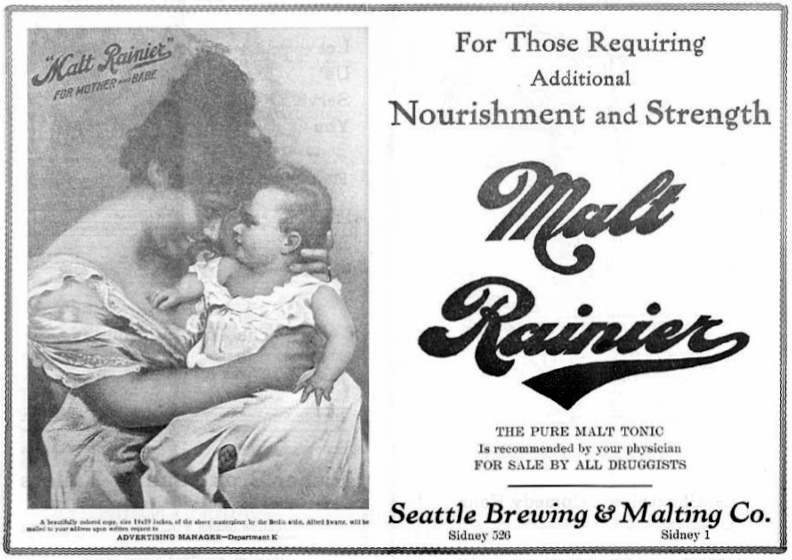
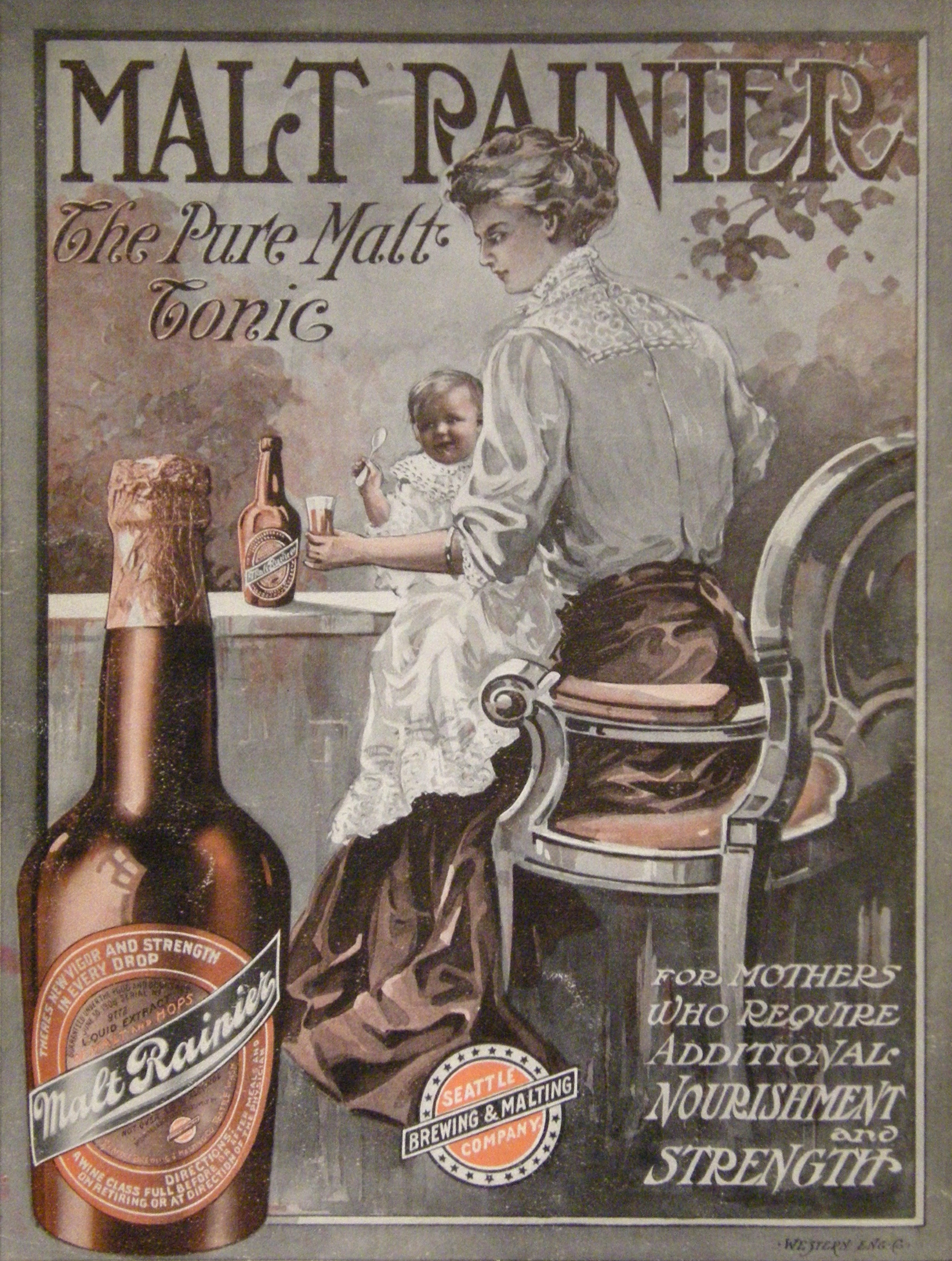

Isabella Alden might have had these beers in mind when she created the character of Eben Bruce in One Commonplace Day. Eben was a medical student, studying under the direction of the town doctor. Eben developed a habit of drinking alone in his room when he was supposed to be studying.
His mother was at fault. She had sipped her beer when he was a creeping baby, to give her strength to care for him. He never thought of blaming his mother for the fire that burned in his veins and had roused into power with the first taste of alcohol. Blessed ignorance of babyhood! He did not know that she was to blame. Miserable ignorance of motherhood! She did not know it either.
Unfortunately, some brewers, like The Seattle Brewing Company, weren’t satisfied with just nursing mothers drinking their beer. They wanted the mothers’ children to drink it, too, and they targeted their marketing campaign for Rainier Beer directly at children. At the time, Rainier Beer had an alcohol content of 4.91%, similar to levels of today’s beer.


Brewers got away with these tactics by labeling their beers as “pure” or “nourishing” or a “tonic.” By doing so, the product was considered medicinal.

Medicinal wines, whiskeys and beers were sold over the counter in drug stores. For serious alcohol consumption, the drugstore was the place to go; and since no prescription was necessary, virtually anyone could walk out of a drug store carrying a bottle of alcohol labeled as medicine.

Even a product as intoxicating as Vin Mariani was available for purchase without a prescription. Vin Mariani was incredibly popular because of the potent effects of its formula: 6 milligrams of cocaine for each ounce of Bordeaux wine. Like other “medicinal” wines, it was advertised in medical journals and was widely prescribed to children.

Could it be that Isabella Alden was right to be alarmed? Did mothers unwittingly create “a thirst for alcohol” in their children at a young age, or even before they were born? Perhaps, as Isabella wrote, the blessed ignorance of motherhood prevented them from knowing what kind of damage they may or may not have done to their beloved children simply by following doctors’ orders.
You can click on any of the images in this post to see a larger version.
 Click here to read more about Isabella Alden’s book, One Commonplace Day.
Click here to read a New York Historical Society blog post about Pabst Malt Extract.
Click here to learn more about Vin Mariani, the medicinal wine that took the world by storm.
Click here to read a biography of Abraham Jacobi, M.D.

 One Commonplace Day is now available on Amazon!
It was just an average town picnic on an average October afternoon. Hundreds of people attended the gathering; but for one small group of picnic-goers who sat together to eat pickles and chicken and cream, life would never be the same again. For in the midst of that average picnic, God went to work in their hearts and set in motion a series of extraordinary events. Before long the small group of picnickers banded together to do the Lord’s work, and to shape the destinies of each other’s souls.
This edition of the 1886 classic Christian novel includes a biography of the author and additional bonus material.
Follow this link to download One Commonplace Day for your Kindle, PC, Mac or mobile device.

Affordable Christian Fiction
Faith, romance, and a place to belong
Author of Classic Christian Fiction
Author of Classic Christian Fiction
Reviews and giveaways for Christian fiction and sweet, clean fiction. Bringing readers information on great stories and connecting authors with their readers.


