A Dose of Beef Tea

In the latter half of the 18th Century and the early 19th Century, illness of any kind was not to be taken lightly. A simple head cold or case of influenza, if not properly cared for, could easily prove fatal.

Isabella Alden illustrated the point in her novel Jessie Wells, when Jessie’s friend Mate came down with a cold and died within days of complications from a fever.
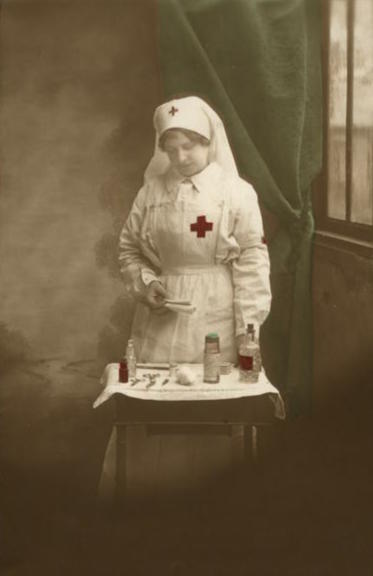
Nurse with medicine bottles

Illness, disease and death were topics Isabella Alden regularly dealt with in her books; but she also gave insight into the remedies of the time. Patent medicines were widely available but home cures were even more popular. (You can read a previous post about the Molasses Cure by clicking here.)

By far the most popular cure Isabella mentioned in her books was beef tea, and for good reason. Beef tea was more frequently prepared for invalids and patients than any other curative. In 1863 The New York Times published an article about care Union soldiers received during the Civil War, citing their “beef-tea diet” as part of “their daily fare in hospital, its excellence and variety, and the admirable arrangements for their comfort.”

Illustration of invalid cookery from The Book of Household Management.

 An 1886 article in Arthur’s Home Magazine called it “the food which is perhaps more valuable and more frequently prepared for invalids than any other.”

“When first supplied in cases of weakness, beef-tea is usually taken with great relish. It seems to give strength and to supply just what is wanted, and a patient will look for it and enjoy it heartily.”

Woman holding tea cup and saucer

.That was certainly the case in Workers Together: an Endless Chain. In the story Mrs. Saunders took a sick young man named Robert into her boarding house. Following doctor’s orders, she immediately began nursing Robert with doses of beef-tea:

The new nurse was ready-handed and cheerfully authoritative. She tucked a fine damask napkin under her patient’s chin, and skillfully fed him with spoonfuls of beef-tea from a solid silver teaspoon. When she decided that he had taken nourishment enough, she whisked away spoon and cup without question, straightened the bed-clothes, beat up another pillow and arranged it dexterously under his head, telling him, meantime, that he looked better already, and that he must keep up good courage, which was always half the battle in everything. Then she drew down the shades, and told him to mind the doctor and go to sleep; and assuring him that Tommy, the bell-boy, should sit just outside the door and would hear if he but just touched the little silver bell by his side, she disappeared before Robert had time to reflect on the questions that he wanted to ask her.

Tea Cup Vine-GraphicsFairy

In Her Associate Members, Chrissy Holmes served her husband a cup of beef tea every night to help him recuperate from an illness. When she found out her neighbor Mrs. Carpenter was ill, too, Chrissy took some of the beef tea to her:

“I should recommend some beef broth for a change, and fortunately I put into my basket a bottle of some which I made fresh today for my husband. I brought my little spirit-lamp along also, to heat it on, for the day is so warm I thought you might not have any fire.”

While she spoke she busied herself in getting out the bottle and  lamp, and a delicate china cup, tinted in pale blue. Mrs. Carpenter watched her with severe eyes.

“Mrs. Holmes,” she said, at last, “there isn’t the slightest need for that, and I wish you wouldn’t. If you think you make me more comfortable doing it, you don’t. I would much rather be let alone; I’m not used to being taken care of. I have had no care since I was a young girl, and I never expect any again. I don’t want it. All I ask of this world is a chance to work and be let alone.”

Tea cup floral


Chrissy did not react to Mrs. Carpenter’s ungrateful comments.

In silence she poured out and administered the beef tea once more, standing silently by while the contents of the cup were being drained again and pronounced very good.

“I can feel that it is giving me strength,” said Mrs. Carpenter, as she returned the cup; “and I am obliged to you, though I’ve almost forgotten how to express such feelings.”

Armour & Company advertisement, 1900.

Beef tea was widely believed to give strength to the ill, but by the 1880s the medical community began to frown on it as a cure.

“Beef tea is a stimulant rather than a food. A person may be hungered to death on it,” declared J. Milner Fothergill, M.D., in an 1880 paper to the Royal College of Physicians in London.

But by that time, belief in the healing powers of beef tea was deeply entrenched in public lore, helped in large part by the manufacturers of beef extracts. The products were a boon to homemakers, since making beef tea in the kitchen was time consuming and wasteful (a pound of beef yielded barely a pint of tea.)
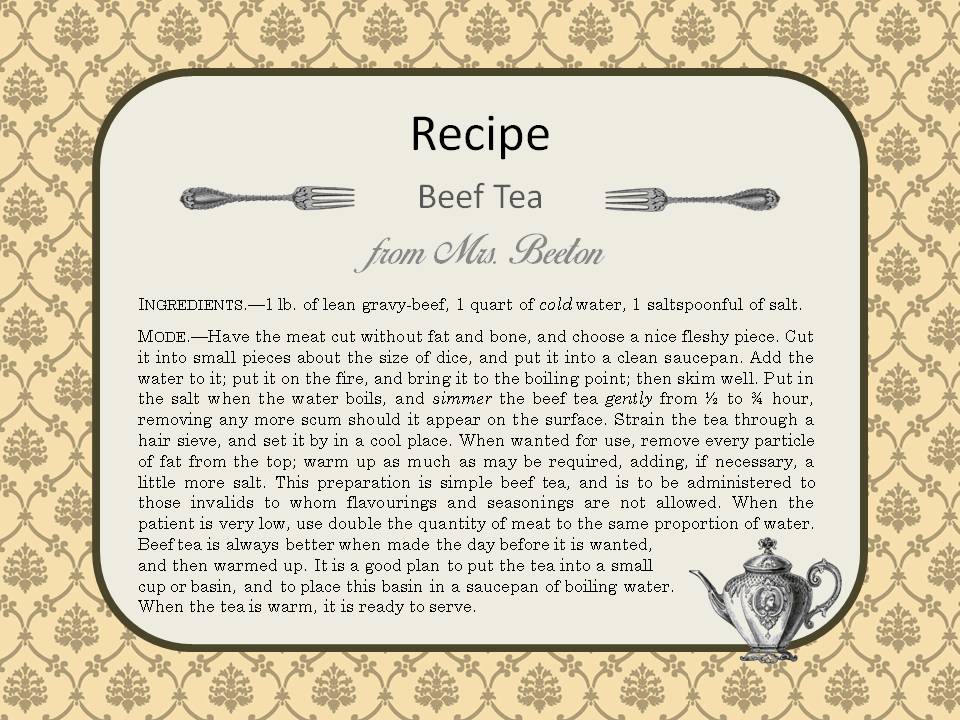
Recipe Beef Tea


This 1896 trade card for Armour’s Extract of Beef promotes the product’s use in making soups.

Armours Extract trade card 1896 front    Armours Extract trade card 1896 back

But in other ads, the same company also promised health benefits to people who used their product, as this 1895 magazine ad shows:

Armour's print ad 1895

In the 1860s a whiskey distiller in Cincinnati, Ohio began producing a “tonic elixir and liquid extract of beef” they claimed could cure “female diseases,” indigestion, and weaknesses of all kinds.
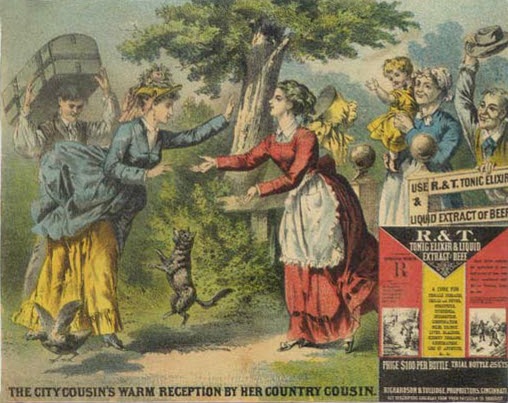
R&T Tonic Elixir ad, 1870

American companies like Cudahy Packing Company and Armour & Company—which originally manufactured beef products to make broths, soups, and gravies—boosted their sales by claiming healing properties in their products.
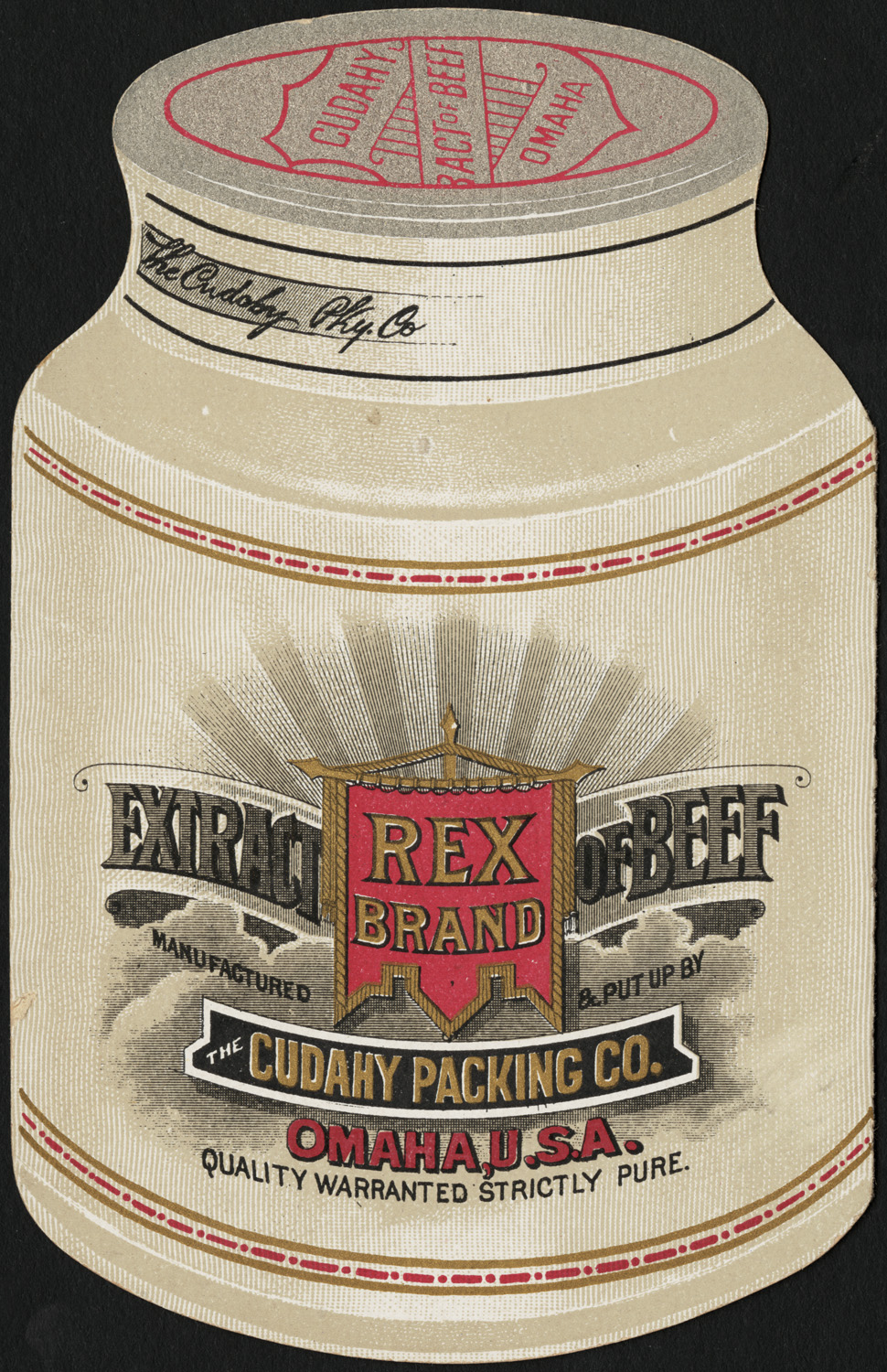
Cudahy's Rex Brand Fluid Beef trade card front      Cudahy's Rex Brand Fluid Beef trade card interior

Johnston’s Fluid Beef, which originated in Scotland, took great care to publish testimonials in America that strengthened their health claims:

Johnstons Fluid Beef testimonial

Soon other companies like Liebig Company followed suit. They promised good health, strength and vitality to individuals who consumed their product.

Liebig Trade Card 1885      Liebig ad 1899

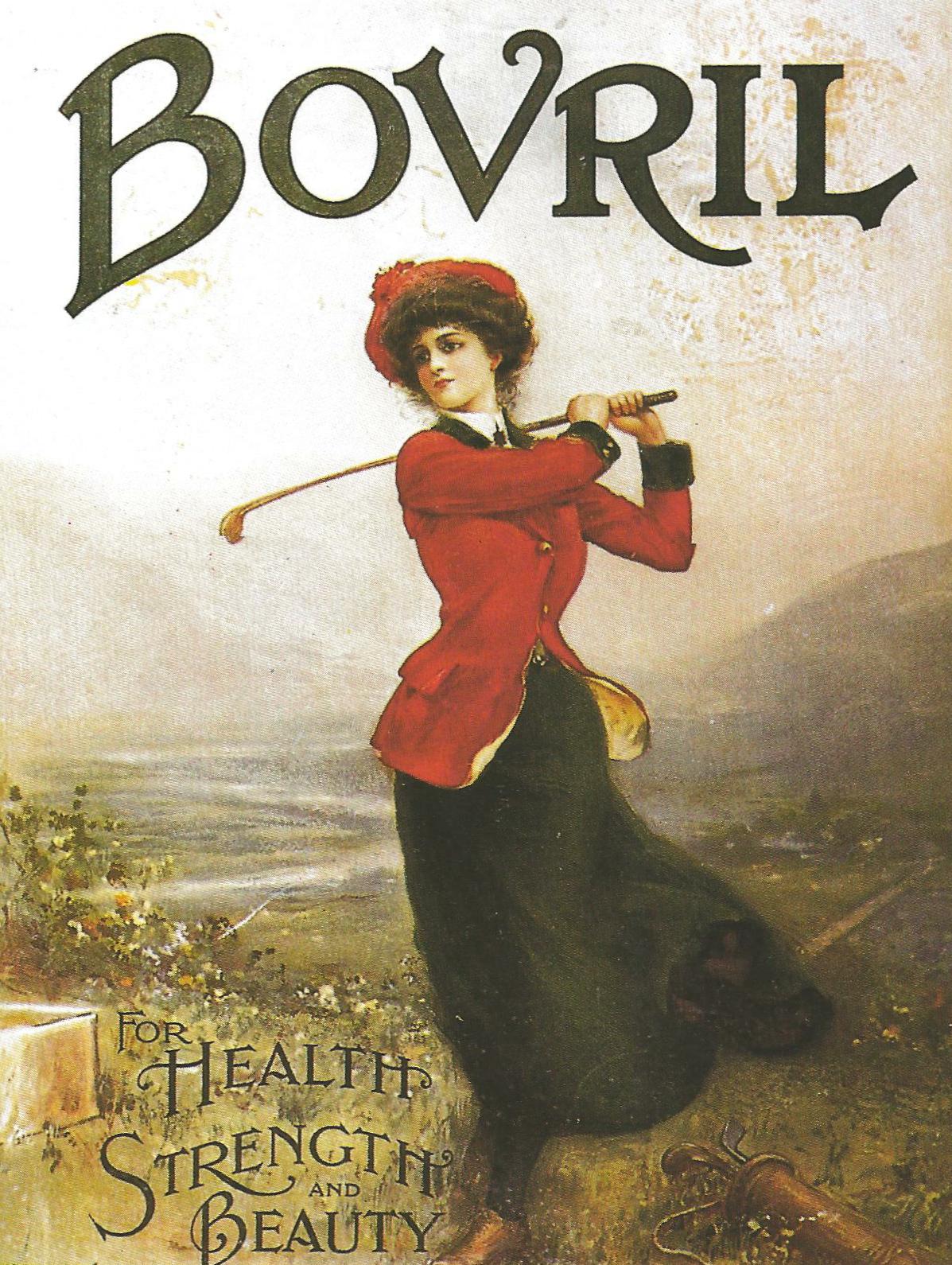
Bovril, a British product developed by Johnston’s Fluid Beef of Scotland, didn’t promise simply to cure American consumers of disease. They went one step further and promised to prevent disease.
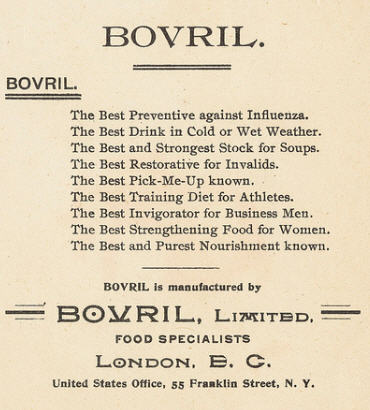
Bovril benefits ad undated

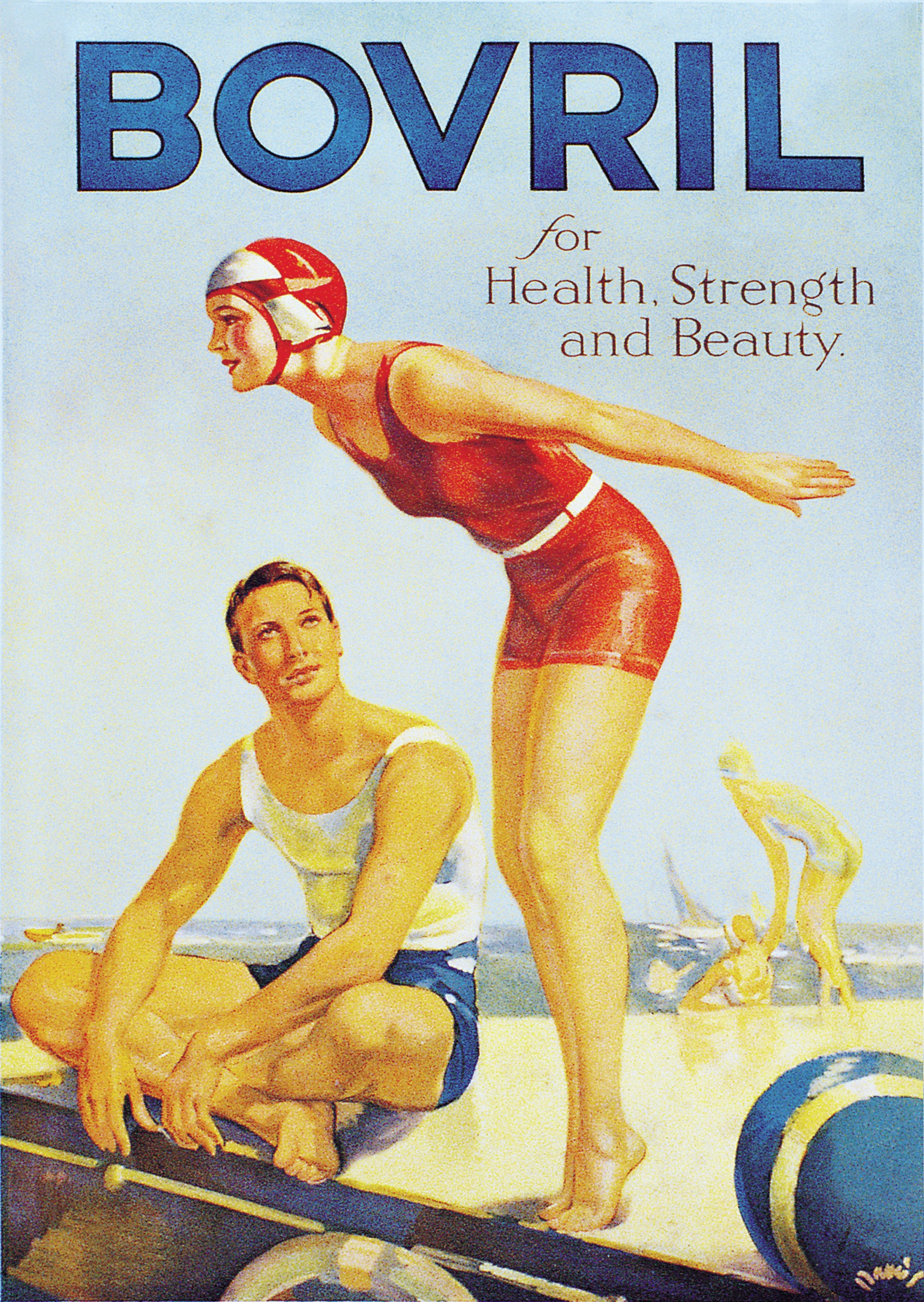
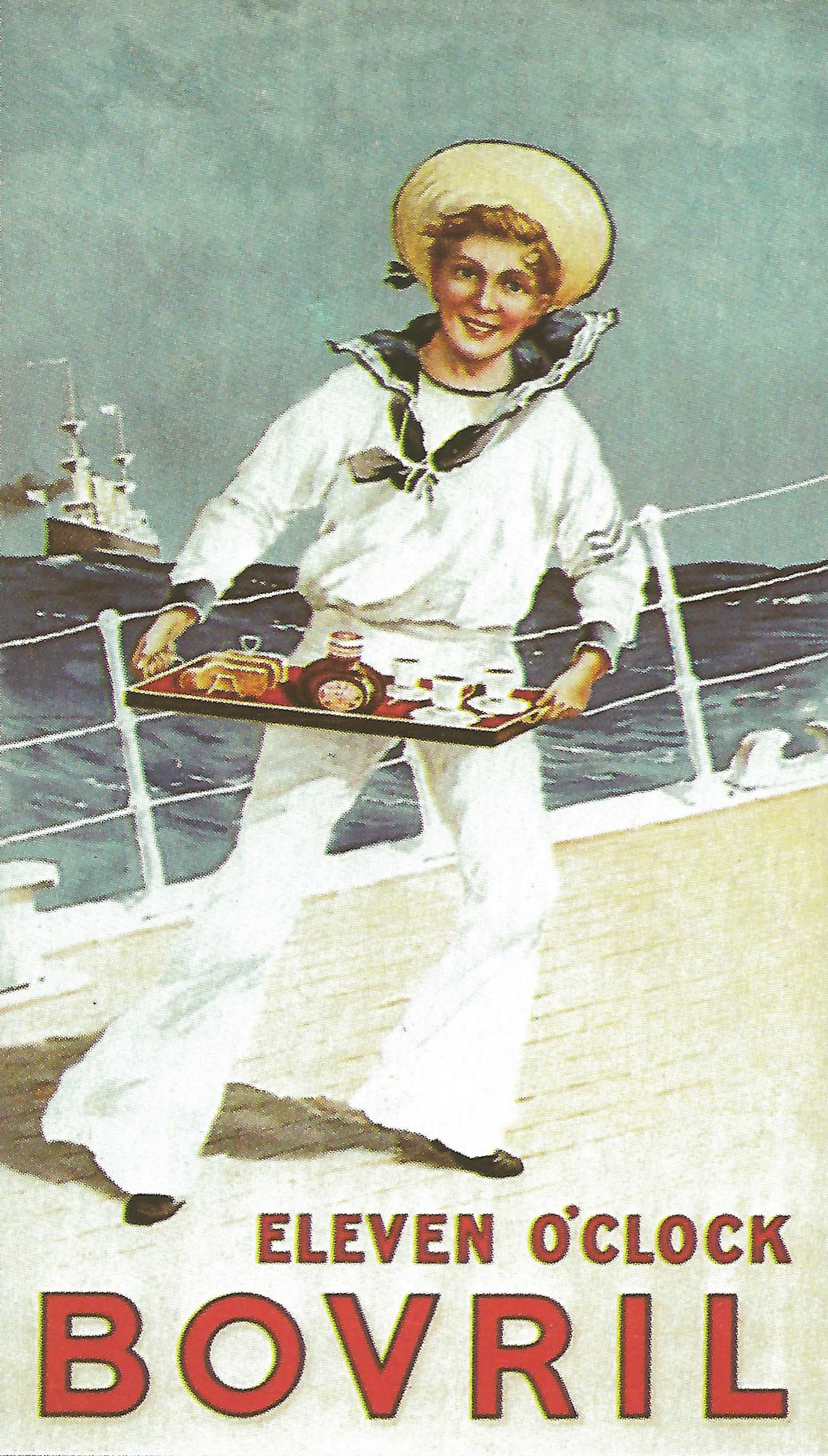
Bovril’s advertising to Americans typically featured images that reinforced their claims of strength, vitality and energy. Strong, charging bulls, healthy, masculine men and beautiful, energetic women graced Bovril’s advertisements.
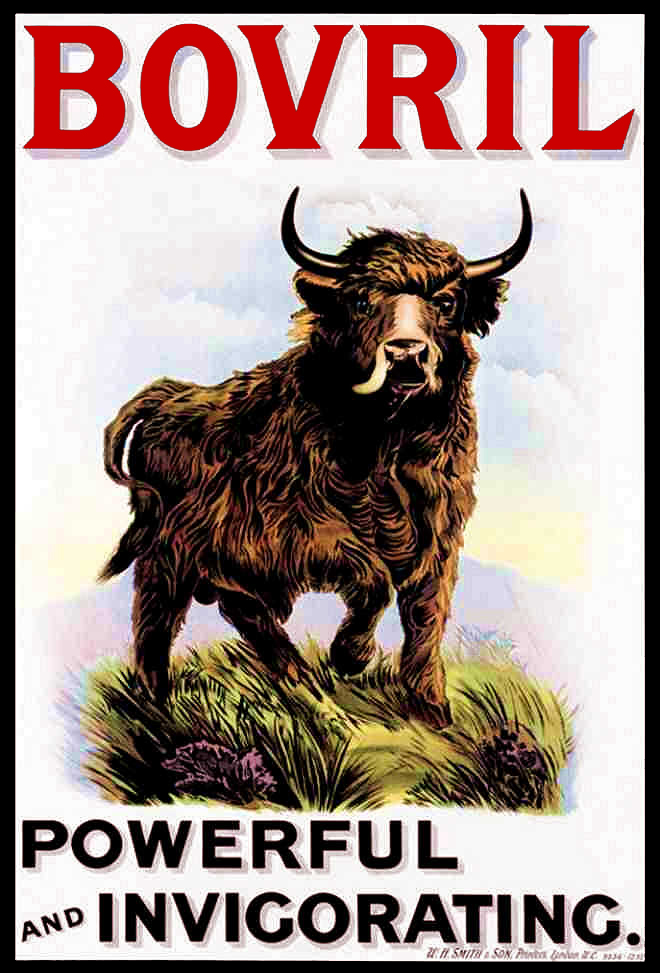
Bovril Steer undated    Bovril Steer ad card

Bovril trade card 1903    Bovril Swimmers

Bovril British Navy ad 1903     Bovril Sailor ad 1903

And this ad conveyed a subliminal message that if Bovril was used in hospitals throughout the world, the product’s health claims must be true.

Bovril ad hospitals

Today Bovril is still marketed around the world, although the company no longer makes inflated health claims based on dubious scientific testimony. The product has a loyal following, particularly among fans of football (that’s soccer to us in America), who take it along as a hot drink to sip while cheering on their favorite team on chilly mornings.

Bovril Today
The distinctive Bovril pot.


A Tour of Chautauqua: Lectures and Classes

(Note: You can click on any of the images in this post to view a larger version.)

The Chautauqua Assembly had a modest beginning in 1874. It was originally conceived as a summer training program for Bible teachers; but from the start, the Chautauqua Assembly differed greatly from accepted Bible training of the time. At Chautauqua, Sunday school teachers gathered not in convention halls to hear reports and listen to speeches. Instead, they spent two or more weeks in the out-of-doors studying the Bible, attending classes, and collaborating together to create Sunday school lesson plans for use in churches across the country. From that modest beginning, the Chautauqua Institution grew and its mission expanded, as did its fame.

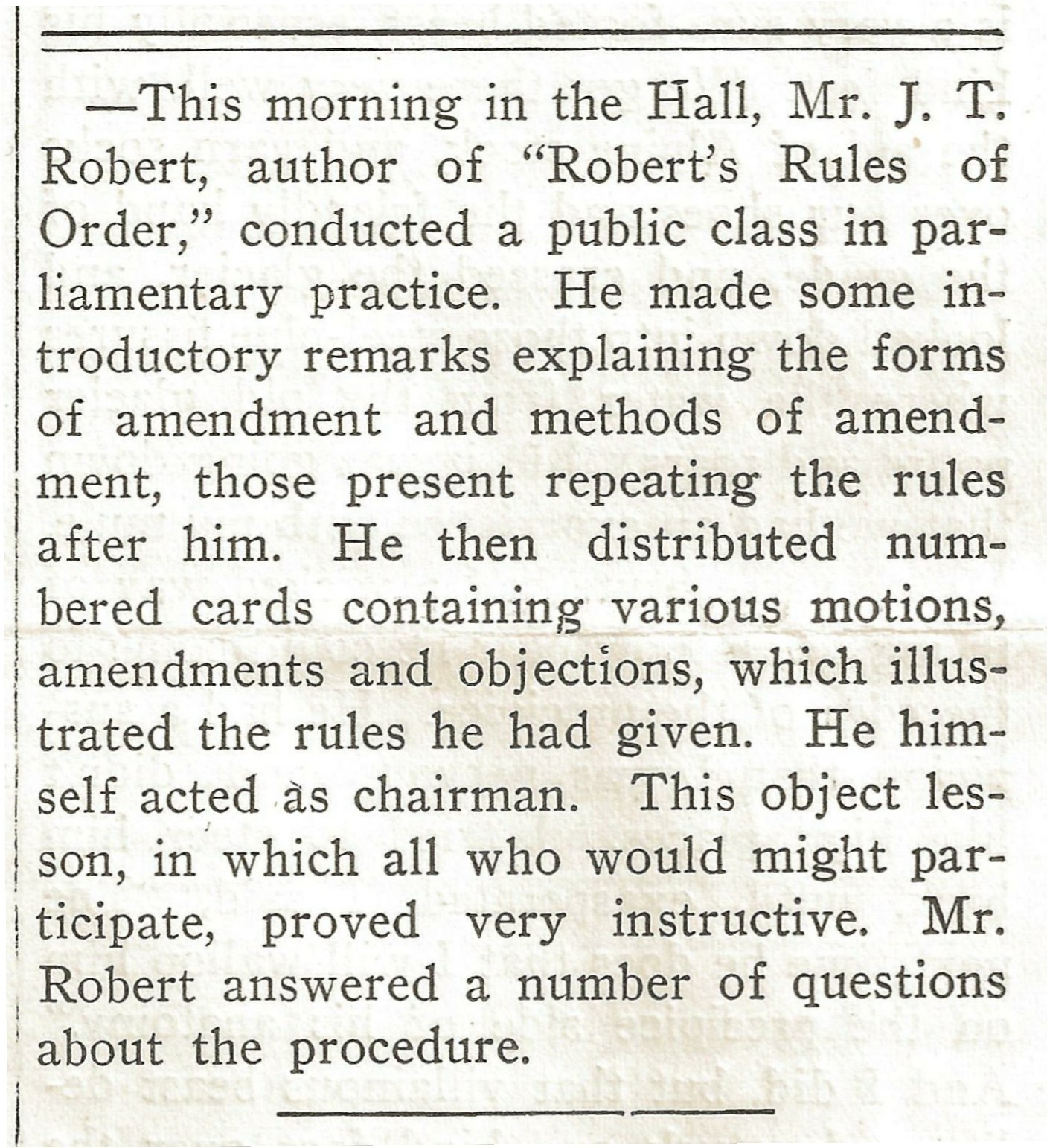
Report of a summer class on Robert’s Rules of Order, 1901

By 1885, when the twelfth annual Chautauqua Assembly was held, over seventy-five thousand people gathered—some for a day, some for a week and several thousand for the entire eight-week term of the Summer Assembly. While many still came to be trained and inspired as Sunday school teachers, others came to hear lectures and attend classes on the Bible, ancient history, science, and philosophy. They participated in experiments in chemistry, and studied the stars through telescopes. They learned languages of the world, including Hebrew, Latin or Greek; and received instruction in music and vocals.

Report of a Harvard Professor’s Lecture; 1901.

A remarkable element of the Chautauqua Summer Assembly was the level of course instruction. The best lecturers and teachers in the world came to Chautauqua. Renowned clergymen, famous statesmen, and college presidents lectured at the Assembly, as did Nobel Peace Prize winners and military heroes. Students with grade-school educations sat beside college graduates at lectures given by professors from Yale, Harvard, Cornell, Wellesley, Johns Hopkins and other prominent universities from the U.S. and Canada.

Chautauqua’s democratic culture extended beyond the classroom. The Reverend Jessie Lyman Hurlbut told of a woman who once said:

“Chautauqua cured me of being a snob, for I found that my waitress was a senior in a college, the chambermaid had specialized in Greek, the porter taught languages in a high school, and the bell-boy, to whom I had been giving nickel tips, was the son of a wealthy family in my own State who wanted a job to prove his prowess.”

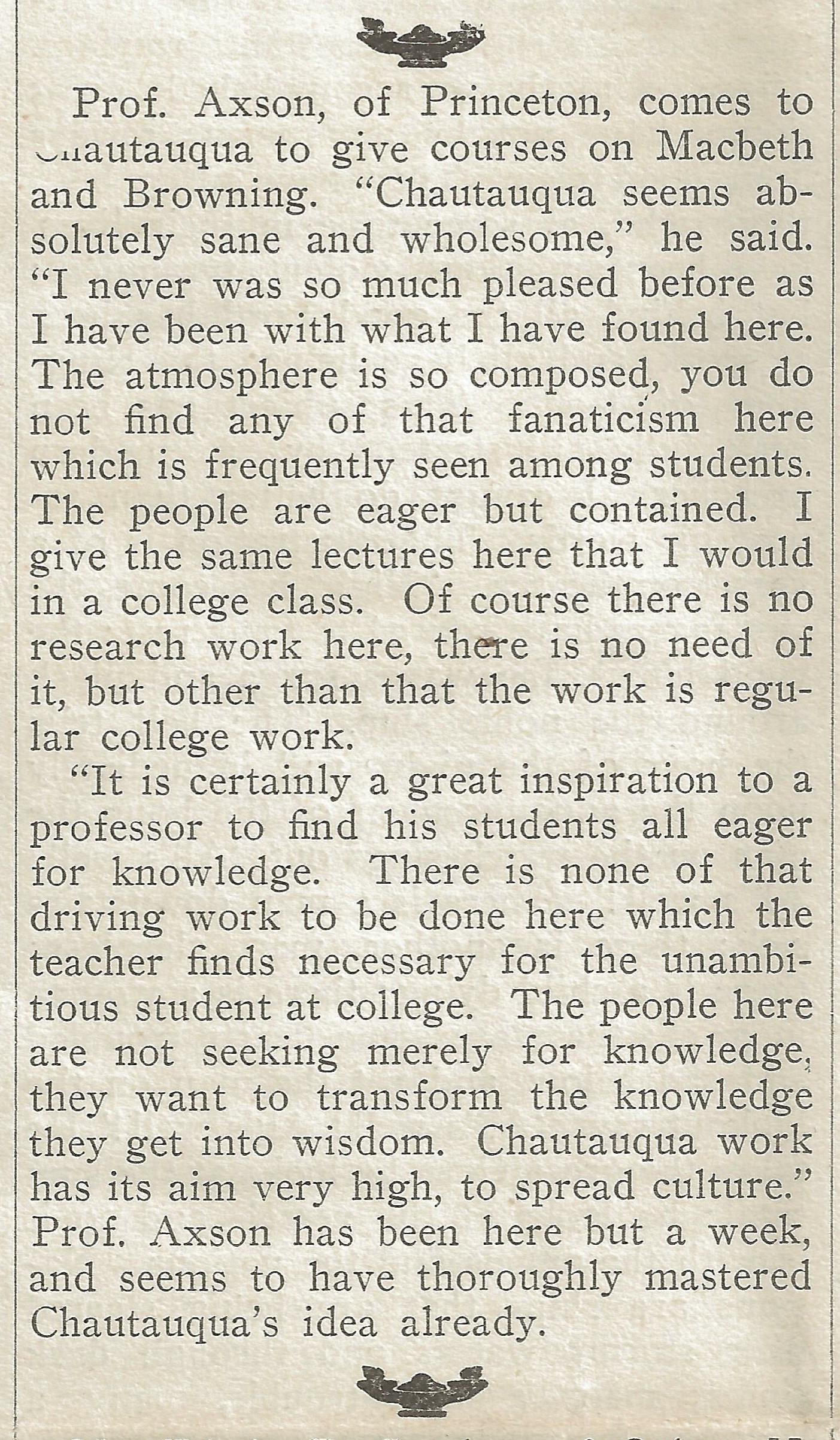
1901 announcement of classes offered by a Princeton professor.

But not everyone was as open minded. Reverend Hurlbut also recalled chatting with a highly respected clergyman from England as they sat together at a hotel table. When he explained to the clergyman that their waiter was a college-student, working to earn money to continue his college coursework, the clergyman was offended. “I don’t like it, and it would not be allowed in my country. I don’t enjoy being waited on by a man who considers himself my social equal!”

Theodore Roosevelt
Theodore Roosevelt


The names of guest lecturers read like a Who’s Who of the time: G. K. Chesterton, H. G. Wells and George Bernard Shaw. Theodore Roosevelt attended four different years and when William Jennings Bryan took the podium, Chautauquans packed the Amphitheater to its utmost corners to hear him speak.

Lectures and classes were designed to educate and stimulate, to encourage Chautauquans to think globally and broaden their views. Students were urged to discuss lecture contents and ask questions so they had a full understanding of the issue or topic at hand.

06Chautauqua College
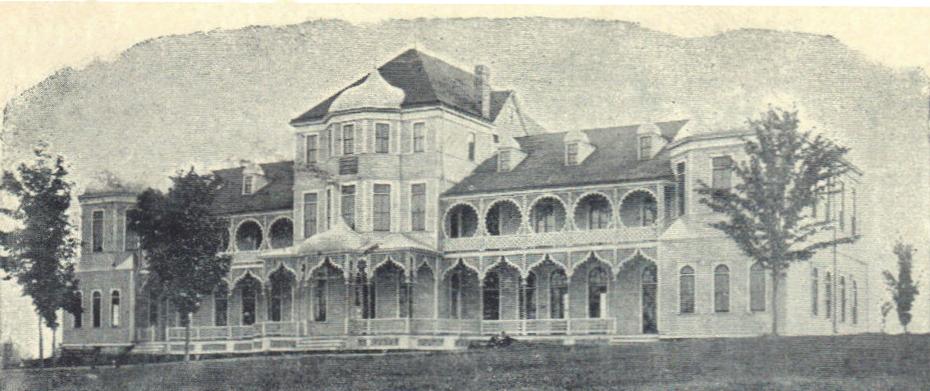
The Chautauqua College building.

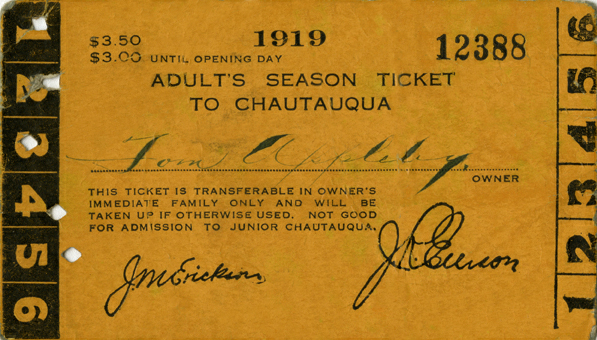
The Chautauqua Summer Assembly was part of a wider Chautauqua system of education that included as many as eight different departments. Each department offered classes and lectures throughout the summer months of July and August.In July 1884 an individual could purchase a one-day admission to the Summer Assembly for 25¢. That admission cost gave them access to all lectures, classes and meetings except those conducted by the School of Languages and the Teachers Retreat. In August the cost of a one-day admission rose to 40¢.

Chautauqua Ticket, 1919

If you planned to stay longer, you could purchase admission for a week in July for $1.00, or $2.00 for a week in August. Or you could stay the entire summer term for $4.00.

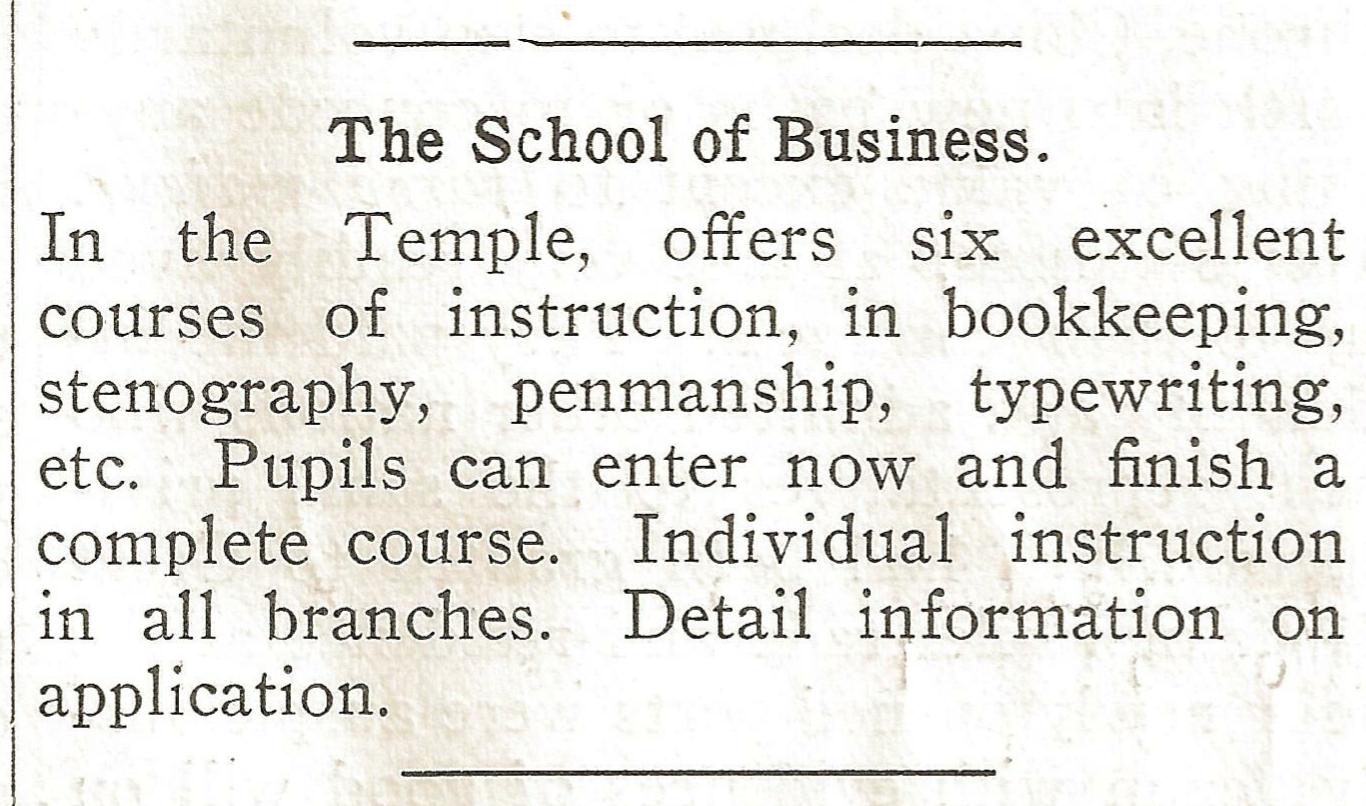
Courses offered by the School of Business, 1901

Some special classes required a separate ticket. For example, 15 lessons in penmanship (including stationery) cost $2.50; a course in bookkeeping cost $3.00; 10 lessons in elocution cost $4.00; and 4 weeks of instruction in Hebrew cost $10.00.

Newsboys of the Chautauqua Assembly Herald

With so many available classes and so many activities to attend, Chautauquans had to schedule their days with precision. They mapped out their daily classes, lectures and activities by reading The Chautauqua Assembly Herald. This newspaper, published on-site every day but Sunday, listed the weeks’s offerings. It also gave an account of the speakers, meetings, and activities from the previous day. Eager Chautauquans took advantage of as many offerings as they could, often running from one event to another from 8:00 a.m. until 10:00 p.m.

Click on this link to view the July 29 and July 30, 1901 editions of  The Chautauqua Assembly Herald. On page 4 of each edition you’ll find a list of the week’s programs, meetings, lectures and classes.

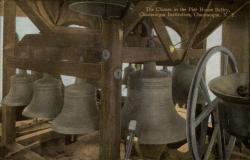
11 Chautauqua Chimes 1924The Chautauqua Institution kept things running in a timely manner. Five minutes before the hour a bell rang, giving notice that the next event or class would begin promptly at the top of the hour. The sound of the bell usually resulted in a throng of people streaming out the door of one class in order to get to the next class on time. Bells marked the hour until 10:00 p.m. when the last night bell rang signaling quiet.

In Four Girls at Chautauqua, Flossy Shipley overheard a man say, as he ran past her, “Confound it all! Talk about getting away from these meetings! It’s no use; it can’t be done. A fellow might just as well stay here and run every time the bell rings. I heard more preaching today on this excursion than I did yesterday; and a good deal more astonishing preaching, too.”

An afternoon class in German, circa 1895.

With each passing year, the number of people attending the Summer Assembly increased, as did the number of schools and courses offered. For instance, in 1901 the School of Languages added Arabic and Assyrian to their offerings of French, German, Spanish, Latin, Hebrew and Greek. Students took classes in mathematics, oratory and expression, mineralogy and geology.

Art Lessons

There were classes in clay modeling and china painting, as well as classes in music and singing. Small cottages were erected in a far-away corner of the grounds where music students could practice their scales and exercises without disturbing their neighbors. One instructor wrote, “I am told that forty-eight pianos may be heard there all sending out music at once, and each a different tune.”

Cooking Class.

The School of Domestic Science attracted great attention. One instructor, Mrs. Emma Ewing, erected a model kitchen and taught ladies from all walks of life to make bread, prepare meals, and serve tables with refinement.

A class in Library Science, 1904

The Summer Assembly offered career training, as well. Students learned shorthand and typing, grammar and composition, library sciences and bookkeeping.

15 School for Library Training
Announcement of the School of Library Training, 1901.


Standing room only at an open air lecture. About 1896.

In the early years of the summer Assemblies, classes were held in tents but as Chautauqua grew, buildings were erected to accommodate students.

The majority of the lectures were held in the Amphitheater. Erected in 1897, it could hold 5,500 to 5,600 people; but some lectures proved so popular that the Amphitheater overflowed.

Chautauqua crowds listen to a speaker in an open area.

Other lectures were held in the park, or anywhere else that could accommodate large numbers of attendees. The subjects were widely diverse, covering a broad array of topics:

  • The Last Days of the Confederacy
  • Going Fishing with Peter
  • The Women of Turkey
  • The Physiological Effects of Alcohol
  • Ideals of Modern Education
  • Christian Life in the Modern World
  • Shakespeare as a Moral Teacher
  • America’s Leadership in World Politics
  • The Knights of King Arthur
  • Does Death End All?
  • A Study of the Lynch Law
  • The Juvenile Court
  • The Drama and the Present Day Theater
  • Beyond the Grave
  • The Artisan and the Artist
  • The Ideal of Culture
  • French Literary Celebrities
  • The One-Hundred Worst Books
  • A Dozen Masterpieces of Painting
  • Mountain Peaks in Russian History
  • Growth and Influence of Labor Organizations

 Click on this link to read the text of a lecture presented July 26, 1901 by Dr. P. S. Henson of Chicago on the topic of grumbling. (Yes, grumbling!) You’ll find it on page 3 of The Chautauqua Assembly Herald.

Isabella Alden was arguably the best chronicler of the Chautauqua Summer Assembly experience. The characters she created in her books represented the diverse people who attended the Assembly and their different social and economic walks of life. She also captured the varied topics and inspirational nature of the many classes and lectures the Summer Assembly offered.

Next Stop of our Tour of Chautauqua: Palestine Park


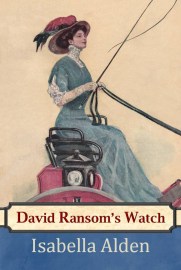
Now Available: David Ransom’s Watch

Cover_David Ransoms Watch resizedDavid Ransom’s Watch is now available!

Miss Hannah Sterns received plenty of marriage proposals in her time. There was Ben Ransom, the fickle, restless charmer who cheated his older brother David out of his most beloved possession—their father’s watch. And Ray Prescott, the minister who dreamed of the good works he could accomplish for Christ with Hannah by his side. Yet Hannah remained unmarried in the big house on the farm just outside town . . . until the fateful day that Hannah’s heart was finally touched by love in a most unexpected way.

But old beaux have a way of coming back, and after years of separation, Hannah finds herself mired in Ben Ransom’s troubled life. Soon, Hannah realizes that the future of the one she loves most is inextricably tied to Ben Ransom, his brother David, and David’s beloved silver watch.

This edition of the 1905 classic Christian novel includes a biography of the author and additional bonus content.

Click on the cover to read sample chapters on Amazon and learn more about Stephen Mitchell’s Journey.

Ladies Riding Cars

By 1900 streetcars were plentiful in large cities and were an accepted method of transportation about town. But riding the cars presented certain difficulties for ladies. There were, for instance, specific streetcar rules of etiquette for women. One of the primary rules was that ladies must refrain from riding the cars during peak commuting hours of the day, so they wouldn’t hinder men on their way to and from work.

Ladies’ conduct on streetcars had to be modest and lady-like at all times. Perspectives on Etiquette, an early book by Emily Post, admonished:

On the street, in streetcars, and in all public places, if your voice or conduct attracts attention you will be considered “loud,” “common,” vulgar.

That sentiment is in keeping with a scene Isabella Alden described in her book, Workers Together, where Miss Mason, the Sunday school teacher, observed one of her students, shop-girl Hester, behaving brazenly on the streetcar.

Behold, directly opposite to her, sat the girl with the queer bonnet! Queer it certainly was. Not merely the queerness of bad taste in selection, but that worst form of queerness—an attempt at being stylish, which, in this case, resulted only in a profusion of bright, cheap flowers, mingled with yards of bright ribbon of contrasting hue, so arranged that the whole effect was exasperating to refined taste. There were more serious defects about the girl than an ill chosen bonnet. She was a loud-voiced girl, who talked much and laughed much, and was altogether so very familiar with the young man in the gay neck-tie who stood before her, holding on by the strap, that Miss Mason shuddered as she listened.

Later, Miss Mason criticized Hester to the Sunday school superintendent:

“I don’t like the girl’s appearance. She is one of the loud-voiced, gay sort; converses on the street-car in a tone loud enough to be heard by all the passengers.”

There were other rules for ladies. Miss Leslie’s 1864 book, The Ladies’ Guide to True Politeness and Perfect Manners gave the following instructions:

If, on stopping an omnibus, you find that a dozen people are already seated in it, draw back, and refuse to add to the number; giving no heed to the assertion of the driver, that “there is plenty of room.” The passengers will not say so, and you have no right to crowd them all, even if you are willing to be crowded yourself—a thing that is extremely uncomfortable, and very injurious to your dress, which may, in consequence, be so squeezed and rumpled as never to look well again. 

It is most imprudent to ride in an omnibus with much money in your purse. Pickpockets of genteel appearance are too frequently among the passengers. 

If you are obliged to have money of any consequence about you, keep your hand all the time in that pocket.

No lady should venture to ride in an omnibus after dark, unless she is escorted by a gentleman whom she knows. She had better walk home, even under the protection of a servant. If alone in an omnibus at night, she is liable to meet with improper company, and perhaps be insulted.

Marion Harland’s 1914 book, Complete Etiquette advised:

One of the things that most women need to learn is the correct way of getting off a street-car, which is to step off with the right foot, facing front, which saves awkwardness in every case and sometimes, if the car starts too soon, an accident.

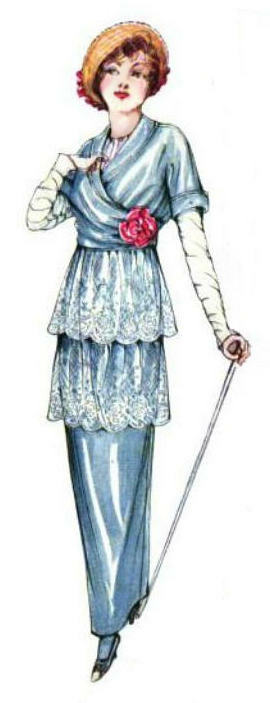
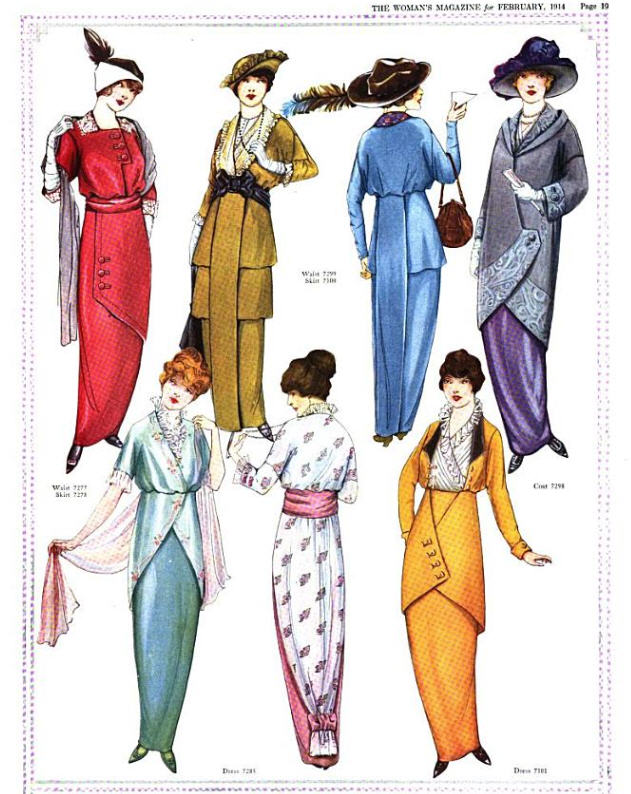
Why was this bit of helpful instruction so important? By 1910, women’s fashion had changed dramatically. Gone were voluminous skirts measuring three to four yards of fabric at the hemline. Instead, ladies’ skirts were close fitting with sometimes only a single yard of fabric at the hem. Called “hobble skirts”, these skirts were cinched at the ankles and often cinched at the knees.

Cartoonists lampooned the fashion, ministers decried them from the pulpit, and newspaper editors vilified women who wore them. The editor of the Monroe City Democrat in Missouri pronounced:

“Wearing a hobble skirt will make the sweetest girl resemble the stopper to a vinegar cruet.”

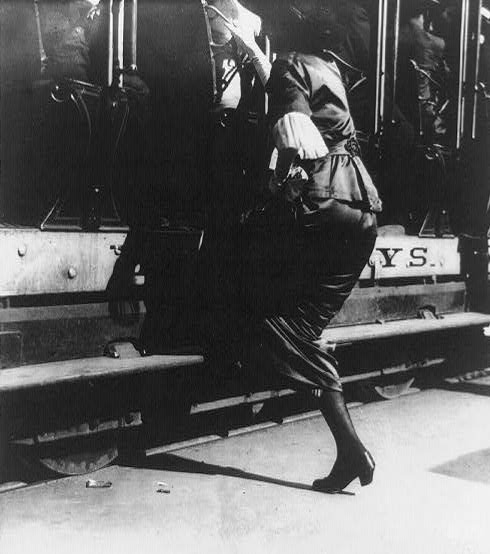
Women’s skirts had always posed a danger on streetcars; they got caught in doorways and their volume often blocked a woman’s view of steps and other hazards. Women often complained of the difficulty and immodesty they suffered in riding public transportation.

This newspaper photo of a lady in a wide-hemmed skirt (pre-dating the hobble skirt fashion) shows the difficulty women had climbing aboard streetcars and navigating steps that often measured 15″ to 20″ high.

But it wasn’t long before the introduction of hobble skirts had a disastrous impact on the street-car system. Cars stopped running on efficient schedules because ladies wearing the slim skirts blocked car doors while trying to hike their skirts up sufficiently to allow them to climb into the cars.

Image from the February 1914 issue of The Woman's Magazine

In subways, women were injured when they tried to step across the gap between the train and the subway platform and their feet slipped into the open space.

During rush hours, women who could not walk rapidly because of their skirts found themselves carried along by the force of the crowd behind them, or—even worse—pushed to the ground and trampled. In New York, the Interborough Rapid Transit Company was inundated by lawsuits from women who had been injured while entering, exiting or riding on cars.

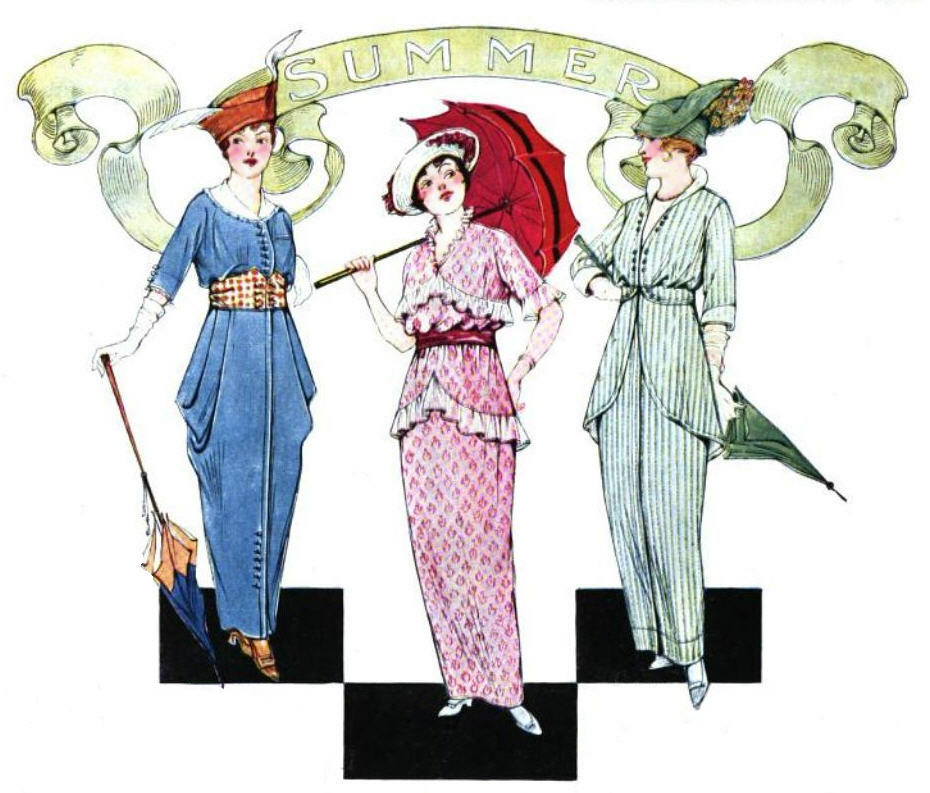
Image from the June 1914 issue of The Woman's Magazine.

The problem reached such a pitch that the New York transit company designed and implemented a new model of streetcar to accommodate women. Called Hobble Skirt Cars, they were constructed lower to the ground and featured one wide, sliding door set in the middle of the car. Passengers boarded by climbing a single step that was only six inches from the ground.

New York City Hobble Skirt Cars running up Broadway
New York City Hobble Skirt Cars running up Broadway from a postcard circa 1914


Close-up of a New York Hobble Skirt car

The car design was a vast improvement and was so successful, more cars were ordered. By 1912 New York City ran Hobble Skirt Cars up and down Broadway and the engineering trend spread across the nation.

Photo from Chicago's The Day Book dated April 10, 1912
Photo from Chicago’s The Day Book dated April 10, 1912

The reinvented cars were a great relief for women, but their troubles weren’t over. Click on the link below to read an article from 1922—a time when women wore much shorter skirts with much wider hemlines. Even in 1922 ladies still struggled to use public transportation. The Evening World 1922-06-21 New York step height

All fashion plates in this post are from 1914 issues of  The Woman’s Magazine.

Click here to read more about “riding the cars” and public transportation in Isabella Alden’s day.


Riding the Cars

Street-cars traversing Thomas Circle in Washington, DC in 1907
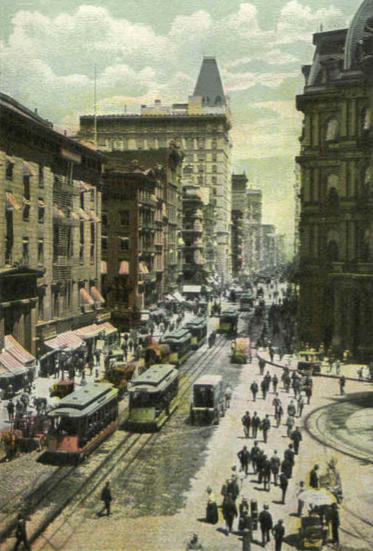
New York City looking north on Broadway in 1910.


When Isabella Alden wrote about her characters “riding the cars,” she wasn’t referring to automobiles. The “cars” she wrote about were steam cars and streetcars.

Steam cars were steam-engine locomotives, which ran between cities on rails. By the late 1800s, the period when most of Isabella’s stories take place, railroad stations were springing up in small towns and running across rural areas as fast as workers could lay the rails.

.

Offices of The Herald newspaper in New York City.

Like locomotives, streetcars also ran on rails, but the passenger compartments were smaller and narrower.  They were typically powered by either cable-pulley systems or electricity, but early streetcars were pulled by horses. Streetcars were common forms of in-town transportation in the early 1900s. Small, mid-size, and major cities across the country had robust street-car systems to transport riders throughout a city’s major business areas and often from one end of town to another.

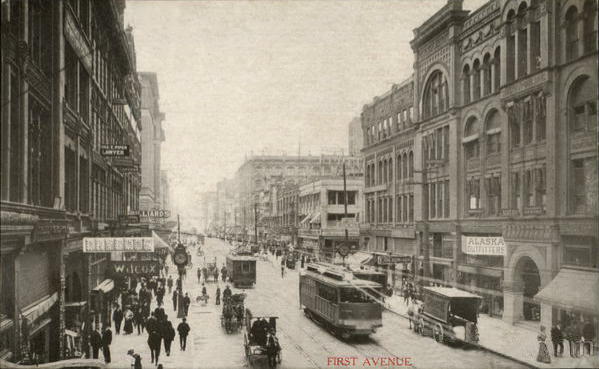
Streetcars running on First Avenue, downtown Seattle.

In Twenty Minutes Late, Caroline Bryant saw her first streetcar when she arrived in Philadelphia. Her only previous experience with riding a car was a seven-hour train trip she’d taken with her mother years before. In Philadelphia, her companion led the way to the street and lifted his hand in a peculiar manner.

A man who was driving what was to Caroline the strangest-looking wagon she had ever seen, drew up his horses and the wagon came to a stand-still. It had a number of little wheels, smaller than Caroline supposed wagon wheels were ever made.

“We’ll get into this car,” he said, “and that will save us a long walk and leave us a long enough one at the other end. I often wish I lived nearer the depot, but then it wouldn’t be so nice for my children as where I am now.”

Caroline was busy with one word: “car.” But there was no engine, only two horses.

“It must be a street car.”

She had heard Miss Webster speak of them, and also Judge Dunmore, and here she was getting into one!

When Twenty Minutes Late was published in 1893, horse-drawn streetcars were the norm, but by the early 1900s, streetcars became more mechanical and horse-power was replaced by cables or electricity.

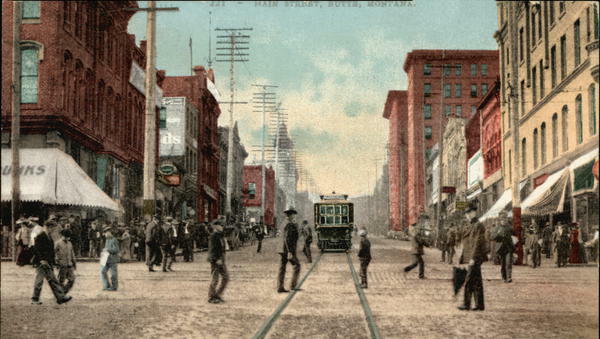
04 Butte Montana 1907
Main Street in Butte, Montana about 1907.

Smaller cities and towns had streetcars, as well. This hand-colored photo from a 1907 postcard shows a streetcar running the length of Main Street in Butte, Montana.

In Judge Burnham’s Daughters, the Judge’s young son, Erskine, was very fond of riding the cars. One Sunday the Judge offered to take the family into the city to attend church at St. Paul’s, a fashionable church where the worship music was supposed to be very fine.

10 Worcester Mass Train Station
An example of a train and streetcar station. This one is in Worcester, Massachusetts.

It would have been an easy trip. From their small town the Burnhams would have ridden a steam car into the city. Upon arrival, they wouldn’t have had to leave the station to find a  streetcar to take them to the area of town by St. Paul’s church.

Busy Main Street in Worcester, Massachusetts, 1910.
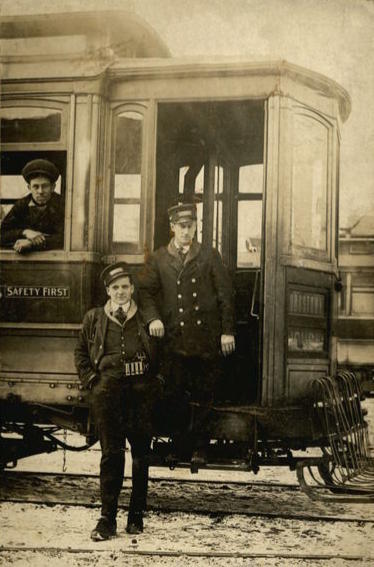
Streetcar workers in New York City.

But the Judge’s wife Ruth refused to let little Erskine go because she believed it was wrong to ride the cars on the Sabbath.

“My darling, don’t you remember mamma told you how the poor men who have to make the cars go, cannot have any Sunday—any time to go to church, and read the Bible, and learn about God and heaven?”

Streetcar workers in Albany, NY.

“I know, mamma; but the cars go all the same, and the men have to work, and so why can’t we ride on them? They wouldn’t have to work any harder because we went along.”

In Ruth Erskine’s Son, the street-cars stopped at the corner of the Burnham’s residential street, where widowed Ruth Burnham lived with her son and his wife. Now an adult, Erskine Burnham took the 8:00 a.m. car to his office downtown each morning just “as surely as the sun was to rise”; and every evening he returned home by streetcar to his wife and his mother.

“I don’t suppose you two can fully appreciate what it is to me to get home to you after a stuffy, snarly day in town. I sit in the car sometimes with closed eyes after a day of turmoil to picture how it will all look. But the reality always exceeds my imagination.”

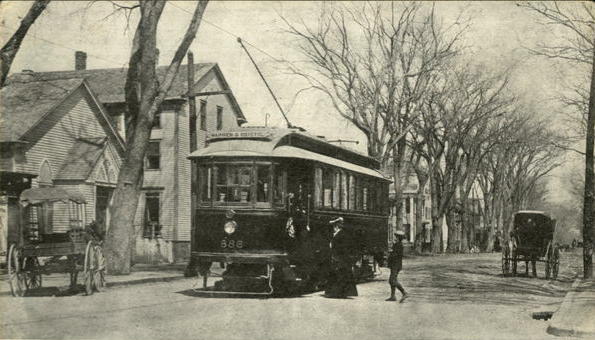
A streetcar running down a residential street in Bristol, Rhode Island.

In the evenings, his doting mother, Ruth, was able to watch for Erskine’s return from her bedroom window.

She leaned forward, presently, and watched Erskine’s car stop at the corner, and watched his springing step as he came with glad haste to his home.

In the majority of her books, Isabella Alden’s characters rode on the cars to get to work, to escape the city for a country idyll, or simply to run errands around town. But riding the cars was a little different for women than it was for men. Watch for a future post, Ladies Riding Cars, that will explore one of the unique challenges women faced while traveling on public transportation.


A Tour of Chautauqua: Having Fun

Fun along Chautauqua Lake in 1909

In her books about the Chautauqua Institution, Isabella Alden often described her characters walking with—or against—great crowds of people going from one lecture or class to another.

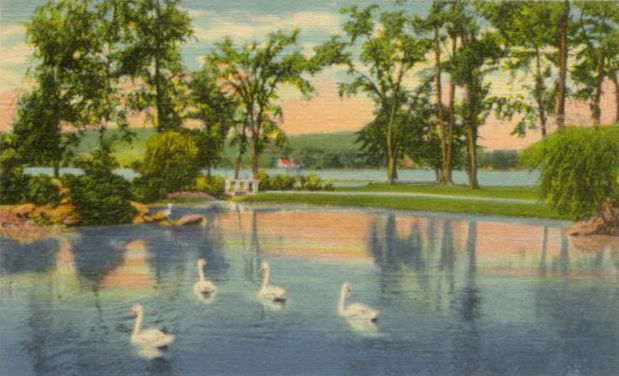
Serenity at Chautauqua Lake.
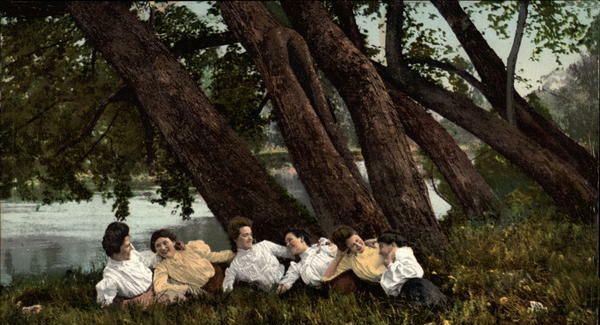
A Bunch of Beauties at Chautauqua Lake, 1906

A visitor to Chautauqua could stay busy from breakfast to bed-time if he or she took advantage of the many learning opportunities offered throughout the day.

But the Chautauqua experience included leisure activities, as well. Chautauqua’s very location enticed visitors to walk the beautiful grounds or enjoy the lake’s offerings.

Chautauqua On the Point


Visitors could join friends in the park, take a swim in the lake, rent a canoe or sailboat, or explore the paths and walkways on their own.

.

.

The Bathing Beach. Undated hand-colored photograph
Canoing at Chautauqua, 1910.
Canoing at an inlet-early 1900s
At an inlet in Chautauqua Lake. Postcard from early 1900s.
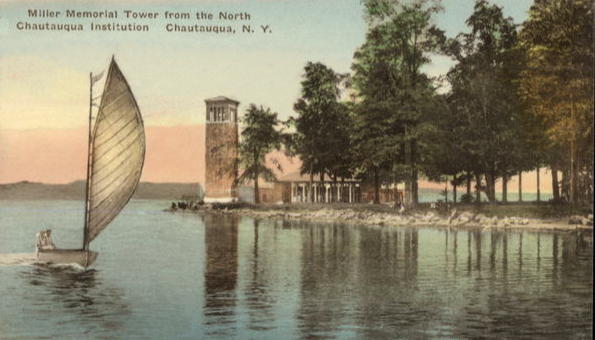
Sailing past Miller Memorial Tower. Undated postcard.
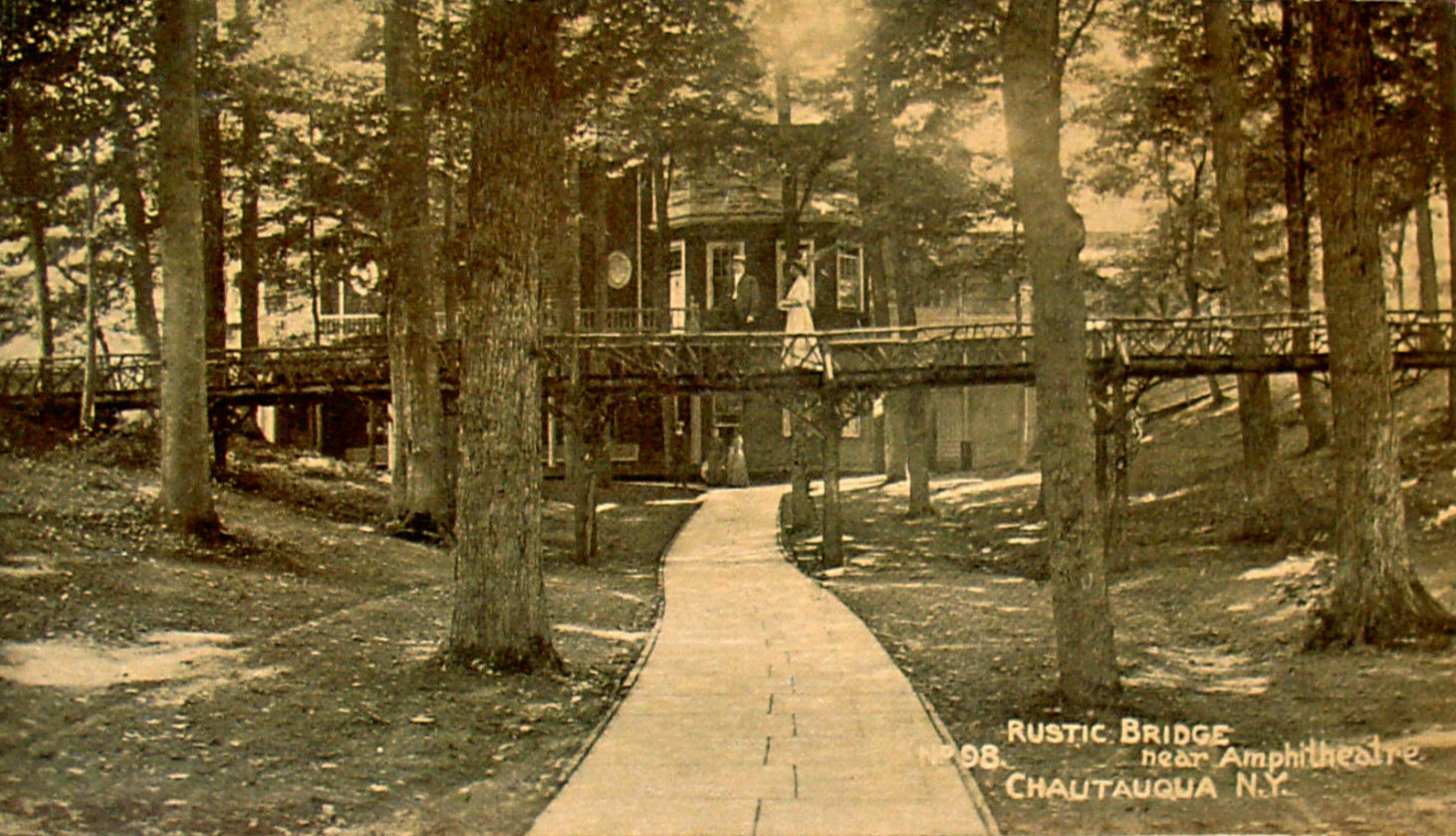
One of the walking paths at Chautauqua leading from the Amphitheatre.
Rustic Bridge undated
The view from atop the rustic bridge. Undated photograph.

For those who wanted a little more structure to their leisure time, Chautauqua offered organized activities, as well. The Men’s Club opened its doors in 1892. The Women’s Club opened soon after, and the “club model” progressed, with new clubs formed for almost every possible interest.

The Chautauqua Men’s Club near the pier, as it looked in 1909

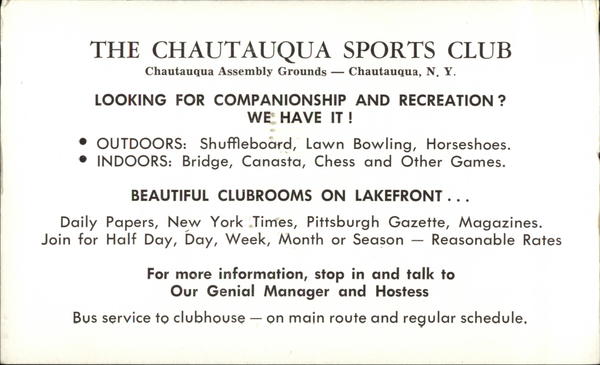
There was a Golf club, an Athletic Club, a Croquet Club, a Sports Club, a Quoit Club, and Modern Language Clubs in French, German, and Spanish. The Music Club met in their own studio on College Hill. The Press Club was formed by men and women who wrote books and articles for magazines and newspapers.

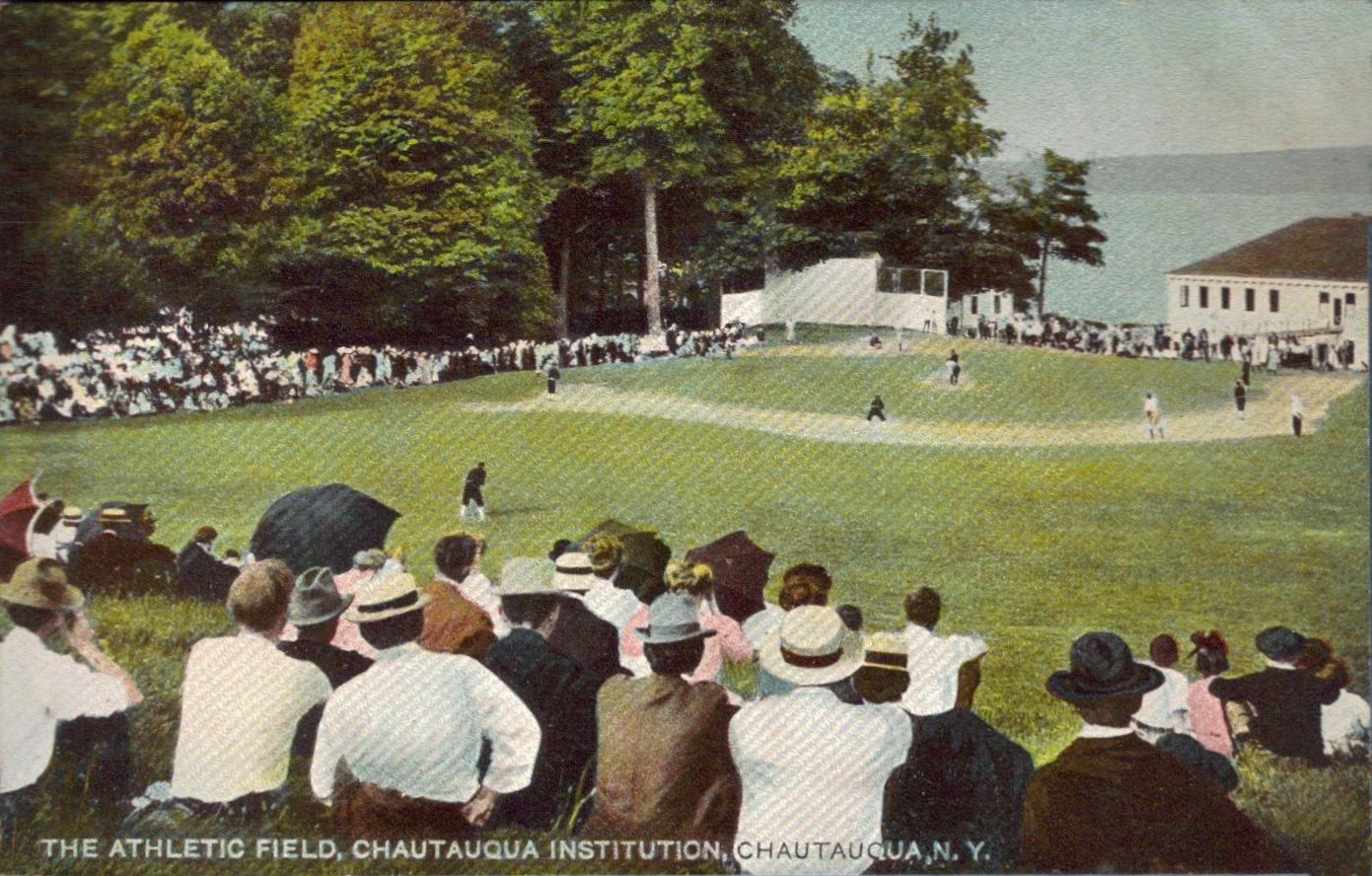
A baseball game with the lake in the background, circa 1910. Isabella Alden wrote about a baseball game in Four Mothers at Chautauqua.

There was a Lawyers’ Club, a Masonic Club, a College Fraternity Club, and Octogenarians’ Club, which only admitted members aged eighty years and older.

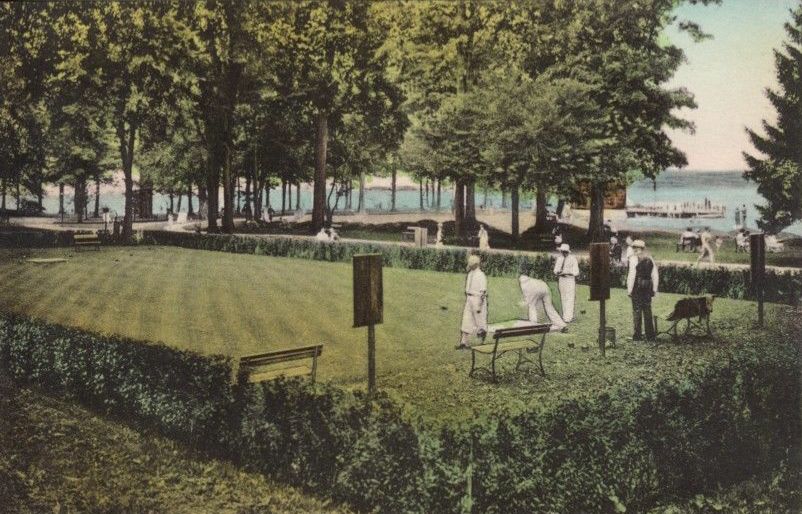
Lawn bowling at Chautauqua. Undated, hand-colored photograph.

The Bird and Tree Club helped catalog the flora, fauna and bird life of Chautauqua and the surrounding area.

A branch of The King’s Daughters and Sons met regularly at Chautauqua, and in 1972 the organization moved its headquarters to the Chautauqua Institution. This organization was founded on the principal of Christian service to others. You can learn more about The International Order of The King’s Daughters and Sons by visiting their website at www.iokds.org.

Postcard Back


Sports Club-Shuffle Board front
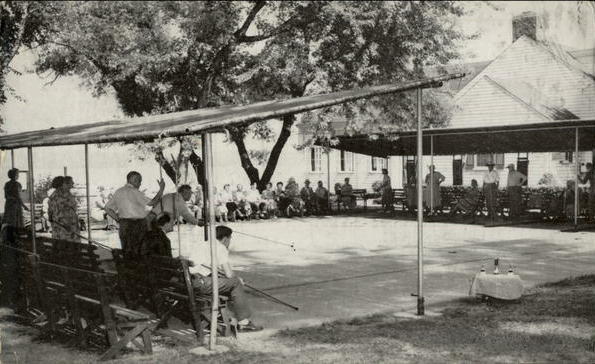
A game of shuffle board at the Sports Club, circa 1920s.
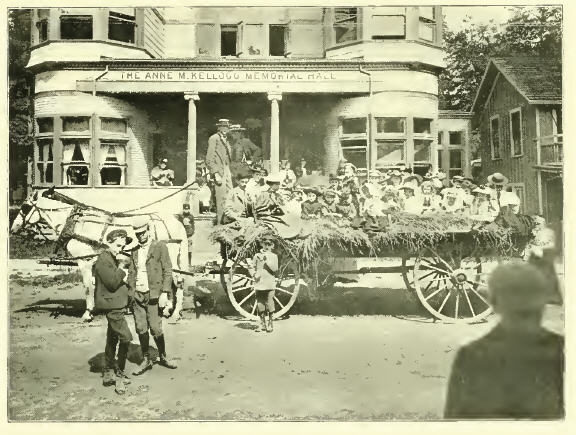
Kindergarten class on a straw ride in 1896.

Young people also found plenty of fun things to do at Chautauqua. For the little ones there was a kindergarten at Kellogg Hall, which included a playground and sandbox. The Children’s Paradise was a completely equipped playground on the north end of the grounds.

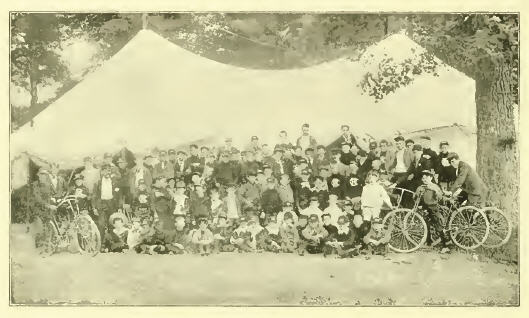
Older girls aged eight to fifteen had their own club geared specifically to interests of girls who were not quite young women. Members of the Chautauqua Boys’ Club wore distinctive blue sweaters bearing the club’s C.B.C. monogram.

Original 1896 headquarters of the Chautauqua Boys Club.

There were many more clubs and organizations that found a home at Chautauqua, but two activities never made an appearance: Card playing and social dancing were taboo—not because they were condemned activities, but because they were “unsuitable to Chautauqua conditions and even hostile to its life.” Chautauqua was an interdenominational assembly; so it was natural that some attendees found no fault with card playing or dancing, while others believed they were incompatible with Christian life. The Chautauqua founders decided that allowing either activity would simply be distracting and divisive, so they maintained a tradition that neither pursuit had a place at Chautauqua.

Next stop on our Tour of Chautauqua: Lessons and Classes

New Free Read: My Daughter Susan

In this 1879 short story, Isabella Alden leads us through a day in the life of a young woman who is busy with the Lord’s work.

If Miss Susan Carleton has one overriding ambition in her life, it is to one day hear the King say: ‘Well done, good and faithful servant.’ She won’t be content with anything less than the commendation God promised to those who faithfully serve Him.

And serve she does, filling one single day with more testimony and more kind Christian acts than most people accomplish in a lifetime. With so many lives to be helped and souls to be won, Susan draws energy and inspiration from God’s promise, “Inasmuch as ye did it unto the least of these, my brethren, ye did it unto me.”

Click on the book cover to begin reading My Daughter Susan right now!

You can find more free reads by Isabella Alden by clicking on the Free Reads tab above.

Now Available: The Remington Books

In this series, a young minister and his family face the blessings and challenges of serving the Lord.

Cover_Aunt Hannah and Martha and John resizedAunt Hannah and Martha and John

Hannah Adams raised her nephew John to be a good, Christian man; so when newly-ordained John accepts a job ministering to a congregation only a few miles away, Hannah couldn’t be happier—or prouder.

John Remington begins pastoring at the Belleville church with his new bride, Martha at his side. And what John and Martha lack in experience, they make up for with enthusiasm. In the face of nosy neighbors and church gossips, they’re certain their faith and vigilant prayer will carry them through. But when the congregation misunderstands Aunt Hannah’s act of kindness, their faith will be tested in ways none of them could have imagined.

 Click here to read sample chapters for your Kindle, PC or mobile device.


Cover_John Remington Martyr 02 resized

John Remington, Martyr

What would you risk to follow your conscience?

In Book 2, John Remington assumes a new pastorate in a large city, where the congregation welcomes John and his growing family with open arms. But when his deep Christian convictions cause him to run afoul of one of the church leaders, John finds himself the target of dark forces that will stop at nothing to silence his message.

But John isn’t about to back down from a cause he believes to be just. He’s certain God will keep his loved ones safe . . . until his enemies gain an advantage that tests John and Martha’s faith in a way they never imagined.

Click here to read sample chapters for your Kindle, PC or mobile device.

View a list of Isabella Alden’s available titles here.


A Tour of Chautauqua: Strolling the Grounds

Chautauqua Bay 1908.
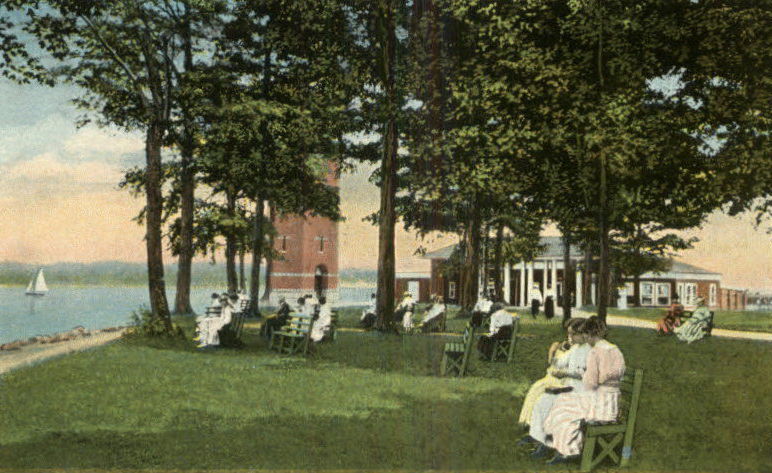
Chautauqua Bay 1908. You can see the tower of the Hotel Athenaeum peeking above the treetops.

The Chautauqua Institution was constantly evolving and improving. From its humble beginnings as a camp-meeting for the purpose of educating Methodist Sunday School teachers, it grew into an esteemed and respected institution of general education for anyone willing to take on the curriculum and abide by Chautauqua’s basic principles. Over the course of several decades, buildings were erected and dismantled; surrounding acres were acquired; and landscapes changed.

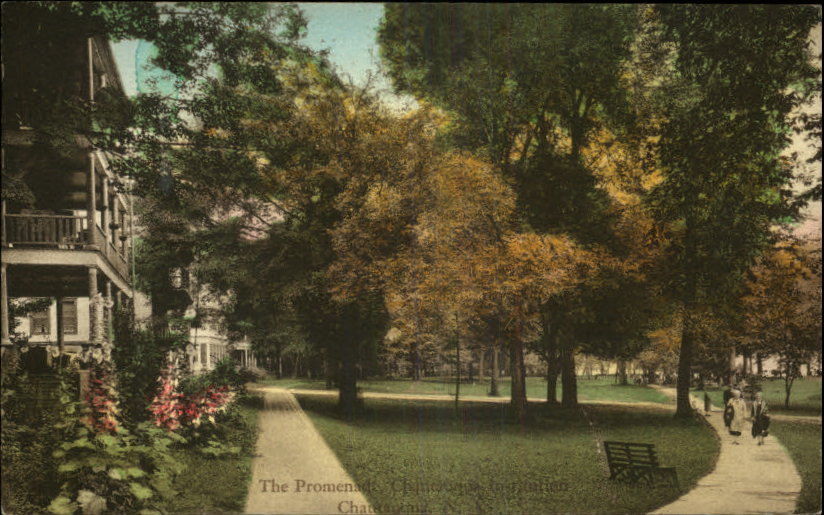
The Promenade, with Chautauqua cottages on the left and the lake visible through the trees on the right.

Isabella Alden wrote about Chautauqua’s transformations in Four Mother’s at Chautauqua. When Flossy, Eurie, Marian and Ruth stepped off the steamer onto Chautauqua’s dock in 1913, they gazed about in wide-eyed wonder.

“It isn’t the same place at all!” was Mrs. Roberts’s final exclamation. “Marian, don’t you remember the mud we waded through on that first night? We must have gone up that very hill, only, where is the road? Look at those paved streets! The idea! What is the name on that large building over there?”

“That’s the arcade,” volunteered a brisk young man who was looking out for possible boarders. “The jewelry store is there, and the art store; and all sorts of fancy-work classes meet there.”

Sherwood Memorial Studios and Arcade
Arcade and Sherwood Hall circa 1920

“Fancy-work classes!” repeated the dazed little woman. “Who imagined such frivolities at Chautauqua!”

Mrs. Dennis laughed. “You will have to accustom yourself to more startling changes than those,” she said. “Aren’t we all going to a hotel for the night? Imagine a hotel of any sort at Chautauqua! I confess I had some fears lest it should not be large enough for our party, but those houses in the distance reassure me. Do you remember the dining-halls and the man who told us which ever one we went to we should wish that we had taken the other?”

“I wonder where they were located?” said Mrs. Burnham. “One was on a hill, I remember; the hill must be here still, but I don’t seem to recognize even hills.”

Miller Park, 1906. In the background are the Miller Bell Tower and the steamboat landing.
Standing room only at the old Amphitheater. July 1895

Many things had changed since the girls’ first visit. By 1921 there were six to eight hundred all-year residents on the Chautauqua grounds; the summer session lengthened from twelve days to fifty; and Chautauqua’s summer population swelled to the thousands. But whether resident, worker or visitor, everyone who entered Chautauqua’s grounds had one thing in common: they had a ticket.

Before the Assembly opened each summer, every family had to obtain tickets. The only exceptions to the rule were children under the age of 9 and bedridden invalids. Even those who leased property on the grounds had to have tickets to enter and exit the grounds. Ticket prices were nominal, as illustrated in this table of charges from 1908:

Ticket Prices in 1908

On Sundays the gates were closed. No one was allowed to enter or exit on Sunday with one notable exception: Sunday passes were issued to any members of churches not represented at Chautauqua who wished to attend services in nearby Jamestown. Otherwise, Sunday passes could only be obtained in emergencies.

Once you were inside the gates, you had free access to the grounds and most classes or lectures. A map like this one from 1874 helped visitors navigate the streets and get to lectures on time. Click on the image for a larger view.

Map of Chautauqua 1874
Map of Chautauqua, 1874

Isabella Alden incorporated many of the Chautauqua Institution buildings and locations in her novels. Her descriptions were so vivid, it isn’t hard to imagine how the buildings looked in their natural, woodland settings. Here are some of the buildings and settings Isabella wove into her stories; many of them are marked on the 1874 map.

Chautauqua Amphitheater empty undatedAmphitheater. Located at the intersection of Clark and Waugh avenues, this remodeled venue seated almost 6,000 people. The choir gallery had seats for 500. In 1907 the Massey Memorial Organ was installed. Under the choir-loft and on either side of the organ were the Department of Music classrooms and offices.

Arts and Crafts Building in 1936

Arts and Crafts Building. On Vincent Avenue, this 1903 complex housed the Arts and Crafts School as well as shops. Henry Turner Bailey, who directed the Arts and Crafts School, was famous for delivering entertaining lecturing at the same time he drew pictures on the blackboard with both hands at once.

Miller Bell Tower and Pier, 1915

Bell Tower. Located at the Point beside the pier, the Miller Bell Tower was dedicated in 1911. The bells rang five minutes before the lecture hours and at certain times throughout the day. After the final bell each night, silence was supposed to reign across the grounds. It was near the Miller Bell Tower that Ruth first encountered Hazel crying near the shore in Four Mothers at Chautauqua.

Chautauqua The Colonnade 1909
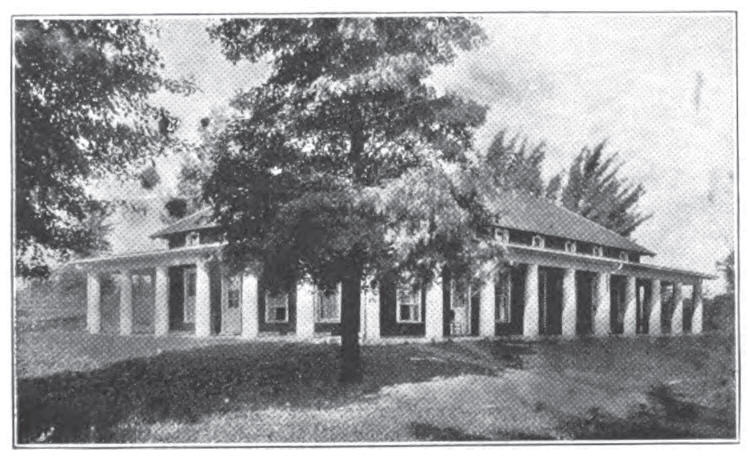
The Colonnade Building circa 1909

Colonnade. Facing Miller Park from the intersection of Pratt and Morris avenues, the Colonnade was the business center of Chautuaqua. It housed the post office, a barber shop, a hair salon, a tea room, and various stores, including grocery, dry-goods, shoe, hardware and drug stores. Visitors approaching the Colonnade building from the right passed through a vine-covered pergola.

Chautauqua Vine Clad Pergola
The Vine Clad Pergola with The Colonnade in the background, 1909
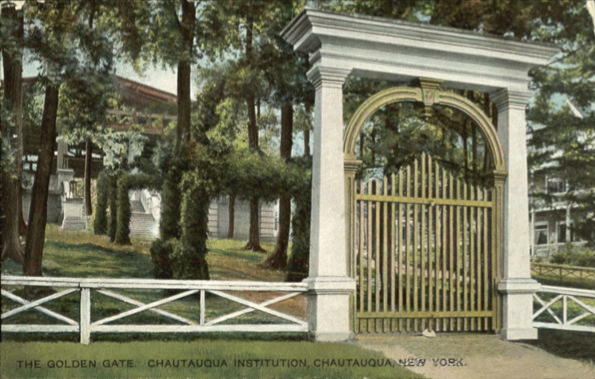
The Golden Gate. Behind the gate you can see the steps leading up to the Hall of Philosophy, which was also known as “The Hall in the Grove”.

Golden Gate. The Golden Gate at St. Paul’s Grove was used once a year as part of the C.L.S.C. Recognition procession. No one was allowed to pass through the Gate except those who had completed a C.L.S.C. course of study. We’ll share more about the Golden Gate in future posts about the C.L.S.C.

The Hall of Christ from a 1909 postcard.

Hall of Christ. This monumental stone and brick building sat at the corner of Wythe and South avenues. Created by Bishop Vincent, it was used as a chapel for meditation and prayer; and as a place of quiet, spiritual fellowship.

.

Chautauqua Hall of Philosophy 1908 edited
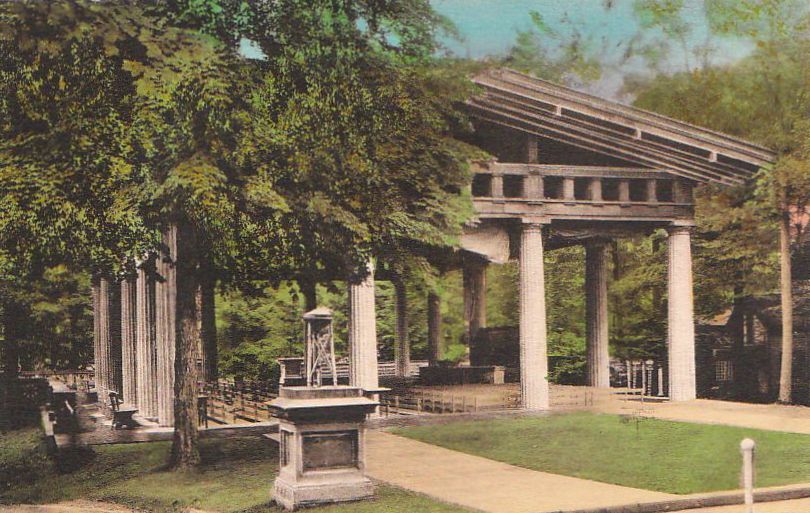
The Hall of Philosophy. The long flight of steps led down toward The Golden Gate.

The Hall of Philosophy. Known as “The Hall in the Grove” to Isabella Alden fans, this structure, modeled after a Greek temple, was located in St. Paul’s Grove. It was a regular meeting place of the C.L.S.C. conferences and gatherings.

When Caroline Raynor first arrived at Chautauqua in the book, The Hall in the Grove, young Robert Fenton took her to see his favorite building.

“Now which way do you want to go?”

“Whichever way you are pleased to take me. I have not seen anything save what I couldn’t help looking at when we arrived.”

“Then I’m just going to take you to the Hall. The rest rush to the Auditorium first and rave over that. It is splendid, I suppose; large, you know, and makes one think of crowds and grand things. But I can’t imagine people enough here to fill it—not to begin! With the Hall, now, it is different; just a nice audience would fill that, and it is so white, and so—Oh, well! I can’t explain, only it’s nice, and you will like it. Some people don’t care about it much; but I know you will.”

“Thank you,” said Caroline, and her heart was smiling as well as her eyes. She understood the boy; imagined something of what he would have said if he could have expressed his feelings, and she understood and appreciated the delicately-sincere compliment.

“This is a lovely avenue that leads to your favorite building,” she said, as she turned back to look at the straight wide road they had traversed, lying clear-cut amid the shadows of the overhanging trees.

The Hall of Philosophy, viewed from the side.

“Isn’t it!” declared Robert, with ever-increasing enthusiasm. “This is another thing I like so much—this avenue. I’ll tell you, Caroline, when it must be just grand, and that is in full moonlight. Ha! There it is!”

It is impossible to describe to you the delight that was in the boy’s tones as the gleaming pillars of the Hall of Philosophy rose up before him; something in the purity and strength, and quaintness, seemed to have gotten possession of him. Whether it was a shadowy link between him and some ancient scholar or worshipper I cannot say, but certain it is that Robert Fenton, boy though he was, treading the Chautauquan avenues for the first time, felt his young heart thrill with a hope and a determination, neither of which he understood, every time he saw those gleaming pillars.

In the Hall’s concrete floor are inserted tablets in honor of the C.L.S.C. classes that contributed toward construction of the building. This diagram shows where each tablet was inlaid. You can see the tablet for Isabella Alden’s class of 1887 near the lower left corner. Click on the image to view a larger version.


.

.

.

Kellogg Memorial Hall, 1895.

Kellogg Hall, at Pratt-Ramble-Scott-Wythe avenues, was erected in 1889. The Kindergarten Department, Ceramics Department and the Woman’s Christian Temperance Union had headquarters here.

.

.

Palestine Park, 1908.

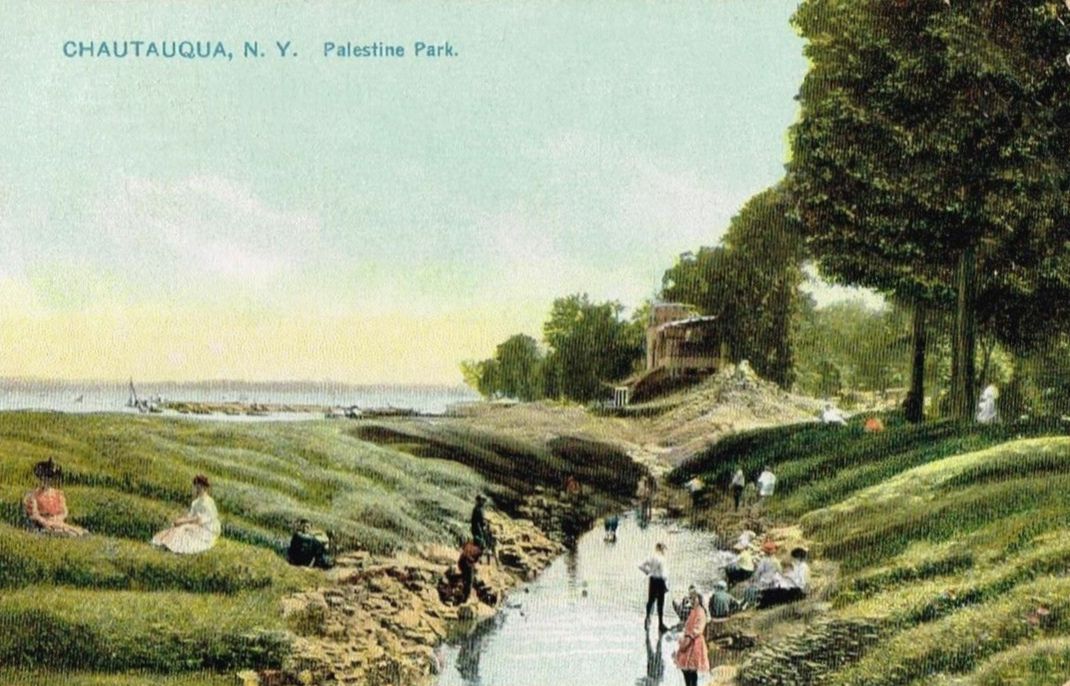
Palestine Park. Located on the shore of Lake Chautauqua near Miller Park, this model of old Palestine was constructed as a teaching tool to illustrate lessons from the Bible. Watch for more on Palestine Park in a future Tour of Chautauqua blog post.

.

The Post Office as it looked in the 1920s.

Post Office. The Post Office was located on the same plaza as The Colonnade. It was in the post office that Burnham Roberts encountered the charming Hazel Harris in Four Mothers at Chautauqua.

.

The Post Office in 1913.

This photo from 1913 shows the busy Post Office. The number of people strolling through the plaza hints that it may have been a convenient thoroughfare for going from building to building on the grounds.

.

.

Chautauqua Post Office and Colonnade
The Plaza showing the Post Office on the right and the front of The Colonnade Building on the left. The ladies walking on the flower-bordered path will approach The Colonnade through the Vine-Clad Pergola.

There are many other places to explore at Chautauqua.

Next stop on our Tour of Chautauqua: Having fun.