New Free Read: The Wife’s Dilemma

This month’s Free Read may strike a chord with anyone who tried to cook something that didn’t turn out right (like a Thanksgiving turkey)!

“The Wife’s Dilemma” is a sweet short story written by Isabella’s sister (and Grace Livingston Hill’s mother) Marcia Livingston. Marcia was a prolific author in her own right. She published many short stories in a variety of magazines, and co-wrote stories with Isabella.

Here’s the blurb for “The Wife’s Dilemma”:

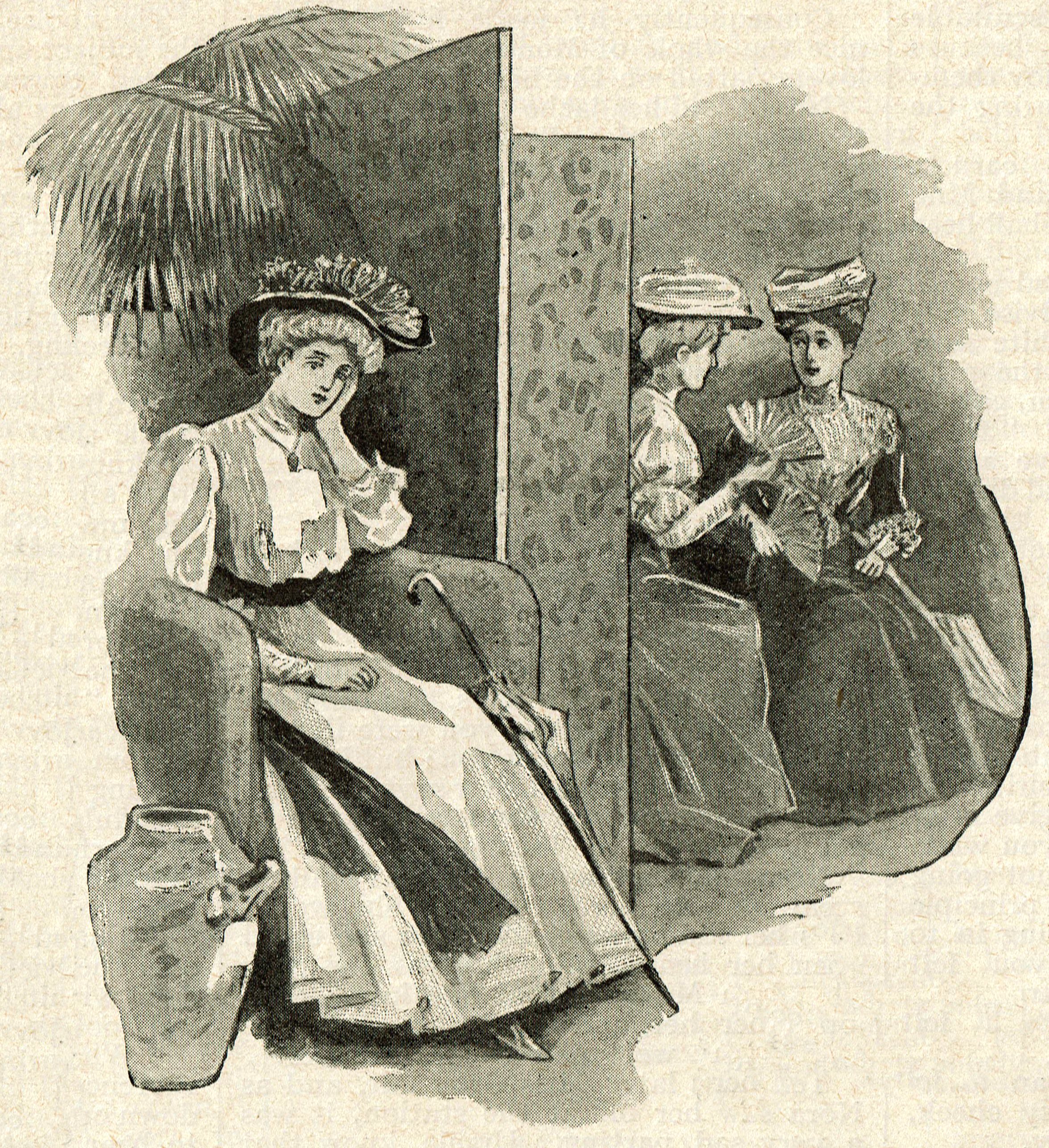
Newlywed Dora Avery is well educated in math and science, and speaks several languages; but Dora has never learned the fine art of keeping house. No matter what dishes she sets before her new husband, they’re either burnt or sour. It isn’t long before Dora realizes that all her logical plans and recipe books won’t fill her husband’s empty stomach!

Somehow she must hire an experienced cook or learn the proper way to prepare meals herself; but how?

You can read “The Wife’s Dilemma” for free!

Just follow this link to go to BookFunnel.com. Then, choose whether you want to read the story on your computer, phone, iPad, Kindle, or other electronic device.

Or choose the “My Computer” option to print the story as a PDF document to read and share with friends.

Daily Thoughts for November

In 1895 Isabella published a monthly Bible devotional series titled “Daily Thoughts,” which appeared the first day of each month in The Pansy magazine; and we’re reprinting them in 2020!

Isabella’s “Daily Thoughts” for the month of November are from Chapter 40 of the Book of the Prophet Isaiah.

Click here to open a full-size PDF version of Isabella’s “Daily Thoughts” for November, which you can read, print, save, and share with others.

Or, click here to download a simplified Word version.

If you missed “Daily Thoughts” for previous months, you can find them here: January  February  March  April  May  June  July  August  September  October

Click here to read “Daily Thoughts” for December.

When Pansy was a Girl: The Knitting Lesson

In 1889 Isabella wrote several articles for The Pansy magazine in which she told her readers stories about her life as a young girl. Some of the stories are comical, others poignant and sad; but the common theme among all the articles was the important life-lessons she learned as a child—lessons that influenced her well into adulthood.

Here is one of those girlhood stories Isabella shared with her magazine readers (whom she dubbed her Pansies or Blossoms):


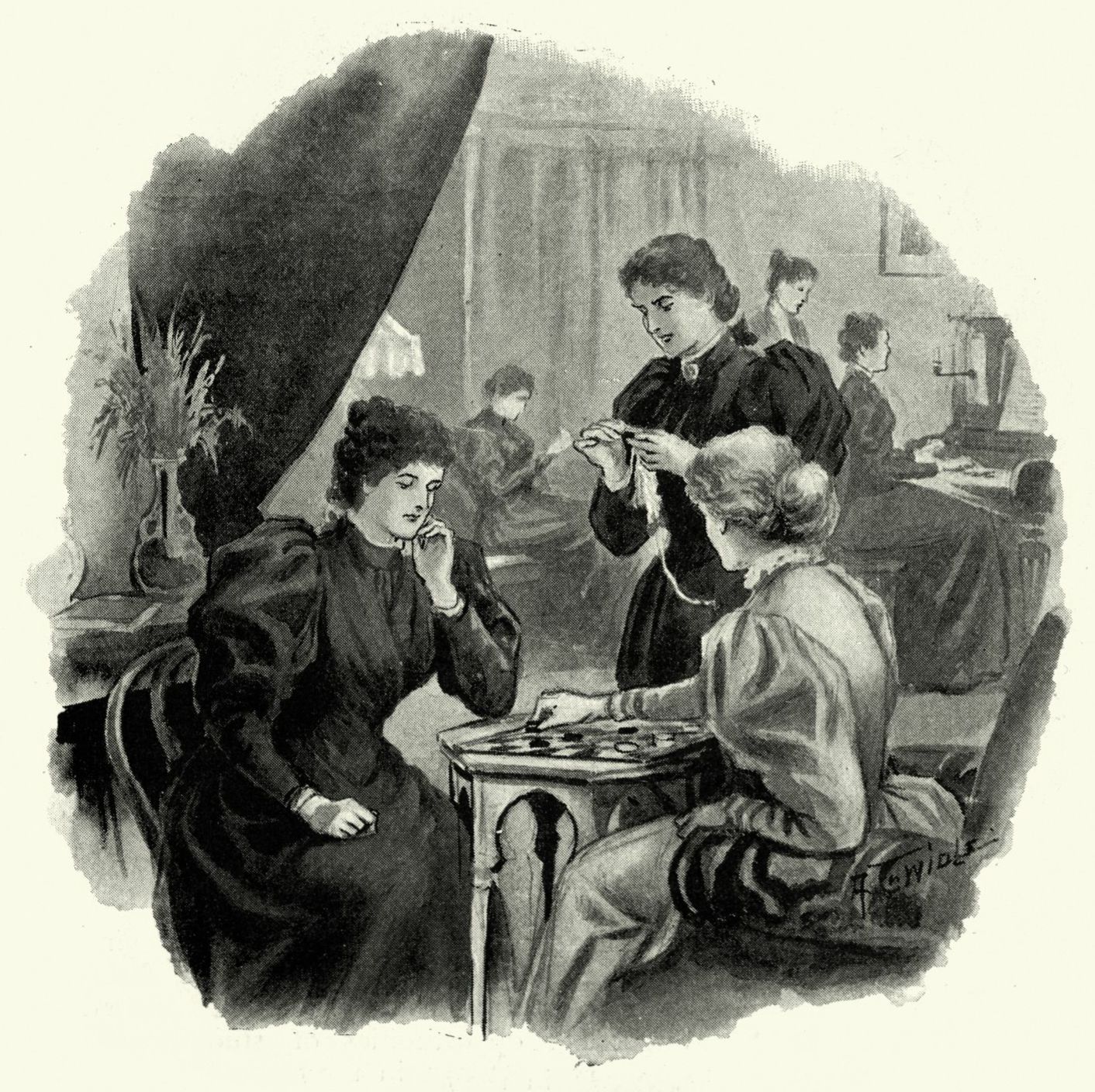
I don’t believe many of the Pansies know how to knit—old-fashioned knitting, I mean, such as we used to see so much of when I was a girl. It seems to me now as though I could not picture a winter evening without the glow of firelight from a great, wide-mouthed chimney, and a plate of red-checked apples on the table, with often a basket of nicely-cracked hickory nuts by its side, and mother’s knitting-needles flashing in the light.

All those things seem to have gone out of fashion, along with sweet old grandmothers and many other comforts.

I think I am in sympathy with a young friend of mine who said the other day, looking with a dissatisfied face at a beautifully-dressed old lady, “I shouldn’t think she would make a satisfactory grandmother.”

“Why?” I asked, amused.

“Oh, I hardly know,” the frown still on her face. “Somehow she looks too nice; I don’t mean that, either. Grandmothers ought to look just as nice as possible, of course; but—well, her dress is all looped and trimmed, and has beads on, even, and her hair is crinkley, and done up in the latest style, and she doesn’t look sweet and old. I should never think of cuddling down in her neck and having a good cry, or telling her something very secret indeed; I should just sit up straight and be proper.”

Do you understand, my Blossoms? I do, and sympathize with the thought.

Well, when I was a girl I learned to knit. I do not think my mother would have considered my education complete without that knowledge. Moreover, I was fond of it. I think I liked nothing better than to get my long gray, or blue, or brown stocking out and sit down by mother and click my needles, and try to make them go as fast as hers. There was always a little shade of disappointment over the fact that I could never accomplish this; but there was also a sense of cheer over my mother’s words:

“Never mind, maybe tomorrow you can go even faster than I do. Who knows? You will be a day older tomorrow.”

That “tomorrow ” never came, it is true, but I was always looking out for it and trying to attain.

I could not have been quite four years old when I first learned to take up the small stitches skillfully, put my yarn “over,” and draw it cunningly through the loop. It was great fun, and, if the truth must be told, a great temptation. I liked it better than outdoor sports of any kind. While the other children were playing “roll the hoop,” or “jump the rope,” or “hide the slipper,” or any of the dozens of old-fashioned games which were such good sport and good exercise, I liked better to be what my father called “cooped up” in the big easy-chair in mother’s room, knitting.

There was one thing about it that grieved me. I could not “set” the heel, neither could I take the curious back-handed stitch required after it was “set,” and it seemed to me that no sooner did I become attached to a stocking, and grow used to the “feel” of the needles, and the shape of the triangle, when it would be pronounced long enough to “set the heel,” and my pleasure in it was gone. Also I disliked the dull colors which were much in vogue in those days for stockings and socks, and often petitioned that I might make one stocking with bars of blue, and green, and yellow alternating. My mother laughed over this, and my sisters fairly shouted. But I was sure to find a sympathizer in father, no matter how queer my schemes. He fell in readily with this one.

It was mid-winter, and my playmates were wild over snow, and skates, and sleds, while I, who had been very sick, and still coughed a great deal, was of necessity housed, and just because I could not play out-of-doors, longed to do so more than ever before, and found it hard to be amused over anything.

One afternoon mother produced a bright yellow ball of worsted and said, “Knit a stocking for that old giant you were reading about a while ago; he would like a yellow one, I think.”

“For the giant?” I said wonderingly. “How would I get it to him when it was done? And it would have to be very long.”

“Yes, long enough to suit you perhaps; it would be days and days before the heel would have to be set.”

“And a giant wouldn’t mind if a stitch were dropped once in a while, would he, mother?”

“Probably not,” my mother said, “though I don’t know much about the views of giants on such subjects. At least we might try him.”

The idea pleased me, for in my secret heart I thought my mother too particular altogether in that line; just one tiny stitch which could hardly be seen at all, yet out would come the needles, and mother would relentlessly unravel the whole until she came to the weak spot. It made no difference how far I had gotten, that dropped stitch was gone after, all the same.

I remember once I said nothing about it, it was such a tiny stitch, and knitted on fast until I was a whole inch away from it. Then my conscience spoke so loud that I had to take the work to mother. But surely, I thought, she will not unravel all this out for just that one stitch!

She did, though, without a moment’s consideration, and despite the big tears in my eyes.

The giant’s stocking was commenced forthwith. I worked industriously until the yellow ball was exhausted; then a bright blue one was produced, and, delighted with the effect, I knitted fast until I had quite a strip of brilliant blue on brilliant yellow. What a pleasure it was! At last I should have a stocking which was a thing of beauty.

What delight I had in that stocking! How it grew, and grew, and changed hues from day to day until it rivaled the rainbow in brilliancy. One yard, two yards, almost three yards long, and yet stitch by stitch the wonder grew. My mother’s friends and those of my grown-up sisters became interested in it, and saved for me all their remnants of worsted, or yarn, and the brighter the color the more my heart delighted in it, nor could I be persuaded to use black at all for a long time. In vain did my sister Marcia assure me that it would increase by contrast the brilliancy of the other colors. I did not believe it, until one day she stole the stocking and knitted in a few threads of black against an intense scarlet, and astonished and charmed me with the effect.

After that I put in the blacks and dull grays with a judicious hand. The original giant for whom the stocking was commenced dropped into the background before a more brilliant thought which my father advanced—the modest one of knitting a stocking long enough to go around the world. And some day I was to start, with one end of the stocking securely sewed to mother’s wrist, the other in my hand, and walk away. If there proved to be enough of it for me to go around the world, of course in time I would get back to mother; and in case she grew weary of waiting and wanted me, she had but to take hold of her end and wind it up, when of course I would be drawn to her.

“What a little idiot you must have been!” I think I can hear you say it. Did I really believe such nonsense?

Why, not really, I suppose, and yet it afforded me such pleasure as I cannot describe, to work at my long, bright stocking with those queer plans in view. At least I worked away, and the thing grew long—very long. Also, I dropped as many stitches as I pleased, and waited not to pick them up.

Years afterwards I looked at that curious piece of work. The colors were faded, the knots were unsightly, the sometimes loose and sometimes tight knitting showed my utter lack of skill, yet in all these things I had done my best.

The thing which struck me painfully was those yawning holes where the dropped stitches had been. Yes, they were actual holes. The thing had been stretched a good deal, used as a piece bag, part of it; and the dropped stitches which seemed such small affairs had stretched also, and spread themselves in unsightly holes to say, “Look at us! Your mother warned you, but you would not believe it. You said we were too small to do any harm. You, said it was not worthwhile to go back and set us right. Now see what we are!”

Oh, the dropped stitches, not only in stockings, but in characters! Poor foolish child, who thought she knew better than mother did!

It is years and years ago. I never went on my journey around the world. Instead, my mother went away—went out of this world altogether, to that other one about which we know so much and think so little; and though the other end of my stocking is not fastened to her wrist, I know there is a strong cord named Love which goes straight from her heart to mine, and it draws me gently, steadily toward home.


Did you learn to knit, crochet, or sew from your mother or grandmother? How old were you when you learned?

Do you have a favorite knitting-lesson memory?

Pansy, the Enigma

In the nineteenth century, crossword puzzles had not yet been invented, nor had Sudoku and word search games that are popular today. Instead, “enigma” puzzles were in fashion. They were printed in newspapers and magazines for readers’ enjoyment, much like crossword puzzles are today.

Enigmas were puzzles within a puzzle. First, readers had to solve individual word clues that tested their knowledge and cleverness before they could solve the overall puzzle.

In 1882 Isabella Alden was the subject of an enigma puzzle that appeared in newspapers across the country.

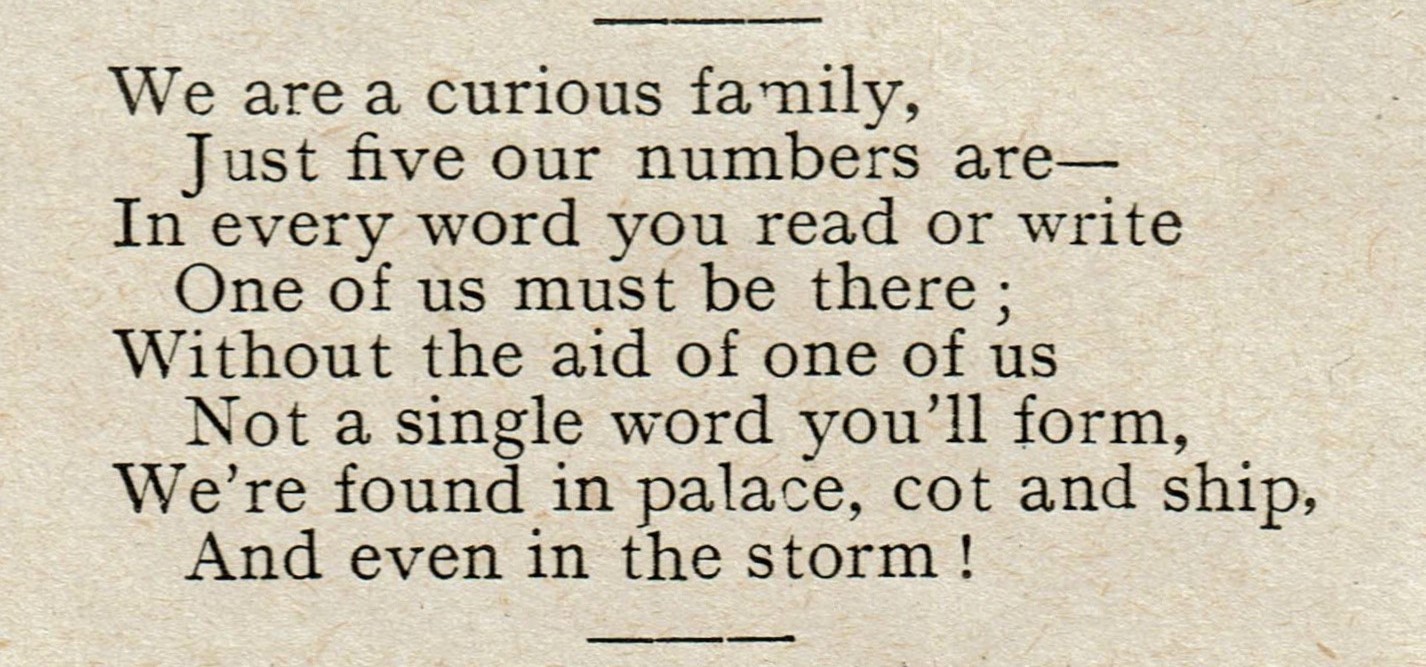
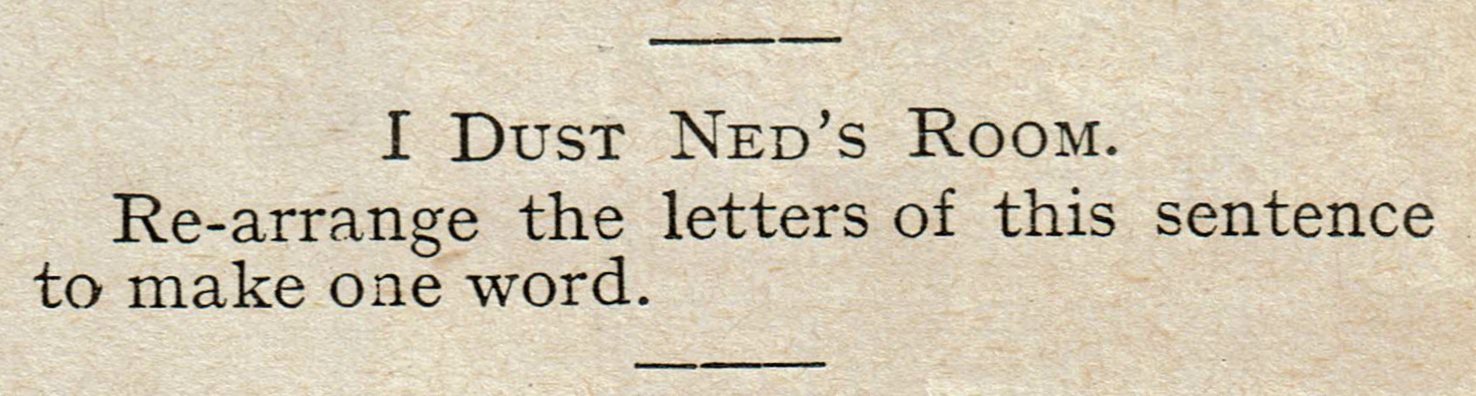
Here’s how the puzzle appeared in the newspaper:

Think you can solve this enigma? It’s challenging!

First, solve each of the four riddles.

Then, using the letters from those four words, rearrange them to find the answer to the whole puzzle: a nineteen-letter title of one of Isabella’s books.

Need some help getting started? Click here for Hint #1
Click here for Hint #2

Click here for Hint #3

Good luck!

Click here to download a Word version of the puzzle to print and share with others.

Scroll down to see the answer to the whole puzzle, as it appeared in the newspaper the following week.

.

.

.

.

.

.

.

.

.

.

.

.

If you solved the puzzle . . .


A New Grace Livingston Hill Free Read!

When she first started out in her writing career Grace Livingston (as she was then known) wrote short stories for several different Christian newspapers and magazines.

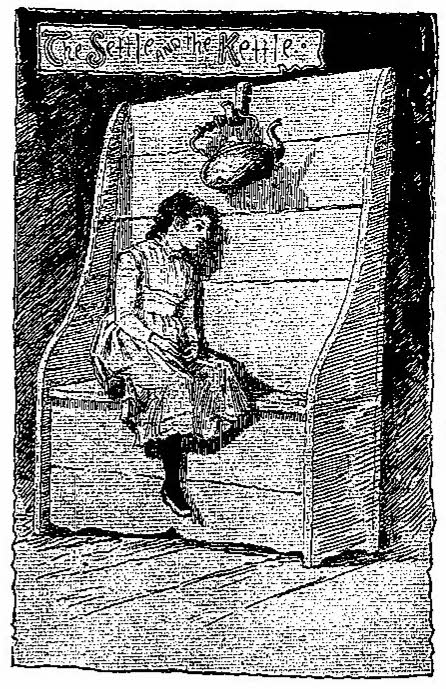
In 1891 her story “How One Fanatic was Made” was published in one of those newspapers, and it included two charming wood-cut-style illustrations, one of which you can see here:

It also included one of Grace’s timeless lessons on what it means to live a Christian life:

A devout Christian, Miss Delia Stebbins attends church regularly and reads her Bible every day. She is righteous and strong in her faith, or so she thinks. But when a less-than-desirable family moves in next door Miss Stebbins realizes God’s words are actually God’s instructions for daily life. Is it possible she can make up for the years she’s wasted?

You can read “How One Fanatic was Made” for free!

Just follow this link to go to BookFunnel.com. Then, choose whether you want to read the story on your computer, phone, ipad, Kindle, or other electronic device.

Or choose the “My Computer” option to print the story as a PDF document to read and share with friends.

Daily Thoughts for October

In 1895 Isabella published a monthly Bible devotional series titled “Daily Thoughts,” which appeared the first day of each month in The Pansy magazine; and we’re reprinting it in 2020!

Isabella’s “Daily Thoughts” for the month of October are from Chapter 6 of the Gospel according to St. Matthew, and Chapter 2 of the book of Revelation.

Click here to open a full-size PDF version of Isabella’s “Daily Thoughts” for October, which you can read, print, save, and share with others.

Or, click here to download a simplified Word version.

If you missed “Daily Thoughts” for prior months, you can find them here: January February March April May  June July August September

Click here to read “Daily Thoughts” for November.

A Quick Bite to Eat

In her novels, Isabella wrote about all kinds of people: from heroic physicians to ladies of wealth and leisure; from mischievous boys to angelic little girls.

But of all the character types who appeared in her novels, the working class clerk was the most common.

Clerks in a grocery store stand by, ready to serve customers.

Alfred Ried (in Ester Ried Yet Speaking) worked long hours for little pay in a busy downtown shop.

Robert Parks and Hester Mason did the same in Workers Together; an Endless Chain.

Clerks pose outside their hardware shop (about 1915).

Isabella seemed to have quite a bit of sympathy for these overworked, underpaid young people. Around the turn of the Twentieth Century the average man earned about $11.00 per week; but young men, like Alfred and Robert, who were just starting out in their careers, earned considerably less.

Because she was female, poor Hester would have earned only half (sometimes less) of what her male counterparts earned.

Shop clerks wait on customers in a department store (around 1910).

After they paid rent for their lodgings, they had little left to live on.

During the work day, when it came time for their mid-day meal break, they had to return to their lodging house for their meal, which was often included in the cost of their rent.

But if their rented rooms weren’t close to the shop where they worked, they had to find a nearby place to eat with menu items they could afford.

Luckily, some small restaurants in large cities catered to working people in that very situation.

Workers prepare to serve diners at The Farmington Lunch Room in 1908.

Haim’s Quick Lunch Restaurant in New York City was one such place. Every dish on their menu was designed to be served quickly, so working clerks like Robert, Hester, and Alfred could have a simple meal and get back to work.

Trade card for the Riverside Tea Room in New York.

So what kind of dishes did Haim’s serve? Here’s their 1906 lunch menu:

Their heartiest dishes were the most expensive. For about ten cents Alfred could have two eggs cooked to order. And Robert might have a bowl of milk toast or a sandwich.

Since Hester had to make her pitiful wages go farther than Robert or Alfred, she might have ordered one of the less expensive items on the menu, like griddle cakes.

A crowded ladies’ lunch room at A. T. Stewart’s in New York City (about 1875).

Or she might have ordered a bowl of Force, Malta Vita, or Power, which were very much like cold cereal we eat today.

Excerpt from a 1902 Malta Vita newspaper ad.

What do you think of Haim’s menu choices?

If you were a shop clerk and had only 15 or 30 minutes to grab a quick bite of lunch, which Haim’s menu item do you think you would order?


If you’d like to learn more about any of Isabella’s novels mentioned in this post, click on the covers below:


A View from the Top of the World

In Isabella’s novel We Twelve Girls, Edith told her friends about a special treat she received from her Aunt Mattie, who was recently married.

When Mattie and her new husband were on their wedding trip, they stopped in Edith’s hometown for a short visit. Edith was thrilled when Mattie and her new husband invited her to go with them for a portion of their journey. Edith said:

Where do you think they took me? Why, to the very tip-top of Lookout Mountain. We rode all day, and stopped in Chattanooga at night, and the next morning went up the wonderful incline. Up, and up, and up, ever and ever so far! You go up by an endless chain railroad; then when you have got away above the houses and church steeples . . . you see perfectly lovely views. We got out at Sunset Rock, and went to see where the sun sets, when it is time for it. Uncle took me close to the edge of some great rocks, and let me look down. He would have taken me very closer yet, but Aunt Mattie screamed, and he said it would not do for him and me to frighten her. He is just as nice as he can be.

I wish I could describe the mountain to you, and tell you how I felt when I went up. I had some real strange thoughts; it seemed to me I was bidding good-bye to this world—like going to Heaven, you know—and I could not help feeling a little bit disappointed when I came down again.

It sounds like Edith caught a little bit of “mountaineer fever” on that trip; and it’s possible she might have grown up to be an excellent mountaineer herself.

Several women joined this climb up Mount Rainier in 1913.

During Isabella’s lifetime there were quite a few women who enjoyed mountain climbing as a pastime.

Relaxing in the shadows of Kineo Cliff near Moosehead Lake, Maine.

One of the most famous mountain climbers in the world was Marie, Queen of Bavaria. She not only founded a mountaineering society, she designed what she called a “practical” climbing outfit for women, which shockingly exposed a lady’s ankles.

Marie of Prussia, Queen of Bavaria, dressed for mountaineering. Note her canteen and water cup beside her.

In 1858 Julia Archibald Holmes became the first Caucasian woman to reach the summit of Pikes Peak in Colorado. An avid climber, she, too, wore a special “American costume” she designed to make the climb: a short dress, bloomers, moccasins, and a hat.

Julia Archibald Holmes in the mountain climbing costume she designed.

Fay Fuller wore a similar costume when she made the treacherous trek to the summit of Mount Rainier in 1890 (but with far fewer petticoats). She went on to become a founding member of the Washington Alpine Club.

Fay Fuller.

Not every woman adopted a mountaineering “costume.” Short skirts and exposed ankles were quite risqué for the time; but modesty didn’t require women stay at home; they still climbed mountains, but did so while wearing modest but cumbersome skirts.

Crossing a treacherous chasm in a skirt.

One of those women was Katharine Lee Bates. She was not a trained mountain climber, but after spending a summer teaching classes at Colorado College, she joined friends on a climb of nearby Pike’s Peak.

Katharine Lee Bates

Katharine later wrote:

One day some of the other teachers and I decided to go on a trip to 14,000-foot Pikes Peak. We hired a prairie wagon. Near the top we had to leave the wagon and go the rest of the way on mules. I was very tired. But when I saw the view, I felt great joy. All the wonder of America seemed displayed there, with the sea-like expanse.

A view of Pike’s Peak near Colorado Springs, Colorado.

Katherine’s experience inspired her to author the poem “America the Beautiful,” which was later set to music composed by Samuel A. Ward.

By the turn of the century, more women than ever were involved with mountaineering, and their attire evolved, becaming more sensible for the task at hand.

A woman mountain climber, about 1908.

Some avid female climbers left their long skirts behind at the base of the mountain and climbed in breeches, just like the men did.

Female climbers, 1907.

Perhaps when Isabella wrote about Edith’s experience at the top of Lookout Mountain she knew first-hand what it was like to look down upon a beautiful vista from a high place. There were certainly hills near where she grew up in New York that she might have climbed as a girl.

Women on Overhanging Rock at Glacier Point, Yosemite National Park, 1900.

And perhaps Isabella knew that wherever there were mountains, there were plenty of women—just like Edith—who were willing to climb them.

New Free Read: Tony Keating’s Surprises

The Reverend Francis E. Clark, president of the World Christian Endeavor Union, said of Isabella Alden:

“Probably no writer of stories for young people has been so popular or had so wide an audience as Mrs. G. R. Alden, whose pen-name, Pansy, is known wherever English books are read.”

Indeed, Isabella enjoyed world-wide fame as an author. By the year 1900 she was selling over 100,000 books a year.

So it’s a little mystifying to see that in 1914, when she chose a new publishing house—M.A. Donohue & Company in Chicago—to publish Tony Keating’s Surprises, the publisher had so little knowledge of who she was, they spelled her name wrong on the book’s cover!

Luckily, that single error doesn’t detract from the pleasure of reading Isabella’s novella, Tony Keating’s Surprises. Here’s a brief description of the story:

For as long as Tony Keating could remember, people have been telling him he was bad, so it was little wonder he came to believe he was just so.

Over the years, Tony has become quite adept at living up to his reputation, by springing tricks and surprises on his parents, his sister, his teachers, and anyone else who happens to cross his path. Why, the entire town believes Tony Keating will come to no good.

Everyone, that is, except Lorena Stanfield. Being new in town, Lorena doesn’t know about Tony’s reputation as the town scamp. With her fresh perspective Lorena sees Tony’s potential for good. But will her gentle influence be enough to transform Tony’s life?

You can read Tony Keating’s Surprises for free!

Just follow this link to go to BookFunnel.com. Then, choose whether you want to read the book on your computer, phone, ipad, Kindle, or other electronic device.

Or choose the “My Computer” option to print the story as a PDF document and share it with friends.

Daily Thoughts for September

In 1895 Isabella published a monthly Bible devotional series titled “Daily Thoughts,” which appeared the first day of each month in The Pansy magazine; and we’re reprinting it in 2020!

Isabella’s “Daily Thoughts” for the month of September are from Chapter 8 of Paul’s Epistle to the Romans.

Click here to open a full-size PDF version of Isabella’s “Daily Thoughts” for September, which you can read, print, save, and share with others.

Or, click here to download a simplified Word version.

If you missed “Daily Thoughts” for prior months, you can find them here: January February March April May  June July August

Click here to read “Daily Thoughts” for October.