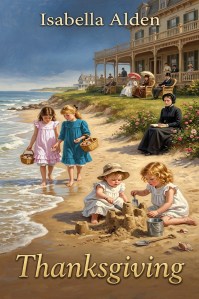
One of the most common themes in Isabella Alden’s stories was kindness and the powerful impact even a small gesture can have on another person.
This month’s free read is a short story that beautifully illustrates that theme when a grateful family reaches out to a lonely, hardworking fisher boy who feels entirely forgotten.
Orphaned Willie Evans thinks nice times are only for other people—until a dramatic seaside rescue changes the course of his life forever. Originally published in The Pansy magazine in 1883, Isabella’s story shows how one act of kindness can turn one child’s hopelessness into a lifetime of blessings.
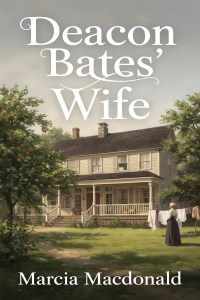
Marcia Livingston, Isabella’s sister, was a widely published author whose work appeared in magazines and newspapers across the country. While she often wrote stories for young children, her stories about the trials and joys of marriage are true to life, charming, and inspiring.
Marcia’s story “Deacon Bates’ Wife” is about appreciating the ones we love, recognizing their burdens, and taking the time to look at them with fresh eyes.
When “Deacon Bates’ Wife” was published in newspapers in 1892 it was very well received. One New York newspaper editor added this thoughtful introduction:
“The following story … conveys an admirable lesson. We commend it to the considerate attention of all “good men” who have “over-worked wives.”
Deacon Daniel Bates takes great pride in his thrifty, hard-working wife, Cynthy, unaware that decades of unceasing labor have taken a toll on her spirit. It takes a keen-eyed summer guest and a dose of plain speaking to open the deacon’s eyes before it’s too late.
In the early 1910s, Americans were experiencing a world in turmoil. With major events like the start of World War I and the sinking of the Titanic, many people found themselves looking for reassurance, order, and a sense of control over their futures. One surprising place they turned to—The stars.
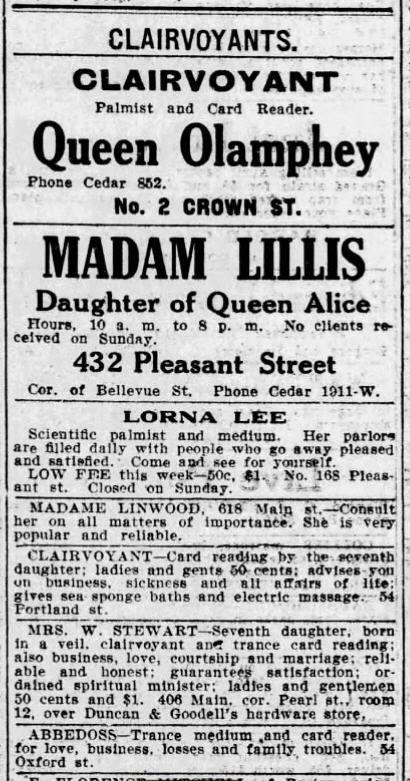
During this time, a massive craze for astrology, palmistry, and fortune-telling swept the country. Newspapers filled their classified pages with advertisements from self-proclaimed astrologers, clairvoyants, and palm readers promising to map out business prospects, cure health troubles, and—most popular of all—arrange perfect marriages.
from the Telegram and Gazette (Worcester, Massachusetts) September 6, 1914.
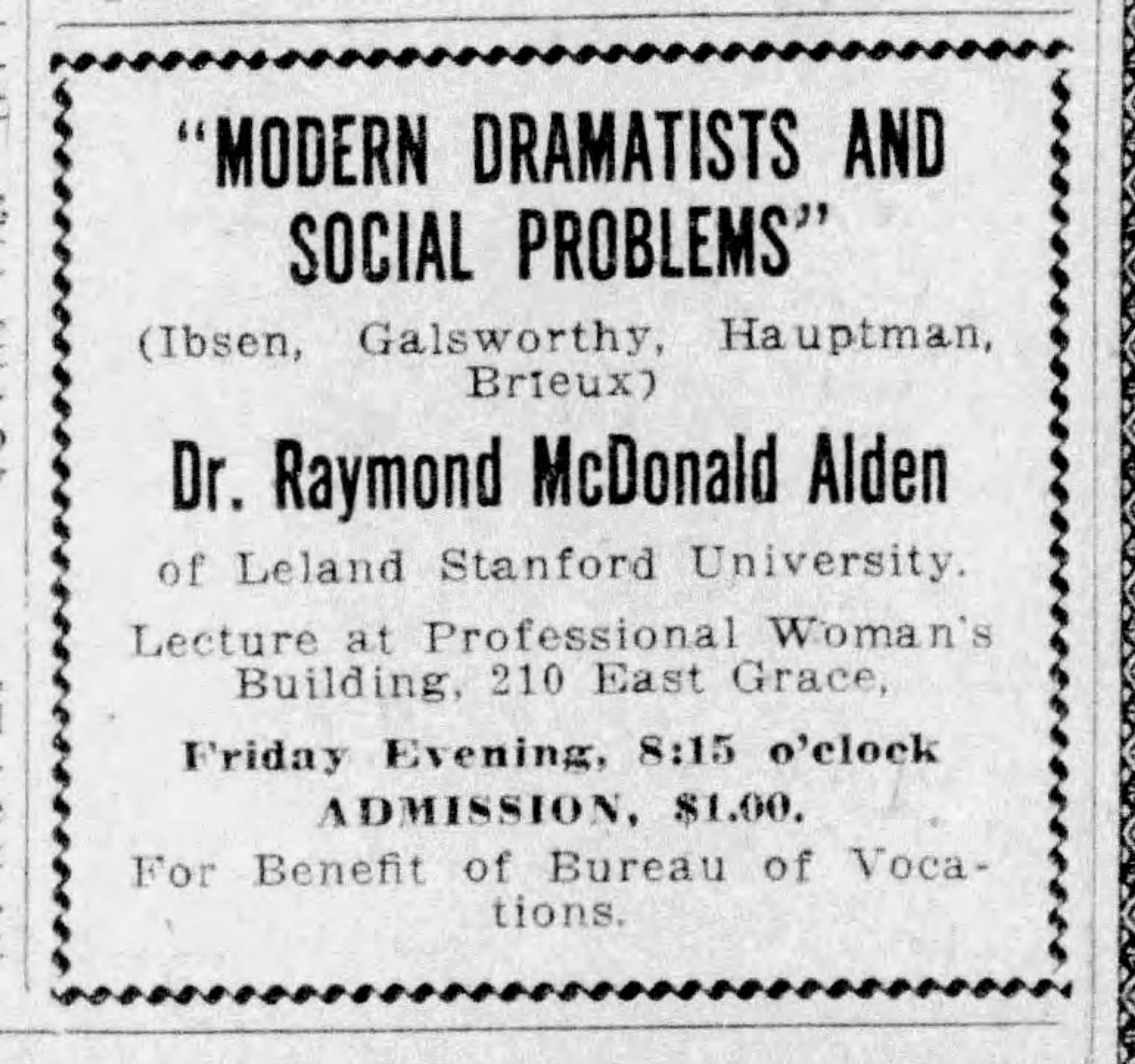
Raymond Macdonald Alden—Isabella’s son—recognized the growing trend. Raymond was an acclaimed scholar and author in his own right. He held a doctorate, served as chair of the English department at Stanford University, and was a noted expert on Shakespeare and classic literature who frequently delivered popular lectures.
from the Richmond Times Dispatch, May 1, 1919.
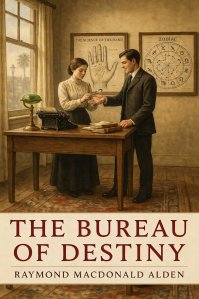
Raymond was also an award-winning short story writer. He watched the growing obsession with astrology and palmistry with a sharp, humorous eye. In 1914, he confronted the trend the best way he knew how: through a light-hearted romantic story that poked fun at the craze. His story playfully shows how common sense, honesty, and real human connections make a far more reliable foundation for love than any horoscope ever could.
When a skeptical young man stumbles into a Los Angeles “Bureau of Destiny” to cure his heartache, he has little hope for a happy future. But as the bureau’s clever secretary takes his romantic fate into her own hands, he soon learns that destiny works in mysterious and delightfully unexpected ways.
Reviews and giveaways for Christian fiction and sweet, clean fiction. Bringing readers information on great stories and connecting authors with their readers.