Isabella’s Most Difficult Year, Part 2

This is the second of two posts about Isabella’s most difficult year. If you missed the first post, you can read it here.

In the spring and summer months of 1924, Isabella and her family carried on without her beloved husband, Ross, who died in March of that year.

The influenza epidemic that precipitated Rev. Alden’s death had waned, but there were still reported cases as late as the summer of 1924. That’s when Isabella’s sister Marcia fell ill.

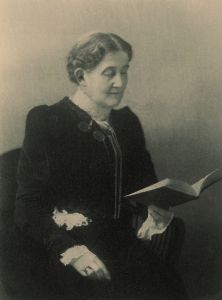
Black and white photo of a woman of about 60 years of age. Her wavy hair is parted in the middle and softly drawn up into a bun at the back of her head. She wears a dress with a high neckline and a soft shawl-style collar. The sleeves are long and have white cuffs trimmed with lace at her wrists. She holds an open book in her hands.
Marcia Livingston

Again a doctor was called to the house in Swarthmore to treat her, but the virus had weakened her heart. On August 7, Marcia succumbed to myocarditis, a rare but serious condition that causes inflammation of the heart muscle.

It had to have been a devastating blow to Isabella. For their entire lives, she and Marcia had been close. Marcia was the sister who tended Isabella when she was young, who watched over her when she was ill, and prayed that Isabella would choose Christ as her Saviour (you can read more about that here). Marcia helped introduced Isabella to her husband Ross; and after Isabella married, the Livingstons and the Aldens shared a home in Florida, and lived as neighbors at Chautauqua. They were as close as sisters could be.
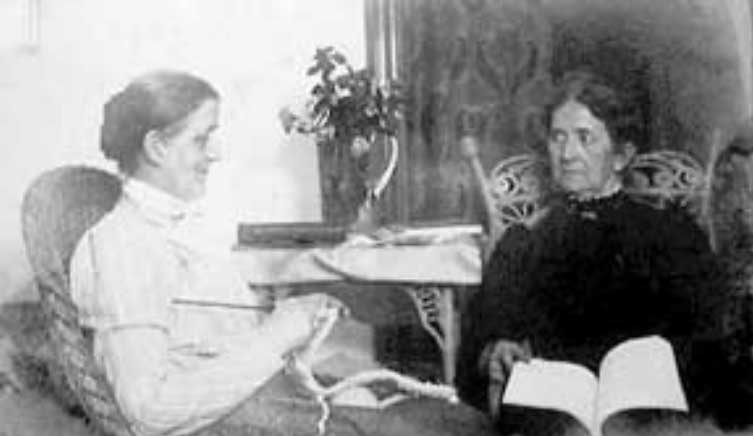
Black and white photograph of two elderly women sitting together. They are both wear their hair parted in the middle and pulled back to a braided but at the back of their heads. Isabella is dressed in a long-sleeved, high-neck blouse and skirt and she is knitting. Marcia wears a dark colored, high neck, long-sleeve dress and holds an open book in her hands.
Isabella Alden (left) and her sister Marcia Livingston (courtesy Daena Creel).

Isabella wrote:

I held the dear hand of my one remaining sister Marcia all that day, and prayed for one more clasp of it, one look of recognition, all in vain. She went, as did my dear husband, without a word or look.

Marcia was laid to rest in Johnstown, New York; that was where Marcia and Isabella grew up, and where Marcia met her husband Charles (you can read more about that here). Her grave is beside Charles’ grave and the grave of their infant son Percy.

Photo of a large stone grave marker that reads: Marcia Macdonald wife of Charles M. Livingston 1832 - 1924.
Marcia Macdonald Livingston’s grave marker in the Johnstown Cemetery.

Although there’s no known record of it, Isabella, Grace, and other family members may have traveled to New York for the interment. If they did make the journey, it’s probable that Isabella’s son Raymond did not accompany them.

By the time Marcia died, Raymond was receiving medical care in Philadelphia for a chronic condition. All his life Raymond endured a painful form of eczema that caused open sores and blisters, leaving him prone to infection. In May of 1924, Raymond’s condition became worse, and he began to regularly see a doctor in Philadelphia.

Black and white full-body photo of a gentleman standing out of doors in front of a large stone building. He wears a three-piece suit, a bowler hat and spectacles. One hand is in his trouser pocket; in the other hand he holds a pair of gloves.
Raymond Alden, from the Stanford University 1923 Yearbook.

By July Raymond’s wife Barbara wrote to her cousin about Raymond’s health, saying that although he was still very sick, he had shown “marked improvement.”
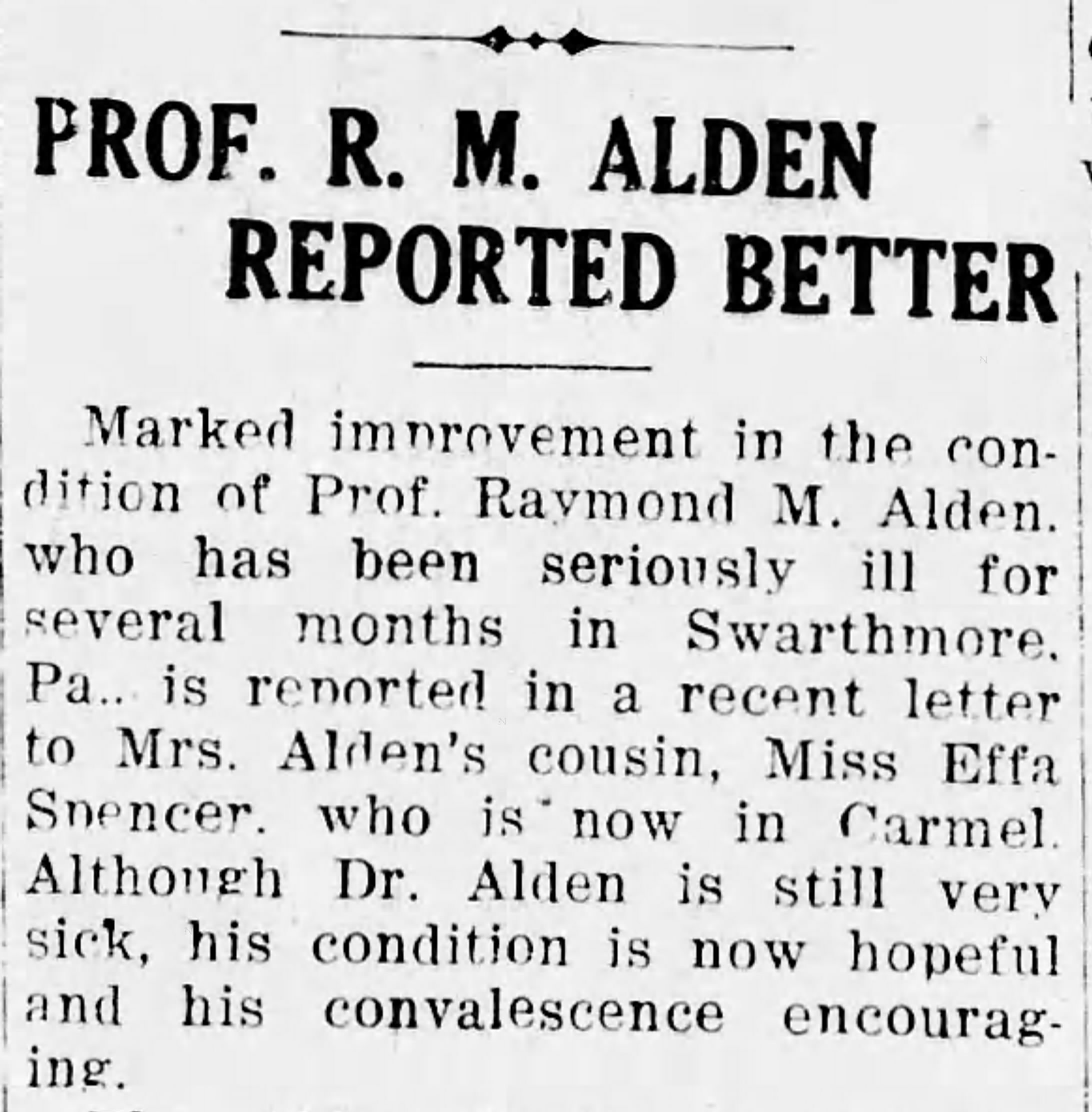
Newspaper clipping. Headline: Prof. R. M. Alden Reported Better. Marked improvement in the condition of Prof. Raymond M. Alden, who has been seriously ill for several months in Swarthmore, PA., is reported in a recent letter to Mrs. Alden's cousin, Miss Effa Spencer, who is now in Carmel. Although Dr. Alden is still very sick, his condition is now hopeful and his convalesence encouraging.
From The Peninsula Times Tribune, July 15, 1924.

But his improvement was short-lived. By September Raymond was suffering from an infection and, possibly, from an allergic reaction to medications he was given.

On September 27, less than two months after the death of his aunt, Raymond Alden died. Isabella was with him at the end.

“Mamma, fan me!” was the quick eager word my dear boy said, and the next minute he was gone.

Grace later wrote:

My saintly uncle went first, then my precious mother, and then my brilliant cousin, Dr. Raymond M. Alden. One blow after another that nearly crushed us all.

The family held a private funeral service for Raymond in Philadelphia; then it was time for the Aldens to leave Swarthmore and return to their Palo Alto home. Grace described it this way:

Then my dear aunt, courageous and wonderful through it all, went back to her California home with her brave daughter-in-law, and her five grandchildren.
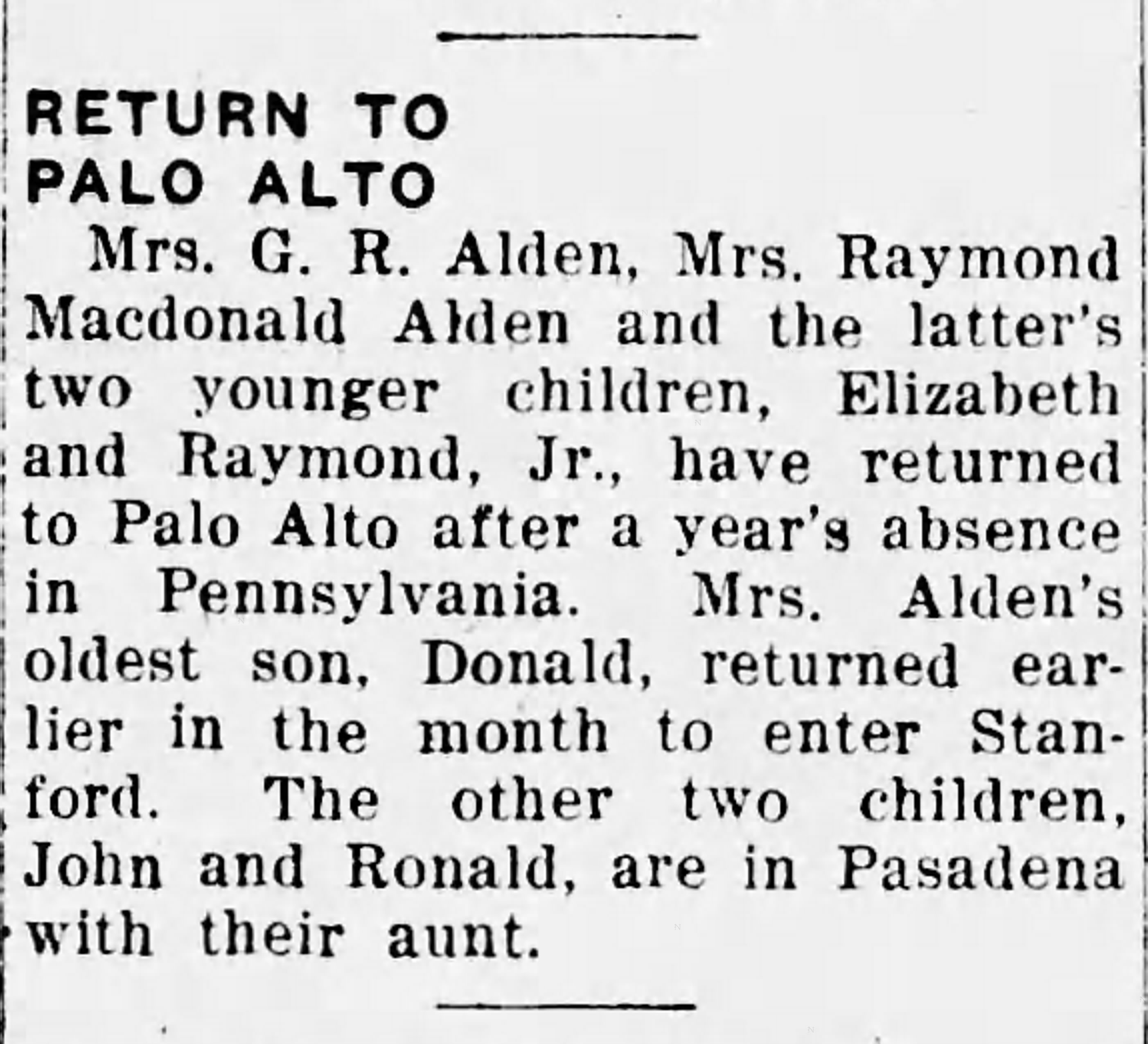
Newspaper clipping. Headline: Return to Palo Alto. Mrs. G. R. Alden, Mrs. Raymodn Macdonald Alden and the latter's two younger children, Elizabeth and Raymond, Jr., have returned to Palo Alto after a year's absence in Pennsylvania. Mrs. Alden's oldest son, Donald, returned earlier int he month to enter Stanford. The other two children, John and Ronald, are in Pasadena with their aunt.
From The Peninsula Times Tribune, October 18, 1924.

There must have been times when Isabella felt the acute loneliness of losing the three most important people in her life. She once wrote to Grace:

There is no one in all the world who needs me any more. I’m too old to help anybody in any way, and too weak to be anything but a burden to those who have already more than they can bear. Why can’t I go now to my eternal rest? Does it seem to you wrong to pray for this?

There were other times when she spoke of the many family members who had died over the years, and asked impishly, “What do they think of us all by this time? Do they meet together and talk us all over?” She thought often of the loved ones who had “gone ahead” and wrote to Grace:

Sometimes I have to put my hands over my eyes in the darkness and say: “Casting all—All—ALL your care upon Him.” Oh, why doesn’t He take me home?

But God did not call her home. Isabella lived with Barbara and her grandchildren in the house she and Ross built on Embarcadero Road in Palo Alto for another six years.

A young woman with dark hair stands facing the camera. She wears a coat and a hat with a wide brim and tall feathers sticking up from the crown. Her hair is styled in a bouffant with a bun on top of her head hidden by the hat.
Barbara Hitt Alden, about 1910

By all accounts, Barbara was loving and kind and “more than a daughter” to Isabella. And despite Isabella’s belief that she was “too weak to be anything but a burden” to Barbara, she would soon find that her work on Earth was not done, and that she had one last novel to write before she would be called Home to her Saviour.

Next Month: Isabella’s Final Novel

You can read more about the house Isabella and Ross built in Palo Alto by clicking here.

Click here to read the story of how Marcia and Charles Livingston introduced Isabella to her husband, Ross.

Isabella’s Most Difficult Year

On the surface, it may seem that Isabella led a charmed life. Her husband was beloved a minister and a leader in the Presbyterian Church.

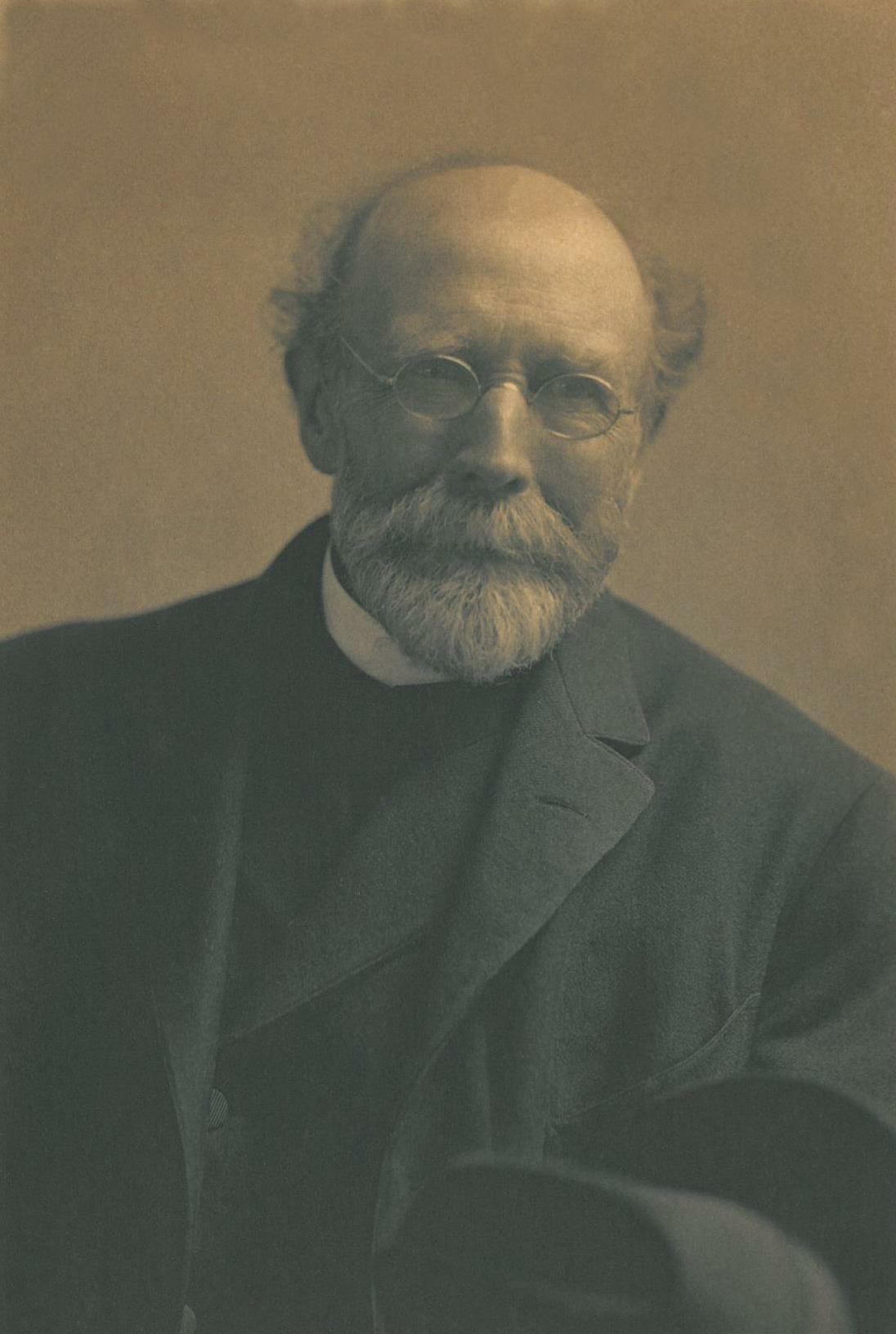
Black and white photo of an elderly man wearing a cleric's collar and suit. His head is bald on top, and he has a full beard and mustache. He wears a pair of wire-rimmed glasses.
Gustavus “Ross” Alden in later years (about 1912)

Her son Raymond was a talented writer, a beloved teacher, and an esteemed academic.

Black and white photo of an elderly woman. She is seated and holding a book in her hands she appears to be reading.
Isabella Alden, about 1895.

Isabella, herself, had been a successful author for decades, as well as an influential editor of various Christian magazines for young people and adults.

With so many proud accomplishments in her life, it’s hard to remember that Isabella had her share of heartache and loss.

Some of those losses were made all the more difficult because they occurred almost in a back-to-back fashion during one six-month period in her life. And it happened one-hundred years ago.

The year 1924 began on a positive note for the entire Alden family. Isabella’s son Raymond—who was head of the English Department at Stanford University in California—was on sabbatical so he could teach courses at Columbia University in New York. It was an exciting career opportunity for Raymond.

A black and white photo of a young man dressed in a suit and wearing a pair of eyeglasses.
Undated photo of Raymond Macdonald Alden.

His topics during that Spring Session at Columbia were:

  • English Literature from 1780 to 1830.
  • Shakespeare
  • Versification
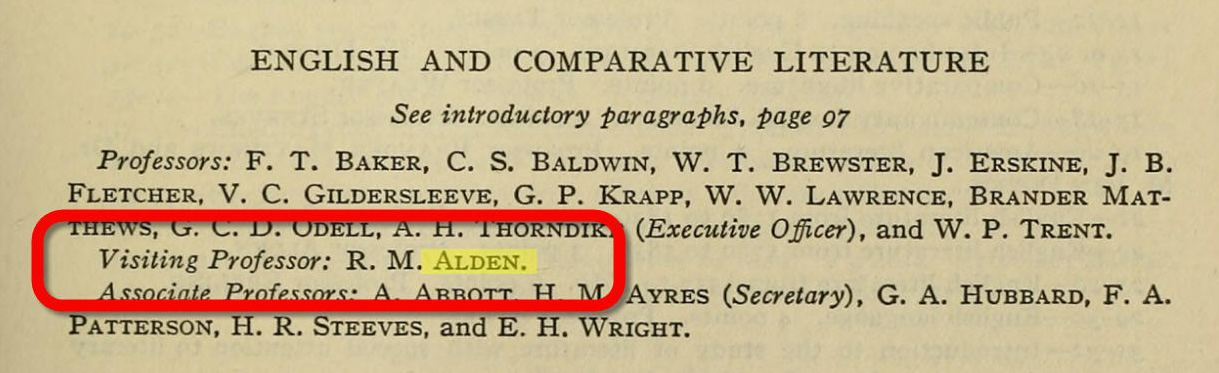
Clipping from catalog. Heading: ENGLISH AND COMPARATIVE LITERATURE below which is a listing of professors. Highlighted portion reads "Visiting Professor: R. M. Alden."
Raymond Alden listed as a Visiting Professor in the English and Comparative Literature department, Columbia Course Catalog for 1923-1924.

Raymond, his wife Barbara, and their five children (ages 2 to 14) made the move east together and rented a home within an easy commute to Columbia’s campus.

Portrait of a young woman wearing clothing with a high collar neckline and large puffed sleeves that were in style about 1890.
Barbara Hitt Alden, in her early twenties.

Isabella and her husband Ross went, too. Ross was 92 years old and had been officially retired from the ministry for some time, but he still enjoyed excellent health and a quick wit and intellect. Isabella was still writing novels, but she too had “retired” and had adopted a much slower pace when it came to her work.

Isabella and Ross moved into the Swarthmore, Pennsylvania home of Isabella’s sister Marcia Livingston and niece Grace Livingston Hill. Grace often described Marcia and Isabella as “inseparable” sisters, and for the majority of their lives, the Aldens and the Livingstons spent much of their time together.

It was while the Aldens were staying with Marcia and Grace in Swarthmore in the spring of 1924 that tragedy struck.  

Photograph of a large two-story home with brick accents set back from the street with lush green lawns and mature trees.
Grace Livingston Hill’s Home, Swarthmore, PA.

At that time Philadelphia was dealing with an influenza epidemic. The particular strain that prevailed during the spring of 1924 often caused pneumonia.

Newspaper clipping. Headline: HEALTH DIRECTOR WARNS OF DANGER. Tells Public to Watch February and March Cold Symptoms. These Two Months Shown as Highest in Pneumonia Mortality.
From The Philadelphia Inquirer, February 18, 1924.

Unfortunately, antibiotics like penicillin and sulfonamides were not as widely available as they are today; so doctors could offer little in the way of treatment for pneumonia, beyond recommending bed rest, and drinking fluids. Almost every day newspapers reported new outbreaks of the influenza virus, as well as the number of deaths, and it often seemed as if no one was safe.

Newspaper clipping. Headline: BABE RUTH STRICKEN BY FLU, PNEUMONIA IS RESULT NOW FEARED. Article: Babe Ruth, the Sultan of Swat, baseball's biggest attraction and the game's longest hitter, is seriously ill at a local hotel. Just now Ruth is suffering from an attack of flu, but there is danger he will develop pneumonia within the next twenty-four hours. According to Dr. W. T. Wootton, there is a great deal of congestion over Ruth's left lung.
From The Philadelphia Inquirer, March 1, 1924.

Health officials warned that a common cold or a mild case of the flu could quickly turn into a deadly case of pneumonia. Unfortunately, that is exactly what happened to Rev. Alden. At ninety-two years of age he was particularly susceptible to pneumonia, and although the family brought in a physician in to treat him, he died on March 29, 1924.

Newspaper clipping. Dr. Alden's death at the home of his niece, Mrs. Grace Livingston Hill, followed an illness of only 48 hours. Up to that time he had been strong and vigorous, although in his 93rd year. Funeral services, followed by cremation, were held in Swarthmore.
From The Peninsula Times Tribune, April 14, 1924.

His death was reported in newspapers across the country and the tributes and remembrances came pouring in. People wrote about their memories of when he was their church minister. They related the anecdotes he used to illustrate his sermons and teachings; and they mentioned the close friendships they formed with him in the Sabbath School classes he taught.

Perhaps Isabella had a chance to read some of those tributes. And she no doubt relied upon her sister Marcia’s support, as well as the tender care that Raymond, Barbara and Grace would have provided.

Isabella made the decision to remain in Swarthmore until summer, so Raymond could fulfill his teaching responsibilities at Columbia. Then, the Alden family planned to travel together back to their home in Palo Alto, California, where Rev. Alden’s remains would be laid to rest.

In her remembrances of her uncle, Grace recalled a poem he wrote and had printed as a New Year greeting card. He sent the cards to the members of his Bible class the last winter he was with them before going to Swarthmore. It reads:

TODAY

We are living today—not tomorrow,
For no morrow was ever yet seen;
And for joy, or for pain, or for sorrow,
Only yesterdays ever have been.

God gives us duties—just for today;
And His strength He bestows by the hour,
“Grace is sufficient” we still hear Him say,
So we trust Him for wisdom and power.

And since today is all that He gives,
Let us treasure the day as it stands.
It matters, then, much how everyone lives
For tomorrow God holds in His hands.

G. R. Alden

Next: Isabella’s Most Difficult Year, Part 2

September

Isabella’s husband, the Rev. G. R. Alden, was a prolific poet, and many of his works were published in The Pansy magazine. He was adept at sharing humorous stories, childhood memories, and Biblical truths through rhyme. In the following poem he writes about anticipating the change of seasons in a long-ago, and much simpler time.

The fields and meadows paling 
Lie ’neath the hazy sky;
The thistle-down is sailing
By zepyrs slowly by.
The stalks of stubble, bleaching
Beneath September’s sun,
Seem silently now teaching
Of rest when labor’s done.
Image of two yellow birds sitting in a bush of white and pink thistles. One bird plucks the tuft from one of the white thistles.
The goldenrod, bright gleaming 
Above the parched sod, 
Is surely sent, the seeming 
Of the golden things of God. 
The katy-dids are calling, 
In a social sort of way,  
To learn what is befalling 
The neighbor ’cross the way.
Communist like, the blackbirds 
Hold meetings every night, 
As though the world went backwards, 
And they must set it right. 
The apples fast are falling 
From heavy-laden boughs; 
The milkmaid’s faintly calling 
’Cross the meadows for the cows.
Image of a large apple tree with branches full of apples bent down to the ground.
The milking-stool is ready
Astride the barnyard gate;
The cows come slow and steady,
Like messengers of Fate.
And soon, in silence sleeping,
Master and maid and herd
Beneath God’s kindly keeping
Will rest—as on his word.
Image of some cows grazing in a flowering field while other cows stand in the shallow waters of a lake or pond.
So may this mild September,
With its pictures passing fair,
Make each of us remember
God’s mercies, rich and rare.

A Real Judge Burnham’s Daughter

Cover_By Way of the WildernessIn her novels, Isabella often wrote about the unique challenges of being a step-parent.

In By Way of the Wilderness, Wayne Pierson saw his new step-mother as an interloper and a rival for his father’s attention, causing much heart-ache for himself and his family.

Cover of Ruth Erskine's CrossesRuth Erskine, the main character in Ruth Erskine’s Crosses, disliked her step-mother to the point of being ashamed of her; and when Ruth later married a man with two daughters of his own (in Judge Burham’s Daughters), Ruth taught her step-children proper manners, but failed to address their spiritual needs.

Like all Isabella’s novels, By Way of the Wilderness and the Chautauqua Books were allegorical stories, written to convey specific messages and lessons about living the Christian life.

But what many people don’t know is that Isabella was herself a step-mother. When she married Gustavus “Ross” Alden in 1866, Ross had a ten-year-old daughter from his first marriage to Hannah Bogart.

Like Ross Alden’s family, Hannah’s ancestors were among the earliest emigrants to America; her ancestors arrived as far back as 1652 and settled the New Netherlands (now New York) in the time of Peter Stuyvesant.

Ross and Hannah met in New York and married when they were both in their early twenties. Nine months later, little Anna Maria Alden was born. Tragically, Hannah died just two months later.

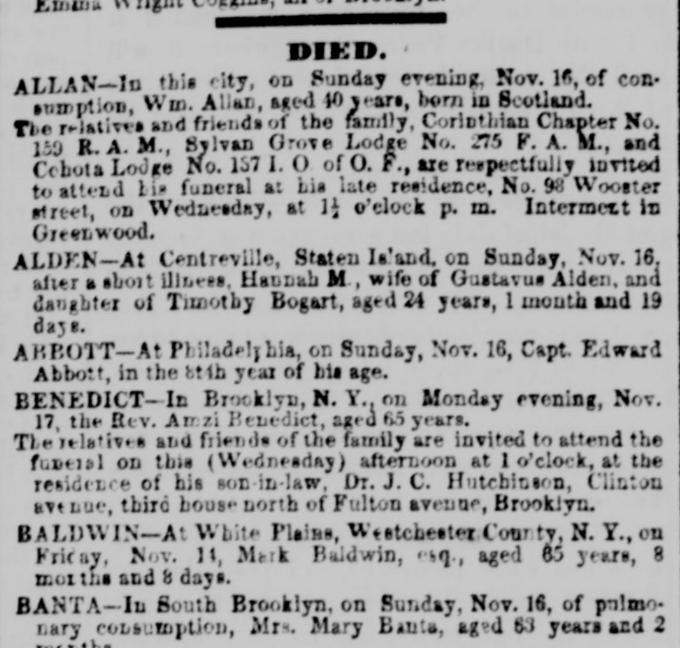
Death notice of Hannah Bogart Alden. From the New York Daily Tribune, November 19, 1856.

Very few records exist to tell us how Ross coped with the daunting responsibility of raising an infant daughter after the death of his wife. We do know he stayed in New York, close to where Hannah’s family lived, and probably had much help from them. Census records show that by the time little Anna was four years old, she was living with her maternal grandparents, without Ross.

St. Andrews Church, Richmond. New York. Here Hannah Bogart Alden was buried, and Ross and Anna were baptized.

Three years after Hannah’s death, Ross made a decision that would influence the rest of his life. He “united with the Reformed Church in Richmond, Long Island”—the same church, which, for generations, had been the church of Hannah’s family—and he began laying the foundation for becoming a minister.

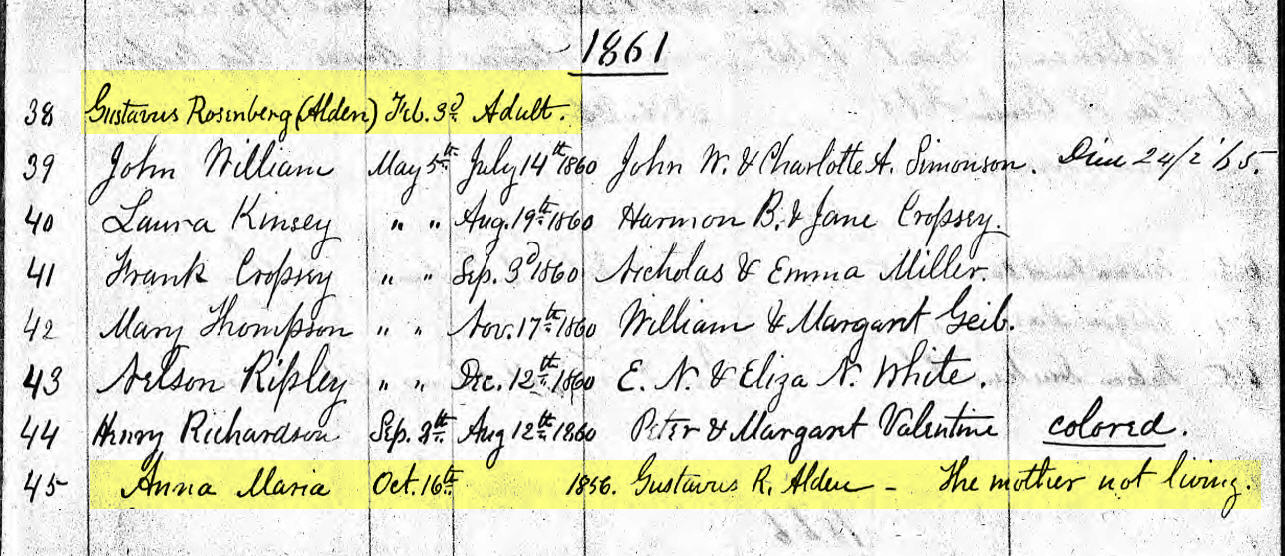
Membership records from the Dutch Reformed Church of New York.

Ross was baptized, and a few months later his daughter Anna was baptized in the same church.

Baptism records from St. Andrews Church, Richmond, Staten Island, New York.

While Anna remained with her grandparents, Ross moved 300 miles away to begin studies at Auburn Theological Seminary. There he met Isabella Macdonald, who was visiting her sister Marcia and brother-in-law, Charles Livingston, who was also a theology student.

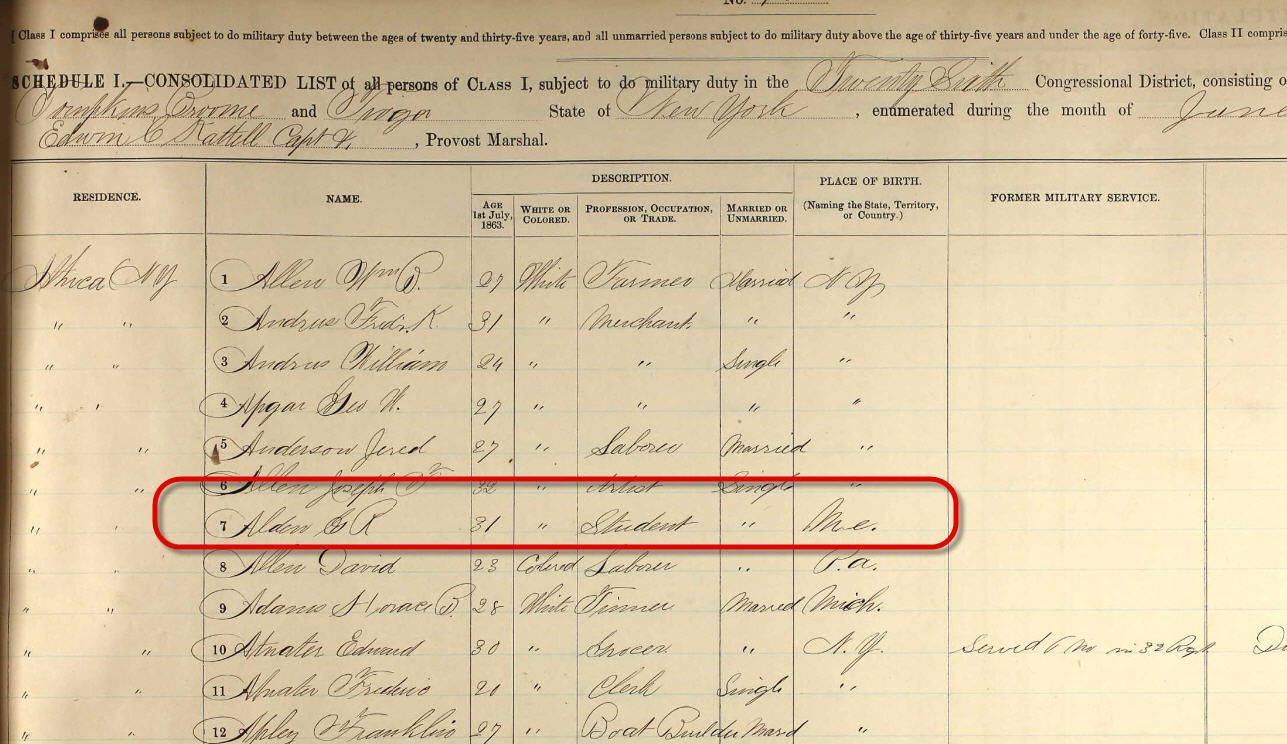
An 1863 Union Army record showing Ross Alden's registration for the draft. He lists his occupation as "student."
An 1863 Union Army record showing Ross Alden’s registration for the draft. He lists his occupation as “student.”

Ross and Isabella fell in love and married in 1866, the same year Ross graduated. The evening of their wedding day they boarded a train and left for Ross’s first church pastorate.

None of the records about that happy and blessed day mention whether Ross’s ten-year-old daughter Anna was at the wedding. Isabella’s good friend Theodosia Toll Foster was there, though, and that may have been the occasion when Theodosia and Anna met. Theodosia had younger sisters, the youngest of whom was just about Anna’s age.

Undated photo of Theodosia Toll
An undated photo of Theodosia Toll Foster

Though we can’t be certain when exactly Theodosia and Anna met, but we do know that very soon after Ross and Isabella’s marriage, Anna went to live with Theodosia at the Toll homestead in Verona, New York.

While Ross and Isabella led an almost itinerant life, moving from one church to another every two or three years, Anna enjoyed a very stable home life with Theodosia and her sisters. They called Anna their “truly sister” and she quickly became a much-loved and integral member of the family.

When Anna was 16, she lived with Ross and Isabella in Cooperstown, New York, where they were in charge of yet another congregation. And when Ross and Isabella moved two years later to New Hartford, New York, Anna went with them … as did the entire Toll family. Theodosia, her elderly father and her younger sisters all moved to New Hartford. There Theodosia put her talents for teaching to good use. She and her sisters set up a boarding and day school, and their journals reveal that Anna helped run the enterprise.

By then, Ross and Isabella had a son (two-year-old Raymond), and Isabella’s mother and sister Julia were also living with them in New Hartford. It must have been wonderful to have had their large, extended family so close together again!

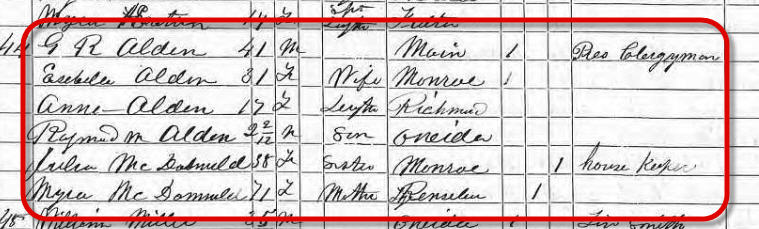
The 1875 Federal Census showing the members of the Alden household in New Hartford, New York.

But their reunion didn’t last long. Within months, Ross received a call to minister at a church in Indiana. Once again he and Isabella left New York for a new city. This time, 20 year old Anna stayed behind with Theodosia.

There is only one other instance recorded of Anna living with Ross and Isabella. When the 1880 Federal Census was taken, Anna was 24 years old and the Census shows her living with Ross and Isabella in Cumminsville, Ohio (a suburb of Cincinnati), where Ross had a church. That same year, Alida, the youngest of Theodosia’s sisters, wrote in her journal that she was excited over an upcoming trip to visit Anna in her Ohio home.

Sometime after that visit in Cumminsville, Anna once again returned to New York to live with the Tolls. And when the Toll sisters closed their school in New Hartford and returned to their home town of Verona, New York, Anna went with them; and there she remained for the rest of her life.

In Verona Anna was a long-time member of the Presbyterian Church, and she was deeply involved in church matters. Friends described her as “a consistent Christian woman” who “won the sincere love and respect of all who knew her.

Anna was just 57 years old when she passed away from complications of pneumonia. Theodosia’s sister Eunice marked the sad day in her journal with the notation, “Our Anna died.”

Obituary of Anna Alden. From the Rome Daily Sentinel, December 21, 1914.

Unfortunately for us, none of Isabella’s correspondence with Theodosia has ever been found, so we cannot know the initial reason Anna first went to live with the Toll family; but we do know, from records that do exist of her life, that no matter where Anna lived, she was very much loved by her family and community.


You can click on the links below to read previous posts about:
Ross Alden and his connection to the Mayflower
The day Isabella and Ross met
Isabella’s early years of marriage
Isabella’s friendship with Theodosia

The Pansy Magazine

For over twenty years Isabella Alden and her husband edited a children’s magazine called The Pansy.

Pansy Cover 1886 Jul


Each issue was filled with inspiring stories, delightful illustrations, short poems, and descriptions of exotic and far-away places to spark children’s imaginations. Published by D. Lothrop and Company of Boston, the magazine was first produced as a weekly publication, and later changed to a monthly.

D. Lothrop and Company sales room


Editing and writing for the magazine was no easy undertaking and Isabella’s entire family pitched in to help.

Pick up any issue of The Pansy and you’ll find stories by Isabella’s sisters, Julia Macdonald and Marcia Livingston, or her best friend, Theodosia Foster (writing as Faye Huntington).

Margaret Sidney, famous for the Five Little Peppers books for children, published some of her books as serials in The Pansy, as did author Ruth Ogden. Even Isabella’s brother-in-law Charles and beloved niece Grace Livingston (before her marriage to Reverend Frank Hill) contributed stories.

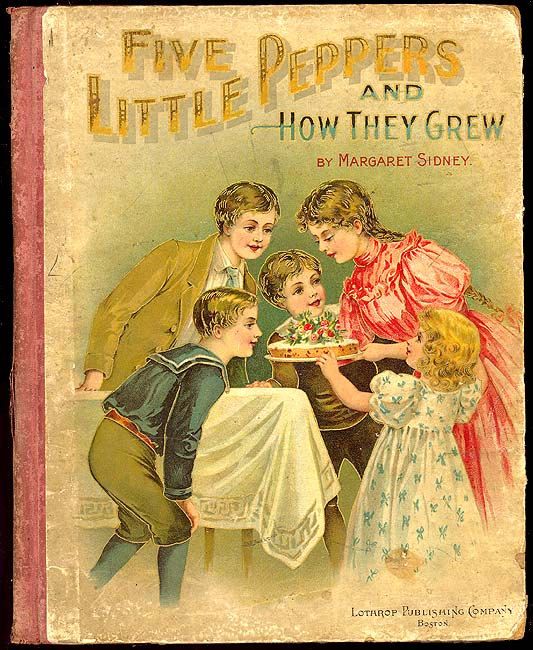
The 1881 cover of The Five Little Peppers and How They Grew by Margaret Sidney


Isabella’s son Raymond wrote poems, and her husband Reverend Gustavus “Ross” Alden contributed stories and short homilies like this one:

Don't Gossip. Children, avoid this evil. I am pained every day at seeing the work which mischief-makers do. Someone has compared this evil to pin-making. “There is sometimes some truth, which I call the wire. As this passes from hand to hand, one gives it a polish, another a point, others make and put on the head, and at last the pin is done.” The Bible speaks much against mischief-making, and I would advise you to collect all the verses in this book, bearing on this subject, and commit them to memory, and then I do not think you will ever be guilty of this sin. Remember, my little friends, that you can never gather up the mischief you may do by gossip.


Sometimes, the family banded together to write stories for the magazine. In 1886 each family member—Isabella, Ross, Marcia, Grace, Raymond, Theodosia, and Charles—took a turn writing a chapter of a serial story titled  “A Sevenfold Trouble.” In 1887 they continued their collaboration by writing a sequel titled, “Up Garret,” with each writer again  producing a different chapter. In 1889 the combined stories were published as a book titled A Sevenfold Trouble.

An original illustration for A Sevenfold Trouble, published in an 1887 edition of The Pansy.
An original illustration for A Sevenfold Trouble, published as an 1887 serial in The Pansy.


Isabella also previewed some of her own books by publishing them as serial stories in the magazine. Monteagle and A Dozen of Them first captured readers’ hearts in the pages of The Pansy.

Cover of 2015 e-book edition of Monteagle


The magazine was a resounding success. Thousands of boys and girls from around the world subscribed. Many children grew to adulthood reading the magazine, as Isabella remained at the helm of The Pansy for over 23 years.

Next week: The Pansy Society

A Gift for the New Minister’s Wife

In a newspaper interview, Isabella once confided her method for coping with troubling events that upset her:

Whenever things went wrong, I went home and wrote a book about it.

Bonnet 02 The Delineator Apr 1900Many of the trials she weathered in real life ended up as turning points for characters in her books. One such situation occurred when Isabella was a young bride and was working hard to make a good impression on her husband’s new congregation.

About a week after she and her husband arrived at a new church where he was to minister, Isabella received a gift from a member of the congregation. It was a “pitiful little bonnet,” clearly made out of the sleeve of an old brown dress. Whoever fashioned it had not tried to hide the wrinkles and pin holes still visible from the bonnet’s former life as a dress.

“In my ignorance [I supposed] it to be a love-gift from some dear old poverty-stricken soul.”

So Isabella, filled with gratitude, wore the unattractive bonnet to church the very next Sunday. There she discovered the truth: the person who made the hat and gave it to Isabella was the wealthiest woman in town. She’d sent it to Isabella because she deemed Isabella’s own bonnet was “too gay for a minister’s wife!”

Hat Box edIt was a stinging insult, and, like she always did, Isabella used her pen to write about it in her novel, Aunt Hannah and Martha and John.

In the book, Martha Remington was, like Isabella, the newly-wed wife of a new minister. And Martha, too, received a gift from a wealthy lady in the congregation.

When the bandbox was opened, she struggled with her inward conviction that she ought to feel grateful. Therein lay a bonnet—a very remarkable one. It was made of mixed green and black silk, shirred after the fashion of our grandmothers. Some of the shirrs had been laid in the old creases, and some had not. Between every third row came an obstinate crease, made in the times when the silk did duty as a dress sleeve—a crease that refused to be covered with stitches, or ironed out, but told its tale of “second-hand” as plainly as though it had a tongue.

Bonnet from The Delineator Apr 1900Poor Martha thought the black and green bonnet was “grotesque,” and she didn’t know whether to laugh or cry when she looked at it. But she did know one thing: she would not wear it to church!

As the story progressed, one of the ladies who created the ugly bonnet confronted Martha on Sunday after church, and added further insult to injury by demanding to know why Martha was still wearing her usual hat, instead of the gift the ladies had sent. Martha’s reply was friendly, but dignified—a response that was much different than Isabella’s reaction had been in real life.

Isabella later said that writing about the bonnet helped heal the woman’s hurtful actions, and, eventually, she was able to look back on it all with humor … possibly because writing about the woman’s insult really did help her see the whole incident in a more forgiving light.

Cover_Aunt Hannah and Martha and JohnYou can read more about Martha and the “grotesque” bonnet in Aunt Hannah and Martha and John. The book also contains a few more examples of awkward situations Isabella encountered in her years as a minister’s wife.  Click on the book cover to learn more.