
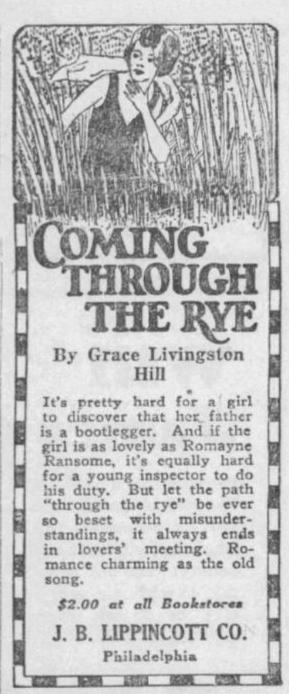
One hundred years ago, J. B. Lippincott Company published two new novels by Isabella’s niece, Grace Livingston Hill: A New Name (her 43rd novel) and Coming Through the Rye (her 44th novel).
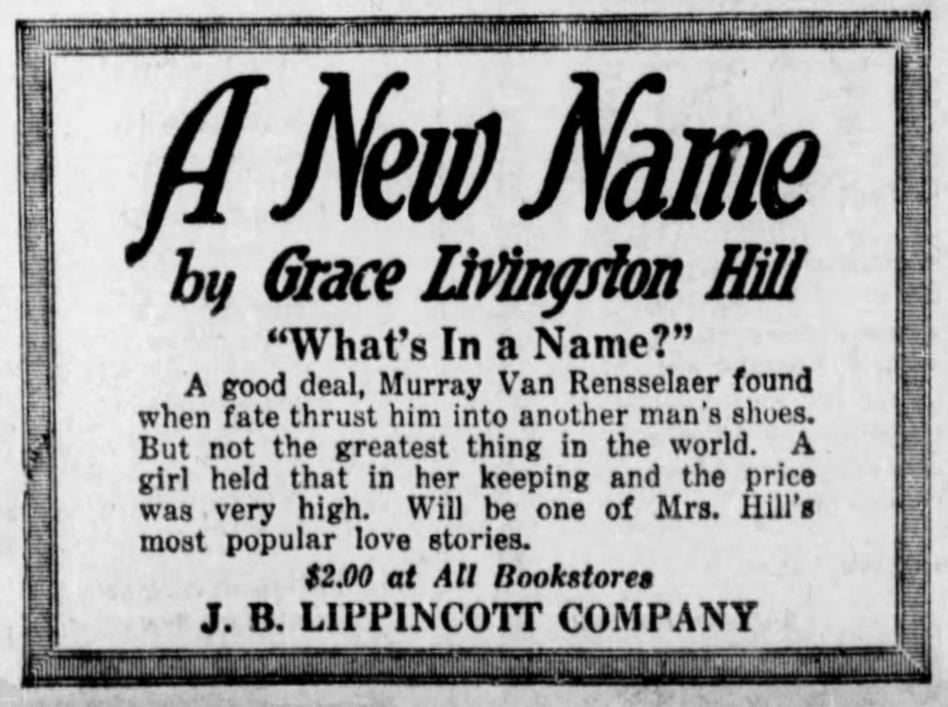
The mid-1920s were an interesting time for an author like Grace. While literary critics enthusiastically praised modernist writers like Ernest Hemingway and F. Scott Fitzgerald, everyday readers continued to turn to Grace for something entirely different: comfort, clear moral lessons, and stories that reminded them that life could have a noble purpose.
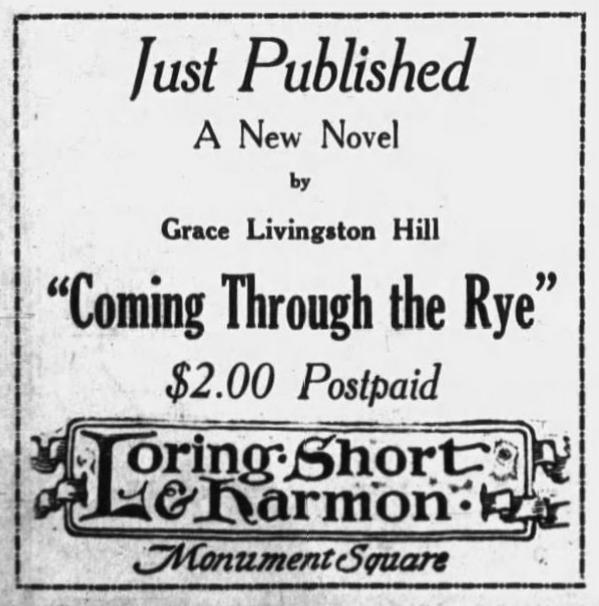
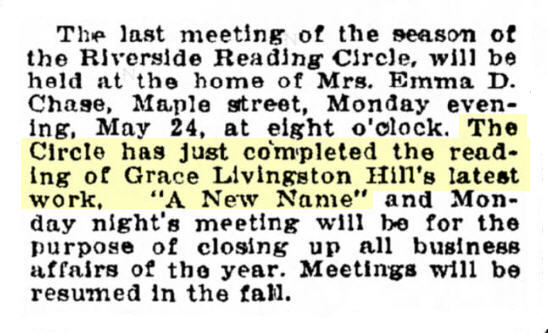
Community reading groups like the Riverside Reading Circle in Bridgeport, Connecticut, frequently placed her latest releases right at the top of their schedules:
That enthusiasm wasn’t limited to the 1920s. Decades later, readers were still discovering her work for the first time—and realizing their mothers and grandmothers had loved her, too. In April 2000, a newspaper in Kentucky published an article by a feature writer named Nancy Taylor, who wrote:
I discovered a small volume, Coming Through the Rye, and enjoyed it so much, I mentioned it to my mother as if I were telling her something she didn’t know.
“Grace Livingston Hill!” she said. “I’ve read so many of her books I don’t know where to begin. Matched Pearls is one of my favorite stories ever.”
Ms. Taylor went on to write:
My great-grandmother read them, my grandmother read them, my mother read them, I’ve read them, and my daughter reads them.
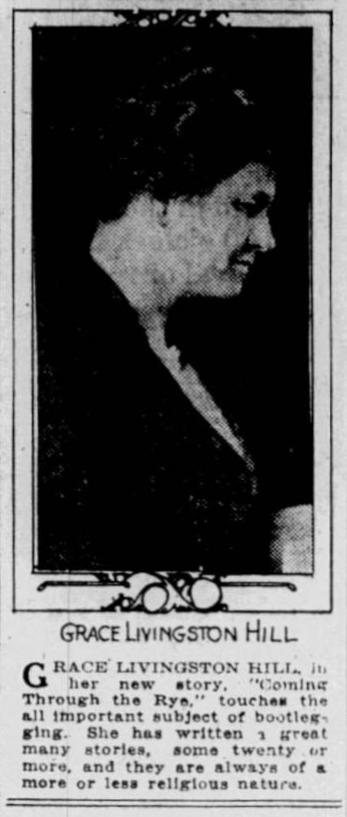
The old adage, “the more things change, the more they stay the same” is still true. Grace’s novels continue to hold the same place in readers’ hearts today as they did in 1926, and every year since. Perhaps Ms. Taylor said it best in the closing lines of her article published twenty-six years ago:
Where there is discouragement in the world, Grace sowed encouragement. Where there is yearning, Grace sowed hope, and she did it across generations. It is such a comfort to know that words which so long ago inspired our great-grandmothers are today an inspiration for our daughters. Grace Livingston Hill is the author of that gift.


