 Mine is the doing when He says the word, but His is the bringing to pass. And that, you see, is the end of all worrying and planning and doubt. There is no rest nor comfort outside of that conclusion.
—The Randolphs
Mine is the doing when He says the word, but His is the bringing to pass. And that, you see, is the end of all worrying and planning and doubt. There is no rest nor comfort outside of that conclusion.
—The Randolphs

In 1897 Isabella Alden wrote about the life of a tramp in her book, As In A Mirror. In doing so, she described a true cultural phenomenon. After the American Civil War, tramp life ranged across the nation, especially in the western states where winters were mild and the living was easy. In particular, California was a tramp’s paradise where a man could sleep free under the stars at night and pluck his breakfast from an orange tree in the morning. In some ways, tramps enjoyed a unique popularity similar to the cowboy; both emerged in the public mind as stereotypes of carefree, rough-and-tumble adventurers who embodied the American spirit.
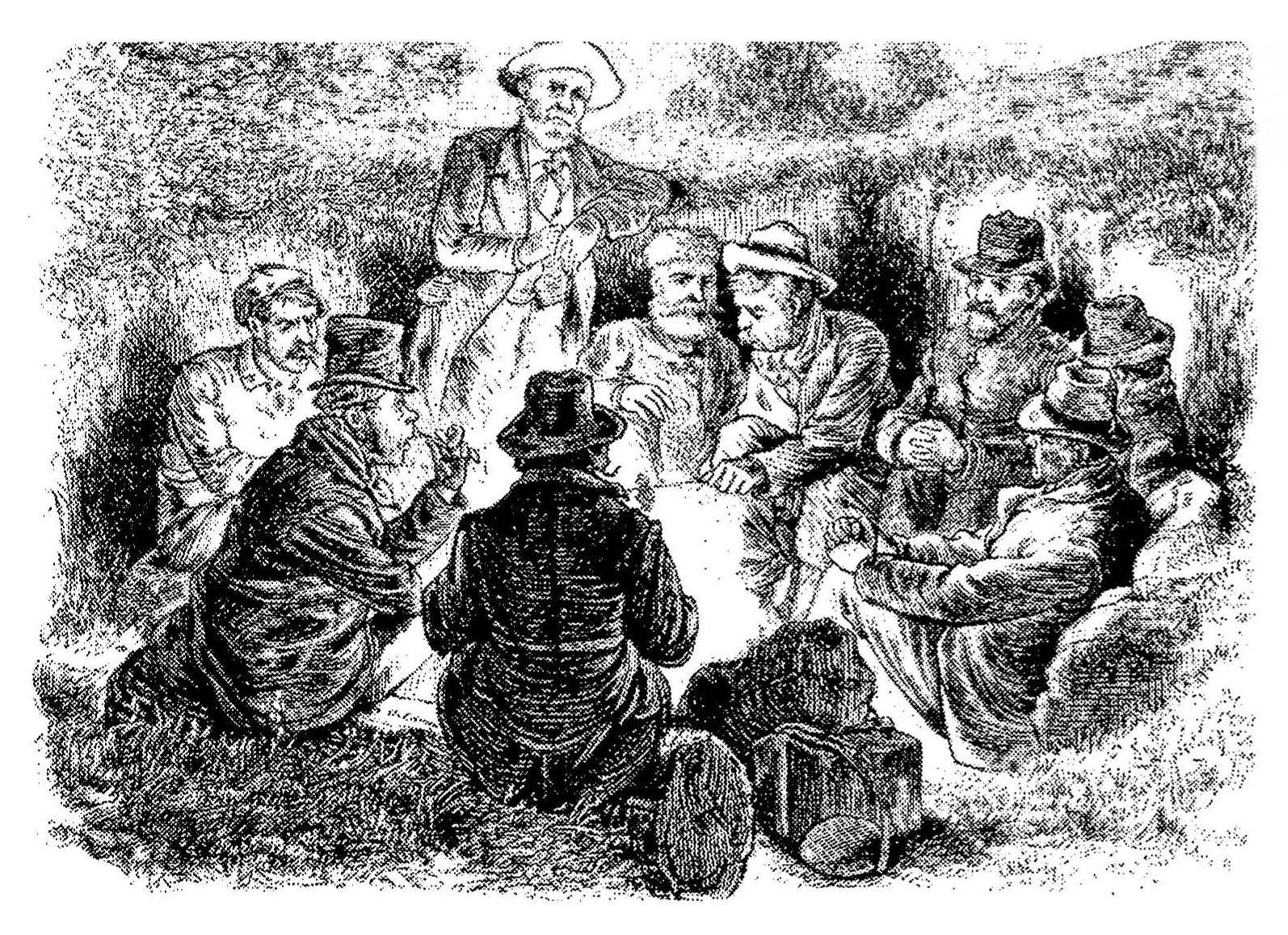
But by the 1880s the tramp’s image began to fade and society began to see tramps more as lazy thieves. Tramps who dared to beg for a meal or a place to sleep often received an answer in the form of a double-barreled shotgun pointed their direction. Some towns passed laws prohibiting tramps from entering their borders, and there are stories of police officers standing by while townspeople stoned tramps gauntlet-style as they ran them out of town.
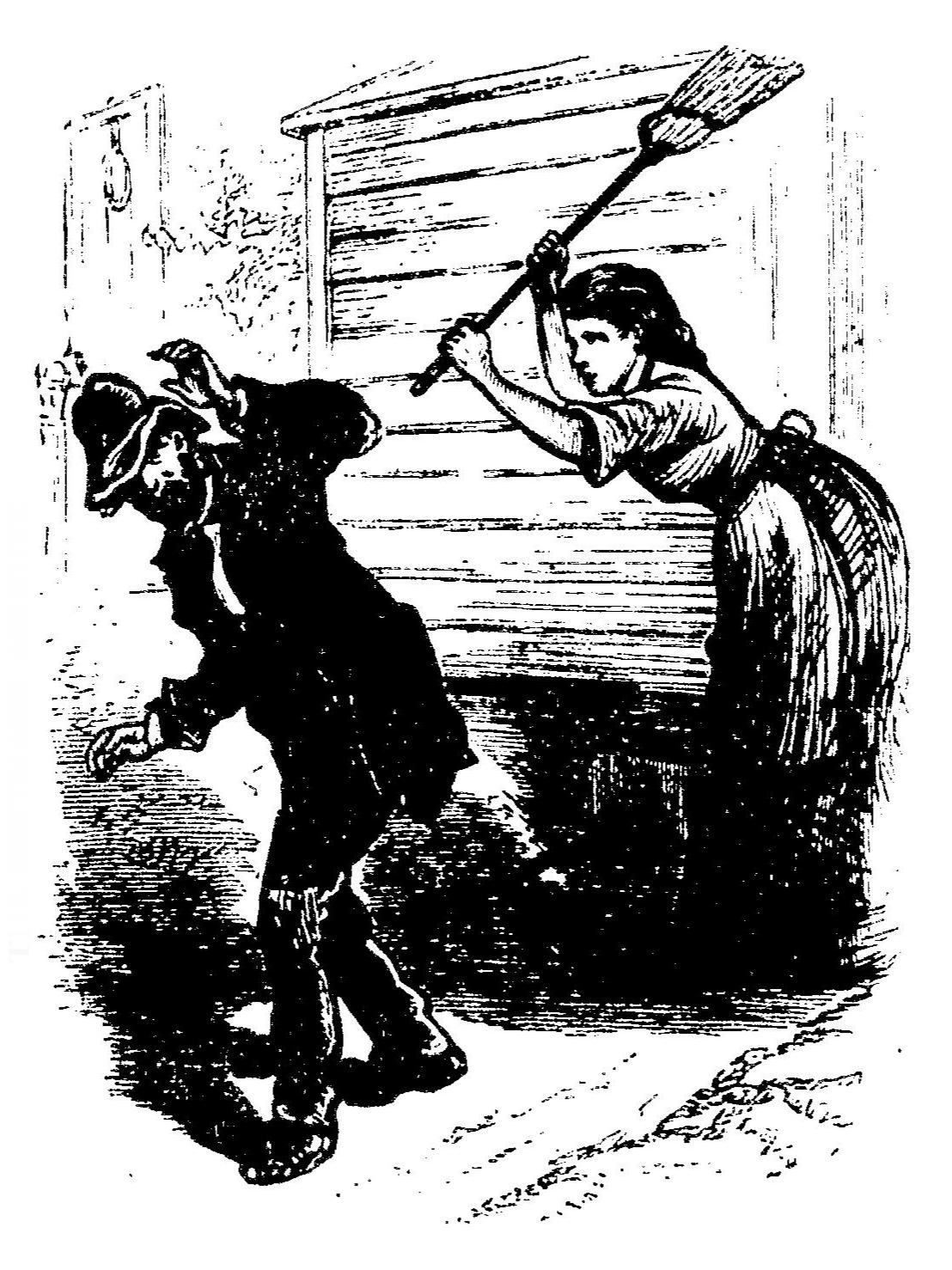
As a result, tramps developed a method of communicating to each other whether a particular town or home was friendly to tramps. They chalked crude symbols on barns, fence posts and water tanks so the tramps who came after them knew what to expect.
Here’s how Isabella Alden described the practice in her novel, As In A Mirror. The book’s hero, John Stuart King, disguised as a tramp, encountered a woman who was openly fearful of him. As he tried to understand the woman’s reaction, he met a real tramp for the first time.
For a full hour his sympathies were entirely on the side of the tramp. Then he met one so repulsive in appearance that he instantly justified the woman who had been afraid of him. It was a new experience to be accosted as he was:
“Any luck that way, pal?” nodding in the direction from which he had come.
“I haven’t found any work yet, if that is what you mean,” spoken in the tone that in his former grade of life would have been called cold.
The man gave a disagreeable sneer. “Oh, that’s your dodge, is it?” he said. “I can tell you I’ve had worse trials in life than not finding work. Did you spot any of the houses?”
“Did I what?”
“Mark the houses where they treated you decent, and gave you coffee, or lemonade, or something? You must be a green one! Don’t you carry no chalk nor nothin’ with you to mark the places? Then you’re a hard-hearted wretch. If you can’t do so much for your fellow tramps as that, you ought to go to the lockup.”
The healthy, clean young man found himself shrinking from this specimen with a kind of loathing. Would it be possible for him to fraternize with such as he, even to study human nature?
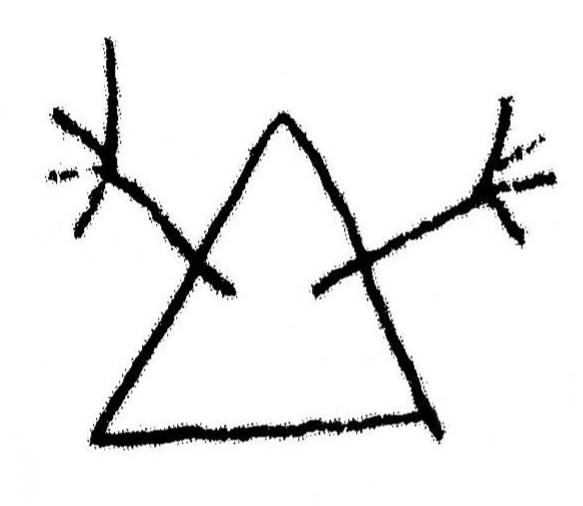
Here are a few samples of the symbols tramps used to indicate whether fellow-tramps could expect to receive a sandwich or a spray of bird shot at a particular home or town:
..
The people who live here have a gun
..

..
Handcuffs; tramps here are sent to jail
..

..
This is a safe place
..

..
This campsite is safe from police
..

..
You can get a hand-out here
..

..
Dry town; no alcohol
..

..
Liquor sold in this town
..
 ..
..
A policeman lives here
..
 ..
..
Vicious or biting dog
..
 ..
..
A woman lives here who is kind
..
 ..
..
Police eyes shut; this is a good town
..
Police eyes open; this is a hostile town
..


I wonder to what extent the gracious Spirit of God hovers near to suggest and help those who never ask for His help?
—The Hall in the Grove

In the late 19th and early 20th Centuries, there were very few trusted commercial medicines to alleviate cold symptoms. People often relied on folk remedies and home-made treatments to cure a variety of illnesses and injuries.
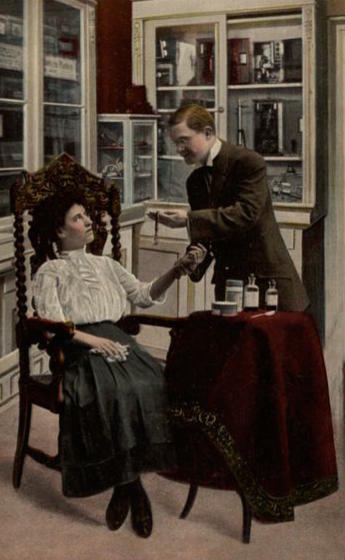
A scene in Jessie Wells illustrates the point. Jessie and her best friend, Mate are sitting outside on the porch one evening when Jessie’s father comes home from work.
Dr. Wells came up the walk at this moment, and the two girls arose to give him passage.
“You are two very sensible young ladies, staying out in all this dew, with your thin dresses,” he said, as he passed them. “Tomorrow you’ll be taking molasses and ginger by the quart.”
“No, indeed, Doctor,” laughed Mate,” I never take any horrid doses like that.”
Horrid doses indeed! The molasses and ginger cure for a sore throat was fairly common, and it sounds like Dr. Wells believed in its curative powers. In actual fact, the ginger tended to suppress coughing and the molasses soothed the throat.

Another home remedy for colds was a mixture of molasses and a few drops of kerosene in a glass of water. As questionable this home cure may sound, it was one of the few cold remedies that didn’t contain alcohol.
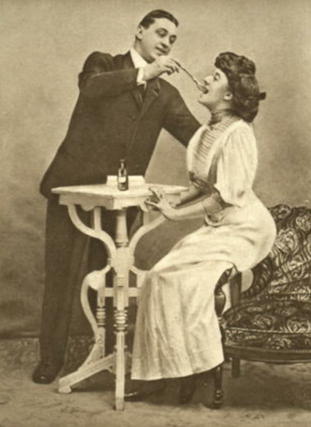
Mrs. Beeton’s Book of Household Management (the 1861 authority on running the home) suggested an “infallible” cure for a cold, which included rum in its ingredients:
Put a large teacupful of linseed, with 1/4 lb. of sun raisins and 2 oz. of stick liquorice, into 2 quarts of soft water, and let it simmer over a slow fire till reduced to one quart. Add to it 1/4 lb of pounded sugar-candy, a tablespoonful of old rum, and a tablespoonful of the best white-wine vinegar or lemon-juice.
.Commercial medicines also included alcohol. Bitgood’s Original Compound Vegetable Syrup boasted it could cure the common cold, as well as a host of other ailments. The manufacturer was one of the few who revealed that their product contained alcohol, although the ad doesn’t state how much alcohol was actually in the mixture.

The majority of commercial medicines did not disclose the alcohol content in their products.
This lovely trade card advertises a ginger cure that sounds just like the kind mothers everywhere mixed up with molasses in their kitchens. The product description on the back of the card touts the benefits of the medicine, but doesn’t list the actual ingredients.
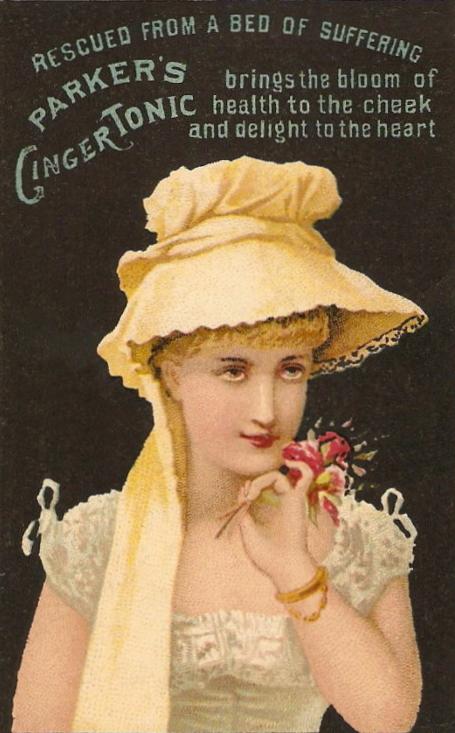
Too bad; because, in actual fact, Parker’s Ginger Tonic was 41.6% alcohol—more potent than 80 proof whiskey! Compare that to the average alcoholic content of today’s beer (5% alcohol) and wine (approximately 12% alcohol).

It was the rule, rather than the exception, that consumers had no idea that they were dosing family members with alcoholic products; and since many alcohol-laden medicines of the time were specifically marketed to children, mothers often unwittingly gave their little ones rum and whiskey.
Little wonder, then, that Isabella Alden often wrote about the dangers of alcohol consumption. At the time her books were written, people usually didn’t know they were consuming alcohol and often didn’t recognize their growing dependence until it was potentially too late.

 One reason why our friends are not converted is because we, their leaders, walk so crookedly that we keep them all the time stumbling over us.
—Household Puzzles

I n Twenty Minutes Late, Caroline Bryant’s mother supported the family by working in a canning factory during the growing season. In the winter she earned her money by sewing and taught Caroline to sew fine stitches by hand.
During Caroline’s stay with Dr. Forsythe’s family, she makes friends with Mrs. Packard, the housekeeper. One day Caroline watches Mrs. Packard use a sewing machine and wishes (with a heart-felt sigh) that she could buy a sewing machine for her mother so she can ease her mother’s burden.
Watchful Mrs. Packard, who had become a good friend to Caroline, heard the sigh. “Does your mother sew on a machine?” she asked.
“No, ma’am,” said Caroline, with a slight laugh, “not very often. When she goes to Mrs. Hammond’s to sew, and to one or two other places where they have machines, she does; and this is the kind they have, and she likes it ever so much; but at home she sews by hand.”
“My land!” said Mrs. Packard, “I should think that would be hard work. She can’t accomplish very much sewing, it appears to me.”
“She does,” said Caroline firmly, “accomplish ever so much sewing. She sews hard all winter long; makes dresses and shirts and underclothing, and all sorts of things for people, taking every stitch by hand.”
“For the land’s sake!” said Mrs. Packard, “what in the world does she do it for? Nobody does that any more.”
Caroline laughed a little sorrowfully. “She does it just as we do a good many things, Mrs. Packard, because she has to; she hasn’t any machine of her own, and we children haven’t got old enough yet to buy her one; but we are going to some day. That is the first thing Ben and I are going to do.”
Mrs. Packard kept her own counsel, and Caroline went away unaware that she had said anything of special interest to anybody.
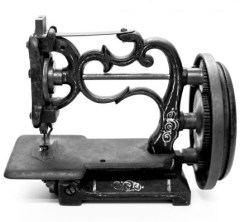
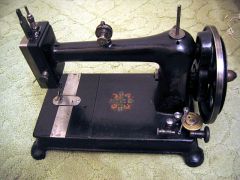
In 1893, when Twenty Minutes Late was first published, sewing machine sales were booming; and their affordability made it easy for most families to own one. No wonder, then, that Mrs. Packard was astonished that Caroline’s mother supported the family with hand-sewing.
.
At the time Twenty Minutes Late was written, sewing machines weren’t new. They’d been on the market for many years, particularly in commercial settings; but it wasn’t until the mid-1800s when they began to be mass-marketed to consumers.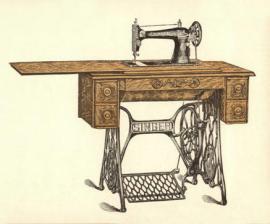
In 1885 The Singer Manufacturing Company began selling sewing machines directly to the public for home use. Early Singer machines featured a foot-operated treadle; and in 1889 Singer introduced an electric sewing machine to consumers.
By the late 19th century, other companies were producing sewing machines for home use, as well; and most companies allowed purchases on credit, making it easier for families to obtain a machine.
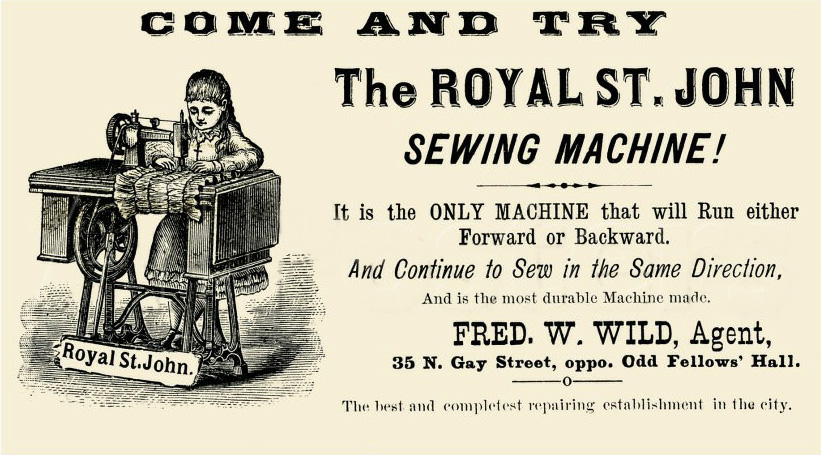
This trade card touts the Royal St. John machine as the only sewing machine that can sew forward or backward:
.
An 1890 painting by Fritz von Uhde shows a dressmaker using an older “turtle back” sewing machine (so named because of the machine’s shape).

.
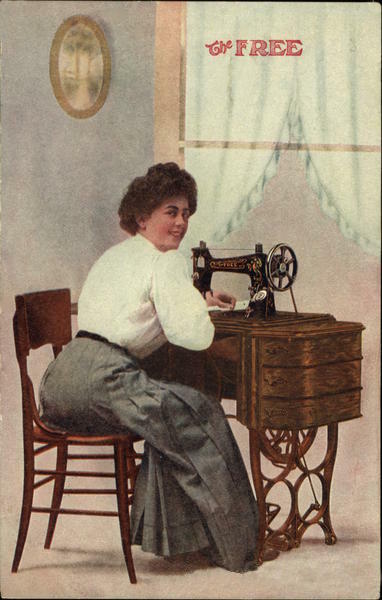
The 1908 advertisements below feature a sewing machine ingeniously marketed under the name “The Free.” The Free sewing machine was distinguished from other machines as “the only insured sewing machine warranted for life.” The company pledged to replace any machine “destroyed or injured” with a brand new machine, without cost.

.
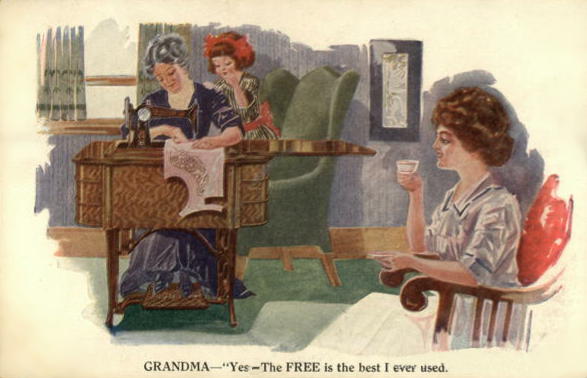
As sewing machines became more readily available, they also became more affordable. This turn-of-the-century advertisement depicts how enjoyable—and leisurely—life can be with a sewing machine in the home.
.

And this 1913 painting by Hans Heysen depicts a sewing machine set up beside a charming, sunny window for use by the lady of the house.
.
Would you like to learn more about sewing machines and the art of sewing during the 1890s and 1900s? Follow these links for more information:
Elias Howe’s Sewing Machine – This article features a comparison of the time it took in the 19th Century to sew various articles of clothing by hand verses machine. Some of the comparisons are astonishing.
Sewing & Notions – Etui – Lovely images of vintage sewing machines and accessories.
Singer through the Ages 1850-1940 – A timeline of the Singer Manufacturing Company and its innovations.
The History of the Singer Sewing Machine – A brief history of the Singer sewing machine with wonderful illustrations.


When a sensible person had made a misstep, the thing for him is to undo as much of the mischief as he can; as quickly as he can. It is the only way he has of showing the difference between himself and a fool.
—Eighty-Seven


Of course you cannot help these bitter feelings; do you suppose He expects you to do so? If you could make your heart right yourself, where would be the need of His help?
—Eighty-Seven

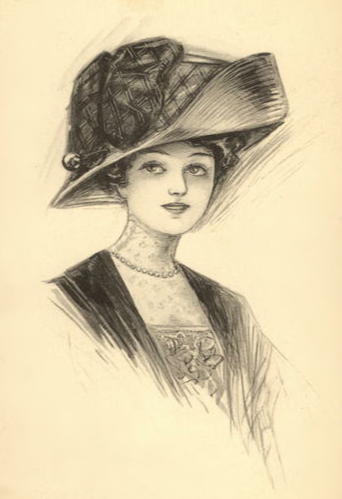
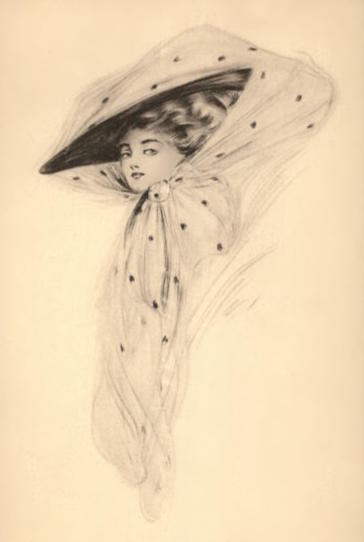
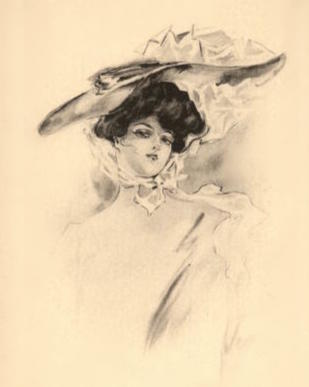
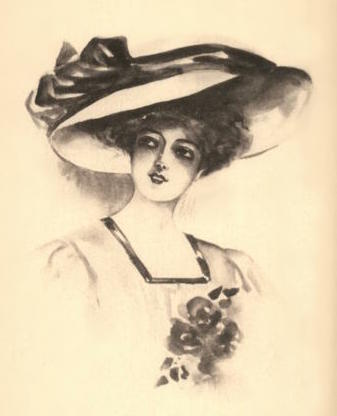
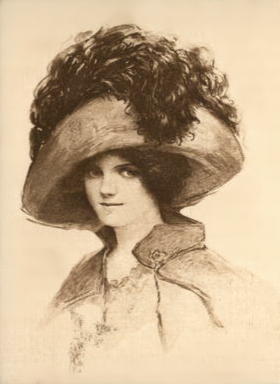
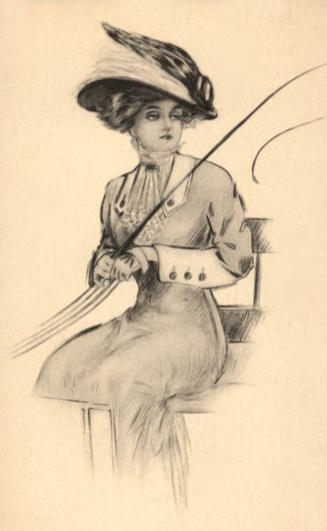
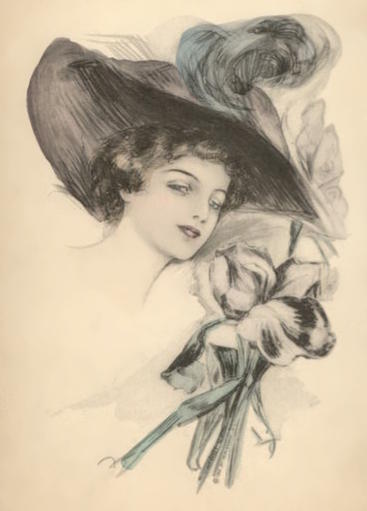
January 17 is National Wear A Hat Day. In honor of the occasion, here are sketches of lovely ladies wearing hats that were popular at the turn of the 20th Century. Now yellowed with age, these black and white drawings were often used in advertisements and on trade cards.
Isabella Alden’s first book was published in 1865 and she continued to publish fiction through the 1920s. Her stories spanned many decades and she saw fashion styles come and go throughout her long life. These stylish hats might have been worn by Isabella’s heroines in her books, Making Fate, Overruled, As In A Mirror, Four Mothers at Chautauqua and Ruth Erskine’s Son, which were all published between 1895 and 1905.
Which hat is your favorite?









 I know I love the Lord, and I know that He will not destroy me, for I have in my heart the assurance of His promise.

Affordable Christian Fiction
Faith, romance, and a place to belong
Author of Classic Christian Fiction
Author of Classic Christian Fiction
Reviews and giveaways for Christian fiction and sweet, clean fiction. Bringing readers information on great stories and connecting authors with their readers.
 Isabella Alden