In The Ester Ried Series, Isabella chronicled the transformation of a young man named Jim Forbes. Jim first appeared in The King’s Daughter as a member of a wild bunch of boys who showed up at church for the sole purpose of terrorizing the Sunday-school teachers.



Homer Nelson, who was in charge of the Sunday-school classes, described Jim and his friends:
“Oh, they swear outrageously, and smoke profusely, and gamble whenever they get a chance, not often for money, for they have very little of that article about them; but for raisins, or pins, or straws, or anything that is convenient, and they use liquor freely, every one of them.”
But by the end of The Ester Ried books, Jim was a different person. In fact, he came to be so well regarded, his friends at church gave him a gift: “a dainty and elegant, and altogether perfect gold watch and chain.”
A young gentleman with his gold watch and chain. From OldFamilyPhotos.com
Jim was astonished to receive the watch, not only because of its beauty and cost, but because of what it represented. In the times in which Isabella lived, a man who carried such a watch and chain was considered a gentleman of the first order.
During the late 1800s and early 1900s, true gentlemen followed a very strict code of dress that was based, in large part, on the model promoted by Britain’s Lord Chesterfield, who famously said:
“I cannot help forming some opinion of a man’s sense and character from his dress.”
A Victorian Gentleman, by Vittorio Matteo Corcos, 1890.
Isabella agreed whole-heartedly. In her books, Isabella dressed her gentlemen in neat, conservative, well-fitting suits. Even the wealthy men who populated her stories (like Edward Stockwell in The Ester Ried Series, Judge Burnham in The Chautauqua Books, and Mr. Burton in Christie’s Christmas) dressed in a way that did not call attention to themselves or their wealth.
Dressing in the “height of the fashion,” Isabella believed, was better left to dandies and pretenders.
A Paris dandy, circa 1890. His multiple watch chains, quizzing glass, elaborate buttons, and overly-shiny shoes would have been considered vulgar by American standards.
There were essential elements of a gentleman’s attire. In addition to a well-fitting coat and trousers, a gentleman always appeared in a waistcoat and tie.
Portrait of Henry Cabot Lodge, by John Singer Sargent, 1890.
Even when they were relaxing around the house or engaging in leisure activities, men wore coats, ties, and waistcoats.
Captain John Spicer, dressed to go fishing, by John Singer Sargent, 1901.
.
Portrait of the artist’s brother, dressed for riding, by Arthur Hacker, 1882.
Another essential element of a gentleman’s appearance was an appropriate amount of facial hair. Beards and moustaches were considered to be a symbol of masculinity.
Self-portrait, by James Wells Champney.
Isabella’s men wore beards and moustaches, as well. In Helen Lester, Helen’s dashing older brother Cleveland returned home from Europe looking very handsome and “heavily bearded.”
Portrait of Leon Delafosse, by John Singer Sargent, 1898.
And charming Ralph Ried wore a full beard in The Ester Ried Series of books.
Undated photo of young man with a full beard and moustache. From Pinterest.
Coats, ties, waistcoats, and beards—they were all essential to a man’s attire in Isabella’s world, but a popular 1866 book on “etiquette and true politeness” carried this reminder:
Gentility is neither in birth, manner, nor fashion—but in the MIND. A high sense of honor—a determination never to take a mean advantage of another—an adherence to truth, delicacy, and politeness toward those with whom you may have dealings—are the essential and distinguishing characteristics of A GENTLEMAN.
A 1901 photo of a fashionably dressed gentleman.
You can click on the links below to find out more about Isabella’s books mentioned in this post.
Isabella Alden’s series of books about the Ried family were her most popular novels. In Julia Ried, book 2 of the series, the Ried family falls on hard times, and daughter Julia decides to strike out on her own. She takes a job as a bookkeeper in a paper box factory in the neighboring town of Newton.
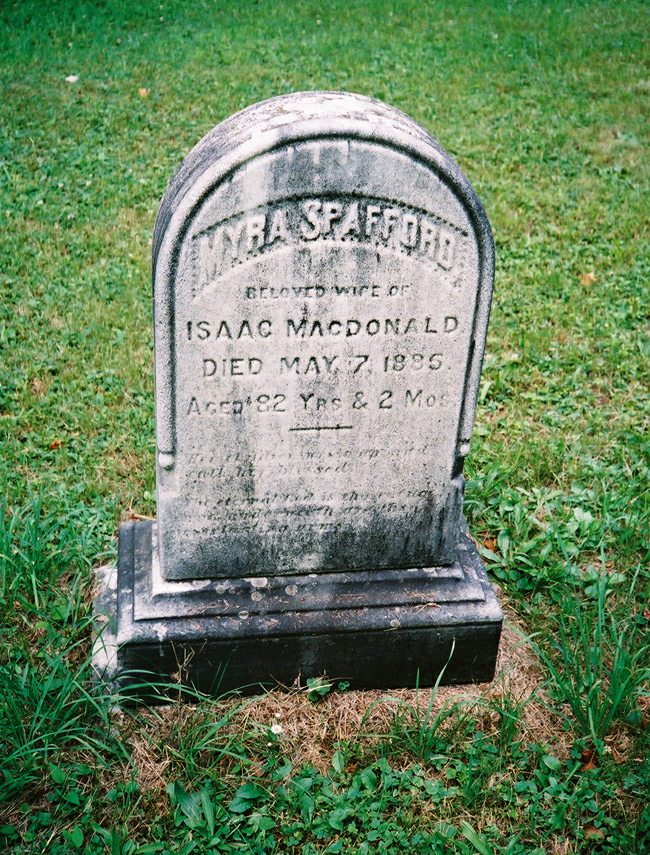
In choosing Julia’s career, Isabella was on solid ground. She was able to write convincingly about Julia’s job and work environment, because Isabella’s father, Isaac Macdonald, operated a paper box factory in Gloversville, New York.
Page from an 1870 Fulton County New York Business Directory.
Gloversville, the little village where Isabella grew up, was celebrated for its glove-making industry.
A 1908 postcard of Gloversville showing the intersection of Main Street, with its many retail glove shops, and Fulton Street, where Isaac Macdonald’s box factory was located.
Between 1890 and 1950, Gloversville supplied nearly 90 percent of all gloves sold in the United States.
1913 paper glove box; from Pinterest.
Besides the many “skin mills” and glove manufacturing business in the little village, the industry spawned a host of supporting businesses, such as box makers, tool and die manufacturers, and dealers in buttons and threads.
Box for Silkateen brand ladies gloves. From Etsy.
Isabella’s father, Isaac Macdonald owned one of four or five box-making factories in Gloversville. While there’s no record that Isabella ever worked in her father’s factory, she had a good grasp of the working conditions, and she conveyed her thorough knowledge of the business in Julia Ried.
Women workers at a box factory, about 1890.
In Julia Ried, Isabella gave lively descriptions of the “shop-girls” who folded and pasted the cardboard boxes together. According to Frank Hooper, one of those shop-girls in the book, they worked ten hours a day, six days a week.
A 14-year-old girl at work in a paper box factory. From National Archives.
Pasting cardboard boxes together was a sticky, messy, exhausting job; but it was a job that was often performed by women and children.
A young girl working alongside a woman in a paper box factory, 1912. From National Archives.
Small boxes especially—like those that contained gloves for ladies and children—needed to be assembled and pasted by women or children with small hands.
From the Gloversville Daily Leader, March 12, 1900.
Yet in the glove-making industry—and its supporting businesses—women and girls earned half as much as men.
The work could be dangerous. Accidents were common, and some injuries could be severe.
From the Gloversville Daily Leader, May 12, 1898.
A young box factory worker after an accident with a veneering saw; 1907.
Isabella drew on her knowledge of the box-making business to create some of her most beloved characters. The characters of Frank Hooper and Jerome Sayles (whose father co-owned the box factory in the story) made return appearances in other books in the Ester Ried Series.
Women and girls working in a box factory, 1910.
You can learn more about Gloversville, Isabella’s home town, by reading these related posts:
At the height of her popularity, Isabella Alden was one of the most widely-read authors in the world. One of the things that made her so popular—and unique—was the varying ages of her readers: she had just as many children who were dedicated fans of her books as she had adult fans. And they all wrote letters to her.
She received letters by the thousands, addressed to her publisher, to her home, and to the offices of her magazine, The Pansy. And she answered them all!
Isabella Alden in an undated photograph.
Some fans wrote to request her autograph and a photo. Others asked for advice on how to become a great author or they sent their own manuscripts and asked for her opinion.
Some asked for advice on other topics, from how to get a good husband to the best way to stop fingernail biting. One fan even asked for pieces of her best dress so they could be sewn into a patchwork quilt the fan was sewing!
An early cover for Ester Ried
But the fan mail Isabella received most often was about her book Ester Ried. Ester Ried was incredibly popular and prompted scores of readers to send Isabella letters thanking her for the book’s message.
New cover for the 2016 release of Ester Ried
Fans wrote to Isabella about how they saw themselves in Ester’s struggles and her impatience with life’s daily annoyances. But mostly, readers identified with the lessons Ester learned; they took to heart the promise that God would bring peace and happiness to their lives, if only they trusted in Him.
What started as a single book soon blossomed into an ongoing series. The Ester Ried series gave fans of the original book glimpses into the lives of the characters they loved. Readers grabbed up each new story about the Ried family members and their trials as they grew up, married, and learned to trust God to help them through a sometimes difficult world.
Two years after Ester Ried was published came Julia Ried, a sequel that focused on Ester’s younger sister Julia and the lessons she learns about faith in times of temptation. It also brought readers up to date on Abbie Ried’s story after the tragic turn her life took in Ester Ried.
The following year Isabella published the third book in the series, The King’s Daughter. In this book Isabella introduced the character of Miss Dell Bronson. Unlike Ester or Julia, Dell was rock solid in her faith and trusted God in her daily life, but she still had challenges to face. And she still had lessons to learn in Wise and Otherwise, the next book in the series.
Isabella commissioned her best friend Theodosia Foster to write book five. Echoing and Re-Echoing (written under Theodosia’s pen name Faye Huntington) centers around Ralph Ried, Abbie’s brother, who, as a new minister, struggles to reach his flock through his Sunday sermons.
Isabella’s fans particularly loved the sixth book in the series, Ester Ried Yet Speaking, because it included the character of Flossy Shipley. Flossy was originally introduced to readers in Four Girls at Chautauqua. In Ester Ried Yet Speaking readers got to find out what happened to Flossy after her marriage to Evan Roberts. They also met Dr. Everett, Hester Mason, and Joy Saunders, who were the main characters in Isabella’s later book, Workers Together; An Endless Chain.
Isabella waited nine years before she published Ester Ried’s Namesake. It was intended to be the last book in the series, but fans wrote to beg for more.
Even Isabella’s niece, Grace Livingston Hill, encouraged her to write “one more long story.” Grace suggested she write about Ester Ried’s granddaughter or great-granddaughter, and thereby reach an entirely new generation of readers with the original book’s message.
But by that time, Isabella was 86 years old and in failing health. One more “long story” was beyond her abilities, she told Grace. “You have altogether too high an opinion of me.”
Many fans of the series think the Ester Ried books are perfect, just as they are; the only difference is that today’s readers have the option to read the books electronically. A new generation of Ester Ried e-books is available on Amazon and other e-book retail sites.
Boxed set e-book cover for Ester Ried, the Complete Series.
Have you read the books in the Ester Ried Series? Which book is your favorite?
You can click on any of the book covers in this post to find out more about each title.
Isabella Alden was very close to her sister Marcia, who married the Reverend Charles Livingston. For many years Isabella’s and Marcia’s families lived together under the same roof.
Isabella Alden (left) and her sister, Marcia Livingston in an undated photo.
In the summer months the Aldens and the Livingstons traveled to Chautauqua, New York and shared a cottage on the grounds of the Chautauqua Institution.
In the winter they made the pilgrimage to Florida, where the two families lived in a large house in Winter Park.
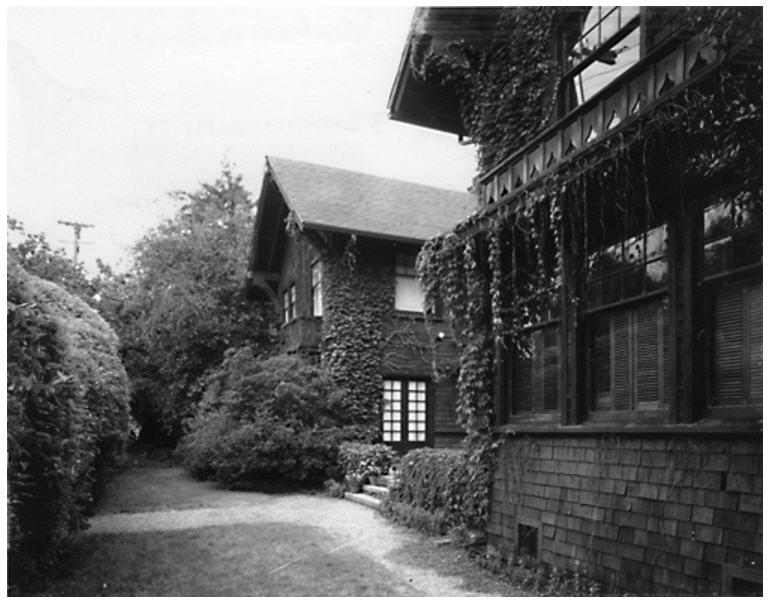
The Alden house in Winter Park. (From Winter Park Public Library archives.)
Isabella’s son Raymond and Marcia’s daughter Grace attended Rollins College in Winter Park, and Grace went on to teach physical education classes there.
Grace Livingston Hill in her early twenties.
Before Grace took up her pen to write some of America’s most beloved novels under the name Grace Livingston Hill, she was one of the first teachers at Rollins College. She was also a true advocate for the “physical culture” movement that was sweeping the country at the time. She recognized the freedom it gave women to pursue physical health in a way they hadn’t been able to before. At Rollins she taught ladies’ classes in calisthenics, basketball, gymnastics, and fencing.
Grace Livingston (front and center) with her Greek Posture Class, about 1889. (From Rollins College Archives.)
She also taught men’s classes in physical culture, such as fencing and Greek Posture:
Grace teaching a fencing class in 1890. (From the Rollins College Archives.)
Men’s Greek Posture Class, about 1890. (From Rollins College Archives.)
And when she wasn’t teaching at the college, she taught physical culture classes at the Florida Chautauqua.
An 1889 announcement from the Florida Chautauqua.
Like her niece, Isabella appreciated the physical culture movement. She even featured the craze in one of her short stories, “Agatha’s Uknown Way.”
And she wrote “Too Much of a Good Thing,” a story about how one young girl got so caught up in the physical culture craze, that she made life difficult for her entire family. You can read “Too Much of a Good Thing” for free below.
Would you like to learn more about Grace Livingston’s teaching years at Rollins College? Click this link to read a fun story about one of her biggest challenges at the school, and how she convinced the faculty to see things her way.
You can read Isabella’s short story, “Agatha’s Unknown Way” for free. Just click this link.
You can also read a previous post about the birth of gymnastics at Chatuauqua Institution.
Enjoy Isabella’s story, “Too Much of a Good Thing”:
Too Much of a Good Thing
Downstairs everyone was busy. Uncle Morris and his entire family, just from Europe, were coming by an earlier train than it had been expected they could take, and many last preparations for making them comfortable had still to be attended to.
Mrs. Evans had been up since daylight, planning, directing, and helping to the utmost that her small strength would admit.
Indeed, her eldest daughter Laura had constantly to watch, to save her mother from lifting something heavy, or reaching for something high. Often her clear voice could be heard with a “Oh, mother, don’t! Please—I’ll take care of that.” And often the gentle answer was:
“Dear child, you cannot do everything, though your will is strong enough. Where is Millie?”
“Millie has gone to sweep and dust the hall room; you know we didn’t think we should need that, and I used it as a sort of store room; but since Arthur is coming with them, we shall have to get it ready; and he will need to go at once to his room, since he is an invalid, so I sent Millie to put it in order. I told her just what to do, and she will manage it nicely. She must be nearly through now, and I’ll have her finish dusting here, so I can help you with those books; they are too heavy for you to handle.”
No, Millie wasn’t nearly through. In fact, she could hardly have been said to have commenced. The truth is, she had been thrown off the track. It was an old print which fell out of an, unused portfolio that did it. The print showed the picture of a girl in fun Greek costume, and reminded Millie of what was not long out of her mind, that in the coming Physical Culture entertainment she was to chess in a costume which was supposed to be after the Greek order.
“Let me see,” she said, bending over the print, “this girl has short sleeves and low neck. Why, the dress is almost precisely like the one which Laura wears with her lace over-dress; I might wear that. It would be too long, of course, but it could be hemmed up. I am almost sure Laura would let me have it; and with her white sash ribbon tied around my waist it would be just lovely. Then that would save buying anything new, and save mother any trouble. I mean to go this minute and try on the dress, before I say anything about it.”
Away dashed the Greek maiden to one of the guest chambers which Laura had left in perfect order, dragged from a seldom used drawer the elegant white mull dress with its lace belongings, all of which saw the light only on state occasions, and rushed back to the hall room again, where she had left the print she was trying to copy. In her haste, she dragged out with the dress various articles of the toilet. Laura’s white kid gloves which she wore when she graduated, a quantity of laces, and a handkerchief or two, to say nothing of sprays of dried flowers. These she trailed over the carpet, seeing nothing of them. The important thing in life just now was to get herself into that dress.
It was accomplished at last, not without a tiny tear having been made in the delicate stuff, but which Millie’s fingers were too eager to notice. She tied the white sash high up about her waist, after the fashion of the picture, seized the dust brush in one hand as if it were a dumb bell, or an Indian club, and struck a graceful attitude with her arm on the corner of the mantel.
“There!” she said, “I would like to have my picture taken in this dress; I have a very nice position now for it. I wish the girls were here to see me. Laura must let me wear this; it fits exactly. I don’t believe it is much too long for a Greek maiden. I should like to wear my dresses long; it must be great fun. I wonder if we couldn’t have our pictures taken in costume? I think it would be real nice; and our folks would each want to buy one. Perhaps we could make some money.”
There were hurried steps in the hall, and the Greek maiden’s musings were cut short. Laura came forward rapidly, talking as she
came.
“Millie, aren’t you through here? You have had plenty of time, and mother needs your help right away. Hurry down just as quickly as you can; she is over-doing, and it is growing late; the carriage may come any minute now. Why, Millie Evans!”
She stopped in amazement, for the Greek maiden was still posing. She smiled graciously and said: “Don’t I look fine? I borrowed it a minute to see if it will do to wear to the entertainment. It is just the thing, isn’t it? You will lend it to me, won’t you? Just for one evening? I’ll be awfully careful of it.”
“And you have been to that drawer where all the nice things are packed, and dragged them out! There is one of my white gloves under your feet, and my only lace handkerchief keeping it company! I must say, Millie Evans, you deserve to be punished. Here we are trying our best to get ready for company, and keep mother from getting too tired, and you neglect your work to rig up like a circus girl; and go to a drawer which you have no right to open. I shall certainly tell father of this.”
The Greek maiden’s cheeks were in an unbecoming blaze. Laura was hurried and tired, and spoke with more severity than was her custom. It certainly was trying to find the room in disorder, and her best dress in danger.
“Take care,” she said, as Millie’s frantic efforts to get it off put it in greater danger. “Don’t quite ruin that dress. Indeed you shall not wear it. I am astonished at you for thinking of such a thing; when father hears what you have been doing, I doubt if you will need a dress for the entertainment.”
Then Millie lost all self control. “You are a hateful, selfish thing!” she burst forth. “Take your old dress; I don’t want to wear it; and I won’t be ordered about by you as though you were my grandmother. I’m nearly fourteen, and you have no right to manage me. I’ll just tell father myself that I—”
“What is all this?” Mr. Evans’ voice was sternness itself, and he looked at the girl with blazing cheeks, in a way that made her angry eyes droop.
“What does it mean, Millicent? I heard you using very unbecoming language to your sister, and to judge from your appearance you have been about some very inappropriate work.”
“Well, father, Laura burst in here and—”
“Never mind what Laura did, Millicent. Unfortunately for you, I know which daughter tries to care for and spare her sick mother in every possible way. I overheard enough to show me which one is to blame. Laura may tell me what is the trouble, and you may listen.”
But Laura was already sorry that she had spoken so sharply, and tried to soften the story as much as truth would permit.
“Her mind is so full of the Physical Culture entertainment, father, that she does not stop to think. I know she did not mean to hinder and make trouble.”
“I see,” said Mr. Evans, speaking grimly. “I have heard a good deal about this Physical Culture business. If everyone is as much carried out of common sense by it as our Millicent is, I should say it was high time to have some moral culture. Millicent, you may put yourself into a suitable dress for sweeping, and do the work you were sent to do, at once; and you will not need to think any more about a dress for the entertainment, for you are to be excused from attending it. You may tell your teacher that I said so.”
Poor Millie! The hall bedroom floor might almost have been washed, if that were desirable, with the tears she shed. No hope had she of any change of mind on her father’s part. He rarely interfered with his children, but when he did, his word was law.
And poor Laura! She went downstairs heavy-hearted and miserable. Why had Millie been so silly, and why had she allowed her vexation to make matters worse?
The poor frail mother actually cried when she heard of Millie’s disappointment. “Yet I really cannot ask her father not to notice it,” she said sorrowfully. “Millie has been so remiss in her duties for weeks, all on account of the hold which that Physical Culture craze has upon her. It is too much of a good thing. I am afraid her father is doing right.”
It’s summertime, and that means events at Mount Hermon Christian camp are in full swing. Nestled in the mountains of Santa Cruz, California, Mount Hermon is a place of quiet beauty, where people can renew and build on their relationship with Jesus Christ.
The train station at Zayanta Inn, Mount Hermon, California; 1915.
One hundred years ago, Isabella Alden was a frequent summer visitor at Mount Hermon. She and her husband Ross moved to the Santa Clara area in 1901. When Mount Hermon opened four years later, they were overjoyed to have a nearby place of rest and retreat similar to their beloved Chautauqua Institution.
The Lake at Mount Hermon, 1913.
Isabella Alden loved Mount Hermon, and she had many happy memories connected with it. She wrote:
I wish I could give you a picture of Mount Hermon, a blessed place where I have spent precious weeks living out under the great redwood trees. It was wild and quaint and beautiful.
Bean Creek at Mount Hermon, 1910.
As she had in the old Chautauqua days, Isabella spent as much time in the out of doors as possible at Mount Hermon:
Tent life seemed to belong to it as much as houses belong in most other places. We ate out of doors, and worked out of doors, and practically slept out of doors, with all the curtains of the tent looped high.
Giant California Sequoias.
Nestled among the mammoth California redwoods of Mount Hermon, Isabella rested, read and worshipped.
Reverend James Gray, D.D., 1910.
Her spirit was fed by some of the world’s most prominent theologians who spoke at the camp: Dr. James Gray, dean of the Moody Bible Institute; evangelist Reuben Archer Torrey; and Reverend A. B. Pritchard of Los Angeles.
Reverend R. A. Torrey, 1907.
Reverend A. B. Pritchard, 1903.
Isabella reveled in Mount Hermon’s program of Bible study. She immersed herself in classes about the Second Coming of Christ, and the Pentecost. She spent a week studying Colossians, and said afterward that she felt “as though I had a new Bible.”
An inviting announcement in the San Francisco Call, July 13, 1906.
Amid all the conference meetings, presentations, and Bible studies, she found time for her own writing.
I had a little retreat where I used to take refuge when I wanted quiet for writing or study. It was the burned-out stump of a sequoia tree. The space left was forty feet in diameter with a wall of stump all around. New branches had formed and had climbed till they reached away up toward the sky, and interlaced overhead to form a room of green. The sequoia leaves are odorous and make a lovely soothing atmosphere in which to rest.
Giant Sequoia in nearby Calaveras Grove, California; 1902.
It was in this atmosphere that Isabella was inspired to write The Browns at Mount Hermon, which was published in 1907; and her experience at Mount Hermon even inspired her novel’s premise. During one specific summer, over 60 people with the surname Brown attended Mount Hermon; Isabella used that bit of trivia as the catalyst for a merry mix-up of people named Brown in her novel.
Isabella cherished every lesson and every sermon she heard at Mount Hermon. Each summer for the remainder of her life—health permitting—she made the short trip to Mount Hermon, the beautiful place of worship and rest nestled in the mountains of Santa Clara.
Did you know Mount Hermon is still an active Christian camp and retreat? Find out more about Mountain Hermon by visiting their web site:
Here’s a scenario that is often played out on Sunday mornings across the country: Imagine you’re in church, waiting for the service to start, and you realize your friend isn’t sitting in his or her regular place. You pick up your phone and type out a text message:
Where are you?
Or after the service ends, you send off a quick email:
You missed a great sermon this morning. Everything okay?
With just those few words, you let that person know that you care. Your words are a subtle encouragement to worship regularly.
But during Isabella Alden’s time, there were no electronic text messages or emails. Daily mail service was the fastest way for people to communicate, until the telephone came into wide use around the turn of the century.
In Isabella’s day, the scene described above would have played out using posted mail instead of wireless technology.
Back then, caring church leaders and Sunday school teachers sent out brief notes and post cards like the ones here.
Some were signed by the sender, and others were personalized with the time and place for the next service or meeting. On Monday afternoons, the “come to church” cards appeared in mail boxes across the country.
As a minister’s wife, Isabella probably sent quite a few cards herself over the years, to let someone know he or she was missed at church.
Churches still use similar communications to reach out to people today. A website called Ministry Greetings is one of many that offers different styles of cards for churches to send through the mail. And for those who prefer to text or email, there are plenty of fun or thought-provoking memes to choose from for encouraging a friend to go to church.
From memegenerator.net
Over ninety years after Isabella’s duties as a minister’s wife came to an end, it’s nice to see a tradition like sending off “come to church” cards still goes on in today’s busy world.
An 1895 issue of Golden Rule magazine included an article about working women that caught Isabella Alden’s attention.
Clerks examining newly-printed money at the U.S. Bureau of Engraving and Printing, 1904.
Here’s what she shared on the Christian Endeavor page of her own magazine later that year:
“REST ROOMS.”
The Golden Rule suggests a beautiful idea. It advocates the renting and furnishing, in large towns and cities, of what it calls Rest Rooms, for the use of working-girls during the noon hour. It proposes pretty furnishings, lounges, easy chairs, books, papers, pleasant games, etc. It also suggests that a small fee might be charged for the use of the room, because most girls would prefer to pay a little each week towards its expenses. The thought is certainly an important one. Let all the Endeavorers talk it up. Why could not a neat plain restaurant or lunch room be added, where coffee, and. sandwiches, and milk, and cookies, and crackers, and fruits might be had at very low prices?
Many working-girls now have such dreary places in which to eat their lunches and such dreary lunches to eat, that it would seem as though improvements were needed here.
Workers labeling and wrapping perfums and soaps, 1900.
Isabella’s description of a ladies’ rest room doesn’t sound at all like the cold, utilitarian washrooms we know today; but back in 1985, it was an idea whose time had come. Workers had few rights; they worked long hours under sometimes difficult conditions. Employers could give workers as many—or as few—breaks during the work day as they wanted.
Members of a typing pool with their male supervisor.
So the idea of a rest room for workers was somewhat revolutionary, and it quickly caught on.
The ladies’ lunch room at the National Cash Register Company, 1902. From Shorpy Archive.
Progressive and far-thinking employers recognized the benefits of providing a dedicated rest room to their employees:
From the Arizona Republican, 1920.
In some towns, Women’s Trade Unions or the YWCA repurposed space to create rest rooms for female workers.
Telephone operators enjoying their rest room, 1906.
And in Tulsa, Oklahoma, the city took the initiative to furnish a dedicated room for the use of “strangers, tired shoppers, and working girls.”
From the Tulsa Daily World, 1915.
The concept of a rest room proved so popular, businesses began offering dedicated ladies’ rest rooms to customers, as well.
Newspaper ad for Lansburgh & Bro. department store in Washington DC, 1918.
And by the 1920s, companies listed rest rooms for female workers as a benefit when trying to recruit new employees.
Want ad in the Democratic Advocate newspaper, College Park, Maryland, 1920.
What began as a germ of an idea in 1895 became a wide-spread reality in the 20th century as retailers, factories, and municipalities established clean, comfortable restrooms for workers, customers, and visitors.
The ladies’ lounge at E. M. Bigsby department store, Detroit, Michigan, 1915.
You can read more about women’s working conditions during Isabella’s lifetime by viewing these previous posts:
On May 30, 1866, twenty-four-year-old Isabella Macdonald married Ross Alden. Ross (whose full name was Gustavus Rossenberg Alden) was a thirty-four-year-old seminary student.
Six months later, Ross was ordained by the Presbyterian Church, and they embarked on a life together of ministering to congregations and sharing their Christian faith.
You can read more about Isabella and Ross’s early years of courtship and marriage in these posts:
Thumb through the pages of almost any ladies’ magazine printed before 1906 and you’ll undoubtedly find an advertisement for Lydia Pinkham’s Vegetable Compound.
Lydia Pinkham’s products—in pill and liquid tonic form—were the “go to” cure-alls for generations of women.
Original early 1900s packaging with insert for Lydia Pinkham’s Vegetable Compound pills. (From Pinterest.)
The principal ingredients of Lydia Pinkham’s Vegetable Compound were licorice and alcohol (anywhere from 18-20%), so it wasn’t taste that drove women to consume the product in record numbers.
It was, instead, Lydia Pinkham and her incredible marketing skills that turned her home-made tonic into a multi-million dollar business in less than ten years.
A typical Lydia Pinkham trade card.
Timing also played a role in Lydia Pinkham’s success. In the late 1800s mainstream medical science spent little time studying female anatomy; and strict standards of modesty ensured that generations of women were woefully ignorant about their own bodies and how they functioned.
Many Lydia Pinkham’s trade cards featured pleasant artwork, a “soft sell” that was pleasing to women.
Enter Lydia Pinkham, who established herself as a kindly grandmother who patiently and delicately taught ladies about menstrual cramps, menopause, and everything in between.
One of the images of Lydia Pinkham that adorned the company’s labels over the years.
Labels for her products bore her likeness. Her pills and tonics promised to cure menstrual cramps, correct a prolapsed uterus, reverse diseases of the ovaries, and chase the blues away.
The company’s advertising cards encouraged women to think of Lydia Pinkham as a member of the family, as with this trade card which purports to show an image of her grandchildren.
She gave away millions of free “educational” pamphlets, with topics covering sewing, cooking, history, and women’s common health issues; throughout each publication, the benefits of Lydia Pinkham’s products were extolled and promoted.
This example of the company’s “Famous Women in History” pamphlet included several typical “testimonials” used in many Lydia Pinkham ads. Click on the cover to view the entire pamphlet.
Lydia herself received thousands of letters from women every year, and each letter received a personal answer.
Cover of Lydia Pinkham’s pamphlet, “Simplified Sewing.”
But there were secrets about Lydia Pinkham and her business empire. The most incredible secret was that by the time Lydia’s products became famous nation-wide, she had been dead for decades.
And those reply letters written to women asking for help with a health problem—they were not written by Lydia Pinkham. Instead, they were written by employees, copied from proscribed templates, and they always included a recommendation to buy more Lydia Pinkham products.
Female employees answering mail. After the company was forced to admit Lydia Pinkham did not personally answer all letters, it used the revelation to its advantage, publishing this and other photos of its team of female employees answering mail. The company advertised: “Every letter opened by a woman, seen only by a woman. No boys around.”
When Congress passed the Pure Food and Drug Act in 1906, the company was forced to disclose the contents of Lydia Pinkham’s Vegetable Compound in clear terms on their labels. For the first time, women—including members of the Women’s Christian Temperance Union—discovered that their favorite tonic contained a high level of alcohol.
In addition to print ads, the company gave away millions of free promotional items, such as sewing kits, thimbles, tape measures, and this lace tatting shuttle.
The new government requirements also forced the company to curtail its previous advertising claims that it could, among other things, cure “all weaknesses of the generative organs” and that it was “the greatest remedy in the world” for diseases of the kidneys.
A Lydia Pinkham newspaper ad from the 1920s, cleverly disguised as “real” news.
Thanks to the company’s inventive advertising, Lydia Pinkham’s products saw strong sales throughout World War I, Prohibition (despite the tonic’s alcohol content), the 1930s and 1940s. In fact, Lydia Pinkham’s Vegetable Compound is still sold today in major drug stores and online sites like Amazon. And just as previous generations of women used to write letters extolling the virtues of the products, today’s customers post reviews of Lydia Pinkham’s Vegetable Compound on the Internet, demonstrating, once gain, that the company remains as adaptive as ever.
In honor of Mothers’ Day, here is a letter Isabella published in an 1895 issue of The Pansy magazine:
Dear Young People:
I notice that the Juniors all over the country are going to talk about “Troubles” at one of their [Christian Endeavor] meetings this month. Some people think that boys and girls never have troubles. I know better.
I remember distinctly when I was twelve years old, I had a very large trouble one day. I wanted to take a ride with my brother, and mother thought it was too cold for me to go out. I coaxed a good deal, until father told me in a very decided tone to say no more about it; that of course I could not go.
I remember I went upstairs to my room, which was not warmed, and sat down in a dreary little heap in the corner and cried. I told myself that I was a most unfortunate little girl; that I could never go anywhere nor do anything like other girls, because my mother and father were always afraid of my taking cold. I said I wished I was old enough to do as I liked; and I should be too happy to live when the day arrived that I could do as I pleased, and have nobody say, “You cannot go here, or do this, or that.”
Poor silly me! Did you ever know a girl who acted like that? But I honestly thought it was real trouble. Let me tell you something. A good many years have passed since then. Mother and father have long since gone away where I cannot hear their voices. Nobody says to me now, “You cannot go to such a place, or wear such a thing.” I am free to do as I please, so far as words are concerned; but sometimes I sit and think it all over, and it seems to me I would give almost anything I have in the world, just to hear my dear mother’s voice saying, “No, my daughter, you cannot go this morning.”
Do you get my thought? Some of the things which we call troubles, grow in after-years into blessings which we miss and mourn.
Another thing, out of my imaginary trouble I made a real one. I sat in that chilly room brooding over my wrongs until I took cold, and was ill for days. Mother had to watch with me at night, and father had to go more than once over the long cold road for the doctor. I have seen people since who made their troubles for themselves.
All the same, I know that young people have real troubles, sometimes; and whether real or imaginary, they want, every one of them, to be taken to the same great Physician. Pity the boy or girl who does not know Him well enough to call upon Him for help.
Reviews and giveaways for Christian fiction and sweet, clean fiction. Bringing readers information on great stories and connecting authors with their readers.