It’s Our Blogiversary!

It’s hard to believe, but we’ve been blogging about Isabella Alden and her books for five years!

And to thank you for your support and encouragement, we thought we’d throw a party . . . a party that lasts the entire month of September!

Please join us every weekday in September for fun and games, weekly Amazon gift card drawings, and plenty of Free Reads!

See you there!

Jenny, Nancy, and Susan


The Dangers of Soda Fountains

Today, a soda fountain—when you can find one—is a quaint relic of a by-gone era. Think of soda fountains and you may think of ladies wearing corsets and long skirts, or gentlemen who never leave home without a hat, tie, and pocket watch.

Soda fountains are such benign objects to us, it’s hard to imagine that they ever had the potential to cause harm. But in Isabella’s day, there were hidden dangers in every soda fountain, in every town in America.

An average American drugstore in 1900. A soda fountain is on the right side of the photo.]

Isabella Alden recognized those hidden dangers and wrote about them, because she knew the dangers were not inconsequential. There were pitifully few laws at the time that regulated the sale or distribution of products that could be bought at the time; and many products included alcohol and addictive ingredients.

Children could obtain alcoholic drinks in saloons. Doctors prescribed alcohol to patients young and old.

A pair of 1894 trade cards depicting “a big spender and his girl” at the soda fountain.

And commonly used tonics and medications often contained alcohol and opiates—sometimes at alarmingly high levels—and most did not disclose their contents on their labels.

In 1888 this cough syrup proudly listed its addictive ingredients—cannabis, morphine, alcohol, and chloroform—on its label. Since no laws required such disclosures, few manufacturers revealed their product contents.

Here’s an example: In 1885 a man named John Pemberton began marketing a beverage he invented. He called it “French Wine Cola—Ideal Nerve and Tonic Stimulant.”

In an 1880 drugstore in Washington DC, this soda fountain sold a beverage called Wine Coca for five cents a glass.

Why such a name? Because every 7 ounce glass contained 9 milligrams of cocaine and a walloping dose of caffeine extracted from the kola bean. Initially, sales were sluggish.

But the following year, when Pemberton renamed the drink “Coca-Cola,” sales picked up. By the 1890s, Coca-Cola was being sold in stores and soda fountains all over the country . . . and it still contained cocaine and caffeine. (Coca-Cola’s formula didn’t change until after 1903.)

An 1890s trade card for Coca-Cola, touting it as the “ideal brain food” for relieving mental and physical exhaustion.

That’s one example of the “hidden dangers” Isabella wrote about.

A 1905 magazine ad for Coca-Cola.

In her novel One Commonplace Day, several scenes take place in the town drug store, which Isabella describes this way:

[It was ] glittering with its show of colored glass and brilliant liquids, and arranged with that regard to lovely combinations of color which is common in first-class drug stores. There is at one end a handsome soda fountain, with all the various cooling syrups and elegant appliances of first-class establishments.

The design for a new soda dispensing unit, showing front and side views, with marble counters and inlays (circa 1900).

Charlie Lambert, one of the characters in the story, was a temperance man who took pride in the fact that he drank no liquor and had no temptation to drink any. But he often took his lunch at the soda fountain, where he drank a soda almost every day during the summer.

An 1890 newspaper ad for Coca-Cola aimed at temperance advocates, despite the drink’s ingredients.

Chances are, Charlie’s soda was laced with wine, cocaine, caffeine, or one of any number of additives that were not disclosed to unsuspecting consumers.

The soda fountain in a Peoples Drug Store, Washington D.C., 1909.

In the book Isabella advances the theory that people often become addicted to alcohol or drugs because they develop a taste for them as children.

A 1916 advertising broadside showing boys drinking a case of beer or liquor.

When you think of the number of children who sat on soda fountain stools, unconsciously swinging their dangling feet as they enjoyed a glass of Coca-Cola—all the while pumping nine milligrams of cocaine through their veins—Isabella’s theory begins to make sense.

A 1905 ad in Harpers’ magazine.

Advertising for Coca-Cola and similar beverages was everywhere. Ads showed happy, peppy, beautiful people sipping cocaine-laced drinks.

Coca-Cola calendar art, 1915.

And some soda fountains and saloons distributed tickets to people on the sidewalks, with a buy-one-drink, get-one-free offer.

By today’s standards, Isabella’s novels about temperance and the evils of alcohol may come across as strident and unreasonable. In reality, Isabella was fighting a very real problem in the best way she knew how; by writing stories people could relate to.

An iconic 1890s Coca-Cola advertisement.

And while One Commonplace Day is, on the surface, a story about the American temperance movement in the late 1880s, it carries a deeper message.

In the book, a group of prayerful Christians band together to help one of their neighbors overcome his addiction to alcohol. They formulate a plan to intercede in his life and help put him on the path to sobriety.

A crowded Coca-Cola soda fountain in 1910.

They pray for him, invite him to church, intercept him before he can enter a saloon or drug store, and do everything they can to help him kick his addiction.

Much has changed since Isabella wrote One Commonplace Day in 1886, but Americans still struggle with issues of alcoholism and addiction.

What do you think? In today’s world, is it possible for a group of prayerful Christians—like the people Isabella wrote about in One Commonplace Day—to band together to change the life of one person who struggles with addiction?


Coca-Cola wasn’t the only tonic that promised health benefits from questionable ingredients. You can read more about quack cures and patent medicines on these sites:

The Museum of Quackery.

Pilgrim Hall Museum.

And you can click here to learn more about Isabella’s novel, One Commonplace Day.

What About Croquet?

It’s the time of year when millions of Americans enjoy the out-of-doors. In Isabella’s novels, her characters spent summer days walking, hiking, and playing sports of all kinds.

A favorite pastime for Isabella’s characters was the game of croquet, and she may very well have played the game herself.

A romantic scene captured on the 1866 cover of a pamphlet on the rules of croquet.

Beginning in her early twenties, Isabella made several trips over the years to the Castille Sanitarium in New York, where she was treated for health concerns. The owner of the sanitarium encouraged all her patients to play croquet, and it’s possible Isabella followed the doctor’s orders.

Whether she played the game herself or not, she certainly appreciated the game. In her books, characters young and old played croquet, as did the rich and poor. No matter what their circumstances, croquet brought her characters together.

Children Playing Croquet – Little Playmates

In Cunning Workmen, Sunday-school teacher Mr. Hammond attends a young people’s party where he notices that Peter, one of his young charges, isn’t participating in any of the games.

“What about croquet?” he presently asked. “Miss Blake seems to be enjoying the game, and the boys are very patient in their teaching. Why haven’t you joined them?”

Peter’s honest face grew red and troubled.

“I don’t quite know about them,” he said, earnestly. “I was waiting for you to come so I could speak to you about it. Them red and yellow balls look nice, and I’m most sure I could strike them through those little wires, if that’s what they’re after; but …”

“Well?” his teacher said, in kindly inquiry.

“Why, they look so exactly like them billiard things that they play with down at the saloon. Tom Randolph took me in one day. He plays there a good deal, and if them things are wrong, why ain’t these?”

“But it isn’t the red and yellow balls that are at fault, you know. It is the associations. Billiard playing is generally done for money, and croquet is simply for pleasure and exercise. Isn’t there a difference?”

“Yes,” said Peter, slowly and thoughtfully, “there’s a difference. I see that.”

Leave it to Isabella to find a way to teach a lesson through a simple game of croquet!

Playing croquet in Cape May, New Jersey, 1875.

She also used the game to show readers the motivations and mindset of her characters. That was the case with the Reverend Mr. Tresevant in The King’s Daughter, when he decided to play croquet rather than attend a temperance meeting.

Later, in Wise and Otherwise, the next book in the series, Mr. Tresevant makes a fateful decision. When a little neighborhood boy is extremely ill and lay dying in his bed, the entire town, including Dr. Douglass, went in search of the Reverend Mr. Tresevant.

Dr. Douglass’ wife later asked if he ever found the minister:

“Did you tell him about Freddy, and how much they wanted to see him?”

“I did,” relaxing into gloom and laconic answers.

“What did he say?” Mrs. Douglass was entirely accustomed to cross-questioning her husband, and understood the process thoroughly.

“That he would go down there as soon as the game of croquet was concluded.”

The lady opposite him set down her cup that had nearly reached her lips and looked at her husband, while an expression of mingled doubt and dismay spread over her face.

“Dr. Douglass! Did you tell him the child was dying, and that they had been in search of him?” she asked in shocked tones.

“I explained the latter fact to him elaborately, and told him the boy was very sick, and that I feared he might not live until morning.”

For once the ever ready tongue opposite seemed to have not a word to utter. When she found voice again, it was to ask, in a very subdued way, “Do they know it at the house—know that you have found him, I mean? What do they think of it?”

“They know that I found him—and where—for they asked me both questions. I did not enlighten them as to his occupation, and said what I hoped and believed was true, that I thought he would be along very soon; but he had not arrived when I came away, a quarter of an hour ago. The game must have proved a complicated one.”

Now, the question is, was Mr. Tresevant’s heart so bound up in the game of croquet that he could not even leave it to answer a summons from the dying?

A tense moment in a game of croquet, 1918.

In the novel, Isabella does go on to explain the reasons Mr. Tresevant would not leave his croquet game to pray with the family of a dying child; and in doing so, she tells us much about the state of Mr. Tresevant’s heart and soul.

Students play croquet at girls school in Pennsylvania, 1901.

In all, Isabella mentioned the game of croquet in at least nine novels. Sometimes she used the game to introduce topics of right and wrong Christian behavior, as in the discussion above from Cunning Workmen.

Other times she simply used it as a way for her characters to enjoy each other’s company on a bright summer afternoon.

How about you? Have you ever played croquet? What do you like most about the game?


You can find out more about Isabella Alden’s stay at the Castille Sanitarium in New York. Click here to read the post.

And you can find out more about Isabella’s books mentioned in this post by clicking on any of these book covers:


Isabella’s Critic, Friend, and Helper

Isabella had a special bond with her father, Isaac Macdonald. She might even have been what we would call in today’s world a “daddy’s girl.” But the truth was that her father was undoubtedly the single most influential person in her life when she was growing up.

In his younger years Isaac Macdonald earned his living as a farmer, but with a wife and six children to support, he left farming and established a box-making business in Gloversville, New York.

Many years later, after Isabella became a best-selling author, a Gloversville newspaper wrote a brief article about her early years in that town. The writer of the article briefly mentioned her father:

Isaac was a box maker, and if his boxes are any index to his character, he was staunch and worthy. He lies in our pleasant cemetery, but there are boxes still in use made by his faithful hands.

It’s a brief paragraph, but with its use of the words character, worthy, and faithful, we get a glimpse of Isaac Macdonald’s reputation among his neighbors and friends.

In the many stories and anecdotes Isabella shared about her father, she paints a picture of a loving man of immense faith.

In his home circle, he ably fulfilled his role as provider, protector, leader and teacher. He was eternally patient with his children and grandchildren; and he instilled in them an unbreakable faith in God and His Word.

Most of all, Isaac valued honesty, a fact Isabella illustrated in a story that took place when she was an adult and her young niece Minie was staying at the family home.

Isabella’s sister Julia teasingly told little Minie that she was going to serve butterflies and caterpillars for tea, which greatly shocked and upset the little girl. Julia, however, thought Minie’s reaction was funny; she told the story to the family later that day “with many descriptions of Minie’s shocked tones and looks, and much laughter.”

Only Isaac looked grave. When the laughter was over he said to Julia:

“How many years do you suppose it will be before Minie will discover that you haven’t told her the truth?”

“The truth!” said Julia, in surprise. “Why, of course it wasn’t truth. It was only in fun, you know. Whoever supposed that the absurd little monkey would believe it?” and she laughed again at the thought.

“But, you see, she did believe it,” Isaac said. “She believed it because you told it to her. She has great faith in your word, you see. I would be very careful not to give that faith a shock if I were you.”

“Why, dear me!” Julia said, with puzzled face; “I never thought about its being anything serious. Don’t you think it is right to say anything in fun to a child?”

“I don’t think it is right to say anything but the truth to anyone,” Isaac said, emphatically; “least of all to a child.”

Isabella never forgot the lesson.

Isaac’s teachings with Isabella extended beyond those that would shape her character. In an interview with The Ladies Home Journal, Isabella said that it was her father who taught her to write at an early age.

He was the first to encourage her to keep a diary; and he also taught her to take notes during their minister’s sermons on Sunday morning. Together they would review her notes, and he encouraged her to use her own imagination to expand on them and weave stories from the lessons and bits of wisdom she had recorded.

That early discipline soon bore fruit. When she was about seven or eight years old Isabella wrote a story about the family clock (read more about her story here).

Her story was published in the local newspaper (coincidentally, the newspaper was owned by her sister Mary’s husband and little Minie’s father). Isaac insisted that the story be published under a pseudonym, saying:

“We don’t wish anyone to know that you wrote it, and so we will sign it, Pansy, for pansy means tender and pleasant thoughts, and you have given me some thoughts that are tender and pleasant.”

This incident, too, offers a glimpse into Isaac Macdonald’s character, and his desire to protect his daughter from public scrutiny and the hazards of fame.

Thereafter, Isabella was often writing or telling a story. Her books Four Girls at Chautauqua and Ester Ried made “Pansy” a household name around the world. It was while she was writing Ester Ried that her father became ill.

Isabella mentioned that when she was young, she always hoped she would never have to tend to anyone who was sick; she thought it would be “so dreadful to look at anybody knowing that he was soon to die.”

But she found it made a difference who the sick person was, and how he felt about death himself. Her father, she knew, wasn’t afraid of dying. He used to say to her:

“It is nice to have my children all about me, and it seems sad sometimes that I must go and leave them—sad for them, I mean. But what a blessed thing it will be when we all get up there where none of us will have to go away any more. It will be vacation there all the time, won’t it?”

When her father fell ill in the summer of 1870, Isabella spent as much time with him as she could, and often read to him from his Bible. She described it as a large-print Bible, all full of leaves turned down and verses marked.

She said there was no need to ask which verse was his favorite; he had left “marks of his love” all through the book.

One afternoon when Isabella was with him, she read verses here and there as her eye caught his different markings:

“And they shall see his face, and his name shall be in their foreheads.

“And there shall be no night there.”

“And the ransomed of the Lord shall return and come to Zion with Songs, and everlasting joy shall be upon their heads.”

And there was this verse:

“Fear not, for I have redeemed thee. I have called thee by thy name, thou art mine.”

She knew that verse was among the dearest to her father in the entire Bible. (Read the story behind the verse here.)

During that summer of Isaac Macdonald’s illness, Isabella was writing Ester Ried.

An early cover for Ester Ried

Her father, as always, was interested in her writing progress; but he showed particular interest in the story of Ester Ried. He told Isabella that “he prayed that it might be a blessing to some young life.” Sadly, he passed away on July 26, 1870, before Isabella finished writing the novel.

Isabella later wrote:

“It was while the tears were gathering thick in my eyes as I looked out upon his grave that I wrote the last chapter of the book, feeling that my closest, strongest friend and critic, and wisest helper had gone from me.”

Isaac Macdonald’s grave marker.

Isaac Macdonald’s prayer for Ester Ried was answered over and over again. Ester Ried was a great success and proved to be a blessing to generations of girls and young women who read it.

Isabella’s love for her father was evidenced in the books she wrote. She used him as the model for many of her male characters who were wise in judgment and strong in faith.

You’ll catch glimpses of him in Dr. Deane in Wanted and in Dr. Everett in Workers Together; an Endless Chain.

You can read more about the special bond between Isabella and her father Isaac Macdonald in these posts:

Isabella’s Early Writings

A Teachable Moment

Julia’s Occupation

A Woman’s Voice

A New Brother

For Day-School Teachers

As a teacher of young children for over forty years, Isabella Alden knew the power and influence teachers had over the hearts and minds of their students.

Here’s a story Isabella told about that very topic, in a column she wrote for The Christian Endeavor World magazine in 1901:

There is a teacher of my acquaintance, a cultivated young woman, who would be shocked and offended if she knew that I did not like to invite her familiarly to my home lest my little daughter should learn objectionable speech from her.

In the schoolroom, I am told, she guards her speech with care, and is thoroughly alive to the indiscretions of her pupils. But she frequents a home where two of her scholars live, being the intimate friend of their grown-up sister. Here she indulges in “Goodness!” and “My gracious!” on occasion, speaks of her pupils as “the kids,” and talks about “swell” neighborhoods and people, or mentions certain persons whose peculiarities of speech or manner make her “tired,” and in various other ways offends against good taste and true refinement.

And the young people in that home, who admire their pretty and vivacious teacher, are steadily copying not her school-room elegance, but her offhand vulgarities. Is that too strong a word?

Keeping in mind the fact that words like “swell” and “kids” were considered ill-bred slang in Isabella’s time, how would you answer her question?

Do you think the young teacher should not have used vulgar words?

Do you think Isabella was being too critical of the young teacher for using such words in front of her impressionable students?

Do you think, in general, teachers should be careful of their conduct inside as well as outside the classroom?

A Nice Oyster Supper

There’s a recurring theme in many of Isabella’s books you may have noticed:

Whenever a group of characters needed to raise money for their church or favorite cause, their first inclination was to earn the money through a social event.

Ad from a 1918 North Carolina newspaper.

Isabella’s characters held fairs and festivals, old folk’s suppers and young folk’s concerts, character parties and tableaux, strawberry soirees and ice cream socials—all in the name of raising money for their church or charity.

Announcement in Fort Mill Times (South Carolina), November 17, 1910.

Carrie Spafford in The Pocket Measure didn’t see the sense of it. She asked:

“Why do you suppose we always think of devices of this kind whenever we talk about money for the cause of Christ?”

Carrie asked a good question. Whenever there was money to be earned, Isabella’s characters—much like the people in churches Isabella observed first hand—spent long hours and lots of money to stage events by which they hoped to receive donations for their cause.

The Camden (Tennessee) Chronicle, February 9, 1912.

The most popular method Isabella’s characters turned to for raising money was the oyster supper.

That’s what happened in Isabella’s short story, “Circulating Decimals.” As soon as the ladies of the Penn Avenue Church realized the church library was in need of new books, they decided to take action.

Up rose the women, the respectable, middle-aged, matronly women. The library must be replenished, the money must be raised. They—the matrons—would do this thing speedily and quietly. They would have an oyster supper on a large scale, make preparation for a great many guests, furnish oysters in every possible style, and with them such coffee as only they could make, to say nothing of the inevitable cake and cream, and side dishes for those who did not relish oysters. So they went to work quietly, skillfully, expeditiously. Baking, broiling, frying, stewing!

A portion of a comic appearing in the Washington DC Evening Star, January 1, 1911.

Oysters were also the go-to choice when Isabella’s characters entertained guests in their home.

Preparing an oyster supper; and 1873 print.

Flossie Roberts served oysters with jellies and sauces to the rough boys in her Sunday-school class in Ester Ried Yet Speaking.

Oysters with Lemon, a painting by Otto Scholderer, 1891.

And when the impoverished Cameron family in What They Couldn’t struggled to find a way to entertain their society friends with little money, they decided to invite their discerning friends to a simple lunch:

Their ideas of simplicity would have bewildered some people. A lunch without salads was not to be thought of, of course; and chicken salads were the best. No matter if chicken was very expensive just now, it did not take a great deal for a salad. Then oysters were just getting nice, and, after the long summer, seemed so new; raw oysters were the very thing with which to begin a lunch. Served on the half-shell and properly garnished, there was no simple dish which looked more inviting.

A plate of oyster patties from Mrs. Beeton’s Book of Cookery, 1907.

In these stories, and many others, Isabella was sharing a very real circumstance of life in late 19th and early 20th century America:

America loved oysters and ate them in abundance.

Business card for an oyster dealer, 1880.

Fresh oysters were prized, but thanks to advancements in canning methods, oysters could be shipped inland to Midwest cities that previously had no means for buying and consuming seafood.

And new techniques for harvesting oysters made them so abundantly available, their cost was half as much as beef, per pound. They were inexpensive and popular, and Americans couldn’t get enough of them.

A plate of grilled oysters, from Mrs. Beeton’s Book of Cookery, 1907.

Cook books of the time had recipes for stewed oysters, fried oysters, broiled oysters, and pickled oysters.

A 1915 cookbook published by the Oyster Growers and Dealers Association of North America. You can click on the cover to see the entire cookbook.

Americans served oyster patties, oyster pies, and soups. They added oysters to their meats, stuffed them in turkeys, and scrambled them with eggs.

For those who didn’t want to prepare oysters themselves, they could find oysters on the menu of most restaurants and public houses.

The Union Oyster House in Boston, Massachusetts was founded in 1826 and is still in business today.

Most major towns in America could boast an oyster parlor or oyster saloon.

A 1903 newspaper ad for a Louisiana oyster saloon offering a ladies’ private parlor.

Many such establishments had private dining rooms for ladies, where they could eat oysters in an environment that did not offend their delicate sensibilities.

An 1881 ad for an oyster saloon in Astoria, Oregon.

Americans’ love for oysters spawned an entirely new industry of serving plates and utensils designed specifically for oysters.

An oyster plate from the late 1800s. With six oyster wells, it is decorated in the Chinoiserie style popular at the time.

It’s no wonder, then, that when Isabella’s characters planned a dinner or a party, they naturally thought to put oysters on the menu. They were inexpensive, easy to prepare, and almost everyone liked them.

A silver oyster fork from Tiffany & Company, dated 1872

But cooking and selling oysters didn’t guarantee that a fund-raising event would be successful. Though festivals and dinners and other fund-raisers were very stylish, Isabella believed that more money and effort were spent on putting the events together than the organizers ever made from donations.

When talk turned to having a fund-raising festival of some kind in The Pocket Measure, Callie Spafford stated Isabella’s opinion plainly:

“Haven’t you often seen gentlemen eat fifty cents worth of oysters and cake and cream and fruit and celery, and I don’t know what else, and pay twenty-five cents for it all, and think they were being benevolent?”

Despite the questionable economics, oyster suppers remained a favorite form of charity fundraisers in America . . . and in Isabella’s novels.


Pay as You Go

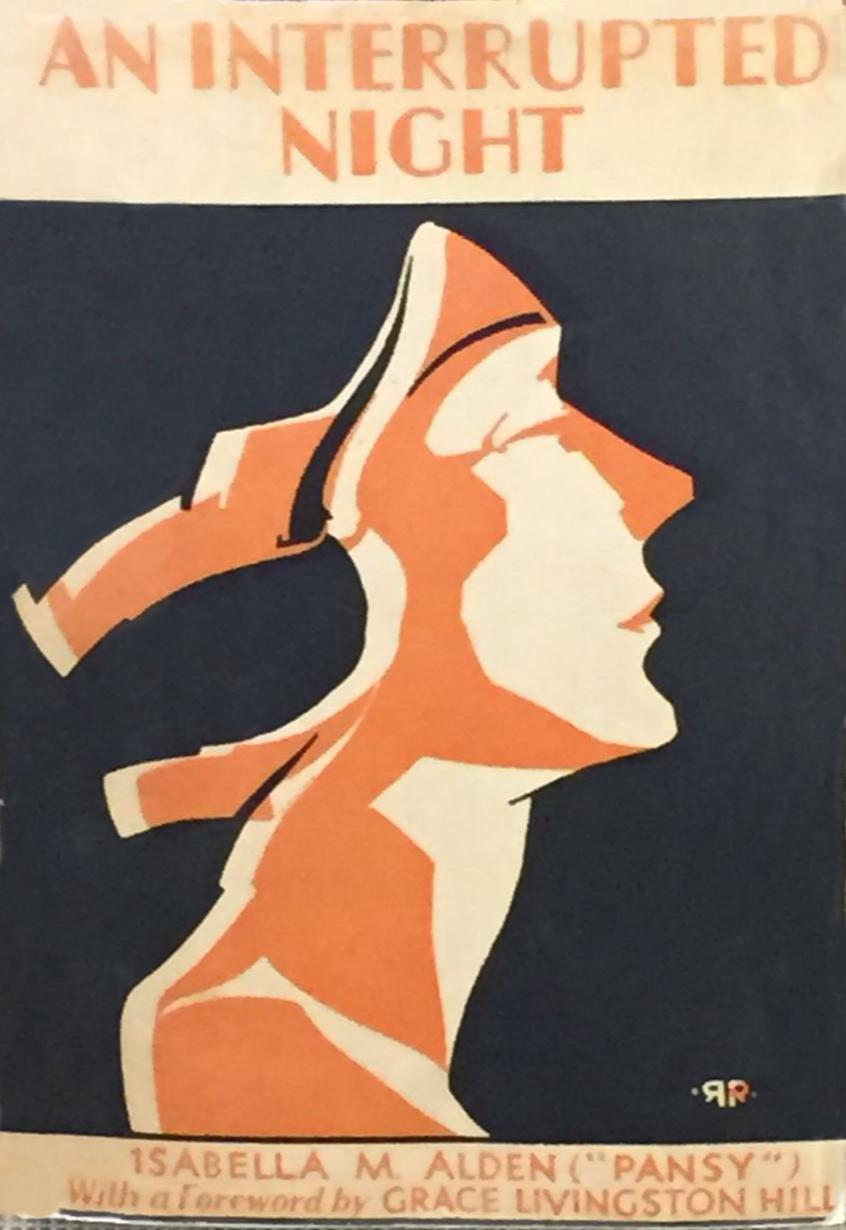
When Isabella wrote Interrupted in 1881 she was forty years old and had lived through one of the greatest financial disasters in American history.

It was a troubling time for the country, and Isabella reflected that trouble in her story. The main character, Claire Benedict, is a young woman raised in the lap of luxury, who suddenly finds herself—along with her mother and sister—virtually penniless when her father dies unexpectedly.

Isabella wrote:

How do such things occur? I cannot tell. Yet how many times in your life have you personally known of them—families who are millionaires today, and beggars tomorrow? It was just that sort of blow which came to the Benedicts.

Isabella had seen real-life examples of wealthy businessmen turned into paupers overnight. Just eight years before Interrupted was published, America suffered through The Panic of 1873.

The Collapse of a Bank by Vladimir Egorovic Makovsky. Note the despair of the man in the center of the painting, compared to the bank manager on the right, pocketing cash as he heads for the exit.

The Panic was caused by many factors, but the fatal spark came from Jay Cooke & Co., an American banking house that borrowed heavily to finance railroad expansion in the U.S.

Newspaper illustration showing crowds gathered outside Jay Cooke & Co. banking house in September, 1873.

Cooke was caught using a number of deceptive business practices, including shell companies to hide costs from investors, a scheme discovered in 1872. The revelation damaged investor confidence, and Cooke’s bank suffered heavy losses until, in 1873, Cooke was forced to suspend all deposits and payments, and closed the bank’s doors.

A run on the Fourth National Bank, New York City, 1873. From Frank Leslie’s Illustrated Newspaper.

That announcement sent shock-waves through Wall Street, and led to a panic of bank runs and bank failures throughout the country.

The extent of the economic crash was so great, the New York Stock Exchange closed two days later and stayed closed for ten days.

Crowds on Broad Street near the Stock Exchange on September 20 after the closing of the Exchange doors.

Those banks that survived the initial crash immediately called in their debts, which caused an alarming number of foreclosures and bankruptcies throughout the country.

The Panic of 1873 commenced on September 18; by and the end of the year . . .

  • One in every eight Americans was unemployed
  • Employers that were still in business cut wages, on average by 25%
  • Construction of businesses and homes came to a standstill
  • The value of land dropped and profits crashed
  • Tens of thousands of workers—many Civil War veterans—became homeless transients, making “tramp” a commonplace American term

Retailers did their best to keep their doors open. Many abandoned attempts to make a profit and had to be content to merely break even.

Advertisement in a Philadelphia newspaper.

It was a desperate time in America; and the economic depression that followed the crash lasted almost seven years.

As the economy began a slow recovery, the average Americans found the financial rules had changed.

The cover of Harper’s Weekly magazine on October 18, 1873.

For starters, there was a lopsided disparity of wealth distribution. Rich industrialists like Andrew Carnegie and John Rockefeller, who survived the Long Depression intact, now owned over 71% of the nation’s wealth.

A merchant’s sign proclaiming their cash-only policy.

The average American found banks no longer wanted their business. J. P. Morgan’s banking house required a minimum personal value before they allowed a new customer to even walk in their door.

The J. P. Morgan Bank building at the corner of Broad and Wall Streets, New York, as it appeared in 1914.

So Americans had no choice but to turn to cash.

It was a natural reaction, since most Americans were aware that buying on credit and shady financing deals had caused the Panic of 1873 in the first place. They came to distrust credit and lending institutions, and developed their own barter systems and cash-only policies.

A cartoon illustrating America’s altered attitude toward credit.

Isabella wrote about it in The Pocket Measure.

In that story, Mrs. Spafford suggests to a group of girls from church that they earn money by starting a business selling hand-made items.

“Where would we get our material?”

“We would need a buying committee—someone whose duty it would be to purchase material.”

“Suppose she hadn’t money enough for the purchases?”

“Then we should manifestly have to do without the material until such time as we could afford to enlarge our business.”

“Couldn’t we buy on credit?”

Both Mrs. Spafford and Addie Stowell shook their heads emphatically at this, and Addie said:

“No, ma’am! You don’t catch me launching out in any enterprise that hasn’t a solid cash foundation. I should expect my father to disown me forthwith. If there is anything he hates, it is the credit system.”

This rebus proclaims “Fork over what you owe.”

Almost all of Isabella’s novels reflect that sentiment. From David Ransom’s Watch to Ester Ried’s Namesake, Isabella made certain her characters earned the money they needed. They didn’t buy anything “on credit.”

A merchant’s broadside from 1875.

Her characters saved up for years to purchase a train ticket or a new dress.

Another example of a merchant’s broadside.

They counted pennies and survived on johnny cakes and molasses.

In fact, most of Isabella’s stories feature characters who live in poverty—the sort of poverty Isabella witnessed first-hand in the years following the 1873 crash.

What do you think?

Do you have a favorite Isabella Alden book that features characters who were poor or insisted on earning the money for the things they wanted to buy? Share your favorite Isabella book by commenting in the Leave a Reply box below.


You can learn more about the Financial Panic of 1873 by watching this short video about the Panic’s impact on the citizens of Illinois:

And you can click on any book cover to find out more about Isabella’s novels mentioned in this post.


A Stranger in New York

If you’ve read Isabella’s novel Ester Ried’s Namesake, you probably remember Esther Ried Randall’s reaction when handsome Professor Langham invited her to join a party he was organizing.

His plan was to drive a group of friends to the city to spend the day, then treat everyone to an evening show at the theater.

A 1908 theater poster for Guiseppe Verdi’s opera, “Aida.”

Poor Esther! She wanted so much to drive to town and spend a day shopping and seeing the sights; but her loving Christian parents had taught her that good Christians did not attend theater performances.

“Beverly” was a popular play in 1904. It was based on the best-selling novel of the same name by George Barr McCutcheon. Renowned artist Harrison Fisher created the poster artwork.

With her parents’ scruples in mind, Esther declined the professor’s invitation, saying:

“I may as well tell you plainly that I do not attend the theater.”

“Oh, is that all? As a rule I think I may be said not to do so myself. But isn’t it drawing the line rather closely, being in fact what might be called Puritanical, not to go at all?”

There was an amused smile on his face and a note of amused toleration in his voice. Still, Esther might have answered him quietly but for that word “Puritanical.” Over that she flamed.

Doris Farrand struggled with the same issue when her boyfriend Richard invited her to attend a play with “a splendid moral lesson” in the book Doris Farrand’s Vocation.

In 1898 “The Sorrows of Satan,” based on the best-selling novel by Marie Corelli, was a moralistic play with a Faustian theme.

When Doris declined his invitation, Richard couldn’t understand her reason; neither could Doris’s sister, Athalie, who told Doris:

“It seems narrow-minded to object to [theater-going] these days. Why, Doris, the very best people go to this particular play.”

“The Curse of Drink” was a 1904 temperance play that portrayed one man’s addiction to drink, and it’s affect on his family.

Doris’s boyfriend was a seminary student; he was studying to be a minister. Surely, he argued, he was a better judge of what was right and wrong; surely Doris should trust his judgment and go with him to the theater.

“Alice Sit by the Fire” was a sweet, wholesome play written by J. M. Barrie, the author of “Peter Pan” and “The Little Minister.” Actress Mary Shaw starred in the 1907 production.

But in the end, Doris stood firm in her decision to remain at home, which didn’t please Richard at all.

Esther Randall also stayed at home, and struggled with the idea of living by her parents’ “hated scruples.” She felt she was missing out on all the fun in life, merely because her mother and father had some old-fashioned ideas.

Esther’s best friend told her:

“You live in a little narrow space all hedged about with ‘Thou shalt nots’ or ‘I must nots,’ and that seems to be all there is of your religion.”

Esther couldn’t have agreed more!

In the book, Isabella describes Esther’s struggles in a very compelling way. Isabella understood what it was like to be young and want to go where her friends went and do that they did.

“The Shoemaker” was a heart-warming 1907 play that promised it’s audience “tears and laughter.”

But as a Christian, Isabella was very aware of the example she set for her family, friends, and acquaintances.

And because her husband was a minister, Isabella knew members of the congregation scrutinized her behavior—some did so to take inspiration, and others to find fault.

Whatever their reasons, Isabella knew people watched her, and she was careful to set what she hoped was a good and clear example of Christian living.

She often mentioned Romans 14:15-16 as her guide:

For if your brother is grieved by what you eat, you are no longer walking in love. By what you eat, do not destroy the one for whom Christ died.

Therefore, do not let what is for you a good thing be spoken of as evil.

Isabella knew those verses weren’t just about food; they applied to anything a Christian might do or say that could influence others.

This innocuous-looking ad for a new play, “A Stranger in New York” appeared in an 1890 Brooklyn, New York newspaper.

She knew that if a non-believer—or a new or struggling Christian—should see her entering a theater to see a morality play, that non-believer might assume that she went to other plays, as well, and that she considered any theater production to be acceptable.

This poster for “A Stranger in New York” may look innocent by today’s standards; but in 1890 it was quite risqué. Ladies did not lift their skirts to show their ankles; nor did they allow men to put their arms around them in a familiar manner.

Isabella didn’t want to run that risk, so she made it a rule in her life not to attend the theater for any reason.

Another poster for “A Stranger in New York.” The image includes every possible element that was contrary to Christian standards of the time: women wearing short skirts and scandalously revealing leotards, cigars, wine, and flirtatious behavior.

She wasn’t alone in setting that standard. In 1892 Methodist Bishop John Heyl Vincent (a co-founder of Chautauqua Institution) published a short book titled Better Not.

In his book Bishop Vincent explained why Christians should ask themselves hard questions about their actions, and whether those actions were harmful or helpful to a soul who may follow their lead.

Isabella agreed with Bishop Vincent’s position, and even mentioned his book Better Not in her story of Esther Ried Randall’s struggle with “scruples.”

She hoped that young Christian women who read Esther’s story would be inspired to keep those two verses in Romans foremost in their minds whenever they planned an evening entertainment with friends and family.


You can read Bishop Vincent’s book Better Not for free! Click here to find it on Google Books. Then click on the red “Ebook – Free” button to read it on your phone or table, or to download it as a pdf.

And you can click on the book cover to find out more about Ester Ried’s Namesake (Book 7 in the Ester Ried Series).

Pansy’s Impromptu Interview

In addition to writing stories and novels, editing a children’s magazine, and giving lectures on women’s topics that were dear to her heart, Isabella wrote Sunday-school lessons for children.

Photo of Isabella Alden about 1880 (age 39)

.

Her published lessons were well-regarding and widely adopted by many denominations. Several publications printed her lessons each month, and dedicated Sunday-school teachers across the country employed them every Sunday morning.

Isabella had been trained as a teacher; that’s how she earned her living prior to her marriage to the Reverend Gustavus Alden.

An August 1861 ad in the Oneida (NY) Sachem for Oneida Seminary

.

It’s little wonder, then that Isabella was regarded as an expert in her field, and often found herself giving impromptu talks about the proper methods of teaching Sunday-school, particularly for younger children (which were often called the “infant class”).

The May 1877 issue of Sabbath School Monthly magazine printed a letter submitted by a reader who had the pleasure of hearing Isabella give just such a talk. The reader had been at the Sabbath School Conference in Indianapolis earlier in the year, and was in the audience when Isabella was brought on stage to answer questions.

You can read the letter to the editor by clicking on the image below, or scroll down to read a transcript:

.

LETTER FROM INDIANAPOLIS

Messrs. Editors:
Many in our city who have enjoyed the writings of your special contributor, Mrs. Alden—our dear “Pansy”—had the opportunity, last week, of seeing her and of hearing her talk.

After the urgent solicitation of Dr. Vincent, who conducted a Sunday-school Congress of the M. E. Church, she consented to reply to questions on infant-class teaching.

To the first, “Should the infant class be present at the opening of the school?” she answered: “They should feel that the Sunday-school, and all that pertains to it, belongs to them.”

“What if the opening exercises are too lengthy?” She said that there might be folding doors, so that the rooms could be thrown together—that she had shut her doors when she had enough.

“Should there be a division of the class, and a teacher for each division?” She replied that one of the many difficulties that would result from it would be the desire to go from one class to another. This question is answered conclusively in last week’s chapter of her serial.

It was asked: “If I can not visit all my class, what can I do?” “You can send a messenger; some one who will make a pleasant and good impression, with a message of love, or a token of love, such as a flower.” She had been surprised to see how little things sent by a teacher were cherished by children.

She was desired to speak of blackboard teaching and we were convinced that her kind of object lessons would give a definite idea to the mind of a child. A heart on the blackboard, with a red crayon mark around it, and the word “clean” printed upon it, would indicate that it was washed in the blood of Christ.

As to memorizing verses, she told of the conductor’s punch that had been used by some teachers, making a round hole in the card for a perfect recitation, and a hole not round for an imperfect one, and how the child would work for that round hole.

Three different train conductor ticket punches and the hole shapes they make.

.

To the question, “How shall I secure a regular attendance?” she replied, “Do the best you can.”

To the many that wish they could see Mrs. Alden, I would say that you would find in her a friend. She is a small lady; her face very bright, with delicate features; good teeth, rosy color; dark brown hair; very small hands. She dresses in good taste; very neatly. These items are not needed to add to the interest of her books, but they may satisfy some wonderings concerning their author.

Don’t you love the writer’s physical description of Isabella (she has “good teeth”!)?

When Isabella gave her impromptu talk in 1877 she was 35 years old, and a seasoned public speaker who seemed to make a very good impression on her audience.


You can read these previous posts about Isabella’s experiences as both a student and a teacher at Oneida Seminary:

BFFs at Oneida Seminary

The Accusation

Free Read: The Book That Started It All

Locust Shade … and a New Free Read!

January’s free read is Gertrude’s Diary, a novella first published in 1885.

Isabella wrote the book in the “diary style” she often used. In the story, twelve-year-old Gertrude and her friends are given a set of Bible verses for each month of the year, along with journals in which the girls are to record their experiences as they try to live by the verses.

Isabella often incorporated her own life experiences into her stories (see last week’s post for an example) and Gertrude’s Diary is no exception. Isabella was very candid about the fact that she had a temper that often got her in trouble when she was young. It isn’t hard to imagine as you read Gertrude’s Diary that some of Gertrude’s temper-induced predicaments might be based on episodes in Isabella’s own life.

In the final chapter of the book Isabella gives a very real nod to one of her favorite places on earth when she reveals that Gertrude’s home town is called Locust Shade.

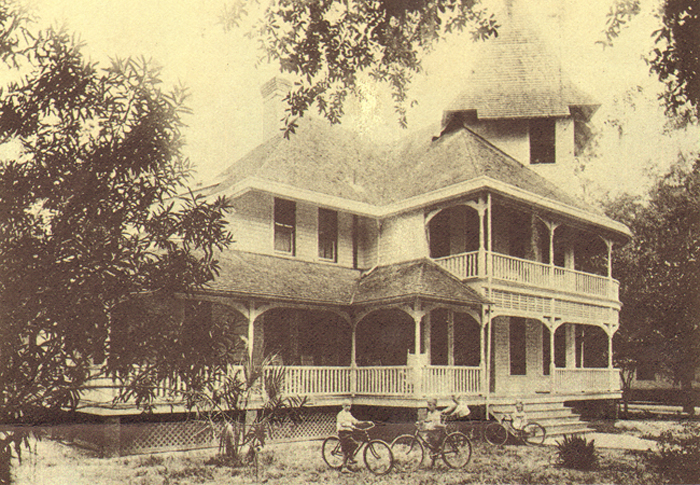
Locust Shade was a place Isabella knew well; in “real life” it was the name of the Toll family farm in Verona, New York. Isabella’s best friend Theodosia Toll Foster was raised at Locust Shade and Isabella spent many wonderful weekends and school vacations at Locust Shade with Theodosia and her family. You can read more about their friendship and Locust Shade here.

Gertrude’s Diary is available to read for free. Just click on the cover to begin reading.