What To Do with Christmas Cards?

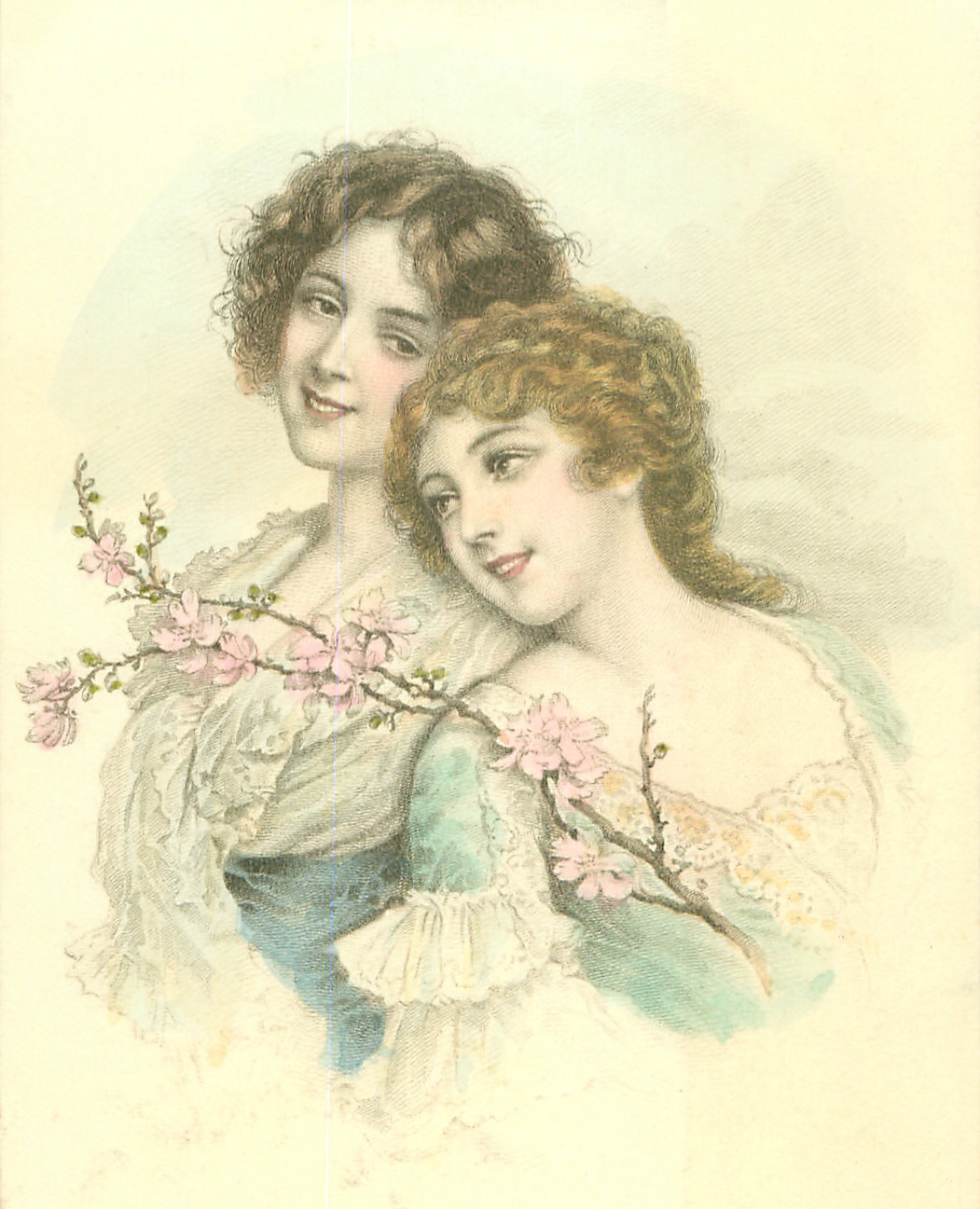
In a February 1883 issue of The Pansy magazine, Isabella turned an average question—What shall we do with Christmas cards we receive?—into a lesson for children in being thoughtful of others.

What Shall We Do with Our Christmas Cards?

All those bright pretty affairs that came flying in from the postman’s fingers at Christmas time to make us so happy—why can’t we make them give happiness to someone else the whole year? Someone sick and suffering, with little to brighten and amuse? Why, they would be very messengers of sweet charity to such.

Here is work for you, dear little Pansies who belong to the “P. S. Society.” Make a scrap book of all those cards which you think it right to give away, saying your whisper motto, For Jesus’ Sake, as you tuck in the dainty bit of color, and the pretty verses, then send it all on loving wing to the Children’s Ward of the hospital of your city.

Think of the eyes that will rest on it when the pain makes the tears come; think of the little ones who must lie on their beds, weary day after weary day, when you are running, and skating, and sleigh-riding!

And best of all, think how the children will love the book, just because some other child made it for them.

How many members of the “P. S.” will do this? Who will be first, I wonder?

If you want to make a very pretty book, cut leaves of white, and pink, and light blue cambric or sateen; tie them together at back with ribbon or braid, putting strings of same on front.

An 1869 home-made cloth scrapbook (from Worthpoint.com).

Paste all dark pictures on the white cloth; all delicately tinted ones on the colored cloth. The effect will be very lovely—I know the “Children’s Ward” will think so.

A cloth scrapbook from the 1860s (from RubyLane.com).

You can learn more about the “P.S. Society” and the “whisper motto, “For Jesus’ Sake” by clicking here.

Do you send and receive Christmas cards each year?

What creative things have you done with them once the holiday is over?

Pansy’s Typical Day

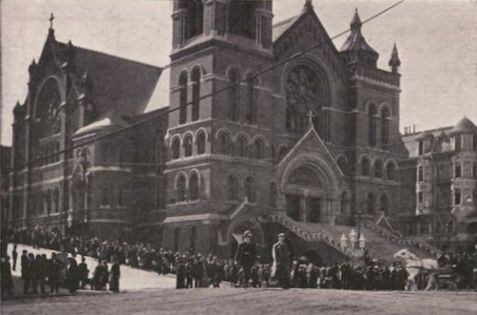
In 1892 Isabella’s husband was made assistant pastor of a brand new church in Washington, D.C. The Eastern Presbyterian Church was only blocks from the nation’s Capitol, and the Capitol dome could be seen from the top of the church’s 130-foot bell tower.

Eastern Presbyterian Church, about 1920 (from the Library of Congress).

The Aldens moved into a house about four blocks away on Maryland Avenue.

A view of U. S. Capitol from Maryland Avenue, which was unpaved until about 1930 (from the Library of Congress).

It’s likely the Aldens lived in a single-family house, instead of one of the row houses that were erected on Maryland Avenue and on many other streets in the District in the early 1900s. The photo below—taken from the top of the Capitol Dome looking northeast—shows a view of the Alden’s neighborhood.

View from Capitol Dome looking northeast toward Maryland Avenue (from the Library of Congress).

In an 1893 interview, Isabella spoke about how much she “dearly loved” her D.C. home. It was “cheery” and “bright” and Isabella took great care “in all that pertains to its comfort and happiness.”

The Aldens—Isabella, her husband Ross, and their son Raymond—had a daily routine in their Maryland Avenue home. Early in the morning, the family gathered in the back parlour of the house before breakfast “to sing a few verses of praise, to read a chapter in the Bible, and to ask God’s help and blessing on the work to be done.”

After breakfast, Isabella went right to work in her study—a place that was off limits to visitors or interruptions (except in a case of emergency). For the remainder of the morning, Isabella was at her typewriter, typing stories, writing Sunday-school lessons, working on a chapter of her next novel, or answering the volumes of fan mail she received daily—some days quickly turning from one task to another.

An advertising card for a Smith Premier model typewriter from 1900.

Isabella once said that she didn’t have to “think” when she typed. Much of her thinking, plotting and composing was done in her head as she went about her household chores. Then, when she sat down to write, her thoughts were “drilled like a well-ordered army, ready to march at the word.”

A comfortable study, about 1910.

An interviewer once described Isabella’s workplace as “a pretty study, lined with books.” In the room were two typewriters—one for Isabella, and one for her husband; they often worked side by side.

Typewriters weren’t the only modern gadgets in her home. Isabella employed all kinds of appliances and machinery, and was always on the look-out for a new labor-saving device. One reason: from a young age Isabella suffered from constant headaches (you can read more about her condition and the treatments she sought for it here), and she was seldom able to use her typewriter more than a few hours a day.

But she found that she could instead use a stenograph machine (similar to the ones court reporters use today) because her eyes didn’t tire as they did when she used a typewriter.

She taught herself to use a stenograph, and was soon able to extend her working hours a little longer each day. When she was done with work in the early evening, she handed the machine’s cryptic shorthand to a secretary, who transcribed it on the typewriter.

Bartholomew Stenograph machine, 1882 (from Typewritercollector.com).

Dictation machines were another type of equipment that was just coming into use during the time Isabella lived in Washington D.C.

An early wax cylinder phonograph for dictation, 1897 (from Wikicommons).

The early machines were expensive, but effective; and, as she did with her stenograph machine, Isabella could employ a secretary to transcribe the recorded text for her.

A typist transcribing a stenography printout, 1904.

Isabella sometimes wove descriptions of new and innovative appliances into her stories. She wrote about early typewriters in her novel Miss Dee Dunmore Bryant (read a previous blog post about it here).

And in the sequel, Twenty Minutes Late, she described Caroline Bryant’s astonishment upon seeing an early dish washing machine.

An 1896 magazine ad for The Faultless Quaker Dish Washer.

After the work day was done, Isabella and her family gathered again in the back parlour of the house. If they did not have a special engagement to attend, the family spent the evening reading together. More often than not, Isabella read aloud to Ross and Raymond, and anyone else who happened to be a guest in the house.

Different newspaper accounts of her public readings describe Isabella as a charming reader, with a “sweet voice” and “perfect intonations” that must have been delightful to hear.

What do you suppose Isabella read aloud to her family in the evenings?

Are you surprised to learn Isabella used the latest technology to work efficiently and streamline her housekeeping tasks?

Which of our 21st Century devices or appliances do you think Isabella would be most likely to use?

Advice to Readers about Ornaments

In the early 1900s Isabella wrote a regular column for a Christian magazine in which she answered reader letters and offered advice—from a Christian perspective—on a variety of subjects.

The column gives us a wonderful insight into Isabella’s personality and her plain, straightforward manner of communicating.

In one of her 1911 columns, Isabella shared this letter from a reader named Nannie:

I want to have a little talk with you about what will seem to you, I suppose, a small matter, but it is giving me a good deal of trouble.

Do you think it is wrong to wear any kind of jewelry? I have a very dear friend who has given me a gold ring with a pearl in it, and I want to wear it; chiefly for the friend’s sake, although I do think it looks pretty on my hand. But my aunt, with whom I live, is a very religious woman, and she thinks it is wrong for me to wear rings; she says it is going contrary to plain Bible commands, and she quotes that verse about braiding the hair and wearing jewels of gold. Now, is she right? Is it wicked to curl my hair, for instance, when it is less work to curl it than to keep it smooth? And to wear my dear ring that I have promised to keep forever?

I want to be good, but— Can God care about such trifles? My aunt says that my dear dead mother thought just as she does about these things, and that I am showing disrespect to her memory. But my mother did not seem like that to me; she used to trim my little dresses, and she curled my hair around her finger. She died, though, when I was eight, and now I am eighteen. Will you tell me if you think I am wicked?

Nannie.

Here’s how Isabella responded to Nannie’s letter:

My Dear Nannie:
What a deal of trouble! Five questions, are there not? But they all hover about one central thought. Let us look at them separately.

“Do I think it wrong to wear jewelry?” No; if I did, I would not wear it. I have worn my wedding ring for more than forty years, and it is dearer to me, I dare to think, than even your pearl one, so, you see, I can understand your feeling. I pin my collar with a gold pin as naturally as I comb my hair, and find it vastly more convenient than a common pin would be. I wear my watch whenever I think a watch will be a convenience; and there are sundry other trifles that would come under the general head of jewelry which I call into service from time to time. All this is an easy way of stating my position. Quiet, unostentatious pieces of jewelry, keepsakes, or conveniences, or those articles that custom has made symbolic, like engagement and marriage rings, are, in my judgment, entirely appropriate for Christians to wear.

It is an altogether mistaken idea that to be religious one must cease to love the beautiful. Do you remember the lines in Mary Howitt’s verses on beauty?

God might have made the earth bring forth
Enough for great and small,
The oak tree and the cedar tree.
Without a flower at all.

The Bible verse to which you refer has caused trouble for a few conscientious people because they do not understand its environment. Study the times in which Peter wrote those words, and the fashions that were then in vogue if you want to get the spirit of his advice. Take note that it is advice, and not command. Peter is really making a comparison between two classes of ornaments—the outward and inward—and urging upon Christian women to give their attention to the latter. By way of illustration he mentions the plaiting of hair which was at that time carried to such wild excess.

Notice, too, Peter’s next phrase after mentioning the wearing of gold, “or of putting on of apparel.” Our literal friends who frown upon even the plain gold ring would surely not have us go a step farther in literal interpretation and refuse to wear clothing! I speak of this only to show you how easy it is to become absurd, even in our interpretation of Bible words.

“Is it wicked to curl your hair?” Why, child, according to your own statement the Lord has done this for you. My own opinion about it is, that so far as you and God are concerned you have a perfect right to arrange your hair in the way that you consider most becoming to you, provided it does not require an unreasonable expenditure of time or means to do so. Other things being equal, this would be a fair rule to go by.

“Can God care about such trifles?” My dear, you are speaking of the One who said: “Even the very hairs of your head are all numbered.” There are no “trifles” in his sight. Yet I am glad to believe that he does care in the way you are thinking of it, and that he does care in a very real and helpful sense, even for rings and curls.

Now, having made all these admissions and proved myself to be clearly on your side, suppose we go back and consider the entire question from another standpoint.

Did you take notice, back there, of that somewhat obscure phrase “other things being equal,” and wonder what in the world I meant? Let me see if I can explain. A word about that dear aunt who does not think as you do. Of course, she is much older than you. As I understand it she is trying to fill the place of mother to you; you live with her; that is, she has made a home for you. Then what do you owe her in return? You want to “be good”; this is no trifle. To be good is almost the greatest thing in the world, and to want to be is one step toward it; be sure God cares for this. What has God said about those who stand as parents? “Honor” is a great word, comprehensive and far reaching; also, it is practical.

“Here, for illustration, is a ring, a lovely ring with a pearl in it. The ring is mine and I want to wear it. And here is God, interested in me, and in my ring. Does he think it wrong for me to wear it? Other things being equal, no. But here is my aunt, she thinks it wrong; she thinks that God thinks so; to have me wear it would hurt her. Would it hurt me not to wear it? That is, do I believe I would be doing wrong?”

“N-o, but—”

“Yes, I understand, but we are talking about honor now; and we have found that ‘things’ are not equal. Could I possibly, for the sake of my aunt’s feelings—for the sake of my aunt’s conscience, pack away my ring in pink cotton in its white velvet box until such time as—? Ought I to do that?”

Ah, now you have reached a question that you, that the individual conscience, must answer for itself. The illustration is only to clear the way for thought: all these questions, whether rings, or curls, or what not, swing on the same hinges.

“All things are lawful for me,” said one, “but all things are not expedient.”

“Ye have been called unto liberty.” said one, “only, use not liberty for an occasion to the flesh, but by love serve one another.”

Suppose the Bible read in this way: “But curls commend us not to God, for neither if we wear them are we the better, neither if we wear them not are we the worse; but take heed lest by any means this liberty of yours become a stumbling block to them that are weak.” Would it make the argument plainer?

What do you think of Isabella’s “advice column?”

Do you think she gave the right advice to Nannie?

Pansy’s Busy Schedule

As the wife of a Presbyterian minister, Isabella moved house frequently, depending on when and where the Presbyterian Church assigned her husband. One of those moves occurred in 1876 when Isabella was 37 years old.

For a period of three short years (from 1876 to 1879), the Aldens lived in Greensburg, Indiana, where her husband had the ministry of Greensburg’s Presbyterian congregation.

A view of Greensburg Indiana, from the 1894 Illustrated Souvenir Book of Greensburg, Indiana.

In typical Pansy fashion, Isabella probably got right to work in her new community, serving the members of her husband’s congregation, writing stories intended to win souls for Christ, and speaking out on matters of importance to women.

In addition, Isabella maintained a very busy travel schedule. Here are just a few entries from her calendar that year:

February 28:

Isabella was in Cincinnati, Ohio, delivering a lecture “for the benefit of the Benevolent Society.”

The Cincinnati Daily Star, February 21, 1878.

June 26:

Her schedule took her to Indianapolis, Indiana, where she read a paper titled “What I Know about Boys” at the state’s annual Sunday-School Convention:

From the St Louis Globe-Democrat, June 27, 1878.

August 1:

The first week of August saw Isabella at the Methodist Sunday-School Assembly at Lakeside, Ohio, where she was one of a number of teachers who led daily children’s classes throughout the week.

The Tiffin Tribune (Tiffin, Ohio), August 1, 1878.

September 26:

Isabella was in New York in her home town of Gloversville, where she read one of her short stories—“What She Said and What She Meant”—to an audience at the Baptist Church.

From the Gloversville Intelligencer, September 26, 1878.

November 15:

Isabella was back in Indiana, this time giving a temperance reading to an audience in Indianapolis, about forty-eight miles from her Greensburg home.

The Indianapolis News, November 9, 1878.

At a time when the fastest way to travel was by train or horse-drawn carriage, Isabella sure got around!

By the way, Isabella’s story “What She Said and What She Meant” was published in 1880 and you can read it for free! Just click on the book cover below to begin reading.

Daily Thoughts for November

In 1895 Isabella published a monthly Bible devotional series titled “Daily Thoughts,” which appeared the first day of each month in The Pansy magazine; and we’re reprinting them in 2020!

Isabella’s “Daily Thoughts” for the month of November are from Chapter 40 of the Book of the Prophet Isaiah.

Click here to open a full-size PDF version of Isabella’s “Daily Thoughts” for November, which you can read, print, save, and share with others.

Or, click here to download a simplified Word version.

If you missed “Daily Thoughts” for previous months, you can find them here: January  February  March  April  May  June  July  August  September  October

Click here to read “Daily Thoughts” for December.

When Pansy was a Girl: The Knitting Lesson

In 1889 Isabella wrote several articles for The Pansy magazine in which she told her readers stories about her life as a young girl. Some of the stories are comical, others poignant and sad; but the common theme among all the articles was the important life-lessons she learned as a child—lessons that influenced her well into adulthood.

Here is one of those girlhood stories Isabella shared with her magazine readers (whom she dubbed her Pansies or Blossoms):


I don’t believe many of the Pansies know how to knit—old-fashioned knitting, I mean, such as we used to see so much of when I was a girl. It seems to me now as though I could not picture a winter evening without the glow of firelight from a great, wide-mouthed chimney, and a plate of red-checked apples on the table, with often a basket of nicely-cracked hickory nuts by its side, and mother’s knitting-needles flashing in the light.

All those things seem to have gone out of fashion, along with sweet old grandmothers and many other comforts.

I think I am in sympathy with a young friend of mine who said the other day, looking with a dissatisfied face at a beautifully-dressed old lady, “I shouldn’t think she would make a satisfactory grandmother.”

“Why?” I asked, amused.

“Oh, I hardly know,” the frown still on her face. “Somehow she looks too nice; I don’t mean that, either. Grandmothers ought to look just as nice as possible, of course; but—well, her dress is all looped and trimmed, and has beads on, even, and her hair is crinkley, and done up in the latest style, and she doesn’t look sweet and old. I should never think of cuddling down in her neck and having a good cry, or telling her something very secret indeed; I should just sit up straight and be proper.”

Do you understand, my Blossoms? I do, and sympathize with the thought.

Well, when I was a girl I learned to knit. I do not think my mother would have considered my education complete without that knowledge. Moreover, I was fond of it. I think I liked nothing better than to get my long gray, or blue, or brown stocking out and sit down by mother and click my needles, and try to make them go as fast as hers. There was always a little shade of disappointment over the fact that I could never accomplish this; but there was also a sense of cheer over my mother’s words:

“Never mind, maybe tomorrow you can go even faster than I do. Who knows? You will be a day older tomorrow.”

That “tomorrow ” never came, it is true, but I was always looking out for it and trying to attain.

I could not have been quite four years old when I first learned to take up the small stitches skillfully, put my yarn “over,” and draw it cunningly through the loop. It was great fun, and, if the truth must be told, a great temptation. I liked it better than outdoor sports of any kind. While the other children were playing “roll the hoop,” or “jump the rope,” or “hide the slipper,” or any of the dozens of old-fashioned games which were such good sport and good exercise, I liked better to be what my father called “cooped up” in the big easy-chair in mother’s room, knitting.

There was one thing about it that grieved me. I could not “set” the heel, neither could I take the curious back-handed stitch required after it was “set,” and it seemed to me that no sooner did I become attached to a stocking, and grow used to the “feel” of the needles, and the shape of the triangle, when it would be pronounced long enough to “set the heel,” and my pleasure in it was gone. Also I disliked the dull colors which were much in vogue in those days for stockings and socks, and often petitioned that I might make one stocking with bars of blue, and green, and yellow alternating. My mother laughed over this, and my sisters fairly shouted. But I was sure to find a sympathizer in father, no matter how queer my schemes. He fell in readily with this one.

It was mid-winter, and my playmates were wild over snow, and skates, and sleds, while I, who had been very sick, and still coughed a great deal, was of necessity housed, and just because I could not play out-of-doors, longed to do so more than ever before, and found it hard to be amused over anything.

One afternoon mother produced a bright yellow ball of worsted and said, “Knit a stocking for that old giant you were reading about a while ago; he would like a yellow one, I think.”

“For the giant?” I said wonderingly. “How would I get it to him when it was done? And it would have to be very long.”

“Yes, long enough to suit you perhaps; it would be days and days before the heel would have to be set.”

“And a giant wouldn’t mind if a stitch were dropped once in a while, would he, mother?”

“Probably not,” my mother said, “though I don’t know much about the views of giants on such subjects. At least we might try him.”

The idea pleased me, for in my secret heart I thought my mother too particular altogether in that line; just one tiny stitch which could hardly be seen at all, yet out would come the needles, and mother would relentlessly unravel the whole until she came to the weak spot. It made no difference how far I had gotten, that dropped stitch was gone after, all the same.

I remember once I said nothing about it, it was such a tiny stitch, and knitted on fast until I was a whole inch away from it. Then my conscience spoke so loud that I had to take the work to mother. But surely, I thought, she will not unravel all this out for just that one stitch!

She did, though, without a moment’s consideration, and despite the big tears in my eyes.

The giant’s stocking was commenced forthwith. I worked industriously until the yellow ball was exhausted; then a bright blue one was produced, and, delighted with the effect, I knitted fast until I had quite a strip of brilliant blue on brilliant yellow. What a pleasure it was! At last I should have a stocking which was a thing of beauty.

What delight I had in that stocking! How it grew, and grew, and changed hues from day to day until it rivaled the rainbow in brilliancy. One yard, two yards, almost three yards long, and yet stitch by stitch the wonder grew. My mother’s friends and those of my grown-up sisters became interested in it, and saved for me all their remnants of worsted, or yarn, and the brighter the color the more my heart delighted in it, nor could I be persuaded to use black at all for a long time. In vain did my sister Marcia assure me that it would increase by contrast the brilliancy of the other colors. I did not believe it, until one day she stole the stocking and knitted in a few threads of black against an intense scarlet, and astonished and charmed me with the effect.

After that I put in the blacks and dull grays with a judicious hand. The original giant for whom the stocking was commenced dropped into the background before a more brilliant thought which my father advanced—the modest one of knitting a stocking long enough to go around the world. And some day I was to start, with one end of the stocking securely sewed to mother’s wrist, the other in my hand, and walk away. If there proved to be enough of it for me to go around the world, of course in time I would get back to mother; and in case she grew weary of waiting and wanted me, she had but to take hold of her end and wind it up, when of course I would be drawn to her.

“What a little idiot you must have been!” I think I can hear you say it. Did I really believe such nonsense?

Why, not really, I suppose, and yet it afforded me such pleasure as I cannot describe, to work at my long, bright stocking with those queer plans in view. At least I worked away, and the thing grew long—very long. Also, I dropped as many stitches as I pleased, and waited not to pick them up.

Years afterwards I looked at that curious piece of work. The colors were faded, the knots were unsightly, the sometimes loose and sometimes tight knitting showed my utter lack of skill, yet in all these things I had done my best.

The thing which struck me painfully was those yawning holes where the dropped stitches had been. Yes, they were actual holes. The thing had been stretched a good deal, used as a piece bag, part of it; and the dropped stitches which seemed such small affairs had stretched also, and spread themselves in unsightly holes to say, “Look at us! Your mother warned you, but you would not believe it. You said we were too small to do any harm. You, said it was not worthwhile to go back and set us right. Now see what we are!”

Oh, the dropped stitches, not only in stockings, but in characters! Poor foolish child, who thought she knew better than mother did!

It is years and years ago. I never went on my journey around the world. Instead, my mother went away—went out of this world altogether, to that other one about which we know so much and think so little; and though the other end of my stocking is not fastened to her wrist, I know there is a strong cord named Love which goes straight from her heart to mine, and it draws me gently, steadily toward home.


Did you learn to knit, crochet, or sew from your mother or grandmother? How old were you when you learned?

Do you have a favorite knitting-lesson memory?

Pansy, the Enigma

In the nineteenth century, crossword puzzles had not yet been invented, nor had Sudoku and word search games that are popular today. Instead, “enigma” puzzles were in fashion. They were printed in newspapers and magazines for readers’ enjoyment, much like crossword puzzles are today.

Enigmas were puzzles within a puzzle. First, readers had to solve individual word clues that tested their knowledge and cleverness before they could solve the overall puzzle.

In 1882 Isabella Alden was the subject of an enigma puzzle that appeared in newspapers across the country.

Here’s how the puzzle appeared in the newspaper:

Think you can solve this enigma? It’s challenging!

First, solve each of the four riddles.

Then, using the letters from those four words, rearrange them to find the answer to the whole puzzle: a nineteen-letter title of one of Isabella’s books.

Need some help getting started? Click here for Hint #1

Click here for Hint #2

Click here for Hint #3

Good luck!

Click here to download a Word version of the puzzle to print and share with others.

Scroll down to see the answer to the whole puzzle, as it appeared in the newspaper the following week.

.

.

.

.

.

.

.

.

.

.

.

.

If you solved the puzzle . . .


A View from the Top of the World

In Isabella’s novel We Twelve Girls, Edith told her friends about a special treat she received from her Aunt Mattie, who was recently married.

When Mattie and her new husband were on their wedding trip, they stopped in Edith’s hometown for a short visit. Edith was thrilled when Mattie and her new husband invited her to go with them for a portion of their journey. Edith said:

Where do you think they took me? Why, to the very tip-top of Lookout Mountain. We rode all day, and stopped in Chattanooga at night, and the next morning went up the wonderful incline. Up, and up, and up, ever and ever so far! You go up by an endless chain railroad; then when you have got away above the houses and church steeples . . . you see perfectly lovely views. We got out at Sunset Rock, and went to see where the sun sets, when it is time for it. Uncle took me close to the edge of some great rocks, and let me look down. He would have taken me very closer yet, but Aunt Mattie screamed, and he said it would not do for him and me to frighten her. He is just as nice as he can be.

I wish I could describe the mountain to you, and tell you how I felt when I went up. I had some real strange thoughts; it seemed to me I was bidding good-bye to this world—like going to Heaven, you know—and I could not help feeling a little bit disappointed when I came down again.

It sounds like Edith caught a little bit of “mountaineer fever” on that trip; and it’s possible she might have grown up to be an excellent mountaineer herself.

Several women joined this climb up Mount Rainier in 1913.

During Isabella’s lifetime there were quite a few women who enjoyed mountain climbing as a pastime.

Relaxing in the shadows of Kineo Cliff near Moosehead Lake, Maine.

One of the most famous mountain climbers in the world was Marie, Queen of Bavaria. She not only founded a mountaineering society, she designed what she called a “practical” climbing outfit for women, which shockingly exposed a lady’s ankles.

Marie of Prussia, Queen of Bavaria, dressed for mountaineering. Note her canteen and water cup beside her.

In 1858 Julia Archibald Holmes became the first Caucasian woman to reach the summit of Pikes Peak in Colorado. An avid climber, she, too, wore a special “American costume” she designed to make the climb: a short dress, bloomers, moccasins, and a hat.

Julia Archibald Holmes in the mountain climbing costume she designed.

Fay Fuller wore a similar costume when she made the treacherous trek to the summit of Mount Rainier in 1890 (but with far fewer petticoats). She went on to become a founding member of the Washington Alpine Club.

Fay Fuller.

Not every woman adopted a mountaineering “costume.” Short skirts and exposed ankles were quite risqué for the time; but modesty didn’t require women stay at home; they still climbed mountains, but did so while wearing modest but cumbersome skirts.

Crossing a treacherous chasm in a skirt.

One of those women was Katharine Lee Bates. She was not a trained mountain climber, but after spending a summer teaching classes at Colorado College, she joined friends on a climb of nearby Pike’s Peak.

Katharine Lee Bates

Katharine later wrote:

One day some of the other teachers and I decided to go on a trip to 14,000-foot Pikes Peak. We hired a prairie wagon. Near the top we had to leave the wagon and go the rest of the way on mules. I was very tired. But when I saw the view, I felt great joy. All the wonder of America seemed displayed there, with the sea-like expanse.

A view of Pike’s Peak near Colorado Springs, Colorado.

Katherine’s experience inspired her to author the poem “America the Beautiful,” which was later set to music composed by Samuel A. Ward.

By the turn of the century, more women than ever were involved with mountaineering, and their attire evolved, becaming more sensible for the task at hand.

A woman mountain climber, about 1908.

Some avid female climbers left their long skirts behind at the base of the mountain and climbed in breeches, just like the men did.

Female climbers, 1907.

Perhaps when Isabella wrote about Edith’s experience at the top of Lookout Mountain she knew first-hand what it was like to look down upon a beautiful vista from a high place. There were certainly hills near where she grew up in New York that she might have climbed as a girl.

Women on Overhanging Rock at Glacier Point, Yosemite National Park, 1900.

And perhaps Isabella knew that wherever there were mountains, there were plenty of women—just like Edith—who were willing to climb them.

New Free Read: Tony Keating’s Surprises

The Reverend Francis E. Clark, president of the World Christian Endeavor Union, said of Isabella Alden:

“Probably no writer of stories for young people has been so popular or had so wide an audience as Mrs. G. R. Alden, whose pen-name, Pansy, is known wherever English books are read.”

Indeed, Isabella enjoyed world-wide fame as an author. By the year 1900 she was selling over 100,000 books a year.

So it’s a little mystifying to see that in 1914, when she chose a new publishing house—M.A. Donohue & Company in Chicago—to publish Tony Keating’s Surprises, the publisher had so little knowledge of who she was, they spelled her name wrong on the book’s cover!

Luckily, that single error doesn’t detract from the pleasure of reading Isabella’s novella, Tony Keating’s Surprises. Here’s a brief description of the story:

For as long as Tony Keating could remember, people have been telling him he was bad, so it was little wonder he came to believe he was just so.

Over the years, Tony has become quite adept at living up to his reputation, by springing tricks and surprises on his parents, his sister, his teachers, and anyone else who happens to cross his path. Why, the entire town believes Tony Keating will come to no good.

Everyone, that is, except Lorena Stanfield. Being new in town, Lorena doesn’t know about Tony’s reputation as the town scamp. With her fresh perspective Lorena sees Tony’s potential for good. But will her gentle influence be enough to transform Tony’s life?

You can read Tony Keating’s Surprises for free!

Just follow this link to go to BookFunnel.com. Then, choose whether you want to read the book on your computer, phone, ipad, Kindle, or other electronic device.

Or choose the “My Computer” option to print the story as a PDF document and share it with friends.

Isabella’s Right to Vote

Today women across America are celebrating a major anniversary!

One hundred years ago—on August 18, 1920—the 19th Amendment to the U.S. Constitution was ratified, granting women the right to vote.

Isabella was a long-time advocate for the women’s vote, and even mentioned the subject in her books.

For example, in her 1876 novel Four Girls at Chautauqua Miss Eurie Mitchell was thrilled to attend a lecture by Dr. John Vincent, saying:

“Girls, look at Dr. Vincent! I declare, Chautauqua has paid, just to watch him! He ought to be the president himself. I mean to vote for him when female suffrage comes in.”

In One Commonplace Day, published in 1886, Miss Wainright, a staunch temperance fighter, tells Mr. Durant:

“I am nothing but an old maid, Mr. Durant; haven’t even a husband to talk for me, or vote for me; which perhaps is fortunate, for ten chances to one that he would talk and vote the wrong way, if I had.”

And in 1879’s My Daughter Susan, Susan Carleton encouraged the women of her church to join the Temperance movement, saying:

“I wear a blue ribbon on my watch chain, and a white one on my muff, or fan, or whatever happens to be convenient. I’m a crusader, and a no-license woman, and I will be a voter, on that subject at least, if I ever get a chance. I’m anything, and everything.”

Maryland women marching for the right to vote.

Isabella was something of a crusader, too. She was an active member of the Women’s Christian Temperance Union, and actively supported the prohibition movement. She strongly believed that if women won the right to vote, they would vote to enact a nation-wide prohibition law. And she was right.

Suffrage wins in Washington, California, and Oregon paved the way for hard-fought victories in Arizona, Kansas, Nevada, and Montana.

By the end of 1914, more than four million women had voting rights equal to men in eleven states, all in the West; but they could not vote in national elections.

In 1911 when women gained the vote in California, Isabella was a resident of that state. Here’s Isabella’s name (along with the names of her husband, her son Raymond and daughter-in-law Barbara) on the 1916 list of California registered voters. You can see she claims affiliation with the Prohibition Party.

With western states leading the way, support for suffrage continued to gain momentum , as more and more women and men joined the movement. By 1919 enough States supported the Amendment to qualify it for a vote.

Women picket in front of the White House for the right to vote (1917).

On June 4, 1919 Congress sent the proposed 19th Amendment to the Constitution to the individual states for ratification. Wisconsin was the first state to ratify the Amendment on June 10, 1919.

Kentucky governor Edwin P. Morrow signing the 19th Amendment.

On August 18, 1920 the state of Tennessee ratified the 19th Amendment, ensuring the right to vote could not be denied based on gender. Four days later, with the stroke of Tennessee Governor Albert H. Roberts’ pen, the eighty year struggle was over.

Tennessee Ratification of the 19th Amendment signed August 24, 1920.

Despite her own involvement and efforts, Isabella didn’t mention the historic day in her memoirs, but she must have been proud to see women across the country gain the right to vote in local, state, and national elections.

If you haven’t yet read My Daughter Susan, you can read it for free! Just click here to begin reading.