
Isabella Alden and her best friend Theodosia Toll (who wrote novels and stories under the pen name Faye Huntington) were as close as sisters. Although they both lived in New York state—Isabella near Johnstown and Theodosia near Rome—their homes were over seventy miles apart. Despite the distance, they visited each other often, and were well-loved “adopted” members of each other’s family.
Isabella stayed at the Toll family home so often, she came to know the neighbors, and became close and dearly-loved friends with them, as well. From simple family dinners to celebrations of major life events, the Toll family and their neighbors included Isabella among the invitees.
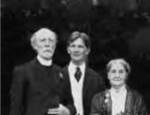
So, when Mr. and Mrs. Hall—one of the Toll neighbors—decided to commemorate their fiftieth wedding anniversary with a party, Isabella received an invitation. At the time, she was a married woman, living with her husband in Indiana, where he was pastor of a Presbyterian church; but Isabella did not want to miss the occasion. She made the journey to New York, and a few years later, she published an account of the family and their remarkable history:
GOING WEST SEVENTY-FIVE YEARS AGO.
Seventy-five years ago young Samuel Hall left his wife and babies in the old home in the Connecticut Valley and came into what was then “the West” prospecting. If you look on the map, following the Mohawk River along its westward course, to where it seems to turn to the north, you will find its source in that direction.
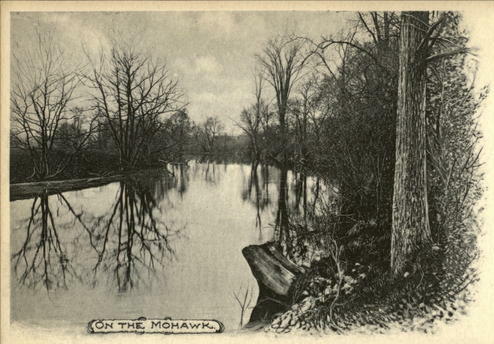
Just to the west of this turn you may find the city of Rome set down; not the Rome of ancient and sometimes fabled history, but our quiet little city of Central New York, known before the Revolutionary War as Fort Stanwix, and during the war as Fort Schuyler. It was Fort Schuyler which was besieged by Colonel St. Leger in 1777. He had under his command an army of British soldiers, some Americans who favored the Royal party and were known as tories, and a large number of Indians. About seven miles east of the fort, at Oriskany, a company of American soldiers, on the way to help the people at the fort, fell into an ambush and four hundred of them were killed or taken prisoners by the Indians. General Herkimer was so badly wounded that he died a few days later. I have been upon this old battle-ground and seen what is left of the tree under which they say the brave old general lay after he fell from his horse.
It was here on this historic ground that young Mr. Hall determined to make a home for his little family. Striking out from the then small village of Rome, he passed through, dense and unbroken woods, not only unbroken, but untrodden. A narrow trail led to some small settlements further on. At length his choice was made, the home was located. It was spring, and soon a clearing was made, ground plowed and corn planted. A cabin of logs was built—things made as comfortable as possible. Then he went back for his family, expecting to return in time to harvest his crop of corn and get settled for the winter. With two strong horses and a covered wagon such as was called an “emigrant wagon,” he conveyed his family and all their household goods to the new country.

What a sad parting that was which took place as they all left the old home. It was then a long way to Central New York! Farther than half around the world would seems now! Mails were infrequent, so that communication as well as visits must necessarily be rare. Day after day for more than a week they rode until one morning a few hours only after they broke camp, they came out upon a rise of ground where there was a clearing before them, and Mrs. Hall exclaimed, “What a pretty view!”
There was a stream of water winding through the valley, and Mrs. Hall afterwards said:
“I never dreamed it was to be my home, but I thought it was the prettiest spot I had ever seen, and I have never changed my mind about it.”
And it was home. Upon the brow of the hill stood their cabin in which they were soon settled. And after a little the neighbors began to call upon these new-comers. Their nearest neighbor was two miles away! Three miles in another direction was the second! These settlers had helped the young pioneer with his log-rolling and now came with their wives to welcome the family.
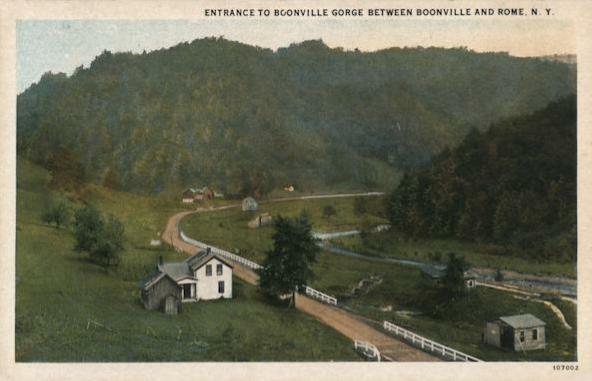
Soon others came to settle near them, then others, until the whole country was inhabited. A schoolhouse and a church were built, and presently a large frame-house took the place of the little log one, and the children grew up and married, and the old people lived on in the same place till they went to their home above.
Only a few years ago, not many months since, I attended a golden wedding in the old house; one of the little ones who travelled in that emigrant-wagon on that long, slow journey up the valley of the Connecticut, winding through the passes of the range of hills that bounds the New England States on the west, then keeping to the low ground of the Mohawk Valley. One of these had been fifty years married, and relatives and friends came together to celebrate. Some of the guests had likewise travelled in emigrant-wagons and lived in log-cabins, and the younger ones gathered around to listen to their stories of pioneer life, and some way, as we listened to these reminiscences, we seemed to be living in a very tame period.
We said within ourselves, “What wonderful material these people have for story-telling. We shall have nothing like it to tell our grandchildren when we are old.”
We never rode in a great canvas-covered wagon, nor hunted a bear, nor were lost in the woods, nor rode forty miles to mill and the post office. But one old lady summed it all up by saying:
“Marvellous are the ways by which the Lord has led us.” That comforted us; we could say that.















 Isabella Alden