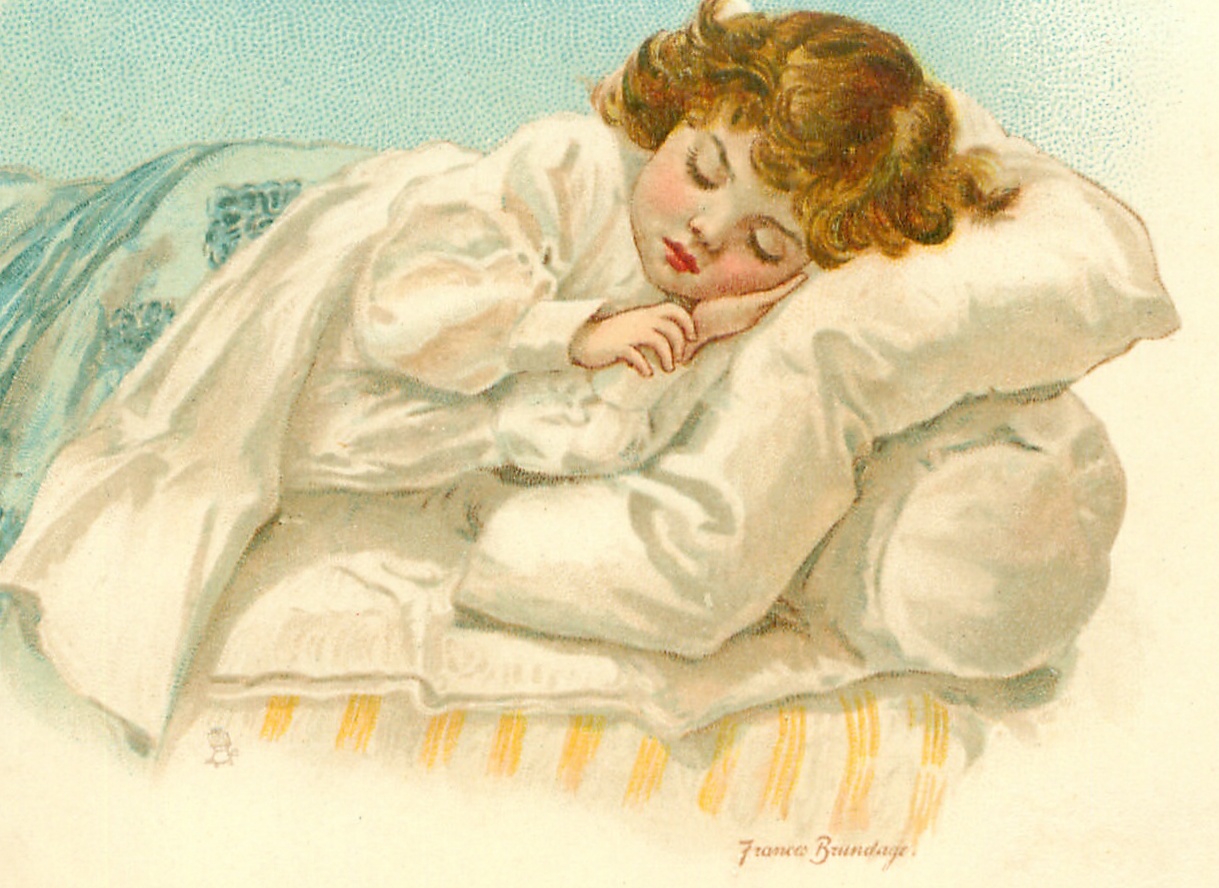
Here’s some little-known trivia about Isabella’s family, beginning with Isabella’s mother, Myra Spafford.
Myra was close to her sister Julia; they were born only a year apart in Canaan, near Johnstown, New York.
Myra and Julia’s father (Isabella’s grandfather) was Horatio Spafford. Horatio was a teacher, inventor, author, and—for a few years—a newspaper publisher.
Julia’s husband Duncan Macdonald in an undated photo
.
When she was still a teenager, younger sister Julia married Duncan Macdonald, who also grew up in Johnstown, not far from the Spaffords.
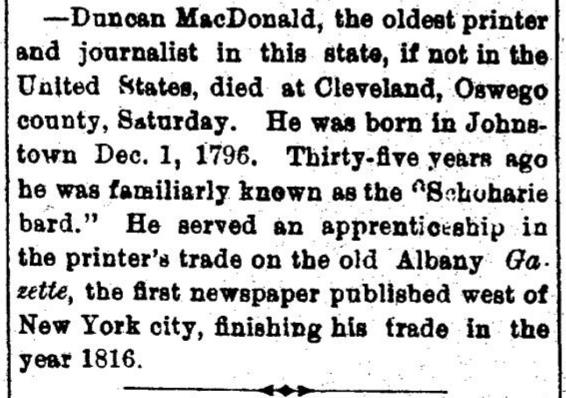
Like his new father-in-law, Duncan was a newspaperman. He was famous for his work as a journalist; and his newspaper, The Schoharie Free Press, was well-known throughout the state of New York.
A brief obituary of Duncan Macdonald, which appeared in the Plattsburgh New York Sentinel on September 9, 1887.
.
A few years after Julia’s marriage to Duncan Macdonald, Myra married Duncan’s brother, Isaac.
Myra and Isaac went on to have seven children—the sixth of which was Isabella Macdonald Alden.
Isabella Alden in an undated photograph.
.
Myra and Isaac, Julia and Duncan, lived very near each other and raised their children together in Johnstown, New York.
A view of Main Street in Johnstown, New York, about 1905
.
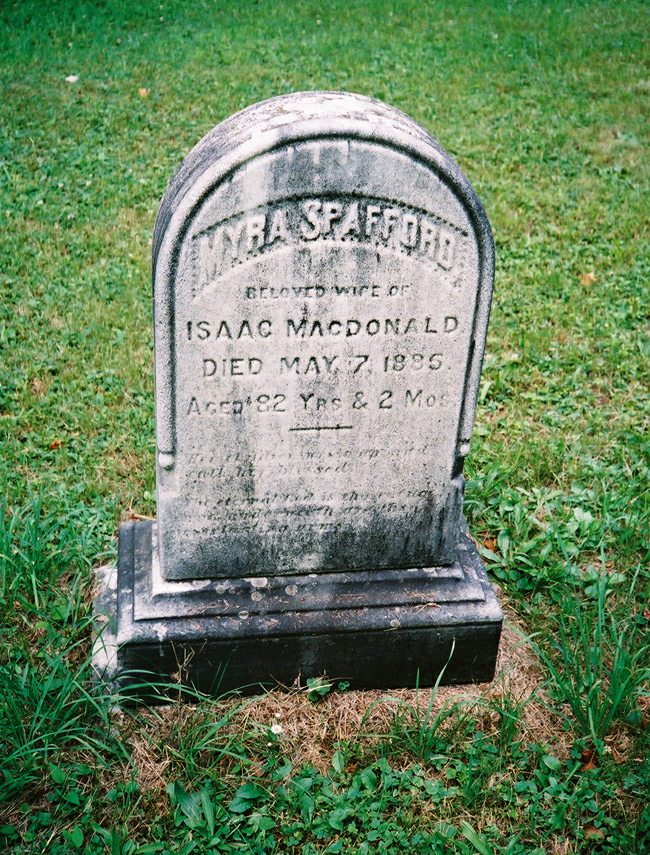
And just as they lived their lives together, they also went to their final rest together. Myra and Isaac are buried near Julia and Duncan in the Johnstown Cemetery.
Isaac Macdonald’s grave marker.
.
Myra Spafford Macdonald’s grave marker
.
Julia Spafford Macdonald’s grave marker, Johnstown Cemetery in Johnstown, New York.
.
Duncan Macdonald’s grave marker, Johnstown Cemetery in Johnstown, New York.
.
A generation later, Isabella’s family welcomed another pair of siblings to the family. Isabella’s eldest sister Elizabeth married Hiram Titus in 1843. They set up house in Gloversville, not far from Isaac Macdonald’s box-making factory, and had eleven children.
Then, not long after, Isabella’s older brother James married Hiram’s sister Sarah, and they had five children.
In her memoirs, Isabella often mentioned how much her family meant to her, and how close they remained over the course of their lives. Her niece, Grace Livingston Hill, also wrote about their bond, and how they all spent time together as one family.
The days were one long dream. Hard work? Yes, but good fellowship. Everybody working together with a common aim, and joy in the work and the fellowship!
You can read more about Isabella’s family and her life in the Johnstown/Gloversville area in these posts:
Grace Livingston Hill, Isabella’s niece, is often credited with creating the Christian romance novel, but in her early writing days Grace wrote and published many short stories.
She was just 28 years old when her story, “Beginning at Jerusalem” was published in Home Missionary Monthly magazine in 1893.
Now you can read Grace’s heartwarming story for free. Just click on the book cover to begin reading.
Isabella was very close to her niece, Grace Livingston. She was 24 years old when Grace was born, and she did her best to spend as much time with little Gracie as she possibly could.
She was especially fascinated with Gracie’s developing personality. When the child was only three years old, Isabella said that Grace was as “full of fun and frolic as a mortal child could be. Oh, the mischief that that morsel could get through in a day! It seemed to me that the little feet and hands and tongue must ache at night; but they were never quite ready to have night come—in fact, as it drew toward bedtime she seemed to have more to do than before, and many a nice plan was spoiled right in the best of it by the call to bed.”
Many times Isabella and her sister Marcia (Grace’s mother) had long talks about Gracie’s willfulness and the odd way she had of looking at the world.
Isabella wrote that when Grace was about three years old, she developed the habit of waking in the morning and announcing her mood. “Gracie is a naughty baby this day.”
She seemed to think that this made everything all right, and nobody had a right to complain as long as she took the pains to explain to them what she meant to do up front.
Isabella wrote, “Sure enough, from morning until night everything went wrong. If she had planned everything that was to happen, with the direct aim of helping her to be a naughty girl, she could not have done it better; so that we grew to dread the days that were begun with that sentence, “Gracie is a naughty baby!” The worst thing about it was her serene unconsciousness of having done anything wrong. Hadn’t she told us that she meant to be naughty?”
The family looked forward to the days when Gracie would announce, “Gracie is a good girl today!” But those days sometimes seemed few and far between.
“Why can’t you always be such a sweet, pleasant little girl?” Isabella asked after one of Gracie’s sunshiny days.
“Why, Auntie Belle, this is my good day. I’m not a naughty baby today at all. But I can’t always be good, you know.”
Isabella wrote that on one of Gracie’s naughty days, she had got into a great deal of mischief, even burning her finger after getting hold of a candle she knew she was not supposed to touch. Marcia bandaged the injured finger in cotton, while Gracie wailed and cried; then mother and aunt took Gracie upstairs to get her ready for bed. Here, in Isabella’s own words, is what happened when it was time for Gracie to say her nightly prayers:
“Well,” Gracie said, looking into her mother’s face, and speaking slowly and solemnly, “I’ve got a good deal to say tonight, haven’t I? Mamma, which do you think is the baddest thing that I did today?”
“I don’t think I can tell,” Marcia said, with a sober, troubled face; “and that isn’t the thing that you are to think about, anyway. It makes no difference which is the worst thing; everything that you knew was wrong to do has made Jesus feel badly, and you want to ask him to forgive you for them all; besides, you want to ask for a new heart, so that you will be willing to try not to be so naughty.”
There was never a time in her little life that Gracie wasn’t ready for an argument. She tried to get one up now.
“But, mamma, if I could find out which was the very baddest thing that I did, I could make up my mind that I certainly true would never do that again, and then I would be sure not to be so bad next time. Don’t you see?”
I shall have to confess that I felt very much like laughing. She was such a little bit of a mouse, and she was trying so hard to be wise. But her poor troubled mamma did not smile.
“I see that you don’t know what you are talking about,” she said. “I can only hope that when you are older you will be a great deal wiser.”
This was certainly hard for a little girl who thought she made a very sensible remark. She gave a little bit of a sigh, and then knelt down beside her mamma. Very slowly and reverently she went through the prayer that I think every little girl in the world must know, “Now I lay me down to sleep.” After the “Amen” she always added a little prayer that she said came right out of her own heart; and tonight it was, “Dear Jesus, please bless Gracie; make my heart not feel so bad; make me feel just as though I was a very good girl, and take away my naughty sins and give me some good sins.”
That was really the most that Gracie knew about it. There seemed to be no use in trying to make her understand that everything that wasn’t right was wrong, and that God thought so.
Isabella wrote that Marcia was troubled that her daughter might actually believe there was such a thing as “good sins.” But in her heart, Isabella wasn’t worried. When she looked at Gracie, she saw independence, the ability to reason things out for herself, and a true knowledge of what was right and wrong. She had no fear for Gracie’s future. She knew that Gracie’s parents—and all of the members of their tight-knit family—would raise Grace to be a woman of faith who followed Christ in her everyday life.
You can read more about Isabella and her niece, Grace Livingston Hill, in these posts:
Toward the end of Isabella’s life, her niece, Grace Livingston Hill, encouraged her to write “just one more book.” Grace suggested that it be about Ester Ried’s grand-daughter or great-grand-daughter, in order to bring the great message of the original Ester Ried novel to a whole new generation of readers.
Isabella Alden in an undated photograph.
Isabella’s fertile imagination still had plenty of stories waiting to be told. She recognized that there were some loose ends from the Ester Ried series that needed to be tied up, as Grace suggested.
She also knew, based on the letters she received, that fans of her books wanted to know more about some of the other characters she had created.
But Isabella chose not to write those sequels. In 1927 she told Grace:
I am not capable of writing a story suited to the tastes of present day young people. They would smoke a cigarette over the first chapter, and toss it aside as a back number. I haven’t faith in them, nor in my ability to help them.
Cover of a 1925 edition of Life magazine.
It’s unfortunate that Isabella was so disillusioned with the “present day young people” of the 1920s. She didn’t understand the new generation of young people, and she strongly believed she had nothing in common with them.
While Isabella still dressed modestly in long gowns with high collars and full sleeves, young women of the 1920s wore short, sleeveless dresses.
A 1920s dress, from Pinterest.com
They rouged their knees and polished their shoulders.
A 1920s advertising flier for the Bassett’s Ice Cream stand located in the Reading Terminal Market, Pennsylvania.
They plucked their eyebrows, painted their lips, and lacquered their fingernails.
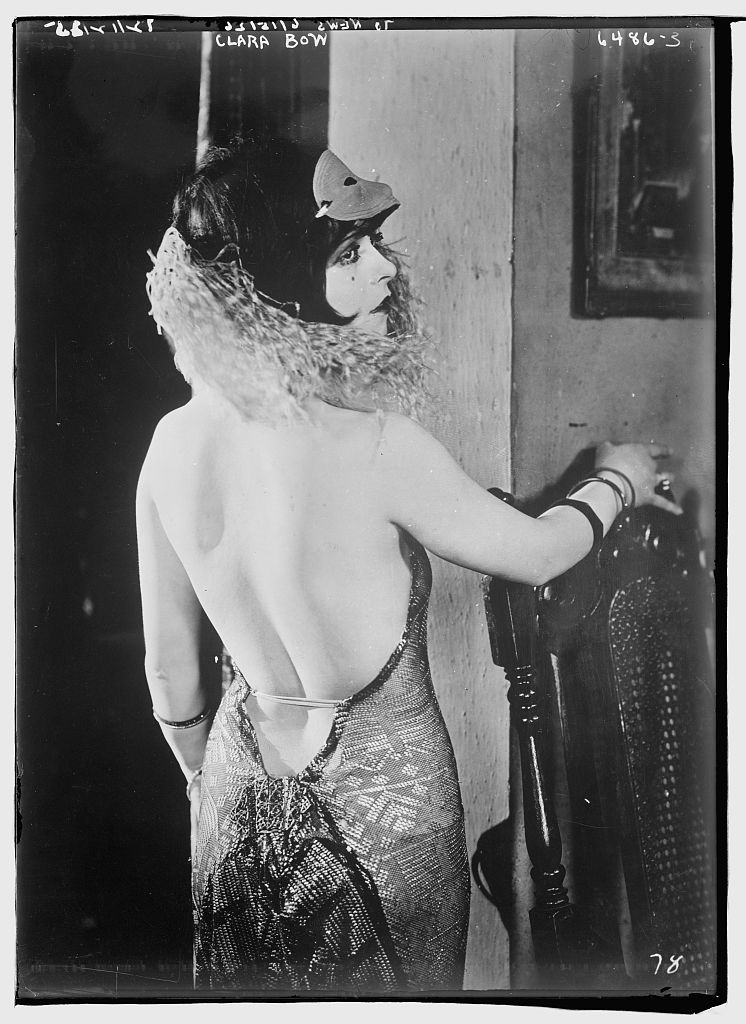
Actress Clara Bow on the cover of a 1920s magazine.
Hollywood star Clara Bow set the trends. She was nicknamed the “It Girl” for playing the role of a plucky shop girl who made good. She was the first Hollywood sex symbol, and Americans couldn’t get enough of her.
A 1922 photograph of actress Clara Bow in a daring backless dress. From the U.S. Library of Congress.
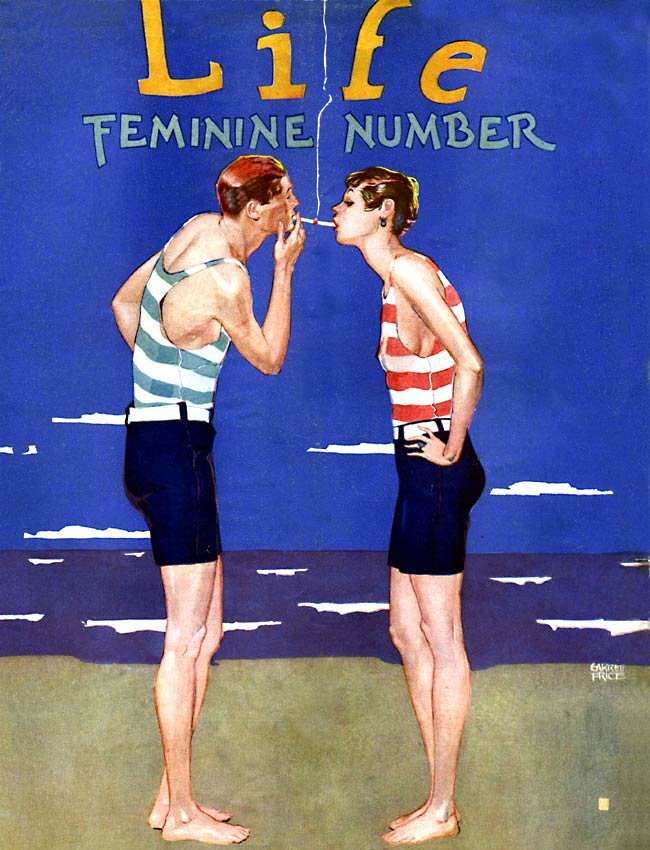
Teenaged girls and grown women copied her make-up and clothes. If Clara Bow smoked cigarettes in a movie, they smoked, too.
Life magazine cover from the 1920s.
Like Clara, they challenged social mores by drinking alcohol and driving fast cars, just like men did.
A 1920s flapper and her flask of alcohol. From the U.S. Library of Congress.
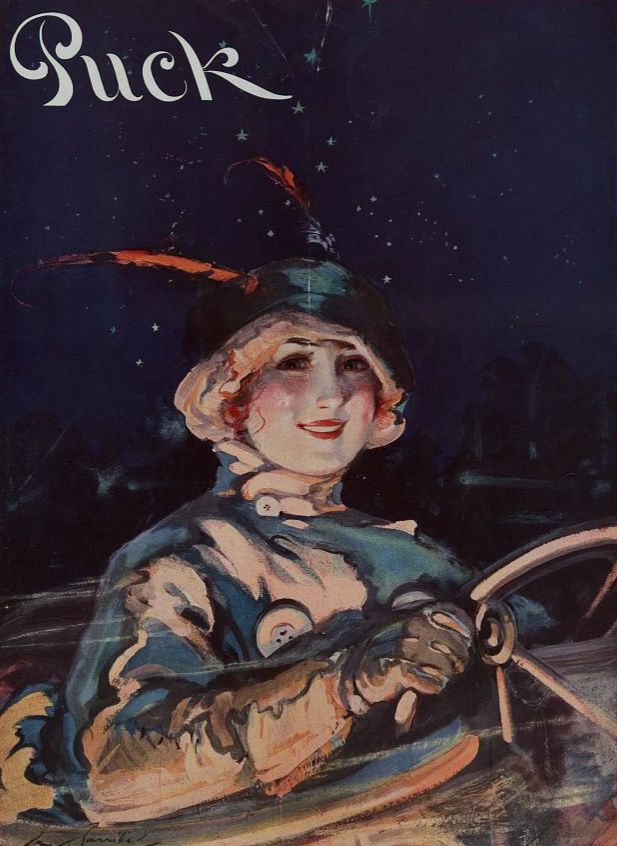
And like many of the characters Clara Bow played on screen, they were headstrong and modern and fond of nightlife.
A cover of Puck magazine.
Isabella couldn’t understand it. She wrote:
I saw the trend away from Christ long ago. I recognized the downward trend not only in girls and boys, but in their mothers and teachers and pastors. I came by degrees to understand that the class of young people to whom I had dedicated my life had made a distinct descent, and that for me to do the same in my writing would be to dishonor Jesus Christ.
So Isabella watched with sadness as a new generation of readers turned to the novels of F. Scott Fitzgerald, Warner Fabian, and Virginia Woolf, while her own novels gradually fell out of favor.
Original cover of Unforbidden Fruit by Warner Fabian. The 1928 novel was shocking in its day for depicting single women’s sexuality.
Grace and others urged her not to give up her life work, but Isabella was adamant: she would not write except to try to win souls for Christ.
I think we all realize in these days that even Jesus Christ is not popular. Therefore we who want to follow Him closely must not try to be.
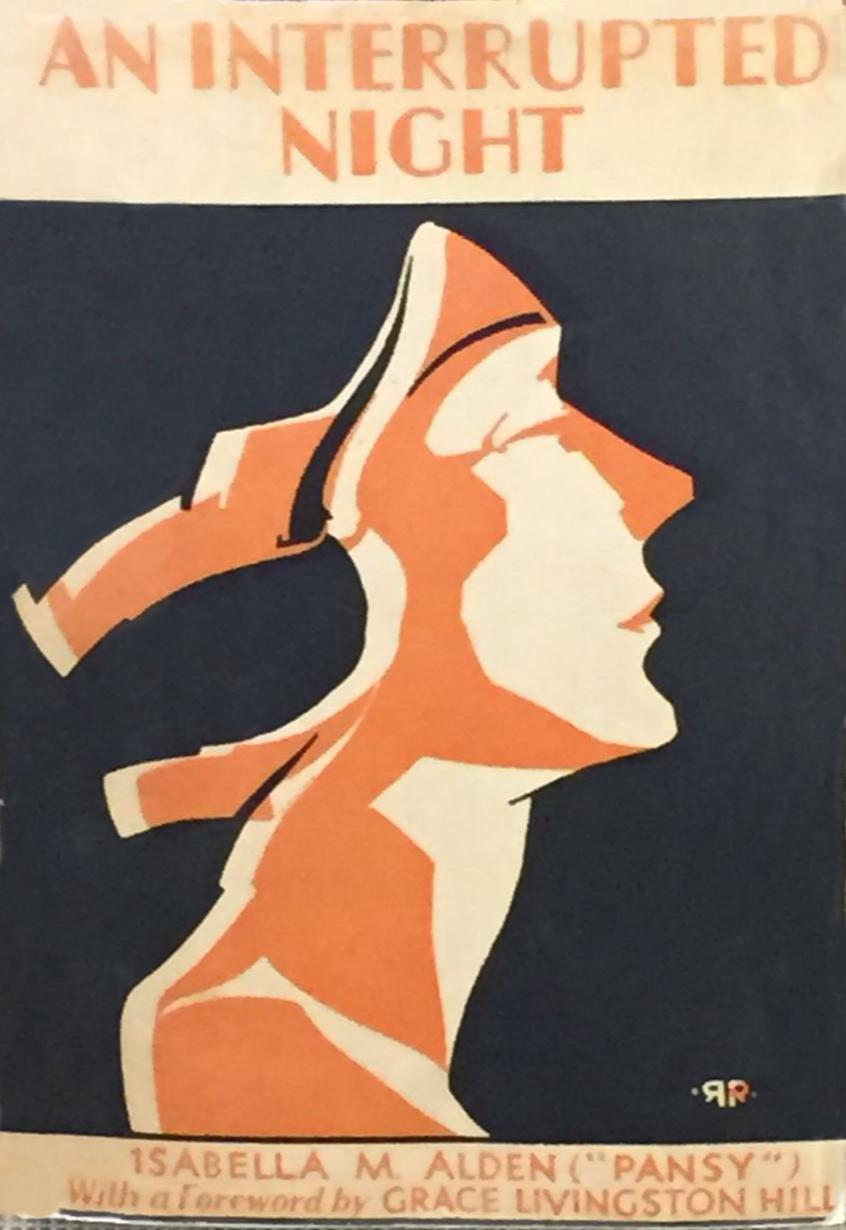
In 1929 Isabella published An Interrupted Night. Like her novel, Unto the End, An Interrupted Night was written for adults and dealt with issues of love, marriage, infidelity, and sacred vows. The book received good reviews, but it would be Isabella’s final novel.
The cover for Isabella’s 1929 novel, An Interrupted Night.
Unfortunately, Isabella Alden passed away the following year, in 1930, never knowing that—almost one hundred years later—an entirely new generation of “present day young people” would love and cherish her books.
Isabella Alden was very close to her sister Marcia, who married the Reverend Charles Livingston. For many years Isabella’s and Marcia’s families lived together under the same roof.
Isabella Alden (left) and her sister, Marcia Livingston in an undated photo.
In the summer months the Aldens and the Livingstons traveled to Chautauqua, New York and shared a cottage on the grounds of the Chautauqua Institution.
In the winter they made the pilgrimage to Florida, where the two families lived in a large house in Winter Park.
The Alden house in Winter Park. (From Winter Park Public Library archives.)
Isabella’s son Raymond and Marcia’s daughter Grace attended Rollins College in Winter Park, and Grace went on to teach physical education classes there.
Grace Livingston Hill in her early twenties.
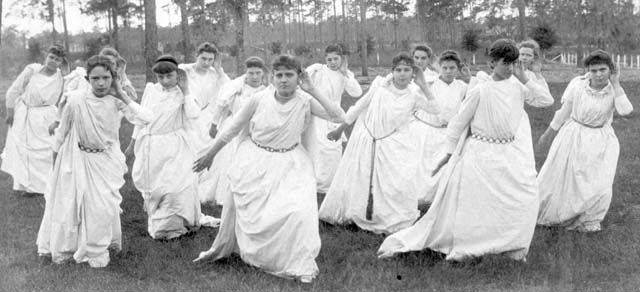
Before Grace took up her pen to write some of America’s most beloved novels under the name Grace Livingston Hill, she was one of the first teachers at Rollins College. She was also a true advocate for the “physical culture” movement that was sweeping the country at the time. She recognized the freedom it gave women to pursue physical health in a way they hadn’t been able to before. At Rollins she taught ladies’ classes in calisthenics, basketball, gymnastics, and fencing.
Grace Livingston (front and center) with her Greek Posture Class, about 1889. (From Rollins College Archives.)
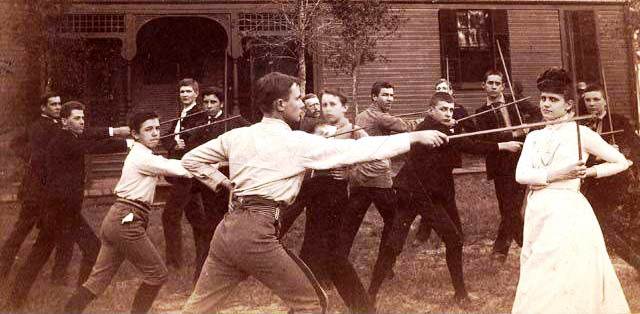
She also taught men’s classes in physical culture, such as fencing and Greek Posture:
Grace teaching a fencing class in 1890. (From the Rollins College Archives.)
Men’s Greek Posture Class, about 1890. (From Rollins College Archives.)
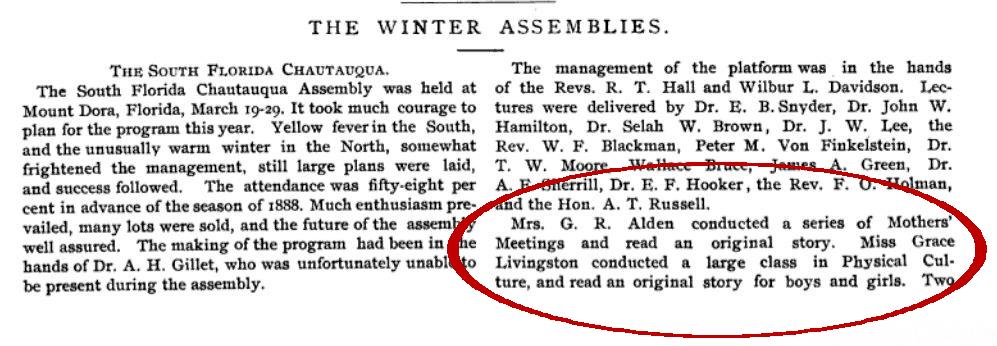
And when she wasn’t teaching at the college, she taught physical culture classes at the Florida Chautauqua.
An 1889 announcement from the Florida Chautauqua.
Like her niece, Isabella appreciated the physical culture movement. She even featured the craze in one of her short stories, “Agatha’s Uknown Way.”
And she wrote “Too Much of a Good Thing,” a story about how one young girl got so caught up in the physical culture craze, that she made life difficult for her entire family. You can read “Too Much of a Good Thing” for free below.
Would you like to learn more about Grace Livingston’s teaching years at Rollins College? Click this link to read a fun story about one of her biggest challenges at the school, and how she convinced the faculty to see things her way.
You can read Isabella’s short story, “Agatha’s Unknown Way” for free. Just click this link.
You can also read a previous post about the birth of gymnastics at Chatuauqua Institution.
Enjoy Isabella’s story, “Too Much of a Good Thing”:
Too Much of a Good Thing
Downstairs everyone was busy. Uncle Morris and his entire family, just from Europe, were coming by an earlier train than it had been expected they could take, and many last preparations for making them comfortable had still to be attended to.
Mrs. Evans had been up since daylight, planning, directing, and helping to the utmost that her small strength would admit.
Indeed, her eldest daughter Laura had constantly to watch, to save her mother from lifting something heavy, or reaching for something high. Often her clear voice could be heard with a “Oh, mother, don’t! Please—I’ll take care of that.” And often the gentle answer was:
“Dear child, you cannot do everything, though your will is strong enough. Where is Millie?”
“Millie has gone to sweep and dust the hall room; you know we didn’t think we should need that, and I used it as a sort of store room; but since Arthur is coming with them, we shall have to get it ready; and he will need to go at once to his room, since he is an invalid, so I sent Millie to put it in order. I told her just what to do, and she will manage it nicely. She must be nearly through now, and I’ll have her finish dusting here, so I can help you with those books; they are too heavy for you to handle.”
No, Millie wasn’t nearly through. In fact, she could hardly have been said to have commenced. The truth is, she had been thrown off the track. It was an old print which fell out of an, unused portfolio that did it. The print showed the picture of a girl in fun Greek costume, and reminded Millie of what was not long out of her mind, that in the coming Physical Culture entertainment she was to chess in a costume which was supposed to be after the Greek order.
“Let me see,” she said, bending over the print, “this girl has short sleeves and low neck. Why, the dress is almost precisely like the one which Laura wears with her lace over-dress; I might wear that. It would be too long, of course, but it could be hemmed up. I am almost sure Laura would let me have it; and with her white sash ribbon tied around my waist it would be just lovely. Then that would save buying anything new, and save mother any trouble. I mean to go this minute and try on the dress, before I say anything about it.”
Away dashed the Greek maiden to one of the guest chambers which Laura had left in perfect order, dragged from a seldom used drawer the elegant white mull dress with its lace belongings, all of which saw the light only on state occasions, and rushed back to the hall room again, where she had left the print she was trying to copy. In her haste, she dragged out with the dress various articles of the toilet. Laura’s white kid gloves which she wore when she graduated, a quantity of laces, and a handkerchief or two, to say nothing of sprays of dried flowers. These she trailed over the carpet, seeing nothing of them. The important thing in life just now was to get herself into that dress.
It was accomplished at last, not without a tiny tear having been made in the delicate stuff, but which Millie’s fingers were too eager to notice. She tied the white sash high up about her waist, after the fashion of the picture, seized the dust brush in one hand as if it were a dumb bell, or an Indian club, and struck a graceful attitude with her arm on the corner of the mantel.
“There!” she said, “I would like to have my picture taken in this dress; I have a very nice position now for it. I wish the girls were here to see me. Laura must let me wear this; it fits exactly. I don’t believe it is much too long for a Greek maiden. I should like to wear my dresses long; it must be great fun. I wonder if we couldn’t have our pictures taken in costume? I think it would be real nice; and our folks would each want to buy one. Perhaps we could make some money.”
There were hurried steps in the hall, and the Greek maiden’s musings were cut short. Laura came forward rapidly, talking as she
came.
“Millie, aren’t you through here? You have had plenty of time, and mother needs your help right away. Hurry down just as quickly as you can; she is over-doing, and it is growing late; the carriage may come any minute now. Why, Millie Evans!”
She stopped in amazement, for the Greek maiden was still posing. She smiled graciously and said: “Don’t I look fine? I borrowed it a minute to see if it will do to wear to the entertainment. It is just the thing, isn’t it? You will lend it to me, won’t you? Just for one evening? I’ll be awfully careful of it.”
“And you have been to that drawer where all the nice things are packed, and dragged them out! There is one of my white gloves under your feet, and my only lace handkerchief keeping it company! I must say, Millie Evans, you deserve to be punished. Here we are trying our best to get ready for company, and keep mother from getting too tired, and you neglect your work to rig up like a circus girl; and go to a drawer which you have no right to open. I shall certainly tell father of this.”
The Greek maiden’s cheeks were in an unbecoming blaze. Laura was hurried and tired, and spoke with more severity than was her custom. It certainly was trying to find the room in disorder, and her best dress in danger.
“Take care,” she said, as Millie’s frantic efforts to get it off put it in greater danger. “Don’t quite ruin that dress. Indeed you shall not wear it. I am astonished at you for thinking of such a thing; when father hears what you have been doing, I doubt if you will need a dress for the entertainment.”
Then Millie lost all self control. “You are a hateful, selfish thing!” she burst forth. “Take your old dress; I don’t want to wear it; and I won’t be ordered about by you as though you were my grandmother. I’m nearly fourteen, and you have no right to manage me. I’ll just tell father myself that I—”
“What is all this?” Mr. Evans’ voice was sternness itself, and he looked at the girl with blazing cheeks, in a way that made her angry eyes droop.
“What does it mean, Millicent? I heard you using very unbecoming language to your sister, and to judge from your appearance you have been about some very inappropriate work.”
“Well, father, Laura burst in here and—”
“Never mind what Laura did, Millicent. Unfortunately for you, I know which daughter tries to care for and spare her sick mother in every possible way. I overheard enough to show me which one is to blame. Laura may tell me what is the trouble, and you may listen.”
But Laura was already sorry that she had spoken so sharply, and tried to soften the story as much as truth would permit.
“Her mind is so full of the Physical Culture entertainment, father, that she does not stop to think. I know she did not mean to hinder and make trouble.”
“I see,” said Mr. Evans, speaking grimly. “I have heard a good deal about this Physical Culture business. If everyone is as much carried out of common sense by it as our Millicent is, I should say it was high time to have some moral culture. Millicent, you may put yourself into a suitable dress for sweeping, and do the work you were sent to do, at once; and you will not need to think any more about a dress for the entertainment, for you are to be excused from attending it. You may tell your teacher that I said so.”
Poor Millie! The hall bedroom floor might almost have been washed, if that were desirable, with the tears she shed. No hope had she of any change of mind on her father’s part. He rarely interfered with his children, but when he did, his word was law.
And poor Laura! She went downstairs heavy-hearted and miserable. Why had Millie been so silly, and why had she allowed her vexation to make matters worse?
The poor frail mother actually cried when she heard of Millie’s disappointment. “Yet I really cannot ask her father not to notice it,” she said sorrowfully. “Millie has been so remiss in her duties for weeks, all on account of the hold which that Physical Culture craze has upon her. It is too much of a good thing. I am afraid her father is doing right.”
For over twenty years Isabella Alden and her husband edited a children’s magazine called The Pansy.
Each issue was filled with inspiring stories, delightful illustrations, short poems, and descriptions of exotic and far-away places to spark children’s imaginations. Published by D. Lothrop and Company of Boston, the magazine was first produced as a weekly publication, and later changed to a monthly.
Editing and writing for the magazine was no easy undertaking and Isabella’s entire family pitched in to help.
Pick up any issue of The Pansy and you’ll find stories by Isabella’s sisters, Julia Macdonald and Marcia Livingston, or her best friend, Theodosia Foster (writing as Faye Huntington).
Margaret Sidney, famous for the Five Little Peppers books for children, published some of her books as serials in The Pansy, as did author Ruth Ogden. Even Isabella’s brother-in-law Charles and beloved niece Grace Livingston (before her marriage to Reverend Frank Hill) contributed stories.
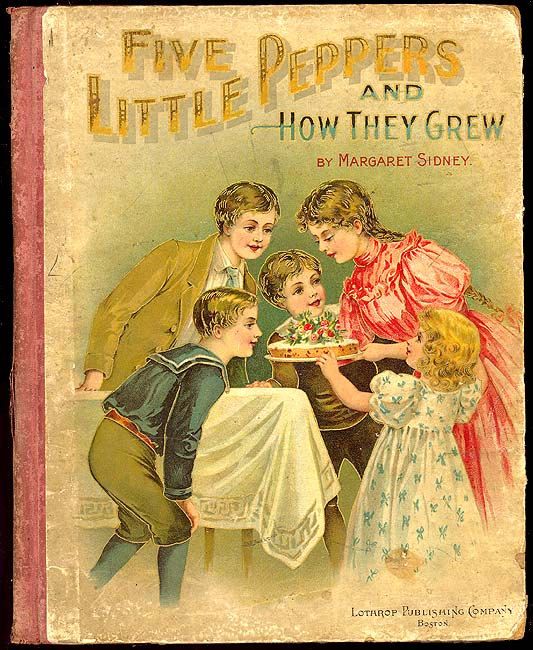
The 1881 cover of The Five Little Peppers and How They Grew by Margaret Sidney
Isabella’s son Raymond wrote poems, and her husband Reverend Gustavus “Ross” Alden contributed stories and short homilies like this one:
Sometimes, the family banded together to write stories for the magazine. In 1886 each family member—Isabella, Ross, Marcia, Grace, Raymond, Theodosia, and Charles—took a turn writing a chapter of a serial story titled “A Sevenfold Trouble.” In 1887 they continued their collaboration by writing a sequel titled, “Up Garret,” with each writer again producing a different chapter. In 1889 the combined stories were published as a book titled A Sevenfold Trouble.
An original illustration for A Sevenfold Trouble, published as an 1887 serial in The Pansy.
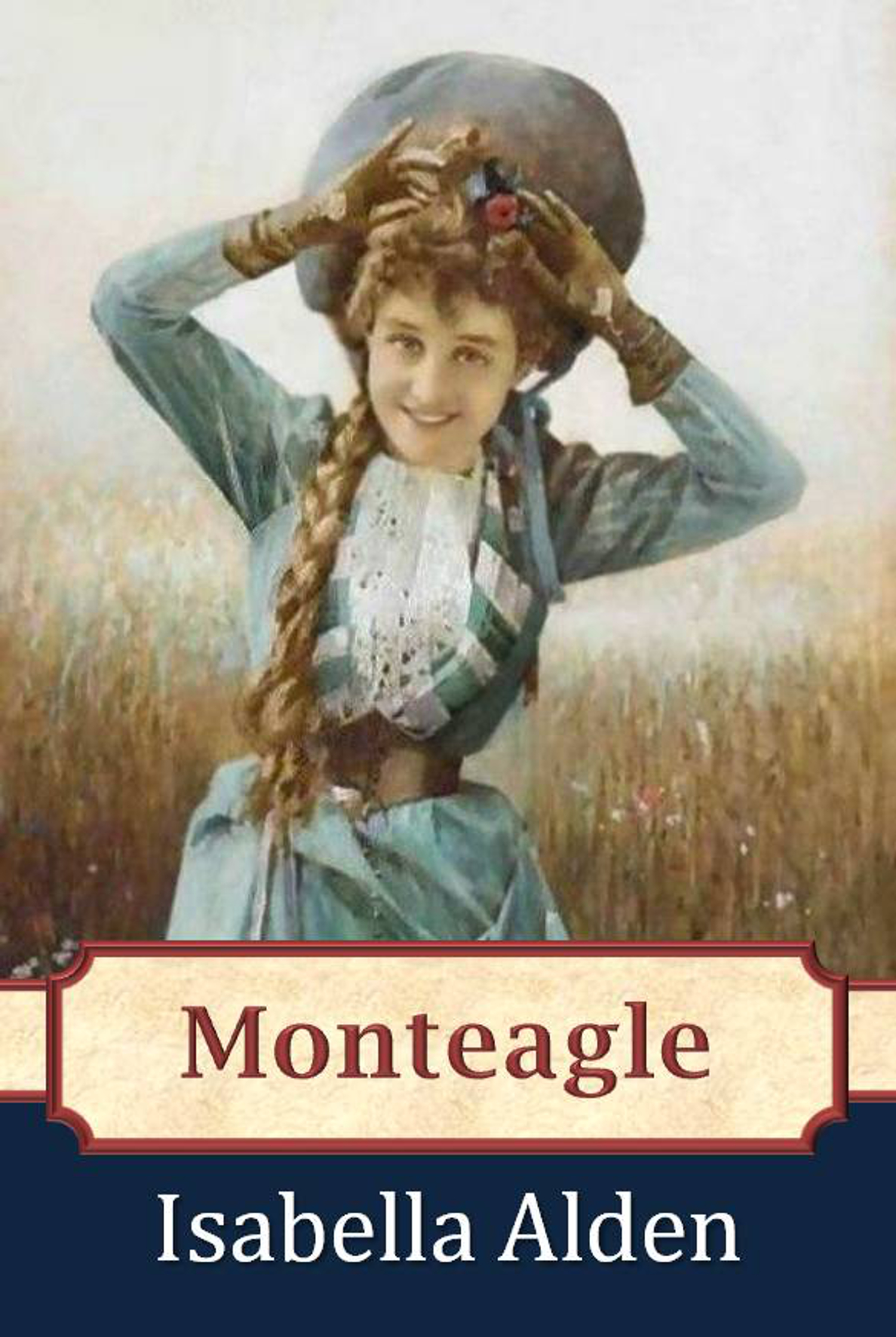
Isabella also previewed some of her own books by publishing them as serial stories in the magazine. Monteagle and A Dozen of Them first captured readers’ hearts in the pages of The Pansy.
The magazine was a resounding success. Thousands of boys and girls from around the world subscribed. Many children grew to adulthood reading the magazine, as Isabella remained at the helm of The Pansy for over 23 years.
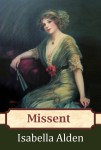
When Isabella wrote Missent; the Story of a Letter, she created a heroine named Sarah Stafford. Sarah was strong, yet sympathetic; wealthy, but lonely, too. Alone in the world, Sarah yearned for a family, which is one of the reasons she decided to rent rooms as a boarder in the home of the Dennison family.
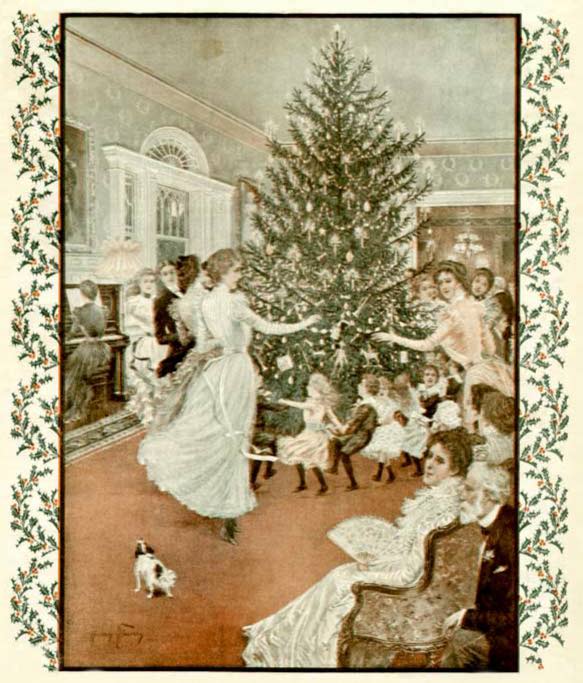
There Sarah spent Christmas day with the family and took part in their Christmas celebration and fun. In the book, the family made a game of distributing gifts by making up rhymes and riddles, and having the recipient guess what the gift was before it could be opened.
That game was actually part of Isabella’s real family tradition. The entire family gathered together at Christmas—Isabella, with her husband and son; Isabella’s mother and sister Julia; her sister Marcia, with her husband Charles and daughter Grace.
On Christmas morning, there were many gifts to be opened, “nearly all of them quite inexpensive, most of them home-made, occupying spare time for weeks beforehand; occasionally a luxury, but more often a necessity, a little nicer perhaps than would have been bought at an ordinary time because it was Christmas.”
Isabella’s niece, Grace Livingston Hill, remembered those family Christmas mornings with love. “Our Christmases together were happy, thrilling times.”
Grace also described the process they used for handing out the gifts:
The ceremony of distribution was a long delight, because it was a rule that each present, no matter how small, should be accompanied by an original poem or saying that was appropriate to the gift, the giver or the receiver. The rite lasted usually far into Christmas morning, with shouts of laughter over each reading, and Aunt Julia, or Grandma, or one of the others would frequently have to be excused and the ceremonies held up for a few minutes while the turkey was basted, or the mince pies taken out of the oven, filling the house with delicious Christmas odors.
It was on one of those Christmas mornings that Isabella gave her niece a gift that would influence her life: one thousand sheets of typewriter paper. With the paper was a note, wishing Grace success with her writing and encouraging her to “turn those thousand sheets of paper into as many dollars.”
An early, undated photo of Grace Livingston Hill
At the time, Grace was just beginning to write bits of stories with no thought of ever trying to publish them. But Isabella’s gift changed that.
It was the first hint, Grace later wrote, that anyone thought she could write professionally.
It’s no wonder that Isabella used her own experience to write about Sarah’s Christmas with the Dennisons in Missent; the chapter was completely based on her happy and love-filled Christmas mornings with her own family. You can click on the book cover to learn more about Missent; the Story of a Letter.
Do you have a Christmas tradition that brings your family together? Please share it in the reply section below.
Faith and Love is now available in print! This exclusive collection of short stories by Grace Livingston Hill and her mother Marcia Livingston is available from Amazon, Barnes and Noble, and wherever print books are sold.
As the wife of a minister, Isabella Alden was very familiar with her husband’s congregation. She wasn’t the type of minister’s wife who simply went to teas and receptions and other social events, and never got involved in anything related to the church. Not Isabella.
She was an “old-fashioned minister’s wife,” said her niece, Grace Livingston Hill:
She made calls on the parishioners, knew every member intimately, cared for the sick, gathered the young people into her home, making both a social and religious center for them with herself as leader and adviser; grew intimate with each personally and led them to Christ; became their confidante; and loved them all as if they had been her brothers and sisters.
Isabella’s experiences as a minister’s wife inspired many characters and events in her books. She wove her stories around real incidents and real people, their foibles and inconsistencies, and lessons learned.
Like the country congregation that couldn’t raise the funds needed to keep their church clean in Interrupted.
Or the woman in Aunt Hannah and Martha and John who placed a large donation in the offering plate to impress the congregation, only to slip into the church office later when no one was looking to demand her change because she didn’t really want to give the full amount.
And the Ladies’ Aid Society members who only donated pennies because they believed missionaries and others who did God’s work didn’t need nice things (this happened in a few of Isabella’s novels).
When it came to the subject of money, Isabella had heard all the arguments before. She knew why people preferred to spend their dollars on anything but God’s work. But she also knew her Bible, and believed its instructions about money were just as important as any other commandment.
Isabella was a strong believer in the Biblical concept of tithing, and she knew how important it was to teach children to tithe beginning at a young age. She believed that when we follow God’s instructions about money, we grow to trust God in other areas of our lives, as well.
She illustrated the point in her short story, “Pictures from Mrs. Pierson’s Life.” The story centers around a couple who ignore God’s instructions about money, and what their children learn by the parents’ actions.
“Pictures from Mrs. Pierson’s Life” first appeared in Mrs. Harper’s Awakening, published in 1881. You can read it here for free. Just click on the book cover to get started.
.
.
Isabella wrote about money and the importance of tithing in many of her books, including:
When Isabella Alden wrote Aunt Hannah and Martha and John, she created the character of Martha Remington, a young bride who—through no fault of her own—had never been taught to cook and keep house.
Isabella herself was an excellent homemaker. Her niece, Grace Livingston Hill, wrote that her Aunt Isabella was “a marvelous housekeeper, knowing every dainty detail of her home to perfection; able to cook anything in the world just a little better than anyone else.”
Poor, Martha, however, couldn’t cook at all and her bridegroom, John, suffered through many meals that were overcooked, undercooked, sour, or salty.
Cooking in the late 1800s and early 1900s was truly a skill that was acquired after years of practice. A young woman stood a much better chance of learning to cook from an experienced housekeeper than she did if she tried to learn to cook on her own.
This was especially true because of the stoves and ovens that were available then. They lacked one essential feature we take for granted today: A thermostat.
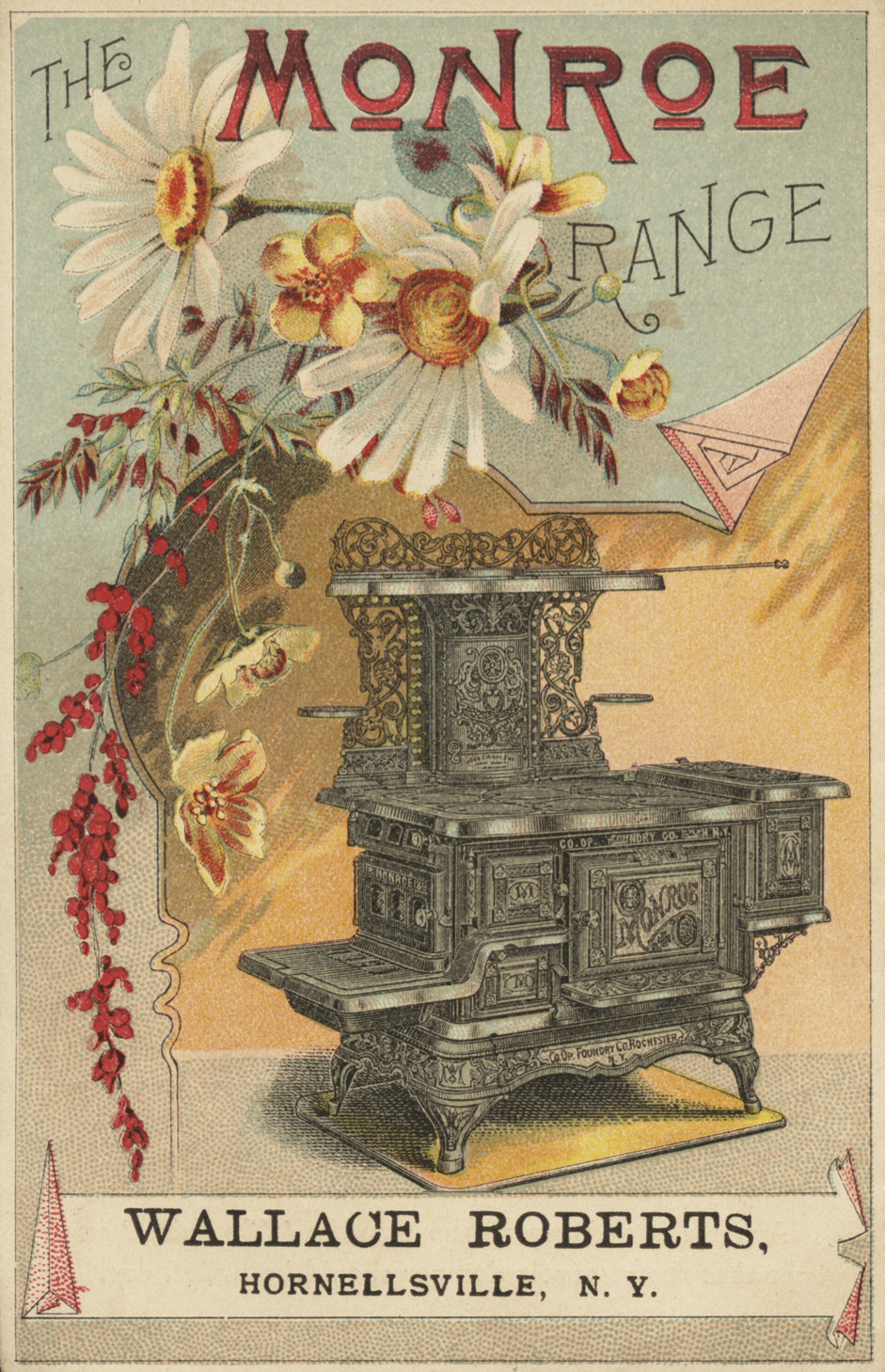
Ranges at the turn of the 20th Century didn’t have any means for accurately detecting the temperature of their ovens or burners, and they had no dials or knobs to turn heat up or down. Cooks controlled the temperature of the oven and burners by the amount and type of fuel they fed the range. They had to rely on their experience and years of trial and error to determine whether an oven was the right temperature for baking a loaf of bread or roasting a shank of beef.
Cookbooks from the time included recipes with very general terms:
“Heat your oven to a satisfactory degree of heat.”
“Bake in a hot oven.”
“Bake in a quick oven for ten minutes.”
With such imprecise instructions, it’s no wonder an inexperienced cook like Martha was so bewildered in the kitchen, and served her husband so many meals that were almost inedible.
Luckily, Aunt Hannah detected the trouble and came to Martha’s rescue, not only as a teacher of the kitchen arts, but as a friend.
Under Aunt Hannah’s gentle tutelage, Martha Remington learned to be a good cook and housekeeper.
And as her confidence in the kitchen grew, so did Martha’s confidence in all areas of her life, as she matured into a caring and capable pastor’s wife.
You can find out more about Isabella’s book, Aunt Hannah and Martha and John by clicking on the book cover.
Reviews and giveaways for Christian fiction and sweet, clean fiction. Bringing readers information on great stories and connecting authors with their readers.