Have you ever wondered if your daily witness for Christ can truly make a difference in winning a loved one’s soul? Would you be willing to compromise your principles if you thought it might be the only way to influence someone else for Christ?
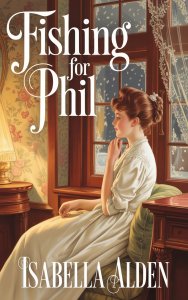
These are the heart-searching questions at the center of this month’s free read, “Fishing for Phil,” by Isabella Alden. The story follows teenager Daisy Morris as she navigates the delicate balance between family loyalty and her personal devotion to God.
Daisy Morris is a young woman of firm Christian principle , but her convictions are put to the test when her beloved Aunt Mattie and cousin Blanche plead with her to attend a special play. They believe it is the only way to coax Phil away from his worldly companions and back into the church. Will Daisy yield to the pressure of those she loves , or will her quiet refusal to compromise “one inch of the way” prove to be the very witness Phil truly needs?
Like her younger sister Isabella, Marcia Macdonald Livingston was a talented writer. Her stories always contained a message of faith and a happy ending; and she excelled at writing about the trials—small and large—that husbands and wives face together.
This month’s free read is about one of those couples who must learn to cope with an empty nest.
Mrs. Warner is in despair. After her beloved daughter marries a young pastor and moves away, the once-cheerful woman cannot muster a smile for her husband, the Deacon. It will take a lonely November evening and the comforting strains of a few old hymns for this devoted couple to rediscover their faith and their gratitude for one another.
Isabella Alden and her entire family were actively involved in the Young People’s Society of Christian Endeavor, a movement that promoted Christian service and ideals to its teen and young adult members.
Isabella believed in the Endeavor program so much, she founded the Pansy Society for Christian Endeavor, a similar organization specifically designed for children. The Pansy Society focused on teaching children to use Jesus’ life and words as a guide to live by.
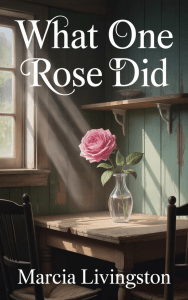
This month’s free read is a story by Marcia Livingston that illustrates some of the values The Pansy Society sought to teach children: forgiveness, patience, and kindness toward others.
It was a simple act of kindness when Lily Haines offered Cindy Barker a rose from her garden; but neither young lady could predict how much of a difference the presence of that single rose could make in the Barker family home.
When it came to writing stories, Isabella sometimes relied on “real” life for inspiration. She’d take an actual occurrence—an overheard conversation, an event she attended, or something as simple as a family gathering—and use it as the basis for her story.
Other times, a story she wrote was inspired by a lesson she wanted to convey, or a kernel of truth around which she fashioned a story. That was the case in 1887 when she published a little story called “Monuments,” about a young girl who visits a cemetery in New York with her Aunt Joanna.
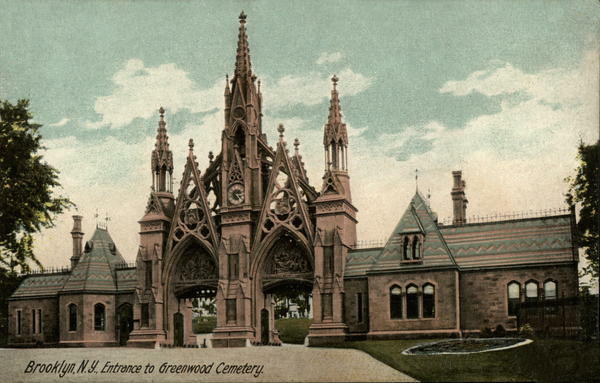
The entrance to Green-Wood Cemetery in Brooklyn, New York.
The story draws on fact: Green-Wood in Brooklyn, New York is a real place that Isabella very likely visited because of its famed monuments.
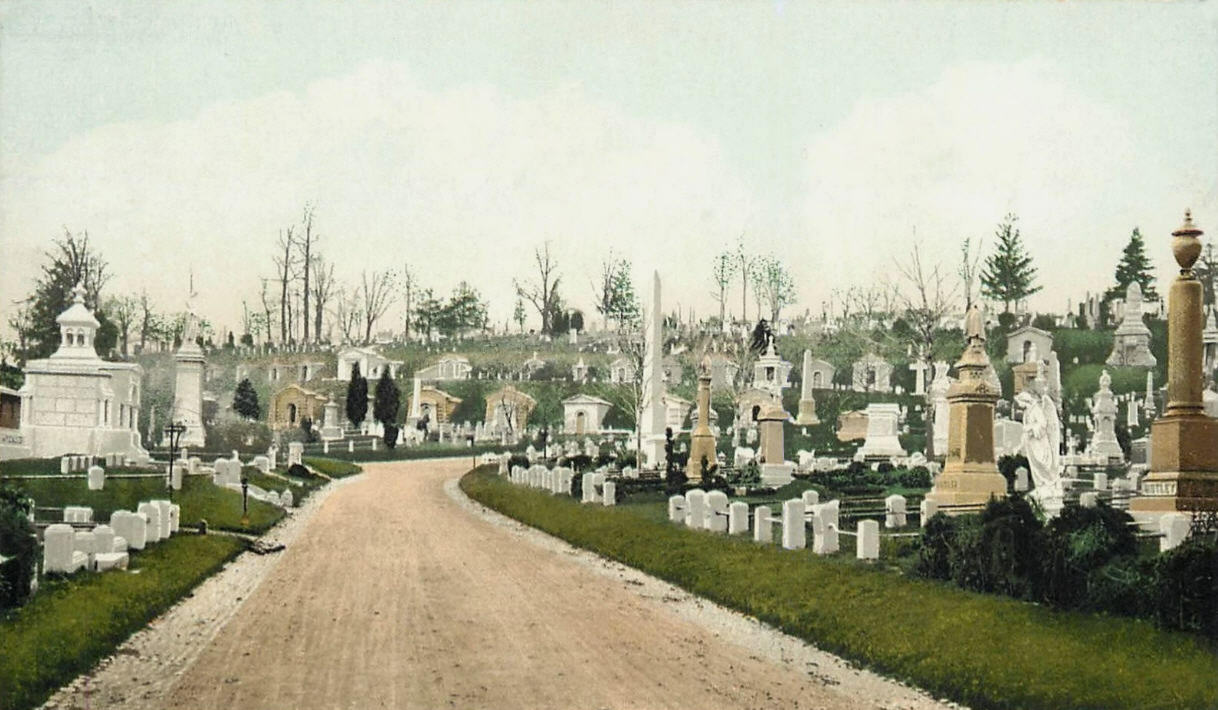
Monuments and headstones at Green-Wood Cemetery, about 1900.
In the 1800s Green-Wood Cemetery, with its extraordinary grave markers and lush, rolling hills, was a popular tourist destination. People came to spend the day with their picnic baskets and marvel over the sculpted monuments.
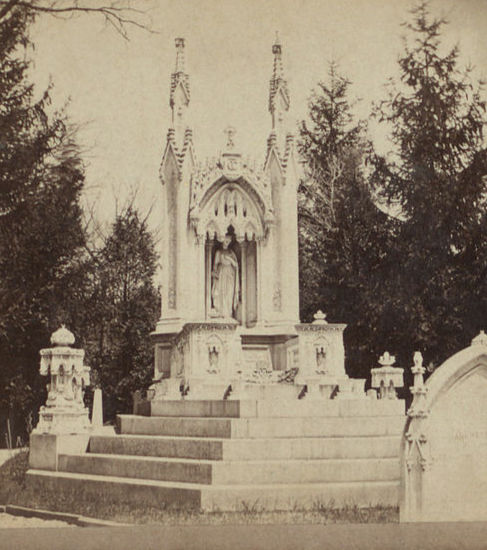
In her story, Isabella mentions one of the most magnificent monuments that marks the grave of Miss Charlotte Canda, a seventeen-year-old bride-to-be who was tragically killed after falling from a run-away carriage.
Charlotte Canda’s tomb, photographed about 1910.
She also mentions a monument dedicated to the brave firefighters of New York City and, in particular, Andrew Schenck, who perished in 1854 while trying to save people and his fellow firefighters from a burning department store.
The Firemen’s Monument mentioned in the story, topped by fireman’s boots and hat.
As a creative storyteller, Isabella took these tales of tragedy and heroism and crafted them into a story about a completely different kind of ‘monument’—one built not of marble and stone, but of transformed lives and acts of service.
Here’s the short story Isabella wrote:
It was my first visit to New York. A few days after my arrival uncle took me to Green-Wood, the most beautiful cemetery I ever saw. We visited the many points of interest. As we stood gazing at the fireman’s monument, uncle told me the story of his heroism; how in one of the fierce fires this brave man lost his life while rescuing a woman from the flames. Then we spent a long time looking at the monument to Miss Canda, the beautiful young heiress who was thrown from a carriage and killed; and her fortune was built up in this wonderful marble.
The next morning aunt said, “You will go with me today to another Green-Wood and see grander monuments than any you saw yesterday.”
I wondered how that could be, but we were soon on our way. At length we turned into narrow, dirty streets, growing worse and worse. I shuddered at such sights and sounds of human beings, never before dreaming that in grand New York there could he so much wretchedness. I drew closer and closer to aunt, fearing one of the human demons that leered at us would seize me and carry me off.
Such people! Such places to live in! Such language! Why, it almost makes my hair stand on end to think of it. Aunt did not seem to mind them. Maybe they knew her, for everyone stood aside for us to pass.
“Here it is,” she said at length. “Here is the other Green-Wood.”
“This?” I answered, looking around for gravestones and monuments, and seeing nothing but dreadful houses and miserable objects. “This is Green-Wood?”
She simply answered, “Yes; come right in and you shall see the monuments.”
I could only follow, wondering all the while if aunt was not losing her mind.
A sweet-faced girl met us with a warm welcome to aunt and an earnest look at me. As she led the way within, aunt whispered:
“One of the monuments, Clara.”
“What? I don’t know what you mean.”
“Her name is Maggie,” she quickly whispered back; “used to be called ‘wild Maggie;’ was one of the worst girls in this region. Never mind now, I will tell you more hereafter. Take a good look at her, you’ll see her again.”
Then I heard singing like the songs of many angels. A door swung open. We entered. It was a great company of children, black and white, some with sweet sad faces; others with evil looks, but all singing. Soon Maggie came in from another door and sat among them and I could hear her voice ring out in joyful strains, leading the rest.
There was prayer and Bible reading, and such a good talk by a gentleman. It seemed like heaven, while many of the children, some partly blind, some lame, some pale and sad-faced, gathered around after meeting was out and seized Aunt Joanna’s hand, and seemed so happy. Another lady was there to whom they all pressed for a smile and a word.
“That lady,” said aunt, “is Sir Christopher Wren.”
“What can you mean?” I asked. “Sir Christopher Wren was a man who died in England more than a hundred years ago.”
Aunt Joanna only laughed and said, “And came to life again, my child. This is he, only greater.”
“What?” said I, more and more bewildered.
But she went on: “Look around here at the monuments. You knew Sir Christopher was the architect of the great Westminster Abbey of London, and that kings and statesmen and poets are buried there, and their names and deeds are written there; but if anyone inquires for Sir Christopher Wren’s monument, he is told to look at the wonderful building of which he was the architect.”
“I see,” said I, “that lady has ‘built up’ Maggie.”
“Exactly,” said Aunt Joanna, “and more than one hundred other miserable, sick and wicked children. See that frail girl over there coming toward her? It would take a book to tell how this lady used to come daily here and bend over her crib, sometimes holding her in her arms for hours fearing each moment would be her last. But come and I will introduce you, and you shall see a monument greater than Christopher Wren.”
After we were on our way home, aunt told me the story of this lady; how one day curiosity led her to go through this worst part of New York. Her heart was so touched at the wretchedness of the people that she resolved to do something for them. Her friends tried to dissuade her. Some said the people would kill her; some said it was no use to try to help them. But she went right forward, and now after years of labor and sorrow there is her monument: saved children.
Before my return home in the country, Aunt Joanna gave a treat to the children of the Home all at her own expense.
Maggie, once “Wild Maggie,” and I served. How many sandwiches I passed around, how many cups of milk Maggie filled, how some of the urchins were dressed, how they laughed, or chattered, or stared, what they all said to aunt Joanna about the “treat,” would fill a book.
You can read more about Green-Wood Cemetery by clicking here.
Click on these links to read the stories behind the monuments for:
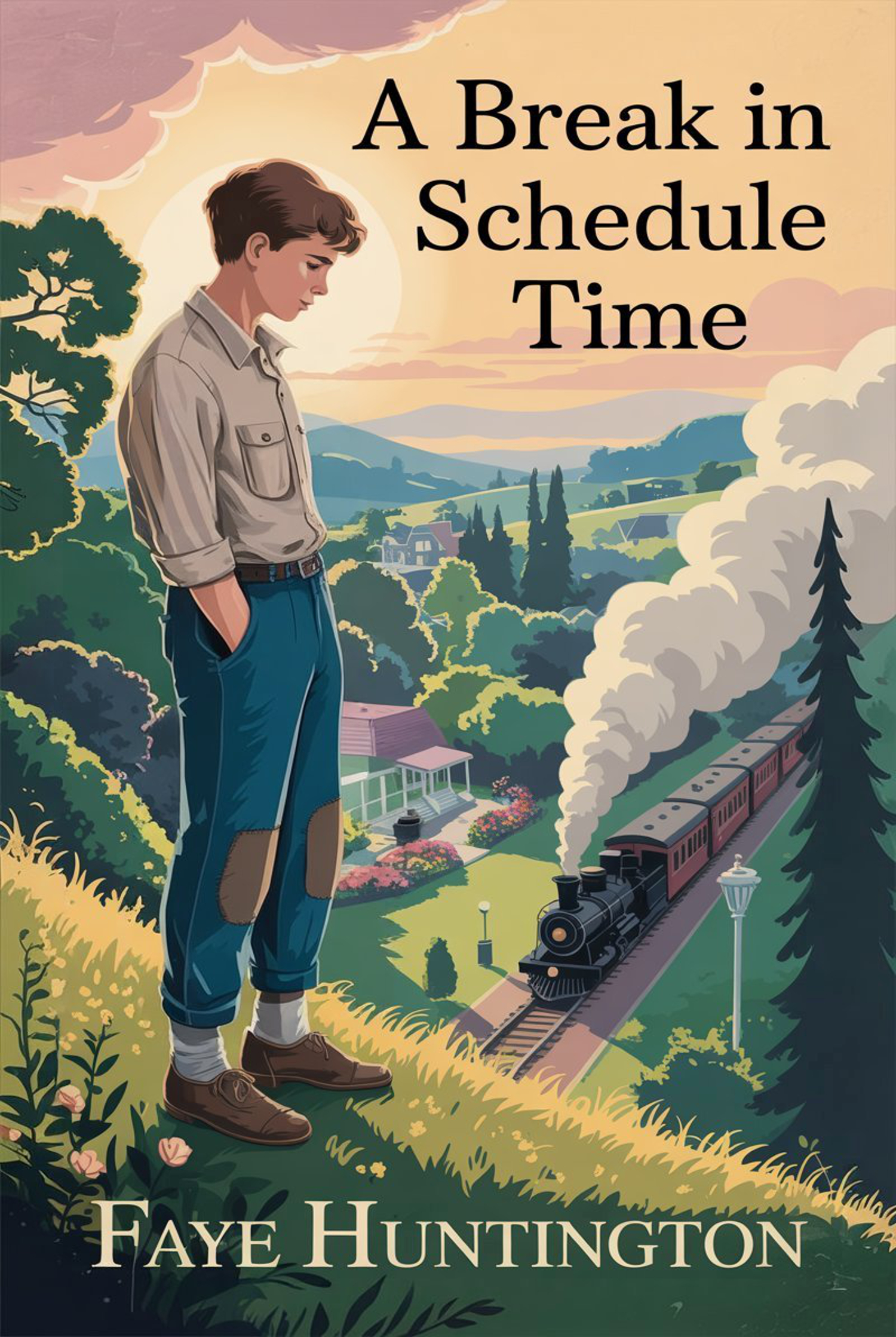
Our August free read by Faye Huntington is a delightful story about two topics very close to the author’s heart: the Christian Endeavor movement, and how sowing seeds of good can result in a bountiful harvest of blessings.
Like everyone in impoverished Castle City, twelve-year-old Tom Gates has given up hope of making a better life, until he has a chance encounter with a group of stranded Christian Endeavorers. Their kindness and faith inspire Tom; for the first time in his life he wants something the town has never had before: A Sunday school.
With his sister Lucy and their friends, Tom uses his wits to raise money and secure a building; and along the way, he ignites a fire of change that will shape the town for generations to come.
This month’s free read is a short story Isabella wrote in 1898 for a popular Christian magazine. It’s the story of the Pemberton family and the difficult year they endured leading up to a 4th of July celebration.
Nettie Pemberton can hardly believe it: the family fortune is gone! Although she finds a job working for a kind family, Nettie watches long-time friends disappear from her life. Even Edward Field—whom Nettie has known and loved since childhood—seems to have forgotten her very existence. Now, as the Independence Day holiday approaches, Nettie must face another disappointment that may turn out to be more than her broken heart can bear.
Although there was a nine year age difference between them, Isabella Alden and her older sister Marcia were as close as two sisters could be. They both married ministers in the Presbyterian church, and they both helped their husbands serve their congregations with kindness and compassion.
The two families often lived together, as well. In Florida they combined their resources to build a large home where both families could live together comfortably while Isabella’s son Raymond and Marcia’s daughter Grace attended college. (You can read more about that here.)
The Alden home in Winter Park, Florida, where the Aldens and Livingstons lived while in Florida.
Marcia wrote stories and novels for all age groups, from very young children to adults; and in her adult stories she often wrote about the challenges of adult relationships. This month’s free read is a short story she wrote about newlyweds finding their way through the early days of their marriage.
Newlyweds Annette and Philip Lyman agree on everything. From the books they read to furnishing their house, their tastes are in perfect harmony. But when Philip criticizes Annette’s choices in the kitchen, their first quarrel quickly escalates until they can barely utter a civil word to each other. Who can help this once loving couple find love and harmony again?
One of Isabella’s fondest memories was from a time when she was very young and her father taught her about “due bills.” (You can read more about that here.) Isabella’s father used that unremarkable, every-day event to teach Isabella a lesson she would never forget about the power of prayer.
Isabella’s friend, Theodosia Toll Foster (a teacher by profession) also used common incidents to reinforce lessons. Her children’s short story “Up in Mrs. Kelsey’s Attic” (which she wrote under the pen name “Faye Huntington”) is an example of just such a teachable moment.
When Carrie Kelsey helps her mother clean the attic, she discovers a treasure trove of interesting curiosities, including an old spinning wheel. Little does Carrie know that the history of the long-forgotten spinning wheel will teach her a valuable lesson.
YOU CAN READ “UP IN MRS. KELSEY’S ATTIC” FOR FREE!
This month’s free read is a short story by Isabella’s sister, Marcia Livingston.
Grandma’s bedroom is a welcoming place where all the cousins gather to talk; so when two of the cousins plan a shopping trip to the city for new bonnets, of course all the girls—including Grandma—must be consulted! But amid their happy chatter, it only takes a few thoughtless words to wound a spirit and change one life forever.
You can read “Aunt Maria’s Afterwards” for free!
Choose the reading option you like best:
You can read the story on your computer, phone, tablet, Kindle, or other electronic device. Just click here to download your preferred format from BookFunnel.com.
Or you can select BookFunnel’s “email” option to receive an email with a PDF version you can read, print, and share with friends.
If the surname “Dunmore” sounds familiar to you, you’ve probably read Isabella Alden’s novel, Miss Dee Dunmore Bryant.
In that book about the adventures of the Bryant family, Judge Dunmore was a kind and generous man who befriended the Bryant children and helped improve their fortunes.
Isabella must have liked the surname “Dunmore,” because six years earlier, she used the same name in a short story she published in The Pansy magazine. In the short story, the kindly and wise gentleman named Dunmore was a physician who went above and beyond his Hippocratic Oath to heal the heart of a badly injured patient.
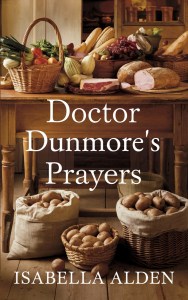
“Doctor Dunmore’s Prayers” is this month’s free read.
When Mr. Greyson is badly injured at work, Dr. Dunmore does all he can to repair the man’s damaged body and orders him to bed. But with no income, the Greyson family is soon in dire straits and desperate for help. What else can the doctor do to help restore the man’s health and faith?
You can read “Doctor Dunmore’s Prayers” for free!
Choose the reading option you like best:
You can read the story on your computer, phone, tablet, Kindle, or other electronic device. Just click here to download your preferred format from BookFunnel.com.
Or you can select BookFunnel’s “email” option to receive an email with a PDF version you can read, print, and share with friends.
Reviews and giveaways for Christian fiction and sweet, clean fiction. Bringing readers information on great stories and connecting authors with their readers.












 Isabella Alden