Our August free read by Faye Huntington is a delightful story about two topics very close to the author’s heart: the Christian Endeavor movement, and how sowing seeds of good can result in a bountiful harvest of blessings.
Like everyone in impoverished Castle City, twelve-year-old Tom Gates has given up hope of making a better life, until he has a chance encounter with a group of stranded Christian Endeavorers. Their kindness and faith inspire Tom; for the first time in his life he wants something the town has never had before: A Sunday school.
With his sister Lucy and their friends, Tom uses his wits to raise money and secure a building; and along the way, he ignites a fire of change that will shape the town for generations to come.
This month’s free read is a short story Isabella wrote in 1898 for a popular Christian magazine. It’s the story of the Pemberton family and the difficult year they endured leading up to a 4th of July celebration.
Nettie Pemberton can hardly believe it: the family fortune is gone! Although she finds a job working for a kind family, Nettie watches long-time friends disappear from her life. Even Edward Field—whom Nettie has known and loved since childhood—seems to have forgotten her very existence. Now, as the Independence Day holiday approaches, Nettie must face another disappointment that may turn out to be more than her broken heart can bear.
Although there was a nine year age difference between them, Isabella Alden and her older sister Marcia were as close as two sisters could be. They both married ministers in the Presbyterian church, and they both helped their husbands serve their congregations with kindness and compassion.
The two families often lived together, as well. In Florida they combined their resources to build a large home where both families could live together comfortably while Isabella’s son Raymond and Marcia’s daughter Grace attended college. (You can read more about that here.)
The Alden home in Winter Park, Florida, where the Aldens and Livingstons lived while in Florida.
Marcia wrote stories and novels for all age groups, from very young children to adults; and in her adult stories she often wrote about the challenges of adult relationships. This month’s free read is a short story she wrote about newlyweds finding their way through the early days of their marriage.
Newlyweds Annette and Philip Lyman agree on everything. From the books they read to furnishing their house, their tastes are in perfect harmony. But when Philip criticizes Annette’s choices in the kitchen, their first quarrel quickly escalates until they can barely utter a civil word to each other. Who can help this once loving couple find love and harmony again?
One of Isabella’s fondest memories was from a time when she was very young and her father taught her about “due bills.” (You can read more about that here.) Isabella’s father used that unremarkable, every-day event to teach Isabella a lesson she would never forget about the power of prayer.
Isabella’s friend, Theodosia Toll Foster (a teacher by profession) also used common incidents to reinforce lessons. Her children’s short story “Up in Mrs. Kelsey’s Attic” (which she wrote under the pen name “Faye Huntington”) is an example of just such a teachable moment.
When Carrie Kelsey helps her mother clean the attic, she discovers a treasure trove of interesting curiosities, including an old spinning wheel. Little does Carrie know that the history of the long-forgotten spinning wheel will teach her a valuable lesson.
YOU CAN READ “UP IN MRS. KELSEY’S ATTIC” FOR FREE!
This month’s free read is a short story by Isabella’s sister, Marcia Livingston.
Grandma’s bedroom is a welcoming place where all the cousins gather to talk; so when two of the cousins plan a shopping trip to the city for new bonnets, of course all the girls—including Grandma—must be consulted! But amid their happy chatter, it only takes a few thoughtless words to wound a spirit and change one life forever.
You can read “Aunt Maria’s Afterwards” for free!
Choose the reading option you like best:
You can read the story on your computer, phone, tablet, Kindle, or other electronic device. Just click here to download your preferred format from BookFunnel.com.
Or you can select BookFunnel’s “email” option to receive an email with a PDF version you can read, print, and share with friends.
If the surname “Dunmore” sounds familiar to you, you’ve probably read Isabella Alden’s novel, Miss Dee Dunmore Bryant.
In that book about the adventures of the Bryant family, Judge Dunmore was a kind and generous man who befriended the Bryant children and helped improve their fortunes.
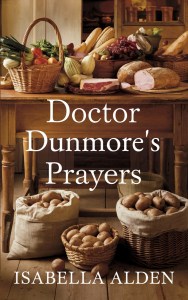
Isabella must have liked the surname “Dunmore,” because six years earlier, she used the same name in a short story she published in The Pansy magazine. In the short story, the kindly and wise gentleman named Dunmore was a physician who went above and beyond his Hippocratic Oath to heal the heart of a badly injured patient.
“Doctor Dunmore’s Prayers” is this month’s free read.
When Mr. Greyson is badly injured at work, Dr. Dunmore does all he can to repair the man’s damaged body and orders him to bed. But with no income, the Greyson family is soon in dire straits and desperate for help. What else can the doctor do to help restore the man’s health and faith?
You can read “Doctor Dunmore’s Prayers” for free!
Choose the reading option you like best:
You can read the story on your computer, phone, tablet, Kindle, or other electronic device. Just click here to download your preferred format from BookFunnel.com.
Or you can select BookFunnel’s “email” option to receive an email with a PDF version you can read, print, and share with friends.
It’s the time of year when many people make resolutions—to study their Bible more often, lose weight, or spend more time with family and friends. But how many people resolve to change their life in order to benefit a stranger? That’s the premise of our January free read.
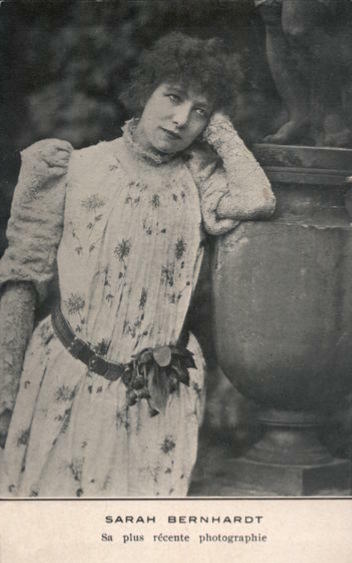
Grace Livingston Hill wrote “The Weak Brother for Whom Christ Died” in 1897, and it was based on true events. At that time, French actress Sarah Bernhardt was a theatrical titan, who enjoyed world-wide fame.
Undated photo of Sarah Bernhardt in character.
She toured the globe in plays she produced and starred in. She was a master of self-promotion and cultivated a larger-than-life persona that the newspapers and magazines of the time eagerly reported to their readers. She was, arguably, the world’s first true international superstar.
Undated photo of Sarah Bernhardt as Cleopatra.
Bernhardt first performed in America in 1880, when Grace was fifteen years old. Bernhardt’s American tour lasted several months. She performed in cities across the country, and each performance was met with thunderous applause and critical acclaim.
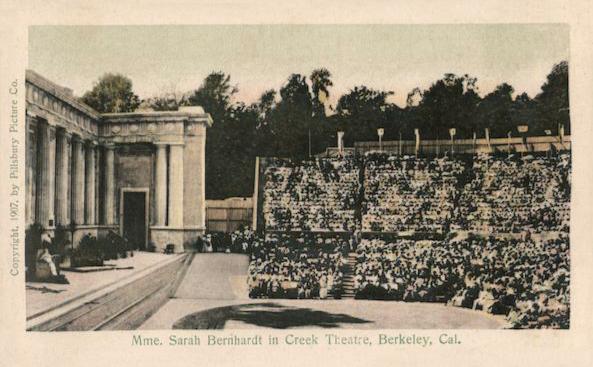
Bernhardt performing onstage in Berkeley, California, 1906.
In 1897 Bernhardt toured England, where she was so much in demand that she sometimes appeared in multiple plays at once, performing a matinee in one theater, then playing the lead in an entirely different play in a different theater that same evening!
From The Times, London, June 16, 1897.
But not everyone embraced Sarah Bernhardt with open arms. Despite her talent and riveting performances, conservative members of society and many religious groups viewed the theater as a morally corrupting influence, especially for women.
A promotional poster for Bernhardt’s 1905/1906 American tour.
Female actors were frequently stigmatized as immoral or promiscuous. Sarah Bernhardt—with her unconventional lifestyle, her bold stage performances, and numerous love affairs both within and outside of her marriage—scandalized a good portion of the population.
Bernahrdt as Napoleon. Her costume, with its form-fitting pantaloons, was considered quite scandalous.
Grace Livingston Hill knew about Sarah Bernhardt and probably read many of the newspaper articles about her. She also had strong opinions about Bernhardt and theater entertainments, which she used as the theme of her story, “The Weak Brother for Whom Christ Died.”
“Did you go out to see Bernhardt last evening, Murray?”
When three young men meet to pass a Sunday afternoon together, they never imagine that such a simple question can spark a very complicated discussion! But Frank Murray has read his Bible, and he is willing to forego some of the world’s pleasures if it means he will never be a stumbling-block to fall in another Christian brother’s way. Will Frank be able to explain his position to his new friends so they, too, will strive to help a weak brother in Christ?
You can read “The Weak Brother for Whom Christ Died” for free!
Choose the reading option you like best:
You can read the story on your computer, phone, tablet, Kindle, or other electronic device. Just click here to download your preferred format from BookFunnel.com.
Or you can select BookFunnel’s “email” option to receive an email with a version you can read, print, and share with friends.
This month’s free read is a short story Isabella wrote about a young man who had the courage to live his convictions.
.
Quiet and thoughtful, John Cameron has always been “different” than his brother and sisters. When an opportunity arises to improve their impoverished finances, the family is ready to jump at the chance. Only John—and his inconvenient convictions—stand in their way.
This month’s Free Read is a short story Isabella wrote about the consequences of judging people based on first impressions. The story was published in a Christian magazine in 1897.
Annoying, uncultured, and uneducated. That’s the impression Irwin Ford has of young Gardner, a college student who happens to live in the same boardinghouse. Irwin does his best to avoid all contact with Gardner, until one fateful evening when their chance conversation proves to be the catalyst for change in the lives of both men.
In Isabella Alden’s lifetime, women had to rely solely upon the men in their lives for the basic necessities of life—food, shelter, and clothing. She knew all too well that unmarried women had little choice when it came to securing a respectable job, and even then they barely earned enough to eke out a living (more about that in our next post).
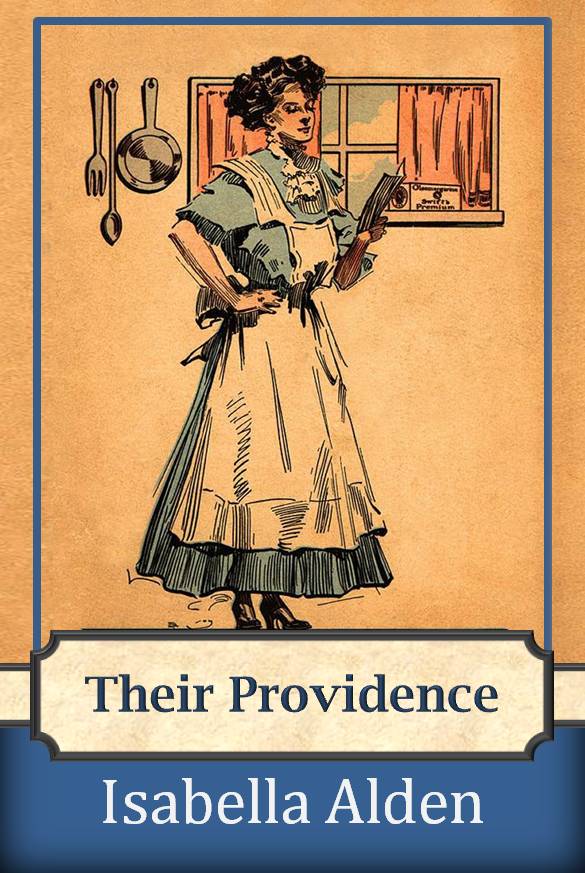
That’s certainly the case for Miss Esther Beekman, the heroine of Isabella’s short story “Their Providence.”
Miss Esther Beekman would dearly love to find a place where she can work for her room and board while she finishes her education. Mrs. Richards is in desperate need of help to turn her topsy-turvy household back into the perfect, well-ordered home it once was. So when Mrs. Richards allows Esther to stay on a temporary basis, both ladies find themselves on trial and wondering if it was accident or providence that brought them together.
Reviews and giveaways for Christian fiction and sweet, clean fiction. Bringing readers information on great stories and connecting authors with their readers.