There’s no question that Isabella Alden was a talented writer. The plots for her novels were inventive and realistic, and each of her characters were carefully drawn.
Her niece, author Grace Livingston Hill, wrote that when she was old enough to learn to read, she “devoured [Isabella’s] stories chapter by chapter.” And when Isabella wrote the final chapter to one of the novels she’d been writing, the family often crowded around her, knowing Isabella would read her work aloud. Grace said:
“We listened, breathless, as she read, and made her characters live before us. They were real people to us, as real as if they lived and breathed before us.”
They were probably real people to Isabella, too. When she was interviewed in 1892 for a Philadelphia newspaper, she talked about her writing process. For many years she used a typewriter to write her stories (you can read more about that here), but by the time she was interviewed for the newspaper article, she was using dictation. It greatly increased the speed with which she wrote her books, and added an inadvertent element of entertainment to the task. Here’s how it was described in the article:
“The morning hours are devoted by Mrs. Alden to her literary work, and a person standing in the hall in front of the studio door is highly amused to hear the animated conversation with the varying tones indicative of stern displeasure, then of baby prattle, to be followed soon by the earnest and softened accents of the lover’s pleading; a monologue by Mrs. Alden as she personates her various characters. They are all seen in life, they must all appear in her books.”
Isabella’s characters seem alive and real to us because she wrote about the kind of average people we meet every day; and when her characters come to a crossroads in their lives and face tough decisions, we understand what they’re going through because we (or someone we know) has dealt with similar situations. Her characters cause those of us who read her books to search our own hearts and “see ourselves as God saw us.”
Grace wrote that Isabella’s characters “still live within our memories like people we have known intimately and dwelt among. Ester Ried and Julia Ried, the Four Girls at Chautauqua, Mrs. Solomon Smith—I almost expect to meet some of them in Heaven.”
Do you have a favorite character from Isabella’s books?
Isabella often drew on her own life experiences when writing her stories and novels.
For example, Isabella’s husband G. R. “Ross” Alden was a seminary student when he and Isabella were courting. On the very day of their wedding, Isabella and Ross boarded a train to take them to a new town where Ross was assigned his first church as a minister. Isabella used the very same circumstance in her 1890 novel Aunt Hannah and Martha and John. In the story, newly married Martha also left her parents’ home immediately after her wedding to go with her new minister husband to his first church.
And just as Isabella had to learn the best she could to be a good minister’s wife, Martha had to do the same in the novel. One scene in the book tells what happens when Martha attends a ladies’ prayer meeting soon after she and John arrive at the new church. Here’s how Martha described the meeting to John later that day:
It wasn’t pleasant, John. It was, well, dreadfully stiff; I don’t know any other word that will describe it. Almost everyone was late, yet the meeting did not begin; they sat around solemnly and looked at one another. At last someone ventured to ask Mrs. Jones to lead. She said that she was not prepared, and that she didn’t feel competent to lead a meeting, anyway. Of course that made all the others feel as though they ought not to be ‘competent,’ and one and another refused. Then our next neighbor said she thought the minister’s wife was the proper person to lead; but by that time I was so sort of frightened that it seemed to me I couldn’t lead anything, and I said I did not feel competent, either.
Mrs. Green was finally persuaded to lead; she selected a long hymn and read the whole of it. Think of reading a hymn, John, in a little informal prayer-meeting that is to last only an hour! Then they had a time getting someone to start the tune. Mrs. Jones said she was hoarse, and Mrs. Brown did not know any tune that would go with the words. At last I grew ashamed of myself, and started a tune that I thought everybody in the world knew, but hardly anyone sang, and that frightened me. But they all looked as solemn as though they were at a funeral.”
Poor Martha! She felt she disgraced herself as the new minister’s wife. If only she had been trained in how to lead a prayer meeting!
In her real life, Isabella had to learn the same lesson. Fortunately for her, she had expert advice from a close friend of the Alden family: Reverend Dwight Lyman Moody.
Rev. Moody was a world-renowned minister and evangelist. In 1897 he wrote this bit of advice about prayer meetings, which Isabella published in a Christian magazine she edited:
Several important matters must be considered in order to have a good, live prayer meeting. Of course, the all-important thing is the presence of the Spirit of God, without whom no spiritual blessing can come. But there are certain things on the human side that help or hinder success.
First of all, the physical conditions. I do not believe even the angel Gabriel could infuse life into a meeting that is held in a dull, close room. Let there be plenty of fresh air. Make the room bright and cheerful, and there will be little chance of people’s falling asleep.
The meeting should begin and end promptly on time. Announcement should be made on Sunday, and a cordial invitation given to everybody to attend. If the prayer meeting is held in contempt, it is useless to expect a blessing there. I know some churches where they look forward to it more (if anything) than to the Sabbath services.
It is a good plan to allow about a quarter of an hour at the beginning for singing, another quarter for the leader to read Scripture and introduce the subject of the evening, another quarter for prayer and testimony, and the remainder of the hour for special prayer. But I do not suggest this as a permanent division of the time. Avoid falling into ruts of any kind. If some leading minister can attend, let him occupy the whole time; and introduce variety in other ways.
The music should not be neglected. Paul says, “In everything, by prayer and supplication with thanksgiving, let your requests be made known unto God.” I take it that thanksgiving and praise can best find expression in songs in which all can join. It is therefore important to have an active, earnest leader of the singing, who is able to read the pulse of the meeting, and by striking up suitable and familiar hymns, bridge over a pause, if need be.
A GOOD LEADER.
The success of the meeting depends largely on the leader. If he is full of life and of the Spirit, the audience will catch his enthusiasm: but a cold, listless manner throws a wet blanket over the proceedings.
He should be there ten minutes before the meeting begins, in order to see that everything is in good order, and he should come prepared to lead. If there is one thing that will kill a meeting sooner than another, it is to have the leader stand up and state that he has not come prepared. If a subject has been announced, it is his duty to study it so that he can introduce it intelligently. If he is not limited to any special subject, let him introduce one that appeals to the hearts of the people, and that they can speak upon without special preparation. When I was in charge of a work in Chicago, I used to say, “I am going to take up the Good Shepherd (or some such topic) tonight,” and then got friends to quote texts or make remarks on that subject. Let the leader set an example by being short and to the point in his opening remarks.
As at all other services, I believe the best thing to do is to feed the people with Scripture. Why is it we have so much backsliding, so little growth in grace? Because of the lack of food for the soul. If one neglects the Bible, his soul becomes starved and easily stumbles. “As newborn babes desire the sincere milk of the Word, that ye may grow thereby.” The more men love the Scriptures, the firmer will be their faith. And if they feed on the Word, it will be easy for them to speak; for out of the abundance of the heart he mouth speaketh.
Like everything else, the plan of announcing a topic beforehand can be abused. The objection is raised that in many meetings they go together, have one or two prayers, and discuss a topic. There is no need to pervert the meeting in this way. Let there be full liberty to all to tell their joys and sorrows, and give their testimony along any line.
A GOOD FOLLOWING.
The success of the meeting must also depend largely on the audience. The leader is not a Goliath, to go forth alone. Of all church services, the prayer meeting is the one specially intended for church-members to take part in, and the subject should be such as to draw them out. The leader should try to bring in fresh voices, even if he has to hunt them up beforehand.
The members should come to the meeting in the spirit of prayer. It ought to be on their hearts from week to week, so that they are thinking about it and praying about it. If a spirit of unity prevails, such as we read of in the case of those early Christians who “all continued with one accord in prayer and supplication,” blessing will surely follow.
I have no sympathy with the excuse that people have not time to attend. Of course there are certain ones whose circumstances or duties keep them away; but with many the excuse is due to sheer carelessness or indifference. Daniel was a busy man. He was set over the princes of a hundred and twenty provinces. Yet he found time to retire to his chamber three times a day to pray and give thanks before his God.
When the meeting is thrown open, friends should be brief and pointed in their remarks. Bible prayers are nearly all short. Christ’s prayers in public were short. When he was alone with God, it was a different thing, and he could spend whole nights in communion. Solomon’s prayer at the dedication of the temple is one of the longest recorded, and yet it takes only six or eight minutes in delivery.
“Lord, help me.” “Lord, remember me when thou comest into thy kingdom.” “Lord, save us.”
Such are the prayers that never failed to bring an answer. The prayer that our Saviour left his disciples is a model in its brevity, its recognition of God and desire for the glory of his kingdom, its sense of dependence upon him for daily needs and for deliverance from the guilt and power of sin.
BE DEFINITE.
Beware of vagueness. It is a sure sign that the prayer is heartless and formal. Beware of praying about everything that can possibly be touched upon. Leave something for those who follow to pray about. Beware of falling into ruts. Dr. Talmage says that if we were progressing in our Christian life, old prayers would be as inappropriate for us as the hats and shoes and clothes of ten years ago. Mr. Spurgeon said that some men’s prayers are like a restaurant bill of fare—ditto, ditto, ditto.
I believe in definite prayer. Abraham prayed for Sodom. Moses interceded for the children of Israel. How often our prayers go all around the world, without real, definite asking for anything! And often, when we do ask, we don’t expect anything. Many people would be surprised if God did answer their prayers.
As it is the members’ prayer meeting, special prayer should be offered on behalf of the church in all its varied activities, the pastor and all in authority. Other subjects for special prayer are the sick and sorrowing, the unconverted, and the services of the coming Sabbath.
Before the meeting is closed, an opportunity might be given for the unconverted (if there are any present) to make a confession or rise for prayer. I have one church in mind where they have conversations right along at the prayer meeting. Some testimony, some personal experience of God’s grace and blessing, will often convince a man where sermon and argument fail.
The greatest need of the church today is more of the presence and power of the Spirit of God. O that Christians were roused to greater earnestness and importunity in prayer! I believe that the greatest revival the church has ever seen would result. God help us, each one, to be faithful in doing our share.
What do you think of Rev. Moody’s advice about prayer meetings?
What other advice would you give about how to lead a prayer meeting?
Have you ever been to a prayer meeting like the one Martha experienced?
Click here to read more about Rev. Moody’s friendship with Isabella’s family.
As a teacher and a parent, Isabella must have often found herself from time to time on the receiving end of a child’s relentless “Why?” questions. She probably understood that asking “Why?” is an important part of a young child’s learning process, and that it’s more than just a question; it’s a peek inside their busy minds, showing their natural drive to understand the world around them.
In many of the articles she wrote for The Pansy magazine, Isabella demonstrated how astute (and patient) she was in answering the many “Why?” questions she received from her young readers.
In 1891 she published this article that addressed children’s “Why?” questions about Easter:
“Why do people use eggs at Easter?”
“Why do they call a certain day in the spring Easter?”
“Why do Easter cards so often have pictures of butterflies on them?”
Let me see if I can answer your questions. Let me begin in the middle: “Why do they call a certain day in the spring ‘Easter’?”
Away back in the days when people had a great deal to do with imaginary “gods” and “goddesses,” there was one named “Ostara,” who was called the goddess of the spring; our fourth month of the year was set apart for her special service, and called “Eostur-monath,” or “Easter month.”
The heathen festivals in honor of Ostara were times of great rejoicing. The people were so glad that the season for the resurrection of flowers and vines and plants had come again, that they built great bonfires, and with wild shouts and many strange customs, showed their joy. They called it the “awaking of nature from the death of winter.”
After many years it became the custom for Christians to choose the same time of year for their festival in honor of the “awaking of Jesus from the death of sleep.” So that “Easter” today means to Christians the glad day when Jesus Christ arose from the grave.
Now for the second question:
“Why do people use eggs at Easter?”
That is an old, old thought handed down to us. When the festival was held entirely in honor of the return of spring, eggs seemed to be used as symbols of life. As from the apparently dead egg life sprang forth, after the mother hen had brooded over it for awhile, so from the apparently dead earth the life of nature started forth anew. This was the thought.
The Persians used the brightly-colored eggs as New Year presents in honor of the birth of the solar year, which, you know, is in March!
Christian people have held to the same symbol to represent their faith in the life after death. And in this connection I can best answer that third question about “butterflies.”
Did you ever watch a slow-crawling caterpillar with his awkward, woolly body and sluggish ways, and wonder how it was possible that such a creature could change into the brilliant butterfly, whose swift, graceful circlings through the air charm all eyes? If you have, I think you have answered your own question. Where could we find in nature a better symbol of the wonderful difference between these slow-moving, easily stopped, rather troublesome bodies of ours, and the glorious bodies promised us some day?
More than that, when the caterpillar weaves a coffin for himself and shuts himself into silence and immovableness, does it not seem as though his life was ended? Haven’t you had some such thought when you stood beside an open grave? How still and cold and utterly lifeless the body is which is being placed therein. Is it possible that it can live again?
“Oh, yes!” says the butterfly. “Look at me; I was a worm, and I crawled away and the children thought me dead. See me now! If God so clothe the worms of the dust, shall he not much more clothe you, O, ye of little faith?”
Almost as plainly as though he had a tongue, the bright-winged butterfly speaks to me.
A better emblem than the egg, I think it is, of the wonders of resurrection; but the egg is the universal emblem. Nearly all nations, and all classes of people, think a great deal about Easter eggs, and spend much time in making them beautiful. Isn’t it a grand thought that such simple, every-day objects are able to remind us of the glory which is to come to those who “love His appearing.”
Pansy.
What do you think of Isabella’s answers to the children’s “Why?” questions about Easter?
What is the most memorable “Why?” question a child ever asked you, and how did you answer?
Isabella’s primary purpose in writing her stories and novels was to win souls for Christ. But she also wrote to inspire readers to simply be better people.
During Isabella Alden’s lifetime, there was no higher compliment you could pay a man than to call him a “gentleman.” So it’s no surprise that the main male characters in Isabella’s stories—young or old, rich or poor—exhibited many of the characteristics that defined a gentleman.
They had strong moral principles. They were courteous and considerate. They had good manners, a desire to learn and understand the world, and they were willing to help and be kind to others.
For Isabella, a gentleman’s character was closely tied to his Christian beliefs. She illustrated that premise in this scene from her novel, Her Associates Members:
As she walked back and forth thinking her troubled thoughts, she heard footsteps approaching, and was surprised to see Uncle Tommy returning.
“Why, Uncle Tommy,” she said, going to the gate to speak to him; “are you coming back? I thought you had started homeward for the night. Have you seen my charge to her own door already?”
“No, I didn’t see her to the door, ma’am; she met with someone whose company suited her better than mine, and said I need not trouble further, though it would have been no trouble at all, of course.”
“Met someone? Did she meet a friend?”
“Aye, and he turned and walked with her, and seemed glad of the chance, and she likewise, or at least willing; so there was nothing for me to do but turn and leave them.”
“A gentleman was it, Uncle Tommy?”
“Aye, at least that is what he calls himself. I make no doubt there might be two opinions about that.”
“What is a gentleman?” she asked, more for the purpose of seeming to be friendly with the old man, than because she was interested in his reply.
“Well,” said Uncle Tommy, straightening himself in the moonlight, “there might be different opinions about it; looking on at folks, I’ve no kind of doubt that there are; but if you ask for my views, why, according to my way of thinking, there is only one kind of true gentleman, and that is a man who is keeping to the road He traveled, just as near as he can.”
Not only did Isabella write about gentlemanly behavior, she also shared other authors’ writings that touched on the subject. In one of the magazines she edited, Isabella published this brief essay:
The true gentleman is the man whose conduct proceeds from good will and an acute sense of propriety, and whose self-control is equal to emergencies;
. . . who does not make the poor man conscious of his poverty, the obscure man of his obscurity, or any man of his inferiority or deformity;
. . . who does not flatter wealth, cringe before power, or boast of his own possessions or achievements;
. . . who speaks with frankness, but always with sincerity and sympathy, and whose deed follows his word;
. . . who thinks of the rights and feelings of others rather than of his own;
. . . who appears well in any company, and who is the same at home what he seems to be abroad;
. . . a man with whom honor is sacred and virtue is safe.
—John Walter Wayland
In today’s world of social media, movies, and television shows that encourage people to behave badly, it’s sometimes difficult to remember there was once a time when honor, honesty and kindness were admired traits. Thankfully, we have Isabella’s stories and novels to remind us of those days.
Do you know someone you would consider a “true gentleman”?
Do you think that being a gentleman has gone out of style?
One of Isabella’s fondest memories was from a time when she was very young and her father taught her about “due bills.” (You can read more about that here.) Isabella’s father used that unremarkable, every-day event to teach Isabella a lesson she would never forget about the power of prayer.
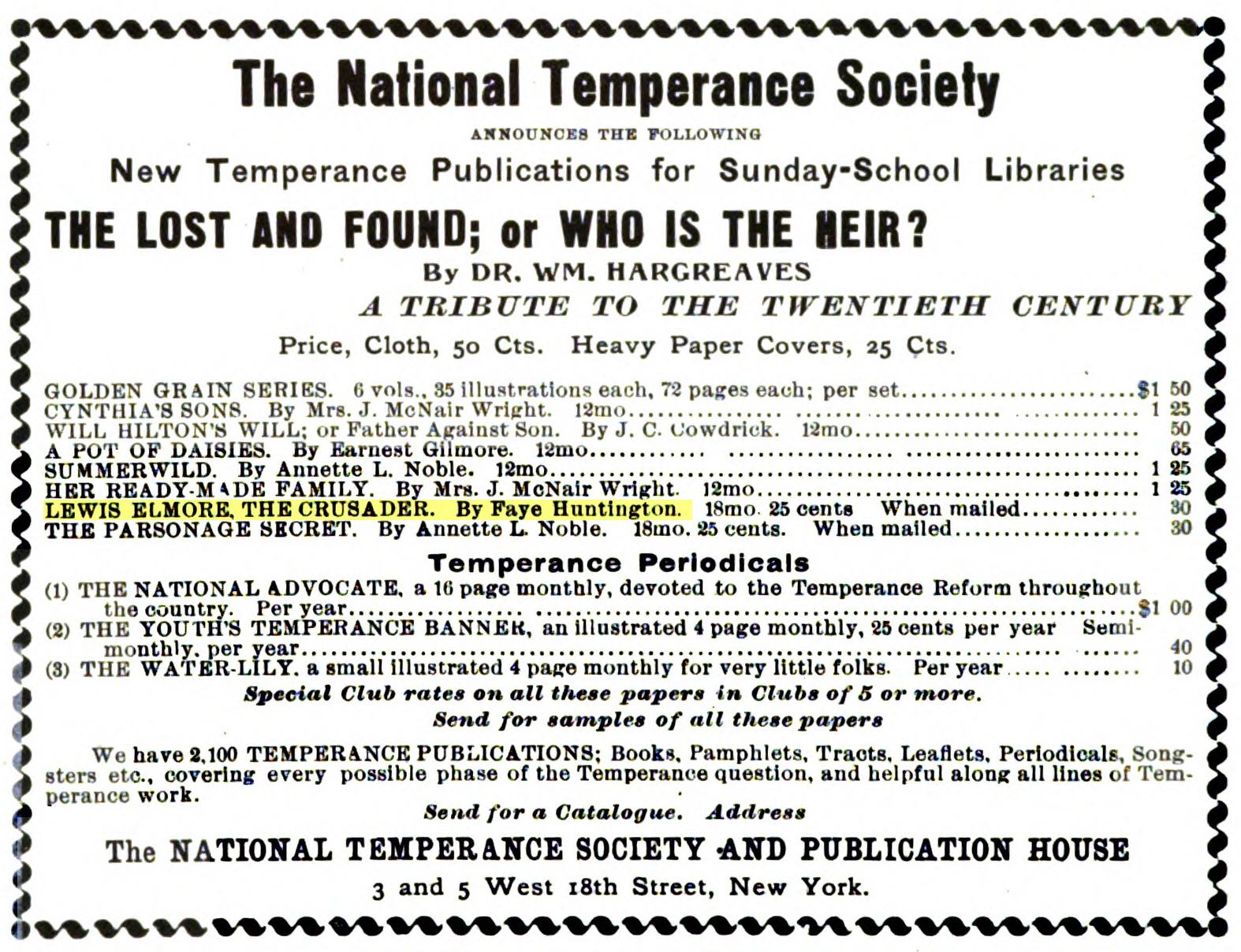
Isabella’s friend, Theodosia Toll Foster (a teacher by profession) also used common incidents to reinforce lessons. Her children’s short story “Up in Mrs. Kelsey’s Attic” (which she wrote under the pen name “Faye Huntington”) is an example of just such a teachable moment.
When Carrie Kelsey helps her mother clean the attic, she discovers a treasure trove of interesting curiosities, including an old spinning wheel. Little does Carrie know that the history of the long-forgotten spinning wheel will teach her a valuable lesson.
YOU CAN READ “UP IN MRS. KELSEY’S ATTIC” FOR FREE!
In 1876 Isabella was firmly established in her new role as editor of The Pansy magazine, although the entire enterprise was a family affair. Isabella’s husband, sister, brother-in-law, and friends all contributed articles and stories to each issue of the magazine.
Isabella’s husband, the Rev. G. R. “Ross” Alden, wrote Bible study lessons, stories, and poems for the magazine. His talent was creating lovely rhymes with messages that were meaningful for both children and adults.
Here’s one of Rev. Alden’s poems that expertly blends a message on kindness with a celebration of the first day of spring:
You can read more of Rev. Alden’s poems in these previous posts:
For more than a quarter of a century, Isabella edited newspapers (like The Pansy), wrote innumerable novels and short stories, taught classes on homemaking and child rearing, served congregations as a pastor’s wife, and designed Sunday school lessons for children. In between all that, she somehow managed to travel extensively.
Sometimes she was called upon to deliver an address at a conference. Other times she was the guest of a ladies’ missionary society or Bible study, where she often read chapters from one of the stories or novels she was working on at the time. (You can read more about that here.)
From the Rome, New York “Daily Sentinel,” August 18, 1898.
When she returned home from one of her many trips, her family gathered around her so she could tell them all about the places she went and the people she met. Her niece, Grace Livingston Hill wrote:
“She saw everything, and she knew how to tell, with glowing words, about the days she had been away so that she lived them over again for us. It was almost better than if we had been along, because she knew how to bring out the touch of pathos or beauty or fun, and her characters were all portraits. It listened like a book.”
One time in particular, Isabella returned home with an extraordinary story. Speaking at the same event had been a woman who was active in many of the same efforts that were of interest to Isabella, such as woman’s suffrage, and the temperance movement. Like Isabella, the woman was well known across the country as a writer and as a much-in-demand public speaker. It was this woman who recounted to Isabella an incident that happened to her.
With the woman’s permission (and with a promise to keep the woman’s identity a secret), Isabella wrote a short story based on the woman’s experience.
The premise of the story is this: A woman traveling by train to a speaking engagement notices an older man and younger woman traveling together on the same train. She quickly realizes she had come upon a couple in the middle of an elopement—and that the young would-be bride is having second thoughts!
How Isabella’s friend intervened (and what happened after) were recounted in Isabella’s story. When it was finished, Isabella sent the story off to a Christian newspaper that was pledged to publish a certain number of her stories each year.
To her surprise, the editor wrote back to ask Isabella if she had considered that the story might suggest to young people “evil ways of which they had never read.”
Can you imagine that? The editor actually worried that Isabella’s story about an elopement might have a negative or “evil” influence on the young people who read it!
In the end, Isabella withdrew the story, locked it away, and forgot all about it. Then, in the late 1920s, she came across the old manuscript and decided to expand the story into a novel.
The result was An Interrupted Night, and the story’s lead character of Mrs. Mary Dunlap was based on Isabella’s friend and the unusual events she told Isabella about decades before.
An Associated Press newspaper photo of Isabella in her later years.
By the time she finished writing the book and submitted it to a publisher, Isabella was in frail health. When the publisher asked her to make some edits to her manuscript, Isabella’s niece, Grace Livingston Hill, stepped in to help her “put it into final shape.”
The book was released in the fall of 1929 with a decidedly modern-looking cover:
And it was received by a decidedly modern audience that took the story’s premise of an eloping couple in stride. Isabella later wrote that she “exploded with laughter” when she thought about how much the world had changed in the years since she first wrote the story.
Now An Interrupted Night is available for twenty-first century readers to enjoy with a brand new cover:
Mary Dunlap is on her way to a speaking engagement when the train on which she travels experiences engine trouble and must make an unexpected stop for the night. While frustrated by the delay, Mrs. Dunlap quickly realizes a couple on the train is in the middle of an elopement—and the would-be bride is having second thoughts! Drawing on God’s strength, Mrs. Dunlap intervenes; but can she convince the young woman to abandon her plan and return home to her mother before it’s too late?
An Interrupted Night is now available from The Pansy Shop, along with novels by Rev. Charles M. Sheldon, Mary McCrae Culter, and other Christian authors in Isabella’s circle of family and friends. Click on the tab in the menu above, or click here to check out The Pansy Shop!
BY THE WAY …
Who do you think was the “real” Mrs. Mary Dunlap? Frances Willard or Emily Huntington Miller Perhaps Harriett Lothrop (who wrote as “Margaret Sidney”)? Leave your guess in the comments below!
In her novel Wise and Otherwise, Isabella wrote about a group of people who lived at a boarding house and the influences they had on each other. One of the residents, Mrs. Sayles, invited her dearest friend Dell Bronson to visit and take a room at the same boarding house. Isabella describes their reunion this way:
Mrs. Sayles went about during the rest of that day with very shining eyes, and very happy, expectant face, which was not shaded in the least when on the morrow she had been sitting for half an hour close beside her friend, and was now with her in her dressing-room, waiting while the rich masses of brown hair were being smoothed and braided into shape.
Isabella knew whereof she wrote. Like Dell Bronson, Isabella also had rich masses of brown hair that she wore in a braid, arranged at the back of her head.
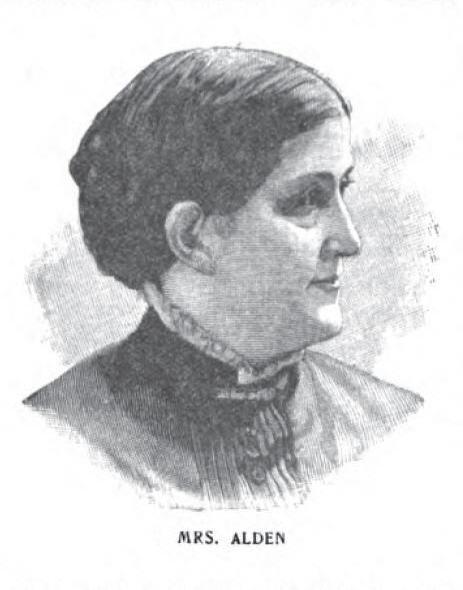
A publicity image of Isabella, drawn from a photo of her when she was about age 30.
Her niece, Grace Livingston Hill, admired Isabella’s hair, and described it this way:
Her eyes were dark and had interesting twinkles in them that children loved; her hair was long and dark and very heavy, dressed in two wide braids that were wound round and round her lovely head in smooth coils, fitting close like a cap.
Isabella about age 35
But that wasn’t all Grace admired about her aunt’s hair. She wrote:
When [her hair] was unbraided and brushed out, it fell far below her knees and was like a garment folding her about.
Isabella about age 40
Grace went on to confess:
How I adored that hair and longed to have hair just like it! How I even used in secret to tie an old brown veil about my head and let it fall down my back, and try to see how it would feel to have hair like that. Nobody else in the world looked just as lovely as did she.
Isabella, about age 60.
Isabella kept the same simple yet becoming hairstyle throughout her adult life.
Are you surprised to learn how long Isabella’s hair was? What is the longest length you’ve ever grown your hair?
This month’s free read is a short story by Isabella’s sister, Marcia Livingston.
Grandma’s bedroom is a welcoming place where all the cousins gather to talk; so when two of the cousins plan a shopping trip to the city for new bonnets, of course all the girls—including Grandma—must be consulted! But amid their happy chatter, it only takes a few thoughtless words to wound a spirit and change one life forever.
You can read “Aunt Maria’s Afterwards” for free!
Choose the reading option you like best:
You can read the story on your computer, phone, tablet, Kindle, or other electronic device. Just click here to download your preferred format from BookFunnel.com.
Or you can select BookFunnel’s “email” option to receive an email with a PDF version you can read, print, and share with friends.
It’s difficult to describe how incredibly popular The Pansy magazine was. As the editor, Isabella received hundreds of letters every month from parents and children. Sometimes they wrote in response to a question Isabella posed in an article or story. Sometimes children wrote stories of their own and sent them to Isabella for her feedback.
Other times children confided their problems to Isabella and asked for her advice; others simply wrote to tell Isabella about their day.
In 1891 a little girl named Ida White wrote a letter about her family and home life that Isabella found so charming, she published the entire letter in The Pansy magazine for all her readers to see. Here is Ida’s letter.
Dear Pansy:
My hair has grown out in curls about three inches long all about my face and neck.
We have a little baby at our house, which we call Blue-eyed Pansy. His name is George Washington.
Both of my little brothers are tongue-tied, and have two toes on the same foot, grown together. They are as much alike as twins could be, only one is nine years, and the other three months old. Mamma took him to church last Sunday and he squealed; she took him out in the hall, and he squealed there; then she took him out in the yard, and gave him a roll on the grass. He cannot talk, but he has heard the word “look” so much, that he tries to say it, or seems to.
We have a little dog named “Tip.” He is about the size (and my sister thinks he is almost as sweet) as a pound of yellow sugar. We have four little kittens; their names are Adams, Lincoln, Jefferson, and Grant. We live on a farm in a two-story house, a mile and a half west of the village. We have two hundred little chickens.
A little oriole built its nest on a tree in our front yard; then a cuckoo stole the nest, and they brought up their families together. We have pansies blooming on the north side of the house. We have flowers from March till frost; and plenty of beautiful little hummingbirds, and innumerable bumble-bees.
I have an uncle living in California that mamma and I never saw; when he comes to see us, I will tell you about California. I would like to go to New York, and to Niagara Falls, and to see the ocean.
I think it is real good and kind of you to read other people’s children’s scratching, and give them a chance to write; and I love you for it. I hope your Ray will live till he is a man, for I think he will be a good and benevolent gentleman. You may publish my letter if you want to.
Good-by, Ida White.
In the last paragraph of her letter, Ida mentioned Isabella’s son “Ray.” At the time, Raymond Alden was three years old and the apple of Isabella’s eye. She often shared little stories in the magazine about his antics and mentioned him when she replied to children’s letters (“No, we haven’t any dog; but our Ray, whenever we ask him what he would like to have for a birthday present, says, “A big, black dog.”).
By all accounts, Ida’s wish came true, for Raymond Alden grew up to be a well-loved, well-respected and extremely “benevolent gentleman.”
Reviews and giveaways for Christian fiction and sweet, clean fiction. Bringing readers information on great stories and connecting authors with their readers.