The True Gentleman

Isabella’s primary purpose in writing her stories and novels was to win souls for Christ. But she also wrote to inspire readers to simply be better people.

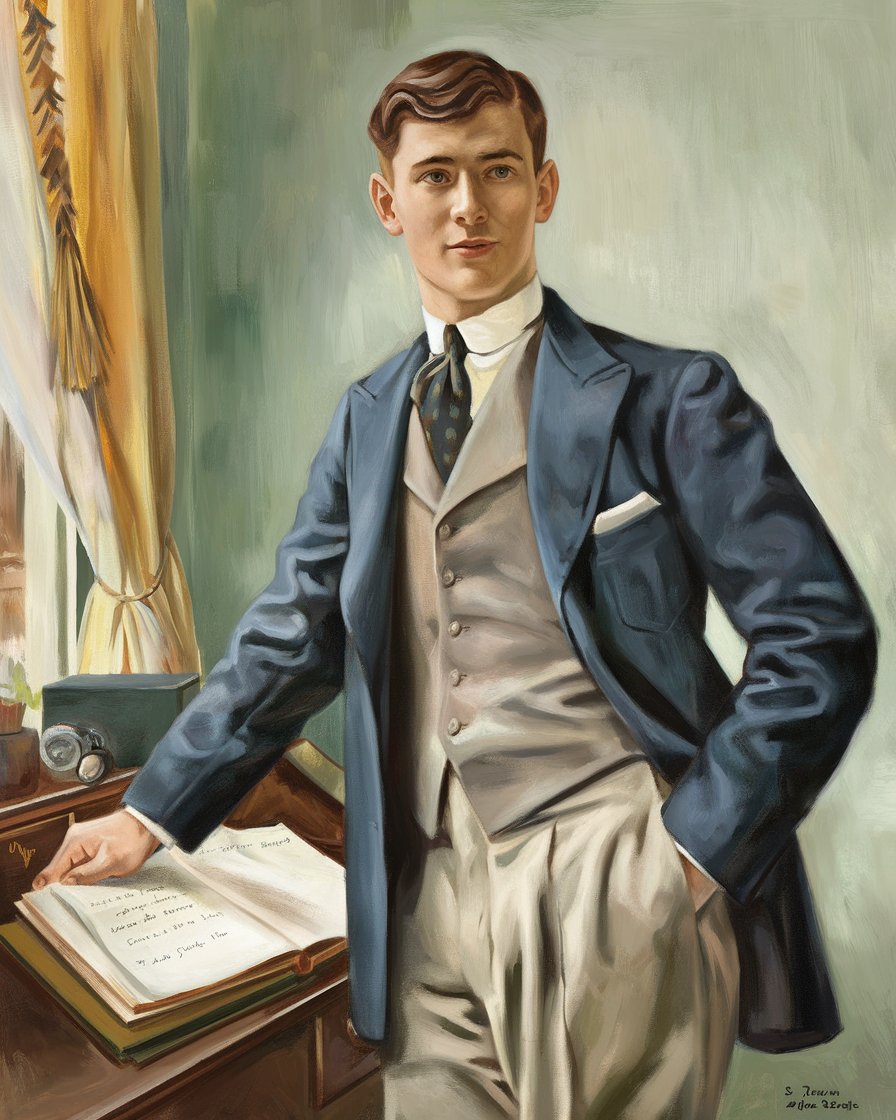
Illustration of a young man dressed in the clothes worn about the year 1910. He is standing at a desk near a window. He has one hand in his trouser pocket; with his other hand  he holds a book open on the top of the desk.

During Isabella Alden’s lifetime, there was no higher compliment you could pay a man than to call him a “gentleman.” So it’s no surprise that the main male characters in Isabella’s stories—young or old, rich or poor—exhibited many of the characteristics that defined a gentleman.

They had strong moral principles. They were courteous and considerate. They had good manners, a desire to learn and understand the world, and they were willing to help and be kind to others.

For Isabella, a gentleman’s character was closely tied to his Christian beliefs. She illustrated that premise in this scene from her novel, Her Associates Members:

As she walked back and forth thinking her troubled thoughts, she heard footsteps approaching, and was surprised to see Uncle Tommy returning.

“Why, Uncle Tommy,” she said, going to the gate to speak to him; “are you coming back? I thought you had started homeward for the night. Have you seen my charge to her own door already?”

“No, I didn’t see her to the door, ma’am; she met with someone whose company suited her better than mine, and said I need not trouble further, though it would have been no trouble at all, of course.”

“Met someone? Did she meet a friend?”

“Aye, and he turned and walked with her, and seemed glad of the chance, and she likewise, or at least willing; so there was nothing for me to do but turn and leave them.”

“A gentleman was it, Uncle Tommy?”

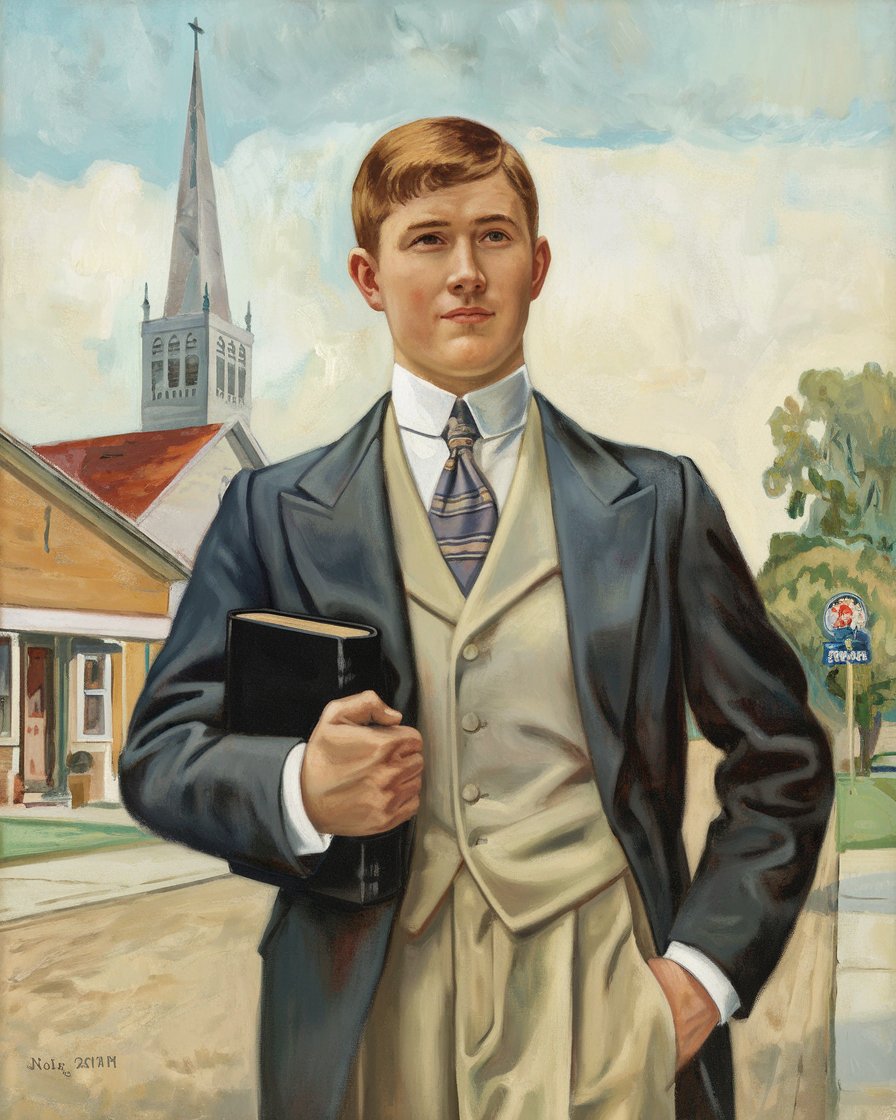
Illustration of a young man dressed in clothing from about the year 1910. He stands outside with one hand in his trouser pocket and the other holding a Bible. Behind him is a church with a tall steeple.

“Aye, at least that is what he calls himself. I make no doubt there might be two opinions about that.”

 “What is a gentleman?” she asked, more for the purpose of seeming to be friendly with the old man, than because she was interested in his reply.

“Well,” said Uncle Tommy, straightening himself in the moonlight, “there might be different opinions about it; looking on at folks, I’ve no kind of doubt that there are; but if you ask for my views, why, according to my way of thinking, there is only one kind of true gentleman, and that is a man who is keeping to the road He traveled, just as near as he can.”

Not only did Isabella write about gentlemanly behavior, she also shared other authors’ writings that touched on the subject. In one of the magazines she edited, Isabella published this brief essay:

Banner showing a gentleman's top hat and cane with the words "The True Gentleman" printed across the top.
The true gentleman is the man whose conduct proceeds from good will and an acute sense of propriety, and whose self-control is equal to emergencies; 

. . . who does not make the poor man conscious of his poverty, the obscure man of his obscurity, or any man of his inferiority or deformity;
. . . who does not flatter wealth, cringe before power, or boast of his own possessions or achievements;
. . . who speaks with frankness, but always with sincerity and sympathy, and whose deed follows his word;
. . . who thinks of the rights and feelings of others rather than of his own;
. . . who appears well in any company, and who is the same at home what he seems to be abroad;
. . . a man with whom honor is sacred and virtue is safe.

John Walter Wayland

In today’s world of social media, movies, and television shows that encourage people to behave badly, it’s sometimes difficult to remember there was once a time when honor, honesty and kindness were admired traits. Thankfully, we have Isabella’s stories and novels to remind us of those days.

Do you know someone you would consider a “true gentleman”?

Do you think that being a gentleman has gone out of style?

Isabella and the Interrupted Night

For more than a quarter of a century, Isabella edited newspapers (like The Pansy), wrote innumerable novels and short stories, taught classes on homemaking and child rearing, served congregations as a pastor’s wife, and designed Sunday school lessons for children. In between all that, she somehow managed to travel extensively.

Sometimes she was called upon to deliver an address at a conference. Other times she was the guest of a ladies’ missionary society or Bible study, where she often read chapters from one of the stories or novels she was working on at the time. (You can read more about that here.)

Newspaper clipping of an article titled "W.C.T.U. Day." Monday, Aug. 22, will be W.C.T.U. day at the Central New York Assembly, Summit Park. The program follows: 10:30 Crusade Psalm, crusade hymn and prayer; music; conference, Department Work, led by county president; Woman and Temperance, Mrs. G. R. Alden (Pansy); 12, noontide prayer; music. Afternoon - Music; The Saloon a National Problem Rev. Stanley B. Roberts; 2:45, music; medal contest; music; report of judges. Mrs T. M. Foster is county president of the W. C. T. U. and Mrs. L. T. Sherrill musical director.
From the Rome, New York “Daily Sentinel,” August 18, 1898.

When she returned home from one of her many trips, her family gathered around her so she could tell them all about the places she went and the people she met. Her niece, Grace Livingston Hill wrote:

“She saw everything, and she knew how to tell, with glowing words, about the days she had been away so that she lived them over again for us. It was almost better than if we had been along, because she knew how to bring out the touch of pathos or beauty or fun, and her characters were all portraits. It listened like a book.”

One time in particular, Isabella returned home with an extraordinary story. Speaking at the same event had been a woman who was active in many of the same efforts that were of interest to Isabella, such as woman’s suffrage, and the temperance movement. Like Isabella, the woman was well known across the country as a writer and as a much-in-demand public speaker. It was this woman who recounted to Isabella an incident that happened to her.

With the woman’s permission (and with a promise to keep the woman’s identity a secret), Isabella wrote a short story based on the woman’s experience.

The premise of the story is this: A woman traveling by train to a speaking engagement notices an older man and younger woman traveling together on the same train. She quickly realizes she had come upon a couple in the middle of an elopement—and that the young would-be bride is having second thoughts!

How Isabella’s friend intervened (and what happened after) were recounted in Isabella’s story. When it was finished, Isabella sent the story off to a Christian newspaper that was pledged to publish a certain number of her stories each year.

To her surprise, the editor wrote back to ask Isabella if she had considered that the story might suggest to young people “evil ways of which they had never read.”

Can you imagine that? The editor actually worried that Isabella’s story about an elopement might have a negative or “evil” influence on the young people who read it!

In the end, Isabella withdrew the story, locked it away, and forgot all about it. Then, in the late 1920s, she came across the old manuscript and decided to expand the story into a novel.

The result was An Interrupted Night, and the story’s lead character of Mrs. Mary Dunlap was based on Isabella’s friend and the unusual events she told Isabella about decades before.

An Associated Press newspaper photo of Isabella in her later years.

By the time she finished writing the book and submitted it to a publisher, Isabella was in frail health. When the publisher asked her to make some edits to her manuscript, Isabella’s niece, Grace Livingston Hill, stepped in to help her “put it into final shape.”

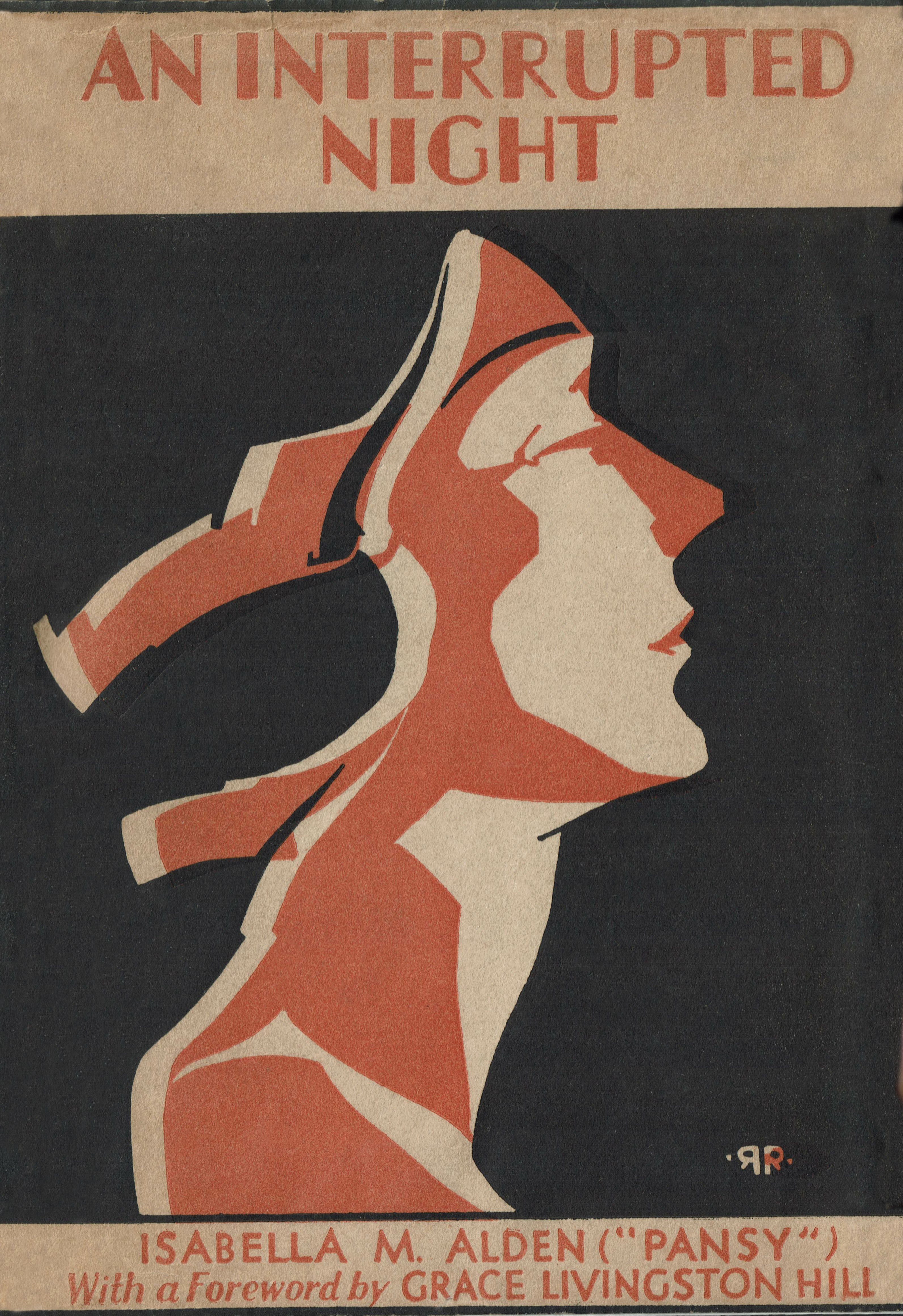
The book was released in the fall of 1929 with a decidedly modern-looking cover:

Book cover illustrated in the art deco style of the 1920s with a highly stylized profile of a woman's face drawn in tan and orange set against a plain black background. Set in orange type at the top the title "An Interrupted Night." The same orange type is at the bottom with the author's name.

And it was received by a decidedly modern audience that took the story’s premise of an eloping couple in stride. Isabella later wrote that she “exploded with laughter” when she thought about how much the world had changed in the years since she first wrote the story.

Now An Interrupted Night is available for twenty-first century readers to enjoy with a brand new cover:

Book cover showing a young woman carrying a suitcase striding purposefully down the boarding platform of a train station while other people enter and exit nearby train cars.

Mary Dunlap is on her way to a speaking engagement when the train on which she travels experiences engine trouble and must make an unexpected stop for the night. While frustrated by the delay, Mrs. Dunlap quickly realizes a couple on the train is in the middle of an elopement—and the would-be bride is having second thoughts! Drawing on God’s strength, Mrs. Dunlap intervenes; but can she convince the young woman to abandon her plan and return home to her mother before it’s too late?

An Interrupted Night is now available from The Pansy Shop, along with novels by Rev. Charles M. Sheldon, Mary McCrae Culter, and other Christian authors in Isabella’s circle of family and friends. Click on the tab in the menu above, or click here to check out The Pansy Shop!

BY THE WAY …

Who do you think was the “real” Mrs. Mary Dunlap? Frances Willard or Emily Huntington Miller Perhaps Harriett Lothrop (who wrote as “Margaret Sidney”)? Leave your guess in the comments below!

Isabella’s Glory

In her novel Wise and Otherwise, Isabella wrote about a group of people who lived at a boarding house and the influences they had on each other. One of the residents, Mrs. Sayles, invited her dearest friend Dell Bronson to visit and take a room at the same boarding house. Isabella describes their reunion this way:

Mrs. Sayles went about during the rest of that day with very shining eyes, and very happy, expectant face, which was not shaded in the least when on the morrow she had been sitting for half an hour close beside her friend, and was now with her in her dressing-room, waiting while the rich masses of brown hair were being smoothed and braided into shape.

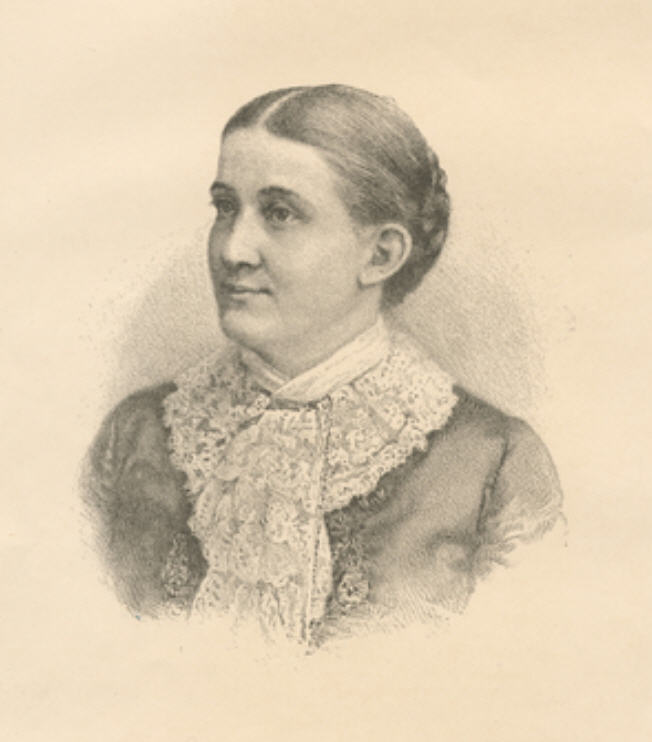
Isabella knew whereof she wrote. Like Dell Bronson, Isabella also had rich masses of brown hair that she wore in a braid, arranged at the back of her head.

A pencil and charcoal drawing of Isabella as a young woman. Her hair is parted in the middle and drawn to the back of her head where it is arranged in a braided coil.
A publicity image of Isabella, drawn from a photo of her when she was about age 30.

Her niece, Grace Livingston Hill, admired Isabella’s hair, and described it this way:

Her eyes were dark and had interesting twinkles in them that children loved; her hair was long and dark and very heavy, dressed in two wide braids that were wound round and round her lovely head in smooth coils, fitting close like a cap.

Black and white photo of Isabella wearing her hair parted in the middle and drawn smoothly back into a braided bun at the back of her head.
Isabella about age 35

But that wasn’t all Grace admired about her aunt’s hair. She wrote:

When [her hair] was unbraided and brushed out, it fell far below her knees and was like a garment folding her about.

Black and white photo of Isabella in profile. Her hair is parted in the middle and smoothed back into a braided bun at the back of her head.
Isabella about age 40

Grace went on to confess:

How I adored that hair and longed to have hair just like it! How I even used in secret to tie an old brown veil about my head and let it fall down my back, and try to see how it would feel to have hair like that. Nobody else in the world looked just as lovely as did she.

Black and white photo of Isabella Alden in profile, showing her hair parted in the middle and combed back into a braided bun at the back of her head.
Isabella, about age 60.

Isabella kept the same simple yet becoming hairstyle throughout her adult life.

Are you surprised to learn how long Isabella’s hair was? What is the longest length you’ve ever grown your hair?

New Free Read: Doctor Dunmore’s Prayers

If the surname “Dunmore” sounds familiar to you, you’ve probably read Isabella Alden’s novel, Miss Dee Dunmore Bryant.

In that book about the adventures of the Bryant family, Judge Dunmore was a kind and generous man who befriended the Bryant children and helped improve their fortunes.

Isabella must have liked the surname “Dunmore,” because six years earlier, she used the same name in a short story she published in The Pansy magazine. In the short story, the kindly and wise gentleman named Dunmore was a physician who went above and beyond his Hippocratic Oath to heal the heart of a badly injured patient.

“Doctor Dunmore’s Prayers” is this month’s free read.

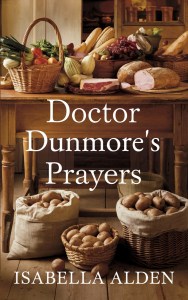
Book cover of an old-fashioned kitchen from about 1900 with wooden cupboards. In the foreground is a wooden table covered with baskets and plates of fruits, vegetables, and breads. On the floor beneath the table are bags and baskets of potatoes. The book title is "Doctor Dunmore's Prayers." The author name is "Isabella Alden."

When Mr. Greyson is badly injured at work, Dr. Dunmore does all he can to repair the man’s damaged body and orders him to bed. But with no income, the Greyson family is soon in dire straits and desperate for help. What else can the doctor do to help restore the man’s health and faith?

You can read “Doctor Dunmore’s Prayers” for free!

Choose the reading option you like best:

You can read the story on your computer, phone, tablet, Kindle, or other electronic device. Just click here to download your preferred format from BookFunnel.com.

Or you can select BookFunnel’s “email” option to receive an email with a PDF version you can read, print, and share with friends.

New Free Read: Her Own Way

In 1908 Isabella wrote a novel called Her Own Way.

Like her novels Interrupted, The Long Road Home, and Wanted, Her Own Way is very much a story for adults. It is also a cautionary tale about the trouble that can come when believers place their trust in another person rather than in God.

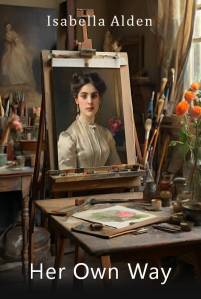
Book cover showing the interior of an artist's studio, with a table filled with sketches, paint brushes. On an easel is a portrait of a beautiful young woman wearing a high-neck, long-sleeved gown from about 1908.
.

Mrs. Eastman has always been proud of her beautiful, head-strong daughter Carol and the lovely Christian woman she’s become. Although Carol’s willful ways have caused difficulties in the past, Mrs. Eastman has always been able to gently lead her daughter back to the fold of the faithful.

But when Carol makes the acquaintance of the new church choir director, Mrs. Eastman soon finds her influence waning, as Carol begins to fall deeper under the spell of a man capable of betraying them all.

You can read Her Own Way for free!

Choose the reading option you like best:

You can read the story on your computer, phone, tablet, Kindle, or other electronic device. Just click here to download your preferred format from BookFunnel.com

Her Own Way is not at all like the novels Isabella wrote early in her writing career. What did you think of the book? Do you think the story has relevance for today’s readers?

The Domestic Problem

Isabella Alden believed that young Christian women who must earn a living would—for the most part—be better off doing so by hiring themselves out as domestic helpers in Christian homes, rather than taking jobs in factories or stores.

Illustration of a young woman about 1910 wearing a long-sleeved, floor-length dress over which is an apron. In one hand she holds a canned grocery item. With her other hand she gestures toward a large, ornately-decorated cast-iron stove. Beside her is a kitchen work table holding a jar, a bowl, a bucket, a spoon and glass.

She used that idea as the premise for her short story “Their Providence” (which you can read for free by clicking here).

Isabella believed a Christian home offered a safer living environment for a single young woman; and that she would be protected from the coarse worldly influences she would find if she lived in a boarding house.

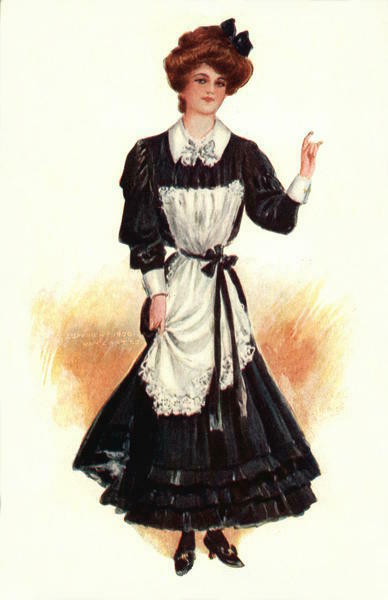
Illustration of a young girl from about 1910. She wears her brown hair up in a loose bun with a large black bow. Her floor-length dress is black with a white collar, cuffs, and a white lace-trimmed apron.

She also believed that living with a Christian family would reinforce the beliefs and principles Christian girls grew up with, such as keeping the Sabbath holy, regularly attending church, having daily Bible readings, and engaging in mission work.

Isabella knew the arrangement could be problematic. In her novel Ester Ried’s Namesake she wrote about a head-strong, quick-tempered young heroine who was hired as a live-in domestic helper for a Christian family that often treated her very poorly. But in true “Pansy” fashion, the characters in her novel eventually recognized their shortcomings and, with God’s help, learned to forgive and influence each other for good.

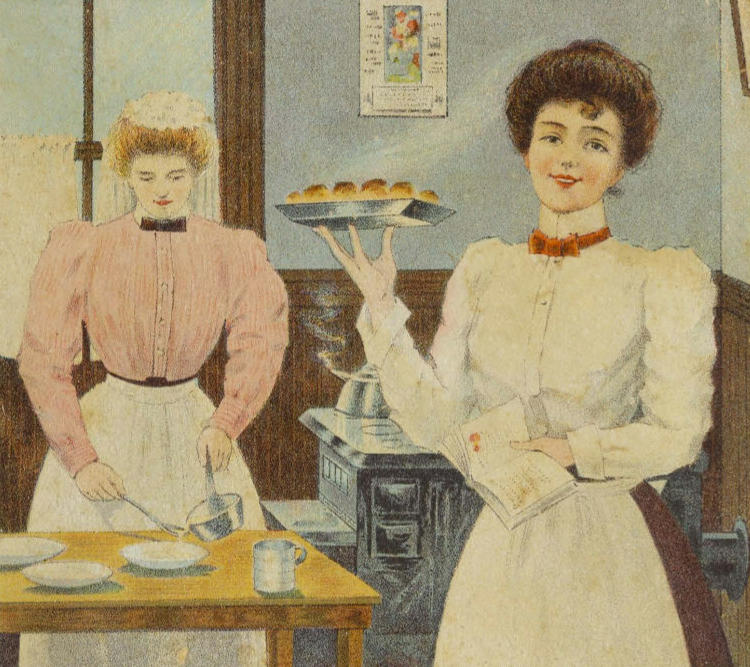
Illustration of a woman about 1900 wearing a high-necked, long-sleeved shirt and a brown skirt, over which is a white apron. In one hand she holds a recipe book; in the other she holds a pan of backed bread. Behind her another woman wearing a servant's cap pours a liquid from a saucepan into bowls placed on a table. Behind them is a large cast-iron stove. On top of the stove is a kettle with steam coming from its spout.

She also shared her idea of young women working as domestic help in some of her speaking engagements and in magazine articles she wrote.

But the concept was not always a welcome one. In 1911 Isabella received a letter from a young woman in Ohio who disagreed with Isabella’s advice.

I have recently read, in a paper or yours, a remark about “lovely Christian homes” where self-respecting girls could earn their living as helpers. I wonder if you really have any idea how these “lovely” people treat their hirelings? I think you had in mind the comfort of your well-to-do friends, rather than the girls whom you advised.

When you talk about girls finding good “homes” I don’t think you stop to consider both sides. What does “home” mean, if not a place where one has entire freedom to come and go, to plan one’s work, and work one’s plans?

I cannot see how any self-respecting person who has always had her own home could live as a hireling in other people’s homes. Could you? My observation has shown me that a condescending manner is the very best that even “lovely Christian people” have for their domestic helpers.

—Ohio.

Isabella had heard such criticisms before, some of which were “kind and sensible” and others “supercilious and snappy.” Here’s how she responded to the letter writer from Ohio:

“Notwithstanding the letter writer’s opinion, I believe I had in mind the comfort of both employer and employed when I urged self-respecting girls who had their living to earn to choose an average Christian home in which to earn it, in preference to factories, shops, and other public places. You, my dear girls, who have written to me, are starting this argument from the wrong platform.

“The foundation question is not, “How shall I secure me a home where I can have entire freedom to come and go, to plan my own work, etc.” but, “Is doing housework in other people’s homes a good and respectable way for a young woman to earn her living, and can she in this way hope to secure the reasonable conveniences and comforts of a home?”

“To this question I reply with an unhesitating Yes.

Illustration of a young woman about 1895. She wears a black dress with a high collar and puffed sleeves, and a white apron. She is pouring liquid from a copper pan into a soup tureen that rests on a kitchen table beside a variety of vegetables.

“The only—or almost the only—work open to women in which careful previous training is not demanded, nor even expected, is domestic service. Here the demand has been so much greater than the supply that absolutely untrained and ignorant help has rushed in and created the conditions that now exist.

“The attitude of the average employer toward her servant is endurance: she is unable to commend her work, she can only tolerate it. She has learned to conduct herself accordingly; and the multitude of decently educated, reasonably well brought up American girls who cannot be artists nor teachers nor stenographers, but must, nevertheless, earn their living, have, because of the above state of things, given this form of work a wide berth and rushed into shops and offices and factories, instead.

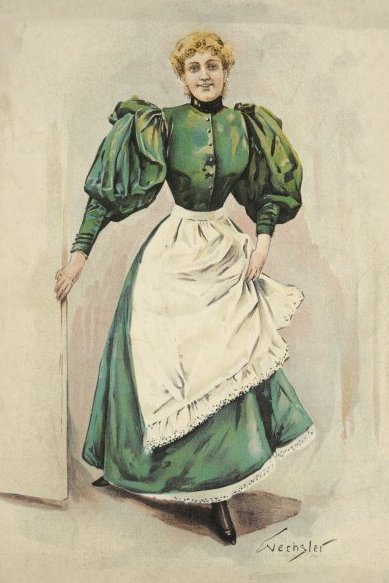
Illustration of a young woman from about 1895, wearing a green dress with large puffed sleeves. The skirt is floor length and over the skirt she wears a white apron tied around her waise.

“Now, let us look for a moment at one of the exceptions:

“She is an American girl with a partial high school education. She planned to be a teacher, but something happened. Illness, or sudden reverses, or unexpected demands, have made it necessary for her to become an immediate wage-earner. Times are hard and openings few; as a last resort she resolves upon trying domestic service, with every nerve in her body shrinking from the ordeal, because of what she has heard and seen and fancied.

Illustration of a young woman bending over the railing of a staircase. In one hand she holds a bar of soap. In the other hand she holds a cloth she uses to clean the spindles and post of the staircase.

“The woman who employs her (knowing she lacks previous training or recommendations) does so because she is in straits and must have somebody right away. All she knows about the applicant is that she looks “uppish” and as though she would feel above her work; which is precisely what the girl does feel. She is all ready to have her worst fears confirmed, and they are confirmed. She finds a thousand things to flush her cheeks with indignation.

“She resents the “orders” given out by the hurried and worried mistress who yet is not mistress of herself. She resents the poorly furnished room, the solitary meals at the section table, the eternal use of her given name. These and a dozen other grievances keep her in a constant state of irritation and resentment. She cannot do even her best—and none know better than she that, because of the lack of training, her best is not very good, for she is too much tried to give real heart to her work.

Illustration of woman holding a bottle of furniture polish in one hand. In her other hand she uses a cloth to polish the top of a dining table.

“What wonder that, after a short trial, the exasperated mistress and the equally exasperated maid separate, the one to be more convinced than ever that the word “help” as applied to the kitchen is a misnomer, and the other to write letters to someone to prove the impossibility of self-respecting girls earning their living in domestic service?

“For the sake of my correspondent who thinks I am theorizing and do not understand the situation, I want to explain that I have been a housekeeper for forty-five years; that I have been studying this problem carefully in my own home and the homes of certain of my friends for more than a quarter century; that I have known intimately all sorts of “hired girls,” and have helped a few of them to experiment in all sorts of homes.

“I have had the would-be fine lady who was an intolerable nuisance; I was glad when I saw her depart, and endured with what patience I could the unkind and untrue things she said about me; though I really believe they were true from her standpoint; she had so warped a view of the whole situation that she was incapable of even listening correctly.

Illustration of young woman wearing a white apron over an orange dress, and a white dusting cap with an orange bow over her hair. She holds a large feather duster.

“I have had all grades between, and I have had the real lady who came into my kitchen in appropriate dress and with quiet voice and quiet ways, and submitted to the regulation that obtained—many of which must have been new and trying to her—without the raising of an eyebrow to hint that she had all her life been used to different things.

“She came to me without flourish of trumpets, as an ordinary domestic servant at common wages; and when she left me after a year of invaluable helpfulness, it was as a tried and trusted friend, whom every member of my family not only respected, but enjoyed; and whom, as the years pass, we are glad to count as one held close in the bonds of friendship.

Illustration of smiling young woman wearing an apron and carrying a tray on which are glasses of juice and three plates of desserts.

“Nor was she the only “lady” help I have personally enjoyed. Glancing back over the almost half century, I find that five of them stand out in bold relief; strong friends, faithful friends, my “servants” still, in the same sense that I am theirs; and all of us trying to pattern after Him who said, “I am among you as he that serveth.”

“My correspondent asks if I “could live as a hireling in other people’s houses?” To which I reply, I do not know; I have never had the opportunity of trying myself in this way. It would all depend upon whether I was strong souled and resolute and sweet-spirited enough to brave present conditions and help to make them better.

“Yours for service,
Pansy.”

What do you think of Isabella’s idea?

Do you think you could ever “live as a hireling in other people’s houses?”

You can read Isabella’s short story “Their Providence” for free by clicking here.

Read Isabella’s novel, Ester Ried’s Namesake by clicking here.

Don’t Miss These Free Reads!

September was a big month here on the blog, with plenty of new Free Reads by Isabella Alden!

If you missed any of the Free Read announcements, here’s a recap of all the new short stories and novels that are now available:

Click on any of the links below to go to BookFunnel.com where you can read the stories on your computer, download them to your favorite device, or print and share them with others.

Nell Jenkins

Pansy’s Advice to Readers

Warren McIntyre’s Bride

Poems of Faith from The Pansy

Honor Bound

Miss Abbott’s Share

A Five-Cent Investment

Want to read even more classic Christian fiction? You can click on the “Free Reads” tab in the menu above to find more free stories by other authors. Enjoy!

New Free Read: A Five-Cent Investment

In 1893, when Isabella’s books were at the height of their popularity, a newspaper article about her mentioned that if forced to choose one word to describe Isabella’s work, that word would be “Help.”

The writer of the article made a very insightful observation. Typically, the main characters in Isabella’s books were, indeed, helpers. No doubt Isabella made them so as a reflection of her own belief that every effort counts. In her stories, no contribution was too small, and no effort was too little, as long as her characters did their best and made the most of what God had given them.

Today’s free read reflects that theme, when Mrs. Burns (one of the story’s main characters) asks the question, “How can I turn a small donation to help missions into a large and meaningful contribution?”

When Mrs. Burns is given a five-cent budget with which to help the cause of church missions, she can’t believe her ears. Five cents! What could she possibly accomplish with a small, insignificant nickel?

But with God’s help and a little imagination, Mrs. Burns soon discovers that her five-cent investment can accomplish great things.

You can read “A Five-Cent Investment” for free!

Choose the reading option you like best:

You can read this short story on your computer, phone, tablet, Kindle, or other electronic device. Just click here to download your preferred format from BookFunnel.com.

Or you can select BookFunnel’s “My Computer” option to receive an email with a version you can read, print, and share with friends.

Reader Tip: As you read the story, be on the look-out for one of Isabella’s most beloved characters from The Chautauqua Girls series to make a brief “cameo” appearance!


This post is part of our 10-Year Blogiversary Celebration! Join us every weekday in September for another fun drawing, giveaway or free read!

The Power of Prayer Giveaway

Isabella was a strong believer in the power of prayer. She once wrote:

Prayer is the pulse of the renewed soul; and the constancy of its beat is the test and measure of the spiritual life.

One of Isabella Alden’s talents was creating characters who discovered for themselves the power of prayer in their lives. Some of her characters turned to prayer in times of trouble or to heal a loved one of illness; other characters spoke to God as naturally and as often as they would speak to a close friend or family member.

As wealthy Miss Mary Brown discovered in The Browns at Mount Hermon:

“I would give—oh, what would I not give!—to be able to talk to God as those girls did this afternoon, with the assurance which they evidently had that he heard and cared!”

Book cover for The Brown at Mount Hermon by Isabella Alden showing a young woman holding a letter to her chest with one hand and a hand-addressed envelope with her other hand, while wearing a thoughtful expression.

In her own life Isabella knew the power of prayer. It was through the prayers of her sister Marcia that Isabella chose Christ as her Saviour (read more about that here).

As a busy author and public speaker, Isabella began each day with prayer “to ask God’s help and blessing on the work to be done.” (You can read about that here.)

And in her journal she regularly wrote down prayer requests, notes about sermons, favorite Bible verses, and lessons learned.

The Giveaway:

We’re giving away three “Power of Prayer” journal packages to readers of Isabella’s blog!

Photo of Journal and sticker pack.

Each package includes a lovely prayer journal with . . .

Journal cover. "Good Morning God Prayer Journal" is printed in white against a green background, surrounded by a border of white and yellow flowers.

. . . a daily two-page spread that includes a verse of Scripture, space to record your meditations and prayers, and a generous area to reflect on God’s goodness.

Open journal. Page on left has a text box heading: Remember your Father knows exactly what you need even before you ask Him! Matthew 6:8. Below the text box is the word Prayer and several lines for writing. The right page has the heading "God is good because ..." with several lines for writing.

The set also includes a coordinating sticker pack to help inspire your quiet moments of reflection.

Image of package showing sample stickers that say "It is well with my soul," "Grace," "Have Faith," and "Salt & Light."

To enter the drawing, just leave a comment below or on Isabella’s Facebook page no later than midnight (EDT) on Thursday, September 28.

The three winners will be announced on Friday, September 29. Good luck!


This post is part of our 10-Year Blogiversary Celebration! Join us every weekday in September for a fun drawing, giveaway, or Free Read!

A Golden Text Coloring Book

If you’ve read Isabella’s novel The Little Card, you’ll remember that Teenie Burnside used her artistic talents to draw and embellish a little card on which she had written one of the Bible’s Golden Texts. Teenie hoped that by sharing the cards she could encourage someone to read God’s Word.

Book cover for The Little Card showing a young woman standing at an easel, wearing a blue smock over her clothes. In one hand she holds an artist's brush; in the other she holds a palette with dabs of colored paint.

But when Teenie’s health prevented her from fulfilling that dream, the girls in her Sunday-school stepped in and began to make more cards. Some were exact copies of the one Teenie made; others were embellished and colored with paint. But no matter their design, the cards all included a Bible verse of God’s promises to us.

Today’s giveaway is a collection of ten Golden Text Bible verses you can color and embellish, just as Teenie and her friends did.

Image of Bible verse written in different fonts surrounded by line drawings of flowers and leaves. "Be SGrong, and let your heart take courage, all you who wait for the Lord."  Psalm 31:24

Just click here or on the image below to download and print the coloring book pages on standard 8-1/2″ x 11″ letter-sized paper.

Cover image with "The Golden Texts; a Bible Verse Coloring Book" printed in gold letters in the center, and large purple, pink, and red flowers bordering the edge of the cover.

if you haven’t read The Little Card, you can read the entire book for free!

Choose the reading option you like best:

To read The Little Card on your computer, phone, iPad, Kindle, or other electronic device, click here to download your preferred format from BookFunnel.com.

Or choose BookFunnel’s “My Computer” option to print the story as a PDF document and share it with friends.


This post is part of our 10-Year Blogiversary Celebration! Join us every weekday in September for a fun drawing, giveaway, or Free Read!