Chautauqua’s Hall of Philosophy

Isabella Alden considered The Hall of Philosophy one of the most beloved locations at Chautauqua Institution.
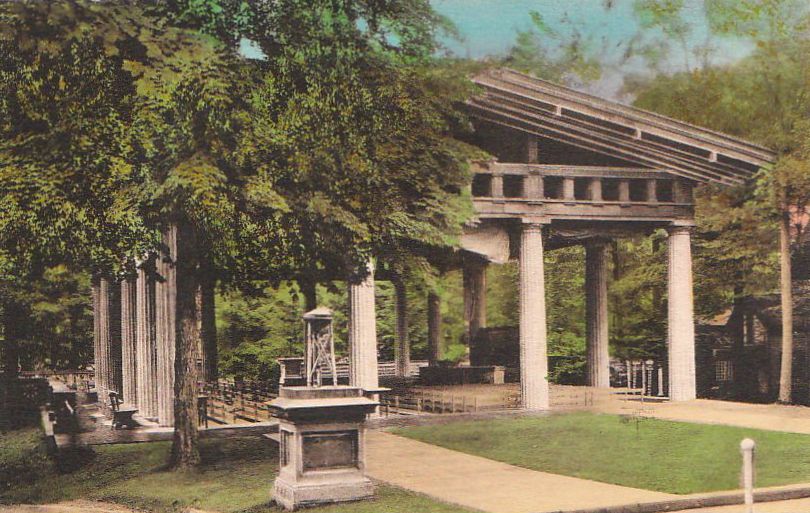
The Hall of Philosophy, viewed from the side

.

The Hall of Philosophy—sometimes called the Hall in the Grove because of its location in idyllic St. Paul’s Grove—was an open-air structure that sat under a canopy of trees that shaded and cooled the Hall during the hot summer months. It was a favorite gathering place for Chautauquans, even when no lectures were held there.

The view from the top of the steps of the Hall of Philosophy; photo courtesy of TripAdvisor.com
A modern view from the top of the steps of the Hall of Philosophy; photo courtesy of TripAdvisor.com

.

If you were a Chautauqua visitor, you could stand at the edge of the Hall of Philosophy and look out upon different views of the grounds. From one vantage point, you’d see the Hall of Christ and the spires of the different denominational chapels.
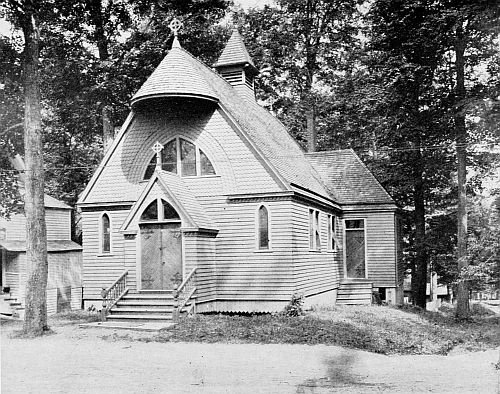
Chapel-Episcopal
The Episcopal Chapel at Chautauqua Institution.
Presbyterian Headquarters building at Chautauqua Institution

.

From another direction you’d see gingerbread-trimmed cottages and inviting expanses of green lawns.
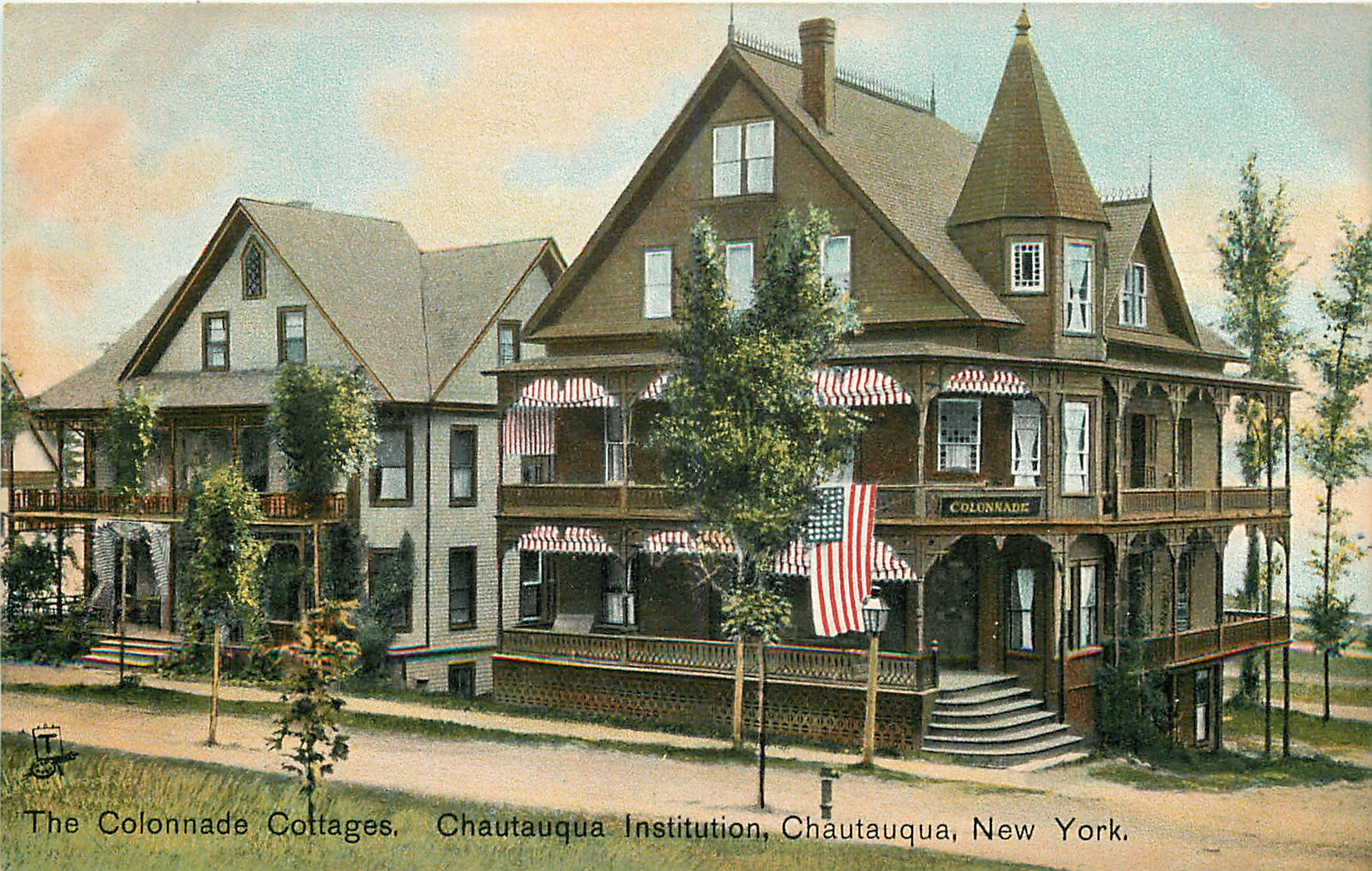
The Colonnade Cottages, 1908.

.

The original Hall of Philosophy was designed by Bishop John Vincent for the Christian Literary and Scientific Circle (C.L.S.C.). Twenty years later, when it was discovered the building needed to be replaced in order to last for future generations, the C.L.S.C. lead a fund-raising campaign and raised the money needed to erect a new Hall of Philosophy in the same location.


When the new concrete floor was poured in 1905, it included 51 different mosaic tiles, each designed by a different C.L.S.C. class, beginning with the class of 1882 (the first class) and ending with the class of 1924. Each tile depicts the class year, name and logo.

The floor plan of the Hall of Philosophy showing the position of the individual CLSC class tiles.

.

For instance, the first C.L.S.C. class of 1882 was called “The Pathfinders.” Their emblem was the nasturtium and their motto was “The truth shall make you free.”

The class of 1915 adopted the name “Jane Addams” and used the American laurel as their emblem. Their motto: “Life more abundant.”
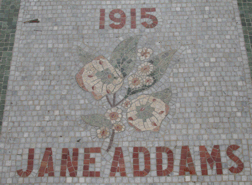
The mosaic tile for the 1915 CLSC class; photo courtesy of TextileFusion.com

Class Tile 1903 from The Chautauquan Vol 72

Class Tile 1908 from The Chautauquan Vol 72

.

Isabella Alden was a member of the 1887 class; her fellow classmates honored her by naming their class the Pansy Class. They used the pansy flower as their emblem and “Neglect not the gift that is in thee” as their motto.

Cover of The Hall in the GroveIsabella paid tribute to the Hall of Philosophy and her own experience with the C.L.S.C. in her novel The Hall in the Grove. The story centers around a diverse group of people who each spend a summer at Chautauqua for different reasons—and each end the summer changed by their experience. The Hall of Philosophy is almost another character in Isabella’s story, for it plays a prominent role in the different characters’ spiritual journeys. (You can click on the book cover to learn more about the novel.)

Thanks to the determination and rallying spirit of the members of the C.L.S.C. the Hall of Philosophy was rebuilt, and is still in use today.

This short video by Chautauqua Institution gives a brief history of the Hall of Philosophy and shows some examples of the C.L.S.C. class tiles:


Clothes Pansy’s Characters Might have Worn

There’s a new Isabella Alden Pinterest board for you to view: “Clothes Pansy’s characters might have worn” is a budding collection of clothing, jewelry, hats and shoes from the time period in which Isabella wrote her books.

This brown suit (from about 1880) might have been similar to the suit Marian Wilbur wore in Four Girls at Chautauqua.

Brown gown

And this delicate gown may remind you of the gown Flossy Shipley ruined in the rain on her first visit to Chautauqua.

Wool Twill Embroidered Dress c 1885

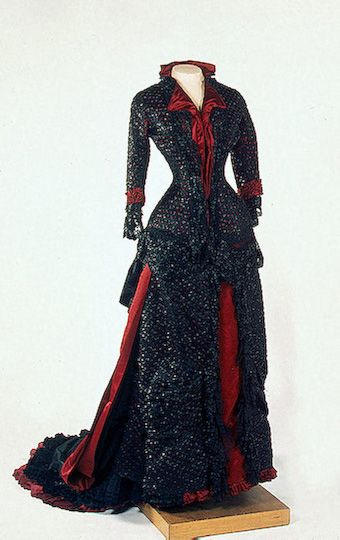
You’ll also see several black gowns that Ruth Burnham might have worn (she never wore any other color) in the book Ruth Erskine’s Crosses.

Ruth Erksine black dress

You’ll find examples of traveling costumes, day dresses, tea gowns, and walking suits, as well as some jewelry, purses, and shoes to help you visualize Isabella’s beloved characters as you read her books. Click here to view Isabella’s Pinterest board now.

The Heroine of the Temperance Cause

Isabella Alden was a great campaigner for the temperance movement. She had seen for herself the consequences of an unregulated alcohol industry. Alcoholic drinks in her time were often far more potent than commercial beer, wine and distilled liquor we’re used to today, making them much more addictive. Sometimes alcoholic beverages were laced with other substances, like cocaine; and alcohol was openly marketed to children.

This short video by documentary film maker Ken Burns describes the influence of  liquor on America at the turn of the Twentieth Century.

.

Isabella’s dear friend Theodosia Toll Foster (whose nom de plume was Faye Huntington) was another tireless worker for the cause of temperance. Many of her novels were written for publication by the National Temperance Society and described the impact of alcoholism on the lives of individuals and communities.

Cover_John Remington MartyrAnd in her own books, Isabella often wove stories around the impact alcoholism had on families. She and her sister Marcia Livingston co-authored the novel, John Remington, Martyr, which chronicled one man’s efforts to fight the power of the alcohol industry and its hold on society.

Isabella, Theodosia and Marcia, as well as Marcia’s daughter, Grace Livingston Hill, were active members of the Women’s Christian Temperance Union. The W.C.T.U. began in 1874 as a “crusade” of 208 dedicated temperance workers.

The Baptist Church in Fredonia, NY. Here on December 15, 1873 208 crusaders met and organized the Women's Christian Temperance Union
The Baptist Church in Fredonia, NY. Here on December 15, 1873 208 crusaders met and organized the Women’s Christian Temperance Union

When Frances Willard was named the W.C.T.U.’s president in 1879, she inherited an organization comprised of several autonomous chapters with no unified action plan to achieve the group’s goal of reforming the distribution and sale of alcohol in America.

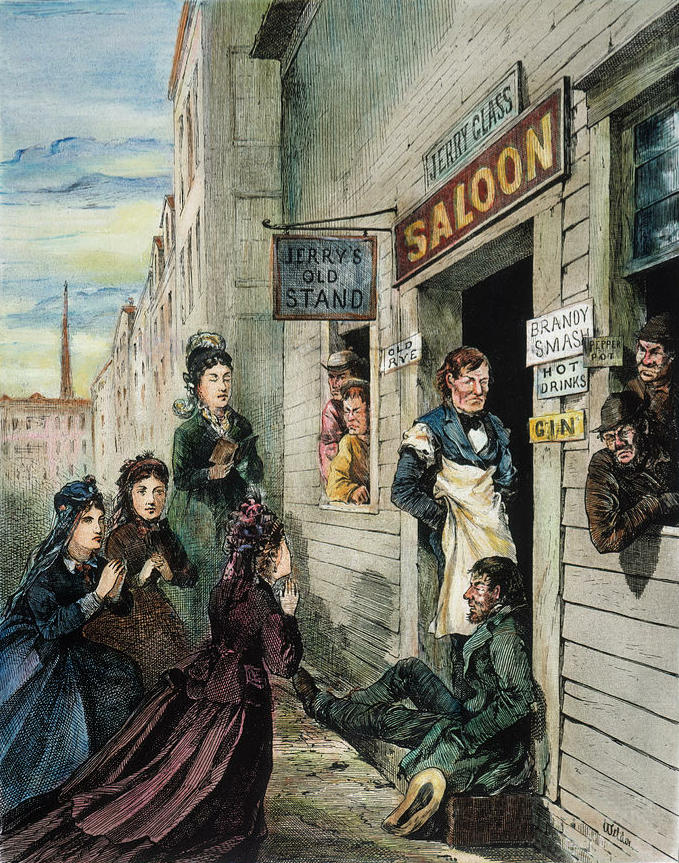
Up to that point, the organization was known for it crusades—bands of women visiting local saloons to pray and ask saloonkeepers to close their doors and stop selling spirits. For the most part, they were seen as teetotaling moral zealots.

An 1874 illustration of crusaders

.

Frances Willard had a different vision for the organization. By profession she was a teacher. She was educated, dynamic, and persuasive; she used those talents to redefine the W.C.T.U. Knowing that America’s high rate of alcoholism was directly related to crime, sexual assault, poverty, and domestic violence, she redirected the organization to focus on social reform and political activism.

Frances Willard in an undated photo

.

She formed alliances with politicians, instilled a sense of sisterhood in W.C.T.U. members, and cultivated powerful and influential allies.

W.C.T.U. card from about 1912

.

Lewis Miller, co-founder of Chautauqua Institution and a multi-millionaire industrialist, was a staunch supporter of the W.C.T.U.; his wife Mary was one of the first members of the Ohio W.C.T.U., a well-organized and militant branch of the organization.

Mina Miller at about age 19

Their daughter Mina recalled how her mother, with other “dauntless women” visited saloons and pleaded with the male proprietors to close their doors. They were often subjected to insults and even had buckets of water thrown on them.

After Mina Miller married Thomas Edison, the great American inventor, she used her influence as “Mrs. Edison” to further the W.C.T.U.’s programs.

And what programs they were! W.C.T.U. members developed and taught temperance lessons to children in Sunday schools and visited drunkards in prison. They lobbied for free public kindergartens and prison reform. By 1889 W.C.T.U. chapters were operating nurseries, Sunday schools, homeless shelters, and homes for fallen women. Members supported labor reform, suffrage, disarmament, and the eight-hour work day.

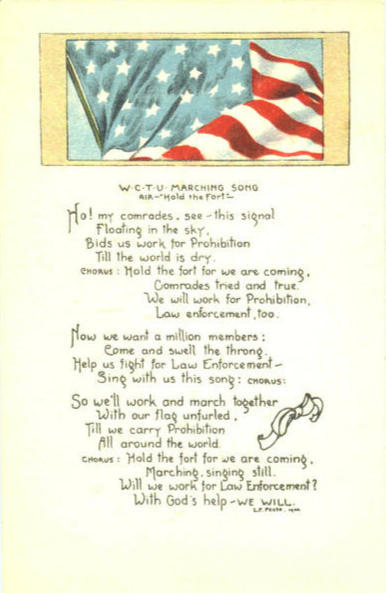
The W.C.T.U. Marching Song

.

Isabella often wrote about the activities of the W.C.T.U. in her books. Most striking was her novel One Commonplace Day. In that story, a group of people come together on their own to help one family overcome the effects of alcoholism; and they employ many of the  W.C.T.U. methods to do so.

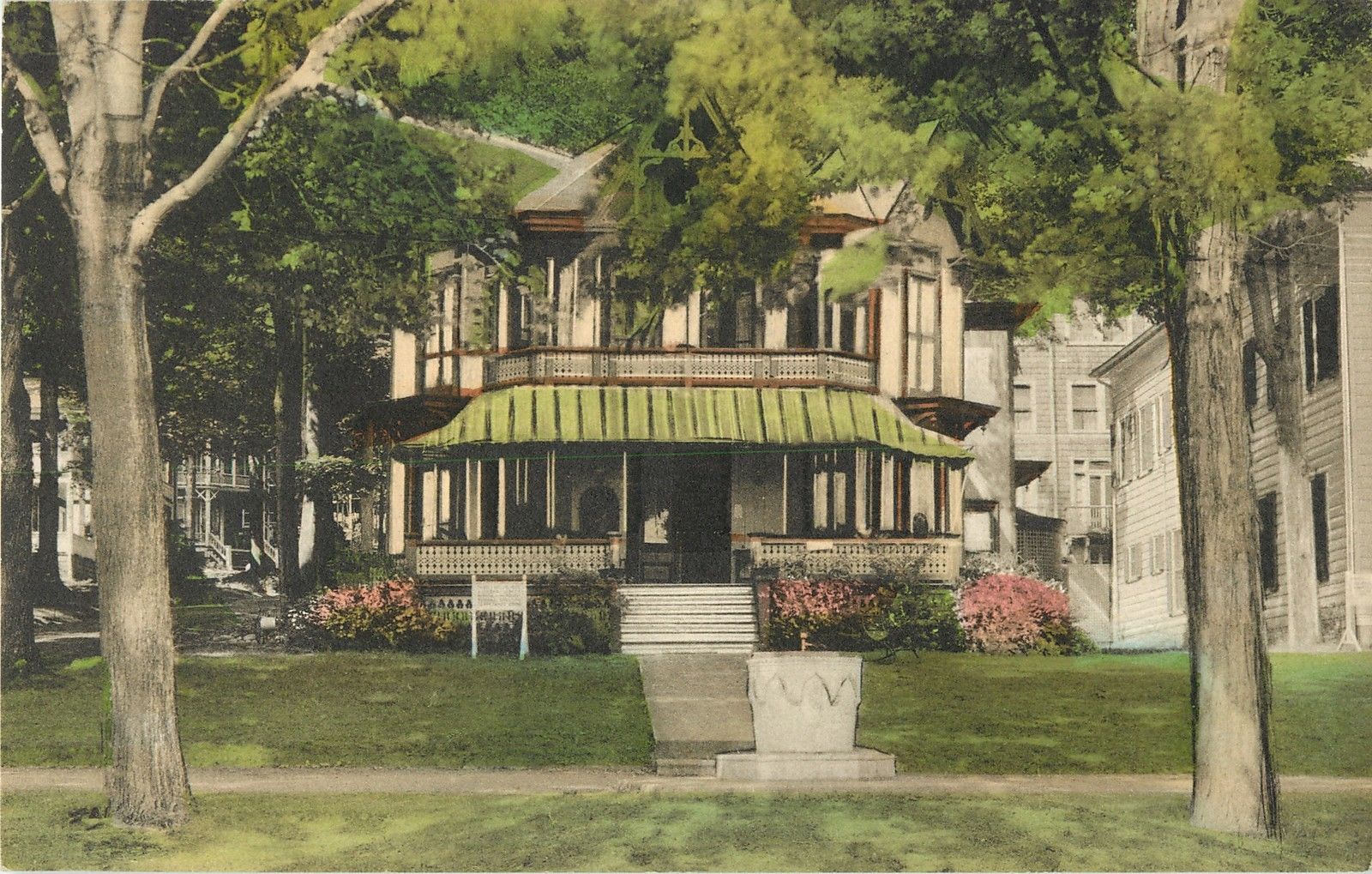
W.C.T.U. headquarters building at Chautauqua Institution, New York

.

Isabella and Frances Willard often lectured together, speaking before different chapters of the Sunday School Assembly and at regional Chautauqua locations.

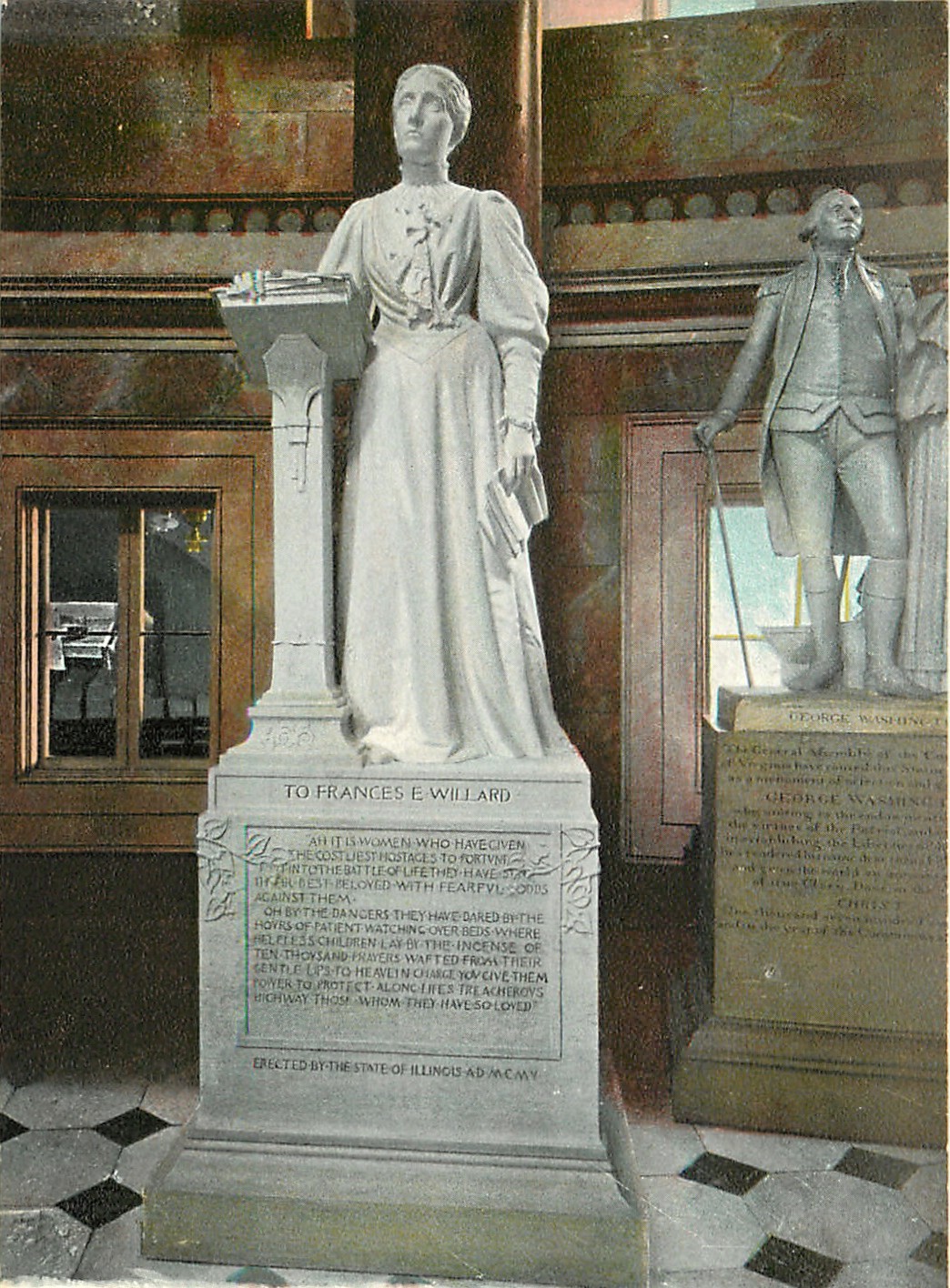
Statue of Frances Willard in the United States Capital, Washington D.C.

By the time Frances Willard passed away in 1898 the W.C.T.U. was an acknowledged political and social force in the United States. Under her leadership the organization united women from varied backgrounds, educated them and empowered them to form one of the strongest and most influential women’s organizations in American history.

In 1905 a statue of Frances Willard was erected in National Statuary Hall at the United States Capital in Washington D.C. Her statue was the first honoring a woman to be chosen for the National Statuary Hall Collection.


Would you like to learn more about Frances Willard and the W.C.T.U.? Click here to visit the organization’s website.

Click on this link to read more about the statue of Frances Willard in Statuary Hall at the United States Capital.

Grace Livingston Hill wrote a short biography of Frances Willard’s early years. Click here to read her 1909 article.

You can watch the full 90-minute Ken Burns documentary “A Nation of Drunkards” here:

The Christian Calling Card

In 1922 Emily Post wrote, “with a hair-pin and a visiting card, [a woman] is ready to meet most emergencies.”

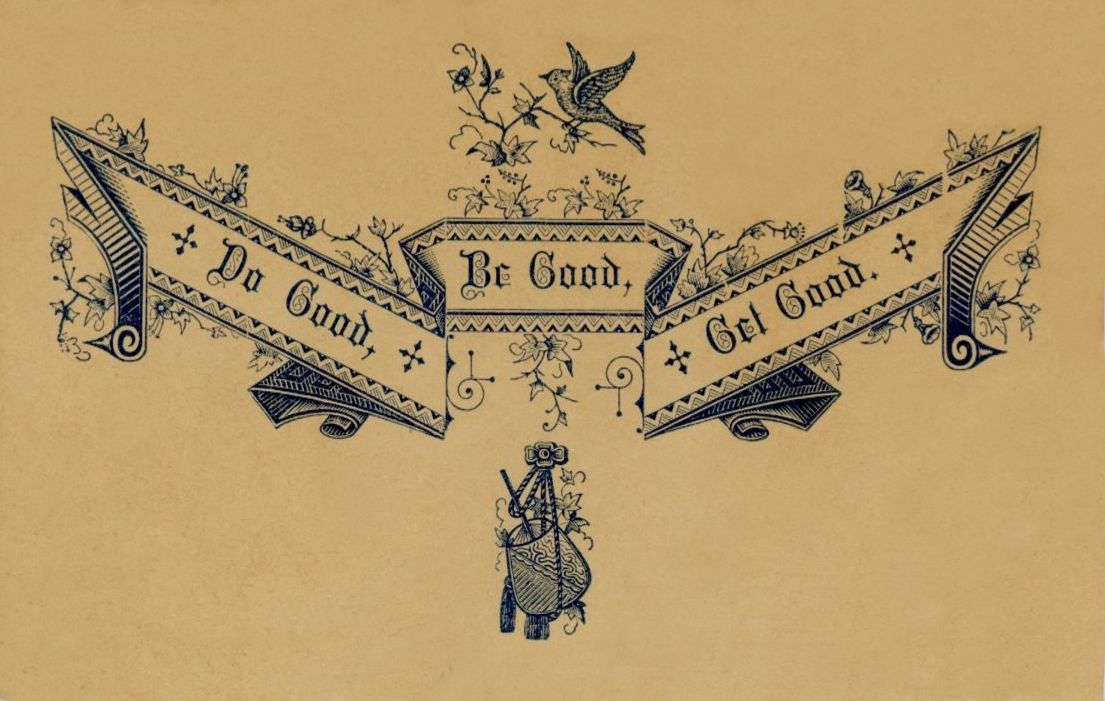
Do Good

There’s evidence of that maxim in Isabella Alden’s books. In several of her stories a simple calling card played a prominent role in the life of one of her characters.

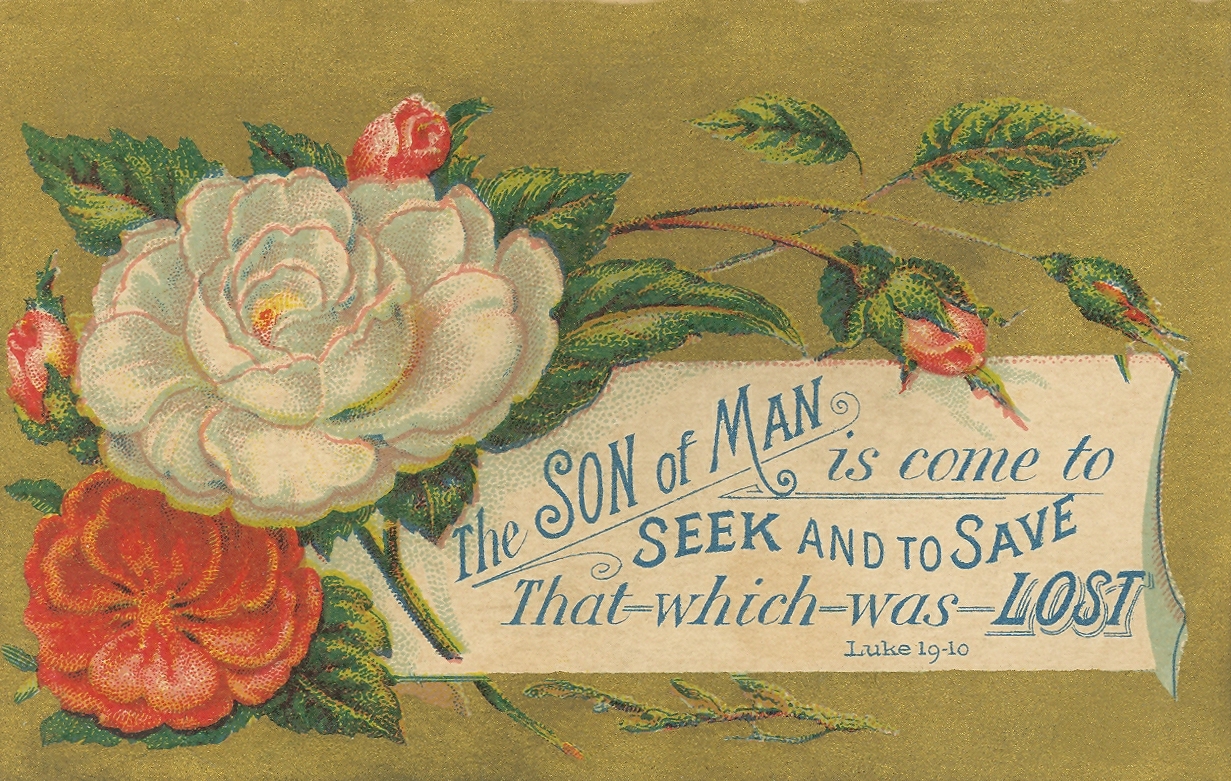
Card Luke

In Spun from Fact, Jeanie Barrett had cards printed with only her name and this sentence in plain text:

“Are you saved by grace?”

Each time she gave away one of her cards, she did so with a purpose, and knew exactly how she wanted to engage that person in conversation about the straight-forward question printed on the card.

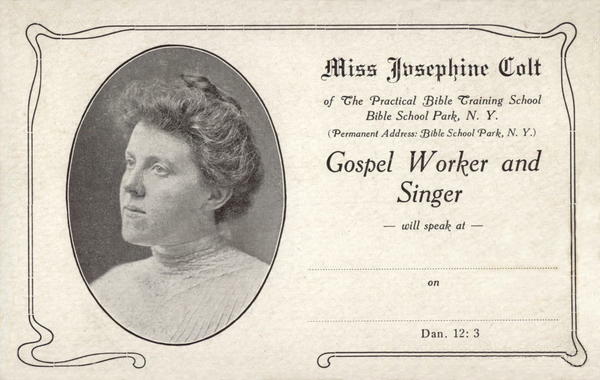
Spun from Fact Bible School training
A card used to announce dates and times of a Gospel worker’s upcoming speaking engagements.

In Workers Together; An Endless Chain, Dr. Everett’s calling card was printed on both sides. The front of the card gave the address and hours for his medical practice. On the other side he listed the times for Sunday worship services, Sunday School classes and weekly prayer meetings at the church where he was superintendent of the Sunday School.

card00495_fr

In A New Graft on the Family Tree, John Morgan received a calling card that changed his life. He was hungry and homeless, hopping one rail car after another to find anyone who would feed him in exchange for doing some work.

Spun from Fact card00555_frJohn’s situation was desperate; he was weak from hunger when he came across neat-looking house, with a neat kitchen-door; he knocked at it, and asked for a bit of bread. A trim old lady answered it. To his surprise she invited him in and fed him a savoury breakfast. And while John ate, the old woman talked to him:

“Well, there are a good many homeless people in the world. It must be hard; but then, you know, the Master himself gave up his home, and had not where to lay his head. Did it for our sakes, too. Wasn’t that strange! Seems to me I couldn’t give up my home. But he made a home by it for every one of us. I hope you’ve looked after the title to yours, young man.”

No answer from John, The old lady sighed, and said to herself, as she trotted away for a doughnut for him:

“He doesn’t understand, poor fellow! I suppose he never has had any good thoughts put into his mind. Dear me! I wish I could do something for him besides feeding his poor, perishing body!”

The little old lady trotted back, a plate of doughnuts in one hand, and a little card in the other.

“Put these doughnuts in your pocket; maybe they’ll come good when you are hungry again. And here is a little card; you can read, I suppose?”

The faintest suspicion of a smile gleamed in John Morgan’s eyes as he nodded assent.

“Well, then, you read it once in a while, just to please me. Those are true words on it; and Jesus is here yet trying to save, just the same as he always was. He wants to save you, young man, and you better let him do it now. If I were you I wouldn’t wait another day.”

Card Proverbs

John waited until he left the woman’s house and was tramping down the street before he looked at the card she gave him.

It was a simple enough card, printed on it in plain letters these words:

“It is a faithful saying, and worthy of all acceptation, that Jesus Christ came into the world to save sinners.”

Then, underneath:

“I am the bread of life. He that believeth on me shall never hunger.”

Still lower on the card, in ornamented letters, the words:

“The Master has come, and calleth for thee.”

Then a hand pointing to an italicized line:

“I that speak unto thee am he.”

John thrust the card into his pocket and strode towards the village depot to board another train, unaware that the little card would eventually change his life.

Card Isaiah

You can still find examples of religious calling cards on ebay, Etsy and other Internet sites. But Isabella’s books demonstrated that religious calling cards by themselves were not enough to change a person’s life. In her stories, a calling card may have opened the door to a conversation about salvation, but it was the act of the person who gave the card—their kindness and concern for someone else—that turned those small pieces of cardstock into the means by which a soul was saved.

ROX9F19

You can read more about the vagabond life John Morgan would have lead. Click here to read our previous post, The Fraternity of the Tramp.


Click on a book cover to read more about Isabella’s books mentioned in this post.

Cover_Workers Together v2   Cover_Spun from Fact   Cover_A New Graft on the Family Tree

Fred and Maria and Me

In her books Isabella Alden often mentioned the works of other authors she read and admired.

One such example was in Isabella’s book, Links in Rebecca’s Life. In that story, newly-married Rebecca Edwards was settling into her new life in the home of her very critical mother-in-law.

At breakfast one morning, Mrs. Edwards criticized Rebecca for drinTea_Party1king coffee that was too hot, in Mrs. Edwards’ opinion.

“I wonder at you, Rebecca, for drinking your coffee so hot; it is very bad for the teeth.”

Rebecca laughed in her old gleeful way, and replied:

“I am like ‘Fred and Maria and Me,’ I like my coffee ‘bilin’. Frank, did you ever read that delightful book?”

“Never heard of it. What an extraordinary title! Is it good?”

“It is capital,” Rebecca had said, ignoring, as Frank did, his mother’s question.

“Do you mean the book, or the title, my son?” Then she had turned to Rebecca. “Did you say that was the title? How very singular! One would suppose the editor would have corrected so remarkable a grammatical error as that!”

And Rebecca’s eyes danced as she answered, “It is by Mrs. Dr. Prentice, you remember. She is one of our most popular authors. I suspect she wanted the grammatical part of it to appear just as it did.”

Mrs. Prentiss did, indeed. Fred and Maria and Me was written by Elizabeth Prentiss in the perspective of an elderly woman from Goshen, Maine. The heroine, Aunt Avery, made generous use of the local Maine dialect.

Elizabeth Prentiss right
Elizabeth Prentiss

Throughout the story, Mrs. Prentiss’s characters used words like “t’wasn’t,” “your’n,” “p’inted” (instead of “pointed”), and other grammatically incorrect terms that would have made prim Mrs. Edwards swoon.

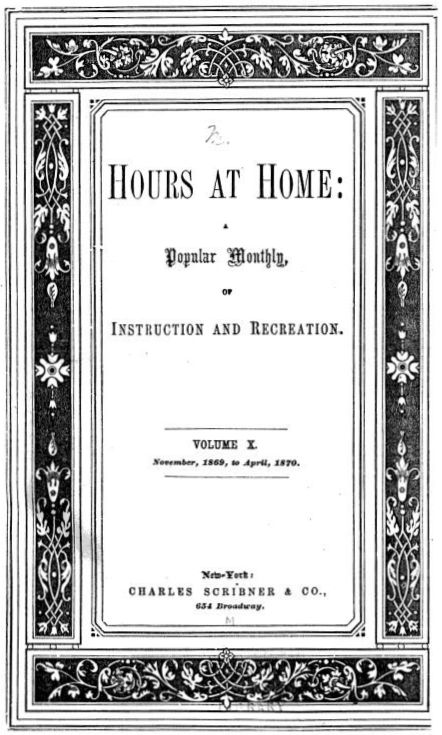
Originally, Fred and Maria and Me was published as a serial in Hours at Home: A Popular Monthly of Instruction and Recreation in 1865. When Elizabeth Prentiss first saw her story in the magazine, she wasn’t happy:

“I have jHours at Home magazineust got hold of the Hours at Home. I read my article and was disgusted with it. My pride fell below zero, and I wish it would stay there.”

But the reading public disagreed. Reviewers praised the story and declared Aunt Avery was “a very quaint and interesting type of New England religious character.”

Elizabeth Prentiss soon changed her mind about the story.

“Poor old Aunt Avery! She doesn’t know what to make of it that folks make so much of her and has to keep wiping her spectacles.”

The popularity of Fred and Maria and Me may have surprised Elizabeth Prentiss, but not the publishing industry. The story’s “quaintness, simplicity, and truthfulness” created such a demand that it was published as a book in 1867 to great acclaim. A second printing appeared in 1872, six years before Isabella wrote Links in Rebecca’s Life.

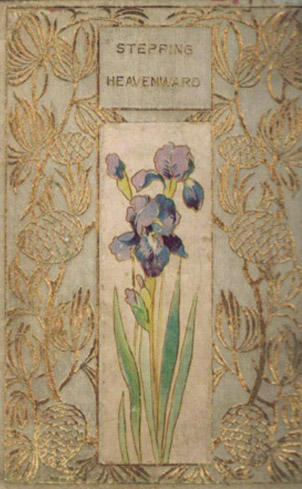
Stepping Heavenward cover 1907
1907 cover of Stepping Heavenward by Elizabeth Prentiss

Elizabeth Prentiss went on to write several books, including Stepping Heavenward, the classic story of a teenage girl’s Christian journey into womanhood. Stepping Heavenward is still widely read today. Click here to find out more about Stepping Heavenward.

She was also a talented poetess and penned lyrics for beloved hymns, including “More Love to Thee, O Christ.”

You can read Elizabeth Prentiss’s delightful book, Fred and Maria and Me and discover why Isabella Alden called it a “capital” story. Click on the book cover to begin reading now.

Cover_Fred and Maria and Me

Would you like to know more about Elizabeth Prentiss? Click here to read a very nice biography of her life and works.

Click on the link below to listen to her hymn, “More Love to Thee, O Christ”:

Follow this link to find out more about Links in Rebecca’s Life by Isabella Alden.


Now Available: Missent

Cover_Missent v2 resizedMissent is now available!

It was just an old letter she found stuck between the pages of a book. Though curious about how it got there, the only thing Miss Sarah Stafford intended to do with the letter was throw it away; but when an over-zealous servant mails the letter instead, Miss Stafford must do her best to get it back. Or should she? Before long, Sarah Stafford finds herself immersed in the lives of the young woman who wrote the letter years before and the confused young man who ultimately received it. But instead of changing their lives, that missent letter may alter the course of Miss Stafford’s future in ways she never expected.

This edition of the 1900 classic Christian novel includes a biography of the author and additional bonus content.

Follow this link to download Missent for your Kindle, PC, Mac or mobile device.

Delicious Johnny-Cakes

Johnny-cake was a staple on the menu of almost every meal prepared in an Isabella Alden novel. That’s because johnny-cakes were inexpensive to make and they were filling and satisfying. They were much like pancakes, but were made with corn meal instead of flour. The basic recipe was simple:

To a quart of Indian meal (corn meal) add a teaspoon of salt, a tablespoonful of sugar. Sift, scald with boiling water so as to make a very thick mush. Let it cool a little, then thin with milk so it will drop from a spoon. Have a griddle hot and well greased, and drop a spoonful of the batter for each cake. When brown, turn and brown the other side.

Johnny-cakes were usually served hot with butter or honey.

Ad Ladies Home Journal March 1919 ed 01

In Household Puzzles, Maria Randolph could make a delicious creamy johnny-cake that was so good that after eating them, “the comfort of the Randolph family reached a height unknown for weeks.”

In Mara, easy-going Gertrude was so placid about planning her wedding, her mother accused her of being willing to be “married in her old brown serge, and to have johnny-cake and warmed-up potatoes for refreshments.”

Frying griddle cakes ad 1919 ed

And when Mrs. Adams decided to earn a bit of extra money by keeping house for the Ward family in The Hall in the Grove, she had to put together a quick dinner for the family:

It was just the simplest of dinners: a dish of baked potatoes, a platter of beefsteak, a plate of butter, a plate of steaming johnny-cake, and a pot of tea. No pickles, or fruits, or relishes of any sort.

There were probably as many variations of johnny-cake as there were cooks. Some cooks fried them in bacon grease instead of lard, which gave them an attractive gold color and added flavor.

Ad Ladies Home Journal March 1919 ed 02

Adding an egg or two, sour cream or buttermilk made johnny-cakes light and fluffy.

Instead of frying, some cooks baked johnny-cake in the oven in a large pan, which they cut after baking into several servings.

In warm months when fruit was plentiful, cooks added applesauce or bits of apple, sliced strawberries, stewed pumpkin or peach preserves to their batter for a special treat.


Click here to read more about Isabella Alden’s books mentioned in this post.

The Accusation

Isabella Alden often drew on her own life experiences when she crafted her short-stories and novels. The incidents she wrote about weren’t necessarily historic or even life-changing, but she had a talent for sharing her own memories in a way her readers could identify with.

Girl writingOne of Isabella’s school experiences ended up as a short story titled “When I Was a Girl.” It happened when Isabella was a young student at Oneida Seminary in New York.

Gathered in the school assembly hall one day were all the teachers and pupils, as well as friends and parents of many of the students. Isabella was one of six young students chosen to read their own compositions at the assembly, and the audience was to vote by ballot for the best essay.

Being a talented writer from a young age, Isabella won the prize; but soon after she received her award, a rumor began to spread through school that the composition she read was not her own—that she had copied the words from a printed book!

Soon Isabella was in the office of Dr. Branner, the school principal. He confronted Isabella with the allegation, which she hotly denied.

Moments later, another student named Ophelia entered the office. Ophelia had been one of the five other students who read before the assembly, and she had been bitterly disappointed at not winning the prize awarded to Isabella—and it was Ophelia who was the source of that horrible rumor.

In her memoirs, Isabella described what happened next:

Dr. Branner’s manner was coldly dignified as he asked Ophelia:

“Am I to understand that you still insist that there is a book in your father’s library which has in it every word of the essay that took the prize in our school last week?”

Ophelia’s face as she answered the question was almost smiling, and she answered briskly:

“Of course, word for word. I didn’t suppose you were accusing me of telling lies!”

“Very well,” said the principal quietly. “Then you may go home at once and bring that book to me. We will wait here till you come.”

A high school in Hoosick Falls, New York, 1907

Isabella spent many anxious minutes waiting for Ophelia to come back with the book. In her story, “When I Was a Girl,” she described the moment when Ophelia returned. She made a few minor changes to some of the details in the story. For example, she changed the names of the school principal and the other student involved; she also added additional description she didn’t mention in her memoirs; but the finale—the truth of what happened when Ophelia returned to the principal’s office that day—is straight from Isabella’s childhood memory.

Click on the covCover_When I Was a Girl resizeder to the read Isabella’s short story, “When I Was a Girl” and find out how the story ended.