
The Trouble with Paper Dolls

In Isabella’s book Ester Ried, Ester’s youngest sister Julia found herself in trouble, all because of paper dolls.

Ester had charged Julia with taking an important letter to the post-office. Julia obediently started out, immaculate in white apron and white stockings, but then she met temptation in the form of a little girl playing with her paper dolls.

Mascot Bread_Many Lands ed

While Julia was admiring them, the letter “had the meanness to slip out of her hand into the mud!”

Horrified, Julia and the little girl put their wise young heads together, and decided to give the muddy letter a thorough washing in the creek. But no sooner were they standing ankle deep in the mud, vigorously carrying their idea into effect, than “the vicious little letter hopped out of Julia’s hand, and sailed merrily away, downstream!”

Baby in Rocking Cradle

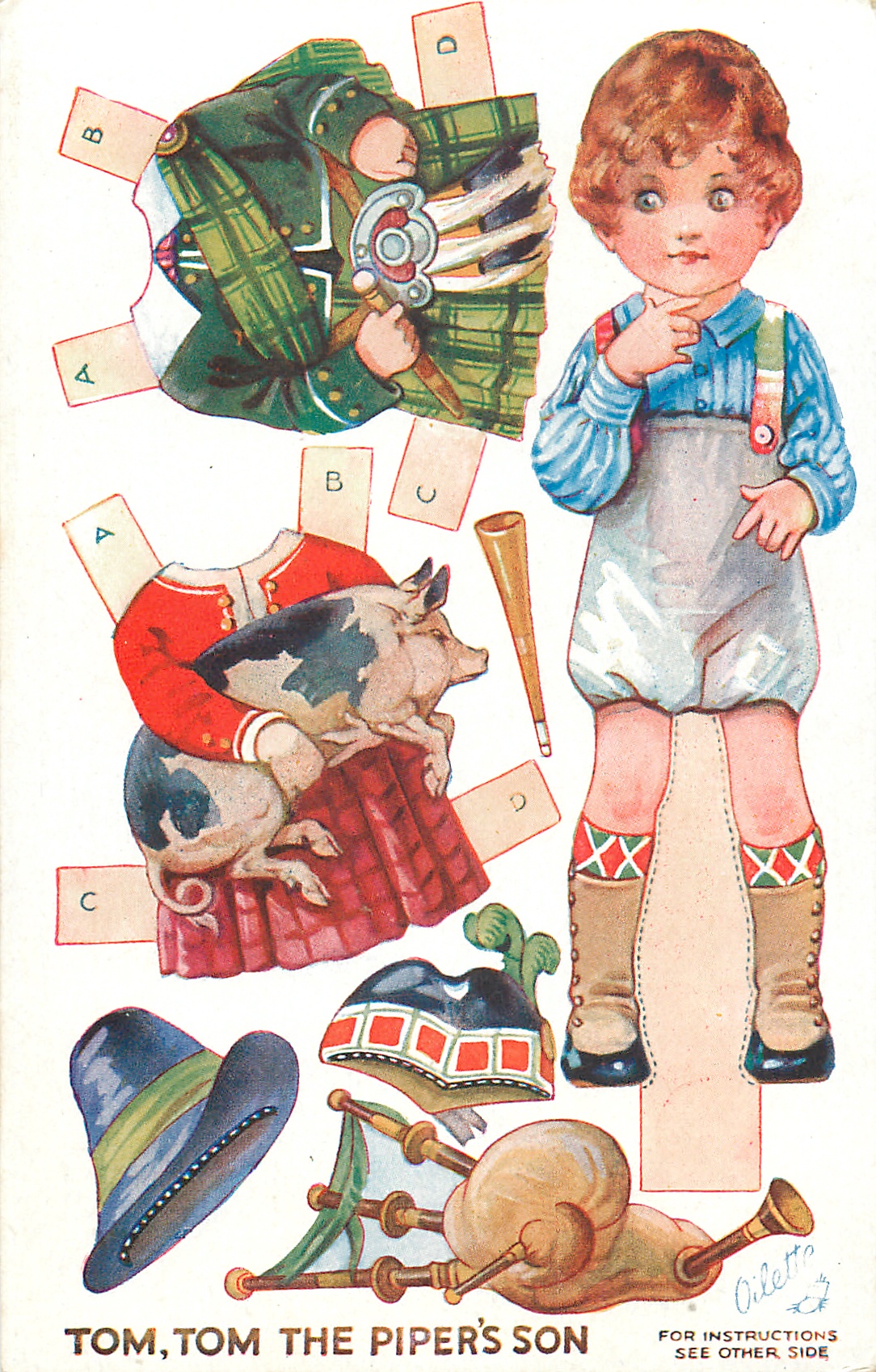
It’s understandable that Julia was a little bewitched by her friend’s paper dolls. Paper dolls were colorful and beautifully detailed little works of art, usually depicting handsome men, beautiful women, and charming children. Paper dolls of fairy tale characters were popular, too, like this set of Tom the Piper’s Son:

Tom Tom the Pipers Son

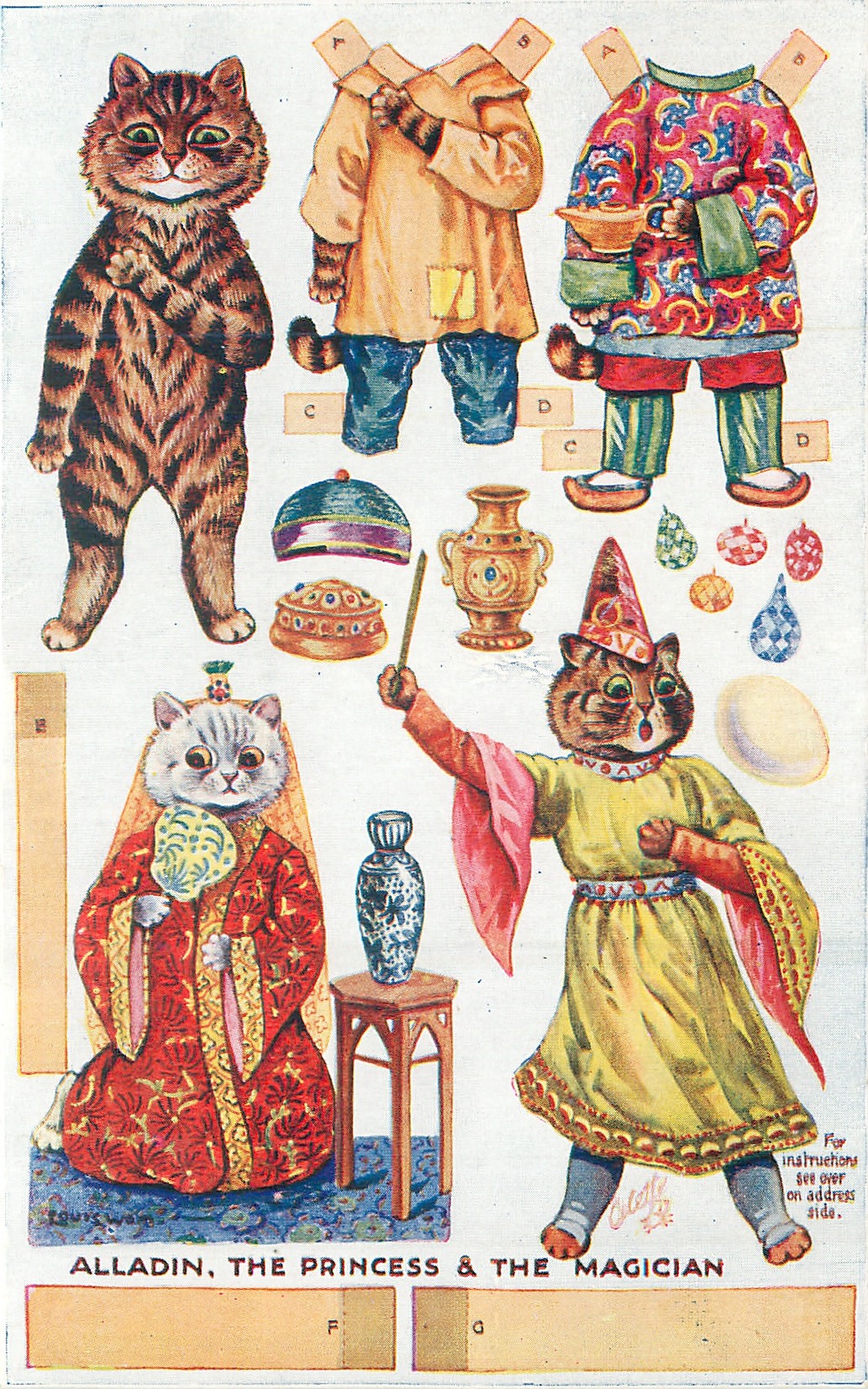
And this fanciful set from 1912 depicts characters from the story of Aladdin.

Aladdin fairy tale 1912

Because every respectable paper doll needed a suitable paper home in which to live, children could collect paper doll furniture pieces, too. Here’s a cabinet suitable for a paper doll’s fashionable drawing room:

Drawing room cabinet

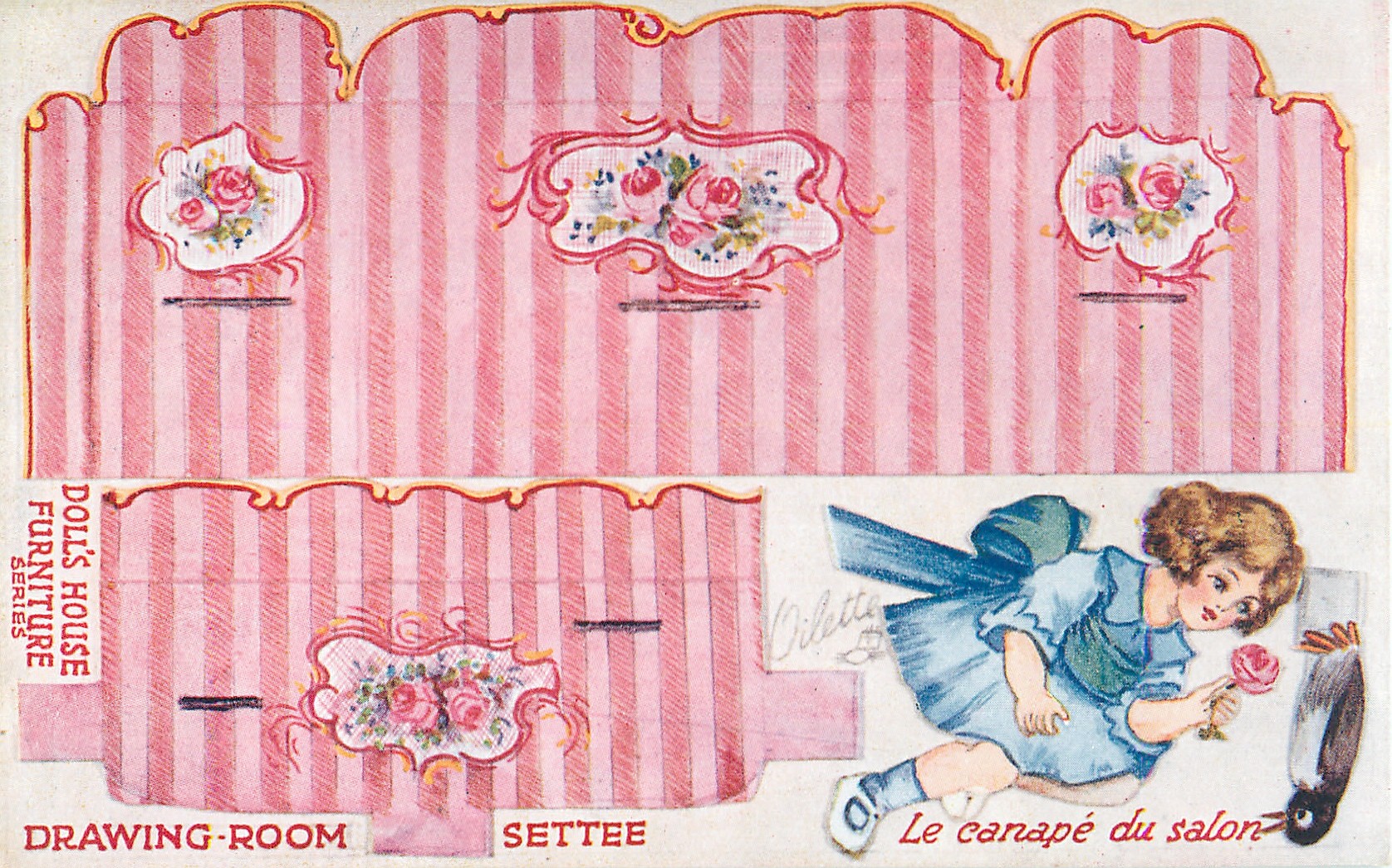
Paper dolls even had lovely chairs and settees on which to sit.

Drawing room chairs


Drawing room settee
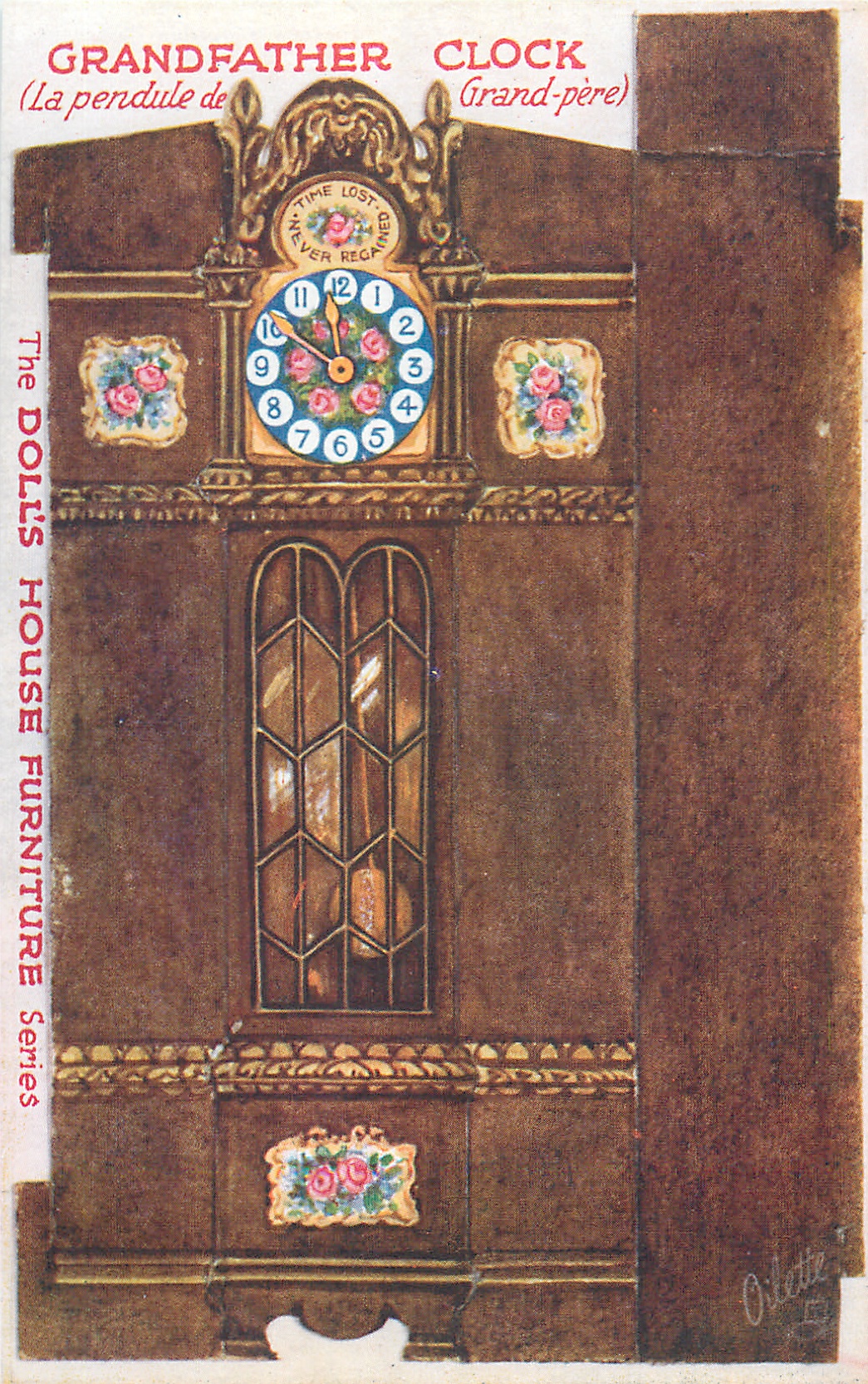
No paper doll drawing room would be complete without a grandfather clock and a decorative screen to block out cold drafts.

Grandfather clock

Drawing room screen

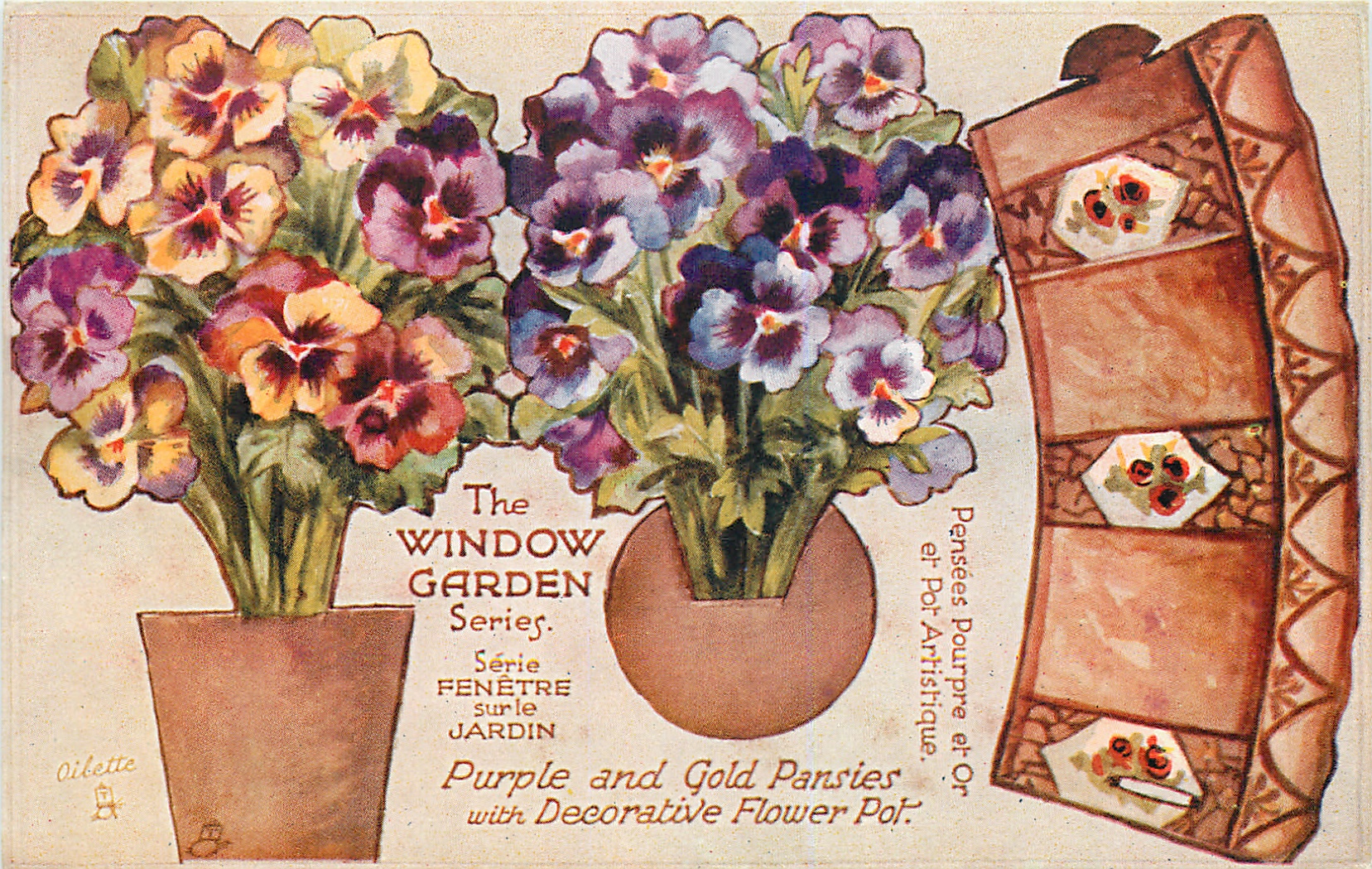
Here’s a paper doll house accessory that Isabella might have liked for herself: a pot of colorful pansies.

Pansies

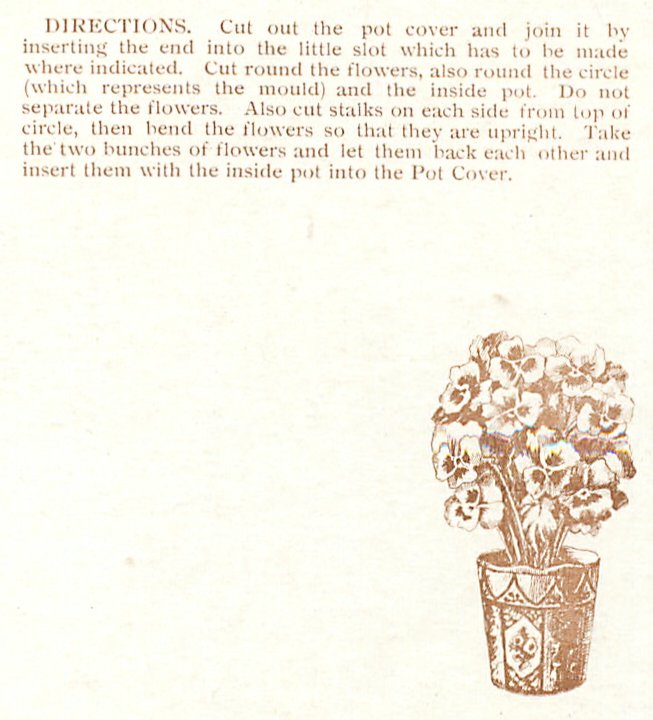
Pansies instructions

You can click on any of the paper doll images in this post to open a larger version to print and assemble for yourself.

And click here to see a previous post about paper dolls

A Cake of Sapolio

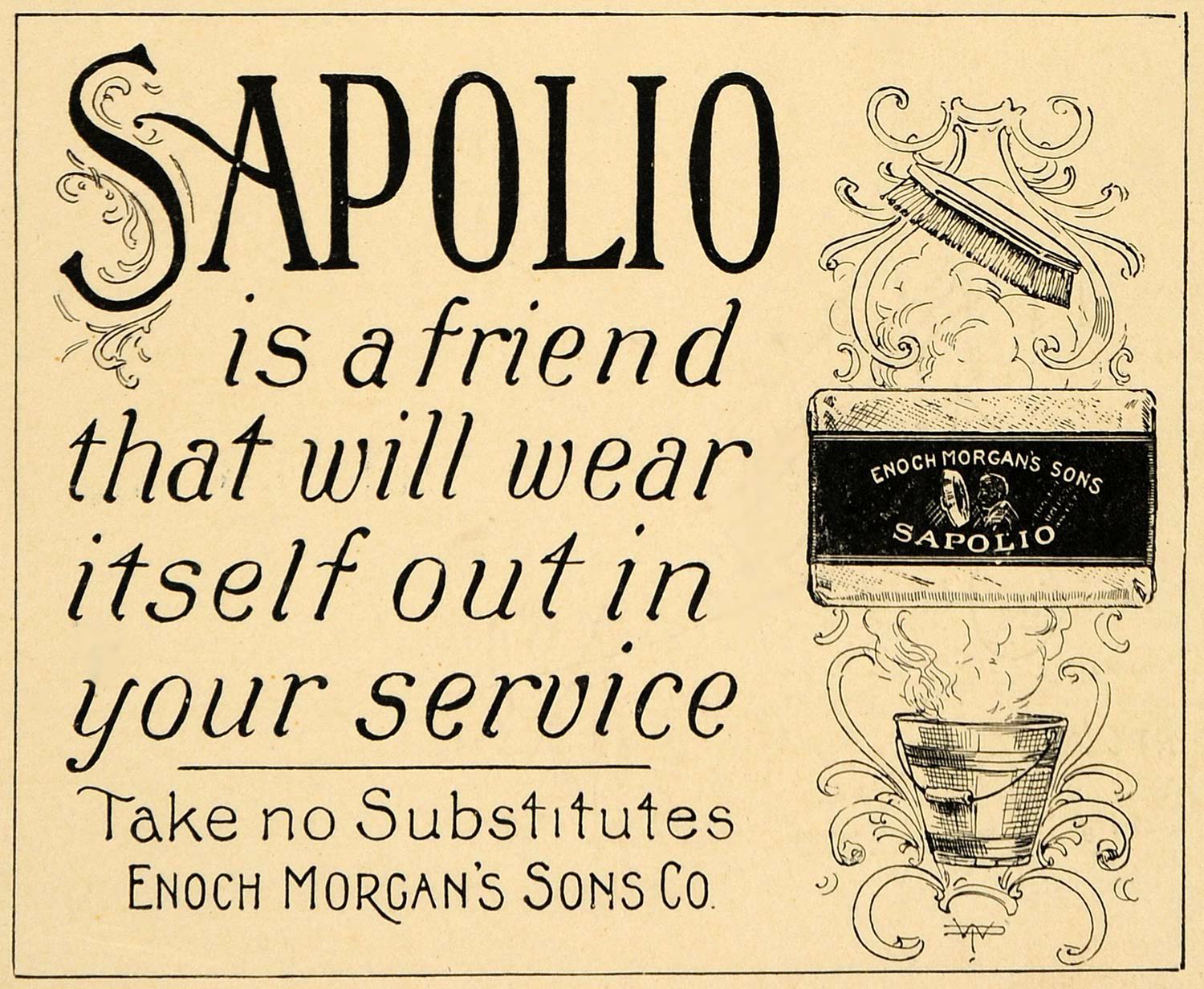
When the ladies of the 10th Street Church set out to clean the sanctuary in Ester Ried’s Namesake, they armed themselves with pails, brooms, dust-cloths and … Sapolio.

Sapolio 02

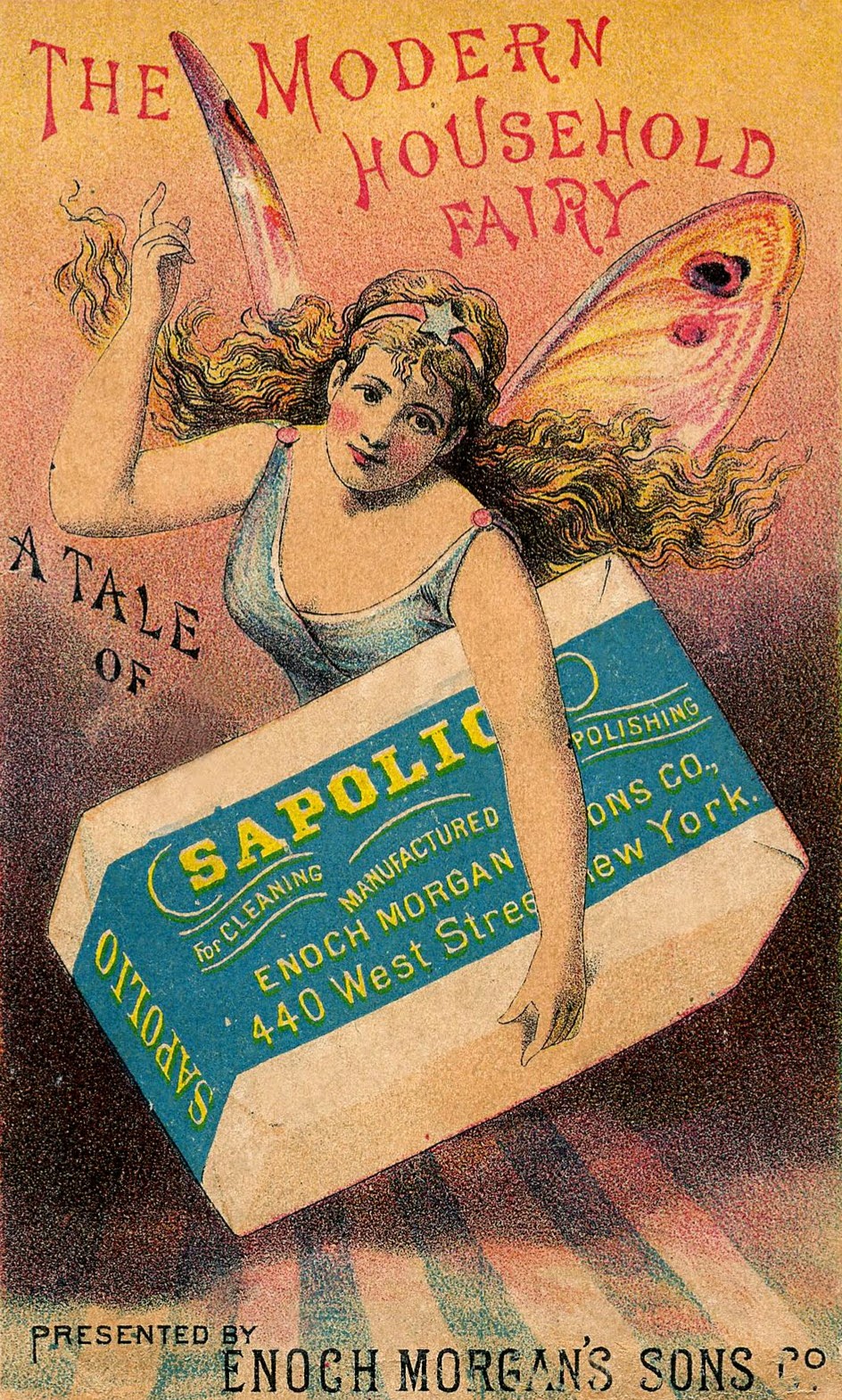
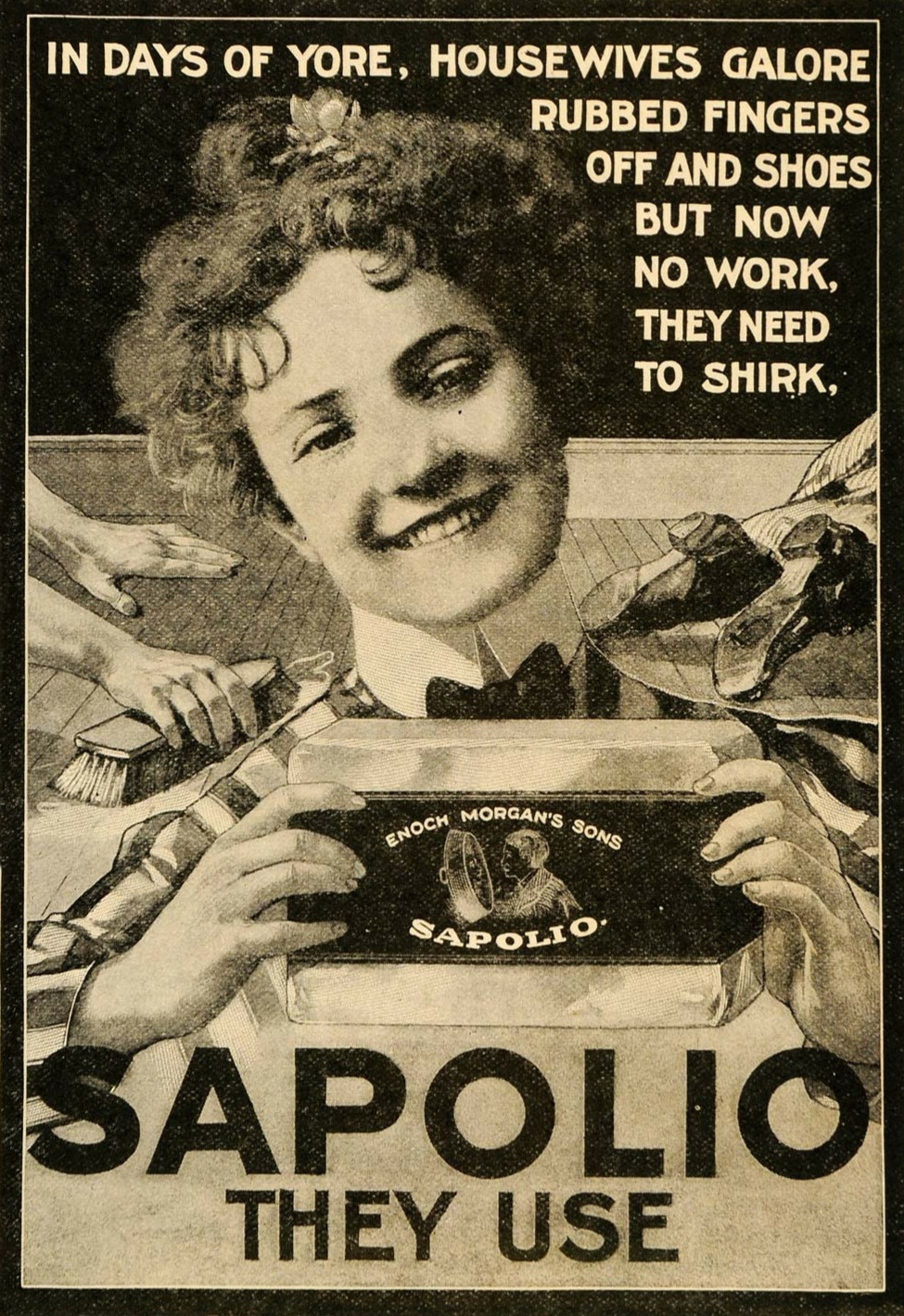
Sapolio was the brand name of a bar soap manufactured by Enoch Morgan’s Sons Company. There was Hand Sapolio for everyday use in the toilet and bath.

Sapolio 1909

And there was the large Sapolio cake for household cleaning purposes, which was the company’s most popular product.

Sapolio 01

Isabella mentioned the product more than once in her descriptions of the busy ladies’ efforts to clean the room in which they worshipped.

Sapolio 08

The ladies used Sapolio to scrub the floors and polish the globes on the gas lamps.

Sapolio 06 v 2

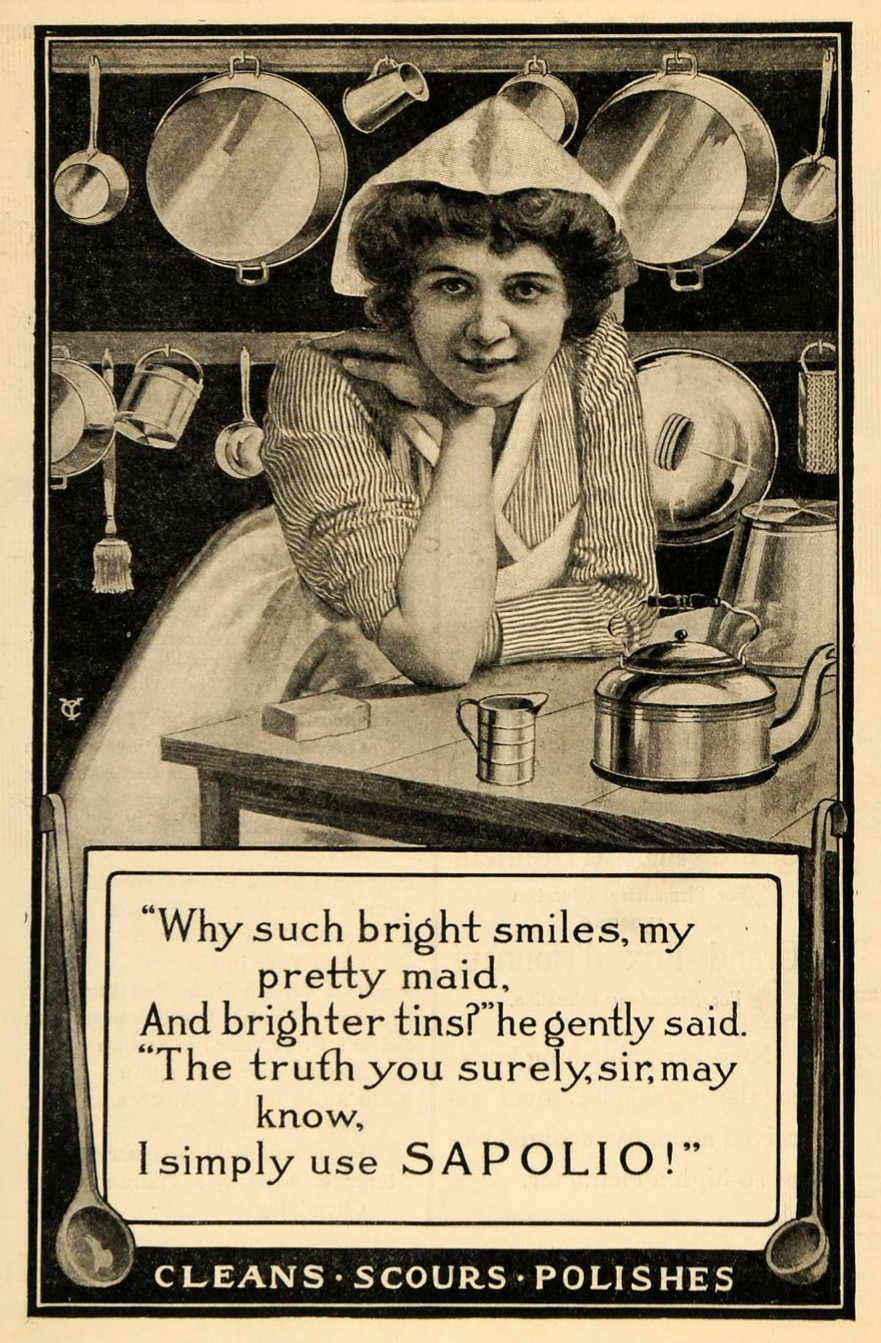
Ads for Sapolio claimed their product could do much more:

It will clean paint, marble, oil cloths, bath tubs, crockery, kitchen utensils, windows, etc.

It will polish tin, brass, copper and steel wares of all kinds.

Sapolio 05

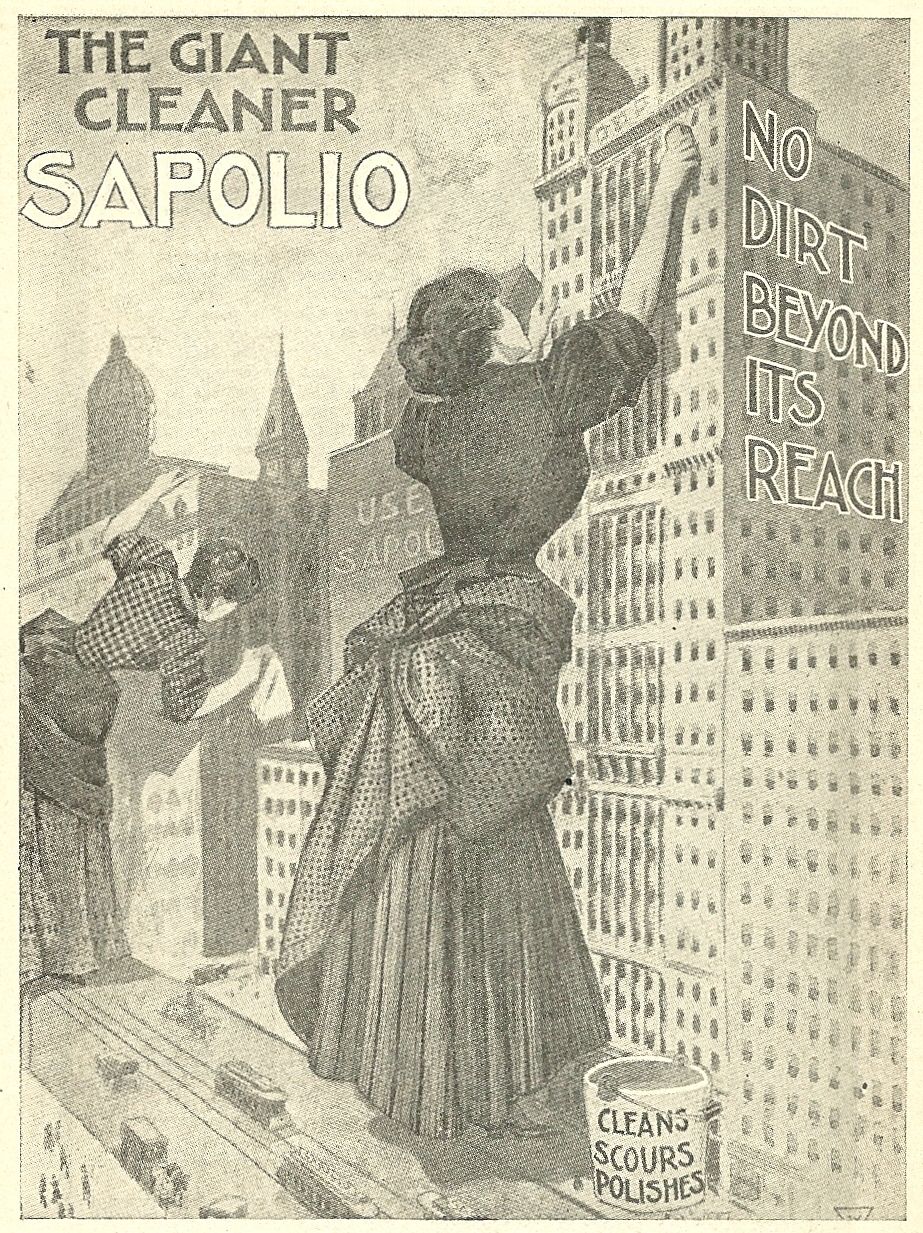
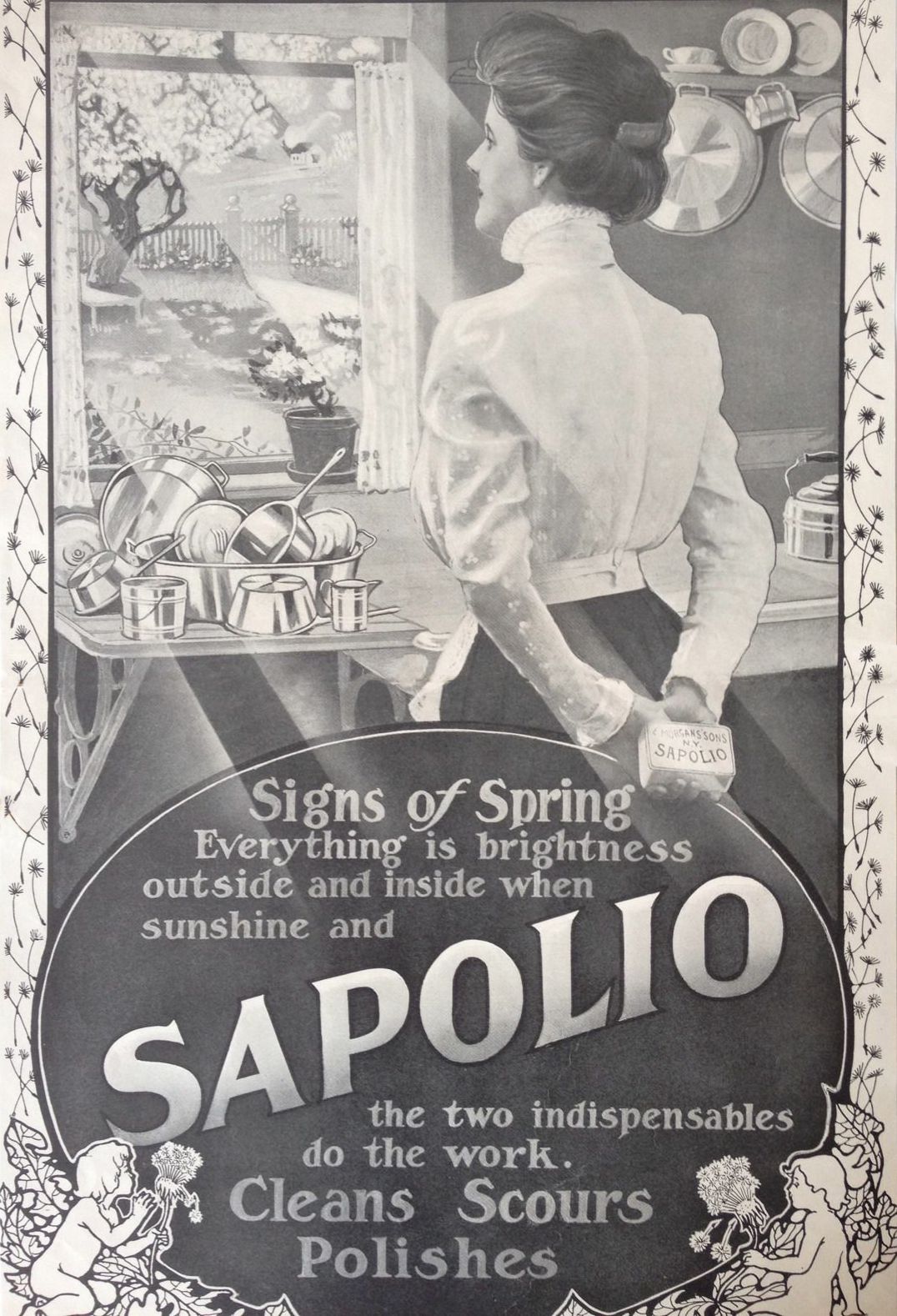
Sapolio was “probably the best advertised product” in the country, according to Time Magazine. Sapolio ads appeared in magazines, newspapers, and trade cards.

Sapolio 07

Their ads were inventive, entertaining, and often elaborate.

Click this link to see one of their full-page newspapers ads from 1889 in the Omaha Daily Bee.

Sapolio from San Antonio Daily Express 1890 02-21

Their advertising campaigns appealed to homemakers and housekeepers, ladies of leisure and scullery maids.

Sapolio 12

The advertising paid off. From the 1890s to 1920s, Sapolio was the best-selling cleaning product in America.

Sapolio 10 1909

And then Sapolio executives made a fatal mistake. They believed their product was so well ensconced in the minds of the buying public, they stopped advertising.

Sapolio 04

In the short-term they might have saved money, but in the long-term the decision proved disastrous. Sapolio soon disappeared from store shelves and customer’s homes. Buyers turned to the competition, and Sapolio sales never recovered. The company that made Sapolio was almost destroyed; eventually they sold what was left of the business to a South American company.

Sapolio 11

Today Sapolio products are still sold in South America (especially Peru and Chile) and they get rave reviews; but Sapolio will never again enjoy the popularity it once had when Isabella Alden wrote about in the pages of Ester Ried’s Namesake.

Fan Mail and Ester Ried

At the height of her popularity, Isabella Alden was one of the most widely-read authors in the world. One of the things that made her so popular—and unique—was the varying ages of her readers: she had just as many children who were dedicated fans of her books as she had adult fans. And they all wrote letters to her.

She received letters by the thousands, addressed to her publisher, to her home, and to the offices of her magazine, The Pansy. And she answered them all!

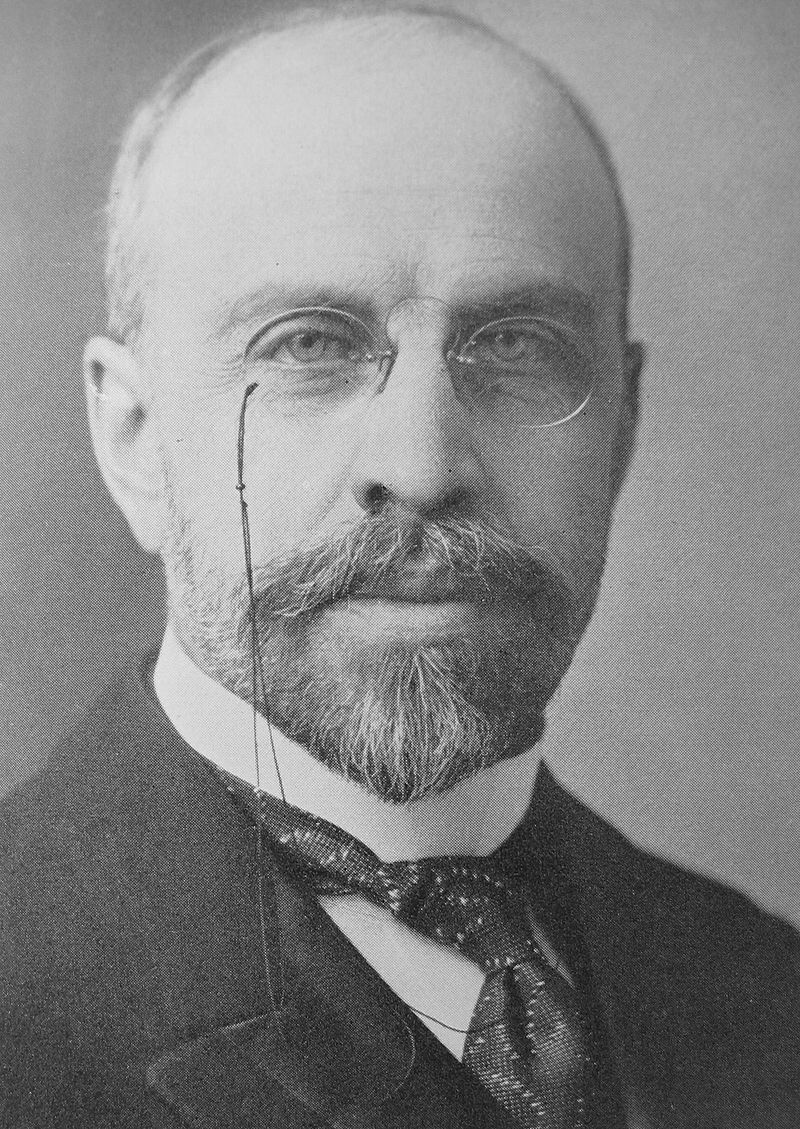
Isabella Alden in an undated photograph.

Some fans wrote to request her autograph and a photo. Others asked for advice on how to become a great author or they sent their own manuscripts and asked for her opinion.

Some asked for advice on other topics, from how to get a good husband to the best way to stop fingernail biting. One fan even asked for pieces of her best dress so they could be sewn into a patchwork quilt the fan was sewing!

An early cover for Ester Ried

But the fan mail Isabella received most often was about her book Ester RiedEster Ried was incredibly popular and prompted scores of readers to send Isabella letters thanking her for the book’s message.

New cover for the 2016 release of Ester Ried

Fans wrote to Isabella about how they saw themselves in Ester’s struggles and her impatience with life’s daily annoyances. But mostly, readers identified with the lessons Ester learned; they took to heart the promise that God would bring peace and happiness to their lives, if only they trusted in Him.

What started as a single book soon blossomed into an ongoing series. The Ester Ried series gave fans of the original book glimpses into the lives of the characters they loved. Readers grabbed up each new story about the Ried family members and their trials as they grew up, married, and learned to trust God to help them through a sometimes difficult world.

Cover_Julia Ried

Two years after Ester Ried was published came Julia Ried, a sequel that focused on Ester’s younger sister Julia and the lessons she learns about faith in times of temptation. It also brought readers up to date on Abbie Ried’s story after the tragic turn her life took in Ester Ried.

Cover_The King's Daughter

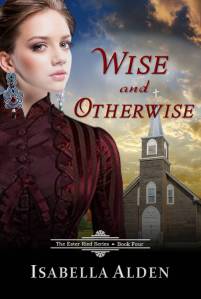
The following year Isabella published the third book in the series, The King’s Daughter. In this book Isabella introduced the character of Miss Dell Bronson. Unlike Ester or Julia, Dell was rock solid in her faith and trusted God in her daily life, but she still had challenges to face. And she still had lessons to learn in Wise and Otherwise, the next book in the series.

Cover_Wise and Otherwise

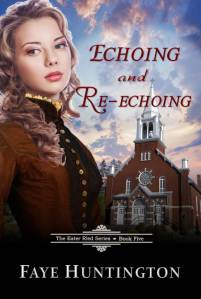
Isabella commissioned her best friend Theodosia Foster to write book five. Echoing and Re-Echoing (written under Theodosia’s pen name Faye Huntington) centers around Ralph Ried, Abbie’s brother, who, as a new minister, struggles to reach his flock through his Sunday sermons.

Cover_Echoing and Re-echoing

Isabella’s fans particularly loved the sixth book in the series, Ester Ried Yet Speaking, because it included the character of Flossy Shipley. Flossy was originally introduced to readers in Four Girls at Chautauqua. In Ester Ried Yet Speaking readers got to find out what happened to Flossy after her marriage to Evan Roberts. They also met Dr. Everett, Hester Mason, and Joy Saunders, who were the main characters in Isabella’s later book, Workers Together; An Endless Chain.

Cover_Ester Ried Yet Speaking

Isabella waited nine years before she published Ester Ried’s Namesake. It was intended to be the last book in the series, but fans wrote to beg for more.

Cover_Ester Rieds Namesake

Even Isabella’s niece, Grace Livingston Hill, encouraged her to write “one more long story.” Grace suggested she write about Ester Ried’s granddaughter or great-granddaughter, and thereby reach an entirely new generation of readers with the original book’s message.

But by that time, Isabella was 86 years old and in failing health. One more “long story” was beyond her abilities, she told Grace. “You have altogether too high an opinion of me.”

Many fans of the series think the Ester Ried books are perfect, just as they are; the only difference is that today’s readers have the option to read the books electronically. A new generation of Ester Ried e-books is available on Amazon and other e-book retail sites.

Boxed set e-book cover for Ester Ried, the Complete Series.

Have you read the books in the Ester Ried Series? Which book is your favorite?

You can click on any of the book covers in this post to find out more about each title.

100 Years Ago at Mount Hermon

It’s summertime, and that means events at Mount Hermon Christian camp are in full swing. Nestled in the mountains of Santa Cruz, California, Mount Hermon is a place of quiet beauty, where people can renew and build on their relationship with Jesus Christ.

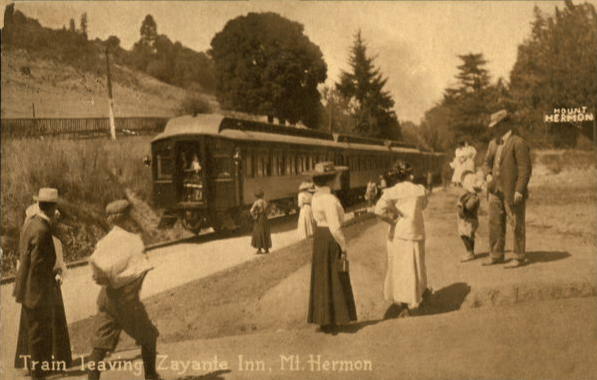
The train station at Zayanta Inn, Mount Hermon, California; 1915.

One hundred years ago, Isabella Alden was a frequent summer visitor at Mount Hermon. She and her husband Ross moved to the Santa Clara area in 1901. When Mount Hermon opened four years later, they were overjoyed to have a nearby place of rest and retreat similar to their beloved Chautauqua Institution.

The Lake at Mount Hermon, 1913.

Isabella Alden loved Mount Hermon, and she had many happy memories connected with it. She wrote:

I wish I could give you a picture of Mount Hermon, a blessed place where I have spent precious weeks living out under the great redwood trees. It was wild and quaint and beautiful.

Bean Creek at Mount Hermon, 1910.

As she had in the old Chautauqua days, Isabella spent as much time in the out of doors as possible at Mount Hermon:

Tent life seemed to belong to it as much as houses belong in most other places. We ate out of doors, and worked out of doors, and practically slept out of doors, with all the curtains of the tent looped high.

Giant California Sequoias.

Nestled among the mammoth California redwoods of Mount Hermon, Isabella rested, read and worshipped.

Dr. James Gray, 1910.
Reverend James Gray, D.D., 1910.

Her spirit was fed by some of the world’s most prominent theologians who spoke at the camp: Dr. James Gray, dean of the Moody Bible Institute; evangelist Reuben Archer Torrey; and Reverend A. B. Pritchard of Los Angeles.

Reverend R. A. Torrey, 1907.


Reverend A. B. Pritchard, 1903.

Isabella reveled in Mount Hermon’s program of Bible study. She immersed herself in classes about the Second Coming of Christ, and the Pentecost. She spent a week studying Colossians, and said afterward that she felt “as though I had a new Bible.”

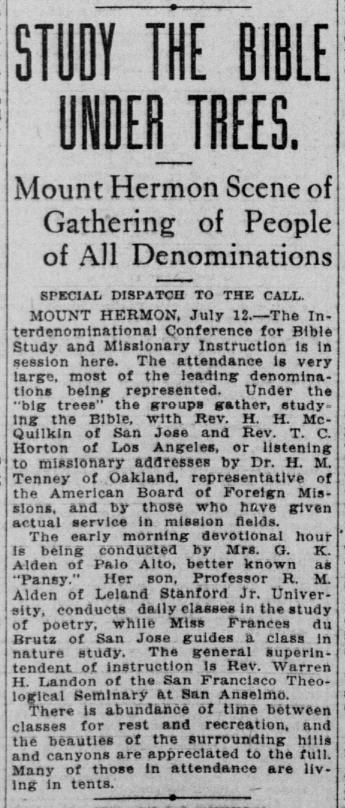
An announcement in the San Francisco Call, July 13, 1906.
An inviting announcement in the San Francisco Call, July 13, 1906.

Amid all the conference meetings, presentations, and Bible studies, she found time for her own writing.

I had a little retreat where I used to take refuge when I wanted quiet for writing or study. It was the burned-out stump of a sequoia tree. The space left was forty feet in diameter with a wall of stump all around. New branches had formed and had climbed till they reached away up toward the sky, and interlaced overhead to form a room of green. The sequoia leaves are odorous and make a lovely soothing atmosphere in which to rest.

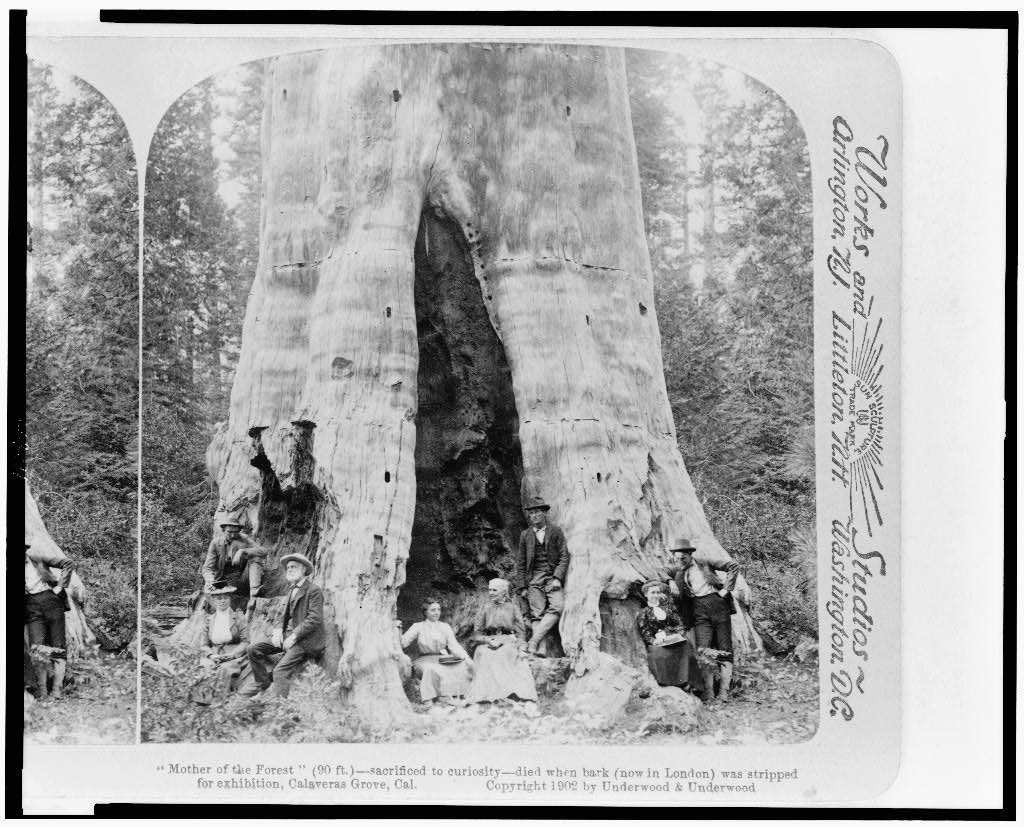
A giant Sequoia in nearby Calaveras Grove, California; 1902.
Giant Sequoia in nearby Calaveras Grove, California; 1902.

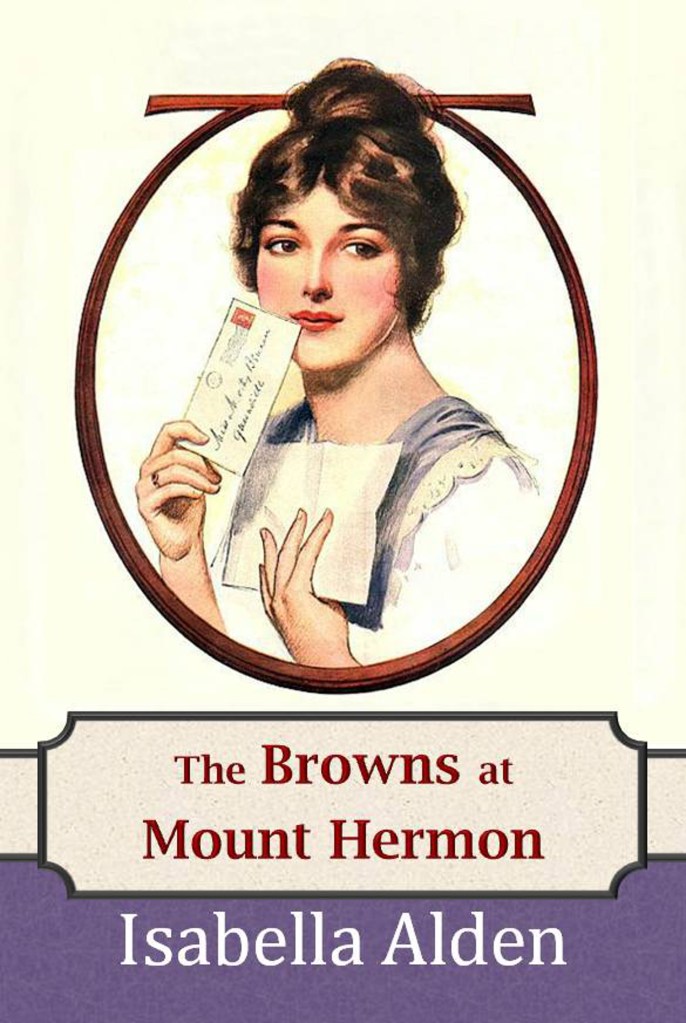
It was in this atmosphere that Isabella was inspired to write The Browns at Mount Hermon, which was published in 1907; and her experience at Mount Hermon even inspired her novel’s premise. During one specific summer, over 60 people with the surname Brown attended Mount Hermon; Isabella used that bit of trivia as the catalyst for a merry mix-up of people named Brown in her novel.

Cover of The Browns at Mount Hermon

Isabella cherished every lesson and every sermon she heard at Mount Hermon. Each summer for the remainder of her life—health permitting—she made the short trip to Mount Hermon, the beautiful place of worship and rest nestled in the mountains of Santa Clara.

Did you know Mount Hermon is still an active Christian camp and retreat? Find out more about Mountain Hermon by visiting their web site:

http://www.mounthermon.org/

Or visit Mount Hermon’s YouTube channel to see the latest videos of what’s going on at the camp:

https://www.youtube.com/user/MountHermon

The Bicycle Craze

Today it’s Bike to Work Day in Colorado and people all over the state are dusting off their two-wheelers and heading out to work.

An 1887 newspaper ad.

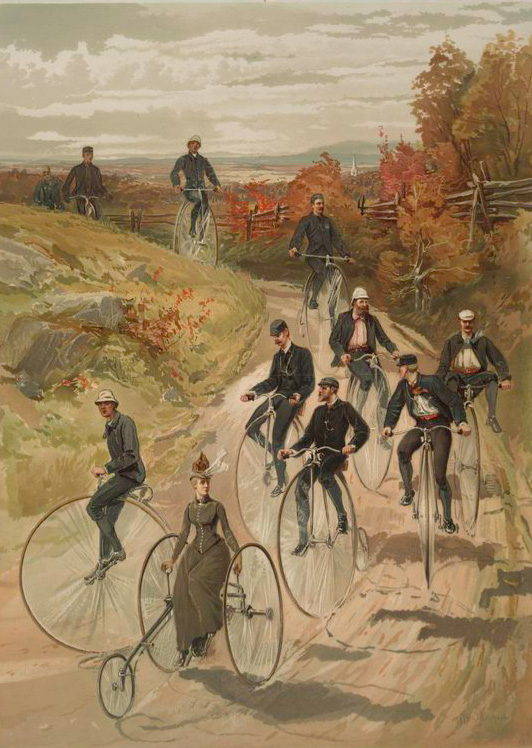
Bicycles have been around since the mid-1800s, when they were something of a novelty. They were expensive to buy and maintain, and they were sold almost exclusively to men.

Figure 2 from "The Modern Bicycle" by Charles Spencer, 1876.
Figure 2 from “The Modern Bicycle” by Charles Spencer, 1876.

.

Figure 4 from "The Modern Bicycle" by Charles Spencer, 1876.
Figure 4 from “The Modern Bicycle” by Charles Spencer, 1876.

It took exceptional balance and strength to operate an early bicycle and there were inherent dangers in their design.

An 1879 bicycle ad.
An 1879 bicycle ad.

When Isabella published Monteagle in 1886, bicycle riding was an acceptable pastime only for men of means. Her character, Hart Hammond, was a young man caught up in the bicycle craze.

Notice of a bicycle race. From The Advocate (Topeka, Kansas), June 21, 1893.

He belonged to a bicycle club, attended races, and may even have ridden in some races himself.

The starting line for a men's bicycle race.
The starting line for a men’s bicycle race.

Of all the many things which gave Hart’s mother anxiety, Hart’s involvement with a bicycle club “troubled her the most.”

An undated trade card depicting an early bicycle club on the move.

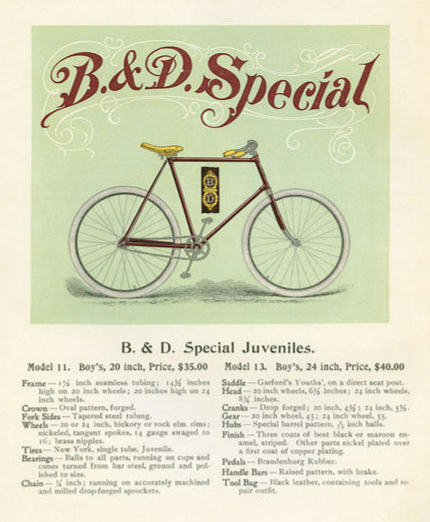
As bicycle design matured, bicycling became safer. By the mid-1890s the early high-perch models had evolved into bicycles very similar in design to our modern bikes.

An 1897 magazine ad for boys' bicycles.
An 1897 magazine ad for boys’ bicycles.


An 1893 ad for a cycle.
An 1893 ad for Victor cycles.

With those design changes, it was feasible for women to take up the sport. But there was an inherent danger of ladies’ skirts getting caught in the wheels.

An early trade card targeting women bicycle riders.

And corsets made breathing difficult for women even when they were relaxing; when it came to bicycle riding, women could do little but coast downhill without fainting.

A 1904 ad depicting a corseted female cyclist.

But that soon changed. As cycling became all the rage in America, a host of supporting industries sprang up. Clothing manufacturers produced ladies’ riding costumes.

An 1895 magazine illustration of bicycling outfits for men and women.

And they marketed corsets designed specifically for the active woman.

A 1902 ad for athletic corsets.

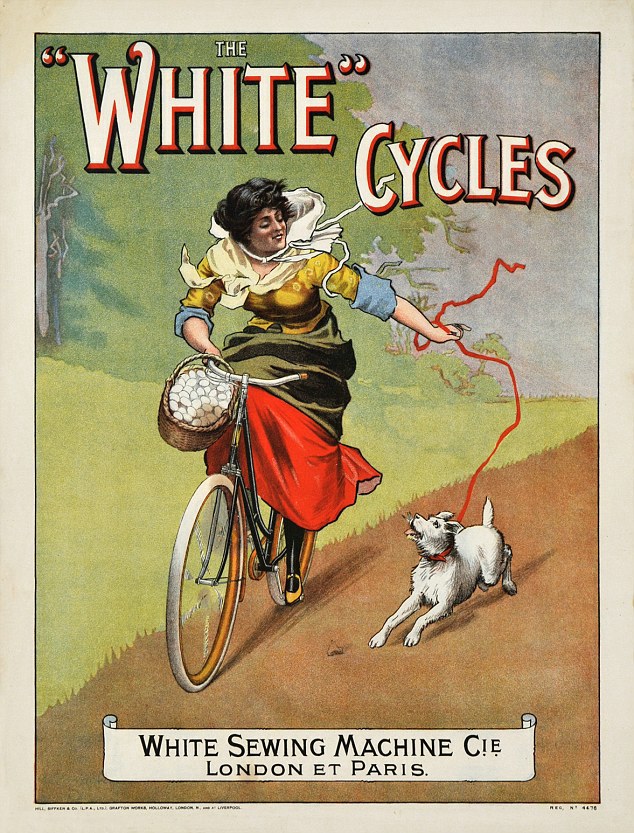
Bicycle manufacturers also began to cater to women riders. They designed new models exclusively for ladies; and they held classes on how to correctly mount and ride bicycles.

An 1897 ad for a ladies' bike.
An 1897 ad for a ladies’ bike.

Ladies joined previously men-only bicycle clubs or formed their own.

Newspaper coverage of a bicyclist's parade, watched by more than 100,000 San Franciscans.From the San Francisco Call, July 26, 1896.
Newspaper coverage of a bicyclist’s parade, watched by more than 100,000 San Franciscans.From the San Francisco Call, July 26, 1896.

They published member magazines and sold guide books about the best routes for bicycle excursions through cities or into the countryside.

Photograph of a lady cyclist. 1912.

The bicycle opened up a world of new transportation and freedom for women back in the early 1900s; and today we celebrate the important place the humble bicycle still holds in our lives.

Sports_Bicycles ed

Here are some fun videos you can watch about early bicycling:

Restored footage of an 1899 display of bicycle riding by the Catford Ladies’ Cycling Club in London:

The history of bicycling in early Denver, Colorado:

A clip of “The 1900 House” featuring bicycle riding at the turn of the century:

.

Queen of the Kitchen

If the study was the domain of the man of the house in Isabella’s time, the kitchen was the empire of the lady of the house.

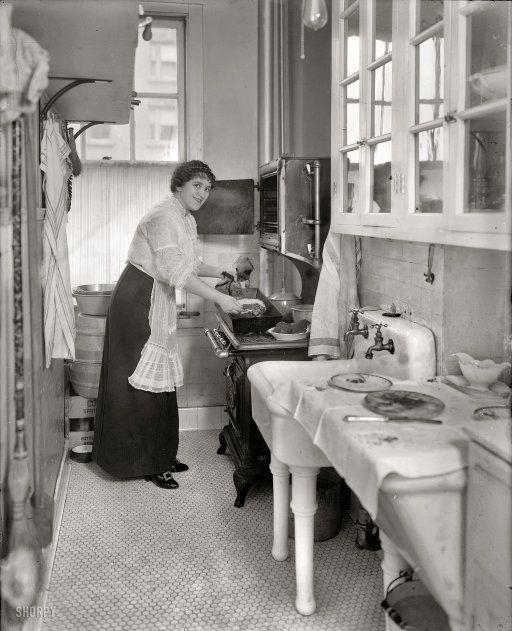
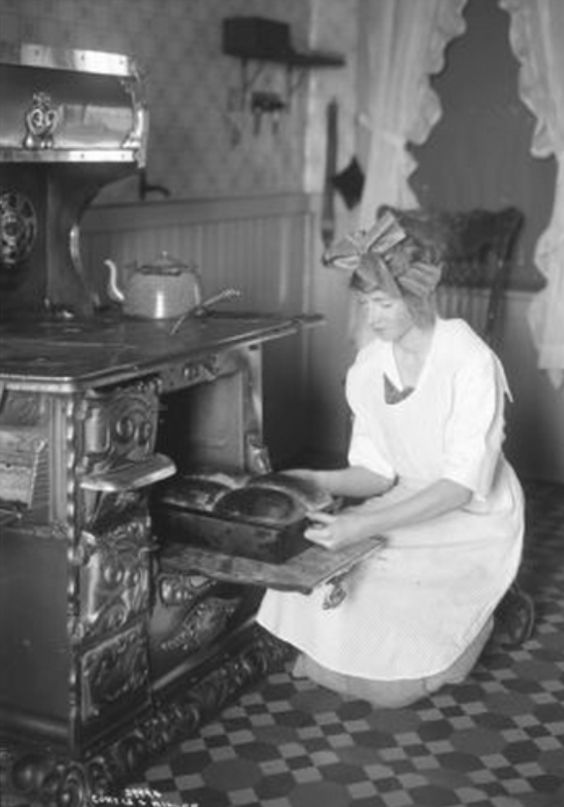
A middle-class kitchen in the early 1900s

Women toiled long hours in kitchens to make meals, preserve food for future use, launder clothing and linens, and heat water for baths and house-cleaning tasks.

A modern kitchen in 1914

Even when the lady of the house had help in the kitchen—a live-in maid or a local “girl” who came for the day—they still spent the majority of their time in the kitchen, where conditions could be extreme.

An American kitchen, circa 1900

In many households the kitchen stove burned 24 hours a day. The stove was stoked early in the morning to raise the heat so water could be boiled and breakfast could be cooked. It then burned throughout the remainder of the day until bedtime. In winter the kitchen was the warmest room in the house. In summer the kitchen was sweltering, with inadequate ventilation and no escape from the heat.

Baking Bread in 1914

Isabella’s book Ester Ried opens with a scene in the Ried kitchen, with Ester toiling in the kitchen on a hot day:

Apron 1910 It was a very bright and very busy Saturday morning.

“Sadie!” Mrs. Ried called, “can’t you come and wash up these baking dishes? Maggie is mopping, and Ester has her hands full with the cake.”

“Yes, ma’am,” said Sadie, appearing promptly from the dining-room, with Minnie perched triumphantly on her shoulder. “Here I am, at your service. Where are they?”

Ester glanced up. “I’d go and put on my white dress first, if I were you,” she said significantly.

And Sadie looked down on her pink gingham, ruffled apron, shining cuffs, and laughed.

“Oh, I’ll take off my cuffs, and put on this distressingly big apron of yours, which hangs behind the door; then I’ll do.”

“That’s my clean apron; I don’t wash dishes in it.”

“Oh, bless your careful heart! I won’t hurt it the least speck in the world. Will I, Birdie?”

And she proceeded to wrap her tiny self in the long, wide apron.

Apron and Laundry

Later in the book, when Ester returned home after a lengthy visit with her cousin:

Full apron 1906Ester was in the kitchen trimming off the puffy crusts of endless pies—the old brown calico morning dress, the same huge bib apron which had been through endless similar scrapes with her.

Not all aprons were as large as the kitchen apron Ester wore. In fact, ladies often had different aprons for different tasks.

Apron 1917

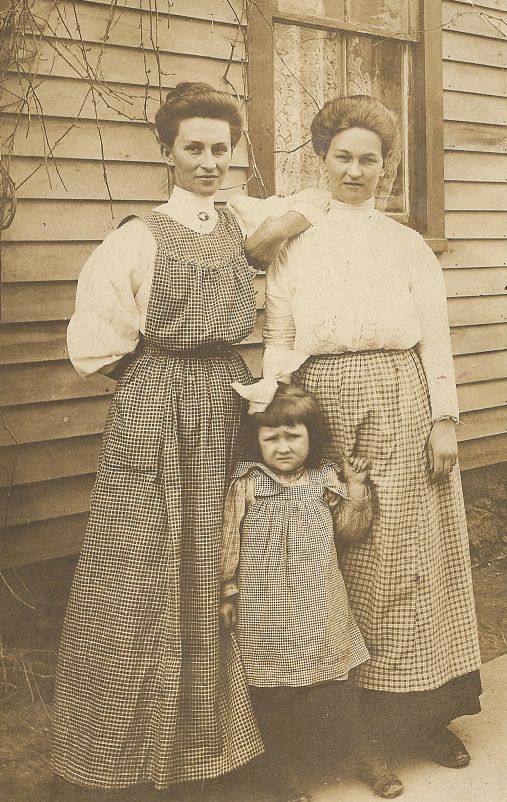
Work aprons were large and covered the entire front of a woman’s dress. They had plenty of pockets for thimbles, spools of thread, needles and pins, or any other household item the lady of the house wanted to have immediately at hand as she went about her daily housekeeping chores.

A 1910 photograph with the women of the family wearing three different styles of apron.

At the other end of the spectrum, tea aprons were feminine half-aprons that tied around a lady’s waist and covered her lap as she entertained family and guests at tea or luncheon.

Apron 1922

Aprons were relatively simple to make; popular ladies’ magazines often featured apron patterns or embroidery and trim designs to customize a home-made apron. In 1922 the Woman’s Institute of Domestic Arts and Sciences published a pamphlet of instructions for making a variety of different aprons. You can download a copy of here.

A 1904 magazine ad for Green Brand aprons.

Now, as in Isabella’s time, aprons come in many styles. And though they are no longer a staple in a woman’s wardrobe, there are many women today who love to make and wear aprons.

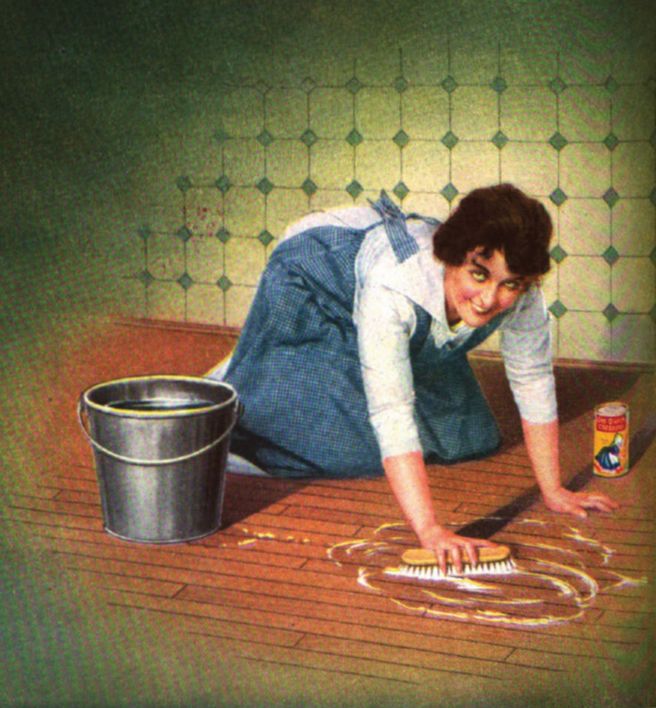
A 1914 ad for Dutch Cleanser

Want to see what’s hot in aprons today? Here are two sites that sell aprons:

Jessie Steele

Vintage Aprons

And you can visit Collectors’ Weekly to read a nice post about vintage aprons.


Do you ever wear an apron? Feel free to use the Comment box to share what you like about aprons or tell us where you like to shop for aprons.

.

.

New Free Read: The Exact Truth

Cover_The Exact TruthThe Bible is full of golden texts of inspiration and maxims of sound doctrine, but Zephene Hammond thinks they’re just words on a page. Although she considers herself a Christian, she doesn’t think those Bible verses have any real meaning in her life.

So when her Sunday school teacher challenges Zephene to look at the golden texts with fresh eyes, Zephene reluctantly takes up the challenge. Before long, Zeph sees that the Bible really can fit into her daily life and help her become a girl who always tells the exact truth.

This 1890 classic Christian novel was first published as  a serial in The Pansy magazine. Click on the cover to begin reading The Exact Truth now.

.

.
 

The Boy Killer

An 1894 issue of the Christian Intelligencer printed this letter from a young reader of the magazine:

“We have a league in our school; perhaps you have heard of it before? It is called the Anti-Cigarette League. I am a member of it.  Arthur Brown.”

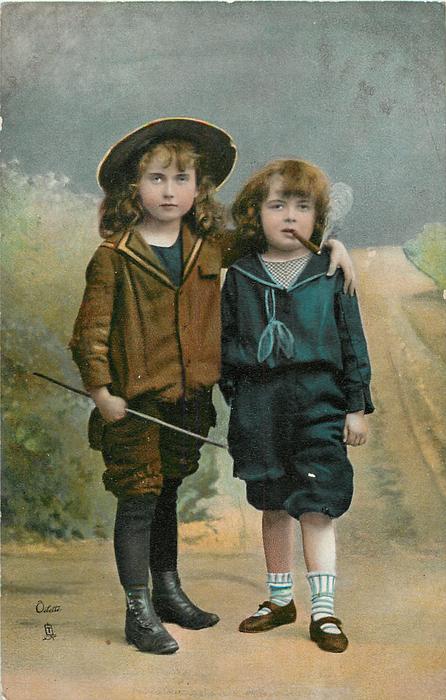
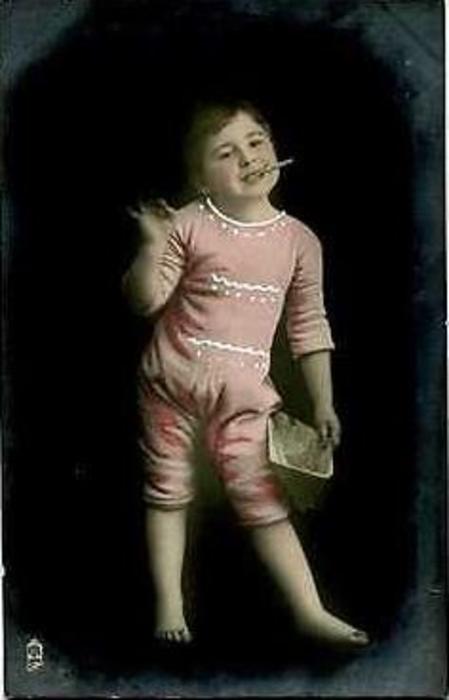
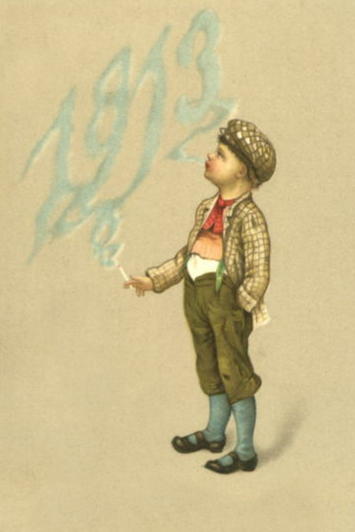
A 1903 hand-colored photgraph

When Isabella Alden saw that brief letter, she took up the cause of promoting the Anti-Cigarette League to young readers of her own magazine, The Pansy.

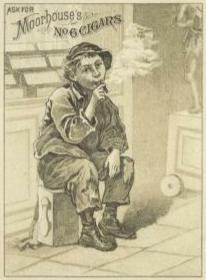
An undated ad for Moorhouse's Cigars
An undated ad for Moorhouse’s Cigars

Smoking among boys—and even some girls—was not uncommon in the late 1800s. Cigarettes were readily available and manufacturers targeted their cigarette ads directly at children.

For over 50 years tobacco companies inserted collectable cards into their product packages and encouraged consumers to "collect them all." This card, one of a series of 50, equated the wholesome Boy Scout organization with cigarettes.
For over 50 years tobacco companies inserted collectable cards into their product packages and encouraged consumers to “collect them all.” This card, one of a series of 50, equated the wholesome Boy Scout organization with cigarettes.

There were no restrictions on how cigarettes were made, so cigars and cigarettes were often laced with opium, strychnine, and arsenic.

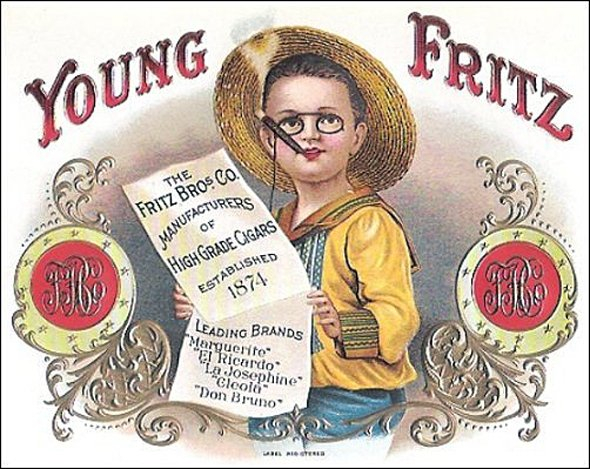
Illustration on the lid of The Fritz Bros. & Co. cigar box.

They were inexpensive, too; cigarettes made of inferior tobacco and paper sold for mere pennies, and some saloons and retailers gave cigarettes away to children so they would become addicted and return to purchase more.

Cigarette pack trade card, 1908.

Isabella was disgusted by such practices and wrote an article on the topic that appeared in Christian magazines, including The Pansy. Her opening paragraph was powerful:

The “Boy-Killer”

This is a startling name which a prominent New York physician gives to the cigarette. He describes the vile thing as made of tobacco soaked in nicotine, which has in it several other deadly poisons. Even the paper in which it is wrapped is whitened with arsenic. He declares that the lists of deaths found daily in our papers, caused by “heart-failure,” ought most of them to read, “caused by cigarette smoking.”

Admonition Cigarette

She was fighting an up-hill battle. For every physician who believed cigarettes were dangerous, there were dozens who believed cigarette smoking was helpful to patients. Doctors prescribed cigarettes to cure a variety of complaints, from asthma to stuttering to nervous conditions.

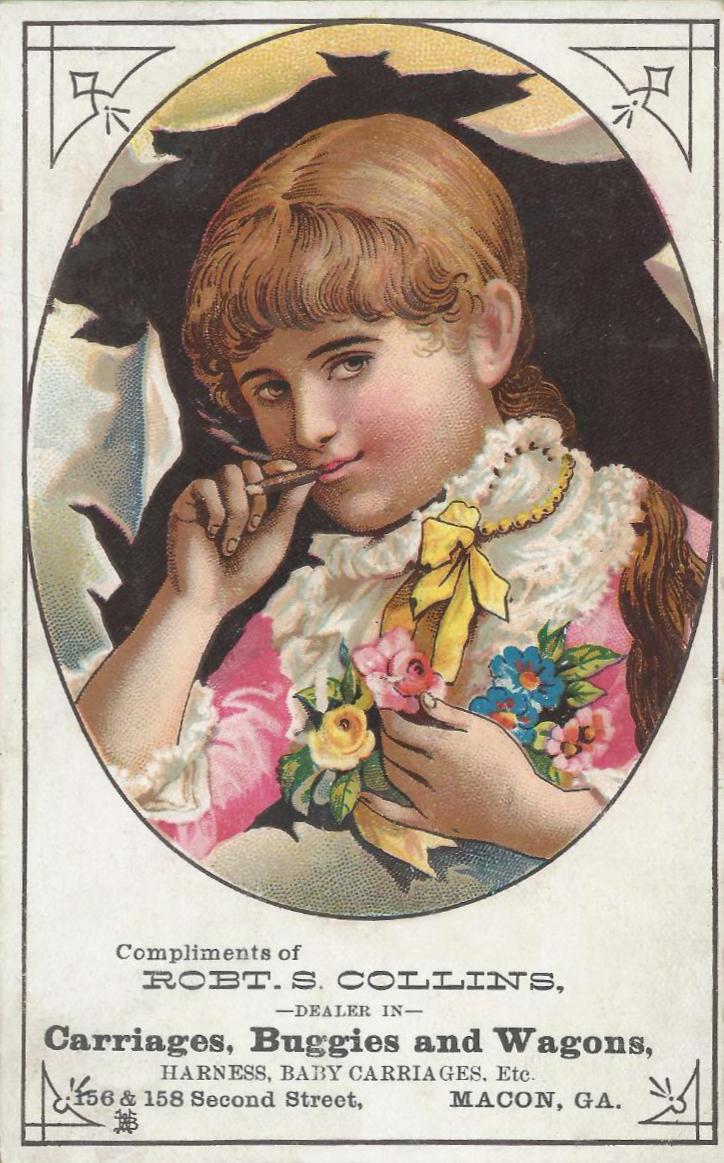
An undated trade card for a carriage and buggy dealer

But Isabella was convinced cigarette smoking was dangerous, especially for growing boys. She wrote:

One cannot walk the streets of any town or village without having cigarette-smoke puffed in one’s face, from the lips of mere boys.

Skull undated

She felt it was her duty to explain to parents the risks of smoking for children, and she didn’t shy away from using her pen to spread the word.

Artwork from a promotional calendar distributed by a tobacco company in 1893.

In The Hall in the Grove, Isabella described the character Paul Adams this way:

To put it in brief: at the time our story opens, Paul Adams was an ignorant, good-natured, tobacco-chewing, cigar-smoking street loafer. He smoked cigars when he could get them. Not that he began by being particularly fond of them—in fact, he found it unusually hard work to learn. He had to devote to this accomplishment the courage and perseverance that would have told well for him in other directions; but it is a taste that once acquired a boy will gratify if he can.

In Chrissy’s Endeavor, Chrissy Hollister learns her own brother Harmon is heading down a dangerous path, when his health begins to fail. Chrissy’s father gives her the bad news and asks her to “get such an influence over Harmon as would induce him to give up late hours, and late suppers, and cigarettes.”

The Women’s Christian Temperance Union, of which Isabella was an active member, used their regular weekly newspaper columns to warn parents of the perils of tobacco.

From The Enterprise (Wellington, Ohio). September 13, 1893.

By the early 1900s the tide shifted; the public and the medical community began to reconsider the effects of smoking on health. Although the tobacco companies continued to glamorize cigarette smoking, churches and communities banded together to raise public awareness about the dangers of smoking. They petitioned lawmakers to enact legislation to eliminate tobacco sales and ran articles and warnings in newspapers across the country.

From The Bemidi Daily Pioneer (Bemidji, Minnesota). May 18, 1907.

Schools began educating children about the dangers of smoking and found unique ways—like this essay contest—to drive the lesson home:

The Willmar Tribune (Willmar, Minnesota). June 7, 1922.

These efforts—and millions more like them—laid the foundation for the regulations and laws we have today that prohibit cigarette companies from selling and marketing tobacco products to children.


Would you like to learn more? Stanford School of Medicine researched the impact of tobacco advertising. Click here to see more examples of tobacco company advertising.

You can also click here to see vintage advertising from the late 1800s and early 1900s on Isabella’s Pinterest board.

.

.

Now Available: We Twelve Girls

We Twelve Girls is now available for your e-book reader!

Cover We Twelve GirlsIt’s a sad day at the Clayville boarding-school for young ladies, where twelve students—best friends all—must leave school and return to their homes in different parts of the country. But before they depart, their Bible class teacher gives each girl a book of verses and charges them to select one verse a week to apply to their lives.

That simple assignment ignites a year of discovery as each young lady learns—in very practical ways—what it means to live a God-centered life according to the Bible.

This edition of the 1888 classic Christian novel is complete and unabridged.

Click here to read a preview of We Twelve Girls.

Amazon Kindle   Kobo Button   Barnes and Noble button   iBookstore

.

.

The Victorian Man Cave

In upper- and middle-class homes across America at the turn of the last century, the man of the house had one room that was his exclusive domain: The study.

Old photo of Ralph Waldo Emerson's study, Concord, Massachusetts
Old photo of Ralph Waldo Emerson’s study, Concord, Massachusetts

The study was a place where the man of the house took quiet refuge. In his study he took care of business matters, wrote letters, or read his newspaper or favorite book in solitude. In some of Isabella’s books, like Jessie Wells, the local minister locked himself away in his study to work on his sermon or write letters to the members of his church.

Another view of Emerson's study.
Another view of Emerson’s study.

In Isabella’s books, the rooms designated as studies had common characteristics: a bookcase filled with books, a desk or large study table, and sufficient light to read by once the sun went down. In her novel As in a Mirror Isabella Alden described John Stuart King’s study this way:

The walls were lined with many rows of well-filled shelves, and a searcher among them would hardly have failed of finding every choice book of the season, as well as the standard volumes of the past. A bookcase devoted to standard magazines was crowded almost to discomfort, and the large study table was strewn with the very latest in newspaper and magazine.

The president's study at a small training college
The president’s study at a small training college

Even little Daisy Bryant understood that the study was a special room in the house. The eight-year-old heroine of Miss Dee Dunmore Bryant lived with her mother and siblings in cramped quarters; but Daisy designated one small section of their main room to be their study:

The floor had a neat strip of rag carpeting over in the part which Daisy called “the study.” There was also a little square table over there, with the Bible on it, and Daisy’s geography, and Ben’s arithmetic, and a tiny basket that held Line’s crochet work. At first, Daisy had objected to the crochet work—that it did not belong to a study—but one evening, in the very middle of Miss Sutherland’s study table, what did she see but a fluffy ruffle with Miss Sutherland’s needle set in its hem, and her thimble lying beside it! Since that time the crochet basket had held peaceable possession.

In the story Miss Sutherland lived in the big house on the hill; and since Daisy’s mother often did sewing for Miss Sutherland, Daisy had seen the Sutherland’s study when she delivered completed work to her. Daisy dreamed of one day living in a home with a real study, just like the Sutherland’s had, with plenty of books, and with framed mottoes on the walls.

Undated photo of Henry Wadsworth Longfellow's study, Cambridge, Massachusetts
Undated photo of Henry Wadsworth Longfellow’s study, Cambridge, Massachusetts

There was a common understanding—sort of an unwritten rule—that no one but the man of the house was allowed in the study except by invitation. After Perry Harrison had an argument with his wife in From Different Standpoints, he retreated to his study, where he knew he would not be interrupted, and he could calm down after their angry exchange:

When Perry came back from the station, after seeing the party off, he shut himself up in the study, not seeing his wife until dinner-time. Then all traces of emotion had disappeared, and he was the affable gentleman exerting himself to be entertaining.

Retailer Jordan Marsh advertisement for a suite of home furniture appropriate for a study or library.

Because the study usually was the bastion of the man of the house, it was only natural that others did not find the place calming and comfortable. If a father had to scold a recalcitrant son or daughter, he called the child into his study. If a minister felt the need to counsel a wayward congregant, he did so in private in his study. Under those circumstances, the study became less like a quiet refuge and more like a place where wrong-doers were brought to account and punishments were doled out.

That thought was uppermost in the minds of Eurie, Marion, Ruth, and Flossie in The Chautauqua Girls at Home when they had to summon their courage to visit their minister, Dr. Dennis, in his study.

“Doesn’t it make your heart beat to think of going to him in his study, and having a private talk?”

“Dear me!” said Flossy. “I never shall think of such a thing. I couldn’t do it any more than I could fly.”

Early photo of the study at the Adams mansion in Quincy, Massachusetts.

Later, when Ruth went to speak with Dr. Dennis about finding work she could do for the church, she found herself alone with him in that dreaded room:

It was a place in which she felt as nearly embarrassed as she ever approached to that feeling. She had a specific purpose in calling, and words arranged wherewith to commence her topic; but they fled from her as if she had been a school girl instead of a finished young lady in society; and she answered the Doctor’s kind enquiries as to the health of her father and herself in an absent and constrained manner.

Charles Dickens' study, about 1922.
Charles Dickens’ study, about 1922.

But in one of Isabella’s books, the tables were turned on the man of house. In The Hall in the Grove, Dr. Monteith—the driving force behind the town’s Chautauqua Literary and Scientific Circle—was in his study when Paul Adams complained to him that the Circle put more emphasis on studying books about ancient Rome than on studying the Bible. Dr. Monteith was shocked.

Seated in the beautiful little study, by the green-covered table, under the shaded light, the Doctor looked full into the earnest troubled face of his visitor. “Now, my friend, do I understand you to mean that the experiences which you have had with the Circle led you to think that we gave the most important place to other books, and shoved the Bible out?”

You would have been sorry for Dr. Monteith, could you have seen his distressed face. He arose and began to walk back and forth in the little study, pondering how he could best undo what his heart told him had been grave mischief.

Dr. Monteith knew that the Bible was “first, best, purest, highest; incomparably above any and all other books.” He had to do some quick soul searching to figure out how he had misled Paul Adams—as well as an entire Chautauqua Literary and Scientific Circle—so far away from the foundation of all knowledge, the Bible.

Once Dr. Monteith realized his error, the atmosphere in his study changed dramatically. He apologized to Paul Adams and assured him that reading and knowing about the Bible was not the same as reading and knowing the Bible. And before Paul left his study, Dr. Monteith led the young man to make a momentous decision concerning his future and his soul.

So the study was sometimes an important setting in Isabella’s books, as well as in her short stories. In 1888 Isabella published “Papa’s Study”, and you can read it here for free:


PAPA’S STUDY

It was a very beautiful room, so crowded with books, and papers, and conveniences of all sorts, that you would have supposed its owner could have nothing to wish for, and must be a happy man. Yet on the morning about which I am telling you, he did not look in the least happy; on the contrary, if you had counted the wrinkles between his hair and his eyes, and could have seen the puckers around his lips, which were hidden by a heavy moustache, you would perhaps have called him cross; and you would not have been very far from the truth. Something had happened that morning which made him feel like being cross with everybody.

“To think that I should have forgotten it!” he was saying to his wife, speaking in an injured tone, as though somebody was certainly to blame. “I would not have had it happen for ten, no, not for fifty dollars; and there he was, I suppose, at the depot, looking in all directions for me, and the train waited here fully twenty minutes for the down express. We might have had time enough to settle the whole business. It is too provoking to endure.”

Nevertheless, he knew it would have to be endured, for the train had been gone at least an hour.

“Why didn’t you make a memorandum of it?” his wife asked, taking fine stitches in the ruffle she was making, and speaking in that calm , even tone which is sometimes really irritating to excited people.

“Why, I did, of course; and this morning I looked for my diary to see if there was anything which needed attention before mail time, but I had changed my coat and left it in the the other pocket. A diary is simply a nuisance, anyway; it is always in some other pocket when one wants it the most. I’d like to know how a busy man like myself, who has three ways to go at once, can be expected to remember everything.”

Nobody had told him that he was expected to do any such thing, but he spoke as sharply as though someone had, and walked the floor, and looked wrathful.

Poor man! He had been sadly disappointed. Besides missing a very important bit of business by his forgetfulness, he had missed the sight of a friend whom he very much wanted to see.

Now, his little daughter Almina was in the library annex, hidden from view by heavy curtains, but within distinct hearing; and if you could have seen her I am afraid you would have thought she acted very strangely. Instead of looking thoughtful and sympathetic over her father’s troubles she clasped her two pretty hands together and indulged in a series of happy little giggles. You see, she knew something which her father did not.

In order to have you understand, I shall have to go back a few days. The father’s birthday was coming, and Almina knew it; I am not at all sure that the father did, for he was so busy a man that he forgot even that. And Almina had, with her own hand, written, and, what was much harder, addressed a letter all herself, to a certain “Mr. Frank Smith, Toledo, Iowa.” Truth compels me to state that she spoiled three envelopes before accomplishing it to her satisfaction. In the first one she made the letter F look so much like a T that it read like Mr. Trunk Smith, and she felt sure that would not do; and then, because she had visited once in Toledo, Ohio, and heard about it all her life, and had never heard of Toledo, Iowa, what did she do but write it out nicely on the second envelope—Toledo, Ohio. Of course that wouldn’t do. By this time she was nervous, and blotted the third one badly, but at last it was well done, and the letter was sent.

On the very morning of which I write, there had come an answer to her letter, in the shape of a lovely business-like looking package, done up in heavy paper, and packed in burlap and excelsior, and when her eager fingers reached the treasure thus carefully guarded, it was the prettiest walnut affair, with a lock and key, and inside, a row of compartments bearing the names of the months and the dates; and so arranged that memoranda of what ought to be done, even weeks ahead, could be slipped in, and would remain out of sight until the morning of the day when they were needed, when they would drop into view, and beg to be looked at.

“If papa had only had his lovely little Office Tickler,” she said to herself, as she giggled musically, “he wouldn’t have missed seeing Mr. Felt this morning, I mean to tell him that if he had been forty-three last week, instead of tomorrow, it would have been all right. Oh! I do wonder if there is something he ought to remember tomorrow, and might forget. I mean to ask mamma.”

So the moment she could get a private audience with mamma, they two put their heads together over the fat old diary, whose sides were bursting with important papers too heavy for it to carry. They looked carefully down the page for April 11th, papa’s birthday, but it seemed to be an unusually quiet one. However; the next day made up for it; item after item of business crowded itself in to receive attention; foremost was this:

“MEM. Be sure to remember to send Seward’s note to the bank before three o’clock. It is in the left-hand drawer of the lower secretary.”

“Oh! look,” said Almina, “that is very important, isn’t it? Because papa has underlined it; and yet it is hidden in between so many other things to do, he will be quite likely to forget it. Oh, mamma! Couldn’t you get it for me to put in the Office Tickler?”

Mamma promised to try, and she tried, and accomplished it. There was great fun in the pretty library the next morning. Papa admired the beautiful walnut box to even Almina’s satisfaction, and assured her that it was the most ingenious little creature he had seen in many a day, and he was sure it would save him much time and patience. And then he heard all about how she earned the money to buy it, and “wrote the letter her own self,” and “had it come by express to her own address;” and he called her a dear little woman of business, and kissed her as many times as he was years old.

And all the time the important paper which was to be remembered the next morning without fail, was hiding behind its partition, biding its time.

The next morning Almina had forgotten all about it, but at eleven o’clock her father came hurriedly into the music-room where she was practising, and stooped down and kissed her.

“Papa ought to be tickled now in good earnest,” he said with a curious mixture of fun and earnestness in his voice. “What will my little girl think when I tell her that her Office Tickler has saved me at least five hundred dollars? I did forget all about the note, important as it was. This is a very busy, anxious day with me; but just as I was hurrying to go to the bank, I caught sight of my new possession, and saw I had not changed the date; I had not begun to use it yet, but I determined to gratify you by leaving it in order; and the moment I touched the card, out dropped that very forgotten note. I’m in great haste, little daughter, but I felt as though I must stop and tell you what a valuable selection you had made for my birthday present.”

A very happy little girl was Almina, then.

Ad for Office Tickler
An actual 1887 newspaper advertisement for F. E. Smith’s Office Tickler.

.

.