A Dozen of Them – Chapters 7 and 8

This week, Joseph learns to be a help instead of a hindrance to one of his teachers; and Mrs. Calland shares a story with Joseph that has an immediate effect on him. If you missed any of the previous chapters, you can read them here.


A Dozen of Them

.

HE INCREASED HIS PEOPLE GREATLY; AND MADE THEM STRONGER THAN THEIR ENEMIES.
THE LORD IS THY KEEPER.
I WILL BE THY MOUTH, AND TEACH THEE WHAT THOU SHALT SAY.
CHRIST OUR PASSOVER, IS SACRIFICED FOR US.
WHEN THOU PASSEST THROUGH THE WATERS I WILL BE WITH THEE; AND THROUGH THE RIVERS, THEY SHALL NOT OVERTHROW THEE.

.

Several of the boys were listening and laughing.

“And he drawls his words,” said Joseph, “and loses his place, and drops his lesson leaf; and never by any luck or chance asks a question that isn’t right before him on the leaf. Oh, he’s a rare teacher! I tell you what it is, when I get to be a man I won’t teach Sunday-school unless I have an idea of my own to give out now and then.”

Joseph’s sister Jean overheard this; it made her sad. She knew very well that Joseph’s teacher was one not calculated to win the respect of a bright boy like her brother. He was a good man, but he did not seem to know how to teach a class of wide-awake boys. She talked with Mrs. Calland about it, and wondered if anything could be done. This was the way Mrs. Calland came to have her talk with Joseph.

“How much time do you give to the preparation of your lesson, Joseph?”

“Why, there isn’t anything to prepare. He just asks the questions, and we read the answers, when we can find ’em.”

“I know; but suppose you should come into my history class with as little preparation for reciting as you give to the Bible lesson; what would be the result?”

cover_bible-stories

Joseph shrugged his shoulders. “Mrs. Calland, if you should come into the history class and do nothing but put on your spectacles and read from the book, ‘What is the name of this lesson? What did Moses then say? What did Moses do next?’ I don’t know what kind of lessons we would get.”

“But I want you, for the moment, to forget about every person but Joseph Holbrook, and tell me what he does to make the lesson interesting.”

“I!” said Joseph, astonished. “Of course I can’t do anything.”

“I don’t quite understand why. You certainly asked some good questions in the history class yesterday, which helped the interest very much.”

“Oh, that’s different,” said Joseph.

“I know it is different; you were interested in history, and wanted to know more about it; and you were interested because you had carefully studied the lesson.”

“I should not know a thing to ask in Sunday-school,” declared Joseph stoutly, but Mrs. Calland only smiled on him and went away. It was because of that talk that he stopped, astonished, over the third verse, when he went to his little book to select his next one.

“I will be thy mouth, and teach thee what thou shalt say.”

“Queer!” said Joseph aloud. He meant, it seemed queer to him that those words should be there just then. Was it a possible thing that the Lord might mean him, Joseph Holbrook, to consider them as spoken to him, about the Sabbath-school lesson, for instance? Was there anything he could say which might help?

It was this thought which made him read the next lesson over carefully, that very night. There were some references in it which he did not understand, and he resolved the next day to look them up; this he did, and found himself growing interested.

He read the lesson over each day that week, and thought much about it, chiefly because he had become so interested that he could not help thinking about it.

On Sunday, as soon as the lesson was read, he asked, “How many Israelites do you suppose there were at that time?”

The teacher looked astonished, but pleased, and was ready with his opinion.

“Seems to me they had forgotten Joseph very soon,” said young Joseph again. “It wasn’t so very long after he died, was it?”

This started more talk. Then the treasure cities grew very interesting; Joseph had been studying in history that week, something which was connected with them, and the talk which was started was pleasant and profitable.

cover_the-story-of-joseph

“Do you think it was a very wise plan which that old king had?” Joseph asked. Then the boys each described the plan which he would have tried if he had been king; and altogether, the superintendent’s bell rang before they were half through with the list of printed questions.

“Didn’t we have a good time today?” said one of the boys, passing out. And the teacher pushed his spectacles on his forehead and told Joseph it did his heart good to see how carefully the lesson had been prepared.

Joseph thought about it a good deal. He said nothing to the scholars at home. None of them were in his class; but he had a little talk with Jean, that night.

“I forgot my verse,” he said. “Didn’t think of it once till Sunday-school was out; but I asked lots of questions, and answered some, and had a real good time; I only did it because I was interested and wanted to. Do you think, Jean, that the Lord might have put into my mind some of the things to ask? Because the others seemed interested in them right away.”

“I haven’t a doubt of it,” said Jean heartily. “He helps us in all sorts of quiet little ways, as well as in great ones. Besides, He promised, you know. You don’t suppose Moses was the only one He was willing to tell what to say?”

Joseph had no answer ready. He sat silent and thoughtful for some time; it seemed a wonderful thought that the Lord could possibly care what questions he asked in Sunday-school. Yet the “verse” had been chosen by him for the month, and in school as well as out, he was bound to trust the Lord for words to speak.

“I know one thing,” he said suddenly, “I shall always study my Sunday-school lesson after this; it makes Mr. Stevens a much more interesting teacher!”

divider-05

.

JESUS SAID UNTO THEM I AM THE BREAD OF LIFE.
JESUS SAID UNTO HIM, THOU SHALT LOVE THE LORD THY GOD WITH ALL THEY HEART.
THOU SHALT LOVE THY NEIGHBOR AS THYSELF.

.

Rettie was seated on the bright rug in the schoolroom. It was Saturday, and it was raining. Joseph had been, for the last half-hour, entertaining Rettie, making a building for her out of spools and buttons, with scissors for the big gate; now she was absorbed in a lovely red paper heart which he had just cut out for her, and he had time to glance over his verses and decide which to take.

“Nobody ever does it; I never saw or heard of a fellow who did.”

Mrs. Calland came into the room at the moment.

“What is it, Joseph, that nobody ever does?” she asked.

Joseph looked up astonished, then laughed; he did not know he had spoken aloud.

“I was thinking of this verse,” he answered: “‘Thou shalt love thy neighbor as thyself!‘ I don’t believe people ever do that.”

“I’m not sure; I heard of a little boy, once, who loved a very little girl-neighbor of his so much better than himself that he gave up a whole hour of his Saturday afternoon to her, because she could not go out in the rain.”

“That won’t do,” said Joseph, laughing again, though his face flushed and he looked pleased. “I didn’t want to go with the boys, and I had nothing in particular to do, and would rather amuse Rettie than not; so you see, I just pleased myself.”

arm-chair-1911-ed“I see. Well, I knew a man once, who in a small matter carried out the rule. He was a poor man and he wanted a certain kind of easy chair for his daughter. A neighbor of his who had lost a great deal of money and was selling his goods, and going to move away, had a chair of the kind wanted, and offered it to this man for five dollars. It was worth a great deal more money than that, but its owner did not expect to get what it was worth, and needed money; so the poor man bought it for five dollars and was to bring the money for it in the afternoon and take it away. In his shop that morning, he heard a gentleman say he was going to offer ten dollars for that very chair. ‘Now,’ said the poor man to himself, here is something for me to think about; I can’t afford to pay ten dollars for the chair, but this man can, and is willing to do it, and its owner needs the money; to be sure I have bought the chair and can claim it if I choose, but then, if I were in his place, what would I want done?’ The end of the matter was, that he went at noon and told the man that he would not take the chair away, because he thought someone was coming to offer ten dollars for it. The other man appeared, just as he said he would, and the owner of the chair got his ten dollars. What do you think of it all?”

“Why,” said Joseph, “I think the first man had a right to the chair for five dollars.”

“I don’t doubt it; at least, what we call a legal right; but judged by the verse you have just repeated, I am not so sure of it.”

Then Mrs. Calland went away, leaving Joseph more thoughtful than little Rettie liked.

He said no more about the chair or the verse, neither did Mrs. Calland; but she smiled to herself when she heard Joseph’s voice in the hall that evening, talking to little Dick Wheeler:

“Here, little chap, is your knife. I really don’t think you ought to sell it for a quarter; it is all I can afford to pay, but if you really want to get rid of it, I know a boy who would pay as much as forty cents.”

1924-magazine-ad-for-remington-pocket-knife
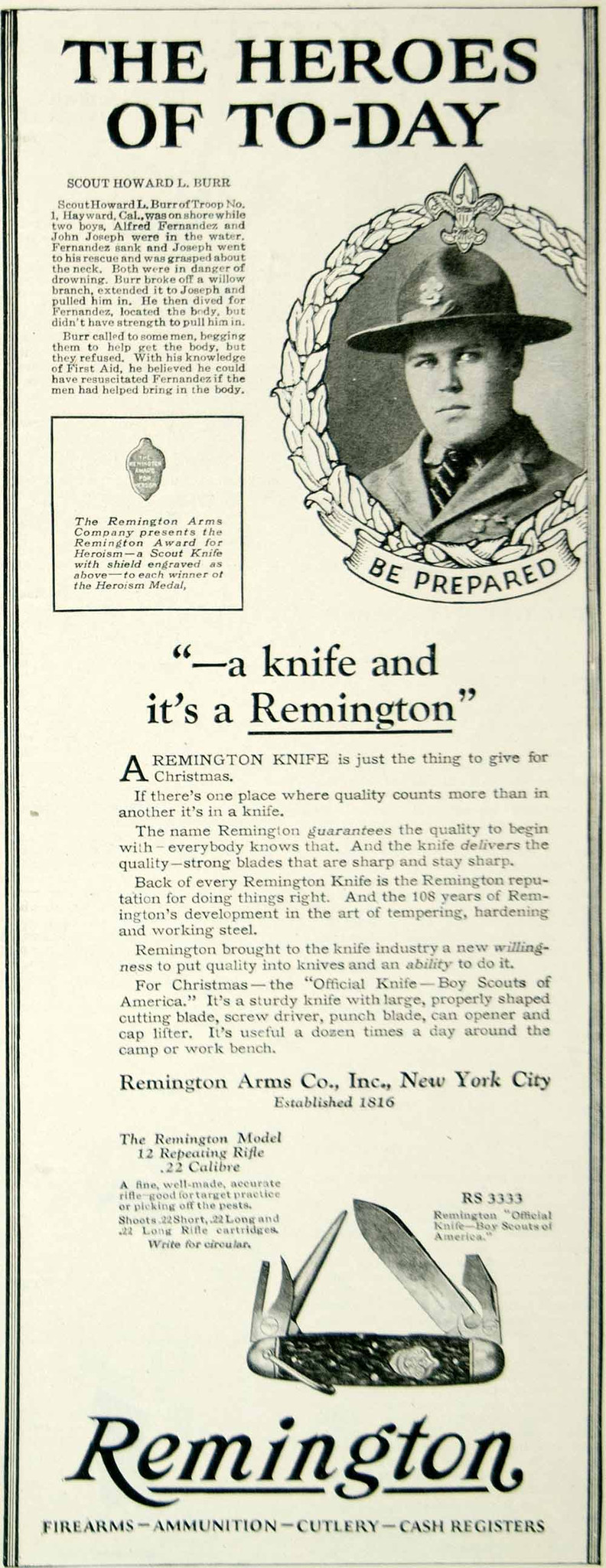
A 1924 magazine ad for Remington’s “official” pocket knife of the Boy Scouts, featuring Scout Howard Burr of Hayward, California.

“Why!” said little Dick, “I did sell it fast and true.”

“I know you did, but I’ve brought it back. You see, I’m sure you can get forty cents for it, and I’m sure it is worth it, and I’m sure if I were in your place I should want to have it; so here’s the knife, as good as it was day before yesterday, when I bought it.”

“Joseph has discovered that little Dick is his neighbor,” said Mrs. Calland softly. “I hope he doesn’t imagine that I knew anything about the knife. How strange it is that I should have happened to tell him that story! And how steadily the dear boy grows!”


We’re nearing the end of the story; only two more installments to go! Chapters 9 and 10 will post on February 7. See you then!

.

A Dozen of Them – Chapters 5 and 6

In this installment of A Dozen of Them by Isabella Alden, Joseph struggles with temptation, and receives a gift that is a surprise to him … and to others!


.

A Dozen of Them

.

GOD WILL PROVIDE HIMSELF A LAMB FOR A BURNT OFFERING.
SURELY THE LORD IS IN THIS PLACE, AND I KNEW IT NOT!
AND HE SAID, I WILL NOT LET THEE GO EXCEPT THOU BLESS ME.
THE SECRET OF THE LORD IS WITH THEM THAT FEAR HIM; AND HE WILL SHOW THEM HIS COVENANT.

.

It was evening, and Joseph was alone in Mrs. Calland’s classroom; he had been left there in charge, to receive any messages which might come to Mrs. Calland while she was away attending to other duties. Joseph was often the one chosen for this work; as a rule, he was proud of the trust. Tonight he was restless and unhappy. A great temptation had beset him. Examination day was drawing very near; there were reasons why he was especially anxious to appear well in arithmetic. He had worked hard over his lessons, and tonight he looked hard at the little walnut secretary and felt his face flush over the thought which haunted him.

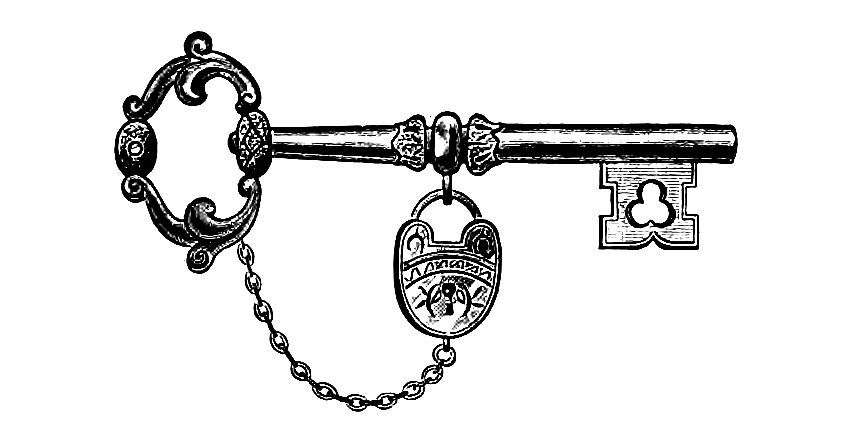
He had heard Mrs. Calland when she said with a half-relieved sigh as she folded a large paper, “There! I have selected the examination problems with as much care as possible. The scholars who can solve those will prove that they have worked faithfully during the term.” Then she had placed the paper in a small box on the third shelf of her secretary, and locked the door.

antique-key

What was there strange about all that? Nothing, only a very unusual thing had happened. At this moment the secretary was not only unlocked, but the door stood half-way open. During all Joseph’s stay in the house he had never seen the door open before, unless Mrs. Calland stood close to it. Now for his temptation: that paper, he was so near to it—if he could only know just what problems were to be given out on examination day! Just to see whether any of them needed his special attention. Of course he would not copy any work; he wouldn’t be so mean as that. All he wanted was a glance at the different pages from which the selections were taken; then he would work over all those pages, and all the pages near to them on either side. What harm could there be in that? It would simply be a review, and Mrs. Calland believed in reviews! Yes; he reasoned in just this ridiculous way, sensible boy as he generally was. Don’t you know that Satan often makes fools of people?

It is sorrowful to tell, but Joseph’s fingers seemed to ache with the longing to get hold of that paper. It could be done so easily, and replaced, and no one be the wiser. People always knocked who came to that door; no one but Mrs. Calland herself would enter until he gave the invitation; and Mrs. Calland, he knew, would be engaged for at least an hour. He moved toward the secretary slowly; much as though a serpent was seated on the shelf, charming him forward.

As he moved, he re-arranged the story in his mind, making it sound better. All he wanted now was to find out whether certain pages which had been especially hard had been selected from, so that he might make himself doubly safe on those pages. He has come nearer; he is right beside the shelf! His hand is outstretched; another moment and he will have the precious paper. Wait! Look at the door! Slowly, steadily, as if moved by some unseen hand, it glides by the outstretched arm and closes. Click! The paper is safe; the door has a spring lock, and only the tiny key on Mrs. Calland’s watch chain can open it!

secretary-desk_frances-benjamin-johnston-photographer-1929_from-the-library-of-congress

Joseph drew a long breath, and his heart beat so hard that it made him feel faint. How came that door to close just at that moment? Not a breath of air seemed to be stirring in the room; not a jar that Joseph could imagine, had there been to do the work. At that moment, almost as distinctly as though a voice had spoken them, Joseph seemed to hear the words:

“Surely the Lord is in this place, and I knew it not.”

This was not his chosen verse; in fact, he had not chosen one. He had declared, as he read them over in his tiny book, that there wasn’t a verse there which a boy could use; and he had waited in doubtful mood what to do about his promise, and had learned none of them, so he thought; yet this verse, it seems, had clung to his memory, and came now solemnly before him.

Was it possible that God had sent an angel to close the door and so “shield” this new Joseph from his enemy? The perspiration started on the boy’s face. He felt awed, and frightened, and grateful, all in one. He struggled with the queer feeling in his throat, and almost thought he must cry. How glad he was that that door had locked itself! What insane feeling had possessed him? He felt now as though there was nothing in the world great enough to tempt him to touch that paper!

So busy had he been with his thoughts, that he had heard nothing of the opening and closing of doors in the hall, and the little bustle which announced an arrival. But at this moment he did hear steps nearing the room, and Mrs. Calland’s voice.

“We shall find him here,” she was saying. “I left him in charge. He is my boy to trust. He knows nothing about it; it is our surprise for him.” Then the door swung open, and the pleasant voice continued, “Joseph, I have brought you a birthday present.” And there, smiling, radiant, in the doorway was his sister Jean!

“Oh, oh!” he said, and then, his head on her shoulder, he burst into tears.

“Why, the poor fellow!” Mrs. Calland said. “The surprise has been too much for him.”

“My bonny boy, my bairn,” murmured Jean, fondly stroking the brown head. “Nothing bad has happened; everything is beautiful.”

They did not know what was in Joseph’s heart; but all the while he was murmuring: “Oh, what if I had! I could never have looked Jean in the face again! And I should have done it, I’m afraid I should, if —if he hadn’t shut the door.”

divider-05

BUT THE LORD WAS WITH JOSEPH AND SHOWED HIM MERCY.
COMMIT THY WAY UNTO THE LORD; TRUST ALSO IN HIM AND HE SHALL BRING IT TO PASS.
OVERCOME EVIL WITH GOOD.
HONOR THY FATHER AND THY MOTHER; WHICH IS THE FIRST COMMANDMENT WITH PROMISE.

.

He had sat with his head in Jean’s lap when he chose the verse. She was passing her hand tenderly over the curly mass and telling him she had always been glad that he was named Joseph, for his good father; and that if he should grow up to be as good a man as his father, she should be perfectly happy; and then she had asked if he did not think that first verse would be a good one for him. Had not the Lord been with him in a very wonderful way during these past months? Only think of the good and pleasant things which had come to him! And now she, his one sister who loved him so much, instead of being a hundred miles away from him hard at work in a close, warm shop, was to live in this pleasant home, and do work which would be only play, compared with what she had been doing, and have a chance to study a little each day.

In his heart Joseph admitted that somehow the Lord had been very good to him; but, being a foolish boy, he did not say much about it. He chose the verse as a kind of thanksgiving verse, he told Jean with a roguish smile. It was the very first day of April, and before the day was done, something happened to Joseph.

For a brave boy, he had one rather foolish fear. He had a horror of toads; in spite of many resolves not to do so, he was almost sure to scream whenever he saw one. Of course, this was known among the schoolboys, and in planning their mischief for “April fool” two or three of those who were a little out of sorts with Joseph for not joining them in all their pranks, agreed together to send him through the mail a handsome box neatly done up in white paper, and containing the ugliest-looking toad they could find in the country. Over this scheme they giggled a good deal, and were careless in talking it up. The secret leaked out where they would least have wished it; but this they did not know at the time, and went on with their preparations.

toad

The day and hour came; the boys and girls who had been admitted to the secret, as well as those who knew nothing about it, were gathered in the dining-room awaiting Joseph’s arrival with the evening mail. Mrs. Calland was there also, and Joseph’s sister Jean. At last the door opened, and his bright face appeared.

“I’ve got a big mail,” he said. “A letter for almost everybody, and a nice-looking package for myself; who do you suppose could have sent me something by mail?”

The question was asked of Jean, and his eyes were so bright and glad, that for a moment the three boys who knew what was in the box felt sorry and ashamed. What a pity to frighten that pleasant face, even for the sake of an April fool. But it was too late now. The package was being untied; letters waited, while the scholars gathered around, full of curiosity. A neat pasteboard box came to light.

“It is a handsome box,” said Joseph, in a happy tone.

“Take care, Joseph,” said Mrs. Calland, “it is the first of April, you know.”

“I know it,” laughed Joseph. “I half-believe that the box is full of nothing; but it is a handsome box, anyhow. I’ll keep it for pens, and things.”

Then the three boys looked at one another and wished with all their hearts that it was full of nothing. The joke they had planned did not seem half so funny as they had thought it would. They wished Mrs. Calland and the sister would go away; but they stayed, and the box was open. Soft white tissue paper covered whatever it held.

“It is done up like something precious,” said Joseph, handling it, nevertheless, in a careful manner, half-prepared for a practical joke of some sort.

At last there were exclamations of “Oh’s!” and “Ah’s!” and the treasure was in Joseph’s hand. A toad? Yes, a toad, large as life and very natural; but it was made of silver, and carried in its ugly mouth as pretty a napkin ring as was ever placed on the Fowlers’ table. What delighted excitement there was! How pleased everybody seemed to be, including three boys whose faces were as red as the roses on the mantel. It was an “awful scrape” they admitted to themselves, and yet they were glad, just as glad as they could be. It was simply splendid in that ugly toad to go and turn into silver.

“I don’t believe I’ll ever think a toad is ugly again,” said Joseph, with sparkling eyes. “How I wish I knew who gave it to me! Every word the card says is ‘April Fool,’ and I don’t know the handwriting.”

The three boys did; a fellow from the village had been hired to write the words.

“Never mind,” said Mrs. Calland; “it is from friends, that is plain, and they want you to learn to see certain phases of beauty in everything God has made. A silver toad is certainly pretty, whatever may be said of the real creature.”

Three boys with very red faces sought a private audience with Mrs. Calland that very evening. They were sure it was she who had helped them out of a scrape which they were sorry they ever went into; they were so much obliged to her!—more than they could tell; and if she would let them pay for the lovely toad, and keep their secret, they would always be grateful. They liked her “April fool” ever so much better than their own, and they would never be guilty of trying to play mean jokes, after this.

Mrs. Calland was gracious and helpful, as she always was, and the three went away saying to one another that she was “just splendid, anyhow,” and Joseph was one of the best fellows they knew, and they were glad they gave it to him! Already it really began to seem as though they had meant to give just that thing all the time.

“Jean,” said Joseph, lingering in her room waiting for the nine o’clock bell to ring, “I don’t see but the verse is a good one. Did you ever see how it fits in everywhere? Who would have thought that any of the boys cared enough for me to make me a real splendid silver present for April fool? I’m most sure it was the boys; and—it’s a queer thing to say, but maybe the Lord might have put it into their heads, because the second of April, you know, is my birthday, and he knew I hadn’t any father and mother to make me a present. Don’t you think it might have been?”

“Yes, indeed,” said Jean, “I know it might.”


You can read chapters 1 through 4 of A Dozen of Them here.

Chapters 7 and 8 will post on Tuesday, January 31. See you then!

A Dozen of Them – Chapter 4

Here’s the next installment of A Dozen of Them by Isabella Alden. If you missed chapters 1 through 3, you can read them here.


A Dozen of Them

Chapter 4

.
SEEK YE FIRST THE KINGDOM OF GOD AND HIS RIGHTEOUSNESS.
FEAR NOT, ABRAM; I AM THY SHIELD AND THY EXCEEDING GREAT REWARD.
IN WRATH REMEMBER MERCY.
ESCAPE FOR THY LIFE.

divider-05

Poor Joseph covered his head under many bedclothes and said the words with trembling tongue. He was certainly very much afraid. How the verse could help him he could not imagine, yet it was some comfort that it began with those assuring words, “Fear not.” He had been only amused when he made the selection. His name was not Abram, and he declared to himself that he had done nothing to be rewarded for, nevertheless he chose that verse.

Nothing which required any “doing” would he have for this month. He had read over the other verses carefully, but they seemed too serious.

“Seek ye first—” No, not that; he meant to do no seeking.

“Escape—” No; there was something else to do.

“Fear not—” That was just the thing. To be sure he had nothing to be afraid of, and did not believe he ever should have. Now, under the bedclothes, he thought of it and shivered. What was the matter?

The story is quickly told. It was vacation time, and the scholars had all gone home. On the morning of the day just past, the entire Fowler family had gone to spend the day with friends, leaving Joseph in charge of the house. They were to come home on the eight o’clock train; but eight o’clock came, and the train whistled and puffed itself into the depot, and the mail wagon, in the course of another half-hour, rolled by the Fowler gateway. Rolled by, to Joseph’s dismay.

There was no other train until nine o’clock in the morning. After that, for an hour, Joseph sat by the kitchen fire, and did some serious thinking. The day had been lonely enough for a boy who was used to many people about him, but a long night in this great shut-up house all alone, was a good deal of a trial. Still, there was no help for it. Joseph decided that from the first. True there were neighbors a quarter of a mile away where he had once been caught in a storm, and spent the night with the boys. He could scud over there across lots, and he knew they would be glad to see him; but he did not give that matter a second thought. He had been left in charge of the house, and did not intend to desert it.

So, after thinking awhile, he covered the fire, locked all the doors, and whistling a great deal, took his lamp and went up to his room, repeating in his mind, even while he whistled, the verse which began, “Fear not,” and wishing that his name were Abram.

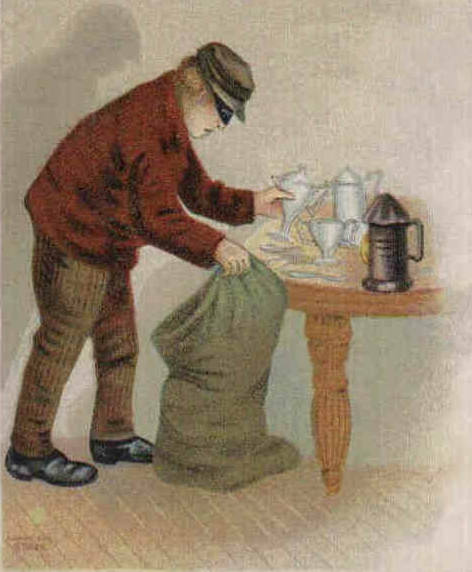
After some trouble he had gone to sleep. But now he was wide enough awake and trembling in every limb. There were people stepping softly around the house, and at least two windows had been tried. Burglars! There was little doubt of it. Listening, he heard their voices, not speaking very low.

burglar illustration

“There isn’t a soul at home,” someone said. “I was at the train myself, and I heard the mail driver say, Why, the Fowlers were coming on this train, and there ain’t one of ’em here.”

“They missed it, I s’pose; and they can’t get here now till morning; we’ll have a good haul; the house is well stocked with things easy to move.”

After that, do you wonder that Joseph covered his head with the bedclothes and trembled? He was in the attic chamber, and the door was locked. The thieves would hardly be likely to trouble him; they would find treasures enough all over the great old farmhouse. But how dreadful to lie there and listen to things being stolen! What could he do?

Suddenly his heart began to beat in such great thuds that it seemed to bump against the head-board. He had thought of something to do. What if he should go from room to room and light the bracket lamps all over the house? Might not the burglars think there were people in charge, and run away?

Illustration from 1889 edition of Burglar Bill by F. Anstey

But, on the other hand, might they not think of him, a little boy, and break in, and dispose of him, and have it all their own way?

“Thud! thud! thud!” said his heart; but Joseph was already out of bed. He said it aloud, while he was drawing on his clothes, “Fear not, Abram, I am thy shield.” If ever a boy needed shielding, he did; and what if his name wasn’t Abram? God knew his name, and God could shield him. Joseph did not doubt that.

His hand trembled so much that the first and second matches went out; but the third lighted his lamp. A moment, and the rays from the great hall lamp with the reflector behind it, flamed into the snow-covered street. The noise below had suddenly ceased. From room to room went Joseph, shivering with cold, and with fear, but flaming up the lights until there was certainly an illumination in the Fowler homestead. Now he had done all he could, and might lock himself in the attic room and wait. What would be the result? Would the burglars be frightened away, or would they suspect the true state of things, and only wait to plan a way to get rid of him? With his head under the bedclothes he waited, shivering. For how long? He could not have told. It seemed to him hours and hours!

john-atkinson-grimshaw_the-old-hall-under-moonlight

Every little while he bobbed his head out, and listened; all was still. However, this did not greatly encourage him; of course the burglars would know enough to work quietly now. Suddenly there was a sound outside.

“Whoa!” said a strange voice, loudly, almost under his window. Then a loud thumping at the kitchen door. Oh, what should he do now? They had come back reinforced, and meant to break down the door!

“Joseph!” shouted a voice, “Joseph! Joseph!”

Mr. Fowler’s voice, as sure as the world! Do you need to be told how suddenly Joseph bounded out of bed and rushed down two flights of stairs to the kitchen door?

“What does all this mean?” said the astonished master. And then, when he heard the story, “Well, I do say!” But what he might have said he kept to himself. “We missed the train,” he explained, in turn, as soon as Joseph’s explanations were over. “The others can’t get here until nine o’clock; but I thought you would be a good deal disturbed, so I got the privilege of coming on the three o’clock freight, and caught a ride out with Barnet and his hens. Well, well, well! When I saw the house all ablaze with light, I thought first of fire, and then of lunatics.”

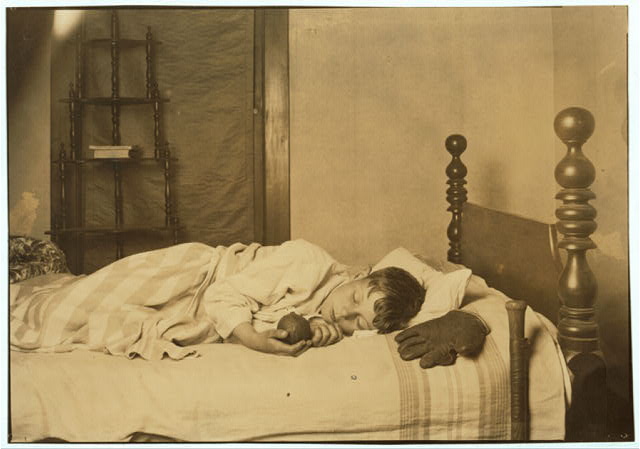
Joseph slept late the next morning; slept, in fact, until the nine o’clock train came in, and all the people were at home, moving softly, so as not to waken him.

boy-in-bed-asleep

“It was a brave, wise thing for a boy of his years,” said Farmer Fowler, after he had told the whole story and answered all the questions poured out on him from the excited family. “In fact, it was about the only thing that could have been done. There’s no telling what he saved us by his quick-wittedness and pluck. The snow tracks show that there was quite a party of them. I’ll tell you what it is, mother, let us write to that sister of his this very day, and spread out our plans. My mind is quite made up that it is the thing to do.”

About this time, Joseph awoke with a start and a smile. He had been dreaming that he was really Abram. “I was carried through it, anyhow,” he said, as he made all speed with his dressing. “I don’t see but I was shielded as well as Abram could have been; and as for the reward, why, I don’t want that.”

And yet it was on its way at that very moment; such a reward as Joseph had not dreamed of.


Chapters 5 and 6 will post on Thursday, January 19, 2017. See you then!


A Dozen of Them – Chapter 3

Here’s the next installment of A Dozen of Them by Isabella Alden. If you missed chapters 1 and 2, you can read them here.


A Dozen of Them

Chapter 3

.

IN THE BEGINNING GOD CREATED THE HEAVEN AND THE EARTH.
BY ONE MAN SIN ENTERED INTO THE WORLD, AND DEATH BY SIN.
AM I MY BROTHER’S KEEPER?
NOAH DID ACCORDING UNTO ALL THAT THE LORD COMMANDED HIM.
I WILL BLESS THEE; AND MAKE THY NAME GREAT; AND THOU SHALT BE A BLESSING.

divider-05

There was a broad smile on Joseph’s face; he was fully satisfied with his verse for the month.

In the first place, it was very short—only five words; in the second place, he had no brother, so it was not possible for it to get him into what he called “scrapes,” by living up to it.

Now you know which verse it is? Yes; that is the very one: “Am I my brother’s keeper?”

Yet the New Year’s Eve frolic was not over before he found the verse fitted in. They were having a tableau party, and Joseph was dressed in an extraordinary manner—like a youthful musician of the olden time. Mrs. Calland had managed—nobody but she knew how—to arrange for him a most remarkable wig of soft curling hair; the mustache part was easy; a little burnt cork settled that. Then there was little Fannie Stuart and her brother Rex dressed surprisingly!

It was just as all the toilets were completed and Mrs. Calland was ready to arrange her living picture behind the curtain, that Joseph’s verse came into prominence.

I am not sure that he would have thought of it in just the way he did, had it not been for Mrs. Calland’s remark as she finished arranging Rob Walker’s cloak. Rob Walker was a day scholar who had been invited to the evening’s fun because they were sorry for him; as he was at his uncle’s, more than a thousand miles away from home, during this holiday time. He was another musician, representing a different style of dress, and Mrs. Calland, as she fastened the wide collar about his neck, had said:

“Why, how this dress changes one’s appearance! You and Joseph would pass for brothers, now.”

After which, Rob, much amused, had called his companion “Brother Joseph.”

It was while she was bending over Rex that there fell from Mrs. Calland’s own collar a gleaming pin which Joseph did not know was a diamond; but he knew it was beautiful, and very much beloved by Mrs. Calland. He knew, too, in less than five seconds after its fall, what became of it.

Rob, the almost stranger among them, also saw it fall, gave a swift glance about the room to see if others were looking, then stooped and put the gleaming thing in his pocket, and said not a word!

How utterly astonished and dismayed was Joseph! He could not go on with his part, and took such stupid positions instead of the right one, as to make the others laugh, and to call from Mrs. Calland the question:

“Why, Joseph, what has happened to you? Are you taking a nap?”

“Brother Joseph, you must do better than that, or I’ll disown you,” said Rob good-naturedly.

“Brother Joseph!” The words chimed in with the boy’s thoughts. “Am I my brother’s keeper?”

Something seemed asking Joseph that question.

Unless you are the sort of boy who can understand it without explanation, I don’t know that I can help you to feel how dreadfully Joseph hated to meddle with this matter. It was so uncomfortable to think of going to Mrs. Calland with tales about another boy! He knew just how grave she looked when any of the scholars pointed out the faults of others. And such a fault! Did Rob really mean to steal?

If so, the owner ought certainly to be told; yet perhaps Rob meant only a little mischief, and would give the pin back in a little while; in which case, how very mean he, Joseph, should feel to have been tale-bearer. But then, on the other hand, what if Rob shouldn’t give it back?

“I don’t care,” said Joseph to himself; “what business is it of mine, anyhow? I didn’t take it, and I am not supposed to know anything about it. What is Rob Walker to me?”

Am I my brother’s keeper?

It startled Joseph to think the verse seemed to fit what he was planning. If the truth must be told, one grave fault of this boy, Joseph, was to shirk responsibility. Besides, he had the fault common to many good-hearted boys; he hated to be called a “tell-tale;” hated it to such a degree that it was hard work for him to tell, even when he felt sure that telling was duty.

There was much thinking, and there were also many blunders, over which the young people had great merriment, before Joseph finally reached the point:

“I don’t care, I’m going to tell her. If she thinks it’s mean I can’t help it; if she thinks I don’t do it with the right feeling, I can’t help that either: I believe I ought to tell. That little old verse of mine will go and choke me if I don’t; and Rob, maybe, will choke me if I do; but I can stand his choking better than the other. Who would have thought there would be a place for that verse to fit in?”

With Joseph, to decide, was to perform. Very grave indeed Mrs. Calland looked when she bent her head and received the hurriedly whispered story.
Still, her words encouraged him: “You did just right, Joseph, to speak to me quietly. Don’t mention it to any person; we will both be quiet and I will decide what to do.”

But Joseph remained sober all the rest of the evening.

You may imagine he was on the alert when, nearly two hours afterwards, as they were making ready for the closing tableau, Addie Fowler suddenly said, “Sister Kate, you have lost your pin!”

Everybody but Joseph looked at Mrs. Calland; he looked down on the floor, and felt his face grow red.

“I know it,” said Mrs. Calland quietly. “It has been gone for some time. I must have dropped it early in the evening.”

There was an instant bustle of looking for the pin, but it was Rob Walker’s voice stopped them:

“I know where it is; I guess you will find it in the Italian musician’s pocket; those fellows are always thieves.”

Then you should have seen the red in Joseph’s face. He looked over at Mrs. Calland, now, in a helpless, pitiful sort of way, which made some of the scholars say in whispers:

“Why, would you think it possible! I would never believe it if he didn’t show it in his face at this minute!”

At the same time, the poor fellow dived both hands into his pockets and drew out, sure enough, the gleaming thing; whereat Rob laughed loud and long. But no one else did.

What a “scrape” for a boy to get into! What in the world was he to do? What would Mrs. Calland do or think? Would she possibly think he stole it, and then tried to palm the theft off on Rob? Hark! What was that she was saying in her quiet voice:

“Never mind laughing any more, Robert; we will not keep the company waiting for the closing tableau; but by and by you shall tell me why you picked up my pin, carried it in your pocket for nearly an hour, then slipped it slyly into Joseph’s pocket. You must have had some reason for it all; remember, I saw you do it,” continued Mrs. Calland; then added, “but we will not keep our guests waiting longer, now. Get your places, girls.”

“I don’t believe I could have thought you would steal it, my dear boy,” said Mrs. Calland to Joseph, late that night, when at last she was alone with him for a moment in the kitchen. “I don’t think I could look into your honest eyes and imagine such a thing; but of course what you told me, put me on my guard and prepared me to watch poor Rob. So, you see, your verse saved yourself, and will be helpful to him in the end. I think the boy means only mischief; but it is mischief of a very malicious kind, which might have brought trouble upon you. I think you ought to thank sister Jean in your next letter, for suggesting such a shield for her brother.”

From which you will understand that Joseph had also confided to Mrs. Calland the story of the verse.


Chapter 4 will post on Tuesday, January 17, 2017. See you then!

A Dozen of Them – Chapter 2

Here’s the next installment of A Dozen of Them by Isabella Alden. If you missed Chapter 1, you can read it here.


A Dozen of Them

Chapter 2

.

BLESSING, AND HONOR, AND GLORY, AND POWER, BE UNTO HIM THAT SITTETH UPON THE THRONE, AND UNTO THE LAMB, FOR EVER AND EVER.
THEREFORE ARE THEY BEFORE THE THRONE OF GOD, AND SERVE HIM DAY AND NIGHT IN HIS TEMPLE.
THE GRACE OF OUR LORD JESUS CHRIST BE WITH YOU ALL. AMEN.

divider-05

It gave Joseph a curious sensation to hear his verse sung over and over again by the choir, the great organ rolling out the melody and seeming to him to speak the words almost as distinctly as the voices did. He had chosen that first verse as his motto for the month, with a dim idea that it somehow fitted Christmas, though he couldn’t have told why he thought so. It was sufficiently unpractical not to disturb his conscience, at least; and of this he thought with satisfaction. It would not do to have to live by so many verses. That last month’s selection, “Feed my lambs,” had perfectly amazed him with its power to keep him busy. It was not only little Rettie, always on hand to be amused, or petted, or helped, in some way, but it was the little neighbor boy who followed his brother when he came for milk; and the little Irish girl who cried over her spelling lesson; and the little Dutch boy whom some of them made fun of, in Sunday-school. Many a time during the month, Joseph had sighed a little, and smiled a little, over the bondage in which that verse held him and had got to hold him for a whole year, and he wondered if Jean had known what she was about. At least he must know what he was about; another verse of that kind would not do to follow soon. This one was grand and majestic, ever so far above him; it was not to be supposed that he could in any way join that wonderful army who were praising. Joseph listened to it with a curious mixture of awe over the grandeur, and satisfaction that it was his, and did not trouble him.

church

He was seated in the great church, and it was Christmas Eve. The children’s anthem was being sung first by the choir, then by a troop of children who appeared to catch the strain and re-echo it as far as their shrill young voices could reach. This was the closing anthem of the evening.

It had been a very nice evening to Joseph. He had taken part in the recitation, and his teacher had whispered, “Well done, Joseph,” when he took his seat.

He had mounted little Rettie on his knee, the better to view the great Christmas-tree, thereby winning a smile and a “Thank you, Joseph!” from Mrs. Calland.

He had answered to his name when called, and received a handsome Bible from his teacher; altogether he had never spent a happier Christmas Eve. He saw himself writing a letter to his sister to tell all about it; and just then that anthem burst forth. Then the minister arose to pronounce the benediction. But instead of doing it, he made a little speech.

bible

“Children,” he said, “I heard one of you call the anthem a grown-up anthem. I asked what that meant, and the little fellow who said so, told me it wasn’t for boys and girls, but for angels, and such things. That is a mistake. It is for you and me; you at four, and I at forty, and all the rest of you who are all the way between. ‘Blessing and honor;’ suppose we go no farther than that. Can’t we bless Him? Can’t we say thank you to the Lord for all his mercies? And can’t we honor Him? Don’t you remember that every little thing we do, or keep from doing, because we think it would please Him, is an honor to Him?”

There was more to the talk; not much, though, for the minister knew better than to make a long talk on Christmas Eve. But, bless you, it was long enough for Joseph! It came over him with a dismayed sort of feeling, that with all his care he had chosen a verse which was going to hedge him about worse than the other had. “Every little thing we do, or keep from doing. Oh, dear!” he said, and was startled to discover that he almost said it aloud. “A fellow gets all mixed up with verses and things, and can’t stir. I wish Jean had been asleep when she made me promise.”

However, he got through Christmas day beautifully. It happened that every duty of his that day had to do with what he liked, and was no trouble at all. It was mere fun to sweep the light snow from the front walk in the clear sparkling morning. It was simply delight to hitch up the ponies and go to the depot for company who were coming to the farm to dinner. He liked nothing better than to turn pony himself, and give Bettie a ride on her box sled; and so through the day everything was merry and happy. I am not sure that he thought of his verse more than once; that was when they were seated at the beautiful dinner table and a sentence of thanksgiving in the blessing reminded him of it. Not unpleasantly; he found that he felt very thankful indeed, and would just as soon say, “I thank you,” as not. If that was what the verse meant by “blessing” he was more than willing.

In the evening the school-tree was to be enjoyed, and none looked forward to it more than Joseph. For the past two days the schoolroom door had been shut against them all, and speculation had run high as to what glories it would reveal when next it opened for them. The time was drawing near; Joseph came with a bound from across the hall at Farmer Fowler’s bidding, to see if the kitchen doors were closed against the wind which was rising. He had heard the call to open the schoolroom doors; in ten minutes more all the mysteries hidden therein would be revealed.

In the middle of the kitchen he stood still. I am not sure but it would be very near the truth to say that his heart stood still as well as his body. The door leading into the dining-room was open, and in the great dining-room fireplace there crackled, and blazed, and roared a freshly adjusted log, sending up flames which lighted the entire room as with sunlight glory. But the fire did more than glow and sparkle, it snapped—sent out spitefully across the room regular showers of brilliant sparks, lighting, some of them, on the cedar with which the mantel was trimmed. Joseph sprang to them before they did mischief, then stood again as if rooted to the spot. A fresh log, very large, one of the sputtering kind, and it would sputter in that way, sending out its showers of dangerous sparks for a half-hour at least—longer than that—until all the fun in the schoolroom was well over.

fireplace

What of it all? What concern was it of his? He didn’t put the log on. He had never been set to watch the dining-room fire. No; but what was that? “Blessing, and honor, and glory!” Well, what of it? What had blessing, and honor, and glory, to do with a few sparks which might not do a bit of harm if left to themselves? Sparks almost always died out if left alone.

What was that he said? “Every little thing we do or keep from doing, because we think it would please Him, is an honor to Him.”

Dear, dear! Why need the minister have said that? It wasn’t talk for Christmas Eve! And was it to be supposed that he, Joseph, who had never belonged to a family Christmas-tree before in his life, could stay out there and watch sparks while all the fun was going on? He really couldn’t.

Hark! Listen to that shouting! The fun had begun; he must go this minute. Wait! Look at that spark! It had lighted on the tissue-paper mat on the lamp-stand; it was going to burn! It will burn, it will blaze and set the house on fire! No, it won’t; the wicked and industrious little sprite has been firmly crushed in Joseph’s fingers, and has died, and left only a sooty fleck on the whiteness to tell of its intentions. But Joseph turned from it, and sat down in the big wooden rocker, near the snapping log, his face sorrowful and determined.

There was no help for it. The fun must go on, and the snapping must go on, and he must sit and watch it. “Every little thing we keep from doing.” He could keep from going into the schoolroom, and he knew it would please Him.

“Because,” said Joseph scornfully, to the log, “any idiot would know it was the right thing to do. You are not to be trusted, you snapping old thing, and you have got to be watched.” Why, then, he was bound to do it, because he had promised to be led by the verse of his choice. “It’s enough sight worse than the other one,” he told the log mournfully, meaning the other verse; and then he kept watch in silence. No more sparks made even an attempt to do any harm, which Joseph considered mean in them after having obliged him to stay and watch them. They might at least have given him the excitement of undoing their mischief. He even meditated deserting them as past the dangerous point, but just then a perfect shower blazed out into the room, and though they every one died out before they settled, Joseph told them that was no sign of what they might choose to do next time.

At last there came a prolonged shout from the distant schoolroom, mingled with the opening of doors, and the hurrying of eager feet and cries of:

“Where is he? Where’s Joseph?”

“Why, where in the world can Joseph be!” And the dining-room was peopled with eager searchers, among whom came Farmer Fowler.

“Why, my boy,” he said, as Joseph arose from the rocker, “what in the world does this mean? Haven’t you been in at the fun, after all? We didn’t notice until your name was called. Why weren’t you there?”

“I had to watch the sparks,” said Joseph, pointing to the snapping log. And then I am glad to state that those sparks did show a little sense of decency, and coming out in a perfect shower, lighted on the other tissue-paper mat, and Joseph had to suit the action to the word, and spring to its rescue.

“Well, I never!” said Fanner Fowler.

“I really think that is remarkable,” said Mrs. Calland. But whether they meant the sparks, or the log, or the tissue-paper mat, none of them explained.

And then all the children talked at once.

“Why, you had a hand-sled!” said one.

“A perfect beauty!” exclaimed another.

“One of the boss kind!” explained a third. “And it has your name on it in red letters.”

“Come on in and see it!” Whereupon the troop vanished with Joseph at their heels. He thought he could safely leave the sparks to Farmer Fowler’s care for awhile.

boy-and-sled-e

“Father,” said Mrs. Calland, “I think that is a very remarkable boy; I wish you would let me have him. I believe Harry would take him into the office.”

“We’ll wait and see whether you can do better by him than I,” said Farmer Fowler, his eyes twinkling. “I think your mother has plans for him. Well, mother, I don’t know but he saved the old farmhouse for us tonight. That log is uncommon snappy. He is an unusual boy, somehow, and no mistake.”

“I told you so from the first,” said Mother Fowler, looking as pleased as though he was her son.

But Joseph knew nothing about this, and, in fact, had forgotten all about his verse. He was examining his new sled, and thinking how he would describe it to Jean when he wrote.


Chapter 3 will be posted on Thursday, January 12, 2017. See you then!

A Sunday School Lesson and a Free Read

Though we often think of her as a writer of Christian fiction, Isabella Alden had another demanding career: she was an acknowledged expert in developing Sunday-school lessons for children. In her years growing up in a Christian home and, later, as a minister’s wife, she had plenty of opportunities to judge the effectiveness of Sunday-school programs.

sunday-school-classes-ed

She knew that many Sunday-school teachers had no training at all.

She had seen teachers who didn’t know what the Sunday-school lesson was until Sunday morning when they sat down in front of their class to teach.

She had also seen teachers who didn’t even know the Bible verse on which the Sunday lesson was based.

Isabella knew there was a better way to teach young children the lessons of the Bible in a way they could understand; so she developed a program of education for Sunday-school teachers of young children, in which she gave teachers step-by-step instructions, telling them everything they needed to know … from what to write on the chalkboard, to when to have the children stand and sit.

Undated photo of a teacher and her class.

She shared her program at the Chautauqua summer assemblies, and she spoke at churches about the method. Her Sunday-school lessons were published in regular weekly columns in Christian magazines, such as The Sabbath School Monthly and The National Sunday-School Teacher.

sabbath-school-monthly-title-page

Click on this link to see an excerpt from an 1877 issue of Sabbath School Monthly with one of Pansy’s lessons.

Isabella was convinced that children should be shown that the Bible had meaning for them. She believed children were not too young to learn that the Bible could be a help to them in their day-to-day lives.

cover_hedge-fenceIt was that premise that inspired her to write three of her most popular children’s books. In Frank Hudson’s Hedge Fence, Frank (a boy of about ten or twelve years old) is constantly getting into trouble. One day an acquaintance convinces him that learning a Bible verse a month will help guide him through the temptations he faces and help him make wise decisions. The story tracks Frank’s progress for several months as he learns the Bible really can help him make good choices in his life.

cover_we-twelve-girls-05We Twelve Girls is similar to Frank Hudson’s Hedge Fence. In this story, twelve young teenaged girls, all close friends at boarding school, are separated over the summer months; but they each pledge to learn a new verse every week and find a way to apply the verse to their lives. Over the course of the book, each young lady learns what it means to live a God-centered life according to the Bible.

Another example is A Dozen of Them. In this book, twelve-year-old Joseph has many challenges in his life; but he made a promise to his older sister he would read at least one Bible verse each month and make it a rule to live by. To Joseph it’s a silly promise—how can reading one Bible verse a month make any difference? But to his astonishment, Joseph begins to see changes in his own life and in the lives of those around him, all because of the verses he reads and memorizes.

Frank Hudson’s Hedge Fence and We Twelve Girls are both available as e-books on Amazon. A Dozen of Them was originally published in 1886 as a serial in The Pansy magazine, and we thought it would be nice to reproduce it on this blog, in the same serial format as the original.

Each week you can read a new chapter of A Dozen of Them here and here’s Chapter One:

A Dozen of Them

Chapter 1

And Thomas answered and said unto him, My Lord and my God.
He saith unto him, Feed my lambs.
If we walk in the light, as he is in the light, we have fellowship one with another, and the blood of Jesus Christ his Son, cleanseth us from all sin.
I am he that liveth, and was dead; and behold, I am alive forevermore.

divider-05

Young Joseph sat on the side of his bed, one boot on, the other still held by the strap, while he stared somewhat crossly at a small green paper-covered book which lay open beside him.

“A dozen of them!” he said at last. “Just to think of a fellow making such a silly promise as that! A verse a month, straight through a whole year. Got to pick ’em out, too. I’d rather have ’em picked out for me; less trouble.

“How did I happen to promise her I’d do it? I don’t know which verse to take. None of ’em fit me, nor have a single thing to do with a boy! Well, that’ll make it all the easier for me, I s’pose. I’ve got to hurry, anyhow, so here goes; I’ll take the shortest there is here.”

And while he drew on the other boot, and made haste to finish his toilet, he rattled off, many times over, the second verse at the head of this story.

The easiest way to make you understand about Joseph, is to give you a very brief account of his life.

He was twelve years old, and an orphan. The only near relative he had in the world was his sister Jean aged sixteen, who was learning millinery in an establishment in the city. The little family though very poor, had kept together until mother died in the early spring. Now it was November, and during the summer, Joseph had lived where he could; working a few days for his bread, first at one house, then at another; never because he was really needed, but just out of pity for his homelessness. Jean could earn her board where she was learning her trade, but not his; though she tried hard to bring this about.

At last, a home for the winter opened to Joseph. The Fowlers who lived on a farm and had in the large old farmhouse a private school for a dozen girls, spent a few weeks in the town where Joseph lived, and carried him away with them, to be errand boy in general, and study between times.

Poor, anxious Jean drew a few breaths of relief over the thought of her boy. That, at least, meant pure air, wholesome food, and a chance to learn something.

Now for his promise. Jean had studied over it a good deal before she claimed it. Should it be to read a few verses in mother’s Bible every day? No; because a boy always forgot to do so, for a week at a time, and then on Sunday afternoon rushed through three or four chapters as a salve to his conscience, not noticing a sentence in them. At last she determined on this: the little green book of golden texts, small enough to carry in his jacket pocket! Would he promise her to take—should she say each week’s text as a sort of rule to live by?

No; that wouldn’t do. Joseph would never make so close a promise as that. Well, how would a verse a month do, chosen by himself from the Golden Texts?

On this last she decided; and this, with some hesitancy, Joseph promised. So here he was, on Thanksgiving morning, picking out his first text. He had chosen the shortest, as you see; there was another reason for the choice. It pleased him to remember that he had no lambs to feed, and there was hardly a possibility that the verse could fit him in any way during the month. He was only bound by his promise to be guided by the verse if he happened to think of it, and if it suggested any line of action to him.

“It’s the jolliest kind of a verse,” he said, giving his hair a rapid brushing. “When there are no lambs around, and nothing to feed ’em, I’d as soon live by it for a month as not.”

Voices in the hall just outside his room: “I don’t know what to do with poor little Rettie today,” said Mrs. Calland, the married daughter who lived at home with her fatherless Rettie.

“The poor child will want everything on the table, and it won’t do for her to eat anything but her milk and toast. I am so sorry for her. You know she is weak from her long illness; and it is so hard for a child to exercise self control about eating. If I had anyone to leave her with I would keep her away from the table; but everyone is so busy.”

Then Miss Addie, one of the sisters: “How would it do to have our new Joseph stay with her?”

“Indeed!” said the new Joseph, puckering his lips into an indignant sniff and brushing his hair the wrong way, in his excitement; “I guess I won’t, though. Wait for the second table on Thanksgiving Day, when every scholar in the school is going to sit down to the first! That would be treating me exactly like one of the family with a caution! Just you try it, Miss Addie, and see how quick I’ll cut and run.”

But Mrs. Calland’s soft voice was replying: “Oh! I wouldn’t like to do that. Joseph is sensitive, and a stranger, and sitting down to the Thanksgiving feast in its glory, is a great event for him; it would hurt me to deprive him of it.”

“Better not,” muttered Joseph, but there was a curious lump in his throat, and a very tender feeling in his heart toward Mrs. Calland.

It was very strange, in fact it was absurd, but all the time Joseph was pumping water, and filling pitchers, and bringing wood and doing the hundred other things needing to be done this busy morning, that chosen verse sounded itself in his brain: “He saith unto him, feed my lambs.” More than that, it connected itself with frail little Rettie and the Thanksgiving feast.

In vain did Joseph say “Pho!” “Pshaw!” “Botheration!” or any of the other words with which boys express disgust. In vain did he tell himself that the verse didn’t mean any such thing; he guessed he wasn’t a born idiot. He even tried to make a joke out of it, and assure himself that this was exactly contrary to the verse; it was a plan by means of which the “lamb” should not get fed. It was all of no use. The verse and his promise, kept by him the whole morning, actually sent him at last to Mrs. Calland with the proposal that he should take little Rettie to the schoolroom and amuse her, while the grand dinner was being eaten.

I will not say that he had not a lingering hope in his heart that Mrs. Calland would refuse his sacrifice. But his hope was vain. Instant relief and gratitude showed in the mother’s eyes and voice. And Joseph carried out his part so well that Rettie, gleeful and happy every minute of the long two hours, did not so much as think of the dinner.

“You are a good, kind boy,” said Mrs. Calland, heartily. “Now run right down to dinner; we saved some nice and warm for you.”

Yes, it was warm: but the great fruit pudding was spoiled of its beauty, and the fruit pyramid had fallen, and the workers were scraping dishes and hurrying away the remains of the feast, while he ate, and the girls were out on the lawn playing tennis and croquet, double sets at both, and no room for him, and the glory of everything had departed. The description of it all, which he had meant to write to Jean, would have to be so changed that there would be no pleasure in writing it. What had been the use of spoiling his own day? No one would ever know it, he couldn’t even tell Jean, because of course the verse didn’t mean any such thing.

“But I don’t see why it pitched into a fellow so, if it didn’t belong,” he said, rising from the table just as Ann, the dishwasher, snatched his plate, for which she had been waiting. “And, anyhow, I feel kind of glad I did it, whether it belonged or not.”

“He is a kind-hearted, unselfish boy,” said Mrs. Calland to her little daughter, that evening, “and you and mamma must see in how many ways we can be good to him.”


Next week: Chapter 2


Isabella and the “It” Girls

Toward the end of Isabella’s life, her niece, Grace Livingston Hill, encouraged her to write “just one more book.” Grace suggested that it be about Ester Ried’s grand-daughter or great-grand-daughter, in order to bring the great message of the original Ester Ried novel to a whole new generation of readers.

Isabella Alden in an undated photograph.

Isabella’s fertile imagination still had plenty of stories waiting to be told. She recognized that there were some loose ends from the Ester Ried series that needed to be tied up, as Grace suggested.

She also knew, based on the letters she received, that fans of her books wanted to know more about some of the other characters she had created.

But Isabella chose not to write those sequels. In 1927 she told Grace:

I am not capable of writing a story suited to the tastes of present day young people. They would smoke a cigarette over the first chapter, and toss it aside as a back number. I haven’t faith in them, nor in my ability to help them.

Cover of a 1925 edition of Life magazine.

It’s unfortunate that Isabella was so disillusioned with the “present day young people” of the 1920s. She didn’t understand the new generation of young people, and she strongly believed she had nothing in common with them.

While Isabella still dressed modestly in long gowns with high collars and full sleeves, young women of the 1920s wore short, sleeveless dresses.

A 1920s dress, from Pinterest.com

They rouged their knees and polished their shoulders.

A 1920s advertising flier for the Bassett's Ice Cream stand located in the Reading Terminal Market, Pennsylvania.
A 1920s advertising flier for the Bassett’s Ice Cream stand located in the Reading Terminal Market, Pennsylvania.

They plucked their eyebrows, painted their lips, and lacquered their fingernails.

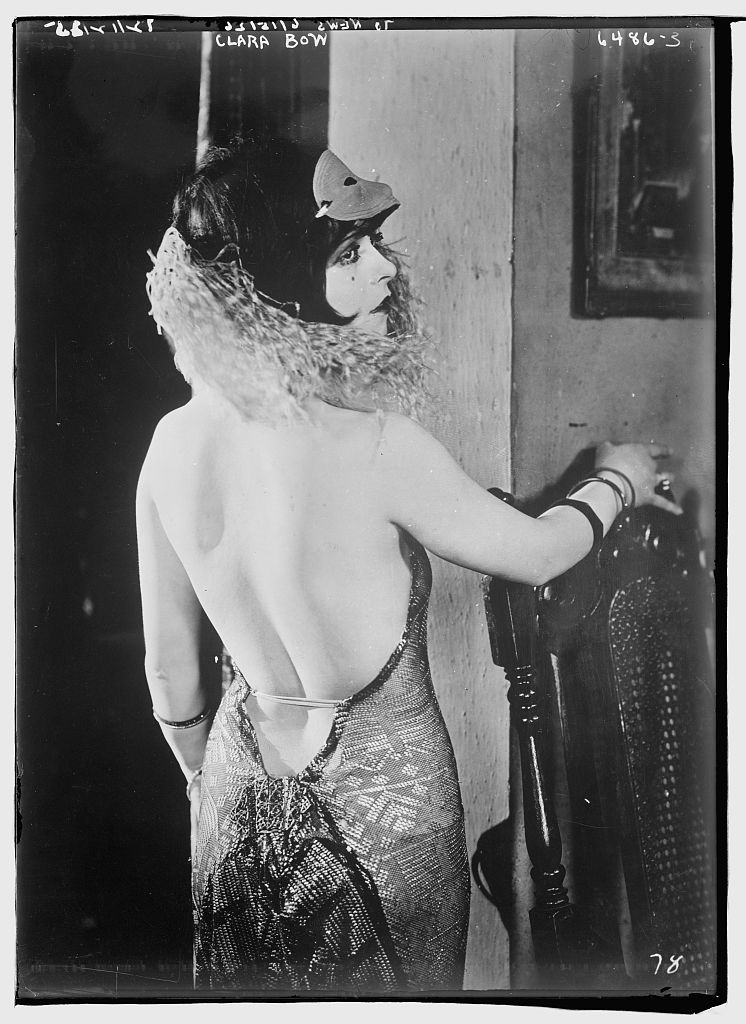
Actress Clara Bow on the cover of a 1920s magazine.

Hollywood star Clara Bow set the trends. She was nicknamed the “It Girl” for playing the role of a plucky shop girl who made good. She was the first Hollywood sex symbol, and Americans couldn’t get enough of her.

A 1922 photograph of actress Clara Bow in a daring backless dress. From the U.S. Library of Congress.

Teenaged girls and grown women copied her make-up and clothes. If Clara Bow smoked cigarettes in a movie, they smoked, too.

Life magazine cover from the 1920s.

Like Clara, they challenged social mores by drinking alcohol and driving fast cars, just like men did.

A 1920s flapper and her flask of alcohol. From the U.S. Library of Congress.

And like many of the characters Clara Bow played on screen, they were headstrong and modern and fond of nightlife.

A cover of Puck magazine.

Isabella couldn’t understand it. She wrote:

I saw the trend away from Christ long ago. I recognized the downward trend not only in girls and boys, but in their mothers and teachers and pastors. I came by degrees to understand that the class of young people to whom I had dedicated my life had made a distinct descent, and that for me to do the same in my writing would be to dishonor Jesus Christ.

So Isabella watched with sadness as a new generation of readers turned to the novels of F. Scott Fitzgerald, Warner Fabian, and Virginia Woolf, while her own novels gradually fell out of favor.

Original cover of Unforbidden Fruit by Warner Fabian. The 1928 novel was shocking in its day for depicting single women's sexuality.
Original cover of Unforbidden Fruit by Warner Fabian. The 1928 novel was shocking in its day for depicting single women’s sexuality.

Grace and others urged her not to give up her life work, but Isabella was adamant: she would not write except to try to win souls for Christ.

I think we all realize in these days that even Jesus Christ is not popular. Therefore we who want to follow Him closely must not try to be.

In 1929 Isabella published An Interrupted Night. Like her novel, Unto the End, An Interrupted Night was written for adults and dealt with issues of love, marriage, infidelity, and sacred vows. The book received good reviews, but it would be Isabella’s final novel.

The cover for Isabella's 1929 novel, An Interrupted Night.
The cover for Isabella’s 1929 novel, An Interrupted Night.

Unfortunately, Isabella Alden passed away the following year, in 1930, never knowing that—almost one hundred years later—an entirely new generation of “present day young people” would love and cherish her books.

Pansy’s Gentlemen

In The Ester Ried Series, Isabella chronicled the transformation of a young man named Jim Forbes. Jim first appeared in The King’s Daughter as a member of a wild bunch of boys who showed up at church for the sole purpose of terrorizing the Sunday-school teachers.

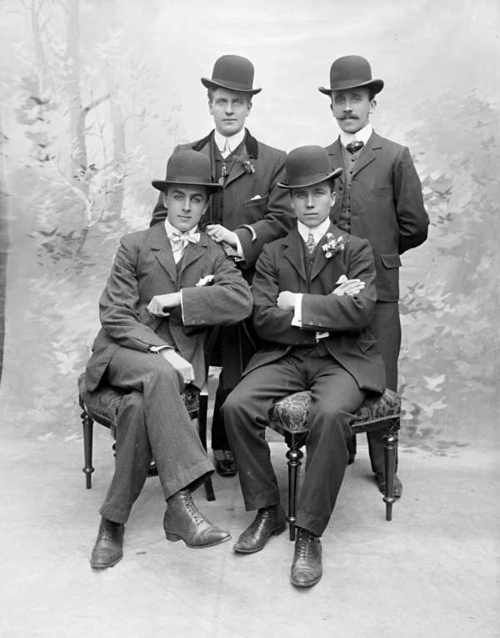
Dapper young men in bowler and derby hats-1910

Homer Nelson, who was in charge of the Sunday-school classes, described Jim and his friends:

“Oh, they swear outrageously, and smoke profusely, and gamble whenever they get a chance, not often for money, for they have very little of that article about them; but for raisins, or pins, or straws, or anything that is convenient, and they use liquor freely, every one of them.”

But by the end of The Ester Ried books, Jim was a different person. In fact, he came to be so well regarded, his friends at church gave him a gift: “a dainty and elegant, and altogether perfect gold watch and chain.”

A young gentleman with his gold watch and chain. From OldFamilyPhotos.com

Jim was astonished to receive the watch, not only because of its beauty and cost, but because of what it represented. In the times in which Isabella lived, a man who carried such a watch and chain was considered a gentleman of the first order.

During the late 1800s and early 1900s, true gentlemen followed a very strict code of dress that was based, in large part, on the model promoted by Britain’s Lord Chesterfield, who famously said:

“I cannot help forming some opinion of a man’s sense and character from his dress.”

A Victorian Gentleman, by Vittorio Matteo Corcos, 1890.

Isabella agreed whole-heartedly. In her books, Isabella dressed her gentlemen in neat, conservative, well-fitting suits. Even the wealthy men who populated her stories (like Edward Stockwell in The Ester Ried Series, Judge Burnham in The Chautauqua Books, and Mr. Burton in Christie’s Christmas) dressed in a way that did not call attention to themselves or their wealth.

Dressing in the “height of the fashion,” Isabella believed, was better left to dandies and pretenders.

A Paris dandy, circa 1890.
A Paris dandy, circa 1890. His multiple watch chains, quizzing glass, elaborate buttons, and overly-shiny shoes would have been considered vulgar by American standards.

There were essential elements of a gentleman’s attire. In addition to a well-fitting coat and trousers, a gentleman always appeared in a waistcoat and tie.

Portrait of Henry Cabot Lodge, by John Singer Sargent, 1890.

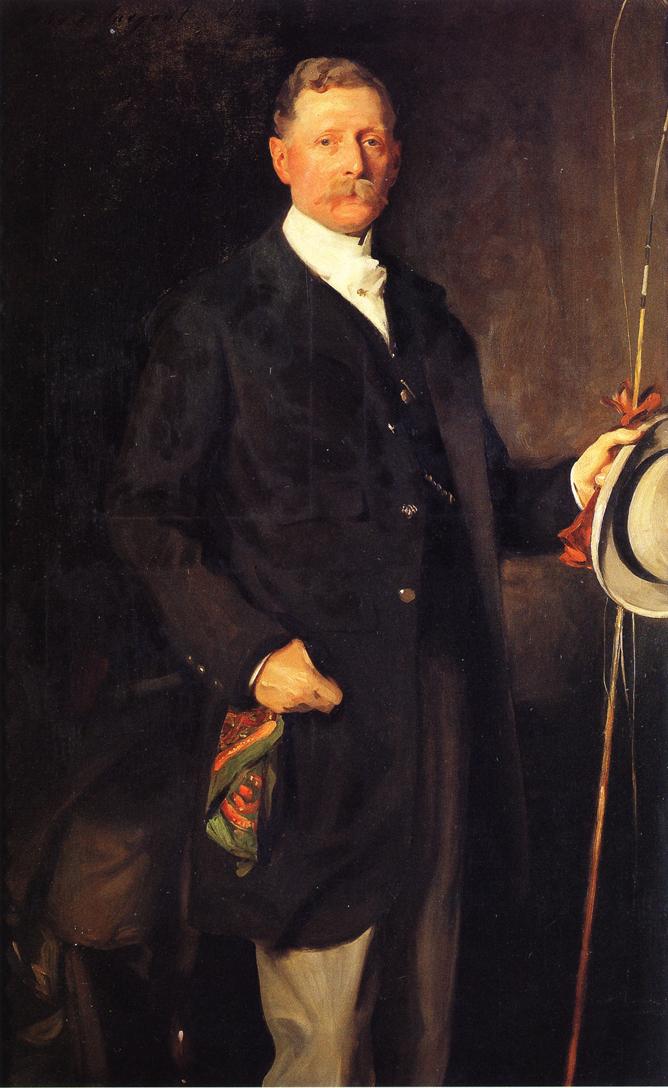
Even when they were relaxing around the house or engaging in leisure activities, men wore coats, ties, and waistcoats.

Captain John Spicer, dressed to go fishing, by John Singer Sargent, 1901.

.

Portrait of the artist's brother, dressed for riding, by Arthur Hacker, 1882.
Portrait of the artist’s brother, dressed for riding, by Arthur Hacker, 1882.

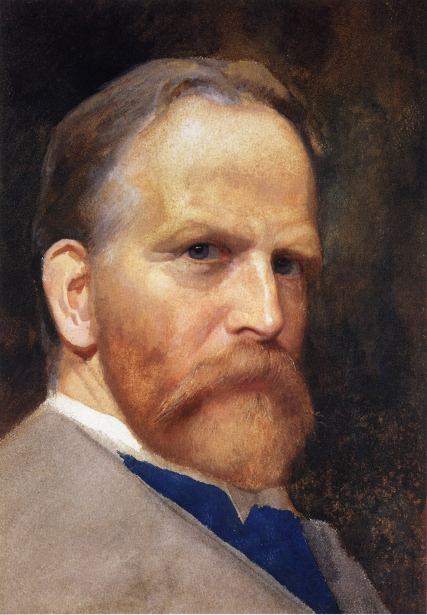
Another essential element of a gentleman’s appearance was an appropriate amount of facial hair. Beards and moustaches were considered to be a symbol of masculinity.

Self-portrait, by James Wells Champney.

Isabella’s men wore beards and moustaches, as well. In Helen Lester, Helen’s dashing older brother Cleveland returned home from Europe looking very handsome and “heavily bearded.”

Portrait of Leon Delafosse, by John Singer Sargent, 1898.

And charming Ralph Ried wore a full beard in The Ester Ried Series of books.

Undated photo of young man with a full beard and moustache. From Pinterest.

Coats, ties, waistcoats, and beards—they were all essential to a man’s attire in Isabella’s world, but a popular 1866 book on “etiquette and true politeness” carried this reminder:

Gentility is neither in birth, manner, nor fashion—but in the MIND. A high sense of honor—a determination never to take a mean advantage of another—an adherence to truth, delicacy, and politeness toward those with whom you may have dealings—are the essential and distinguishing characteristics of A GENTLEMAN.

A 1901 photo of a fashionably dressed gentleman.

You can click on the links below to find out more about Isabella’s books mentioned in this post.

The Ester Ried Series

Helen Lester

The Chautauqua Books


Julia’s Occupation

Cover_Julia RiedIsabella Alden’s series of books about the Ried family were her most popular novels. In Julia Ried, book 2 of the series, the Ried family falls on hard times, and daughter Julia decides to strike out on her own. She takes a job as a bookkeeper in a paper box factory in the neighboring town of Newton.

In choosing Julia’s career, Isabella was on solid ground. She was able to write convincingly about Julia’s job and work environment, because Isabella’s father, Isaac Macdonald, operated a paper box factory in Gloversville, New York.

Page from an 1870 Fulton County New York Business Directory.

Gloversville, the little village where Isabella grew up, was celebrated for its glove-making industry.

A 1908 postcard of Gloversville showing the intersection of Main Street, with its many retail glove shops, and Fulton Street where Isaac Macdonald's box factory was located.
A 1908 postcard of Gloversville showing the intersection of Main Street, with its many retail glove shops, and Fulton Street, where Isaac Macdonald’s box factory was located.

Between 1890 and 1950, Gloversville supplied nearly 90 percent of all gloves sold in the United States.

1913 paper glove box; from Pinterest.

Besides the many “skin mills” and glove manufacturing business in the little village, the industry spawned a host of supporting businesses, such as box makers, tool and die manufacturers, and dealers in buttons and threads.

Box for Silkateen brand ladies gloves. From Etsy.

Isabella’s father, Isaac Macdonald owned one of four or five box-making factories in Gloversville. While there’s no record that Isabella ever worked in her father’s factory, she had a good grasp of the working conditions, and she conveyed her thorough knowledge of the business in Julia Ried.

Women workers at a box factory, about 1890.

In Julia Ried, Isabella gave lively descriptions of the “shop-girls” who folded and pasted the cardboard boxes together. According to Frank Hooper, one of those shop-girls in the book, they worked ten hours a day, six days a week.

A 14-year-old girl at work in a paper box factory. From National Archives.

Pasting cardboard boxes together was a sticky, messy, exhausting job; but it was a job that was often performed by women and children.

A young girl working alongside a woman in a paper box factory, 1912. From National Archives.

Small boxes especially—like those that contained gloves for ladies and children—needed to be assembled and pasted by women or children with small hands.

From the Gloversville Daily Leader, March 12, 1900.

Yet in the glove-making industry—and its supporting businesses—women and girls earned half as much as men.

The work could be dangerous. Accidents were common, and some injuries could be severe.

From the Gloversville Daily Leader, May 12, 1898.


A young box factory worker after an accident with a veneering saw; 1907.

Isabella drew on her knowledge of the box-making business to create some of her most beloved characters. The characters of Frank Hooper and Jerome Sayles (whose father co-owned the box factory in the story) made return appearances in other books in the Ester Ried Series.

Women and girls working in a box factory, 1910.

You can learn more about Gloversville, Isabella’s home town, by reading these related posts:

Helena’s Alexandre Gloves

Deerville, My Home Town

.


Dell Bronson’s Porte-Monnaie

In The King’s Daughter, the heroine of the story is Miss Dell Bronson, a fashionable young lady, raised in the lap of Boston luxury by a wealthy aunt and uncle.

An antique porte-monnaie made of metal mesh

In writing about Dell, Isabella described her as dainty, neat, and graceful. Dell was always fashionably, but tastefully dressed; and because of her uncle’s wealth, Dell was able to afford the latest styles of dress and accessories.

A sterling silver porte-monnaie. It's long shape suggests it was carried in a pocket.
A sterling silver porte-monnaie. It’s long shape suggests it was ideal for carrying in a pocket.

One of Dell’s accessories was a porte-monnaie, which she carried in her skirt pocket.

A silver porte-monnaie, lined in blue leather. From Etsy.


The blue leather interior of the silver porte-monnaie features bellows to separate coin denominations. From Etsy.

Literally, a porte-monnaie was a place for money—specifically coins. In the 19th and early 20th centuries, men and women carried their paper money and coins separately. Paper bills were carried flat in wallets or bill-folds, but all the many coins in circulation at the time were usually carried in porte-monnaies.

A two-cent piece, in circulation until 1873. It was the first American coin to carry the motto, In God We Trust.

And what a variety of coins there were! In addition to the pennies, dimes, nickels and quarters we know today, people commonly carried:

Two-cent pieces
Silver three-cent pieces
Three-cent pieces made from nickel
Half-dimes
Twenty-cent pieces
Half-dollars
Dollars

The three-cent piece, made of nickel, was in circulation until 1889.

And gold coins (also known as Eagles) weren’t uncommon. They were minted in denominations of $1, $2.50, $5, $10, and $20.

Carried by both men and women, porte-monnaies were made of sturdy material, such as leather or silver. At home, women kept their porte-monnaie in the pocket of their skirt or apron. Outside the home, women would often tuck their porte-monnaie inside their purse or reticule.

Antique silver porte-monnaie. The center emblem has a space for engraving the initials of the owner. From Pinterest.

Men kept a porte-monnaie in a desk drawer at home, and carried it in a pocket while out and about.

A French porte-monnaie made of mother-of-pearl, with brass and silver inlay. From Pinterest.

References to porte-monnaies date as far back as the 1850s but the term came into fashion during the American Civil War, when Americans considered anything French to be the height of fashion.

Which of the fashionable porte-monnaies pictured here do you think Dell Bronson would have carried? Cast your vote below