In honor of Mother’s Day this month’s free read is a story about the debt of love we owe to those who raised us.
After a life of sacrifice, widowed Mrs. Kensett finds her twilight years spent shuffling between the homes of her adult children, where she’s treated more like a burden than a beloved guest. She expects more of the same when she arrives at the doorstep of her youngest son and his new bride—only to find an unexpected sanctuary at long last.
While April 15 marked the celebration of National Library Outreach Day, many long-time book lovers still remember it by its original name: National Bookmobile Day. No matter the name, it’s a day to celebrate traveling libraries and the dedicated people and organizations that deliver great books to people who can’t get to bookstores or libraries on their own.
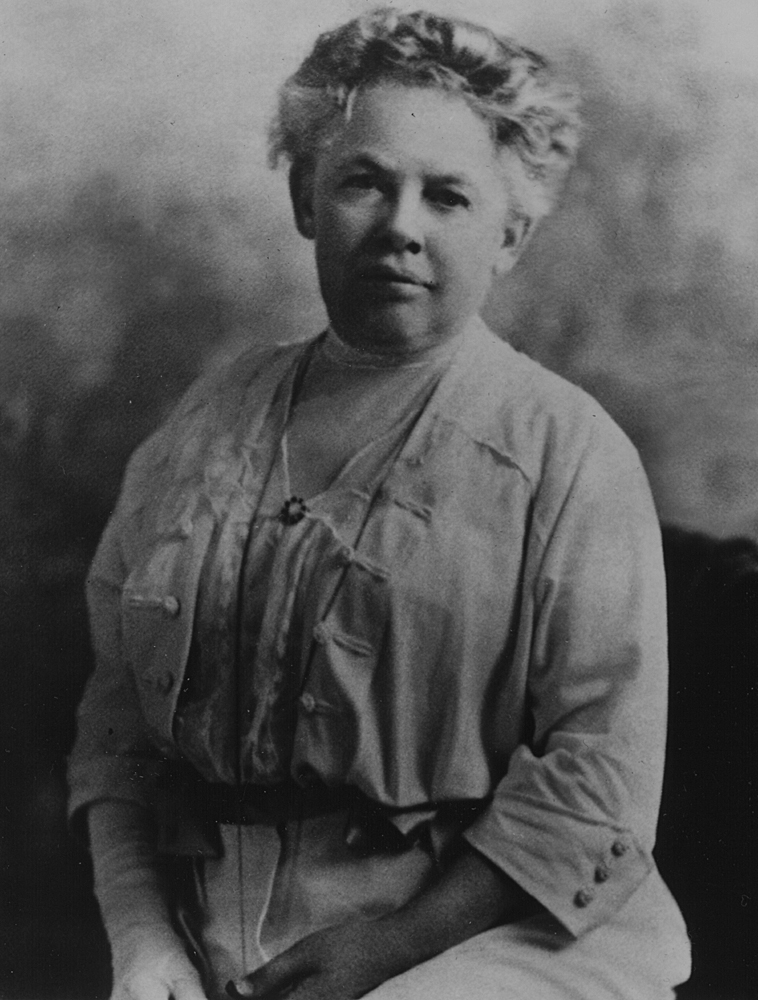
Bookmobiles were the brain child of Mary Titcomb, a visionary Maryland librarian who devised a plan to reach readers who lived in rural areas so remote, they were unable to visit a library. In 1905 Mary loaded as many books as she could into a horse-drawn wagon, and set off to deliver books to isolated areas of the county.
Maryland librarian, Mary Titcomb.
Drawn by two horses, the first book wagon was designed by Mary herself. It had shelves on each side with doors that opened outward for easy browsing, while the interior was packed with additional cases of books to replenish the stock on long journeys.
At first she laid out 16 routes that covered 500 square miles of territory. Sometimes the wagon was out one day, more often two or three. To drive to the most distant outpost of the routes took four days round-trip.
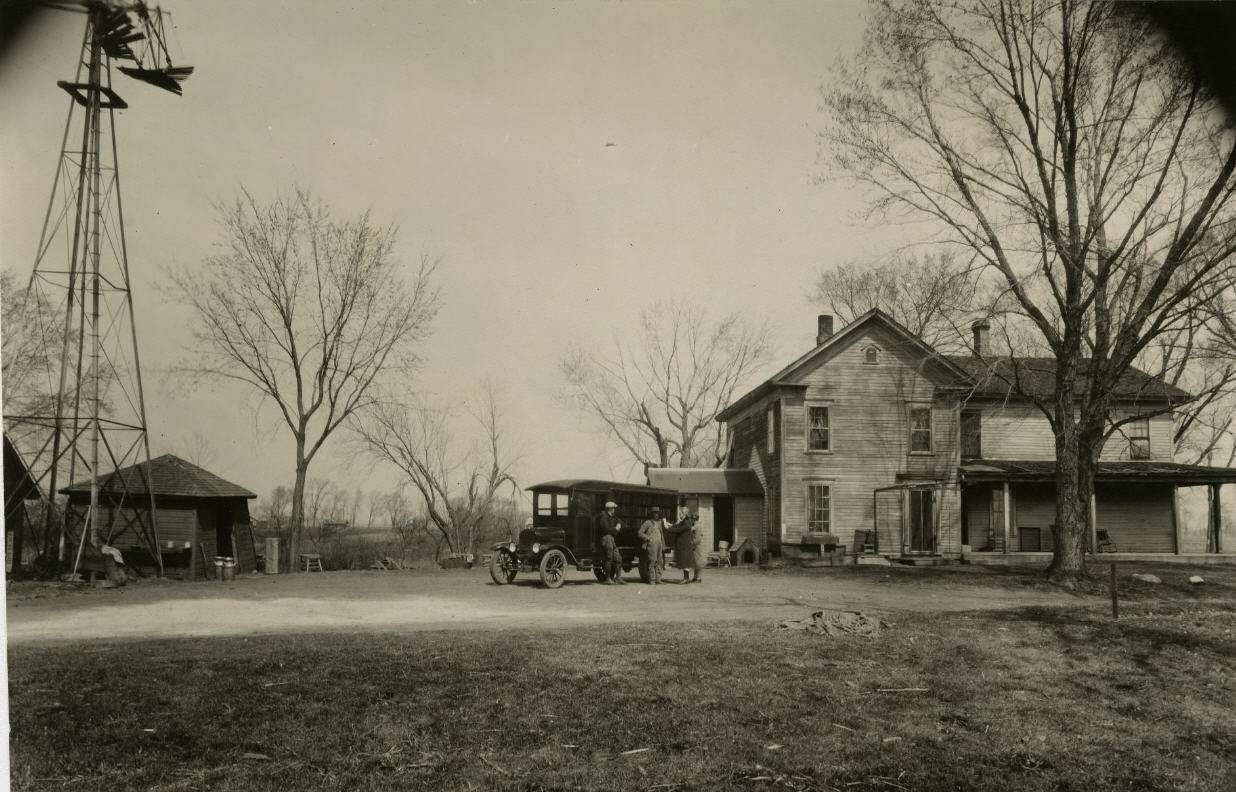
A bookmobile at a rural Minnesota farm about 1920 (courtesy of Minnesota Digital Library)
Her program was an immediate success and its fame quickly grew. In 1912 Mary replaced the horse-drawn wagon with an automobile, which allowed her to not only complete the routes more quickly, but add additional routes as well. Soon she began setting up book “stations” in some areas, where residents could borrow books and return them after reading. Then, on a set schedule, a book wagon would deliver a fresh inventory books to replace those already read—a routine that was the precursor of our current system of library branches.
While on her routes Mary visited farms, remote cabins, and homes of invalids. In some cases, she found that only the children in a home knew how to read, so she helped families select books written at a level so the children could read to their parents. In other districts, men who knew how to read outnumbered the women and children. For these and each area she visited, she made notes and returned with books that suited the residents.
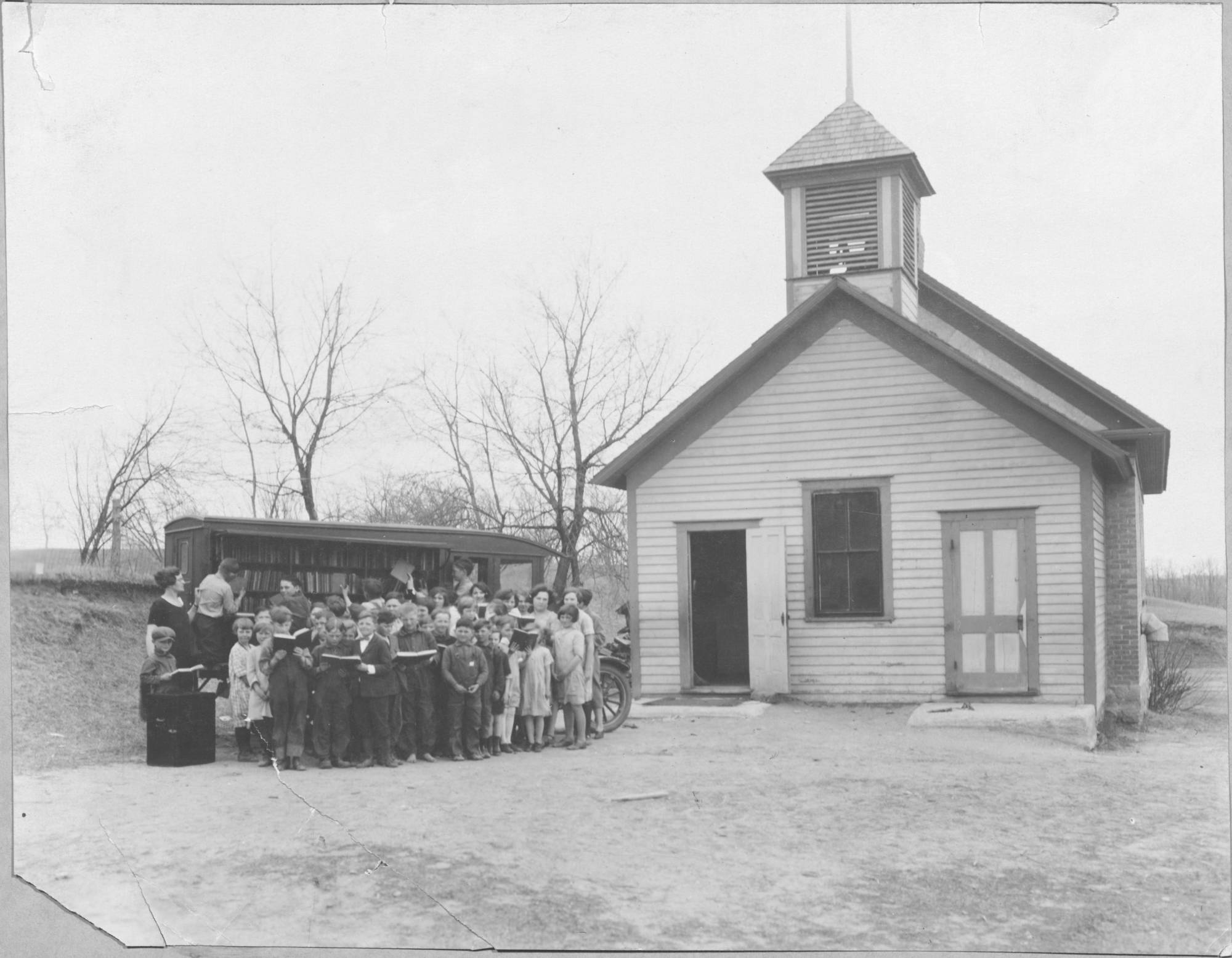
A bookmobile at a rural school in 1920.
In different newspaper accounts, Mary reported that the most requested books were practical and educational on topics like truck gardening, fruit raising, poultry culture, and domestic science.
Books on religion were also popular, “with a preference for those of a devotional nature.”
About 75 percent of fiction she delivered was juvenile, which she said meant “the books are read by both parents and children.” Susan Warner’s novel The Wide, Wide World was a favorite, as were other religious fiction titles. And since Isabella Alden’s novels were staples in public library systems across the country at that time, there’s a strong possibility the library outreach movement brought Isabella’s novels along on those bookmobile deliveries.
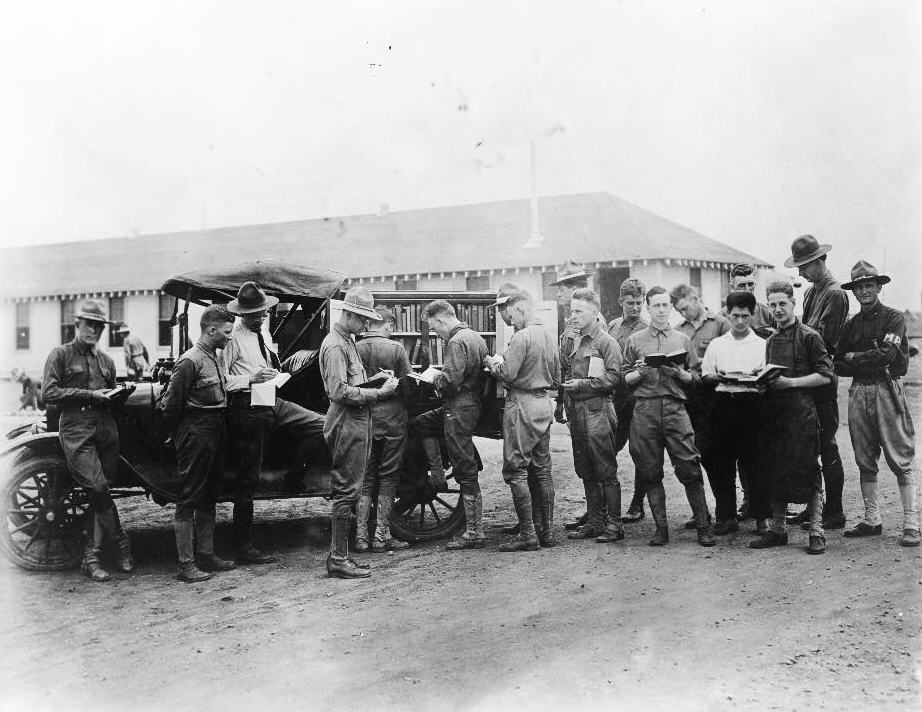
A bookmobile serving soldiers stationed in Kentucky, 1917.
It’s not hard to imagine that rural readers would have identified with the characters in Isabella’s books, like Esther in Ester Ried’s Namesake. Imagine being a young girl living on an isolated farm, opening a book to find Esther Ried Randall—a character whose life mirrored her own. Like the reader, Esther lived far from the bustle of the city, yet she harbored a dream of going off to college as an independent young woman. How much that book would have inspired that young girl to follow her educational and spiritual ambitions!
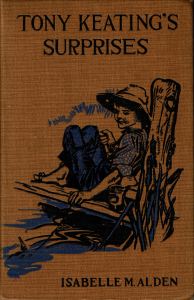
Or imagine a young boy with a penchant for getting into trouble and how much he would have identified with the main character in Isabella’s novel, Tony Keating’s Surprises.
In many ways, Isabella’s books (and others like them) were the only window some readers had on a larger world of instruction, culture, and good taste. Isabella’s skill for using stories to explain God’s love and plan for salvation ensured that traveling libraries delivered more than just entertainment—they delivered spiritual nourishment, as well.
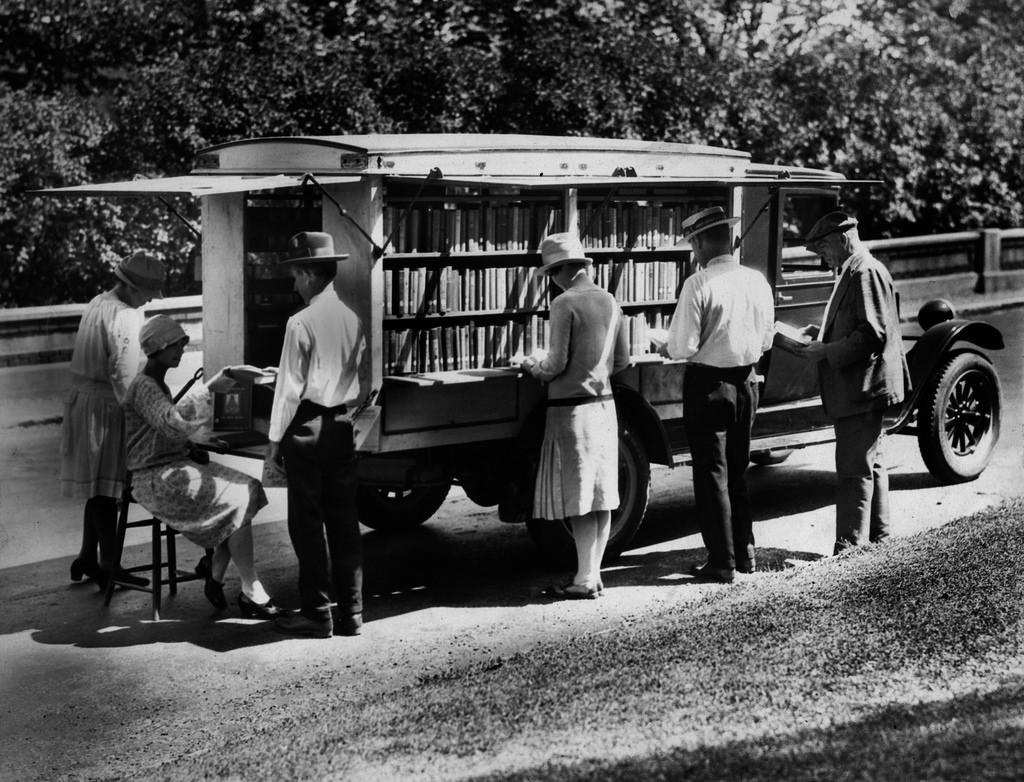
A busy bookmobile in 1927.
Isabella’s books and Mary Titcomb’s outreach program were a perfect pairing. Both women were dedicated to making sure that God-given talents and wholesome reading were not restricted by geography or social standing.
For the girl dreaming of college or the boy seeking a better path, Mary Titcomb’s book wagon was more than just a vehicle; it was a lifeline that brought the world—and The Word—directly to their gate.
Isabella Alden’s novel Ester Ried, Asleep and Awake opens with a memorable scene: Ester Ried—barely eighteen years old—finds herself with much more responsibility than a girl of her age should have. With an ill mother, four younger siblings, and several boarders to care for and feed, she is often pressed for time, thin on patience, and struggling to keep up with a never-ending list of things to do.
Much of her time is spent in the kitchen cooking, washing dishes, and supervising laundry; and on scorching summer days, the heat from the wood stove makes the entire room even hotter, so her cheeks were always in a state of “glowing.”
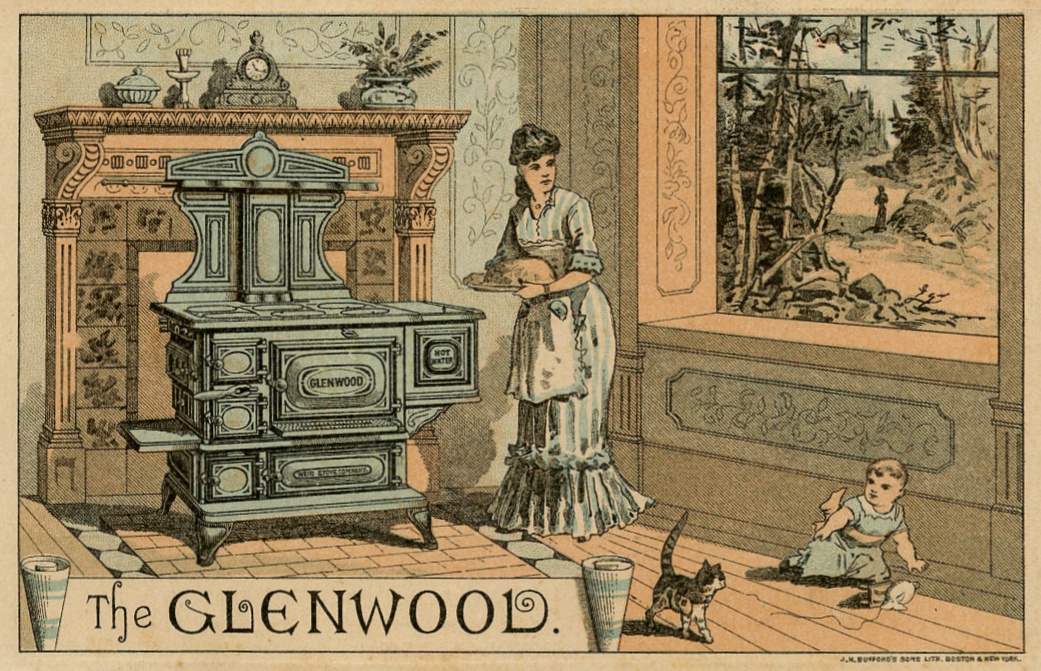
Trade card for a traditional wood-burning kitchen stove, about 1890
When Ester Ried was published in 1870, kitchen stoves were large, cast-iron pieces of furniture; and while their primary function was for cooking, stoves also served as essential elements of a home’s heating system. In winter a wood-burning stove helped keep the house warm and cozy. In summer, the same stove could make a kitchen unbearably hot.
Isabella’s readers could identify with Ester Ried’s plight. Isabella, too, must have had more than her share of summer days spent “glowing” in an overheated kitchen while she cooked her family’s meals, heated water for bathing, and tended to a litany of household tasks.
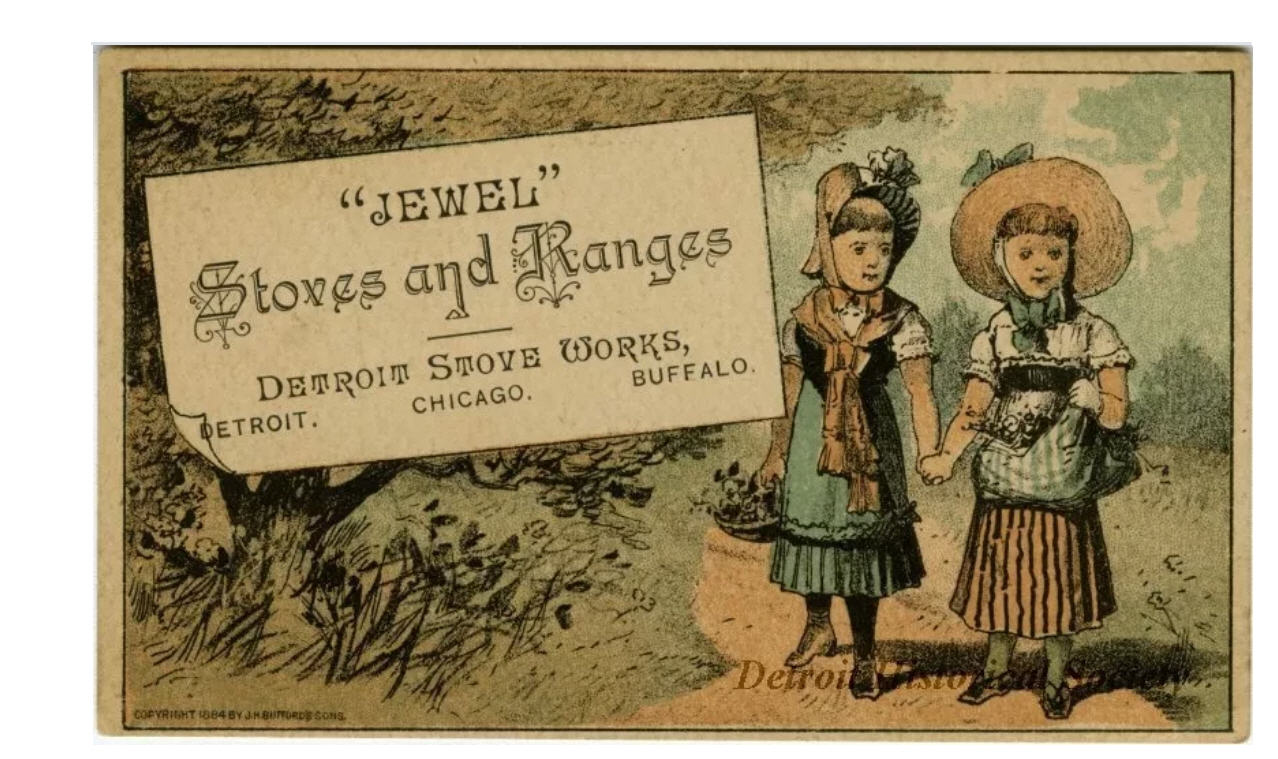
An 1884 trade card from the Detroit Stove Works, manufacturer of wood-burning, oil, and gasoline stoves.
So in 1880, when a new type of cooking stove—the gasoline stove—appeared on the market, Isabella took notice.
Unlike traditional wood-burning stoves that required constant monitoring of logs, flues, and dampers to manage the temperature, gasoline stoves offered a revolutionary level of control. They worked much like a kerosene lamp: a cloth wick pulled the gasoline up to the burner where it turned into a gas, creating a steady, hot blue flame.
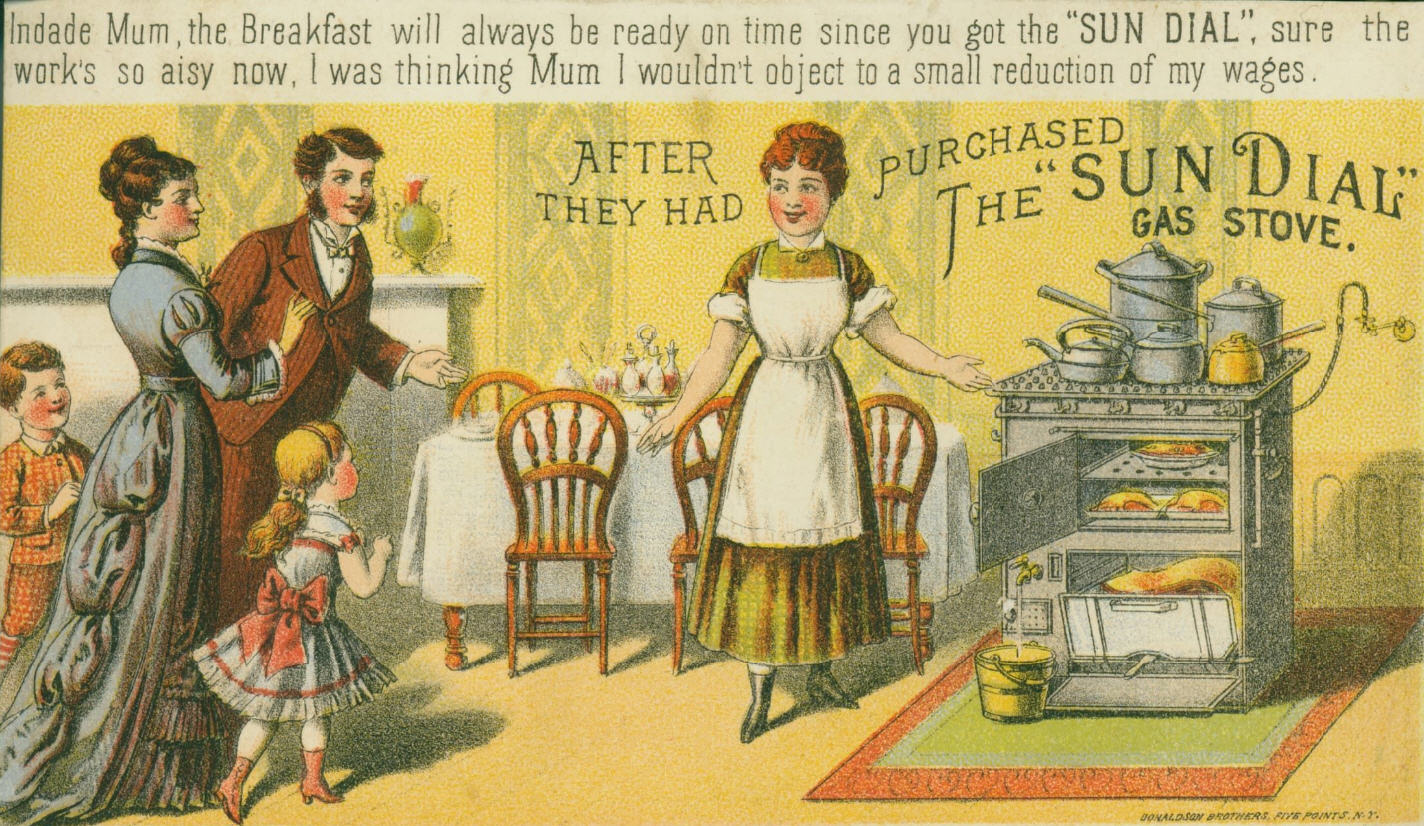
An 1890 ad for the Sun Dial gas stove.
By simply turning a knob to adjust the wick, a woman could make her cooking and baking incredibly precise. Best of all, because they didn’t radiate intense ambient heat like massive cast-iron wood stoves, they spared homemakers from suffering in a sweltering kitchen.
In 1880 Isabella wrote about a young wife and mother who learned about the advantages of a gasoline stove in a short story titled, “Faith and Gasoline.”
Summer heat and money troubles force Faith Vincent to face the heartbreaking prospect of being separated from her husband for the entire summer—until a neighbor’s wisdom, a clever “gasoline stove,” and a good amount of prayer help Faith secretly transform her despair into a promising future for herself and her family.
“Confidence is essential to success in every pursuit of life,” evangelist D.L. Moody writes in his April 1897 Bible lesson—and this truth applies equally to spiritual matters. Many Christians, he tells us, live imprisoned in what John Bunyan called “Doubting Castle,” experiencing weary, gloomy faith instead of joyful certainty.
Through the Apostle John’s five tests and some very memorable illustrations, Mr. Moody shows how every Christian can move from doubt to confident trust in their salvation.
Then, join us again on April 28, 2026 for Lesson Seven of Mr. Moody’s Bible Class. If you missed Lessons One through Five, you can find them by clicking here or on the Free Reads tab above.
Have you ever listened to someone tell a seemingly ordinary story, only to realize halfway through that they’re actually revealing something profound? That’s what happens in this month’s free read. “Family Portraits (Painted Unawares)” is a short story Isabella Alden published in a Christian magazine in 1900.
The story introduces us to Mrs. Andrews, a chatty neighbor who drops by on a hot summer day to tell about her son Harlan’s brief visit home from Boston. What begins as simple rambling about the weather, dinner plans, and a fishing trip gradually reveals itself as something much deeper—a portrait of a family bound together by selfless love.
Mrs. Andrews doesn’t realize she’s painting this portrait. She’s just telling her story in her own enthusiastic way. But it isn’t long before we begin to see what she can’t: a family where people consistently choose each other’s happiness over their own desires and where love—not biology—creates the deepest bonds.
A Note on Isabella’s Craft
What’s striking about this story is Isabella’s restraint. She doesn’t preach. She doesn’t tell us what to think about Mrs. Andrews or her family. She simply lets Mrs. Andrews talk, and trusts us to see the beauty in what’s being revealed.
Isabella has a gift for finding profound spiritual truth in everyday lives. In her stories, she elevates working-class people who live out their faith in practical, unassuming ways.
Maybe that’s why, more than 120 years after she wrote it, this story still has meaning. Today we still struggle with the tension between our own desires and others’ needs. We still wrestle with complicated family relationships. We still chase after perfect holidays and celebrations, forgetting that love is what makes any day special.
This story reminds us that the best relationships are built on small, daily choices we make, like prioritizing someone else’s happiness above our own, or spending time together, even if it’s brief and imperfect. Even more importantly, it reminds us that we don’t have to be extraordinary people to create extraordinary love.
You can spend time with Mrs. Andrews and her wonderful family for free!
What does it really mean to be “born again”? In this fifth installment of Mr. Moody’s Bible Class, evangelist D.L. Moody tackles one of Christianity’s most essential — and most misunderstood — doctrines: Regeneration.
Mr. Moody teaches that forgiveness alone is not enough — God must give us an entirely new nature.
“Heaven,” he writes, “is a prepared place, for a prepared people.”
Through stories and the dramatic example of Saul’s transformation on the Damascus road, Mr. Moody explains what regeneration is, what it is not, and why it is not an arbitrary demand but an absolute necessity.
And he concludes his lesson with a question every soul must answer: “Have I been regenerated through the atonement made on my behalf?”
If Isabella Alden were alive today, there’s no doubt she would be a very tech-savvy person. From telephones to indoor plumbing, from typewriters to motor cars, she embraced new devices and technologies and incorporated them into her stories and her daily life.
In 1909 Isabella wrote a short story titled “Midnight Callers,” which was published in a Christian magazine. It’s a wonderful story about a young woman toiling in the Lord’s vineyard and wondering if her efforts make a difference.
Miss Rachel Holland is a weary Christian mission worker who can’t help questioning the impact of her tireless labor. But her world changes one night when a hopeless ruin of a man stumbles into her office, desperate for help. Will she stand by her faith and summon the energy to serve her heavenly Master yet again?
But “Midnight Callers” is also a story that shows us a snapshot of the world in which Isabella lived. Her characters in the story don’t live in a dusty old past we can’t relate to; instead, they live in a very “modern” world (by 1909 standards).
Rachel Holland, the heroine of the story, writes with a fountain pen, which was a newly popular writing instrument in 1909.
A 1910 advertisement for fountain pens.
Another character, the Rev. Dr. McKenzie, uses a telephone closet to call “Blue two double O”—a reference to an era of manual telephone exchanges and party lines.
Although fountain pens have long since been replaced by keyboards and “Blue two double O” is now a touch-key on our smart phone contact list, the core of “Midnight Callers” still has relevance for readers today.
The story reminds us that while technology may change, our human need for hope—and help from the “present Power” that never fails—is eternal.
Have you ever wondered if your daily witness for Christ can truly make a difference in winning a loved one’s soul? Would you be willing to compromise your principles if you thought it might be the only way to influence someone else for Christ?
These are the heart-searching questions at the center of this month’s free read, “Fishing for Phil,” by Isabella Alden. The story follows teenager Daisy Morris as she navigates the delicate balance between family loyalty and her personal devotion to God.
Daisy Morris is a young woman of firm Christian principle , but her convictions are put to the test when her beloved Aunt Mattie and cousin Blanche plead with her to attend a special play. They believe it is the only way to coax Phil away from his worldly companions and back into the church. Will Daisy yield to the pressure of those she loves , or will her quiet refusal to compromise “one inch of the way” prove to be the very witness Phil truly needs?
In Lesson One Mr. Moody diagnosed the disease (Understanding Sin) and in Lesson Two, named the cure (The Remedy of the Gospel). Now, in Lesson Three, Mr. Moody outlines the five essential steps of genuine repentance:
Conviction Contrition Confession of Sin Conversion Confession of Christ
Using the biblical examples of King Saul’s shallow confession, David’s broken heart, and Joseph of Arimathea’s courageous stand at Calvary, Mr. Moody explains the difference between true and counterfeit repentance.
You can read Lesson Three for free!Click here to download a large-print PDF version you can print or share with friends.
Then, join us again on January 27, 2026 for Lesson Four of Mr. Moody’s Bible Class.
If you missed Lessons One and Two, you can find them by clicking on the Free Reads tab above.
It’s Christmas time, and shopping for the holiday is now in full swing. During Isabella’s lifetime, Christmas ads filled the issues of newspapers and magazines, tempting shoppers with bargains and gift ideas.
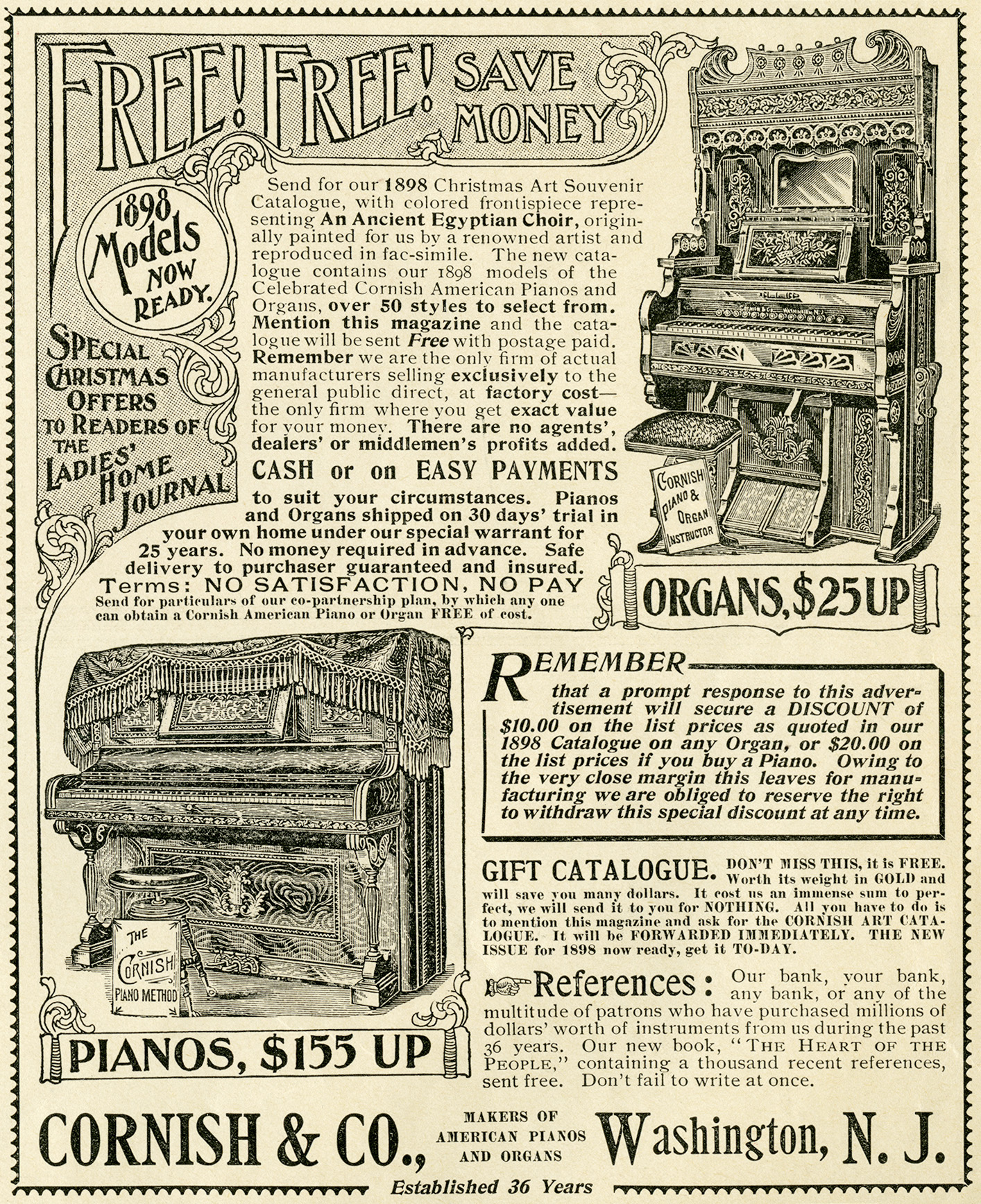
Among the many advertisements for books, handkerchiefs, slippers, and gloves were ads for a gift the whole family could enjoy: a piano.
The idea wasn’t as extravagant as it might sound; by the late 1890s pianos were quite affordable. Dealers and manufacturers offered consumers credit or payment plans that made purchasing a piano within the reach of families with more modest incomes.
Families weren’t the only ones who took advantage of these arrangements. In Pansy’s Advice to Readers, Isabella wrote about a group of school girls who bought a piano for their gymnasium by raising the money themselves and making regular payments to the dealer.
Such arrangements meant pianos were no longer an article of luxury available only to the wealthy. As more families were able to purchase pianos, American social life began to change. Previously, people gathered at churches, concert halls, and other public places to enjoy music; but affordable pianos allowed people to enjoy music at home and within their own family circle.
But even affordable pianos presented a challenge: someone had to learn how to play them.
Once a piano was installed in a home, there were lessons to be had and endless hours of practice in order for a player to become proficient. But in the 1890s self-playing devices came on the market that again changed how families brought music into their homes.
There were two kinds of self-playing devices: those that attached to pianos, and those that were placed inside them.
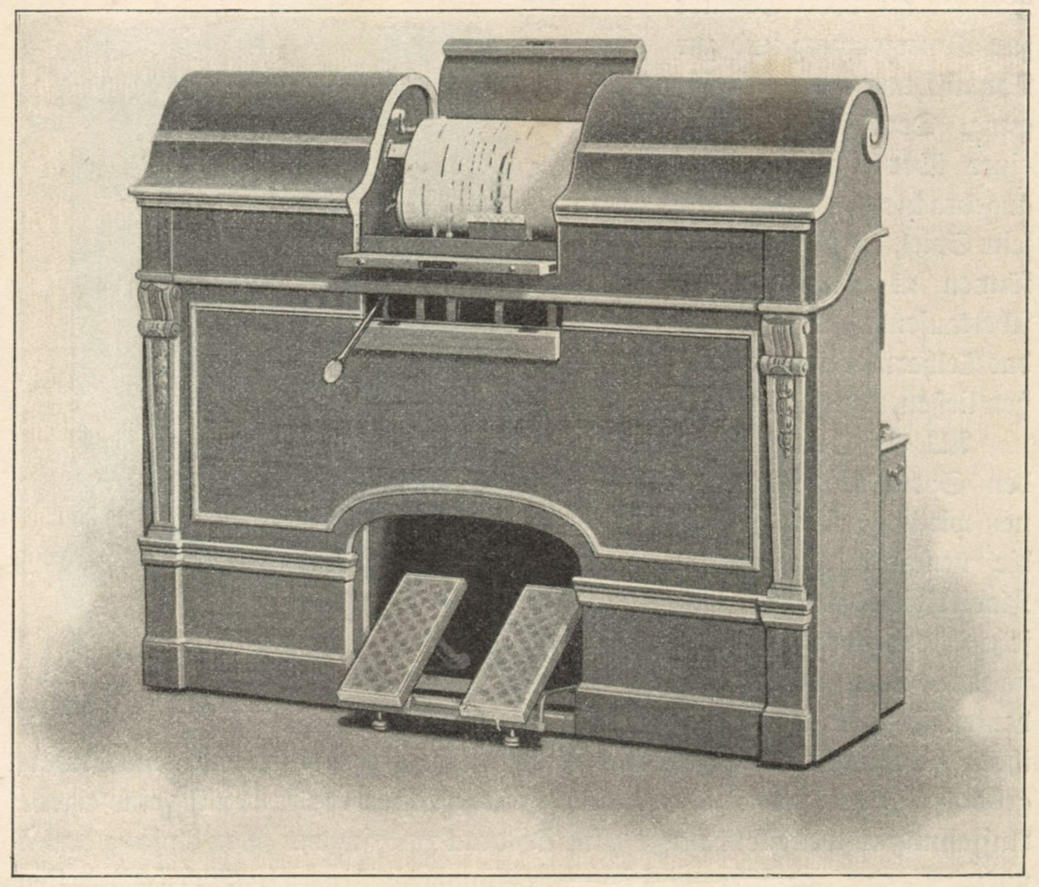
Invented in America, the pianola was a cabinet-type device that was pushed up against a piano keyboard. It depressed the piano keys with protruding felt-covered levers controlled by a perforated paper roll. A person had to be seated at the device to work the pumping pedals so air pressure created suction to rotate the roll.
Pianola cabinet style in 1890.
The other type—the player-piano—operated in the same manner with a rotating perforated roll, but the device was installed within the piano itself.
According to the editor of The Piano and Organ Purchaser’s Guide for 1908, these devices “made tens of thousands of pianos eloquent with good and popular music”—pianos that formerly were silent, except when there was a dance at home, or on a Sunday, when a few hymns were played.
“The present of a pianola is a present to every member of the family.” So declared a magazine advertisement in 1904 that urged consumers to consider buying a mechanical piano player for Christmas.
It wasn’t just families that could now listen to beautiful music in their homes. This ad in a 1904 issue of Booklover’s Magazine suggested a pianola cabinet player was the ideal gift for a bachelor’s home.
Those self-playing piano devices opened up whole new musical worlds for people. Many who never visited the opera or a concert before became thoroughly acquainted with world-class musical and orchestral compositions.
Sales of pianolas and player pianos peaked in the mid-1920s when gramophone recordings and the arrival of radio caused their popularity to wane.
But while in their heyday, pianos, pianolas, and player pianos made an important mark on American culture, bringing music and joy to thousands of families. Isn’t that a wonderful gift to receive?
You can learn more about pianolas and player pianos by clicking here.
Reviews and giveaways for Christian fiction and sweet, clean fiction. Bringing readers information on great stories and connecting authors with their readers.