Isabella often wrote about God’s love and His promises to protect and guide those who follow Him. In her stories and novels, she regularly included short Bible verses, like this:
Lo, I am with you alway, even unto the end of the world. (Matthew 28:20)
And she often shared God’s promises in the pages of The Pansy magazine, as she did in this poem:
As a teacher and a minister’s wife, she probably had a lot of experience in seeing the positive impact such little reminders could have in the life of a person who needed encouragement.
In fact, she—as well as the characters in her stories—handed out calling cards or pieces of paper on which was written a “promise verse” meant to encourage someone who was facing challenges in their life.
People don’t often use calling cards today, but those Biblical words of encouragement are still important to those in need!
The Giveaway!
We’re giving away sets of “Promises from God for Women” cards to three U.S.A. readers of Isabella’s blog!
The front of each card has a beautifully illustrated Bible verse of promise.
Each card has room for you to add your own personalized message of love or encouragement.
To enter the drawing, just leave a comment below or on Isabella’s Facebook page no later than 11:59 p.m. (EDT) on Thursday, September 7.
The three winners will be announced on Friday, September 8. Good luck!
This post is part of our 10-Year Blogiversary Celebration! Join us tomorrow for another fun giveaway!
Harriet Lothrop (writing under the pen name of Margaret Sidney) had teenagers in mind when she penned this week’s charming free read in 1884.
She loved children of all ages, and she was constantly on the look-out for ways to help them move “upward and onward,” as she once wrote. She believed every “bright young life” needed stimulus, and she recognized that teenagers especially needed help navigating their way through life. She encouraged adults to “show our interest and sympathy with these young creatures in all their pursuits. The benefit will not be wholly theirs, for we shall gain as much as we give. Let us try it.”
Harriet was a great organizer of parties and clubs for young people (much like the fictional club she wrote about in today’s free read). From experience she knew such gatherings were a way for young people to blossom under the guidance of “wise and congenial older folk.”
She followed her own advice and helped create different clubs in her town of Concord, Massachusetts, each with an aim to both entertain and challenge young people to grow and learn. One of the membership organizations she founded was the Children of the American Revolution, which is still a thriving organization today.
A 1914 lapel pin for Children of the American Revolution, from “Patriotic Societies of the United States and Their Lapel Insignia, by Sydney A. Phillips.
She founded it with the purpose of inspiring “true patriotism and love of country” in young people; and she served as the national president of the organization for many years. You can visit the organization’s website here.
Harriet Lothrop (on the let) and Mrs. Frank Mondell in 1920, after Mrs. Mondell was elected President of the Society of the Children of the American Revolution.
Her novel How They Went to Europe offered another idea for a club where young people and adults could join together for a common purpose:
Disappointed she cannot go to Europe with her wealthy relatives, Miss Carine Hedge decides to form a club to plan an imaginary trip to Europe. To Carine’s surprise, many of her friends are in the same situation: they long to travel abroad, but haven’t the means. Soon, Carine’s club is the most sought-after membership in town; but as she and her friends meet to pore over maps, read guide books, and go through the motions of pretending to plan a trip, Carine can’t help but wonder if her dearest wish might one day become a reality.
You can read How They Went to Europe or free!
Choose the reading option you like best:
You can read the story on your computer, phone, tablet, Kindle, or other electronic device.
Some of Isabella Alden’s most beloved stories are about resourceful young people who, with God’s help, make a better life for themselves and others.
That was the premise at the heart of her novels about the Bryant family (in Miss Dee Dunmore Bryant and Twenty MinutesLate) and in The Man of the House.
Harriet Lothrop (writing under the pen name of Margaret Sidney) used the same premise for her novels. In her best-selling series of books about the Pepper children, the five siblings—Ben, Polly, Joel, Davie, and Phronsie—comprised a poor but stalwart family struggling to stay together. And at the heart of each story was the children’s desire to help their mother, whom they affectionately called “Mamsie.”
A sketch of Margaret Sidney with her signature; from an article about the author in Good Housekeeping magazine, December 12, 1885.
Harriet once explained in an interview why there was no father in any of the stories:
“My judgment told me that I must eliminate Mr. Pepper, because the whole motif “to help mother” would be lost if the man lived. It hurt me most dreadfully. He was a most estimable man, and I loved my own father so much, it seemed the most wicked thing to do. I went around for days quite droopy and guilty.
She used the same “fatherless family” device when she later wrote stories about the Brimmer children. In this two-book series, older brothers Jack and Cornelius are determined to earn money to help their widowed mother and younger siblings. In the process, they find their principles challenged at every turn, even as they learn valuable lessons.
Tired of seeing their mother struggle to support them, brothers Jack and Cornelius—with some help from little sister Rosalie—decide to go into business, and open a little shop in the old tool shed behind their house. At first business is slow, but just as the brothers begin to doubt they will ever make the shop a success, one of their town’s most influential citizens takes notice of the boys’ efforts. Soon the brothers have more business than they can handle, and an entirely new set of problems to solve.
The Little Red Shop is a charming story written with older children and teens in mind.
You can read The Little Red Shop for free!
Choose the reading option you like best:
You can read the story on your computer, phone, tablet, Kindle, or other electronic device.
Publishing The Pansy magazine was more than just a family affair for Isabella Alden. Writers outside her family circle also contributed poems, biographies, science articles, and other content for the magazine issues. One of those contributors was Harriet Lothrop, who wrote children’s fiction under the pen name of Margaret Sidney.
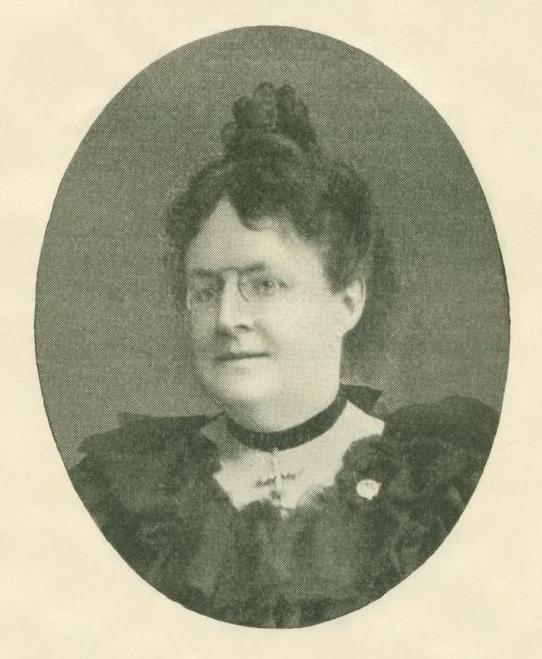
Margaret Sidney about 1895, image from the New York Public Library
Harriet’s books were incredibly popular, especially the Five Little Peppers—a series she wrote about brothers and sisters in the fictional Pepper family. Daniel Lothrop, the publisher of the Pepper books, also published Isabella’s books, as well as The Pansy magazine.
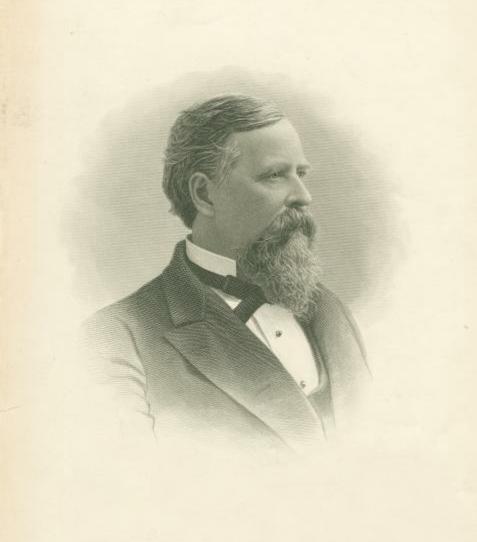
Daniel Lothrop
Mr. Lothrop was immediately charmed by Harriet’s Pepper books. In fact, he was so impressed, he asked to personally meet Harriet. One thing lead to another, and they eventually married!
An 1899 cover of one of the Pepper books, The Stories Polly Pepper Told
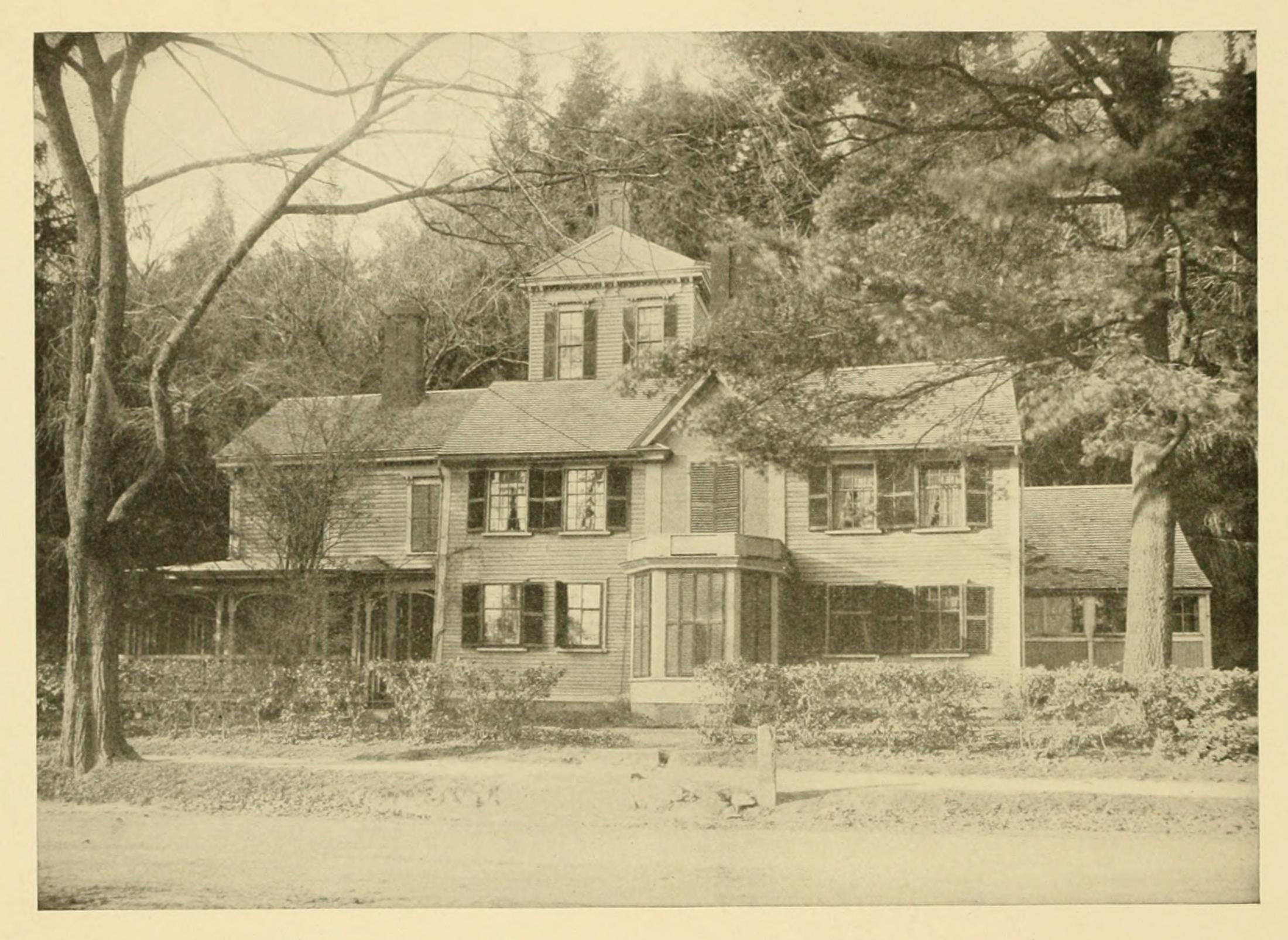
Together they became a powerhouse in the publishing and literary communities. They purchased Wayside, the Concord, Massachusetts home that previously belonged to American author Nathaniel Hawthorne. There Harriet continued to write her stories and novels; and Daniel enjoyed his weekends there as respite from the hustle and bustle of downtown Boston where his publishing house was located.
Wayside, as it appeared in 1908.
As individuals, Isabella Alden and Harriet Lothrop could not be more different. Isabella lived a rather quiet life, supporting her husband’s ministry, raising her son, writing her books, teaching at Chautauqua, and giving talks and readings of her stories at churches across the country.
By comparison, Harriet loved a good party. She was a leading force in Concord society. When her daughter Margaret turned nine years old, Harriet, in typical style, threw an all-day celebration. She invited children and adults from around the area to join the birthday celebration.
The highlight of the event was when the children formed a circle around a large artificial rose that had been set up on the lawn. And when the rose petals parted and spread, they revealed little Margaret setting in the center of the rose. Here’s an illustration that appeared in a magazine that printed an account of the event.
Harriet was definitely an imaginative hostess, and knew how to throw a party to please children and adults!
The same was true of her stories. Although Harriet was best known for her children’s books, she also wrote novels for teens and young adults.
One such novel was How Tom and Dorothy Made and Kept a Christian Home.
Newlyweds Tom and Dorothy Foster have a bright future together, but very little money. They’ve pledged to spend their earnings for God’s good, but it seems each new day brings new temptations. Will they be able to keep the promises they made to God and to each other?
You can read How Tom and Dorothy Made and Kept a Christian Home for free!
Isabella Macdonald Alden was born the youngest child in a loving, and very tight-knit family.
She and her sisters were especially close, even though there was a vast difference in their ages.
For example, Isabella celebrated her first birthday the same year her eldest sister, Elizabeth, married and moved into a home of her own. But since Elizabeth’s new house was only a few steps from the Macdonald’s front door, Isabella and Elizabeth shared a close relationship.
The same was true of Mary, who was 14 years older than Isabella. When Mary wed and set up housekeeping, her home was built on property that abutted the Macdonald’s back garden. As a result, Isabella spent a lot of time with Mary and they, too, had a special bond.
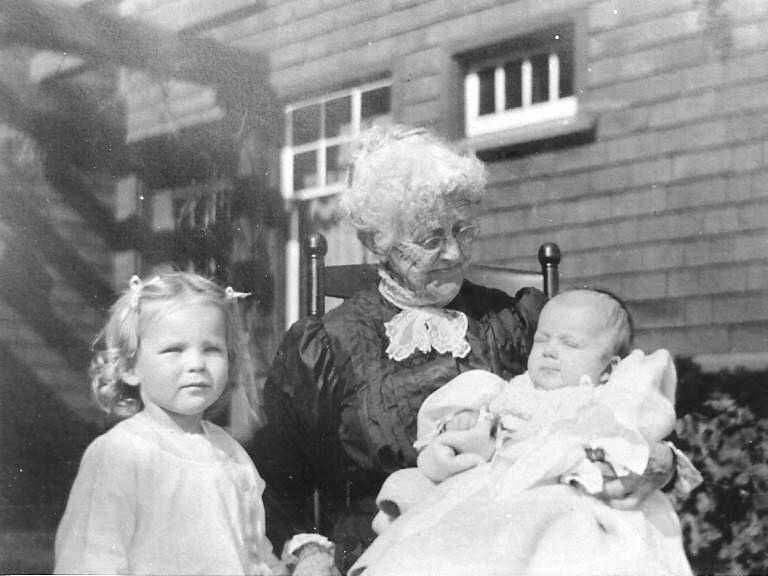
Isabella’s sister, Mary Macdonald Williamson (age 87) with two of Isabella’s grandchildren in Palo Alto, California (1914).
It’s no wonder, then, that when Isabella married and began keeping a house of her own, she made certain the door was always open to family members. She wanted her sisters to feel the same welcoming spirit in her house as she had always felt in theirs.
When her son Raymond was young, Isabella and her husband Ross began taking him to Florida, hoping the southern climate would benefit Raymond’s health. To their relief, Raymond’s health did improve, so the Aldens decided to make Florida their winter home.
The Aldens and the Livingstons in Florida. Front row left to right: Julia Macdonald (in white blouse), unidentified man, Margaret Hill, Ruth Hill, Grace Livingston Hill and her husband, Frank Hill. Second row (in light-colored dress) Marcia Macdonald Livingston and her husband Charles Livingston. Back row, third from left: Isabella Macdonald Alden, Raymond Alden, Ross Alden.
They bought a plot of land in the new town of Winter Park, and began building a house that would be big enough to accommodate plenty of family members.
Interlachen Avenue in the 1890s. Bicycles appear to be a favorite mode of transportation.
They built on an oversized lot on the corner of Lyman and Interlachen avenues, right across the street from All Saints Episcopal Church.
An 1888 photo of All Saints Episcopal Church. You can see the front half of Isabella’s new house peeking from the left side of the church.
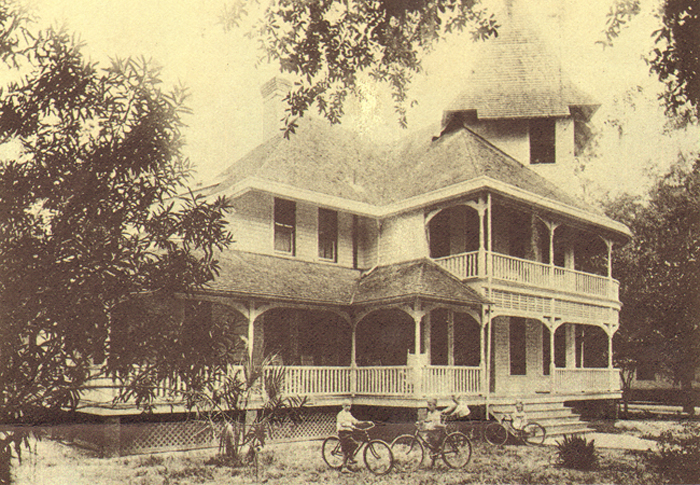
The house was completed in 1888. Ross dubbed it “Pansy Cottage,” a name that stuck and was soon known all over town. This photo shows the size of the “cottage”:
The inviting home was three stories tall, with large yards in front and back, and a wrap-around porch that invited family, friends and neighbors to sit down and enjoy a cozy chat. It was the perfect place for the family to gather, far away from the cold New York winters.
In this photo you can see family members on the front steps and porch, in the yard, and even peeking out of the top-most windows. They look like they’re having fun!
Isabella and her family members spent many happy winters at the Pansy Cottage; and the Florida climate did improve Raymond’s health.
A side view of Pansy Cottage, with children riding their bicycles.
In 1906 Ross and Isabella began their preparations for retirement. They sold Pansy Cottage and moved to their new house in Palo Alto, California where, once again, everyone was welcome in Isabella’s new home.
In fact, she and Ross shared the California house with their son Raymond, and his wife and children, as well as Isabella’s sisters Julia and Mary.
Julia Macdonald (about 1875).
After Ross and Isabella sold Pansy Cottage, it was passed along to different owners. Eventually, it was turned into a rooming house; and in 1955 Pansy Cottage was demolished. But thanks to photos like these, we can still peek into Isabella’s world and imagine a bit of her life with those she loved in turn-of-the-century Florida.
This post is part of our Blogiversary Celebration! Leave a comment below or on Isabella’s Facebook page to be entered in a drawing for a $25 Amazon gift card! We’ll announce the winner on Friday, September 28.
If you love stories that feature believable characters trying to find their way through life’s struggles, look no further than Isabella Alden’s books!
This word search puzzle features the names of some of Isabella’s most beloved characters, who ultimately learned to trust God to guide their daily steps in life. See how many names you can find!
Words can go horizontally, vertically, and diagonally, backwards and forwards.
Once you complete the puzzle, let us know how you liked it by leaving a comment here or on Isabella’s Facebook page.
Choose how you want to play:
To play online, click here. Then, click on a letter and drag to reveal each listed character name. You can play the puzzle online until October 30.
This post is part of our Blogiversary Celebration! Leave a comment below or on Isabella’s Facebook page to be entered in a drawing for a $25 Amazon gift card! We’ll announce the winner on Friday, September 28.
Welcome to the final week of our 5 Year Blogiversary Celebration!
We thank each of you for joining us in celebrating Isabella Alden’s life and Christ-centered novels and stories.
Today’s free short story is “Our Church Choir,” which was first published in 1889.
You can read “Our Church Choir” on your phone, ipad, Kindle, or other electronic device.
Or you can read it as a PDF document on your computer screen. You can also print the story to share with friends.
To begin reading, just click on the book cover to choose your preferred format from BookFunnel.com.
This post is part of our Blogiversary Celebration! Leave a comment below or on Isabella’s Facebook page to be entered in a drawing for a $25 Amazon gift card! We’ll announce the winner on Friday, September 28.
Reviews and giveaways for Christian fiction and sweet, clean fiction. Bringing readers information on great stories and connecting authors with their readers.





















 Isabella Alden